There are fancy cheese shops in Manhattan, such as Murray’s and Artisanal, where I shop quite often but find few if any Southern Italian cheeses. Granted, most cheeses from the Mezzogiorno are not as sophisticated as some Northern ones, but they have special flavors that stay close to my heart, and I have a huge desire for them in my kitchen. Continue Reading »
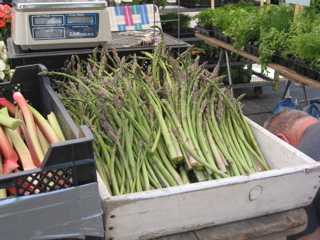
Fresh asparagus at Union Square.
Recipes:
Fava Beans, Mozzarella, Mint, and Spring Onion
Fennel and Mozzarella with Basil and Anchovies
Roasted Asparagus, Mozzarella, and Parsley Oil
Often with the first hit of warm weather here in Manhattan my mind jumps ahead, bypassing spring to start thinking about summer. And to my culinary mind, summer means Caprese salad, that amazing Neapolitan combination of perfect tomatoes, mozzarella (never refrigerated), summer basil, and the best extra-virgin olive oil. Caprese has beeen my idea of exquisite summer dining ever since I was a child and my father fashioned big platters of it from his backyard beefsteaks and Long Island basil. I now wait all year to be able to turn out a perfect version, with August tomatoes from the Greenmarket. Thinking about Caprese when I can’t have it gets me craving mozzarella with something fresh, herby, and olive oily, so every spring I start concocting seasonal improvisations on the theme, tinkering with the Caprese concept in small, timely ways. Continue Reading »
Posted in 2005 | Leave a Comment »
My path from nervous, uncertain cook to creative good one was slow but exciting. When I think about some of the strange and occasionally inedible meals I made for friends and family during my early forays into cooking, it’s amazing that I had the drive to persevere and come out the other end. Of course the more I cooked the more familiar I became with proper techniques and the way ingredients work together, but I believe some other things I did, beyond cooking, also had a lot to do with making me into a good cook. Continue Reading »
Posted in 2005 | Leave a Comment »
Recipes:
Torta with Sweet Onions, Anchovies, and Potatoes
Zucchini, Ricotta, and Basil Torta
Swiss Chard Torta with Pine Nuts and Dates
I just came back from a little off-season trip to Liguria, the area along the Mediterranean that encompasses Genoa and also such famous beach towns as Portofino and San Remo, which are stunning and a breeze to drive through in the low season. What the area lacks in knock-out floral displays in early March it makes up for in serenity. But when I was in search of new food ideas, I headed off the coast into the hill towns. Continue Reading »
Posted in 2005 | Leave a Comment »
Recipes:
Watercress, Strawberry, and Sautéed Shallot Salad
Watercress Salad with Prosciutto, Sautéed Celery, and Pine Nuts
Watercress with Beets, Ricotta Salata, and Thyme Vinaigrette
Watercress and Squid Salad with Capers and Pistachios
I really look forward to the wild watercress I start seeing at the Greenmarket in May. The stuff is so alluringly biting and addictive, and it’s such a darkly pigmented shade of green, that it almost looks artificially colored (I think also because it has a slight blue undertone).
I like presenting watercress, especially the wild variety (and other strong, distinct-tasting greens too), as the only green in a salad, showing off its special flavor. The key to offering straight watercress salads is breaking up its intensity with hints of sweetness or little touches of acidity or saltiness. I’ve had good results adding certain fruits to watercress salads. I especially like the way it blends with spring strawberries (in the fall I might pair supermarket watercress with local apples). But to avoid an overly sweet result I often add something like shallots and plenty of black pepper. Beets work well too, but in the beet and watercress salad I offer you here I include ricotta salata, whose saltiness plays against the sugar in the beets. Seafood with a touch of sweetness, like squid, shrimp, or scallops, is another option. I give you here a salad with quick-seared squid and capers, a nice first course, but it could also be a light lunch dish. If you want to use shrimp or scallops instead, cook them the same way I do the squid, quickly in a very hot skillet, so they sear but remain moist and tender). I haven’t had good luck combining briny seafood, such as clams, with watercress; the tastes strike me as unharmonious.
Prosciutto or another salt-cured or rich meat like bresaola or capocolla can also be a good counterbalance for watercress. A touch of fattiness nicely complements this peppery green.
Watercress, Strawberry, and Sautéed Shallot Salad
(Serves 2)
1 large bunch watercress, well stemmed
5 ripe medium-size strawberries, hulled and thinly sliced
Extra-virgin olive oil
2 shallots, thinly sliced
A pinch of sugar
Salt
5 small tarragon sprigs, the leaves lightly chopped
Freshly ground black pepper
1/2 teaspoon Spanish sherry vinegar
Place the watercress in a medium salad bowl. Scatter on the strawberry slices.
In a medium skillet, heat a tablespoon of olive oil over medium flame. Add the shallots, a pinch of sugar, and a little salt, and sauté until they just start to soften, about 2 minutes (you just want to take the raw edge off them). Scatter the shallots over the watercress.
In a small bowl whisk together the tarragon, sherry wine vinegar, 2 tablespoons of olive oil, a pinch of salt, and a few grindings of black pepper. Pour this over the salad and toss gently. Serve right away.
Watercress Salad with Prosciutto, Sautéed Celery, and Pine Nuts
(Serves 2)
1 large bunch watercress, well stemmed
4 very thin slices imported prosciutto (San Daniele is a nice choice), the excess fat removed, the meat cut into thin strips
Extra-virgin olive oil
3 thin inner celery stalks, thinly sliced, plus a small handful of celery leaves, left whole
A small handful of pine nuts
Salt
1/2 teaspoon champagne vinegar
1 garlic clove, peeled and lightly crushed
Freshly ground black pepper
Place the watercress in a medium salad bowl. Scatter on the prosciutto.
In a medium skillet, heat a tablespoon of olive oil over medium flame. Add the celery, the pine nuts, and a pinch of salt, and sauté until the celery just begins to soften and the pine nuts are lightly colored, about 2 minutes. Scatter the celery and pine nuts over the watercress. Add the celery leaves.
Place the garlic and the champagne vinegar in a small bowl. Add a pinch of salt and a few grindings of black pepper and whisk in 2 tablespoons of olive oil. Remove the garlic clove and pour the vinaigrette over the salad. Toss gently. Serve right away.
Watercress with Beets, Ricotta Salata, and Thyme Vinaigrette
(Serves 2)
2 medium golden or red beets
1 large bunch of watercress, well stemmed
2 scallions, cut into thin rounds, including some of the tender green part
1 garlic clove, peeled and lightly crushed
4 large sprigs of thyme, the leaves chopped
1 teaspoon lemon juice
A few gratings of fresh nutmeg
A pinch of sugar
Salt
Freshly ground black pepper
2 tablespoons extra-virgin olive oil
1/4 cup crumbled ricotta salata
Preheat the oven to 425 degrees.
Wrap the beets in aluminum foil and place on a small cookie sheet. Roast until they’re tender and fragrant, about 40 minutes. Remove the beets from the foil and let them cool until you can handle them. Slip off their skins and slice them thinly.
In a medium salad bowl combine the watercress, the beets, and the scallions.
In a small bowl combine the garlic, thyme, lemon juice, nutmeg, sugar, a generous pinch of salt, and a few grindings of black pepper. Add 2 tablespoons olive oil, and whisk to blend. Pour this over the salad and toss gently. Scatter the ricotta salata over the top. Serve right away.
Watercress and Squid Salad with Capers and Pistachios
(Serves 2)
1 large bunch watercress, well stemmed
2 very thin slices red onion
Extra-virgin olive oil
1 pound small, tender squid (2 or 3 inches long), cleaned and cut into thin rounds, the tentacles left whole
1 garlic clove, thinly sliced
A pinch of Aleppo or cayenne pepper
Salt
A splash of dry white wine
A small handful of salt-packed capers, soaked in several changes of water for 10 minutes and then rinsed and drained
A palmful of unsalted pistachio nuts
1 teaspoon lemon juice
Place the watercress in a medium salad bowl. Scatter on the red onion.
Heat a tablespoon of olive oil in a medium skillet over high heat. When the skillet is hot, add the squid, spreading it out in one layer. Let it sear without moving it for about a minute. Add the garlic, season with the Aleppo pepper (or cayenne, but Aleppo is much more fragrant) and a pinch of salt. Turn the squid and let it sauté a minute longer. When it’s opaque it’s done. Add the splash of white wine and let it bubble for a few seconds. Then scatter the squid, with any skillet juices, over the watercress.
Add the capers and pistachios. Drizzle on 2 tablespoons of olive oil and the lemon juice, season with a pinch more salt, and toss gently. Serve right away.
Posted in 2005 | Leave a Comment »
Recipes:
Chickpeas with Rosemary and Saffron
Israeli Couscous with Scallions, Pine Nuts, and Marjoram
Orzo with Cherry Tomatoes and Parsley
I usually consider the simplicity or complexity of my squid preparation when picking a side dish to pair it with. Simple grilled or quick-sautéed squid flavored only with lemon or a single herb can take a more involved side dish than can a brothy stew or stuffed squid. With the latter I like keeping any accompaniment rather plain, so it doesn’t interfere with the flavors of the main dish. Here are a few sides that have worked well for me, both for simple and more involved squid concoctions. They can all be served hot, warm, or at room temperature, so you can make them ahead if you like. Continue Reading »
Posted in 2005 | 9 Comments »
Recipes:
Quick-Sautéed Calamari with Rosemary, Bread Crumbs, and Watercress
Slow Braised Calamari with Basil, Peas, and a Hint of Cinnamon
Calamari Stuffed with Arugula and Almonds and Braised in Sweet White Wine
In the middle of winter I start to feel that anything goes in cooking, and lately I’ve found myself thinking a lot about squid. It’s not a particularly wintry ingredient; it’s just something I enjoy working with. I’ve been choosing from a wide array of Southern Italian flavorings to create squid dishes with a cold-season feel. Continue Reading »
Posted in 2005 | Leave a Comment »
Recipes:
Escarole Salad with Ricotta Salata, Burst Grape Tomatoes, and Marjoram Vinaigrette
Chicory and Pine Nut Salad with Warm Pancetta-and-Caper Vinaigrette
Endive and Prosciutto Salad with Toasted Almonds and Parsley
Raw Fennel Salad with Anchovy-Tarragon Vinaigrette
Seared Shrimp Salad with Radicchio and Rosemary
When the holidays, with all their glorious, festive food, are over, I sometimes feel a culinary void. Winter can be a dreary stretch in New York. I love stews and root vegetables, but somehow they just bog down my mood after a while. My geraniums droop frozen on my windowsills, and my Mediterranean complexion takes on an olive pallor. I start to crave a touch of delicacy in my meals. I was never exactly sure how to achieve such a thing in midwinter until I zeroed in on what was staring me right in the face whenever I visited my market: a variety of crisp, robust greens, ones with alluring bitterness and a surprising aftertaste of sweetness. That is, the chicories, which I’ve always thought of as winter salad greens: various types of radicchio, escarole, chicory proper, frisée, endive (smooth, curly, and red-tinged), and sometimes punterelle, the long, spiky Italian chicory that I used to see only in Rome. Chicories are often sown in late summer and left to mature in the cool months. In mild climates like California’s and Florida’s, they can be harvested all winter long, so, lucky for us, here they are, elegant and waiting to rejuvenate our winter cooking. Continue Reading »
Posted in 2005 | Leave a Comment »
Recipe:Torta di Miele
When I was a kid Christmas day always started early with a slice of pannetone and coffee (even when I was little I was served coffee on special occasions). The yeasty pannetone was more bread than cake, but it was sweet enough to be appealing to any kid. A few years ago I saw one of Mario Batali’s TV shows where he made a torta di Mele, a semi-sweet apple yeast cake. I’d eaten versions of that several times in central Italy, and the mother of a pizza maker in the West Village in Manhattan where I live used to bake one for his shop. The smell of it baking was enticing; sweet, slightly sour from the yeast, fruity, but with a strong cinnamon aroma. Maybe I detected a hint of some sort of liquor (grappa? brandy?). The cake didn’t really go with pizza, but often I’d drop into the shop just for a slice of it and a glass of wine. The pizza place is now gone, and I really miss that apple cake.I made up my own version by using Batali’s solid recipe as a base and adding spices and a bit of booze and more sugar until I came up with something close to the pizza shop’s cake. This year I’m making it for Christmas morning, in place of pannetone. You can serve it with espresso or cappuccino, but personally I like it best with a wake-up glass of prosecco. Merry Christmas to you!
Torta di Mele
(Serves 6 to 8)
1 tablespoon softened butter for greasing the pan
2 fairly plain biscotti (I used a mild almond-flavored type)
4 firm apples (Cortlands or Granny Smiths are good), skinned and thinly sliced
1 tablespoon Calvados or cognac
1/4 teaspoon ground cinnamon
3/4 cup sugar
1 cup flour
A few generous scrapings of nutmeg
2 extra-large eggs, at room temperature, separated
1/2 cup whole milk
1/2 teaspoon vanilla extract
1 package yeast
Powdered sugar for the top
Preheat the oven to 350 degrees.
Butter a 9-inch springform pan. Place the biscotti in a food process and pulse to a crumb. Coat the pan with the biscotti crumbs, shaking out any excess.
In a large bowl, toss the apple slices with the Calvados or cognac, half the cinnamon, and a tablespoon of the sugar. Arrange the apples in the pan in a not-too-fussy circular fashion, making two layers.
In a large bowl mix until well blended the remaining sugar and cinnamon and the flour, nutmeg, egg yolks, milk, vanilla, and yeast. Let sit for about 5 minutes.
Meanwhile, pour the egg whites into another bowl and beat with an electric blender until they’re stiff and glossy. Add the whites to the batter, folding them in until they’re just blended but still a bit streaky. Pour the batter over the apples and bake until the top is browned and feels springy (and a tester (I use a wooden shish kebab skewer) comes out dry when inserted into the top), about 50 minutes. Cool on a rack for about 1/2 hour. Remove the rim from the pan, leaving the cake on the base. Sprinkle with powdered sugar before serving.
Posted in 2004 | 2 Comments »
Recipes:
Braised Salmon Pizzaiola with Gaeta Olives
Cavatelli with Fresh Salmon, Arugula, and Burst Cherry Tomatoes
Salmon Carpaccio with Marjoram and Pine Nut Vinaigrette
Seared Salmon on Fennel and Orange Salad
Salmon is not a fish native to Southern Italy, but it does show up on menus there, usually at upscale, contemporary restaurants where the chef likes to experiment. The chef is right to do so, for salmon’s rich, oily taste and texture marries beautifully with classic Southern Italian flavors such as capers, olives, anchovies, orange and lemon, fennel, artichokes, fine olive oil, tomatoes, arugula, basil (one of the best herbs for salmon), and good dry wine. I’ve explored some of these flavor combinations in the recipes I offer you here.
In my opinion salmon’s richness can get a little sickening; I find it needs to be broken up with fresh, sharp flavors. This is especially true for farmed Atlantic salmon, which is very rich. Wild pacific varieties, which I seem to find in my fish shops year round these days (I believe they’re frozen during harvest and then sold throughout the year), have unique flavors, with colors ranging from pale peach to crimson, and varying amounts of oil. King and sockeye are both really delicious. They’re rich in a more interesting way than the farmed variety.
I often serve some sort of salmon dish as part of my all-fish Christmas Eve dinner. Several years ago I made a salmon pizzaiola with Gaeta olives. The pizzaiola flavor in its purest form is achieved by blending the Southern Italian trio of tomatoes, oregano or marjoram, and some type of dry wine, producing a taste somewhat like pizza sauce. I prefer the gentler flowery flavor of marjoram over the dried oregano that they favor in Southern Italy. Salmon pizzaiola is an extremely simple dish, but one with vibrant flavor. I give you my recipe here.
Some Italian-inspired salmon dishes just don’t work, in my opinion. One of my all-time least favorite Italian-American restaurant items is pasta tossed with smoked salmon and cream. Heating brings out the worst in smoked salmon, and mixed with cream the strong smoky fish flavor permeates the entire dish. I actually find this a bit nauseating, and I have even left a restaurant when I saw it on the menu, since for me it’s a sign that the rest of the menu will be ill-conceived too. I have had success tossing chunks of freshly cooked salmon with pasta and adding various vegetables or a simple tomato sauce, and I include here a recipe for pasta with fresh salmon, arugula, and seared cherry tomatoes, which I think is delicious and in true Southern Italian style
Braised Salmon Pizzaiola with Gaeta Olives
(Serves 4 as a main course)
Extra-virgin olive oil
Salt
Freshly ground black pepper
A generous pinch of ground nutmeg
4 approximately 1/2-pound salmon fillets (or a bit smaller), skinned (wild salmon is best, but you can get good results with the farmed variety too)
1 medium shallot, thinly sliced
2 garlic cloves, thinly sliced
A generous splash of dry Marsala or dry vermouth
1 35-ounce can Italian plum tomatoes, well chopped, with the juice
5 sprigs fresh marjoram, the leaves chopped
A handful of basil leaves, lightly chopped
A handful of Gaeta olives, pitted if you wish
In a large skillet, heat about a tablespoon of olive oil over medium-high heat. Season the salmon with salt, black pepper, and a few scrapings of nutmeg. Brown the salmon very well on the rounded, non-skin side about 4 or 5 minutes, and then remove it from the skillet, using a slotted spatula to let excess oil drain off. Pour out all the oil from the skillet and add a tablespoon of fresh olive oil (if there are any slightly burnt bits from the salmon cooking, wipe those out with a damp paper towel before adding the olive oil). Add the shallot and sauté for about a minute just to soften it. Add the garlic and let it sauté for about another 30 seconds, until everything is fragrant. Add the Marsala or vermouth and let it bubble away. Add the tomatoes, season with salt and black pepper, and simmer, uncovered, at a lively bubble for five minutes. Add the salmon, browned side up, turn the heat to low, and simmer until the salmon is just cooked through, about 4 minutes longer, spooning the sauce over the salmon frequently. Add the marjoram, the basil, and the olives and simmer a few seconds longer, just to blend all the flavors. Check for seasoning and add a bit more salt or black pepper if needed. Serve right away with good Italian bread, a green salad, and a glass of dry white wine.
Cavatelli with Fresh Salmon, Arugula, and Burst Cherry Tomatoes
(Serves 4 as a main course)
1 pound salmon fillet, skinned (I prefer a wild salmon variety for this, finding the oil from farmed salmon a bit strong for pasta)
Extra-virgin olive oil
Salt
A pinch of ground clove
6 large sprigs fresh thyme, the leaves chopped
1 pound cavatelli
2 pints sweet cherry or grape tomatoes
2 garlic cloves, thinly sliced
3 scallions, cut into thin rounds, using some of the tender green part
1/2 fresh, red chile, minced (and seeded if you like less heat)
A generous splash of dry white wine
1 large bunch arugula, stemmed and roughly chopped
A palmful of capers
Cut the salmon fillet into approximately 1/2-inch cubes and place them in a small bowl. Add a drizzle of olive oil, salt, the ground clove, and about half of the chopped thyme, and toss gently with your fingers to blend all the ingredients.
Set up a large pot of pasta-cooking water. Bring it to a boil and add a generous amount of salt. Drop in the cavatelli.
In a large skillet, heat 2 tablespoons of olive oil over high heat. When the skillet is very hot, add the tomatoes, garlic, scallions, fresh chile, and the remaining thyme all at once. Season with salt and sear the tomatoes, shaking the skillet occasionally, until they start to burst, about 4 minutes. Add the white wine, and let it bubble for a few seconds. Turn off the heat.
In a another skillet, heat another tablespoon of olive oil over a high flame. When the skillet is very hot, add the salmon cubes and brown them quickly, about 3 minutes, leaving the middle slightly pink.
When the cavatelli is al dente, drain and transfer to a large, warmed serving bowl. Add the tomatoes with all their pan juices, the capers, and the arugula. Add the salmon, leaving any skillet oil behind (too much salmon oil can give pasta an overly fishy taste). Give everything a generous drizzle of fresh olive oil and an extra sprinkle of salt. Toss gently (the heat of the pasta will wilt the arugula). Serve hot or warm.
Salmon Carpaccio with Marjoram and Pine Nut Vinaigrette
(Serves 6 as a first course)
3/4 pound very fresh salmon fillet, skinned (I prefer farmed salmon here since it’s very rich and oily and can stand up to a vinaigrette)
Extra-virgin olive oil
Sea salt
The juice and zest from 1 small lemon
1 shallot, minced
5 large sprigs marjoram, leaves lightly chopped
A generous pinch of ground, dried red chile (I like Aleppo pepper)
A tiny pinch of sugar
1/2 cup pine nuts, lightly toasted
With a very sharp knife, cut the salmon on the bias into very thin slices, cutting almost parallel to the surface (the way you would cut smoked salmon). Lay the slices out in a sort of flower-petal pattern on six salad plates. Drizzle them lightly with extra-virgin olive oil and give each serving a sprinkling of sea salt.
In a small bowl, mix together 3 tablespoons of extra-virgin olive oil, the lemon juice, zest, shallot, marjoram, a generous pinch of sea salt, the ground red chile, and a tiny pinch of sugar.
When you’re ready to serve, spoon a generous amount of the vinaigrette in the middle of each plate of salmon. Scatter on the pine nuts. Serve right away.
Seared Salmon on Fennel and Orange Salad
(Serves 4)
4 approximately 1/2-pound (or a bit smaller) salmon fillets, with the skin on (wild and farm-raised are both fine for this)
Salt
About 6 fennel seeds, ground to a powder
Freshly ground black pepper
Extra-virgin olive oil
2 fennel bulbs, cored and thinly sliced, plus a handful of the feathery tops, chopped, for garnish
The zest from 1 orange, plus 3 oranges peeled and sliced into thin rounds
A small head of frisée lettuce, cut into bite-size pieces
1 large leek, well cleaned and sliced into thin rounds
2 oil-packed anchovies, minced
1 tablespoon Spanish sherry vinegar
Preheat the oven to 450 degrees.
Press the ground fennel seeds, a bit of salt, and black pepper onto the skin of the salmon fillets.
Put the fennel, orange slices, frisée, and leek in a large salad bowl and set it aside.
In a small bowl, combine the orange zest, chopped anchovy, 3 tablespoons of extra-virgin olive oil, and the sherry vinegar. Add a pinch of salt and a few grindings of black pepper. Whisk to blend.
In a large skillet, heat about a tablespoon of olive oil over high flame. When the skillet is hot, add the salmon fillets, skin side down, and sear until nicely browned, about 4 minutes. Place the skillet in the oven without turning the salmon.
Pour about 3/4 of the vinaigrette over the salad and toss. Divide the salad up onto 4 dinner plates. When the salmon is just cooked through, but still a bit pink in the center take it from the oven (probably about 4 minutes of oven time). Place one fillet, skin side up, on each salad. Drizzle the remaining vinaigrette over each fillet. Garnish with the chopped fennel tops. Serve right away.
Posted in 2004 | 3 Comments »
-
Welcome to Ericademane.com

I am a chef, food writer, and herb lover who specializes in improvisational Italian cooking. I am the author of The Flavors of Southern Italy and Pasta Improvvisata, as well as Williams-Sonoma Pasta, which is available at Williams-Sonoma stores. A member of the Association of Culinary Professionals, The New York Women's Culinary Alliance, The New York Culinary Historians, The Herb Society of America, and the Italian-based International Slow Food Movement, I live in New York City.
For more about me, see About Erica De Mane.

Buy a copy of The Flavors of Southern Italy.

Buy a copy of Pasta Improvvisata.

Buy a copy of Williams-Sonoma Pasta.Buy a copy of my ebook, Pasta Improv

 Erica De Mane