Recipe below: Moroccan Chicken with Pumpkin, Dates, and Almonds
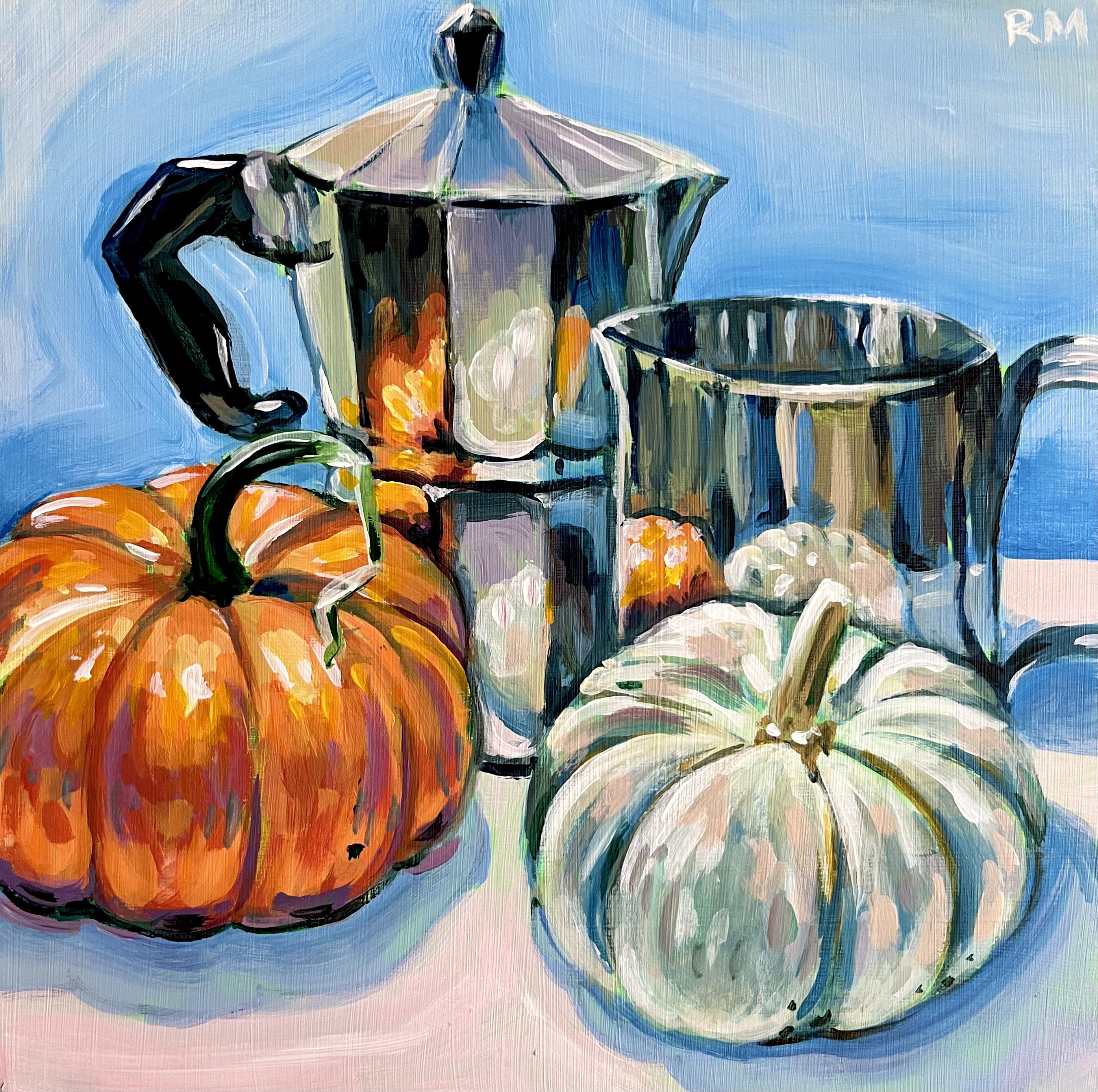
The burden of pumpkins. Why do they grow so many? Just for us to smash or carve out and then throw away? Hardly anyone actually cooks with pumpkins; when people make pumpkin pie they almost always use canned. The pumpkin crop in the Northeast seems crazy to me. How many ornamental pumpkins can one household have? Three, four? To keep on display until they collapse into a mush of rot? Then even the deer won’t eat them. I’m sad for all those pumpkins, and I feel it’s my duty as a cook to try my best to cook something with them. Being so into Moroccan cooking lately, I thought a tagine would be a good idea. When I cooked at Florent, we always added pumpkin or butternut squash chunks to our couscous, and it was delicious.
My new recipe here is a mellow tagine. No preserved lemon, or olive, or caper. No sharp edges. I let the warm spices do all the talking. I did, however, add a few drops of sherry wine vinegar at the end to balance the sweetness of the dates. You might want to do that, too. Taste at the end of cooking, and see what you think.
Most people, if they cook pumpkin at all, roast it. It’s hard to skin, but I don’t care. I really like doing it, and I have sharp knives. If you don’t want to skin and cube a pumpkin, you can absolutely use butternut squash instead, which is much easier to deal with, and if you get one from a farmer’s market right now it should be excellent. Pick one with a long neck and just use that part, which is easiest to skin. Save the bulby end for roasting.
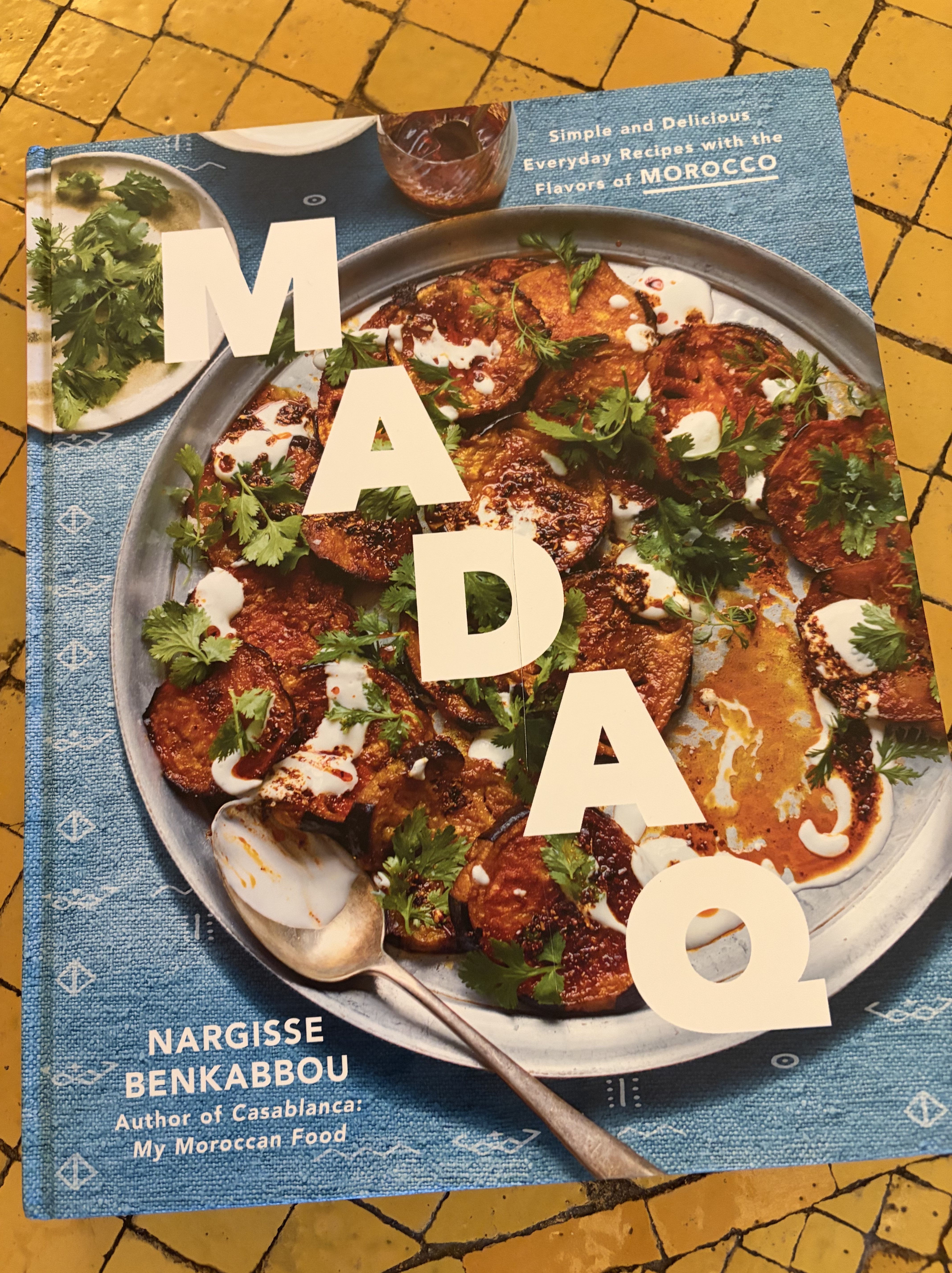
As you probably know, Paula Wolfert is my cooking idol. She introduced me to the beauty of Moroccan cooking. I return to her books often. But I’ve just discovered a new Moroccan book written by Nargisse Benkabbou, a daughter of Moroccan immigrants who now lives in London. It’s called Madaq, which means flavor in Moroccan Arabic. The book is filled with traditional and contemporary takes on Moroccan cooking, and almost every recipe looks good.
She offers her version of a classic tagine makfoul, which is lamb braised with ginger, turmeric, and cinnamon and then covered with thick slices of sweet onion and tomatoes. It looks beautiful, and I’ll be trying it soon. And I’m going to try m’semen, a traditional skillet flatbread, which she stuffs with herbs and cheese.
When she goes nontraditional, most of her ideas make sense, like when she takes the classic chicken tagine with preserved lemon and olives and turns it into a quick sheet pan dinner. I can see that. No longer a tagine, but the spirit is there.
Since I’m already in love with Moroccan food, I expected to take away something good and new from this book—I love expanding my knowledge of traditional Moroccan cooking—but I didn’t expect to be so drawn into her contemporary recipes. I love the idea of her harissa Caesar salad with roasted chickpeas, and of her cumin and paprika roasted carrots with almonds, olives, and herbs, served over yogurt, which I plan to try as soon as I get a beautiful bunch of Greenmarket carrots.
She also gives us a bunch of interesting spice and herb mixes. I had never made a completely raw green harissa before, and I zeroed right in on her recipe, making it the day I bought the book.
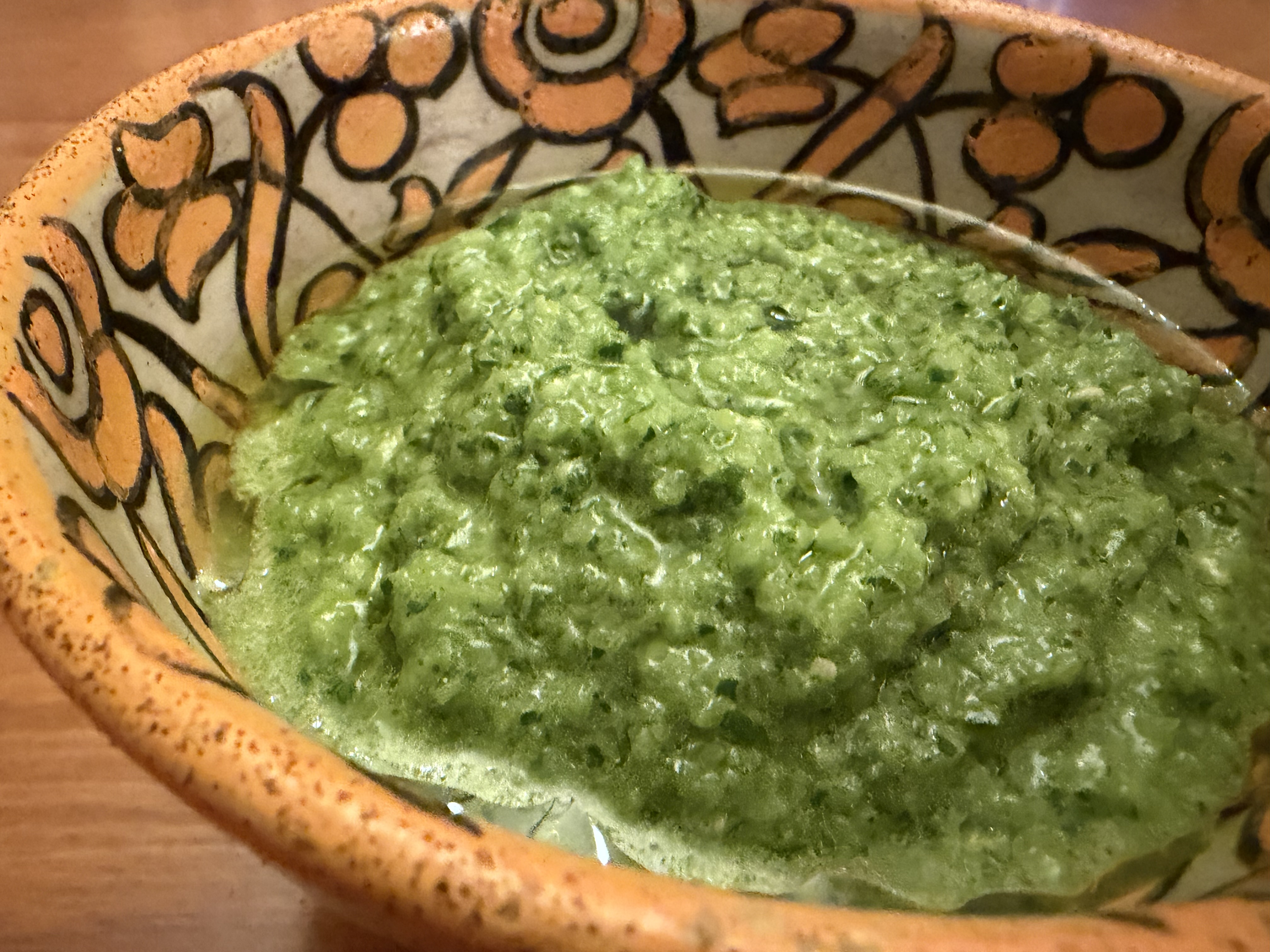
Here’s my version of Nargisse’s green harissa: She calls for all jalapeño, but I used three jalapeño, one poblano, and one Italian frying pepper, just because I had them in the fridge and needed to use them up. They all get roughly chopped. Next you want a big handful of Italian parsley and a few big sprigs of mint (she uses cilantro, which unfortunately makes me gag), one chopped garlic clove, about a teaspoon of freshly ground cumin, some salt, and about a teaspoon of sugar. Everything goes in the food processor. I drizzled in about ½ cup of good olive oil and then whizzed it all smooth. Took about 5 minutes to make, and it was absolutely delicious.
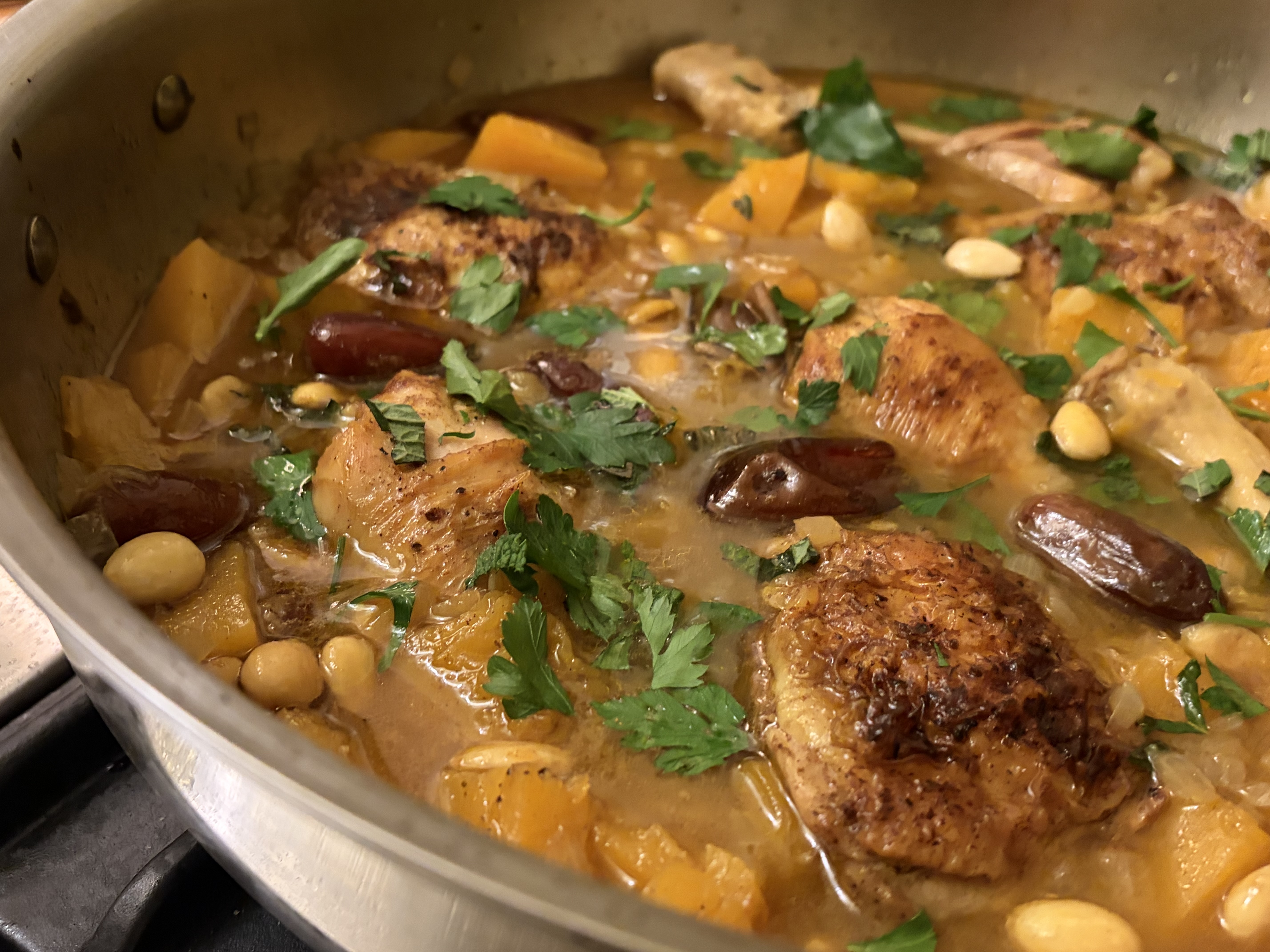
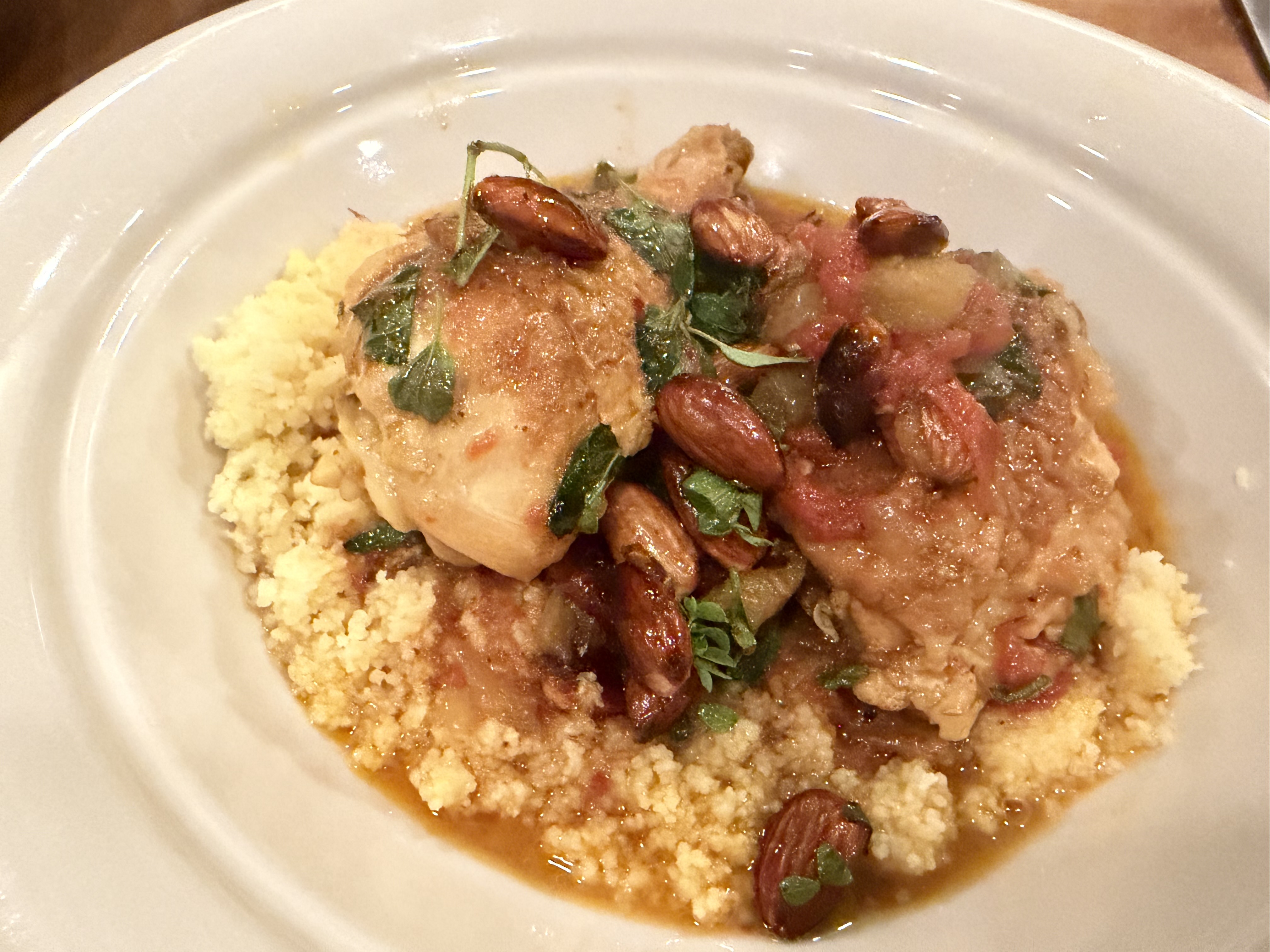
Moroccan Chicken with Pumpkin, Dates, and Almonds
This is not from Madaq, but just something I made up.
For the spice mix:
1 teaspoon each: dry ginger, turmeric, cinnamon, coriander, sweet paprika, black pepper
For the rest:
4 chicken legs, separated into thighs and drumsticks
Sea salt
Extra-virgin olive oil
1 large sweet onion, chopped
2 fresh bay leaves
A big splash of dry white wine
1 cup chicken broth
3 cups pumpkin or butternut squash, cut into 1-inch cubes
20 pitted dates
A big handful of Marcona almonds
A few drops of sherry wine vinegar
5 or 6 large sprigs Italian parsley, the leaves lightly chopped
A few larges sprigs of spearmint, the leaves left whole
Combine the spice mix ingredients. Sprinkle some salt and a tablespoon of the spice mix onto the chicken pieces. Give them a toss.
Get out a large sauté pan with a lid, and set it over medium-high heat. Add a big drizzle of olive oil, and let it get hot. Add the chicken pieces, and brown them on both sides. Pour off some fat if you’ve got too much.
Add the onion and the bay leaves, and cook to soften the onion, about a minute or so. Pour on the wine, and let it bubble to burn off some alcohol. Add the chicken broth. Bring everything to a boil. Reduce the heat to very low, cover the pan, and simmer for about 10 minutes.
Uncover the pan, and add the pumpkin. Sprinkle on the rest of the spice mix, and give everything a little more salt. Continue simmering, covered, until the chicken is just tender and the pumpkin is cooked through but not falling apart, about another 20 minutes.
Add the dates and the almonds, stirring them in. Turn off the heat, keeping the cover on, and let the pan sit on the hot burner for another 10 minutes. This will allow the dates to soften just a bit but not become mushy.
Taste the tagine for seasoning, adding a few drops of sherry wine vinegar to bring up the acidity.
Add the parsley and mint.
I served this with saffron-scented rice, but couscous or good bread would also be nice.