Feeds:
Posts
Comments

Posts Tagged ‘baking’

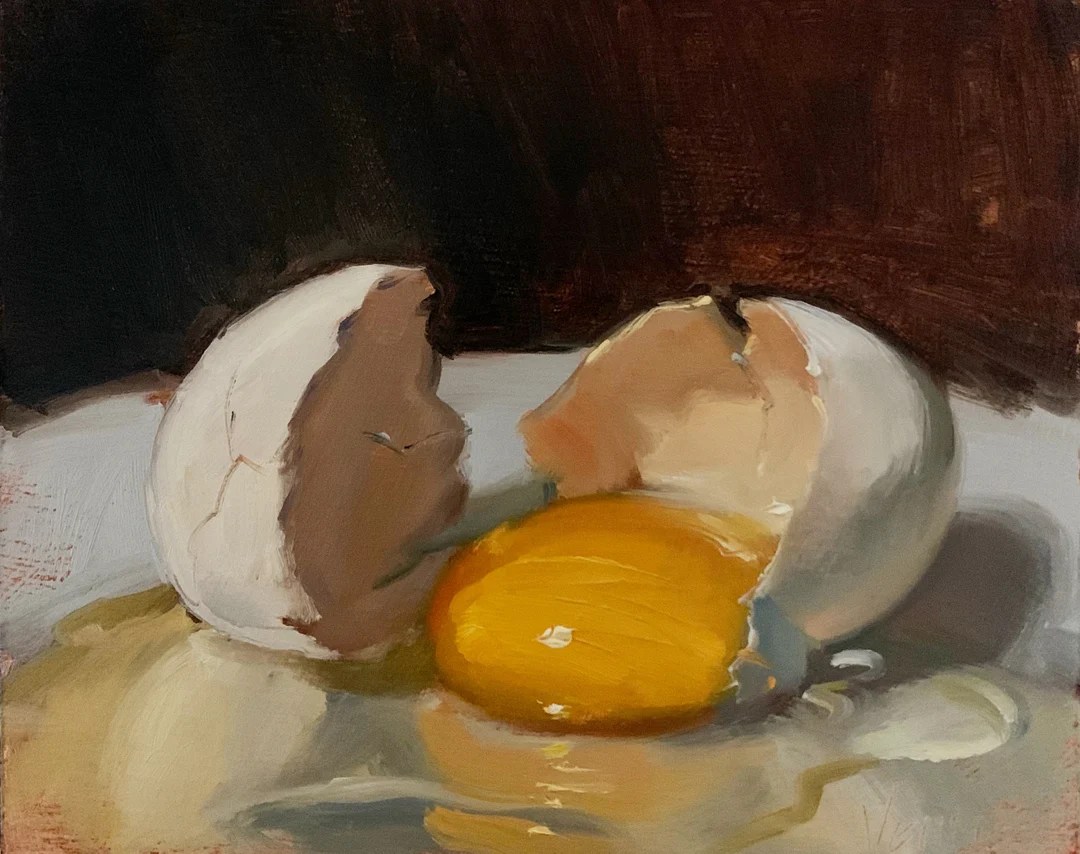
Broken Egg, by Noah Verrier.

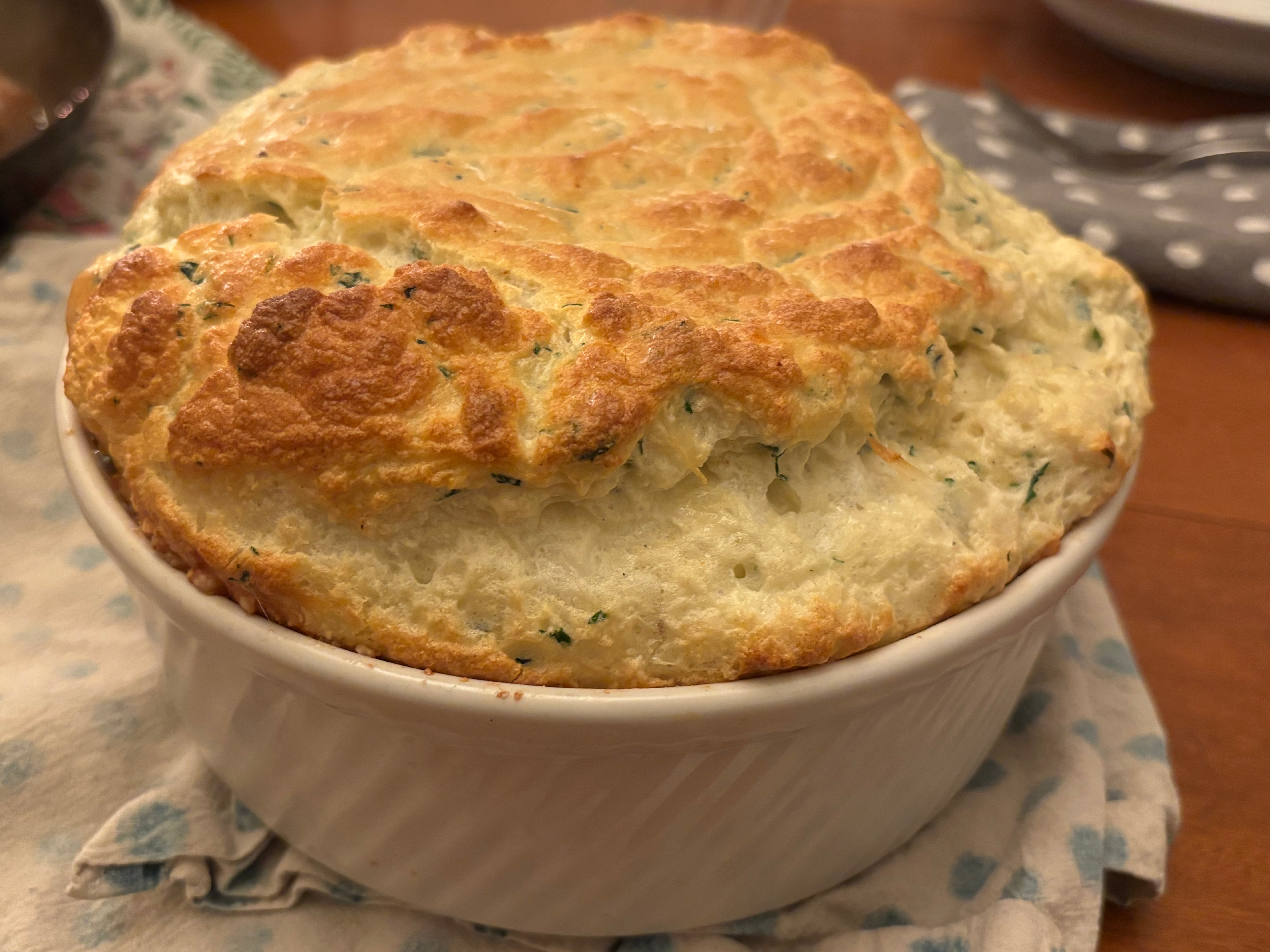
Recipe below: Summer Herb Soufflé

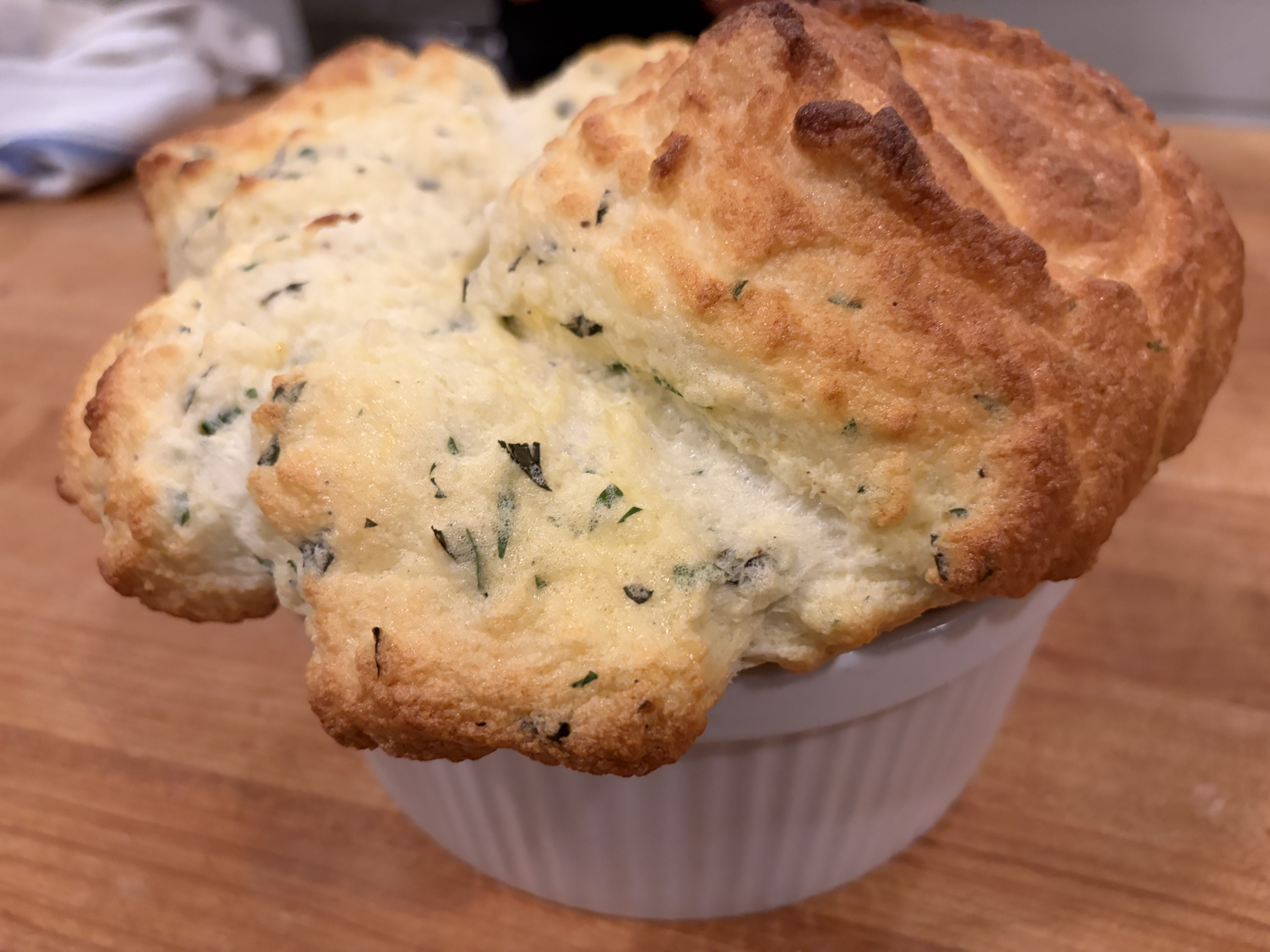
One of the nicest things you can do for yourself is learn to make a soufflé. Here’s how you do it: Make a bechamel, add egg yolks to it, add your flavoring (cheese and herbs, for example, like I did here), fold in beaten egg whites, and stick it in the oven.

I’m not trying to be obnoxious, but that is basically all you do. It’s not fancy, no matter what you’ve been conditioned to believe. The eggs and the oven do the work. Your brain supplies the anxiety. Try to let that drift away.

An herbcentric soufflé is a lovely thing in high summer, with so many aromas at your disposal. For this go-round I chose a mix of Thai basil, mint, parsley, and chives. You can do a stronger flavor mix by adding marjoram, oregano, or summer savory, or even rosemary, if you chop the needles finely. You can also, if you prefer, highlight a single herb. Fennel alone makes a beautiful soufflé.

I’d love if you’d give a soufflé a try and let me know how it worked out for you. And send photos.

Wild Sorrel Cookbooks
I walked into Wild Sorrel Cookbooks for the first time recently, and I bought a book, Vegetables the Italian Way, a new one by Giulia Scarpaleggia. I loved La Cucina Povera, her previous one, so I figured this had to have some good things in it. Troy Chatterton, the shop’s owner, was immediately interested in my choice and told me he and his partner had just cooked from it, making a type of zucchini carbonara with mint, and the recipe had come out beautifully. The guy is into cookbooks.

As you all already know, I buy a lot of cookbooks. I have hundreds of them lining the walls of my small West Village apartment.  Wild Sorrel has been open only three months, but already it feels warm and lived in, and its owner obviously shares my passions, reading cookbooks, finding the best markets, and, above all, cooking. This is a shop for the dedicated home cook but also for cookbook writers like me, who are always curious about what other cooks are thinking about. 

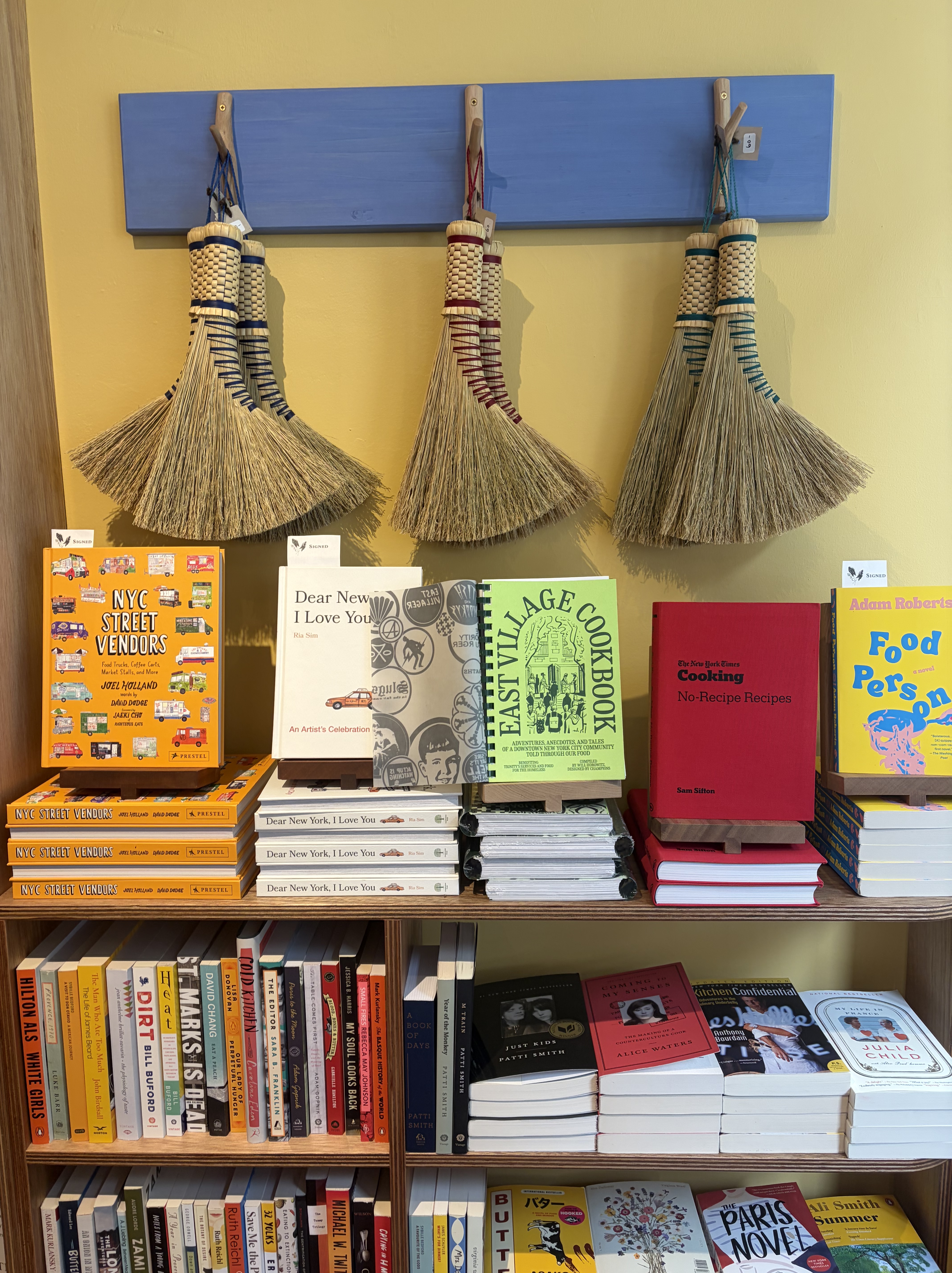
Wild Sorrel is a small shop with warm touches—Troy’s personal collection of what looks to me all American pottery, and the Appalachian whisk brooms you can see in my photo, for instance. The place is sweetly designed but not cutesified. And I’ve learned that he and his two friends Max and Kaori, who are furniture builders, constructed the shop themselves, the shelves, the benches, the floors (how anyone can figure out how to lay a floor is beyond me). I thought the benches were a gracious addition. Who doesn’t want to sit down and read a little in a cookbook shop? 
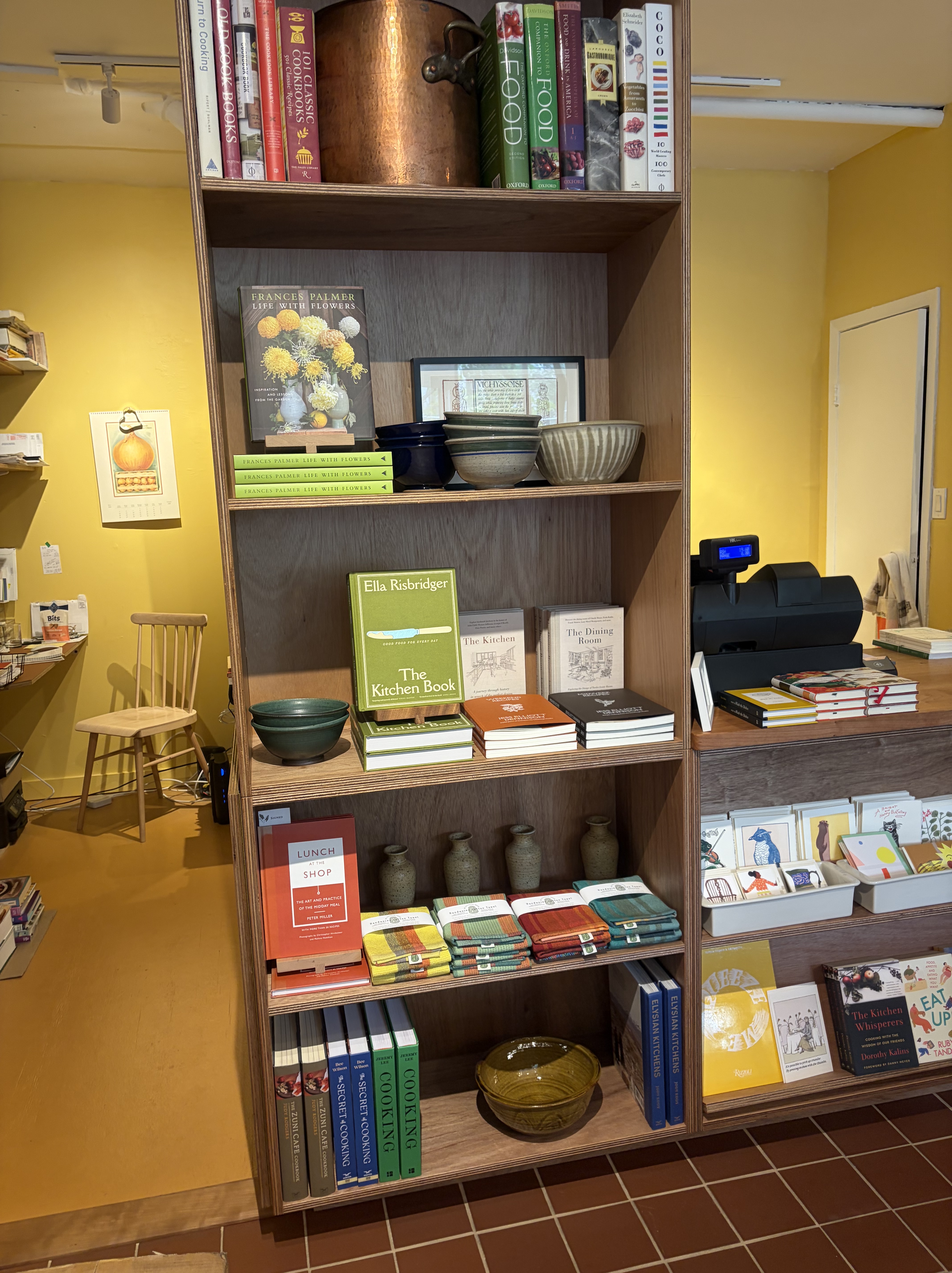
And he’s put together a thoughtful collection of books that include all the new stuff, plus a wall of classics and best sellers—Larousse Gastronomique, Apicius, Marcella Hazan, Fuschia Dunlop, and my hero, Paula Wolfert, among them, a good selection of food writing, both past and present, and also a vegetable and herb gardening section, which I’ll be looking into more carefully on my next visit so I can feed my obsession with herb growing. 

I knew Troy looked familiar the minute I walked in. Turns out he worked at Three Lives, a beautifully put together independent bookstore that’s been in my West Village neighborhood since 1978 (I worked at Barnes & Noble, back in the day, with the three women who opened Three Lives). Troy Chatterton was there for 14 years, and I saw him there a lot. He thought he’d be there even longer until he decided he’d really like a place of his own, one that focused his passions.

Stop in a take a look. You’ll be glad you did.

Wild Sorrel Cookbooks is at 332 East 13th Street, between First and Second Avenues.
Summer Herb Soufflé

4 tablespoons unsalted butter
3 tablespoons all-purpose flour
1 cup whole milk
Salt
Black pepper
½ teaspoon grated nutmeg
A big pinch of sugar
3 ounces soft, fresh goat cheese, at room temperature
½ cup grated grana Padano cheese
1½ cups mixed chopped herbs—I used Thai basil, mint, parsley, and chives
4 eggs, separated, plus 2 egg whites

Preheat your oven to 425 degrees.

Butter a soufflé mold with 1 tablespoon of butter (I used an 8-inch wide, 3-inch-deep mold; if you have one that is wider and shallower, just cut the cooking time down a bit).

Get out a large sauté pan, and set it over medium heat. Add the rest of the butter. When it’s melted, add the flour, whisking it in.  Let it warm through for about a minute or so. Add the milk, a little salt, black pepper, the nutmeg, and the sugar. Turn the heat down a bit, and whisk to blend everything. Let it simmer, whisking a few times, until the sauce thickens, about 5 minutes. Turn off the heat, and add the goat cheese, the grand Padano, all the herbs, all the egg yolks, and a pinch more salt, stirring well to blend.

In a large bowl, beat all the egg whites until they form stiff peaks. Fold half of the whites into the soufflé mixture. Then add the remaining whites, gently folding them in. Try not to overmix. A little streaky is okay.

Spoon the soufflé mix into the mold. Bake for 5 minutes, then lower the heat to 375 degrees, and bake until puffy and lightly golden, with only a little wobbliness at the center, about 20 minutes more. Serve right away.

I served my soufflé with an arugula and summer tomato salad and a few glasses of Sardinian Vermentino.  Beauty.
Read Full Post »

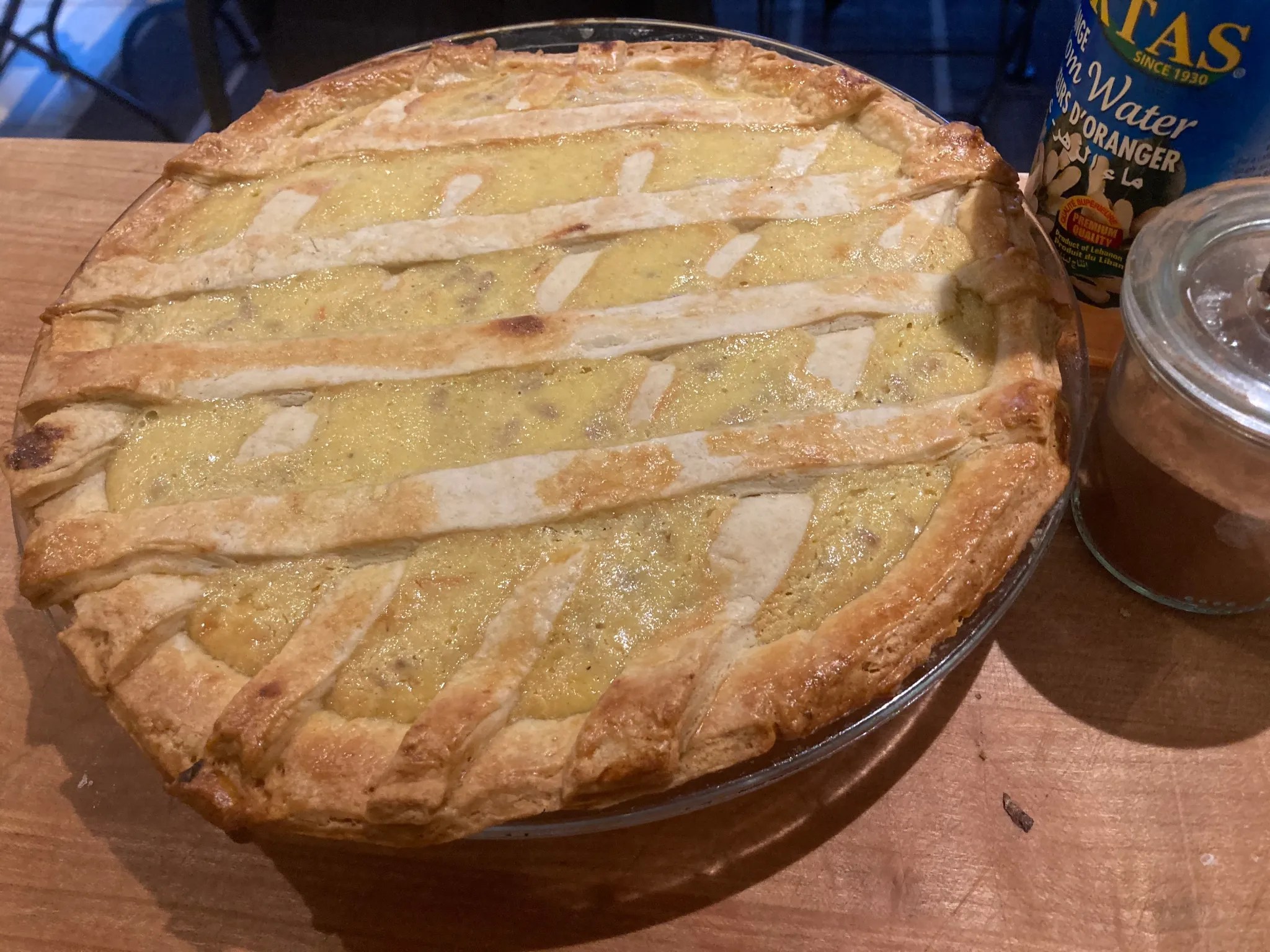
Recipe below: My Easter Pastiera

I love the subtle signs of the earth’s rebirth that Easter time brings to New York, and I love all the traditional Southern Italian Easter dishes I grew up with. Also I really enjoy creating new dishes that may or may not become family traditions in their own right, depending on how they go over. Every year I try to post a new recipe, but this year I’ve been involved with another writing project and haven’t had the creative energy to come up with anything new and exciting for my Easter table. However, people keep asking me about pastiera, the sweet ricotta and wheat berry torta that’s flavored with orange flower water, cinnamon, vanilla, and sometimes candied citron.  It’s a gorgeous flavor, mysterious even, so I thought I’d repost my recipe, just in case you want to give it a try.

Happy return to spring.

My Easter Pastiera

I used a 9-inch pie pan.

For the pasta frolla:

2½ cups regular flour, plus a little more for rolling
A big pinch of salt
½ cup powdered sugar
½ teaspoon grated nutmeg
The grated zest from 1 large lemon
1½ sticks cold unsalted butter, cut into small cubes, plus a little more for buttering the pan
2 large eggs, lightly whisked
About 2 tablespoons dry vermouth, maybe a bit more

For the farro mixture:

¾ cup farro
2 cups whole milk
A pinch of salt
1 teaspoon regular sugar
The grated zest from 1 orange

For the rest of the filling:

2 cups whole milk ricotta
1 cup powdered sugar
1 large egg, plus 2 eggs yolks
A pinch of salt
1 teaspoon orange flower water
1 teaspoon ground cinnamon
½ teaspoon ground nutmeg
1 teaspoon vanilla extract
The grated zest from 1 large lemon
The grated zest from 1 orange
1 cup of candied citron

Plus:

1 egg whisked with a little water, to serve as an egg wash

To make the pasta frolla, pour the flour into the bowl of a food processor. Add the salt, sugar, nutmeg, and lemon zest, and give it a few pulses, just to blend everything. Add the butter, and pulse a few more times, breaking the pieces up a bit. Add the eggs and the vermouth, and do a few more pulses, just until it forms a crumbly ball. If it seems too dry, add a drizzle more vermouth.

Turn out the dough onto a lightly floured work area, and give it a few quick kneads. Then press it together, and wrap it in plastic. Stick it in the refrigerator for at least an hour before you roll it out. That will make it easier to roll.

To prepare the farro mixture, pour the ingredients into a small saucepan. Cook them over medium heat until the grains are tender, about 15 minutes. If there’s still milky liquid, drain it.

To continue with the filling, put the ricotta in a large mixing bowl. Add the cooked farro and all the other ingredients. Mix well, and give it a taste to see if you might need more sugar or something.

Set the oven to 375 degrees. Butter the pie pan.

Take the dough from the refrigerator. If it’s only been in there for an hour or so, it should be ripe for rolling. If it’s super cold, you may need to let it warm for a little time. In any case, flour a work area. Cut off and set aside about ¼ of the dough to use for lattice strips. Roll the big portion out into a large round, and then drape it into the pie pan, pressing it down around the edges. Stick that in the refrigerator while you make the lattice.

Roll out the smaller piece of dough into a rectangle about the length of the pie pan. With a sharp knife, cut 8 approximately ½-inch-thick strips. If you don’t get 8 strips, don’t worry. You’ll be able to fashion a few more from the pie pan trimming.

Take the pie pan from the refrigerator, and pour in the filling. If it looks like you have too much filling, hold back on some. You can use any extra for the small crustless custard, sticking it in the oven along with the pastiera. Brush the edges of the dough all around with the egg wash. Arrange the lattice strips criss-crossed over the top, pressing them down all around the edge so they adhere. You can weave them in and out in the more sophisticated way, or just cheat and lay them across one another.

Now trim all around the pie so you have a neat round. If you need more lattice strips, you can make them with the trimming. Brush the lattice and all around the edges with the egg wash.

Put the pastiera in the oven, and bake it until it’s nicely golden all over, about 40 minutes.

Let it rest about an hour before serving. I find prosecco an especially good match for this beautiful pie.

Read Full Post »

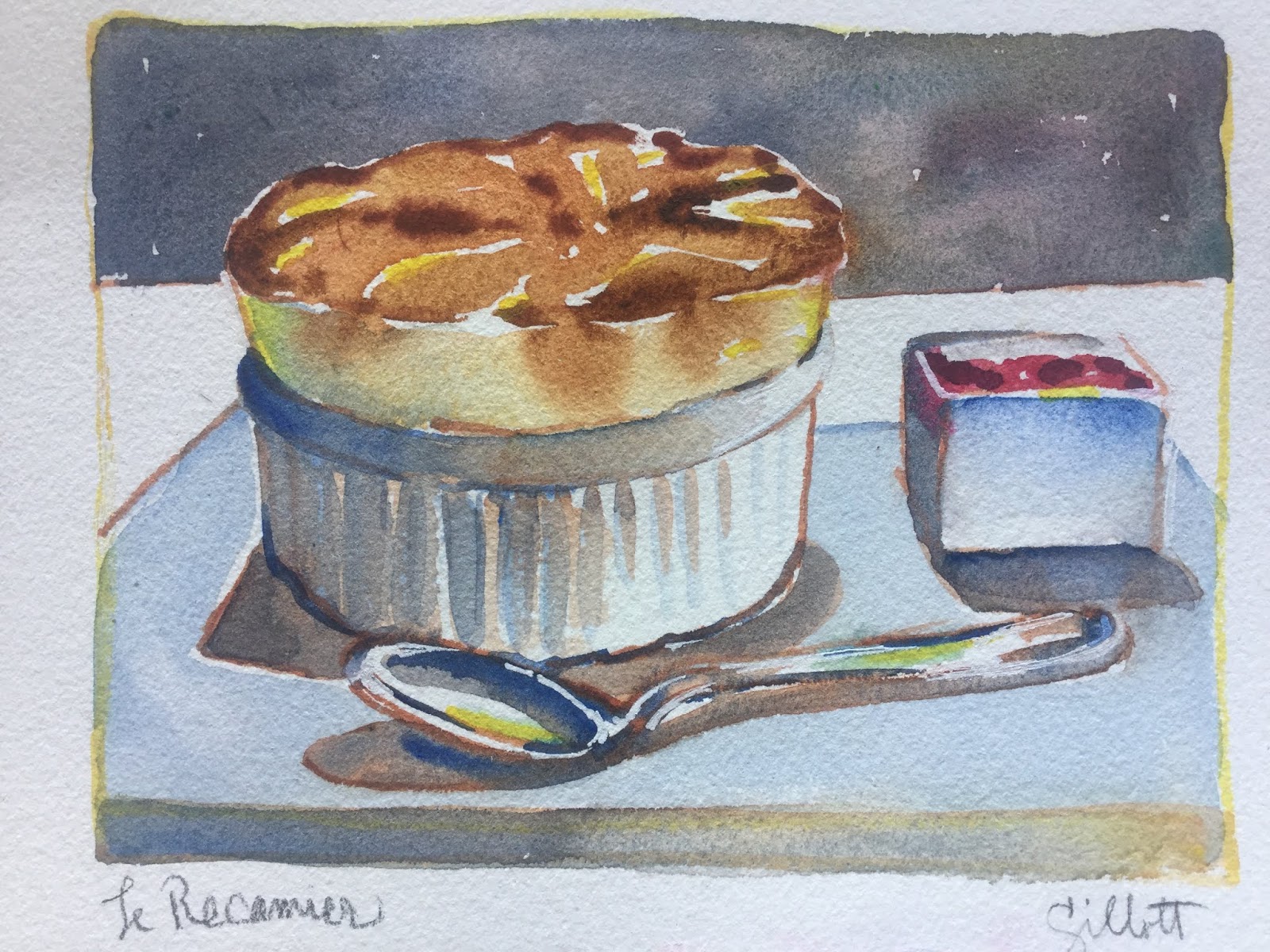
Le Recamier, by Carol Gillott. Le Recamier is a soufflé restaurant in Paris, but not the one I mention below. I’ve never been to either. I sure would love to.

Recipes below: Arugula and Fontina Soufflé; Fennel, Pear, and Taggiasca Olive Salad

With all the evils being perpetrated by our country right now, I thought I’d try to lighten up and talk a little about eggs. They are really amazing things, the way they tighten or puff depending on how you treat them. When you firm them up, you can make a flan. When you fluff them, you can produce a soufflé. There’s a restaurant in Paris called Le Soufflé that opened in 1961. Its entrance is painted a gentle light blue (see the photo below). I’ve never been, but I’ve walked past it. I’ve been told that Catherine Deneuve eats there often, or used to. I’m not sure what she’s up to lately. I just looked at their menu. It seems a little farty and a lot touristy yet also elegant. I like the idea of their morel soufflé, or maybe the one with Roquefort, or goat cheese. However the soufflé made with beef bourguigon does not sound appealing. I’m not even sure how you’d get it to rise. But wouldn’t it be nice to go for lunch and maybe order an asparagus soufflé and a ton of wine, and follow up with a vanilla soufflé for dessert? One of these days.

I have no history of soufflés in my family, and I didn’t really understand how they were made until I started seriously messing around in the kitchen myself, trying to produce something equivalent. Later I occasionally wound up in semi-fancy restaurants and came to understand the idea of the dessert soufflé.  I believe the first one I ever had was at Lutèce, where my boyfriend, now my husband, took me for a big birthday dinner in the mid eighties. I chose André Soltner’s famous Grand Marnier soufflé, and he brought it to the table himself. That was thrilling.

Soufflé is not an Italian concept, but Italian cuisine does offer something similar, often less puffy, more custardy, and you can find straight-on soufflé-like dishes there, too. I once had a gorgonzola soufflé in Rome, and it was very puffy. Whether custardy or puffy, in Italy it usually goes under the name sformato, which translates something like to unmold. I make the custardy type often, usually with whatever seasonal vegetable feels right. This time I decided to go all puff, adding two well-loved Italian ingredients, fontina and arugula.

I find this a solid dinner for two, with good bread, the salad I propose, if you like, and a few glasses of rosato, or maybe prosecco. A celebration of better things to come.

Arugula and Fontina Soufflé

I used an 8-inch-wide, 3-inch-deep traditional ceramic soufflé dish, but one wider and shallower would be fine. You’d just need to cut down the cooking time.

For the dish:

1 tablespoon soft unsalted butter
2 tablespoons grated Parmigiano cheese

For the soufflé:

3 tablespoons unsalted butter
3 tablespoons all-purpose flour
1 cup whole milk
¼ teaspoon allspice and ¼ teaspoon nutmeg, mixed together
Salt
Piment d espelette to taste
4 large egg yolks
½ cup grated Parmigiano cheese
¾ cup grated Fontina Valle d’Aosta cheese
3 cups baby arugula, blanched for a minute, drained, run under cold water to set its color, and then squeezed dry and chopped (this will yield about ½ cup chopped, and be sure to get out as much water as possible so it doesn’t weigh down your soufflé)
6 large egg whites

Smear the soft butter all over the inside of the soufflé dish. Dust the inside with the Parmigiano. You can stick the dish in the refrigerator while you get on with the recipe, so the coating stays firm, but take it out about 15 minutes before you want to bake the soufflé, so the dish is not too cold.

Preheat the oven to 400 degrees.

In a large saucepan, heat the 3 tablespoons of butter over medium heat. Add the flour, whisking it until it’s well blended. Let it cook for about a minute to burn off any raw flour taste, and then add the milk. Whisk it over medium heat until it becomes thick and smooth, about 3 minutes. Add the allspice and nutmeg mix, some salt, and some piment d’espelette. Pull the pan from the heat, and add the egg yolks, whisking them in one at a time. Mix in the Parmigiano, the Fontina, and the arugula.

In a separate bowl, beat the egg whites until they’re shiny and stiff. With a spatula fold about ¼ of the egg whites into the soufflé mixture. Then gently fold the remaining whites into the mix. You don’t need to work them in completely evenly. A little streakiness is okay and better than over mixing. Pour the mixture into the soufflé dish, and stick it in the oven.

Turn the oven down to 375 degrees, and bake for about 30 minutes. The soufflé should be lightly browned, quite puffy, and fairly firm when you touch the center of its top. Ideally you want only a tiny bit of runniness in the middle when you open it up. Serve it right away, with the salad, if you like.

Fennel, Pear, and Taggiasca Olive Salad

Fennel, Pear, and Taggiasca Olive Salad

2 medium fennel bulbs, trimmed and cut into thin rounds
2 firm but fragrant pears (I used red Anjous, because they actually smelled like pears, as opposed to the other varieties at Citarella, which smelled like nothing), cored and thinly sliced (I left on the peel for color contrast)
1 small shallot, thinly sliced
A handful of Taggiasca or Niçoise (similar to Taggiasca) olives, pitted and torn in half (or left whole, if you prefer)
4 large sprigs tarragon, the leaves lightly chopped
1 teaspoon rice wine vinegar
Salt
½ teaspoon Dijon mustard
1½ tablespoons extra-virgin olive oil
Black pepper

Place the fennel, pears, shallot, olives, and tarragon in a wide salad bowl.

Whisk the vinegar with a little salt and the mustard. Whisk in the olive oil.

Grind a little fresh black pepper over the salad, and then pour on the dressing. Toss gently with your fingers.

Read Full Post »

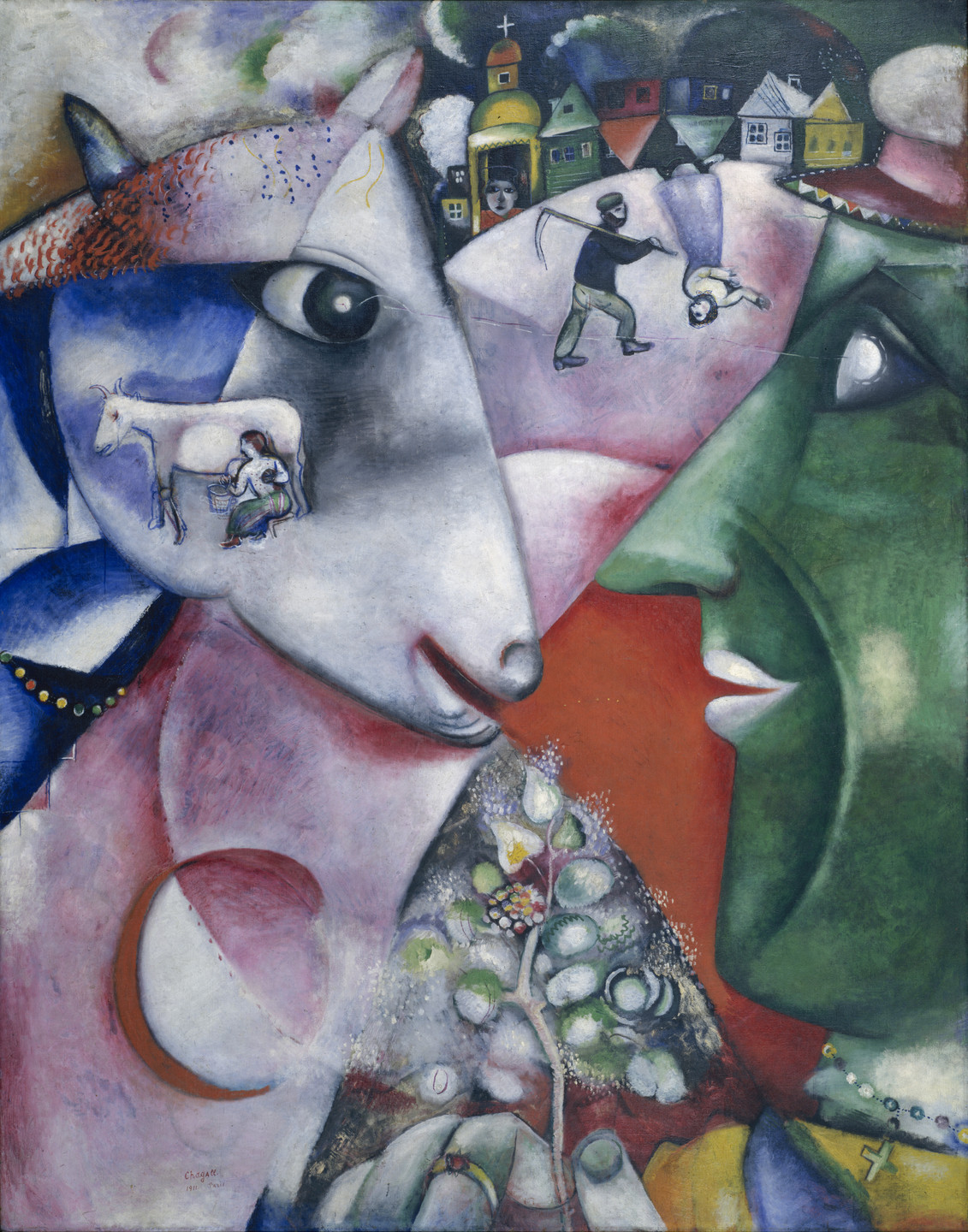
I and the Village, by Marc Chagall, 1911. He loved his goats. If you’d like to see this painting, it’s at MoMA in New York City.

Last week was my husband Fred’s birthday. We had a small party where I made a couple of roasted chickens, spatchcocked, with tarragon, good olive oil, and rice wine vinegar. Sometimes when I flatten chickens that way I’m so intent on getting a good crisp, browned skin that I hammer them dry. It didn’t happen this time, but I did achieve the brown skin, an exact hit. A birthday gift. It was a nice, loud party that culminated in a painting session and an unexpected guest sleepover. Limoncello martinis anyone? I also made this goat cheese tart for a starter.

It was a cold night for May, raining off and on, but my kitchen was warm from the oven, and the tart turned out surprisingly well. I say surprisingly because when I first tried this idea last spring what I expected would be a smooth, custardy filling came out grainy. So I chucked the recipe and forgot about it until a few days ago, when I decided to try it one more time. What got me thinking about the tart again was the summer savory popping up in my little herb garden. I love that herb. To me it tastes like a mix of thyme and black pepper with a hint of sweet pine, a slightly gentler version of its bold winter cousin. I already knew how good it was with fresh goat cheese as I often scatter it over supermarket goat cheese logs to deepen their flavor. Even though summer savory is milder than the winter version, it’s still strong and its flavor is magnified by heat, so I  pay attention to how much I add. I used only four sprigs for this filling and about the same amount worked into the pastry.

The tart came out creamy and custardy, like a sugar-free New York cheesecake. I served it as an antipasto offering with a plate of prosciutto and a bowl of Taggiasca olives.

And speaking of supermarket goat cheese, some of it is terrible, overly tangy or gritty or both. I’ve learned by trial and error which ones to avoid. West Side Market, where I usually shop, carries a fresh goat cheese log made by Président, a cheese company in western France that’s been around since the 1930s, the same people who supply us Americans with Président brie. It’s a big company, and its goat cheese logs are industrial, but their taste is good. They are tangy but not aggressively so and smooth on the tongue, so they’re great for baking.

Goat Cheese Tart with Chives and Summery Savory

  • Servings: 6 as an appetizer
  • Print

Have ready a 9-inch tart pan with a removable bottom

For the pastry:

1¾ cups unbleached flour
1 tablespoon powdered sugar
A big pinch of salt
4 large sprigs summer savory, the leaves chopped
1 stick cold unsalted butter, cut into approximately ½-inch cubes
1 large egg
2 tablespoons cold white wine, or possibly a bit more

For the filling:

1 4-ounce log fresh goat cheese, at room temperature
¼ cup heavy cream
2 large eggs, plus an egg for the egg wash
1 tablespoon runny honey, plus an extra drizzle for the egg wash
¼ teaspoon allspice
Salt
Black pepper
A few drops of sherry wine vinegar
4 or 5 sprigs summer savory, the leaves chopped
4 chives, chopped

To make the pastry, put the flour, powdered sugar, salt, and savory in the bowl of a food processor. Give it a few pulses to blend everything. Add the butter bits, and give it a few short pulses to further break up the butter. You want approximately lentil-size bits. Crack the egg into a cup, along with the white wine, and give it a good stir. Pour it on top of the flour, and pulse quickly, one, two, three, four, possibly five times, just until you have a bowl of moist crumble. If it looks too dry, add a tiny drizzle more wine, and pulse again.

Dump it all out on a work surface, and press it together into a ball. Flatten it out into a thick disk, cover it in plastic wrap, and stick it in the refrigerator for at least an hour, or overnight if that’s more convenient.

Lightly butter the tart pan.

Roll the pastry out to a round about 2 inches larger than the tart pan. Drape it in the pan, pressing in into the sides. Cut off all but about  ½ inch of overhang all around. Working around the top of the pan, fold the overhang into the top of the inside of the pan. Then push it upward so it comes up just over the top of the pan. Stick the pan in the refrigerator while you make the filling.

Preheat the oven to 400 degrees.

Put all the ingredients for the filling except for the savory and chives into a food processor, and whirl it to blend. Taste for seasoning. Add the savory and chives, and give it one quick pulse, enough to blend them in but not to purée them.

Put the extra egg in a little bowl. Add a drizzle of water, a pinch of salt, and a drizzle of honey. Mix well.

Take the tart shell from the refrigerator, and pour in the filling. Brush the pastry edges with the egg wash. Bake for about 30 to 35 minutes, just until the filling is set and the pastry takes on some color. Let it sit about 30 before slicing, so it can firm up.

Read Full Post »