Feeds:
Posts
Comments

Posts Tagged ‘Dessert’

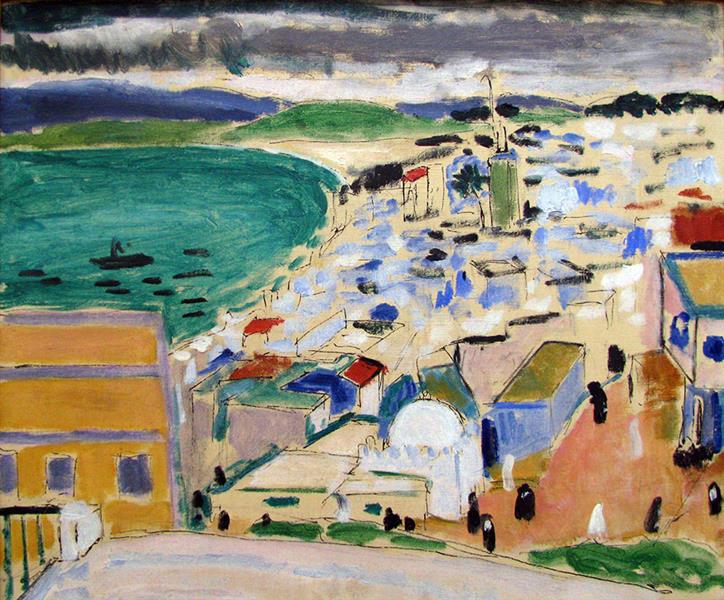
The Bay of Tangier, by Henri Matisse, 1912.

Recipes below: Lemon Sole with My Chermoula; Caramel Oranges with Carda

I’ve been fascinated with food and cooking for a long time, but not from the very beginning. Before food, I loved rocks and seashells. I accumulated large collections and entered them into my elementary school science fair each year. My father made glass cases for it all, and I’d organize it with one of those label punching machines that were popular in the sixties and  seventies (my mother worked in retail and she labelled drawers of merchandise with the gadgets: berets, leather gloves, sheer tights, thin belts, wide belts). All the rocks I found were from around New York, where I grew up; the shells I collected over the years during visits to my grandparents’ winter house in Hollywood, Florida. 

Then when I was around 14 I dropped rocks and shells altogether and turned my attention to Southern Italian cooking, the food of my ancestral homeland. The fascination has remained to this day.  However when I was about 20 I developed a culinary side gig. The cooking of Morocco became another preoccupation, never as powerful as the Italian one but still consuming.

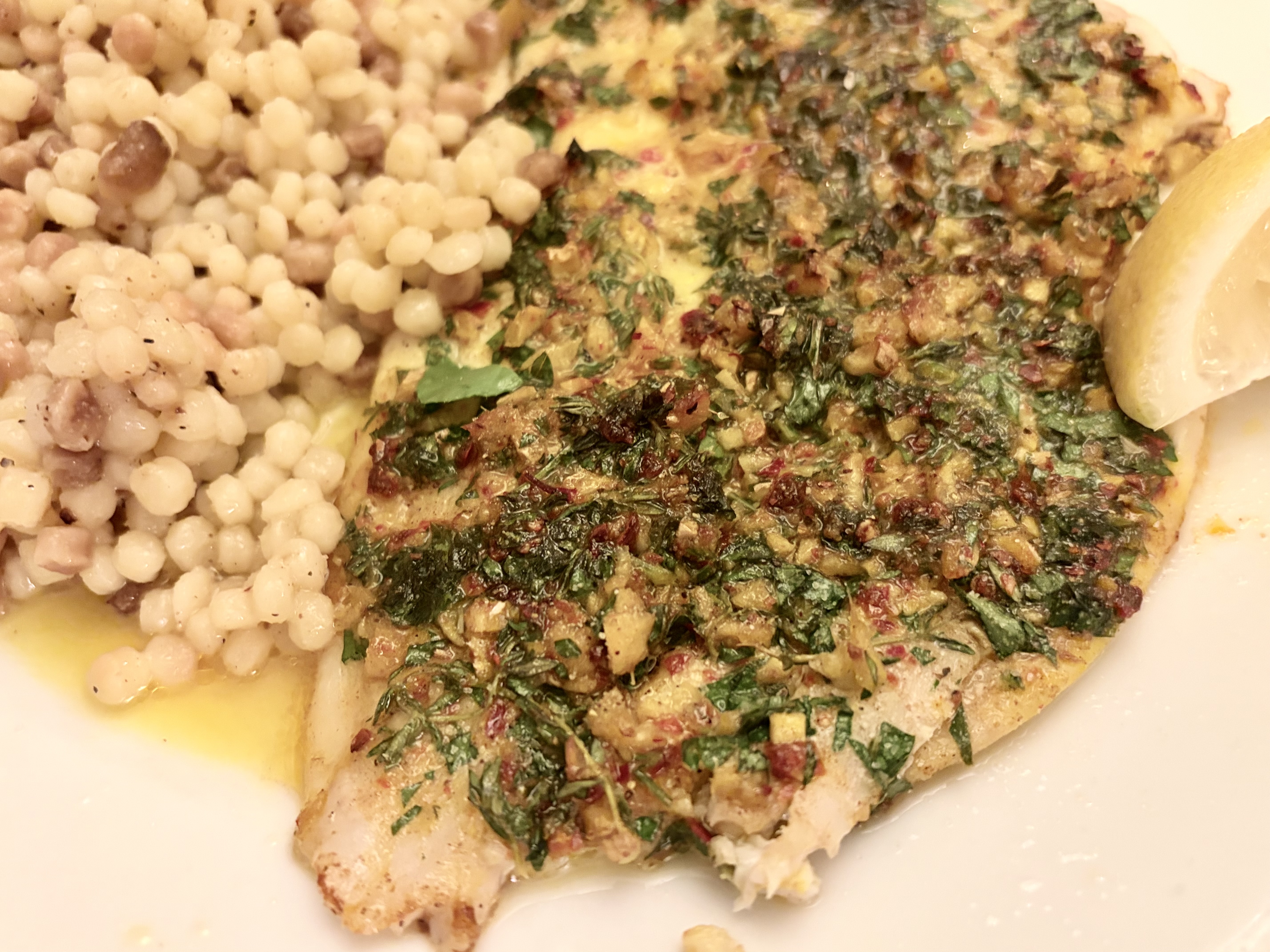
I’ve been to Morocco only once so far, but I have a lot of Moroccan cookbooks, and they’ve taken me on a journey through tagines, couscous, Marrakesh street food, and unfamiliar spices and spice mixes. Being a lover of most things seafood, I’ve been attracted to a Moroccan preparation called chermoula, a paste of fresh herbs and spices that’s mainly smeared on fish before cooking. Some cooks add hot chilies, others sharp spices like cumin or gentler spices such as cinnamon and saffron, but one constant is cilantro, in abundance. If you’ve been reading my posts for any time, you know that I abhor cilantro. Even the smell of it makes me gag. It’s extremely popular in Moroccan cooking, but I’ve worked my way around it by substituting parsley or mint or oregano, and sometimes a mix of all three. This chermoula preparation is usually so cilantro-heavy that I didn’t know how I could pull it off and still call it chermoula. So I never tried making it until now, when I finally decided not to worry and just say screw it, I’ll make it my way and call it my chermoula. So here’s what I came up with. Not traditional but, I think, really delicious. The recipe I’m offering you here is a simple treatment. All I’ve done is coat a nice piece of lemon sole bottom and top with my chermoula and stuck it under a broiler. Sole is so thin that the broiler works perfectly, cooking it to tenderness with a little browning at the edges in about 5 minutes. Other thin fillets that would work well this way would include gray sole, flounder, and fluke. But the paste will also be great on shrimp kebabs or tuna or swordfish (you might want to try a grill for those), or eggplant, or even on chicken thighs, which did great in a hot oven. I hope you’ll like my American-Italianized version of chermoula.

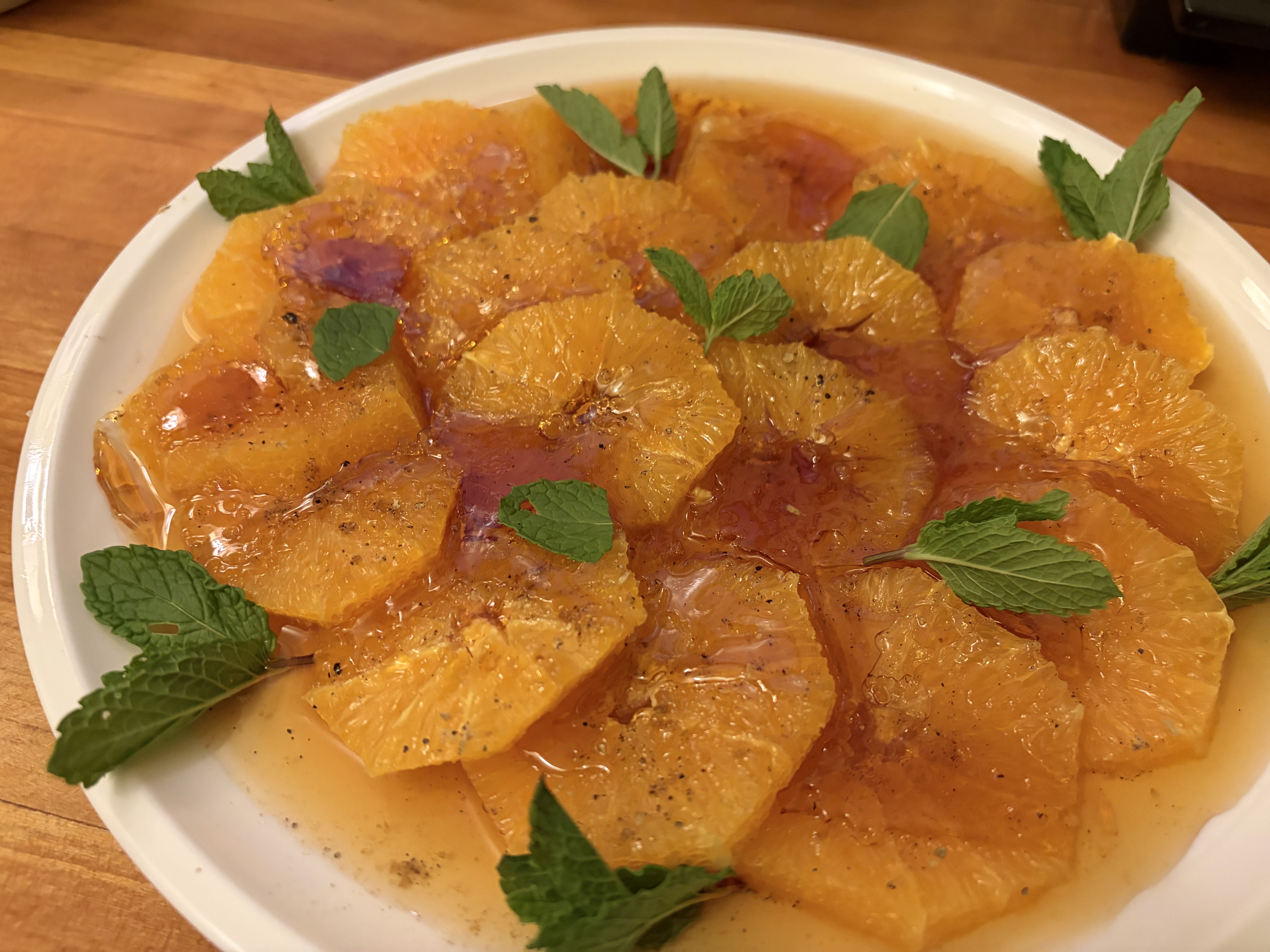
I’ve added a caramel orange dessert that I’ve been making for many years. This time I included cardamom instead of cinnamon and orange flower water, just because it seemed to be the thing to do. I wanted fruit, but there are no spring berries popping up yet in New York, and we’ve still got oranges. I thought this would be a good follow-up to the lemon sole, which I served with Israeli couscous seasoned with butter and a pinch of cinnamon.

Lemon Sole with My Chermoula

For the chermoula:

1 1-inch chunk fresh ginger, minced (about a tablespoon minced)
1 fresh garlic clove, minced
1 piece fresh red chili, minced (I used a peperoncino, about half of it, but choose your level of personal heat)
1 teaspoon ras el hanout
A big pinch of saffron threads, lightly dried and ground in a mortar and pestle
1 teaspoon honey
1 teaspoon Aleppo pepper
6 large sprigs flat-leaf parsley, the leaves well chopped
5 thyme sprigs, the leaves chopped
Salt
The grated zest from 1 lemon
3 tablespoons extra-virgin olive oil

For the fish:

2 skinless lemon sole fillets, about ½ pound each
2 tablespoons unsalted butter, melted
Lemon wedges for serving

Put all the ingredients for the chermoula into a bowl, and mix it all well. (I chopped everything by hand, figuring that the food processor would turn it to mush).

Get out a large sheet pan, and spread about ¼ of the chermoula onto the middle of it. Place the fish pieces over the chermoula, presentation side up. Spread the rest of the chermoula evenly over the top of the fillets (if you have extra chermoula, spread it on a warm pita). Drizzle the melted butter over the fillets, and give them an extra little sprinkle of salt.

Broil about 5 inches from the heat source, until just tender. Mine took about 5 minutes. Serve with lemon wedges.

Caramel Oranges with Cardamom

Use 1or 2 oranges per person. Since I served 2 people I used 4 oranges. Peel them and cut them into flat rounds. Lay the rounds out on a pretty platter, slightly overlapping. Sprinkle them with a little ground green cardamom ( I used about ½ teaspoon). Sprinkle on a tiny bit of salt.

Pour sugar into a saucepan (I used about ¾ cup, but adjust depending on how many oranges you’ve got). Add a drizzle of water. Cook over medium heat until the sugar turns a rich golden brown (you’ll really need to watch it, as once it starts to go golden it can turn from beautiful caramel to smoking black in an instant). Drizzle the caramel more or less evenly over the oranges. The caramel will harden, becoming candy-like. Let sit unrefrigerated for about about 2 hours. The caramel will soften as it mingles with the juice from the oranges, forming a nice caramel sauce. Garnish with mint or basil, if you like.

Read Full Post »

Recipe below: My Easter Pastiera

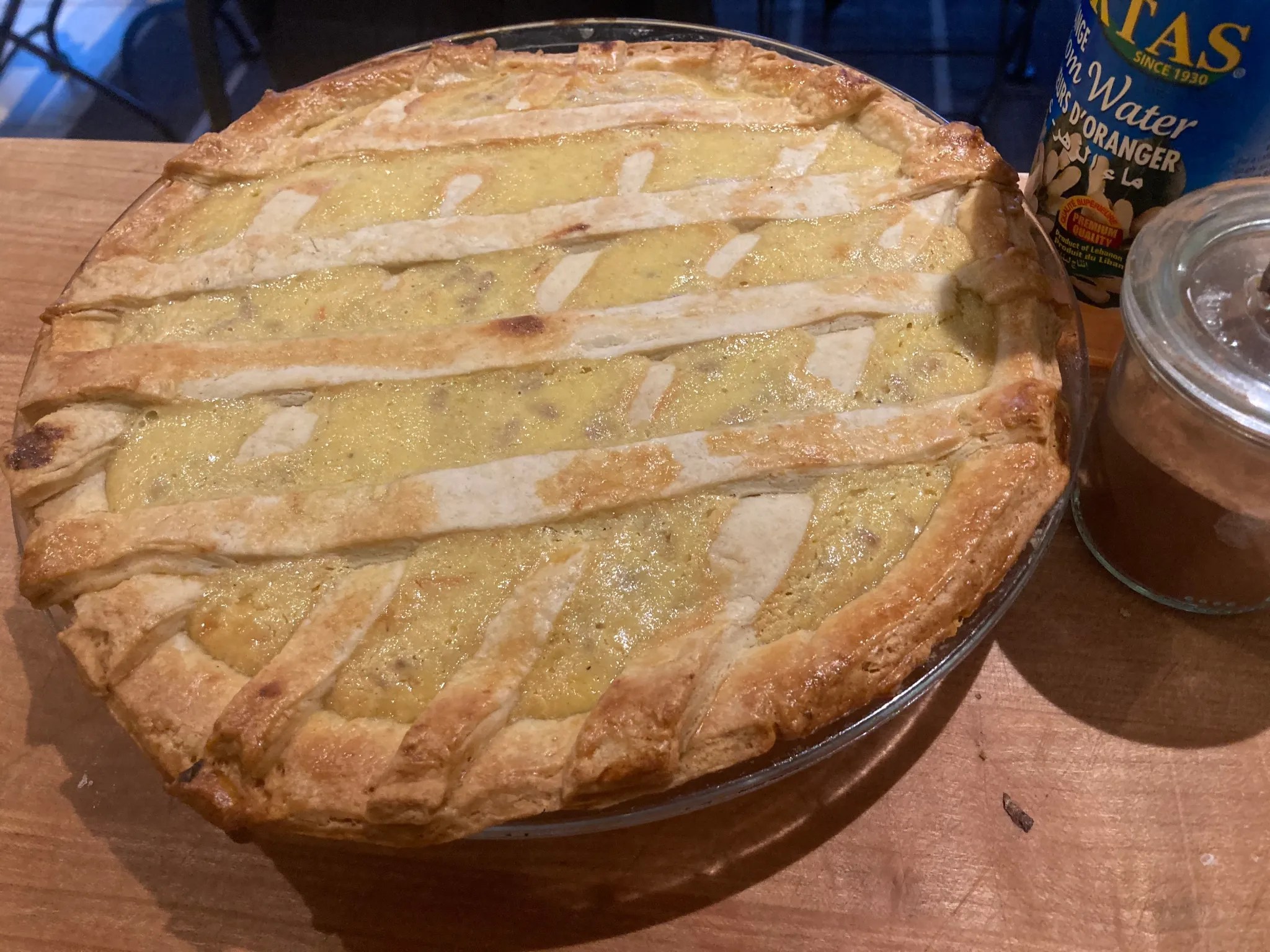
I love the subtle signs of the earth’s rebirth that Easter time brings to New York, and I love all the traditional Southern Italian Easter dishes I grew up with. Also I really enjoy creating new dishes that may or may not become family traditions in their own right, depending on how they go over. Every year I try to post a new recipe, but this year I’ve been involved with another writing project and haven’t had the creative energy to come up with anything new and exciting for my Easter table. However, people keep asking me about pastiera, the sweet ricotta and wheat berry torta that’s flavored with orange flower water, cinnamon, vanilla, and sometimes candied citron.  It’s a gorgeous flavor, mysterious even, so I thought I’d repost my recipe, just in case you want to give it a try.

Happy return to spring.

My Easter Pastiera

I used a 9-inch pie pan.

For the pasta frolla:

2½ cups regular flour, plus a little more for rolling
A big pinch of salt
½ cup powdered sugar
½ teaspoon grated nutmeg
The grated zest from 1 large lemon
1½ sticks cold unsalted butter, cut into small cubes, plus a little more for buttering the pan
2 large eggs, lightly whisked
About 2 tablespoons dry vermouth, maybe a bit more

For the farro mixture:

¾ cup farro
2 cups whole milk
A pinch of salt
1 teaspoon regular sugar
The grated zest from 1 orange

For the rest of the filling:

2 cups whole milk ricotta
1 cup powdered sugar
1 large egg, plus 2 eggs yolks
A pinch of salt
1 teaspoon orange flower water
1 teaspoon ground cinnamon
½ teaspoon ground nutmeg
1 teaspoon vanilla extract
The grated zest from 1 large lemon
The grated zest from 1 orange
1 cup of candied citron

Plus:

1 egg whisked with a little water, to serve as an egg wash

To make the pasta frolla, pour the flour into the bowl of a food processor. Add the salt, sugar, nutmeg, and lemon zest, and give it a few pulses, just to blend everything. Add the butter, and pulse a few more times, breaking the pieces up a bit. Add the eggs and the vermouth, and do a few more pulses, just until it forms a crumbly ball. If it seems too dry, add a drizzle more vermouth.

Turn out the dough onto a lightly floured work area, and give it a few quick kneads. Then press it together, and wrap it in plastic. Stick it in the refrigerator for at least an hour before you roll it out. That will make it easier to roll.

To prepare the farro mixture, pour the ingredients into a small saucepan. Cook them over medium heat until the grains are tender, about 15 minutes. If there’s still milky liquid, drain it.

To continue with the filling, put the ricotta in a large mixing bowl. Add the cooked farro and all the other ingredients. Mix well, and give it a taste to see if you might need more sugar or something.

Set the oven to 375 degrees. Butter the pie pan.

Take the dough from the refrigerator. If it’s only been in there for an hour or so, it should be ripe for rolling. If it’s super cold, you may need to let it warm for a little time. In any case, flour a work area. Cut off and set aside about ¼ of the dough to use for lattice strips. Roll the big portion out into a large round, and then drape it into the pie pan, pressing it down around the edges. Stick that in the refrigerator while you make the lattice.

Roll out the smaller piece of dough into a rectangle about the length of the pie pan. With a sharp knife, cut 8 approximately ½-inch-thick strips. If you don’t get 8 strips, don’t worry. You’ll be able to fashion a few more from the pie pan trimming.

Take the pie pan from the refrigerator, and pour in the filling. If it looks like you have too much filling, hold back on some. You can use any extra for the small crustless custard, sticking it in the oven along with the pastiera. Brush the edges of the dough all around with the egg wash. Arrange the lattice strips criss-crossed over the top, pressing them down all around the edge so they adhere. You can weave them in and out in the more sophisticated way, or just cheat and lay them across one another.

Now trim all around the pie so you have a neat round. If you need more lattice strips, you can make them with the trimming. Brush the lattice and all around the edges with the egg wash.

Put the pastiera in the oven, and bake it until it’s nicely golden all over, about 40 minutes.

Let it rest about an hour before serving. I find prosecco an especially good match for this beautiful pie.

Read Full Post »

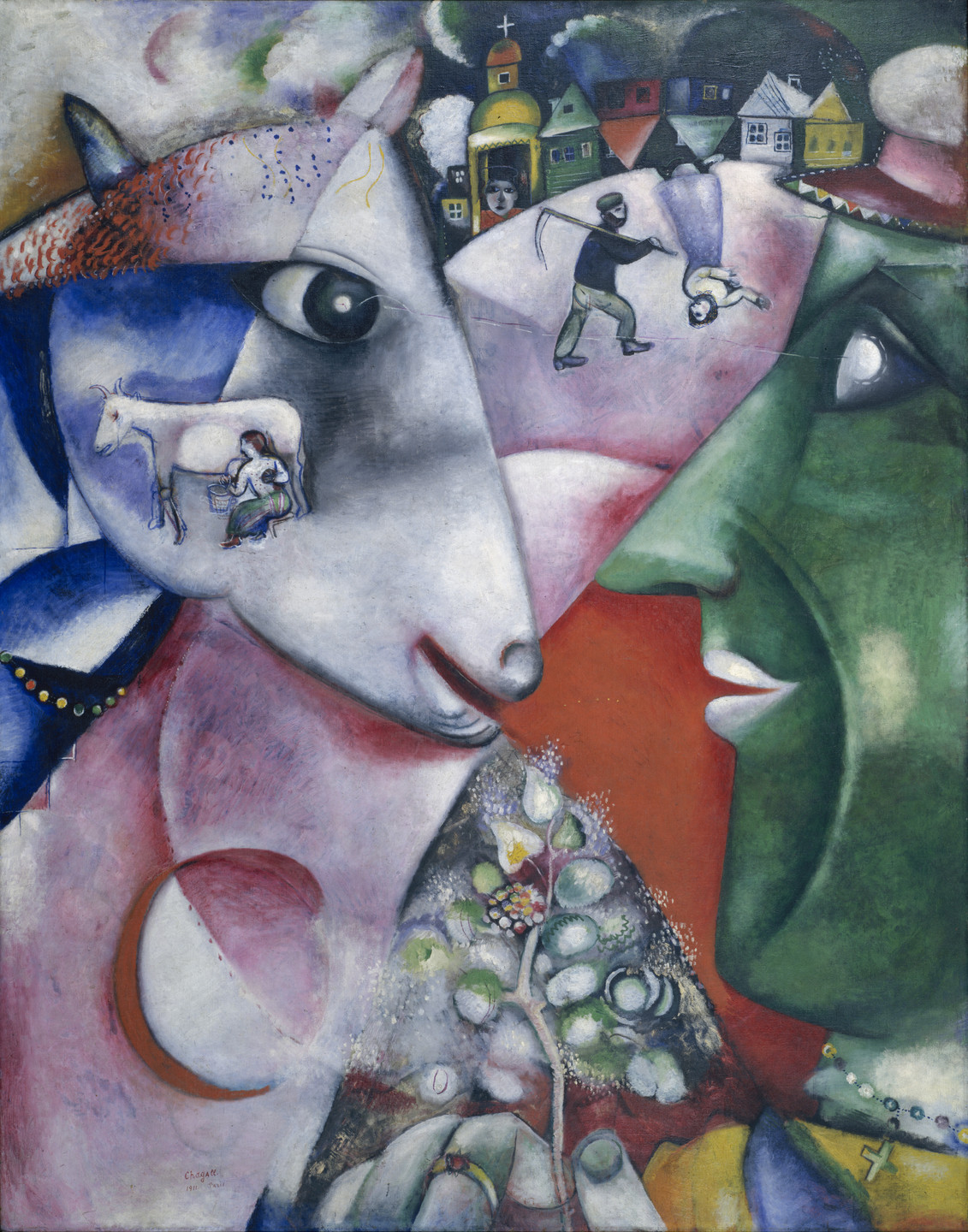
I and the Village, by Marc Chagall, 1911. He loved his goats. If you’d like to see this painting, it’s at MoMA in New York City.

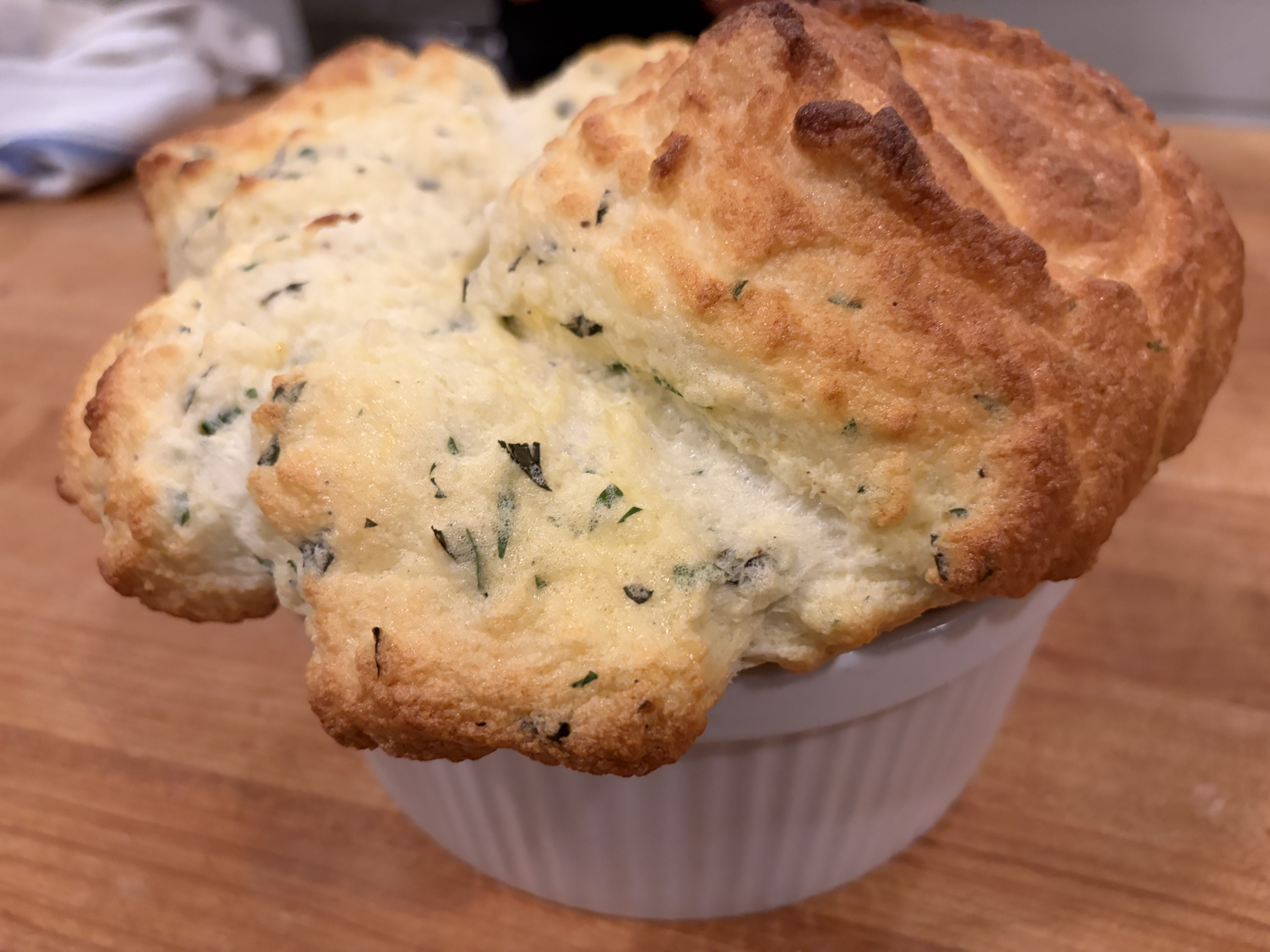
Last week was my husband Fred’s birthday. We had a small party where I made a couple of roasted chickens, spatchcocked, with tarragon, good olive oil, and rice wine vinegar. Sometimes when I flatten chickens that way I’m so intent on getting a good crisp, browned skin that I hammer them dry. It didn’t happen this time, but I did achieve the brown skin, an exact hit. A birthday gift. It was a nice, loud party that culminated in a painting session and an unexpected guest sleepover. Limoncello martinis anyone? I also made this goat cheese tart for a starter.

It was a cold night for May, raining off and on, but my kitchen was warm from the oven, and the tart turned out surprisingly well. I say surprisingly because when I first tried this idea last spring what I expected would be a smooth, custardy filling came out grainy. So I chucked the recipe and forgot about it until a few days ago, when I decided to try it one more time. What got me thinking about the tart again was the summer savory popping up in my little herb garden. I love that herb. To me it tastes like a mix of thyme and black pepper with a hint of sweet pine, a slightly gentler version of its bold winter cousin. I already knew how good it was with fresh goat cheese as I often scatter it over supermarket goat cheese logs to deepen their flavor. Even though summer savory is milder than the winter version, it’s still strong and its flavor is magnified by heat, so I  pay attention to how much I add. I used only four sprigs for this filling and about the same amount worked into the pastry.

The tart came out creamy and custardy, like a sugar-free New York cheesecake. I served it as an antipasto offering with a plate of prosciutto and a bowl of Taggiasca olives.

And speaking of supermarket goat cheese, some of it is terrible, overly tangy or gritty or both. I’ve learned by trial and error which ones to avoid. West Side Market, where I usually shop, carries a fresh goat cheese log made by Président, a cheese company in western France that’s been around since the 1930s, the same people who supply us Americans with Président brie. It’s a big company, and its goat cheese logs are industrial, but their taste is good. They are tangy but not aggressively so and smooth on the tongue, so they’re great for baking.

Goat Cheese Tart with Chives and Summery Savory

  • Servings: 6 as an appetizer
  • Print

Have ready a 9-inch tart pan with a removable bottom

For the pastry:

1¾ cups unbleached flour
1 tablespoon powdered sugar
A big pinch of salt
4 large sprigs summer savory, the leaves chopped
1 stick cold unsalted butter, cut into approximately ½-inch cubes
1 large egg
2 tablespoons cold white wine, or possibly a bit more

For the filling:

1 4-ounce log fresh goat cheese, at room temperature
¼ cup heavy cream
2 large eggs, plus an egg for the egg wash
1 tablespoon runny honey, plus an extra drizzle for the egg wash
¼ teaspoon allspice
Salt
Black pepper
A few drops of sherry wine vinegar
4 or 5 sprigs summer savory, the leaves chopped
4 chives, chopped

To make the pastry, put the flour, powdered sugar, salt, and savory in the bowl of a food processor. Give it a few pulses to blend everything. Add the butter bits, and give it a few short pulses to further break up the butter. You want approximately lentil-size bits. Crack the egg into a cup, along with the white wine, and give it a good stir. Pour it on top of the flour, and pulse quickly, one, two, three, four, possibly five times, just until you have a bowl of moist crumble. If it looks too dry, add a tiny drizzle more wine, and pulse again.

Dump it all out on a work surface, and press it together into a ball. Flatten it out into a thick disk, cover it in plastic wrap, and stick it in the refrigerator for at least an hour, or overnight if that’s more convenient.

Lightly butter the tart pan.

Roll the pastry out to a round about 2 inches larger than the tart pan. Drape it in the pan, pressing in into the sides. Cut off all but about  ½ inch of overhang all around. Working around the top of the pan, fold the overhang into the top of the inside of the pan. Then push it upward so it comes up just over the top of the pan. Stick the pan in the refrigerator while you make the filling.

Preheat the oven to 400 degrees.

Put all the ingredients for the filling except for the savory and chives into a food processor, and whirl it to blend. Taste for seasoning. Add the savory and chives, and give it one quick pulse, enough to blend them in but not to purée them.

Put the extra egg in a little bowl. Add a drizzle of water, a pinch of salt, and a drizzle of honey. Mix well.

Take the tart shell from the refrigerator, and pour in the filling. Brush the pastry edges with the egg wash. Bake for about 30 to 35 minutes, just until the filling is set and the pastry takes on some color. Let it sit about 30 before slicing, so it can firm up.

Read Full Post »