Feeds:
Posts
Comments

watercolour painting bird cardinal watercolor MacPhailBird, by Nora MacPhail.

Recipe: Red Pepper and Beet Soup with Basil Mascarpone

“Colors pursue me like a constant worry. They even worry me in my sleep.”

That was said by Claude Monet. You know what worries me? Watching gorgeous dark crimson radicchio turn mud brown in my skillet. That’s the stuff culinary worries are made of.

My color needs are especially hard to satisfy during the New York winter. Cabbages, potatoes, and dirty snow are all around me. I’d love to see a cardinal, but that seems unlikely on 13th Street (I’m talking about the bird here, not the ecclesiastical official). Red is hard to find right now, although I did see what looked like a trickle of blood in a puddle of slush the other day. The ultimate urban snow cone. Things get visually depressing in February. It’s amazing how Christmas lights hide a multitude of sins.

What’s red and available? A Negroni, a rose, the Chanel lipstick called Gabrielle. All beautiful creations. Supermarket bell peppers. Not so great, but still, when I see them lined up in neat rows in my supermarket I can’t turn away. They certainly don’t smell like the ones I get at the Greenmarket in July, with that deep mix of sweet, bitter, and earth. The ones I find now are from Florida. They have a slight gasoline aroma, which is odd. But I bought a few anyway, figuring I could coax a more pleasant flavor out of them.

For me, cooking almost always entails balancing color and taste. Heat intensifies flavor, and these winter peppers definitely needed help. Caramelization gives steaks and tomatoes and just about any food a layer of sweetness, but it also causes browning. I knew I’d need to roast the peppers (a form of caramelization), but I didn’t want their flesh to darken, messing with their lovely color, so I put them in a really hot oven until they blistered all over but didn’t quite char. The skins slipped off easily, and the flesh was now tender, fragrant, and still bright red. They didn’t have that smoky flavor you get with a flame. All that I asked from them was that they taste more like peppers. And they complied. Oh, I added a sole red beet just to up the color and sweetness.

And here’s a little report on the colors of vegetables and what they tell you about their vitamin content. Very interesting.

Red Pepper and Beet Soup with Basil Mascarpone

(Serves 4 or 5)

Extra-virgin olive oil
3 red bell peppers
1 large shallot, chopped
1 large baking potato, peeled and cut into small dice
1 garlic clove, peeled and roughly chopped
1 fresh bay leaf
4 sprigs thyme, leaves chopped
A splash of sweet vermouth
3 cups of light chicken broth
1 large red beet, roasted until tender, peeled, then chopped
Salt
A big pinch of cayenne
A few drops of sherry wine vinegar
About ½ cup mascarpone
A handful of basil leaves, cut into chiffonade

Preheat the oven to 450 degrees. Coat the peppers all over with a little olive oil, and place them on a sheet pan. Roast, turning them occasionally, until the skins are browned, cracked, and slightly blistered all over. Cover them with a kitchen towel, and let them cool until you can handle them. Then pull off their skins, gently rinsing away any remaining bits of skin under cool water. Remove the seeds, and then chop the peppers roughly.

Heat a few tablespoons of olive oil in a soup pot. Add the shallot and the potato, and sauté for a few minutes. Now add the garlic, bay leaf, and thyme, and sauté a minute longer, to release their flavors. Add the vermouth, letting it boil away. Add the chicken broth. Bring to a boil. Turn the heat down a bit, partially covering the pot, and let the soup simmer at a lively bubble for about 10 minutes. Now add the beet and the red peppers, adding a little water if needed to cover the vegetables. Simmer until everything is tender, about another 8 minutes.

Purée the soup in a food processor, and return it to the pot. Season it with salt, the cayenne, and a few drops of the vinegar. The soup should be a medium thickness. Add a little water if you need to loosen it.

Pour the soup into bowls. Top with a dollop of the mascarpone and a scattering of the basil chiffonade.

Women with Fish

woman & big fish

I wonder what this perfectly acceptable fish looked like before this crazy make-up artist got hold of her? Too much bronzer, for sure.  And take a look at that Lucille Ball lip line. And what’s up with those milky contact lenses?  And that Mohawk. I mean, please.

photo[4]Another lovely photo by Lisa Silvestri

Here’s my February column for MyCurves magazine. It’s another 400 calorie dinner, this one based on the classic Sicilian winter salad of oranges and fennel. I’ve added chicory, seared shrimp, red onion, black olives, and good olive oil. It’s a one dish meal. I hope you like it.

friariello

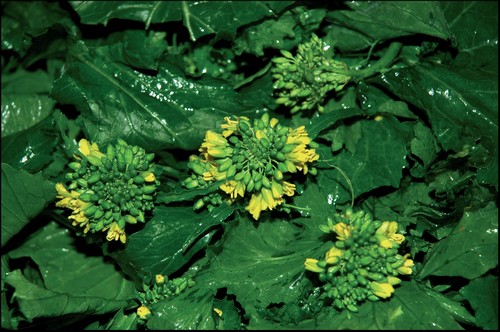
Recipe: Lasagnette con Crema di Rapini

What else can I do with my all-time favorite green vegetable? I’m talking about broccoli rabe, a source of bittersweet culinary memories for almost every Italian-American I know. We ate tons of it when I was a kid. There were a few years, when I first left my family home, when I couldn’t stand the smell of the stuff. But now, again as when I was a child, I can’t get enough of it. If I want something delicious I can cook when my brain is on vacation, I make orecchietti with broccoli rabe and sausage, or orecchietti with broccoli rabe and anchovies. Two beautiful dishes, little cognitive function needed. Lately, when my head has been clearer, I’ve wondered how else I could work this fabulous vegetable into a really good pasta. Well, how about a slightly lumpy, beautifully bitter purée? I tried it, and I loved the result.

In Italian food talk, crema doesn’t usually indicate the inclusion of cream. It refers to a purée, an ingredient made smooth. There’s no cream in this preparation, just well-cooked broccoli rabe and a few appropriate seasonings, given a quick run through the food processor.

Lasagnette con Crema di Rapini

(Serves 4 as a first course)

Salt
1 very large bunch Broccoli rabe, well trimmed of tough stems
Extra-virgin olive oil
2 small garlic cloves, thinly sliced
3 oil-packed anchovies, roughly chopped
Freshly ground black pepper
About ½ cup light chicken broth (or a good vegetable broth)
¾ pound lasagnette
2 tablespoons unsalted butter
½ cup or so of grated Grana Padano cheese
The grated zest of one large lemon
A large handful of pine nuts, lightly toasted

Set up a big pot of water, and bring it to a boil. Add salt. Add the broccoli rabe, and boil until it’s tender, about 5 minutes. Plunge the broccoli rabe into a water bath to cool, and then drain it well.

In a large skillet, sauté the garlic and anchovy in about 2 tablespoons of olive oil. Add the broccoli rabe, season it with a little salt and black pepper, and sauté until soft and fragrant, about 3 or 4 minutes. Add the chicken broth, and simmer a minute longer. Add the broccoli rabe with all the skillet liquid to a food processor, and pulse until you have a slightly chunky purée (you want some texture, not a completely smooth paste).

Bring the water back to a boil, and add the lasagnette.

Place the grated Grana Padano, the butter, and the lemon zest in a large serving bowl.

When al dente, drain the lasagnette, saving a little of the cooking water.

Add the lasagnette to the bowl. Toss quickly. Add the broccoli rabe crema and the pine nuts, and toss again, adding a little of the cooking water to loosen it up, if needed. Taste for seasoning.

_44354227_broccoli_416x300jpg

Recipe: Broccoli with Toasted Walnuts

Italians are the best vegetable cooks I know, striking the perfect balance between the food’s innate goodness and enhancement. Sometimes all it takes is olive oil, a touch of garlic, and salt. They see vegetables as equals to meat and fish and often serve them as a separate course. I love that kind of respect. I’ve never met an Italian home cook who could possibly offer up a platter of undercooked steamed broccoli.

Even now, with America more and more obsessed with food, it’s  weird how vegetables can be treated as an afterthought here. I find this most perplexing when I encounter it in Italian restaurants. Even in fancy Manhattan, vegetables can be completely unadorned and sent out as a inert lump on your plate. What is up with that?

Recently I ate at an Italian seafood restaurant near my home in the West Village. The place smelled of freshly shucked oysters, and the Falanghina I ordered was excellent. My entrée was a perfectly grilled, whole, quite expensive pompano, stuffed to overflowing with fresh rosemary and thyme. It was wonderful, but it shared the plate with very lightly steamed broccoli and string beans, both completely flavorless and tough. How about a little salt? Is that so difficult? Another recent time, at another place, I ordered a crisp and juicy pan-fried pork cutlet seasoned deftly with lemon and capers but served with a side of that dreaded boiled broccoli. Excuse me, waiter, can I get a little olive oil over here?

 Anyone who is a regular reader of mine knows that I almost never diss restaurants. Having toiled in restaurant kitchens for years, I know how damned hard it is to keep quality high night after night. Line cooking was the hardest job I ever did. But I do have an issue with vegetable preparations at more than a few Italian places in Manhattan. I’m not going to name those two trattorias I just referred to, but I’ll tell you it took all my patience not to go running into the kitchen screaming, “Why? Why?” I recall the NYU cafeteria doing a better job with broccoli.

Have you experienced this? Don’t those chefs want their  friends and families to eat more vegetables? Have they ever cooked with an Italian grandmother? Garlic, olive oil, hot pepper, white wine, lemon zest, pine nuts, olives, basil, oregano, anchovies, a thread of good vinegar, a pinch of salt. I mean really.

And here’s a Mediterranean diet update for you: A new analyses published in the Journal of the American Medical Association says a diet rich in olive oil and nuts helps cut the risk of atherosclerosis, a build up of plaque in the arteries.  So eat your broccoli with toasted walnuts. Good and good for you.

Broccoli with Toasted Walnuts

(Serves 4 as a first course or a side)

1 large bunch broccoli
Salt
Extra-virgin olive oil
1 ¼-inch-thick slice pancetta, cut into small cubes
2 garlic cloves, thinly sliced
A few big scrapings of nutmeg (about 1/8 teaspoon)
A splash of dry Marsala
A big handful of very fresh walnuts, lightly toasted and then roughly chopped
Freshly ground black pepper
The grated zest from a small lemon

Peel the stalks of the broccoli, and cut them into slices. Cut the heads into small florettes (you want to use everything except the tough end).

Set up a medium-size pot of water. Bring it to a boil, and add some salt. Add the broccoli, and blanch for about 2 minutes. Drain, and plunge the broccoli into an ice bath to stop the cooking and bring up its green color. Drain well.

Pour about 2 tablespoons of olive oil into a large skillet. Turn the heat to medium. When the oil is hot, add the pancetta, and sauté until it’s just starting to crisp and has given up much of its fat. Add the garlic, and sauté for a minute to release its flavor. Add the broccoli, and season with nutmeg and a big pinch of salt. Sauté until the broccoli is just tender and fragrant, about 3 minutes or so (this step will coax flavor from the broccoli and lightly caramelize it). Add a splash of Marsala, and let it boil away. Add the walnuts, and season with black pepper. Give it another brief sauté to blend all the flavors. Add a drizzle of fresh olive oil and the lemon zest. Serve hot or at room temp. This is great with roast chicken or pork chops. I also like it solo, with a few slices of olive oil and garlic-brushed bruschetta.

photo[2]Photo by Lisa Silverstri

Happy New Year. Here’s my February column for Curves magazine. Another 400 calorie dinner. This one’s got seared monkfish, Italian lentils, roasted tomatoes, and rosemary. Enjoy, even if you’re not on a diet.

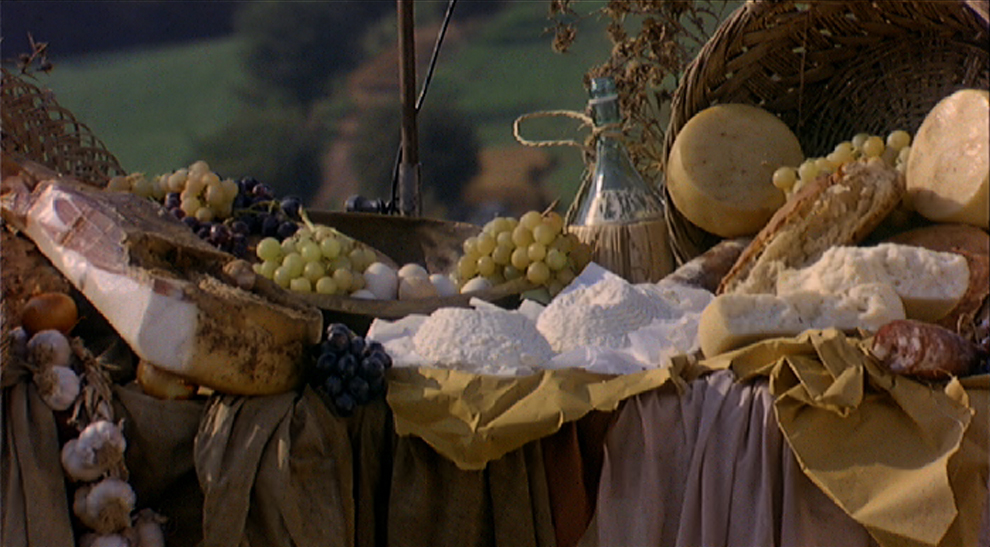
III-illust-Opening-still-From-Pasolinis-La-RicottaThe opening still from Pasolini’s La Ricotta, 1962.

Recipe: Ricotta Torta with Honey and Orange Flower Water

For me ricotta has always been one of the most soothing foods. Its subtle flavor is hard to pin down. I know it when I taste it or smell it, but it’s so elusive it almost isn’t there. Maybe that’s its appeal. All I know is that ricotta has a huge pull on my soul, calming me when I’m anxious, exciting me when I’m bored. It signals the emergence of a dish of stuffed shells or ravioli or lasagna. What I taste first in those beautiful preparations is the oozing ricotta, lightly scented with nutmeg and maybe parsley. How  that particular flavor jumps out amid all that sausage, tomato, and garlic is beyond my comprehension, but there it is, up front.

This holiday season, I wanted to work ricotta into at least one of my meals. I bought a big container of locally made fancy stuff at Murray’s cheese shop, on Bleecker Street. It was milky, with a touch of tang. How lovely.

Things got strained and strange over Christmas, as I knew they would. As you may recall from my Christmas post, my mother can’t eat by mouth anymore, so as the household cook I found this year’s holidays loaded with anxiety. Not a lot of soothing going on. How do you make a holiday meal for a family where the matriarch doesn’t eat? Make the food appealing but inconspicuous? What could that even mean? Make the food boring? Make less of it? Get takeout? I managed to plan a good Christmas one-pot meal, a big pasta with shrimp, brandy, and a lot of fresh herbs, but at 7 p.m. I still had that tub of ricotta sitting useless in my refrigerator. I became, well, not frantic exactly, but in need of a Negroni, which I made for myself. Gotta use up that ricotta or it’ll go bad. That would be a sin. Should I make a ricotta cheesecake? It’s so time-consuming with that crust and lattice top. And it’s more of an Easter thing. But whatever. I thought for a moment more and decided to just throw a cake-like concoction together quickly by beating egg whites and then combining the ricotta and flavorings together in the food processor. Into the oven it went. At least I used the ricotta. I made myself another Negroni. At best I was expecting some sort of soggy ricotta pancake. Instead I got a delicious, tender torta di ricotta, senza crust, but simple and so fragrant.

I felt peaceful eating this torta, almost carefree, as if I were dropping in on someone else’s Christmas. It was strangely transporting, right when I needed it. Who made that cake anyway? Must have been the ricotta Christmas fairy. Thank you Mr. Fairy. Wait a minute. I’ve made things like it before. That was no fairy, that was me. My old cooking brain had just kicked in, working on automatic pilot. Thank you, old brain full of good Italian recipes.

Ricotta Torta with Honey and Orange Flower Water

(Serves 4)

About a tablespoon or so of softened butter, to grease the pan
6 extra-large eggs
½ cup sugar
½ cup orange blossom honey (or some other mild honey)
A big pinch of salt
1 teaspoon vanilla extract
½ teaspoon orange flower water
The grated zest from 1 large lemon and 1 large orange
½ teaspoon freshly grated nutmeg
1/4 cup regular flour
¼ teaspoon baking powder

Preheat the oven to 325 degrees.

Grease a nine-inch springform pan with the butter.

Separate the eggs, placing the yolks in a food processor and the whites in the bowl for your mixer (either a standing or handheld one).

Add the sugar, honey, salt, vanilla, orange flower water, and lemon and orange zest to the food processor, and give it all a few good pulses. Now add the ricotta, the nutmeg, flour, and the baking powder, and process until the mixture is smooth. Pour this into a large bowl.

Whip the egg whites until they achieve the classic stiff-peaks stage.

Add half the egg whites to the bowl, and gently fold them in. Now add the rest of the egg whites, and fold until just blended.

Pour this into the greased pan, and bake until the cake is browned and puffy and feels fairly firm in the center, about 50 or 60 minutes.

Place the cake on a rack. It will immediately deflate a bit, but that’s normal. Let it cool, and then remove the rim of the pan. You can now dust it with powdered sugar, if you like.

cotechinocremonese

Recipe:  Castelluccio Lentils with Cotechino and Leeks

Happy New Year to all my Italian-food-loving friends. Do you have your lentil pot going? As many of you already know, New Year’s Day dinner in much of Italy revolves around lenticchie. Italians think their round shape makes them resemble coins. Eating them on the first of the year brings good luck and wealth, and if you really want to make a ton of money, eat them with a cotechino sausage. It’s an excellent combination, rich and opulent. Every New Year I find cotechino, a big fat sausage originating in Modena, at several Italian markets in New York. I get mine from Buon Italia. It’s traditionally poached, sliced thick, and then laid out on a bed of herby lentils. I use Castelluccio lentils from Umbria for this. Their greenish beige color and matte finish make them look and feel like mini-polka-dot ceramics, especially when I run them, uncooked, through my fingers. And they keep their cute round shape when cooked.

In bocca al lupo!

Castelluccio Lentils with Cotechino and Leeks

Makes 6 servings

1 pound Castelluccio lentils (Le Puy lentils from France are similar and maybe easier to find)
2 bay leaves
2 tablespoons red wine vinegar
½ teaspoon ground allspice
Extra-virgin olive oil
1 tablespoon Dijon mustard
¼ pound pancetta, chopped into small cubes
5 medium leeks, the white part only, finely chopped
1 carrot, peeled and cut into small dice
4 rosemary sprigs, leaves well chopped
1 2½-to-3-pound cotechino sausage
A handful of flat-leaf parsley sprigs, leaves chopped, plus extra sprigs for garnish

In a large saucepan, cover the lentils with about 3 inches of cold water, add the bay leaves, and bring to a boil. Reduce the heat, and simmer for 15 minutes. Add 1 tablespoon of the vinegar, the allspice, and a generous pinch salt, and cook for 5 minutes, until the lentils are just tender. Drain, and discard the bay leaves.

In a small bowl, whisk 3 tablespoons of olive oil with the mustard and the remaining vinegar. Season with salt and pepper.

In a large skillet, heat about a tablespoon of olive oil. Add the pancetta, and cook over moderately high heat 3 to 4 minutes, until lightly browned. Add the leeks and the carrot, and cook 5 minutes, until beginning to soften. Add the lentils, and sauté, stirring, about a minute. Turn off the heat. Stir in the vinaigrette, parsley, and rosemary. Add a little salt and pepper.

While the lentils are cooking, prepare the cotechino. Pierce the sausage skin in a few places. Place it in a large pot, and cover with cool water by 4 inches or so. Bring to a boil over medium heat. Reduce the heat to low, cover, and simmer for 20 to 25 minutes.

Spoon the lentils out into a wide serving bowl. Slice the sausage thickly on an angle, and arrange on top. Garnish with parsley sprigs, and serve. If you like, you can serve a bowl of salsa verde on the side. Oh, and the cotechino cooking water makes an excellent broth for soup.

4141004820_7df60a0ef8_o
Recipe: Baccalà Mantecato and Peperonata Bruschetta

In the last week or so several people have asked me about baccalà mantecato, knowing that I always make it for Christmas Eve. This salt cod preparation is not my usual Southern Italian fare. It comes from Venice, and it’s essentially the same as Provençale brandade. I’ve had versions of it in Liguria, too. It’s fluffy (mantecare means to whip) and mellow. People who say they don’t like baccalà almost always like this. It’s traditionally been the opener to my big Christmas Eve fish dinner. It’s a perfect fit with couscous-stuffed shrimp, spaghetti with clam sauce, zuppa di pesce, orange and fennel salad, or whatever I decide on for any given year.

Christmas Eve has always been my favorite holiday meal. Its food incorporates many of my favorite flavors, such as baccalà, and is pure joy for me to prepare. Lots of fish, lots of wine and candles, lots of people, lots of drama. Unfortunately, Christmas has now become quite hard for my family and me. A few years ago my mother had an operation that has, so far, left her unable to eat by mouth, a frustrating situation for anyone but in a food-centric Italian family like ours, up there in the realm of heartbreak. It’s almost impossible for her and us kids to get around this, taking a lot of creative thinking to shift the focus from the traditional food-heavy Christmas Eve and go in a more forgiving direction. A return to Catholicism doesn’t seem to be an option. Music helps, Verdi, Modugno, but the forbidden heart of the evening is always there, the platters of shrimp, the aroma of garlic and mint, the gorgeous color of blood oranges. What to do? What I do now is cut way way back. At first I found this upsetting, but now it’s really okay, actually the only way.

I might not be making seven or thirteen fish dishes this year. They, from experience, would just make my mother withdraw into a dark place. But nothing’s going to stop me from making this baccalà.

We all have our problems, but that doesn’t mean we can’t have a Merry Christmas. Best to you.

Baccalà Mantecato and Peperonata Bruschetta

(Serves 5 or 6 as an antipasto)

1½ pounds salt cod (try to get the thicker middle section, which has fewer bones and less skin to deal with)
1 fresh bay leaf
½ cup dry white wine
1 baking potato, cooked soft, peeled, and roughly mashed
1 large garlic clove, minced
Extra-virgin olive oil
The grated zest from 1 small lemon
A few big gratings of nutmeg
5 or 6 thyme sprigs, the leaves lightly chopped
Freshly ground black pepper
A few tablespoons of milk
About a dozen slices of Italian bread
2 roasted red bell peppers, skinned, seeded, and cut into thick strips
Sprigs of marjoram for garnish

You’ll need to soak the salt cod in a big pot of cold water for about a day and a half, changing the water a bunch of times and putting the pot in the refrigerator overnight. Toward the end, taste a bit to see if a sufficient amount of salt has leeched out. If not, soak it a little longer. Then drain it.

Place the salt cod, cut into pieces if necessary, in a large skillet. Add the bay leaf, and pour on the white wine. Add enough cool water to just cover the cod. Bring to a boil, and then turn the heat down very low. Cover the skillet, and gently simmer the cod until it just begins to flake. This should take only about 15 minutes, maybe even less if you’ve got thin cuts. If it cooks any longer, it might become dry. Take the cod from the skillet, and when it’s cool enough to handle, pull off any bones and skin.

Put the cod in a food processor, and give it a couple of pulses. Add the potato, the garlic, about ¼ cup of your best olive oil, and the lemon zest, thyme, nutmeg, and some black pepper. Give it a few more pulses. You want a texture that’s creamy but not completely smooth. Add 2 or 3 tablespoons of milk, and pulse again. You shouldn’t need any salt.

Scrape the baccalà from the food processor, and spoon it into a bowl.

Toss the roasted pepper strips in a little olive oil, and season with a pinch of salt.

When you’re ready to serve, place the bread slices on a sheet pan, and toast them on one side under a broiler. Take them out, give them a flip, and spoon some baccala mantecato on each one. Top with two strips of the roasted pepper (a cross pattern would be in spirit). Now put them back under the broiler to lightly toast the bread and warm the cod, about a minute or so. Garnish with marjoram sprigs, and serve warm.

belgin-endive-catalonia-chicory.jpg.png

Recipe: Punterelle with Seared Shrimp and Anchovy Croutons

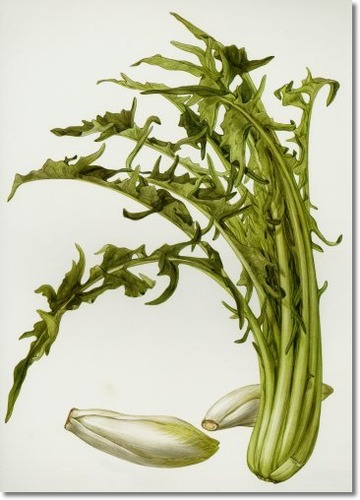
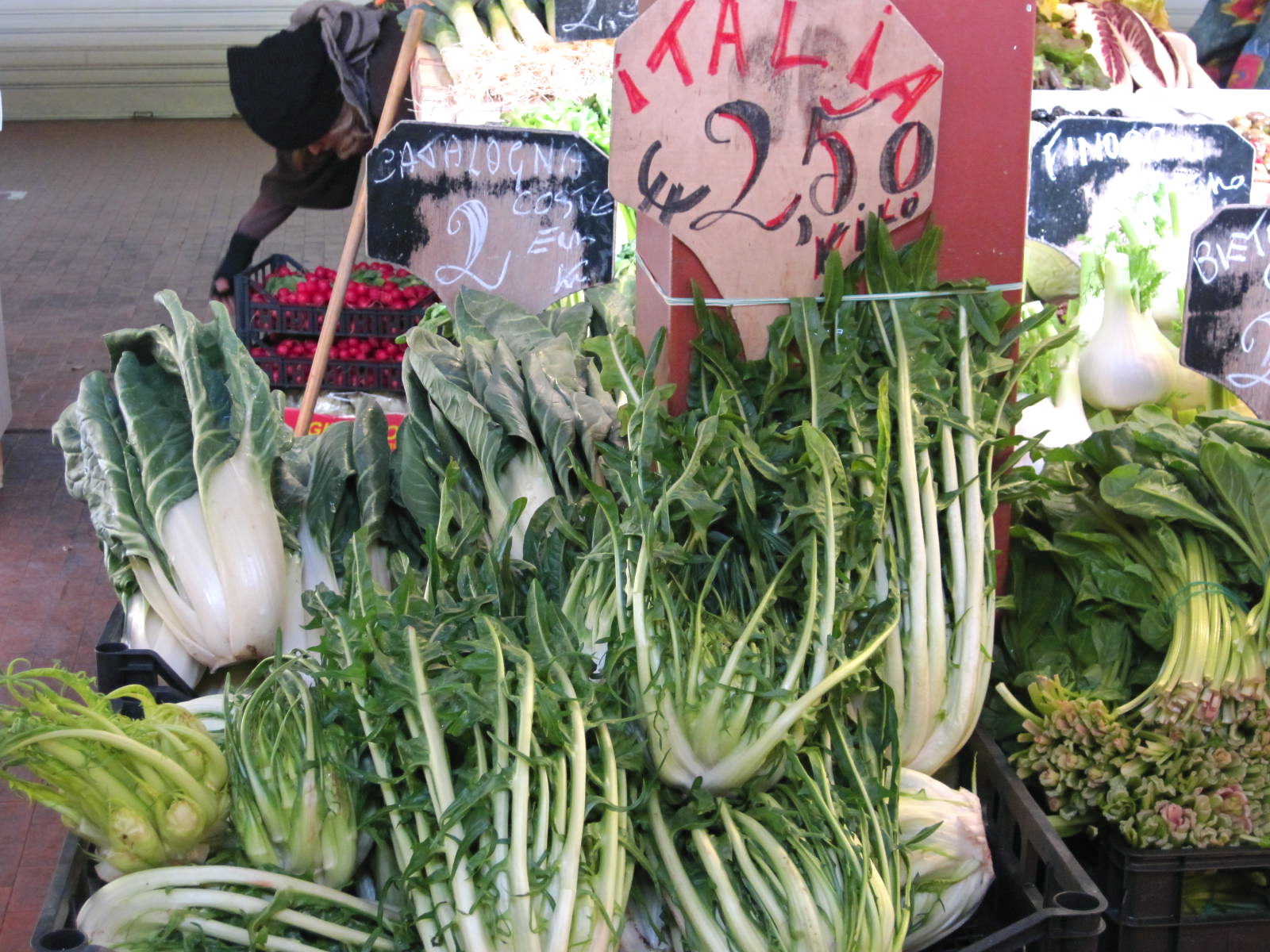
I have in my anxious cook’s hands a beautiful head of punterelle, the esteemed winter green of Rome, available there, and now here, from November to February. It’s a type of chicory most often served uncooked and dressed with anchovy, garlic, vinegar, and olive oil. I was, luckily, in Rome the first time I tasted it, and it came close to blowing my mind. For starters I couldn’t believe I was eating a green I’d never seen before, all curls and spikes, and in addition it was tossed with anchovy, a longtime top-ten flavor for me. The salad was an elegant mix of salt and bitter. Simple but commanding.

In Rome punterelle is served as a first-course salad, but in my own kitchen I’ve elaborated on the classic, making it more of a meal, working in shrimp and using anchovies to flavor croutons. The result is a true Mediterranean diet delight, combining a little seafood, a handful of greens, herbs, and garlic to produce big flavor. Its wonderful taste and health benefits recall for me the origin of the word diet. It comes from the Greek diaita, meaning way of living, and has nothing in common with the punitive tone the word has taken on today. The Greeks were talking about the normal flow of things, work, sleep, eating, social life, art, environment. I wish my life could be less anxious. There are some things I don’t have much control over, such as the normal flow of my workload, feast or famine for the most part, but I’m definitely the master of my kitchen. I cook what I love.

Punterelle does needs a little prep, but it’s not a huge deal. You want it to go all curly. In Rome I’ve seen it already cut and curled in big bins in open-air markets. No such luck here. It’s a little hard to find around New York town. Check out Italian groceries and higher-end shops. I also find it at Greenmarkets. To achieve the punterelle do, you’ll need to slice the shoots and tender stalks horizontally down the middle, chop them into manageable pieces, and then plunge them into ice water. Then watch them curl.

img_8271

Punterelle with Seared Shrimp and Anchovy Croutons

(Serves 2)

1 medium bunch punterelle, trimmed (if you can’t find punterelle, use frisée lettuce or curly chicory)
1 small shallot, thinly sliced
A few dill sprigs, lightly chopped
1 teaspoon lemon juice, plus the grated zest from the entire lemon
Salt
Freshly ground black pepper
1 garlic clove, peeled and crushed
Extra-virgin olive oil
1 cup dry bread cubes, made from day-old Italian bread
4 oil-packed anchovies, minced
6 jumbo shrimp, peeled and deveined but with the tail left on

Cut all the tender punterelle shoots horizontally through the middle and then into approximately 3-inch pieces. Include any small buds you find. Place them all in a bowl of ice water, and let them sit for about a half hour. Most of them should start to curl. Now take them from the water, and spin dry.

Place the punterelle, the shallot, and the dill in a medium salad bowl.

In a small bowl, whisk together the lemon juice with half of the minced anchovy, about 2 tablespoons of olive oil, the garlic clove, and some black pepper, pressing on the garlic to release its flavor.

In a small skillet, heat a tablespoon of olive oil over medium-high heat. Add the bread cubes and the remaining anchovy and a few turns of black pepper, and sauté until golden and crisp, about 2 minutes.

Sprinkle the lemon zest on the shrimp, and season with salt and pepper. Set up another skillet over high heat, adding a thin film of olive oil. When hot, add the shrimp, and sauté quickly, just until tender, about 2 minutes.

Dress the salad with the vinaigrette, and divide it onto two plates. Place three shrimp around each salad, and scatter the croutons on top.