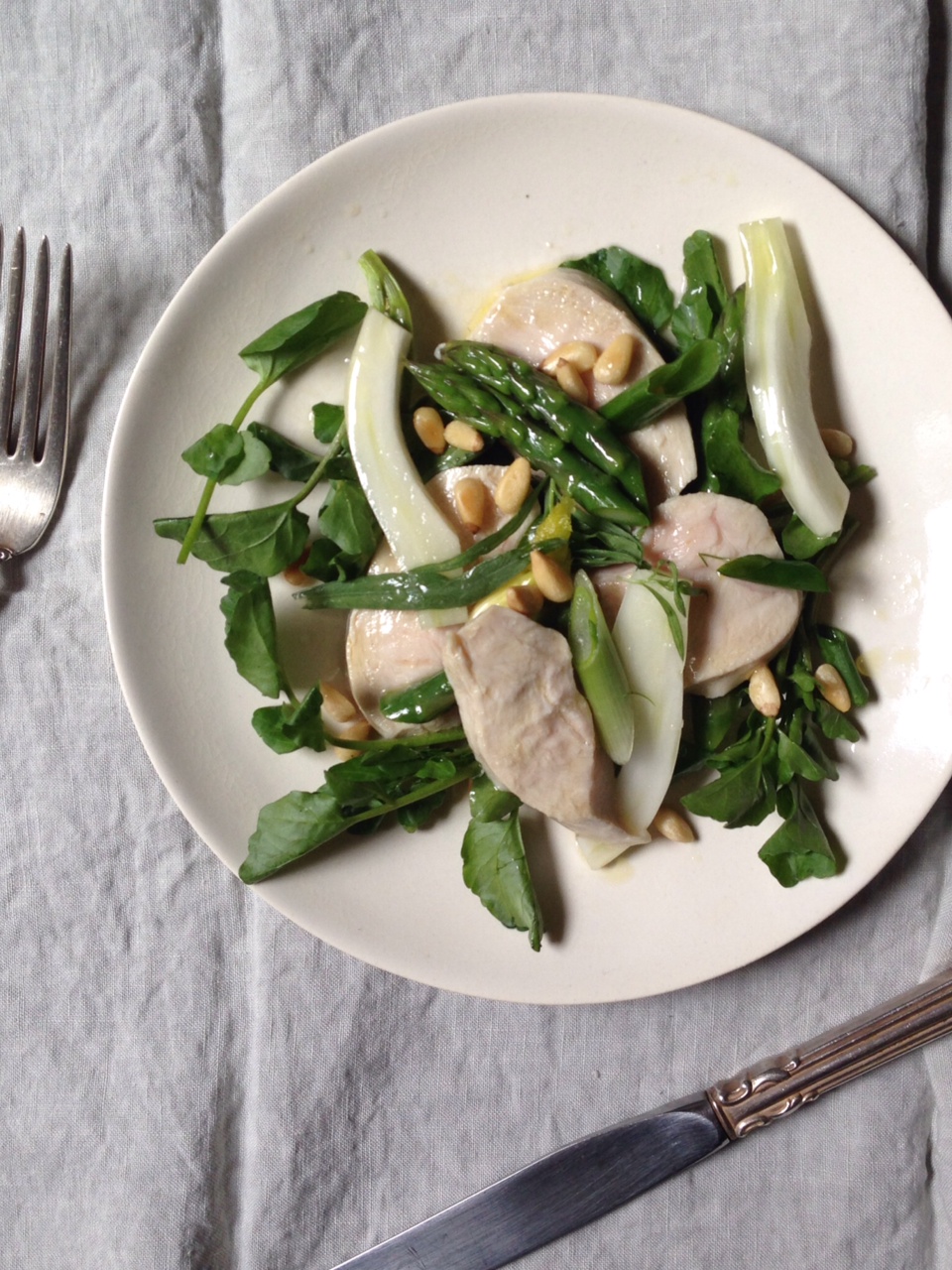
 Photo by Lisa Silvestri
Here’s my April column for MyCurves. It’s for gently poached chicken with asparagus, watercress, and sweet spices. Very light. Very Spring. For the ladies who lunch, or for anyone who’d like to shed a few pounds.
Photo by Lisa Silvestri
Here’s my April column for MyCurves. It’s for gently poached chicken with asparagus, watercress, and sweet spices. Very light. Very Spring. For the ladies who lunch, or for anyone who’d like to shed a few pounds.
Posted in Uncategorized | 2 Comments »

Recipe: Artichokes à la Barigoule with Ras el Hanout
The artichoke looks complicated, like an elaborate multitiered dress that might take some time getting into but would ultimately be worth the trouble. Plus it’s got spikes. Can’t beat that. And its taste is like . . . what is it like? It’s both subtle and assertive, a strange combination. That’s another part of its allure.
Weird weather patterns in the western U.S. have proven beneficial for artichokes this year. There are lots of the big globes around, a glut, I guess, but I’m also seeing those sometimes hard to find “babies.” They aren’t really babies; they’re actually more like midgets. They’re full-grown, just small incidental growths that pop up lower on the stalk. A few days ago I found really nice ones, heavy for their size, solid, cute. And so easy to prep. No chokes. Hardly any waste. I just pulled off a few tough outer leaves, trimmed the tops, and cooked them whole. So pretty.
Artichokes à la barigoule is a dish that has always fascinated me. I like slow-cooked vegetables that soak up flavors as they soften. This preparation turns up in many of the Provençal cookbooks I own—Olney, of course, but over and over in many others. It’s a classic in French Mediterranean cooking but not often found in bistros around here. I’m not sure why. It’s delicious, gentle but deeply satisfying, like the artichoke itself. Barigoule is essentially a braise, with wine and stock, often finished with a splash of acid, such as a good vinegar. Most recipes contain carrots and fennel and spring herbs. Chervil, parsley, dill, fennel tops.
I love ras el hanout, the North African spice mix that’s used often in couscous dishes. It varies from region to region and from shop to shop. You can find it premixed at Middle Eastern food shops, such as Kalustyan’s here in Manhattan. I like to make my own, and that often varies too. Right now I’m using a mix of anise, fennel, allspice, cardamom (I love cardamom), clove, black pepper, cinnamon, coriander, cumin, and ginger. Some versions contain rose petal, dried thyme, or bay leaf. I use ras le hanout as a dry rub for lamb and chicken and in some tagines. Lately I’ve been adding it to vegetables. It’s excellent with eggplant and tomatoes, as well with as artichokes. I do restrain myself, though, including just a hint, so it slips into my Italian and French Mediterranean dishes without tipping the balance to out and out North African cooking.
Artichokes à la Barigoule with Ras el Hanout
(Serves 4 as a first course)
The juice from 1 lemon
2 dozen or so baby artichokes
Extra-virgin olive oil
½ teaspoon piment d’Espelette or another medium hot paprika
½ teaspoon ras el hanout
1 large shallot, thinly sliced
2 carrots, peeled and cut into rounds on an angle
1 tender inner celery stalk, thinly sliced, plus the leaves from a few stalks
2 garlic cloves, thinly sliced
The leaves from 4 big sprigs of thyme
Salt
A splash of dry vermouth
1½ cups or so light chicken broth
A few drops of Spanish sherry vinegar
1 tablespoon unsalted butter
A handful of chervil
Set up a bowl of cold water, and add the lemon juice. Trim the tough outer leaves off of the artichokes until you get down to the lighter green ones. Trim the tops and bottoms off of the artichokes. Drop the artichokes into the water.
In a skillet, heat about 2 tablespoons of olive oil over medium heat. Add the artichokes, piment d’Espellete, ras el hanout, shallot, carrots, and celery (but not the leaves), seasoning with a little salt. Sauté until the artichokes take on a little color and everything is just starting to soften, about 4 minutes. Add the garlic and the thyme leaves, sautéing just to release their fragrances, about a minute. Add the vermouth, and let it bubble for a minute. Add the chicken broth, turn the heat down a drop, and simmer at a low bubble, uncovered, until the artichokes are just fork tender, about 12 to 15 minutes (you’ll want to turn them around in the broth from time to time so they cook evenly). There should still be a fair amount of slightly thickened liquid in the skillet.
Add a few drops of the vinegar, the butter, and the celery leaves, and give it all a stir. Scatter the chervil over the top. Serve warm or at room temperature.
Posted in Uncategorized | 7 Comments »

This is Barb Troiano. She lives upstairs from me. She’s a fish hoarder. When I took this shot, she was going through a mackerel phase, but there’s been other stuff, believe me. Scallops in their shells, shad roe, eels. I’m not completely sure where she gets this fish, but I sense she’s got a connection to the Fulton Fish Market, I think a mob guy she used to date. She’s spoken fondly of Eddie, and I’ve seen him, or some older guy, hobbling up to her apartment with wooden boxes. He looks to be about five foot two, maybe Irish. Not bad looking. Old flames die hard.
Needless to say, her apartment stinks. About four times a year the social services send a group of men in hazmat suits to clean through all this misery (she doesn’t even eat fish, so this compulsion is truly wasteful). They often resort to hanging a thick plastic tube out her window that leads to a dumpster, which quickly gets filled. Then for a week or two I’ll see social workers marching in and out of her place with clipboards. I can hear Barb crying that she’ll never do it again. She’s reformed. But then she’ll start screaming that she hasn’t had a paint job in 16 years and she’s due one, as if these social workers had any say over that. She’s got a complicated mind. On two occasions she’s dropped typing books off at my apartment. Barb seems to think they’ll help with my career.
The eviction notices build up, but it’s hard to evict anyone in this welcoming city, especially an older person. And the thing is, Barb is nice. She does an amazing Billie Holiday interpretation. That’s probably one of the reasons Eddie fell for her. I wonder what she looked like when she was young.
It’s now early spring and I’m sensing it’s about time for another hazmat show upstairs. It smells, but it has been worse. At the moment, I’m thinking slightly over the hill mussels. Poor Barb. She’s a tormented soul. Maybe a good candidate for Lexapro, not that she’d ever see a psychiatrist. I don’t want her evicted. Where would she go? I just want her to stop what she’s doing.
Posted in Uncategorized | 17 Comments »
 A good place to shop for your antipasto table, in Norcia, Italy.
Recipe: Antipasto Salad with Soppressata, Roasted Chickpeas and Tomatoes
You know how it is. After throwing a big dinner, you’ve got leftover bits of mortadella, pecorino, a lump of mozzarella, roasted peppers, some sliced fennel, perhaps a few olives, the stuff that made up your antipasto platter. Some of it is still on platters, some worked into the rug, along with a shattered wine glass (a terrible conundrum for cats). I just assume most of my readers can relate to this. I wrap all the food nuggets separately and shove them in the fridge, usually not including the stuff on the rug. Often they make it into a pasta sauce, everybody’s standby dish for odds and ends. But lately my favorite use for enticing refrigerator finds is in a salad. I know this isn’t exactly a mind-blowing concept, but some of the antipasto- inspired salads I’ve come up with have really moved me.
Flavors from the antipasto table tend toward the rich, the salty, and the vinegary, qualities that to my palate work best with winter greens, especially chicories. Escarole, curly chicory, radicchio, frisée, endive, in combination or alone, all make a good base. For me such a sturdy salad is a nice change from winter’s heavy-duty “comfort food.” I mean, how much baked macaroni can one body stand?
My antipasto offerings change according to my meal plans, of course, and thus the salads that come later vary, too. When I make an all-out traditional meal, with fresh anchovies, preserved tuna or cacciatorini, roasted peppers, cannellini beans, pecorino, those leftovers will produce one type of salad. If, on the other hand, I use lots of roasted vegetables, that’s an altogether different situation. I keep an open mind.
The antipasto salad is essentially improvisational, but if I’m in the mood, I’ll go out and buy stuff especially for it, maybe just to round out what I’ve got in the fridge (a chunk of sliced prosciutto, for instance). The key to success here, no matter if I use leftovers or head to the store on a mission, is what I choose to include and, even more important, leave out. Overkill doesn’t work.
Here’s a recent version. I had leftover roasted chickpeas and tomatoes on hand. They’re both easy enough to make, but please feel free to substitute something you’ve already got and feel would blend nicely.
By the way, if you ever get to Norcia, the pork shop in the above photo is an amazing place. You can’t miss it. The last time I was there, it had blown up pig’s bladders hanging all over the place like party balloons. I certainly hope that tradition continues.
Antipasto Salad with Soppressata, Roasted Chickpeas and Tomatoes
(Serves 4 as lunch or a light supper)
2 cans chickpeas, well rinsed and dried
Extra-virgin olive oil
2 pints grape tomatoes
Salt
Freshly ground black pepper
Aleppo pepper
2 garlic cloves, thinly sliced
About 6 sage leaves, chopped
4 small rosemary sprigs, leaves chopped
A medium head of escarole, torn into bits
2 endives, cut into long, thin slices
A very small shallot, thinly sliced
A chunk of soppressata, cut into matchsticks
A small chunk of aged pecorino Toscano cheese, broken into small pieces
2 inner celery stalks, thinly sliced, plus a handful of celery leaves, left whole
A teaspoon or so of red wine vinegar
A tablespoon of chicken broth
A pinch of ground allspice
Salt
Preheat the oven to 425 degrees. Set out two sheet pans. Spread the chickpeas out on one and the tomatoes on the other. Toss them both with olive oil. Season the chickpeas with salt and the Aleppo (or another medium hot dried chili), and sprinkle the tomatoes with salt and black pepper. Bake until the chickpeas are crisp but still soft in the center, about 20 minutes, and the tomatoes have burst and are starting to brown at the edges, about 15 minutes. Take them from the oven, and scatter garlic over both. Scatter the rosemary on the tomatoes, and the sage on the chickpeas. Let cool a bit.
In a large salad bowl, combine the escarole, endive, shallot, soppressata, pecorino, and the celery and its leaves. Add as much of the tomatoes and chickpeas as you like (save leftovers for pasta or soup or another salad (you see, it’s a continuing cycle)).
Whisk together the vinegar, chicken broth, allspice, a pinch of salt, and about 2 tablespoons of olive oil. Pour this over the salad and toss well.
Here are the main ingredients for a few other antipasto salads I’ve recently made and really liked:
Arugula
Roasted endive
prosciutto
Parmigiano Reggiano cheeseFrisée lettuce
Raw fennel
Toasted almonds
Baby artichokes cooked in oil and white wine
Roasted potatoes with fennel seeds
TarragonKale
Mortadella
Mozzarella
Roasted red peppers
Black olives
Marjoram and parsley
Posted in Uncategorized | 6 Comments »
![photo[6]](https://ericademane.com/wp-content/uploads/2014/03/photo6.jpg) Photo by Lisa Silvestri
Photo by Lisa Silvestri
Here’s my March column for MyCurves magazine. It’s another 400 calorie per serving dinner. It looks extravagant, and I guess in some ways it is, but it’s quick and really fresh tasting. And almost no carbs.
Posted in Uncategorized | Leave a Comment »
 Bird, by Nora MacPhail.
Recipe: Red Pepper and Beet Soup with Basil Mascarpone
“Colors pursue me like a constant worry. They even worry me in my sleep.”
That was said by Claude Monet. You know what worries me? Watching gorgeous dark crimson radicchio turn mud brown in my skillet. That’s the stuff culinary worries are made of.
My color needs are especially hard to satisfy during the New York winter. Cabbages, potatoes, and dirty snow are all around me. I’d love to see a cardinal, but that seems unlikely on 13th Street (I’m talking about the bird here, not the ecclesiastical official). Red is hard to find right now, although I did see what looked like a trickle of blood in a puddle of slush the other day. The ultimate urban snow cone. Things get visually depressing in February. It’s amazing how Christmas lights hide a multitude of sins.
What’s red and available? A Negroni, a rose, the Chanel lipstick called Gabrielle. All beautiful creations. Supermarket bell peppers. Not so great, but still, when I see them lined up in neat rows in my supermarket I can’t turn away. They certainly don’t smell like the ones I get at the Greenmarket in July, with that deep mix of sweet, bitter, and earth. The ones I find now are from Florida. They have a slight gasoline aroma, which is odd. But I bought a few anyway, figuring I could coax a more pleasant flavor out of them.
For me, cooking almost always entails balancing color and taste. Heat intensifies flavor, and these winter peppers definitely needed help. Caramelization gives steaks and tomatoes and just about any food a layer of sweetness, but it also causes browning. I knew I’d need to roast the peppers (a form of caramelization), but I didn’t want their flesh to darken, messing with their lovely color, so I put them in a really hot oven until they blistered all over but didn’t quite char. The skins slipped off easily, and the flesh was now tender, fragrant, and still bright red. They didn’t have that smoky flavor you get with a flame. All that I asked from them was that they taste more like peppers. And they complied. Oh, I added a sole red beet just to up the color and sweetness.
And here’s a little report on the colors of vegetables and what they tell you about their vitamin content. Very interesting.
Red Pepper and Beet Soup with Basil Mascarpone
(Serves 4 or 5)
Extra-virgin olive oil
3 red bell peppers
1 large shallot, chopped
1 large baking potato, peeled and cut into small dice
1 garlic clove, peeled and roughly chopped
1 fresh bay leaf
4 sprigs thyme, leaves chopped
A splash of sweet vermouth
3 cups of light chicken broth
1 large red beet, roasted until tender, peeled, then chopped
Salt
A big pinch of cayenne
A few drops of sherry wine vinegar
About ½ cup mascarpone
A handful of basil leaves, cut into chiffonade
Preheat the oven to 450 degrees. Coat the peppers all over with a little olive oil, and place them on a sheet pan. Roast, turning them occasionally, until the skins are browned, cracked, and slightly blistered all over. Cover them with a kitchen towel, and let them cool until you can handle them. Then pull off their skins, gently rinsing away any remaining bits of skin under cool water. Remove the seeds, and then chop the peppers roughly.
Heat a few tablespoons of olive oil in a soup pot. Add the shallot and the potato, and sauté for a few minutes. Now add the garlic, bay leaf, and thyme, and sauté a minute longer, to release their flavors. Add the vermouth, letting it boil away. Add the chicken broth. Bring to a boil. Turn the heat down a bit, partially covering the pot, and let the soup simmer at a lively bubble for about 10 minutes. Now add the beet and the red peppers, adding a little water if needed to cover the vegetables. Simmer until everything is tender, about another 8 minutes.
Purée the soup in a food processor, and return it to the pot. Season it with salt, the cayenne, and a few drops of the vinegar. The soup should be a medium thickness. Add a little water if you need to loosen it.
Pour the soup into bowls. Top with a dollop of the mascarpone and a scattering of the basil chiffonade.
Posted in Uncategorized | 5 Comments »

I wonder what this perfectly acceptable fish looked like before this crazy make-up artist got hold of her? Too much bronzer, for sure. And take a look at that Lucille Ball lip line. And what’s up with those milky contact lenses? And that Mohawk. I mean, please.
Posted in Uncategorized | Leave a Comment »
![photo[4]](https://ericademane.com/wp-content/uploads/2014/02/photo4.jpg) Another lovely photo by Lisa Silvestri
Another lovely photo by Lisa Silvestri
Here’s my February column for MyCurves magazine. It’s another 400 calorie dinner, this one based on the classic Sicilian winter salad of oranges and fennel. I’ve added chicory, seared shrimp, red onion, black olives, and good olive oil. It’s a one dish meal. I hope you like it.
Posted in Uncategorized | 4 Comments »
Recipe: Lasagnette con Crema di Rapini
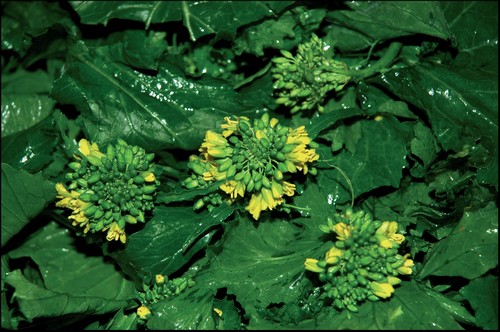
What else can I do with my all-time favorite green vegetable? I’m talking about broccoli rabe, a source of bittersweet culinary memories for almost every Italian-American I know. We ate tons of it when I was a kid. There were a few years, when I first left my family home, when I couldn’t stand the smell of the stuff. But now, again as when I was a child, I can’t get enough of it. If I want something delicious I can cook when my brain is on vacation, I make orecchietti with broccoli rabe and sausage, or orecchietti with broccoli rabe and anchovies. Two beautiful dishes, little cognitive function needed. Lately, when my head has been clearer, I’ve wondered how else I could work this fabulous vegetable into a really good pasta. Well, how about a slightly lumpy, beautifully bitter purée? I tried it, and I loved the result.
In Italian food talk, crema doesn’t usually indicate the inclusion of cream. It refers to a purée, an ingredient made smooth. There’s no cream in this preparation, just well-cooked broccoli rabe and a few appropriate seasonings, given a quick run through the food processor.
Lasagnette con Crema di Rapini
(Serves 4 as a first course)
Salt
1 very large bunch Broccoli rabe, well trimmed of tough stems
Extra-virgin olive oil
2 small garlic cloves, thinly sliced
3 oil-packed anchovies, roughly chopped
Freshly ground black pepper
About ½ cup light chicken broth (or a good vegetable broth)
¾ pound lasagnette
2 tablespoons unsalted butter
½ cup or so of grated Grana Padano cheese
The grated zest of one large lemon
A large handful of pine nuts, lightly toasted
Set up a big pot of water, and bring it to a boil. Add salt. Add the broccoli rabe, and boil until it’s tender, about 5 minutes. Plunge the broccoli rabe into a water bath to cool, and then drain it well.
In a large skillet, sauté the garlic and anchovy in about 2 tablespoons of olive oil. Add the broccoli rabe, season it with a little salt and black pepper, and sauté until soft and fragrant, about 3 or 4 minutes. Add the chicken broth, and simmer a minute longer. Add the broccoli rabe with all the skillet liquid to a food processor, and pulse until you have a slightly chunky purée (you want some texture, not a completely smooth paste).
Bring the water back to a boil, and add the lasagnette.
Place the grated Grana Padano, the butter, and the lemon zest in a large serving bowl.
When al dente, drain the lasagnette, saving a little of the cooking water.
Add the lasagnette to the bowl. Toss quickly. Add the broccoli rabe crema and the pine nuts, and toss again, adding a little of the cooking water to loosen it up, if needed. Taste for seasoning.
Posted in Uncategorized | 8 Comments »
Recipe: Broccoli with Toasted Walnuts
Italians are the best vegetable cooks I know, striking the perfect balance between the food’s innate goodness and enhancement. Sometimes all it takes is olive oil, a touch of garlic, and salt. They see vegetables as equals to meat and fish and often serve them as a separate course. I love that kind of respect. I’ve never met an Italian home cook who could possibly offer up a platter of undercooked steamed broccoli.
Even now, with America more and more obsessed with food, it’s weird how vegetables can be treated as an afterthought here. I find this most perplexing when I encounter it in Italian restaurants. Even in fancy Manhattan, vegetables can be completely unadorned and sent out as a inert lump on your plate. What is up with that?
Recently I ate at an Italian seafood restaurant near my home in the West Village. The place smelled of freshly shucked oysters, and the Falanghina I ordered was excellent. My entrée was a perfectly grilled, whole, quite expensive pompano, stuffed to overflowing with fresh rosemary and thyme. It was wonderful, but it shared the plate with very lightly steamed broccoli and string beans, both completely flavorless and tough. How about a little salt? Is that so difficult? Another recent time, at another place, I ordered a crisp and juicy pan-fried pork cutlet seasoned deftly with lemon and capers but served with a side of that dreaded boiled broccoli. Excuse me, waiter, can I get a little olive oil over here?
Anyone who is a regular reader of mine knows that I almost never diss restaurants. Having toiled in restaurant kitchens for years, I know how damned hard it is to keep quality high night after night. Line cooking was the hardest job I ever did. But I do have an issue with vegetable preparations at more than a few Italian places in Manhattan. I’m not going to name those two trattorias I just referred to, but I’ll tell you it took all my patience not to go running into the kitchen screaming, “Why? Why?” I recall the NYU cafeteria doing a better job with broccoli.
Have you experienced this? Don’t those chefs want their friends and families to eat more vegetables? Have they ever cooked with an Italian grandmother? Garlic, olive oil, hot pepper, white wine, lemon zest, pine nuts, olives, basil, oregano, anchovies, a thread of good vinegar, a pinch of salt. I mean really.
And here’s a Mediterranean diet update for you: A new analyses published in the Journal of the American Medical Association says a diet rich in olive oil and nuts helps cut the risk of atherosclerosis, a build up of plaque in the arteries. So eat your broccoli with toasted walnuts. Good and good for you.
Broccoli with Toasted Walnuts
(Serves 4 as a first course or a side)
1 large bunch broccoli
Salt
Extra-virgin olive oil
1 ¼-inch-thick slice pancetta, cut into small cubes
2 garlic cloves, thinly sliced
A few big scrapings of nutmeg (about 1/8 teaspoon)
A splash of dry Marsala
A big handful of very fresh walnuts, lightly toasted and then roughly chopped
Freshly ground black pepper
The grated zest from a small lemon
Peel the stalks of the broccoli, and cut them into slices. Cut the heads into small florettes (you want to use everything except the tough end).
Set up a medium-size pot of water. Bring it to a boil, and add some salt. Add the broccoli, and blanch for about 2 minutes. Drain, and plunge the broccoli into an ice bath to stop the cooking and bring up its green color. Drain well.
Pour about 2 tablespoons of olive oil into a large skillet. Turn the heat to medium. When the oil is hot, add the pancetta, and sauté until it’s just starting to crisp and has given up much of its fat. Add the garlic, and sauté for a minute to release its flavor. Add the broccoli, and season with nutmeg and a big pinch of salt. Sauté until the broccoli is just tender and fragrant, about 3 minutes or so (this step will coax flavor from the broccoli and lightly caramelize it). Add a splash of Marsala, and let it boil away. Add the walnuts, and season with black pepper. Give it another brief sauté to blend all the flavors. Add a drizzle of fresh olive oil and the lemon zest. Serve hot or at room temp. This is great with roast chicken or pork chops. I also like it solo, with a few slices of olive oil and garlic-brushed bruschetta.
Posted in Uncategorized | 17 Comments »


