Feeds:
Posts
Comments

Foodscapes, by Carl Warner.

Recipe: Pasta e Ceci with Saffron and Leeks

Two flavors, when blended, can sometimes produce a third taste that is entirely new and even unexpected. I’ve been thinking about this a lot lately. And even an old cook like me (I think seasoned is the word), someone who has experimented with herbs, spices, and aromatic vegetables for a long time, can be surprised. That’s pretty wonderful. In recent posts I’ve talked about mixing rosemary with allspice, mustard with anchovies, and marjoram with fennel seeds. Each of those pairings produced a third taste that I couldn’t have completely predicted. Today I want to tell you what happened when I paired rosemary with saffron.

Saffron isn’t a spice I would automatically include in a cucina povera dish such as pasta e fagioli. It seems a tad high-end. I often add rosemary or sage to my fazool and leave it at that. This time I did use rosemary, but—and I think this happened because the cecis made me think of North Africa—I also added a bit of saffron. I can’t recall previously blending the two flavors, but the taste was sensational. Both ingredients have a distinct bitter edge, and I’m certain that had I overdone it with either or both the results wouldn’t have been as alluring. But in small amounts this mingling produced a bittersweet exotic perfume with a fullness of flavor that surprised me. I feel that the saffron took the sharp edge off the rosemary, and the rosemary made the saffron taste a little sweet. If I were served this dish without knowing what was in it, I’m not even sure I could pick out the two tastes. Just separating them was even hard, despite the fact that I knew very well what was in there. Now, I’m sure the leeks and pancetta contributed to the lushness, the roundness of this particular pasta, but despite all the competition, this new, third flavor really pushed through.

Pasta e Ceci with Saffron and Leeks

(Serves 4 as a main course pasta)

2 15-ounce cans chickpeas (I’ve been liking Goya lately), rinsed and dried
Extra-virgin olive oil
Salt
About a dozen saffron threads
¼ pound chunk of pancetta, cut into small cubes
2 medium leeks, well cleaned and trimmed, cut into small dice
2 medium celery stalks, cut into small dice, plus a handful of celery leaves, lightly chopped
3 sprigs rosemary, leaves well chopped
A splash of dry white wine
1 cup good chicken broth (homemade, if possible)
Freshly ground black pepper
1 pound ditali or penne corte
A big handful of flat leaf parsley, leaves lightly chopped
A chunk of pecorino Toscano cheese

Preheat the oven to 400 degrees.

Spread the chickpeas out on a sheet pan. Toss them lightly with olive oil and a little salt. Roast until they’re very lightly golden and just starting to look firm, about 20 minutes. I find this concentrates the flavor of canned chickpeas and improves their texture.

Put the saffron threads in a small sauté pan, turn the heat to very low, and warm them, just until they dry out. Now grind them to a powder in a mortar and pestle.

Put up a pot of pasta cooking water, and bring it to a boil. Add a good amount of salt

In a large skillet, heat 3 tablespoons of olive oil over medium flame. Add the pancetta, and sauté until it’s crisp but not too browned. Add the leeks, the celery, and the rosemary, and sauté until softened and fragrant, about 5 minutes.

Drop the pasta into the water, and give it a quick stir.

Add the chickpeas to the skillet, season with a little salt, and sauté until they’re coated with flavor, about 2 or 3 minutes. Add the wine, and let it boil away. Add the chicken broth and the saffron, and simmer for a minute or so to blend all the flavors.

When the pasta is al dente, drain it, and pour it into a large, warmed serving bowl. Drizzle with a few tablespoons of fresh olive oil, and toss. Add the ceci sauce, the parsley and the celery leaves, and a few big grindings of black pepper. Grate on a little pecorino Toscano, and toss again. Bring the rest of the cheese to the table.

Women with Fish

Fish Love with Lizzy Jagger

Despite the title of this sleek little photo, this woman does not love fish. She just wants to play with them, and then kill them, and then sit on them.  She’s not even going to eat this fish. This woman is a vegan!

My Pizza di Scarola


Flowering Vegetables, Edward Burra, 1957.

Recipe: My Pizza di Scarola

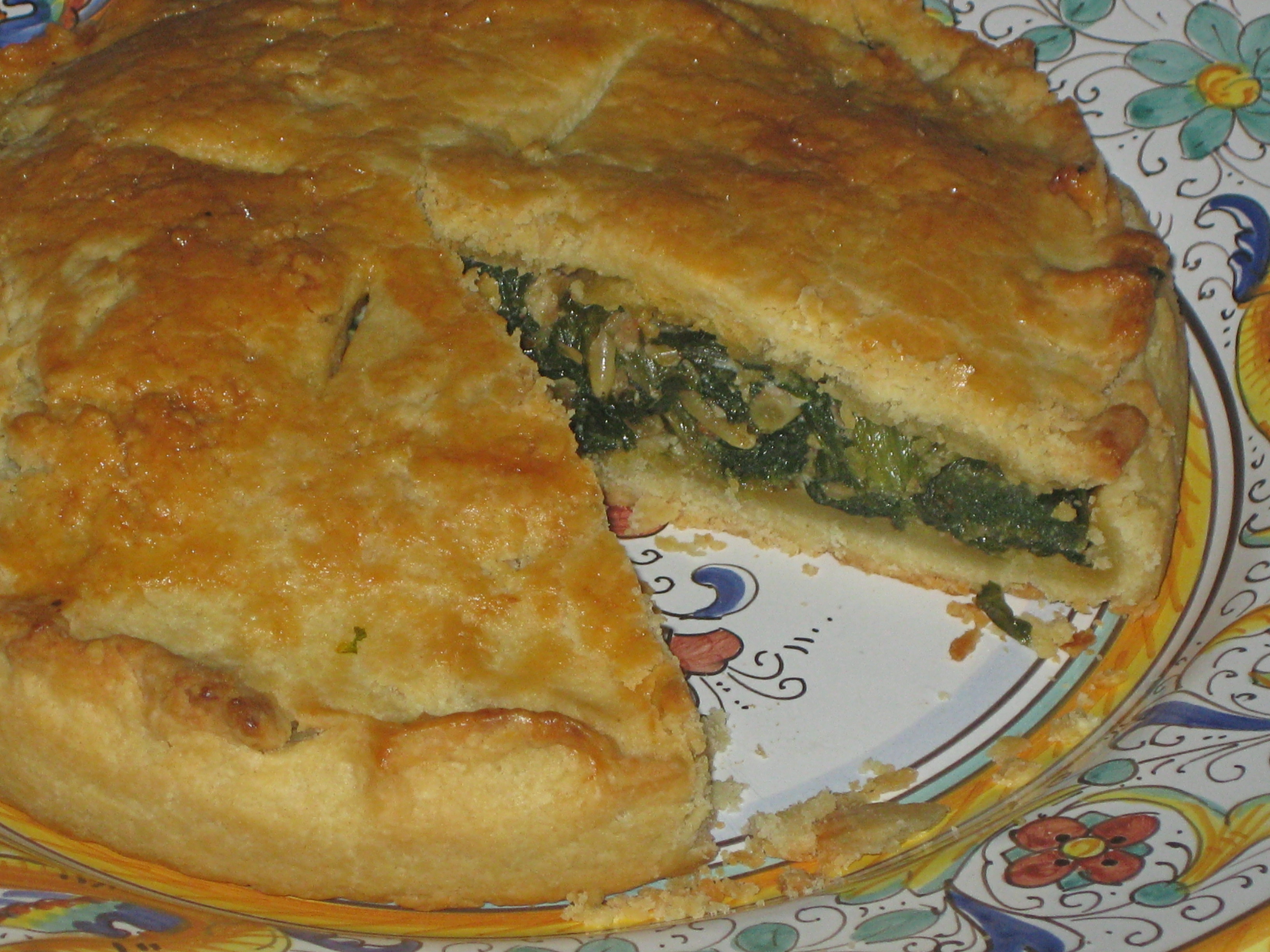
Pizza di scarola is a Neapolitan specialty that was originally made for Christmas but for many decades has also been popular year-round street food in Naples. I could easily find wedges of this double-crusted escarole torta in New York pizza places when I was a kid, but I haven’t seen it anywhere in at least ten years. That’s a shame, since it can be outstanding. But time marches on, and most of the by-the-slice places here aren’t even run by Italians anymore, so their cooks probably have no idea of this wonderful creation.

Pizza di scarola is a classic, but even classics can have an improvisational side. I almost always use an olive oil crust, but a yeast dough is common too, making it more like a calzone. I really like the texture and taste of the olive oil dough best, and that’s what I used for this recipe, but I once made it with a lard crust, and that was pretty damned good too. So you really have some leeway here.

Flavoring additions that I’m familiar with can include black or green olives, capers, pine nuts, raisins, anchovies (which, I feel, are not negotiable), caciocavallo, or some other Southern cheese such as mozzarella. I flavor up mine differently all the time. If you take a look at a version I posted a few years back, you’ll see I used black olives and Raschera, a Northern (what?) cow’s milk cheese. But this time I really wanted the escarole to come forward, so I omitted the cheese completely and included only ingredients I thought would boost the greens feel of the thing. I added green olives and pine nuts, a little garlic, and anchovies of course, but I also threw in a tiny bit of both mustard and fresh thyme, not typical Neapolitan touches by any stretch, but for me they did the trick, making this version lighter while highlighting the delicate bitterness escarole gives off when cooked.

I’ve tasted versions of pizza di scarola that contained just about nothing but escarole, and I’ve sampled ones that encompassed an entire grab bag of Neapolitan flavors (including some of the first ones I made myself, in a culinary past when I knew no restraint). What’s in your pizza di scarola? I’d love to know.

My Pizza di Scarola

You’ll want a 9-inch tart pan with a removable bottom, or a tart ring.

For the crust:

2 1/2 cups all purpose flour
1 teaspoon sugar
1/2 teaspoon salt
1/4 cup extra-virgin olive oil
3/4 cup dry vermouth

For the filling:

1 very large head escarole, washed and cut into small pieces (you’ll want about 4 cups, uncooked)
Extra-virgin olive oil
2 garlic cloves, thinly sliced
1 small, fresh, medium hot red chili, seeded and minced
4 anchovy fillets, chopped
A large pinch of sugar
Salt
A big handful of lightly toasted pine nuts
A teaspoon of Dijon mustard
6 large thyme sprigs, leaves chopped
About 10 green picholine olives, pitted and chopped
1 extra large egg, lightly whisked

To make the crust: Put the flour in a large bowl. Stir in the sugar and salt. Mix the olive oil and vermouth together in a cup, and pour it over the flour, mixing it in with a wooden spoon. If the mix seems dry, add a drizzle more of vermouth or water. When you have a nice moist mass of lumpy dough, dump it out onto a work surface, knead it a few times, and then quickly squeeze it all together until you’ve got a big ball. Wrap the dough in plastic, and let it sit, unrefrigerated, for about an hour.

Blanch the escarole in a pot of boiling water for about 2 minutes. Drain it and run it under cold water to stop the cooking. Now squeeze as much water from the escarole as you can, and give it a few extra chops.

Preheat the oven to 400 degrees.

In a large skillet, heat about 3 tablespoons of olive oil over medium flame. Add the garlic and hot chili, and let them soften for a few seconds. Add the escarole, the anchovies, the pinch of sugar, and a little salt. Sauté until all the flavors are well distributed, about a minute or so. Add the mustard, pine nuts, thyme, and olives, and mix them in. Let cool for about 10 minutes, and then add about half of the beaten egg, stirring it in.

Place your tart pan or ring on a baking sheet.

Cut the dough into two parts, one slightly bigger than the other. Roll out the larger part and drape it into your tart pan or ring, leaving a little overhang. Spoon the escarole filling onto the dough and smooth it down. Roll out the other piece of dough, and place it on top of the filling. Pull up the overhang, and crimp the edges all around. Make a few slashes in the top, and brush with the rest of the beaten egg. Bake until browned and fragrant, about 40 minutes. Let rest about ½ hour before slicing.

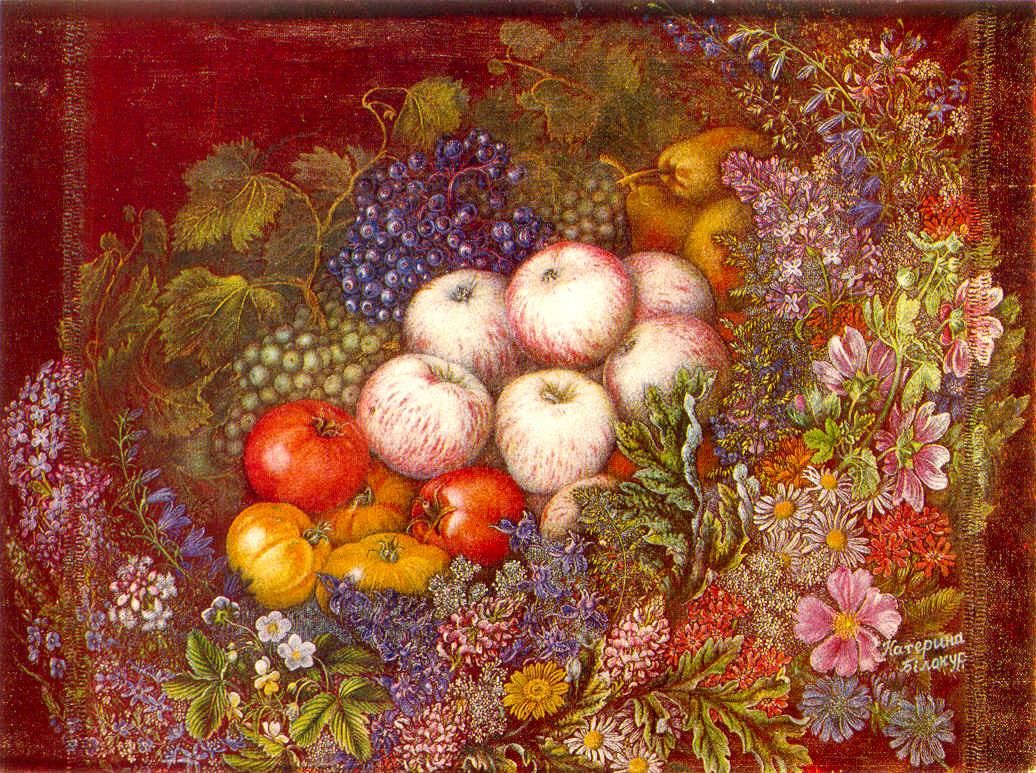
Flowers, Apples, and Tomatoes, Kateryna Bilokur, 1950.

Recipe: Tomato Torta with Rosemary and Montasio

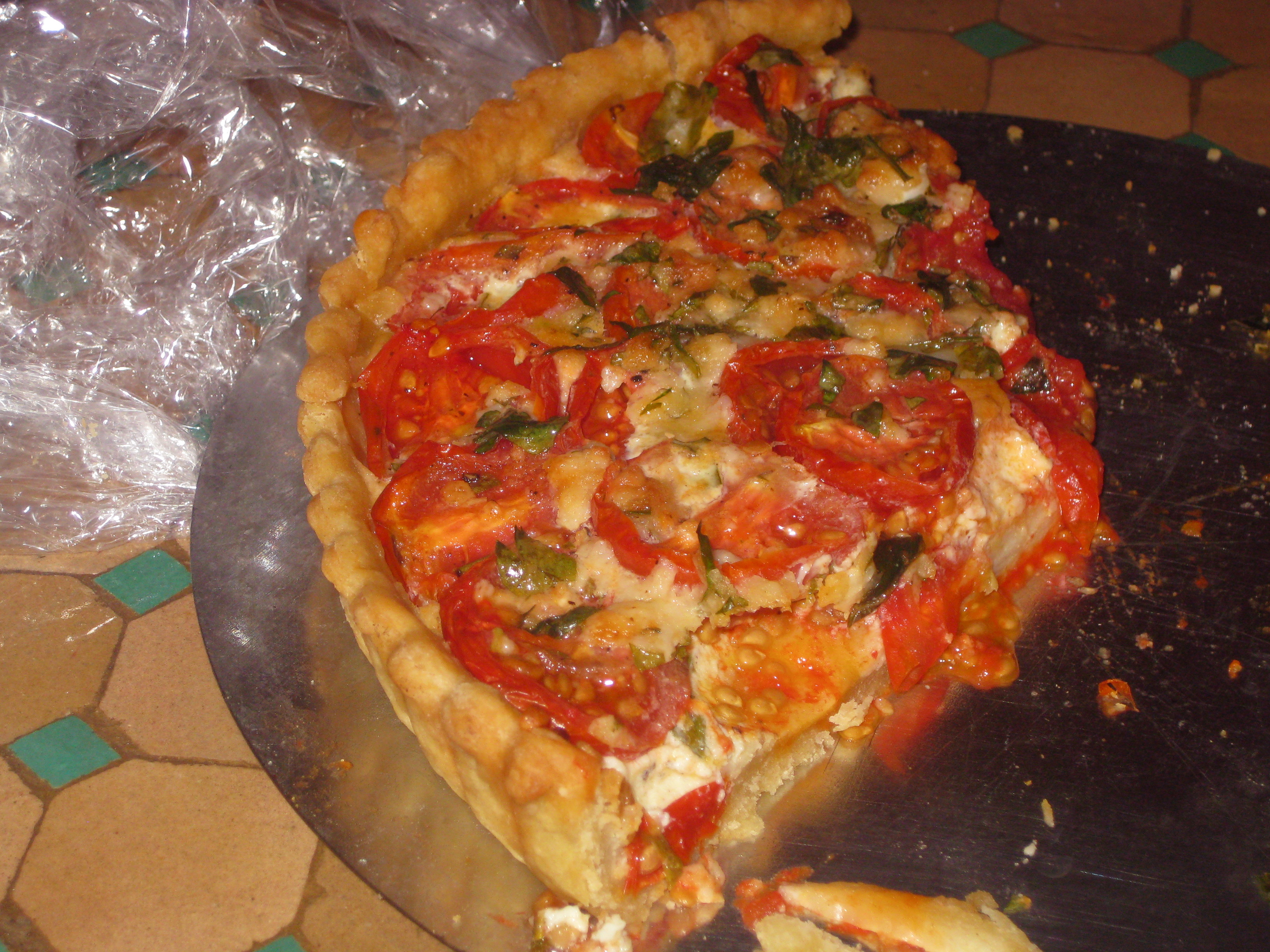
It’s last call for local tomatoes here in the New York area, so I decided to give them an elegant sendoff. I had a bag of big, beautiful cherry tomatoes grown by my friend Barbara in her upstate garden. Some were quite soft. A tart, I figured, was the thing, since oven blasting would help them retain their shape and preserve their brilliant crimson color. For a filling I mixed aged Montasio, a firm and slightly sweet cow’s milk cheese from Friuli, with crème fraîche and a hit of allspice. I added a little rosemary to the crust and to the filling. I love the way allspice blends with rosemary. It softens the slight  medicinal edge the herb can sometimes give off, lending it warmth while creating a unique woodsy flavor that makes me feel cozy in cooler weather. This gorgeous herb-spice combo is also great in an apple tart.

Tomato Torta with Rosemary and Montasio

(Serves 6 as an antipasto offering)

You’ll need a 9-inch tart pan with a removable bottom.

For the crust:

2 cups all-purpose flour
½ teaspoon salt
1 large sprig rosemary, leaves well chopped
⅓ cup extra-virgin olive oil
1/3 cup dry vermouth or white wine

For the filling:

About 2 dozen large cherry tomatoes, cut in half
2 large sprigs rosemary, leaves well chopped
Salt
Freshly ground black pepper
1 teaspoon sugar
Extra-virgin olive oil
2 tablespoons crème fraîche
1 jumbo egg
½ cup grated Montasio cheese
1 small garlic clove, minced
¼ teaspoon ground allspice

To make the crust: Pour the flour into a bowl. Sprinkle on the salt and rosemary, and mix them in. Mix the olive oil with the vermouth, and pour over the flour. Mix well with a wooden spoon. Now turn the dough out onto a work space, and knead it very briefly, just until it forms a ball. (You don’t want to overwork this dough. It should look a little streaky.) Wrap it in plastic, and let it sit, unrefrigerated, for about an hour.

Preheat the oven to 400 degrees.

Put the halved tomatoes in a bowl. Sprinkle on the rosemary, a little salt, black pepper, and the sugar. Add about a tablespoon of olive oil, and toss the tomatoes so they’re well coated.

In a small bowl whisk together the crème fraîche, egg, Montasio, garlic, and allspice, seasoning it all with a little salt and black pepper. The mix should be very smooth and have the consistency of very heavy cream. If it seems too thick, add a drizzle of milk and whisk it in.

Place the tart pan on a sheet pan. Roll out the dough, and drape it into the tart pan, trimming any overhang.

Working in a circular pattern, place the tomatoes, cut side up, in the tart pan, overlapping them a bit. Discard any liquid given off by the tomatoes (or use the liquid in a pasta or stew sauce).

Now pour the crème fraîche mixture over the tomatoes, being careful not to drip any outside the dough. Give the top a drizzle of olive oil.

Bake until the crust is golden and the tomatoes have a nice roasted look, about 45 minutes. Let cool for about 20 minutes before serving.

Women with Fish

Modeled by Jean Patchett, 1950

Fish scales are beautiful,unique to fish and mermaids. At first I thought this lovely woman was a bride, but then realized she was a solitary soul, waiting to get into the kitchen so she could roast a big seabass stuffed with branches of wild fennel.

Still life with Calla Lilies and Swiss Chard by Carolyn Fox

Recipe: Swiss Chard Torta with Marjoram and Fennel Seed

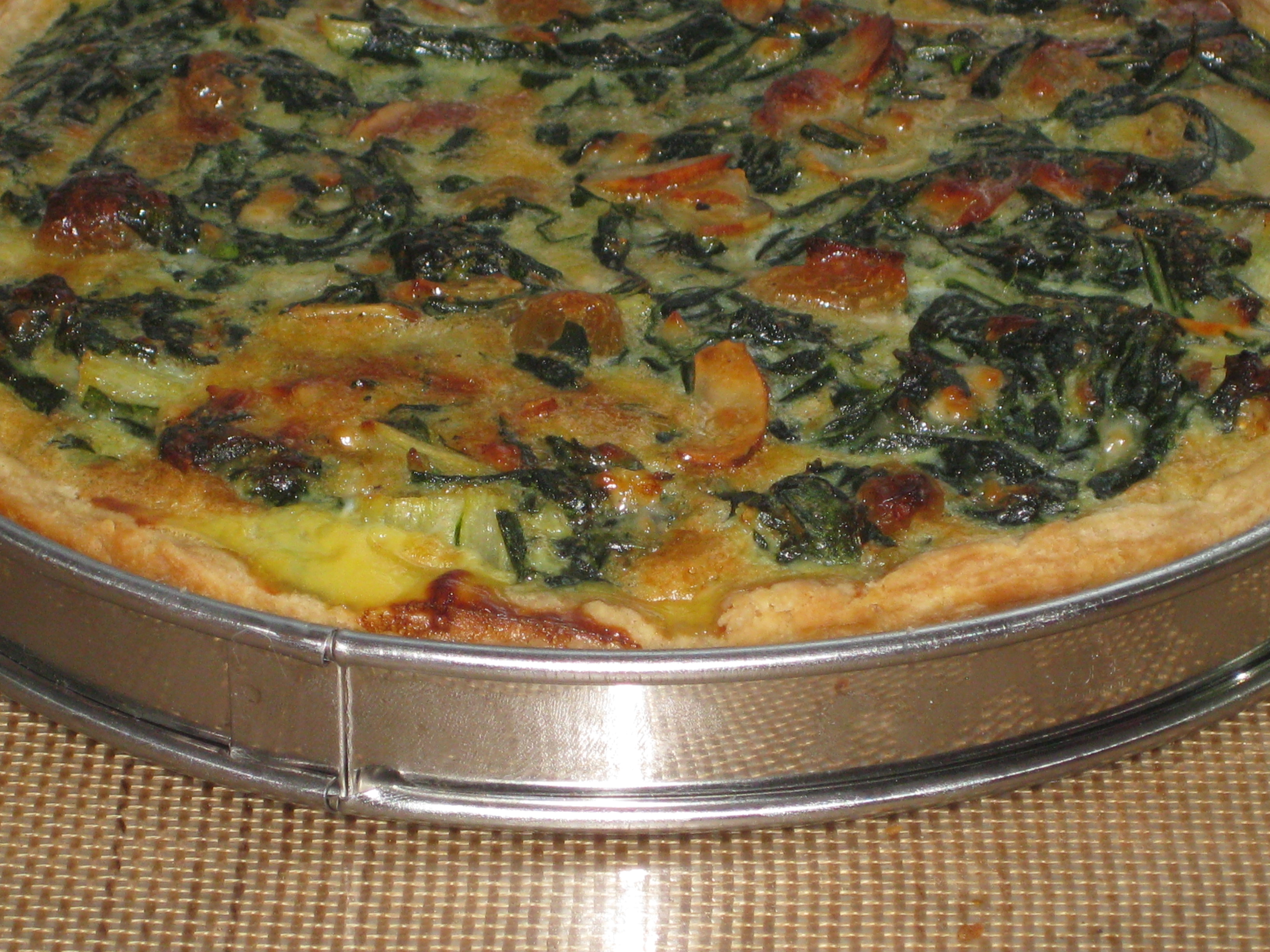
I believe there is a running theme in the life of every dedicated cook. My theme is making fairly traditional, mostly Southern Italian dishes over and over, but never making them exactly the same way twice. Especially the savory torta.

My first encounter with an Italian savory torta was in the form of a New York style calzone, which I loved from first bite, with its pully yeast crust and hot, oozing ricotta filling. Any savory pie type of preparation, either single or double crusted, can be called a torta, though there are dozens of regional names for the things. Pizza rustica, the traditional savory Easter torta, usually made with a short crust and filled with salami, prosciutto, and various cheeses and often finished with a pretty lattice top, was another early meeting I had with Italian savory pastry, but my childhood absolute favorite was the Neapolitan pizza di scarola, a double-crusted flat torta filled with escarole, olives, anchovies, and capers, a common offering at many pizza places way back then (sadly, this fabulous creation is hard to find at by-the-slice places nowadays). It was the first torta I made when I was first teaching myself Southern Italian cooking, and I was extremely proud of the result.

Liguria also makes greens-filled tortas, especially ones cooked with Swiss chard. They traditionally include raisins, pine nuts, and a touch of a hard grating cheese such as grana Padano. The crust is inevitably a quick mix of flour and good olive oil. I’ve been cooking up variations on that for decades, but, in keeping with my style, I make those a little different every time. For the past few years that’s been a matter of fooling around with different herbs and spices, both in the crust and in the filling.

Combining flavors has taught me a lot about what I call the “third taste,” which I create by mixing together two flavors I don’t often use, coming up with something new. That’s not so novel a concept, I know, but depending on what I’m blending the results can be better than expected or even completely unexpected. For this fall’s version of my chard torta, I’ve used marjoram and fennel seed, two flavors I love on their own but have never, to my recollection, blended (except, now that I think of it, with the addition of hot chili, which masked their subtlety). Marjoram, a flowery, gentler  cousin to oregano, is a common herb in Ligurian cooking, not as popular as basil but certainly up there, so it was a natural. Fennel seed I often use to flavor cooked greens such as broccoli rabe or dandelions, so I added that as well. The tart cooked up with a wild edge. Combining the two flavors created a taste similar to that of nepitella, a wild mint used often in Southern Italy. In the past I’ve described its taste as a mix of basil and oregano, but somehow the marjoram and fennel seed blend hit closer for me. It also managed, with the bitter edge fennel provides, to make the Swiss chard less sweet, even with the standard addition of raisins. Very interesting. I can certainly see using this combo with pasta and broccoli, or as a flavoring for peperonata.

The key for me is not just to reach into my bag of Italian tricks but to really think about what each flavor I decide on truly tastes like. I try to meditate on that flavor. Then I pick another and do the same thing. Now I’ve got the two flavors in my head. Next I put them both in my mouth, just raw, and chomp on them a bit. That gives me a good idea of where I’ll be heading, but it’s not the entire story by any stretch. The game is to then wait and see how the combination works in a dish, how it blends with the other ingredients I’ll be adding, and how heat may alter the outcome.

Swiss Chard Torta with Marjoram and Fennel Seed

Have on hand a 9-inch tart pan with a removable bottom. To get a more rustic look, choose one with smooth, not fluted, sides, if possible. Or use a tart ring, if you prefer.

 (Serves 8 as an appetizer, or 4 as a main course served with a side salad)

For the crust:

2 cups all-purpose flour
½ teaspoon salt
½ teaspoon fennel seeds, lightly toasted and finely ground
1/3 cup dry Marsala
1/4 cup extra-virgin olive oil

For the filling:

2 big bunches Swiss chard, thick stalks removed, leaves roughly chopped
Extra-virgin olive oil
1 shallot, minced
Salt
Freshly ground black pepper
1 teaspoon fennel seeds, lightly toasted
¼ cup sliced almonds, lightly toasted
¼ cup yellow raisins, soaked in a 2 tablespoons Marsala or white wine
5 or 6 marjoram sprigs, leaves chopped
3 large eggs, lightly beaten
¾ cup grated grana Padano cheese

In a large bowl mix together the flour, the salt, and the ground fennel. Add the Marsala, stirring it in briefly. Add the olive oil, and stir until you’ve got a sticky ball. Turn out the dough onto a clean surface, and knead quickly until it’s relatively smooth, only about a minute or so. The dough will feel a little oily. Wrap the dough in plastic, and let it rest, unrefrigerated, for about an hour.

Preheat the oven to 400 degrees.

While the dough is resting, set up a large pot of water, and bring it to a boil. Blanch the Swiss chard for about 2 minutes. Drain it into a colander, and run cold water over it to stop the cooking and to bring up its green color. Squeeze as much water out of the chard as you can. Then give the chard a few extra chops.

In a large sauté pan, heat 2 tablespoons of olive oil over medium heat. Add the shallot, and sauté until it softens, about a minute or so. Add the chard, seasoning with the salt, black pepper, and the fennel seeds, and sauté about 2 minutes longer. Add the raisins, with their soaking liquid, and the almonds. Take the pan off the heat, and add the marjoram. Let it all cool for a few minutes, then add the eggs and the grana Padano, mixing them in well.

Roll out the dough, and drape it into your 9-inch pan or tart ring (if using the ring, place it on a Silpat-lined baking sheet), leaving a little overhang all around. Add the filling, smoothing out the top. Trim the dough overhang neatly all around. Drizzle the top with a little olive oil. Bake until the crust is browned and the filling is firm, about 40 minutes. Serve warm or at room temperature.

Women with Fish

I wonder how she’s planning on cooking that starfish? I’d choose a Capri snail-type preparation, maybe simmering the thing in garlic, hot chili, chopped fennel, and white wine,  possibly adding a few of  those sweet little cherry tomatoes, and then finishing it with a scattering of basil. I’d let it come to room temperature and serve, beach side, along with a few taralli and a glass of fiano di Avellino.  A lovely meal for a lovely gal in a gorgeous green bathing costume.

Pasta Improv: A New eBook

My book Pasta Improv (formerly Pasta Improvvisata) is now up as an ebook. You can find it on Amazon and at many other online booksellers. And it’s an amazing bargain at only $3.99.

Recipe: Pear Salad with Fennel and Ricotta Salata

It’s that time again, time for the longed for but tragic, at least for me, appearance of local pears at my Greenmarket, an indicator of the summer’s end. Today is also September 11, the anniversary of a tragedy that conjures up no longing. Be grateful for mixed feelings, I say to myself.

So another school year begins, and here I am furthering my education again by creating something nice with pears. And I did have some mixed feelings here. Since this is a period of transition, I wanted to keep a lightness to this early fall dish, so I included basil and tarragon, which are still growing well in my stoop pots. The fall notes are, well, the pear, of course, but then also the toasted pine nuts, the fennel, and the assertive cheese. If pears make you too sad, try substituting fresh figs, a fruit so fleeting you don’t really have time to ruminate over its significance. You just enjoy it. But then again, ruminating is, I think, good for me. It helps fuel culinary creativity.

Pear Salad with Fennel and Ricotta Salata

(Serves 2)

A large handful of frisée lettuce, torn into pieces
1 firm but fragrant pear, cored and thinly sliced
1 medium fennel bulb, cored and very thinly sliced
½ red shallot, very thinly sliced
A little less than ¼ pound ricotta salata, crumbled
About 10 basil leaves, cut into chiffonade
A few large sprigs of tarragon, leaves lightly chopped
1 teaspoon Spanish sherry vinegar
Salt
Freshly ground black pepper
A few gratings of fresh nutmeg
2½ tablespoons extra-virgin olive oil
A palmful of pine nuts, lightly toasted

Place the frisée, the pear and fennel slices, and the shallot in a medium salad bowl. Scatter on the ricotta salata, the basil, and the tarragon.

In a small bowl, whisk together the vinegar, a little salt, a few big turns of black pepper, the nutmeg, and the olive oil, and pour this over the salad. Toss gently. Garnish with the pine nuts. Serve right away.

Tomato skin dress by Sung Yeonju, 2010.

Recipe: Summer Tomato Sauce with Thyme, Parsley, and Butter

This elegant and labor-intensive dress made from tomato skins got me thinking about how amazing the skins of many things are, including our own skins, of course (at least on some people). These bright red skins, used to fashion this adorable cocktail ensemble, made me want to go and blanch a few summer tomatoes, just so I could slip off the skins and feel them with my own hands, marveling at their translucent beauty and delicacy. I did that, and it was damned great. But now I had a bunch of nude tomatoes to deal with, dripping all over my counter and giving off a faint, alluring whiff of the sea (it’s odd how tomatoes can have that aroma, even when they weren’t  grown anywhere near the sea). In any case, we all know that one of the best things to do with perfect, just skinned summer tomatoes is make a tomato sauce. This sometimes scares people. And I know why. It’s all the liquid. How are you supposed to get rid of all that liquid?

Well, you can use plum tomatoes. They throw off less water than the round ones, and they have a concentrated flavor that produces a rich, tight sauce that’s a classic in Southern Italian cooking. But many people tell me they have trouble finding fresh plums at their markets, so I’ve devised a technique for using the big juicy round tomatoes, a variety that makes an altogether different sauce, one with lightness, bright red color, and a refreshing pure summer flavor.

Here are a few tricks: First, you’ll want to seed and drain your tomatoes. Then chop them, salt them lightly, and stick them in a colander with a bowl underneath to catch the tomato water (which you actually might need  if you’ve drained them too much). When you get to cooking them, chose a wide skillet and high heat. The more surface area you have for spreading out your tomatoes, the quicker you’ll get them heating, which means being able to boil away excess liquid rapidly without their overcooking and turning acidy. High heat and fast cooking also allows the tomatoes to retain their color and clarity of flavor.

I chose to flavor my sauce with thyme, Italian parsley, and a little butter, swirled in at the end. This is a genteel approach, excellent on tagliatelle or a delicate durum wheat pasta shape such as farfalle. I also like to spoon the sauce over stuffed summer vegetables or meatloaf. You might want to go bolder by substituting marjoram or fresh oregano and adding a few anchovies, olives, and capers. Then you’d have a fresh summer puttanesca. I like both approaches.

Summer Tomato Sauce with Thyme, Parsley, and Butter

(Makes about 2 cups of sauce, more than enough for a pound of pasta)

6 medium-size round summer tomatoes
Salt
Extra-virgin olive oil
1 large shallot, minced
2 fresh summer garlic cloves, thinly sliced
¼ teaspoon freshly ground nutmeg
10 thyme sprigs, leaves chopped
3 tablespoons unsalted butter
A handful of Italian parsley, leaves lightly chopped
Freshly ground black pepper

Set up a large pot of water, and bring it to a boil. Drop in the tomatoes, and blanch them until you notice that their skins are just starting to crack, about 3 minutes. Lift the tomatoes from the water with a large strainer, and run cold water over them. Now you can easily slip off their beautiful skins (and perhaps save them for a hat).

Cut the tomatoes in half, and squeeze out the seeds. Then chop them into small dice. Place them in a colander over a bowl, and sprinkle them lightly with salt. Let them drain for about an hour. Save the juice, though, just in case you might want it to loosen the sauce.

Choose a wide skillet, and heat it over a medium flame. When its surface is hot, add 2 tablespoons of olive oil and the shallot. Sauté until softened, about 3 minutes. Add the garlic, nutmeg, and the thyme, and sauté a minute longer, just to release their fragrances (you don’t want the garlic to darken, though). Turn the heat to high, and add the tomatoes, spreading them out. Cook over a lively bubble, uncovered, for about 4 or 5 minutes, stirring occasionally (not constantly, which could make your sauce watery by lowering the skillet temperature). When the sauce has some body but is still a bright red, it’s done. If it seems too thick, add a bit of the reserved tomato water.

Turn off the heat. Stir in the butter, add the parsley, and give it a few big turns of fresh black pepper. Taste the sauce to see if it needs additional salt. I find a fresh sauce like this is best used right away, before it loses any vibrancy.