Feeds:
Posts
Comments

Monet_-_Stilleben_mit_FleischStill Life with Meat, by Claude Monet.

Recipe below: Beef Shank Ragù with Rosemary, Lemon, and Marrow Purée

I may have jumped the gun a bit with this recipe. I was itching to cook something fall-like, so I bought beef shank at a Catskills farm last weekend and decided I’d make a ragù. It came out rich and complex, which made me happy, but I probably would have appreciated it more in January than on the 75-degree October night when I sat down to eat it. Cooking a sauce that takes three hours or more can uplift a needy soul on a cold day, but now my tiny apartment grew steamy and oppressive and I felt trapped by my own creation. At least I came up with a successful recipe to have ready when it truly becomes cold and I want an excuse to squirrel up in my hut.

When thinking through this dish, I recalled that beef alone could make a one-note ragù. By giving it a base of pancetta, bay leaf, allspice, a cup of stock, and wine, I managed to round out the flavor. And of course the marrow, added at the end, is a huge bonus. I normally don’t like overloading a dish with too many ingredients, but when it comes to tough cuts of meat that take forever, essentially stews, a seeming horde of flavors will meld, leaving no hard edges, just depth and warmth. For me this is one of the techniques that distinguish much cold weather cooking from summer fare. I often cook a little harder in the winter, but it’s worth it.

P.S. I’m leaving for Rome in a few days and plan on spending a good amount of time exploring the new or improved food markets there. I’m hoping to post a few market podcasts, so please stay tuned. And it’s porcini season.

Beef Shank Ragù with Rosemary, Lemon, and Marrow Purée

(Serves 4 as a main-course pasta dish)

2 wide center-cut slices of beef shank, about 1½ inches thick
Salt
Black pepper
Extra-virgin olive oil
1 ¼-inch-thick round of pancetta, well chopped
1 large onion, cut into small dice
2 thin carrots, cut into small dice
1 fresh bay leaf
About ½ teaspoon ground allspice
4 big sprigs rosemary, the leaves well chopped
5 large thyme sprigs, the leaves chopped
1 cup dry white wine
1 cup chicken broth
1 35-ounce can plum tomatoes, lightly drained and chopped
The grated zest from 1 large lemon
A handful of flat-leaf parsley leaves, lightly chopped
1 pound fresh tagliatelle
A chunk of grana Padano cheese

Choose a large casserole fitted with a lid. Salt and pepper the beef shank on both sides. Pour about a tablespoon or so of olive oil into the pot, and let it get hot over a medium-high flame. Add the shanks, and brown them well on both sides. Take the meat from the pot, and set it aside for a moment.

Add the pancetta to the pot, and let its fat cook off. Add the onion, carrot, bay leaf, allspice, and the rosemary and the thyme. Sauté until everything is soft and fragrant. Return the meat to the pot. Add the wine, and let it bubble for about a minute. Add the chicken broth and the tomatoes and a bit more salt and black pepper. Bring to a boil. Now turn the heat down really low, cover the pot, and simmer, turning the meat a few times, until the meat is very tender, probably around 3 hours. Free-range meat can take even longer. If you prefer, stick the casserole in a 325-degree oven.

When tender, pull out the beef shank, and let it sit until it’s cool enough to handle. Skim the sauce. With a small spoon, scoop out all the marrow, and purée it in a food processor along with a big ladleful of the sauce. Return this to the pot.

Now shred the meat up, and add it to the sauce. If the ragù is too thick, add a little more chicken stock or water. Check for seasoning.

When ready to serve, cook the tagliatelle, and transfer it to a big pasta serving bowl. Add a big drizzle of olive oil, the lemon zest, and the parsley. Toss gently. Reheat the ragù if needed, and pour it over the pasta. Add about a tablespoon of grated grana Padano, and toss well. Serve hot, bringing the rest of the cheese to the table.

img_00175kcMy Somewhat Famous Tomato Platter, by Sharyn Dimmick.

Here’s a another talk about the last-of-the-season tomatoes. This time I’m focusing on really fresh-tasting cooked sauces, perfect for changing weather. I hope you enjoy.

still-life-with-wine-and-tomatoes
Still Life with Tomatoes and Wine, by Mati Klarwein.

Hi, all my Italian cooking friends. Here is my first podcast. I’m going to be posting talks that explore seasonal themes in improvisational cooking. The subject of this one is the last of the summer’s tomatoes, and what to do with them. I’ll be putting up these talks once or twice a month, to start with. If you like them, I’ll do more. Leave feedback if you like. I hope you’ll enjoy them.

still-life-with-tomatoes-paul-gauguin
Still Life with Tomatoes, by Paul Gauguin.

Recipe: Braised Chicken with Late Summer Tomatoes, Crème Fraîche, and Black Olives

There are many not so good things about having an aging mom who doesn’t get around much anymore. Among the not so good is that I can’t really go anywhere with her except, it seems, the hairdresser or the emergency room. But there are strangely a few good things, like always knowing that when I come over she’ll be sitting in her chair and will usually smile at me (or occasionally, instead, ignore me and smile at Giada De Laurentiis, which I find highly annoying). Another good thing, I’ve discovered, is cooking dinner at her place. If I want dinner when I visit, it’s either delivery or do it myself. She can’t really stand long enough to pull off any extensive stove action, so it’s up to me. But there are some issues: The kitchen is partly taken over by pill bottles, medical wipes, throat swabs, sharp smelling gargles, and boxes of Ensure. And for some reason she doesn’t seem to have many decent pots or pans left. I have no idea what happened to them. It seems they’ve been partly replaced by QVC Lock & Lock plastic tubs in various sizes. I’m not sure what she needs those for. And now she’s got something that looks like an inordinately deep wok with a handle. I can’t imagine what that was designed to do (it’s no good for stir-frying), but I have used it to boil ziti. She never had anything like it when I was growing up. Must have been another QVC late-night purchase.

I make a lot of pasta at her place. It’s usually quick, with minimal cleanup, which I strive for, since she seems to get upset if too many dishes are taken from the shelves and moved onto the countertops. Lately I’m a little sick of pasta, so I’ve started making braised chicken dishes. I’ll use chicken thighs and legs and bring over stuff I want to use up from my own refrigerator—an end chunk of pancetta, a handful of cremini mushrooms, a few sprigs of thyme, a couple of bruised early fall tomatoes, the half-dead remains of a bottle of Côtes du Rhône. I usually wind up with variations on chicken alla cacciatora, coq au vin, or a fricassee, all extremely improvisational in spirit.

The braising fills my mother’s apartment with the old aromas of home, when she cooked and cooked well. The simmering wine, tomatoes, and herbs mask the medicinal smells of the place and seem to make everyone feel a bit less anxious about the future, sometimes. And the activity gives me something to do besides looking at her while she doesn’t say much. Cooking always makes me more grounded. That’s a huge reward in some circumstances.

Braised Chicken with Late Summer Tomatoes, Crème Fraîche, and Black Olives

(Serves 4)

Extra-virgin olive oil
10 chicken thighs, the bones and skin on
Salt
Black pepper
A big pinch of sugar
Piment d’espelette pepper to taste
1 ¼-inch round of pancetta, well chopped
1 large shallot, chopped
1 bay leaf, fresh if available
3 large sprigs rosemary, the leaves chopped
About ¼ teaspoon ground mace
A splash of cognac or brandy
½ cup chicken broth
3 round summer tomatoes, skinned, chopped, seeded, and drained for about 20 minutes
1 heaping tablespoon crème fraîche
A handful of good black olives, not too salty (Niçoise or Gaetas work well here)

Choose a large, heavy-bottom skillet (not so easy at my mother’s place), and get it hot over medium flame. Season the chicken with salt, black pepper, the sugar (which will help it brown), and the piment. Add a tablespoon or so of olive oil, and slide in the chicken thighs, skin side down. Brown them well, and then give them a flip. Brown the other sides, and remove the chicken from the skillet. Pour off all but about a tablespoon or so of oil. Add the pancetta, and cook until crisp. Add the shallot, the bay leaf, half of the rosemary, and the mace, and sauté until the shallot has softened and the herbs have released some flavor. Put the chicken thighs back in the pan, along with any juices they have given off. Add the cognac, and let it bubble away. Add the chicken broth and the tomatoes, and bring to a boil. Now lower the heat, cover the skillet, and simmer until the chicken is just tender, about 15 to 20 minutes, turning the pieces once or twice. Add the crème fraîche and the rest of the rosemary, and give it a good stir.

Place the chicken on a serving platter. Turn the heat to high, and reduce the sauce for a few minutes. Add the olives. Taste for seasoning, and pour over the chicken.

This, a salad, and some good bread usually do it over at Mom’s, but rice is a nice touch, if you’ve got a pot to make it in.

Women with Fish

8708874-lg

“ Fish, what are you thinking? Is the sea boring? Do you get migraines? Do you have a best friend? Do your scales itch? Do you love your mother? Do you even see your mother? Is the water perfect all the time? Do you sleep? Do you dream of the air? Do you have nightmares about giant squid? Do you get bullied? Can you hide under a rock? Does the dark give you comfort? Do you feel older? Do you get bruised? Do you ever feel out of shape?  Are you happy to be alive? Do you ever have a really great day?

People say I’m special. Do other fish say you’re special? So you’re not going to tell me whether or not you’re special? One last chance, just tell me what’s so special about you? Not saying? Okay, sister, you brought this on yourself. I’m heating up the grill.”

As told to Erica De Mane

tumblr_lz0bg8BWmb1qbyk5qo1_r1_500
Still Life with Grapes, Jan De Heem, 1655-60.

Recipe: Bruschetta with Roasted Grapes, Ricotta, and Rosemary

For me one of the best gifts cooking offers is its insistence on being of the moment. Even if anxiety creeps in, it can only bring fear of something that might happen around ten minutes from now, a tray of burnt pine nuts for instance, not three years from now. At least not so far. Working in a kitchen calms me. And it sure beats ruminating over someday being sick, bald, scabby, and penniless.

Cooking is such a peculiar craft. We produce something that’s here one minute, gone the next. I can take a photo of what I cook, I can write a recipe, but the photo is not food, the recipe is only a suggestion. The taste, aroma, and textures are over. I’ve always liked the idea of transient creativity. Working with olive oil, eggplant, and tomatoes seems much less tortured than dealing with oil paints, although the colors are just as brilliant.

And now it’s grape season in New York State. At the Union Square Greenmarket, bees hover around piles of sticky sweet Concords. I love those candy-tasting grapes, but I don’t find them all that interesting to cook with, unless I’m making a sorbetto. I always look for a variety called Niagara. They’re green, shiny, tart, a bit lemony, a bit herby, and much more complex-tasting than the one-note green grapes I find in supermarkets every single day of the year. These grapes taste like dry white wine. The bees don’t like  Niagaras as much as other, sweeter New York varieties, but I do. They’re perfect with savory or semi-savory preparations, like pork sausages braised with grapes and bay leaves (a recipe you’ll find in my book The Flavors of Southern Italy), or this rosemary scented grape and ricotta bruschetta. It’s a warming but still light antipasto, a good thing to push me into the school year.

Now, I’ve just got to say that the Niagara grapes I used for this recipe have seeds. I’ve gotten used to the crunch of grape seeds in my mouth and I like swallowing them. Not everyone does. Please feel free to choose a seedless grape if you prefer.

IMG_0809Niagara grapes at the Union Square Market.

Bruschetta with Roasted Grapes, Ricotta, and Rosemary

(Serves 4)

A big bunch of stemmed grapes, red or green, seedless or not, on the tart side (about 2 cups)
Salt
Black pepper
Extra-virgin olive oil
2 small sprigs rosemary, the leaves chopped
A handful of very fresh walnut halves, lightly toasted and roughly chopped
8 slices rustic whole grain bread
¾ cup whole milk ricotta
About 2 tablespoons wildflower honey (I used acacia, which is mild, but if you like a stronger flavor, go with it)

Preheat the oven to 425.

Spread the grapes out on a sheet pan (use two pans if the grapes get crowded). Season with a bit of salt and black pepper (just a touch), and scatter on the rosemary. Drizzle with olive oil, and give everything a good toss. Roast until the grapes start to burst and their juices bubble, about 15 minutes. Take the pan from the oven, sprinkle on the walnuts, and give it all another toss.

Toast the slices of bread on both sides. Spread them with ricotta. Spoon on the grapes, along with some of their juice. Drizzle with a thread of honey, and give each bruschetta a grinding of black pepper. Serve right away.

IMG_0809
Niagara grapes at the Union Square Greenmarket.

IMG_3864Horseshoe Crab on Sea Cliff Beach, by Eddie Sczesnak.

Recipe: Tagliatelle with Clams and a Parsley and Celery Leaf Pesto

One of the strangest sea creatures I’ve ever encountered, but one I saw almost daily every summer of my childhood, is the horseshoe crab. Sea Cliff Beach, on the North Shore of Long Island, where I grew up, was and still is loaded with them (although I have discovered that they’re now, sadly, on the decline, worldwide). These beyond-ancient-looking things have been around for 450 million years. Despite being called crabs, they’re not  crustaceans but more closely related to scorpions and spiders. They look menacing, with their armor-like shells and long, hard tails, but they are as gentle as can be. They would brush up against me when I swam. I’d watch them scurry around near the shoreline, often with their cute babies clinging to their backs. I could easily pick one up and sit it on my lap for a while before it would finally grow antsy and scurry back into the water. I grew to love these sweet guys. When my high school friend Eddie recently went back out to Sea Cliff to visit his mother, I asked him to say hello to the horseshoe crabs for me. He sent me a photo, which was really nice of him (see above). Some years there were so many horseshoe crabs on that beach it was anxiety-provoking but also hilarious, like an old time horror movie, only for real.

The reason I mention horseshoe crabs along with this clam recipe is that Sea Cliff Beach is also where my father and his buddies used to go clamming. And they’d always come back with a good bucketful, usually eating them raw (nobody thought much about pollution back then). The small pebbly beach was quite a happening place back in the sixties and seventies, though more for clams, mussels, gulls, and the lovely horseshoe crab than for its mostly creeped-out beach goers.

Looking at the photo Eddie sent me definitely got me thinking about clams again. But, in all honesty, I’ve been thinking about them a lot this summer. This is the second pasta and clam recipe I’ve put up in a last few months (the first is here). This one is different, less classic. For starters, I’ve chosen an egg pasta, not at all standard fare in my neck of the Mediterranean (and yes, I realize Long Island isn’t on the Mediterranean), but nice for a change, mellower and richer than the traditional hard durum wheat pasta. And instead of the briny, garlicky, loose sauce I usually fashion, I’ve decided to pull the dish together by stirring in a pesto at the end, giving the sauce more texture. I love combining parsley with celery leaves for a more astringent pesto than basil creates. And those two flavors are great with many seafood preparations.

So this new clam recipe is dedicated to my longtime admiration for the horseshoe crab.

Happy late summer to everyone.

Tagliatelle with Clams and a Parsley and Celery Leaf Pesto

(Makes 2 main-course servings)

For the pesto:

Salt
About ½ packed cup flat-leaf parsley leaves
About ¼ cup basil leaves
About ¼ cup celery leaves
¼ cup skinned, lightly chopped almonds
Extra-virgin olive oil

For the rest of the recipe:

Extra-virgin olive oil
2 fresh summer garlic cloves, thinly sliced
1 fresh peperoncino, seeded and minced
The grated zest from 1 large lemon
A big splash of dry vermouth (about ¼ cup)
1½ pounds Manila clams, well washed
¾ pound fresh tagliatelle

Fill a small saucepan with water, and bring it to a boil. Add a little salt. Add all the herbs, and blanch for 2 minutes. Drain, and run the herbs under cold water to stop the cooking and set their color. Squeeze out as much water as you can, and put the herbs in the bowl of a food processor. Add the almonds, and pulse until you have a chunky green mixture (I like it a bit chunkier than a more traditional, smooth pesto). Add about 2 tablespoons or so of good olive oil and a little salt, and pulse to blend. Transfer the pesto to a small bowl, and press a piece of plastic wrap over the top.

Set up a large pot of pasta cooking water, and bring it to a boil.

In the meantime, choose a large skillet with a lid. Get it hot over medium heat. Add 2 tablespoons of olive oil. Add the garlic, pepperoncino, and lemon zest, and sauté to release their flavors. Add the vermouth, and let it bubble for a few seconds. Add the clams. Cover the skillet, and cook until the clams open, stirring them around a few times. Turn off the heat.

Add salt to the pasta water, and drop in the tagliatelle. When it’s just tender, drain it, and pour it into a large serving bowl. Add a big drizzle of olive oil and the clams, with all their skillet liquid. Toss. Add the pesto, and toss again. You might not need all the pesto; the texture should remain loose, so hold back a bit if you think it’s appropriate. (You can always use leftover pesto on crostini or as a salsa for another fish dish.) Taste for seasoning. You’ll probably not need more salt, but that will depend on the saltiness of your clams.

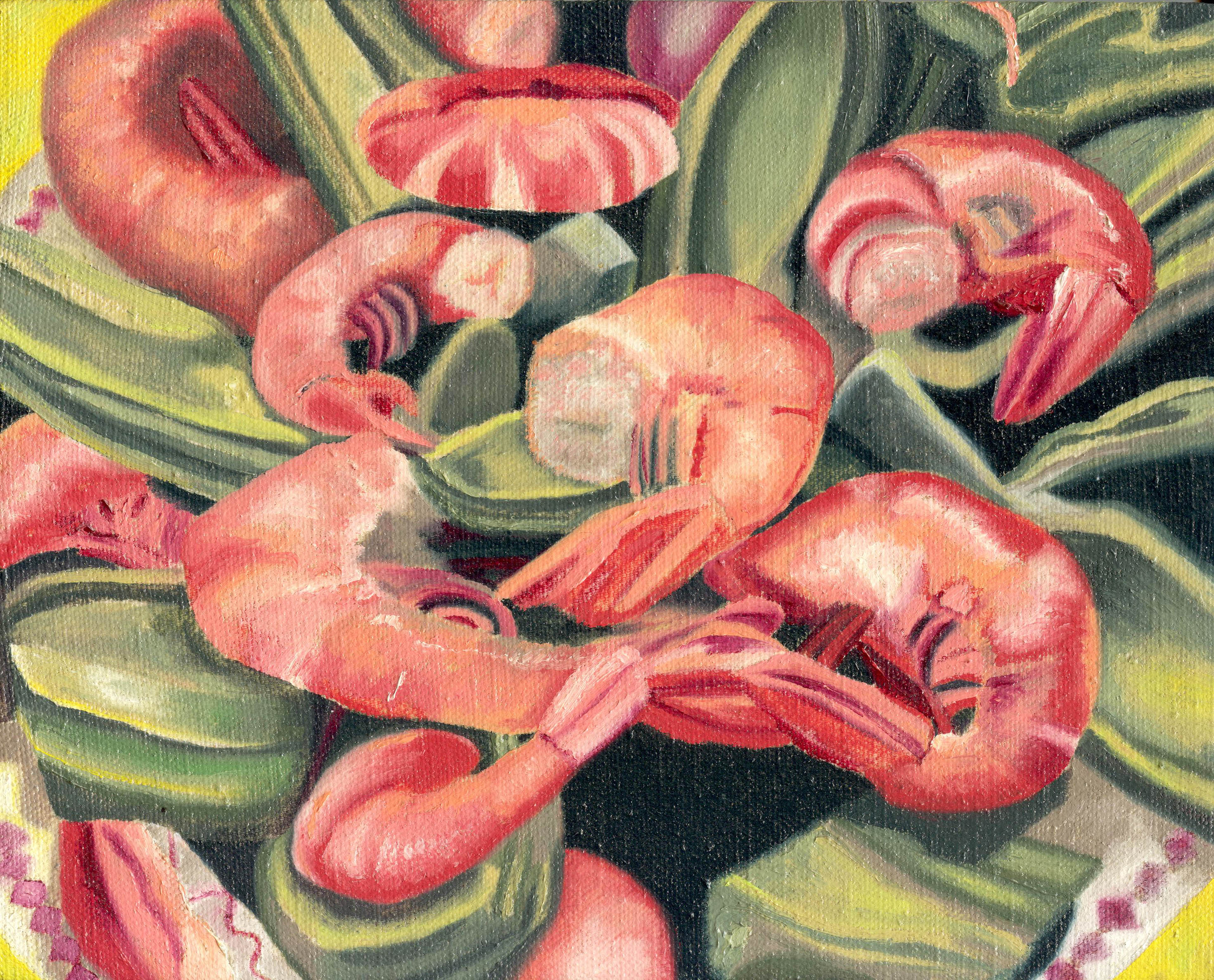
shrimp-painting-by-dkShrimp, by D.K.

Recipe: Seared Shrimp with Mentuccia and Crushed Taralli

I desire fried seafood most of the time. The big bowls of fritto misto I’ve eaten many times in Southern Italy and in a few places in Manhattan are up there among my all-time favorite things to eat, ever. A perfect fritto misto for me contains whole anchovies or other small fish, calamari, shrimp, preferably with heads on, and sometimes sections of artichoke or zucchini, too. That cruddy little pot of condensed tomato sauce that almost always accompanies fried calamari in this country is something I’ve never seen in Italy. I don’t like it. It interferes with the fish and the fry. I want lemon juice, and I want salt.

Frying seafood in a small apartment like mine is asking to be trapped in a cat food can for a week. So instead of a deep fry, I usually do a sort of a semi-fry, something Italian cooks achieve with a hot pan, a few tablespoons of olive oil, and a coating of seasoned breadcrumbs. You just have to make sure the seafood cooks in a flash, to remain tender, and the crumbs don’t burn. Not all that difficult. It’s easiest to achieve when you use just one kind of seafood, which you can keep under control and get out all in one swift move. Here I use big shrimp, but I’ve made the same dish with squid, or with cuttlefish when I can find it. (I love cuttlefish. It’s a shame it’s not more popular here.)

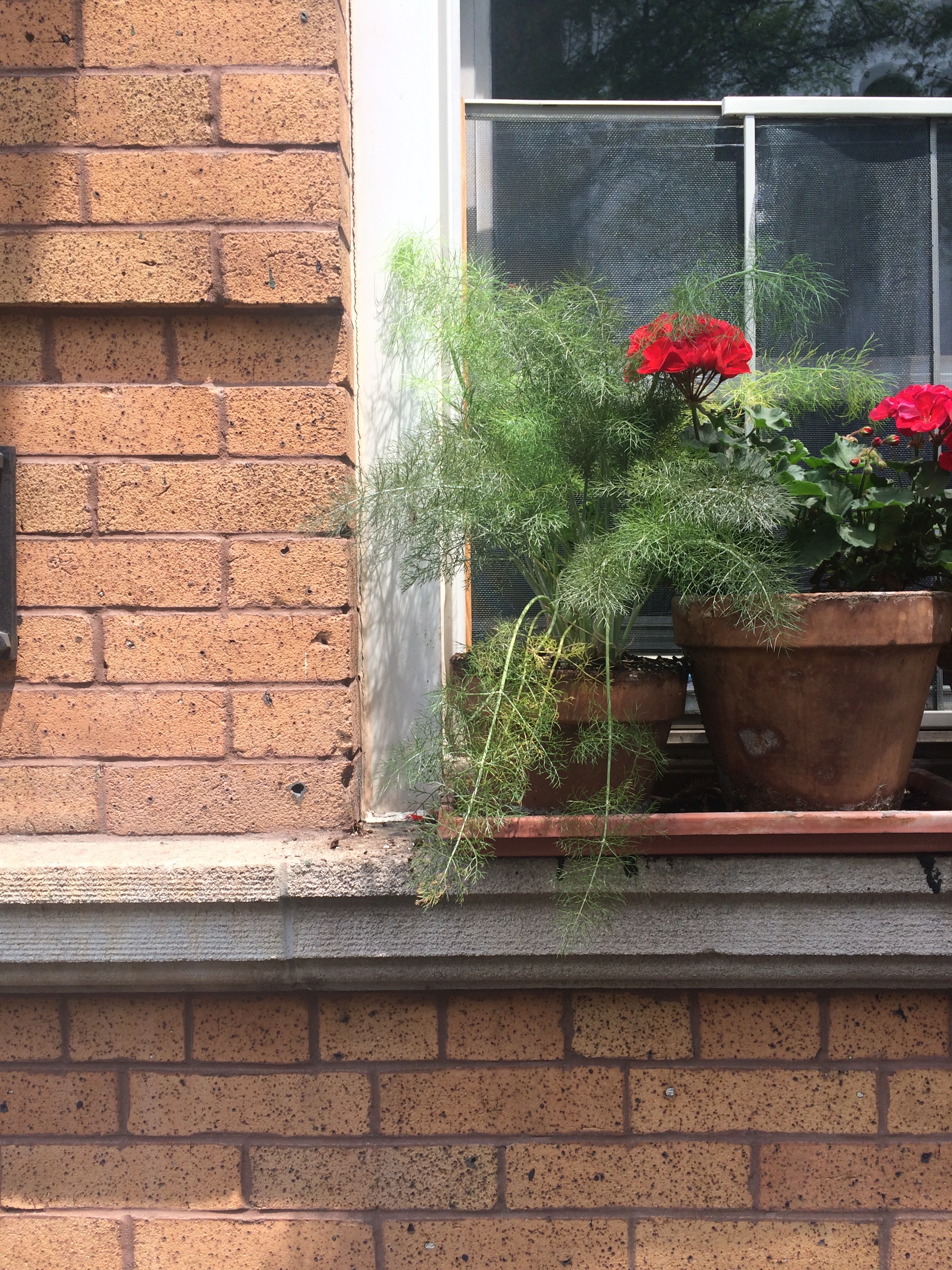
This summer I’ve been keeping you all updated on the fluctuating state of my herb-filled stoop pots and window sills, especially my mentuccia, the European wild mint I’ve been growing for the first time. It’s doing phenomenally well at the moment (it’s pretty much a weed, not the hardest thing to keep going). I love its flavor, which is more complex than oregano’s and less floral than marjoram’s. I’ve added some to this shrimp dish and have been pleased with the outcome. If you don’t happen to have mentuccia on hand (you don’t?), use an equal mix of marjoram and thyme as a fine substitute.

A Note on Buying Shrimp: I’d also like to talk a little about how confusing it is when you try to buy sustainable shrimp. The places where I shop in Manhattan often carry five or six kinds of shrimp from various places around the world. They’re usually farmed. I know that farmed shrimp is not necessarily a bad thing; in fact it can be among our best choices. But what a maddening mess it is to sort it all out. When I need to be set straight on my aquatic purchases, I check in with www.seafoodwatch.org. This organization tells you what you should and shouldn’t buy. I’m grateful for it. I recently revisited its shrimp entry, and it had a lot to say.

It seems that most shrimp caught or farmed in the U.S. and Canada is our best choice, except for shrimp caught in the Gulf of Mexico with skimmer trawls. Shrimp from recirculating aquaculture systems is also a good choice, although markets don’t give us that information, so I’m not sure how we’re supposed to know when we’ve found it. There are some farmed Central and South American and Southeast Asian shrimp that Seafood Watch also lists as best choices (and some it doesn’t think much of).

The shrimp entry is long, going from best choices to the shrimp we just need to forget about, which, it seems, comes mostly from Mexico. Check out the complete listing. It will put you more at ease the next time you go to buy shrimp, I promise.

Seared Shrimp with Mentuccia and Crushed Taralli

(Serves 2)

4 unflavored taralli, ground, not too finely, in a food processor ( you can substitute 1/3 cup of dry breadcrumbs)
1 large summer garlic clove, minced
¼ teaspoon ground cumin seed
¼ teaspoon fennel seed
1 small fresh peperoncino, seeded and minced
The zest from 1 lemon, plus a few big squeezes of its juice
Salt
Extra-virgin olive oil
1 pound large shrimp, peeled, deveined, but with the tails left on
A big palmful of mentuccia leaves, lightly chopped, or an equal mix of marjoram and thyme leaves, chopped
A few large sprigs of flat leaf parsley, the leaves left whole

In a small bowl, mix together the ground taralli, garlic, cumin, fennel, peperoncino, lemon zest, and a good amount of salt.

Dry the shrimp, and put it in a larger bowl. Drizzle on about a tablespoon of olive oil, and toss to coat the shrimp well (this will help the crumbs adhere). Add the crumb mixture, and toss again.

Set a large, heavy-bottomed skillet (cast iron is good) over high flame. Add about 2 tablespoons of olive oil. When it’s very hot, add the shrimp, spreading it out in one layer as best you can. Sauté quickly, without moving it around, just until the crumbs start to turn golden and the shrimp tails turn pink. Give the shrimp a flip, and brown the other side. This should take only a few minutes, depending on the size of your shrimp. Add the mentuccia or the marjoram-thyme mix.

Tilt the shrimp out onto a large platter, leaving most of the oil behind. Give it a good squeeze of lemon juice. Garnish with parsley leaves, and serve right away.

il_570xN.386755809_4sky
Simple Fare, by Donna Walker.

Recipe: Chilled Carrot Soup with Thyme Blossoms and Crème Fraîche

Carrots have an elusive flavor. At times they can taste almost like nothing, at others, soapy. I don’t completely understand carrots. To really taste them, I have to focus on them, sometimes even eliminating all distractions such as music. Then when I do taste them, I find their flavor delicate and unusual.

It seems to me most of their essence lies in their skin, or right beneath it. When I peel them, their true aroma comes rushing forth, but then it’s quickly lost to the air. Since discovering this fact, I’ve almost never peeled carrots. And that’s not only for taste; many of their nutrients are contained in their skins. A good scrub is all they usually get, except when I’m making a puréed soup, like this one. The skin muddies their color. You have to choose between flavor and brilliant color, and for me the color of a carrot soup has a big psychological effect on how I perceive the taste (red carrots don’t taste as carroty to me, but I’ll bet they are, chemically speaking; they just like to trick me). Anyway, losing the skin is not huge problem for me. Often I’ll add it to whatever broth I’m using for the soup, so I can capture a little more flavor. I’ve also learned how to balance acid and sweet in an attempt to stir up a carrot’s soul (in this recipe I add a piece of apple, and, at the end, a swirl of crème fraîche).

I’ve experimented with many carrot and herb combinations. I really like flat-leaf parsley with carrots. Basil is nice, too. This summer I’m finding thyme to be my preferred herb, especially now that my plants are in blossom. The purple blooms taste like the leaves but gentler, with a floral note. I add thyme leaves when the soup is still hot, and let their oil open up in the cooking. Then I garnish the chilled soup with the pretty blossoms.

Chilled Carrot Soup with Thyme Blossoms and Crème Fraîche

(Serves 4)

Extra-virgin olive oil
2 tablespoons unsalted butter
1 large summer onion, cut into medium dice
1 large Yukon gold potato, peeled and roughly chopped
10 farmer’s market carrots, peeled and chopped into thin rounds (saving the peels and trimmings)
About ¼ semisweet apple, peeled and cut into chunks
Salt
A few big scrapings of nutmeg
2 cups vegetable broth or very light chicken broth (simmered for about 20 minutes with the carrot peels and trimmings, if you’re so inclined)
Black pepper
6 large thyme sprigs, the leaves chopped, plus thyme blossoms for garnish
1 tablespoon crème fraîche
A few drops of champagne vinegar

Set a big soup pot over medium heat. Add a good drizzle of olive oil and the butter. Add the onion, potato, the carrots, and the apple chunks, and sauté to coat everything well with the oils. Season with salt and nutmeg, and continue sautéing for a few more minutes, to bring out the flavors.

Add the broth and enough water to just cover the vegetables. Bring everything to a boil, turn the heat down a touch, and cook, uncovered, at a lively bubble, until the vegetables are tender, about 12 minutes or so.

Purée the soup in a food processor, and transfer it to a big bowl. Add more water if it’s too thick (I like the consistency of a very thick cream). Season with black pepper, the thyme sprigs, and a drizzle of fresh olive oil. Swirl in the crème fraîche. Taste for seasoning, adding more salt, and a few drop of vinegar to brighten the flavor.

Chill for several hours. When serving, garnish each bowl with thyme blossoms.

Urban Herbs on the Radio

IMG_0733

I recently spoke with Carmen Devito and Alice Marcus Krieg, hosts of  We Dig Plants, on Heritage Radio Network. We talked about urban herb gardening, women with fish, Southern Italian cooking, and other pleasures of summer. If you’d like to listen in, here’s the link:

http://www.heritageradionetwork.com/episodes/8422-We-Dig-Plants-Episodes-159-Chef-Erica-DeMane