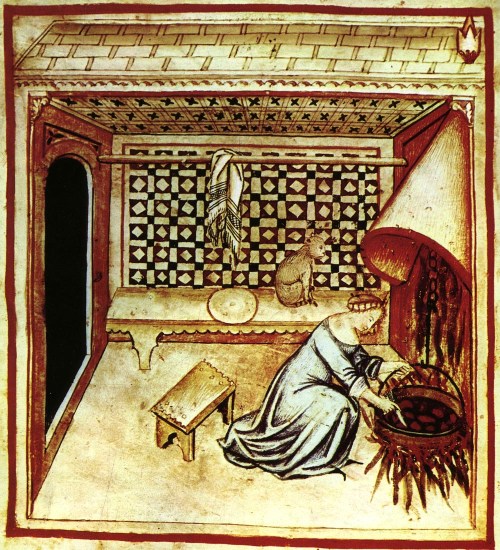
Why I Became a Cook, Part One
Often from around age ten to, I guess, close to nineteen, when I was in that wake-dream state right before falling asleep, I’d smell what I can only describe as burning rubber, something like when you drive a car and forget to take the brake off. This would happen five or six times a year. Though the smell began as burning rubber it quickly blended with something more like the aroma of meatballs browning in olive oil. And then I’d fall asleep. This didn’t frighten me, exactly, but I did mention it to a bunch of people, including several school psychologists. I got a lot of shoulder-shrugging and “Oh, that’s pretty weird”-type responses. I tried to find a connection between burning rubber and the wonderful smell of cooking meatballs, but I couldn’t come up with anything even remotely plausible except that these were the years when I first got interested in cooking. Now, that might explain the meatballs, but as for the burning rubber…it’s really hard to say. All I know is that when this occurrence (or was it a visitation?) gradually ended, I missed it. I wanted it to come back. Despite its eeriness, and I suppose out of repetition, those recurring smells became a comfort for me. It also occurred to me, many years after these nighttime smells went away, that this was a sign that aromas and flavors would play a big part in my life, the meatballs possibly representing my victories, the burning rubber standing for my defeats. Wow—a little farfetched, maybe, but it makes as much sense as any other explanation I can come up with.
As a kid cooking became a way to cushion my unease about the future. It stole me away from my clumsy, jittery self to a better place, one with a semblance of grace. Grace was what I went looking for when my young mind was so taut in my own head that I’d wake up with an imaginary vise tightening across my temples. But I could have picked any pastime to blow off steam, making wacky mobiles, collecting Indian dresses, shooting heroin—all popular girlie hobbies on Long Island in the early 1970s. However, the Southern Italian cooking that came from our kitchen smelled and tasted great. This was one aspect of life I had no gripe with. And here was a craft that could be solitary and social, plus both thrifty and extravagant, and which, in retrospect, was perfect for me. Cooking is a brilliant occupation for an insecure showoff. Ask any chef.
So somewhere in there, between college, CBGB’s, gallons of cheap booze, and a early ulcer, I decided that cooking it would be. I put all my meatballs in one basket and tended them anxiously but lovingly (I’m still not sure what I did with all that burning rubber).
And speaking of meatballs, here’s a favorite recipe of mine. It’s not an old family favorite (my mother would never have put rosemary in meatballs. She always used parsley and a pinch of oregano), but something I’ve come up with after years of tinkering with this classic Southern Italian dish. Marsala and rosemary make a beautiful marriage, full of warmth and mutual trust.
Penne and Meatballs in a Rosemary Marsala Sauce
When I’ve ordered pasta with meatballs in Southern Italy it’s always been served, not with spaghetti but with a chunky, sturdy pasta like penne or rigatoni, and the meatballs have most of the time come in a separate bowl (the exception tends to be with baked pasta where the meatballs are mixed in). But my point is that pasta with meatballs is for real. This is not an American invention (it’s what many American’s have done to it that’s surreal). My family either mixed small meatballs (and small is key here) with pasta, or at times, the pasta was tossed with some of the meatball cooking sauce, and then the meatballs were presented as a second attraction, usually along with a salad or cooked greens such as escarole. This will serve four to five people.
For the meatballs:
1 slice country Italian bread (about an inch thick), crust removed
¾ pound ground beef chuck
¾ pound ground veal
3 very thin slices Prosciutto di Parma, excess fat removed and saved to use in the sauce, the meat well chopped
1 small shallot, minced
The leaves from 1 large sprig of rosemary, minced
The leaves from a few large flat-leaf parsley sprigs, well chopped
1 clove, ground to powder
1 large egg
½ cup grated grana Padano cheese
Salt
Freshly ground black pepper
1 tablespoon extra-virgin olive oil, plus about ½ cup or so for sautéing the meatballs
For the sauce:
Extra-virgin olive oil
The prosciutto fat from the meatball recipe, well chopped
1 large shallot, minced
1 small carrot, peeled and cut into small dice
1 large garlic clove, very thinly sliced
2 large sprigs rosemary, leaves well chopped
1 bay leaf, preferably fresh
3 allspice, ground to powder
½ cup dry Marsala
2 28-ounce cans plum tomatoes, with juice, roughly chopped
Salt
Freshly ground black pepper
1 pound penne, ziti, or rigatoni
A handful of flat-leaf parsley leaves, very lightly chopped
1 large chunk of grana Padano cheese for grating
To make the meatballs: Soak the bread in warm water until it’s nice and mushy. Now squeeze out the excess moisture and break it into little bits. Put this and all the other ingredients in a large bowl and mix it with your hands just until everything is well distributed. Try not to over work it. You want a loose mixture so the meat isn’t compact. This will make your meatballs cook up tough. And take care to season well with salt and black pepper (I always taste a bit of the raw mix. It’s the best way to check. If this freaks you out for some reason, you can cook a little nugget instead). Shape the mix into approximately half-inch balls and refrigerate until you cook them.
To make the sauce: In a large saucepot or casserole, heat about 2 tablespoons of olive oil over medium flame. Add the prosciutto fat, shallot, and carrot and sauté until the vegetables have softened and the fat has dissolved, about 5 minutes. Add the garlic, rosemary, bay leaf, and ground allspice and sauté a minute or so longer, just until fragrant. Add the Marsala and let it boil for a few seconds. Add the tomatoes, season with salt and black pepper, and cook at a lively simmer, uncovered, for 20 minutes.
While the sauce is simmering, set up a large skillet over medium-high flame and pour in about a half cup of olive oil (you’ll want about ½ inch of oil covering the bottom). When the oil is hot add the meatballs and brown them all over (you may need to do this in batches). When the meatballs are browned add them to the sauce, turn the heat down to low, and simmer, partially covered, until tender, about 30 minutes. Taste the sauce, adding a bit more salt and some freshly ground pepper if needed.
Set up a large pot of water for cooking the pasta and add a generous amount of salt. Bring to a boil and add the ziti.
Using a slotted spoon, scoop the meatballs from the pot into a bowl.
When the ziti is al dente, drain it and pour it into a warmed serving bowl. Add a drizzle of fresh olive oil, grate on a little grana Padano, and give it a toss. Spoon on enough of the sauce to coat the pasta well and toss. Return the meatballs to the pot.
Serve the ziti first, with the remaining chunk of Grana Padano brought to the table.
Gently reheat the meatballs in the remaining sauce and transfer them to a serving platter. Garnish them with the chopped parsley and serve with a vegetable such as sautéed escarole or broccoli rabe, or a green salad.
Read Full Post »
 My cat Buddy with ingredients for Manhattan clam chowder, photo by Lisa Silvestri



 Erica De Mane