
Recipes below: Chiocciole with Guanciale, Ramps, and Peas; Stinging Nettle Pappardelle
Digging in the dirt, pulling stuff up, and sticking it in my mouth is a childhood activity that came back to me when I bought my house in the woods nine years ago. I recalled some of the odd outdoor things I used to eat when I was a kid on Long Island. I’d shovel dirt into a bucket in my backyard to make mud pies that were often studded with my father’s cigarette butts. There were occasionally worms in there too, which didn’t seem to bother me. I’d add some chopped onion grass and dandelion leaves, water, a little flour or corn starch, set the plate over a Sterno, and let it cook. When it set into a hard round disk, I’d eat bits of it and use the rest as a kind of brick that piled up in the backyard, eventually making enough to form a low wall. I’m not sure what the purpose of it all was, but I must have developed a strong immune system, since I always tasted each one. I still have no problem eating something that’s fallen on the floor, such as a piece of pork chop, or anything, really. I was eating the lamb’s-quarters that grow in the tree beds on 13th Street until someone reminded me that dogs pee on them (and likely not only dogs). I guess I have that “what doesn’t kill you’’ mentality.
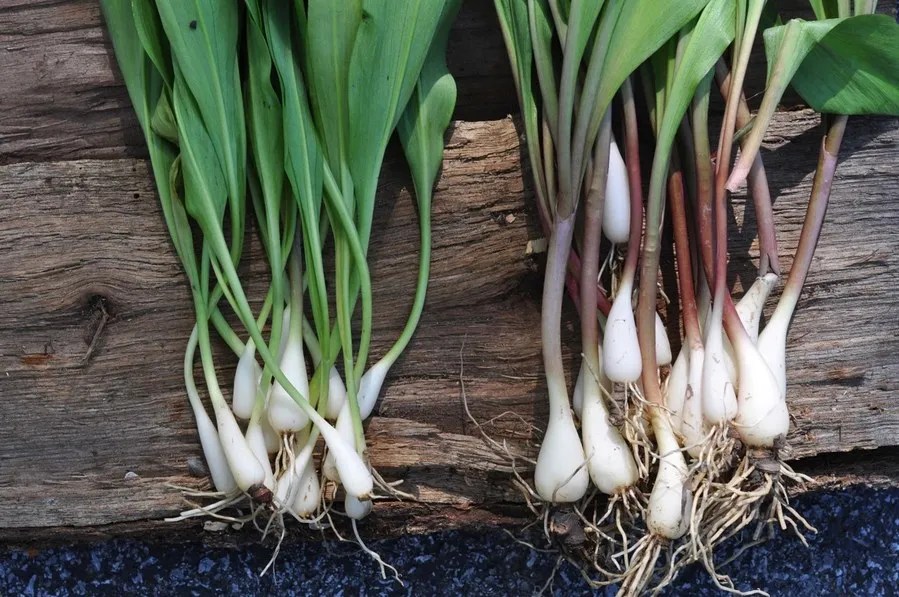
My backyard upstate is full of edible stuff right now, dandelions, garlic mustard, stinging nettles, ramps, chickweed (makes a surprisingly good pesto), wild garlic, fiddleheads, violets both deep and light purple, cleavers. People are finding morels by the bucketload this year, but not me. No one divulges their secret spots.
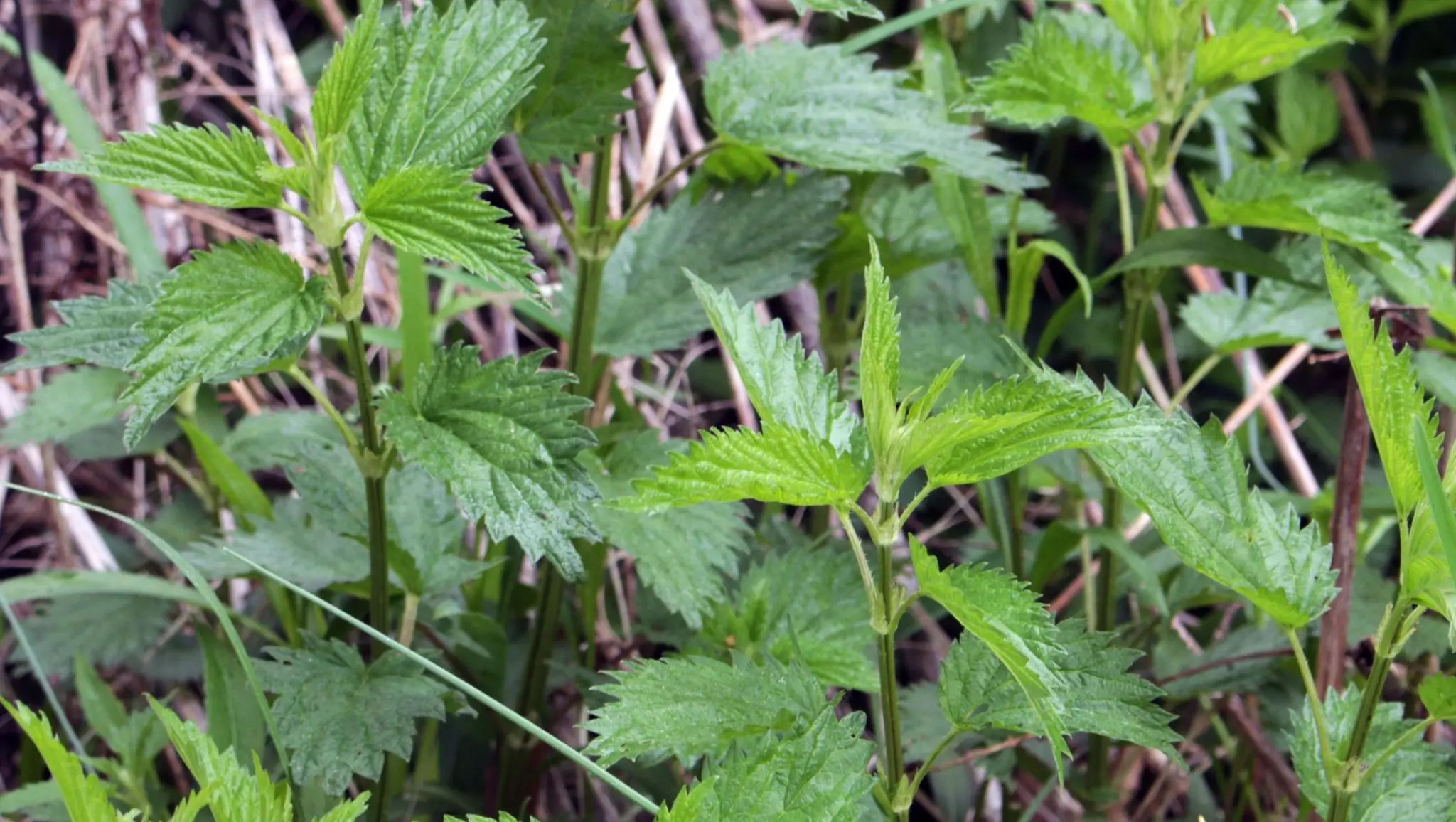
Of all the edible spring stuff I find up here I like stinging nettles the best, partly because of the challenge of avoiding pain in collecting them but also because they have an excellent taste, like a grassier, more peppery spinach. They make good soup, risotto, gnocchi, gnudi, pesto, and all shapes of homemade pasta. I like ramps a lot, too. They taste surprisingly strong, a mix of young leeks and garlic, to my palate.
Here’s a nice fast pasta dish you can make if you manage to find (or if you buy) a bunch of ramps. I used snail-shaped chiocciole pasta here. This one is made by Monograno Felicetti, using Kamut Khorasan wheat, an ancient variety. I had never seen the brand before, and I found its texture delicate and its taste quite wheaty. They just started carrying it at Citarella. A good addition. Any other shell-like pasta such as lumaconi or conchiglie or even rigatoni would be a good substitute.
I’m also offering you my recipe for stinging nettle pappardelle, along with some ideas for how to sauce it. It’s pretty straightforward to make, as long as you are sure to blanch the nettles first to get rid of their sting.
Happy spring cooking to you.
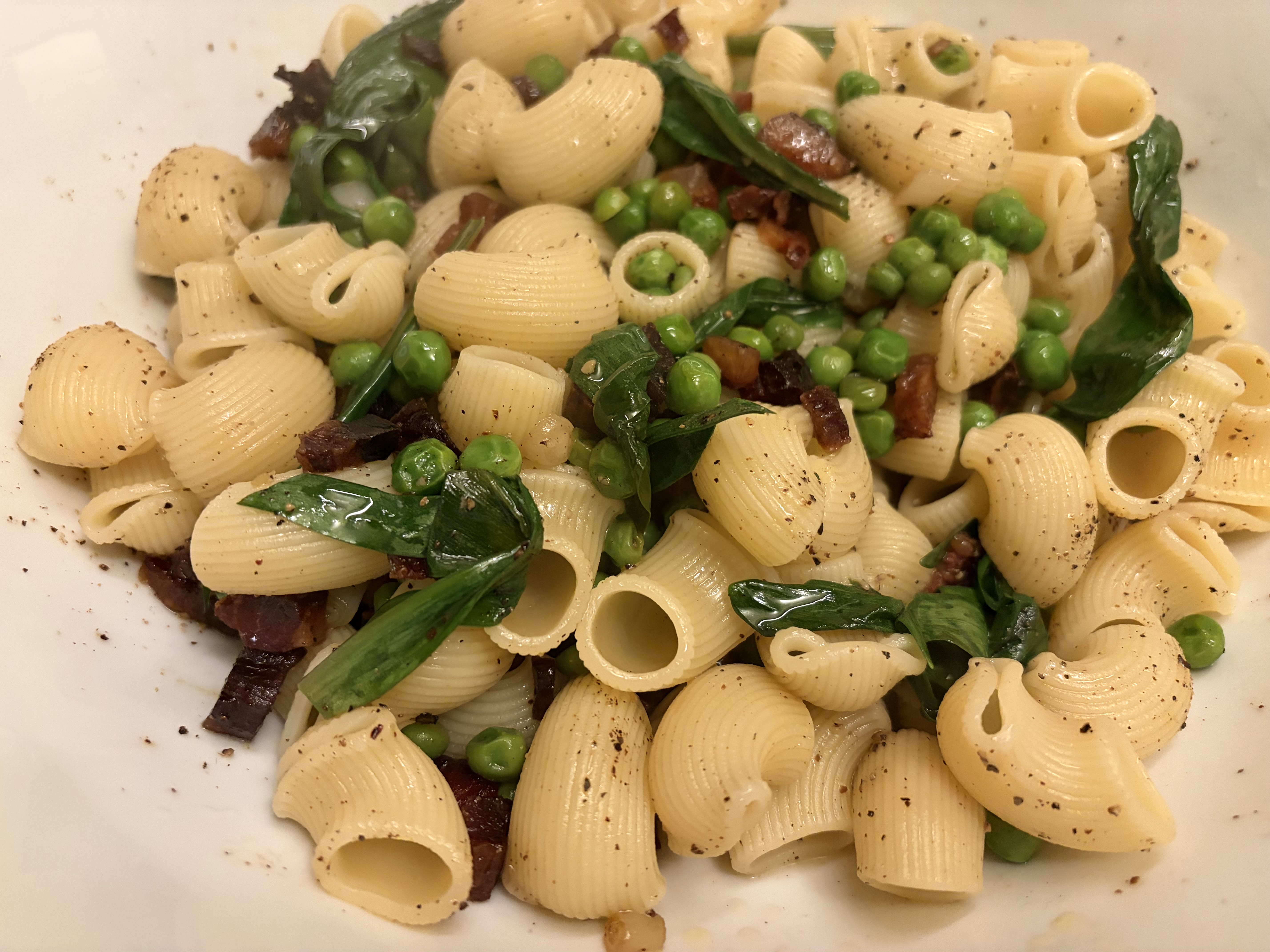
Chiocciole with Guanciale, Ramps, and Peas
Salt
Extra-virgin olive oil
1 cup medium-diced guanciale
10 ramps (a few more if they’re very skinny), the white part cut into rounds, the green tops cut in half
A few big scrapings of nutmeg
1 pound chiocciole pasta
A big splash of dry vermouth
¾ cup chicken broth
2 cups freshly shucked peas
Coarsely ground black pepper
A few drops of rice wine vinegar
Pecorino Toscano cheese for grating
Set up a pot of pasta cooking water, and bring it to a boil. Add salt.
In the meantime, get out a large sauté pan, set it over medium heat, and drizzle in a little olive oil. Add the guanciale, and sauté it slowly until it’s crisp. Leave in all its fat, and add the white part of the ramps and the nutmeg. Sauté for a minute or so.
Drop the chiocciole into the water.
Add the vermouth to the pan, letting it bubble away. Add the chicken broth and the peas, and simmer until the peas are tender, about 3 minutes or so. Add salt and some black pepper. Turn off the heat, and add the ramp greens, letting them wilt into the sauce. Add a few drops of rice wine vinegar for a little kick of acidity.
When the pasta is al dente, drain it, saving about ½ cup of its cooking water, and put it in a large serving bowl. Drizzle on some olive oil, and give it a quick toss. Add the guanciale-and-pea sauce, and toss again, adding pasta cooking water if needed to loosen it up. Taste for seasoning.
Serve with grated pecorino Toscano.
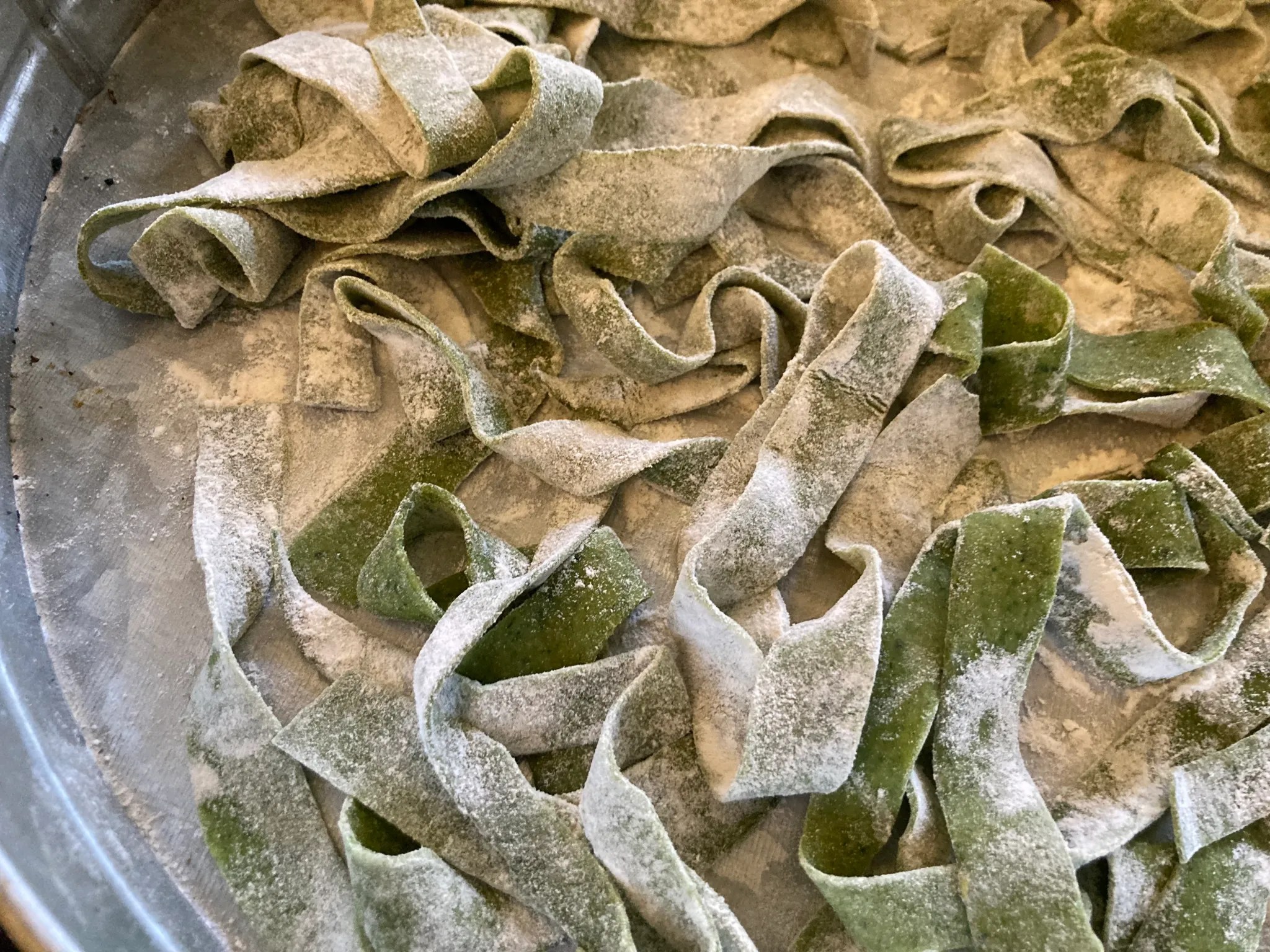
Stinging Nettle Pappardelle
Here is how I collect nettles and turn them into a smooth green pasta. If you’ve ever made a spinach pasta or an herb pasta, it’s pretty much the same.
I’ve made nettle pasta in various shapes. I think it’s always best with a simple sauce, with just a few ingredients that cling to it without overloading it and hiding its subtle flavor. Some sauces I’ve thought worked well were a walnut condimento; sliced ramps sautéed in really good olive oil (or you can use young leeks instead, or spring garlic); and a mix of crème fraîche, spring peas, and Parmigiano. Try substituting asparagus tips for the peas, if you like. And you might want to add prosciutto. I’ve also liked a simple sauce of butter, lemon zest, and Parmigiano. You can add fava beans. And mascarpone with grana Padano I find to be a more flavorful version of Alfredo. I’ve also served this pasta with a stinging nettle pesto. Here’s a short video on how to make that. The taste was good, but the dish was very green. If green on green appeals to you, it might be for you.
A good-size bunch of stinging nettles, perhaps ten long stems
3 large eggs
2½ cups all-purpose flour, plus more for kneading
½ cup semolina flour, plus more for rolling
Salt
While wearing gloves or just being careful, cut off nettle stalks above their thick, tough bottom parts. Put them in a pot of boiling water, and blanch them for 1 minute. Lift them from the water into a colander, and run cold water over them to bring up their green color. You’ll see that when they cook, their stingers completely disappear. Squeeze out as much water as you can. (You’ll also notice that they feel strangely dry, almost as if they had been waterproofed.)
Remove any big stem from the leaves, leaving only the leaves and the most tender tiny stems. You’ll want about ¾ cup of blanched nettles. You can use any extra to include in your pasta sauce, if you like, or in an omelet or a soup.
Put the nettles in a food processor, and give them a few good pulses. Add the eggs, and process until you have a fairly unified looking purée (it’ll be a bit streaky, but that’s its nature, and it’s really nice). Add the flour, both types, and a little salt, and pulse until you have a shaggy ball. If the ball seems too wet for pasta dough, add a little more flour, and pulse it to blend. If it’s too dry, add a drizzle of water, pulsing that in.
Sprinkle a bit of flour on a work surface, and dump the pasta ball out on it. Knead the dough until it’s smooth, about 8 minutes. Cover it with plastic, and let it rest about a half an hour, so it can relax.
Dust two sheet pans with flour.
Cut the pasta into quarters, covering the pieces you’re not immediately working on with plastic wrap.
Roll out each dough piece with a hand-cranked pasta machine until you reach the second to last setting, adding more semolina or regular flour as you go to prevent sticking (the pasta shouldn’t be super thin). You want to end up with sheets all about 10 inches long. Lay them out on a well-floured surface for about ½ hour so they lose some tackiness. That will make them easier to cut.
Loosely roll up each piece into a cylinder, and cut it into ½-inch rings, making quick cuts. Unroll the rings, and place them on the sheet pans, making sure they’re all well-coated with flour so you don’t have a problem with sticking. Now they’re ready to boil.


Leave a Reply