Recipes below: Arugula and Fontina Soufflé; Fennel, Pear, and Taggiasca Olive Salad
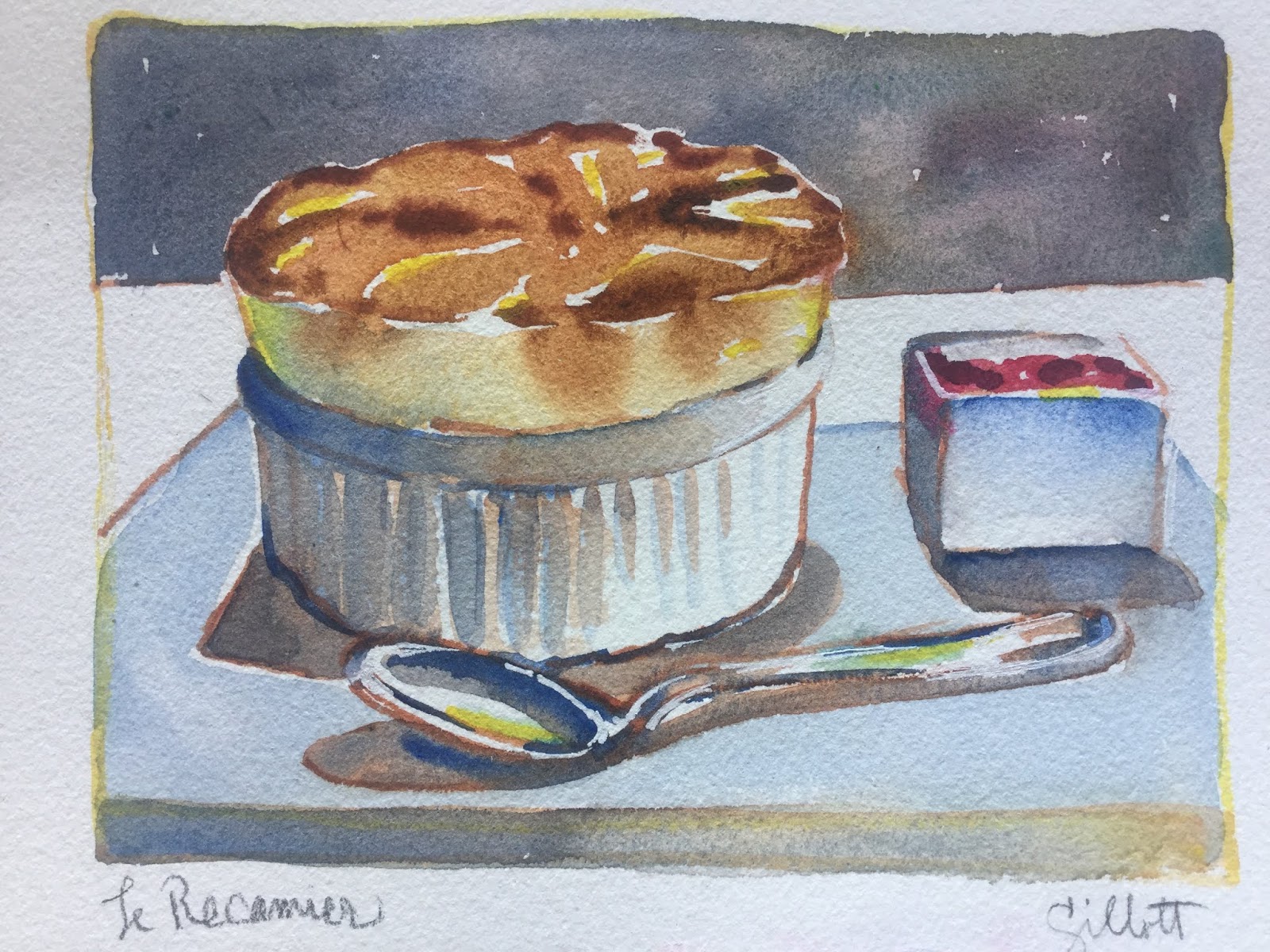
With all the evils being perpetrated by our country right now, I thought I’d try to lighten up and talk a little about eggs. They are really amazing things, the way they tighten or puff depending on how you treat them. When you firm them up, you can make a flan. When you fluff them, you can produce a soufflé. There’s a restaurant in Paris called Le Soufflé that opened in 1961. Its entrance is painted a gentle light blue (see the photo below). I’ve never been, but I’ve walked past it. I’ve been told that Catherine Deneuve eats there often, or used to. I’m not sure what she’s up to lately. I just looked at their menu. It seems a little farty and a lot touristy yet also elegant. I like the idea of their morel soufflé, or maybe the one with Roquefort, or goat cheese. However the soufflé made with beef bourguigon does not sound appealing. I’m not even sure how you’d get it to rise. But wouldn’t it be nice to go for lunch and maybe order an asparagus soufflé and a ton of wine, and follow up with a vanilla soufflé for dessert? One of these days.

I have no history of soufflés in my family, and I didn’t really understand how they were made until I started seriously messing around in the kitchen myself, trying to produce something equivalent. Later I occasionally wound up in semi-fancy restaurants and came to understand the idea of the dessert soufflé. I believe the first one I ever had was at Lutèce, where my boyfriend, now my husband, took me for a big birthday dinner in the mid eighties. I chose André Soltner’s famous Grand Marnier soufflé, and he brought it to the table himself. That was thrilling.
Soufflé is not an Italian concept, but Italian cuisine does offer something similar, often less puffy, more custardy, and you can find straight-on soufflé-like dishes there, too. I once had a gorgonzola soufflé in Rome, and it was very puffy. Whether custardy or puffy, in Italy it usually goes under the name sformato, which translates something like to unmold. I make the custardy type often, usually with whatever seasonal vegetable feels right. This time I decided to go all puff, adding two well-loved Italian ingredients, fontina and arugula.
I find this a solid dinner for two, with good bread, the salad I propose, if you like, and a few glasses of rosato, or maybe prosecco. A celebration of better things to come.
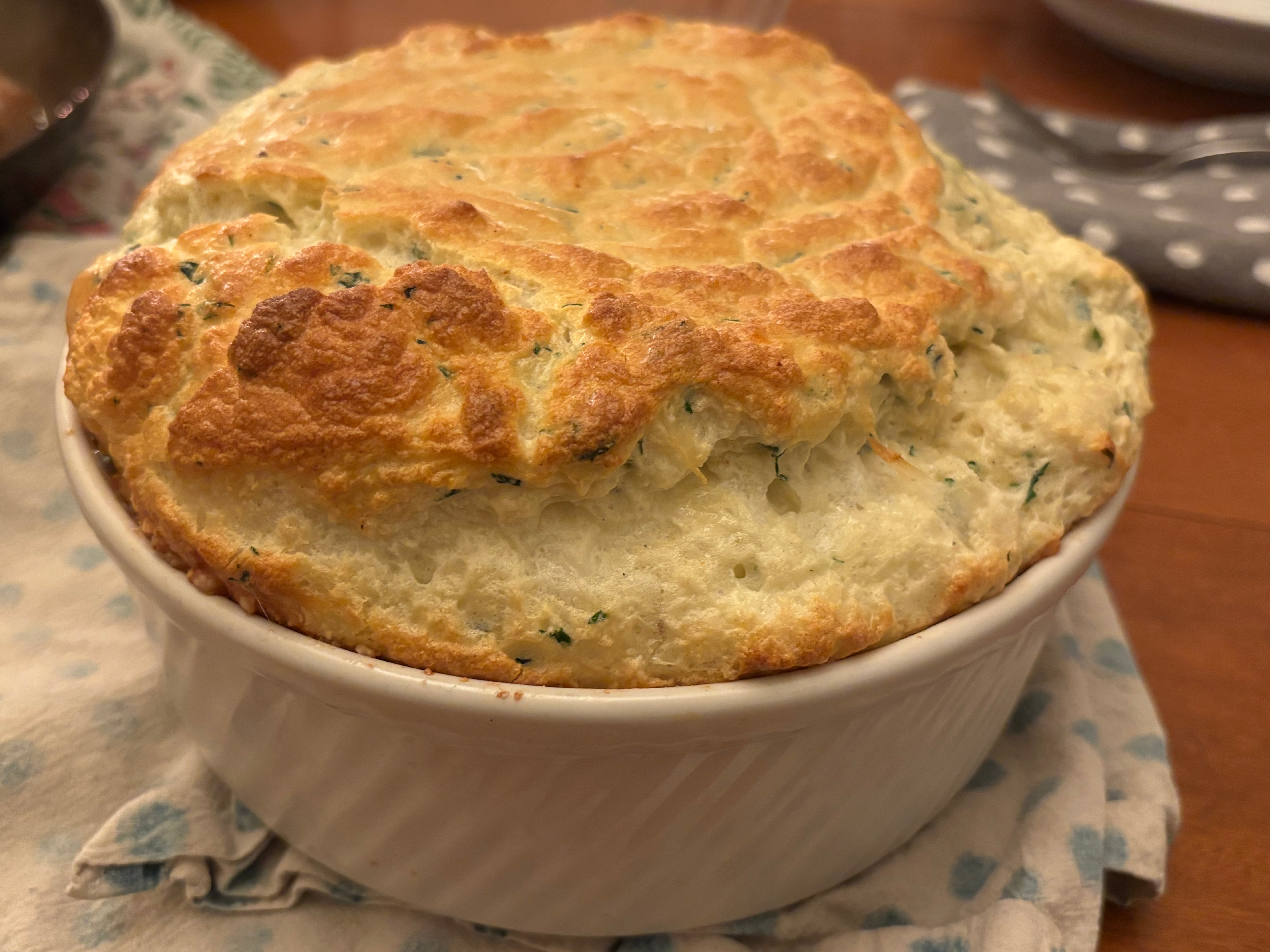
Arugula and Fontina Soufflé
I used an 8-inch-wide, 3-inch-deep traditional ceramic soufflé dish, but one wider and shallower would be fine. You’d just need to cut down the cooking time.
For the dish:
1 tablespoon soft unsalted butter
2 tablespoons grated Parmigiano cheese
For the soufflé:
3 tablespoons unsalted butter
3 tablespoons all-purpose flour
1 cup whole milk
¼ teaspoon allspice and ¼ teaspoon nutmeg, mixed together
Salt
Piment d espelette to taste
4 large egg yolks
½ cup grated Parmigiano cheese
¾ cup grated Fontina Valle d’Aosta cheese
3 cups baby arugula, blanched for a minute, drained, run under cold water to set its color, and then squeezed dry and chopped (this will yield about ½ cup chopped, and be sure to get out as much water as possible so it doesn’t weigh down your soufflé)
6 large egg whites
Smear the soft butter all over the inside of the soufflé dish. Dust the inside with the Parmigiano. You can stick the dish in the refrigerator while you get on with the recipe, so the coating stays firm, but take it out about 15 minutes before you want to bake the soufflé, so the dish is not too cold.
Preheat the oven to 400 degrees.
In a large saucepan, heat the 3 tablespoons of butter over medium heat. Add the flour, whisking it until it’s well blended. Let it cook for about a minute to burn off any raw flour taste, and then add the milk. Whisk it over medium heat until it becomes thick and smooth, about 3 minutes. Add the allspice and nutmeg mix, some salt, and some piment d’espelette. Pull the pan from the heat, and add the egg yolks, whisking them in one at a time. Mix in the Parmigiano, the Fontina, and the arugula.
In a separate bowl, beat the egg whites until they’re shiny and stiff. With a spatula fold about ¼ of the egg whites into the soufflé mixture. Then gently fold the remaining whites into the mix. You don’t need to work them in completely evenly. A little streakiness is okay and better than over mixing. Pour the mixture into the soufflé dish, and stick it in the oven.
Turn the oven down to 375 degrees, and bake for about 30 minutes. The soufflé should be lightly browned, quite puffy, and fairly firm when you touch the center of its top. Ideally you want only a tiny bit of runniness in the middle when you open it up. Serve it right away, with the salad, if you like.
Fennel, Pear, and Taggiasca Olive Salad
Fennel, Pear, and Taggiasca Olive Salad
2 medium fennel bulbs, trimmed and cut into thin rounds
2 firm but fragrant pears (I used red Anjous, because they actually smelled like pears, as opposed to the other varieties at Citarella, which smelled like nothing), cored and thinly sliced (I left on the peel for color contrast)
1 small shallot, thinly sliced
A handful of Taggiasca or Niçoise (similar to Taggiasca) olives, pitted and torn in half (or left whole, if you prefer)
4 large sprigs tarragon, the leaves lightly chopped
1 teaspoon rice wine vinegar
Salt
½ teaspoon Dijon mustard
1½ tablespoons extra-virgin olive oil
Black pepper
Place the fennel, pears, shallot, olives, and tarragon in a wide salad bowl.
Whisk the vinegar with a little salt and the mustard. Whisk in the olive oil.
Grind a little fresh black pepper over the salad, and then pour on the dressing. Toss gently with your fingers.



 Erica De Mane