Recipe in text below: Rigatoni with Roasted Red Peppers, Crème Fraîche, Thyme, and Basil
In the late 1800s Carmine Street and the surrounding blocks of the West Village became a destination for Italian immigrants, mostly from Liguria. Our Lady of Pompeii Church, at Carmine and Bleecker, was their refuge, providing not only spiritual support but also helping new arrivals with housing, jobs, and medical care. It has continued to comfort all the Sicilian and Neapolitan people that followed. My friend Sandy Di Pasqua’s family landed on Carmine. My next-door neighbor on Long Island Lou Mastellone’s older brother was born in a walkup, cold-water apartment on Christopher Street, about five blocks away.
Pompeii is still an Italian church in spirit, having a daily Italian-language mass for the remaining elders, but it also offers one in Tagalog, as the congregation is now heavily Filipino. I took Italian classes at its adjoining school in the 1990s. And for years I would get together with a bunch of friends for its Good Friday Mass. For me, a nonreligious type, the attraction to the vigil was the darkness, the yellow light, the smell of the paraffin candles, and the repetitive, hypnotic song we all sang as we walked over and over around the pews. The refrain “Sono stati i miei peccati, Gesù mio, perdon, pieta” is, I’m pretty certain, stuck in my brain forever. In the old days they even took the song and candles out onto the street. After the vigil we’d all go to Rocco’s for fritto misto and chianti (the old Rocco’s, not the new faux–Italian American hotspot it’s become). Our group has now dispersed, so we don’t do it anymore, but the show goes on, although with fewer participants each year.
There are still a few legit Italian places in the neighborhood. Rocco’s pastry shop (not related to the now trendy restaurant on Thompson Street ), Ottomanelli’s butcher, Joe’s pizza, and Faicco’s Pork shop (which now, unfortunately, has an aggressive MAGAroni vibe to it that I don’t appreciate) are all around the corner on Bleecker.
So for me, it’s a celebration when a new Italian-run shop appears in the neighborhood. Yesterday I went to check out Sullaluna, a just-opened cafe and bookshop combo on Carmine, an offshoot of a place in Venice. They specialize in beautifully illustrated children’s books, all in Italian. I felt peaceful in Sullaluna, and the books are fascinating. A whole new world of literature for me. Here’s a book I just had to purchase:

There’s also good coffee and wine, and a small menu with standard items like gnocchi, arancini, carbonara, and salads. They also do brunch. I cannot yet comment on the quality of the food, since I only had an espresso, but the guy next to me ordered a huge gelato-stuffed cornetto that looked enticing. This is a sweet little place. I will be back.
Sullaluna is at 41 Carmine Street. It’s closed on Tuesdays. As of now, It doesn’t seem to have a website, but it does have an active Instragram account that you might want to check out.

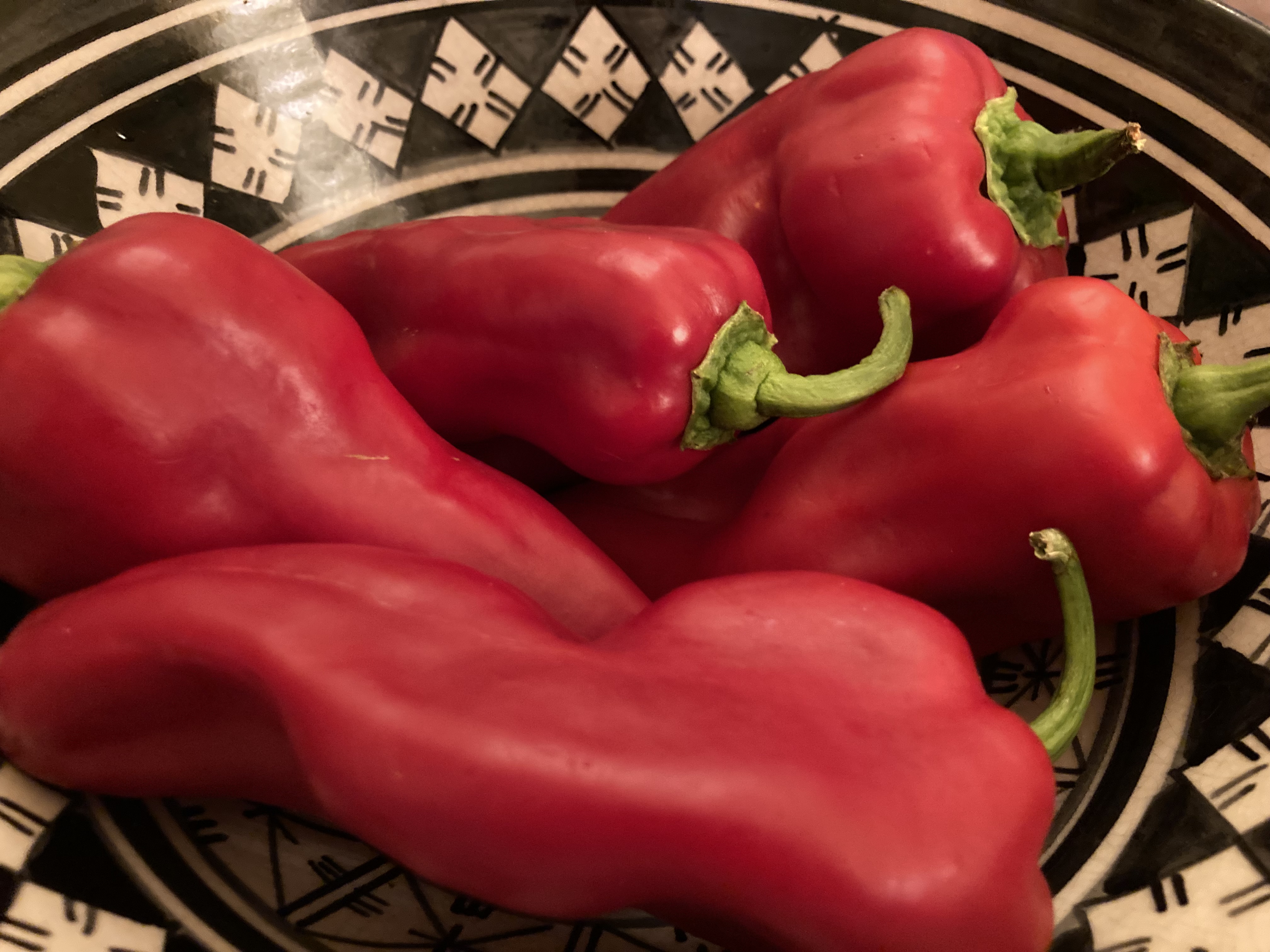
After my coffee at Sullaluna I made my way over to the Union Square market to check out all the late summer produce there. We’ve still got lots of tomatoes here in New York City, and those dark and dusty-looking pointed Italian plums, my favorites for tarts. And many of the sweet and hot chilis have now ripened to a deep crimson. I bought an armful of sweet ones labelled Giant Marconi. I think I’ve cooked with them before, but I wasn’t familiar with that name. I love a roasted sweet pepper sauce for pasta, so that was my plan.

Here’s how to make my Rigatoni with Roasted Red Peppers, Crème Fraîche, Thyme, and Basil.
You’ll want to start by roasting your peppers. I used 6 of the Giant Marconi ones, which turned out to be dense and rich tasting, but 4 or 5 regular red bell peppers would also work. I like to do them on a charcoal grill, but a broiler or gas flame does a fine job. Just blacken them all over, and then peel and seed them. Then give them a rough chop. (I really don’t recommend using jarred roasted peppers for this. Their taste is always somewhat acidic, which can really spoil this suave sauce.)
Get out a large sauté pan, and set it over medium heat. Add a big drizzle of extra-virgin olive oil and a tablespoon or so of butter. Add a chopped shallot and a sliced garlic clove, and let them soften for a moment. Add the roasted peppers, a little chopped fresh thyme, some salt, and a pinch of nutmeg, and let them cook until the peppers are fragrant and tender, about five minutes. Add a splash of dry vermouth, and let it bubble out.
Purée the peppers in a food processor, adding a little water to thin out the purée. Return the purée to the pan, and add about ½ cup of crème fraîche and a sprinkling of Aleppo pepper. Let it warm through.
Cook a pound of rigatoni or another shape you might have on hand, and drain it, saving a little of the cooking water. Pour it into a large, warmed serving bowl. Add the sauce, a drizzle of fresh olive oil, a good sprinkling of grated Parmigiano Reggiano, and a handful of lightly chopped basil, adding a little cooking water to loosen it if needed. Give it a good toss.
This sauce is also very good on mussels or clams. Just open them in a little white wine or vermouth, add the sauce, and toss. Beauty.
Happy end of summer cooking to you.
Posted in Uncategorized | Tagged dinner, food, italian, pasta, recipes | 6 Comments »
Posted in Uncategorized | 2 Comments »

Recipe below in text: Warm Corn Salad with Tomatoes, Thai Basil, and Ricotta Salata.
I haven’t been very creative with corn this summer, just eating a lot of corn on the cob (or corn on the club, as my friend’s young son used to call it). And, in fact, I haven’t completely enjoyed every ear, finding some ridiculously sweet. Half the time I can’t even finish one club. You have to really hunt around the farmers’ markets to find the old-fashioned varieties that are not just sugar loads.
The other day I picked up some ears of what was labeled white corn. The kernels weren’t exactly white, more like a very pale yellow. I’ve seen carnations that color. I was told by the people at the farm stand that that corn was a native, nonhybrid variety. After a little research I thought maybe it was New York Iroquois corn, but the farm people didn’t call it that. I tested it by chomping into it raw. Sweet but grassy. I decided to slice off the kernels and sauté them. That made it even sweeter, but with a deeper vegetable undertaste than the yellow stuff. Still, I didn’t want to eat it straight, finally deciding that any type of corn is improved by a little acid, a little heat, and salt.

I came up with this recipe, which includes a peperoncino for heat, ricotta salata for salinity, tomatoes because it’s still summer, a little miso for umami, and Thai basil for its anise spiciness, which, especially late in the season, is a good counterpoint to sweet.

To make it, first off make a vinaigrette, with 1 teaspoon of white miso, a teaspoon of sherry wine vinegar, a teaspoon of mirin, and 1½ tablespoons of good olive oil. Mix that all well until the miso is dissolved.
Shuck 5 ears of summer corn (you can try to find a white variety, but any type will work well). With a sharp knife, slice off the kernels.
Get out a large sauté pan, and set it over medium heat. Drizzle in a little olive oil. Add the corn, 2 scallions cut into thin rounds, a piece of a fresh hot red chili, minced (as much as you like; I used about half a peperoncino), and a big pinch of allspice. Add a sprinkle of salt, and sauté until the corn is firm but tender, 3 minutes or so.
Put the corn in a big serving bowl. Add 2 or 3 well chopped plum tomatoes (I seeded mine) and a handful of lightly chopped Thai basil leaves. Pour on the vinaigrette, and give it all a gentle toss. Scatter on some crumbled ricotta salata, and garnish with a few nice looking Thai basil sprigs.
You can serve this warm or at room temperature. It will feed four or five as a side dish. I served it with roasted monkfish that I topped with a green tapenade, but it would go well with any number things (barbecued chicken thighs, for instance).
Happy late summer cooking to you.
Posted in Uncategorized | Leave a Comment »

Recipe in text below: Gazpacho with Cantaloupe and Basil
I don’t like bell peppers in my gazpacho, either green or red. They add a sharp gasoliny flavor so dominating, I find, that I can’t taste much else. Roasting would probably improve the pepper presence, but to my mind the point of gazpacho is to blend uncooked ingredients, releasing their essence and their trapped water while keeping it all as cold as can be so it’ll refresh your body on a hot day. No cooking here at all. But those bell peppers bummed me out every time. I wanted to love this soup so badly. You know what I did? I left the bell peppers out. Dramatic, I know. I instead emphasized the sweet by adding melon, balancing that out with sherry wine vinegar, a mildly bitter extra-virgin olive oil, basil, and sea salt.

If you’d like to try my version, you’ll need four medium summer tomatoes, chopped (I didn’t peel mine, but you certainly can if you want), a medium cucumber, skinned and chopped (I skinned it because I didn’t want the dark green skin to add a murky color), about 3 cups of cubed really fragrant summer cantaloupe, 2 chopped scallions (just the white part; save the green stems for the garnish), a piece of a fresh red chili (I used half of a red jalapeño from my garden), a small, very fresh summer garlic clove, chopped, and the leaves from a few sprigs of lemon thyme.
Put everything in a food processor, and pulse it until blended but still maintaining a little texture (you don’t want it to resemble a smoothie). Add about a teaspoon of sherry wine vinegar (depending on its strength, you may need more; I used Viagre de Jerez Reserva, which is potent), some nice sea salt (I find that this soup can take a good amount of salt), and about ¼ cup of your best olive oil (I had on hand a Sicilian brand called Olio Verde that I really like that is bitter but not aggressively so). Pulse again a few times to blend. Depending on how much water is in your vegetables, the soup at this point may be thick or thin, but we’ll adjust that later.
Pour the soup into a pitcher or a bowl, and refrigerate it for at least 3 hours (overnight is fine). This will give it time not only to chill but also for all the flavors to blend.
When that’s done, it will have thickened a little. If it started out thin, this will be a good thing. In my case I needed to loosen it up with about ¾ cup of cold water. My preference is for gazpacho to have body and texture but still be pourable. I don’t want a spoon to stand up in it. Next taste the soup, adjusting with more salt, vinegar, and/or hot chili if needed. Add about 5 or 6 leaves of well chopped basil, and stick the soup back in the refrigerator for about another hour to further meld the flavors and chill. Then it will be ready to serve. You’ll have four good-size servings.
I like garnishing each bowl with a fine chop of cantaloupe, cucumber, the green ends of scallion, and a thread of fresh olive oil. And I love this soup with good bread, a plate of Serrano ham, and a cold glass of rosato.
Posted in Uncategorized | 2 Comments »

I just spent a confusing afternoon trying to sort out all the varieties of eggplant now available at the Union Square Greenmarket. August is when they come fast and furious. The problem identifying the things is that half the time the people selling them aren’t completely sure what they are. But I did my best, so here goes:

These little squat eggplants are called Patio Babies, because they’re somewhat easy to grow in a container. They’re really cute. I never saw them before, so I bought a few to play around with. I’m thinking of maybe stuffing and roasting them.

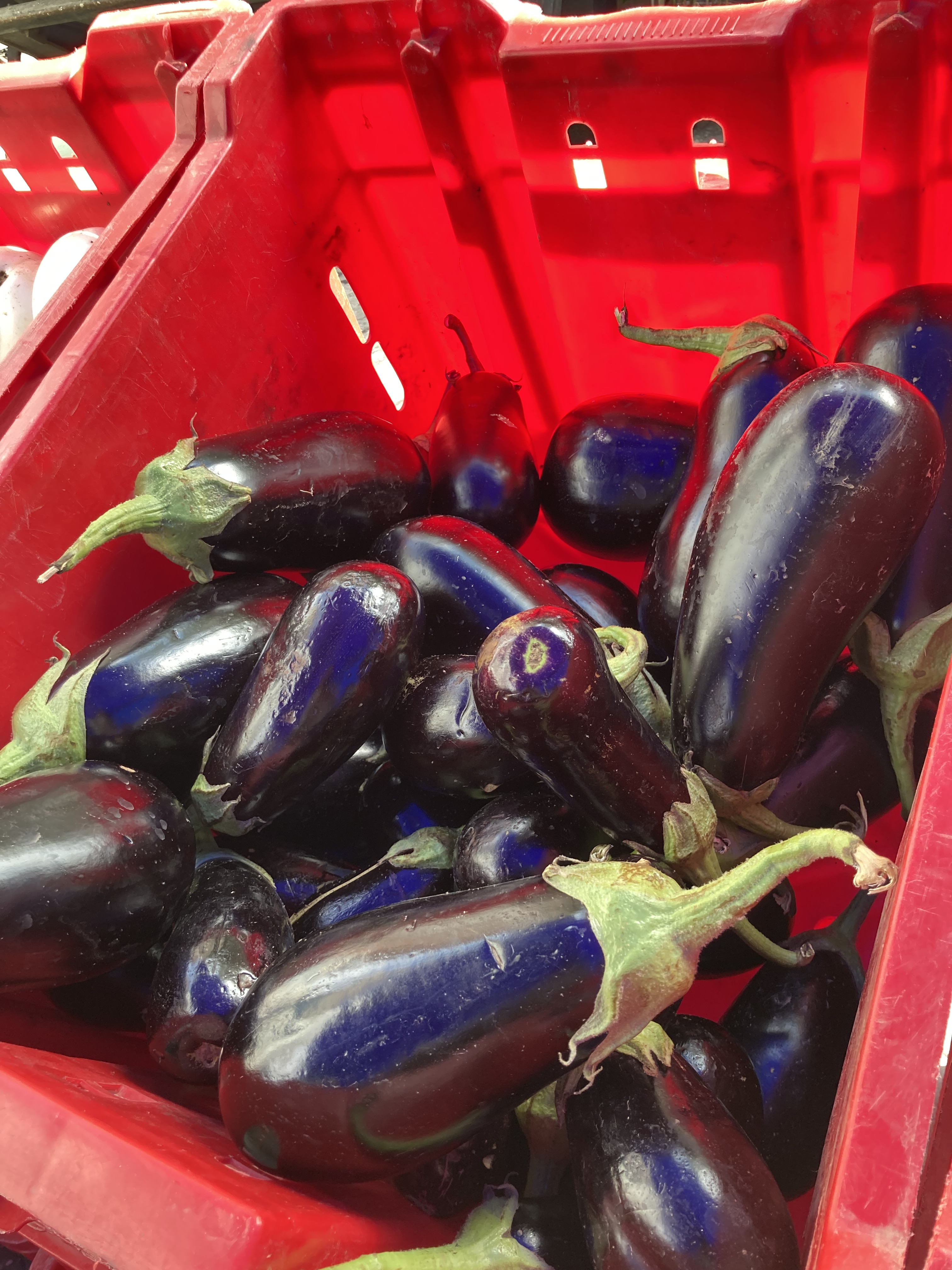
These long guys are Japanese eggplants. Chinese varieties look similar, but I didn’t see any today. I’ve also previously seen a long Japanese variety with beautiful solid light green skin. I love these eggplants in a sauté. They’re sweet and gentle.

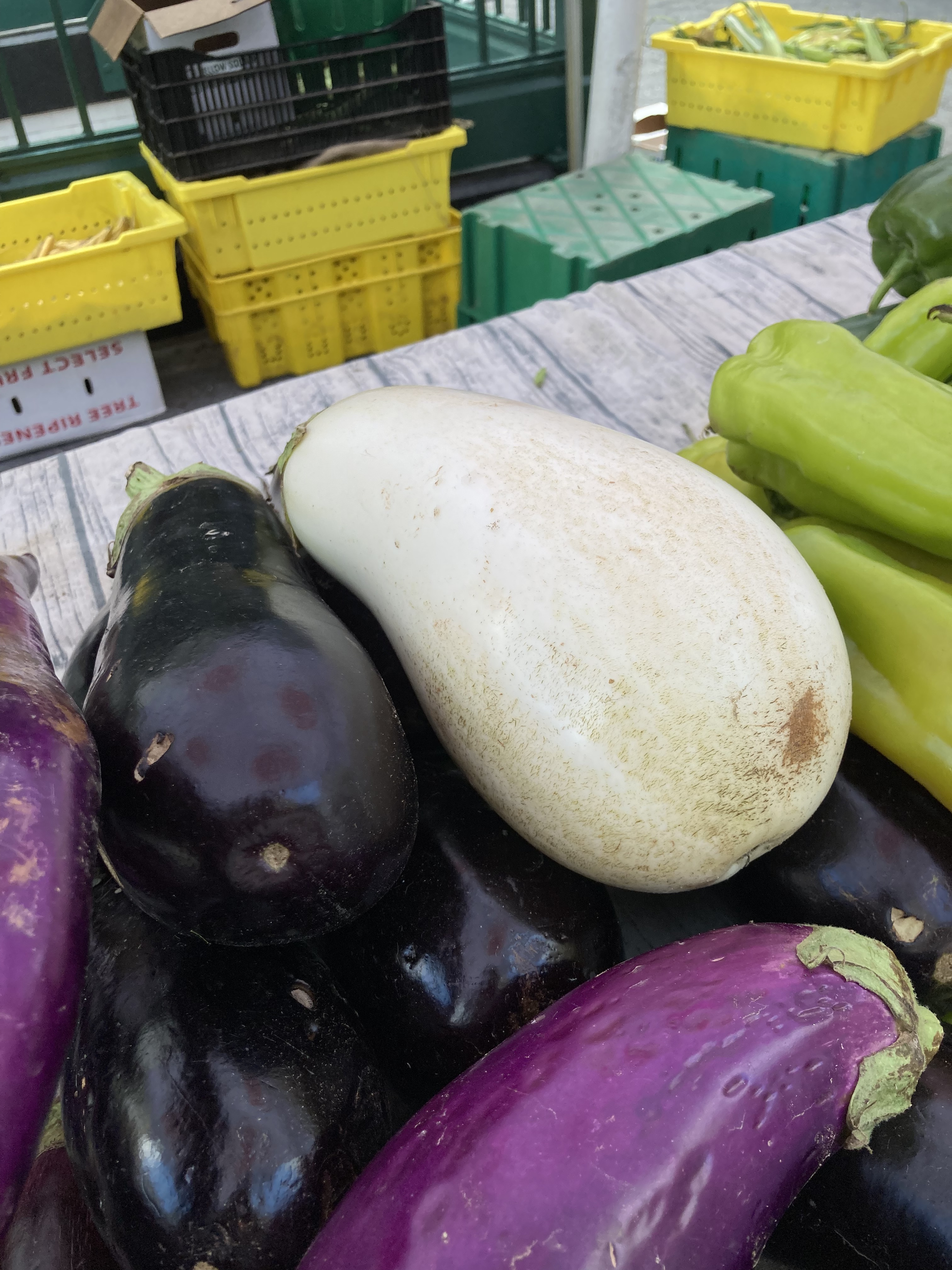
One white one stuck in here. To me it tastes just like the dark purple Italian ones next to it. It’s just white.

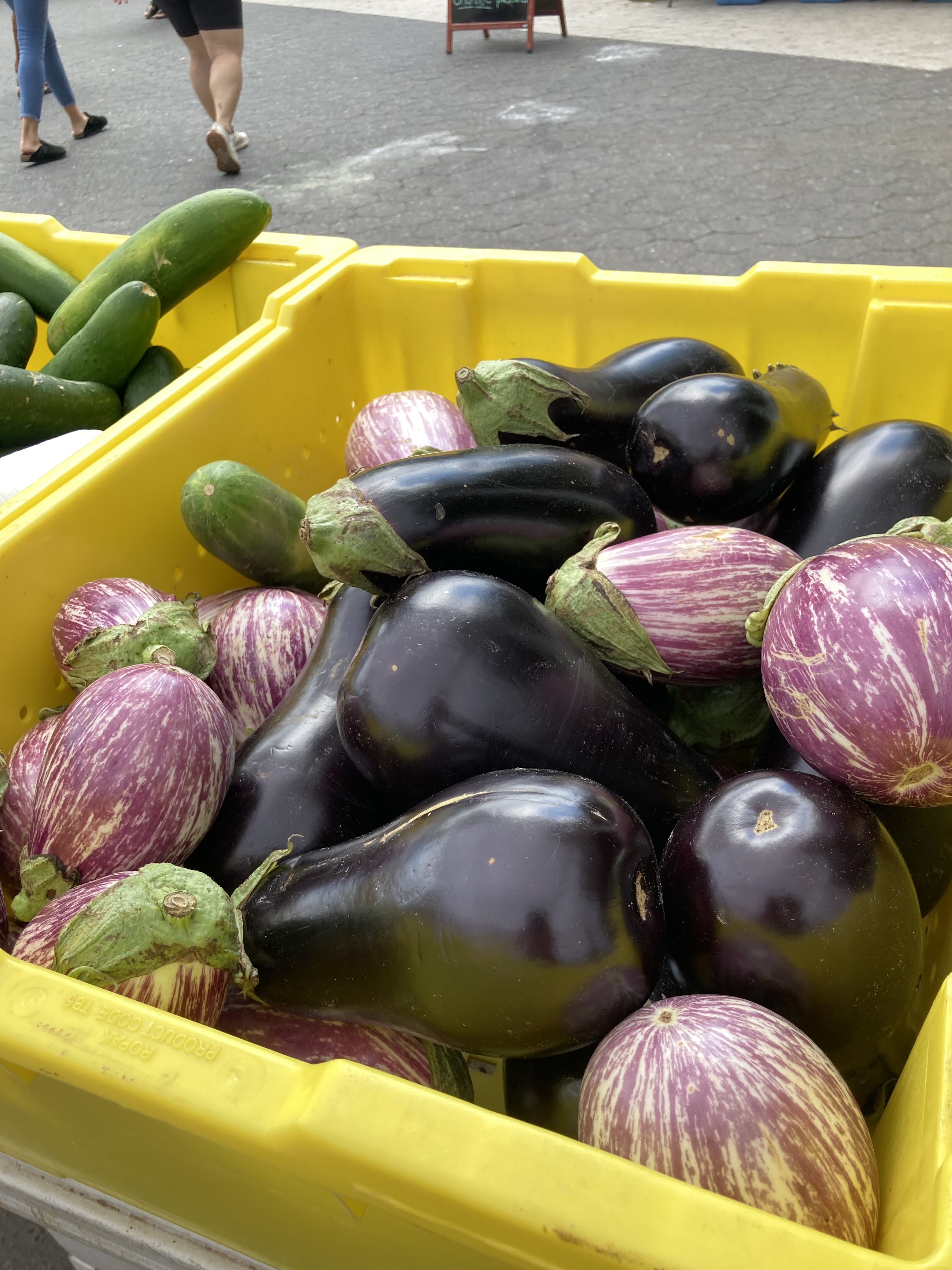
Here are some Graffitti eggplants surrounding the dark purple ones. I buy them because they’re so beautiful. Great for ciambotta.

Here you’ve got your Fairytales. So tiny. I think the best way to treat them is to split them and then grill them with olive oil and herbs.

The farm people said these were called simply Striped, but I’m thinking possibly they’re another type of Graffitti eggplant? Gorgeous color.

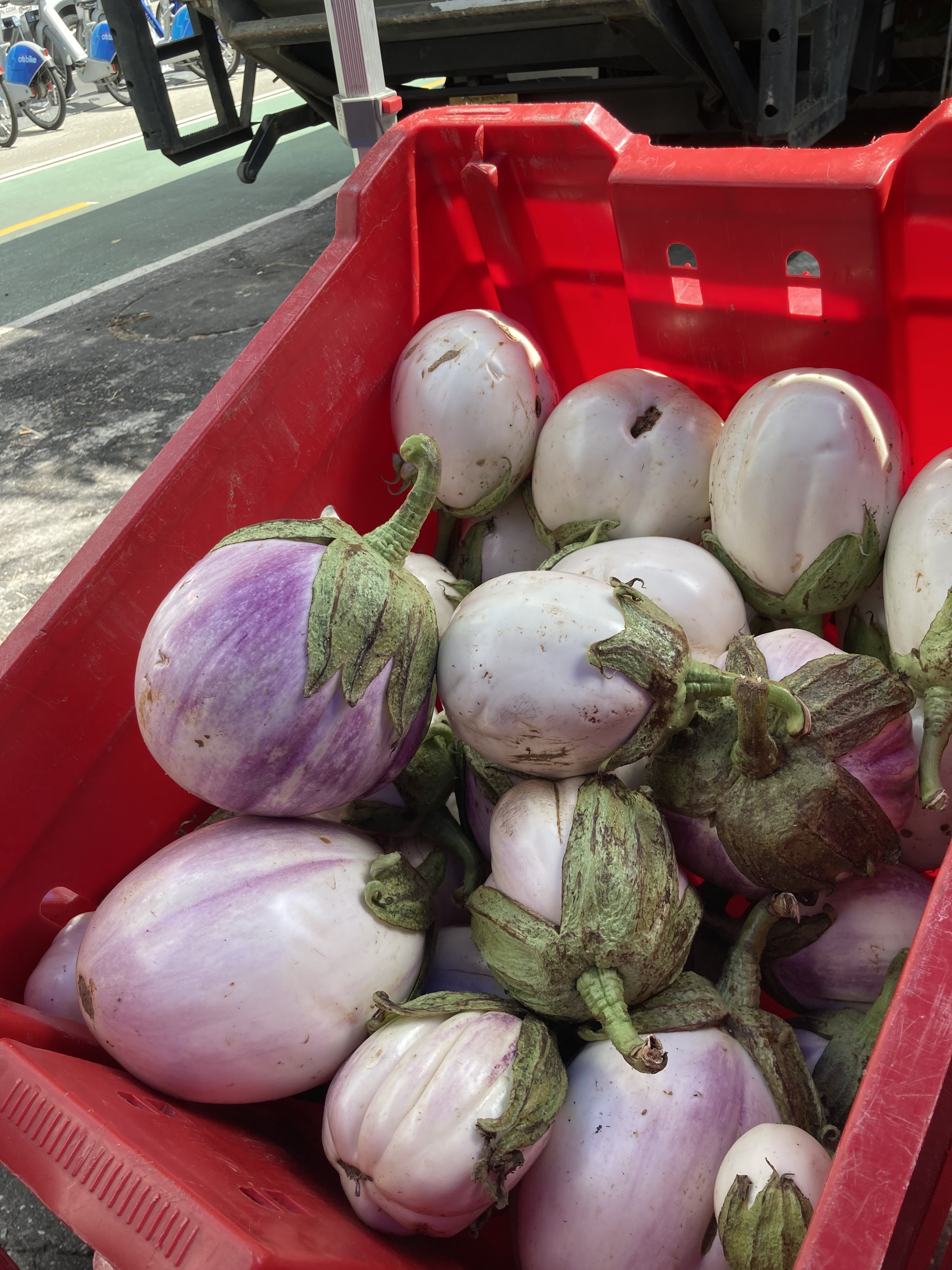
These were labeled only as Italian Eggplants. My at-home Google search leads me to believe their actual name is Rotonda Bianca di Rosa. Of course I bought a few.

When I did a Google search for these pretty Globe variety eggplants, the name Barbarella came up, so I’m going with that. I’m staring at one now that’s sitting on my counter. Eggplants are exquisite.

These look like the regular supermarket eggplants you can buy all year long, but they’re an Italian variety that’s a bit more squat, fatter, and more tender. I’ll be making pasta alla Norma with a few of them tomorrow night.

These lovely things are called Rosa Bianca (not to be mistaken for the Bianca di Rosa of the Rotonda school. See why I was confused?). They’re creamy, almost custardy, when cooked, with no bitterness at all. I bought a few of them too. I think I overdid it with eggplants. I’ll have to give some to my sister.
Posted in Uncategorized | 2 Comments »

Recipe in text below: Peach Sorbetto with Basil and Crème Fraîche
Peaches and basil make a sublime pairing that I love sweet or savory. The melding of the two flavors produces a gentle black-peppery bitter sensation that has become habit-forming for me.
I’ve played around with various renditions of peach and basil over the years. A caprese-like salad, subbing peaches for the tomatoes or even in addition to them is always a hit, especially with fine olive oil, good salt, and coarse ground black pepper. Last summer I made a cold peach soup flavored with Thai basil and dry vermouth. I was really happy with that, too. This year my Thai basil turned brown and collapsed into the dirt after only a few weeks, so no such soup for me this summer.
My father always put together sliced peaches and dry red wine in a big bowl for backyard summer cookouts. He’d scatter whole basil leaves on top. There was no added sugar, and the tannic pucker of the wine carried the “dessert” to a high place in my culinary memory. I make that a few times each summer.
To go super savory, I’ve sautéed peaches with shallots, basil, and a few drops of vinegar, to serve over grilled pork chops. Pretty good, like a deconstructed chutney. Or you might throw cut peach halves on a grill and fill them hot with a cheese-free Genoese pesto. You might also want to try crostini topped with ricotta, peach, and basil, maybe lemon basil. Or you could use the same topping on a hot, oily focaccia. I’ve never tried that myself, but I can imagine it would be lovely.
I also love a Harry’s Bar–inspired peach purée and prosecco, garnished with a perfect basil sprig. I sometimes add a drizzle of Campari. And a vodka and soda is made fuller and less purely medicinal by a shot of peach juice and a few basil leaves.
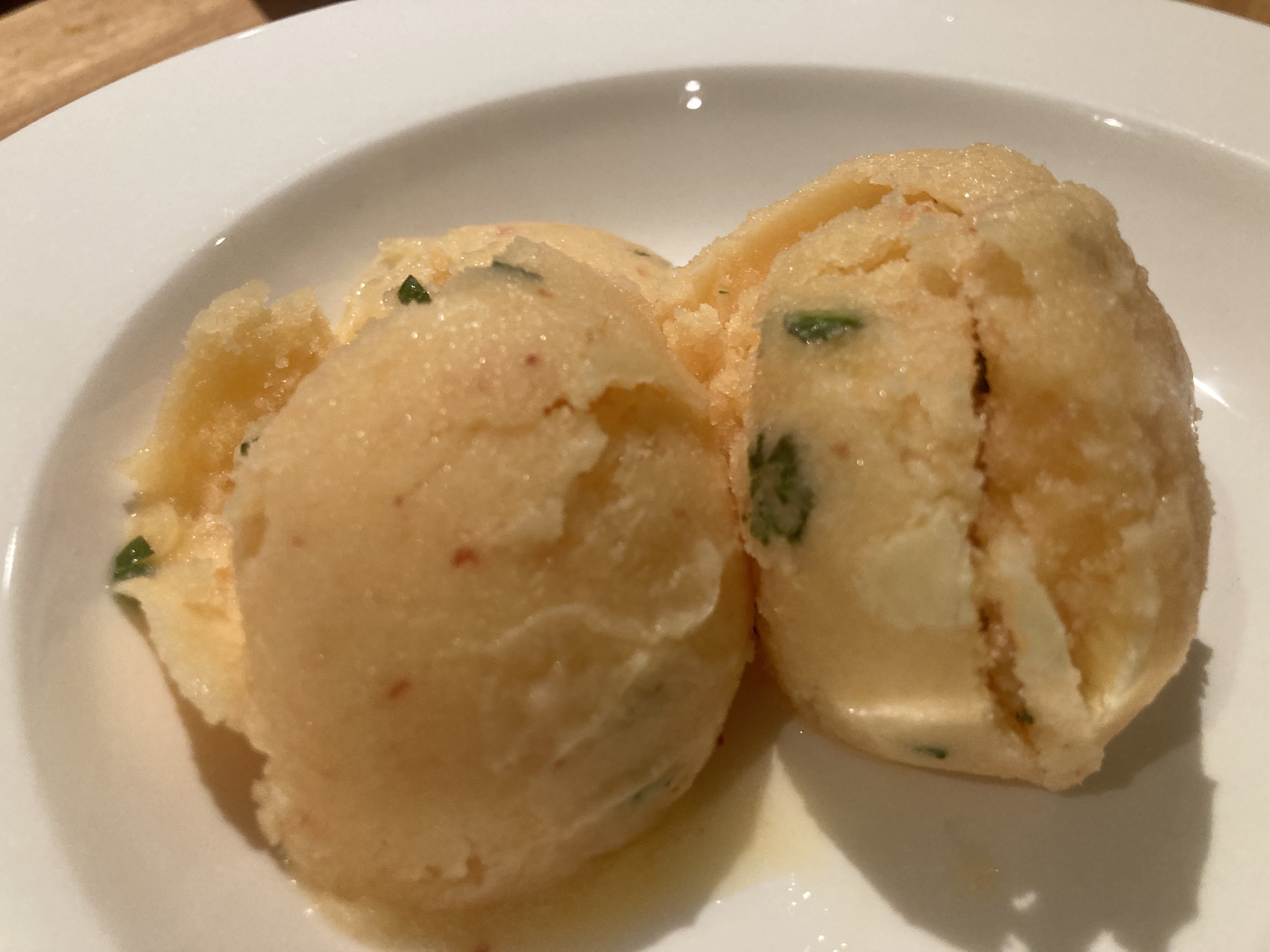
This time I made a proper sweet thing, a peach and basil sorbetto. The friend I served it to last night said she would have been willing to pay 80 dollars for it in a restaurant. That made me feel good.

If you’d like to try making it, the first thing you’ll want to do is make a sugar syrup, half water, half sugar, boiling it for a few minutes to dissolve the sugar. I used a cup of sugar, but you never really know in advance how much sugar your fruit is going to need, so it’s good to prepare a little extra. Let it cool completely.
Then peel five really ripe, fragrant peaches, leaving a little of the red skin for color. You need soft, ripe ones for this so they purée easily with no lingering lumps. Slice the peaches into thick chunks, and put them into a food processor along with a squeeze of lemon juice and a tiny pinch of salt. Purée until smooth. Start adding the sugar syrup, pulsing it in and tasting as you go. Stop when you’ve got a nice balance. Add a heaping tablespoon of crème fraîche, and blend everything until smooth.
Pour the purée into the bowl of an ice cream machine. Scatter 5 well-chopped basil leaves on top, and process until frozen.
Posted in Uncategorized | 8 Comments »

Recipe in text below: Purslane Salad with Nectarines, Pine Nuts, and Ricotta Salata
I will eat pretty much anything at least once, and usually many times, but fuzzy food disturbs me. As much as I love peaches, I can’t quite get past their fuzzy skin. I understand this is infantile and really stupid, but I can’t help it. I once planted a Cuban oregano that turned out to have fuzzy leaves. I found the mouth feel of the herb unbearable. I ripped the plant out.
Yesterday I went to the Union Square Greenmarket looking for purslane. I had the idea I’d pair it with peaches for a sweet summer salad. That seemed perfect. But of course I’d have to skin the peaches’ fuzzy coats, and then they’d turn into a soupy mess in the bowl, diluting the vinaigrette and not doing a good job of anything. Funny—I had forgotten about nectarines, but there they were, in all their smooth-skinned summer glory, smelling like heaven. So they became the thing to layer with the purslane, one of my favorite high summer greens, with its lemony taste and high omega-3 content. An interesting thing about purslane is that it grows all over the place, including in cracks in the sidewalk. You probably have some in your backyard, or down the block in a tree bed. This time I wanted it so badly I paid for it.
I added ricotta salata to the salad, thinking its saltiness would marry well with the sweet fruit. And then I scattered on toasted pine nuts and drizzled on good olive oil, salt, black pepper, and a thread of sherry wine vinegar. So that’s the recipe. Maybe you’d like to try it.

* * *
Here is some other appealing produce I saw at the Greenmarket:

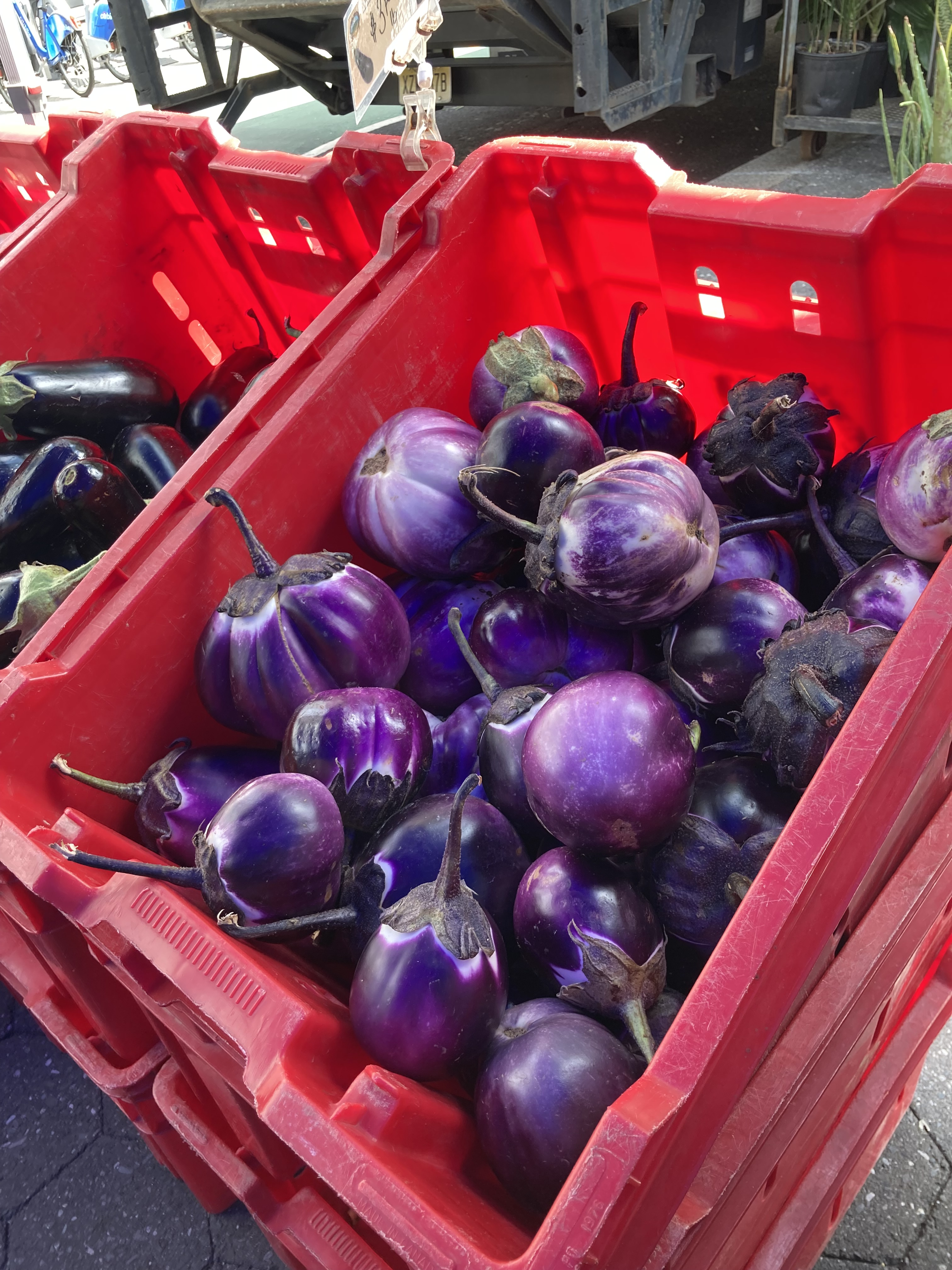
My favorite lilac-colored round Italian eggplants. I like to cut them in half and stuff them with breadcrumbs, anchovies, garlic, and summer savory.

A Japanese eggplant that looks interesting. I haven’t tried it yet, but I will, and I’ll report back.

Delicious peppers, sort of like cubanelles but with a little more flavor.

I found myself attracted to the shiny skins on these semi-hot chilies, so I bought a few. I added half of one to a braised eggplant and tomato dish. Lovely flavor.
Posted in Uncategorized | Leave a Comment »

Recipe below, in text: Cool Zucchini Soup with Lemon Thyme
I never used to love lemon thyme. I found it too air-freshener-y. But the more I’ve learned how to work with it, the more I’ve changed my mind. It’s a matter of application, of handling. Lemon thyme is a multipurpose herb. The thyme feature of its personality can make it work as an anchoring herb, one you’ll want to add during cooking so its peppery, allspice-like, woody flavor can open up with heat. (Ever wonder why Jamaican cooks use allspice and thyme together so often? It’s because they taste alike. There’s an affinity there.) But also you’ve got the clear lemon overtones that provide an uplift, especially if you include it at the end. In the case of this soup, I’ve added it at the beginning of cooking and then chosen to wait and add it again after I’ve chilled the soup, so it stays fresh and relevant. It’s deep and good this way. No air freshener, no stupid scented candle.

To make this soup you’ll want to get out a good-size soup pot and set it over medium heat. Drizzle in a few tablespoons of extra-virgin olive oil, and add a large summer onion, chopped, using some of the tender green stem. Add a medium-size baking potato, peeled and chopped. Add some salt, and let it all cook for a few minutes. Then add about 6 or 7 small zucchini, chopped, and the leaves from about 4 lemon thyme sprigs. Let it cook until everything is fragrant and just starting to soften. Add a splash of dry vermouth, and let it boil away. Add 4 cups of chicken broth or vegetable broth and enough water to just cover the vegetables. Bring it to a boil, and then turn the heat down a touch and simmer at a low bubble until everything is tender, about 15 minutes.

Next you’ll want to purée the soup in a food processor, probably in batches, pouring it into a large bowl as it’s puréed. Chill it for several hours. When it’s cold, add a little more salt, some freshly ground black pepper, and the chopped leaves from about 5 lemon thyme sprigs. I like this soup with body but still quite pourable. If you find it too thick, thin it out with a little cold water.
Give it a taste. I found it needed a tiny drizzle of sherry wine vinegar to bring up its acidity. Your soup may not. Serve cold, garnished with a drizzle of your best olive oil and a few lemon thyme sprigs.
This will make four big portions.
Posted in Uncategorized | Tagged dinner, food, recipe, recipes, soup | Leave a Comment »