
Happy New Year’s Eve to all my readers. Let’s keep cooking beautiful food and feeding as many people as we can. A longer table, not a higher fence. XX Erica
Happy New Year’s Eve to all my readers. Let’s keep cooking beautiful food and feeding as many people as we can. A longer table, not a higher fence. XX Erica
Posted in Uncategorized | Leave a Comment »

Recipe in text below: Warm Lobster and Sweet Pepper Salad with Pine Nuts and Basil
Merry Christmas, everyone. I’m assuming most of you have started thinking about what you want to make for your big dinner. Christmas Eve is my big dinner. I don’t have a set menu. I make different things every year. Seafood and vegetables and citrus fruit, in various configurations. This year I’m drawn to lobster.
For about 25 years now, off and on, I’ve been strongly attracted to a photo of lobster with roasted sweet peppers in Julia Della Croce’s book Antipasti. I have imagined how it would taste, sweet and rich, but until now I never made the dish. Why? I don’t know. But that just changed. I gave it a try, and it’s worth it. Now it’s on my menu for Christmas Eve.
Her recipe is spare. No onion, no garlic. She doesn’t even add salt. She wants you to taste the lobster and the roasted pepper unobstructed. That seems noble, but it isn’t a comfortable place for me, so I added some shallot, sweet vermouth, and a garnish of pine nuts, and some salt. I don’t think they were a mistake. If you’d like to try my version, here’s what I did:

I boiled two 1 ½ pound lobsters for 11 minutes. That timing proved right for fully cooked but moist, tender meat. I let the lobsters cool for a bit and then pulled out all their meat, cutting it into chunks and sticking in a bowl, adding a sprinkling of salt, and drizzling it with a little good olive oil.
I roasted two red bell peppers over flames until they blackened, and then I skinned them and sliced them into thick strips. I sautéed the strips briefly with a few slices of shallot, a little olive oil, salt, and a pinch of sugar, adding a splash of sweet vermouth at the end.
When I was ready to serve the dish, I added the lobster meat to the pan with the roasted peppers and very gently and quickly reheated everything until it was just warmed through. I arranged it all on a serving platter and drizzled on my best olive oil and some lemon juice. A scattering of toasted pine nuts and a garnish of fresh basil finished the dish. Really nice. It will serve four as an antipasto offering, and you can easily double it to feed a bigger crowd.
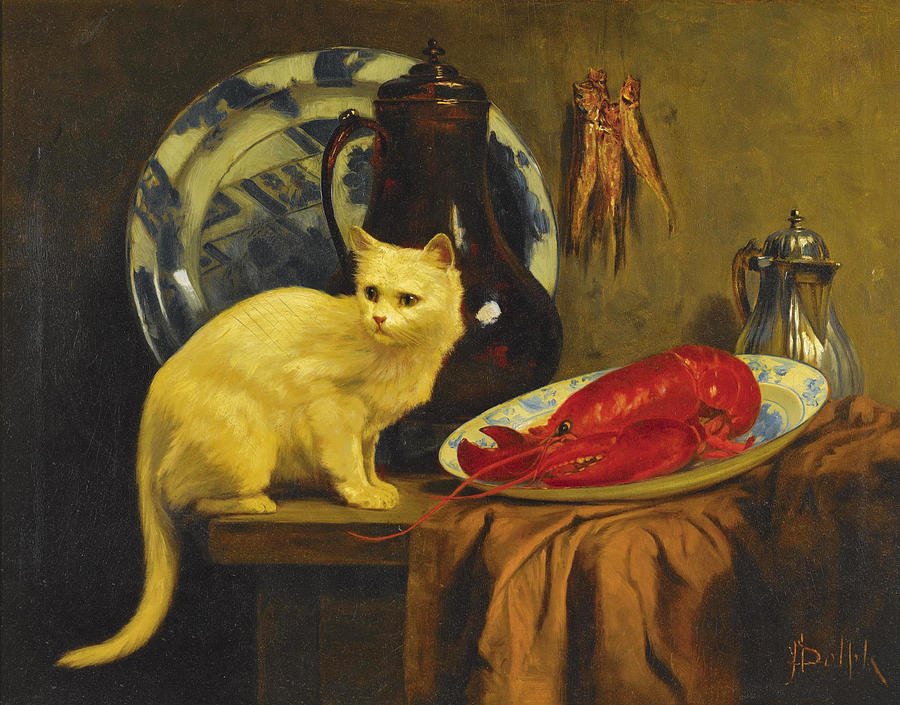
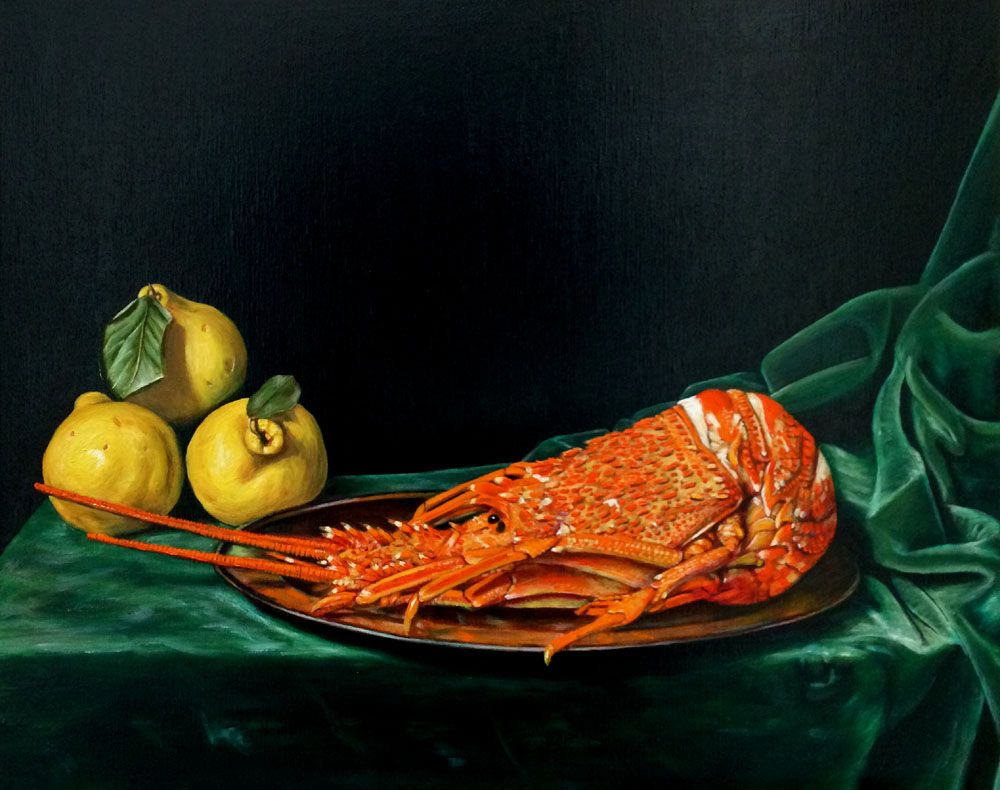
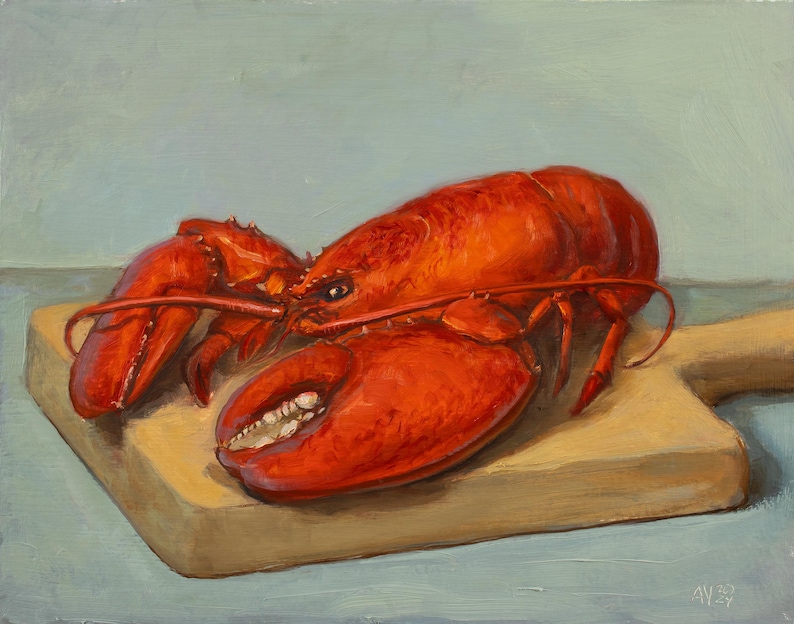
Lobster does seem Christmasy to me, primarily I think because it turns bright red when you cook it. Cooked lobsters look good draped with those mini, multi-colored Christmas lights that are usually wrapped around the mini-Christmas trees you find in really small New York apartments. It’s interesting to see how many artists are attracted to lobsters. There are loads of lobster still lifes from across history. Here are three I particularly like:
Posted in Uncategorized | Tagged food, lobster, recipe, recipes, Seafood | 2 Comments »

Recipe below: Scialatielli with Shrimp and Miso Butter Tomato Sauce
Recipe below in text: Escarole Salad with Pear, Almonds, and Montasio
My plan was to make this pasta with calamari, but the squid I found was too large. I needed it small because my idea was to cook everything quickly, keeping the taste fresh and the texture bouncy. Bright red sauce, white calamari. Larger squid needs a slow simmer to become tender, and that would have compromised the freshness I was going for. So I went with shrimp instead.
The Lobster Place, in Chelsea Market, has a good retail fish counter. A lot of people don’t know that because they go there only to eat the fancy sushi and steamed lobsters that are mentioned in all the New York City guidebooks. The place is always mobbed with Japanese tourists, who ignore the fish counter, likely having no place to cook, so it stays freed up for the locals. The other day they had good-looking wild-caught medium-size shrimp from the Gulf of Mexico. It smelled sweet, and I could sense that its pretty gray shells would make a nice broth for the pasta. And they did.
The sauce I had in mind for the dish was a little unusual, mixing together miso, ginger, shallot, butter, vermouth, rosemary, and tomatoes. But I tell you it worked. It tasted like Christmas, and I might just go with it for my Christmas Eve fish dinner, maybe with calamari, as I originally intended, or with lobster. My grandfather Erico, who I never met, used to make pasta with lobster every Christmas Eve. I obviously never tasted his version, but that makes the nostalgic pull of the dish even stronger. My mother said he added a lot of brandy.
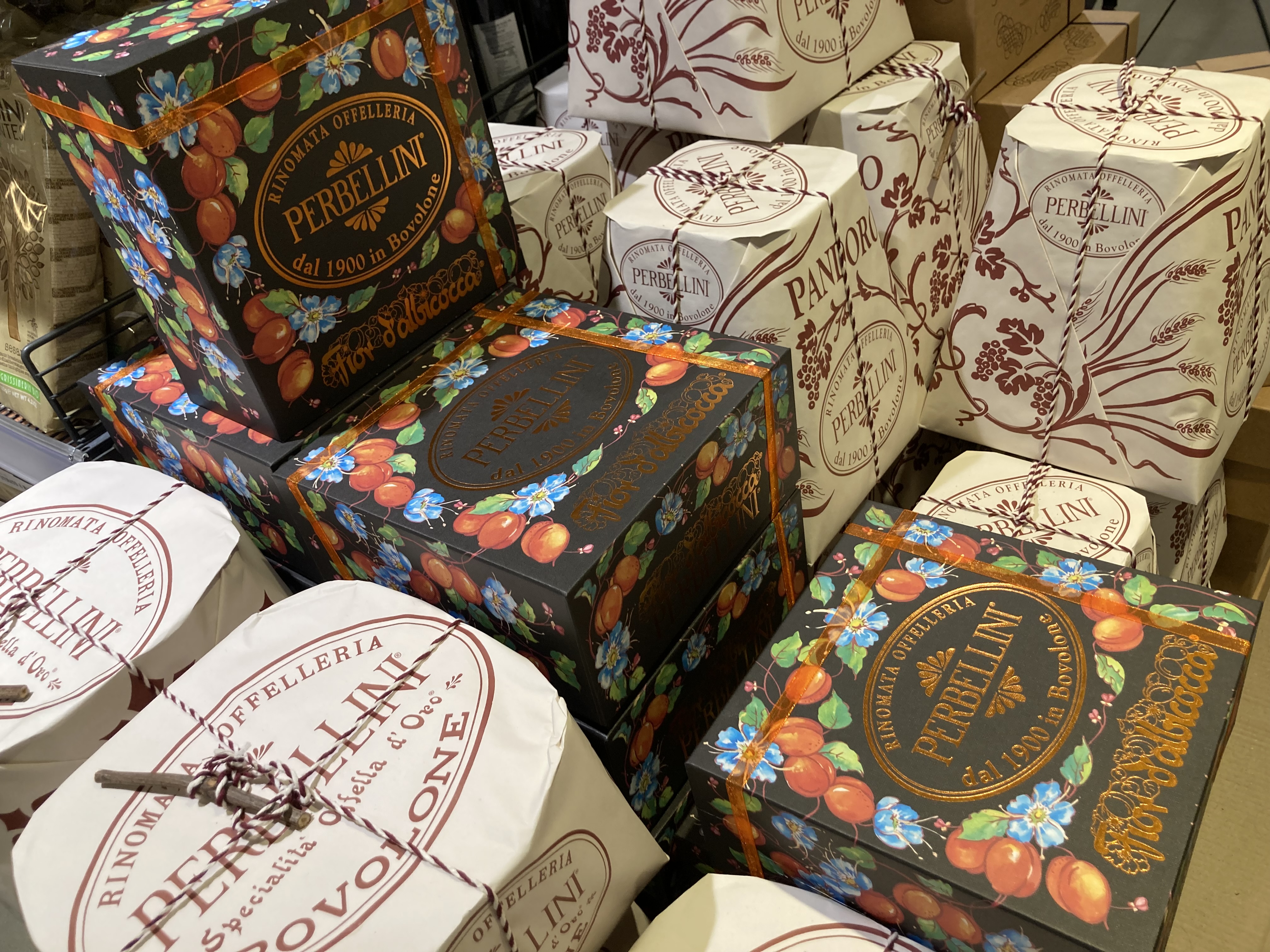
While I was at Chelsea Market I made my way downstairs to Buon’Italia. If you’ve never been, just think of it as an intimate, more manageable Eataly. I never leave it pissed off, unlike Eataly. And it’s just starting to get its Christmas decor together. I’m not usually big on Christmas decorations unless they have a dark edge, but I do love holiday food displays. Here are photos of a couple of appealing ones at Buon’Italia. I need to go back and get some of that marzipan.

While at Buon’Italia, I picked up a bag of Setaro pasta to go with my shrimp dish. Setaro is a great old pasta company in Napoli. I chose scialatielli, a thick, stubby fettuccine-type shape from the Amalfi coast that I love for its chewiness. It’s used primarily for tomato and seafood sauces. When it’s made fresh, parmigiano and basil are sometimes worked into the dough. Made dry, it never seems to have that flavoring. I have made it fresh myself, and maybe I will for Christmas. If so, I’ll get a recipe together for you.
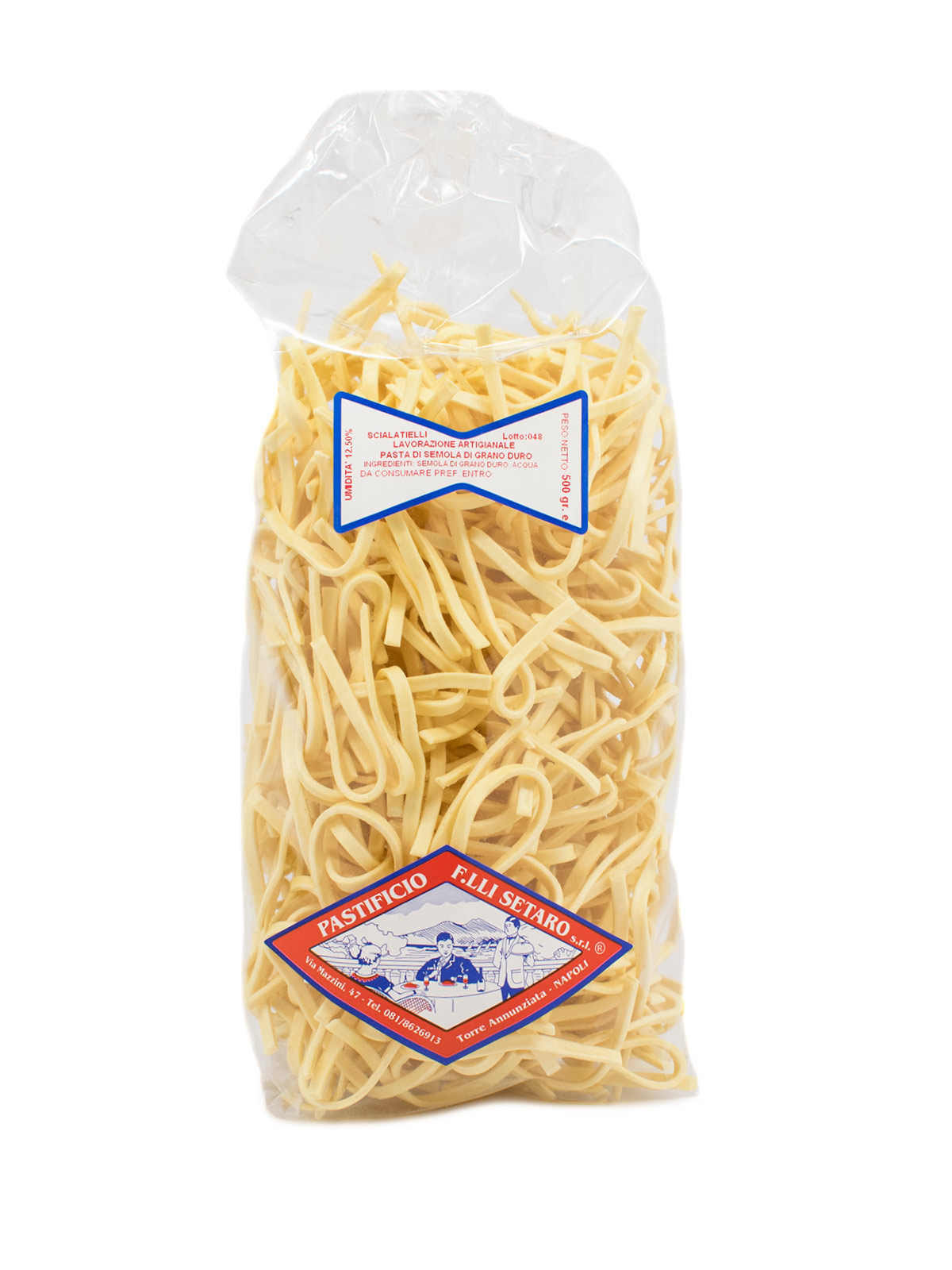
If you’d like to try my Scialatielli with Shrimp and Miso Butter Tomato Sauce, here’s what you’ll need to buy and do.

1 ½ pounds large shrimp, shelled and deveined, but you’ll want to keep the shells
Salt
Aleppo pepper
A big pinch of sugar
A drizzle of olive oil
¾ stick unsalted butter
½ cup dry vermouth
1 heaping tablespoon white miso
2 shallots, diced
A 1/2-inch-thick chunk fresh ginger, minced
A long stem of rosemary, the leaves chopped
2 fresh bay leaves
1 28-ounce can Italian plum tomatoes, roughly chopped, saving the juice
In a bowl, toss the shrimp with a little salt, Aleppo to taste, a big pinch of sugar, and a drizzle of olive oil. Stick it in the fridge until you’re ready to cook it.
Put half of the butter in a saucepan, and melt it over medium heat. Add the shrimp shells, and sauté them until they turn pink. Add the vermouth and miso and about 2 cups of water. Stir to dissolve the miso. Let the mix simmer, uncovered, until it’s sweetly shrimpy smelling and has reduced by half. Strain it.
In a large sauté pan, melt the remaining butter over medium heat, and add the shallots and the ginger. Sauté until soft and fragrant, about 3 minutes. Add half of the rosemary and the bay leaves, and sauté a minute longer, just to release their essences. Add the shrimp broth, and simmer for about another 3 minutes. Add the tomatoes, and cook for about 5 minutes.
While the sauce is cooking, set up a pot of pasta water and bring it to a boil. Add salt. Add the scialatielli.
Get out a another large sauté pan, and get it hot over high heat. Add the shrimp, and sear them quickly until they’re lightly browned but still a little undercooked. Add them to the tomato sauce, stirring them in. Add a little more Aleppo if you like, and taste for salt. You may or may not need it, depending on how salty your miso is.
When the scialatielli is al dente, tip it into a large, wide serving bowl. Pour on the shrimp sauce, and give it a gentle toss. Sprinkle the remaining rosemary over the top. Serve right away.

To follow this pasta, I served a salad of escarole, pear, almonds, and Montasio cheese (also from Buon’Italia). If you’d like to try it, buy a head of escarole, and pull off the tough outer leaves (saving them for a sauté or a soup). Tear the tender inner leaves into bite-size pieces, and put them in a salad bowl. Scatter on a sliced pear, some lightly toasted whole almonds, and some slices of Montasio. I tossed this with a dressing of sherry wine vinegar, good olive oil, salt, and black pepper. I really like that combination.
Posted in Uncategorized | Tagged dinner, food, pasta, recipes, shrimp | 3 Comments »

Recipe in text below: Roasted Red Onion Crostata with Anchovies, Thyme, and Sherry Wine Vinegar
I took a couple of weeks off from blogging to regain my head after the election. I’ve come out less sad but with a lingering feeling of disgust that has been working its way into my dreams. Obnoxious dreams. Among other things, I’m worrying about immigrant families being torn apart and all the heartbreak that will create. Promises made, promises kept.
And speaking of immigrants, last week I made my way down to Little Italy to check out the newly reopened Italian American Museum, on Mulberry Street. Didn’t know there was such a thing? It opened in 2008 in the elegant nineteenth-century Stabile bank building on the corner of Mulberry and Grand. I visited a bunch of times back then, always expecting it to be something more. Ellis Island ship manifestos are fine, but they’re really only interesting if your own grandmother is on one. I wanted the place to have more. More of what? More of the sounds, colors, and smells that have made up the Italian American experience. Several times I proposed to the director what I thought were fun and exciting culinary programs, but there was no follow-through.
The Stabile building was demolished in 2014 for what looks like purely financial gain for developers. The 1830s building was not protected by the city’s landmarks preservation laws, even though it was structurally intact. There was a lot of protest at the time, but the developers won out. A higher building now stands in its place. In it the Italian American Museum has reemerged.
The main exhibit there now is a collection of puppets made by a Sicilian family named Manteo who settled in Little Italy in the 1920s and began making Sicilian-style marionettes and putting on shows for the community. The things are lovely and funny, with all hand-hammered metal and historical costumes. They are almost life-size. There were a few of the puppets on display at the previous museum, but the new place is showing a lot of them, so a step up, I guess. This new space, which includes a 60-seat theater, looks to be about three times the size of the old one. I’m not sure what they’re planning to fill it with, but I’m optimistic that they’ve got ideas.

In addition to getting mildly excited by the return of the Italian American Museum, I’ve been purchasing a lot of round red onions, a good cool-weather item. I love their deep crimson color, their glossiness, and the pretty rings of red you see when you slice into them. I eat them raw, but they’re also good cooked, as most varieties retain their strength and their sweetness gets concentrated.

Nobody I spoke to at grocery stores or the Union Square Greenmarket knew what varieties they were selling. Maybe Red Bull, or Red Burgermeister, or Giant Red Hamburger. Those are a few names I found on Google. I bought beautiful ones from Madura Farms. The seller, who was not someone who works at the farm, said they were a type of Spanish onion. They were powerful but cooked up sweet, and, importantly, they held their shape after being baked two times. I cut them into thick rings so they looked almost like roses after being baked into a crostata. I’ll be making the crostata again for Thanksgiving.

If you’d like to give it a try, you’ll want to start with the pastry, so it’ll have time to rest. Here’s what you’ll need for that:
2 cups unbleached white flour, plus a little extra for rolling out the dough
About a teaspoon of salt
A tablespoon of sugar
The leaves from about 6 thyme sprigs
1¼ sticks cold unsalted butter, cut into little pieces
⅓ cup dry Marsala, chilled
1 teaspoon sherry wine vinegar
Put the flour, salt, sugar, and thyme leaves into a food processor, and pulse a few times to blend. Add the butter, and pulse a few more times so you break the butter up further. Add the Marsala and the vinegar, and pulse briefly until you have a bowl of moist crumble that holds together when you pinch it.
Turn the crumble out onto a work surface, and press it together into a ball. Next flatten it out into a thick disk. Cover it with plastic wrap, and stick it in the refrigerator for at least an hour or as long as overnight before using it.
Set the oven for 350 degrees. For the filling, you’ll want to purchase two large, round, shiny red onions. Peel off their papery outer skin and then slice them into ¼ inch thick rounds. You’ll want a dozen or so slices. Coat a large sheet pan with olive oil. Place the rounds on top in one layer. Drizzle them generously with olive oil, sprinkle on little dry Marsala, and season them with salt and black pepper. Roast them until they’re slightly browned, tender, and fragrant, about 20 minutes. Sprinkle them with drops of sherry wine vinegar, not too much but just enough to balance the sweetness of the onions. Let them cool.
While the onions are cooling, take 8 or 9 good-quality oil-packed anchovies, and mash them up in a mortar. Work in enough olive oil to form a thick paste. Add a few drops of sherry wine vinegar and mix it in.
Turn up the oven to 400. Roll out the dough to an approximately 10-inch round and place it on a buttered sheet pan. Brush the dough with the anchovy paste, leaving about an inch rim all around. Add a thin layer of grated Gruyère, which not only will taste good but will also help hold the tart together. Layer in the onion rounds. They should be a tight fit. I find a spatula works well for getting the rounds off the pan in one piece. Sprinkle the onions with freshly chopped thyme leaves. Fold the edges up all around, so you have an approximately 1-inch border of fairly neat folds. Press the folds down so they stay put, and give everything a drizzle of olive oil and a sprinkling of sugar.
Bake until the crust and onions are nicely golden, about 25 minutes. Let it cool for about 10 minutes before slicing. You’ll now have an antipasto offering for 5 or 6 people.
Posted in Uncategorized | Tagged dinner, food, recipe, recipes, vegetarian | 4 Comments »
Recipe in text below: Maccheroni with Baccalà, Black Olives, Pastis, Basil, and Spicy Breadcrumbs
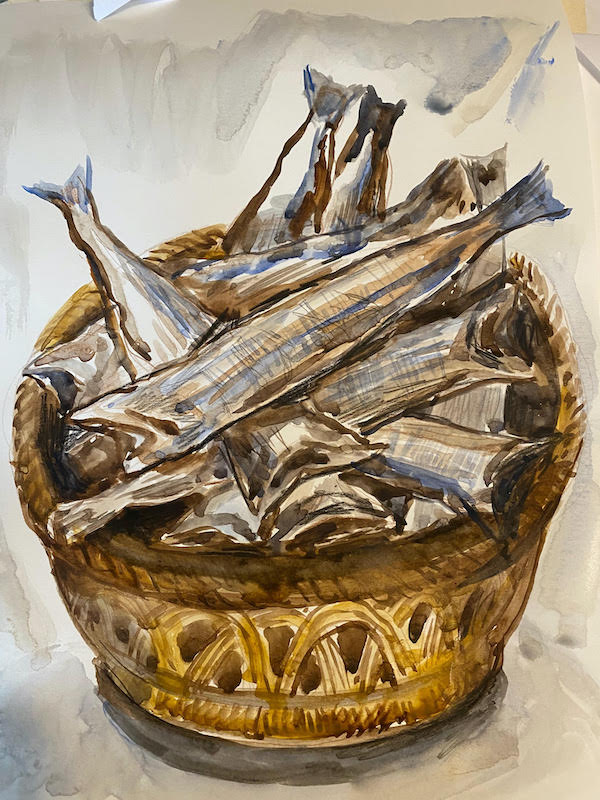
One of the aromas ingrained in my culinary soul is the slightly nauseating but still alluring smell of baccalà standing upright in wooden barrels, looking like snow-covered roadkill and smelling of fishy death. Razzano’s Italian shop in Glen Cove was where I first came up against it, that dark fish smell mingling with a strong hit of provolone. Powerful. As a child I first took it as an assault, but after a few visits to that wonderful food shop, the putrid smell went from a gag in my throat to miraculously good. At some point I stopped telling my father I’d wait in the car. I needed to smell it again and again.
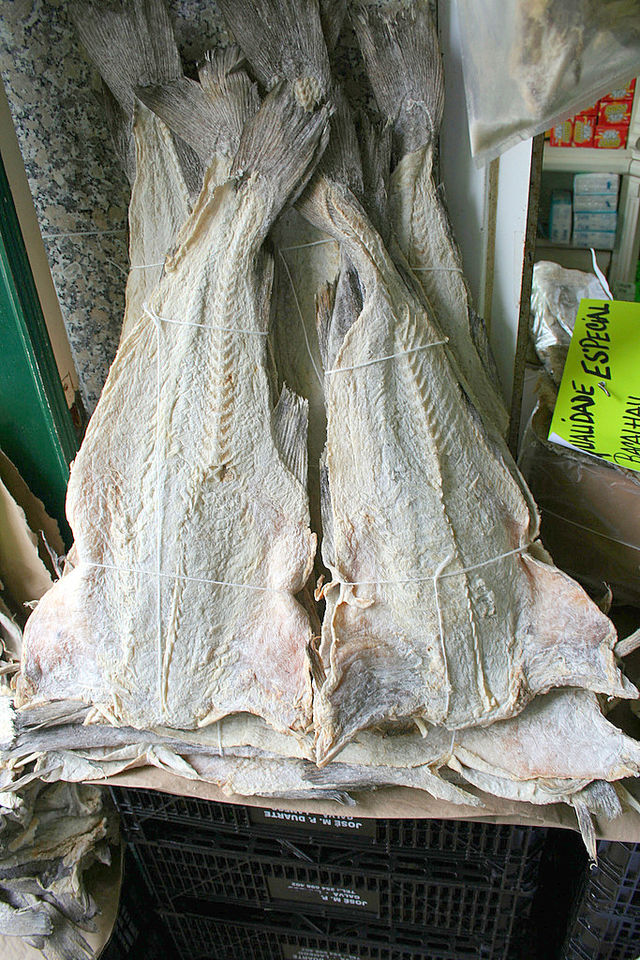
Now I love the aroma of baccalà, and also the ritual needed to prepare it for eating. My recipe here is an improvisation on a Sicilian version of pasta with baccalà usually called alla ghiotta, which translates, I’m thinking, as lady glutton style. Salt cod is rich, especially when brought together with tomatoes, olives, wine, onion, garlic, sometimes capers, and lots of herbs, so I guess the dish was so good you couldn’t stop eating it, or, specifically, women couldn’t stop eating it. Often it includes potatoes, in which case it can be made with or without pasta. I wanted the pasta, so I left out the potatoes.
Southern Italians use baccalà more than they use stoccafisso, the air-dried version of preserved cod. Baccalà tends to be meatier and have a stronger, brinier flavor that I really love. Quite different from fresh cod. A unique taste. When buying baccalà I look for packages that contain thick middle cuts, not just scrawny end pieces. In my experience they take two days of soaking, changing the water repeatedly, to be rid of excess salt. I love the funky, briny smell baccalà releases into my kitchen as it gives up its salt to a big bowl of cold water. You’ll see it’ll start to swell and look whiter.
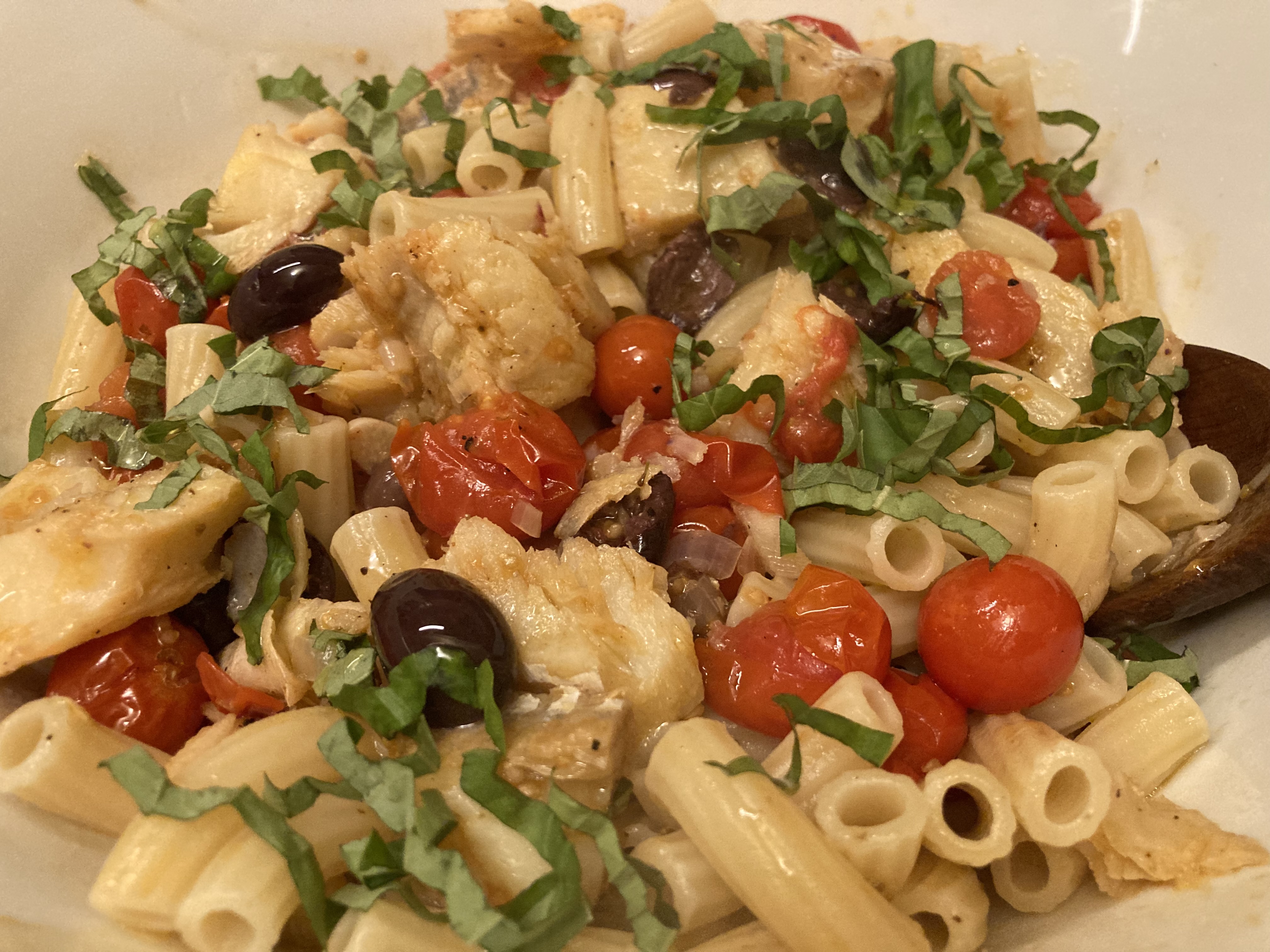
To make my maccheroni with baccalà, get yourself a one-pound package of salt cod, and start soaking it in a big bowl of water, changing the water a few times. At night, stick it, with its water, in the refrigerator. The next day take it out and let it sit out, changing the water a few more times. By evening, taste a piece from the thickest section. If it still tastes really salty, change the water again and put it back in the fridge for another night. By next morning, after rinsing it again, it should be sufficiently desalted. I’ve never known it to take longer than that.
Place the baccalà in a wide-sided pan. Add water to just about cover, a big splash of dry vermouth, a drizzle of extra-virgin olive oil, a few fresh bay leaves, and a few peppercorns. Turn the heat to medium, and get the water up to a simmer. Then turn the heat down a little, cover the pan, and simmer gently until the cod flakes easily when you poke it with a knife. That should take about 8 minutes. Don’t cook it past this point, or it’ll get tough. Take the cod from its poaching liquid, and put in on a plate. Keep the liquid. When the cod is cool enough to handle, break it into 1-inch chunks, discarding any bones or skin you might come across.
Set up a pot of pasta cooking water, and bring it to a boil. Add salt. Add a pound of maccheroni and give it a stir. I used Martelli’s I Maccheroni di Toscana, which is like a ridged, curved ziti (I ordered it from Gustiamo). I’ve also seen this shape referred to as sedani (which means celery, though it doesn’t look like celery to me). Rigatoni or regular penne would also be good here.
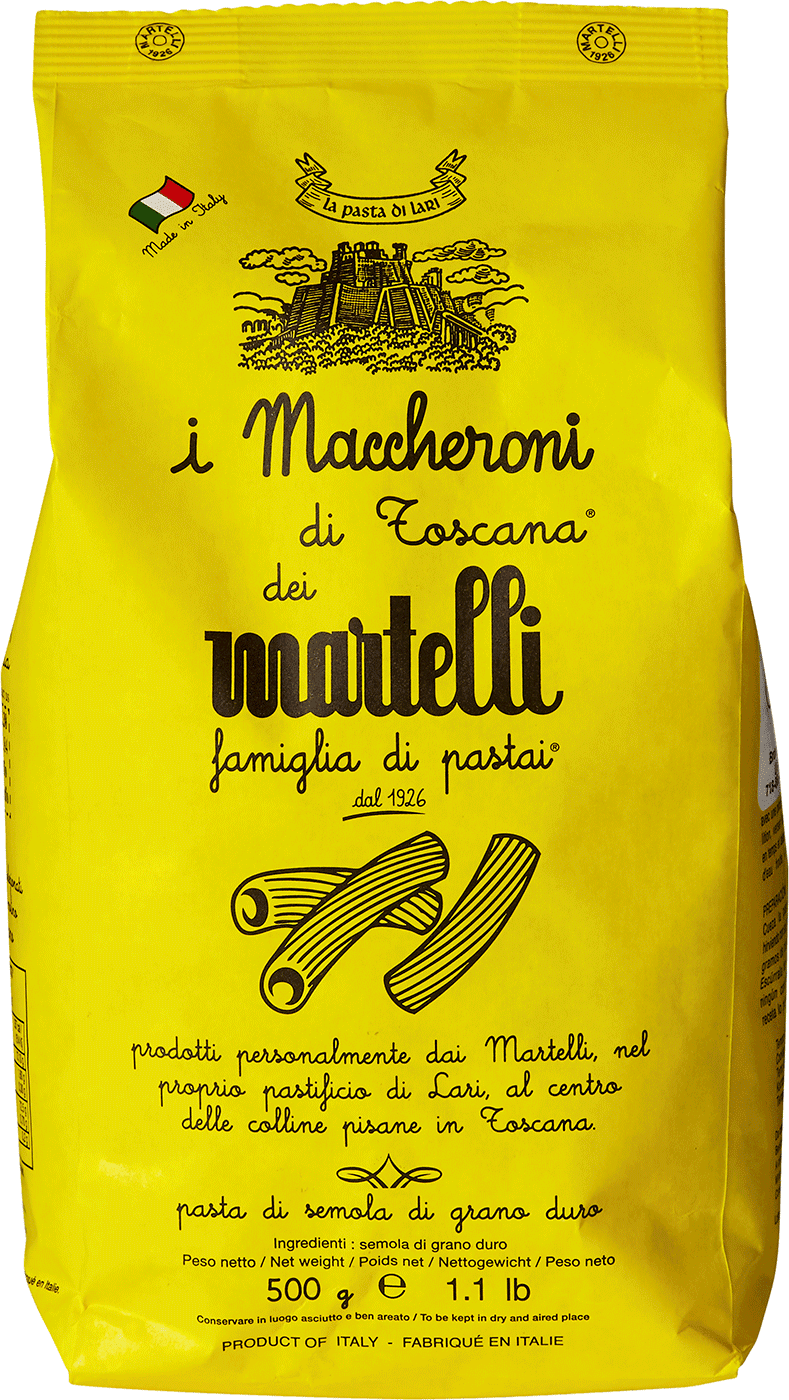
While the pasta is cooking, get out a large sauté pan, and set it over medium heat. Add a big drizzle of extra-virgin olive oil. Add a chopped shallot, a chopped fresh red peperoncino, a sliced garlic clove, a fresh bay leaf, and a palmful of ground fennel seed. Let it all soften for about 2 minutes. Add 2 pints of grape tomatoes. Season it with a little salt (keeping in mind how much salt you’ve got left in your baccalà), and let it cook until the tomatoes just start to burst, about 8 minutes. Add a splash of vermouth and a little of the cod cooking liquid. Add the broken up baccalà, a handful of pitted olives (I used Kalamatas), and let it all warm through for a minute or so. Turn off the heat, and add a few drops of pastis.
When the pasta is al dente, drain it and pour it into a large serving bowl. Pour on the baccalà sauce and a big drizzle of fresh extra-virgin olive oil. Add a handful of lightly chopped basil leaves, and give it a good toss. Taste to see if it needs salt.
Top each serving with a sprinkling of spicy sweet breadcrumbs. I made them by crushing a bunch of red pepper taralli with the side of my knife.
This’ll make four generous servings.
Posted in Uncategorized | Tagged dinner, food, pasta, recipe, recipes | Leave a Comment »

“To kill a fish is an act I do to preserve my own body.
To preserve a fish is a task I do with salting,
Never to rely on frozen water again.”
—An unknown Italian American cook, sometime in the late 1970s.
Posted in Uncategorized | Leave a Comment »

Recipe below in text: Seared Pork Chops with Apples, Onion, Thyme, and Calvados
I almost never think to eat a whole raw apple. I don’t know why this is. But I did it the other day. I picked a Jonathan out from a large variety of apples displayed at Montgomery Place Orchards’ farm stand in Red Hook. I chose it for its deep red color; its taste was spicy-sweet-sour, its inside slightly warm. I had an excellent time eating that apple, and I wondered why I didn’t eat raw apples more often.

I have, on the other hand, always loved cooking with apples. New York is a good place to be in the fall if you want the aroma of apples. Montgomery Place Orchards grows 75 different kinds. When I was there I saw about 30 on display. Their skin colors and textures ranged from lumpy beige to cinnabar, including yellow, light green, orange, orange red, streaky red orange, brilliant pink red, and crimson, and some with pink insides. Here are a few of the varieties that caught my attention.

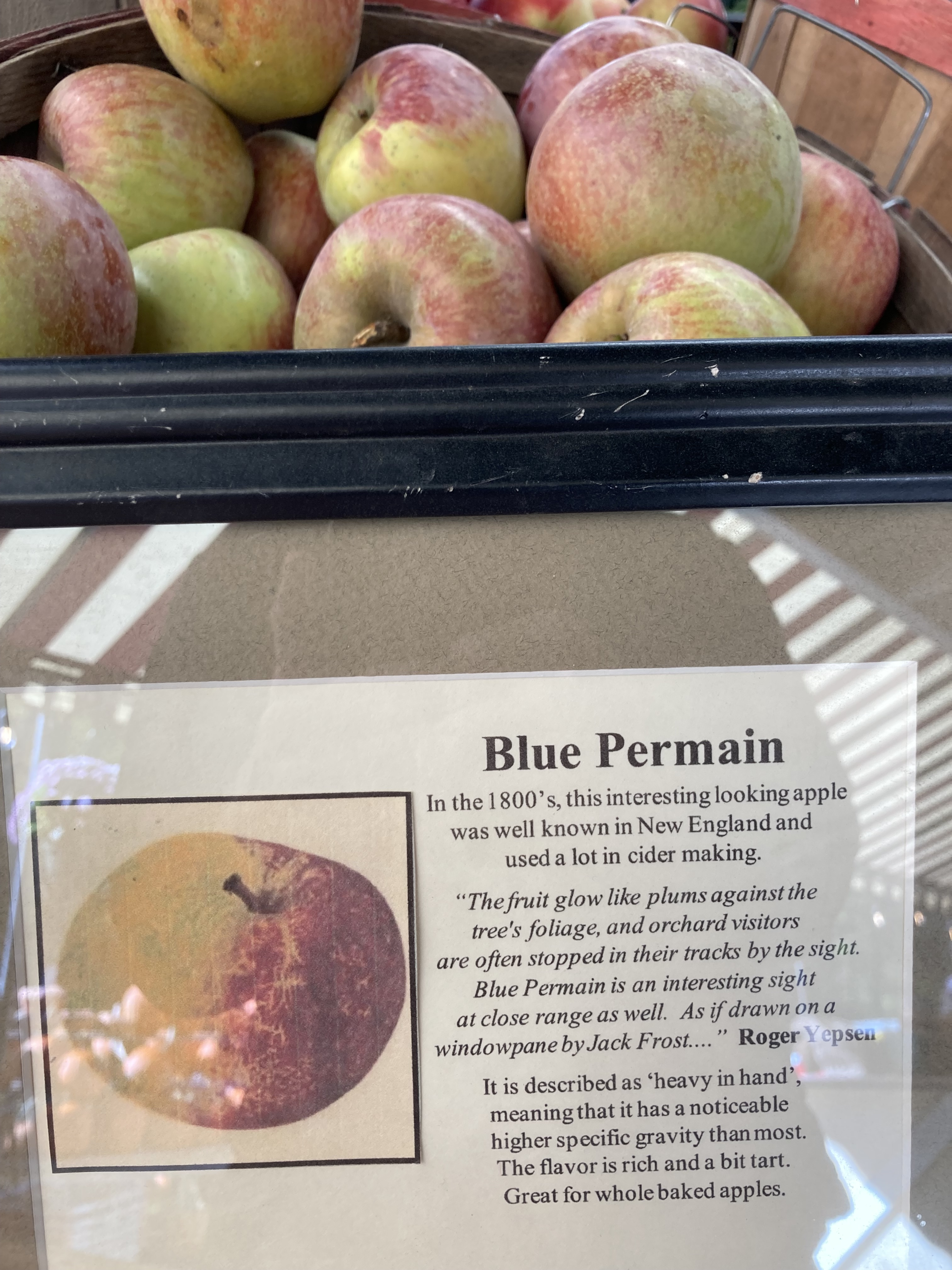
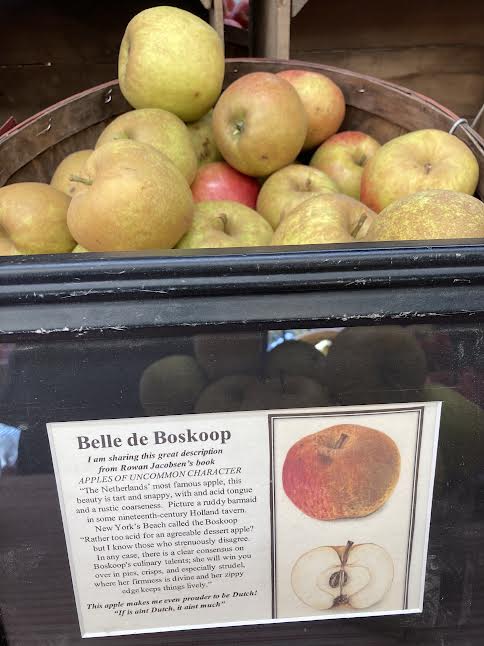
If this makes you want to explore the world of apples further, go to Montomery’s website, where they list all their apples in three categories: modern, traditional, and antique. I find the list very moving. It’s beautiful that these people are preserving all these varieties. I think one of the reasons I don’t eat a whole raw apple more often is that the supermarket types I have to choose from have no smell at all. The air at Montgomery Orchards was strong with apple.
The idea for this pork chop and apple dish started with one I used to cook at Restaurant Florent back in the day. That one was blood sausages with apples, onion, thyme, and Calvados. All I did here was switch out the blood sausages for pork chops and add an anise spice rub for the chops, a good flavor blend with thyme.
Of all the apples I stared at that afternoon, I decided Esopus Spitzenberg would be the one with these pork chops. Not only was it Thomas Jefferson’s favorite apple, but I was told by one of the farm ladies that it had a good mix of sweet and sour and held its shape well when cooked. Two important qualities for this dish.

I really can’t stand when cooks describe a recipe as simple when it might look somewhat rustico on the plate but is actually a big pain in the ass to pull together. This dish really, truly is easy and quick, yet its flavor is deep.
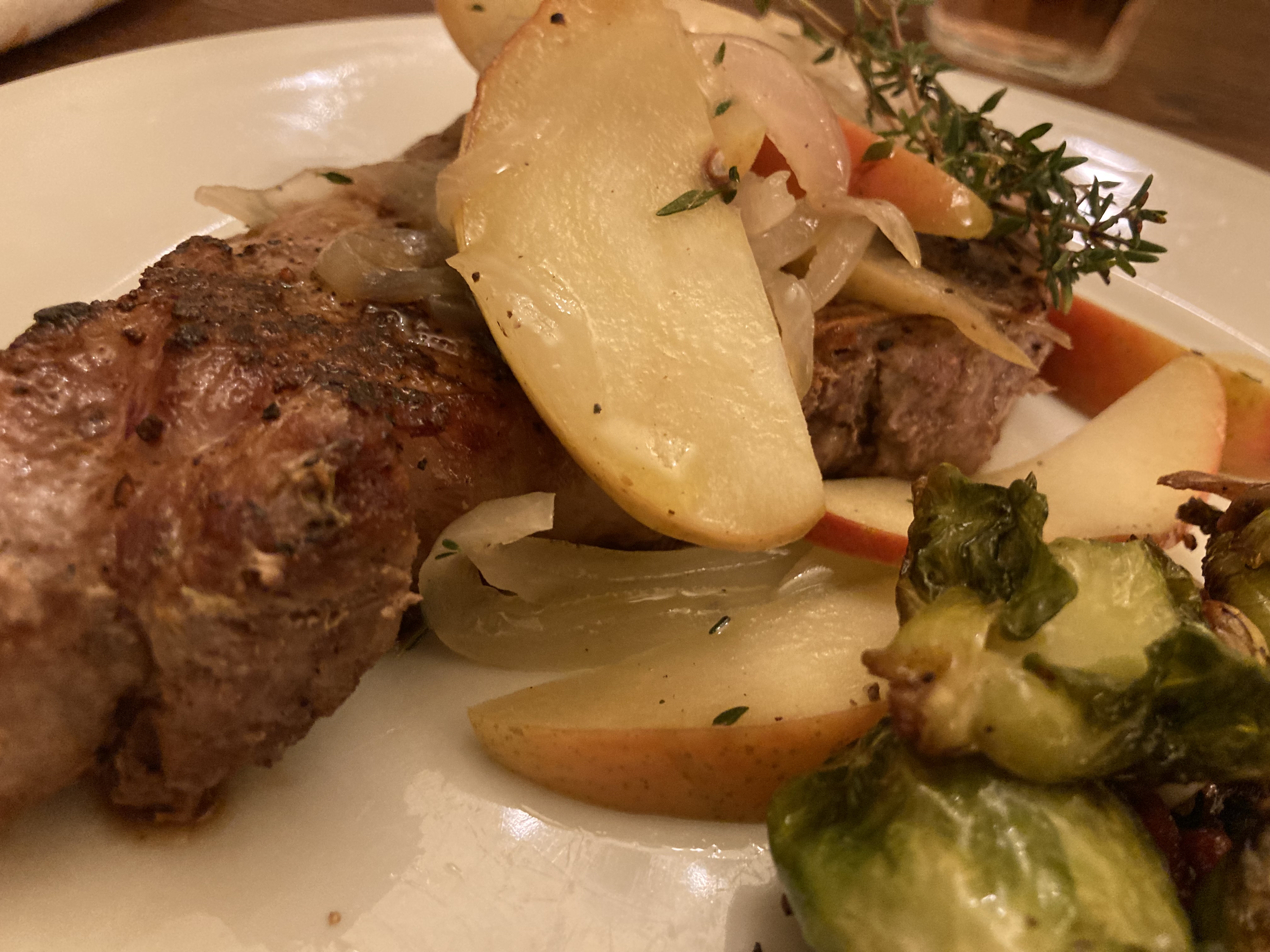
To make it for two, get two medium-thick bone-in pork chops, preferably from a local organic farm (mine were about ¾ inch thick; any thicker and you’d probably need to finish off in the oven, which I didn’t want to bother with).
Grind up a palmful of fennel seeds. Mix them with about an equal amount of ground star anise, some salt and black pepper, and a pinch of sugar. Rub this all over the pork chops, and let them sit while you slice up a medium onion and thinly slice two firm, not-too-sweet apples (Granny Smith, Cortland, and Pink Lady are other tart varieties you might consider). I think it’s best not to peel the apples. I like the way their red skins look in the dish, and it helps the slices hold their shape.
Get out a heavy-bottomed pan (cast iron is good), and a large sauté pan.
Have on hand extra-virgin olive oil, a bottle of Calvados, salt, freshly ground black pepper, and the leaves from about 7 or 8 thyme sprigs (plus a few whole sprigs for garnish, if you like).
Drizzle olive oil into the sauté pan, and let it get hot over medium flame. Add the onion, and let it soften for a few minutes. Add the apple slices, season them with salt and black pepper, and add the thyme leaves. While that’s all cooking, put a high flame under the cast iron pan. Drizzle in some olive oil, and when it’s really hot add the pork chops. Brown them well on both sides, about 3 minutes per side. Next add a big splash of Calvados, turn off the heat, cover the pan, and let them continue to cook gently in the waning pan heat until they’re just done through but still pink at the bone, about another 3 or 4 minutes.
When the apples are tender but still holding their shape, add a big splash of Calvados to their pan and let it bubble for a few seconds. By this time the chops should be perfect.
Uncover the pork chop pan and plate the chops. Pour a little of the pan juice over them. Pile the apple-onion mix on top of and alongside the chops. You might want to sprinkle a little coarse salt on, too. I did. Garnish with thyme sprigs if you like. Eat hot.
Posted in Uncategorized | Tagged dinner, food, pork, pork-chops, recipes | Leave a Comment »

Recipe in text below: Mezzi Paccheri with Butternut Squash, Pancetta, Rosemary, and Walnuts
Butternut squash can get to seem boring right now, when it’s all over the place, piled up in bins not only at the Union Square market but also at places like West Side Market, a local supermarket I have a love-hate relationship with (their fish department borders on disgusting). Butternut squash is clunky, bulbous, and colored a strange, dull peachy beige, but it has wonderful qualities, too. It tastes good, like pumpkin but gentler, sweeter, and less stringy. It’s easier to peel than pumpkin. Its seeds are contained in a little round pocket inside its bulbous bottom. Peeling that part can be a challenge, but the neck is smooth and clean and easy to cut into uniform cubes, so there’s an elegance to that alone. To make it easy for myself I often purchase a large butternut squash (or two smaller ones if they’re all I can find). I separate its long neck from its bulby bottom and then skin and dice the neck—a sharp chef’s knife slides right down the skin. I leave the bottom for another day, usually to cut in half, scoop out the seeds, and roast. A nice side show for two, along with, say, pork chops sautéed with apples.
Butternut squash is sweet, sometimes a little too sweet, but you can awaken it. In my recipe here I did so with a little dry vermouth and a few drops of rice wine vinegar that brought it into balance. I find that butternut squash is nice paired with something fatty and salty, so I included a good amount of pancetta, too.
I’m getting to really love this vegetable. It makes fall cooking an event.
I also wanted to mention Faella pasta, my new favorite brand. It’s from the grand dried-pasta capital of the world, Gragnano, a town just south of Naples. I cook a lot of different brands of dried pasta, but lately this one has really been speaking to me. I love the way the pieces clink together in the bag, and the semolina dust they leave on your hand when you grab a bunch. Their color is a warm yellow with a rough, almost velvety look they get from the traditional bronze dies used to extrude them but also from the slow drying process used to finish them to perfection.
Faella is an old family-run company, started in 1907. In my opinion it’s still doing everything right. For my butternut squash recipe I chose Faella’s mezzi paccheri shape, one of my favorites. It’s not as giant as paccheri; it’s the same idea, hefty and bold, but easier to get into your mouth. Faella pasta is available from www.gustiamo.com. I love looking and choosing from all the shapes they carry. Almost as exciting as shopping for shoes.

Before I show you how I put together this butternut squash pasta, I’d like to remind you that the Siena early Renaissance show has just opened at the Metropolitan Museum. I went to a members’ preview the other day. The beautiful show covers the years 1300 to 1350, a time of phenomenal artistic creation in Siena, a first break from the Byzantine style and the dawn of the Italian Renaissance. You’ll see works from the four major artists, Duccio di Buoninsegna, the brothers Pietro and Ambrogio Lorenzetti, and Simone Martini, brought together from museums and churches all over the world. The colors are rich and bright, ultramarine, scarlet, vermillion, a powdery pink that I love. Lots of gold leaf. The medium is mostly egg tempera on wood. And you can get up close to many of the remarkably well-preserved works. A brilliant show. It’s up until January 26, 2025.

If you’d like to try making my Mezzi Paccheri with Butternut Squash, Pancetta, Rosemary, and Walnuts, here’s what you’ll want to do:

Start with a large butternut squash. Separate the rounded bottom from the neck with a sharp chef’s knife, and save the bottom for another day. Skin the long stem section, and cut it into approximately ½-inch cubes. You’ll notice how pretty and uniform they look, and how orange. You’ll want about 2½ cups of them.
Get out a large sauté pan, and drizzle in a tablespoon or so of extra-virgin olive oil. Let it get hot over medium heat. Chop a ½-inch-thick round of pancetta into small dice, and add it to the pan. Let it cook slowly until it’s crisp and much of its fat has been released. Remove the pancetta bits with a slotted spoon, and set them aside. I do this so they stay crisp, a good contrast to the soft squash, and I’ll add them back toward the end. Add a large shallot cut into small dice (you can use a leek instead). Add the butternut squash, and season with salt and black pepper and a little hit of allspice. I’ve still got decent-looking rosemary in my garden, so I added the well-chopped needles from a large sprig. Rosemary goes well with hard squash, and it’s a nice change from sage, which can turn a little musty with heat. Give it a stir, and let everything sauté for a few minutes.
While it is cooking, set up a pot of pasta cooking water, salt it well, and bring it to a boil.
Add a splash of dry vermouth to the sauté pan, and let it bubble out. Add a splash of chicken broth or water, cover the pan, turn the heat down a touch, and let the squash steam cook until tender but still holding its shape, about 6 minutes.
Drop a pound of mezzi paccheri into the water (or use another similar pasta, such as rigatoni).
Uncover the sauté pan, add about ½ cup of crème fraîche, and stir it around until it’s melted and creamy. Let it simmer, uncovered, for a few minutes. By now some of the butternut squash will have broken down and blended in with the crème fraîche, creating a sweet light orange sauce. Give it a taste. You might want to add a few drops of rice wine vinegar for acidity, or maybe not. That’s a personal taste call.
When the pasta is al dente, drain it, leaving a little water clinging to it, and pour it into a large, warmed serving bowl. Add a drizzle of good olive oil, and toss briefly. Add the butternut squash sauce, the crisp pancetta bits, a few big gratings of Parmigiano or grana Padano, and a handful of toasted, lightly chopped walnuts, holding some back for garnish. Add a little more black pepper, and toss. Taste to see if it needs salt. Scatter on the rest of the walnuts. I also garnished this with a little chopped Italian parsley. It wasn’t entirely necessary, but I had it on hand.
This will serve four as a main-course pasta.
Posted in Uncategorized | Tagged butternut-squash, dinner, food, recipe, recipes | 4 Comments »

Recipe in text below: Roasted Cauliflower with Tahini, Pine Nuts, and Lemon Thyme
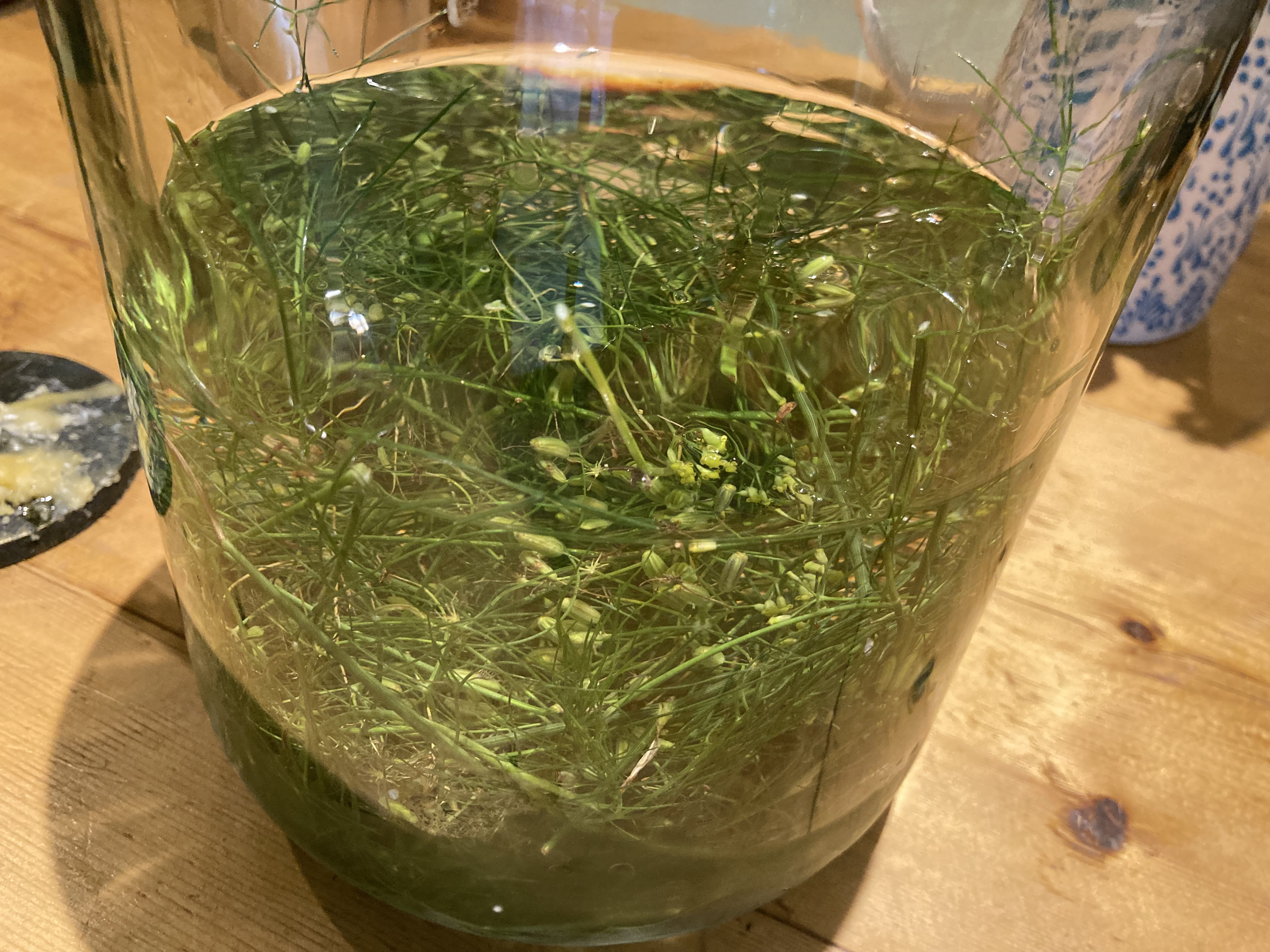
We were lucky this year in New York: Fall flew in quickly, turning a lot of the green into yellow, orange, pinky red, seemingly overnight, but the temperatures stayed soft. I haven’t even cut my herbs back, even though some of them, especially the Greek oregano, have turned to grizzle, and the summer savory is shot to hell, self-trimming by nature. I did scissor off most of the seeds and pollen-topped umbels and some of the stalks from my fennel to get a head start on my finocchietto, the Italian fennel liqueur I make every year. I just steep the fennel in Everclear, the 190-proof nightmare you can purchase at just about any liquor store. Almost immediately the Everclear pulls all the fragrance and color from the seeds and stems, turning brilliant green, actually a deep green with a blue undertone. A strange color leaves from the normally light green fennel stalks. It’s astonishing how well the Everclear sucks the life out of a plant. I’ll let the fennel steep for about two months, then add a sugar syrup to tamp down the bitterness (not a lot of sugar, as I don’t want it sweet like Sambuca), and then enough water to get the alcohol down to a manageable level. By Christmas it should be where I want it.
The produce at the markets changes as quickly as do the leaves on the trees. Pumpkins, tiny and huge, pile up, round, squat, ones with odd squared-off angles, orange, beige, white, even gray-green ones. I’m not sure why I find this so disturbing. What do people do with all these pumpkins? What happens to them after November? Growing all these things for reasons I don’t understand must take up a lot of land space. I do make a savory pumpkin torta with parmigiano and sage once or twice in the fall, but that’s about it. Why do farmers grow so many? I mean, there are so many pumpkins all over the place. I’ve never really gotten over this.
I do love when the cauliflowers appear. That I understand. They’re so lumpy and voluptuous, almost volcanic-looking. Story Farms has colored cauliflowers that drive me a little wild. Green, orange, purple, gorgeous things that started showing up at New York farm stands maybe about fifteen years ago. They are hybrids, crosses of traditional creamy-white cauliflower with other vegetables to achieve those colors. The green ones are a cross between white cauliflower and broccoli, the orange ones with vegetables high in beta carotene such as carrots. The purple ones get their color from anthocyanin found in purple vegetables, usually purple broccoli. The colors fade a little during cooking, but I find that the orange variety generally stays pretty orange. Here are a few recent photos from Story.

In addition to the orange, purple, and white cauliflower, in the upper left you can see a Romanesco variety with its spiral bud pattern. Itʼs an old Italian hybrid of cauliflower and broccoli.
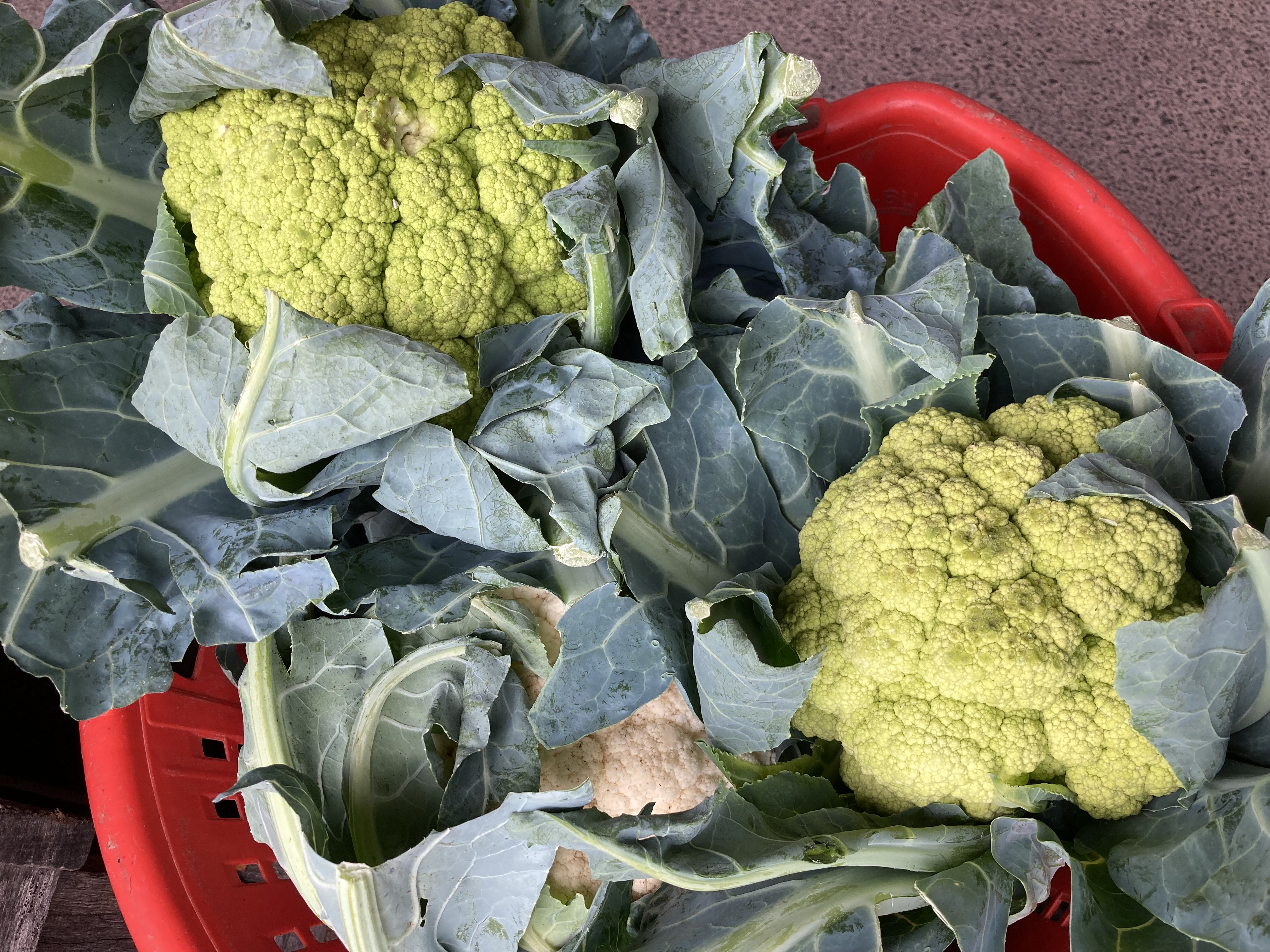
Hereʼs their beautiful green variety.

For my Roasted Cauliflower with Tahini, Pine Nuts, and Lemon Thyme, I used regular white cauliflower, but you can make it with any type. Or you can use broccoli, if you prefer. To make it you’ll want to cut approximately 1-inch flowerets from a large head of cauliflower and toss them in a little olive oil, a tiny drizzle of runny honey, lemon zest, salt, some chopped fresh lemon thyme, and a little piment d’Espelette.
Make a Tahini sauce by mixing ¾ cup of tahini with about ½ a minced garlic clove, a big pinch of allspice, salt, a bit more of the espelette, and the juice from about half a lemon. Slowly whisk in about ½ cup of water until the mixture loosens up and becomes smooth and pourable.
Roast the cauliflower on really high heat (450 is good) until it’s tender and browned. Transfer it to a large, wide serving bowl. Drizzle on the tahini sauce (you might not need all of it—judgement here), sprinkle on a good amount of toasted pine nuts, and finish with a few more lightly chopped lemon thyme leaves.
For me this dish is best right out of the oven, when the cauliflower is hot and crisp. It still tastes really good at room temperature, but also the cauliflower softens a little. I served it with a whole roasted sea bass I stuffed with lemon and a variety of herbs I still had in my garden, but it would make a good vegetarian dinner served over Israeli couscous, I think. One big cauliflower should serve four as a side dish or two or three as a main over some type of starchy thing.
Posted in Uncategorized | Tagged food, recipe, recipes, vegetables, vegetarian | Leave a Comment »
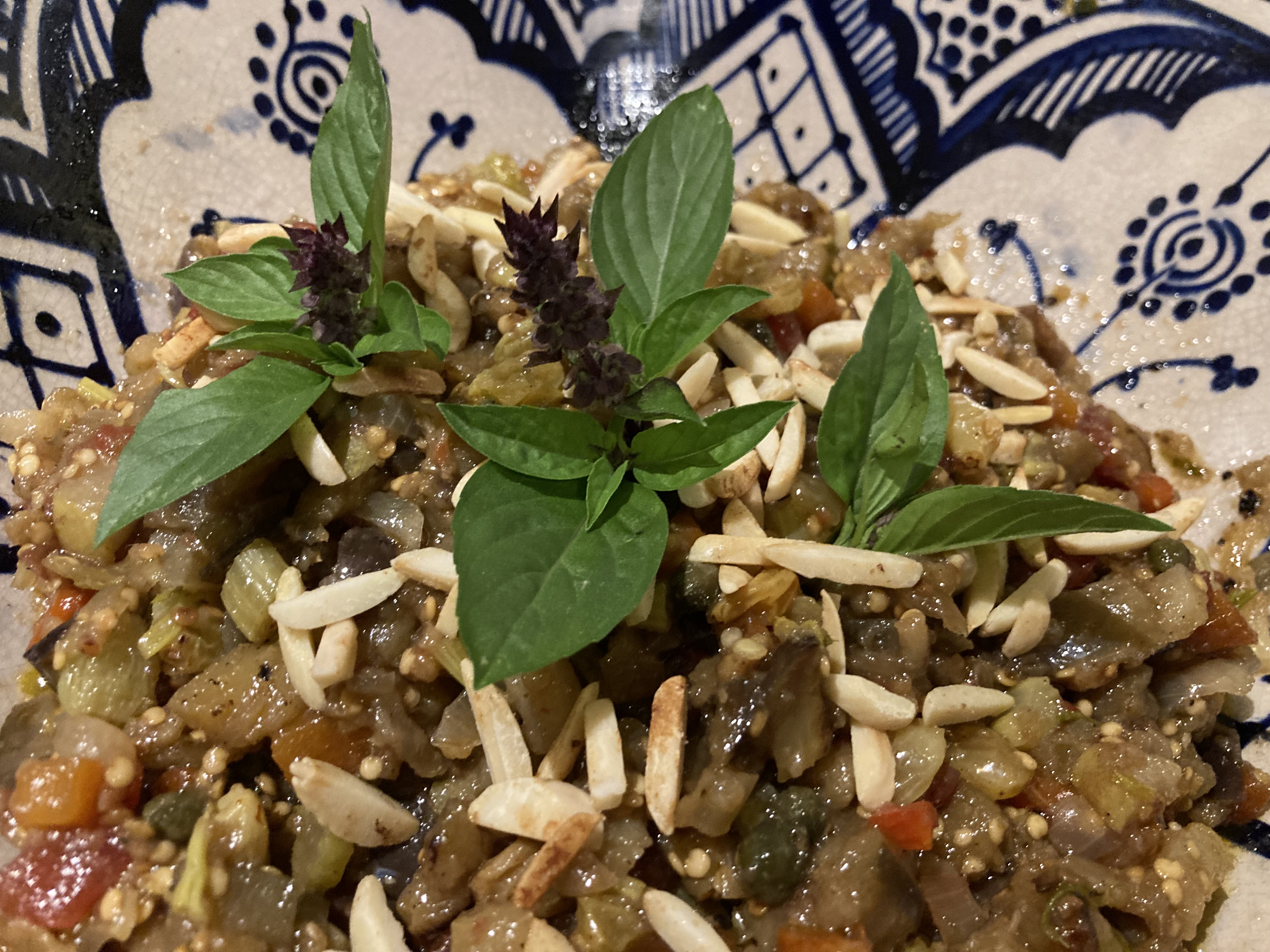
Recipe below: Caponata with Lovage, Thai Basil, and Pear
If you ever get to upstate New York, you probably notice a lot of pizza trucks rumbling around. They show up at farm stands, breweries, wineries, fairs. They pull up and set up, churn out pizzas for a few hours, and then they’re gone. They’re not all great, but some are.
I often hang out at Slow Fox Farm Brewery, in Rhinebeck. It’s both a brewery and a farm, with its own tomatoes, herbs, cabbage, kale, beets, arugula, and rows of, at the moment, zinnias, cosmos, and celosia that you can pick while drunk. As well as more than half a dozen fine house-brewed beers and ales. You can often eat pizza there. So far they’ve had I think three or four different pizza trucks this summer (this should go on into the early winter, before they close up until the spring). All the pizza has been good, but one stands out for me.

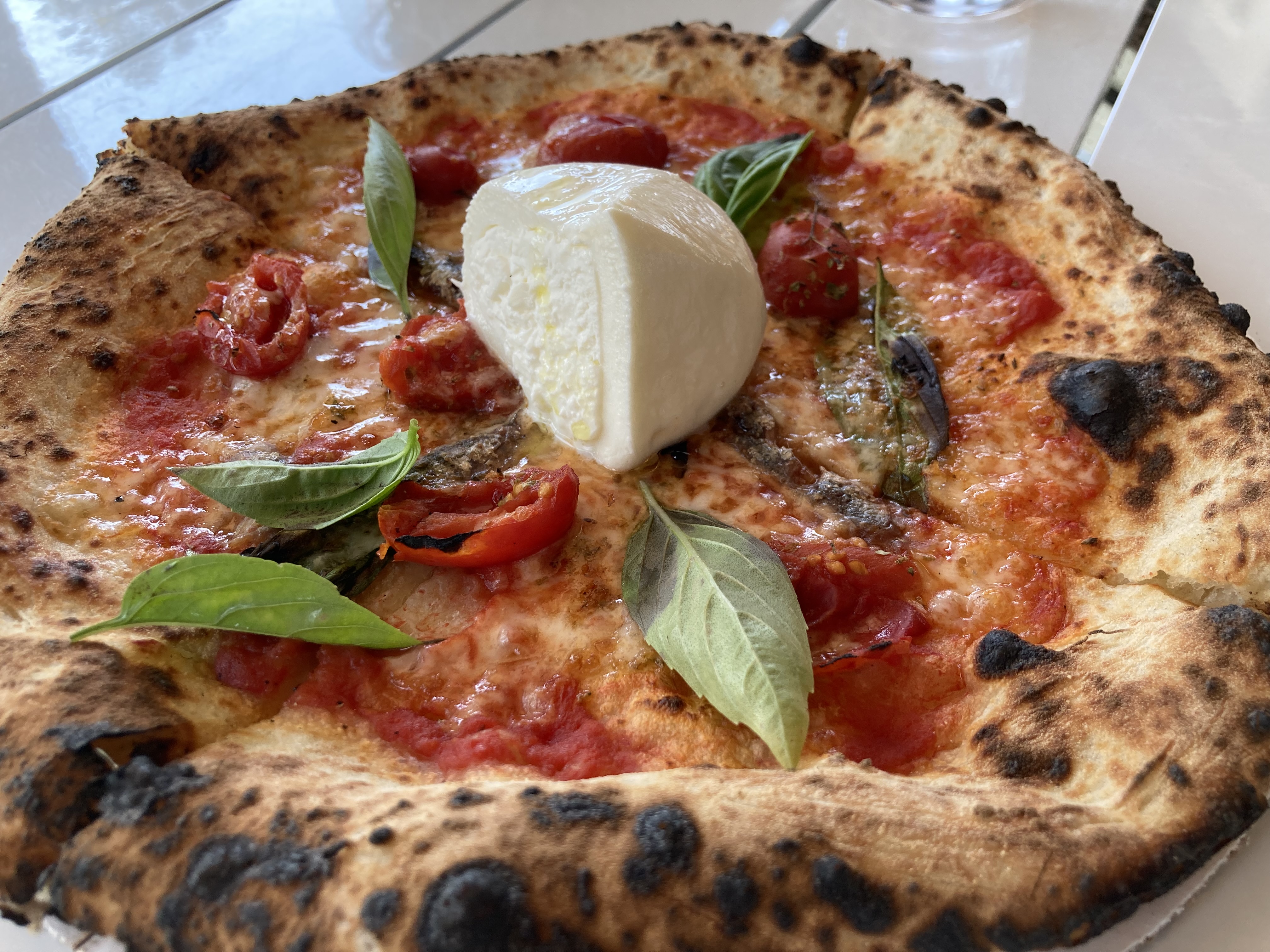
I could tell right away from the aroma wafting out from the Mommò truck that I was going to like its pizza. Mommò, I just learned, is Neapolitan for “right now,” and that’s about right. The pizza takes three minutes to cook. Luca, the owner and pizzaiolo, is from Italy, and he has the Neapolitan flavor down. The crust is yeasty and pully and just a touch salty, with charred but not too charred bubbles circling its rim. That is the taste I want but often don’t get. He’s got wood, but unlike most of the pizza people who drag around a wood burning oven with their truck, Luca had it built right into his truck. It doesn’t seem possible, but I’ve seen it. He explained to me that it’s a stainless steel pizza oven made in Naples for backyard use. It’s a little tight, but he got it to fit. If he turns around without thinking, he can burn his arm. But he’s been doing this for almost three years now, and I guess he’s got the reflex down.

Luca makes an effort to use good ingredients, as not everyone does. He’s got that bright red tomato sauce I always look for, the type that’s ladled on raw but gets flash blasted in the extra-hot oven. So far I’ve tried his margarita, his pizza with shiitake mushrooms, an anchovy and burrata one, and his sausage pizza topped with a nice mellow local sausage. In true Neapolitan style he’s light on the toppings, but you still get that traditional Neapolitan moist spot in the middle that I love. There’s a gorgonzola pizza I’m interested in, too. Next time. If you feel like following Luca around the Hudson Valley, you can track his whereabouts at www.mommopizza.com.
As you probably gather, I do love a good pizza, but what about caponata? Not that they’re related, except for the fact that they’re both Southern Italian. It’s still eggplant season here in New York, so I’ve got to use eggplants every way I can while they’re still young and vibrant. Caponata is of Sicilian origin, one of those full-bodied Spanish- and possibly Arab-inspired dishes with strange lists of ingredients that combine to open up lusciously on the tongue. Eggplant is caponata’s anchor, and agrodolce gives it its swing. It’s an old dish (tomato being a recent addition), which when done up for high-class Sicilians used to include (and sometimes still does) Baroque garnishes such as chocolate, cinnamon, hard-boiled eggs aged in vinegar, and even baby octopus. I kept the cinnamon.
Basil, parsley, and mint are traditional contemporary herbs for caponata. But this September, since I’ve still had tons of lovage in my garden, I’ve decided to add a little of that. And it makes sense, since celery is almost always a component of the dish and lovage has a strong celery-like flavor. If you don’t have lovage, use a palmful of celery leaves instead. I also had Thai basil hanging on, so that went in as well. And since it’s early fall, instead of the more typical dried fruit, usually raisins, I went with pear, just to freshen things up. And I decided on almonds instead of pine nuts because they seemed to go better with the pears. Not sure why. Just a feeling.
And just one more thing about caponata: I don’t care what anyone says, caponata is not ratatouille. It’s not a side dish. It shares basic ingredients, such as eggplant, but the seasoning couldn’t be more different. Its agrodolce boldness steers it toward the antipasto category. I like it served room temperature, along with bruschetta brushed with good olive oil.
Extra-virgin olive oil
2 firm medium-size eggplants, stripe-peeled and cut into medium dice
Salt
A big pinch of cinnamon (about ¼ teaspoon)
A drizzle of honey (about a teaspoon)
1 red bell pepper, seeded, ribbed, and cut into small dice
1 medium onion, cut into small dice
2 teaspoons Spanish sherry vinegar
3 small inner celery ribs, cut into small dice, plus a handful of celery leaves (especially if you don’t have lovage)
1 firm pear, skinned and cut into small dice
A splash of dry Marsala
1 large, round summer tomato, skinned and cut into small dice
1½ teaspoons sugar
A palmful of salt-packed capers, soaked and rinsed
Black pepper
A handful of Thai basil leaves, lightly chopped, plus whole sprigs for garnish
3 lovage leaves, lightly chopped
A big handful of blanched almonds, lightly toasted and roughly chopped
Have a large serving bowl ready near the stove. In a large skillet, heat a big drizzle of olive oil over medium heat. Add the eggplant, and sauté until it’s tender but still keeping its shape, about 8 minutes. Season it with a little salt and the cinnamon. Add the honey, giving everything a mix. Spoon the eggplant into the bowl.
Add another drizzle of olive oil to the skillet, add the red pepper and onion, and sauté over medium heat until softened, about 4 minutes or so. Add 1 teaspoon of the vinegar, and let it bubble for a few seconds. Add this mixture to the bowl with the eggplant.
Add another drizzle of olive oil to the skillet, and then add the celery and celery leaves, sautéing them until they just start to soften, about 2 minutes. Add the pear, and let it sauté about a minute longer. Pour in the Marsala, and let it bubble away. Add all this to the bowl, and give everything a gentle toss.
Add one more drizzle of olive oil to the skillet, keeping the heat on medium. Add the tomato, seasoning it with a little salt. Add the sugar, and sauté the tomato for about 2 minutes (you want it to remain red and fresh-tasting). Add the other teaspoon of vinegar, and let it boil for a few seconds. Pour the tomatoes into the bowl.
Add the capers and a few big grindings of black pepper to the bowl. Add the Thai basil, lovage, and about ¾ of the almonds. Give everything another mix. Taste for seasoning. The caponata should have a gentle, well-balanced sweet-and-sour taste. Add a little more salt if you need to to bring all the flavors into focus. Let the dish sit and come to room temperature. Then give it another taste, just to check the seasoning. (Dishes taste different at different temperatures, and this one in particular will change flavors as all its various components meld. It might need a little drizzle of vinegar or a bit more black pepper.) Garnish with the remaining almonds and the Thai basil sprigs. Serve at room temperature.
Posted in Uncategorized | Tagged eggplant, food, recipe, recipes, vegetarian | Leave a Comment »


