Feeds:
Posts
Comments


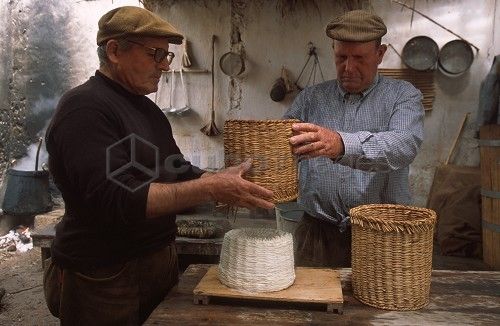
Making ricotta in Sicily.

Recipe: Ricotta Cake with Orange Flower Water and Honey

I really, really like sweetened ricotta. Give me a choice between a cannoli and a slice of chocolate cake, and I’ll take the cannoli. But give me the choice between a cannoli and a slice of ricotta cake, and, although highly tempted by both, I’ll inevitably chose the ricotta cake. I really love ricotta cakes, but I’ve never baked them much, until now.

Previously I only made them for Easter or Christmas, since the classic Southern Italian version is quite time-consuming, with its pounds and pounds of ricotta, deep pastry crust, and latticework top, not to mention the long-soaked wheat berries you need for a Pastiera, the Easter version. It’s really just as well these things show up only on holidays. They’re a 10-ton load. I now say forget about all that pastry. Just make the cake without it. It’s elegant, less dense, less fattening, and, I swear to you, this version takes 5 to 8 minutes to assemble. I thought hard about what would be the fastest, simplest way to make a ricotta cake without compromising on texture or flavor and decided that if I made use of two of my favorite electric kitchen gadgets, this cake could be a whiz to throw together. And it was.

Ricotta cakes can include a slew of flavorings, such as candied citron, nutmeg, cinnamon, chocolate chips (in my opinion an abomination that has no place in one of these things), vanilla, lemon or orange zest, and, my favorite of all, orange flower water. For my streamlined version, I left out all the chunky candied stuff and focused on the orange flower water. To me a ricotta cake is incomplete without it. And it blends beautifully with honey, which I also added.

All the ingredients except the egg whites get pulsed smooth in a food processor, which takes under a minute. The egg whites then get whipped in my standing mixer (or you can use an electric hand mixer). Then you fold the two things together and pour them into a spring-mold pan. The cake is light and fragrant, and you don’t have to wait for Easter to make it, although you can make it for Easter, if you have a group that’s flexible about tradition.

Ricotta Cake with Orange Flower Water and Honey

1 tablespoon or so of softened butter, to grease the pan
6 extra large eggs
½ cup sugar
½ cup orange blossom honey
A big pinch of salt
1 teaspoon vanilla extract
½ teaspoon orange flower water
The grated zest from 1 large lemon
½ teaspoon freshly grated nutmeg
1 large container whole milk ricotta (about 30 ounces)

1/4 cup regular flour

1/4 teaspoon baking powder

Preheat the oven to 325 degrees

Grease a 9-inch spring-form pan with the butter.

Separate the eggs, placing the yolks in a food processor and the whites in the bowl for a mixer (either a standing or handheld one).

Add the sugar, honey, salt, vanilla, orange flower water, and lemon zest to the food processor, and give it a few good pulses. Now add the ricotta, the nutmeg, flour, and the baking powder, and process until the mixture is smooth. Pour it into a large bowl.

Whip the egg whites until they achieve the classic stiff peak stage.

Add half the egg whites to the bowl, and gently fold them in. Now add the rest of the egg whites, and fold until just blended.

Pour this into the greased pan, and bake until the cake is browned and puffy and feels fairly firm in the center, about 50 minutes to an hour.

Place the cake on a rack. It’ll immediately deflate a bit, but that’s normal. Let it cool, and then remove the rim of the pan.

Women with Fish

Fish Stick: Devon Aoki in agent provocateur, 1998

Recipe: Rigatoni with Sausage, Cauliflower, and Almonds

I find that improvising with pasta is always a little harder in the winter months. Without all the summer Greenmarket vegetables that can transport my head to the Amalfi Coast, especially the tomatoes, peppers, and eggplants (the Southern Italian triumvirate), I can strain to come up with something exciting, not too loaded with fat, and still create a dish I want to eat right now. The choices often seem downright dreary. But I realize it’s my own damned fault. My cold, cold brain, not able to think beyond the rows of canned tomatoes, often overlooks all the good produce that’s sitting all green and fresh (freshly transported, that is) on my supermarket shelves.

Escarole, for instance. My mother always made pasta with that (salads too, crunchy bitter salads), flavoring it with garlic, white wine, and red pepper flakes. I loved this pasta. Leeks, chicory, radicchio, kale, dried cecis and cannellini beans (or good quality canned), broccoli rabe, endive, cabbage, Brussels sprouts, and cauliflower (a personal favorite, which is why I included it in this recipe). Carrots and celery can also be pretty good at this time of year, so I often start a pasta sauce with a fragrant soffrito (maybe adding a little leek or shallot). And now that I can get fresh herbs all year round there’s really no excuse to let my brain fizzle into a state of stupefied non-creativity.

This pasta takes inspiration from Sicily with its mix of cauliflower, toasted almonds, and mint. That’s a time-honored combo down there, but here I’ve decided to include sausage as well. The secret to success lies in the balance. I’ve found I don’t want too much sausage. I use it more as a flavoring, the way one would pancetta. I want nicely sautéed cauliflower coated with onion, garlic, rosemary, olive oil, black pepper and any porky essence the sausage imparts. I want that to be where my taste buds head first.

Rosemary and mint might seem an odd herb combination, but they work together because I add the strong one in the beginning, while sautéing, and the lighter, leafier one right at the end. The rosemary mellows with cooking, and the mint stays bright and fresh. It’s really a beautiful mix. You might also try adding thyme early on and then finishing your dish with Italian parsley. Another good strong-to-delicate herb duo to consider is starting with marjoram or oregano, letting it simmer into the dish, and then adding fresh basil at the end. Play a little here, if you wish. Using herbs this way adds layers of flavor and a culinary depth I crave in winter pastas.

Rigatoni with Sausage, Cauliflower, and Almonds

(Serves 4 as a main-course pasta)

Salt
1 large cauliflower, cut into small florettes
Extra-virgin olive oil
3 Italian sausages (preferably without fennel seeds), out of their casings
1 medium onion, cut into small dice
1 small inner celery stalk, cut into small dice
2 garlic cloves, thinly sliced
About ⅛ teaspoon freshly grated nutmeg
3 large rosemary sprigs, the leaves chopped
Freshly ground black pepper
½ glass dry white wine
½ cup homemade or good-quality purchased chicken broth
1 pound rigatoni
A big handful of slivered almonds, lightly toasted
About 10 big mint sprigs, the leaves very lightly chopped
A chunk of ricotta salata

Put up a large pot of pasta cooking water, and add a generous amount of salt. When it comes to a boil, drop in the cauliflower, and blanch for 2 minutes. Scoop the cauliflower from the water with a large strainer spoon into a colander, and run it under cold water to stop the cooking. Let it drain. Bring the water back to a boil.

In a large sauté pan heat about 2 tablespoons of olive oil over medium-high heat. Add the sausage, and sauté it, breaking it into little bits with the back of your spoon. When the sausage is lightly browned, add the onion and celery, and let them soften. Then add the garlic, the rosemary, and the nutmeg, and sauté to release their flavors.

Add the rigatoni to the boiling water, and give it a quick stir to prevent sticking.

Add the cauliflower to the pan, and season with salt and black pepper. Sauté everything so the cauliflower can get nicely coated with flavor. Now add the white wine, and let it bubble away. Add the chicken broth, turn the heat to low, and simmer until the cauliflower is tender, about 5 minutes. Add the almonds, saving a small handful for garnish.

When the rigatoni is al dente, drain it, and transfer it to a warmed serving bowl. Add a generous drizzle of fresh olive oil, and give it a quick toss. Add the cauliflower sauce and about ¾ of the mint. Toss gently. Check for seasoning. Grate a little of the ricotta salata over the top, and garnish with the remaining almonds and mint. Bring the rest of the cheese to the table for grating.

I like this dish hot, but it’s also good left to sit for a few minutes and eaten warm. Somehow the flavors are even bolder that way.

Mo, my mother, around 1952. She sure could cook.

Cinnamon, Nutmeg, and Orange Flower Water

Here’s another excerpt from ‘The Making of an Italian Cook’, a memoir I’ve been working on.

“We’re completely out of pepper flakes?,” Dick, my father, would say, to no one in particular, while shaking an empty little plastic jar. Shit, no more anchovies, I’d notice, knowing quite well I ate the last of them the night before. Well, this calls for yet another trip to Razzano’s. I was starting to live at that store. I was becoming just like Dick, focused on Italian condiments. Anchovies and hot red pepper flakes were the two big flavors I took to heart when I first became interested in cooking. Their importance on our family table couldn’t be overestimated. My father shook pepper flakes on almost everything, even on fettuccine Alfredo. I think being a Southerner, he didn’t quite grasp the nuance of that dish. And I could down a tin of anchovies, straight, in one sitting (I’d also done the same with jars of cocktail onions, but that’s possibly an issue separate from my world of Italian food). However, when I began digging deeper, three other flavors, less strident ones, came forth as foundations of our Italian kitchen: cinnamon, nutmeg, and orange flower water.

Nutmeg was, back then, and still is an aroma that drives me wild. From the time I was a little kid to right this minute I associate it with ricotta, a big Easter and Christmas ingredient for Southern Italian families. Ricotta-scented nutmeg is a voluptuous combination and one of the Italian tastes that, although subtle seeming,  can just flood your mouth with flavor. Two ingredients that are sweet without being sugary. There’s something mysterious about that, almost in the line of trickery. And there is just about nothing more enticing, food-wise, for me, than shoving a big spoon of  lasagna filling into my mouth, right from the bowl. (The way my mother, and just about every Southern Italian mother I knew, made this was by combining ricotta, parmigiano, parsley, and a whiff of nutmeg. Truly sublime.)

When I first began exploring Italian ingredients on my own, I felt  smart and haughty buying nutmegs whole at Razzano’s, the big Italian grocery in Glen Cove, Long Island, a place I now knew intimately thanks to my escalating involvement with the Italian kitchen.  Our neighbor Gloria told me whole nutmeg was best, and I was quite surprised to discover it actually began life as a round brown lump and not just a jar of beige powder. Scraping at a whole nutmeg with a clumsy box grater was an intimate experience (we never had an actual nutmeg grater, I suppose because my parents always bought the pre-ground stuff). The dark hard thing, which kind of resembled wood, didn’t release its charm until you got it irritated with a quick little exfoliation. Once I starting paying attention to this beautiful spice, I realized that Mo was using nutmeg in other preparations as well, in béchamel sauce, for instance (usually along with a bay leaf and a pinch of paprika), to layer into her “Northern” lasagna (the Southern ones, of course, always got ricotta, usually flavored with nutmeg). She also added a discernible amount to her Bolognese sauce, another “Northern” dish that intrigued me as a kid (milk in a meat sauce? What the hell?). These dishes were added to her repertoire by way of the many restaurant dinners my parents consumed during the ’60s and ’70s, when generic-style Northern cooking was  huge.

Cinnamon is a spice I associate with Mo’s Sicilian side, her father’s family. She not only used it in eggplant parmigiano, but her family occasionally flavored ricotta with cinnamon, not nutmeg, to use as a filling for giant ravioli, something evidently very radical and gossiped about in her mostly Neapolitan neighborhood when she was growing up in Rye, New York. Being a glamorous working mom, she didn’t have time for elaborate pasta making and never cooked this dish for us, but she told me about it during one of the many arguments I’ve started over how she never told me about her family’s Sicilian dishes (it turns out she told me about quite a few of them, but I always, neurotically perhaps, felt she was holding out). I worked up a version of these ravioli from her description and she said they were more or less right on, except that they didn’t have the tomato paste–laden sauce that her grandmother napped them with. I dismissed that as too thick and sour and settled on a lighter, looser tomato sauce that I flavored only with basil. I included this excellent ravioli recipe in my book The Flavors of Southern Italy, if you’d like to give it a whirl. It’s got an unexpected sweetness, since the filling also contains more than a pinch of sugar, an addition I later discovered was common to many savory Sicilian dishes.

I now know that there are two popular varieties of cinnamon, each distinct. The kind most American’s know, the powder that comes in jars and gets sprinkled on rice pudding, is Cassia cinnamon, an Indian variety. It’s sweet and strong, its bark hard and dark brown. This is the only cinnamon I was familiar with until maybe the late ’70s, when I moved into the city and began shopping at Kalustyan’s Middle Eastern market in “Curry Hill” in the East 20s and discovered the lighter and more fragile-barked Ceylon variety (native to Sir Lanka), which is what cooks use in Mexico (if you’ve ever had Mexican hot chocolate, you know its taste). A more complex spice, still sweet but with a touch of bitter that hits right on the tip of your tongue, Ceylon is considered the true cinnamon. Evidently the Cassia type began as just another bark that tasted somewhat like Ceylon cinnamon and so eventually got added to the spice rack. Ceylon is what I now prefer for savory cooking, although it makes some of the dishes I grew up with, such as lamb ragu and baked eggplant, taste quite different from what I remember. I’ve gotten used to this new taste, but still, with almost anything I make that includes ricotta, savory or sweet, I continue to go for the Cassia. For instance in ricotta cheese cake. I just can’t get myself to tamper with my flavor memories there.

Orange flower water has to have been the most exotic of my teenage flavor discoveries. It happened one Easter, when I was on our yearly trip to Rocco’s Bakery in Glen Cove with Dick to pick up the ricotta cheesecake, a Pastiera, the type that includes whole wheat berries and is made only for Easter (or at least was when I was a kid). I had always found the pastiera’s flavor exotic but never really thought about it. Now, entrenched in my new found love of Italian cooking and with my jacked-up taste buds, I asked Mo what made the thing taste so wild, so unlike anything else except possibly a gently scented soap from a Miami hotel. She didn’t know. She’d never made one. I was incensed. How could she not know? I got the feeling my constant cooking- related questions were starting to seriously annoy her. Her parents had both died very young, so stirring up memories must have been painful. I suppose I was insensitive to this at the time, but I really needed an answer. Could it be she really didn’t know what went into ricotta cheesecake?  So, brilliantly, I got the idea to go over to Rocco’s and ask. Orange flower water was the answer. Orange what? So then I marched myself over to Razzano’s, and there it was sitting on the shelf, gorgeous little cobalt blue bottles, imported from France, of all places. (Now I know that this lovely liquid is produced all around the Mediterranean and used in Middle Eastern, Sicilian, and Provençal cooking. At the time I thought is was exclusive to Easter cheese cake.)

So there were many secrets lurking behind the red sauce world of Southern Italian cooking. I could only guess what magic I would go on to discover (and of course there turned out to be much more than I imagined). I went right ahead and made a few ricotta cheese cakes, finding an interesting recipe in The Talisman Italian Cookbook, by Ada Boni, an excellent little volume my mother had hanging around the house that I unfortunately didn’t get to know better until I moved it into the city with me several years later. Ida Boni’s recipe didn’t contain wheat berries, but that was fine with me. At the time they scared me, reminding me of my earlier forays into that dreadful health food cooking. It didn’t contain orange flower water either, just orange zest and cinnamon, and that was not fine with me at all, so I just dumped some in. As it turned out, I dumped quite a lot in, and the cakes did taste like soap, inedible actually. I knew as they were cooking that something was terribly wrong. There was a dry perfume slick in the air that triggered a slight gag response in me. But since I’m not easily deterred, I tried it again. This time I added just a few drops. and what do you know, that was all it took to achieve that delicate taste that had been so damned intriguing. Not until some years later did I learn that this glorious liquid was one of the culinary legacies of the Arab influence on Naples and Sicily, but I certainly knew right then, on the North Shore of Long Island, that it was something I’d be needing in my life for a long time to come. I drizzled it over fruit, which was a beautiful experience, especially, as you’d imagine, with actual oranges (which I later found out made a pretty standard North African and Sicilian dessert). And, off the culinary track for a moment, if you add a small capfull to a cup of safflower or olive oil, you’ll have an amazing body oil. I use it all the time, and my elbows are quite smooth and fragrant.

And then I made a huge olfactory connection. That I didn’t think of it right away made me feel extremely stupid, but orange blossom perfume, in little orange shaped bottles, was an aroma I had known intimately my entire life, as part of my winters in Hollywood Florida. The bottles were sold at Anthony’s Grove, in their gift shop, where we’d drive  several times a week to purchase grapefruits, tangerines, and various hybrid citrus and watch a drunken sad old Seminole Indian guy stick his head in an alligator’s mouth. That was always a side attraction, and it made my sister Liti and me uncomfortable. Not that the worn-out alligator posed any threat, but this man’s miserable predicament made us feel guilty.

The shop reeked of orange blossom perfume, a truly unique aroma. Could it be that, inexplicably, I didn’t understand blossom and flower to mean the same thing (is that possible?), or was it the French or Tunisian packaging and New York setting, as against the southern Florida, that threw me off? I suppose it is just that one of them you wore and the other you cooked with. I guess, but really, in retrospect, that was pretty lame.

These three flavors came to form a group in my mind, for I was learning that one, two, or sometimes all three would show up in various Southern Italian dishes. Before my father poured red or white wine over summer peach slices, I’d grate on a good amount of nutmeg. I’m not sure where I picked up that habit, but it seemed to impress him. “You made this up?,” he’d  ask.  Nutmeg, I later discovered, when, a few years later, I started cooking my own La Vigilia, the Christmas Eve fish feast, is a great mellower of baccala, rounding out the residual saltiness and adding warmth. I like rubbing nutmeg-scented butter over a chicken before roasting it. The aroma while it’s cooking is beautiful, and the taste is subtle but opulent, especially if you make a little pan sauce out of the drippings (a splash of dry Marsala for deglazing is the neat little trick there). A half a cinnamon stick simmered in a simple tomato sauce is lovely, even better when the sauce contains squid. Cinnamon and lamb are a great match, a Sicilian flavor combination my mother made good use of and one I encountered years later when I began visiting that gorgeous island on my own. The next time you’re braising lamb shanks (and I know you will be), throw a cinnamon stick into the liquid, and see what an exotic result you get.

My mother told me about a baked rice pudding her Sicilian father used to make that contained orange flower water, nutmeg, and cinnamon and I certainly got on that case quickly. Its flavor is very much like a ricotta cheese cake, except that it contains no ricotta.The rice and spicing provide depth and sweetness (and also the sugar, of course.) This, and a bunch more new recipes, will be published in my book.

Italian cooking doesn’t layer on spices like, say, Indian or Moroccan. Generally speaking, Italians, both north and south, dispensed with most spices a few hundred years ago and ever since have preferred the freshness of herbs. But these three ingredients (I still think of them as exotic gifts) continue to make an appearance, and I’m happy to create with them, knowing that I’m in no way compromising the spirit of the Southern Italian palate.
Women with Fish


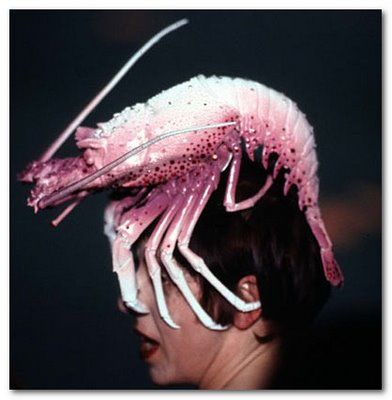
Isabella Blow wearing her lobster hat.

I haven’t cooked lobster in quite a while. It has come down in price, and you’d think that would be inspiring, and it is, but the real reason is that I’ve become incapable of bringing a live thing into my kitchen and killing it. I understand this is a sort of retro attitude, with all the farm-to-table philosophy floating around out there in foodie world (especially in Manhattan, wouldn’t you know). But I’ve become a softy, and killing has become so difficult that even waterbugs are too much for my sensitive self. And forget about the occasional mouse that’s idiotic enough to wander into this cat-filled apartment. I’ve found myself snatching them from my cat’s mouth and trying to somehow relocate them out onto the sidewalk. I’m not becoming a vegetarian. I just want someone else, like a professional butcher, to perform my carnage. Maybe it’s got something to do with years of restaurant cooking, years of drowning live eels in vinegar, plunging knives in between lobsters’ eyes, slicing the mouths off soft-shelled crabs. In the kind of quantity that was needed for restaurant service, that all left a lingering feeling of personal genocide in my culinary soul.

But I think I will prepare lobster soon, probably with spaghetti. That way I can feed a group without having to procure a lot of lobsters. And I’ll ask my lobster seller to par-steam them for me. The wimp’s way out. That way they’ll be more or less raw when I hack them up—which is necessary for sautéing unless you want a rubbery lobster—but they’ll already be dead, like the gorgeous specimen on Miss Blow’s hat, and, sadly, like the gorgeous Miss Blow herself. Art certainly has its tragic side, and when the pursuit of it becomes just too sad, I find myself having to step back and let myself be a very good home cook and not always the kitchen artist I’ve at times considered myself to be. Be a good home cook. That is my New Year’s resolution. A new lobster pasta recipe will be up shortly.

Happy New Year


A lentil field in Castelluccio, Umbria, covered with poppies.

A happy New Year to all my Italian food–loving friends. As many of you already know, New Year’s dinner in Italy revolves around lentils. Lenticchie, with their round shape, represent prosperity. They’re traditionally eaten on New Year’s Day to bring wealth and good fortune. I’ll be cooking up a pot of my much-loved Castelluccio lentils from Umbria this New Year (you can find them at many Italian specialty stores and at www.buonitalia.com). These beautiful greenish beige lentils keep their cute round coin shape when cooked, and they taste earthy and rich, especially with zampone or cotechino, two fresh sausages from Modena, the former stuffed into a pig’s trotter, that are also part of the Italian New Year’s good luck table. I got myself a cotechino, too, since I need all the luck I can get. And if you’d like to visit someplace spectacular, take a trip to Castelluccio in the Spring, when the valley will resemble this photo. If you’ve ever seen the somewhat sappy Zeffirelli movie ‘Brother Sun, Sister Moon’, about the life of Saint Francis, you might recognize the scenery. The entire thing was shot in Castelluccio.

I’ll see you next year with more recipes and tales from my Italian kitchen.


Christmas in Alberobello, Puglia.

Recipe: Spaghetti with Bottarga, Lemon Zest, and Parsley

Are you a bit frantic this year trying to pull together a fabulous La Vigilia, the Christmas Eve fish feast, not even having the time to think out a decent menu? Well I am, but I’ve got a tip for you: Think bottarga, think spaghetti. Put them together and you’ve got an elegant Christmas Eve first course that prepares in the time it takes to boil the pasta.

If you’ve never brought a piece of bottarga into your home before, it’s time to start. Bottarga is salted fish roe. It has a lovely fishy flavor, it’s as elegant as fresh caviar, and it looks pretty shaved over pasta. If you love anchovies (and who doesn’t?), you’ll love this too, possibly even more. You add it to the pasta at the last minute, so it doesn’t start to cook and lose its deep, complex flavor.

Sicilian bottarga is salted, preserved tuna roe. In Sardinia it’s made from mullet. I kind of prefer the Sardinian version to the Sicilian. It’s a little less straight-on salty, and it’s richer and moister. It’s also a bit sweeter, lacking the slight bitter edge the Sicilian type can have (some people prefer that taste, but I don’t). You can purchase both Sicilian and Sardinian bottarga through Buonitalia.com. What you want to avoid is the pre-ground, powdered bottarga that comes in little plastic bags. It’s made from cruddy end cuts that are dehydrated and pulverized and sold to tourists in overpriced food shops in Sicily (I’ve also seen it at the Buon Italia store, in Chelsea Market). That stuff is a complete waste of money.

Everyone have a very Merry Christmas.


Sardinian bottarga.

Spaghetti with Bottarga, Lemon Zest, and Parsley

(Serves 5 as a first course)

Salt
1 pound spaghetti
½ cup extra-virgin olive oil
3 large garlic cloves, very thinly sliced
1 large fresh red peperoncino, minced, including the seeds
¼ cup dry vermouth
The grated zest from 2 large lemons
About 4 to 5 ounces of bottarga (you’ll want about ¾ cup shaved)
1 bunch flat-leaf parsley, the leaves lightly chopped

Put up a big pot of pasta cooking water, and bring it to a boil. Add a generous amount of salt, and drop in the spaghetti.

In a skillet large enough to hold all the spaghetti, combine the olive oil, the garlic, and the peperoncino, and cook over medium-low heat, just until everything is fragrant, about 2 minutes. You don’t want the garlic to color very much. When it starts to just turn golden, add the vermouth, let it bubble a few seconds, and then turn off the heat. Now add the lemon zest, and stir it into the oil.

When the spaghetti is al dente, drain it, and add it to the skillet. Turn the heat to low, and toss until the pasta is well coated with oil.

Transfer the spaghetti to a warmed serving bowl. Add half of the parsley, and, with a sharp vegetable peeler, shave on half of the bottarga. Toss gently. Shave the rest of the bottarga over the top, and scatter on the remaining parsley. Serve right away.

Recipe: Baccala Mantecato for La Vigilia

Baccala mantecato, whipped preserved cod, is not a Southern Italian dish. It’s Venetian, usually made with stockfish, an air-dried cod, but since I like salt cod better (it’s less stinky and has a more familiar taste to me), I make it with that. And I whip one up almost every Christmas Eve. I like it much better than the traditional Neapolitan or Sicilian baccala presentations, where chunks of the soaked fish are simmered or baked with potatoes and onions or tomatoes and chickpeas. These dishes often taste too fishy to me, but when salt cod is puréed with good olive oil, a touch of garlic, potato, and a drizzle of cream, the result is truly voluptuous. Every family  has its favorite baccala preparation for La Vigilia, Christmas Eve, and this one has been mine for about the last 20 years (my mother refused to make any type of baccala, feeling it was just too crass for her cosmopolitan world). I learned how to make brandade, the Provençal version of whipped cod, almost identical to the Venetian dish, while cooking at Florent, the sadly now defunct French diner in the now totally obnoxious Meatpacking District of Manhattan. I change the recipe slightly every time I make it. This year I’m including lemon zest, nutmeg, and thyme. These aren’t traditional (although they do taste really good), so if you’d prefer a purer version, consider them optional (or play around with the amounts to suit your taste).

I’ve lately been seeing baccala mantecato around town at a number of Italian and French wine bars. I almost always order it when I see it, and on almost every occasion I find it too salty (not soaked long enough) or too creamy and plain (too much cream, not enough good olive oil), or way too garlicky (boy aren’t I a picky little so and so?). But, you know, if you’re going to make something that requires two days of soaking and, as an added bonus, stinks up your kitchen, you might as well make it nice. And this dish can be heaven.

And for your listening pleasure, here’s the great Louie Prima singing “Zooma Zooma Baccala.” It doesn’t get any better than that.  (Wow, is that really true?)

Baccala Mantecato for La Vigilia

(Serves 5 or 6 as an antipasto)

1½ pounds salt cod (try to find the thicker middle section, which has fewer bones to deal with)
1 fresh bay leaf
½ cup dry white wine
1 large baking potato, cooked soft, peeled, and roughly mashed
1 medium garlic clove, minced
Extra-virgin olive oil
The grated zest from 1 small lemon
A few big gratings of nutmeg
5 or 6 thyme sprigs, the leaves lightly chopped
Freshly ground black pepper
A few tablespoons of heavy cream
¾ cup homemade, not too finely ground breadcrumbs
A handful of black olives
Toasted bread made from slices of baguette, brushed with a little olive oil

You’ll need to soak the salt cod in a big pot of cold water for about a day and a half, changing the water a bunch of times (and putting the pot in the refrigerator overnight). After this, taste a bit to see if enough salt has leeched out of it. If not, soak it a little longer. Then drain it.

Place the salt cod (cut into pieces if necessary) in a large skillet. Add the bay leaf, and pour on the white wine. Add enough cool water to just cover the cod. Bring to a boil, and then turn the heat down to very low. Cover the skillet, and gently simmer the cod until it just begins to flake. This should take only about 15 minutes, maybe even less if you’ve got thin cuts. If it cooks any longer, it might become dry. Take the cod from the skillet, and when it’s cool enough to handle, pull off the bones and the skin.

Put the cod in a food processor, and give it a couple of pulses. Add the potato, the garlic, about ¼ cup of your best olive oil, the lemon zest, thyme, nutmeg, and some black pepper. Give it a few more pulses. You want a texture that’s creamy but not completely smooth, sort of like slightly lumpy mashed potatoes. Add about 2 tablespoons of cream, and pulse again. You shouldn’t need any salt.

Scrape the brandade from the food processor, and spoon it into an olive oil–coated shallow baking dish. Top with the breadcrumbs, and drizzle the top with olive oil.

When you’re ready to serve the dish, preheat the oven to 425 degrees, and heat it through, about 10 minutes. If the breadcrumbs don’t turn golden, run it under a broiler for a minute. Scatter on the olives, and serve with the warm toasts.


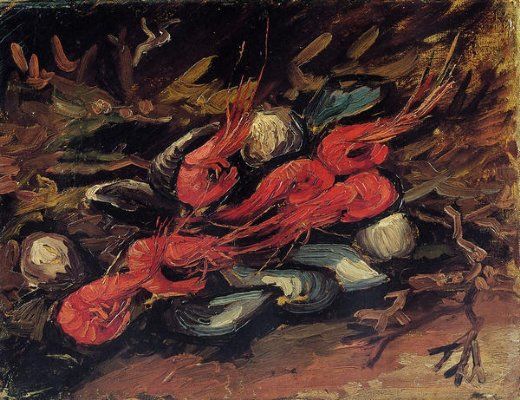
Still Life with Shrimp, by Vincent Van Gogh.

Recipe:  Shrimp with Ceci, Star Anise, and Rosemary

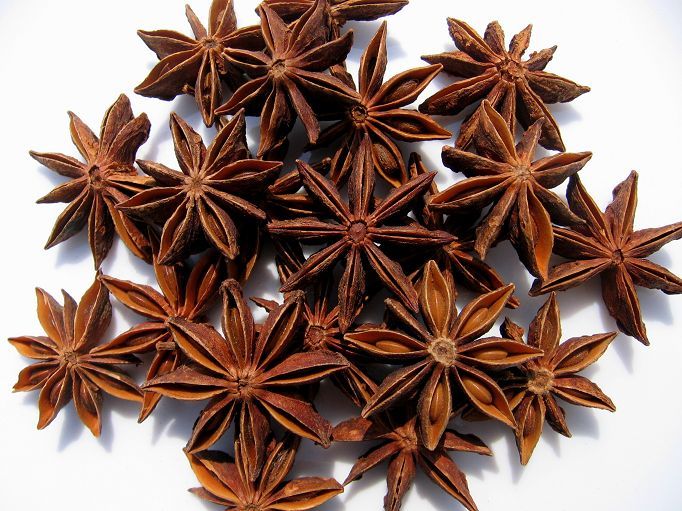
Every Christmas Eve I try to cook one new fish dish, one I create just for that evening. I like it to have a contemporary feel while incorporating flavors from my childhood. On that special night, big shrimp were always present on our family table, usually in some configuration involving a fair amount of garlic. That’s a good memory. I love shrimp.  I also happen to think chickpeas and shrimp make a great combination, and since lately I’ve been having a little love affair with star anise, I decided to bring these three ingredients together. Star anise is a spice of much physical and aromatic beauty, well worth getting to know. It’s amazing as a flavoring for poached pears, and also for chicken, as I’ve recently discovered (a cook’s education is never done). Falling into the anise-and-fennel category, it’s a natural for just about any type of seafood, especially, to my palate, shell fish. Use whole stars for a saucy dish like this, or grind a little to use as a rub.

I understand that Christmas Eve dinner is etched in stone for many Italians. Not a dish can be missing; everything must be prepared exactly the same year after year. I’m not like that. I change things, and I also find that I prepare fewer dishes as time goes by. (Not seven anymore, that’s for certain. Maybe three.) That’s why I like this shrimp and chickpea combo. It’s a piatto unico, but one with tons of elegance, and to my culinary memory, anise (I believe I’m thinking Sambuca here) and rosemary (pine needles?) are both aromas of Christmases past.

I think the perfect accompaniment to this rich, saucy dish is couscous, seasoned maybe with a little butter, a pinch of sugar, and fennely or anisey herbs such as basil and a small amount of tarragon or chervil.

Star anise.

Shrimp with Ceci, Star Anise, and Rosemary

(Serves  5)

Extra-virgin olive oil
2 pounds large shrimp, peeled and veined, saving the shells
A splash of Sambuca (about ⅛ cup)
Salt
Freshly ground black pepper
A big pinch of Aleppo pepper
A pinch of sugar
4 big sprigs rosemary, the leaved chopped
1 large shallot, minced
1 small carrot, cut into small dice
1 small inner celery stalk, cut into small dice
2 whole star anise
2 garlic cloves, thinly sliced
2 cups cooked ceci beans, preferably home-made, drained
1 35-ounce can tomatoes, with the juice, well chopped
A handful of flat-leaf parsley leaves, stemmed but left whole

Drizzle a little olive oil into a saucepan, and get it hot over medium heat. Add the shrimp shells, and sauté them until they turn pink. Add the splash of Sambuca, and let it boil away. Add a little salt and black pepper, and cover the shells with water. Boil until it’s reduced to about ½ cup or so. Strain it into a small cup.

Place the shrimp in a large bowl. Sprinkle with salt, black pepper, Aleppo (or another medium spicy dried chili), a little sugar, and about half of the chopped rosemary. Drizzle on a thread of olive oil, and toss the shrimp well so all the seasoning is dispersed.

In a skillet large enough to hold the shrimp and chickpeas, heat about 2 tablespoons of olive oil over medium heat. Add the carrot, shallot, celery, the remaining rosemary, and the star anise. Sauté until the vegetables are soft, about 4 minutes. Add the garlic and the chick peas, season with a little salt and black pepper, and sauté to blend all the flavors, about 2 minutes. Add the tomatoes and the shrimp broth, turn the heat to high, and let the sauce bubble, uncovered, for about 6 or 7 minutes. Turn off the heat.

In another large skillet, heat about 2 tablespoons of olive oil over high heat. When hot, add the shrimp, and sear them on one side. Flip them, and sear the other side. This should take only about 2 minutes. Add the shrimp to the tomato chickpea sauce. Deglaze the skillet with a splash of hot water, and add that to the sauce. Let the shrimp sit in the hot sauce for a minute to finish cooking. Taste for seasoning, and then transfer everything into a large serving bowl. Garnish with the parsley leaves. Best served right away.

The beautiful Chiesa Madre in Vizzini, Sicily, Peter’s grandmother’s hometown.

The Italian Recipe Exchange

Recipe: Pork Chops with Broccoli, Garlic, and Black Olives

Here’s a note I got from Peter Bocchieri, a blog reader, who wanted to share one of his Sicilian grandmother’s signature dishes: pork chops sautéed with broccoli, garlic,  and those rich, oil-cured, wrinkled black olives that I’m crazy about. This is something he loved as a child and now cooks for his own family:

Erica,

I just came across your blog and have enjoyed going through it. About a year ago I started my own blog to publish my family recipes. The majority of my recipes are simple family foods that I grew up eating. Almost a year and a half later I have compiled over 130 posts and stories about growing up Italian in Brooklyn.

I would like to share a very simple recipe my grandmother made all the time. I have never seen it anywhere else. The flavors and combination of ingredients are truly delicious. Simple but delicious. I guess the easiest way is to give you the link. I would love your feedback.

I checked out Peter’s blog post and really liked the looks of  the recipe. I often make a dish of sautéed broccoli with pancetta and black olives, so I knew this Southern Italian combination of flavors would work well. I was eager to test it out but  wanted to find out a little more about the background of the recipe, if he knew it. So he wrote back:

My Grandmother Lili Verga came from the town of Vizzini in the province of Catania. I can’t say if this was her original recipe or if she was taught it by her mother, Concetta Bruina. I know she made an Mpanada with sautéed garlic, broccoli, and olives, without the pork chops. It’s very possible she made this recipe in Italy with the purple cauliflower that was grown in that region and adopted it with broccoli when she came to America.

Unfortunately, she is no longer with us for me to get any more information on the dish. I know she made it often, and whenever she did I would run upstairs to her apartment and have a second dinner. I’m just glad I was observant and picked up her recipe. It’s one of the reasons I started the blog. I wanted to share my heirloom recipes with my family and children. Whatever audience I have picked up along the way is an unexpected plus. I really enjoy the comments I get from my readers and find the stories touch Italians as well as non-Italians.

I made the pork chops pretty much according to Peter’s directions, but I couldn’t help doing a little personal tweaking (what cook can?). All I really did was add a splash of white wine and a pinch of hot red pepper; otherwise the cooking method and ingredients are the same. This is an old-fashioned dish, so you don’t want crunchy broccoli. In fact it should even be a little soft. It’s all about flavor melding, not restaurant presentation. A restaurant, if it even made such a homey dish, would no doubt quick-blanch the broccoli and then “shock” it in ice water to stop its cooking and set its brilliant green color. Here you’ll want to cook it long enough to get very tender, so you achieve a rich, garlicky, olivey sauce, so good for soaking up with crusty Italian bread. This dish is a perfect example of what Southern Italy, culinarily speaking, does best, bringing together a few good ingredients to create a sum greater than the parts. You can check out Peter’s original recipe and blog post  by clicking here. He includes step by step photos, which is a nice touch.

Peter, thanks so much for sharing this Sicilian dish with my readers.

Pork Chops with Broccoli, Garlic, and Black Olives

(Serves 2 as a main course)

2 bone-in center-cut pork chops, about 1 inch thick
Salt
Freshly ground black pepper
Extra-virgin olive oil
1 pound broccoli, cut into florets but leaving some of the tender stem intact (if you’d like to use a lot of the stem, like my grandmother always did, you should peel the tough parts)
2 garlic cloves, thinly sliced
A tiny splash of dry white wine
A  handful of oil-cured black olives (Moroccan olives are perfect for this)
A big pinch of dried red pepper flakes (I used Aleppo)

Choose a skillet large enough to hold the pork chops and the broccoli.  Dry the pork well, and season it on both sides with salt and black pepper.

Add about 2 tablespoons of olive oil to the skillet over medium-high heat. When the oil is hot, add the pork chops, and brown them well on both sides (this should take only about 2 minutes per side). Take the chops from the pan, and place them on a plate.

Turn the heat down a touch, and add ¼ cup of water to the skillet. Add the broccoli, seasoning it with salt and black pepper. Cover the skillet, and let the broccoli steam/boil until it’s tender when poked with a knife, about 6 minutes. Uncover the skillet, and let any remaining water evaporate.

Push the broccoli to the side of the skillet, and add about 3 tablespoons of olive oil and the sliced garlic. Sauté until the garlic just starts to give off a good aroma but doesn’t color, about a minute.  Now mix the broccoli into the garlic, and sauté for about a minute to blend the flavors.

Return the pork chops back to the skillet, along with any juices they’ve given off. Add the olives, and mix everything well.  Add a tiny splash of white wine, cover the skillet, and simmer over low heat until the pork is just cooked through, about 4 minutes. Try not to let them go longer than that or they’ll get tough.

Sprinkle with the red chili flakes, and add a bit more salt if needed. You can serve this piping hot from the skillet, but the flavors are even better if you eat it warm.