Feeds:
Posts
Comments

Archive for the ‘Uncategorized’ Category


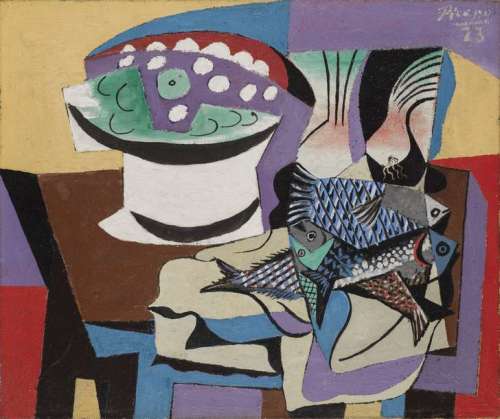
wadsworth_still-life-fish1958-220Still Life with Fish, by Pablo Picasso.

Recipe below: Butter-Sautéed Cod with Capers and Sage

Sage is a classy herb, elegant but a bit difficult. It comes in many varieties, all with subtle color variations—gray green, blue green, khaki, army green, sometimes with soft striping. Nothing too flashy. Common culinary sage is deep olive, with a thickish leaf, a velvety texture, and a pattern on the leaf that reminds me a little of the surface of my tongue. The aroma is strong even without your ripping into it. There’s a camphor smell there, which is not uncommon for a member of the mint family. But when gently heated, sage opens up with a pungent sweetness. I love this herb, and I often feature it as a primary flavor, but you really don’t want to use too much. And please don’t even think about the acrid dried stuff. A mere pinch of that will ruin your dish.

Sage never used to be something I’d experiment with much. Somehow it has figured in my head as regally inflexible. It’s musky, with an almost non-food smell, but it’s also warming and familiar to Italian cooks. It belongs in saltimbocca, gnocchi, or ricotta ravioli with sage butter, or in pasta or risotto with butternut squash or pumpkin. My mother added sage to pasta e fagioli. I do that. I tasted cannellini bean salad in Tuscany that contained sage and celery, and I make that that way now. I’ve learned to fry sage leaves and scatter them over orecchiette with sausage. I roast little potatoes and add fresh sage at the end so that it’ll crisp up but not burn (burnt sage can be very bitter). These are all fairly traditional Italian ways with sage.

Fish with sage can be tricky. I ate a superb trout cooked with sage in Norcia, Umbria, many years back, and it has stuck in my culinary head. I’ve tried sage with other fish and found out two things. First, it works best with less saline types of fish, river fish for sure but also mild white ocean fish, such as the cod I’ve chosen here. Second, and I think this is important, butter seems to be a key to sage’s success with fish. It suavely bridges the two ingredients, creating a mellow zone that equals deliciousness. To my palate, olive oil just can’t produce the same effect.

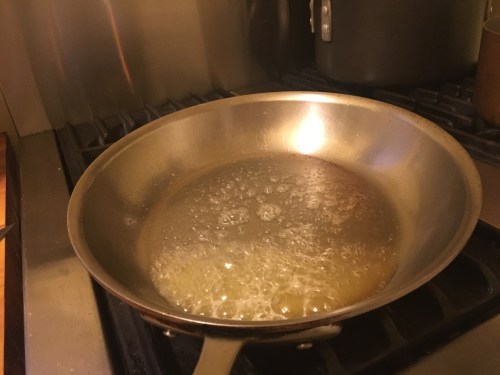
For this recipe, I’m using the time-honored restaurant technique of sautéing and basting a fish in butter until just cooked through. I add flavorings at different points, allowing the hot butter and fish juices to mingle with my sage, shallot, garlic, and lemon, producing a quick but remarkably rich pan sauce.
IMG_1432.JPG

The perfect pan for this recipe is my 10-inch All-Clad sauté pan. It fits two fish fillets nicely, with enough extra room for basting, and it’s light enough for easy tilting.

(Serves 2)

2 approximately 1-inch-thick cod fillets (about 7 ounces each), skinned
Salt
Black pepper
The grated zest and juice from 1 small lemon
A few big scrapings of nutmeg
3 tablespoons unsalted butter
1 shallot, minced
1 garlic clove, thinly sliced
¼ cup salt-packed Sicilian capers, soaked, rinsed, and dried
8 sage leaves, cut down the middle lengthwise

Season the  fillets on both sides with salt, black pepper, the lemon zest, and the nutmeg.

In a medium-size sauté pan, heat the butter over medium flame. When the butter has melted and is starting to foam, add the shallot, and let it soften for a few seconds. Now add the fish, presentation side down. Without moving the fish around at all, tilt the pan toward you, and spoon the butter over the fish. Continue spooning the butter over the top of the fish until you see the bottom edges of the fish start to turn golden and it’s easy to move around without sticking, about 3 minutes. Now give the fillets a flip. Add the garlic, the capers, and the sage, and start basting again. Lower the heat so the fish can cook through, continuing to baste all the while. This will probably take about another 2 minutes, depending on the thickness of your fish.The butter will likely turn a bit golden, but that is a good thing. (Note:  If your fillets are thicker than an inch, you might need to cover the pan for a minute or so after you give it a flip so you retain some moisture, allowing  the fish to cook through without the butter burning). When the fillets are just tender (starting to flake a bit but still holding their shape), use a slotted spatula to place them on warmed serving plates. Squeeze a little lemon juice over them, and then spoon on some buttery caper-sage sauce from the pan, topping with a pinch of salt and a grinding of fresh pepper.

I like to place the fish on a bed of escarole sautéed with olive oil and a little garlic, but it’s delicious just on its own, too.

Read Full Post »

img_7864Night squid fishing off Procida.

Recipe below: Cavatelli with Calamari, Escarole, and Almond Breadcrumbs

Donald Trump probably thinks one element of Italian-American life is pretty great—all those stereotyped mob thugs, dead, alive, fictional, lurking about, their threats, the bloodshed, the heinous business deals, all hyped on TV and in the movies. I imagine that’s the only side of my heritage that would appeal to him. When I think about this unsocialized man, I want to hold tighter to the culture, art, and beauty I grew up with. My Southern Italian grandparents were the Mexicans of their day, some of my father’s family even sneaking into the country illegally. And of course, when I reflect on my rich ancestry, I zero right in on their gorgeous cooking, making dishes Donald, with his infantile tastes, wouldn’t even consider food. Can you imagine him sitting down to a bowl of calamari and escarole? He doesn’t have the soul.

My family cooked a lot of seafood. I grew up appreciating all sorts of shellfish—octopus, scungilli, eel. I was also introduced to a huge variety of vegetables, I think far more than most kids, instilling in me an early love of intriguingly bitter greens. Green, bitter, and a touch of saline make a perfect trio, one with a deep-rooted flavor memories for me. I understand these dishes, and when I cook them for friends who may not have grown up with this palate, they inevitably understand, not only because it all makes culinary sense but because it’s just divine.

escarole

(Serves 2 as a main course)

1 medium head escarole, chopped (you’ll want about 2½ cups)
Salt
Extra-virgin olive oil
⅓ cup homemade breadcrumbs
⅓ cup blanched almonds, lightly toasted and then roughly ground
A pinch of sugar
Black pepper
½ pound cavatelli
2 large garlic cloves, thinly sliced
3 anchovy fillets, minced
A few big scrapings of nutmeg
½ cup chicken broth, or possibly a little more
2 tablespoons unsalted butter
1 pound small, tender squid, cut into rings, the tentacles left whole
The grated zest from 1 small lemon
6 or 7 large thyme sprigs, the leaves lightly chopped
A big splash dry vermouth (about ¼ cup)
A heaping tablespoon of freshly grated Grana Padano cheese

Put up a big pot of pasta cooking water. Add a good amount of salt, and bring it to a boil. Add the escarole, and blanch for 2 minutes. Scoop it from the water into an ice bath to stop the cooking. Squeeze out as much water as possible, and set the escarole aside.

In a small sauté pan over medium heat, drizzle about a teaspoon of olive oil. Add the breadcrumbs and the ground almonds, season with the sugar and a little salt and pepper, and sauté until everything is golden and fragrant, about a minute or so. Transfer to a small bowl.

Bring the water back to a boil, and drop in the cavatelli.

In a large sauté pan, heat a tablespoon or so of olive oil over medium heat. Add the garlic, and let it soften for a minute. Add the escarole, anchovies, and nutmeg. Season with a little salt and some black pepper, and sauté until everything is fragrant, about 2 minutes. Add the chicken broth. Turn off the heat.

In another sauté pan, heat the butter over high heat. When the pan is hot, add the calamari, lemon zest, and thyme. Season with a tiny bit of salt and black pepper, and sauté quickly, just until the calamari becomes opaque, about a minute or so. Add the vermouth, letting it bubble for a few seconds, and then pour the calamari, with all its pan juices, into the escarole pan. Mix everything around, adding a good drizzle of fresh olive oil.

When the cavatelli is al dente, drain it, and add it to the pan. Toss over low heat very briefly, about 30 seconds, just to blend the flavors. Add a little more chicken broth to loosen the sauce, if needed.

Pour the pasta into a heated serving bowl. Add the Grana Padano, and toss gently. Serve right away, with a scattering of the almond breadcrumbs on top.

Read Full Post »

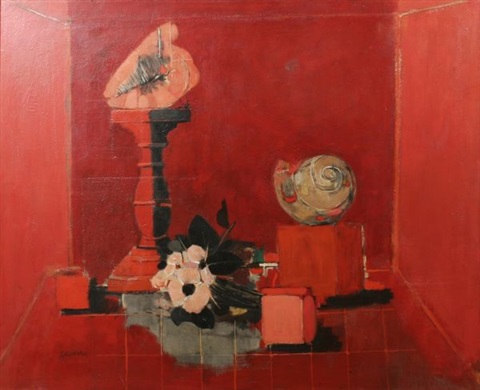
andres-segovia-still-life-with-seashells
Still Life with Seashells, by Andres Segovia.

Recipe below: Scallops Crudo with Lemon Thyme, Peperoncino, and Pine Nuts

I will eat any funky, spiky, mushy, or rubbery raw piece of seafood put in front of me, and, luckily, with no ill effect, so far. I like raw octopus, clams, shrimp, mackerel, and every ceviche I’ve ever tasted, except those too loaded with cilantro. I’ve sampled lots of crudo, Italy’s answer to sushi, which seems to be more popular here than over there. I have been served raw sea urchin, swordfish, and tuna in Sicily. In Puglia I’ve tasted anchovies and sardines, lightly “cooked” in lemon and olive oil. All good, especially the Palermo beach sea urchins. But I can’t say I’ve spent much time preparing raw fish in my own home, at least not in a while. I feel that’s about to change. I think it has to do with the fresh herb season coming to an end.

As the warm weather starts to slip away I feel that common human confusion, energized to start new projects but also nostalgic for heat and how good it makes my body feel. Lately I get a little scared of the cold. Culinarily speaking, I’m eyeing my remaining herb pots with sadness, thinking death is right around the corner. After fussing over the occasionally recalcitrant plants all summer, I’m hoping I can coax some of them into hibernation, like our big, round woodchucks, until the spring.

I’ve still got a bushy pot of lemon thyme on my deck, but I plan to bring it in soon and attempt to winter it over. In my experience the most successful winter-surviving herbs have been the woody Mediterranean ones, perennials like thyme, rosemary, oregano, and sage. Of course, nothing is truly a perennial in cold Manhattan or upstate New York, where I now have my small cottage. But every spring the mint in my city stoop pot wakes up and grows crazily with shoots and long roots. That herb has tenacity. The  power of weeds.

My lemon thyme still looks and smells so beautiful that I’ve decided to capture some of its fleeting essence by adding it to this scallop crudo. Lemon thyme and raw scallops, I’ve discovered, tastes even better than lemon thyme with cooked scallops. This is a true crudo, not a ceviche that would need marinating, so the entire dish comes together in a few minutes. You want to keep the scallops pristinely raw and tender.

I’ve added a little colatura to the preparation. That’s a Southern Italian anchovy-based fish sauce. It’s pungent and rich and imparts an umami taste sensation similar to that of soy sauce. It’s very much worth getting to know, You’ll want only a few drops here, to heighten, not overpower, the sweetness of the scallops. I use a brand called Netunno, which is produced on the Amalfi Coast. It’s sold by gustiamo.com, the fine Italian food importer.

I always find when creating raw seafood dishes that I need to be careful adding flavors. I tinkered with this one for a while and finally found what I think is a good balance of acidy, sweet, and saline. The pine nuts add warmth and creaminess, the lemon thyme is assertive, the peperoncino adds subtle heat. If you don’t have colatura, you can use soy sauce. I prefer shoyu, the white version, which won’t mask the whiteness of the scallops.

(Serves 2 as a first course)

4 large, dry sea scallops, the side muscles removed, thinly sliced crosswise (sticking the scallops in the freezer for about 5 minutes before slicing them will help you get thin, even slices, but don’t let them freeze; you want them just cold)
1 teaspoon fresh lemon juice, plus the grated zest from 1 lemon
A pinch of sugar
1 tablespoon extra-virgin olive oil (use a fruity one, low on bitterness)
5 drops colatura or shoyu white soy sauce.
5 large sprigs lemon thyme, stemmed, the leaves lightly chopped, plus the leaves from a few more sprigs for garnish
½ fresh, red peperoncino, seeded and minced
1 scallion, white and tender green, minced
A small palmful of lightly toasted pine nuts
Coarse sea salt

Lay the scallop slices out on two small plates, arranging them in a circle.

In a small bowl, mix together the lemon juice and zest, sugar, olive oil, colatura, lemon thyme, and pepperoncino.

Drizzle the dressing onto the scallops. Sprinkle on the scallion and the pine nuts, and season with a little coarse sea salt. Garnish with the remaining thyme leaves. Serve right away.

I like the idea of following this light dish with a quick pasta, maybe spaghetti with a cherry tomato sauce, or penne with zucchini and ricotta.

Read Full Post »

14470626_10154569386906880_8786746577706797321_n

Recipe below: Pasta alla Norma, Early Fall Style

Watching the rise of a presidential candidate who seems to have no morals, warmth, or humanity, all the hallmarks of a sociopath, has put my soul in an dark place. I wake up some mornings with the deep creeps. How did we go so low? In the seventies and eighties in New York this man was considered a vulgar joke, about on the level of World Championship Wrestling. If my father were alive, how could he believe it?

Before watching the first debate with some friends, I thought about what I wanted to serve. I knew it should be something that reached back into my ancestry, grounding me, making me feel whole and connected. I chose pasta alla Norma, the great eggplant dish from Catania, always one of my favorites. I happened to have some bruised, cracked sauce tomatoes, and a couple of dark, classic bowling-pin shaped eggplants, all from Migliorelli Farm. Nostalgia for the end of summer was setting in while misery at this ugly, stupid election ate away at my gut. So, pasta alla Norma it was. The debate didn’t lessen my disgust for that narcissistic slob, but the pasta tasted great. I know our candidate’s childish taste in food. He wouldn’t go near this beautiful dish. And anyone who wouldn’t love pasta alla Norma is a loser. Sad.

(Serves 5)

Extra-virgin olive oil
2 large summer garlic cloves, thinly sliced
1 fresh red peperoncino, minced
About 2 cups diced eggplant, the skin left on, plus 1 small unskinned eggplant cut into thin rounds
½ teaspoon ground cinnamon
¼ cup sweet Marsala
4 or 5 medium-size round summer tomatoes, skinned, seeded, diced (about 2½ cups or so) and well drained to remove excess water (reserve the tomato water for loosening the pasta, if needed)
Salt
Freshly ground black pepper
A generous pinch of pimenton d’ Espelette pepper
About 8 large marjoram sprigs, the leaves only, plus a small palmful of leaves for garnish
1 pound penne
A chunk of ricotta salata
⅓ cup blanched almonds, lightly toasted and roughly chopped
A few large mint sprigs, the leaves lightly chopped

In a large skillet, heat about 2 tablespoons of olive oil over medium flame. Add the garlic, peperoncino, chopped eggplant, and cinnamon, and sauté until the eggplant is fragrant and golden, about 7 minutes or so. Add the Marsala, and let it boil away. Add the tomatoes and marjoram, and season with salt, black pepper, and pimenton. Let simmer, uncovered, at a low bubble for about 8 minutes, just until the eggplant is cooked through. Turn off the heat.

Set up a large pot of pasta cooking water, and bring it to a boil.

While the water is coming to a boil, set out a large sauté pan over medium-high heat. When the pan is hot, add about 2 tablespoons of olive oil. Salt and pepper the eggplant rounds, and place them in the pan, letting them cook until golden on one side, about 2 minutes. Give them a flip and cook until just tender. Lay them out on paper towels.

Add a generous amount of salt to the boiling pasta water, and drop in the penne.

When the penne is al dente, drain it, and pour it into a large serving bowl. Reheat the eggplant sauce if necessary, and pour it over the pasta. Add a little of the reserved tomato water to loosen the sauce, if needed. Grate in about a heaping tablespoon of the ricotta salata, using the large holes on your grater, and give it a toss. Drape the eggplant slices on top. Grate on a little more ricotta salata. Scatter on the almonds, and garnish with the remaining marjoram and the mint. Serve hot.

Read Full Post »

Women with Fish

14330156_10154540114784806_2221060567453638145_n

Just because I’m completely blind doesn’t mean I don’t want to be seen. See me. See my fish.

Read Full Post »

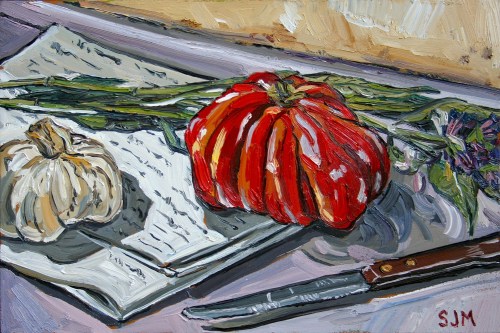
7291115172a12977a4ce9d37c928672bStill Life with Garlic and Lucinda’s Tomato, by Sarah Jane Moon.
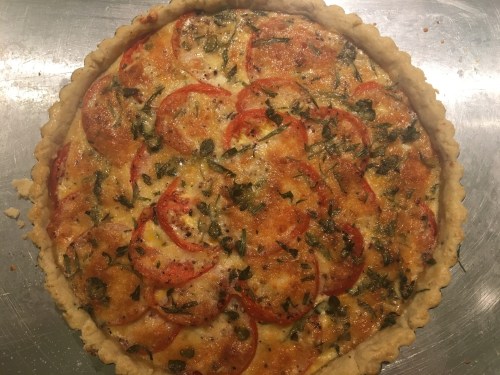
Recipe below: Tomato Torta with Fontina, Mustard, and Tarragon

Per I Ospiti

In my relatively long time on this earth, I’ve never owned anything. Well, nothing major. I must admit I do have a nice collection of Repetto shoes, but I’ve always rented apartments and cars. Now I own a house. Incredible. Owning, it turns out, has supplied me with unexpected feelings. It’s more intimate than I would have imagined. And cooking in my  house has taken on both a protective quality and a formality that’s new to me. I’m hoping it’s a transitional thing.

Over all the decades of cooking I’ve done in my city apartment, I’ve always said to myself, “Tonight friends are coming for dinner,” or “Friends are stopping by for a glass of wine.” Or, when the affairs turned into intense production numbers, “Tonight twenty friends are coming for an eight-course Sicilian dinner.” But at my new house I’ve started thinking of my friends as guests. “Guests are coming for drinks.” Now, these are for most part the same friends. Odd. I wonder if a reserve has set in with ownership, or maybe awkwardness at being in a new and much bigger kitchen. It also might have something to do with the fact that some of these guests stay the night, and not just because they get drunk and fall asleep in the bathtub, but as actual invitees. I now need towels, and sheets, and doors that close. I have two extra bedrooms, sometimes with people inside them wearing bathrobes. What a concept.

One thing I am finding is the need to have more stuff on hand, more cheese, olives, wine, and bread. People show up, excited to see the place. I cook things that can be cut into pieces and passed around, high hostess style, and I’ve been making  a lot of savory tarts. They’re relatively easy but fancy looking. Antipasti at the ready. You might want to try this one, which is really a celebration of the last of the summer tomatoes. It has been a great year for tomatoes.

img_1362

You’ll want a 9-inch tart pan with a removable bottom.

(Serves 6 as an antipasto)

For the dough:

2 cups all-purpose flour
1/4 cup extra-virgin olive oil
½ teaspoon ground allspice
½ teaspoon salt
1 teaspoon sugar
1/3 cup dry white wine

For the torta:

Extra-virgin olive oil
5 medium round summer tomatoes (any color, or a mix of colors), sliced into not-too-thin rounds and set on paper towels to absorb some moisture
2 heaping tablespoons crème fraîche
1 teaspoon Dijon mustard
1 small garlic clove, minced
½ teaspoon allspice
1 large egg
Salt
Black pepper
8 large sprigs tarragon, the leaves lightly chopped
¾ cup grated fontina Val d’Aosta cheese (use the large holes of your grater, as the cheese is somewhat soft)
1 egg yolk, lightly beaten with a little water, to brush on the crust

To make the dough: Place the flour in a medium bowl. Add all the other ingredients, and mix with a wooden spoon until you have a moist crumbly mass. Now squeeze the dough together with your hands so it clumps. Tilt it out onto a workspace, and knead and press it together very briefly, just until you have a ball.  Wrap the dough in plastic wrap, and let it rest, unrefrigerated, for an hour.

After the dough has rested, heat the oven to 425 degrees. Lightly oil your tart pan.

Roll out the dough. You’ll see that it’s very easy to work with. You won’t even need to flour your workspace. Drape the dough into the tart pan, leaving about ½ inch of overhang. Press the inside so the dough is up again the sides of the pan. Trim off excess by taking a rolling pin around the perimeter. Now build up the sides, by pushing the dough a bit higher than the tart rim. This will prevent it from shrinking too much during baking.

In a small bowl, whisk together the creme fraîche, Dijon, garlic, allspice, and egg. Season with a little salt and black pepper. Whisk in about a teaspoon or so of warm water to loosen the mixture to a still thick but pourable consistency.

Place the tomatoes in the tart pan in a slightly overlapping circular pattern. Season them lightly with salt and black pepper. Pour the crème fraîche mix evenly over the tomatoes, making sure not to let any run under the edge of the dough. Scatter the tarragon evenly over the top and sprinkle on the fontina. Brush the edges of the dough with the egg wash.

Bake for about 30 minutes, or until the crust turns golden and the inside is set. Let rest about 10 minutes before slicing. It will be good warm or at room temperature, and it will be especially nice with a glass of Falanghina or another mineraly Italian white wine.

Read Full Post »

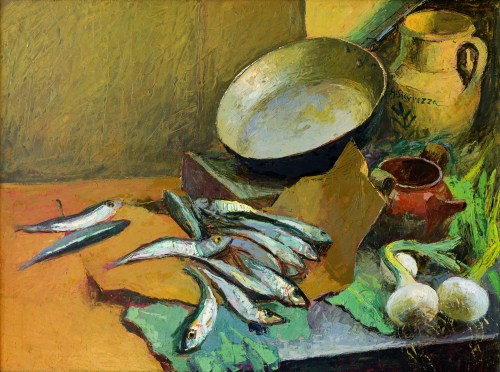
Antonio_Sicurezza_-_Still_life_with_anchoviesStill Life with Anchovies, by Antonio Sicurezza, 1972.


Recipe Below: Pane Cunzato

Anyone who follows my blog knows how crazy I am for anchovies. In my opinion a sandwich of only anchovies is a beautiful thing. In the summer a drippy tomato sandwich with olive oil and just about any decent bread is always a hit. The addition of a few anchovies elevates it to high art. When I first visited Sicily and was introduced to pane cunzato, a panino of peasant origin that contains tomatoes, anchovies, and primo sale, well, that was just too much. That sandwich was designed just for me. It tugged at my Sicilian soul.

Cunzare means to dress. In its most peasant form, dressing pane cunzato can mean only a drizzle of olive oil and a sprinkling of dried oregano. With good oil, that’s a nice panino. But now we expect pane cunzato (or cunzatu, as it’s more often spelled in Sicily) to have tomatoes, anchovies, dried oregano, and primo sale, a very young pecorino cheese. And like many foods with humble roots, it has become somewhat trendy, with Sicilian chefs sometimes getting a little too creative, presenting it as an open-face bruschetta with its ingredients artfully arranged in a peak, or as a giant roll stuffed with eggplant, tomatoes, tuna, capers, and olives, making it more like the Niçoise pan bagnat, which I love. But the cunzato was originally conceived as a much simpler food.

I first tasted cunzato in San Vito lo Capo, Sicily, a beach town famous for the grand couscous festival it holds every June. I rolled into town way past couscous and beach season, but a few panini shops were open, and I zeroed right in on the sandwiches that contained anchovies. I wasn’t wrong to do so. The cunzato was soft and hot, made with bread that seemed pulled straight from the oven, not toasted. Usually these are round flat rolls made with durum wheat flour. When I fashion a cunzato at home I often purchase small focaccie from Sullivan Street Bakery, and after filling them I wrap them in foil and stick them in the oven for about 5 minutes, so they steam heat.

Since I’ve gone herb wild this summer, this time around I’ve replaced the traditional dried oregano in this cunzato with fresh marjoram and a little lemon thyme. Really delicious, but if you want to experience a more authentic version, find good Sicilian dried oregano and just crumble a little into each panino.

Note: If you can’t find primo sale, a young Sicilian or Tuscan pecorino will work well. The cheese should be soft. You don’t want an aged, hard pecorino here.

particolare-delle-montagne
Not my photo, but a good one, from Scopello, Sicily.

(Makes 2 single-serving cunzati)

2 sandwich-size focaccie, without added flavor such as rosemary, sliced horizontally.
Extra-virgin Sicilian olive oil (Olio Verde is a great choice)
2 large, round summer tomatoes, thinly sliced
Salt
9 salt-packed Sicilian anchovies, filleted, soaked, and then roughly chopped
¼ pound primo sale or another young, soft pecorino cheese, grated with the large hole of your grater, or shaved
A few large sprigs of fresh marjoram, the leaves lightly chopped
A few large sprigs of lemon thyme or regular thyme, the leaves lightly chopped
1 fresh summer garlic clove, minced
Black pepper

Preheat the oven to 400 degrees.

Place the bottom sides of the focaccie on two large pieces of aluminum foil, cut side up (the foil should be just big enough to wrap up the panini when filled). Drizzle the cut faces of them and the top sides (all four pieces) with a generous amount of extra-virgin olive oil. Layer the tomatoes onto the face-up bottom sides, and season with a very little bit of salt. Scatter on the anchovies. Top with the cheese. Sprinkle with the herbs, garlic, and black pepper.

Close up the panini, and wrap them in the foil. Press lightly to flatten them a bit. Stick them in the oven for about 5 minutes, just to warm them through.

I find that cunzati taste especially good with a glass of grillo, a crisp, dry Sicilian white wine.

Read Full Post »

Women with Fish

bb83629919_3 (2)

I always wear my shiny, black Mary Janes when I go fishing in respect of the fish, our short lives, and our much needed nourishment.

Read Full Post »

orient_47Interior with Eggplants, by Henri Matisse.
Recipe below: Caponata with Lovage, Thai Basil, and Golden Raisins

I confess that my parents stopped making their own caponata when we discovered the version Progresso packed in those pretty little cans. We fell in love. In retrospect, Progresso’s caponata, which they stopped manufacturing only a few years ago, was quite bland compared with homemade, but we were amazed that such an exotic dish even existed in commercial form in this country. It was a fine tribute to the power of the Italian-American community. Caponata was one of those weird foods we’d buy at Italian groceries, like salty, rubbery lupini beans, and hot cherry peppers stuffed with oil drenched tuna. They perplexed my non-Italian friends. For me, life wasn’t complete without them.

But now for decades I’ve made my own caponata. It’s one of those high-aroma cooking experiences you don’t want to miss. Consider cooking up a batch immediately. All the major components, eggplant, peppers, tomatoes, and herbs, are in peak season right now and just waiting for you to harness their powers.

Caponata is of Sicilian origin, one of those full-bodied Spanish- and possibly Arab-inspired dishes with strange ingredients that combine to open up lusciously on the tongue (pasta con le sarde is another). Eggplant is caponata’s anchor, and agrodolce gives it swing. It’s an old dish (tomato being a recent addition), which when done up for high-class Sicilians traditionally included Baroque touches such as chocolate, cinnamon, hard-boiled eggs aged in vinegar, and even baby octopus, anchovies, and clams (now there’s an odd combination). I still make versions that include chopped pear, fennel, and green olives, and I added a touch of cinnamon to my recipe here. I can’t imagine caponata without capers, raisins, and pine nuts (or, more often in my case, almonds or pistachios), a time-honored trio in many Sicilian dishes.

Basil, parsley, and mint are traditional herbs for caponata. But this year, since I’ve fallen hard for lovage, I decided to add that instead. And it makes sense, since celery is almost always a component of the dish and lovage has a strong celery-like flavor. If you don’t have it, use a palmful of celery leaves instead. I liked the idea of underscoring the exotic here. The lovage has hints of curry, and the Thai basil, which I’ve also included, has undertones of clove, so it fits the bill.

How to eat caponata? I don’t care what anyone says, caponata is not ratatouille. It shares basic ingredients, such as eggplant, but the seasoning couldn’t be more different. Its agrodolce boldness steers it toward the antipasto category. I like it served room temperature on toast as crostini. It’s also great served alongside soppressata or capocolla.

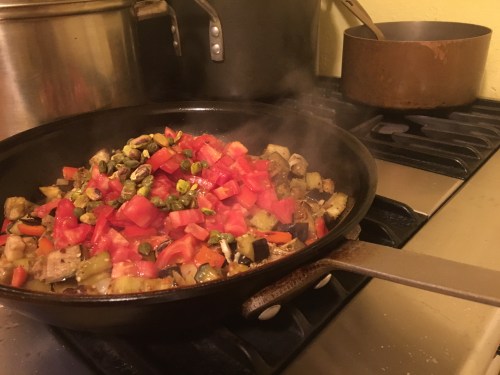
IMG_1328A variation on my caponata, this time with pistachios and green olives.

(Serves 6 as an antipasto dish)

Extra-virgin olive oil
2 firm medium-size eggplants, unpeeled and cut into small dice
Salt
A drizzle of honey (about 1 teaspoon)
A pinch of cinnamon (about ⅛ teaspoon)
1 red bell pepper, seeded, ribbed, and cut into small dice
1 medium onion, cut into small dice
2 teaspoons Spanish sherry vinegar
3 small, inner celery ribs, cut into small dice, plus a handful of celery leaves (especially if you don’t have lovage)
A handful of golden raisins, soaked in a few tablespoons of dry Marsala
1 large, round summer tomato, skinned and cut into small dice
2 teaspoons sugar
A palmful of salt-packed capers, soaked and rinsed
Black pepper
A handful of Thai basil leaves, lightly chopped, plus a few whole sprigs for garnish
6 lovage leaves, lightly chopped
A big handful of blanched almonds, lightly toasted and roughly chopped

Have a large serving bowl ready near the stove. In a large skillet, heat 2 tablespoons of olive oil over medium flame. Add the eggplant, and sauté until it’s tender but still keeping its shape, about 8 minutes. Season with a little salt and the cinnamon. Add the honey, giving everything a mix. Spoon the eggplant out into the bowl.

Add a drizzle of olive oil to the skillet, add the red pepper and onion, and sauté over medium heat until softened, about 4 minutes or so. Add 1 teaspoon of the vinegar, and let it bubble for a few seconds. Add this mixture to the bowl with the eggplant.

Add another drizzle of olive oil to the skillet, and then add the celery and celery leaves, sautéing until they just start to soften, about 2 minutes. Add the raisins, with their Marsala soaking liquid, and let the Marsala bubble for a few seconds. Add this all to the bowl, and give everything a gentle toss.

Add one more drizzle of olive oil to the skillet, keeping the heat at medium. Add the tomatoes, seasoning them with a little salt. Add the sugar, and sauté the tomatoes for about 2 minutes (you want them to remain red and fresh-tasting). Add the other teaspoon of vinegar, and let it boil for a few seconds. Pour the tomatoes into the bowl.

Add the capers and a few big grindings of black pepper to the bowl. Add the Thai basil, the lovage, and about ¾ of the almonds. Give everything another mix. Taste for seasoning. The caponata should have a gentle, well-balanced sweet-and-sour taste. Add a little more salt if needed to bring all the flavors into focus. Let the dish sit and come to room temperature. Give it another taste, just to check the seasoning. (Dishes taste different at different temperatures, and this one in particular will change flavors as all the various components meld. It might need a little drizzle of vinegar or a bit more black pepper.) Garnish with the remaining almonds and the Thai basil sprigs.

Read Full Post »

still-life-with-raicilla-and-tomatoes-david-sullins
Still Life with Raicilla and Tomatoes, by David Sullins, 2014.

Recipe below: Tomato Soup with Marjoram Blossoms and Mascarpone

I grew up surrounded by my dad’s homegrown tomatoes. He was proud of his summer garden. Some years there were so many that my friends and I, unbelievably, would smash them in each other’s faces, or squash them down our pants. It was heartbreaking for him, but what’s a stoned-out teenager on Long Island to do at 11 p.m. on a sweltering night when the folks are out to dinner? I’m now so sensitive to food waste that thinking about that thoughtless destruction gives me grief, forty years later.

We ate so many tomatoes that I did take them for granted. They showed up in pasta, of course, but also in sandwiches, salads, in my homemade bloody mary mix, and just eaten raw with a little salt. We tried sun-drying them, not so sucessfully. But a soup made of only tomatoes? Never. That was not Southern Italian food as I knew it. Tomato soup, if we really had to have it, came from a can. We’d heat it ourselves for a quick lunch (I never saw my parents eat the stuff). Pappa al pomodoro or crema di pomodoro was not on our wavelength (tomato sauce, sure, but that was for pasta, not to pour into a bowl and luxuriate in unadulterated). I don’t think I tasted real tomato soup until I visited Tuscany, in my late twenties.

Now I consider tomato soup made with peak summer tomatoes culinary splendor, up there with fettuccine with shaved truffles. Seriously. It’s a beautiful thing, and now is the time to make it. Like most Italian cooks, I immediately think of basil when considering the tomato, but while gazing at my herb garden I decided that this time I’d go with thyme as a base flavor to cook into the soup, and then add marjoram at the end, for a burst of raw herb gorgeousness. My marjoram is flowering now, and the lush plant throws off a bold and sweet aroma as I brush my hand against it. It’s a treasure.

IMG_1316

(Serves 5)

Extra-virgin olive oil
2 tablespoons unsalted butter
1 medium summer onion, diced
2 fresh summer garlic cloves, roughly chopped
½ teaspoon freshly ground allspice
1 fresh bay leaf
A splash of dry Marsala
About 5 large thyme sprigs, the leaves lightly chopped
2½ pounds round red summer tomatoes (not plums), peeled, seeded, and roughly chopped, preserving any juice that they give off
Salt
Piment d’Espelette
A pinch of sugar, if needed
A few drops of sherry wine vinegar, if needed
About ½ cup mascarpone, thinned with a little warm water.
A handful of marjoram blossoms and buds (if you don’t have blossoms, just use some chopped leaves)

Get out a soup pot, and place it over medium heat. Add a big drizzle of olive oil and the butter. Add the onion, and let it soften for about 5 minutes. Add the garlic and the allspice, and sauté until you can smell the aroma, about a minute. Add a splash of Marsala, and let it cook out. Add the tomatoes, and sauté about a minute. Now add the thyme leaves, bay leaf, and a little salt. Cook, uncovered, at a lively bubble for 10 minutes. You want to cook this high-temperature and fast, to preserve a fresh taste and bright color. After those 10 minutes the tomatoes will have given off juice but the tomato chunks won’t be completely broken down. That is exactly what you’re looking for. Turn off the heat, and let sit for about 5 minutes to develop flavor.

Now purée the soup in a food processor. It’s fine if it has some seeds and a little texture. That adds taste and character. Pour the soup back into the pot, and give it a taste. You’re looking for a good balance between sweet and acid. If it seems too acid, add a pinch of sugar, if your tomatoes were not quite lively enough, add a few drops of vinegar.  You want to correct your produce, but in a subtle way. Now add a big pinch of piment d’Espelette and a little more salt, if needed. Add a drizzle of fresh olive oil.

To serve, reheat if necessary. Ladle the soup into bowls, and garnish with a dollop of mascarpone and the marjoram flowers and buds, or leaves. If you’d like to serve the soup cold, swirl about a tablespoon of the mascarpone in while it’s still hot, then chill it, and garnish it with the marjoram. Both ways are good.

Read Full Post »

« Newer Posts - Older Posts »