Feeds:
Posts
Comments

Posts Tagged ‘chicken’

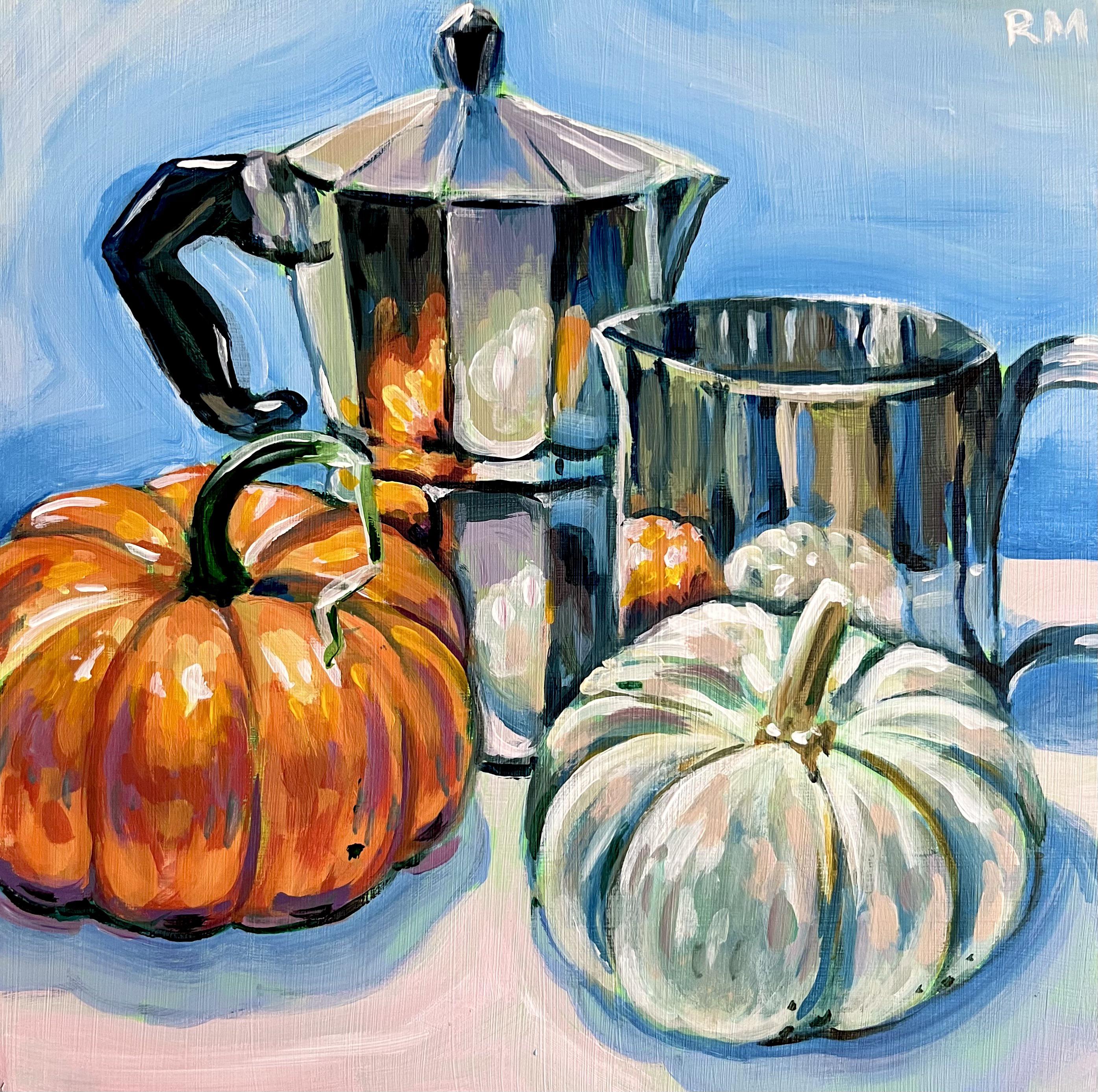
Pumpkins, by Robyn MacCallum.

Recipe below: Moroccan Chicken with Pumpkin, Dates, and Almonds

The burden of pumpkins. Why do they grow so many? Just for us to smash or carve out and then throw away? Hardly anyone actually cooks with pumpkins; when people make pumpkin pie they almost always use canned. The pumpkin crop in the Northeast seems crazy to me. How many ornamental pumpkins can one household have? Three, four? To keep on display until they collapse into a mush of rot? Then even the deer won’t eat them. I’m sad for all those pumpkins, and I feel it’s my duty as a cook to try my best to cook something with them. Being so into Moroccan cooking lately, I thought a tagine would be a good idea. When I cooked at Florent, we always added pumpkin or butternut squash chunks to our couscous, and it was delicious.

My new recipe here is a mellow tagine. No preserved lemon, or olive, or caper. No sharp edges. I let the warm spices do all the talking. I did, however, add a few drops of sherry wine vinegar at the end to balance the sweetness of the dates. You might want to do that, too. Taste at the end of cooking, and see what you think.

Most people, if they cook pumpkin at all, roast it. It’s hard to skin, but I don’t care. I really like doing it, and I have sharp knives. If you don’t want to skin and cube a pumpkin, you can absolutely use butternut squash instead, which is much easier to deal with, and if you get one from a farmer’s market right now it should be excellent. Pick one with a long neck and just use that part, which is easiest to skin. Save the bulby end for roasting.
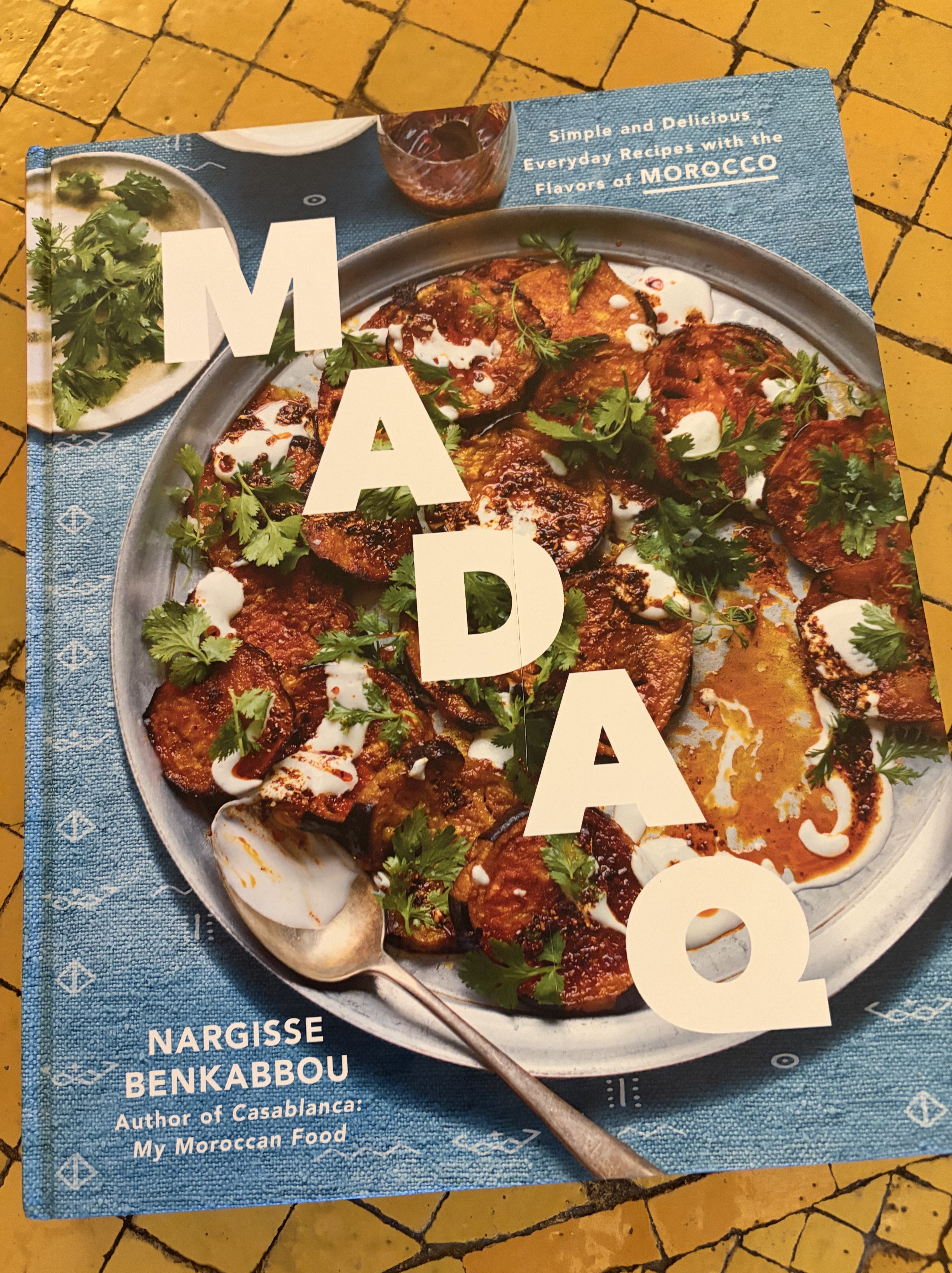
As you probably know, Paula Wolfert is my cooking idol. She introduced me to the beauty of Moroccan cooking. I return to her books often. But I’ve just discovered a new Moroccan book written by Nargisse Benkabbou, a daughter of Moroccan immigrants who now lives in London. It’s called Madaq, which means flavor in Moroccan Arabic. The book is filled with traditional and contemporary takes on Moroccan cooking, and almost every recipe looks good.

She offers her version of a classic tagine makfoul, which is lamb braised with ginger, turmeric, and cinnamon and then covered with thick slices of sweet onion and tomatoes. It looks beautiful, and I’ll be trying it soon. And I’m going to try m’semen, a traditional skillet flatbread, which she stuffs with herbs and cheese.

When she goes nontraditional, most of her ideas make sense, like when she takes the classic chicken tagine with preserved lemon and olives and turns it into a quick sheet pan dinner. I can see that. No longer a tagine, but the spirit is there.

Since I’m already in love with Moroccan food, I expected to take away something good and new from this book—I love expanding my knowledge of traditional Moroccan cooking—but I didn’t expect to be so drawn into her contemporary recipes. I love the idea of her harissa Caesar salad with roasted chickpeas, and of her cumin and paprika roasted carrots with almonds, olives, and herbs, served over yogurt, which I plan to try as soon as I get a beautiful bunch of Greenmarket carrots.

She also gives us a bunch of interesting spice and herb mixes. I had never made a completely raw green harissa before, and I zeroed right in on her recipe, making it the day I bought the book.
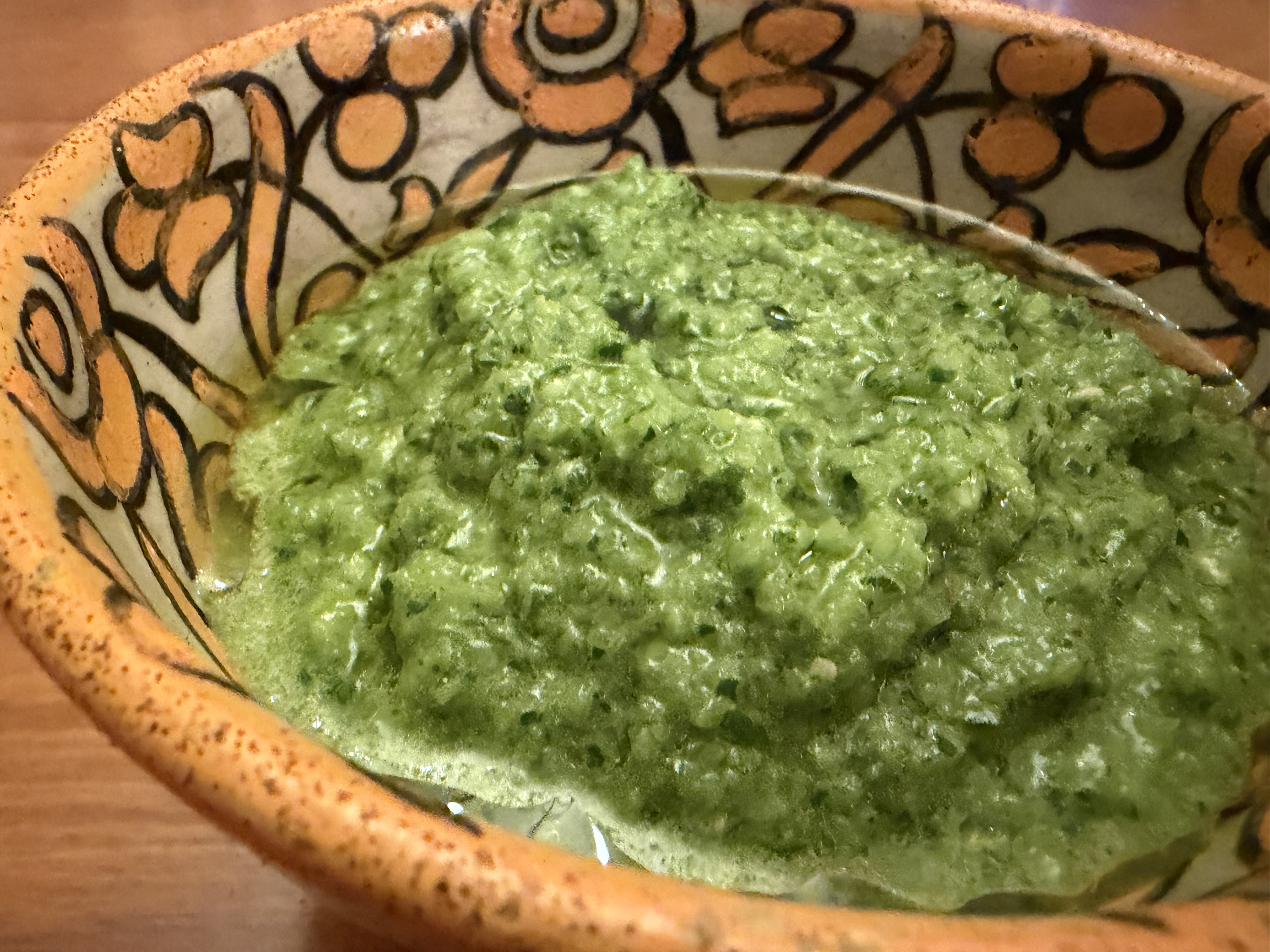
Here’s my version of Nargisse’s green harissa: She calls for all jalapeño, but I used three jalapeño, one poblano, and one Italian frying pepper, just because I had them in the fridge and needed to use them up. They all get roughly chopped. Next you want  a big handful of Italian parsley and a few big sprigs of mint (she uses cilantro, which unfortunately makes me gag), one chopped garlic clove, about a teaspoon of freshly ground cumin, some salt, and about a teaspoon of sugar. Everything goes in the food processor. I drizzled in about ½ cup of good olive oil and then whizzed it all smooth. Took about 5 minutes to make, and it was absolutely delicious.
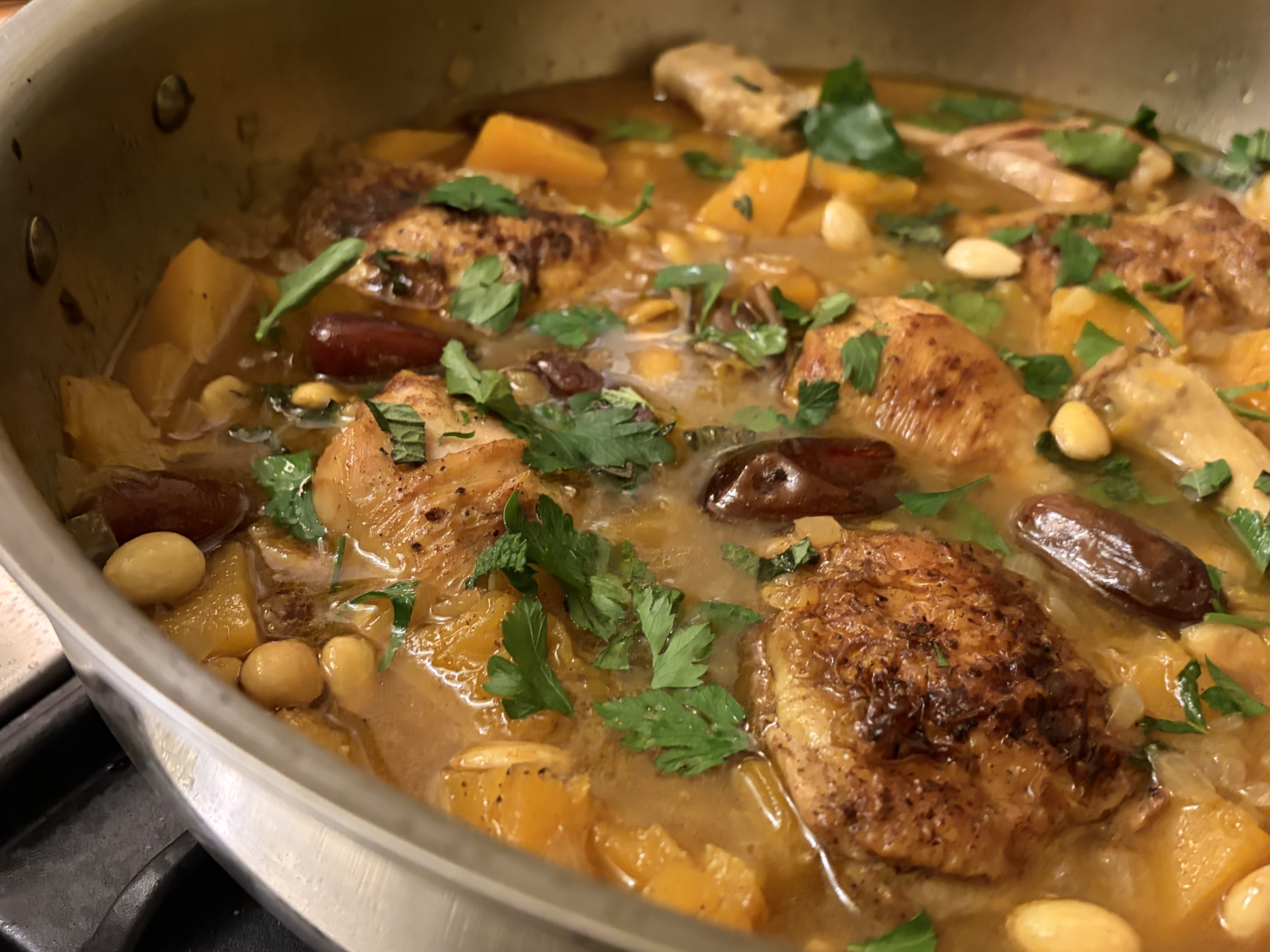
Moroccan Chicken with Pumpkin, Dates, and Almonds

This is not from Madaq, but just something I made up.

For the spice mix:

1 teaspoon each: dry ginger, turmeric, cinnamon, coriander, sweet paprika, black pepper

For the rest:

4 chicken legs, separated into thighs and drumsticks
Sea salt
Extra-virgin olive oil
1 large sweet onion, chopped
2 fresh bay leaves
A big splash of dry white wine
1 cup chicken broth
3 cups pumpkin or butternut squash, cut into 1-inch cubes
20 pitted dates
A big handful of Marcona almonds
A few drops of sherry wine vinegar
5 or 6 large sprigs Italian parsley, the leaves lightly chopped
A few larges sprigs of spearmint, the leaves left whole

Combine the spice mix ingredients. Sprinkle some salt and a tablespoon of the spice mix onto the chicken pieces. Give them a toss.

Get out a large sauté pan with a lid, and set it over medium-high heat. Add a big drizzle of olive oil, and let it get hot. Add the chicken pieces, and brown them on both sides. Pour off some fat if you’ve got too much.

Add the onion and the bay leaves, and cook to soften the onion, about a minute or so. Pour on the wine, and let it bubble to burn off some alcohol. Add the chicken broth. Bring everything to a boil. Reduce the heat to very low, cover the pan, and simmer for about 10 minutes.

Uncover the pan, and add the pumpkin. Sprinkle on the rest of the spice mix, and give everything a little more salt. Continue simmering, covered, until the chicken is just tender and the pumpkin is cooked through but not falling apart, about another 20 minutes.

Add the dates and the almonds, stirring them in. Turn off the heat, keeping the cover on, and let the pan sit on the hot burner for another 10 minutes. This will allow the dates to soften just a bit but not become mushy.

Taste the tagine for seasoning, adding a few drops of sherry wine vinegar to bring up the acidity.

Add the parsley and mint.

I served this with saffron-scented rice, but couscous or good bread would also be nice.
Read Full Post »

Moroccan Chicken Tagine Recipe, by Lucileskitchen.

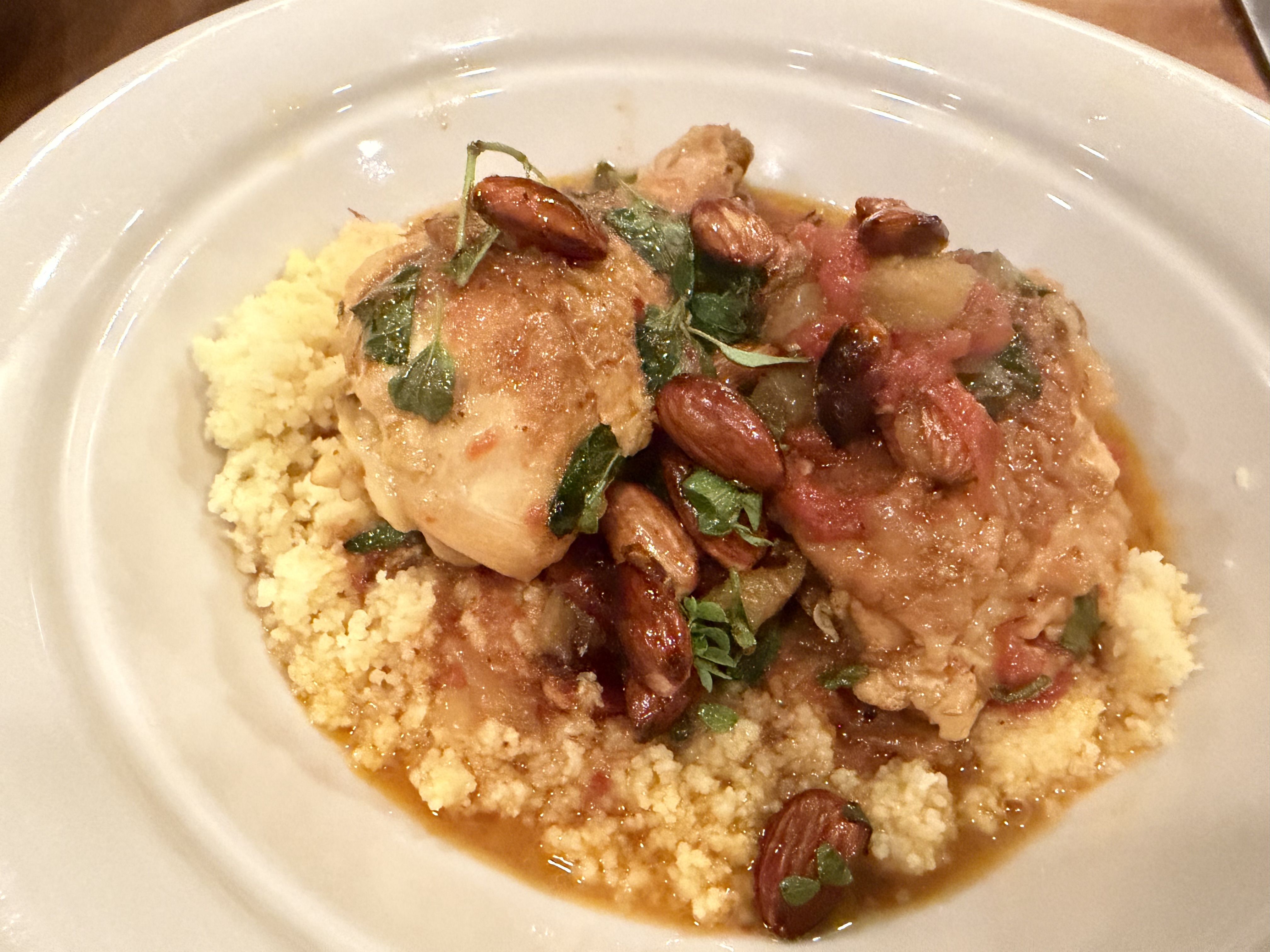
Recipe below: Moroccan-Style Chicken with Eggplant, Tomato, and Almonds

I was trying to figure out something deep and exciting to do with the last eggplants and tomatoes of the season when I recalled this mix: chicken, eggplant, tomato, almonds, and a big assortment of spices. Sounds good, doesn’t it? The sweet memory was from a recipe I used to make from Paula Wolfert’s The Foods of Morocco. She was my kitchen hero when I first started out, and I still think of her often. Much of my cooking style I picked up from her, especially when I needed to branch out from my family’s Southern Italian flavors (I love all those flavors, but sometimes a cook’s got to mix it up, you know what I mean?). She let me breathe in something new but not so far away culturally.

I went back to look at her recipe, and it still looks good. However, it wasn’t exactly what I wanted right now, so I changed up the spices and added two herbs I’ve still got plenty of in my garden, marjoram and spearmint (actually my mint variety is called berries and cream, a lovely, not-too-sharp, dark green, mellow mint that’s great in drinks, too). I especially liked the way all the spices and herbs blended with the eggplant and tomato, which formed a thick sauce for the chicken.

So scroll down to a cool-weather dish made with some of summer’s grand finale. Get it while it’s hot.

I have one thing to point about how I prepared the dish: I didn’t cook it in the classic Moroccan tagine way. First, I left the skin on the chicken and browned the pieces before braising them. Moroccan cooks would usually remove the skin. Also, I sautéed the onions and garlic along with the spices, letting them open up. That is European style and the way I prefer to cook. Moroccan cooks would more likely put onions, spices, meat, and liquids in the pot all at once and leave everything to slow simmer.  I guess my approach is more in the Parisian Moroccan style.

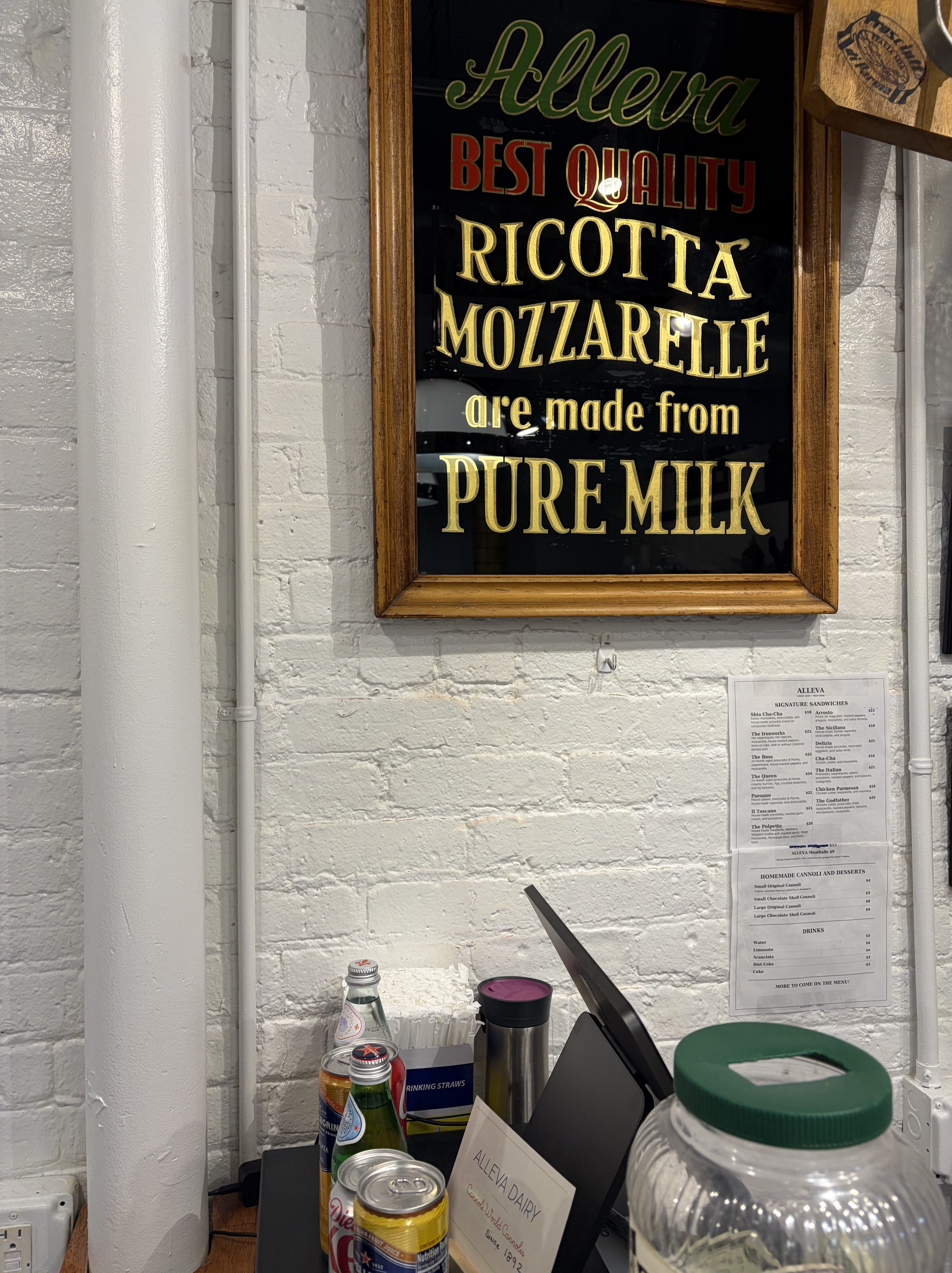
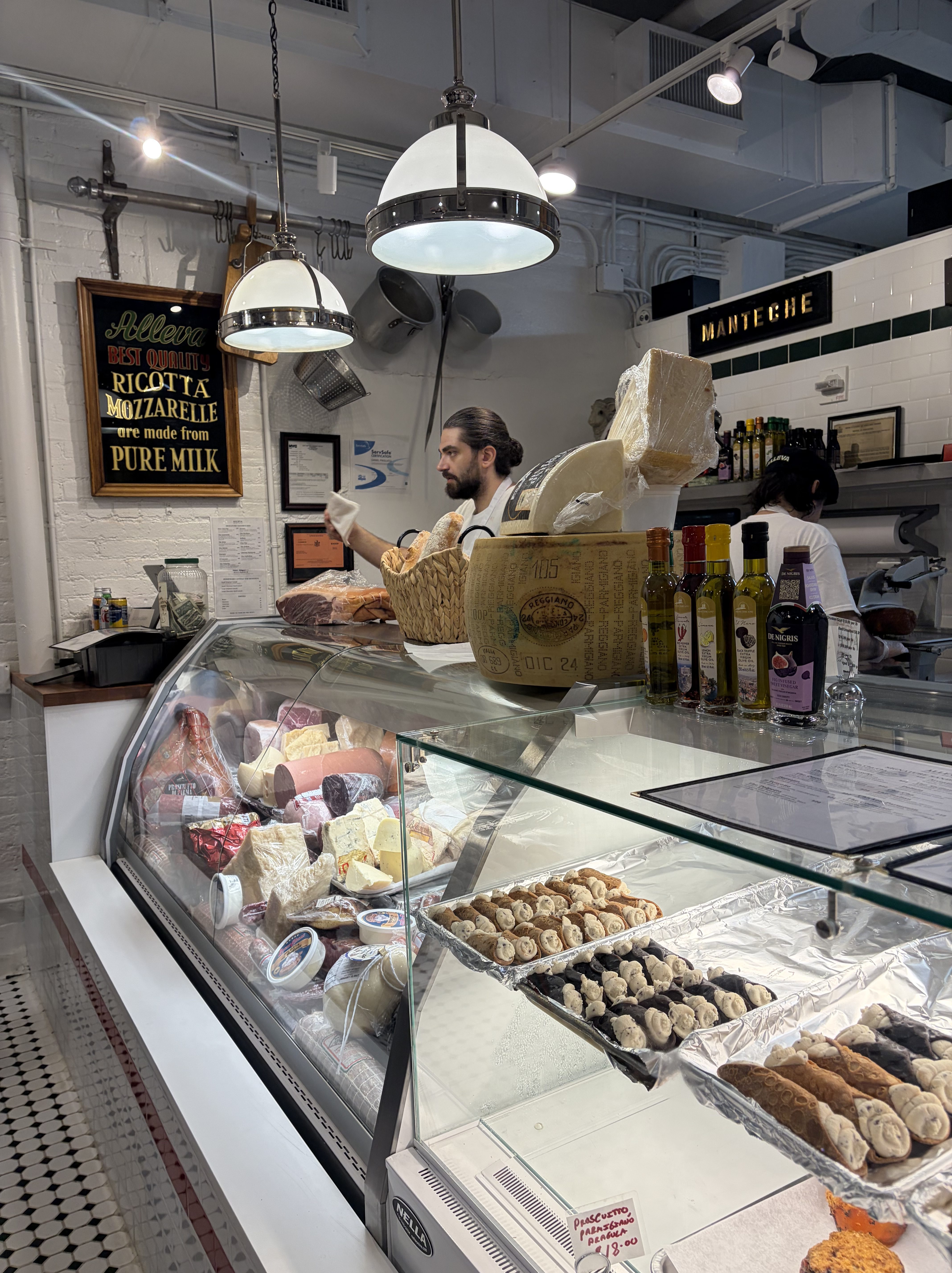
Alleva at Chelsea Market.

Meanwhile, anyone out there who remembers Alleva Dairy on Grand Street may be interested to learn that they’ve just opened a branch at Chelsea Market.

As you may recall, Alleva’s lovely little shop was on Grand and Mulberry, right down the block from Di Palo. It opened in 1892 and was known as the oldest cheese shop in America. I used to go there all the time for their house-made mozzarella and ricotta, fresh pasta, all sorts of salami, and, most important, for their friselle, the tooth-cracking lard-and-black-pepper biscuits my mother always placed in the bottom of the bowl of her Christmas Eve zuppa di pesce. I haven’t been able to find those things anywhere else, and they don’t have them in the new Alleva shop. Alleva had a hard time during Covid and closed in 2023 and moved to New Jersey.

Now they’ve showed up at Chelsea Market. An odd choice, considering that Buon’Italia, an incredibly well-stocked Italian food store, thrives on the bottom floor, where almost all the serious food shopping now happens. Alleva is on the main floor, next to Anthropology and Moscot eyeglasses. There’s not much in the new store, at least not yet. There is some cheese and salami, and there are meatballs. I heard one of the shop people talking about chicken “parm,” but I didn’t see any. They have cannoli. I don’t understand the place. I can only imagine that in opening in a place already filled with first-rate Italian food they wanted to get in on the nostalgia for all things Italian American, figuring that tourists want meatball heroes, chicken “parm,” and cannoli. That’s what it looks like to me.

Moroccan-Style Chicken with Eggplant, Tomato, and Almonds

For the spice mix:

1 teaspoon each of freshly ground Espelette, turmeric, fennel seed, cumin,  coriander seed, and dry ginger

For the rest:

4 chicken legs cut apart into thigh and drumstick
Salt
Extra-virgin olive oil
3 tablespoons unsalted butter
1 sweet onion, cut into small dice
1 garlic clove, peeled and lightly smashed
A big splash of dry vermouth
1 cup chicken broth
2 round summer tomatoes, peeled and chopped
1 large eggplant, stripe-peeled and cubed
1 tablespoon honey
A handful of Marcona almonds, lightly toasted, or regular whole almonds, blanched or not
6 sprigs marjoram, the leaves lightly chopped
6 sprigs spearmint, the leaves lightly chopped

Mix all the spice mix spices together in a small bowl.

Get out a large sauté pan, and set it over medium heat.

Season the chicken with salt and a few big pinches of the spice mix.

Add a big drizzle of olive oil and a tablespoon of butter to the pan. Add the chicken, skin side down, and let it brown, about 5 minutes. Turn it over, and scatter on the onion and the garlic. Sprinkle the rest of the spice mix over it, and cook until the onion starts to soften, about another 5 minutes. If you’ve got a lot of fat in the pan, drain some off.

Turn the pieces over again, and splash on the vermouth, letting it bubble away. Add about ½ cup of the chicken broth and all the tomatoes, bring to a boil, and then turn the heat to low, cover the pan, and simmer until tender, about 30 minutes.

While the chicken is cooking, get out another sauté pan, and drizzle in about a tablespoon of olive oil. Add the eggplant, seasoning it with a little salt, and sauté until it’s lightly browned and tender, about 7 minutes or so. Add it to the chicken pan, mixing it in. Drizzle in the honey, and add the rest of the butter.

When the chicken is tender, add the almonds and most of the marjoram and spearmint, holding back some of the marjoram and spearmint for garnish.

This dish should feel saucy. If you need to loosen it, add the rest of the chicken broth. Check for seasoning, adding more Espelette if you want more heat.

Serve with couscous seasoned with chicken broth, butter, and a touch of ginger.

Read Full Post »

Morel Mushroom Painting, by Devan Horton.

Recipe below: Braised Chicken with Morels and Marsala; also, in the text, how to make Japanese Turnips with Butter and Thyme

I haven’t yet found any morels growing in the ground here in Dutchess County, New York, but they’re selling them at Citarella for a shockingly high price. Here’s the good news, though: Since morels are hollow and therefore deceptively light, they never add up to the exorbitant expense their by-the-pound price would suggest. This is really worth remembering.  

Buying morels this year reminded me of something my old cookbook editor Maria Guarnaschelli said to me when I was working with her on my first book. She said never mention anything about price when you’re writing about food. That’s not your job. It’s demeaning to the reader. Peculiar thing to say, I thought, since I always figured it should be part of my job to talk about how much ingredients could cost, if it seemed relevant, like now, for instance. I’m not sure what her thinking was, maybe wanting to appeal to the highest common denominator of cookbook readers in some snobby way. She brought this up several times and was pissed I hadn’t listened to her the first time. Maria was frequently pissed by a lot of things and not always fun to work with. Many of her reprimands, as a result, kind of blew by me. That was a while ago, and now I’m free and on my own and able to pass on any type of cooking wisdom to you. So remember, morels are never as expensive as they seem.

Chicken with morels is a classic dish I try to make at least once every spring. This version, with dry Marsala, I thought came out particularly well, so I’m passing it along. I also recently took the same morel sauce I used here for the chicken and tossed it with fettuccine, adding fresh peas (you could add favas instead, or asparagus tips). You might want to give that a try too.

And if you’re in the mood for another good spring cooking experience, do yourself a favor and get your hands on a bunch of Japanese turnips. They’re in season now. The things are really delicious, and they have no bitterness. In fact they’re sweet. I got mine from Migliorelli Farm at the Union Square Market, but many farm stands have them this time of year. What I did to prepare them was to peel them, cut the big ones in half and leave the little ones whole, sauté them in butter, adding a splash of dry vermouth and some salt and black pepper, and then cover the pan until they were tender, which took about 8 minutes. Then I added fresh thyme. I served them along side my morel chicken. It was a very good combination.

Braised Chicken with Morels and Marsala

4 whole chicken legs, separated into thighs and drumsticks
Salt
Black pepper
A few big scrapings of nutmeg
2 tablespoons unsalted butter
Extra-virgin olive oil
2 shallots, cut into small dice
15 morel mushrooms, cut in half lengthwise if large, otherwise left whole
2 fresh bay leaves
6 sprigs thyme, the leaves lightly chopped
½ cup dry Marsala
1 cup homemade chicken broth
½ cup crème fraîche
A few drops of champagne vinegar

Season the chicken with salt, black pepper, and a little nutmeg.

Get out a large sauté pan fitted with a lid, and set it over medium-high heat. Add the butter and a drizzle of olive oil. When it’s hot, add the chicken, and brown the pieces on both sides. Take the chicken from the pan, and stick it on a plate or something that will catch the juices.

If you’ve got a lot of fat in the pan, pour some of it off, but leave a few tablespoons for flavor. Turn the heat to medium, and add the shallots to the pan, sautéing them for a minute. Add the morels, the bay leaves, and the thyme, and cook until everything is aromatic and starting to soften.

Return the chicken to the pan, along with any juices it may have given off. Add the Marsala, and let it bubble for a few seconds. Add the chicken broth, and let everything come to a boil. Turn the heat to low, partially cover the pan, and cook until the chicken is just tender, about 25 minutes.

Take the chicken from the pan again. Add the crème fraîche to the pan, stirring it in over medium heat until it reduces slightly and forms a good sauce, adding a few drops of champagne vinegar, if needed, to bring up acidity. Return the chicken to the pan, and spoon the sauce over it. Serve hot. I served it with orzo, but rice (wild maybe) would be nice, or just some good bread.

Read Full Post »