Feeds:
Posts
Comments
A poster with a calzone on a maiolica plate.

Recipe below, in text: Calzone with Scamorza and a Spring Herb Pesto

The word calzone doesn’t immediately make me think warm weather cooking. It reminds me more of being a broke, hungry 20-year-old, on a freezing day in downtown Manhattan, urgently needing to get hold of the most filling food I can find for the smallest amount of cash. Industrial prosciutto, dough, dripping ricotta, all in a hot, oily package. I worshipped the calzone back then. Still do, but maybe not as desperately.

National Calzone Day is November 1.

A calzone is not a thing of elegance (the word means pants leg, which kind of sums up its clunky look and feel), but as I was thinking about new dishes to make with all the herbs now exploding in my garden, I thought, why not a calzone? Why not lighten one up with fresh greenery?

My Italian parsley was growing fluffy and deep green, and it became the anchor for the pine nut–heavy pesto that got smeared inside my calzone. The rest was just Southern Italian knowhow, meaning I chose my cheeses wisely.
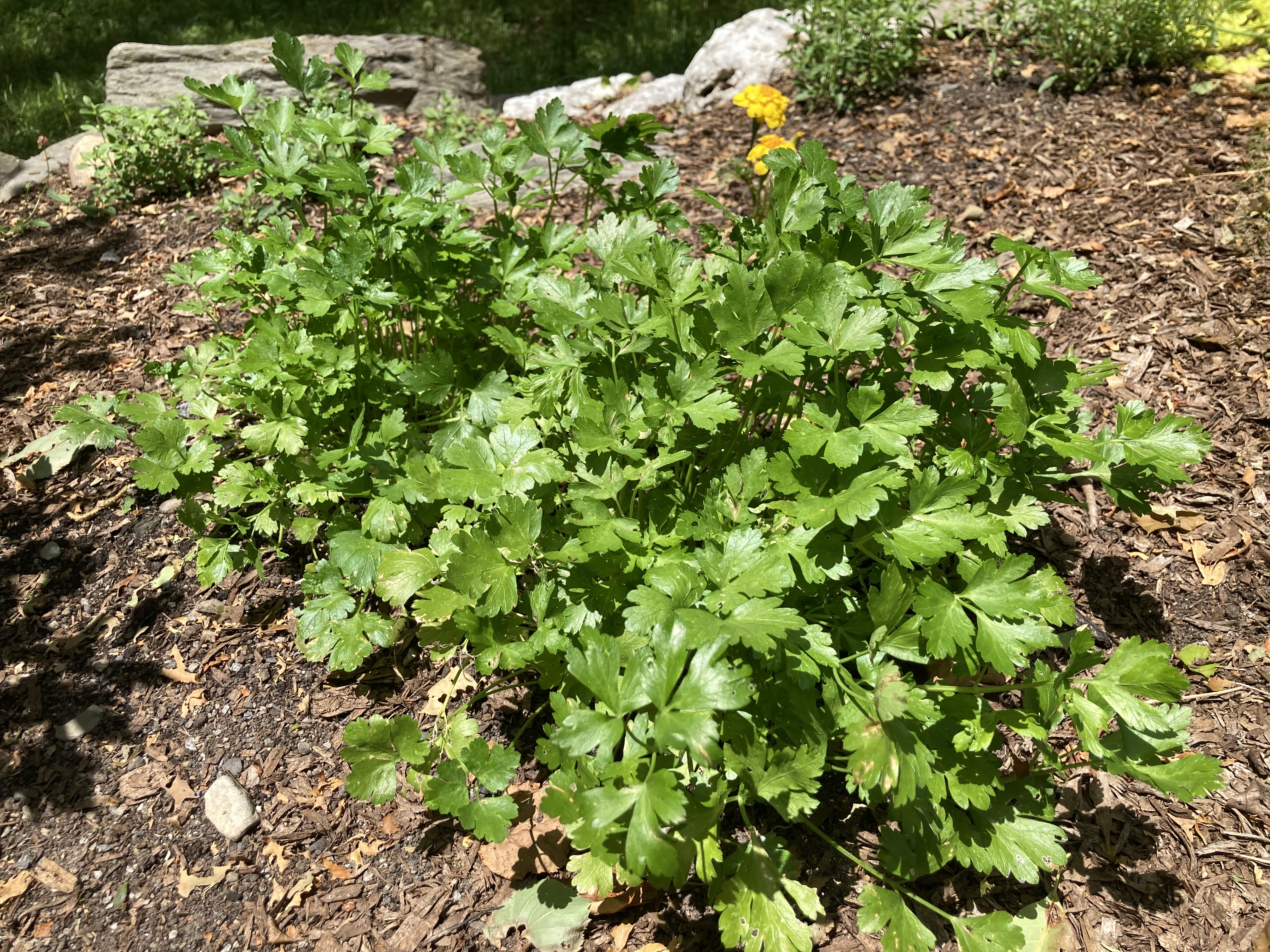
My parsley.

And speaking of Southern Italy, I always knew the calzone had been born in Napoli, since it’s basically a folded over pizza. It completely makes sense to me as a possibly unintended creation. I’ve inadvertently created many calzoni when shooting a pizza with a little too much force off its peel and onto the back of the oven, making a folded up but deliciously messy pocket. This may have also happened in Naples sometime in the eighteenth century, when the calzone became the perfect, self-contained street food.

In New York it was always a pizza shop option, and when a slice wasn’t enough I’d chose the calzone. In my experience, the New York versions were larger than Southern Italian ones, which is typical of Italian-American food in general, where more is somehow considered better. I certainly felt more was better as a starving 20-year-old.

For this version of calzone I went with a no-knead dough that spent an overnight in the refrigerator. It was soft but not hard to work with. I just pressed it out with my fingers into a round.

My calzones.

To make the dough, shake a package of dry yeast into a large bowl. Add a cup of warm water (110 degrees is ideal), a tablespoon of honey, and 2 tablespoons of extra-virgin olive oil. Give everything a stir, and let it sit and bloom. That should take around 6 minutes. The surface should be a little bubbly.

Add 2½ cups of regular flour and about a teaspoon of fine sea salt. Stir everything around with a spoon until it comes together into a sticky ball, adding a little more flour if needed to make it easier to handle. The dough will be soft. Turn the dough out onto a floured surface, and form it into a ball.

Get out another bowl, and coat it well with olive oil. Drop the dough ball into it, turning it around once or twice to coat it with oil. Cover the bowl with plastic wrap, and stick it in the refrigerator overnight and into the next day, for at least 18 hours. By then it should have doubled in size.

Turn the dough out onto a floured surface, and punch it down. Divide it into four pieces, and roll each piece into a ball. Place the balls onto a floured surface, and let them sit, unrefrigerated, for about an 1½ hours. By then they will have puffed up a bit.

In the meantime, make the pesto. You can use whatever herbs you have or like, but what I did was grab a handful of parsley and basil leaves, a smaller one of tarragon, and 2 lovage leaves, about 2 cups in all. I blanched them for about a minute in boiling water and drained and then shocked them in cold water to set their bright green color. When you’ve done that, squeeze out most of the water. If you want to include stronger herbs such as rosemary, thyme, sage, savory, or oregano, use only a little and bulk them up with basil and/or parsley.

I put a palmful of pine nuts, along with 1 spring garlic clove, into a food processor and pulsed a few times. Then I added the blanched herbs, salt, and good Sicilian olive oil (about ½ cup), processing until it was all fairly smooth.

Then I put about 2 cups of whole-milk ricotta into a bowl, added a cup of grated scamorza cheese, salt, black pepper, a  few scrapings of nutmeg, and a drizzle of olive oil, mixing it all together well. If you can’t find scamorza, caciocavallo is similar and will make an excellent substitute.

About an hour before you’d like to cook your calzoni, put a pizza stone in your oven, and turn the heat up as high as it goes.

Pour about ½ cup of good olive oil into a small bowl. Add a pinch of sugar and a more generous pinch of salt. Stick a pastry brush into the bowl, and keep it nearby.

When your oven is hot, flour a work surface, and press out one of your four dough balls to about a 6- to 7-inch round. Flour your pizza peel, and transfer the dough round onto it. Smear pesto all over the dough, leaving a little rim around the edges. Blob some of the ricotta mix onto one side, smoothing it out. Fold the dough over into a half moon, and crimp the edges.  

Brush the top of the calzone with the olive oil mix, and slide it on to the stone. With this method you really can bake only one at a time. Bake it until it’s golden brown. This will take about 7 or 8 minutes, depending on how hot your oven is.  I like eating these just out of the oven, with a glass of dry Italian white wine, such as a Greco di Tufo. They also reheat well.

Note: If you don’t have a pizza stone, just prep each calzone on an oiled sheet pan, and stick the pan in your hot oven. The stone will give you a quicker cook time and a crunchier crust, but both ways work fine. Just leave the calzone in until it’s good and brown.

Farm Garden, Gustav Klimt, 1907

So far my herbs looks pretty good. Perennials that never acted like perennials in the past have decided to. Fennel and tarragon have reemerged for the first time ever. That is exciting. The more predictable perennials are out and doing well, too. Those would be sage, thyme, borage, oregano, rue, chives, salad burnet, mentuccia, lovage, and all my mints. Other stuff—rosemary, marjoram, parsley, summer savory—I had to plant fresh.

Fennel, top left: big and fluffy.

I have a bay laurel bush I bring indoors for the winter and out again every spring. This year when I brought it out it got attacked by gypsy moth caterpillars, but I sprayed it with something called Monterey B.t., and that seemed to help. I just hope it stays helped.  I don’t want to spray it again. I get so upset when bad things happen to my herbs. My basil—Thai, Genovese, and opal—are all completely screwed, eaten down to the dirt line. I can hardly see what’s left. I tried both Neem oil and a vinegar-water mix. There’s some type of bug that I can’t see chewing on all three types. It’s making me crazy. Now I’ve decided, without knowing if it can be effective or not, to surround the basil with hot chili plants, thinking they might deter whatever or whoever is assaulting them. Desperate. If anyone out there knows of a real solution, I’d be grateful to hear about it.

My lovage seems to grow an inch an hour.

That’s it for now. I’m thinking about making a ricotta–and–spring herb calzone, maybe using parsley, marjoram, savory, basil (if it ever comes back), spring garlic, and possibly some scamorza. I’ll play around with the idea. If it comes out nice, I’ll post the recipe.

Happy spring cooking to everyone.

The Maiden, by Giovanni Boldini.

Recipe below: Gnudi with Nettles and Ricotta, Dressed with Bay Leaves and Butter

When I first started out on my cooking journey, I found myself setting up the kitchen for a bistro on 42nd Street. The place was called Chez Josephine. I was actually employed at Restaurant Florent in the Meatpacking District at the time, which would have been in 1985 or ’86, I can’t remember exactly. Back then it was still a real meatpacking district, with butchers in stained aprons and swinging carcasses on Gansevoort Street. Florent was friends with Jean-Claude Baker, an informally adopted son of Josephine Baker, who was opening the place as a tribute to his “mother.” Florent sent a few of his people over to help him out.

Jean-Claude was heavy into atmosphere, 1930s Paris, red walls and drapes, thrift shop chandeliers, unheated bathrooms, huge banana skirt paintings of his “mom.” It was a tight space, a tad oppressive, but in a cozy way. Along with Laura, another Italian American cook from Florent, I got to work figuring out a menu. Jean-Claude wanted retro—duck confit, lots of endive, frites, hunks of Roquefort, tough, bloody steaks.  Laura wanted gnudi, which I had heard about but hadn’t yet cooked for myself. She showed me that it was just balls of standard ricotta-and-spinach ravioli filling, boiled up and then warmed through in either butter-and-sage or tomato sauce. Gnudi is a Tuscan specialty, named for the fact that it’s a pasta-type thing but not covered with pasta. In other words, it’s nude. I immediately understood the concept. The gnudi was a hit, blending effortlessly with all the oldie French stuff. Laura stayed on to become the chef there for a while. I went back to Florent.

So gnudi came into my life at Chez Josephine. It’s  an odd dish, clunky yet elegant, a good addition to my repertoire. After my stint at Chez Josephine I made it a lot at home, until I burnt out on it. Then it disappeared from my rotation completely, until a few days ago, when, as I tried to figure out something new to make with all the nettles shooting up in my yard, a vision of nettle gnudi passed before my eyes.

It’s a springtime race with nettles. You’ve got to use them young before they go harsh. I’d already made soups, one smooth, one chunky with potatoes, and nettle fettuccine, and nettle pesto, and a nettle and spinach torta. Nettle gnudi seemed like a good idea, and it turned out be a really fine one, with a bit more depth and more sharpness than plain spinach. If you don’t have access to nettles, you can use Swiss chard leaves, or the usual spinach, or lamb’s quarters (which I see in Manhattan growing out of sidewalk cracks; maybe that stuff’s a little too pissed on, but you can also find lamb’s quarters at farmers’ markets this time of year). And since I have a bay laurel bush, I switched out the usual sage for bay leaves, with, I think, good results.

Gnudi with Nettles and Ricotta, Dressed with Bay Leaves and Butter

1 medium bunch of nettles, about 6 or 7 long stems, grabbed and cut while wearing gloves
1 ½ cups whole milk ricotta, drained if it’s watery (I used a sheep’s milk type I found at Citarella, which was was dense, with a slight tang to it; any good whole milk ricotta will be fine)
1 large egg
About ½ cup regular flour, plus more for rolling
¾ cup grated grana Padano cheese, plus extra for the table
A big pinch of allspice
Salt and coarsely ground black pepper
1 stick unsalted butter
1 fresh garlic clove, peeled and lightly smashed
6 or 7 fresh bay leaves (not California bay)

Get a medium pot of water boiling, and add the nettles. Blanch for about 2 minutes. This will immediately take care of their stingers. Drain them, and then run cold water over them, to set their green color. Pull the leaves from the stems, and give the leaves a squeeze to remove most of the moisture. Chop the leaves well, and put them in a medium-size bowl.

Add the ricotta, egg, flour, grana Padano, allspice, and salt and pepper, and mix well, adding a little more flour if it all seems too loose. However, you’ll want to add as little flour to the mix as possible, to keep the gnudi light and tender.

Get out a large sheet pan and dust it with flour.

Flour your hands, and then, using a tablespoon, scoop out some gnudi dough and roll it into a ball in the palm of your hands. I usually wind up with balls about 1 inch across. Repeat with all the dough, putting it on your baking sheet as you go and making sure the balls don’t touch. If you keep your hands well floured the whole time you won’t have a problem with sticking. You can put them in the refrigerator if you’re not using them right away.

When you’re ready to cook the gnudi, get out a large, wide pot. A wide surface area works best so you can cook a lot of gnudi together without crowding.  Fill it with well salted water and bring it to a boil.

While the  water is coming to a boil, get out a medium saucepan, and set it over medium flame. Add the butter, the garlic, a little salt, and the bay leaves, and heat until everything is melted and fragrant.

Add the gnudi balls to the boiling water, and cook them, without moving them around, until they all float to the surface, about 5 minutes.  When they’re all floating, scoop them from the water with a large strainer spoon, letting the water drain off, and gently place them in a large, wide bowl (they’re delicate, so be extra gentle). Pour on the bay leaf butter. Give them a few big grinds of coarse black pepper and a sprinkling of grana Padano. Serve right away.

Poppies from the Union Square Greenmarket, painted by me.

Finally the real deal (above). Tonight I’m making them with guanciale, thyme, butter, and white wine, and tossing them with penne or a shape something like that.

I didn’t buy rhubarb today, but I will soon. I love making a rhubarb compote and then folding in some whipped cream. I guess you could call that a fool.

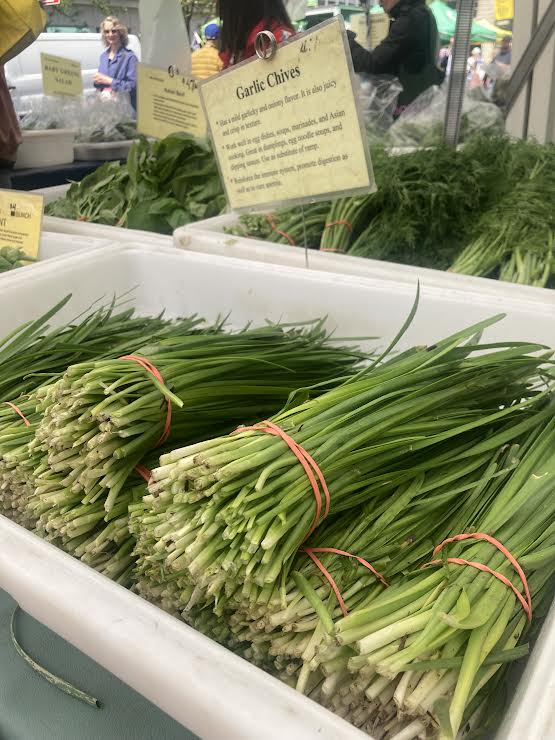
Garlic chives are wonderful in a quick-sautéed olive oil–based pasta sauce. Maybe with shrimp?

I find lamb’s quarters growing out of the cracks in the sidewalks in Manhattan. Maybe they’re a little too dog-pissed to eat, though. I love this stuff and often include it in a wild greens mix I use for my torte. It’s got more character than spinach.

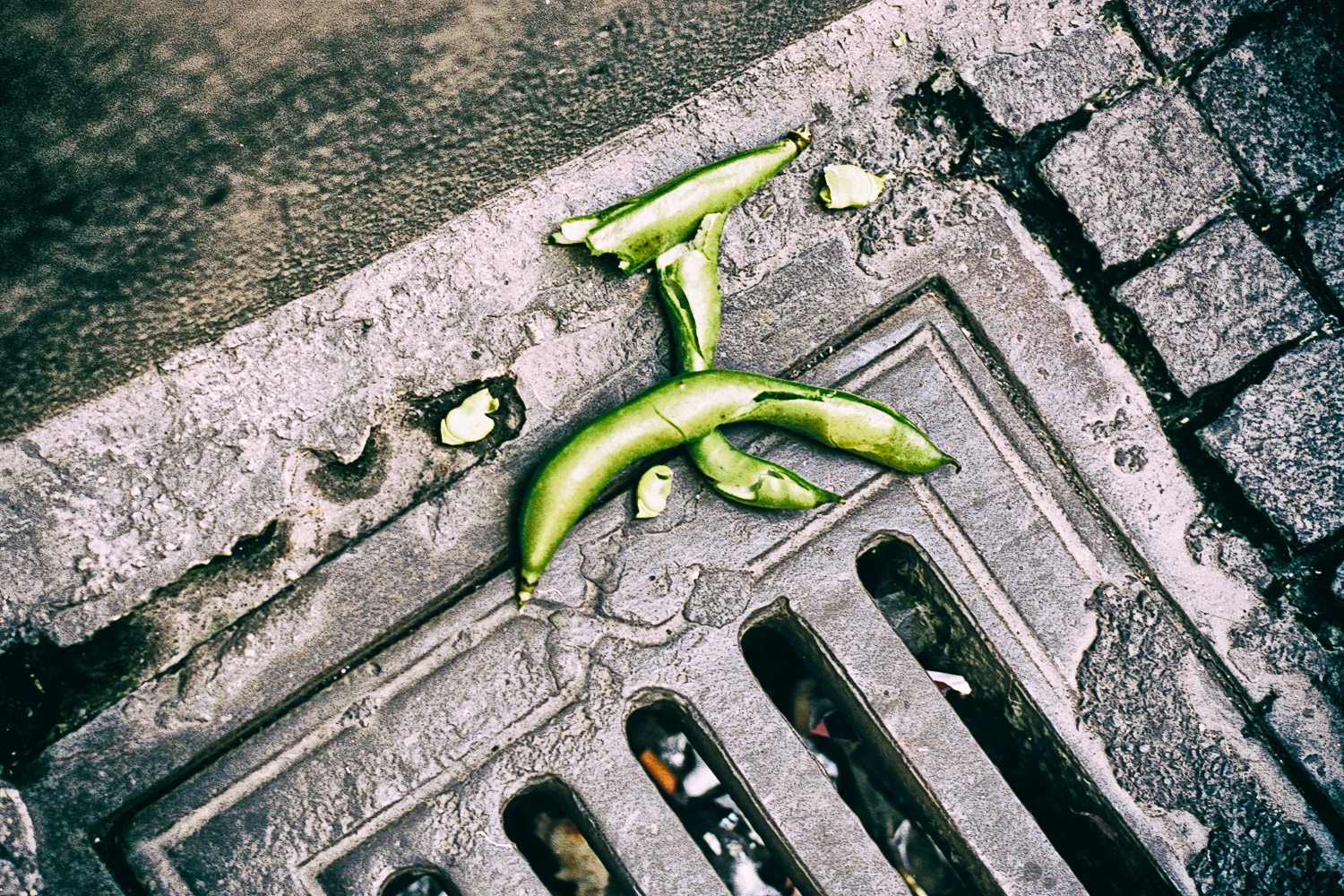
Fava leaves. They are something I’ve never tried, but the suggestion of olive oil and garlic seems right. I’m thinking maybe mix in some ceci, and grate on a little pecorino.

Nettle, by Erica Peebus.

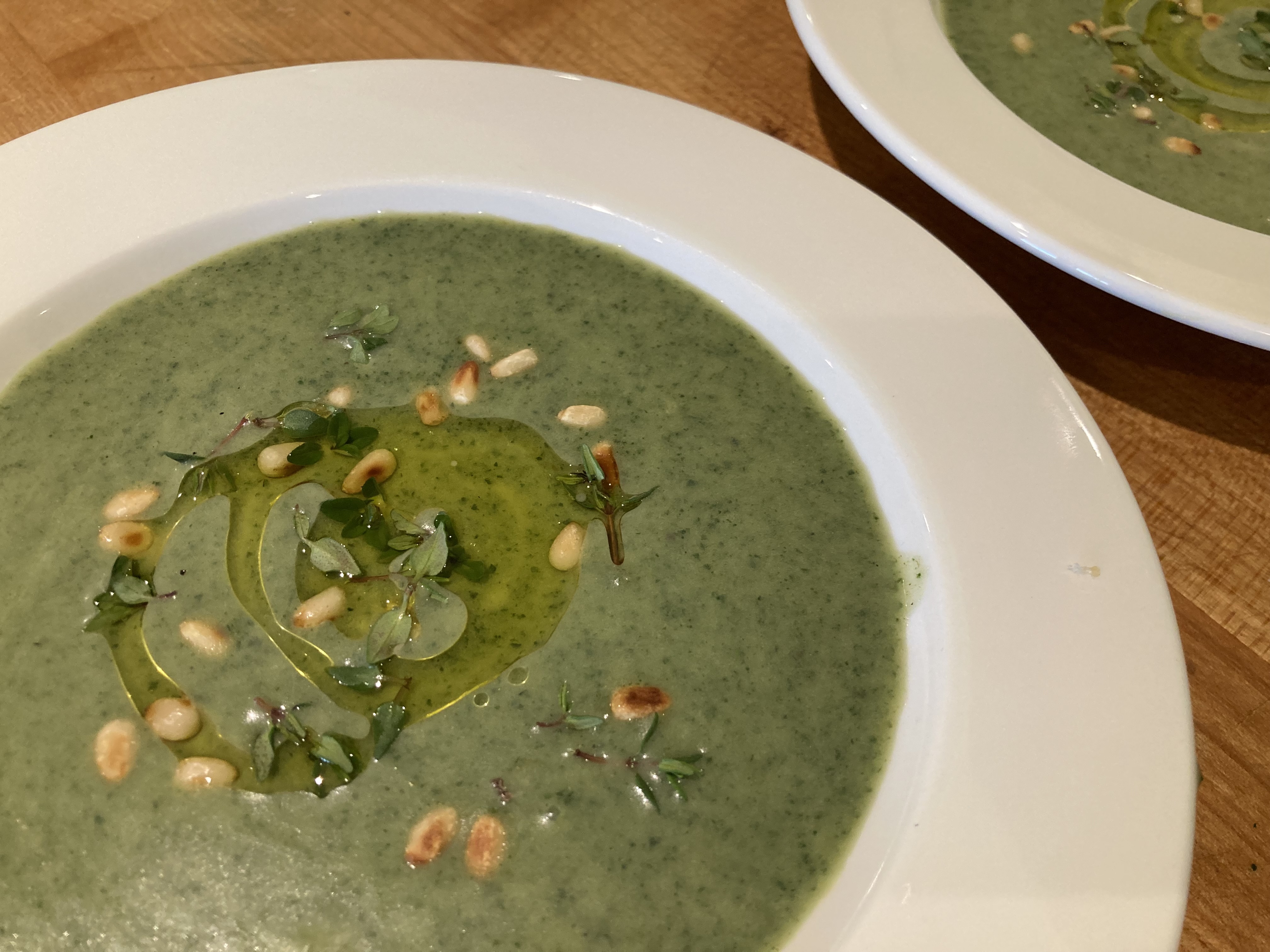
Recipe below, in text: Stinging Nettle Soup with Crème Fraîche, Thyme, and Pine Nuts

Every April a stinging nettle patch reemerges in my upstate yard. It is wider every year, and taller and darker, too. The plant brings up welts on my hands and wrists if I touch it without gloves. No big deal. I like it. Its leaves are deep green with touches of black. They have a taste that is richer than spinach but less puckery on the tongue. Nettles are not for salad unless you want a masochistic mouthful. They want to be cooked, though only enough to tame that sting.

I never paid much attention to nettles until I traveled to Liguria many years ago and learned that cooks there use them in a foraged greens-and-herbs ensemble called preboggion. They stuff preboggion into pansotti, a kind of fat ravioli, and also use it in a pesto and in a chunky soup. The taste and drama of these dishes drove me wild. And then I got back to New York and found I had loads of them growing in my backyard.

Almost always the first thing I cook with my newly sprung nettles is a soup, usually a puréed, smooth one, romantic and dark. This happened a few days ago, and it dug me deep into spring. If you’d like to make my nettle soup with crème fraiche, thyme, and pine nuts, enough for four servings, you’ll need a big bouquet of stinging nettles, harvested while wearing gloves, cutting them off about halfway down their stems. (If you don’t have your own nettle patch, you can usually find nettles at farmers’ markets this time of year. I’ve already seen big bunches at Union Square.)

Bring a pot of water to a boil, and add the nettles, letting them bubble for about 3 minutes. Pour them into a colander to drain, and then run cold water over them, to stop their cooking and set their color. I find this step important. It gives you a bright but deep green soup, as opposed to when you just cook the nettles along with all the other soup ingredients, which leaves them a drabber, olive green color. Give the blanched nettles a squeeze to remove excess water.

Get out a good-size soup pot, and set it over medium heat. Add a big drizzle of olive oil and a little butter. Add a chopped spring onion, a chopped young leek, and two sliced tender inner celery stalks with their leaves. Peel and slice a big baking potato. Add it to the pot. Season with a little salt and the leaves from a few large thyme sprigs. Let it all sauté for three minutes or so.

Add a splash of dry vermouth, and let it bubble away. Add 5 cups of light chicken or vegetable broth. Bring that to a boil. Turn the heat down a notch, and simmer until the potato is very tender, about 8 minutes or so.

While the soup is simmering, pull the nettle leaves off their stems. You can keep some of the most tender stems, but the lower, thicker ones really have to go.

When the potato is tender, add the nettles to the pot. Turn off the heat, and let the soup sit there for about ten minutes. This will allow the nettles to soften and all the flavors to blend.

Purée the soup in a food processor, and return it to the pot. Add about ¼ cup of crème fraîche, stirring it in. Add a bit more salt and freshly ground black pepper. Taste for seasoning, adding a few drops of lemon juice if needed for brightness. Add a little water or broth if you need to loosen it up.

The first night, I served the soup hot, garnished with a swirl of extra-virgin olive oil, toasted pine nuts, and fresh thyme leaves. The next day I served it cold, with just the swirl of olive oil. Both were good.

Fiorella La Guardia on La Guardia Place

I’ve lived in Manhattan most of my life. I’ve seen a lot of things come and go—stores, restaurants, hospitals—and replaced with other things. Strangely, I often can’t recall what was there before the new thing replaced it. Manhattan is so packed with stuff, just walking the streets can mess with my head. Of course the things that mean a lot to me I’ll never forget. Scott’s old apartment, Café Loup. But then, conversely, there are things I’m sure have always been there but it turns out maybe not.

There’s a statue of Fiorello La Guardia, our ninety-ninth mayor, friend of FDR, foe of the Mafia, infrastructure king, on, fittingly, La Guardia Place. Since I’ve always lived in the Village, I’ve been walking past the statue seemingly forever, usually pausing, a little surprised by how short the legs are and how big the head is, deformed looking, actually. He was only five-two, but the statue, in my opinion, looks way out of proportion even for a short guy, and for that reason the thing has always stuck with me.

When I recently passed by it again, I got curious about when it had been put up, thinking maybe in the 1950s, or even earlier, possibly not long after he left office. I was shocked to learn it had gone up in 1994. That couldn’t be right. I was sure I had been walking past the strange, squat hunk of metal at least since I was in high school, in the early 1970s. This was a head fuck that I still can’t get over. The mind works in strange ways, and living in New York City can certainly make my environment feel chaotic.

And here’s another strange fact, or maybe non-fact, about La Guardia that’s personal to me. Many years ago a guy who led walking tours through Greenwich Village told my husband he was pretty sure that Fiorella La Guardia had lived in our building, and not only in our building but in our very apartment, probably around 1918, when he would have been a student at NYU Law School. I was thrilled to have this fact become part of my personal city lore, but I researched further and couldn’t find any solid evidence that it was true. Just this walking tour guy’s remark. You’d think a guy who leads walking tours would know what’s what in his hood, but these people are also known to be embellishers, putting on a good show for the out-of-towners. It certainly could be true. I want it to be. It’s fascinating to think so.

Union Square Tulips in a Blue Vase, by Erica De Mane.

I just got back from the Union Square Greenmarket and can report that there’s still no asparagus. I guess it remains too cold down in New Jersey. But I was very happy to see my first spring garlic shoots. I wait for them all year. They are hardneck garlic planted in the fall and pulled up early, before they have a chance to form cloves. They look like scallions, but their aroma is a strong but clear, fresh garlic one. I love them. This is when I most love to make spaghetti aglio e olio.

Young garlic (and spring watercress).

I also saw mounds of ramps, a New York State alium that is both foraged and, lately, cultivated. I noticed that their price had come down this spring, so I bought a few bunches. Maybe I’ll make a pesto with them. I also love them roasted with olive oil and salt and laid over grilled lamb chops.

Lots of ramps.

Next to the spring radishes, which I’ll serve tonight with good sweet butter and Sicilian sea salt, lay bunches of what turns out to be kale flowers. I have never cooked with them, but I bought some, so I guess I’ll figure something out.

Breakfast radishes and those kale flowers. They smell like kale.
The Senator and the Fava Bean, by Mark Lindsay.

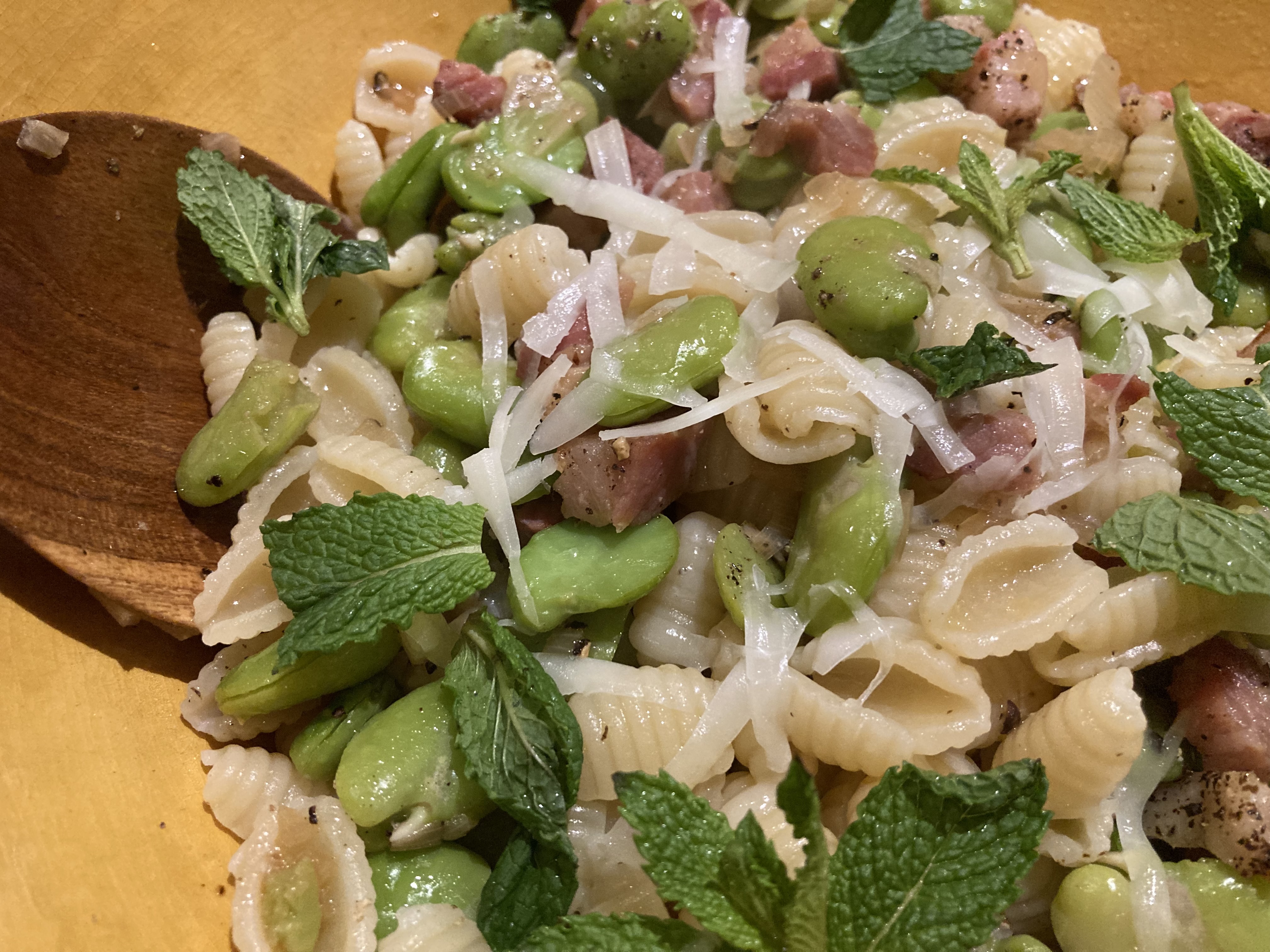
Recipe below, in text: Cavatelli with Fava Beans, Guanciale, Cacio di Roma, and Mint

It’s an Italian cook’s Zen time of year again, the time when fava beans need peeling. It’s got to happen or else the earth cycle isn’t complete. I didn’t grow up with fava beans; I started peeling them when I cooked at Le Madri, in the early 1990s. Alan Tardi, the chef there at the time, would dump a crate of them at my station, and the anxiety would begin. How fast could I shuck, then blanch, and then peel the skin off every single bean by squeezing with my thumbnail until the skin slipped off to reveal the clear green mini bean beneath. With all my effort, maybe  I’d produce enough bald fave to put together ten or eleven appetizers of fava and pecorino before the dish was eighty-sixed for the night. But I sort of loved doing it. The swing of repetition and the pursue of rustic elegance got me hooked on fava beans. From then on I had to blanch and peel fave every spring, maybe not in restaurant quantity, and certainly not in that frantic fashion, but enough to make one or two dishes for my family.

I like creating new cooking rituals to add to my old ones, making my sometimes boring kitchen responsibilities richer. Many Italian Americans confine their kitchen rhythms to expressing nostalgia for their childhoods—like with the flouring, egging, and breadcrumbing routine of cutlet preparation. I really hated helping my mother with that. My hands got so disgustingly gummed up. I like to adopt newish boring tasks. It keeps me on my toes. Fava bean peeling really fits the bill, and I look forward to it every spring.

Here’s a recipe for cavatelli with fava beans, guanciale, cacio di Roma, and mint. To make it for two or three you’ll need 1½ pounds of fava beans in their shells. That sounds like a lot, but once you’re finished with them, you’ll see how little of it is actually bean.

Shell the beans. Then put up a pot of water, and bring it to a boil. Add the beans, and blanch them for about 3 minutes. Pour them into a colander, and run cold water over them to stop their cooking. Let them drain. Now comes the tedious part. Pinch the side of each bean, to break its skin. Squeeze the skin so the bright green bean pops right out. Beautiful color. Do this with all the beans. Have fun.

Take a chunk of guanciale (or pancetta, if you prefer), and cut it into small dice. You’ll want about ¾ cup. Get out a large sauté pan, and set it over medium flame. Drizzle in a little olive oil, and add the guanciale or pancetta. Let it get crispy.

Throw ½ to ¾ pound of cavatelli into a pot of salted boiling water.

Add a chopped spring onion to the guanciale, and let it soften. If you have fresh spring garlic, add a little of that too—but don’t bother if you’ve got only the papery supermarket stuff. Add the fava beans to the pan, and season them with salt. Let them sauté for about a minute, and then add a big splash of dry vermouth, letting it bubble for another minute or so. By this time the fava beans should be tender but still holding their shape.

When the cavatelli is al dente, drain it, leaving some water clinging to it, and add it to the pan, tossing it well but quickly, just to coat everything.

Add a big drizzle of fresh extra-virgin olive oil, a generous amount of coarse black pepper, and a few drops of lemon juice. Pour the pasta into a wide serving bowl. Add a handful of fresh mint leaves (see my note below), lightly chopped if they’re large,  and grate on some cacio di Roma (or another not too strong sheep’s milk cheese). Give everything a quick toss, and serve it out onto two (if you eat a lot) or three plates. Bring the chunk of cacio di Roma to the table for grating.  

About Casa Italiana

Last week I attended a lecture on Giordano Bruno at Casa Italiana Zerilli-Marimò, which is part of New York University. Bruno is one of my favorite pantheists. If you’ve ever been to the Campo de Fiore in Rome, you’ve likely noticed the huge, dark, hook-nosed statue that hovers over the piazza. That’s Bruno. He was condemned to death by the Roman Inquisition and burned at the stake in Campo de Fiore in 1600 for not believing in hell and other accepted notions. He was a philosopher, a poet, and a scientist.  You don’t find a show about Bruno every day, so this was an event.

Over the years I’ve attended many lectures at Casa Italiana, programs on the theater of Eduardo De Filippo, on fashion in Italian film, on Verdi’s childhood, on Elsa Morante’s novel Lies and Sorcery, on the history of trans culture in Southern Italy, and, most recently, a show about music created by Italian military prisoners during World War II. This Italian cultural institution, on West 12th Street in Manhattan, has been run by Professor Stefano Albertini since 1998. I’m astonished by how much stuff Stefano and his crew put together, often three or four programs a week. Most of the programs are free, and you don’t have to be a member to sign up, although if you donate more than $100 you’re considered a member and get first crack at seating and other perks. They also sometimes put out wine and antipasti. It’s a great place to know about if you’re interested in Italian culture. I love it.

A note on mint:

I used spearmint for the dish above. Peppermint, to my palate, is too strong for just about any savory dish. Spearmint when fresh has a beautiful clean aroma and taste. But something happens to it when you heat it. Some chemical is let loose. To me cooked spearmint tastes like caraway seeds. I don’t get the caraway taste when I chew a raw leaf, but I do get it when it’s heated and mixed with onion or garlic. This is not a bad thing, but a little caraway goes a long way in a dish from central Italy.

I always thought spearmint must have some molecule in common with caraway, so I finally looked it up and discovered that yes, it does. Carvone is a member of a group of chemicals called terpenoids. It’s abundant in the oils of both spearmint and caraway seeds, and also of dill. So there’s my answer. I never knew that, but I sure tasted it.

To preserve spearmint’s clean taste with only a touch of caraway, I add it to a hot dish like this pasta at the last minute, and I don’t chop it much. The balance is good.

Woman with Fish, Francois Emile Barraud

I don’t really feel good about serving this to you. I’m sort of embarrassed, it’s so meager, but it’s all I’ve got. I hope you’ll accept it. It’s super fresh. Nothing fancy, but wait ’til you taste this fish. It just might blow your mind. We live on this fish, and we can’t believe how lucky we are.

Asparagus and Figs, by Abra Johnson.

Recipe below, incorporated in text: Asparagus Soup with Montasio, Lemon, and Tarragon or Basil

This is my second asparagus post this year, yet the season has only just got started here in New York. We had snow flurries a few days ago. Who cares? I’m cooking high spring. I make a smooth asparagus soup once or twice each spring. Smooth green soup, it never disappoints me.

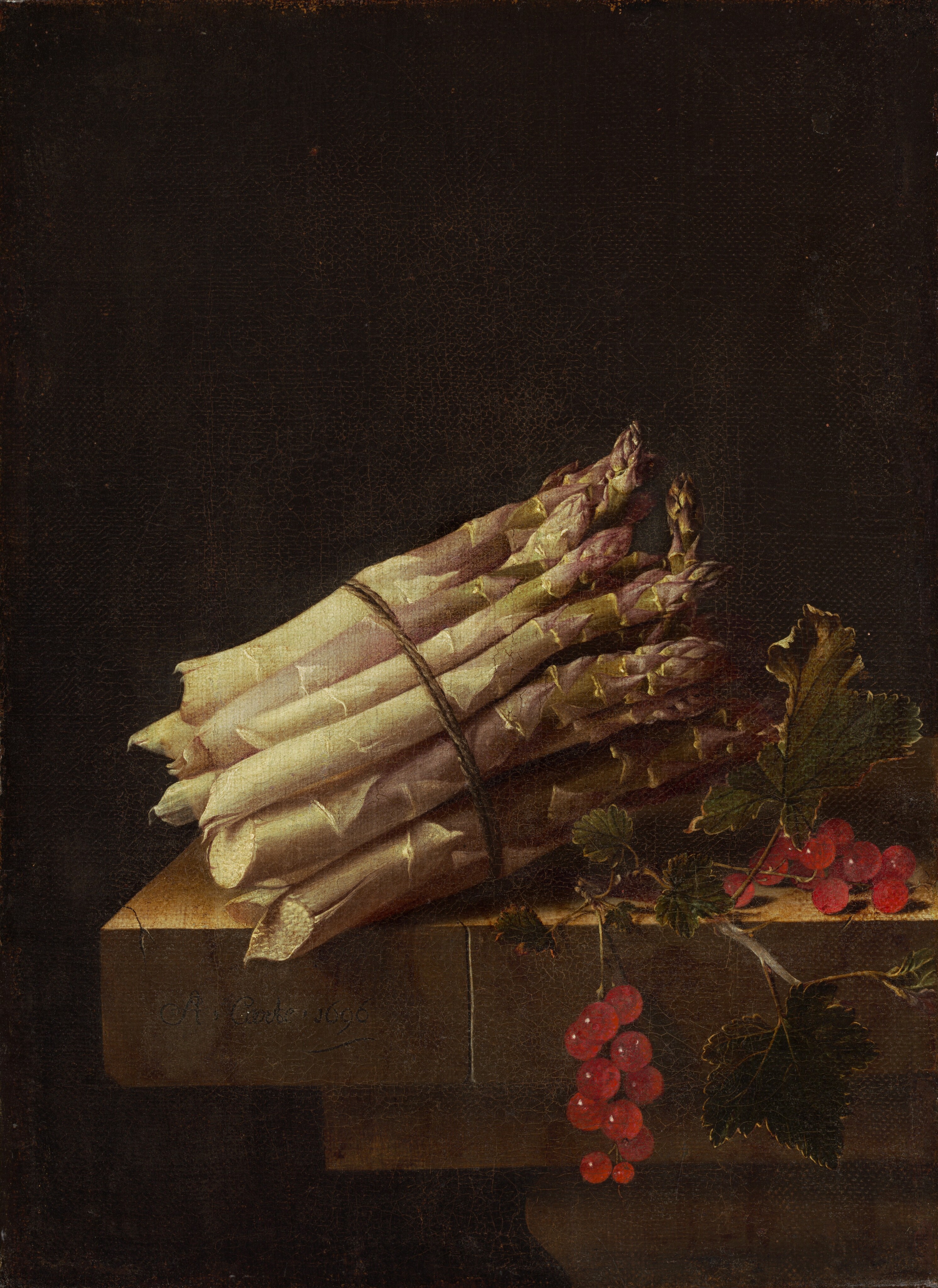
Asparagus seems to be a subject many artists like. It’s a vegetable both rustic and elegant. A painter can go either way or both ways at once. I especially like pictures that stress both its skinniness and its lumpiness. I’ve noticed that most older paintings depict white asparagus, since that used to be considered fancy. Newer art usually goes for green. I’ve also noticed that the asparagus is almost always in bundles, not loose, and the ties on the bundles are often a tight squeeze, like the stalks are being choked. Not sure why. Maybe to add extra texture. Here are a few more asparagus paintings I like.

Still Life with Asparagus and Red Currants, by Adriaen Court, 1696.
Still Life with Asparagus, by Philippe Rousseau, 1880.
Asparagus, by Anastasia Kharchenko.

And that above is my asparagus soup with Montasio, lemon, and tarragon or basil, in this case tarragon.

To make this soup for four,  you’ll want a spring onion, one with the tender green stem attached, chopped.  A medium Yukon gold potato, skinned and chopped, and a big bunch of asparagus (at least a dozen thick ones, or more if they’re thin), the tough ends trimmed and the stalks roughly chopped. If you have spring garlic, you can add a little of that, too, but don’t bother if you can only find the papery winter stuff, as that would spoil the soup’s spring feeling. I also added a handful of celery leaves.

Drizzle a good amount of olive oil into a soup pot. Add the onion, potato, and asparagus, plus the celery leaves if you’re using them, season with a little salt and a pinch of fennel pollen, and sauté for two or three minutes. Add a splash of dry vermouth, and let it bubble away. Next pour in about 5 cups of light chicken or vegetable broth. Let it all cook at a medium boil, uncovered, until the vegetables are tender, about 10 minutes.

Purée the soup in a food processor, adding a little water to loosen it if necessary.

Pour it back into the pot, and add the grated zest from a small lemon and a tiny squeeze of lemon juice. When you’re ready to serve it, reheat it, and then stir in a few big scrapings of Montasio cheese and some black pepper. Taste for seasoning. Ladle out the soup, and top each serving with a bit more grated Montasio, fresh chopped tarragon or basil (I’ve made it both ways, and both are nice), and a drizzle of extra-virgin olive oil. It will be good hot and good cold, too.

A note about Montasio: You can certainly use Parmigiano or grana Padano (or Asiago) in this soup, but I happened to have a piece of Montasio on hand, so that went in. I love this DOP cow’s milk cheese from the Friuli Venezia Giulia region. The piece I had was aged long enough to be a grating cheese. Age mellows Montasio, so you get a sweet richness with none of the always surprising pineapple taste of Parmigiano. It’s more one-note, but in a good, solid way. I like to switch out my Italian cheeses, so whenever I go to a good cheese shop, I pick something that I’ve never tried or haven’t had in a while, just to refresh my cheese memory. Cheese memory is a terrible thing to waste.