Feeds:
Posts
Comments

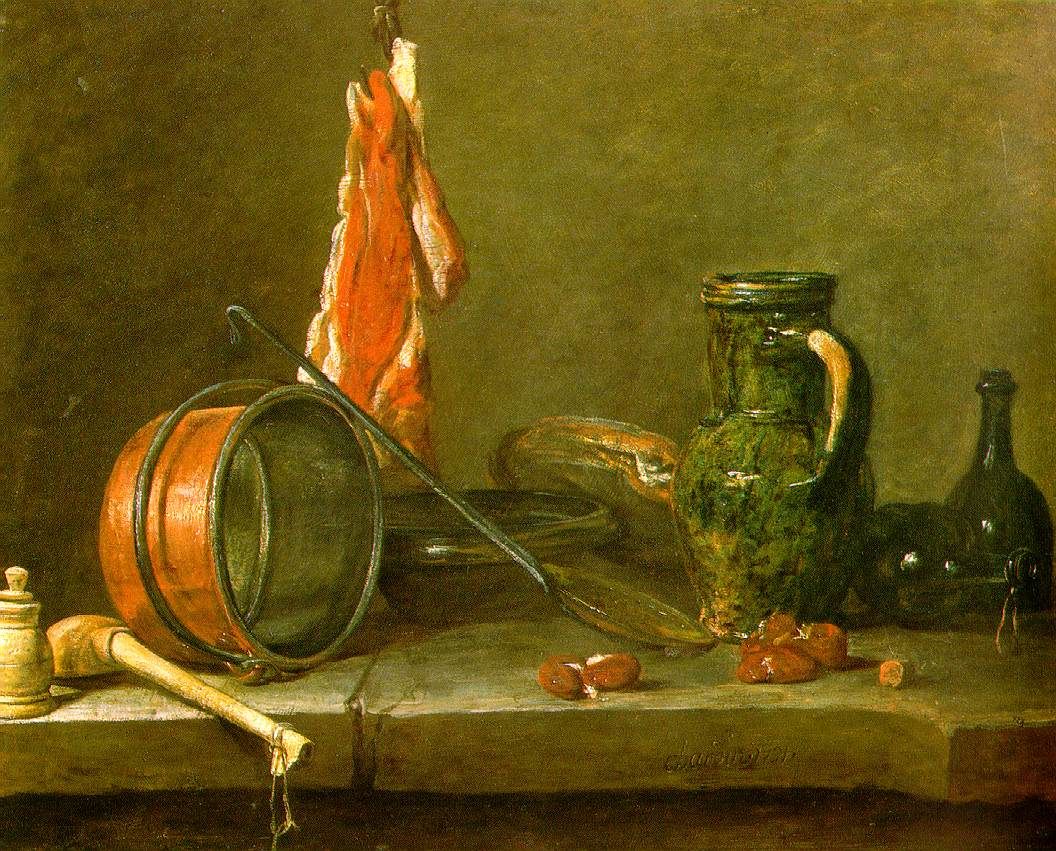
Still Life with Olives, Jean Baptiste Simeon Chardin (1699-1779).
Recipe: Chicken with Fennel and Black Olives

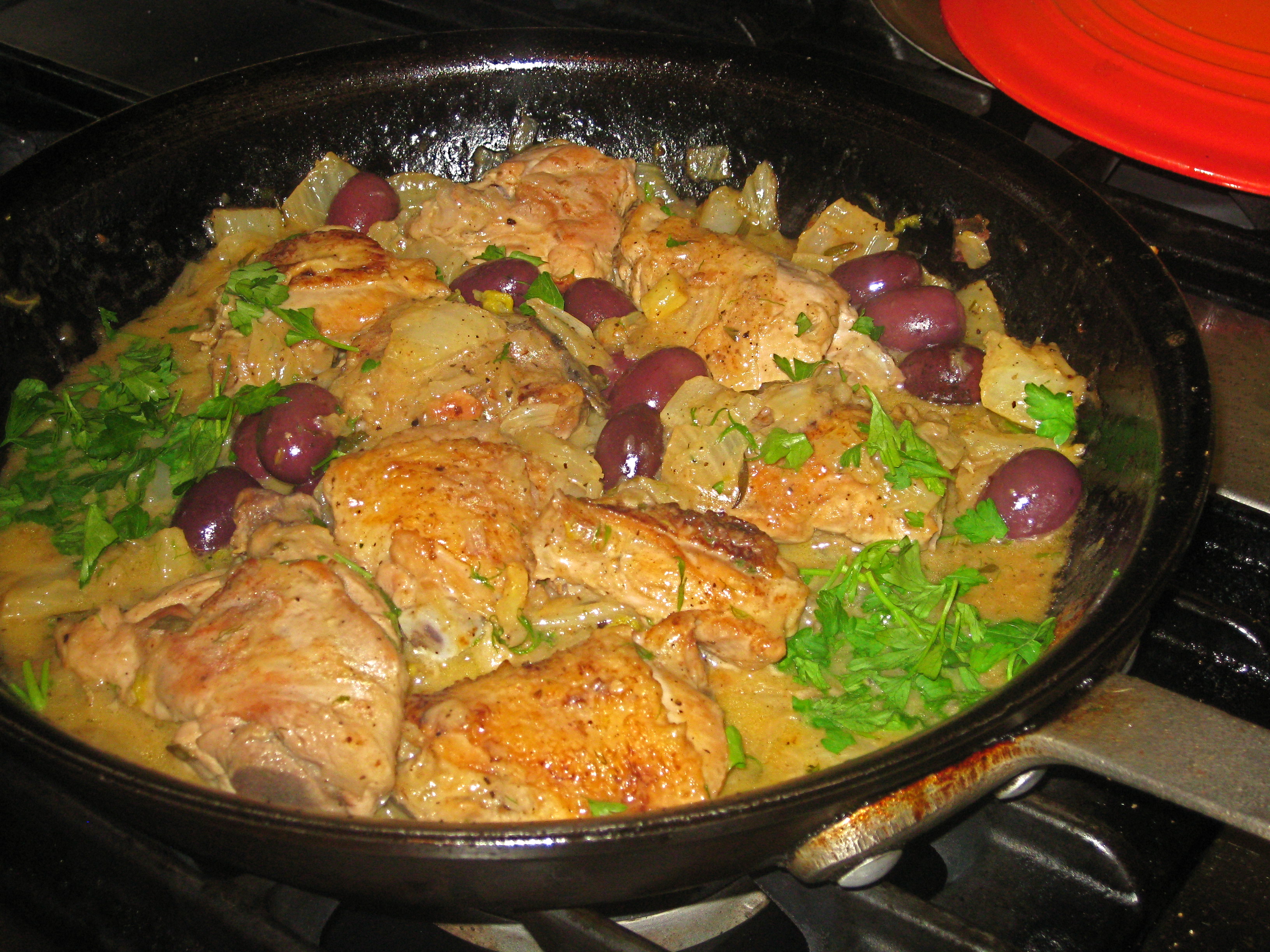
I have to cook dinner again? Wow, when will it all stop? I guess when I’m dead. Not a problem. When I’m in doubt about what to make, I grab a package of chicken thighs, the indestructible warhorse of the modern kitchen. Low and slow heat after an initial browning produces really tender meat. You really can’t overcook the things (well, you can if you just blast the hell out of them, but I won’t let you do that). I think of chicken thighs as the meat of pasta. What I mean by this is that they’re so neutral, they’ll take to just about any flavoring. And that’s the fun part, choosing the add-ins.

A dish of raw fennel with olives always came to the table at my grandmother’s house after a big meal. This is a traditional Puglian palate cleanser, and its mingling of flavors has been etched in my palate for decades. I love it as a topping for pizza or in a panini, or with braised fish dishes. It’s also wonderful with chicken, but I find that bulb fennel itself doesn’t really add enough fennel flavor to stand up to the olives, so I’ve included ground fennel seed and a splash of pastis to jack it up a bit.

I served this with roasted yams and a side of wild rice with toasted pine nuts, shallots, and parsley. My sister said it tasted like Thanksgiving dinner. Sick of turkey? Try this chicken dish. It takes about 30 minutes.

Chicken with Fennel and Black Olives

(Serves 4)

Extra virgin olive oil
8 free range chicken thighs, with the skin
Salt
½ teaspoon ground fennel seeds
Freshly ground black pepper
2 medium shallots, cut into small dice
1 large fennel bulb, trimmed and cut into medium dice
1 large garlic clove, thinly sliced
3 large sprigs rosemary, the leaves chopped
A splash of Pernod or another pastis
½ cup chicken broth
⅓ cup crème fraîche
A handful of black olives (I used Gaetas because that’s what I had, but I think Niçoise, richer and less acidic, would be my first choice).
A few large sprigs of flat-leaf parsley, the leaves very lightly chopped

Dry off the chicken thighs, and sprinkle them on both sides with salt, the ground fennel, and black pepper.

In a large skillet, fitted with a lid, heat about 2 tablespoons of olive oil over medium-high heat. When the oil is hot, add the chicken, skin side down. Brown the pieces well on the skin side, and then flip them to brown the other side. Drain off excess oil (you’ll want to leave a little, though, since it provides good flavor.)

Now turn the heat down a touch, and add the shallots and the fennel, seasoning them with a little salt and black pepper. Sauté until the vegetables just start to soften, about 4 minutes. Add the garlic and rosemary, and sauté a minute longer, just to release their flavors. Add the pastis (just a tiny splash), and let it boil away. Add the chicken broth, turn the heat to low, cover the skillet, and simmer until the chicken is just tender, no more than 15 minutes. Turn off the heat, and let the chicken sit on the stove for about 5 minutes. The residual skillet heat will help to further tenderize the chicken.

When you’re ready to serve, remove the chicken from the skillet onto a warmed serving platter. Add the crème fraîche to the skillet juices, and reduce it over high heat until thickened (to about the consistency of heavy cream). Add the black olives and the parsley, and give the sauce a stir. Check for seasoning, adding more salt or black pepper if needed. Pour the sauce over the chicken. Serve right away.

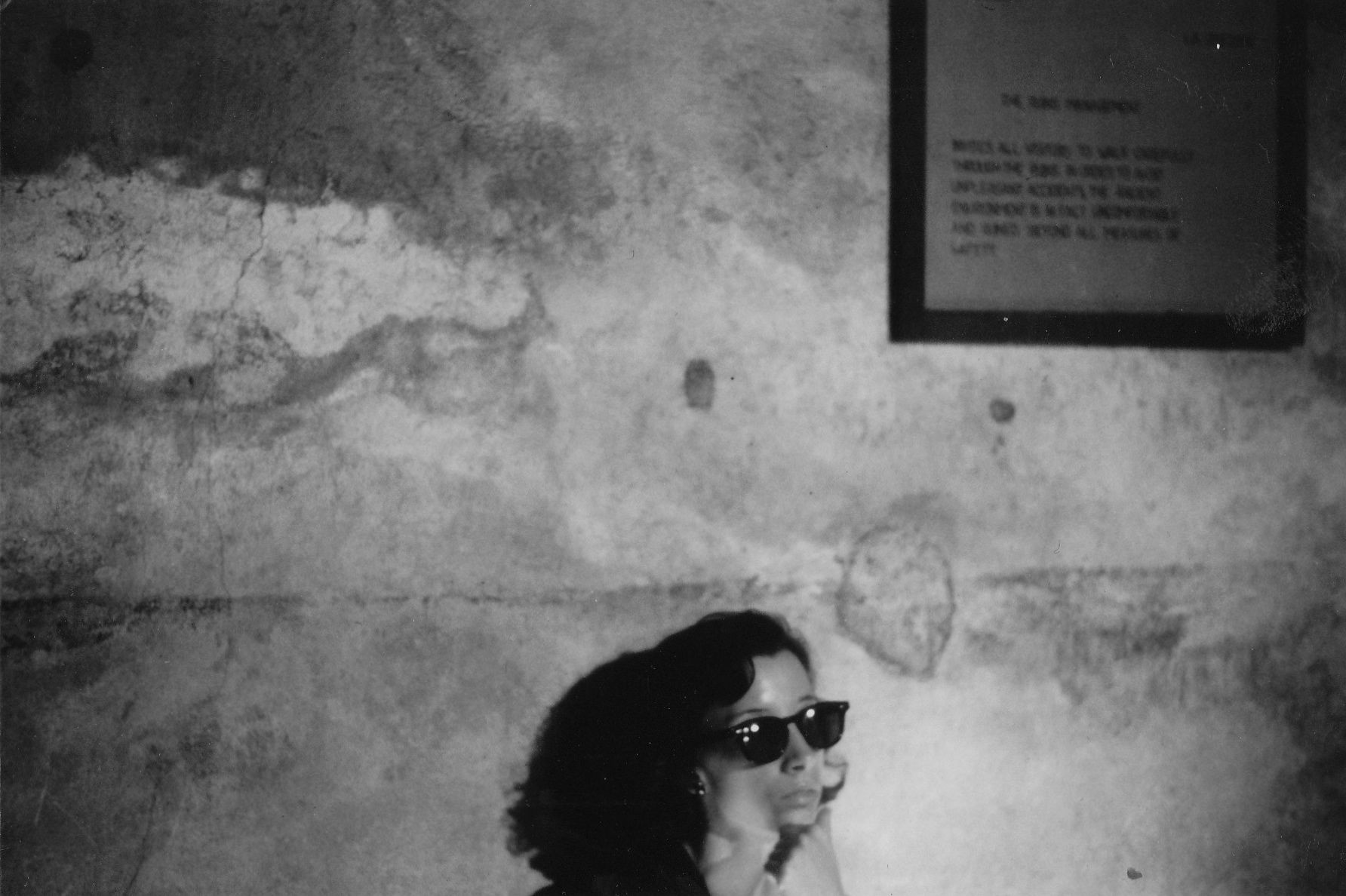
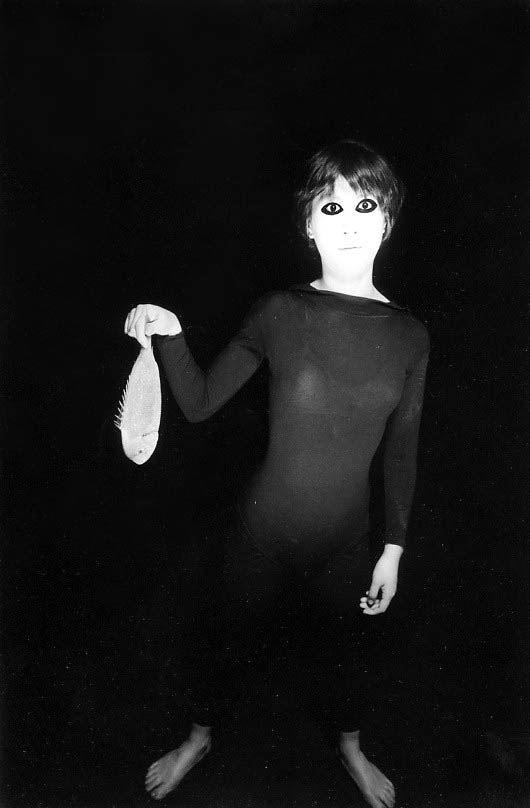
Women with Fish

Man and Women by Eikoh Hosoe, 1960

Marcella and Me

Here’s another excerpt from my book in progress,  tentatively titled The Making of an Italian Cook.

Marcella and Me

My University Place apartment replaced our Long Island kitchen as the hub of my self-imposed cooking self-school. My new kitchen was a narrow sliver, but with one of those deep double porcelain sinks, which I loved for its old New York beauty. Aside from that I had my Royal Rose tenement-issue stove, which really was beyond the pale (when I moved into the place, in the late ’70s, the previous tenant had actually left a cooked steak in the broiler (he must have been in a hurry), which I discovered after trying to track down what I assumed was a dead mouse slowly dissolving under a floorboard. I could barely turn around in the small cooking space, but that was okay. I used my “dining room” table as a prep station and made out pretty well (God, I even ran a catering business from that apartment for a while, years later). I had a good set of cast iron skillets and a serious Wusthof knife set, complete with a blue canvas knife roll, that my father had bought me for a moving-in gift, one of the most opulent presents I’ve ever received.

Now instead of hanging out at bars with Larry Rivers, my main evening activity became, for a few months at any rate, making meatballs. I had watched Mo, my mother, make the things a zillion times, so I didn’t think I needed a recipe. Her side of the family is Sicilian, and she often made her father’s raisin and pine nut meatballs, which I just loved. So I was baffled that my first half dozen tries came out so miserably. They were hard and dry and just made me sad. What I didn’t realize, until I put some serious thought into the matter, was that the more compact the meat, the denser the meatball would be. Finally I got it. Don’t keep smacking them around, stop squeezing them so much, quit working the life out of the mix. Okay, good. Problem solved. But when I told Mo that I’d replaced her milk-soaked soft bread with dried breadcrumbs, she looked at me with a blend of amazement and disgust and, if I recall correctly, said, “Are you nuts?” What did I know? As it turned out, dried bread yields dry meatballs. I finally came up with very good meatballs, but in the process I realized that purchasing a few good cookbooks was in order.

The first book I bought  was The Classic Italian Cookbook, by Marcella Hazan. It had been out for about five years, she was now famous, and everyone seemed to love her. How could I go wrong? But I did go wrong. I’ve thought long about this and have come to realize that Marcella Hazan and I, despite how lovely and truly interesting her recipes were, we, as people who cooked, were just not a good match. Our personalities clashed like crazy, from her pages to my soul. It was like going out on a date with someone you just knew from the start wasn’t your type, but you kept going back for more, hoping something would click.

I felt as if her recipes were dangling in space—and at times crashing down on my head like some outside grinding noise you hear but can’t trace the source of (hidden electrical wires? that traffic counting device on the corner?), the kind of noise that can be familiar but still upsetting. Why on earth was this so? I at first concluded that since Marcella didn’t write, or evidently speak, English well, and her husband translated most of her words, he, Victor, was standing between us. There was for me an impenetrable sternness in the pages, and he, after all, is a wine writer and therefore more of an academic than an artist. I believed at the time, back in the late ’70s, that his tone must have covered up some of Marcella’s free spirit. But I don’t know either of them, so I can’t attest to their personalities. It was just a hunch. And the more I delved into the book, the more I began to believe that she was as much to blame. (Later, when I learned she had been a chemistry major, I was almost sure of it.)

I was looking for a coaxing voice and a compelling story. As wonderful as her recipes sounded, I couldn’t find a way in. I wanted a vulnerability, a jiggle, an oops-a-braciole-just-rolled-under-the-counter-but-I’ll-serve-it-anyway spirit. I couldn’t find it. I wanted to know how her soul made her want to cook. I snooped as much as possible, trying to read between the lines, but with out much luck, so I finally decided to page through the book and just make every recipe she had that included anchovies. That was a plan.

Marcella Hazan does seem to admire anchovies. I made her orecchiette with broccoli and anchovy sauce, which looked like something my grandmother would have come up with, and it tasted great. I loved her roasted peppers with anchovies. My family made roasted peppers and always served anchovies, but to my recollection they never blended them together. I understood that my selected use of this big book had its limits, and that I was being unfair and ignorant, but I couldn’t help myself. Then my relationship with Marcella went from bad to worse.

This was, I believe, 1978, a year when vitello tonnato was raging in the suburbs. My mother made it a few times, and I went wild for it. It was the party dish supreme, replacing cheese fondue in many a Long Island mom’s repertoire, an expected  cocktail hour offering on our block. My mother’s recipe for vitello tonnato, like much of her cooking that was not Southern Italian, came from Gourmet magazine.

In my crypt-like Manhattan apartment, I decided that was what I had to make, being the party girl I still was. I could cook it and invite a bunch of friends and have a hip little dinner. Plus the recipe contained anchovies, so I could continue with my theme approach to cooking with Marcella. So I checked the index, and there it was on page 276. It looked good, if possibly a bit expensive. Now, you have to understand that going out and purchasing a boneless veal roast at this time in my life was a bold decision. I was averaging around $40 or $50 in my bank account, whatever I could put away from my not so lucrative job as information phone gal at the Barnes & Noble store on 18th Street (this was of course pre-computer, so every time a customer called about a book, I’d have to physically run through the store and pull it off the shelf—boy, what an exhausting bore). At any rate, I trotted over to Ottomanelli and bought my two-or-so-pound roast with high hopes. I invited a few friends and told them to bring white wine (Soave Bolla, of course). I followed Marcella Hazan’s recipe exactly, expecting the result to taste as enticing as what my mother had made, but what I came out with was a big, sloppy mound of fishy cat food, with peculiar metallic and acidic undertones.

The veal itself, I realized, wasn’t the problem. That simmered up fairly well (low and slow were the instructions, and that worked), but after purchasing the veal, I had had no money left for the fancy Italian tuna I’d grown up eating and instead had bought cheap American tuna packed in who knows what, and a bottle of “olive oil” that most likely I could just as well have purchased at a hardware store. My friend Scott was the only person who liked the dish, and I could tell he wasn’t just being kind, but then he was a person who had spent two weeks in Paris eating every meal at McDonald’s. For me it was such a disappointment, I actually cried, a long, sloppy wine-drunk cry. I sensed that my low-grade purchases were the problem, but I blamed Marcella anyway.

God damn it, why wasn’t this woman helping me more? Why couldn’t I taste and see what I was doing? I started to feel culinarily demented. I made perfectly decent, even good Italian food, in my mother’s kitchen and with no book or guidance except my nose, hands, and memory. Was it Marcella’s lack of Southern hospitality? I decided that must be the case. I was stuck in a rut. I briefly shut down my studies and let a dark shadow fall over my sharp Wusthof knives. But not for long.

Recipe: Focaccia with Caramelized Onions, Black Olives and Ras el Hanout

I find this collage extremely beautiful. I discovered it on the Internet while doing my usual trolling for food-related art. I couldn’t, however, find an artist to attribute it to, so I thought I’d just put up it for all my readers to see, and possibly the artist would come forth. I liked the religious/onion motif so much that I knew I had to respond to it with a recipe. Even though I’m not religious, this art really speaks to me. I love the sweet look on the guy’s face, and I love all the pink, red, and white shiny stuff, mostly onions, hanging off his head. That’s about as religious as I get.  And when I think religion at all, I usually think bread, so here’s a focaccia I thought the man in this collage would enjoy. Of course it had to rely on onions as its main flavoring, but a seasoning  I chose gives it real depth, I feel. Ras el hanout is a spice mix used in Moroccan cooking. It goes very well with caramelized onions, imparting layers of flavor and pulling them away from what can sometimes be a one-note sweetness. It’s a blend of warm spices, usually containing anise, fennel, cardamom, cinnamon, ginger, cumin, black pepper, sometimes nutmeg or allspice or rose petal, and often a bunch of other more exotic stuff, such as belladonna leaves, which can be hard to find here (and possibly a little toxic). I often make my own, but lately I’ve been buying a pre-mixed one from Kalustyan’s. It’s excellent. Mr. Onion Priest, this is for you.

Focaccia with Caramelized Onions, Black Olives and Ras el Hanout

For the dough:

1 package active dry yeast
1½ cups warm water (110-115 degrees)
¼ cup extra-virgin olive oil
3 to 3½ cups all-purpose flour
½ teaspoon salt

For the top:

Extra-virgin olive oil
2 large sweet onions, such as Vidalia, thinly sliced
1 teaspoon sugar
2 garlic cloves, thinly sliced
8 or so large thyme sprigs, the leaves chopped
1 teaspoon ras el hanout
Salt
Freshly ground black pepper
A splash of dry Marsala
A handful of wrinkly, Moroccan black olives, pitted

Pour the warm water into a large bowl. Sprinkle in the yeast, giving it a quick stir to dissolve clumps, and let sit until frothy, about 8 minutes.

Add the olive oil to the yeast mixture. Then add 3 cups of flour and the salt. Stir the mixture until you have a nice soft dough. Turn the dough out onto a floured surface, and knead quickly, just until it’s smooth and elastic, about 3 or 4 minutes, adding a little more flour if needed to make it easier to work with. The dough will be quite soft.

Oil a large bowl, and place the dough in it, turning the dough once to coat the top with oil. Cover with a kitchen towel, and let rise in a warm, draft-free place until doubled in size, about 1½ hours.

Coat a 10-by-15-inch sheet pan well with olive oil. Turn the dough out onto a floured surface, and knead very briefly to get out any air bubbles, then place it on the oiled pan. Stretch and pat the dough out to fit the pan. Now make indentations all over the dough with your fingertips. Give the focaccia a drizzle of olive oil, cover it with plastic wrap, and let it sit again until it’s puffy, about 45 minutes.

Preheat the oven to 450 degrees.

In a large sauté pan, heat a few tablespoons of olive oil over medium-low heat. Add the sliced onion, and sauté until it’s very soft and taking on a little color, about 10 minutes. If it starts to stick, cover the pan for a minute or so, or add a tiny splash of water. Add the sugar, the garlic, the thyme, and the ras el hanout, and season with salt and black pepper. Sauté a few minutes longer, until the spices and garlic are released and the onions are soft and nicely golden. Add a splash of Marsala, and let it boil away.

Uncover the focaccia, and spread out the onions over it. Scatter the olives on top. Give everything an extra drizzle of olive oil and a sprinkling of salt and black pepper. Bake for 15 minutes. Lower the heat to 375 degrees, and bake for about 15 minutes longer, or until the focaccia is golden brown. Serve warm or at room temperature.

Gelato Like a Flower

A branch of Amorino Gelateria opened this year two  blocks from my sister Liti’s apartment on University Place in Manhattan (that would be at 11th Street).  Liti and I took a little stroll over there the other day to see what all the fuss was about, and boy was that place crowded. The first Amorino shop opened  in Paris  in 2002,  I believe on the Ile Saint-Louis, which must have given the ice cream makers at the famous Berthillon a small heart attack. It was started by two guys from Reggio Emilia and  is now a franchise with shops around France and in Shanghai (but as far as I know none in Italy). It became famous for its beautifully and unusually turned out cones. Amorino presents its gelato in a floral design—I believe it’s meant to resemble a rose—by slapping petals of ice cream in a circular fashion, creating an extremely pretty if fleeting work of art (and this gelato melts quickly, so you gotta get this bloom down subito). I’d been looking forward to seeing this up close and personal, and I can say I wasn’t disappointed. I found the design stunning.

There are three sizes of cones, but the floral patterns works out best on the big ones, and it’s especially impressive if you choose two or three contrasting shades of gelato. Here in this photo, above, I’ve got vanilla, salted caramel, and cappuccino, a really gorgeous color combination. I saw another person ordering coconut (basically white) with a dark cherry at the center, which was lovely for about five seconds until it turned into a big, slightly bloody-looking offering (but still delicious, I would imagine).

I have to admit that the lure of this place for me is really in the artwork. My sister and another friend loved the gelato, but me, maybe I’m perverse, I found it too rich. When did Italian gelato become indistinguishable from heavy French egg-and-cream ice cream, or Haagen-Dazs, for that matter? I always thought the difference between ice cream and gelato was in the amount of fat. The gelatos I sampled in Italy, especially in Sicily, were always lighter, with an emphasis on the flavoring, the mouth feel was not as pully and thick. I’ll never forget the gelato I ate in the town of Noto, in flavors like orange blossom, jasmine, tangerine,  pistachio, almond, and rose petal, made by the late great gelato master Corrado Costanzo. He used only ingredients that were  available locally. The flavors burst forth, and the texture, more milky than creamy, served as a context for the main ingredient. I loved those creations, and to me they are what gelato is all about. Is true gelato a thing of the past? Is all gelato now exactly the same as French ice cream? It seems to be going in that direction.

Now, I can’t fault Amorino for not complying with my idea of what gelato should be. Its flavors, the ones we tasted, were fabulous. The banana my sister ordered,  that sultry salted caramel, and the lovely vanilla were lush and pure, and everyone in this very busy shop obviously loved them. And honestly I’m such a sucker for style, the flower design alone will have me coming back just to see the various color combinations people order and how they open up in the cone. Still, I must say I still really miss old fashioned Italian gelato.

Recipe: Lasagnette with Lobster, Crème Fraîche, and Grappa

I suppose many people would look at the artwork on this Schiaparelli dress and see a depiction of sex, and that’s the way it was interpreted when it was modeled by Wallis Simpson for a famous 1937 Vogue fashion shoot by Cecil Beaton. I believe the spread was actually an attempt to modify Ms. Simpson’s somewhat slutty image, only to backfire because of what most people perceived as the dress’s sexual connotation (the placement of the lobster, falling right between her legs, didn’t help). But I interpret it differently. I see the lobster design as a strong symbol of the deliciousness of food. If we don’t eat we die, and if we don’t eat good food we may die of a deadened palate. If the lobster on this dress were depicted alive, maybe I’d think differently, but this lobster is bright red, which means it has been cooked, and it is obviously dead, from the way it’s hanging limp. For me this is a design that glorifies good things to eat, of which in my opinion there are far too few representations in the fashion world. Enough with the florals already. I would love to own a dress with a green olive motif. I’ll have to discuss that with Marc Jacobs the next time I bump into him in the West Village.

Years ago I had a cotton sundress that was printed with slices of lemons and limes. It was a sleeveless shirtwaist, and it made me extremely happy whenever I wore it. I wore it year round, even in the winter, reasoning that citrus was in season then, making the flimsy thing appropriate for January. It always reminded me of gin and tonic with a slice of lemon or lime stuck on the side of the glass.

But this lobster dress, a famous collaboration between Salvador Dali and Miss Schiaparelli, which I saw up close at the Duke and Duchess of Windsor show at the Met in, I believe, 2002, is quite light and summery despite carrying such a huge design (it is not a weighty ball gown). It works if you think of it as a really long lobster bib. To me it would be the perfect thing to wear to a clambake. I’d definitely want to be eating lobster while wearing it. And its color is unusual. It’s pink red, not the true orangey red of a cooked lobster. Its pinky red reminds me of a certain shade of lipstick that looks quite frightening—but in a good way—on me and other people with olive skin, but it also recalls tomatoes mixed with a touch of cream, the color of penne alla vodka, in fact. I wanted to capture that color when I went about creating this lobster pasta, in honor of what I consider to be a still exciting fashion design. And I think I got it.

Lasagnette with Lobster, Crème Fraîche, and Grappa

(Serves 4 as a main course)

3 small lobsters (about 1½ pounds each)
Extra-virgin olive oil
2 tablespoons unsalted butter
2 medium shallots, cut into small dice
2 garlic cloves, thinly sliced
6 large thyme sprigs, the leaves chopped
1 small inner celery stalk, cut into small dice, plus the leaves from about 4 stalks, chopped
Salt
A generous pinch of sugar
About 8 big scrapings of nutmeg
A generous pinch of Aleppo pepper (or a smaller pinch of cayenne)
⅓ cup grappa
1 35-ounce can high-quality Italian plum tomatoes, with the juice, well chopped
¼ cup crème fraîche
1 pound lasagnette pasta
A dozen basil leaves, lightly chopped, plus a few whole sprigs for garnish

For the best flavor and texture, the lobsters for this dish should be sautéed raw. This means either hacking them up alive (something I no longer have the stomach for) or, my new solution, having your fish seller kill them for you. You just have to make sure you cook them within about six hours. Once you get your lobsters home, you’ll need to cut them into pieces. Get a sharp, heavy knife or a cleaver, and start by cutting the lobsters in half horizontally through the top of the shell. Remove the head sac, located on either side of the top of the shell. Then separate the tail sections from the head sections. Remove the claws and front legs in one piece, and give the claws a swift whack with the back of your knife or cleaver to crack them. You’ll notice a long, dark intestinal tract running along the top of one of the tail sections; pull that out. Remove the tomalley, and the roe if you find any, and place in a small bowl, mashing it up a bit.

If you don’t want to bother with all this, just have your fish seller cut up your lobsters for you.

Set up a large pot of pasta cooking water over high heat.

In a medium saucepan, heat 2 tablespoons of olive oil and the butter over medium heat. Add the shallots, celery and leaves, thyme, a pinch of sugar, salt, Aleppo or cayenne, and nutmeg, and sauté until soft and fragrant, about 5 minutes. Add the garlic, and let it soften for about 30 seconds. Add half of the grappa, and let it bubble until almost dry. Add the tomatoes and a splash of water, and simmer, uncovered, for about 8 minutes. Turn off the heat.

In a very large sauté skillet (or two smaller ones), heat two tablespoons of olive oil (a little more if you’re using two skillets) over medium-high heat. When hot, add the lobster pieces, shell side down, and sauté until they turn pink, about 4 minutes. Turn the pieces over, and sauté for a minute on the other side. Now add the remaining grappa, and let it bubble away. Add the tomato sauce, and the tomalley and roe, if you have it, and let everything simmer, uncovered, until the  lobster is just tender, about 5 minutes. The sauce will be a bit loose. Taste for seasoning, adding more salt and a pinch of Aleppo or cayenne if desired (this is not meant to be a full-on Fra Diavolo hot sauce; you really want just a hint of heat).

While the lobster is simmering, add a generous amount of salt to the boiling pasta water, and drop the lasagnette into the pot. Cook until al dente. Drain the pasta, leaving a little water clinging to it, and pour it onto a very large serving platter. Drizzle with a generous amount of olive oil, and give it a toss. Add the crème fraiche and the chopped basil to the lobster sauce, giving it a good stir, and pour it over the top. Garnish with the basil sprigs. Serve right away.

Italian Food Poem

Italian Food

A poem by Shel Silverstein

Oh, how I love Italian food.
I eat it all the time,
Not just ’cause how good it tastes
But ’cause how good it rhymes.
Minestrone, cannelloni,
Macaroni, rigatoni,
Spaghettini, scallopini,
Escarole, braciole,
Insalata, cremolata, manicotti,
Marinara, carbonara,
Shrimp francese, Bolognese,
Ravioli, mostaccioli,
Mozzarella, tagliatelle,
Fried zucchini, rollatini,
Fettuccine, green linguine,
Tortellini, Tetrazzini,
Oops—I think I split my jeani.

 © 2011 Evil Eye, LLC

Recipe: Parisian Tagliatelle with Girolles, Leeks, and Butter Broth

I just got back from a vacation in Paris with my husband and his pushing-90 parents. Now, you might say this wouldn’t  be your idea of a vacation, and it could possibly even be considered a bit masochistic. In theory I suppose it’s true that shuffling around beautiful Paris with two slow as they come, deaf oldsters could be a tad frustrating and not high on romance, and you’d be right, except that my in-laws are cheerful, up for anything, and oddly had more staying power than I did on some days. Pretty remarkable.

We rented a big apartment in the 10th, in a largely Arab and African neighborhood filled with wig shops and garish, cut-rate bridal gown stores. Women sold grilled corn and men sold counterfeit cigarettes by the Metro entrance, and there was a fabulous outdoor market with tons of head-on fish, loose spices, and bins of girolle mushrooms, which are now in season. The price of the mushrooms was so low compared with New York that I knew I needed to buy a large bag, take them back to our little Paris kitchen, and do something French with them.

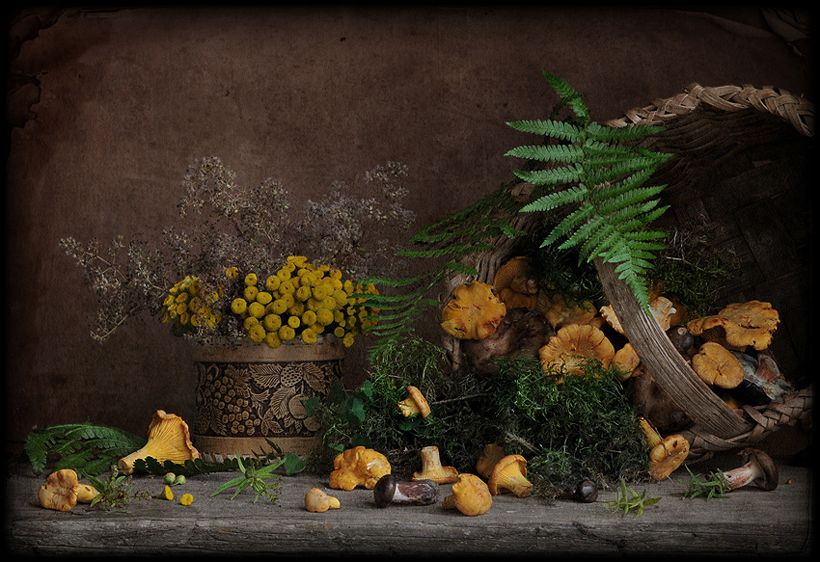
Girolles are the mushrooms we know in the U.S. as chanterelles, the golden, trumpet shaped ones that some people say have an aroma of apricots, though I don’t get that from them. To me they smell like sweet, wet soil in the most wonderful way. Chanterelle nomenclature is a bit confusing in France. If you look up girolle here, it translates as chanterelle, but in France a chanterelle is not the golden mushroom we’re all familiar with—that’s the girolle—but a similarly shaped, though skinnier, dark gray mushroom. That’s what is called chanterelle in French markets, and it costs about six times as much as the girolle, more like what the golden ones cost in Manhattan, so I passed it by, being perfectly happy to purchase a huge bag of girolles for what I considered a song (and to me they are still chanterelles, no matter what anyone over there says).


Here’s the true French chanterelle, sometimes called chanterelle grise.

I decided to  make a French-inspired pasta, so I picked up some homemade tagliatelle, Breton butter, a chunk of Comte cheese, and a handful of leeks, parsley, and thyme, and headed back to our place to cook up a pasta that was rich but not terribly rich, not the way the cooks in Paris, in my opinion, sometimes screw up pasta by adding tons of cream and four different gooey cheeses. What I did was make a butter-based broth with all the girolle and leek trimmings and add it to the dish at the last minute for a slightly slippery, buttery effect, but still light on the palate. The girolles, or whatever they were, were fabulously flavorful. Boy, I wish they were as cheap in New York.

Parisian Tagliatelle with Girolles, Leeks, and Butter Broth

(Serves 2)

3 tablespoons unsalted butter
½ pound golden chanterelles, trimmed and cut in half lenghtwise if large (and make sure to save all the trimmings)
2 medium leeks, well cleaned, trimmed down to the tender white part and cut into thin rounds (and again, save all the trimmings)
1½ cups light chicken broth
Salt
½ pound fresh tagliatelle
2 small garlic cloves, thinly sliced
Extra-virgin olive oil
Freshly ground black pepper
¼ cup fruity white wine
5 large thyme sprigs
A small handful of flat-leaf parsley leaves, lightly chopped
A small chunk of Comte cheese

In a small saucepan, heat the butter over medium flame. Add all the mushroom and leek trimmings, and sauté until soft and fragrant, about 4 minutes. Add the chicken broth, and simmer until it’s reduced by about half (you should wind up with about ½ cup or so). This should take about 5 minutes. Taste for seasoning, adding a little salt if needed. The broth should look a bit creamy. Strain it into a small bowl.

Set up a pot of pasta cooking water, and bring it to a boil. Add a generous amount of salt.

In a large skillet, heat 2 tablespoons of olive oil over a medium flame. Add the leeks, and let them soften for a minute. Add the mushrooms, seasoning with salt and black pepper, and sauté until fragrant, about another 4 minutes.

Drop the tagliatelle into the boiling water, and give it a stir.

Add the white wine to the mushrooms, and let it boil away. Add the mushroom broth and the thyme, and let simmer while the pasta is cooking.

When the tagliatelle is just tender, usually after about 3 or 4 minutes for fresh pasta, drain it, and pour it into a warmed serving bowl. Add a drizzle of olive oil, and give it a quick toss. Add the mushrooms with all their broth, a few gratings of fresh black pepper, and a heaping tablespoon of grated Comte. Add the parsley, and toss everything gently. Check for seasoning, adding more salt if needed. Serve right away, adding more Comte to each serving if you like.

Recipe: Orecchiette with Cherry Tomatoes, Feta, and Marjoram

When I see a mini bowl of ditali with ceci beans going for $26 at a star chef’s restaurant here in ruthless old Manhattan, it makes my Puglian-Sicilian blood boil. One relatively new establishment, a one-stop pizzeria, caffè, wine bar, raw bar, ristorante, trattoria, food shop, wine shop, and cooking school, especially irks me, but that Disneyland of Italian cooking will go nameless because you’ll just think I’m jealous (and maybe I am a little), and you all know what I’m taking about anyway. That loud, pushy conglomerate makes me nostalgic for the little Italian groceries that used to be so common in the city, places you can still find on Arthur Avenue in the Bronx (although, granted, not necessarily run by Italians anymore). Maybe I should open one. Then my entire being could reek of provolone. That would be heaven.

I know I’ve spoken of my love for la cucina povera many times. That is the essence of true Southern Italian cooking, my heritage, and the fact that it isn’t particularly povera any more, at least not in Manhattan, is not a problem for me. I know I can take its cooking philosophy, basically the original Mediterranean diet, and make wonderful dishes inexpensively in my own home. Nothing makes me feel better than gathering up a few vegetables, pasta, a little cheese, some good olive oil, and creating something fine.

Some people think of la cucina povera as being one big, sloppy pot of beans. But the cooking is vibrant. You’ve got fish, meat, grains, tons of vegetables, cheese, fruit, olive oil, and a myriad way to work them, with the meat, fish, and cheeses, the more expensive items, playing a supporting, not starring, role. So you can and should buy the best of everything, because with this style of cooking it’s how you use what you buy that makes it healthy, economical, and beautiful.

Pancetta, guanciale and anchovies are my three favorite cucina povera flavor enhancers. A little goes a very long way and can elevate your cooking from dull to extremely interesting instantaneously. Here I’ve added a bit of pancetta to give a rich underpinning to the pasta sauce.

Two weeks ago my friend Barbara spent hours gathering up all the tomatoes she could salvage from Hurricane Irene, which hit hard in parts of upstate New York. Her plants were destroyed, and red and green tomatoes lay everywhere. She dropped off a big bag at my house. There were a few big heirloom types, but mostly she gave me ripe cherry tomatoes, ones that have a beautiful aroma with a  hint of tomato leaf to them, making them spicy and almost salty. I’ve been using them in everything, including several pasta dishes.  In this pasta, I tried to bring out their complex saltiness by including feta. Lately I very much prefer the mild French feta to most of the Greek ones I find, the French being gentler on the palate, which I feel is better for a pasta sauce, where you don’t want a taste that knocks you over the head, drowning out the pasta itself.

The blend of tomato and feta with marjoram is just exquisite. You might be tempted to substitute oregano, since it’s such a natural with feta, but do yourself a favor. Try this, and see how its subtler, more floral taste adds unexpected perfume to an ultra simple pasta.

Orecchiette with Cherry Tomatoes, Feta, and Marjoram


(Serves 5 as a first course)

Salt
Extra-virgin olive oil
½ pound mild French feta cheese, crumbled
6 large sprigs marjoram, the leaves very lightly chopped
1 pound orecchietti

1 approximately ⅛-inch-thick slice pancetta, cut into small cubes
1 fresh medium-hot red chili, such as a peperoncino, minced, including the seeds
2 pints cherry tomatoes, cut in half
1 large end-of-summer garlic clove, minced
A generous splash of sweet red vermouth
A big handful of flat-leaf parsley leaves, very lightly chopped

Put up a big pot of pasta cooking water and bring it to a boil. Add a generous amount of salt.

In a large, warmed pasta bowl, add about 2 tablespoons of olive oil, the crumbled feta, and the marjoram. Give it a mix.

Drop the orecchiette into the water.

In a large skillet, heat a tablespoon of olive oil over medium flame. Add the pancetta, and let it get crisp. Add the peperoncino and the tomatoes, and sauté for about a minute. Now add the garlic, turn the heat up a tad, and cook until the tomatoes start to give off some juice, about 4 minutes. You don’t want to cook them much longer than that or their skins will start pulling away (not a huge sin, but it’s a nicer dish when you don’t have to pick those out of your teeth). Add the red vermouth, and let it bubble for about a minute. Season the tomatoes with a little salt, and turn off the heat.

When the orecchiette is al dente, drain it, leaving a little water clinging to it, and add it to the pasta bowl. Toss well. The heat of the pasta will start to melt the feta, giving it a creamy texture. Add the tomatoes, with all the skillet juices, and the parsley, and toss gently. Serve hot.

Am I Italian?


From left, my uncle, Jack, my grandfather, Nick, and Dick, my dad, around 1936 or so.

Here’s another excerpt from The Making of an Italian Cook, an essay book I’m working on.

Am I Italian?

I always sensed something off about my family. Almost all the Italian-Americans I knew had a pride of heritage. We didn’t. Once my cousin Leslie asked me if I thought our family was German. That was peculiar. I believe she asked because despite all the obviously Italian food served by my father’s parents, my grandfather Nick had a passion for German cuisine, probably thinking it more refined or at least less immigrant than all the ‘oily’ vegetables that were brought to his table by his wife, my grandmother, Gertrude (and what Italian family would name a baby Gertrude? Sounds Germanic to me). In the winters when our extended family all shared a house in Hollywood Florida, the Hofbrauhaus was Nick’s favorite place to dine, and he’d order pigs knuckles there. In winter months, back in New York, he ate lunch at Luchow’s at least once a week, favoring the Wiener Schnitzel, which any real Italian will tell you is basically veal scallopine. We do have a lot of blond hair and blue eyes in the family, so I actually started to wonder myself when Leslie proposed this question. We were both teenagers at the time, so it was also perplexing that this matter hadn’t gotten straightened out earlier.

My grandmother insisted, when asked (which wasn’t often, since most of the cousins were put off by her surliness and migraine headaches), that she was born in Darien, Connecticut. Now, I knew Darien to be a WASP stronghold, so something was wrong here. No Italian was spoken at home, though I later learned that Nick spoke fluent Italian, but only to his help, the greenskeepers, and the caddies at the country clubs where he worked as a pro, the same profession my father took on. Nick changed our surname from Di Menna to De Mane, wore clothing out of Thin Man movies, and spoke with an exaggerated, almost Katharine Hepburn-style Yankee accent. It was strange. There was no “O Sole Mio”-ing, hand biting, or Malocchio threats in our family. And my uncle, my father’s brother, Jack, was a birdwatcher. What self respecting guinea would be caught doing that?

When the Italian cooking bug came over me in high school I thought about this odd situation often. I also wondered why most of my classmates assumed I was Jewish. When I told them I was Italian, they thought I was pulling some kind of downwardly mobile joke. I believe they figured that since I took Martha Graham dance classes and didn’t snap gum and wiggle my ass all over the school hallways, Italian I couldn’t be. Such stereotypes existed in Nassau County in the 1970s, perpetuated in part by me, because I felt them.

I let several years go by before I finally asked my aunt Judy about our hazy heritage. She was the only one left I hadn’t approached, figuring since she had married into the family, she’d really have no clue. She told me that nobody really talked about it. This I had already determined for myself. I was about to just accept that weird is weird and sometimes you have to move on, when she added that there were two aunts of my father’s, Filomena and Lucy Riccio, who actually kept in touch with relatives from the “old country” and even visited the “town” every few years. Wow. Was this ever news. A town, a real town? When I asked my father about this alleged town, and I could tell he was being perfectly honest, he said he had no idea. But Judy mentioned that it would be okay to discretely contact the two spinster great aunts, both in their 90s and living together in Port Chester, both retired make-up ladies who had worked in fancy drugstores, and both, I would soon discover, still keeping the trim but curvy figures they had had as young gals.

I was now living in the city and had several years of bar-hopping behind me, and I decided it was time I cooked again, a preoccupation that had consumed me for much of my teenagehood. And most important, this time around I knew I had to focus exclusively on Southern Italian food, the flavors I had grown up with, the palate I loved. To follow this path still thinking my father’s family might be German seemed perverse. So I set out to give the two old dames a call.

Coincidently, and sadly, my grandfather died just around the time I learned this liberating information from Judy, and the two Riccio “girls” happened to be present at his funeral. We were introduced there, so a phone call proved unnecessary.  These ladies, with their neat chignons (was our family actually French?), both as elegant as can be in high heels and pencil skirts, had heard I was planning to get in touch and couldn’t have been more thrilled to meet me face-to-face. After the funeral everyone went back to my uncle Jack’s house for the big lunch, salami, provolone, heroes with sausage and peppers, veal and peppers, baked rigatoni with sausage and peppers. But the Riccio girls had their plates stacked high with pignoli cookies, ricotta cheese cake, lemon puffs, cannolis, sugar-glazed taralli, and drank big tumblers of red wine. “We only eat dessert,” Filomena told me. So that’s the secret to their youthful figures, I thought, but also possibly to their somewhat batty dispositions. They were both oddly giggly, possibly a tad inappropriate at a funeral, but nobody reprimanded them, so I guess they got a pass (probably the family felt sorry for them, since neither ever married, or ignored them, jealous of their legs). But boy, did they want to talk about Castelfranco in Miscano, the little hilltown on the boarder of Puglia and Campania where my grandmother was born. In fact, that turned out to be where Nick came from too, where everyone in my father’s family came from. How is it nobody except these two old make-up queens from Port Chester took immense pride in their family background? It’s one of those mysteries of life, sort of. I say sort of because I’ve since come to understand that I hail from a family of snobs, and a dusty little chicken scratch hell hole in the middle of nowhere just wouldn’t do as an ancestral home. This town should be stuffed way in the back of the closet and suffocated to death, never to embarrass anyone again. It was as simple and as unfortunate as that. Lucy and Filomena gave me a list of names and addresses of relatives to contact in Castelfranco. Now I could finally get to work.

I started researching food from around Castelfranco’s landlocked area and what did I come up with? My grandmother’s cooking is what, down to the details—taralli with raw fennel and celery brought out after dinner, almost as a dessert; vinegar peppers stuffed with anchovies; peppers stuffed with sausage; dandelion soup; baby meatballs with diced potatoes held in suspension by cooked-down tomato paste; ciambotta loaded with every vegetable and herb from the summer garden; stubby pasta and ceci beans in an oniony broth; braised pork cooked in red wine, tomatoes, and dried oregano; flat fuzzy string beans stewed in tomato sauce; escarole cooked to death with hot pepper flakes and a bucket of olive oil.

Now I had a plan. I would visit Castelfranco. And was old Gert ever mad when she got wind of this. But Filomena and Lucy found the prospect of my making this trip titillating. However, they strongly urged me to attend the Castelfranco in Miscano reunion festival held every August in Stratford, Connecticut, before I set out on my Italian journey. Evidently many Castelfrancese had settled in Bridgeport and Stratford, and others, like most of my father’s relatives, wound up not far away in Port Chester and Rye, New York.

So off I went to Connecticut, along with my sister, Liti, and my newish boyfriend, Fred, to what turned out to be a rather sinister geriatric picnic where we were viewed as interlopers and maybe worse.

I hadn’t been told it was a potluck affair, and I arrived without a pot, so we started out on the wrong foot. Clusters of people sat and ate or played cards outside at picnic tables, and a bunch more gathered inside at a kind of community rec room. We were at least three decades younger than most of them. I introduced myself around. Some of these oldsters knew my grandparents, most had heard of them, saying they were the rich Castelfrancese, because Gert’s family owned a large construction business (although it seemed they all owned construction businesses). I was introduced to three women named Gertrude, but pronounced ger-TRU-day, the Italian way. At least that cleared up one mystery. Evidently Gertrude had once been a popular name for women in old Castelfranco, probably after a foreign saint they happened to fancy.

I hooked on to a guy named Riccio, since that was Filomena and Lucy’s last name and I assumed we were related. He said he didn’t think so, but then added that everyone was related, since there were only about ten surnames in Castelfranco (I had heard rumors that my grandparents were first cousins). I told Mr. Riccio I was interested in learning to cook Italian food. At first he got all excited and brought over a sampling of a baked eggplant thing that one of the Gertrudes had put together. It tasted exactly like the one my grandmother always made, with hard-boiled eggs worked into the layers, and provolone. He spoke about the Castelfranco cookbook the group had self-published and how excellent it was. But then I made the mistake of saying I was considering a career in cooking, which I actually wasn’t at the time, but it was interesting that I told him that, since about a year later it turned out to be true. I asked him if I could get a copy of the cookbook, my family heritage cookbook, and with that his attitude all of a sudden changed. He became suspicious and haughty, saying I was too young to have a copy (did I look too young to read?) and that Nick and Gertrude came from the snooty side of the clan (okay, he got that right).

I went on in my most charming (I thought) manner about how I’d been wanting to learn more about my background and how it all meant so much to me and how cooking seemed so much a part of it all (in the case of my family, the only part), but I got the feeling Mr. Riccio had decided I was a meddling journalist whose game was to get a hold of those coveted recipes and sell them to Gourmet or The New York Times, taking credit for the whole thing. I actually don’t know what the hell he was thinking, but he sure gave me a song and dance about that cookbook. He told me not to ask any of the Gertrudes about it, because it was so dear to them. So I changed the subject, sort of, and starting telling him about some of the dishes my family made, ones I really loved like braised mini-meatballs with string beans and tomatoes. Was this a typical Castelfranco preparation, I asked Mr. Riccio? And then he got this strange look in his eyes, almost as if he were dreaming (he may have been drunk by now) and started describing to me one “very special” recipe that was in this amazing, secret book.

He told me that in Castelfranco a distinguished and time-honored preparation was begun by hacking off a big hunk of raw pork (a pork shoulder, I asked? He didn’t answer me) and hanging it from a tree with thick rope, elevating it high—so any wild boars wouldn’t get at it, I assumed. Then you took a huge loaf of bread, ripped it open, and placed it on the ground directly beneath the pork. The pork, over a period of two weeks (no salting here?), would drip blood and fat on the bread, soaking it through completely (I suppose by  now even a wild animal would leave this rancid soaked bread alone). As a result, he explained, you’d have a complete meal, air-dried pork and blood-soaked bread. Hey, a few tumblers of Strega and you have the perfect Castelfranco meal. Was he trying to make fun of me or scare me away? I concluded it was a bit of both. This was truly baffling. Why were these people so suspicious and hostile and willing to go to such extremes to deter some curious kid who was obviously a member of the greater New York extended Castelfranco family? All I can say for sure is that he really didn’t want me to get my hands on that cookbook. And I didn’t.