Feeds:
Posts
Comments

How I Make Pesto

SC_P_30.001.M

Still Life with Mortar and Pestle, by Steve Capper.

Recipes below: Pesto with Parsley, Marjoram, and Walnuts; Pesto with Mint, Almonds, and Pecorino Romano

A mortar and pestle is a beautiful thing. If I lost control of my purchasing impulse I’d buy tons of them. But in the real world I own three, a dark wooden one for mashing up moist stuff like anchovies or avocados, a smaller white marble type I use mostly for dry spices, and a medium-size ceramic one whose surface is roughed up for better traction. It’s perfect for grinding fresh herbs. That’s what I use for pesto, when I make it that way.

I’ve eaten classic basil pesto in Liguria, the place of its birth, and I’m always amazed by how creamy it usually is, and how light green. Surely this must be because everyone there makes it the old fashioned way, by hand, with a mortar and pestle. Wait a minute, a restaurant that serves 200 covers a night is grinding pesto by hand? I don’t think so. They’ve got to be doing what I’ve started doing.

The therapeutic value of  manually working herbs and garlic into a paste is significant. When I rotate and press the pestle in a repeated circular motion, releasing aromas into the air, something goes quiet in my head, ridding me of nasty rumination. When I make pesto for two, that’s the way I go. I love to pour a glass of wine and start grinding away. Restorative. But when I need to feed a big group, all that grinding (which can take way over an hour) actually increases my anxiety. It has even made me cry. At times like that, out comes the food processor. My mortar and pestle produces a creamier pesto, less rough-edged, one that clings to troffie or fusilli artfully. I’ve never quite gotten that perfection with my food processor—until recently, when I changed the way I used it.

Years ago, when I first made food processor pesto, I was cautious. Basil seemed so delicate, so thin-leaved that I didn’t want to traumatize it, so I stopped my grinding just when I achieved emulsion. But there remained a slight grittiness, a not completely blended look and mouth feel. Yet I was afraid to over process it, afraid it would oxidize, from, I figured, repeated contact with metal. Why did I fear that? I knew that pesto turns dark mainly from exposure to air, but I convinced myself that the blade was partly to blame.

It wasn’t. When I got over that stupidity, I started to let my pesto process for a little longer than instinct dictated. And, what do you know, I come up with something smooth and creamy and richer tasting than when I had stopped at my previous tentative point. All it took was a little more oomph. I start with the nuts and garlic, then add the herbs, then the cheese, then the oil, and then I let it all go for a full minute, without pulsing, allowing it to whip and fluff up. I’m happy with this new texture and the way it clings to pasta. It’s more like mortar and pestle style. Not quite as luscious, but close.

Pesto will darken quickly however I make it, even as it sits, just tossed, in a bowl on my dining room table. That disturbs me, but now, more often than not, I blanch and shock the herbs. This, I’ve been told, is highly unorthodox, although I did learn it while cooking at Le Madre, a high-end Italian-run Manhattan restaurant, so I’ve figured it was, on some level, legit. Now I use this technique with classic Genoa pesto and with any other herb-based pesto improvisation I come up with.

Here are a couple of non-basil pestos you might like to try. In the first one, I use Liguria’s other favorite herb, marjoram, adding parsley and walnuts, which sometimes replace pine nuts in Genoa pesto. In Liguria they don’t add black pepper or any kind of pepper to pesto, feeling it would compete with the punch of the herbs. I agree with that completely, so I don’t add any here.

It doesn’t taste like the classic, but it sure is good, and not just on pasta. Try it spooned over grilled fish or vegetables. Or make my new favorite, marjoram pesto tossed with gemelli and then topped with just grilled shrimp. Pure beauty.

I’m also including a mint and almond pesto for your consideration. I recently served it with tuna and red pepper spiedini, and they made a good match. It’s also nice spooned over a summer tomato salad.

Whenever I toss pesto with pasta, I make sure and work in a little of the cooking water to loosen it up, ensuring creamy coverage. You can thin down any pesto with a little water if you want a more pourable sauce to drizzle over fish, meat, or vegetables.

The proportions in these two pesto recipes are what feels right to me. To my palate, most pesto I’ve tasted in this country contain way too much garlic. Four or five cloves to a cup or so of herbs is overkill. Pesto is a delicate balance. I never use a sharp cheese, such as pecorino Romano, in a pesto. I don’t add black pepper. My oil will always be mild but of high quality. I pass along these ideas to you hoping you’ll consider them while finding your own balance of flavors.

Pesto with Parsley, Marjoram, and Walnuts

(Enough for a pound of pasta or as a condimento for 4)

1½ cups flat-leaf parsley leaves
½ cup marjoram leaves
½ cup very fresh shelled walnuts
1 large summer garlic clove, roughly chopped
½ cup grated Parmigiano Reggiano or Grana Padano cheese
⅓ cup grated Pecorino Sardo cheese (I find Pecorino Romano too harsh for this)
About ½ cup-extra virgin olive oil (one on the mellow side, not too biting)
Salt

Set up a medium pot of water, and bring it to a boil. Add all the herbs, and blanch for about 30 seconds. Drain into a colander, and run under cold water to stop the cooking and set their color. Drain well, and then squeeze out as much water as you can. You’ll now have a small mossy lump that doesn’t look like much, but, don’t worry, the flavor will be quite concentrated.

Put the walnuts in a food processor, and pulse until fairly well ground. Add the garlic and all the herbs, and pulse until all is moist, crumbly, and green. Add the cheese, the olive oil, and a little salt, and process until you’ve got a smooth, not too thick paste. If the pesto is still crumbly or clumping up, add a little more olive oil until it runs smooth.

Pesto with Mint, Almonds, and Pecorino Toscano

(Good for 1 pound of pasta or as a condimento for 4)

2 cups fresh spearmint leaves
½ cup blanched almonds, roughly chopped
⅛ teaspoon allspice
1 large summer garlic clove, roughly chopped
½ cup aged Pecorino Toscano cheese, grated
⅓ cup grated Piave cheese
About ½ cup extra-virgin olive oil (again, a mellow one; you don’t want a sharp Tuscan oil here)
Salt

Blanch the mint in a pot of boiling water for 30 seconds. Drain, and run it under cold water to bring up its color. Squeeze out as much water as you can.

Put the almonds, allspice, and garlic in the bowl of a food processor, and pulse until well chopped. Add the mint, and pulse until it’s incorporated and everything is green. Add the cheese, olive oil, and a little salt, and process until the mixture is smooth. If it’s a little dry, add a drizzle more of oil.

The blanching should hold the color in both of these pestos for few days, but I’d try to use them as soon as possible to capture them at the height of their flavor.

 

il_570xN.1065119

Zucchini, by Harry Stooshinoff.

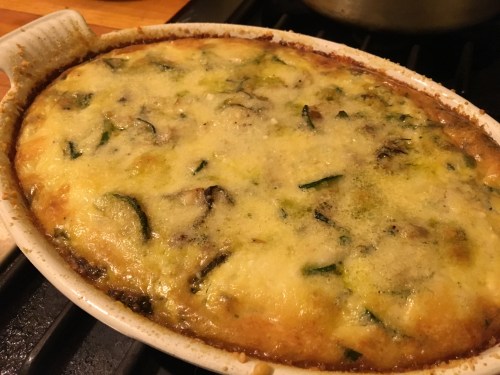
Recipe below: Zucchini Gratin with Marjoram, Wild Fennel, and Parsley

Here’s a nice thing to eat while recuperating from a bout of summertime Lyme disease, as I am now. It’s so easy to throw together you can even do it with a raging fever. Add a green salad, maybe one with a mustard dressing to play against the richness of the gratin, and you’ve got a full meal.

This year my herb garden is especially robust, and is probably where I picked up Lyme in the first place. At any rate, lately I’ve been thinking up combinations of three or more herbs, which can be tricky. I want them to blend well, with no hard edges, but I still need to taste the essence of each one. An herb union that for me without a doubt works is the time-honored French fines herbes blend of parsley, chives, tarragon, and chervil. It marries two anisey tastes, one strong, one delicate, while the chives act more like a savory ingredient, and the parsley is just flat-out gorgeous, as in so many dishes.

Here I’ve chosen three classic Mediterranean herbs, relying on the idea that what grows together goes together. The flavor is strong but not hit-you-over-the-head herby, and I love the way the herbs open up in the setting of the custard that holds the whole thing together. I’m thinking this trio would also make a great pesto for pasta. I’m planning to try that as soon as dinner rolls around again.

IMG_1966.JPG

Zucchini Gratin with Marjoram, Wild Fennel, and Parsley

For this gratin I used an 8-x-11-inch oval Le Creuset baking dish. Anything more or less that size will work well.

(Serves 4 as a main course or 5 or 6 as a side dish)

A little softened butter to grease your pan
3 large eggs
¾ cup milk
3 tablespoons crème fraiche
¾ cup grated fontina Val d’Aosta cheese
¼ cup grated Parmigiano Reggiano cheese
½ teaspoon quatre épices
1 tablespoon  cognac
Salt
Black pepper
Extra-virgin olive oil
5 medium summer zucchini, not too thick, cut into coins
1 summer onion, thinly sliced
1 fresh garlic clove, thinly sliced
½ teaspoon thin honey
5 sprigs of marjoram, the leaves lightly chopped
A few wild fennel fronds, well chopped
6 or so large sprigs of flat-leaf parsley, the leaves chopped

Preheat the oven to 375 degrees, and butter your gratin dish well (on the inside only).

In a medium mixing bowl, combine the eggs, milk, crème fraiche, cheeses, quatre epices, and cognac. Season with salt and black pepper, and whisk well.

In a large sauté pan, heat about 2 tablespoons of olive oil over medium-high flame. When it’s hot, add the zucchini and the onion, and sauté until golden and fragrant, about 6 or 7 minutes. Add the garlic in the last minute of cooking. Season with salt, black pepper, and the honey. Add all the herbs, mixing them in.

Pour the zucchini into the gratin dish, smoothing it out. Give the cheese mixture a few more whisks, and pour it over top.

Bake until golden at the edges and just firm in the center, about ½ hour.

Let sit for about 10 minutes before serving.

Woman with Fish

endre-szasz-woman-with-fish-headdress

I’m a strong woman with a righteous fish hat.

still_life_with_chicken-bijijoo.jpg

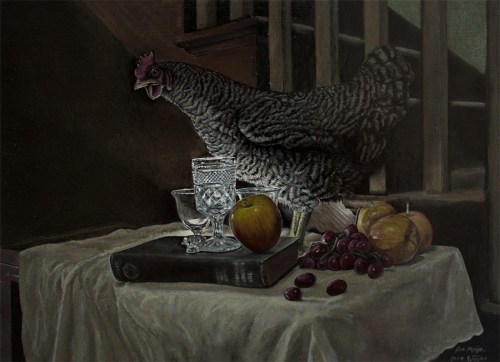
Still Life with Chicken, by bijijoo.

Recipe below: Chicken Liver Crostini with Watercress and Radish Salad

Roman Polanski seems to have a deep interest in watching blonde women eat raw meat. In his film Repulsion, you see Catherine Deneuve gnaw on a bloody steak and also tote a raw, skinned rabbit around in her purse. Then in Rosemary’s Baby, you watch Mia Farrow devour raw calf’s liver in a satanic fit. I first saw both of those films when I was a teenager. You’d think watching that carnage would have disgusted me, but not so fast. As a budding cook, I was fascinated by the idea of someone eating raw liver. It’s smooth, shiny, and springy to the touch, so different from, say, hamburger meat. It must, I thought, be something special.

Maybe not surprisingly, I turned out to be a liver lover, especially chicken liver. I do, however, prefer it cooked, though, yes, I have tried raw chicken livers. Their taste isn’t bad, but their mouth feel is troublesome. The thing with liver is that you don’t want it raw, but you don’t want it hammered either. People who are grossed out by liver, in my opinion, have eaten it overcooked, when it’s tough, depressingly gray, and irony. Cooked right—quickly and left pink within—it’s creamy and has an intriguing mineral undertaste.

Some of my favorite pastas have included chicken livers, either with tomato, in the Mezzogiorno fashion, or with a white sauce, created with the mingling of a soffrito, some booze, and a little chicken broth. Here’s my recipe for the latter. Another favorite preparation, one that’s quick and elegant, is to caramelize chicken livers over high heat, leaving them pink at the center, splash on some cognac, and then toss them into a salad of bitter greens. That gives you a beautiful marriage of flavors, just about the best thing I’ve found to ease myself out of a hangover, especially when taken with a glass of light, dry wine such as a frascati. If you’d like to try it, here’s my recipe.


At the moment my favorite way with chicken livers is in a pâté. The classic Tuscan version usually contains capers, a touch of anchovy, and fresh sage. I’ve been making it that way for years. But lately I’ve wanted to change it up, toward a more French style built on butter, brandy, and gentle seasoning. Unlike most classic pâtés, which can take half a day to prepare, the chicken liver types come together in only about twenty minutes. This one is very smooth, with hints of thyme and sweet spices. In this recipe, I serve the pâté with a salad, but if you prefer, just send it out in a ramekin, along with crackers or toast points (remember those?).

Chicken Liver Crostini with Watercress and Radish Salad

(Serves 4 as a first course)

For the pâté:

¾ stick unsalted butter, softened
About ¾ pound chicken livers, trimmed and cut into approximately 1-inch pieces
1 shallot, minced
1 garlic clove, thinly sliced
¼ teaspoon allspice
¼ teaspoon nutmeg
1 fresh bay leaf
4 large sprigs thyme, the leaves lightly chopped, plus the leaves from a few more sprigs for garnish
Salt
A tablespoon of cognac, calvados, or brandy
Black pepper

Plus:

1 baguette, cut into thin rounds on an angle

For the salad:

2 bunches watercress, stemmed
5 gentle spring radishes, thinly sliced
2 tablespoons extra-virgin olive oil
1 teaspoon Spanish sherry vinegar
Salt

In a medium sauté pan, heat a tablespoon of butter over medium heat. Add the chicken livers, shallot, garlic, allspice, nutmeg, bay leaf, and thyme. Season with salt, and sauté over medium flame until the livers are cooked through but have a bit of pink left in the middle. You’re not going for browning here. You just want them tender. This should take about 4 minutes.

Add the cognac, and let it bubble for a few seconds (be careful, as it can flame up). Take the pan off the heat, and let the livers cool down for a few minutes. You should have a tiny bit of liquid in the pan. If not, add a splash of warm water.

Remove the bay leaf, and add the livers and any cooking liquid to a food processor. Pulse until roughly puréed.

Add the softened butter and a few grindings of black pepper. Purée until everything is blended and smooth. Taste for seasoning, adding more salt if needed.

Spoon the pâté into a ramekin or a shallow ceramic bowl. Refrigerate for several hours before serving. This will help it firm up and develop flavor.

To serve, place the watercress and the sliced radish in a salad bowl. Pour on the olive oil, and sprinkle on the vinegar. Season with a little salt and toss. Toast the bread rounds (three per serving), and spread a thick layer of pâté on each one. Divide the salad onto 4 plates and surround each serving with three crostini. Garnish the crostini with thyme leaves.

1819344-XLKBDTDO-7

Italian Vegetable Garden, by Simona Cristofari.

Recipe below: Peppers and Eggs

Arriving home on Long Island at 4 a.m. or so from another night of Manhattan club-hopping, exhausted and starving as only a teenager can be, I’d sometimes wander out to my father’s little backyard garden to grab a tomato or a pepper, or parsley, or anything that would help me turn out a fast dish of eggs or a sandwich. Occasionally I’d run into my father back there, in the semi-dark, wearing a bathrobe or pajama bottoms, the orange coal of his Winston glowing. He’d be weeding, picking dead leaves, evaluating the growth of his eggplants, the zucchini, pinching back his now huge basil plants. At first I was startled to see him there at such an odd hour, but soon it became unsurprising. It was just what he did. We’d chat briefly about my evening, about the group of rotating gay boys I went out with, which always made him shake his head and laugh.

My hunger made me not want to linger in the damp garden. I’d be thinking that the peppers looked very much ready for picking. “I’m going in to make peppers and eggs,” I’d say. “Do you want some?” The light would be just starting to come up, bringing his bushy herb plot into focus. The Italian parsley was so big its leaves drooped to the ground. He’d look over at his tangle of plants, some held up by broken pool cues, and grab two half-red Italian frying peppers, a handful of basil, and a few sprigs of oregano. “I’ll make the eggs,” he’d say. He liked cooking eggs.

At the kitchen table I’d pour us diet root beer and run a wet paper towel over my face in an effort to remove what remained of the evening’s ridiculous makeup job. I was still wearing the turquoise-colored, Pucci-inspired muumuu I had found in the depths of my mother’s closet. It now smelled of dried sweat and amyl nitrite.

He cooked the eggs quickly, adding garlic and salt. I found a hunk of semi-stale Arthur Avenue bread and put it on the table. I was so hungry I could hardly stand it. The mingling aromas of torn basil and peppers smelled so good. My father tilted the pan, scraping and folding until the eggs were firm. It wasn’t an omelet, and it wasn’t scrambled eggs. It was something in between. We just called it peppers and eggs. An Italian-American classic. It was one of the best meals of my young life.

Here’s how I like to make it:

Peppers and Eggs

For two servings, you’ll need an Italian frying pepper, preferably one that has passed through its pure green phase and is starting to show some red. Seed and slice it. Chop up a scallion, including most of the tender green part. Clean a handful of basil leaves, and then give them a rough chop. Pull the leaves off a large oregano sprig, leaving them whole. Whisk six eggs in a small bowl.

Get a sauté pan hot over medium heat. Add a tablespoon or so of good olive oil, swirling it around to coat the pan. Now add the pepper slices, and sauté them until softened, about 5 minutes. Add the scallion, and let it soften for a minute longer.

Add the eggs, letting them sit for about 30 seconds. Scatter on the herbs, and season with salt and black pepper. Now, using a flexible, heatproof spatula, start pulling the eggs in from the edges toward the center, letting the uncooked parts run into the pan bottom. You don’t want to do a scrambling motion; you want long strokes, so you get more of a lumpy omelet effect. Keep pulling back on the eggs until they’re just set but have not browned at all. You’re not going for runny French eggs here, but you also don’t want them dry.

Cut the eggs in half, and slide them onto two plates. This is best served with good Italian bread and either an espresso, a glass of white wine, or a diet root beer, depending.


2f3f62a9e9ba26ba4764f10765e5a2d5.jpg

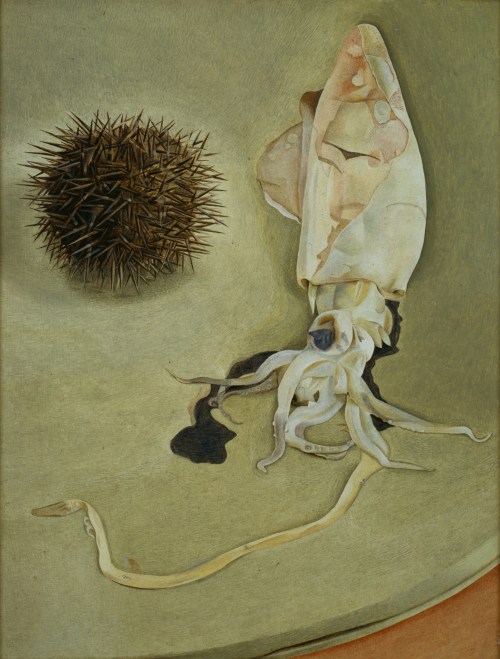
Still Life with Squid, by Lucian Freud (not particularly springlike, but this is the best painting of squid I’ve ever seen).


Recipe below: Braised Calamari with Peas, Potatoes, and Spring Herbs

Calamari with spring peas is a suave combination. Both ingredients, when impeccably fresh, are sweet, and their mingling sweetnesses, one vegetal, one aquatic, blend to produce a unique culinary flavor.  Around May I start thinking of the taste. It’s one of the ways spring enters my chilled soul.

I’ve cooked I don’t know how many pasta variations using these two ingredients. I’ve made a Venetian-inspired calamari and pea risotto with saffron and basil. Just thinking about that aroma drives me a little wild. It’s good in a frittata, too. Grilled squid with a side of peas sautéed with spring onions and prosciutto makes an excellent first-of-the-season BBQ festa (add a bowl of strawberries steeped in cool red wine, and it’s complete).

To my mind, squid with peas speaks of Sicily, but the coupling shows up in Genoa, in Venice, in Puglia, just about anyplace in Italy that’s close to water. In the Mezzogiorno, tomato is often included. I’m not a fan of that; I find that it dilutes the gorgeousness of the union (and tomatoes and peas aren’t in season at the same time anyway). What makes more sense to me is gentle spices with spring herbs. I’ve added nutmeg and star anise, but just a hint of each. If you’ve never tasted that spice pairing, try grinding them together and take a good whiff. It’s transporting (to where I’m not quite sure, but somewhere far from where you are). Tarragon and young basil create a complex anisey flavor, so I included them too. You can substitute chervil for either of those fine herbs. Or combine all three. Garnish the dish with clipped chives if you like. In Sicily, mint is traditional. I love that too, but here I wanted to mix it up a bit. I love being generous with spring herbs.

IMG_1853.JPG

Braised Calamari with Peas, Potatoes, and Spring Herbs

(Serves 4)

Extra-virgin olive oil
¼ cup well-chopped pancetta
2½ pounds medium-size squid, cleaned and cut into rings, the tentacles left whole (or halved if really large)
A big pinch of sugar
½ teaspoon ground nutmeg
½ teaspoon ground star anise
1 large shallot, cut into small dice
Salt
1 garlic clove, thinly sliced
A big splash of dry vermouth
1 cup light chicken broth
1 fresh bay leaf
3 medium Yukon Gold potatoes, peeled and cut into small cubes
Black pepper
2 cups fresh spring peas
1 heaping tablespoon unsalted butter
A handful of tarragon sprigs, the leaves lightly chopped, or chervil sprigs left whole
About a dozen young basil leaves, left whole if small, otherwise cut in half
A sprinkling of clipped chives for garnish (optional)

In a large casserole fitted with a lid, heat about a tablespoon of olive oil over medium heat. Add the pancetta, and cook it until just starting to crisp. Add the squid, the sugar, the nutmeg and star anise, and the shallot, and sauté a minute or so to coat the squid with oil. Season with a little salt, and add the garlic, letting it soften for about half a minute. Add the vermouth, and let it bubble for a few seconds. Add the chicken broth and the bay leaf, and bring it to a boil. Then lower the heat, cover the pot, and simmer gently for about ½ hour.

Add the potatoes and cook for another 5 minutes.

Next add the peas and simmer, uncovered, until the squid is tender and the potatoes and peas are just cooked through, about 8 minutes longer. It should be a bit brothy. If it’s too tight, add a little chicken broth or water.

Season with black pepper and more salt, if needed. Add the butter and herbs, and stir them in. Top with a sprinkling of chopped chives, if you like. Serve hot with slices of bruschetta brushed with olive oil and a little garlic.

still-life-with-fish-bread-olives-levin-rodriguez

Still Life with Fish, Bread, and Olives, by Pieter Claesz.

Recipe below: Halibut with an Olivata Crust

Isn’t it wonderful when a loved but somehow forgotten dish comes back into your life? Fish baked with a crusty top was fashionable when I was a kid. My mother often served it to company, because it was easy, looked fancy, and tasted good. She mixed breadcrumbs, dried oregano, sometimes anchovies or capers, and garlic and packed it all down on cod fillets. Occasionally she’d add pine nuts or almonds. The resulting dish was crunchy, oily, and tender, loaded with the flavors of Southern Italy. That covers many culinary must-haves for me.

When did I last cook it? I can’t remember. When you cook as much as I do, certain foods get pushed aside to make room for newer, more exciting creations. But then those old dishes, if they’re good ones, always find their way back into my culinary consciousness, either for an obvious reason, such as seeing them on a menu, or in random thoughts, like in a dream. I often dream about food. Most cooks do.

My reawakening to crust-topped fish came while I was paging through a French-language cookbook at a library sale. I saw a photo of what looked just like my mother’s crunchy fish. I thought, how old-fashioned but how perfect. I could taste it, feel the textures on my tongue. I needed to make it, right away.

The topping for such a dish can vary, but the technique won’t, and you’ll want to get it down. I’ve found that cooking the fish quickly in a hot oven is essential for a crisp top and a moist interior. If your heat is low, you’ll wind up with a flabby topping and steamed-out fish that smells like your college cafeteria. So I give it a blast in a 450-degree oven until it’s just tender, pull it out, and let it sit for about 3 or 4 minutes before serving it. That allows the fish to firm up and heat through to perfection, so you get that tidy little fish package that plates up so nicely.

Halibut with an Olivata Crust

⅓ cup black olives (Gaeta are a good choice), rinsed, patted dry, and pitted
Extra-virgin olive oil
1 large shallot, cut into small dice
½ cup breadcrumbs, not too finely ground
6 big sprigs thyme, the leaves chopped, plus the leaves from about 5 or so sprigs for garnish
1 teaspoon Dijon mustard
The grated zest from 1 big lemon
Salt
Black pepper
4 pieces halibut, skinned (about 6 ounces each), about ½ or ¾ inch thick
A big splash of brandy or cognac
The leaves from few big sprigs of flat-leaf parsley, left whole

Preheat the oven to 450 degrees.

Pulse the olives with a tablespoon of olive oil in the food processor until finely chopped but not puréed.

In a sauté pan, heat 2 tablespoons of olive oil over medium heat. Add the shallots, and sauté until soft, about a minute. Add the breadcrumbs, and heat until crisp, another minute or so. Take the pan off the heat, and add the olive mixture, stirring to blend it in. Add the thyme, mustard, and lemon zest. Season with black pepper. Taste to see if it needs salt (if your olives are salty, you might not want to add any salt). The mixture should stick together when pressed between your fingers. If it’s too dry, add a little more olive oil.

Choose a low-sided baking dish that will hold the fish with out crowding. Drizzle the bottom with olive oil, and lay the halibut in the dish, leaving a little space between the pieces. Press an approximately ¼-inch-thick layer of the breadcrumb mix on the top of each piece of fish. Give everything another drizzle of olive oil, and drizzle the brandy over the fish.

Bake until the fish is just cooked through and its top is crispy, about 5 minutes, depending on the thickness of the fish. Take the fish from the oven, and let sit for about 3 minutes, so it can firm up a bit. Plate, garnishing with the reserved thyme and parsley leaves. I like this served with asparagus vinaigrette or a watercress side salad.

Eat at Gastronomia Norma

IMG_1744.JPG

I went searching for a good pasta con le sarde and discovered that there are only a handful of Sicilian restaurants in Manhattan. Most of them are only marginally Sicilian, and more pan–Southern Italian. I mentioned this lack in a recent post, and a reader wrote to ask if I had ever been to Gastronomia Norma. No. I had never even heard of it. He thought it was very good and said I should check it out. Well, it turned out to be a few blocks from my mother’s apartment, so I got to the lovely little place quickly, and I’d like to tell you about it.

On first take the restaurant looks like a slightly fancy pizza joint, but as I settled in and gazed around I noticed gorgeous pottery hanging on the wall, dark green and tan, a color scheme I recalled from buying similar pieces near Menfi, in the southwest of Sicily. I learned that the owner had brought the big plates from his hometown of Trapani. There are also wide-mouthed yellow ceramic pots, tall, dark green glass vases, and baskets. The espresso machine and the meat slicer are gorgeous and shiny. A lot of thought went into the ambiance and also, more important, into finding authentic ingredients, as I knew from my first bite of caponata. The man behind the food and the pretty décor is Salvatore Fraterrigo, a native Sicilian but one quite familiar with the New York restaurant world, having worked at Il Buco and at I Trulli, two excellent Italian places. He’s a lively and attentive host, even when the place gets crowded, and it does.

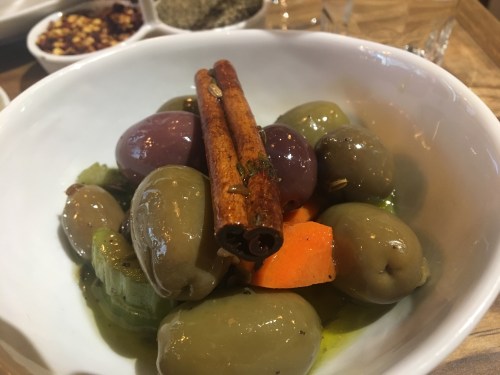
Gastronomia Norma is not a full-on restaurant. It offers no secondi. Pasta and pizza, both baked in the wood-burning oven, are the main things here. But there is also a selection of piccoli piatti, all classic Sicilian, including three types of arancine, Sicilian rice balls. The rice in the squid ink arancine is black as black can be, and the thing is filled with chopped shrimp and tomato. It had my name written all over it. My friend tried the eggplant-filled one, which was also delicious.  And you can get taglieri, excellent salumi and cheese platters, all fashioned from high-quality ingredients. I really liked the carpaccio di polipo, octopus cut prosciutto-thin and garnished with orange, fennel, and olives. The caponata was exactly right, with soft collapsed eggplant, whole green olives, and plenty of agro-dolce flavor. It came with grilled bruschetta brushed with olive oil. And speaking of olives, I loved the olive bowl, marinated in cinnamon and fennel, a combination that encapsulates what is special about Sicilian flavors.

IMG_1710

I hoped to find an eggplant and ricotta salata pizza, and there it was, the Norma. The eggplant was cooked dark and caramelized, making it especially appealing. The crust on all the pizzas has that yeasty, pully, bubbled up, lightly charred flavor and texture that I always look for but rarely find. For me a pizza place without an anchovy pizza is a sorry, sad place. No problem at Gastronomia Norma. It’s got two. The one with roasted cherry tomatoes and pecorino was my favorite, its anchovies first-rate Sicilian-packed. The pizza with mortadella and ricotta was also a knockout, and I loved the pizza with Italian tuna, black olives, and mozzarella, too.

You can enjoy the house-made porchetta in cabbuci, sandwiches made with Sicilian wood-fired rolls, or on pizzas or as a piccoli piatti. I had a cabbucio, of soft and fatty porchetta, provolone, and arugula, with a glass of rosato as my dinner one night, after visiting my mother down the block. And they make my all time favorite cabbucio, the cunsato, with tomatoes, anchovies, primo sale (very young pecorino), and olives, all soaked in good olive oil. I first tasted a cunsato in San Vito lo Capo, in northwestern Sicily, at a beach-side stand, and I went crazy for it. Good anchovies, of course, were a main draw, but the entire package was perfect. And here it is at Gastronomia Norma.

And Norma had what I wanted most of all, an excellent pasta con le sarde, made as a timballo and baked in the pizza oven. I was hesitant when the dark-crusted, impenetrable-looking dome came to my table. It had been fashioned in a mold and turned out onto the plate. How could it be anything but solid and dry? But when I broke it open, luscious spaghetti with all the expected aromas of fennel, sardine, and saffron came pouring out. Raisins and pine nuts were properly present. And it had lots of sardines, some of them almost puréed, some in big pieces. I was very happy with it.

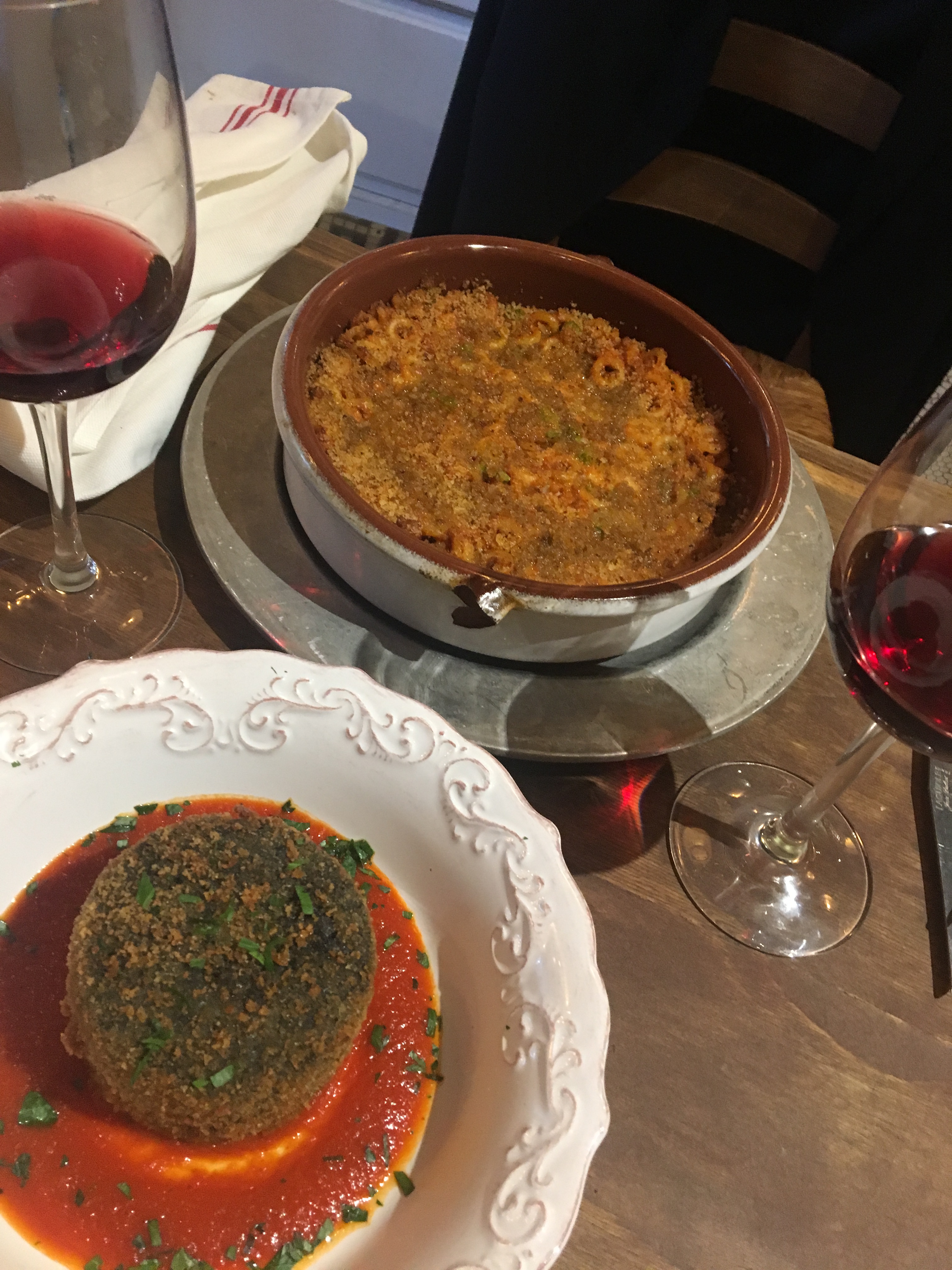
The baked anelletti, with beef ragù and peas, came in a wide baking dish, its bottom lined with tender eggplant slices, its top crisp with breadcrumbs. It was also spot on. I had that with a glass of the house frappato, a light and really fresh-tasting wine made from a Sicilian grape. On another night I ordered a bottle of Cerasuola, a wine I first tasted in Sicily, a mix of frappato and Nero d’avola, fruity but deeply flavored, with, thankfully, no oak anywhere to be found.

I’ve yet to try the homemade sausage, or the saffron and ragù arancine, or the porchetta pizza, or the panelle, a fried chickpea pancake that’s Sicilian specialty. And there are many more Sicilian wines I’m aching to drink.

I will be back.

Gastronomia Norma is at 438 Third Avenue, between 30th and 31st Streets, in Manhattan. (212) 889-0600.

IMG_1751.JPG

Baked anelletti, in the back, their arancine con nero di seppia in the pretty white bowl, and glasses of frappato.

a505acff3e8c62a0bf7108b856988c11

If you’re behind on your Easter dinner planning and need a quick but traditional Italian verdura, this here is it, especially if you make it with frozen peas—no shelling involved, and in New York frozen is all we’ve got for now. I say this is traditional. Well, the peas, pancetta, and onion combo is classic, but I’ve added some other flavors to deepen and round out the taste experience. I include nutmeg, allspice, coriander seed, vermouth, and fresh mint. This makes a beautiful side for lamb or in an all-vegetable Easter table. You can even leave out the pancetta if you like, but it’s definitely better with it in. Frankly I’d be happy with just this one dish, some good bread, a few glasses of rosé wine, and a slice of pastiera for dessert. What more could one need?

Happy Easter to all my Italian cook friends.

Easter Peas with Pancetta, Onion, Mint, and Warm Spices

(Serves 4)

Extra-virgin olive oil
¼ pound pancetta, cut into small cubes
1 large Vidalia onion, cut into small dice
¼ teaspoon ground nutmeg
¼ teaspoon ground allspice
¼ teaspoon ground coriander seed
3 cups freshly shucked peas (or you can use frozen, thawed, and well drained)
¼ cup dry vermouth
¼ cup chicken broth
Salt
Black pepper
10 spearmint sprigs, the leaves lightly chopped

In a large skillet, heat about a tablespoon or so of olive oil over a medium flame. Add the pancetta, and sauté it until crisp but not too darkened. Add the onion and all the spices, and sauté until the onion has softened and everything is fragrant, about 3 minutes or so. Add the peas, and sauté for a minute. Add the vermouth, letting it bubble for a few seconds. Add the chicken broth, and cover the skillet, to allow the peas to cook through to just tender. Fresh peas will take about 4 minutes; the frozen ones go faster. When they’re almost tender, uncover the skillet to let some liquid evaporate. Season with a little salt (the pancetta is salty, so taste first) and black pepper.

Pour the peas with all their skillet juices into a wide serving bowl. Drizzle on a little fresh olive oil and scatter on the mint. Serve right away.

niccca7oise.jpgStill Life with Italian Tuna, by Caron Eastgate Dann.

Recipe below: Tonnato Crostini with Roasted Peppers and a Spring Herb Salad

I learned how to make vitello tonnato when I working at Le Madri restaurant many years back. An Italian cook named Matteo was ordered to teach me the tonnato part of the thing. He spoke only a few words of English, but my Italian was somewhat passable, so I thought we’d get on well enough. We started by making a simple maionese in the food processor, using egg yolks and olive oil. That went fine. Then he told me to add Italian tuna, anchovies, and capers, and then to “make liquid” the sauce with wine, veal cooking broth, and a little lemon juice. The smell was gorgeous. And it was familiar, too,  because my mother used to make a tonnato, but she used Hellmann’s, and its odd sweetly sharp taste came blasting through, despite all the anchovies and such. This was so much better.

So Matteo went off and left me to “make it perfetto.” After a bit of adjusting it seemed pretty perfetto to me, so I called him back for a taste. He tilted the food processor bowl toward him. He looked troubled. “More strong,” he said, and he walked away. Okay. So I added more anchovies, more capers, more lemon. He returned again, looked into the bowl, and now he was clearly pissed. He repeated “more strong,” but louder. So I began to add yet more capers. Then he kind of lost it. He screamed at me in Italian: I refused to follow directions, I did as I fuck pleased, and did I think I was the chef? Sweat dripped from his ears. He looked like he was going to hit me. It was getting very bad quickly. He called me “stupid” and then another word I didn’t understand. Finally the actual chef came over to see what the commotion was. Would I be fired over tonnato? I sure hoped not. I really liked this job. But we quickly got to the bottom of it. It turned out that to Matteo “more strong” meant thicker, not stronger in flavor. Had he just used the Italian word densa, I would have known what he wanted. Not altogether unsurprisingly, about a month later he got fired, after he broke his girlfriend’s arm. She was a timid Tuscan girl who waitressed at the restaurant. It looked like her nose had been broken too, from what I could see.

Despite my rocky introduction to constructing a tonnato, I love this sauce. It contains many of the elements of Italian cooking that are dear to my heart, olive oil to start with, and then anchovies and capers and lemon. It’s sea-tasting without being fishy. The olive oil comes through clearly. I like to use an oil that’s bright and golden and not too bitter. The sauce looks like mayonnaise, but there’s nothing too mayonnaisey about it. It’s great in its classic role, paired with thin-sliced poached veal for vitello tonnato, but it’s so good that sometimes I just whip up a bowl of it as a dip for pinzimonia, or raw vegetables. It’s especially good with fennel, celery, cucumber, and endive. It makes a nice pasta sauce, if you thin it with cooking water and maybe add pine nuts and arugula or fresh herbs like flat-leaf parsley. I’ve made stuffed eggs by mixing cooked yolks with tonnato sauce, basil, dill, and chopped cornichons. Delicious. I really like it with roasted sweet peppers, too. It reminds me of the red peppers filled with Italian tuna salad (meaning olives and capers included) that my mother occasionally made for company, before she decided it was outmoded. I’m hanging on to the flavor combination for this just-verging-on-spring salad. I hope you’ll enjoy it. You can even make vitello tonnato with it, if you want.

IMG_1740.JPG

Tonnato Crostini with Roasted Peppers and a Spring Herb Salad

(Serves 4)

For the tonnato sauce:

2 extra-large egg yolks, at room temperature
¾ cup extra-virgin olive (one that’s not too biting, maybe Sicilian rather than Tuscan; I like Ravidá and Olio Verde)
1 5-ounce can Italian tuna, packed in olive oil (I like the Flott and Toninno brands), drained and crumbled
1 tablespoon salt-packed capers, soaked in several changes of water for ½ hour and then drained, plus a palmful of soaked capers for garnish
3 anchovy fillets, rinsed and chopped
1 tablespoon dry vermouth
About ¼ cup chicken broth
Lemon juice
Salt
Black pepper

For the salad:

A handful of chives, cut into 1-inch lengths
A handful of tarragon sprigs
A handful of flat-leaf parsley leaves
About a dozen small basil leaves
A small head of frisée lettuce, torn into small pieces
1 teaspoon lemon juice
1½ tablespoons extra-virgin olive oil
Salt
A big pinch of ground nutmeg
Black pepper

Plus:

1 roasted red pepper, peeled, seeded, and cut into strips
1 baguette, cut into rounds on an angle (three slices per serving)

Put the egg yolks in the bowl of a food processor, and pulse until they’re pale yellow, about a minute or so. Start adding the olive oil in a very thin stream. When it looks like it’s catching (getting thick), start adding it a little faster. When the oil is all used up, your mayonnaise should be quite thick.

Now add the tuna, anchovies, capers, and vermouth, and pulse until everything is fairly smooth. Add enough chicken broth to loosen it all to a still thick but verging-on-pourable sauce (start with a tablespoon, which may be all you need). Season with lemon juice, salt, and black pepper, and give it a final pulse. Pour it into a bowl, and leave it at room temperature. It will set up a bit.

Place all the herbs and lettuce in a bowl.

Toast the bread rounds on both sides.

Add the lemon juice and olive oil to the salad, and season it with salt, black pepper, and the nutmeg. Toss it gently.

Divide the salad onto four plates. Spoon some tonnato sauce onto each slice of toast. Top with a few slices of roasted pepper. Place three crostini around each salad. Garnish the crostini with the extra capers, and give them all a drizzle of fresh olive oil.