Feeds:
Posts
Comments
be295a5d793f77f1c723d03638ff5532

Spring fresco, ca. 1600 B.C., Akrotiri, Greece.

Recipe below: Lamb with Spring Peas, Saffron, and Ginger

When I first tasted a Moroccan lamb couscous I couldn’t completely sort out the foreign, deep sweetness on my tongue. It wasn’t a curry exactly, at least not one of the 6th Street heaps I was used to. It was curry-like but cleaner, I’d say. There was a gentle pull of flavors that never grew weary on my palate the way some too involved curries can. At the time I hadn’t yet been to a good Moroccan restaurant. That first lamb couscous was one I cooked for myself, in the early 80’s, from a recipe in Paula Wolfert’s Couscous and Other Good Food from Morocco. That fall and winter I cooked my way through the entire book. What a mind blower. I had been brought up on excellent Southern Italian food, and what Wolfert was writing about had some similarities, but it went off on a beautiful tangent, adding subtle spices in intriguing ways. I learned that you add only a few spices to any dish. In the case of that lamb couscous, it was the combination of saffron, ginger, and cinnamon that mingled to produce the soft, haunting taste that pulled me right into a new culinary world.

New York’s weather has finally, after a gray and cold six months, turned warm. The daffodils are up. I decided to test a lamb and spring pea recipe in celebration. The root of this particular lamb dish is Sicilian, an Easter stew I’ve made many times, flavoring it traditionally with bay leaf, white wine, and rosemary. This time around I had Paula Wolfert’s Moroccan version in mind. I have to admit I’m occasionally disappointed by the simplicity of Sicilian cooking. I guess I want it to taste more of its long Arab and Moorish past. Sicily has many of the same ingredients—olives, figs, mint, honey, orange flower water, saffron, pistachios, and prickly pears, and they’re all used to make gorgeous food. But for the most part, spices have drifted out of Southern Italian cooking, replaced largely by fresh herbs. I miss the spices.

Sometimes I cook up altered versions of traditional dishes, embellishing them to live up to my fantasies. Here I’ve borrowed my favorite Moroccan triumvirate of flavors—saffron, cinnamon, and ginger—to create a Sicilian-Moroccan hybrid but one with restraint. Adding layers to my familial cooking does give me freedom, but when I fear I’m verging into the realm of betrayal, I pull back. I dread 3 a.m. wake up calls from unrevealed ancestors telling me I’ve gone too far. Ridiculous, but there you are. So any of my Sicilian, Neapolitan, Tunisian, Moroccan hybrid recipes will always make for a fairly seamless blend. Still, I have to say, some of my excursions in this direction have made me very happy.

Happy spring cooking to you.

Lamb with Spring Peas, Saffron, and Ginger

(Serves 4 or 5)

2½ to 3 pounds boneless lamb shoulder, cut into roughly 2-inch cubes
Salt
Freshly ground black pepper
A sprinkling of sugar
1 teaspoon ground ginger
1 teaspoon ground cinnamon
Extra-virgin olive oil
1 round white spring onion, chopped, using all of the tender green stem
1 fresh bay leaf
1 tablespoon flour
A big splash of dry white wine
4 cups light chicken broth
A large pinch of saffron threads, dried, ground, and dissolved in a few tablespoons of hot water
4 spring carrots (a variety of colors is nice here), cut into thick rounds
1½ cups freshly shucked spring peas
1 tablespoon runny honey
⅓ cup whole toasted almonds, roughly chopped
About 10 big sprigs of fresh spearmint leaves, stemmed

Dry the lamb well and then toss it in salt, black pepper, sugar, ginger, and cinnamon. Heat a tablespoon or so of olive oil in a large casserole fitted with a lid. When it’s hot, add the lamb, and brown it well on all sides. You might want to do this in batches if the casserole gets too crowded. The lamb should smell of sweet spice. Next add the onion and bay leaf, and sauté, turning the lamb in the onion, until the onion has softened. Sprinkle on the flour, and stir it around so it coats everything well and loses its raw taste. Add the white wine, and let it bubble away. Add the broth and the saffron water. Add water if needed to just cover the meat. Bring everything to a boil.

Turn the heat to low, cover the pot, and simmer for about an hour. Now add the carrots, and continue cooking until the lamb is very tender, about an hour or so longer. Add the peas and the honey, and cook, uncovered, until the peas are just cooked through, about 10 minutes. Check for seasoning, adding salt and definitely a little more fresh black pepper. The broth should be soupy but have a little body from the addition of the flour. Skim the top, turn off the heat, and let the stew sit for a few hours to develop flavor (I find that this will also further tenderize the meat).

When you’re ready to serve it, gently reheat it, and then ladle it out into big bowls, garnished with the almonds and the mint. It will be nice with a side of buttery couscous or grilled bruschetta brushed with olive oil.

And here’s a little Vivaldi for you.

2

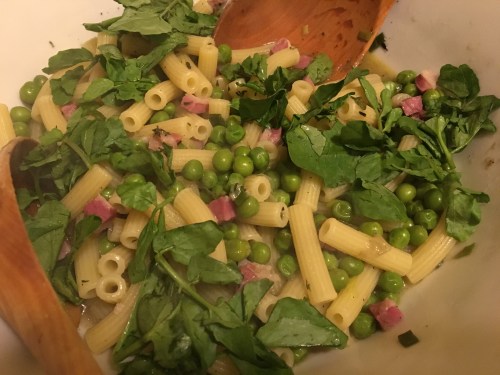
Recipe below: Penne with Peas, Watercress, and Spring Garlic

Spring peas sautéed with delicate lettuce was a highbrow dish in seventeenth-century France, where garden peas were all the rage. It was especially popular with the ladies. The combo is still served in France. When I first heard about peas with lettuce, I found  it odd (why would anyone cook  lettuce?) but also alluring. Certain food pairings that I’ve come across in my studies or just in life have had a strong pull, a tug of the exotic. They’ve gotten embedded in my brain, filed away as beautifully foreign, meaning, I guess, not Southern Italian. Radishes with butter. Pork with prunes. Manchego with quince. Peas with lettuce. Peculiar in concept, but all have made perfect sense once I tasted them.

So here’s peas cooked with Bibb lettuce, a green so delicate that it melts almost into a slime at the slightest touch of heat. As it turns out, that’s a good sort of slime, and it makes for a well-balanced dish, with back tastes of both sweet and bitter. There’s a reason for its longevity.

I played around with this spring pairing, looking to fit it more neatly into my Italian world, and came up with, what else, a pasta dish. I first tried the recipe with Boston lettuce (basically the same as Bibb), cutting it into chiffonade and wilting it into the pasta. I wasn’t crazy about the mouth feel or the mushy look of the result, and the sturdy pasta threw off the naturally delicate balance. I then tried romaine, which looked better, but I didn’t love the taste (I don’t like the dulled-out taste of romaine in much of anything, even in Caesar salad).  Arugula? Too strong against the peas. I finally settled on watercress. I like its unique gentle bitterness, and the dark green of the cress against the lighter green of the peas tosses up nicely with penne.  Pasta e piselli, a classic, but this time with lettuce. Spring is here, finally.

IMG_2733.JPG

Penne with Peas, Watercress, and Spring Garlic

(Serves 6 a first course)

2 cups shelled peas (from about 1½ pounds of peas in their pods, and save a handful of the pods)
2 cups light chicken broth
Salt
Extra-virgin olive oil
A  1/4-inch round of pancetta, well chopped
Butter
1  large spring onion, chopped, including the tender green stem
1 stalk spring garlic, chopped, leaving behind any tough part
A few big thyme sprigs, the leaves chopped
A few big scrapings of nutmeg
Black pepper
A splash of dry marsala
1 pound penne
2 bunches watercress, well stemmed
A chunk of Montasio or Piave cheese

Pull out a medium-size pot and put the reserved pea pods in it. Pour on the chicken broth, and bring it to a boil. Turn the heat down, and let it simmer, uncovered, for about 10 minutes. Strain the broth into a cup or a small bowl. It should have a gentle sweet pea aroma.

Set up a pot of pasta cooking water, and bring it to a boil. Add salt. Drop in the penne.

Get out a large sauté pan, and set it over medium heat. Add a drizzle of olive oil and the pancetta, and sauté until crisp. Add the onion, garlic, thyme, and nutmeg, and season with salt and black pepper. Let it all soften and grow fragrant. Now add the peas, turning them around in the soffritto for a minute or so. Add the splash of Marsala, and let it bubble away. Add the chicken broth, and cook until the peas are just tender, about 4 minutes. Turn off the heat, and add 2 tablespoons of butter, stirring it in.

When the penne is al dente, drain it, and add it to the pan with the peas. Toss it all quickly over low heat until everything is well blended.

Pour the penne into a big pasta bowl. Scatter on the watercress. Add a little more salt and black pepper and a few big gratings of the cheese. Toss. The heat of the pasta will lightly wilt the watercress. Serve right away, bringing the rest of the cheese to the table.

And here’s a little video to go with it:


Women with Fish

e43ba4257cfbaacc0bc57e506cc83b5d--frida-diego-tattoo-art

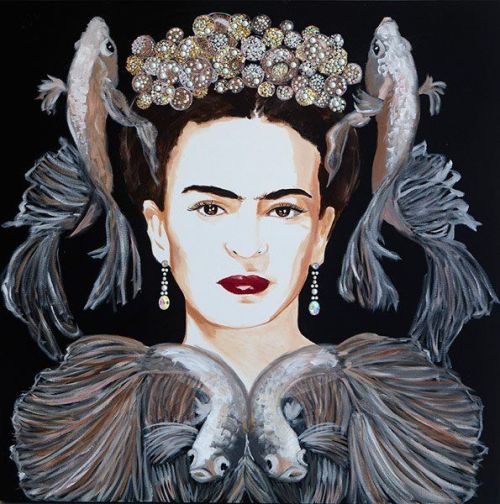
Frida with Japanese Fighting Fish and Bubble Crown, by Sarah Ashley Longmore.

846a386e4b0456fa33b5205e028f06c8--guiseppe-arcimboldo-optical-illusions

Recipe below: Fettuccine with a Spring Soffritto, Peas, and Speck

When I create a recipe, as thrilled as I sometimes get with the outcome I never come up with something completely new. (Is there anything new under the Mediterranean sun?)  What I do is work the flavor memories of my mind. I move them around to vary the patterns. I take into consideration flavor combinations that become more than the sum of their parts, such as the blending of rosemary and fennel seed, the traditional aroma of a well cooked porchetta, or the mingling or vanilla and orange flower water, the underpinning of pastiera di grano, the Southern Italian Easter pie that I love more than any other dessert.

These combinations lie at the heart of my cooking, Southern Italian and Mediterranean tastes that no matter how I bend them are a little familiar to anyone who cooks or eats in that area of the world or who, like me, works with ancestral flavors on foreign soil.

I’ve been contemplating what improvisational cooking really means to me, and I’ve found myself jotting down a short a list of recurring flavor combos that I use as kicking off points. The traditional Southern Mediterranean pairing of garlic and olive oil can serve as both beginning and end, as in spaghetti aglio e olio, or as just a starting point, if, say, I decide to layer together fresh oregano, tangerine zest, and white wine, and pour the result over a whole sea bass as a marinade, before hefting the fish onto a grill. The creativity is deciding what to add and what to take away.

Here are a bunch of flavor combinations that I imagine pop into the heads of many Italian cooks when they set out to create a meal. If you have other recurring themes rattling around in your head, feel free to send them along.

Orange flour water and vanilla: the unmistakable aroma of pastiera di grano, the Campanian Easter pie. You can layer in fresh orange zest or candied orange for extra oomph. I often do.

Lemon and vanilla: the underlying taste of  panettone. There’s even exists Fiori di Sicilia, a ready-made liquid mix of this classic flavor combination that many panettone cooks rely on. Drizzle in some anisette for a haunting trio, perfect for ciambella, the Italian bundt cake.

Rosemary and fennel: the traditional flavoring for porchetta and also excellent, I’ve found, on strong fish like sardines or mackerel. Fennel pollen is beautiful to use in place of the seeds.

Raisins and pine nuts: the classic Spanish-Arab pairing used in Sicilian meatballs and many Sicilian dishes of the agro dolce category, such as caponata. I love this combo in a savory vegetable torta, where the addition of pecorino and fresh marjoram round out the flavor.

Garlic and olive oil: aglio e olio, the backbone of Southern Italian cooking, and, on its own, one of the best condimenti for spaghetti. Add hot chili and anchovies and a sprinkling of breadcrumbs to create my favorite midnight pasta.

Olive oil, garlic, green olives, and capers: add fresh mint, parsley, and oregano and you’ve created a salsa verde, perfect over grilled shrimp or spooned onto mozzarella. Add tomatoes and you’ve got the starting point for a puttanesca sauce. You can flesh it out with anchovies, fresh oregano, parsley, and even some good canned tuna.

Soffritto of onion, celery, and carrot: a  base for ragù and simmered sauces and stews. What would osso bucco be without it? I sauté onion, celery, fennel, and fresh chili in olive oil as a starting point for pasta e fagiole. And for a gentle tomato sauce, I like to begin by sweating shallot and carrot in butter and then maybe adding a splash of sweet vermouth before I throw in the tomatoes.

Ricotta and nutmeg: if you add sugar you’ve got the filling for a pasticciotto; if instead you include chopped parsley, you can stuff manicotta. Ricotta and cinnamon make the best filling for Sicilian style cannoli, and also for my grandfather’s big Christmas ravioli.

Fennel and saffron: the underpinning for pasta con le sarde. You’ll then go on to add raisins and pine nuts to make the dish complete.

Parmigiano and butter: just a magical blending of flavors. Add a few leaves of fresh sage for an almost instant sauce for spinach ravioli.

Anchovies and butter: I’d eat this on anything. Add parsley and thyme to make a great compound butter for steak.

Pancetta or guanciale and onion: add tomato and hot chili for bucatini all’ amatriciana.  Add garlic, white wine, rosemary, and maybe a handful of mushrooms for pollo alla cacciatora.

Recipe: Fettuccine with a Spring Soffritto, Peas, and Speck

Here I start with a soffritto of young leeks, carrots, celery leaves, and spring garlic, and then go on with the spring theme by adding fresh peas. I thought about adding mint, which goes so well with peas, but somehow the speck seemed to cancel that idea out.

(Serves 2 as a light main course)

For the soffritto you’ll want 2 young leeks, well chopped, 1 chopped carrot, a handful of celery leaves, and 1 chopped stalk of spring garlic (before it starts to form cloves). Pull out a big sauté pan, and drizzle in some good olive oil and a pat of butter. Add all your soffritto vegetables, and sauté them over medium heat until everything is soft and fragrant, about 4 minutes. Season them with a little salt, pepper, and a few scrapings of nutmeg.

Now add a cup or so of freshly shucked peas, giving them a little stir in the soffrito. Add a big splash of dry vermouth, and let it bubble off. Add a cup of light chicken broth, partially cover the pan, and simmer until the peas are tender, about 3 or 4 minutes. Turn off the heat, and stir in ¼ cup of crème fraîche.

Cook ¾ pound of fettuccine until it’s just tender, drain it, and add it to the pan. Then add 4 or 5 thin slices of speck cut into julienne. Toss everything well over low heat, adding more chicken broth or crème fraîche if you need to adjust the texture (it should be a bit creamy). Add a few more twists of fresh black pepper and several generous gratings of grana Padano or parmigiano cheese. Toss again, taste for seasoning, and plate it.

1b66fa2eb6b312eb7835a569c29c52f0--hyperrealism-modern-art

Pomeriggio a Fiesole, by Baccio Maria Bacci, 1926.

Recipes below: Eggplant Purée with Saffron and Pistachios; Pan-Roasted Chicken with Parsnips and Shallots

As a kid, I found meals at my grandmother’s trying. They were New York Italian-American to the max. Incongruous food, one dish after another—salami, provolone, and giardiniera, then a Waldorf salad (her favorite), followed by sausage lasagna or ravioli, turkey or pork chops with vinegar peppers, stuffed artichokes, cranberry sauce from a can, dandelions with garlic and oil, mashed potatoes, Romano beans in tomato sauce. Plates were constantly being whisked away and replaced with new plates. Nanny seemed to never sit down. She hovered over the table like a giant hummingbird, breathing down your neck, grabbing serving spoons, laying down heavy platters. I felt such a relief when the glass bowl of raw fennel appeared, a signal that the meal was trailing off. But that was still before the pignoli cookies, chocolate cake, and German prune pastries my grandfather loved, and the Strega and Anisette. After that, walnuts in shells, tangerines, espresso, and cigarettes, for hours. Exhausting, even a little frightening. A child held hostage at table. And that wasn’t just on holidays.  Oddly now, decades later, the thought of those dinners fills me with joy and calm. We had all the time in the world back then. Or so it seemed.

I’ve decided we all need longer meals, maybe not quite as dragged out as when Nanny orchestrated the night, but an hour and a half minimum for dinner, even during the week. Dinners that culminate in a relaxed stupor are good for the soul. There was something pure about Nanny’s style, where everything was a separate course. Very Italian. I vote for that, but possibly omitting the Waldorf salad.

Lengthy dining is validating for a cook, too. Many people don’t seem to grasp the fact that the cook can feel like hired help in her own home. There’s almost nothing more demoralizing than watching a tableful of friends or relatives shovel down a beautiful dinner in twenty minutes.  Two hours of thoughtful cooking instantly turned to poop.

I’m not going to run around like my hectic old Nanny—that was painful to watch—but a few good dishes, made ahead and leisurely paced, produce a nice flow. And the key is made ahead.  Many vegetable dishes in Southern Italy and around the Mediterranean are prepared early in the day and served later, at room temperature, and they taste best that way, their flavors coaxed to blossom while they sit and cool. I peruse the antipasto table of my mind and pull out one or two fine dishes. One will be an appetizer, something fun, like crostini with roasted sweet peppers, to eat standing up, like you’re at a party. Then on to a sit-down first course, say a cannellini bean salad with good olive oil and fresh sage, served unaccompanied. That way you can really get to appreciate that olive oil you paid so much for. Then I’ll usually follow with something I’ve roasted or stewed, maybe a pork loin  with aioli (there’s that good olive oil again). Then a green salad. Cheese. Fruit. Maybe some nuts. I’m all for bringing back nuts in shells, with nutcrackers. A great ritual. Soothing. And, as my mother taught me, making slightly too much food is freeing. You can accommodate a last-minute drop-in without freaking out. Maybe I’m alone in this, but I love an unexpected guest.

One possible drawback to a lengthy dinner is too much drinking. A problem for me, at least. Remember the water. Buy a decent-looking pitcher and fill it with good tasting water. Forget the ice cubes. Icy drinks are a real palate killer. And buy good wine. You’ll respect it more and savor every sip, maybe even drinking less.

Here’s a menu for a leisurely dinner for two, all made ahead, with leftovers for lunch the next day, or enough to accommodate a dinner time drop-in. The meal will go well with a rich Italian rosato, such as a Cerasuola from Abruzzo.

Menu

Eggplant Purée with Saffron and Pistachios, served with carta di musica or crostini
Broccoli Rabe with Pancetta and Chilies
Pan-roasted Chicken with Parsnips and Shallots
Boston Lettuce and Dandelion Salad
Pears with Young Pecorino and Wildflower Honey

Eggplant Purée with Saffron and Pistachios

Here’s my Sicilian take on baba ganoush. No tahini here; I use yogurt instead, but the technique is similar.

You’ll need, a pinch of saffron, two medium eggplants, good olive oil, a small chopped shallot, a sliced garlic clove, salt, black pepper, a pinch of sugar, a little ground cumin, Greek yogurt, a handful of shelled, unsalted pistachios, and a palmful of chopped dill or fennel sprigs.

First you’ll want to grind the saffron threads to a powder and dissolve them in a few tablespoons of hot water, giving them a good stir. Next roast the eggplants in a hot oven until they’re soft and collapsed. Scrape out their insides. Sauté the shallot and the garlic in a little olive oil until it’s soft. Add the eggplant, and season it with salt, black pepper, a pinch of sugar, and a bigger pinch of cumin. Cook until everything is fragrant, about 3 minutes. Add the saffron water, and then transfer the eggplant mixture to a food processor, and give it a few pulses. Add a heaping tablespoon of Greek yogurt, a big drizzle of fresh olive oil, and a handful of chopped, unsalted pistachios. Pulse just until blended—you’ll want to keep a little texture. Turn the purée out into a bowl, and stir in some chopped dill or fennel. Garnish with a little more of the herbs and chopped pistachios.

Pan-Roasted Chicken with Parsnips and Shallots

Preheat your oven to 425 degrees.

Set out eight chicken thighs, skin on, preferably bone in, on a big sheet pan. Skin and cut in half 3 shallots. Skin 3 parsnips and 2 carrots, and cut them into approximately 1-inch rounds. Add the vegetables to the sheet pan, and drizzle everything generously with olive oil, season with salt, black pepper, some Aleppo pepper, and a sprinkling of ras el hanout. Scatter on chopped fresh thyme, a little rosemary, and a spritz of sherry wine vinegar. Mix all the ingredients well with your hands. Turn the chicken pieces skin side up, and spread everything out in more or less one layer. Roast until the chicken is fragrant, browned, and just tender, about a half an hour. You can serve this as soon as it’s ready or let it sit. Hot or warm is fine; room temperature is good, too.

Women with Fish

b14e372c5120a43465cadb9ea360b406--bw-photography-bravo


ALTHOUGH you hide in the ebb and flow
Of the pale tide when the moon has set,
The people of coming days will know
About the casting out of my net,
And how you have leaped times out of mind
Over the little silver cords,
And think that you were hard and unkind,
And blame you with many bitter words.


1898283-FGUZDFNL-7

Ten Thousand Leaves, by Kae Sasaki.

Recipe below: Swiss Chard Gratin with Montasio and Pine Nuts

When I was eleven or twelve, I began worrying about hurting leaves. I feared that pulling a leaf off a tree and tearing it in half would be like slicing into my forearm with a razor blade. Eventually I tried to avoid even brushing against a tree, thinking the leaves would experience a dull ache, like the muscle pain I’d feel after an especially hard ballet class. I’m not sure I told anyone about it, but eventually it extended to the dinner table. Watching my father rip leaves of basil for a salad or my mother cook spinach over a high flame became difficult. The pain for the basil, the spinach! I couldn’t eat salad. Chewing raw leaves: impossible. I looked forward to fall, when all the leaves would fall away and dry to a crunch. Then I’d know they were truly dead and couldn’t be harmed any longer.

I’m not clear how long this hangup lasted, a few years for sure. I know it went through two summers, because I remember preparing myself for the second round of spring buds appearing. That was hard. But eventually it all faded away, and I went back to running around like a normal kid.

I didn’t think about that peculiar time in my life for decades, until I was handling Swiss chard for this recipe. Touching those big, somewhat ruffly leaves, slicing away the thick stalks, I felt an old familiar weakness in my fingers. Careful. I shouldn’t be doing this. And I’m a gal who has butchered legs of lamb and ripped the skin off live eels. Luckily, the return of my leaf issue didn’t last more than about ten minutes. Then I got on with my massacre dread-free.

And free to go on with an easy but good vegetarian end-of-winter recipe. A classic gratin, using leaves. I associate this kind of preparation with French bistro cooking, but Italians make it too. Besciamella is the base that holds your leaf of choice in a creamy suspension, usually along with a little cheese. I had a firm chunk of Friulian Montasio in my fridge and used it. The French would more likely go with a Gruyère-type. Montasio tastes a little like Parmigiano, only slightly less umami. It melts beautifully (it’s what’s used to make Frico, that lacy pan-sautéed cracker-type thing that’s so good draped over salad or placed on hot soup).

To my palate, the flinty taste of Swiss chard makes an especially sophisticated leaf gratin, but escarole or chicory or spinach will work, if you can stand handling them. Now I can.

Swiss Chard Gratin with Montasio and Pine Nuts

(Serves 4)

2 bunches of Swiss chard (about a pound), any really thick center stalks cut away, what remains washed and then well chopped (leave a little water clinging to it)
Extra-virgin olive oil
1 small shallot, finely diced
1 garlic clove, thinly sliced
Salt
Black pepper
A few big gratings of nutmeg
5 large sprigs of marjoram, the leaves chopped
½ cup pine nuts, lightly toasted

For the besciamella:

2 tablespoons unsalted butter
1tablespoon flour
1 cup whole milk, maybe a bit more
Salt
Black pepper
1 fresh bay leaf
A little grated allspice
3/4 cup of grated Montasio or Parmigiano cheese
½ cup homemade dry breadcrumbs, not too finely ground

Preheat the oven to 425 degrees.

Get out an approximately 8-by-11-inch low-sided baking dish (I used a similar size Le Creuset), and rub the inside with a little olive oil.

Make sure the chard is well chopped and slightly damp. In a big sauté pan, heat about a tablespoon or so of olive oil over medium flame. Add the shallot and the garlic, and let them soften for about 30 seconds. Add the chard, seasoning with salt, black pepper, and nutmeg, and sauté until the chard collapses and is tender, about 5 minutes. Pour off excess liquid, and add the marjoram and the pine nuts. Spoon the chard into the baking dish.

To make the besciamella, melt the butter over medium heat in a saucepan. Add the flour, and whisk until smooth. Let bubble a few seconds to burn off the raw flour taste. Then add the milk, the salt, pepper, bay leaf, and allspice, letting it all slowly heat through, whisking frequently. Keep whisking until the sauce is bubbling and thickened. Turn off the heat, and add 1/2 cup of the Montasio, stirring it in to melt. It should be thick but pourable, so stir in a drizzle more milk, if needed, to loosen it.  Pour this over the chard, and mix it around to blend it in.

Mix the remaining Montasio with the breadcrumbs and a little olive oil, and season with salt and black pepper. Sprinkle over the top of the gratin.

Bake until the top is lightly browned and the edges are bubbling, 20 minutes or so. Let rest about 5 minutes before serving, just so it sets up.


cocks-by-ernest-goh

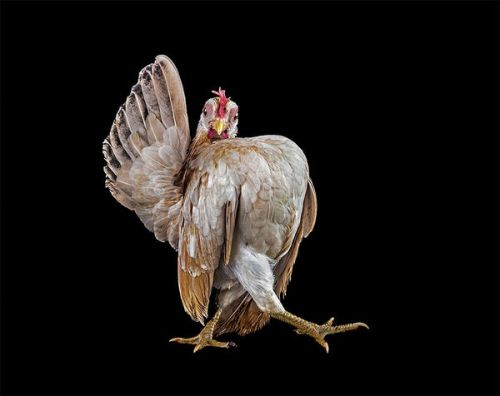
Chicken, by Ernest Goh.


Recipes below: Lasagnette with Chicken Livers and Woody Herbs; Chicken Giblet Salad

I am the queen of no waste. Or I try to be. Actually, I’m not always a success with it. I have an inbred problem of cooking too much food.  It’s something I got from my mother, who always anticipated a few extra guests coming through the door (and it was often true). Huge bowls of salad were her specialty. Mine is pounds of pasta. The big bowl of leftover ziti or cavatelli sits in my refrigerator for days, until its contents are glued into a cold, leaden mass. A terrible waste. I need to get a grip on that. But one thing I am truly up with is using all the things stuffed inside chickens. I’m talking about the giblets—the neck, gizzard, heart, and liver.

The neck I roast with the chicken. It adds flavor to the gravy and is just good for eating.  The gizzard, heart, and liver sometimes go into a hangover salad, a dish I discovered in the Catskills several decades ago. We used to weekend at a funky inn called La Duchesse Anne. It was run by Martine, a prickly but increasingly friendly (the more time we spent there) woman from Brittany. We loved the place and were beyond sad when it burned down in 1996.  Its menu offered some adventurous French dishes, and chicken giblet salad was one of them. We’d stagger downstairs on a Sunday afternoon, disoriented and headachy from a night of Pernod, wine, duck fat, and calvados (and sometimes cigarettes, back then). For brunch we could order crêpes filled with eggs, ham, and gruyère, but what most spoke to me was that giblet salad. It was a plate of mustardy greens topped with crispy bits of chicken gizzard, heart, and liver. It, along with coffee and a glass of Côtes du Rhône, was extremely restorative. Martine knew what she was doing. I make it at home sometimes. It’s a great way to use up giblets, if I’m not throwing them into stock (although I never use the liver for that; it turns stock bitter).

I  also save livers in the freezer. When I get a good bag full, I almost always make my other favorite giblet dish, pasta with chicken livers ( but first I pull one out for the cats, who like it sautéed in sweet butter, no salt). I make this pasta in different styles, depending on my mood and the season. It can be elegant, with grappa and leeks and finished with crème fraîche, or I can go rustico and do a Southern Italian tomato thing, with garlic, oregano, and a hit of peperoncino. I’ve used fresh egg pasta at times, or even rigatoni, depending. Here’s a recipe that falls somewhere in between glamour and comfort. Perfect for a winter night. If you like chicken livers, I think you’ll find this flavor mix brilliant. And below it there’s a recipe for my giblet salad.

Lasagnette with Chicken Livers and Woody Herbs

(Serves 4 as a main course)

Extra-virgin olive oil
2 medium leeks, well rinsed and cut into small dice, using only the white and tender green parts
Salt
Black pepper
1 garlic clove, thinly sliced
About 4 large sprigs of rosemary, the leaves well chopped
6 large sprigs of thyme, the leaves lightly chopped
4 allspice, ground to a powder
A big splash of dry white wine
1 35-ounce can plum tomatoes, drained and then well chopped
½ cup chicken broth, or possibly a little more
2 tablespoons unsalted butter
¾ pound chicken livers, trimmed and cut into medium chunks
A pinch of sugar
A splash of cognac or brandy
1 pound lasagnette
5 or 6 sage leaves, cut into chiffonade
A chunk of pecorino Toscana cheese for grating

In a large sauté pan, drizzle about 2 tablespoons of good, fruity olive oil. Add the leeks, and sauté until softened, about 4 minutes. Season with salt and black pepper. Add the garlic, rosemary, thyme, and allspice, and sauté a minute longer, just to open up their flavors. Add the splash of white wine, and let it bubble a few seconds. Add the tomatoes and the chicken stock, and simmer for about 6 minutes. Turn off the heat.

In a large sauté pan, over high heat, melt a tablespoon of butter and a drizzle of olive oil. Dry the chicken liver chunks well. When the oils are hot, add the livers, seasoning them with salt, pepper, and a pinch of sugar, and sear until well browned on one side, about a minute. Turn and brown the other side, about a minute longer. Add the splash of cognac or brandy, but watch out for flare-ups. If you get a big burst of flame, just turn off the heat and let the alcohol burn off. The livers should still be pink in the center. Pour them and any pan juices into the tomato sauce.

In a big pot of salted, boiling water, start cooking the lasagnette.

When the pasta is al dente, drain it, keeping a little water clinging to it, and pour it into a large, warmed serving bowl. Add a tablespoon of butter and a drizzle of fresh olive oil, the sage, and a few big gratings of the pecorino. Toss gently. Pour on the chicken liver sauce, and toss again, adding a little more chicken broth if it seems dry. Bring it to the table with the chunk of pecorino for grating.

* * *

Chicken Giblet Salad

To make two servings you’ll need the giblets from two chickens, cut into bite-size pieces and patted dry. Take two generous handfuls of bitter greens such as escarole, chicory, arugula, endive, a nice mix, and toss them, along with a few thin slices of shallot, with a mustard vinaigrette (a gentle blend of Dijon mustard, good olive oil, and a drizzle of sherry vinegar, plus salt and pepper). Plate that. Next put a tablespoon or so of butter in a sauté pan and get it hot over high heat. Add the giblets, seasoning them with salt and black pepper, and sauté them until just browned, shaking the pan a bit so they cook evenly. This should take only a minute or so. Then add a splash of brandy or cognac to the pan, and let it flame out. Spoon the giblets over the salad, and finish with a sprinkling of fresh herbs. I like a mix of parsley and tarragon or thyme. If you want, add warm, boiled, halved baby Yukons to the salad. A nice touch. Eat the salad really hot, with a warm baguette and a glass whatever wine appeals to you (you truly can go white or red here).

Women with Fish

MFV-S-JBN077-0017-FBWoman-Pearl-Fisher-from-the-Island-of-Hekura-Japan-Posters
Le-Leah, Leah, Le-Leah, Leah
Here I go
From the hut to the boat to the sea
For Leah
Ah-hah I gotta go diving in the bay
Gotta get a lot of oysters find some pearls today
To make a pretty necklace for Leah
Le-e-ah
I’ve gotta go deep and find the ones just right
I’ll bet my Leah’ll be surprised tonight
I’ll place the pearls around the only girl for me
Le-e-ah
But something’s wrong I cannot move around
My leg is caught it’s pulling me down
But I’ll keep my hand shut tight for if they find me
They’ll find the pearl for Leah
And now it’s over I’m awake at last
Old heartaches and memories from the past
It was just another dream about my lost love
‘Bout Le-e-ah
Le-Leah, Leah, Le-Leah, Leah
Here I go
Back to sleep and in my dreams I’ll dream
With Leah, Leah, Le-ah
545px-Pompeii-couple

Portrait of a Baker, Terentius Nero, and His Wife, from the walls of Pompeii. I wonder if he used measuring spoons.

Recipe below: Olive Oil Yogurt Cake with Cardamom

For two reasons I don’t do elaborate baking. First, I have almost no sweet tooth. I know that’s odd for a daughter of the land of cannoli. All my empty calories come from wine, and wine seems to squelch my desire for sugar. Second, I get anxious when I have to measure precisely. I have an aversion to measuring cups and spoons, especially ⅓ and ¼ cup measures. And ¼ teaspoon also agitates me. Is there a ⅛ teaspoon measure? I hope not. I avoid preparations where I think I’ll have to deal with any of those things. And don’t get me started on scales.

Despite all that, I do a lot of baking. I get around my issues by choosing things that aren’t super sweet and, more important, will forgive me if I want to just wing it. I cook up sweet and savory tortes and all sorts of biscotti. I love farmhouse-type Italian cakes, like ciambelle, that are usually made in a bundt pan. And I often bake what in my family we call breakfast cakes, which means you can eat them at any time of the day. For those I most often use a big springform pan. Olive oil is my fat of choice. Those cakes tend toward white, not chocolate. I vary them by adding orange flower water, lemon zest, vanilla, almonds, hazelnuts, pistachios, blueberries, pears, grappa, nutmeg, allspice, black pepper, star anise, cinnamon, or the cardamom and coriander seed I chose for this version.

Yogurt is a good thing to include in a breakfast cake. It adds moisture and a faint sourness that’s almost undetectable but pulls it away from birthday cake world. Same with olive oil. It lightens it up and produces a puffy texture that I love. I always choose a fruity extra-virgin one without a lot of bitter.

I like to use this and other simple cakes (such as my olive oil polenta variation) as points of departure for improvisation. For instance if you omit the spices here and instead add a drizzle of orange flower water and some orange zest and up the vanilla a bit, you’ll get something that tastes a little like a ricotta Easter cake. So play around.

Olive Oil Yogurt Cake with Cardamom

2 cups pastry flour
A big pinch of salt
1 tablespoon baking powder
2 teaspoons ground cardamom (or a little less if freshly ground)
1 teaspoon ground coriander seed
A few grindings of black pepper
2 large eggs
1 cup whole-milk plain yogurt (I prefer brands that are not too sharp and have the cream on top, like Brown Cow)
1 cup sugar (or a little extra if you like things sweeter)
½ cup extra-virgin olive oil, plus a drizzle more for the pan (a fruity oil, not a biting Tuscan type)
1 teaspoon vanilla extract
A splash of cognac or grappa

Preheat the oven to 350 degrees.

Smear a little olive oil inside a 10-inch springform pan.

Put the flour in a big bowl. Add the baking powder, salt, and all the spices. Give it all a good stir.

Put the yogurt, eggs, and sugar into the bowl of a standing mixer (or use a hand mixer). Mix until they’re light and a little fluffy, about a minute or so. Add the flour gradually, until just mixed in. Then pour in the olive oil, vanilla, and cognac, mixing them until they’re just blended, maybe about 10 seconds.

Pour the batter into the pan, and bake it until its top is lightly browned and its center feels springy to the touch, about 35 to 40 minutes.