Feeds:
Posts
Comments

IMG_3850.jpg

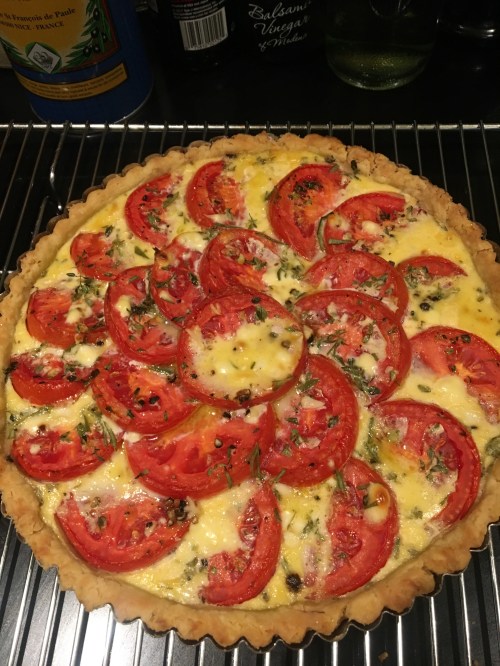
Recipe below: Tomato Torta with Rosemary and Goat Cheese

It’s getting to be that sad time of year when those smelly pots of ugly rust-colored flowers get trotted out and distributed to stoops and porches around New York, a signal that summer has come to a close. Yes, I’m talking about mums. I dislike no flower except them. When the mums come out, I feel sick at heart, and maybe a little sick in the head, too. Luckily we still have tomatoes. The best ones of the season are happening now. In fact, I’ve still got a deck full of big green Calabrian beefsteaks. I mean really green. They might be ready by Christmas.

Even though my personal tomatoes are stupidly late this year, I can still go to Migliorelli Farm and get beautiful heirlooms in many varieties. This year they’ve grown spooky black cherry tomatoes with a good balance of sweet and acid. They also have San Marzano and Roma plums.

I’ve made several tomato torte this summer, and I wanted to fit in a few more before the season truly wound down. The problem with using fresh local tomatoes for a tart is that they can give off a lot of liquid, possibly making the crust soggy, which is no good. But if you go for a plum variety, which is more meaty than watery, that won’t happen. I went with the Migliorelli Roma, and it worked well. I kept the torta simple, adding only goat cheese and a little rosemary. Super good. It’s still summer around here.

15976046819_899e471b4a_b

Still Life with Tomatoes, by Ako Lamble.

Tomato Torta with Rosemary and Goat Cheese

(Serves 6 as an appetizer)

For the crust:

2 cups all-purpose flour
½ teaspoon allspice
½ teaspoon salt
1 tablespoon powdered sugar
¼ cup extra-virgin olive oil
⅓ cup dry white wine, or possibly a little more

For the rest:

6 or 7 summer plum tomatoes, depending on their size
Salt
3 ounces soft goat cheese, at room temperature
½ cup half and half
1 egg
1 small garlic clove, minced
1 tablespoon powdered sugar
½ teaspoon allspice
Black pepper to taste
A few large sprigs of thyme, the leaves chopped
2 large sprigs of rosemary, the leaves chopped

To make the crust, put the flour in a medium-size bowl. Add the allspice, salt, and sugar, and stir everything around. Drizzle on the olive oil and the wine, and mix it all around with a wooden spoon until you have a bowl of crumbly, moist clumps. If the clumps seem dry, drizzle on a tiny bit more wine. Now dump it all out onto a work space, and press the clumps together, kneading a few times, until they come together in a ball. Wrap the ball in plastic, and let it rest, unrefrigerated, for at least an hour.

Slice the tomatoes into not-too-thin rounds, sprinkle them with salt, and lay them out on a paper towel to soak up any excess liquid. I’ve chosen plum tomatoes for this tart because they tend to be less liquidy than other varieties, but they can still be moist, so it’s best not to skip this step. Let them sit for about 20 minutes.

In the bowl of a food processor combine the goat cheese, half and half, egg, garlic, sugar, allspice, black pepper, some salt, and the rosemary and thyme. Pulse a few times, just until you have a smooth custard. If it’s too thick, add a little more half and half or some milk.

Preheat the oven to 400 degrees.

Lightly oil a 9-inch tart pan. Roll out the dough, and drape it into the pan. Trim off excess dough. I like to build it up a little at the edges to accommodate shrinkage. Layer the tomatoes in the pan in a slightly overlapping circular pattern, ending with one in the middle. Pour on the custard. This is not a heavy, custardy tart; it gets just enough custard to hold the thing together, and not enough to cover the tomatoes entirely. Drizzle the top with a stream of olive oil, and grind on a little extra pepper, if you like.

Bake until the crust is lightly browned and the custard is just set, about 35 minutes.

Let sit for about ½ hour before cutting, so it can firm up.

copy_monet_s__still_life_red_mullet_1869__by_hoopix_d7bfxdv-pre.png

Red Mullets, by Claude Monet.

Recipe below: Pan-Seared Triglie with Rosemary, Fennel Pollen, and Lemon

If you’re not yet comfortable cooking a whole fish, just go out and buy one. Then you’ll be stuck with it. And if you choose something pretty and small, like triglie, it will be much less intimidating. And, anyway, I’m going to talk you through this.

You may know this fish by its French name, rouget, or as red mullet, which is what it’s called here, but whatever you call it, it’s pink and delicious. There are a few good ways to cook it. Grilling is fine, but my favorite way is a hot pan sauté in a mix of good olive oil and bubbling butter—the butter helps brown and crisp the skin and infuse the flesh with fat and flavor.

I first began eating triglie regularly at the Greek fish restaurants in Astoria that I started frequenting in the mid-1970s. I was drawn to it by its orangey-pink skin. I’d pick my fish from the ice case, and the cook would then just throw it on a gas grill. Not the best for flavor, but despite that crass treatment, I loved the fish’s firm texture and mild taste, and I became fixated on it. I’d order two rougets, or even three, if they were really small, and season them only with salt and lemon. Those lovely fish with a side of Greek fries and a few glasses of retsina made a feast night for me. They’d have a fair number of little bones to deal with, but I’ve always just crunched most of them down with a little extra wine. You can also work around them. Totally worth it.

Now when I see nice-looking triglie in the market, which is not that often, I buy it. Its flavor really comes through with this quick pan sauté.

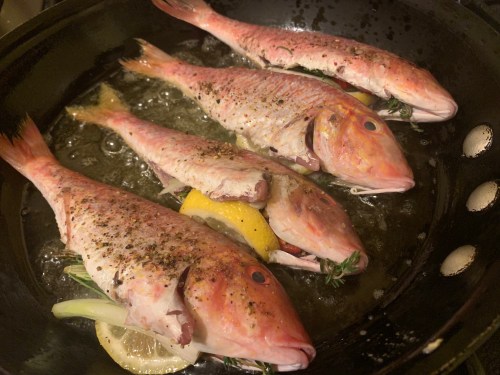
IMG_7101.jpg

Pan-Seared Triglie with Rosemary, Fennel Pollen, and Lemon

For two servings, get your hands on four medium-small red mullets. Scale and gut them, but leave their heads and tails on. Season them inside and out with salt, black pepper, fennel pollen (or ground fennel seed), and a little Aleppo. Stuff their insides with branches of rosemary, and slip in half-moon slices of lemon, a few slivers of garlic, and/or a scallion piece. Don’t worry if some of the stuffing looks like it’s going to fall out. It’s fine if it does, or even better, since it will just become even more flavorful when it hits the hot cooking oils.

Get out a skillet big enough to hold all the fish with a little room to spare. Put it over high heat. When it’s hot, add a generous pour of olive oil (you’ll want about ⅛ inch to coat the bottom). When that’s hot, add a few tablespoons of butter. Slip in the mullets, and let them cook without moving them around at all until you can see that they’re starting to get brown and crisp at the edges. This usually takes about 4 minutes. Now give the pan a shake to make sure the fishes move around easily, no longer sticking. Then you’ll know it’s time to flip them. Then give them a quick flip with a spatula. I guide them over by touching their uncooked sides with my fingertips so they don’t plop onto the pan, making hot oil splatter all over the place.

Scatter some extra chopped rosemary over the tops, just for extra flavor. Turn the heat down to medium, and brown the other sides, probably about another 4 minutes, depending on the size of the fish. These things cook fast. If you want to test, stick a skinny knife in along the backbone. If the flesh pulls away easily, you’re good.

Pull the red mullets from the skillet and onto serving plates. Squeeze on extra lemon juice, and eat. This time I served mine with a corn, tomato, and basil salad, and it felt right.

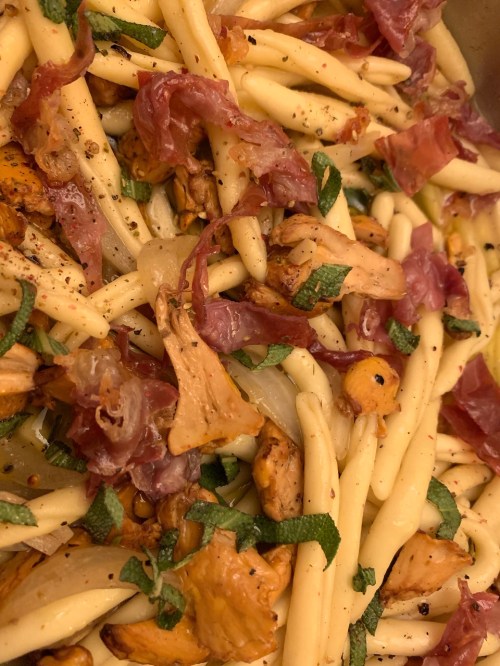
IMG_5353.JPG

Recipe below: Casarecce with Chanterelles, Grilled Prosciutto, and Sage

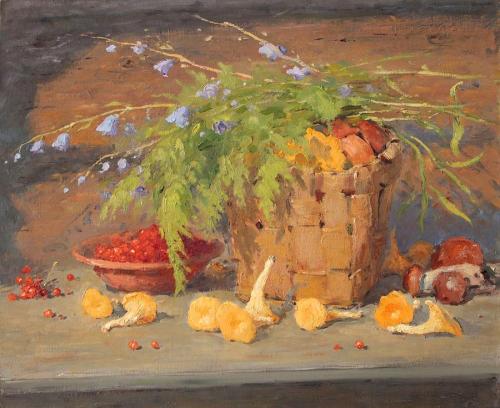
If you ask someone in the Hudson Valley where their favorite chanterelle foraging spot is, you won’t get far. They’ll look at you with that screwed up face that says, “Are you joking?,” or they’ll act like they didn’t hear you. My efforts in hunting for these beautiful mushrooms have so far failed, so when the nice lady at Migliorelli Farm said her longtime forager had just dropped off a bag of fresh picked chanterelles, I bought most of them. They are my favorite mushroom. There’s something light in their flavor, unlike porcini or morels, which both are amazing but with more strident tastes. Chanterelles, to my palate, are complex, sweet, damp, black peppery, and almost fruity up front. I’m thinking apricot fruity, but that might just be because of their somewhat apricot color, a sort of bleached-out apricot. Their texture, thick, velvety, with a touch of slippery, is also a big part of their appeal for me. And their shape, a trumpet, a funnel, a lily, is truly lovely.

still-life-with-chanterelle-alexander-alexandrovsky

Casarecce with Chanterelles, Grilled Prosciutto, and Sage

(Serves 2)

½ pound casarecce pasta (trofie, fusilli, or any other type of stubby, twisted pasta would also be great)
Salt
3 thin slices prosciutto di Parma or San Daniele
Extra-virgin olive oil
2 tablespoons unsalted butter
1 Vidalia onion, chopped
A big handful of chanterelle mushrooms, brushed clean and cut in half lengthwise if large
Black pepper
A few big scrapings of nutmeg
About 5 long thyme sprigs, the leaves chopped
A big splash of dry white wine
½ cup homemade chicken broth
A few drops of rice wine vinegar
About 6 sage leaves, cut into chiffonade
A chunk of grana Padano cheese

Set up a pot of pasta cooking water, and bring it to a boil. Add salt.

While the water is coming to a boil, get out a stovetop grill plate, and get it hot over high heat. Brush a little olive oil onto the prosciutto slices, and place them on the grill. Cook quickly, just until they tighten up and get crisp. You don’t want them to take on any char. Give the prosciutto a flip, and cook a few seconds on the other side. Grab them from the grill, and set them aside.

Get out a big skillet, and set it over medium heat. Add the butter and a big drizzle of olive oil. Add the onion, and let it soften for a minute or so. Add the chanterelles, and season them with salt, black pepper, nutmeg, and the thyme. Sauté until the mushrooms and onion are fragrant and tender, about 4 minutes.

Drop the casarecce into the water.

Add the white wine to the skillet, and let it boil away. Add the chicken broth, and let it simmer for a minute or so. Add a drop or two of rice wine vinegar, only enough to bring up the flavor. You don’t want it tasting obviously vinegary.

When the pasta is al dente, drain it, and add it to the skillet, giving everything a few quick tosses over medium heat.

Pour the pasta into a serving bowl. Add about a tablespoon or so of grated grana Padano and the sage. Toss quickly. Taste for seasoning. Chop the prosciutto, and scatter it over the top. Bring the bowl the table, along with the rest of the cheese.

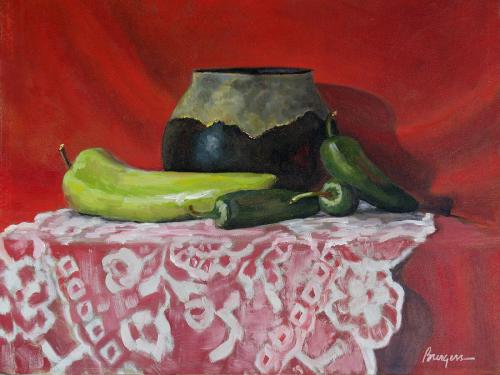
still-life-with-green-peppers-keith-burgess.jpg

Still Life with Green Peppers, by Keith Burgess.

Recipe below: Roasted Green Peppers with Merguez, Rice, and Ricotta Salata, Served with a Quick Tomato Salsa

Sweet green peppers are for me a defining aroma of an Italian-American household. I like to think that means I was a well cared-for child. In terms of feeding, I certainly was. The rest was a crapshoot, but we sure had great food, and lots of it. When I cook up green peppers now, in my own home, their presence produces a bittersweet pang of the heart.

Peppers were a serious part of my father’s little garden. He loved to throw them on the grill until blistered, but he also roasted them along with onions and then mixed them in with sausages for our version of San Gennaro feast food. For grilling we used green bells; for the sausage combo we bought the long, lighter ones we called Italian frying peppers, also known as cubanelle in the Latino community. But my favorite way with green peppers is to stuff and roast them. That was my mother’s way, making a summer dish, but a rather compact one. Some type of ground meat, rice, pecorino, garlic, wine, and herbs all went in, a tomato sauce was made, and the whole was served slightly crusted at the edges. The things were small but powerful. And filling, too, an ideal way to bring a family together at the table.

Green peppers have a different character from the riper red ones, a little sour, harsh even. I’m not crazy about their raw taste, but grilling or roasting makes them fragrant and soft, not sweet but still retaining the edge that makes them so good with assertive herbs and spices. You’ll want a glass of Montepulciano d’Abruzzo with them, and good bread for all the oily, winey juices.

IMG_5322.JPG

Roasted Green Peppers with Merguez, Rice, and Ricotta Salata, Served with a Quick Tomato Salsa

(Serves 4)

For the tomato sauce:

Extra-virgin olive oil
1 small shallot, cut into small dice
1 large summer garlic clove, thinly sliced
4 big round summer tomatoes, chopped and drained
Salt
A few big sprigs of thyme, the leaves chopped
Black pepper
A few drops of balsamic vinegar

For the peppers:

4 green bell peppers
Extra-virgin olive oil
Salt
Black pepper
1 large shallot, finely chopped
1 small inner celery stalk, diced
1 large summer garlic clove, thinly sliced
¾ pound merguez sausage, the skin removed and the meat crumbled
1 3/4 cups cooked long-grain rice
5 or 6 thyme sprigs, the leaves chopped
2 rosemary sprigs, the leaves chopped, plus a bunch of small sprigs for garnish
½ teaspoon freshly ground allspice
Aleppo pepper to taste
A palmful of pine nuts, lightly toasted
½ pound ricotta salata, crumbled
½ cup dry vermouth
½ cup chicken broth

Preheat the oven to 425 degrees.

Make the tomato sauce: Take out a medium skillet, and get in hot over medium-high heat. Drizzle in about a tablespoon of olive oil. Add the shallot, and let it soften for a few minutes. Add the garlic, and sauté until fragrant, about 30 seconds or so. Add the tomatoes, and cook them quickly, uncovered, just to take off their raw edge, about 3 minutes. Season with salt, black pepper, and the thyme. Add a few drops of balsamic vinegar, and turn off the heat. Add the drizzle of fresh olive oil, and stir it in.

Slice the peppers in half lengthwise, keeping the stems if possible (maybe slicing through those, too, if that’s not too difficult). Remove the seeds and inner ribs. Place the peppers, cut side up, on a sheet pan. Drizzle them all over with olive oil, and season their insides with salt and black pepper. Roast until fragrant and about halfway cooked, about 20 minutes. Take them from the oven, and let them sit to cool off a bit. You’ll notice that a little liquid has pooled up inside them. That is good. Leave it. It will add flavor to the stuffing.

Get out a baking dish that will hold all the peppers fairly snuggly. Drizzle a little olive oil into it, and smear the oil around.

In a large skillet, heat about 2 tablespoons of olive oil over medium heat. Add the shallot and celery, and sauté until fragrant and tender, about 3 minutes. Add the garlic and the merguez, and brown lightly. Add the rice. Season with thyme, rosemary, allspice, salt, and a little Aleppo. Sauté everything until well mixed and fragrant, about a minute or so. Take the skillet off the heat, and let it cool for a few minutes. Now add the pine nuts, the ricotta salata, and a drizzle of fresh olive oil, mixing everything well.

Fill the peppers with the mix, and place them in the baking dish, fiilling side up. Mix the vermouth and the chicken broth together in a little bowl, adding a good drizzle of olive oil. Pour it over and around the peppers.

Bake uncovered until the peppers are very tender but still holding their shape, 30 minutes or so. Garnish the peppers with rosemary sprigs, and serve them with a good spoonful of the tomato sauce on top (or over to the side a bit), reheating them if you like.


Salsa Improvvisata

Zwerge-Poster-Gartenzwerge-Krautergarten-E-M-Ott-Heidmann_1024x1024

Herb Garden, by Eva Maria Ott Heidmann.

Recipes below: Anchovy Rosemary Salsa Verde; Caper Thyme Salsa Verde; Sweet Marjoram Salsa verde

I’m all alone in my herb garden. No one wants to weed with me. No one is as taken with herbs as I am. That’s okay. I like working by myself, rubbing against sage, lemon verbena, and Thai basil, releasing their perfumes into the air. For me that is one of the best ways to spend part of a day. Everything is at midsummer’s peak right now, big, fluffy, full of wet worms, frogs with brown squares on their backs, yellow-and-black garter snakes, bees. Lots of critters are hanging around my little garden. I guess I’m not alone after all.

With everything so lush, it’s definitely time to make salsa. I’m talking about Italian salsa verde, the herb and olive oil sauce, which can contain other things like anchovies, capers, almonds, and lemon zest. It’s a summer sauce that takes five minutes to throw together but gives back a hundred times. It demands our complete respect, so give it your best olive oil and you’ll be rewarded for a ridiculously small amount of effort.

Everyone gets excited by salsa verde. People say, “Wow, she’s made a sauce, and just for a barbecue.” Yes, it’s a simple but formal looking sauce that’s greenly elegant and tastes fresh. You can put it on your hot dog instead of relish. Its basic format, chopped fresh herbs suspended in olive oil, can go in many directions

I’ve made salsa verde with just about every herb I grow or can buy. Mint salsa verde is fantastic on grilled lamb or eggplant, though I didn’t include a recipe here. I always like highlighting a single herb, like fennel, for instance, but a mix can be fascinating, too. Say you blend tarragon, chervil, and parsley, adding a little scallion and lemon. Now you’ve got something delicate to use on poached fish. I think my favorite salsa verdes for this season, so far at least, have been ones with a lot of marjoram. I’ve grown to love that herb so much that it has almost replaced basil as the best herb in my world. You could use fresh oregano instead, for a more potent version. And have you ever tried making a salsa verde with nasturtium leaves? It tastes like a caper sauce.

To present these sauces in all their vibrancy, I make them right before serving, in the amounts I think I’ll need, no leftovers. You can use a food processor, but I find it more pleasurable and frankly easier to chop everything by hand. It looks prettier, too. I just rock through the herbs with a classic 8-inch chef’s knife.

I’ve made about a cup of each of these sauces, to serve four or five as a condimento for meat, fish, or vegetables. They’re also great on bruschetta.

IMG_5304.JPG

Anchovy Rosemary Salsa Verde

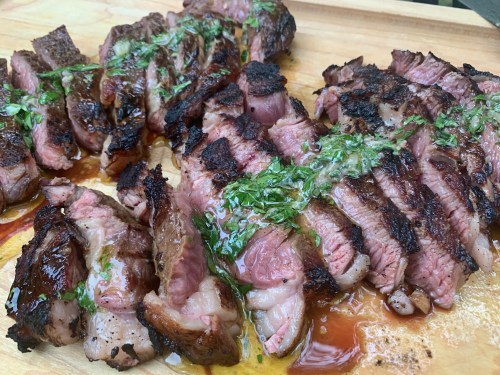
This mix of anchovy and rosemary is just wonderful. I used this on a grilled rib eye. What a treat that was. And try it on grilled leg of lamb.

4 anchovy fillets
1 fresh summer garlic clove, peeled
2 branches of fresh rosemary, the leaves stemmed
A small handful of flat-leaf parsley leaves
½ teaspoon Dijon mustard
1 teaspoon rice wine vinegar
½ cup extra-virgin olive oil, or a little more
Black pepper
Salt, if needed

Chop the anchovy and the garlic finely (or, alternatively, mash them together with a mortar and pestle). Chop the rosemary and parsley. Combine it all in a small bowl. Add the mustard and the rice wine vinegar, mixing them in. Add the olive oil, season with pepper, and give it a stir. Let sit for about 15 minutes before serving. Taste for salt. Add a little more olive oil if it all seems too dense.

Caper Thyme Salsa Verde

I’ve used variations on this herb-and-caper salsa on grilled tuna and calamari and drizzled over roasted sweet peppers.

A palmful of salt-packed capers, soaked, rinsed, and drained
The green part of 2 scallions
Half a jalapeño pepper
4 branches of thyme, the leaves stemmed
A handful of flat-leaf parsley leaves
A squeeze of fresh lemon juice
½ cup extra-virgin olive oil
Salt

Finely chop the capers, scallion, and jalapeño together. Chop the thyme and parsley. Combine in a small bowl, and add the lemon juice and olive oil. Season with salt, and give it all a good mix. Let sit for about 15 minutes before using.

Sweet Marjoram Salsa Verde

There’s nothing better on grilled vegetables, especially tomatoes, than this marjoram sauce.

A palmful of pine nuts, lightly toasted
1 fresh summer garlic clove, peeled
12 big sprigs of marjoram, the leaves stemmed
The grated zest from 1 small lemon
A drizzle of honey
½ cup of extra-virgin olive oil
Salt
Black pepper

Chop the pine nuts along with the garlic. Put them in a small bowl. Chop the marjoram, and add it, along with the lemon zest, honey, and olive oil. Season with salt and black pepper, and give it all a good stir. Let sit for about 15 minutes before serving.

It’s Zucchini Time

il_794xN.1740318991_ribb

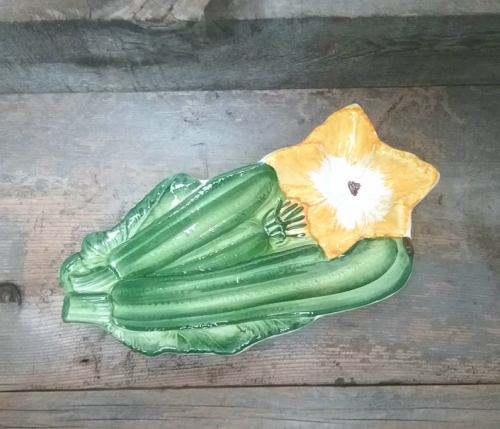
Italian spoon rest with zucchini and blossom.

Recipes below: Fried Zucchini Blossoms with Mozzarella, Anchovy, and Marjoram; Penne with Zucchini, Butter, and Thyme

It took me a while to get around to eating flowers. They seemed so tissue-delicate, like eating my own skin. When I was a kid, even ripping a flower petal gave me the shivers. But now that I’m a grownup professional cook who plunges knives into live lobsters and skins half-dead eels, the flower issue seems silly. I’ve gotten over it. I scatter nasturtium flowers and leaves into salads. I pull blue borage flowers off the plant and eat them raw. And when I see big yellow zucchini blossoms in my market, and I’m finding them right now, I buy them and fry them, crunchy and substantial. In my opinion, they are the best antipasto of the summer.

At this moment of the year, I like serving a zucchini-themed dinner. Having those really small zucchini in my hands, any variety, striped and fuzzy, or dark green, or yellow verging on orange, along with the big, pointy flowers, gives me a great feeling of seasonal newness and anticipation of a beautiful meal.

Here’s the menu I served the other night. As much as I love zucchini, it’s not the most fragrant vegetable, so I rely on my Southern Italian grab bag of flavors to boost it up—anchovies for sure, good salt, and lots of fresh herbs like marjoram, thyme, and parsley.

Got any interesting zucchini recipes? I’d love to hear about them.

Weiskopf_Amy_2_master

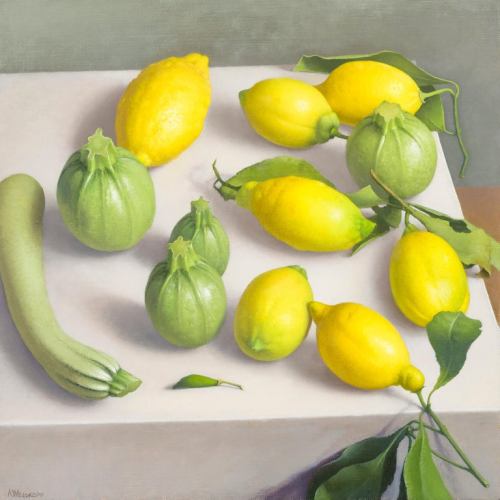
Zucchini and Lemons, by Amy Weiskopf.

Fried Zucchini Blossoms with Mozzarella, Anchovy, and Marjoram

(Serves 4)

12 good-looking fresh zucchini blossoms
½ cup all-purpose flour
¾ cup beer (I used Stella)
Salt
A big pinch of sugar
½ cup grated grana Padano cheese
A small ball of mozzarella, cut into approximately 1-inch-long and ½-inch-thick batons (they just have to fit inside the blossoms)
12 oil-packed anchovies
6 marjoram sprigs, chopped, plus some for garnish
Extra-virgin olive oil
Coarse sea salt such as Maldon or fleur de sel

Trim the stems off the flowers or leave them on. It’s up to you. I usually cut them at the base of the flower, but some people like to use them as a sort of handle. Next, carefully open up the petals, and remove the fuzzy stamens. And while you’re at it, check for bugs.

With a whisk, mix the flour with the beer, adding salt and a big pinch of sugar. The texture should be like a thick cream, clingy but drippy. Add more beer or more flour to get to that place.

Sprinkle a little grana Padano inside each blossom. Then place a mozzarella baton and an anchovy in each. Sprinkle on a little chopped marjoram. Twist the tops gently to close the flowers up.

Pull out a wide skillet and get it hot over high heat. Add a half inch of olive oil, and let it heat through.

Dip the stuffed blossoms in the batter, letting excess drip off.

When the oil is very hot, add the blossoms, and let them brown on one side without moving them around. Then turn them with tongs, and let the other side get crisp and golden.

Pull them from the oil, and place them on a large serving plate. Sprinkle them with a little coarse salt and marjoram. Serve right away.

Penne with Zucchini, Butter, and Thyme

(Serves 4 or 5)

Salt
1 pound penne
4 tablespoons unsalted butter
7 or 8 really small summer zucchini, green or yellow, cut into thin rounds
3 scallions, cut into thin rounds, using all the tender green, too
2 summer garlic cloves, thinly sliced
Black pepper
A big pinch of quatre épices
8 big thyme sprigs, the leaves chopped, plus thyme blossoms if you have them
A splash of dry Marsala
½ cup chicken broth, possibly a little more
The grated zest from 1 lemon
A palmful of toasted pine nuts
A small handful of flat-leaf parsley leaves, lightly chopped
A chunk of grana Padano cheese

Set up a pot of pasta cooking water, add a generous amount of salt, and bring it to a boil. Drop in the penne.

Get out a large skillet, and set it over medium-high heat. Add half of the butter, and let it get hot. Add the zucchini and the scallions, and sauté until everything is tender and golden, about 5 minutes. Add the garlic, and season with salt, black pepper, and the quatre épices. Add the thyme, and sauté a minute longer, to release all these flavors. Add a splash of dry Marsala, and let it bubble for a few seconds.

Add the chicken broth, the rest of the butter, and let simmer for about a minute.

When the penne is al dente, drain it, and pour it into a warmed serving bowl. Pour on the zucchini sauce, and add the pine nuts and lemon zest. Toss, adding about a tablespoon of grated grana Padano. Add a little more of the chicken broth, if needed, to loosen the sauce. Taste for seasoning, adding more salt or fresh black pepper if you like. Serve hot or warm, bringing extra cheese to the table.


maxresdefault.jpg

Recipe below: Baked Ricotta with Deep Summer Herbs

Early summer every year I get a feeling of urgency. I can’t wait to start using all my newly planted herbs in everything, food, drinks, on my face. This year I’m especially worked up, because I have my first raised bed. Before now I always jammed thirty or so big herb pots up onto my deck and watched them grow into a dense mass. A voluptuous jungle, but ultimately suffocating, for the herbs and for me. Some herbs, tarragon for instance, hate being crowded, so they never thrived up there. Same for marjoram, which usually started out promising but soon shriveled into a crusty stump. This year, with my new setup, those are both thriving. I’ve also planted salad burnet, which has a fresh cucumber taste, summer savory, bronze fennel, borage, lovage, five types of basil, Aleppo and Espelette chilies. Can’t wait to see what the deer decide to eat.

IMG_3664

My raised bed.

What I like to do early in the season is cook dishes that will taste good with small amounts of herbs. That way I get to enjoy my plants’ unique flavors without completely scalping them. I decided to make this baked ricotta with that in mind, and I went with a few tiny sprigs of some of the sturdier, more deeply flavored herbs, rosemary, savory, thyme, and marjoram. The mix turned out quite beautiful on the tongue. The entire thing took about five minutes to throw together and a half hour to bake. Instant homemade antipasto. All you need with it is good bread and a bottle of Fiano di Avellino.

Happy early summer cooking to you.

IMG_3688

Baked Ricotta with Deep Summer Herbs

I used a 2-cup soufflé dish for this, but any equivalent, not too shallow baking dish will work fine.

15 ounces whole-milk ricotta, well drained
1 tablespoon heavy cream
1 large egg
1 tablespoon extra-virgin olive oil, plus a little more for the dish
½ teaspoon ground nutmeg
1 teaspoon powdered sugar
1 heaping tablespoon grated grana Padano cheese
2 sprigs each of rosemary, marjoram, savory, and thyme, the leaves all lightly chopped (or whatever you have that would fit with this theme, such as a little Italian oregano or even some spearmint)
Salt

Preheat the oven to 400. Oil your baking dish.

Mix all the ingredients together in a medium bowl. Make sure they’re well blended.

Pour this all into the baking dish, and bake until just set in the middle and lightly golden around the edges, about 30 to 35 minutes.

Let sit about 10 minutes before serving, just so it can firm up a bit. Serve warm or at room temperature.

I love to serve this with crostini, toasted, rubbed with garlic, and brushed with olive oil. You also might want to present it alongside summer ratatouille or caponata, or a tomato salad. And good olives or gently pickled vegetables would also make a nice counterpoint to the deep creaminess of the ricotta.

121124-lge

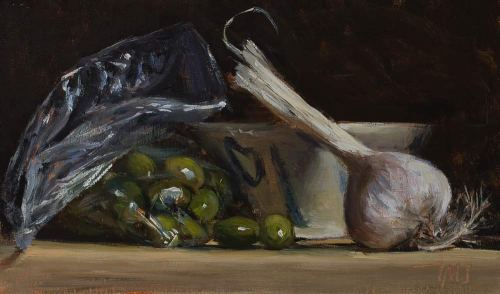
Olives, Cup, and Garlic, by Julian Merrow-Smith

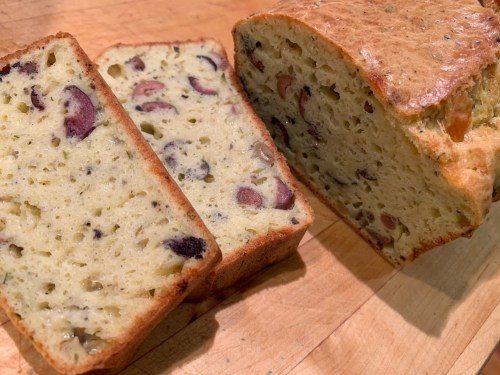
Recipe below: Taggiasca Olive Cake with Summer Herbs

You know how sometimes you hear about a dish or see a dish and immediately know it’s for you, sometimes even before tasting it? It just hits the spot. For me it happened with French olive cake. First off, the name drew me. Olive and cake. Then there was the taste memory, from childhood Easters, of pizza rustica, a torta with cheese, salumi, and often olives, made with a slightly sweet crust, the sweetness possibly undetectable unless you baked it yourself and knew you had put a little sugar in there. Sweet and savory. I tend to like such things. I saw a French olive cake in the window of a bar, alongside other aperitif-type offerings, during my one and only trip (so far) to Marseille, and I remember thinking, this looks good. I walked past several times, zeroing in on the slices of yellowy cake-bread thing filled with olives. Finally I went in and ordered a piece. It was compact yet slightly custardy, filled with olives and Gruyère and herbs and bits of ham, as I remember. I held it in my hand while wandering around the bar, spying on what everyone else was eating and wearing.

Immediate attraction, hard to explain, like the seemingly perfect boyfriend, the one you zero in on from across the street, looking disheveled and distracted into his own bad head. So alluring, yet somehow so familiar. I can’t go after every person on the street who looks appealing, but with food I can love whatever I want. It’s liberating.

When I got home from Marseille I started looking into the olive “cake” and learned that it was something that French cooks all knew about, a classic hors d’oeuvre. The recipes varied greatly in their proportions, some almost all egg and olives, with only a few tablespoons of flour, claufoutis-like, others denser, with baking powder for lift. Gruyère was almost always the cheese, but the olives varied. One thing I knew when I went about figuring out my own recipe was that I’d almost subconsciously steer it away from being pure French, and so I did. I couldn’t help it. My experiment in Italianization started with the olives. They would have to be the perfect olives or what was the point? Sweet and gentle, not the lye-soaked things at West Side Market. I ordered Taggiasca olives from Gustiamo. They’re grown in Liguria, and they’re basically the same as Niçoise, just over the border in France, so they’re not a radical Italian departure. I love them mostly for their gentle flavor, but also for their varying colors, from green to brown-streaked to almost black.

Most of the recipes I saw used butter, or a mix of butter and olive oil. I went with all olive oil. It make so much sense with the olives. And for the cheese for this, Gruyère is perfect. I did, however, happen to have a chunk of Bitto, a cow’s milk cheese from Lombardi, on hand. When moderately aged, it tastes a bit like Gruyère to me, so I went with it. I imagine Fontina Val d’Aosta would be another good choice.

The herbs contribute a lot here. My summer savory was doing well ,so I picked some. It’s a pungent herb. You just want a little. I mixed it with rosemary, which took the edge off it, yielding a warmer flavor. If you don’t have savory, use thyme. I left out the ham and decided instead to serve the cake with a side of soppressata. A nice Italian solution. I have found that the cake is best eaten right after it’s made, while maybe still a little warm. It’s also good the next morning for breakfast. After that it gets a bit gooey.

IMG_6957

Taggiasca Olive Cake with Summer Herbs

1½ cups flour
2 teaspoons baking powder
Sea salt
Black pepper
4 large eggs
½ cup extra-virgin olive oil
½ cup dry vermouth
2 tablespoons sugar
A few sprigs each of rosemary and summer savory (or thyme)
¾ cup grated Bitto, Gruyère, or Fontina Val d’Aosta cheese
A big handful of Taggiasca, or Niçoise olives, pitted and pulled in half

Preheat the oven to 400 degrees. Oil up a loaf pan.

In a medium bowl, mix the flour with the baking powder, salt, and black pepper.

In a standing mixer, beat the eggs until foamy. Add the olive oil, the vermouth, and the sugar, and briefly mix everything together. Now gradually add the flour mixture to the eggs, just until everything is blending. Add the herbs, cheese, and the olives, and briefly mix.

Pour the batter into the loaf pan, and bake until the top is golden and the cake is springy to the touch, about 40 minutes. Let it cool for about 15 minutes before cutting.

It will go well with an arugula salad and a few slices of prosciutto, or, possibly even better, with soppressata. Or have it with a summer tomato and sweet onion salad, or just plain, with a glass of rosato.

imgallery-19MyGarbageCan

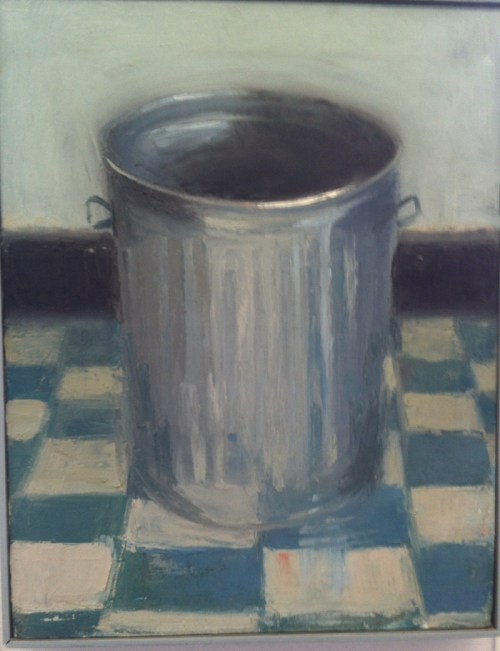
My Garbage Can, by Ed Stitt, 1985.

Recipe below: Salmon Cakes with Basil and Capers

As I’ve gotten older, I’ve become preoccupied with waste. Waste of time, opportunity forfeited, out of laziness or, more likely, fear. Waste coupled with worrying about waste. As a cook, I find food waste a huge concern, now more than ever. Maybe I think about it too much. What happened to the lighthearted me? I mentioned my dearth of gaiety to a friend recently, and she said, “Oh come on. You were never lighthearted.” Okay. Good to know.

Anyone who has ever cooked in a restaurant or written a cookbook, spending years at recipe testing or frenetic food service, can become sickeningly immune to all the good food that gets thrown away, victim of either shortage of time to deal with it or lack of creativity about repurposing.  I remember when, ages ago, during one of my restaurant stints, I decided to make a soup from potato peels and onion skins. I felt extremely virtuous until the chef came by and told me to stop fucking around. And that was right after he gave the staff an oppressive speech about bringing food costs down. The soup was good, served hot, garnished with thyme blossoms. It was essentially vichyssoise. But maybe making vichyssoise from scraps was going too far.

Waste in a place of plenty is particularly nasty. So here I am now, decades later, always worrying about what’s rotting in my fridge. Should I have thrown that out? Did it have another day to it? Is there some way I could have used it?

I recently played a stupid dance with a slab of salmon fillet. I bought more than I wound up needing for dinner, and the rest went into the freezer. The next day I took it out, thinking I’d use it right away, but I got sidetracked while it sat defrosting on my counter. Then I stuck in in the fridge. I’d think about it tomorrow. Tomorrow I ended up having a dinner date. The salmon remained in the refrigerator, deteriorating by the minute. I was reluctant to refreeze it, but I knew I wasn’t going to cook it that night. I wound up sticking it back in the freezer. Then I worried that the refreezing would ruin it, destroying its texture and freshness. I took it out of the freezer again and defrosted it. I’m not sure why I did that. I knew that if it was messed up beyond usefulness it was my fault, and that would ruin my week. So the next morning, with much trepidation, I smelled it, expecting the worst. It was okay, even sweetly fresh, and bouncy to a press of the finger, so at 8:30 a.m. I threw it in the oven, with no plan beyond stopping the cycle of decay and neurotic worry.

After some thought I came up with a Sicilian-influenced recipe for salmon cakes. And they were delicious. Problem solved. Disaster averted, until next time.

Happy cooking to all my anxious food friends.

2617357-RPPJIHEQ-8

Salmon Patties, by Jan Jahnke.

Salmon Cakes with Basil and Capers

(Makes 4 to 5 good-size salmon cakes)

1 ¾-pound salmon fillet, with or without its skin
Extra-virgin olive oil
Salt
Black pepper
Aleppo pepper
2 scallions, cut into thin rounds, using most of the green part
2 inner celery stalks, with their leaves, chopped
1 teaspoon rice wine vinegar
12 basil leaves, roughly chopped
A few large thyme sprigs, with their leaves, chopped
The grated zest from 1 lemon
¼ cup salt-packed capers, soaked and rinsed
2 teaspoons Dijon mustard
¼ teaspoon ground allspice
2 eggs, lightly whisked
½ cup good quality breadcrumbs, not too finely ground
3 tablespoons butter
Lemon wedges for serving

Set the oven to 400 degrees.

Drizzle some olive oil onto a sheet pan, and lay the salmon on top. Drizzle a little oil over the salmon, and season with salt, black pepper, and a sprinkling of Aleppo. Roast until just tender, about 15 minutes. Take it from the oven and let it cool.

In a medium sauté pan, heat about a tablespoon of olive oil over medium flame. Add the scallion and celery, including the leaves, and sauté until they’re just softened, about 2 minutes. Add the rice wine vinegar, and turn off the heat. Let cool for a few minutes.

In a large bowl, break the salmon up into small pieces with your fingers. Add the scallion mix, with all its cooking liquid. Add all the other ingredients except for the butter and the lemon wedges. Season with a little more salt, black pepper, and Aleppo, and mix everything well. Shape into four to five cakes, and refrigerate them for about an hour.

When you’re ready to serve, heat about 2 tablespoons of olive oil and the butter in a large skillet over medium-high flame. When it’s hot, add the salmon cakes, browning them well on one side and then flipping them to brown the other side. This will take about 5 minutes. Do them in 2 batches if you need to.

Serve them really hot with a big squeeze of lemon juice.  I served mine with a lentil salad, a very good match.

istockphoto-936452716-612x612

Recipe below: Mozzarella with Asparagus, Mint, and Warm Lemon Vinaigrette

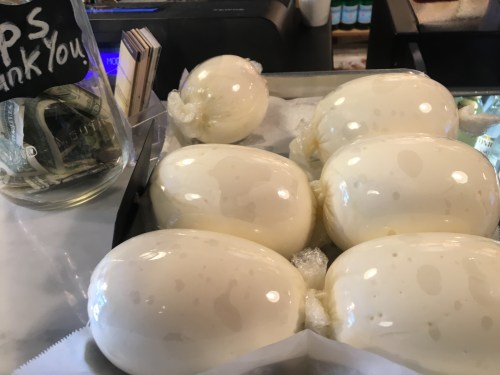
I’m fascinated by good mozzarella. It’s pully but soft, dense but puffy, and when it’s freshly made it’s so milky you wonder how it holds together. But it does. And it’s shiny, too. Mozzarella comes together fast with stirring, heating, and stretchingthe pasta filata method. Mozza, Neapolitan dialect for ‘cut’, is what happens last. Cutting the tender cheese and shaping it into balls, or sometimes  braiding it for treccia,

The first mozzarella I ever knew was like rubber. The New York supermarket lump. My family and every Italian-American I knew used it for cooking, and it performed decently in my mother’s lasagna, especially with nothing to compare it to. I never remember eating it by itself. That would have been pointless with that slab of just about tasteless, compact stuff that didn’t resemble anything organic. I didn’t know that a version quite glorious existed, in the old country or anywhere. That changed when Razzano’s, our local Italian deli, started making their own. Then we began to have Caprese salads and antipasto with oozing cow’s milk fior di latte, black olives, and gently vinegared red peppers. A palate opener.

Now, decades later, in downtown Manhattan, when I want a nice warm blob of just made fior di latte mozzarella, I often go to either Murray’s Cheese on Bleecker or DiPalo on Grand. Both are top-notch New York food experiences. But DiPalo’s is in Little Italy, far from where I live, and usually has a long line. If I have three hours to kill just for buying mozzarella, I’ll go there, but that doesn’t usually happen. You’d think New York City would have fabulous mozzarella on every corner.

IMG_3623.JPG


The truth is there aren’t many charming and highly useful little Italian shops around anymore. The few that remain, in the East Village for instance, are now heading toward reliquary status, with second-rate Italian-American fare. But at least now there’s Sergimmo Salumeria, a branch of a Hell’s Kitchen shop only a few blocks from my West Village home. Their mozzarella is superbsoft, warm, a little liquidy, smelling of milk, held together by quick handiwork. They turn it out several times a day in their little back kitchen. The arrival of Sergimmo has changed my life in a small but not insignificant way: I almost never walk past without buying at least one. God I hope they can stay in business, despite the sinful rents in this part of town.

So I’ve been eating a lot of mozzarella lately. And I’ve been combining it with spring vegetables. Asparagus with warm mozzarella is a delicious thing, and pretty too. When I have ingredients that immediate, I tend toward straightforward compositions, with not much melding. And the vinaigrette is mild. I don’t want anything too astringent pushing up against my milky cheese.

Happy spring cooking.

IMG_6907.jpeg

Mozzarella with Asparagus, Mint, and Warm Lemon Vinaigrette

(Serves 4 as a first course)

A big ball, ½ pound or so, of soft, never-refrigerated cow’s milk mozzarella
Your best olive oil
Salt
Black pepper
The grated zest from 1 big lemon
1 teaspoon rice wine vinegar, maybe a little more
A few big scrapings of nutmeg
½ teaspoon mild honey
20 medium-thick asparagus stalks (5 for each serving), the ends well trimmed
A small palmful of crushed pink peppercorns
The green part from 2 scallions, thinly sliced
A handful of spearmint leaves, lightly chopped

Slice the mozzarella, and divide it up onto 4 plates. Or, if you prefer, just lay it out on  one big serving platter, family style.

Preheat the oven to 450 degrees.

Place the asparagus on a sheet pan. Drizzle it with olive oil, and season it with salt and black pepper. Roast until just tender and starting to brown a bit at the tips, about 10 minutes, but the roasting time will depend entirely on how thick your asparagus is, so keep an eye on it.

While the asparagus is roasting, pour about ¼ cup of olive oil into a small saucepan, and heat it gently over a low flame, just until warm. Turn off the heat, and add the lemon zest, rice wine vinegar, honey, nutmeg, and a little salt. Stir everything around. You don’t want it so acidic it competes with the mozzarella, so I’ve kept the vinegar down to a minimum, but add a little extra if you like.

Pull the asparagus from the oven, and place 5 stalks on each portion of mozzarella (or all of them on the mozzarella on the serving platter). Drizzle with the warm vinaigrette, and grind on fresh black pepper and a sprinkling of pink peppercorns. Garnish with the scallion and the mint leaves. Serve right away.