Feeds:
Posts
Comments

Manhattan Clam Chowder, My Way

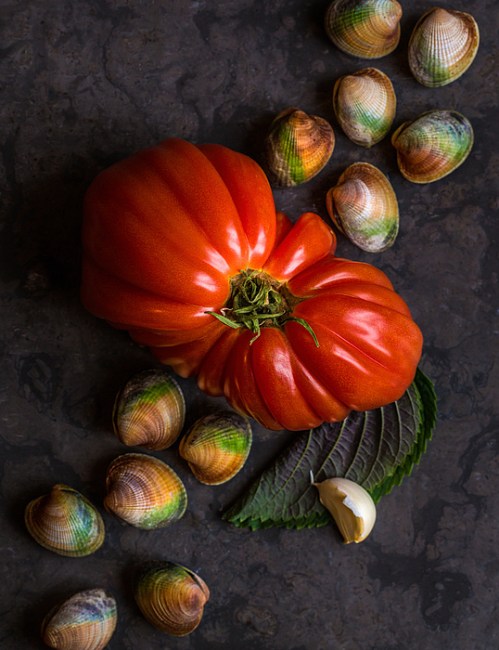
still-life-with-tomato-and-clams-alan-shapiro.jpg

Recipe below: Manhattan Clam Chowder, My Way

As a kid and young adult I spent many odd hours at diners on Long Island and in Manhattan, 3 a.m., 3 p.m., hanging with my sister and my now deceased friend Scott, maybe Barbara, too, eating clam chowder, because that’s what I used to eat at a diner, getting that specific taste of industrial clam juice, canned clam bits, and dried oregano, hitting acrid and salty on my tongue. I used to order chowder all the time, after school, or after clubbing. I don’t think I ever ate it anywhere other than at a diner. I didn’t even particularly like it. It was just a habit, like biting my cuticles. Manhattan clam chowder wasn’t a fine restaurant dish, even in Manhattan (maybe it was in the days of Delmonico’s, where the soup evidently partly originated). But at a good seafood place you could order a chowder with what was considered more dignity—New England clam chowder.

I like the rich New England version, thick and white, but it’s sort of foreign to my Italian American palate. In Manhattan we swapped out the cream or milk for tomatoes, a variation that came from Portuguese and Italian immigrant cooking. I hadn’t thought about New York chowder in a while, and I don’t see it on diner menus so often these days, but I found that I missed it, so I decided to make some myself and give it a more appealing edge.

I dropped the green pepper and dried oregano and added instead roasted red pepper and fresh marjoram. So the whole thing became sweeter and rounder. I opened the clams in dry Marsala and used that liquid as the soup base.  This really can be a fine soup when you make it with thought.

IMG_4019.JPG

Manhattan Clam Chowder, My Way

(Serves 4 or 5)

5 dozen littleneck clams, on the small side, well cleaned
1 cup dry Marsala
Extra-virgin olive oil
3 tablespoons unsalted butter
¼ pound pancetta, cut into little cubes
1 leek, chopped
1 small onion, chopped
2 celery stalks, plus the leaves, chopped
2 carrots, cut into small dice
2 garlic cloves, peeled but left whole
1 roasted red bell pepper, peeled, seeded, and chopped
1 fresh red peperoncino, chopped
½ teaspoon ground allspice
4 medium Yukon gold potatoes, peeled, or not, and cubed
A few big thyme sprigs, the leaves chopped
6 or 7 marjoram sprigs, the leaves chopped
1 fresh bay leaf
1 28-ounce can chopped tomatoes, with the juice
4 cups of light chicken broth
Salt, if needed
A handful of flat-leaf parsley leaves, lightly chopped

Put the clams in a big pot, pour on the Marsala, and cook them over high flame, partially covered, stirring them around a few times until they open. As they open, lift them from the pot into a bowl, using tongs. Let them cool until you can pull them out of their shells. When they’re out of their shells (discard the shells), leave them whole if they’re small. Bigger ones you can roughly chop. Give them a drizzle of olive oil. Strain the cooking juice, and pour it into a small bowl.

In a big soup pot, heat a drizzle of olive oil and the butter over medium flame. Add the pancetta, and let it crisp up. Add the leek, onion, celery plus leaves, and carrot, and sauté until softened and fragrant, about 5 minutes. Add the garlic, the roasted pepper, the peperoncino, and the allspice, and let it all cook another minute or so. Add the potatoes, the thyme, the marjoram, and the bay leaf, and sauté a minute more. Now add the tomatoes, the chicken broth, and the reserved clam broth. Cook at a gentle bubble, uncovered, until the potatoes are just tender, about 10 minutes. Turn off the heat, and add the chopped clams. Let sit for about 5 minutes, so all the flavors can blend. Now taste for salt. If your clams are very salty, you might not need any. Add a drizzle of fresh olive oil and the parsley, and serve. This chowder is excellent with bruschetta brushed with olive oil and fresh garlic. Dip the bruschetta in the broth.
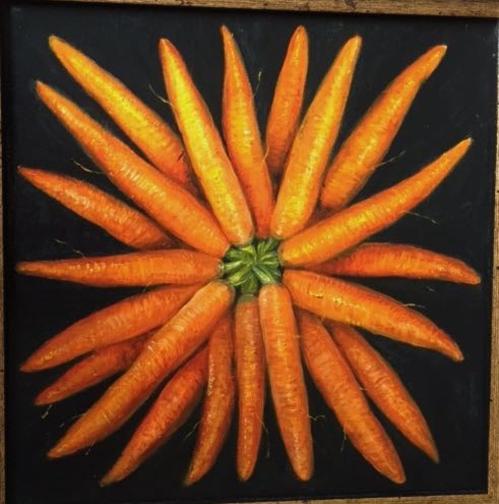
circle-of-carrots_10076_main_size3

Circle of Carrots, by Mimi Roberts.

Recipe below: Smooth Carrot Soup with Fennel and Pear

I’ve been finding blown-out late-season carrots at the farmer’s market, lumpy and woody but so cheap I can’t resist. I tried one raw. The taste wasn’t bad, not soapy, but the texture was rough. Good for soup.

I often like a big, smooth soup. It forces me to focus on its tastes, since everything gets whirled together, unlike a chunky texture where you can actually see what you’re putting into your mouth. Uniform smoothness necessitates culinary thought to pull out flavors. Can I taste the pear clearly, or is it just serving as a sweetener? Does it add subtle acidic brightness? Does the fennel add fennel taste, and maybe a hint of bitter? And with all the stuff I’ve added, can I still taste the carrot? In this case, I’ve answered yes to all, so I know I’ve succeeded.

IMG_4017.jpg

Smooth Carrot Soup with Fennel and Pear

(Serves 6)

Extra-virgin olive oil
2 bunches of orange carrots, peeled and chopped
1 large fennel bulb, chopped, saving the fronds and chopping them lightly
1 medium onion, chopped
1 small baking potato, peeled and chopped
½ teaspoon fennel seeds ground to a powder, or a big pinch of fennel pollen
A few large thyme sprigs, the leaves chopped
2 ripe pears, peeled, cored, and chopped
Salt
Black pepper
A splash of Poire Williams
1 cup chicken broth
A few drops of rice wine vinegar

Get out a big soup pot, and set it over medium heat. Drizzle in a little olive oil. Add all the ingredients except the Poire Wiliams, the chicken broth, and the vinegar. Sauté, stirring everything around a few times, until everything’s fragrant and starting to soften, about 4 minutes. Add the splash of Poire Williams, and let it bubble for a few seconds. Add the chicken broth, and then add enough water to just cover the vegetables. Bring it all to a boil, and then turn the heat down a touch, and cook at a medium bubble, partially covered, until everything is very tender, especially the carrots. This should take about ½ hour, maybe a little longer depending on how hard your carrots are. Now let it sit, uncovered, for about 15 minutes, so all the flavors can blend further.

Purée the soup in a food processor, in batches, until very smooth and glossy, adding more water, if needed, to thin it down. Pour it into a clean pot. Taste for seasoning, adding a few drops of rice wine vinegar for brightness, and more salt or black pepper, if needed.

To serve, reheat the soup gently. Pour it into bowls, and garnish it with chopped fennel fronds and a drizzle of good extra-virgin olive oil.

still-life-with-pears.jpg!Large.jpg

Still Life with Pears, Vincent Van Gogh, ca. 1888.

Recipe below: Pear and Almond Cake with Poire Williams and Fresh Ginger

I sort of like baking. I sort of like playing with flour. But I don’t love it. Not like I love making a ragu, or spaghetti with white clam sauce. Still, baking can be fun, especially the way I do it, without serious recipes. Not having them limits what I can turn out, but I’m okay with that. I don’t love sweet so much. Savory tarts and fruit things are for me. I’ve worked out a few dependable general recipes for breads, plain cakes, biscotti, and torte, and starting with them, I mix up the flavors depending on the season and my mood. This pear creation is based on my sweet olive oil cake recipe. I make variations on it all the time. They usually contain some type of fruit, apples, or blueberries, or peaches. I sometimes add nuts, walnuts, or pistachios. And then I decide on spices, maybe cinnamon, allspice, black pepper, whatnot. Sometimes I’ll add a fresh herb, thyme, or lemon verbena. Then maybe a drizzle of fragrant booze. I recently made a version with apples and anisette. It came out real nice. You can easily make that one by swapping the pears here for apples and the Poire Williams for anisette.

This is a big, not-too-sweet cake, from enough batter to fill a 10-inch springform pan.  I make these things often for my husband’s breakfast, an attempt to wean him off industrial boxed cereal, which for some unexplained reason he seems to love. It is also good for afternoon tea, or brunch, or even for dessert, if you serve it with sweetened whipped cream or vanilla, caramel, or ginger ice cream

IMG_3992.JPG

Pear and Almond Cake with Poire Williams and Fresh Ginger

3 large eggs
1¼ cups sugar
¾ cup extra-virgin olive oil, plus a little extra for the pan
1 teaspoon vanilla extract
2 tablespoons Poire Williams or another pear brandy
1 tablespoon grated fresh ginger
3 cups regular flour
2 teaspoons baking powder
1 teaspoon baking soda
1 teaspoon salt
4 ripe pears, chopped (peeled if you wish). You’ll want about 4 cups
¾ cup whole blanched almonds, lightly toasted and roughly chopped

You’ll need a 10-inch springform pan.

Preheat the oven to 375 degrees. Grease your pan with a little olive oil.

In a bowl combine the eggs, the sugar, the olive oil, the vanilla, the pear brandy, and the ginger, and mix well. In a separate bowl combine the flour, baking powder, baking soda, and salt. Stir to blend all the ingredients.

Add the flour mixture to the egg mix, and stir it in. Add the pears and the almonds, and mix to blend.

Pour the batter into the pan, and bake until lightly browned and springy in the middle, about 50 to 55 minutes. Let cool for about a half hour before slicing.

11139880_27750774-1588720424515616-5901127106019046448-n.jpg

Les dames font des crêpes, by Philippine Cramer.

Recipe below: Crespelle with Ricotta, Swiss Chard, and Pine Nuts

Manicotti made out of crespelle was one of the first things I learned to prepare during my spell of teenage cooking mania, which started as a way to control anxiety but led to a lifelong passion. My mother made manicotti from crespelle instead of the more predicable pasta sheets. I watched her swirl the thin batter into the pan, then flip the fragile things over, messing up a few but soon hitting her stride. It looked so elegant and professional. My mother didn’t make pasta by hand or do any baking, so this was an unusual undertaking. I didn’t know she had it in her. I was attracted to crespelle for this reason and because it looked annoyingly complicated, a perverse kitchen draw for me. Her crespelle manicotti were always filled with ricotta and spinach and baked with a béchamel. Pretty classic Southern Italian. She sometimes made them part of our Christmas Eve dinner, as I do now.

The truth is, making crêpes isn’t complicated. It’s really fun, once you get it down. Even before you get it down, watching them gum up into a ball or fold over like a fortune cookie can be amusing for a while. I’ve been making these things off and on for 40 years, and the first few still often turn out lumpy before I get into the swing of it. Also I usually make mine not with butter, which is classic, but with olive oil. That makes them much easier to work with. Fun even. Give them a try.

Crespelle with Ricotta, Swiss Chard, and Pine Nuts

(Serves 4 or 5, making about 12 7-inch crepes)

For the crespelle:

1 cup all-purpose flour
4 large eggs
Salt
1 tablespoon sugar
3 tablespoons extra-virgin olive oil, plus more for cooking the crespelle
1 cup whole milk
1 tablespoon cognac or grappa

For the filling:

2 bunches of Swiss chard, the thick inner ribs removed,
A drizzle of extra-virgin olive oil
1 small garlic clove, minced
32 ounces whole-milk ricotta
1 large egg
½ teaspoon freshly ground nutmeg
¾ cup grated Montasio or grana Padano cheese
6 big sprigs of marjoram, the leaves chopped
A big handful of lightly toasted pine nuts
Salt
Black pepper

For the sauce:

2 tablespoons unsalted butter
2 scallions, chopped, using some of the tender green
1 28-ounce can tomatoes, well chopped and lightly drained
A few big sprigs of marjoram, the leaves chopped
A few big sprigs of thyme, the leaves chopped
Salt
Black pepper
2 tablespoons crème fraîche
A small chunk of Montasio or grana Padano cheese

To make the crespelle batter, put all its ingredients into the bowl of a food processor, and pulse until smooth. It should reach the consistency of thick cream. If it’s too thick, add a little more milk. Pour the batter into a bowl, and let it sit for about 30 minutes. This will allow the flour to absorb the liquid and let the gluten relax, so you get a nice tender crêpe.

Now cook the crespelle. I used a 7-inch omelet pan, but if you’ve got a proper crêpe pan, a little bigger or smaller, use that. And any small sauté pan will do. With these olive oil crespelle, I never find sticking a problem, so you don’t need a nonstick pan. Put the pan over a medium flame, and let it heat up. Pour in just enough olive oil to coat its surface. Pull the pan from the heat, and ladle in a bit less than a quarter cup of batter, tilting the pan quickly in a circular movement to spread the batter. (You’ll get the hang of it. The first few usually don’t come out too well. Once the heat is regulated and you get the feel of it, you’ll find it fairly easy, trust me.) Let the crêpe cook just until you notice it coloring lightly at the edge. Then shake the pan, moving the crêpe away from you, and slip a spatula underneath. Give it a fast, confident flip. If it folds up a bit, just straighten it out with your fingers (these things are a lot sturdier than you’d think). Cook it on the other side for about 30 seconds, and then slide it onto a big plate.

Make the rest of the crespelle the same way, adding a drizzle of olive oil to the pan when needed. Stack the crespelle up on top of one another (they won’t stick, I swear). If you like, you can refrigerate them until you want to assemble the dish.

To make the filling, blanch the Swiss chard in a pot of boiling water for about 2 minutes. Drain it, and run cold water over it, to stop the cooking and bring up the green color. Squeeze as much water out of it as possible, and then give it a few good chops. Put it in a bowl, and then add all the other ingredients for the filling, mixing them in well.

To make the sauce, melt the butter in a sauté pan over medium heat. Add the scallion, and let it soften for about a minute. Add the tomatoes and the herbs, and season with salt and black pepper. Cook, uncovered, for only about 4 minutes. You want the sauce to stay fresh tasting. Turn off the heat and add the crème fraîche.

Heat the oven to 400 degrees.

Get out a big baking dish that will hold the soon to be rolled crespelle snuggly.  Or use two dishes. I usually do that. Oil the dish(es) lightly with olive oil.

Fill each crêpe with an ample layer of the ricotta filling, and roll it up. Place them in the baking dish or dishes. Pour on the tomato sauce, and top with a grating of Montasio or grana Padano. Now give everything a drizzle of fresh olive oil, and bake, uncovered, until hot, bubbling, and lightly browned at the edges, about 20 minutes.

Let sit for a few minutes before serving.

il_794xN.512945857_douw.jpg

Radicchio, by Ana Petrak.

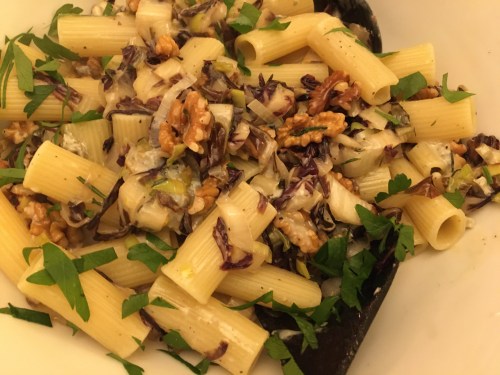
Recipe below: Rigatoni with Radicchio di Treviso, Gorgonzola, Rosemary, and Walnuts

I have a chest cold at the moment. It makes me feel all different inside, and not entirely in a bad way. Sort of insular but not sad, and just wanting to be indoors. The heat has gone on, drying the apartment air. The vomit-smelling gingko berries are smashed all over the sidewalk, one of the first signs of fall on my block. A few Chinese ladies were here this morning gathering them up. I saw them out the window while I choked down a few Mucinex. And then I got back under the covers and thought about autumn food, particularly tastes that might blast this cold out of my head. Gorgonzola came to mind.

There’s a pasta dish that has always intrigued me but I’ve hardly ever cooked. It contains gorgonzola and radicchio. Excellent ingredients both, decidedly northern. With the passing of tomatoes, eggplant, and peppers, fall brings Northern Italian flavors into my kitchen. Very cozy. I’ve added walnuts and a touch of rosemary to this pasta. It should do wonders for my head.

IMG_3961.jpg

Rigatoni with Radicchio di Treviso, Gorgonzola, Rosemary, and Walnuts

(Serves 5)

Salt
1 pound rigatoni or penne
5 tablespoons unsalted butter
A drizzle of extra-virgin olive oil
1 garlic clove, peeled and lightly smashed
2 large heads of radicchio di Treviso, sliced into rounds and then pulled apart into ribbons
1 big sprig of rosemary, the leaves chopped
A few scrapings of nutmeg
½ pound gorgonzola dolce, cut into little bits
A big handful of walnut halves, lightly toasted and lightly chopped
Coarsely ground black pepper
A handful of flat-leaf parsley leaves, lightly chopped
A chunk of grana Padano cheese

Bring a big pot of water to a boil. Add a good amount of salt, and drop in the rigatoni.

In a large skillet, over medium heat, heat half of the butter and a drizzle of olive oil. Add the garlic clove, and sauté until it’s fragrant, 30 seconds or so. Add the radicchio, the rosemary, and the nutmeg, and season with a little salt. Sauté, stirring the radicchio around, just until it starts to wilt, about a minute or so. Pull the skillet off the heat and add the gorgonzola and the walnuts, stirring in the cheese so it melts.

When the rigatone is al dente, drain it, saving about a cup of the cooking water, and pour the pasta into a warmed serving bowl. Add the rest of the butter, and toss. Add a little of the cooking water to the skillet, to loosen the sauce, and then pour the sauce over the pasta, removing the garlic. Add the parsley and a generous amount of black pepper, and toss again, adding more cooking water if you need it to get a creamy texture. Serve hot, bringing the grana Padano to the table for grating.

IMG_3960

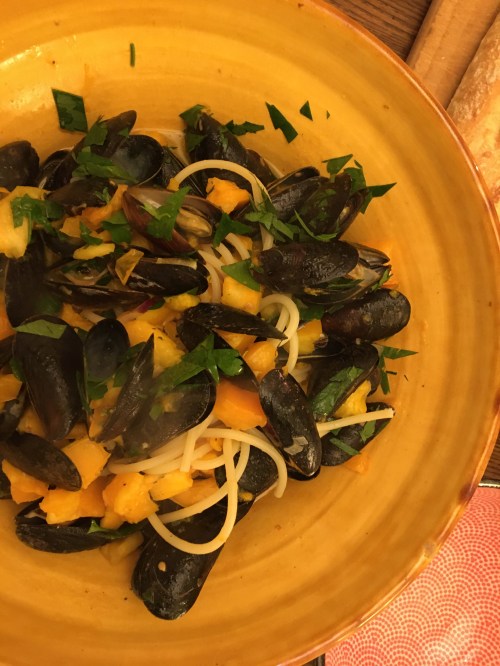
Recipe below: Bucatini with Mussels, Yellow Tomatoes, Butter, and Thyme

As you’ve probably noticed, I’m really dragging out the tomato season this year. I can’t help it. They’re still in the market. Big gorgeous heirlooms. Lots of them. I like going to Union Square Greenmarket around 6 p.m. to take advantage of the big bags of seconds that farmers lay out for almost free. I grabbed a bag of slightly bruised yellow tomatoes, not sure what variety, and when I got them home I was reminded of why I don’t always like yellow tomatoes. They tend to be a little mealy, low acid, and low sugar, which translates into sort of tasteless. But I had to use them for something, so into my mussel sauce they went. Wine, a touch of sugar, and a few drops of rice wine vinegar corrected their shortcomings. I didn’t really cook them, just threw them in at the end to heat through. Better that way.

sea-life-painting-series-mussels-and-barnacles-by-paintings-abstract

Bucatini with Mussels, Yellow Tomatoes, Butter, and Thyme

(Serves 4)

Salt
1 pound bucatini
5 tablespoons unsalted butter
2 shallots, well chopped
2 garlic cloves, thinly sliced
½ teaspoon ground allspice
10 big thyme sprigs, the leaves chopped
2 pounds really fresh mussels, small ones if possible, well cleaned
Black pepper
½ cup dry white wine
3 big yellow tomatoes, seeded and chopped, about 3 cups (drain them briefly if they’re juicy, but mine weren’t and most yellow varieties aren’t)
1 teaspoon sugar
½ teaspoon rice wine vinegar
Aleppo pepper
A handful of flat-leaf parsley leaves, lightly chopped

Bring a big pot of salted water to a boil. Drop in the bucatini.

Set up a very large skillet or stew pot over medium high heat. Add half the butter, the shallots, garlic, thyme, and allspice, and sauté until fragrant, about 2 minutes. Add the mussels and the white wine. Season with a little salt and black pepper and cook, stirring   occasionally, until the mussels open.  Add the tomatoes, and let cook for about a minute longer. Turn off the heat, and add the sugar and rice wine vinegar.

When the bucatini is al dente, drain it, and pour it into a big wide serving bowl. Add the rest of the butter and the parsley, and stir everything around. Add the mussels and broth and some Aleppo. Toss gently and serve hot.

still-life-with-lobster-antoine-vollon

Still Life with Lobster, by Antoine Vollan.

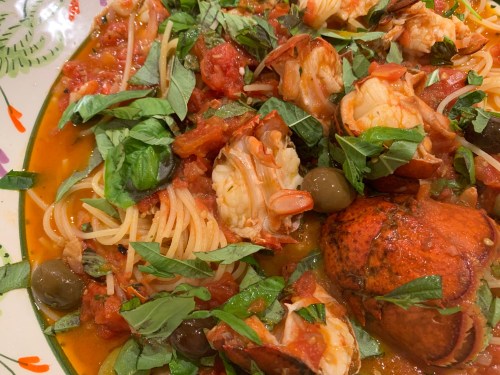
Recipe below: Bucatini with Lobster, Late Season Tomatoes, Orange, and Olives

We had the heat on last night. Summer is now officially done. But we’ve still got tomatoes. New York is interesting that way. In September to mid-October you still get some of high summer—warm afternoon sun, eggplants, peppers of all types, lots of tomatoes, herbs. I’ve got healthy basil in my little garden. I do get anxious trying to hold on to all these things, dreading the long stretch of potatoes and turnips ahead. It’s time to celebrate the remaining warm days and nights by preparing something special. Lobster with tomatoes is a gorgeous pairing, and if you add pasta it’s not even such an extravagance. One medium lobster easily serves two.

I love the ritual of blanching tomatoes and slipping off their skins, and then chopping and draining the tomatoes, catching their water to add to my sauce, if needed, or to mix with a little vodka for a chef’s reward Bloody Mary. I can still do that for a couple more weeks. Late season tomato cooking is a good time to play around with flavors, too. Have you ever added orange to a tomato sauce? It’s excellent, especially when you’re incorporating seafood, as I do here. Check it out.

IMG_7177

Bucatini with Lobster, Late Season Tomatoes, Orange, and Olives

(Serves 2)

1 medium lobster (about 2 pounds)
3 big round local tomatoes (about 1½ pounds)
Salt
3 tablespoons unsalted butter
1 large shallot, cut into small dice
1 garlic clove, thinly sliced
The grated zest from 1 large orange, plus a big squeeze of its juice
A fresh medium-hot red chili, seeded and minced
About 6 large sprigs of thyme, the leaves chopped
A splash of white Lillet aperitif or vermouth
1 teaspoon soy sauce
⅔ pound bucatini or spaghetti
A drizzle of extra-virgin olive oil
A palmful of black or brown olives ( I used Taggiasca, from Liguria), pitted and cut in half
A dozen basil leaves, lightly chopped

Set up a large pot of water, add a good amount of salt, and bring it to a boil. Drop in the lobster, cover the pot, and boil until it’s about half way cooked, about 5 minutes. Pull the lobster from the pot, and let it cool.

With the water still boiling, drop in the tomatoes, and boil them, uncovered, until their skins start to crack, about 2 minutes or so. Using a strainer spoon, scoop them from the water into a colander, saving the cooking water. Run a little cool water over them, and peel off their skins, which should slip away easily. Now chop the tomatoes, and put them back in the colander, sprinkling them with a little salt. Stick a bowl underneath the colander so you can catch their juice. Let them sit for about 15 minutes.

Now you can either pull the meat from the lobster, cutting it into chunks, or, as I prefer, hack the thing into pieces right through the shell.  Simmering the pieces in the shell gives the sauce more flavor and also makes for a pretty presentation. I do it with a regular chef’s knife, but you can use a cleaver if you want. However you do it, make sure you put the lobster pieces in a bowl or something to collect any juices, so you can add that to the sauce.

Bring the water back to a boil.

Get out a big skillet, and melt the butter over medium heat. Add the shallot, and let it soften for a minute. Now add the garlic, orange zest, hot chili, and thyme, and sauté a minute or so longer to release all their flavors. Add the Lillet or vermouth, and let it bubble for a few seconds. Add the tomatoes, the orange juice, the soy, and a little salt.

Drop the bucatini in the water.

Let the tomatoes simmer, uncovered, for about 3 minutes. I don’t cook them long, preferring to keep their freshness and bright color. They should start giving off juice after a minute or so, but if the sauce seems thick, add some of the reserved tomato water. Now add the lobster and any juices it has given off. Turn the heat to low, and simmer, partially covered, about a minute or so, just to finish cooking the lobster. Turn off the heat.

When the bucatini is al dente, drain it, and pour it into a wide serving bowl. Add a drizzle of olive oil, the olives, and the basil. Toss. Add the lobster sauce, and toss again. Serve right away. This pasta is great with a deep pink rosato Cerasuolo from Abruzzo. And if you follow up with an escarole salad and a piece of fontina Val d’Aosta cheese, you’ll have a very special early fall meal.

il_794xN.1589071680_mwtd

A still life with vodka and Peeps.

Recipe below: Penne alla Vodka with Late Season Tomatoes

I still don’t understand why pasta alla vodka tastes so special. You would think that adding vodka, pretty much tasteless, to a tomato sauce wouldn’t contribute much, but it somehow adds enough to make the dish unique. I first learned of penne alla vodka in the early 1970s, when it became a thing. My mother made it a lot. Psychologically it seemed to taste of vodka, which made it appear fancy, late-night, and a bit risqué. Palatewise, maybe I could really only detect tomato, cream, and a bit of hot chili. Magical thinking.

I love a pasta that feels lovely by design, where a few ingredients pull together to create a sum greater than the parts. This odd dish is one of those. And it’s wonderful on another level, since, for me, it’s usually made without much planning, out the necessity of getting dinner on the table fast. Last week, for instance, my husband was worn out and on the verge of what seemed like a complete freak from a particularly stressful work day. He came home depleted and fell asleep. When he woke up, at around nine, it was just the type of situation where alla vodka pasta goes into motion in my kitchen. I had farm stand tomatoes and basil from my garden. Everything else was pantry.

There are two ways to make this sauce. You either add a good amount of vodka at the beginning and let it reduce, or you drizzle in a small amount toward the end of cooking and leave it kind of raw. I’ve tried both and have come to prefer the first method.

IMG_3825.JPG

Penne alla Vodka with Late Season Tomatoes

(Serves 6 as a first course or 3 or 4 as a main)

6 or 7 medium-size round, ripe summer tomatoes (about 2 pounds)
Salt
1 pound penne
4 tablespoons unsalted butter
2 medium shallots, cut into small dice
1 fresh red peperoncino, well chopped
A big pinch of sugar
About 5 or 6 large thyme sprigs, the leaves chopped
⅓ cup vodka
1 heaping tablespoon crème fraîche
A dozen or so basil leaves, lightly chopped
Grana Padano cheese for serving

Set up a big pot of water, and bring it to a boil. Add a good amount of salt. When it boils, drop in the tomatoes, and let them bubble until you notice their skins just starting to crack, probably about 3 minutes, but depending on their ripeness. Lift them from the water with a strainer spoon into a colander. Save the cooking water. Run a little cold water over them, and let them sit until they’re cool enough to handle. Now pull off their skins, which should slip off easily. Chop the tomatoes into medium dice, and stick them back in the colander over a bowl. Toss them with a little salt, and let them drain for about 20 minutes, saving the tomato water.

Bring the pot of water back to a boil, and drop in the penne.

Get out a big skillet, and set it over medium heat. Add 3 tablespoons of the butter, and let it heat through. Add the shallots, the peperoncino, and the thyme, and sauté until everything is soft and fragrant, about 4 minutes. Add the sugar and a little salt. Add the vodka, and let it boil for a minute or so (you want it not completely boiled away but just cooked down enough to take the boozy edge off). Add the tomatoes, and turn the heat up to medium high. Let it bubble until the tomato pieces start breaking down and giving off juice, about 5 minutes. The sauce should be a bit liquidy. If it looks too dry, add some of the reserved tomato water. Add the crème fraîche, stirring it in. Turn off the heat.

When the penne is al dente, drain it, and pour it into a serving bowl. Add the last tablespoon of butter, and stir it around. Pour on the tomato sauce, add the basil, and toss. Taste for seasoning. Grate on grana Padano at the table.

IMG_3850.jpg

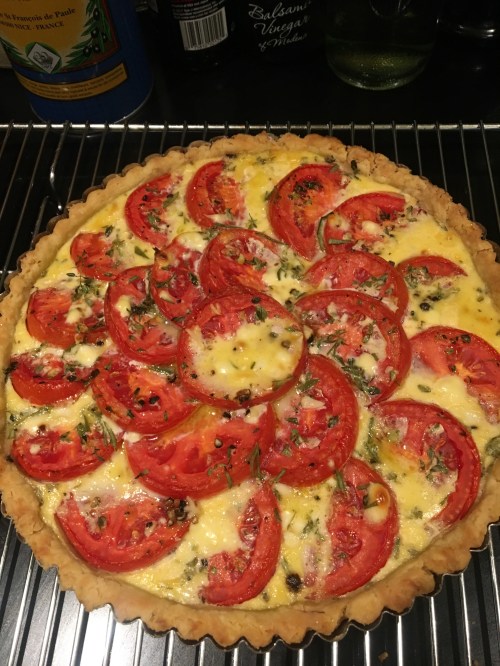
Recipe below: Tomato Torta with Rosemary and Goat Cheese

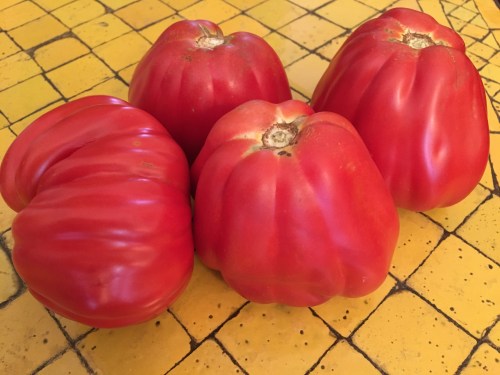
It’s getting to be that sad time of year when those smelly pots of ugly rust-colored flowers get trotted out and distributed to stoops and porches around New York, a signal that summer has come to a close. Yes, I’m talking about mums. I dislike no flower except them. When the mums come out, I feel sick at heart, and maybe a little sick in the head, too. Luckily we still have tomatoes. The best ones of the season are happening now. In fact, I’ve still got a deck full of big green Calabrian beefsteaks. I mean really green. They might be ready by Christmas.

Even though my personal tomatoes are stupidly late this year, I can still go to Migliorelli Farm and get beautiful heirlooms in many varieties. This year they’ve grown spooky black cherry tomatoes with a good balance of sweet and acid. They also have San Marzano and Roma plums.

I’ve made several tomato torte this summer, and I wanted to fit in a few more before the season truly wound down. The problem with using fresh local tomatoes for a tart is that they can give off a lot of liquid, possibly making the crust soggy, which is no good. But if you go for a plum variety, which is more meaty than watery, that won’t happen. I went with the Migliorelli Roma, and it worked well. I kept the torta simple, adding only goat cheese and a little rosemary. Super good. It’s still summer around here.

15976046819_899e471b4a_b

Still Life with Tomatoes, by Ako Lamble.

Tomato Torta with Rosemary and Goat Cheese

(Serves 6 as an appetizer)

For the crust:

2 cups all-purpose flour
½ teaspoon allspice
½ teaspoon salt
1 tablespoon powdered sugar
¼ cup extra-virgin olive oil
⅓ cup dry white wine, or possibly a little more

For the rest:

6 or 7 summer plum tomatoes, depending on their size
Salt
3 ounces soft goat cheese, at room temperature
½ cup half and half
1 egg
1 small garlic clove, minced
1 tablespoon powdered sugar
½ teaspoon allspice
Black pepper to taste
A few large sprigs of thyme, the leaves chopped
2 large sprigs of rosemary, the leaves chopped

To make the crust, put the flour in a medium-size bowl. Add the allspice, salt, and sugar, and stir everything around. Drizzle on the olive oil and the wine, and mix it all around with a wooden spoon until you have a bowl of crumbly, moist clumps. If the clumps seem dry, drizzle on a tiny bit more wine. Now dump it all out onto a work space, and press the clumps together, kneading a few times, until they come together in a ball. Wrap the ball in plastic, and let it rest, unrefrigerated, for at least an hour.

Slice the tomatoes into not-too-thin rounds, sprinkle them with salt, and lay them out on a paper towel to soak up any excess liquid. I’ve chosen plum tomatoes for this tart because they tend to be less liquidy than other varieties, but they can still be moist, so it’s best not to skip this step. Let them sit for about 20 minutes.

In the bowl of a food processor combine the goat cheese, half and half, egg, garlic, sugar, allspice, black pepper, some salt, and the rosemary and thyme. Pulse a few times, just until you have a smooth custard. If it’s too thick, add a little more half and half or some milk.

Preheat the oven to 400 degrees.

Lightly oil a 9-inch tart pan. Roll out the dough, and drape it into the pan. Trim off excess dough. I like to build it up a little at the edges to accommodate shrinkage. Layer the tomatoes in the pan in a slightly overlapping circular pattern, ending with one in the middle. Pour on the custard. This is not a heavy, custardy tart; it gets just enough custard to hold the thing together, and not enough to cover the tomatoes entirely. Drizzle the top with a stream of olive oil, and grind on a little extra pepper, if you like.

Bake until the crust is lightly browned and the custard is just set, about 35 minutes.

Let sit for about ½ hour before cutting, so it can firm up.

copy_monet_s__still_life_red_mullet_1869__by_hoopix_d7bfxdv-pre.png

Red Mullets, by Claude Monet.

Recipe below: Pan-Seared Triglie with Rosemary, Fennel Pollen, and Lemon

If you’re not yet comfortable cooking a whole fish, just go out and buy one. Then you’ll be stuck with it. And if you choose something pretty and small, like triglie, it will be much less intimidating. And, anyway, I’m going to talk you through this.

You may know this fish by its French name, rouget, or as red mullet, which is what it’s called here, but whatever you call it, it’s pink and delicious. There are a few good ways to cook it. Grilling is fine, but my favorite way is a hot pan sauté in a mix of good olive oil and bubbling butter—the butter helps brown and crisp the skin and infuse the flesh with fat and flavor.

I first began eating triglie regularly at the Greek fish restaurants in Astoria that I started frequenting in the mid-1970s. I was drawn to it by its orangey-pink skin. I’d pick my fish from the ice case, and the cook would then just throw it on a gas grill. Not the best for flavor, but despite that crass treatment, I loved the fish’s firm texture and mild taste, and I became fixated on it. I’d order two rougets, or even three, if they were really small, and season them only with salt and lemon. Those lovely fish with a side of Greek fries and a few glasses of retsina made a feast night for me. They’d have a fair number of little bones to deal with, but I’ve always just crunched most of them down with a little extra wine. You can also work around them. Totally worth it.

Now when I see nice-looking triglie in the market, which is not that often, I buy it. Its flavor really comes through with this quick pan sauté.

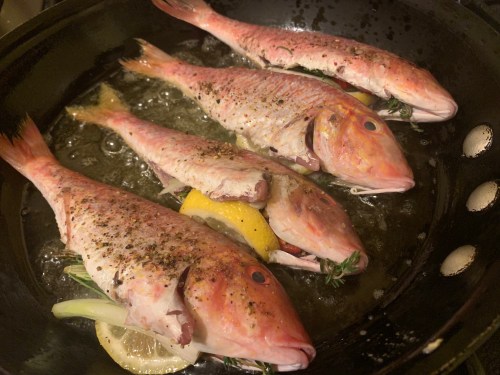
IMG_7101.jpg

Pan-Seared Triglie with Rosemary, Fennel Pollen, and Lemon

For two servings, get your hands on four medium-small red mullets. Scale and gut them, but leave their heads and tails on. Season them inside and out with salt, black pepper, fennel pollen (or ground fennel seed), and a little Aleppo. Stuff their insides with branches of rosemary, and slip in half-moon slices of lemon, a few slivers of garlic, and/or a scallion piece. Don’t worry if some of the stuffing looks like it’s going to fall out. It’s fine if it does, or even better, since it will just become even more flavorful when it hits the hot cooking oils.

Get out a skillet big enough to hold all the fish with a little room to spare. Put it over high heat. When it’s hot, add a generous pour of olive oil (you’ll want about ⅛ inch to coat the bottom). When that’s hot, add a few tablespoons of butter. Slip in the mullets, and let them cook without moving them around at all until you can see that they’re starting to get brown and crisp at the edges. This usually takes about 4 minutes. Now give the pan a shake to make sure the fishes move around easily, no longer sticking. Then you’ll know it’s time to flip them. Then give them a quick flip with a spatula. I guide them over by touching their uncooked sides with my fingertips so they don’t plop onto the pan, making hot oil splatter all over the place.

Scatter some extra chopped rosemary over the tops, just for extra flavor. Turn the heat down to medium, and brown the other sides, probably about another 4 minutes, depending on the size of the fish. These things cook fast. If you want to test, stick a skinny knife in along the backbone. If the flesh pulls away easily, you’re good.

Pull the red mullets from the skillet and onto serving plates. Squeeze on extra lemon juice, and eat. This time I served mine with a corn, tomato, and basil salad, and it felt right.