Posted in Uncategorized | Leave a Comment »

“A Cook and Her Herbs” will be a new regular feature on my blog. Once a month I’ll post about my love of herbs. I’ll offer recipes, personal stories, historical notes on herbs’ uses in Mediterranean cooking, health facts and myths, all sorts of cooking wisdom, and, as always, beautiful artwork and food photos. I decided to write my first herb post in the dead of winter mainly because I find the season challenging for the herb-obsessed like me, and I figured you could use all the help you could get.
I hope you enjoy it. Please send along any thoughts you have about my postings and any ideas you’d like to see covered here. Happy winter cooking to you. It’s been a long one. And don’t forget to look at my YouTube videos. I’m posting “A Cook and Her Herbs” videos monthly, too. And they’re often on different topics from my monthly text posts.
Recipe below: Pistachio Mint Pesto
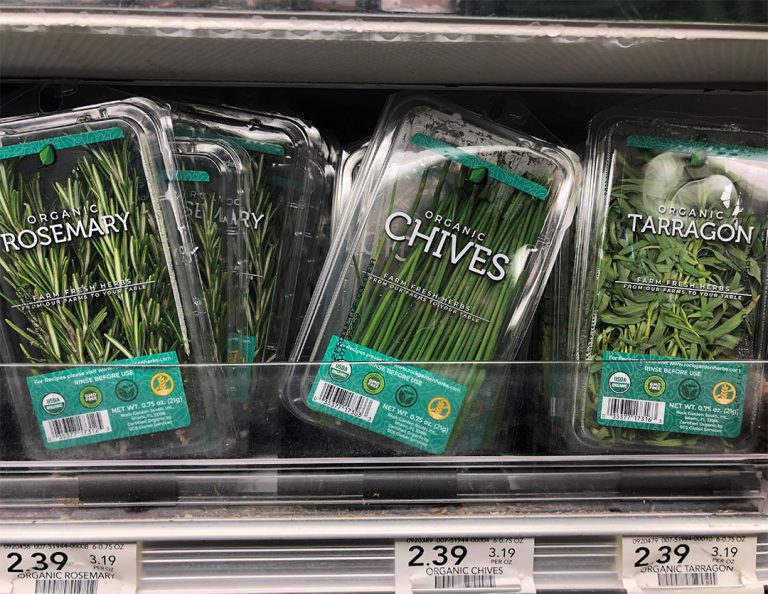
I can’t tell you how many times I’ve grabbed a package of sage or oregano or rosemary at a supermarket and thrown it in my cart only to get home and find almost the entire contents browned and rotten. I’m talking about the herbs you find in the little hard plastic packages lined up in rows in the produce department. Winter is when I’m forced to buy that stuff, since there’s no other option, and the letdown for me can be profound. As you know, I love my herbs. When I see them mistreated, I take it personally. The supermarket stuff often looks fine from the front of the package, but had I bothered to flip it over, I would have seen how desiccated it was. Of course, sometimes it looks really bad from the front. And occasionally, and here’s the most annoying thing, it looks good from the front and the back, but the middle is screwed-up moldy. Now I always open the herb packs to see if there’s anything funky going on inside. Many herbs that aren’t big sellers, marjoram among them, sit on the shelf too long, and nobody pays attention.

When they’re not all moldy or dried out, or moldy and dried out, the herbs I buy at the supermarket usually taste okay, but being mass-produced they’re often on the mild side, compared with ones you grow yourself or buy at farm stands. That doesn’t make them bad. You just have to be sure to always taste a leaf to determine how much you’ll need. You might want to add a bit more to get the effect you want.
Oregano is pretty easy to find in supermarkets year-round now, easier than marjoram, but it’s hard to know if you’ll find Greek or Italian oregano in those little packages. My local West Side Market usually stocks Italian oregano, but when go to Citarella, it’s always the stronger, less flowery Greek. Greek oregano has bigger leaves and is slightly darker in color. I now open the packages and give them a good look and smell to make sure I’m getting what I want. I often prefer Italian oregano, but it depends on what I’m cooking. For instance, I want Greek oregano in a spinach and feta pie. It’s only right.
Parsley and mint are fairly dependable winter supermarket finds, and usually in pretty good shape. Basil, on the other hand, is almost never good in the winter. I’m not sure why that is. You’d think anything grown in a greenhouse would at least be serviceable. In Liguria they grow basil in huge greenhouses all year round, and it’s excellent, but the stuff I get is cat-pissy and mostly blackened at the tips, and also strangely sandy. So the hell with that.
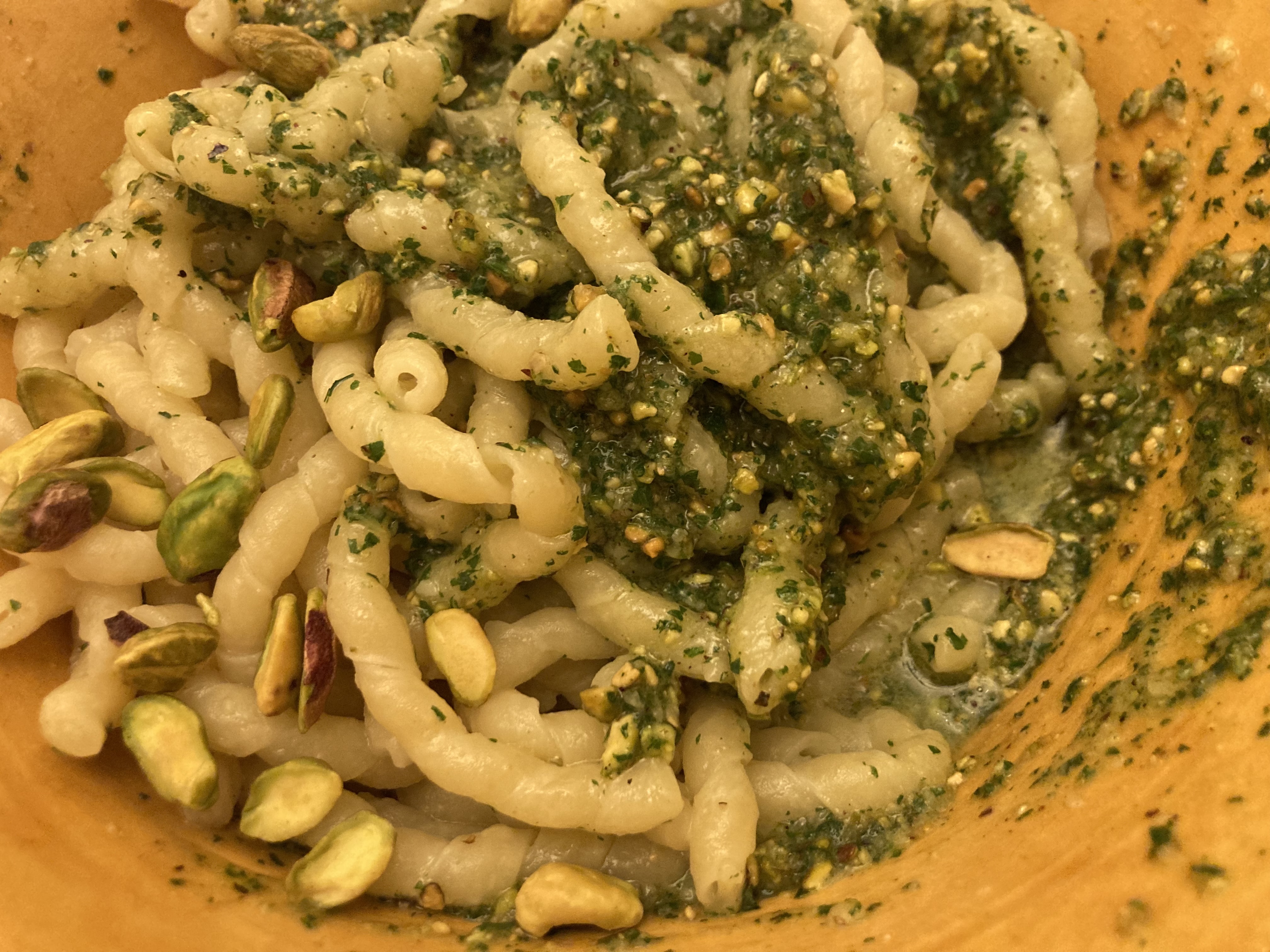
I use both parsley and mint in this pistachio pesto, which to my way of thinking is a good winter substitute for the more summery Genoa pesto. I make that only when I can get the best basil. Regardless of the trials of winter, I try to keep working fresh herbs year-round, not only to brighten up my cooking but also for their strong antioxidant and anti-inflammatory properties. Every little bit helps.
I tossed this rich, mellow pesto with a pound of busiate, a long, twisted traditional Sicilian pasta. Seemed like a really good match, considering that it involves most of the ingredients for a classic Trapanese pesto, excepting the tomatoes. You can use it as a condiment for seafood or vegetables (it’s excellent on roasted eggplant). And if you’re tossing it with pasta, remember to save a cup of the pasta cooking water to loosen it up and make it creamy.

A note on pistachios: Although wildly expensive, the Sicilian pistachios from the town of Bronte are exceptional. Turkish pistachios are also excellent, and I often buy them. I saw both at Kalustyan’s the other day, but considering that I was also purchasing a not so mini tin of Spanish saffron, the potential bill scared me, so I went for California-grown. They were better than I expected, rich and sweet and flecked with green, which is nice when making pesto. There’s nothing more depressing than gray pesto. Oh, and one other thing: I’ve tried toasting boring nuts such as almonds, pistachios, pine nuts, and walnuts to make them more flavorful for pesto, but it doesn’t work. I think pesto needs the taste of virgin nuts. I find that a strong toasted-nut taste overpowers the fresh herbs and throws the delicate medley off balance. That’s just me. I know people who do it, but I don’t think my people should.

Pistachio Mint Pesto
1 cup flat-leaf parsley leaves
¾ cup spearmint leaves
1½ cups shelled and unsalted pistachios
1 small garlic clove, peeled and roughly chopped (make sure it smells fresh and hasn’t sprouted)
Sea salt
The grated zest from 1 small lemon
½ cup grated Piave or grana Padano cheese
1 cup really good olive oil (I used Olio Verde, a Sicilian brand)
Fill a medium saucepan about halfway with water. Bring it to a boil, and add the parsley and mint. Blanch them for about a minute. Pour them into a colander, and run cold water over them to stop their cooking and set their nice green color. Squeeze out as much water as you can. This keeps the pesto from going dark right away but it doesn’t affect the flavor. Well, maybe it tamps it down a touch, but it’s a tradeoff. I find oxidized pesto completely unappealing, so this works for me.
Put all the ingredients into the bowl of a food processor. Give it all a few long pulses, just until it’s nicely emulsified but still has a bit of texture. If it seems too thick, add a little more olive oil. You’ll notice there’s no pepper of any kind in it. I prefer most pestos without pepper, especially ones made with basil or mint, which are peppery themselves.
I like to use pesto right when I make it, but it will keep good flavor for a day or two. Just bring it back to room temperature before using it, if you decided to refrigerate it.
Posted in Uncategorized | Leave a Comment »

Recipe below: A Quick Winter Ragù with Sausage, Rosemary, Fennel, and a Splash of Cream
I find winter supermarket shopping bleak. No Greenmarket cantaloupes, no backyard beefsteaks. As a picky, bordering on really picky, food shopper, I try to keep my supermarket visits down to maintenance only—onions, carrots, celery, broccoli, milk, plastic packs of somewhat fresh herbs, decent grana Padano, but definitely not a terrible thing called American fontina, which I bought once out of desperation and never again. Most of the lettuce is okay, but the other day I sniffed a pile of really good looking escarole and it smelled oddly like the mildewy inside of a bathing cap. I can’t imagine how that could be. Am I just a super snotty shopper who brings on her own depression? I know this sounds exaggerated, but a package of rotten, I mean really smelly, chicken I bought a few days ago literally had me in tears. Angry tears.
I’ve stopped buying fresh Italian sausage at supermarkets because I’ve been burned too many times, not only because of the sour, industrial quality of much of it, and problems with the pork industry in general, but also because half the time it’s rotten. I mean it stinks. If you’re going to sell mass-produced, processed ground meat, it might as well be fresh. Don’t you think? Evidently my 14th Street grocery store doesn’t think so. Sell-by dates have little meaning over there. And don’t get me started on their chicken rotation, or nonrotation. If you’re going to bother to stock phony free-range chicken, you may as well keep it fresh. And when the cashier asks if I want my receipt? Damn right, I want it. You’ll be seeing me back here with that high-stinking chicken in no time. The whole thing is so frustrating.
I really should make my own Italian sausage. It’s easy, and it feels really good. I think I’ll start again soon. I wish I had kept my grandmother’s meat grinder. It was an old hand-cranked thing that clamped on to a table and looked ancient and beautiful to my eyes. I had it in my college dorm room for a while. I’m not sure why I brought it there. Maybe back then I thought of it as found art. Not sure.
So this winter I walk miles through New York sleet, wind, and deep freeze to get myself a decent sausage. Actually I don’t have to go all that far, usually just over to Faicco’s, on Bleecker Street, about 15 blocks away, a fun slide on ice-slicked sidewalks (I also trudge over there for my tripe, the only place I can find it anymore). And the surprise is that Faicco’s good, fresh sausage doesn’t cost any more than the supermarket’s rotten one.
I’ve spent much of this winter in Italian food shops, the few that are left in downtown Manhattan. I can find excellent house-made mozzarella at a place called Sergimmo on Sixth Avenue. They also carry a Sicilian primo sale I can’t find anywhere else. I love Buon’Italia in the Chelsea Market. They’ve also make good fresh sausage, and it’s where I buy my cotechino for New Year’s Day. And they carry a huge selection of Setaro dried pasta. There’s a new caffè on Perry Street, right behind the Village Vanguard, that’s run by a Tuscan food exporter called Sogno Toscano, and it carries porchetta, bresaola, speck, guanciale, lardo, culatello, pecorino aged in grape must, pickled artichokes and eggplant, and good canned tomatoes. It is a wonderful addition to the neighborhood, and boldly opened right in the middle of Covid. I haven’t made it down to Di Palo’s in Little Italy yet this winter, but I will. I’m also planning a trip to Arthur Avenue in the Bronx to stock up on pantry staples like capers and anchovies and olives and dried sausage, all at really good prices. I can mostly keep my bad self out the supermarket, if I try.
If you can make or otherwise get your hands on some high-quality Italian pork sausage, I advise you to cook this dish. Most ragù sauces take at least two hours of long simmering. This sausage version will be ready in about 40 minutes. I know you’ve seen me use a blend of rosemary and fennel before. I return to it again and again. It’s worth it for its intrinsic beauty, especially when it comes to winter cooking.

A Quick Winter Ragù with Sausage, Rosemary, Fennel, and a Splash of Cream
Extra-virgin olive oil
1 fennel bulb, cored and cut into small dice, the fronds all saved and chopped
A palmful of fennel seeds
1 fresh bay leaf
1 large sweet onion, cut into small dice
1 large carrot, cut into small dice
4 or 5 very thin slices soppressata or another good salami, finely diced (this is optional, but nice you if have the meat on hand)
About ½ pound fresh Italian sausage (I used 3 medium sausages), the casings removed and the meat pulled into pieces (and if you’ve got fennel seeds in yours, you might want to omit the fennel seeds in the recipe, or use less)
5 or 6 big fresh (not dried) rosemary sprigs, the leaves well chopped
Salt
Black pepper
A big pinch of sugar
½ glass dry white wine
1 35-ounce can good Italian tomatoes, well chopped (if they’re swimming in tomato purée, I drain some off—to me it always makes a sauce too homogenized-feeling)
1 cup chicken broth
½ cup heavy cream
1 pound rigatoni or ziti or penne pasta
Pecorino Toscano cheese for grating
Get out a large sauté pan or casserole fitted with a lid. Add a big drizzle of olive oil over medium heat. When it’s hot, add the fennel and its fronds, fennel seeds, bay leaf, onion, carrot, and diced soppressata. Let it sauté until everything is fragrant, about 4 minutes or so. Add the sausage and the rosemary, and season it all with salt and black pepper and the sugar. Keep sautéing, breaking up the sausage into smaller pieces with a spoon, until the sausage starts to brown, probably about another 5 minutes. Add the white wine, and let it bubble for a few seconds. Add the tomatoes and the chicken broth. Let it all come to a boil. Turn the heat down a notch, and cover the pot, letting everything simmer gently until it all comes together in a fragrant, slightly suspending looking sauce. This should take about 40 minutes. You’ll want to stir it around every so often as it cooks.
Uncover the pot, and add the cream, stirring it in. Let it simmer, uncovered, for a few minutes, just to blend all the flavors. Give it a taste and adjust the seasoning.
Now you’re ready to cook your pasta al dente and toss it with the ragù. I think a nice pecorino Toscano is the best cheese for this. It’s more assertive than Parmigiano, but less sharp that a pecorino Romano.
Posted in Uncategorized | 4 Comments »

Recipe below: Bucatini with Octopus, Vermouth, and Basil
Lately I’ve been loitering around Eataly on 23rd Street. It tricks me into feeling I’ve travelled somewhere, maybe Florence, somewhere with big food shops filled with great Italian stuff. Eataly can be difficult, with its crowds and complicated floor plan, but there’s no denying it’s got some great Italian products. I don’t buy there all the time, but occasionally I do. Sometimes its pricing is just too bizarre, though. I recently intended to purchase a small head of puntarella, a type of chicory, but found, to my amazement when I brought it to the counter, that the tiny head of lettuce would have cost me $28. Living in New York, I’m usually not shocked by food prices, but this was crazy, don’t you think? However, some things there are reasonable. Cheeses, for instance. I was surprised to find a caciocavallo from Irpinia in Campania, a place not far from my ancestral village of Castelfranco in Miscano. Both localities are famous for this cow’s milk (or occasionally sheep’s milk) cheese, but Irpinia finally found a way to export it, and I’m grateful that Eataly stocks it.
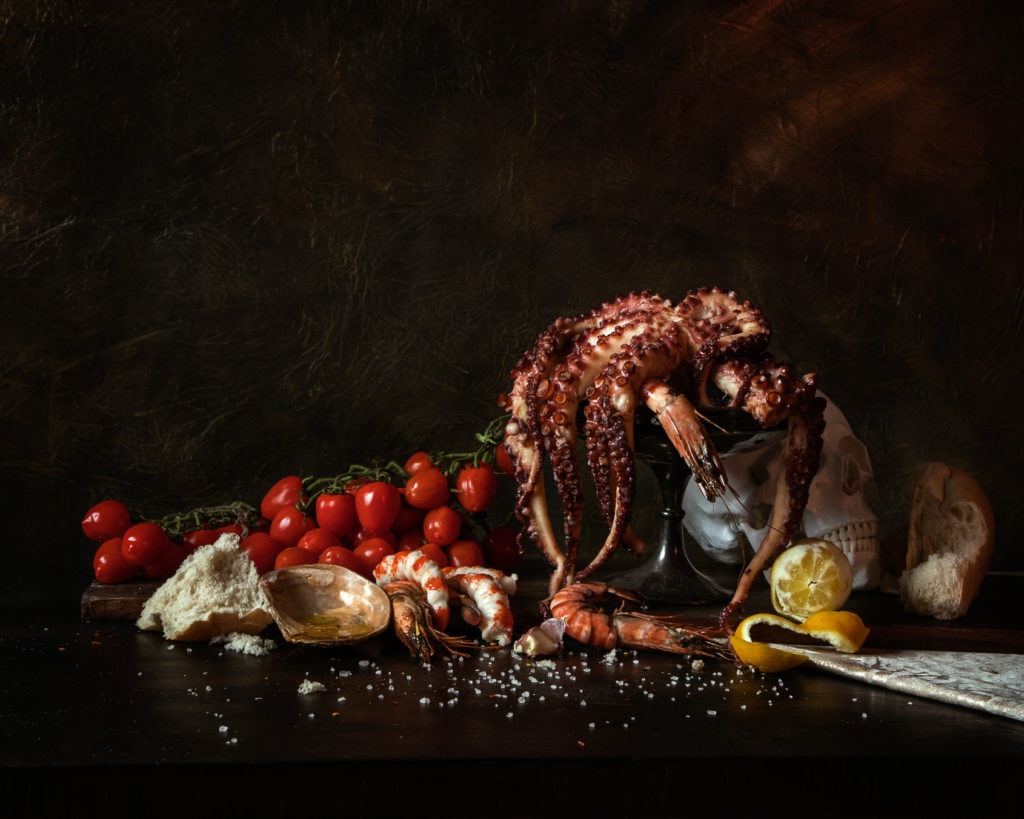
Eataly also has an interesting seafood department, reliably carrying hard to find things such as fresh anchovies and head-on scampi, the kind I like to stuff, and a good selection of whole fish (not just farmed branzino). On my last visit I saw octopus tentacles as thick as I’d ever seen in my life and of such gelatinous repulsiveness that I had to buy a few. Two of the monsters were enough for dinner for four. (They were sold detached from the head. I wonder how big that head would have been.)
There are several ways to cook big octopus. First off, most people buy whole ones that have been previously frozen, since that tenderizes them, which means you don’t have to spend time slamming them against a rock. They’re also cleaned, meaning the head has been emptied out, which cuts down on kitchen trauma. Most recipes ask you to first blanch your octopus in boiling water for as long as it takes to make it tender. That can be an hour or longer, depending on what you’re dealing with. And then there’s another way, more of an Italian granny way, which is to just stick it in a pot with no liquid at all, cover it, and sort of steam heat it into submission. Also I had a friend whose mother used to just sit an octopus up on a sheet pan and heat it in the oven until it softened up. Very strange to witness, but it did work. Sort of like baking a potato.

My method is a hybrid way. I put the octopus in a pot, pour on a little vermouth or wine, add aromatics (garlic, hot chile, onion, celery, bay leaf, herbs, depending), cover it, and then let it steam braise. This tenderizes it nicely and has the added benefit of gently seasoning it throughout.
I know a lot of people are kind of grossed out by the thought of cooking an octopus, but this recipe is a lot easier than you might think, and the resulting sauce is sensational. I hope you’ll give it a try.

Bucatini with Octopus, Vermouth, and Basil
(Serves 4)
Extra-virgin olive oil
1 sweet onion, like Vidalia, cut into medium dice
1 carrot, cut into medium dice
1 celery stalk, plus the leaves from about 3 stalks, cut into medium dice, the leaves lightly chopped
2 fresh bay leaves
5 or 6 large sprigs fresh thyme
2 garlic cloves, peeled but left whole
1 small fresh red chili pepper, cut in half lengthwise (seeded, if you like less heat)
1 medium-large octopus, previously cleaned and frozen
1 cup dry vermouth
1 35-ounce can Italian plum tomatoes, lightly drained and well chopped
Salt
A handful of fresh basil leaves, lightly chopped
1 pound bucatini
Get out a large stove-top casserole with a cover (I used a Le Creuset oval pot). Add a big drizzle of olive oil over medium heat. Add the onion, carrot, celery plus its leaves, bay leaves, thyme, garlic cloves, and chili. Let it all sauté for 2 or 3 minutes so it can become fragrant. Add the octopus, turning it over a few times to coat it in the oil and aromatics. I don’t add salt here since often the broth the octopus lets off is somewhat salty, and also extra salt can toughen it.
After the octopus has warmed through in the oil for a few minutes, add the vermouth, and let it bubble. Cover the dish, turn the heat down to really low, and let it simmer until the octopus is tender. This can take a while, in my experience at least an hour. My octopus, this time, was thick so it took even longer. Just test it every so often by poking it with a thin knife. If you get any rubbery resistance, it’s not done yet. You’ll also want to turn the octopus over a few times during cooking, to make sure it simmers evenly.
After a bit, it should start smelling pretty good. That is a sign you’re getting there. Test again. When a skinny knife goes through easily, it’s ready. Turn off the flame, and lift the octopus from the pot onto a cutting board, preferably one with a juice-catching moat, like you’d use for a steak.
Check to see how much broth you have in the pot. If you’ve got too much, the resulting sauce will be too liquidy. If you have more than 2 cups, take some out and save it for some other use. (I froze some of mine. It makes a great addition to a fish stew, for instance. I could have boiled it down, but it was very intense already and I didn’t want it to become too salty. This is a judgement call.)
After you get your broth level right, let the octopus cool enough so you can handle it.
While it’s cooling, add the tomatoes to the pot and simmer them, uncovered, on medium heat for about 15 minutes.
What I do now is cut the tentacles (legs actually) at the base of the head (I didn’t have the head this time around; if you have it you can slice it up and add it to the sauce, but I find its texture often dry, so I usually discard it). I then pull some of the soft skin off the tentacles. It slips right off. I don’t remove all of it, just some of it, and leave the suckers on. The soft skin does add some flavor, but the texture is a little weird, so I just remove part of it. But that’s up to you. Next cut the tentacles into approximately ½-inch pieces.
Return the octopus pieces and any juice they have given off back to the pot. Simmer about 10 minutes longer, just to let all the flavors come together. Taste the sauce to see if it needs salt. Mine usually needs a little, but that depends on how much exudes from the octopus. Add the basil. You can also add a drizzle of fresh olive her if you like. Can’t hurt.
Now you’re ready to cook your bucatini perfectly al dente and toss it with the octopus sauce. I’m not always particularly strict about the no-cheese-with-seafood “rule,” but in this dish I feel that cheese will conflict with the delicate taste of the sauce, so I leave it out.
You can also present the sauce, without pasta, just in bowls, possibly with a cup or so of cooked ceci thrown in, alongside garlic-rubbed bruschetta slices to dunk in it. Either way, it’s a good thing.
Posted in Uncategorized | Leave a Comment »

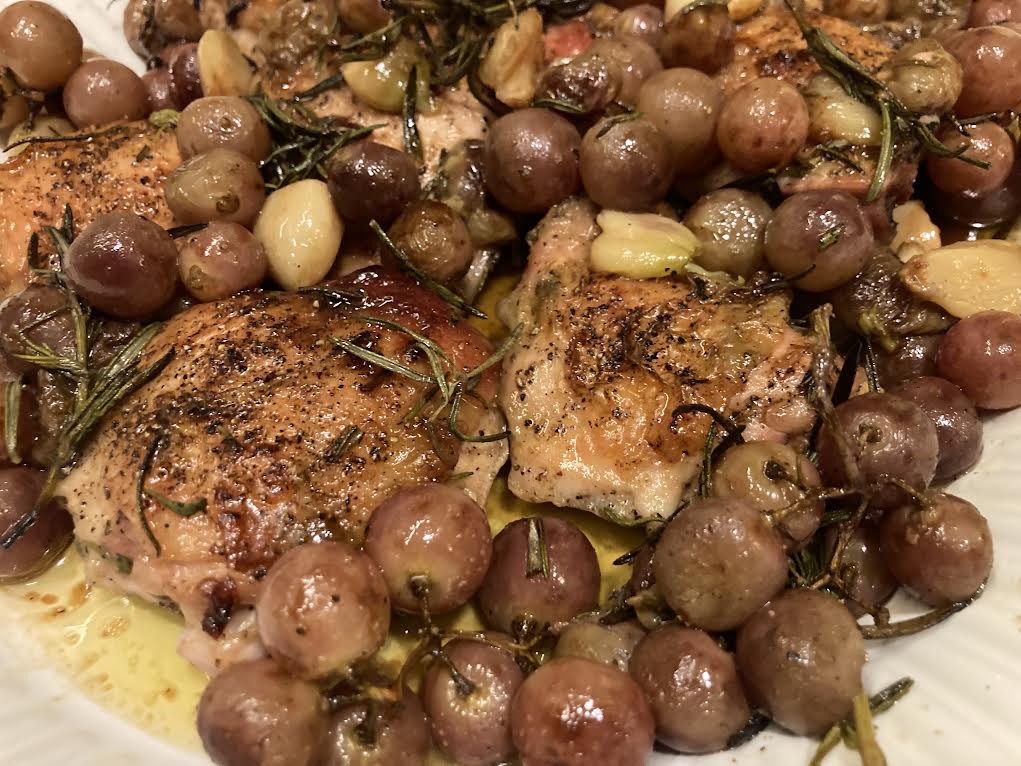
Recipe below: Oven-Seared Chicken with Grapes, Rosemary, and Grappa
Have you noticed how often the only herbs at health food stores are dill and cilantro? Is that all those people cook with? Why? I guess Asian-type food is the only type they consider legit, but what’s with the dill? And what about the Mediterranean diet, the best diet of all? Is there something unhealthy about rosemary or thyme or oregano? I wish someone would explain this to me.
And speaking of rosemary, it’s an herb I can predictably find in supermarkets in the winter, and usually in pretty good shape. I’m really glad, because it’s one of my favorites. Many others—ones I’ve been having Covid dreams about, such as lemon verbena, lovage, nepitella, summer savory, wild fennel, marjoram, and good Genovese basil—I can’t actually smell and cook with until they burst forth in my garden (and at my Greenmarket) again in late spring. Supermarket basil is the pits. I wouldn’t make pesto with that crusty cat piss stuff if my life depended on it (well, maybe if my life depended on it, but I’d be embarrassed to serve it to anyone).
Lately I’ve been cooking with lots of supermarket rosemary. It’s a solid winter herb, so good in meat stews, braises, and ragus for pasta, or with mushrooms or cauliflower or cabbage, or floated on a gin martini. A few weeks ago I made a sautéed chicken with grapes and rosemary and lots of blanched garlic. I loved the mix of flavors, especially when I deglazed the whole thing with grappa at the end, which gave it a nice boozy anchor. So when I decided to have a largish group over for dinner the other night, I thought I’d make that very good dish again, while doing it in a less fussy way. I scrapped the sauté pans and arranged all my ingredients on a sheet pan (not all at the same time, but you’ll see my process in the recipe). I don’t always love writing recipes for sheet pan suppers, because some people want all the ingredients to miraculously cook to perfection all at the same time, and that sadly doesn’t happen. With a little timing, the chicken came out beautifully, and I even got a better sauce with the sheet pan approach than with the oil-sputtering sauté. I made a cooked-down grape syrup with chicken essence and garlic and rosemary, all loosened up at the last minute with a big splash of grappa. I love it when all my flavors come together, especially in a winter dish like this one.
I served it with wild rice I got from Rancho Gordo. That was just the thing to soak up all the grapey juices.
You can double the recipe for a larger group. Just use two sheet pans.

Oven-Seared Chicken with Grapes, Rosemary, and Grappa
(Serves 4 or 5)
1 head firm, unsprouted garlic, separated into cloves but left unpeeled
1 cup chicken broth
About 6 rosemary branches, cut into large sprigs
8 chicken thighs, including the skin and bones
Salt
Black pepper
Pimenton d’espelette
Extra-virgin olive oil
A drizzle of rice wine vinegar
1 pound seedless red grapes, half of them picked from the stems, the rest separated into small clusters with the stems left on
¼ cup grappa
Put the garlic cloves into a small saucepan. Add the chicken broth, and bring it to a boil. Turn the heat down to a gentle simmer, and cook, uncovered, until the garlic is just tender, about 8 minutes. Lift the garlic cloves from the broth, keeping the broth. Peel the garlic cloves.
Preheat the oven to 450 degrees.
Smash up 2 of the garlic cloves. Remove and chop up the leaves from 4 of your rosemary sprigs, discarding those sprigs.
Put the chicken thighs in a bowl, and scatter on the smashed garlic and the chopped rosemary leaves. Season with salt, black pepper, and some espelette. Drizzle on a bit of olive oil, and sprinkle on the rice wine vinegar. Toss well. Lay out the chicken, skin side up, on a large sheet pan, leaving some space between the pieces.
Stick it in the oven, and roast it for about 15 minutes. Pull out the pan and add the grapes, the remaining garlic cloves, and the remaining rosemary sprigs, tucking them all in around the chicken pieces. Drizzle the grapes and herbs with a little olive oil, and season with salt and black pepper.
Put the pan back in the oven, and continue roasting until the chicken is well browned and just tender and the grapes have given off some juice, about another 15 minutes or so. Next splash on the grappa, and let everything roast for a few minutes longer, just to burn off the grappa fumes.
Take the pan from the oven and put the chicken thighs on a big serving platter.
If the pan liquid seems loose, and mine did a little, cook it down, along with all the grapes, garlic, and herb sprigs, over a burner. I did this simply by placing the sheet pan over the flame. Let the liquid bubble down for a few minutes to thicken it up. If, on the other hand, you don’t have enough liquid (I suppose it’s possible if your grapes didn’t explode enough), you can add a little of the garlic poaching broth to the pan. If not, you can do what I did and just drink the broth. It’s a restorative.
Arrange the grapes, rosemary, and garlic around and over the chicken pieces, and then pour on the pan sauce. Season with a little more of the espelette. Serve right away.
Posted in Chicken Recipes, Uncategorized | Tagged chickenrecipe, cookingwithherbs, dinnerrecipe, italianchef, italiancuisine, italianfood | 1 Comment »
Red wine, rosemary, vanilla, a beautiful combination of flavors that cook down to a thick, glossy syrup that clings to the pears and makes for an elegant winter dessert, a study in pink and deep crimson. Not too sweet, but full of intensity. I hope you’ll try it. And if you’d like the recipe, it’s here.
Posted in Uncategorized | Leave a Comment »

I’m nude. I’m languishing. The fish my uncle Nunzio brought this morning is sitting here waiting for me to fix it before it rots. If I cook something good, I’ll be a happy nude. If I just sit here holding my boobs like an dope, the fish will spoil and I’ll have made a sin. What should I cook? Maybe I’ll fillet it. Then I can coat it in olive oil and throw the fillets on the grill. That’s a good idea. In that case I should make a sauce. I have fresh marjoram. I have garlic. I have lemon. I’ll make a salsa verde with those things plus good olive oil. I have salt. I even have a fresh jalapeno. Maybe I’ll add that. That’s a good idea. If I grill the fish fillets and then spoon a bit of the salsa verde on top, not only will I have saved the fish from rotting, but I’ll have a really good dinner. I think I’ll do that. It’s better to cook the fish than to let it rot. That would not only be sad but also a sin, I think. Okay, great. I’m nude, but I’m not languishing. Now I’ve not only got a plan, but also a wonderful dinner. Thank you, uncle Nunzio for bringing me this really fresh fish, that at first I viewed as a burden, but now see as an opportunity.
Posted in Uncategorized | 2 Comments »

Recipe below: Pears Poached with Red Wine, Rosemary, and Vanilla
It sure is quiet out on the street. January tends to be a slow month in Manhattan, but this is ridiculous. The only real action I see is from Amazon delivery people. I really need to cook something with movement.
My usual approach to winter cooking, especially now that it’s pandemic winter cooking, is to keep it vibrating. Produce may not feel completely alive this time of year, but I still want to create living, breathing culinary art. It takes concentration. A game I play is to choose favorite flavors, intense delicious flavors, and work them in a way that makes whatever other ingredients I use just wake up. Red wine, vanilla, and rosemary are three of my vibration flavors. I find them beautiful alone or blended. Here I’ve used all three to poach California pears.
I knew the flavors would be right, but still I had to locate my pears. I looked for ones that felt firm but still smelled like pear. They weren’t easy to find. Bartletts smelled like pear but were too soft to poach. I didn’t want to wind up with mush. The brownish-skinned Bosc were solid hard and smelled oddly like a doctor’s office (or like the faux leather couch in a doctor’s office). I decided on Red Anjou, which were firm but alive in aroma and true pear character.
This dessert tastes excellent, and I love its look, too. The pears tint up pinky red, and the reduced wine syrup shines glossy like a ruby gem. I served the pears with sweetened mascarpone, but crème fraîche, ricotta, or vanilla ice cream would have been nice, too.
Happy winter Covid cooking to you.

Pears Poached with Red Wine, Rosemary, and Vanilla
(Serves 6)
6 ripe but firm pears (I used Anjou), preferably with their stems attached
1 750-ml bottle red wine (I used Côtes du Rhône, and it worked fine)
1 vanilla bean, split lengthwise
1 teaspoon vanilla extract
6 large rosemary sprigs, plus 6 sprigs for garnish
1 mandarin orange, cut into quarters
1 cup sugar
A pinch of salt
For the mascarpone:
1½ cups mascarpone, at room temperature
1 tablespoon sugar
1 teaspoon vanilla extract
Peel the pears, leaving their stems intact if they have them. If you like, core them with an apple corer. That make them easier to eat, but I didn’t bother, plus I didn’t have an apple corer.
Put the pears in a big, wide pot. I used a pasta pot, but anything wide enough so the pears fit in without sitting on top of one another. Add the wine, and then add enough water to cover the pears. Add the vanilla bean and extract, rosemary, orange, sugar, and salt.
Turn the heat to high, and bring it all to a boil. Turn the heat to low, partially cover the pot, and simmer until the pears are tender when poked with something thin and long, like a wooden skewer, which is what I used. Depending on your pears, this may go fast or may take a while. My Anjous needed about an hour. At the end your pears should be a beautiful, consistent light red color, and the poaching liquid should smell like sweet wine but more complex.
Delicately, so as not to bruise them, lift the pears out of the wine bath with a slotted spoon, and onto a platter.
Now you’ll want to reduce the wine. Turn the heat to medium high, and let it bubble away. It will probably take about a half hour, but keep an eye on it. You don’t want to reduce it to a hardball stage; you just want a nice thick, pourable syrup. Once it starts shimmering with big bubbles and coats a spoon, it’s ready. Next you’ll want to pour it through a fine strainer into a small pot to remove all the bits of rosemary and things. I retrieved the vanilla bean to use as garnish, cutting it into shorter pieces. Let the liquid cool. It will get thicker as it cools.
Mix the mascarpone with the sugar and vanilla extract.
When you’re ready to serve, pour any liquid your pears have released from the plate into the syrup. Reheat the syrup, not to boiling hot but just warm enough to loosen it some and make it glossy. Place each pear in a small bowl, and pour some syrup over the top. Garnish with a piece of the vanilla bean, if you like, and a sprig of fresh rosemary. Plop a heaping tablespoon or so of the mascarpone next to each pear. Serve.
Posted in Dessert | Tagged #dessertrecipe, #italiandessert, #poachedpears, #redwine, #rosemary, #vanilla, cookingwithherbs, italianchef, italiancuisine, italianfood | 5 Comments »

Recipe below: Bitter Greens and Mandarin Orange Dust Salad, with an Anchovy Vinaigrette
After days of post-Christmas fog, both atmospheric and spiritual, I needed a lift, so I decided to dry a bunch of Mandarin orange peels and grind them to a dusty powder. This was so helpful. Sometimes a seemingly small culinary move can lift my soul much more than I expect. I put the dust in a bowl and sniffed it in every time I passed it on my kitchen counter.
I always have a net bag of Mandarin oranges hanging around this time of year. They peel so easily, section without effort, and have a good agro dolce balance. A hopeful note in winter’s bleak culinary scheme. And, as I’ve discovered, their skins can be quickly dried, to give off a concentrated citrus aroma. You know how you can feel yourself downsliding in January? You might be tempted to throw your head under a grow lamp, but maybe try making this Mandarin dust instead. It worked for me.

So I took these dried skins and whizzed them up in my mini spice grinder to create essence of Mandarin. I could immediately see the uses. Sprinkled over a Provençal beef stew, for instance, picking up on the orange rind that’s usually added but doesn’t provide much impact. Same with a bouillabaisse, letting the citrus mingle with the fennely pastis. That’s a match made in my Mediterranean dream head. It was also great sprinkled over my avocado toast.
I also thought about all the bitter greens that are so good this time of year. They would be beautiful in a salad tossed with a bit of my Mandarin dust. So I went to the Union Square Greenmarket looking for the radicchio man. He usually has the Treviso variety, both precoce and tardivo, the latter being the same plant but left in the field to mature and grow long purple-striped fingers. He also grows the Castelfranco type that looks like a big, pink, overblown rose. He has puntarella, too. It’s all so beautiful. But unfortunately he wasn’t there. So I went over to West Side Market and settled on decent looking heads of frisée and escarole and a white endive. I did see dandelion bunches there, too, and they would have been a nice touch, but they were all wilty.
Anchovies seemed a natural for the dressing, as their flavor tends to both heighten and sweeten the bitter greens (if you’ve ever had puntarella salad in Rome you know what I’m talking about). You can add sliced fennel and a handful of its fronds, if you like. However you put it together, this is, in my opinion, as vibrant and appealing as winter cooking gets. And the dust seals the deal.

Bitter Greens and Mandarin Orange Dust Salad, with an Anchovy Vinaigrette
(Serves 4)
For the mandarin orange dust:
As many Mandarin oranges as you want to dry
Salt
For the salad:
A large head of escarole or frisée, or a little of both
2 red or white endives or Treviso radicchios, if you can find them, the leaves separated
A handful of dandelion leaves, if available
2 mandarin oranges, peeled and sectioned
1 scallion, cut into thin rounds
4 oil-packed anchovy fillets (I like Ortiz brand), well chopped
1 garlic clove, crushed with the side of a knife
Black pepper
1 tablespoon rice wine vinegar
Salt
Extra-virgin olive oil, about 2 tablespoons
To make the Mandarin dust: Peel the oranges. Use as many as you like, depending on how much dust you want. It lasts for a while but starts losing a bit of aroma after a few weeks, so bear that in mind. Next, dry the skins. I have a countertop Breville mini oven with a convection mode, but any regular oven will work fine. If you have a dehydrator, you can use that. I don’t own one, so I laid the peels out on a grill rack, set the oven at 250 degrees, and stuck them in with the convection on. The peels took about an hour to dry out. Pretty fast. After that I turned off the oven and left them in it for about a half hour just to make sure they were really bone dry.
Then, working in small batches, I whizzed the dried peels to a powder in my mini spice grinder, adding a pinch of salt to each batch (this, I find, helps bring up their flavor). That’s it. I made about a cup of dust, which I’ll be playing with over the next few weeks.
To make the salad: Put all the greens in a big salad bowl. Add the orange sections and the scallion. Put the chopped anchovies in a small bowl. Add the garlic clove, the vinegar, and the pepper. Give it a stir. I like to keep the anchovy in discernible bits, but if you prefer you can mash it up more. Add the olive oil, and season with a little salt, if you think you need it. Pour the vinaigrette over the salad, and give it a toss. Sprinkle a little of the dust over the top, or sprinkle it onto your individual servings, or both.
Posted in Salad Recipes | Tagged cookingwithherbs, italianchef, italiancuisine, italianfood, mandarinorange, saladrecipe, wintersalad | 2 Comments »
Posted in Cooking Videos, Sauces | Tagged cookingvideo, cookingwithherbs, howtocookvideo, italianchef, italiancuisine, italianfood, raitosauce | Leave a Comment »