Feeds:
Posts
Comments

Archive for the ‘Uncategorized’ Category

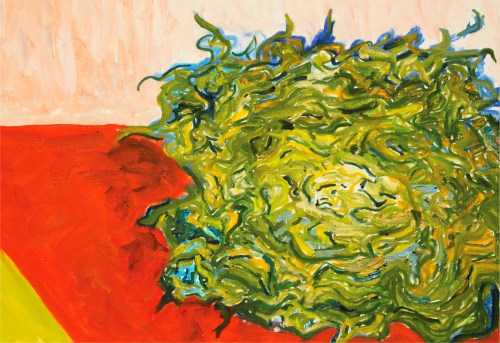
11.jpgEscarole, by Todd Lynch.

Recipe below: Escarole Salad with Radishes, Ricotta Salata, and Garlic Croutons

There were certain foods that set an Italo-American family apart from other households in our New York neighborhood. Each family had its Italian staples. What ours always had on hand tells a historical tale straight from the Mezzogiorno. Eggplant, provolone, anchovies, broccoli rabe, and escarole were high up on the list of “foreign” foods we considered a normal part of life. They were always there, fitting effortlessly into all kinds of meals. Escarole salads came out at the end of dinner, sickeningly bitter and tough to outsiders, but eagerly awaited by us. So good after spaghetti with red clam sauce.

Things have been difficult around here the past few weeks. My mother, maker of the perfect escarole salad, is in the hospital again, all up and down and uncertain. When she gets sick, which has been often in the last few years, I find myself cooking what she taught me. But taught is not really the correct word. My mother never asked me into the kitchen to cook by her side. She was too irritable for that. She showed me, though, because I was watching. She believed that escarole with olive oil and lemon was the perfect digestivo and essential to good health. She brought it and other strongly flavored green things to the table, and she never questioned that we would eat them and like them and then anticipate their reappearance in the future.

I like escarole salad presented freely with just a swirl of oil and lemon or vinegar drizzled into the bowl, but I also like it with stuff added, as in the version I offer here, which has touches of springtime. Salty, crumbly ricotta salata goes exceptionally well with the crunch and bitter of escarole. So this salad’s for you, Mom. Feel better soon, and thanks for showing me how.

Note: In late spring I start seeing young escarole in my Greenmarket. I try to use it for salads, since the leaves are bright green and tender. The tougher supermarket stuff is best for sautéing with garlic, anchovies, and hot chili, as my family always made it. If you can only find older heads, just use their inner tender leaves for this salad.

(Serves four)

2 large, thick slices of day-old Italian bread, cut into 1-inch croutons, leaving the crust on (you’ll want about a cup or so of croutons)
Extra-virgin olive oil
1 garlic clove, minced
Salt
Black pepper
2 or 3 young heads of escarole, or an equivalent amount of inner leaves from older heads, torn into pieces
3 French breakfast radishes, thinly sliced on an angle, leaving on any tender green stems
1 small head of fennel, thinly sliced
2 scallions, thinly sliced, using some of the tender green part
About 1  1/2 teaspoons lemon juice
2 anchovy fillets, minced
A dozen or more large shavings of ricotta salata

Preheat the oven to 325 degrees.

Spread the croutons out on a sheet pan, and stick them in the oven until they’re crisp and fairly dry, probably in about 15 minutes.

Heat a little olive oil in a small skillet. When it’s hot, add the croutons, half the minced garlic, and a little salt and black pepper. Sauté until golden, about 2 or 3 minutes.

Put the escarole in a large salad bowl. Add the radish slices, fennel, and scallion.

In a small bowl, mix the lemon juice, minced anchovy, the rest of the garlic, and a touch of salt. Add about 2 tablespoons of olive oil, and whisk it in. Add more lemon juice if needed.

Grind a good amount of black pepper over the salad, and pour on the dressing. Toss lightly. Add the croutons, and toss again. Top with the ricotta salata shavings.

Read Full Post »

Legnari-Liguria-8by20-M
Spring in Liguria, by Ginette Callaway.

Recipe below: Pan Roasted Asparagus with Herbs, Butter, and Eggs

While working out this new asparagus recipe, I got to thinking about the ways I’ve passed on culinary knowledge to others. Every dedicated cook does it in his or her own fashion. Teaching formal classes is one way. I haven’t done full-on classes since I lost my cooking space a few years back (it was actually the music room of an Upper West Side bar that I transformed into an Italian trattoria each Wednesday). I’ve been trying to decide if I’ve missed teaching. I tell myself I have, but then I think maybe what I’ve felt is more of a sense of duty to be well-rounded. Writing about cooking is contemplative and solitary, and it’s always come more naturally to me than standing in front of a crowd. I’ve also wondered if most of the people who sign on for cooking classes really want to learn or just  want to be entertained. I suppose the popularity of the Food Network can partly answer that question. But the bigger question is, does it matter?

My trattoria classes were large, about 25 to 30 people, and demo-style. The students would occasionally get so loud and goofy, I resorted to ringing a bell when the chatting and laughing competed with my well thought-out presentation. Now this was partly my fault, since I offered good wine at low cost, the first glass free. I loved how everyone enjoyed themselves and enjoyed my take on improvisational Italian cooking, but keeping this fun, flirty group in line was exhausting, and after a while I got resentful. I tried a more studious, hands-on approach but soon realized that the only way to get the students to return was by letting them have a blast, and I needed the money. Most of them didn’t want hands-on. They wanted to watch me. Did it damage my ego to know all my hard work got boiled down to a few hours of cabaret? Not really. Did they learn? When I think of all the reasons I love to cook, that last question is answered for me. If I wanted to teach at the CIA I could have done so. I chose the bar for a reason. I love solitude in the kitchen, for sure, that’s how I teach myself. But I also love to entertain. I view every meal as a small celebration, or at least that’s my goal. And I’d like other people to get the same uplift from cooking that I usually do. Passing on enthusiasm is certainly part of teaching, even if the recipients are all too drunk to remember the recipe. Now that I’ve worked this out in my head, I want to stand up and teach again, the first glass free.

And speaking of teaching, I’ve been teaching myself about asparagus for a long time, learning what preparations work best. Sometimes I want contrast, sometimes I like my flavors to meld. For this recipe I didn’t want to add too much. I wanted to let the innate beauty of the fleeting vegetable dominate. Even though you’ll see a good number of ingredients, they’re mostly herbs that blend effortlessly into a lively green delicacy. Check it out.

(Serves 3)

About 3 tablespoons butter, unsalted
A drizzle of olive oil
1 big bunch medium thick asparagus, trimmed and the tough skin peeled
Salt
Pepper
A big pinch of ground coriander seed
A splash of Moscato or another sweet wine
The juice from about ½ lemon
About a dozen or so chives, chopped
A few big sprigs of mint, the leaves chopped
A few big dill sprigs, the leaves chopped
The yolk from 2 hard-boiled eggs

Choose a skillet large enough to hold the asparagus in one layer, more or less. It should have a lid. In it melt about 1½ tablespoons of butter, plus a drizzle of olive oil, over medium heat. Add the asparagus, turning it around in the oil to coat. Season with salt, black pepper, and the coriander seed, and sauté, turning the asparagus a few times until it just starts to soften and get a bit golden. Add the sweet wine, and cover the skillet. Cook, turning once or twice, until the asparagus is just tender, about 2 to 3 minutes. Check the skillet a few times to make sure the liquid hasn’t dried up, and add a little warm water if you need to.

Uncover the skillet, and transfer the asparagus to a serving platter. If the skillet liquid is watery, cook it down a bit. Otherwise just turn off the heat, leaving the skillet on the warm burner.

Add the lemon juice and a heaping tablespoon of butter to the skillet, stirring to melt it.

Crumble the egg yolks over the center of the asparagus. Then pour on the butter sauce, and scatter on the herbs. Serve right away.

Read Full Post »

Women with Fish

537318b4419e269565efce2f62c1855e

Lady, if you know what’s good for you, you’ll give it to the bear.

Read Full Post »

Mycenaecultfrescosegment1

Recipe below: Emmer Primavera with Asparagus, Peas, Radishes, and Mint

There’s absolutely nothing springlike going on at my New York Greenmarkets yet, not even those unappealing fiddleheads. So I’m off in dreamland, thinking about all the good stuff to come. And this has gotten me reflecting on peas. I mean shell peas, or English peas, as they’re sometimes called. It’s too early for local ones here, but frozen ones aren’t half bad, and they’re often even better than fresh, since they’re held in a cryogenic state at the peak of ripeness or somewhere close. Often when I get peas still in their pods at the Union Square Market in Manhattan, they’ve  already gone from eat-out-of-hand sweet to starchy and dull. That happens quickly with peas. I guess the drive down from Hudson is sometimes just too much for them.

I’m usually okay with frozen peas except for a couple of things. I find their uniformity upsetting. I understand they’re sorted by size, but why bother? And how are they so dark green? The seasonal peas at my market are various sizes and lighter in color. I guess Monsanto, or whoever is in charge of monotony in vegetables these days, has got that little soldier look down. Lately, instead of Birds Eye and the like, I’ve been buying frozen organic peas. They’re all the same size, too, but at least most that I’ve tried aren’t that disturbing dark green color.

I don’t have local asparagus or radishes yet either, but something was calling me to make this dish ahead of schedule. And it was good. I can’t wait to try it when I’ve got my hands on the real deal. Should be excellent.

I’ve used emmer for this dish, one of the three wheat grains that can be labeled farro (the two others are spelt and einkorn). At my Greenmarket I find straight, unpearled emmer, grown in upstate New York. It’s a rich tasting grain. Since it’s got the whole germ intact, it takes a little longer to cook than pearled farro, but it also has more nutrients, and it digests slower, something to keep in mind if you’ve got high blood sugar. If you can find local wheat berries near you, do yourself a favor and buy some, whatever the variety. The deep, wheat aroma that rose up from the pot while I was cooking this, with its undertones of sweet and bitter, was remarkable. Now I know what old-fashioned wheat is supposed to taste like.

Emmer Primavera with Asparagus, Peas, Radishes, and Mint

(Serves 4)

1½ cups emmer (or supermarket farro)
Salt
Extra-virgin olive oil
2 tablespoons unsalted butter
A big bunch of fairly thin asparagus, the tough ends trimmed, the stalks sliced on an angle into approximately 1-inch pieces
1 cup freshly shucked peas, or use frozen
4 French breakfast radishes, sliced thinly on an angle, leaving any radish leaves intact if possible
3 scallions, chopped, using much of the tender green part
¼ teaspoon ground nutmeg
½ teaspoon ground coriander seed
Black pepper
About 6 large thyme sprigs, the leaves chopped
A splash of dry Marsala
½ cup chicken broth or vegetable broth
A tiny drizzle of rice wine vinegar
A handful of spearmint sprigs, the leaves lightly chopped, plus about 6 nice-looking sprigs for garnish

Put the wheat in a saucepan, and cover it with water by about 4 inches. Add salt. Bring it to a boil, and then turn the heat down a touch, and let it cook at a lively bubble, uncovered, until the wheat is tender to the bite. My unpearled emmer took about 40 minutes. Supermarket farro, in my experience, goes faster. Just taste-test every so often.

While the wheat is cooking, set up a big pot of water, and bring it to a boil. Add the asparagus, and cook for about 30 seconds. Now add the peas, and cook about 30 seconds longer. Drain in a colander, and then cool under cold running water to bring up their green color. Drain well.

When the wheat is tender, drain it, and pour it into a nice-looking serving bowl. Drizzle on a little olive oil, and cover to keep warm.

In a large skillet, heat about 2 tablespoons of olive oil with a tablespoon of butter over medium-high flame. Add the scallions, the asparagus, and the peas. Season with salt, nutmeg, coriander seed, black pepper, and thyme. Sauté until everything is fragrant but still has a bit of bite to it. Add the radish slices, and just warm them through. Add the Marsala, and let it bubble for a minute. Add the chicken or vegetable stock and the rice wine vinegar, and let it all simmer for about a minute. Turn off the heat, and add a fresh lump of butter, stirring it in.

Pour the asparagus mix onto the wheat, add a drizzle of fresh olive oil and the chopped mint, and toss. Taste for seasoning, adding salt, black pepper, a little more vinegar, or a drizzle more broth if it needs moisture. Top with the mint sprigs, and serve warm.


Read Full Post »

chicken_oil_paintings
Chicken Oil Painting, by Vanilla Beer.

Recipe below: Chicken Roasted With Cognac, Quatre Epices, and Strong Herbs

So here’s a fine restaurant technique I learned many moons ago while working at a French bistro. It produces roast chicken without your having to actually roast a whole chicken. It’s much quicker than cooking a chicken whole, and it also gives you more surface area for crisp skin, which for me is about 75 percent of the joy of eating roast chicken.

At the bistro we’d marinate chicken pieces in a moss of chopped herbs (rosemary, thyme, a bit of sage), garlic, olive oil, and black pepper, all of which had been thrown into a food processor. When an order came in we’d pull a breast, thigh, and drumstick from the green mush and place it in a small, searing-hot sauté pan, skin side down, browning it fast. We’d turn the sputtering pieces, and then stick the pan in an eyelash-singeing hot oven for about 15 minutes. It came to the customer hot, brown, juicy, and beautifully seasoned, with a side of frites. A great little dinner. I was fascinated by the method back then. I’m not sure why it never occurred to me to do anything as simple as that at home, but I guess cooking better is one of the things restaurant work will teach you. So now I do my at-home version, marinating chicken pieces for about half an hour and then spreading them out on a sheet pan and heat-blasting them until they’re sizzling good. It takes maybe 20 minutes. I skip the sauté step, a better shortcut for a family meal. And this time, to make it a one-step dinner, I threw a few vegetables into the mix. My only question was what to season everything with.

We’re on the verge of spring, but it’s still chilly and windy in New York. I’m not ready to go all gentle with tarragon and chervil yet. So for this recipe I’ve held with the bistro trio of rosemary, thyme, and sage but added quatre épices, the sweet-and-savory four-spice blend that’s often a signature flavor in patés and other good French food (see the note below for my personal take on it). I’ve also added cognac, which gets under the chicken’s skin, deepening the flavor in a rich and sweetly boozy way. I can smell the alcohol as it’s burning off. In fact, the smell this chicken gives forth while cooking reminds me of many restaurant kitchens from days gone by. That all-enveloping savory steam up my nose brings back the claustrophobic excitement I’d feel when we were just closing in on dinnertime. Intoxicating.

Note: Quatre épices is a warm French spice mix that’s often used to season patés and terrines. Traditionally its made up of the four spices pepper (black or white), cloves, nutmeg, and ginger, but sometimes it will include a few more. The theme is warmth and sweetness, balanced by the bite of the ginger and the pepper. At the moment, mine is an approximately equal mix of allspice, ginger, cinnamon, and black pepper. Sometimes I leave out the cinnamon and add nutmeg or a tiny amount of clove. All these spices are traditional, but the mix varies depending on the cook.

Chicken Roasted with Cognac, Quatre Epices, and Strong Herbs

(Serves 4)

5 whole chicken legs, cut into thighs and drumsticks
4 shallots, peeled and halved lengthwise
About a dozen very small red-skin potatoes, halved
8 carrots, on the thin side, unskinned, cut into 1-inch or so lengths
3 garlic cloves, peeled and lightly smashed
About ¼ cup cognac
Extra-virgin olive oil
About 1 tablespoon quatre épices (see note above)
About 8 big sprigs rosemary, the leaves chopped
About 10 big sprigs thyme, the leaves chopped
About 6 or 7 sage leaves, chopped
Salt
A drizzle of rice wine vinegar

Preheat the oven to 450 degrees.

Put all the ingredients in a big bowl, and toss very well. Make sure you add enough olive oil to coat well.

Spread everything out on a sheet pan, turning the chicken pieces skin side up. The ingredients can be jammed fairly closely, but if it all gets overcrowded, use two pans. Pour any remaining marinade over the top.

Roast, without turning anything, for about 20 to 25 minutes. The chicken should be sizzling and browned and the vegetables caramelized.

Read Full Post »

Mortadella_na_sniadanie_edw210.jpgMortadella for Breakfast, by Edward Dwurnik.

Recipe below: Panino with Mortadella, Ricotta, and Pistachio Vinaigrette

Recently I was playing around with a potentially newish pasta dish that I thought should include mortadella. Well, I’ve since had second thoughts about that pasta, as originally planned. When assembled, it seemed too bland, with its ricotta and pistachios and delicately flavored meat. But I did put together something good with the few slices of mortadella and the other stuff I had left over. I made a panino.

What I realized my pasta lacked was brightness, so when making my panino I turned the pistachios into a vinaigrette and added a handful of sharp arugula to the mix. It was a very good panino, but it also allowed me to revisit my original pasta concept with a fresh look. The next time I try my hand at this pasta, I’ll be adding bitter and acid. I can imagine how much better it will be.

I love cross-pollination in cooking, when I’m creating one kind of food and get ideas about another. I think it happens to all dedicated cooks let loose in a kitchen. A few weeks ago I was putting together a composed salad, and I threw in some escarole, two leftover boudins blancs, and some fontina, caper berries, and thyme. I liked the way the mild sausage and  sweet cheese played against the thyme’s sharpness, the bitter escarole, and the astringent caper berries. That taste combo lingered in my mind, and this week I transformed similar ingredients into a quick sauce for cavatelli.

I always look forward to discovering flavor links I can work with in new ways. It’s a reason I still find cooking so alluring. I can continue to use the traditional Italian and Mediterranean flavors I love while keeping my brain in the present and future. Boredom scares me, but, luckily, with cooking at least, I haven’t hit that place yet.

Panino with Mortadella, Ricotta, and Pistachio Vinaigrette

(A sandwich for 1)

For the vinaigrette:

2 tablespoons shelled, unsalted pistachios, lightly toasted
Salt
Black pepper
A big pinch of ground nutmeg
About ½ teaspoon sherry vinegar
2 tablespoons extra-virgin olive oi
The leaves from a few sprigs of marjoram

For the sandwich:

1 small ciabatta, split into sandwich halves, with the middle pulled out if soft and bready
Extra-virgin olive oil
3 or 4 slices mortadella
1 heaping tablespoon ricotta, or a little more if you like, at room temperature
Salt
A handful of arugula, stemmed
Black pepper

Put all the ingredients for the vinaigrette into a food processor, and pulse until you have a not-too-smooth consistency. You want a little texture here.

Brush the surfaces of the ciabatta with a little olive oil, and toast under a broiler.

Lay the mortadella on one ciabatta half. Smear the other half with ricotta, and season with a little salt. Drizzle on as much of the vinaigrette as you like (you’ll probably have some left over), Put the arugula on top of the ricotta, give everything a few grinds of black pepper, and close up the sandwich.

I have found that this sandwich goes nicely with a glass of Barbera.

Read Full Post »

Women with Fish

tumblr_lcoahdmndi1qdlpaq

I know Carnavale is over, but I still feel like celebrating.  And please note, my hat is Lenten approved.

Read Full Post »

fennel_citrus_still_lifefennel_citrus_still_life
Fennel with Lemon and Peel, by Brandin.

Recipe below: Braised Fennel Bohemian Style

I love cooking with the lumpy, hard vegetables I find in winter—celery root, turnips, even rutabaga. But there comes a time each year when beige and impenetrable loses its luster. That time has now come again. My Mediterranean just kicked in, and all the pretty citrus in the world can’t squelch my urge for tomatoes, eggplant, fresh garlic, and sweet peppers, all at their prime. I’m wishing I could bring back my uncle Billy’s summer ciambotta, the way he took his sun-warmed garden bounty and braised everything together in a big blackened pot until a glorious vegetable stew emerged, its surface shimmering with olive oil. He served it with Arthur Avenue bread and crappy red wine. That’s where I want to be right now, fifteen years old, wearing ridiculously large hoop earrings, hanging with Billy in Rye, New York, in his puny backyard, so close to Playland that we could hear the kids scream with horror and joy as they rode the mighty Dragon Coaster. We’d eat his ciambotta not hot but just warm, out of deep white bowls. The flavors were stronger at that temperature, he’d say.

Ciambotta is Southern Italy’s ratatouille, and it’s what I would call essential summer. Obviously essential summer is not just the ciambotta. It’s the entire scene and ritual  around its preparation. But grand scenes can be made on 13th Street in Manhattan, too, in mid-February, when cooking something in the same spirit but using winter staples becomes a celebration for a cold, gray day.

So what do I make instead? Sometimes I cook fenouils à la Bohémienne. It’s a Provençal vegetable stew, a cousin to ratatouille and to ciambotta where fennel replaces the eggplant. This fragrant dish is really welcoming when I want something Mediterranean and herby but everything I wish for is out of season, except for supermarket fennel, canned tomatoes, and maybe a decent onion. If you can find an acceptable zucchini, throw that in. I couldn’t find any.

Braised Fennel Bohemian Style

(Serves 4)

Extra-virgin olive oil
2 large fennel bulbs, trimmed and cut into medium dice
½ roasted red pepper, peeled, seeded, and chopped
1 small onion, diced
1 celery stalk, chopped
½ teaspoon fennel seeds, toasted and ground
1 garlic clove, thinly sliced
A big pinch of sugar
Salt
Black pepper
A big pinch of piment d’espelette
1 15-ounce can whole plum tomatoes, drained and chopped
A tiny splash of pastis
About 6 large tarragon sprigs, the leaves lightly chopped
A dozen or so basil leaves, cut into chiffonade
A few drops of tarragon vinegar
Grated grana Padano cheese (optional)

In a big skillet, heat about a tablespoon or so of olive oil over medium flame. Add the fennel, red pepper, onion, and celery, and sauté until it’s all just starting to soften, about 6 minutes. Add the fennel seed, garlic, sugar, salt, black pepper, and piment d’espelette. Sauté a minute longer to blend those flavors. Add the tomatoes and a tiny splash of pastis (this stuff has a strong anise flavor, so you only want a hint). Simmer, partially covered, until everything is fork tender but not mushy, about another 5 minutes (I like it best when the tomatoes stay in pieces and don’t break down into a purée). Add a drizzle of water to loosen everything up. Turn off the heat, and add the herbs and a drizzle of fresh olive oil. Add a few drops of tarragon vinegar. Taste to see if it needs more salt or pepper. Serve hot or warm, sprinkled with grated grana Padano if you like.

Read Full Post »

van_gogh_wheat_field_with_crows-RESIZ
Wheat Field with Crows, Vincent Van Gogh.

My friend Marie moved to Paris about a dozen years ago and then became vegan. No duck rillettes or Camembert? No Day-Glo macaroons? What do you make of this seemingly intelligent New Yorker refusing their superior food? I’m not exactly sure how she’s faring with Parisian society, but she sure has stuck to her principles.

She was back in town the other night, and I wanted to cook for her. Making good food for vegans isn’t difficult, even for a pork-fat-and-cheese-obsessed type like me, although if she hadn’t relented on her ban on olive oil for the night I would have been in big trouble.

I had a bag of emmer and a cauliflower, and I decided to take these fine ingredients in a bistro direction (I think I’m more enthralled by Paris than Marie is). I’ve had lots of whole grains—spelt, emmer, and einkorn—on my shelves lately, having collected them from farmers who grow the ancient varieties in upstate New York and sell them at the Union Square Greenmarket. I always thought that Italy’s farro was emmer, but now that I know that farro can actually be any of these three wheat varieties—emmer, spelt, or einkorn—I find cooking them all the more interesting. I’ve seen packages of farro in Italy labeled piccolo, which I now know means einkorn; medio, meaning emmer; and grande, for spelt. The stuff I can buy at  New York supermarkets is labeled simply farro, so it’s hard to tell what it is, and it is pearled, meaning some of the bran, where much the fiber and nutrients lie, has been tumbled off, presumably for faster cooking. I’m not interested in fast cooking. I prefer slow, verging on annoying, so I’m happy to find unadulterated whole grains at my Greenmarket.

And I’m getting to know the differences in taste and texture between these three varieties. I’m not sure I could yet distinguish each one in a blind test, but I’m thinking I like emmer best. It seems to have the strongest wheat flavor.

I love the decidedly un-Italian mix of mustard, tarragon, and capers. It’s good on fish and chicken, and when it’s made into a vinaigrette, it’s a vibrant dressing for the roasted vegetables that form the anchor for this salad. If you’d like to dissociate yourself from the vegan angle of this dish, serve it with a side of soppressata or another good salumi and a wedge of Gruyere.

Warm Cauliflower and Farro Salad with Mustard and Tarragon

(Serves 4 as a main course)

1½ cups farro
Salt
Extra-virgin olive oil
1 large cauliflower, cut into small florets
1 large shallot, thinly sliced
1 garlic clove, thinly sliced
½ teaspoon allspice
¼ teaspoon dried ginger
Black pepper
2 teaspoons fresh lemon juice
2 teaspoons Dijon mustard
About 10 large tarragon sprigs, the leaves lightly chopped
A dozen or so basil leaves, lightly chopped
A palmful of salt-packed capers, soaked, rinsed, and drained
A small head of frisée lettuce, torn into small pieces

Preheat the oven to 425 degrees.

Cook the farro in boiling salted water until just tender to the bite. Mine took about 25 minutes, but supermarket types can cook faster, usually in 15 minutes or so. Drain it and tip it into a large serving bowl.

While the farro is cooking, lay out the cauliflower on a sheet pan. Drizzle it with olive oil, season it with a little salt, and toss it well. Roast until it’s just starting to turn golden, about 10 minutes. Now scatter on the shallots, garlic, allspice, ginger, and a little black pepper. Roast about 5 to 8 minutes longer, or until it’s lightly browned and tender. Add the cauliflower to the farro.

In a small bowl, mix the lemon juice with the mustard. Add about 2 tablespoons of olive oil, and season with salt and black pepper. Pour this over the farro. Add the herbs, capers, and frisée. Toss well. Taste for seasoning, adding more lemon juice or mustard, if needed.

Serve warm.


Read Full Post »

wooded-parsnips-21570944Still Life with Parsnip, by Caralie Smith.

Recipe below: Parsnip and Apple Soup with Sage and Parsley Oil

I worked at Restaurant Florent in the mid-eighties. It was my first cooking job. The place was, as you might think, kind of wild and much of the time fun, but it required more physically and emotionally hard work than I was trained to take on. At times I experienced uncomfortable levels of anxiety and exhaustion—meaning the job turned out to be just about perfect for me. I worked under a lunch chef named Renée, who initiated me into that complex world as gently as she could, and I’m grateful to her.

Renée had a close friend who often stopped into Florent for lunch. One of that friend’s favorite foods was parsnips, and when there were parsnips in the house (we included them in our couscous royale), Renée would  try to work them into her friend’s meals. I remember making gratins, soufflés, and soups all perfumed with the lovely root vegetable. Before working at Florent I hadn’t had many encounters with parsnips. They weren’t part of my Italian-American vegetable heritage. I did grow up with a lot of unusual vegetables, such as zucca lunga, with its long tendrils used for pasta, escarole, broccoli rabe, electric-green Roman cauliflower, Italian frying peppers, dandelion, and real wild arugula. Those were all foreign things my father grew in his little backyard garden. But I never gave much thought to parsnips. If as a kid I noticed them at all, I probably thought they were some kind of pale carrot (which they’re related to). To my knowledge my parents or grandparents never bought them, and I never even smelled one. But at Florent I grew to love their odd perfume and their creamy yellow hue. They were earthy and sweet when raw, and sweeter and stronger-tasting when cooked, with a slight background flavor of parsley, which they’re also related to. (If you buy parsnips with their feathery tops still attached, you’ll notice that the leaves look much like flat-leaf parsley leaves.)

One thing about parsnips, unlike, say, carrots, is that when you cook them, the dish you get will shout parsnips. I find that enthralling. When I cooked parsnips at Florent, I learned that roasting them let off their complex sweetness, and quickly sautéing thin slices was rewarding, but what I loved best was putting hot boiled parsnips into a food processor and whirling them to a smooth, golden purée. The aroma that shot up from the hole in that industrial machine was magical. It’s one of the best of the many food memories from my hundreds of days spent in that tight, hot restaurant kitchen.

I’ve been finding big wintered-over parsnips at my Greenmarket lately. Here’s a soup I made the other night. It’s sweet and smooth and filled with the essence of parsnip.

Parsnip and Apple Soup with Sage and Parsley Oil

(Serves 6)

Extra-virgin olive oil
1 tablespoon unsalted butter
2 medium shallots, chopped
1 good sized carrot, peeled and chopped
1 small celery stalk, chopped, plus a handful of leaves, chopped
5 medium parsnips, peeled and chopped
1  sweet tart apple, plus ½ an apple (Cortland or Macoun have a good sweet-acid balance that works well here), peeled, seeded, and chopped
½ teaspoon quatre épices*
About 5 large thyme sprigs, the leaves chopped
Salt
A splash of sweet vermouth
2 cups chicken broth
A few drops of Spanish sherry vinegar
1 heaping tablespoon crème fraîche

For the sage and parsley oil:

⅓ cup extra-virgin olive oil
10 sage leaves
About 10 large sprigs flat-leaf parsley leaves
A pinch of sugar
Salt

*Quatre epices is a blend of four spices used in both sweet and savory French cooking. I make mine with a more or less equal blend of black pepper, nutmeg, cinnamon, and ginger. Some versions replace the nutmeg with clove or allspice. I occasionally do that if I want a more forceful blend.

In a large soup pot heat a tablespoon or so of olive oil and the butter over medium heat. Add the shallots, carrot, celery plus leaves, and parsnips, and sauté until the vegetables start to soften, about 5 minutes. Add the apple, the quatre épices, and the thyme, and season with salt. Sauté a minute or so longer to release the flavors of the seasoning. Add a splash of sweet vermouth, and let it boil away. Add the chicken broth and enough water to just cover the vegetables. Bring to a boil, and then reduce the heat a touch. Simmer at a low bubble, uncovered, until everything is very tender, about 15 to 20 minutes.

While the soup is cooking, make the sage and parsley oil: Place all the ingredients in the bowl of a food processor, and purée. Let the oil sit in the bowl for about 5 minutes, so the flavors can meld. Then pour it through a fine sieve into a small bowl, pressing on the herbs to extract all their flavor. Set aside.

Purée the soup with an immersion blender until smooth. Add a few drops of sherry vinegar and the crème fraîche. Taste for seasoning. The soup should have the consistency of a very heavy cream, maybe a little thicker, but if it’s too thick, add a little water.

When you’re ready to serve the soup, reheat it if necessary. Ladle out bowlfuls, and give each one a generous swirl of the sage and parsley oil.

Read Full Post »

« Newer Posts - Older Posts »