Feeds:
Posts
Comments

Archive for the ‘Skinny Guinea’ Category

hel218354
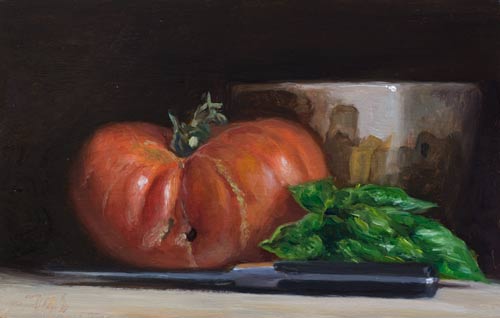
Still Life with Peaches
, Herculaneum.

Recipe: Peach Crostata with Lavender and Rosemary

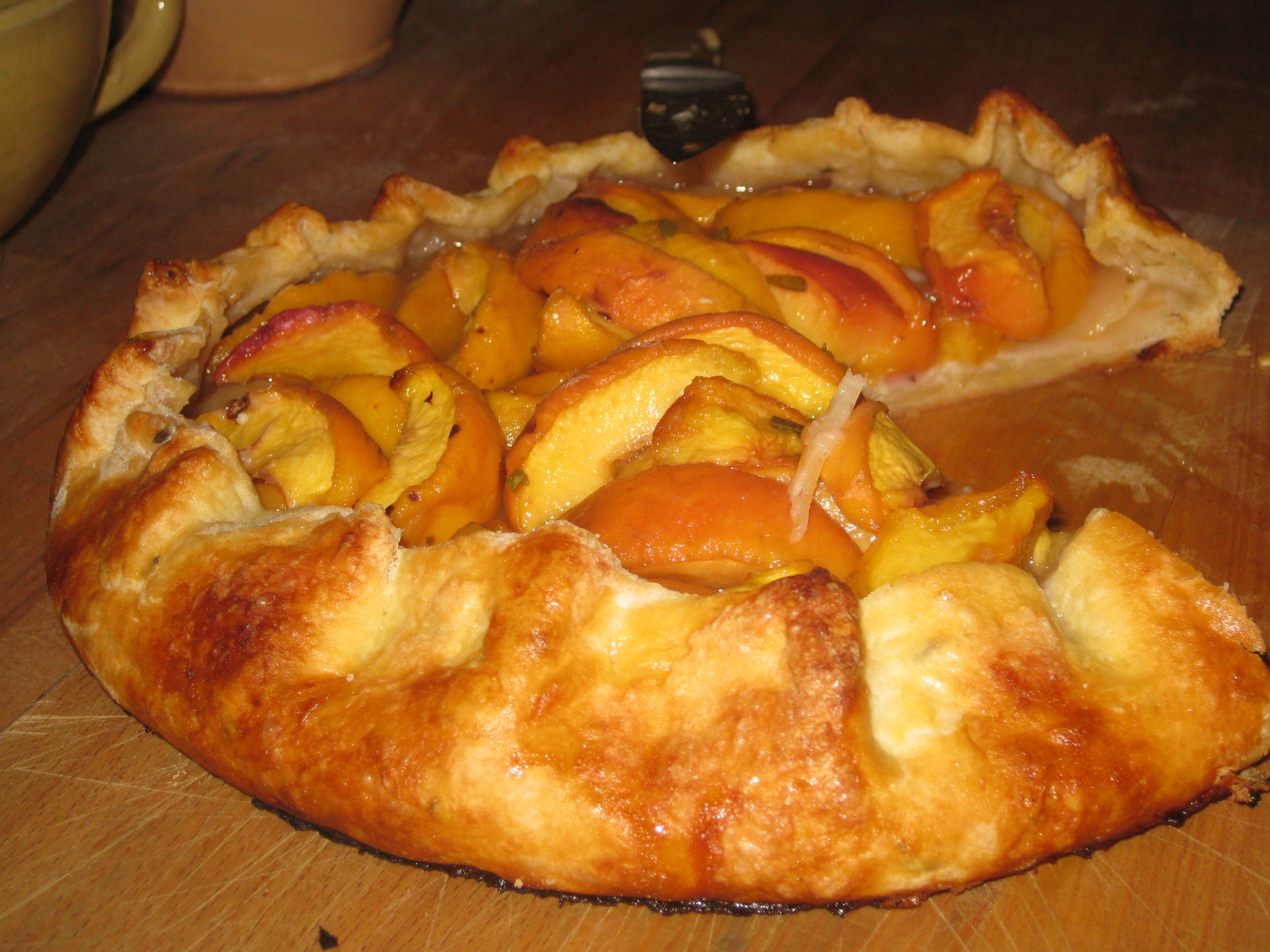
So much fruit, so little time before it returns to dust. Wilting peaches lay in my kitchen, and I felt the urgent need to prepare a fruit tart. Being a tad agitated to start with, and knowing quite well how measuring and fiddling with flour and weights can make me more agitated, I sensed the need for a loose approach. That’s where the free-form crostata came in. It doesn’t need a tart tin, blind baking, custard or eggs, or, really, much measuring. This is a recipe, but only on paper. It’s really a suggestion, something for your head. If you don’t have much experience with pasta frolla (short crust), use my proportions and it’ll be fine. Sometimes I add more flour, less butter, or vice versa, but I haven’t gone wrong yet.

The construction goes like this: Roll out a big round of pastry onto a sheet pan. Pile on sliced fruit (I don’t even peel it), flavored with whatever suits your mood. Turn up the pastry’s edges, folding it as you go to contain the fruit, and bake the thing. I love this because there’s no binder to get in the way of pure fruit flavor, even if I add spice or herbs, as I have here. The design is perfect. I make these with any fruit that will cook relatively quickly. Plums, apricots, fresh figs, and even cherry tomatoes will work. Soft, thinly sliced apples and pears will, too.

Next I’m tackling the pile of shriveling Italian plums on my counter (and I’m not talking about myself here).
IMG_4031
Peach Crostata with Lavender and Rosemary

For the crust:

1¾ cups all-purpose flour, plus a little extra for rolling
¼ teaspoon salt
1 tablespoon sugar
2 large sprigs each rosemary and lavender, leaves chopped
1 stick cold unsalted butter, cut into tiny pieces, plus a bit extra to oil the baking sheet
¼ cup cold semi-dry white wine, like a Riesling, or you can use a dry vermouth

For the filling:

6 medium-size unpeeled ripe peaches, cut into slices
¼ cup sugar, plus a little extra for the top
About a tablespoon of Calvados or cognac
1 large sprig each rosemary and lavender, leaves chopped
1 egg yolk, mixed with a little water

In a food processor, combine the flour, salt, sugar, rosemary, and lavender, and give it all a few pulses to mix everything. Now add the butter, and pulse quickly 2 or 3 times, just to break up the butter a bit. Add the wine, and pulse a few more times. The dough should look crumbly and a bit moist. If it seems dry, add a splash of cold water or wine, and pulse again quickly.  Turn the dough out onto a work surface, and press it into a ball. Now give it a few brief kneads, just to make sure it holds together. Wrap in plastic wrap. Refrigerate about an hour.

Preheat the oven to 425 degrees.

Flour a work surface, and roll out the dough into an approximately 11-inch circle. It doesn’t have to be perfect. Trim the edges to neaten it up. Place it on a buttered sheet pan, and stick it in the refrigerator.

Put all the ingredients for the filling in a bowl, and give them a good stir.

Take the pan of dough from the fridge. Pile the peaches in the middle of the round, letting them spread out in a natural way but leaving about a 2-inch border all around. If they’ve given off a lot of juice, leave some of it in the bowl. Fold the edge of the pastry up and around the fruit, pleating as you go (check out the photo). You should have a large opening in the middle where the peaches stick out.

Brush the exposed part of the crust with the egg wash, and sprinkle a little sugar all over the tart.

Bake until the crust is golden, about 35 minutes. Let it cool for about ½ hour before slicing. Good for breakfast, with a tumbler of grappa.

Read Full Post »

tony millionareMe, left, with my grandmother’s cousin Tony and his lady friend in Castelfranco in Miscano, mid-1980s.

Recipe: Pasta e Fagioli with Escarole, Guanciale, and Fresh Olio Santo

Beans simmering, greens sautéeing, these aromas remind me of several places, several kitchens, my grandparents’ house in Port Chester and also their wicker-and-Fiestaware- stuffed cottage in Hollywood, Florida, where a slew of relatives spent part of every winter. Those two homes always smelled of pasta fazool. My grandmother preferred the soupy kind, with wilted greens, often dandelions, floating around in it. It smelled of vegetation. It was what she wanted to cook in southern Florida’s humid heat, in that clammy, un-air-conditioned little house. I loved the dish.

My mother’s Long Island fazool had a different aroma. It filled the kitchen with the scent of pork, very nice to come home to after a long day screwing off at school. She braised pork chops with the beans, but then always pulled them out to serve as a second course, often with sautéed escarole or a chicory salad. Garlic and hot chili flakes were the undertones in all these preparations, no matter who in my family cooked them.

Our variations on beans, greens, and pasta came mainly from my father’s family, descendants of a depressed and frankly quite depressing little hill town on the boarder of Puglia and Campania, a place completely landlocked and devoid of any trees that I could see. Castelfranco in Miscano has a crumbling, dusty feel to it, thanks partly to the many earthquakes that have destroyed much of what I can imagine was once its ancient charm, including an 800-year-old white stone church that I’ve seen photos of. Wild greens, beans, and semolina pasta have always been staples of the place, often all three stewed together and eaten with fennel-scented taralli and cloudy, astringent white wine. The town smells like cooked bitter greens.

My Manhattan apartment often takes on many of those bean, greens, and pasta aromas. The pungent, raw smell of beans soaking in my kitchen can still surprise me even after so many years of cooking. I’ll pass by the pot of swollen cannellinis on the counter and catch that strange air of sour, damp earth. Then I’ll eat one, crunching down on it, thinking about what I might do with the rest of them in the morning. This time I decided on a blend of my mother’s and my grandmother’s fazool. Instead of pork chops I chose guanciale, for its richer, more gamy flavor, but like my grandmother, I added the greens in with the dish, not serving them separately. I could barely resist the classic, appealingly musty taste of dried chilies, which are almost always a component and such an olfactory memory, but because we’re at the end of summer and fresh chilies are still in season, I went with fresh heat. And when tasting the result, I was struck by how this one change, as delicious as it was, altered the character of the dish. It no longer tasted like a memory.

pics-111

Pasta e Fagioli with Escarole, Guanciale, and Fresh Olio Santo

(Serves 4)

2 fresh red peperoncino peppers, with seeds, minced
Extra-virgin olive oil
1½ cups dried cannellini beans, soaked overnight in cool water to cover
1 bay leaf, fresh if possible
Salt
¼ pound guanciale, cut into small cubes
1 small onion, cut into small dice
2 small inner celery stalks, thinly sliced, plus a handful of celery leaves, roughly chopped
2 garlic cloves, thinly sliced
A few large sprigs of rosemary, leaves chopped
A splash of dry white wine
1 large head escarole, cut into small pieces and quickly blanched
¾ pound cavatelli
A handful of flat-leaf parsley, leaves lightly chopped
A chunk of firm Caciocavallo cheese (optional)

To make the olio santo: Place the minced fresh peperoncini in a small bowl. Add about ⅓ cup olive oil. Give it a good stir, and let it sit, unrefrigerated, while you cook the beans.

To cook the beans: Drain the cannellini beans, and place them in a large pot. Cover them with at least four inches pf cool water. Add the bay leaf, and turn the heat to high. When the water comes to a boil, lower the heat, and let them simmer gently, partially covered, until tender, about 1½ hours (it really depends on how hard your beans are, so start testing them after about 1 hour). Add more warm water if needed to keep the beans covered. When they’re tender but still holding their shape, season them with salt and a generous drizzle of olive oil, and turn off the heat, letting them cool down in their liquid. Drain them, saving about a cup of their cooking liquid.

Set up a large pot of pasta cooking water, and bring it to a boil. Add a generous amount of salt.

In a large skillet, heat 3 tablespoons of olive oil over medium heat. Add the guanciale, and let it get crisp, about 3 minutes or so. Add the onion and celery, and sauté until softened, about 4 minutes. Add the rosemary and the garlic, and sauté a minute longer, just to release their fragrances. Add half to about three quarters of the beans, depending on how beany you like the dish, and the blanched escarole, and sauté everything in the oil for about 3 or 4 minutes. Season with salt. Add the splash of white wine, and let it boil way. Add ½ cup of the bean cooking water, and let the sauce simmer. You’ll have some beans left over to use for a salad or a side dish (I figure that if I’m going to take the time to cook dried beans, I may as well make a good amount and use them for different dishes).

Drop the cavatelli into the water, and cook until al dente, draining well. Transfer to a warmed serving bowl. Add the cannellini sauce and a drizzle of fresh olive oil, and toss. The texture should be a bit loose, so add more bean cooking liquid if needed. Drizzle a little (or a lot) of the olio santo on each serving. In Southern Italy, dishes that contain hot chilies are often served without cheese. I like my pasta e fagioli with a little cheese, but that’s up to you.

Read Full Post »

090621

Recipe: Cavatelli with Pomodoro Crudo, Herbs, and Pine Nuts

Sometimes I forget how rich hot pasta tossed with uncooked summer tomatoes and good olive oil can be. You get the raw tomatoes with their acid and slight sea taste, but the pasta’s gentle heat takes the edge off, leaving you with a full blast of tomato warmth. An intense aroma comes up as you toss the pasta. Not only do the tomatoes open up, but the raw summer garlic lets off its essence, the olive oil bursts forth, and fresh herbs come alive. I make a version of this a few times every August. Sometimes I add bold flavors such as olives or anchovies, but I left this one gentle and floral. No hot chilies, capers, olives, or sharp edges.

If you grow herbs, try this pasta, and if you don’t grow your own and don’t want to purchase four different herbs, just pick two. It’ll still be great. I feel you have to peel the tomatoes. The finished dish looks more elegant if you do, and taking their clothes off allows their essence to flow into the oil from all sides, letting the sauce really coat the pasta.

Cavatelli with Pomodoro Crudo, Herbs, and Pine Nuts

(Serves 6 as a first course)

6 large summer tomatoes, peeled, seeded, and well chopped
Salt
2 small fresh summer garlic cloves,  minced
⅓ cup extra-virgin olive oil
A handful each of basil, mint, tarragon, and Italian parsley, stemmed and roughly chopped
A big handful of pine nuts, lightly toasted
Freshly ground black pepper
1 pound cavatelli
A small chunk of Parmigiano Reggiano cheese

Place the chopped tomatoes in a colander over a bowl. Sprinkle them with salt, and give them a good toss. Let them drain for about an hour. (Summer tomatoes are juicy, and you want to drain them off so they don’t water down your pasta. Save the tomato water for a Bloody Mary.)

Now put the drained tomatoes in a large pasta serving bowl. Add the garlic and the olive oil, and give it all a stir.

Put up a large pot of pasta cooking water. Bring it to a boil, and add a generous amount of salt. Drop in the cavatelli.

When al dente, drain the cavatelli, and add it to the tomatoes. Add the herbs, pine nuts, and a generous amount of black pepper. Toss well. Give it a taste to see if you need more salt. Serve right away, with grated Parmigiano if you like (I like it with and without cheese, depending on my need for purity at the time).

Read Full Post »

Still_Life_with_Clam_#EEECAStill Life with Clam Shells, by Barney Levitt.

Recipe: Fregola with Clams, Tomatoes, and Moscato

Clams always meant Daddy to me. That may not be true for many people. But in my Italian-American family, in the summer in the sixties and seventies, my father and his buddies would go clamming for littlenecks in the refreshing but horseshoe-crab-filled waters off Sea Cliff Beach, waters that were tainted by a constant day-glo oil infusion, compliments of the nearby Long Island Lighting Company. My father thought nothing of eating dozens of these clams at a time, raw, on the half-shell, as they say, with a squirt of lemon or bottled cocktail sauce. “Pollution, what are you talking about? These are as fresh as they get.” My mother had her doubts, but I, being my father’s daughter, figured if they tasted normal they were normal. I really got into the act. It was tons of fun letting those soft, rubbery things slip down my throat. Looking back at that time now, it’s amazing what we put into our bodies—menthol cigarettes, food dye galore, amyl nitrites for dancing pleasure, to name just a few of my favorite things.

 As much as he loved his “fresh as they get” clams, we’d often take a health break and order raw clams at a restaurant. Clams on the half-shell, usually cherrystones, were then a popular starter at steak places on Long Island such as Manero’s in Manhasset, and in the city too. You don’t see them around much anymore, except in certain retro steakhouses that serve them with a hint of irony. But god they were good. There’s nothing like the cold, briny jolt you get when a raw clam (a live clam!) hits the back of your throat. And as my father showed me, they tasted just as interesting with a vodka martini at Manero’s as with a cold Ballantine in our back yard.

Raw clams, steamed clams, clams baked with breadcrumbs, garlic, and oregano, all good. Clams were always lurking in our kitchen, either wrapped in a few pages of Newsday or spread out on the counter. There were the clay-colored littlenecks and the darker ones with brownish stripes bought at the Italian fish shop in Glen Cove. My family had one of those giant steamer pots, the kind that came in two parts and had a faucet at the bottom where clam juice could trickle out. I think it was made of a heavy aluminum. It had originally belonged to my Sicilian grandfather, my mother’s father. But my father was its ruler all through my childhood and beyond. I come from a family of shellfish fanatics, a trait I’ve certainly inherited. They ate clams, mussels, oysters, raw and cooked. I loved that clam steamer. Its emergence always signaled a summer party. A vodka on the rocks in one hand, a Kent hanging from his lips, my dad and a few neighbor guys wrestled, half loaded, with big messes of clams and mussels and seaweed and sometimes corn and lobster, stuffing it all into that contraption. It heated at a slow steam, and little by little the clam juice would drip to the bottom. Coffee mugs were offered, so that anyone who wanted (I wanted) could pour themselves a shot of hot clam juice, add a pat of butter, and slug it back. A fabulous aperitivo. I don’t know what happened to that steamer. It probably got left behind when they sold the house and moved to a small condo in Royal Palm Beach. The pot was quite large. I wish I had it now, but where would I put it in my tiny city apartment? It would have to serve as a chair.

And then, of course, there’s the Southern Italian classic, pasta with clams. My favorite, something I always requested for a birthday dinner. It was a standard on our table on Christmas Eve, but you’d never know when it would show up. A good day’s catch at Sea Cliff beach and it might appear on Fourth of July, covered in fresh parsley and basil from my father’s little garden. My family usually made the white sauce variety, no tomatoes. I like it all ways, with tomato sauce, with just a hint of tomato and lots of white wine, with pancetta and hot chilies added. I’m always playing around with different types of pasta and flavorings to see where I can take it. Fregola, a Sardinian pasta made something like couscous, was not anything my father would have been familiar with, but I now often find it, even in mezza-mezza grocery stores. Fregola is roasted, so it takes on a deep, almost smoky taste. And it happens to be excellent with clams. Here’s a new recipe for pasta with clams, an offering to my late, great, clam-loving father. I raise a glass of Ballantine to you (do they still make that beer?).

twoclamshellsonblackcropped

Fregola with Clams, Tomatoes, and Moscato

(Serves 4 as a main course)

Salt
Extra-virgin olive oil
1 thick slice pancetta, cut into small cubes
1 large shallot, minced
3 summer garlic cloves, thinly sliced
1 fresh red chili, minced (a peperoncino is perfect)
¼ cup Moscato or another slightly sweet white wine
4 round medium-size summer tomatoes, skinned, seeded, and chopped
1 cup chicken broth
¾ pound large fregola
About 4 dozen littleneck or Manila clams (which are basically the same), the smaller the better, well cleaned
2 tablespoons unsalted butter
The grated zest from 1 large lemon
A few large sprigs of marjoram
A handful of basil leaves, lightly chopped

Set up a large pot of pasta cooking water, and bring it to a boil. Season with salt.

In a large skillet, big enough to hold all the clams when opened, heat 2 tablespoons of olive oil over medium heat. Add the pancetta, and sauté until just crisp. Add the shallot, garlic, and hot chili, and sauté until fragrant, about 2 minutes. Add the moscato, and let it bubble for a few seconds. Add the tomatoes and a little salt, and let everything cook at a lively bubble for a few minutes. Add the chicken broth, and simmer uncovered for about 5 minutes longer.

Add the clams, and cook partially covered for a few minutes. Take off the cover, and give them a stir. As the clams open, pull them from the sauce into a bowl, with tongs. They won’t all open at once, so if you leave the early openers in the skillet, they’ll be overcooked by the time they all decide to pop. Drizzle the clams with a little olive oil. Turn off the heat.

When about half of the clams have opened, drop the fregola into the water.

When the fregola is al dente (after about 10 minutes), drain it, and pour it into a large, shallow serving bowl. Add a drizzle of olive oil, the butter, the lemon zest, the basil, and the marjoram, and give it a quick toss. Add the clams back to the skillet, and heat gently for about 30 seconds. Pour the clams and sauce over the fregola, and toss again. Taste for salt, but you probably won’t need any, depending on your clams.

Read Full Post »

EE1020_Ratatouille_lgMy July column for Curves magazine is now up, another 400-calorie-per-serving meal in a bowl. What I did was cut out about half of the olive oil by sautéeing the vegetables in groups instead of individually, adding a little liquid, either tomato juice or wine, near the end of each sauté so I didn’t have to keep adding oil to prevent sticking. This is an especially good technique for cooking eggplant, the main ingredient in ratatouille. Eggplant soaks up oil like a sponge.  I hope you enjoy it. Happy summer cooking to all my food-happy friends.

Read Full Post »

My Aperol Martini

Aperol-Lady-695x1024

Recipe: My Aperol Martini

My first encounter with Aperol was in the early nineties at the Siena train station. I was there waiting for the arrival of my sister-in-law Lili. As usual, the train was late. (I know train schedules exist in Italy. I’ve seen them.) I was getting hot and sweaty and also anxious and bored (a bad combination all around), so I wandered where I will wander, over to the bar. I stared at all the lovely and some unfamiliar glistening bottles of booze. My eyes fixed on a bottle filled with a bright pinky orange liquor, a color I’m drawn to wherever I see it (Matisse loved it, Christian Lacroix draped his women in it, my grandmother had a ruffly vase glazed that color). I was told it was Aperol. “Rinfrescante” said the barman, adding  “for a young lady.” The lady part had me worried, but I went ahead, letting him pour a glass of approximately half Aperol and half sparkling water, no ice, of course. It tasted something like a Campari and soda but less bitter, sweeter, fruitier, and the color knocked me out. I tasted orange, sort of, but I knew this had to be one of those complex amaro concoctions made all over Italy from a zillion secret ingredients. It went down quickly, the way those sparkly-water drinks tend to do, but in my continuing quest for bigger and better, I immediately thought it would be nice to replace the water with vodka. I was afraid to ask for that. Nobody drinks vodka in Italy. It’s considered depraved, especially in the afternoon, and especially for a girl, for god’s sake. But I was happy enough to guzzle down two of these nice drinks the way they were offered. And before I knew it, in rumbled Lili’s train.

When I got back to New York, I was eager to buy a bottle of beautiful, delicious Aperol, only to discover it wasn’t exported. What a terrible disappointment. I became so focused on it that I spent much time doing research. I discovered it had been invented in Padua in 1919 and in fact had another one of those secret recipes, like Averna, Cynar, or Campari, that will never be divulged. (Aperol is now made by the Campari company.) However, I did find out that its color and flavor came partially from bitter orange and rhubarb, which made perfect sense, plus the usual but still somewhat spooky “assorted herbs and roots.”

A handful of years later I spotted Aperol in my local liquor shop. How exciting. I immediately scouted out good drinks to make with it. There’s one listed on their official site called an Aperol spritz, which is made of prosecco, Aperol, of course, and a big spritz of sparking water. Why do Italians have to turn every potentially decent drink into a spritz? Well, when I went about making my version, I got rid of that sparkly water right away. Aperol with prosecco is a fine drink, but what I really wanted was a gorgeous pinky orange martini. I messed around with variations (vodka or gin? sweet or dry vermouth?) and finally liked this one the best. Actually I really love this.

My Aperol Martini

2 parts Bombay Sapphire gin
1¾ parts Aperol
¼ part sweet vermouth
A long orange peel

Have all the liquids well chilled. Add ice to an old-fashioned glass. Pour in the Aperol and the gin. Add the sweet vermouth. Twist the orange peel a bit to release its oils, and drop it into the glass. Give the drink a quick stir.

Read Full Post »

Mussels and Haitian RhumStill Life with Mussels, Monique Serres.

Recipe: Mussels with Pistachio Pesto, Tomatoes, and Mint

The more I cook, the more predictable my experiments become. I don’t mean that in a bad way. I just mean that now most of my ideas turn out pretty well. Improvisation is learned. I know that seems counterintuitive, but I’ve found it to be true. I’ve come to a point in my cooking where the tradeoff for experience is less disaster but also less surprise. I suppose that’s both good and not so good.

At this point I feel I know the flavors of Southern Italy very well. No matter how I juggle those flavors or how innovative I choose to be, my dishes will still taste somewhat familiar to a Southern Italian. I don’t stray from core flavors. But sometimes an idea can still produce unexpected results, even in a positive way. I love when that happens. I didn’t have high hopes for this mussel dish. I had made baked mussels with pistachio pesto before, even putting a recipe into my book The Flavors of Southern Italy, it came out so good. But somehow steaming them in wine, with the pesto, plus the tomatoes, I figured the liquid would dilute the pesto in an unappealing way, making it look and taste murky. I went ahead with it anyway, mainly because I wanted to use up some stuff in the refrigerator. I was surprised. The sauce came out creamy and rich, not at all watery. It tasted much like a Sicilian pesto, which always contains tomatoes along with nuts and herbs. I really liked the way the pistachios mellowed the brininess of the mussels. I also used very little garlic. I’m a little sick of the typical restaurant preparation of mussels in a really garlicky, winy broth, especially when the chef doesn’t even bother to cook the alcohol off.

Give this a try. It’s different but familiar. I’d say it’s successfully familiar.

Mussels with Pistachio Pesto, Tomatoes, and Mint

(Serves 4)

¾ cup very fresh, unsalted, shelled pistachios (if you can find ones from Sicily, all the better)
Extra-virgin olive oil
2 fresh summer garlic cloves, sliced
Sea salt
2 pints grape tomatoes
A big splash of dry white wine
½ cup chicken broth
3 pounds mussels, cleaned
Freshly ground black pepper
A handful of mint leaves, lightly chopped
A handful of flat leaf parsley, lightly chopped

Put the pistachios, half of the garlic, about ⅓ cup olive oil, and a little salt in the bowl of a food processor, and pulse until you have a fairly smooth paste, but still with a bit of texture.

In a large pot (one that’s heavy and wide, like a Le Creuset, would be best for this), get a drizzle of olive oil hot over medium-high flame. Add the tomatoes, and sear them until their skins just start to crack. Add the rest of the garlic and a little salt, and continue to cook until the tomatoes start releasing some liquid, about 3 minutes longer. Add the white wine, and let it bubble for a few minutes to throw off its alcohol. Add the chicken broth, and simmer to blend the flavors, about another 2 minutes or so. Now add the  mussels, and cook, uncovered, stirring occasionally, until they open. Turn off the heat. Add the pistachio pesto, a generous amount of black pepper, and the mint and parsley. Give it a good stir. Serve with garlic and olive oil-rubbed bruschetta.

Read Full Post »

red_red

Red on Red,  Joseph Keiffer, 2013

Recipe: Long Radishes with Anchovy Butter and Chervil

Radishes are in season. Doesn’t that get you fired up? No? I never used to think much about radishes either, or what their season might be. They were just something to knock around my salad plate, pretending they didn’t exist. That was until I discovered the French custom of smearing radishes with softened butter and a sprinkling of sea salt. Now, that is something special. The sweetness of the butter along with the salt and the hot bitter of the radishes blend together to produce a truly voluptuous flavor. So simple. I’ve been serving it for years now. But I knew my culinary head would eventually feel the need to Southern Italianize this already perfect appetizer. That usually means working either a little anchovy or pancetta into the mix. I chose anchovy to replace the sea salt, and the results, I think, are excellent.

The varieties of radishes I find at my Greenmarket always take me by surprise. They start to show up right about now. Along with the common round red type, there are Easter egg radishes, bunches of pink, purple, and white ones that grow together. Those are stunning. I find the long red, white-tipped French breakfast radishes. (The French don’t really eat radishes for breakfast, and I haven’t been able to find an explanation for the name, although I’m sure they’d be a good wake-up stomach cleanse after an evening of pâté and cognac.) I’ve seen a really long, skinny white variety called icicle. I’ve brought home big, round light green ones that, once cut, reveal a striped pink interior. They look like candy.

The red breakfast variety have gentler heat than most of the others, plus there’s more cut surface space to spread my anchovy butter on, so they are my radish of choice for this preparation (I can’t really call it a recipe). Try it as an antipasto, along with black olives, sliced raw fennel, and a glass of dry rosato wine.

Long Radishes with Anchovy Butter and Chervil

(Serves 4 as an antipasto)

2 bunches French breakfast radishes
1 stick unsalted butter, softened
10 oil-packed anchovies
A handful of chervil sprigs

Slice the radishes lengthwise.

Put the soft butter in a good-size mortar, add the anchovies, and grind with a pestle until well blended (you can also do this in a mini food processor).

When you’re ready to serve, simply spread a generous layer of anchovy butter down the length of each cut radish. Place them on a plate, and decorate with the chervil sprigs.

Read Full Post »

800px-Antonio_Sicurezza_-_Still_life_with_anchoviesStill Life with Anchovies, Antonio Sicurezza, 1972.

Recipe: Asparagus with Anchovy Almond Breadcrumbs

In my ongoing quest to work a little anchovy into just about every dish I put on the table, I’ve recently revisited the  marriage of asparagus and anchovies.  I’d been focusing on using asparagus in gentle spring pastas or with herby vinaigrettes, forgetting how well it stands up to bolder flavors. I don’t know why I let this beautiful match drift away, but it has now found its way back to my kitchen, and my life is much improved.

Actually, to my Southern Italian palate, almost all green vegetables go well with a hit of anchovy, except possibly spinach. I just can’t make that taste association. When spinach was first introduced to Sicily by the Arabs, around 800 A.D., the natives soon sent it packing, and it moved north, where it found its true Italian home. And, with Catherine de’ Medici’s love of it, the vegetable eventually became associated with the dishes of Florence, her birthplace. Southern Italians don’t do much with spinach, preferring greens with a touch of bitter. It’s almost impossible to find in the markets down there, maybe because it goes better with cream and fontina than with anchovies.

At any rate, anchovies are certainly excellent with asparagus, and I’ve given this recipe a full-on Southern treatment. For my breadcrumbs I used ground up taralli, which worked great. (Try to find an imported brand, such as Puglia Sapori. They have the best flavor.) I didn’t even have to toast them. I just stuck them in my food processor along with a handful of almonds, mixed that with the anchovies and a few other strong flavors, and came up with an instant topping for my fresh-from-New Jersey asparagus. Try this with grilled rosemary-flavored lamb chops.

(Serves 3 to 4 as a side dish or first course)

1 large bunch medium-thick spring asparagus, ends trimmed, and stalks peeled if they seem tough
8 plain taralli, roughly ground in a food processor (you’ll want about ¾ cup ground)
½ cup blanched almonds, lightly toasted and then roughly ground in a food processor
Extra-virgin olive oil
2 tablespoons unsalted butter
7 oil-packed anchovies, minced
The grated zest and juice from 1 medium lemon
8 large thyme sprigs, leaves lightly chopped
2 small cloves of fresh spring garlic, minced
Salt
Piment d’Espelette or another medium hot, dried, ground chili

Blanch the asparagus spears in a pot of boiling water for 3 to 4 minutes, depending on their thickness. You’ll want them left a bit crunchy. Scoop them from the water into a bowl of ice water to cool and bring up their green color. Drain well.

When you’re ready to serve the asparagus, preheat the oven to 425 degrees.

In a medium skillet, heat about 3 tablespoons of olive oil with the butter, over low heat. Add the anchovies, and let them melt into the oils. Turn off the heat, and add the ground taralli, almonds, and the rest of the ingredients, seasoning with a pinch of salt and the hot chili to taste. Mix everything well. The crumbs should be moist. If they seem dry, add more olive oil.

Place the asparagus spears in a baking dish that fits them snugly with some overlap. Drizzle them with a little olive oil and a pinch of salt, turning them around in it to coat them lightly. Evenly sprinkle on the taralli mixture. Now bake until the crumbs are just crisp, about 12 minutes or so. Serve hot or warm.

Read Full Post »

Chanterelle_IntoTheArt_10A menu cover for the much missed Chanterelle restaurant in Tribeca, by Marcel Marceau, 1987.

Recipe: Tagliatelle with Chanterelles, Favas, and Basil

An annoying defect in my body chemistry makes me allergic to porcini mushrooms. It’s not a standard allergy (swollen tongue, closed throat, choking, hives, the symptoms people with, for instance, true peanut allergies suffer from). It’s more of a food intolerance (vomiting, fever, cramping, sometimes lasting for three days). This inability to cook with, eat, or even take in the aroma of the grand porcini mushroom, one of the stars of the Italian table, is ironic and infuriating for an Italian cook, and it’s one of the reasons I became an atheist.

Luckily this stupid problem doesn’t carry over to other wild mushrooms, so every spring I anticipate the arrival of the chanterelle with excitement. I love this mushroom. And it’s not just for the French. In Italy they’re called finferli or gallinacci, and they’re cooked with pasta or risotto or just sautéed with olive oil and herbs and eaten on bruschetta. In the Northeast and in many other places in the U.S. they pop up in the spring under various trees, not discriminating between oaks, pines, firs, or spruces, so if you’ve got the knowhow (and you really need to know how), you can go and collect them in the woods. I play it safe and get mine from a forager in Ulster County who brings them to the Union Square market.

I often cook them with pasta. It’s such a perfect combination. The gentle floral aroma of chanterelles lets the taste of the pasta come through. I  looked for other subtle ingredients to include in the dish so the taste of the mushrooms wouldn’t in anyway be compromised, and I chose fava beans, because they’re in season and they marry beautifully with this mushroom. For more on the slightly irritating ritual of prepping fava beans, see my previous post.

fava pasta

Tagliatelle with Chanterelles, Favas, and Basil

(Serves 2 as a main course)

¾ pound fresh fava beans, in their pods
Salt
Extra-virgin olive oil
1 small spring onion, cut into small dice
1 spring garlic stalk, thinly sliced, using some of the green top
¾ pound chanterelle mushrooms, halved, or, if very large, quartered
A large pinch of ground coriander
Freshly ground black pepper
A splash of cognac or brandy
¾ pound homemade or fresh store-bought tagliatelle
½ cup homemade or high-quality purchased chicken broth, or possibly a bit more
The grated zest from 1 small lemon
A heaping tablespoon of crème fraîche
A handful of basil leaves, cut into chiffonade
A small chunk of Parmigiano Reggiano cheese

Remove the fava beans from their pods. Set up a small pot of water, and bring it to a boil. Add the beans, and blanch them for 2 minutes. Scoop them out with a strainer spoon into a bowl of ice water. Drain them. Now remove the outer skin from each bean. Put the lovely green favas in a small bowl.

Set up a large pot of pasta cooking water, and bring it to a boil. Add a generous amount of salt.

In a large skillet, heat about 2 tablespoons of olive oil over medium heat. Add the onion, and let it soften for about 2 minutes. Now add the chanterelles, the garlic, the coriander, and a little salt and black pepper. Sauté a few minutes to soften the mushrooms. Now add the cognac or brandy, and let it burn off.

Drop the tagliatelle into the boiling water.

Add the chicken broth to the skillet, and let everything in it simmer until the mushrooms are tender, about 3 minutes longer. Turn the heat off under the skillet, and add the lemon zest, crème fraîche, and the favas, seasoning with a little more salt and black pepper. The heat from the sauce will further cook the favas, leaving them tender but firm.

When ready, drain the tagliatelle, and place it in a warmed serving bowl. Drizzle it with some fresh olive oil, and give it a toss. Now add the chanterelle sauce, about a heaping tablespoon of grated Parmigiano, and the basil, and toss again gently. If the sauce seems dry, add a splash of chicken broth. Bring the rest of the cheese to the table.

Read Full Post »

« Newer Posts - Older Posts »