Feeds:
Posts
Comments

Archive for the ‘2013’ Category

ben100338Still Life with Fava Beans, Giovanna Garzoni, 1600-1670.

Recipe: Fava Bean Salad with Chicory, Pecorino Toscano, and Tarragon

It was while running the garde manger station at Le Madri restaurant many moons ago that I learned how to prep fava beans. I was young and anxious, and all the fast, sweaty self-assuredness going on around me made me terrified. So when the chef dumped a gigantic pile of long, green, overblown-looking bean pods at my station and explained what I was supposed to do with them, I thought it was either a sick joke or I was being punished for some kitchen crime I had unwittingly committed.

“Take all the beans out of the pods, then blanch them, and then remove the skin from each bean. Using your thumbnail helps.” Are you kidding me? I have to pull these thin skins off all these measly beans? There were more than a hundred pods, which meant, oh, 700 or 800 beans. I was especially disturbed because every time Chef gave me a task he expected it done in about five minutes. But I forged ahead in a controlled panic. About an hour and a half later I had a small bowl, probably about three cups, of smooth, skinless, brilliantly green firm little beans, and what I assumed was early onset arthritis in my thumbs and index fingers. I was exhausted. That didn’t bother me so much. My main concern was that it had taken so long. But in that hour and a half chef hadn’t yelled at me. Fabio, the pain-in-the-ass grill guy, hadn’t made fun of me for being saddled with such a fiddly task (like he did when I had to run a gigantic pile of baby artichokes through the prosciutto slicer, a job more terrifying than tedious). A lot of the kitchen crew had just walked past and smiled. I guess everyone felt sorry for me.

Fava bean season at an expensive Italian restaurant is a big deal, and obviously labor intensive. And I wasn’t asked to do this only once. It became a three-times-a-week task for months, and I never got any faster at it (lacking any fingernails to speak of, I devised a clumsy method using a paring knife; to Chef’s credit he gave me a helper after the second go-round). And you can be sure this spring restaurant ritual still goes on. Fledgling cooks all over town are no doubt rethinking their career choice at this moment.

But if you want to experience fava beans, and I do, because I absolutely love them, there’s no way around it, you’ve gotta get those skins off, or the beans will be bitter. Luckily for me, I no longer cook in a restaurant (lucky for the restaurants, too). I can now buy a small bag of favas and leisurely go about my prepping while watching animal shows or listening to old tango records. Now it’s enjoyable.

In Tuscany and other parts of Italy favas are traditionally combined with pecorino. That truly is an excellent marriage of flavors. I’ve tried using other cheeses, such as Asiago or Parmigiano, but I always go back to a gently aged Tuscan pecorino. It really is the best match (try to avoid pecorino Romano; it’s too sharp). In Tuscany that’s the entire dish, pecorino and favas. Beautiful, but I sometimes like to take it a step further and add other spring vegetables, lettuces, or herbs, creating a salad proper and dressing it lightly with good olive oil and a squeeze of lemon. At Le Madre they often wound up in a warm morel salad with wild arugula and pecorino.

This spring I’m adding young chicory, chives, and pine nuts. I’ve come to like fresh mint with fava salads, but this time I took a chance with tarragon and I was pleased with the way it blended with the chives.

Please don’t let my restaurant experience dissuade you from buying favas and performing what can  actually be a lovely Zen task, especially if you’re only preparing something for two, not two hundred. You’ll be rewarded with a special spring treat.

Fava Bean Salad with Chicory, Pecorino Toscano, and Tarragon

(Serves 2)

1 pound fava beans in their pods
A small bunch of frisée lettuce or chicory, torn into small pieces (about 1½ cups)
About 6 chives, with purple blossoms if you can find them, chopped into half-inch lengths
½ cup pine nuts, toasted
6 large sprigs tarragon, leaves lightly chopped
Salt
Freshly ground black pepper
About a teaspoon of fresh lemon juice
2 tablespoons extra-virgin olive oil, the best you’ve got
¼ pound aged pecorino Toscano cheese

Remove the fava beans from their pods. Set up a medium pot of water ,and bring it to a boil. Add the favas, and blanch them for about 2 minutes. Lift them from the water with a large strainer spoon into a bowl of ice water. Drain them when cool. Now peel off the outer skin on each bean to reveal their smooth, bright green surface (I’m not telling you exactly how to accomplish this. It’s best to just do a few and find your way. And it’s not particularly hard).

Place the frisée or chicory in a small salad bowl. Add the favas, the chives, the pine nuts, and the tarragon. Mix the lemon juice with the olive oil, and season with salt and black pepper. Pour this over the salad, and toss. Now shave about 10 thin slices of the pecorino over the salad, and toss again very gently, trying not to break up the cheese too much.

Read Full Post »

green food

Still Life with Cheese and Olives, Floris Van Dijck, 1615-1620.

The Color of Food, Part One

Recipe: Orecchiette with Broccoli, Bay Scallops, and My Ras el Hanout

I’ve been visualizing the spring greenery that will soon make an appearance at my farmers’ market. I love all the shades of green that nature dreams up, the silvery green of olive leaves, the emerald green of damp moss, the gentle gray green of a stinky, moldy cheese. Green is said to be soothing. That isn’t true for me. I find it invigorating. Green kicks my brain into gear. Looking at green things, like a handful of fresh chervil or a bunch of spring asparagus, focuses me. It seems to make it easier for me to create good food. I usually don’t get stuck in a cooking stupor when I’m confronted with a variety of green, with olives, parsley, capers, green olive oil. I know what to do with green. I’ll make a salsa verde.

I’ve always had strong attachments to colors, associating certain ones with numbers, and the number-color pairings that came to me as a kid still hold: Red is 5, 3 is yellow, 7 is purple, 9 is green. The numbers come up in my head in their numerical form, not written out. I didn’t have numbers for some colors, such as blue. I’m not sure why. Maybe because there isn’t much blue food out there.

I especially like being close to green, my number 9, not necessarily wearing it, since it blends too well with my olive complexion, making me look sickly, but I love sunlight on green glass, and I collect green pottery, and when it comes to food, green is a catalyst for me. Which somehow brings to mind my grandmother’s sautéed broccoli, so soaked with flavor, with garlic, olive oil, white wine, flecks of anchovy, a sprinkling of hot pepper. So delicious. And, oh, the color, so gray.

To preserve the Southern Italian flavor of her homeland, she perpetuated the long, slow cooking style of her ancestors, infusing every fiber of that broccoli—stalks, leaves, and all—with richness. What a glorious sloppy mess it was. As a kid I loved the taste of that broccoli, but now I find it depressing even to think about. What I do to broccoli, I’m sure, would have my grandmother shaking her head in disgust. I blanch it and then shock it in ice water to preserve its brilliant green color. This seems kind of ludicrous even to me, but I can’t stop myself. I want that color. I don’t go so far as to serve crunchy vegetables with no flavor. That would be an Italian culinary sin, but neither do I cook them for hours, as she seemed to do. She’d put on the broccoli, cover the pot, and then go watch As the World Turns and Search for Tomorrow and The Edge of Night.

Harnessing the color of food can be a losing battle, but sometimes it should be. Electric-green roman cauliflower turns pale green when cooked, even with my compulsive blanching. That’s the way it is. It’s a pretty color, certainly not as amazing as when uncooked but not bad. Green beans go gray if you don’t blanch them first. Just ask my grandmother, who would simmer them in tomato sauce for what seemed like days. They were fabulous, but boy were they ugly. My goal as a cook is to capture color while creating flavor. Heat both robs and begets. I’m still trying to work out that delicate little balance.

Orecchiette with Broccoli, Bay Scallops, and My Ras el Hanout

(Serves 4 or 5 as a main-course pasta)

1 pound broccoli, cut into small flowerets, stems trimmed and peeled and cut into small cubes
Salt
2 tablespoons butter
Extra-virgin olive oil
1 Vidalia onion, cut into small dice
2 garlic cloves, thinly sliced
3 anchovy fillets, chopped
About 6 large thyme sprigs, leaves chopped
1 teaspoon my ras el hanout (see note and recipe below)
Dried hot chili flakes, such as Aleppo
1 pound orecchiette
1 pound bay scallops
A splash of dry white wine
½ cup chicken broth
A squeeze of lemon juice
½ cup lightly toasted pine nuts

Set up a large pot of pasta cooking water, and bring it to a boil. Drop in the broccoli, and blanch it for about a  minute. Scoop it from the water with a large strainer spoon, into a colander, and run cold water over it. Now let it drain on paper towels.

Add a generous amount of salt to the water, and bring it back to a boil

In a large skillet, heat the butter and about 2 tablespoons of olive oil over medium heat. Add the onion, and let it soften for about a minute. Add the broccoli, garlic, anchovies, thyme, and ras el hanout, and sauté for about two minutes longer.

Drop the orecchiette into the pot.

Add the scallops to the skillet, season everything with salt and hot chili to taste, and sauté until the scallops are just tender, about a minute. Add the wine, and let it bubble a few seconds. Add the chicken broth, and turn off the heat.

When the orecchiette is al dente, drain it, and add it to the skillet, along with a little lemon juice and the pine nuts. Toss everything well over low heat for about 30 seconds. Transfer to a warmed pasta bowl. Serve hot or warm.

Note: Ras el hanout, a Moroccan spice mix used for couscous and tagines, is a wonderful thing to include in Southern Italian cooking. I make my own, leaving out the usual cumin and cardamom and concentrating more on spices such as cinnamon, nutmeg, black pepper, fennel, and anise, flavors more at home in a Sicilian kitchen. I use it in small doses, not wanting to overwhelm the flavors of the main ingredients, and doing so is also more Sicilian than North African in style. My recipe for ras el hanout makes more than you’ll need for this dish, but consider that a plus. Play with it. I can tell you from experience, it’s great as a dry rub on grilled lamb, or worked into a chicken stew, one containing fennel and olives for instance, or as a flavoring for braised eggplant.

My Ras el Hanout

1 tablespoon anise seeds, lightly toasted
1 tablespoon fennel seeds, lightly toasted
1 tablespoon black peppercorns
1 tablespoon coriander seeds
¼ stick cinnamon
1 tablespoon ground nutmeg
1 teaspoon ground ginger

Put all the whole spices in a spice grinder, and grind to a powder. Add the ground nutmeg and ginger, and mix well. This will stay fresh in a covered spice jar for about a month.

Read Full Post »

chardin soup

Here‘s my April article for Diane magazine, the publication of Curves Fitness. I’m doing a monthly column called “A Meal in a Bowl.” It’s a full meal for 400 calories. I’m trying my hardest to pack these recipes with flavor and keep to a contemporary Mediterranean style. I hope you like them.

Read Full Post »

Easter Biscotti

Recipe: Biscotti with Candied Orange and Pine Nuts

I devised these biscotti using the flavors of the Easter Pastiera I love so much but just didn’t have time to make this year. I worked orange flower water, vanilla, and candied orange into these simple biscotti. They’ll give the house the aroma of Easter without the work required for making a real Easter dinner, which, because my mom is sick this year, I’m not finding possible. Friends and family can stop by, have a biscotti and a glass of prosecco, and all will be as well as it can be.

Happy Easter, and grab as much free will as you can.

Biscotti with Candied Orange and Pine Nuts

1 cup all-purpose flour
½ cup sugar, plus a bit extra
A pinch of salt
½ teaspoon baking powder
3 tablespoons cold, unsalted butter, cut into tiny pieces, plus extra for buttering the pan
½ cup candied orange peel, well chopped
1 large egg
The grated zest from 1 large orange
1 teaspoon high-quality vanilla extract
½ teaspoon orange flower water
1 tablespoon orange liqueur
½ cup lightly toasted pine nuts

Preheat the oven to 350 degrees. Butter a  standard-size sheet pan.

Place the flour, 1/2 cup sugar, salt, and baking powder in the bowl of a food processor, and pulse briefly to blend. Add the chopped butter, and pulse a few times, just until the butter is broken down into very tiny bits. In a small bowl, whisk together the egg, vanilla, orange zest, and orange peel, orange flower water, orange liqueur, and pine nuts. Add this to the food processor, and pulse very briefly, just to blend. The mixture should be moist but crumbly. Turn it out onto a flat surface and press it together. Press the dough away from you using the palm of your hand once or twice, so everything  is well moistened. Form the dough into a ball. Cut the dough  in half, and roll each section into a 1-inch-thick rope. If the  dough seems too sticky, dust your hands with flour while rolling  it. Place the two ropes on the sheet pan a few inches apart.  Flatten the tops slightly. Sprinkle lightly with sugar, and bake  until very lightly golden, about 25 minutes. Take the pan from  the oven and let sit for about 5 minutes to cool slightly (if the logs are too hot when you try to slice them, they can break).

When the two ropes are cool enough to remove  from the sheet pan without breaking, place them on a flat surface, and cut them into approximately ¼-inch slices, cutting on an angle using a quick, clean stroke with a sharp chef’s knife (don’t try a sawing motion or you may cause the biscotti to break up).  Place the cut biscotti, cut side up, back on the sheet pan, and  bake for about 10 minutes longer, or until they are lightly browned.  When cool, store in a cookie box, or a basket covered with a  tea towel. They’ll keep about a week.

You can easily double this recipe, but maybe don’t double the orange flower water. It’ll be too strong. Add only a few drops extra.

Read Full Post »

Women with Fish

Italian woman with fish
Italian Woman Carrying Fish, by Gerard Dillon.

It’s almost Easter. This will be the first year I don’t make Easter dinner. My mother is sick, and she can’t eat, so it seems a little pointless, or at least the pleasure has gone out of it. Being an atheist, I don’t need much to get my mind off of Easter. The food has always been the thing, so now that I’m free to let my mind wander, I find it moving toward women with fish, as it often does. I’m thinking about Italian women and the sea. This is me with a wooden bowl filled with freshly caught branzino. I can tell it’s me in the painting because I own that skirt (Agnes B., bought on eBay),  and I often wear it when I go fishing near Bari (the cross is an Italian fashion statement). My plan is to give most of these fish away. I’ll keep one and grill it whole, stuffed with marjoram and lemon, and I’ll make a simple sauce with marjoram, capers, and olive oil to drizzle over the top. That will be my dinner, to eat alone, outside, sitting on a busted-up wooden chair, while everyone else in Bari is inside celebrating Easter in the usual Puglian way, with artichokes, lamb, fava beans. For a while I was a bit worried about Easter. It seemed odd not to be preparing something traditional like a pastiera. But now that I’ve got a plan, everything will be all right. It’s nice to mix it up a bit.

Happy Easter to you.

Read Full Post »

Fashionable Food

il_fullxfull.196243594

Hello Italian food fashionistas. A profile of me, along with  one of my recipes for spring garlic, is now up on the Fashion Institute of Technology’s website. Before I embarked on my career as a Southern Italian cooking diva, I considered going into textile design and graduated from FIT. I guess they wondered what happened. Well, they finally found me. Take a look.


Read Full Post »

A Meal in a Bowl

tumblr_mhxr2n0RYE1qbyk5qo1_500

Hi to all my Italian food loving friends.

I’m now writing a monthly column called “A Meal in Bowl” for Diane magazine, published by Curves Fitness. Just 400 calories a serving. That should be a challenge. Take a look. Next month I’m offering Minestrone with Lamb, Chickpeas, and Spring Greens.

Read Full Post »

Pink Sauce

tumblr_mcu0igCZ6V1qbyk5qo1_400
Roses in a Vase, Carl Rohde, nineteenth century.

Recipe: Penne with Pancetta, Rosemary, Pine Nuts, and a Splash of Cream

I’m not a cream person. I don’t even like ice cream all that much. A few spoonfuls are wonderful, but after that it kind of lumps up in the back of my throat and triggers a gag response. What can I say? For me cream is strange, and I don’t find many uses for it in my kitchen, possibly because my Southern Italian soul runs deep, and there’s no cream at the bottom of the Mediterranean, only volcanic ash, which somehow seems more interesting to me.

A cream-based dish that in my opinion is the worst Italianish creation of all, and I’m not sure if it’s originally Italian or U.S.-born, is pasta with cream and smoked salmon. I find the smell of that utterly repulsive. I can’t even be at the same table with someone who has ordered it. I think it had its heyday in the 1990s. Luckily, you only find it at shopping mall restaurants these days. (Gee, can I be any more of a snoot?)

But there is one pasta-with-cream dish that I adore. It’s pink sauce, a simple tomato sauce with a splash of cream, the sauce of Italian-American restaurants alla the 1960s. At Ricky’s restaurant in Roslyn, Long Island, I ordered giant cheese ravioli bathed in a sauce the color of the vibrant pink roses my father grew along the walkway in front of our house. Sometimes I’d order cannelloni with that same sauce. It had a soft, voluptuous flavor, with only a hint of acidity. Pink sauce wasn’t anything we made at home. There we made red sauce, heavy with oregano and garlic, and usually the color of dried blood. I loved it. But then sometime in the 1970s, penne alla vodka became the craze. Every mom on our block made that quick mix of vodka, tomatoes, cream, and a pinch of hot pepper. They considered it elegant and so did I.

In the winter I crave pink sauce. I think of it in the winter, since it works best when you give it the body that canned tomatoes provide. My approach to creating one of these cream-kissed sauces is pretty rudimentary, but I do have some rules. First off, no garlic shall ever enter my pink sauce. In my opinion, what you want is a base of sweet cooked-down onions or shallots, especially when reduced in a little butter. Then a splash of booze, vodka, or cognac, or, what I prefer, the gentle warmth of Marsala or vermouth. Then the tomatoes go in. You’ll want to cook them quickly over high heat to retain their bright color and taste. Then a drizzle of cream or crème fraîche. I sometimes add pancetta or sausage, or mushrooms. A mild grating cheese like Parmigiano or grana Padano is essential to pull the flavors together in this lush mix. I love adding rosemary or a few fresh sage leaves, too. For this version I’ve also included toasted pine nuts. The gorgeous color and velvety texture of the dish makes me very happy. I don’t usually like that hackneyed description “comfort food,” but I must tell you, pink sauce is truly comforting.

Penne with Pancetta, Rosemary, Pine Nuts, and a Splash of Cream

(Serves 5 as a first course)

2 tablespoons unsalted butter
A drizzle of extra-virgin olive oil
1 ¼-inch chunk pancetta, cut into small dice
1 pound penne
Salt
1 large shallot, minced
1 large sprig rosemary, leaves chopped
A splash of sweet vermouth
1 35-ounce can plum tomatoes, well chopped, with the juice
A good pinch of piment d’Espelette (a Basque dried red chili), or another medium hot chile, such as Aleppo
¼ cup heavy cream
A handful of pine nuts, lightly toasted
A handful of flat-leaf parsley leaves, lightly chopped
A chunk of grana Padano cheese

Set up a pot of pasta cooking water, and bring it to a boil.

In a large skillet, heat the butter and olive oil over medium flame. Add the pancetta, and let it get crisp.

Add a generous amount of salt to the water, and when it comes back to a boil, add the penne.

Add the shallot and rosemary to the skillet, and sauté until softened and fragrant. Add the vermouth, and let it boil away. Add the tomatoes with their juice, season with salt, and cook at a lively bubble for about 5 minutes. Now season with the Espelette, and add the cream and the pine nuts, giving the sauce a good stir. Simmer for about 2 minutes or so, and then turn off the heat. Taste for salt.

When the penne is al dente, drain it, and pour it into a warmed serving bowl. Add the sauce, the parsley, and a generous grating of grana Padano (about a heaping tablespoon or so). Toss well, and serve, bringing the rest of the cheese to the table.

Read Full Post »

ecce-homo-crepe-426x300When Cecilia Gimenez, an untrained art restorer, took it upon herself to freshen up Elias Garcia Martinez’s nineteenth-century Ecce Homo fresco, in Spain, she transformed Jesus into a weird, hairy monkey. The image has become so popular that a bakery in Madrid is now using it to decorate its crêpes.

Recipe: Crespelle with Roasted Peppers, Prosciutto Cotto, and a Red Pepper Sauce

Sometimes I feel that olive oil is what holds my life together. I smell it, I cook with it, I rub it into my hair and hands (so I guess I smell like it, too). Maybe if I had kids I would say they held my life together, but I don’t have kids. I have olive oil. Olive oil is so important to me. I easily go through a 32-ounce bottle every week, sometimes more. I spend a lot on olive oil, but it’s worth it. I especially love the flavor of estate-bottled Sicilian oils such as Ravida or Olio Verde. To me, they have a perfect mix of mellow and biting, often with a lingering taste of almonds. (And to my palate sometimes of bananas, but every time I’ve mentioned this to a producer or seller, he’s looked at me like I’m an idiot. But you know what? I know I’m right. My palate doesn’t lie.)

I’m always looking for ways to work olive oil into foods that traditionally would require butter. Many of the pastry crusts I use for savory tarts and even some sweet ones consist of just olive oil, salt, wine, and flour. It’s amazing how flaky  they cook up. I make olive oil biscotti and cakes that are, to my taste, more tender and lighter than butter-based versions. I also use olive oil in crespelle, Italian crêpes. The texture is lovely, and they’re much easier to work with than butter-based crêpes. Olive oil crespelle are a perfect wrapping for seafood or Mediterranean vegetable fillings such as eggplant or the roasted peppers I’ve chosen for this recipe.

Don’t be afraid to make crespelle. They’re not that hard, especially with this olive oil batter, and once you’ve got it down, you can improvise with fillings and sauces to your heart’s content. Getting the rhythm down when you’re cooking crespelle always takes a few minutes. You need the time to regulate the pan heat and come to understand just how  much batter is right to thinly cover the pan. You’ll produce a few lumpy, folded, truly messed-up-looking crespelle before you hit your stride. Don’t worry. That’s just the way it is.

Crespelle with Roasted Peppers, Prosciutto Cotto, and a Red Pepper Sauce

(Serves 4 or 5, making about 12 7-inch crespelle)

For the crespelle:

1 cup all-purpose flour
4 large eggs
A generous pinch of salt
1 tablespoon sugar
3 tablespoons olive oil, plus extra for cooking
1 cup whole milk, possibly a little more
1 tablespoon grappa, cognac, or brandy

For the ricotta filling:

2 cups whole-milk ricotta
1 large egg
1 small garlic clove, minced
½ cup grated grana Padano cheese
A few big scrapings of nutmeg (about ⅛ teaspoon)
Salt
Freshly ground black pepper
About 8 thyme sprigs, leaves chopped, plus a handful of tender sprigs for garnish

Plus:

Extra-virgin olive oil
6 red bell peppers, charred, peeled, seeded, and cut into thick strips
1 garlic clove, thinly sliced
Salt
Freshly ground black pepper
A big pinch of sugar
½ cup chicken broth
½ cup heavy cream
½ pound prosciutto cotto, very thinly sliced
½ cup grated grana Padano cheese

For the crespelle batter, put all the crespelle ingredients into the bowl of a food processor, and pulse until very smooth. The result should be the consistency of thick cream. If it’s too thick, add a little more milk. Pour the batter into a bowl, and let it sit about 45 minutes before using (this will relax the gluten a bit, so you get a nice tender crepe).

To cook the crespelle, I used a 7-inch omelet pan, but if you’ve got a proper crêpe pan, a little bigger or smaller, use that. Any small sauté pan will do the trick. With these olive oil crespelle, I never find sticking a problem, so you don’t need a non-stick pan. Put the pan over a medium flame, and let it heat up. Pour in just enough olive oil to coat the pan. Pull the pan from the heat, and ladle in a bit less than a quarter cup of batter, tilting the pan quickly in a circular movement to spread the batter. (You’ll get the hang of it. The first few usually don’t come out too well. Once the heat is regulated and you get the feel of it, trust me, you’ll find it fairly easy.) Let the crespella cook just until you notice it coloring lightly at the edge. Then shake the pan, moving the crespella away from you, and slip a spatula underneath. Give it a fast, confident flip. If it folds up a bit, just straighten it out with your fingers (these things are a lot sturdier than you’d think). Cook on the other side for about 30 seconds, and then slide onto a big plate.

Make the rest of the crespelle the same way, adding a drizzle of olive oil to the pan each time. Stack the crespelle up on top of one another (they won’t stick, I swear). If you like, you can refrigerate them until you want to assemble the dish.

Mix the ingredients for the ricotta filling together in a big bowl.

In a medium skillet, heat 2 tablespoons of olive oil over medium flame. Add the red pepper slices, the garlic, a pinch of sugar, salt, and black pepper, and sauté for about 2 minutes, just to finish cooking the peppers and coat them with flavor.

Take about a quarter of the peppers out and place them in a food processor, including any juices that are left in the skillet. Work them into a purée. Add the chicken broth and the cream, and give it a few more pulses, just to blend everything. Season with a little salt. Transfer this sauce to a little bowl.

Preheat the oven to 425 degrees.

Lay the crespelle out on a work surface. Cover each one with a layer of the ricotta filling, leaving the ends of the crespelle uncovered. Now place a piece of prosciutto cotto and a few slices of the roasted peppers on top. Roll them up, and arrange them in a well-oiled baking dish that will hold them rather snugly (you can use two dishes, if that’s more convenient for you).

Drizzle the pepper sauce over the crespelle, and sprinkle on the grana Padano. This sauce is not meant to cover the entire dish. It just provides a little flavor boost and moisture. Bake until bubbling and lightly browned at the edges, about 15 minutes. Garnish with the thyme sprigs.

Serve hot. No need to let them rest. They’re quite firm. I like them served with a simple winter salad of mixed chicory-type lettuces, such as frisée and endive.

Read Full Post »

still_life_with_garlic_and_balsamic_vinegar
Still Life with Garlic and Red Wine Vinegar, Julian Merrow-Smith, 1998.

This past August, sometime in the middle of the hot month, my vinegar mother died. That was the gelatinous lump of good bacteria that had formed in the bottom of my vinegar jar and produced excellent vinegar from red wine odds and ends for 18 years. The wonderful vinegar mother had been created, after several failed attempts, at a house my husband and I rented, along with a ton of other people, in Riverhead, Long Island. We were a sometimes high-strung, volatile group, so I often looked for escapist projects, and making vinegar, along with constructing spun-caramel domes, and growing wild Calabrian mint, was one of them.

I first tried making vinegar by simply pouring wine into a mason jar and leaving it on the porch, lightly covering the top of the jar with a slashed-up cloth so it got plenty of air. If there was active yeast in the wine, the enzymes in the atmosphere would help form a mother. My grandfather used to do this, so I knew it could work. Mine didn’t. The wine just soured, and no Jell-O lump developed. A lively red wine vinegar mother looks like a slab of  raw calf’s liver, so that’s what I was waiting to see. Over-pasteurization or crappy Long Island air could have been the problem.

Coincidentally, around the time I first began my vinegar making project, I happened to purchase a copy of Giuliano Bugialli’s Classic Techniques of Italian Cooking, a book of traditional, proper, mostly Tuscan recipes, which also includes photos that look like they could have been shot in Renaissance Florence. It shows you how to reconstruct a cooked, boned pheasant, feathers included. Fascinating, but unless I’m  hired as a food stylist for a movie on the life of the Medicis, I’m not sure I’ll ever bother. One thing in the book that was extremely interesting to me at the time was Bugialli’s advice for making homemade vinegar. Adding the crumbled insides of a slice of good Italian bread to the wine will introduce yeast that can help form the mother. That’s what Mr. Bugialli said, and wouldn’t you know, it worked like a dream. I was so excited that I couldn’t stop talking about it, producing much above-it-all eye rolling from most of my housemates. But I was making the best red wine vinegar I had ever tasted. When the summer was over I took my precious vinegar jar back to the city with me, no regrets.

Being my first and only vinegar mother, it was special to me. And when this August, after so many years of faithful service, I first noticed a buildup of brown, crystallized crud around the lid of my vinegar jar, I became worried. But the vinegar still tasted good, so I didn’t sweat it. Then a few weeks later, to my horror, I saw that the mother had completely broken up and disintegrated, leaving what was now a jar of dark, murky, almost opaque liquid that smelled like nail polish remover. I was heartbroken. I came to the conclusion that my stifling hot August kitchen had been just too much for the grand lady, so she had expired way before her time. I should have prevented it, but since she had made it through 17 city summers unruffled, I hadn’t put much thought into this past year’s intermittently broiling weather and my excessive use of grill pans and other sweltering cooking techniques. I puttered around the Internet looking for remedies, trying a few suggestions such as adding broken spaghetti or sugar to the jar, but the thing was too far gone. I could have just started fresh right away, attempting a new vinegar mother with new bread and new wine, but this was the original, a highly sentimental thing for me. I struggled to bring her back to life, but nothing worked, so I finally threw the murky mess down the drain and decided I needed a period of mourning before starting up again.

In November I happened to be making dinner at my mother’s apartment (not my vinegar mother’s, my biological mother’s). While dressing a salad with a little bottle of vinegar she still had from my last batch, before tragedy had hit, I noticed that her bottle had formed a vinegar mother of its own, a mother spawned from my original vinegar mother, probably because some alcohol or excess sugar had been left in the batch. There it was, a dark red gelatinous disk at the bottom of her decanter. Well, needless to say, I was ecstatic. “Can I have this?,” I asked my biological mother. “Be my guest,” she said, not really understanding what I was asking her for. So I poured what remained of her vinegar into another container, hurried home with my mother clone, and immediately began setting up a new jar, hoping it would take and knowing that if it did, my original vinegar mother would live on.

vinegar mom
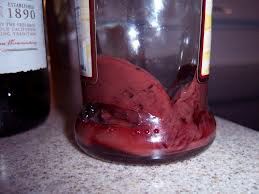
Here’s a good looking, live red wine vinegar mother.

I topped it with half bottles of Nero d’Avola and Côtes du Rhône wine and let it sit near the window, a place that was pleasantly cool but not drafty. After about two and a half weeks I began getting whiffs of a good vinegar smell when I entered the kitchen, but a closeup sniff told me it wasn’t quite there yet. After another week I smelled it again, and it seemed perfect. And the taste was beautiful, exactly as it had been. Hallelujah. My vinegar mother was resurrected. I’ll never neglect her again.

Read Full Post »

« Newer Posts