
Recipes below: Orecchiette with Sausage, Cauliflower, Saffron and Celery Leaf; Pumpkin Soup with Anise Seed, Saffron and Celery Leaf
I haven’t posted in the past three weeks because I’ve been busy with two other writing projects, one of which, a food-related fiction idea, has been giving me sweaty pangs of embarrassment. I hope to burn past that (if all goes well, you’ll be hearing more about it at some later date). In the meantime I want to give you an update on my fall herb garden. Bittersweet is the word to describe what is going on now in my little garden. I’ve got a plot full of bitter and crusty, but it still gives hints of what those beautiful plants once were. Seems like only yesterday.
Some robust herbs hang on until the ground is almost frozen. Lovage and fennel do, and so does a variety of celery that’s grown primarily for its leaves and is called leaf, Chinese, or cutting celery in this country. I first planted that two springs ago, and it came back this year. In upstate New York you never know what’s going to return. I’m hoping it will become a solid perennial. Its stalks are skinny and hollow, without any of the stringiness of normal celery stalks, but they can be tough, so I make sure to chop them fine if I’ll be using them in a soffrito, for instance. The leaves, though, are the main attraction, dark green, a little shiny, and abundant. I love the taste of celery, so for me leaf celery is a must-have. I use its leaves both cooked and as a straight-on herb, scattered at the last minute. It’s deep stuff.
I still have it coming up in my garden, and I’m grateful. It’s what inspired these two recipes. If you don’t have leaf celery, both dishes will still be really good with stalk celery. You’ll just need the leaves from almost entire head for each recipe (or you can use half celery leaves and half Italian parsley, if your celery leaves are sparse). I like to include celery leaf in dishes that have a semi-sweet element, like the pumpkin and the pork here. Its savory bitterness balances things out nicely.
I’m assuming that these will be the last recipes I post this year with herbs from my garden. People ask me if I dry my herbs. I don’t. I like herbs fresh, so during cold months I resort to those plastic supermarket packages. They’re not bad, but they definitely lack romance. One thing I do do with end-of-season herbs is make liqueurs. This year I cut down all my gone-to-seed fennel for finocchietto. It has been sitting in Everclear for only about three weeks so far, but it already smells sweet and intense. I’m hoping its deep green color will last until Christmas, when the liquor will be ready.

Orecchiette with Cauliflower, Sausage, Saffron, and Celery Leaf
1 large cauliflower (any color or variety), cut into small florets about the size of orecchiette
Extra-virgin olive oil
Salt
¾ cup homemade chicken broth
¼ teaspoon saffron threads, lightly dried and then crushed in a mortar and pestle
3 or 4 sweet Italian sausages (about ¾ pound), skinned and pulled into little bits
1 large shallot, cut in small dice
3 tender inner celery stalks, cut into small dice, plus, separately, the leaves from the whole bunch (if you happen to have leaf celery, use 3 of those stalks, well chopped, and a good handful of their dark green leaves)
4 or 5 sprigs rosemary, the leaves chopped
A big splash of dry white wine
1 pound orecchiette
Aleppo pepper to taste
A chunk of aged Manchego cheese
Heat the oven to 425 degrees, and get out a large sheet pan. Spread the cauliflower out on the pan in more or less one layer. Drizzle it with a good amount of olive oil, and season it with salt. Roast until golden and tender, about 10 minutes. Take the pan from the oven, and let it sit while you get on with the recipe.
In a small saucepan, heat the chicken broth to warm it, and add the saffron, giving it a stir. The broth should turn a lovely orange.
Set up a pot of pasta cooking water, and bring it to a boil. Add a generous amount of salt.
While the water is coming to a boil, get out a large sauté pan, and set it over medium-high heat. Drizzle in a film of olive oil, and add the sausage, letting it brown lightly, about 3 to 4 minutes. Add the shallot, the celery stalk, the rosemary, and a little salt, and sauté until it’s all fragrant and softened. Add the cauliflower, and give it a stir. Add the white wine, and let it bubble away.
Drop the orecchiette into the boiling water.
Add the saffron chicken broth to the pan, turn down the heat, and simmer for about 3 or 4 minutes. Sprinkle in some Aleppo.
When the orecchiette is al dente, drain it, and set aside about a cup of its cooking water. Put the orecchiette in a large, wide serving bowl, drizzle on a little fresh olive oil, and give it a quick toss. Add the sausage sauce, a few gratings of Manchego, and about half of the celery leaves. Toss again, adding some cooking water if you need it to loosen the sauce. Scatter the rest of the celery leaves on top. Bring the rest of the Manchego to the table.

Pumpkin Soup with Anise Seed, Saffron, and Celery Leaf
Extra-virgin olive oil
1 medium-size onion, chopped
2 tender inner celery stalks, chopped, plus, separately, about ½ cup celery leaves, lightly chopped (if you have leaf celery, use 2 small stalks, well chopped, and ½ cup leaves)
1 pound skinned, cubed fresh pumpkin (I used cheese pumpkin for this, as I think it has the best flavor, but you can substitute butternut squash, if you like; it’s easier to peel, a bit sweeter, and less deeply flavored)
Salt
2 fresh bay leaves
A big pinch of allspice
1 teaspoon ground anise seed
A big splash of dry vermouth
4 cups vegetable broth, or half chicken broth and half water
A big pinch of lightly dried saffron, crushed in a mortar and pestle and dissolved in a few tablespoons of hot water
¼ cup heavy cream, or a little less if you prefer
Green peppercorns
Get out a large soup pot, and drizzle into it 2 tablespoons of olive oil. Turn on the heat to medium, and add the onion, celery stalks, and pumpkin. Season with a little salt, and add the bay leaves, allspice, and anise seed. Sauté until everything is fragrant and just starting to soften, about 4 minutes. Add the vermouth, and let it bubble away. Add the vegetable or chicken broth, and bring everything to a boil. Lower the heat, and cook partially covered at a low bubble until the pumpkin is very tender, about 20 minutes. Add the saffron water.
Remove the bay leaves, and purée the soup in a food processor until it’s smooth. Return the soup to the pot (wipe out the pot first). Gently reheat it, and add the cream, stirring it in. If the soup is too thick, add a little water or more broth (I like it the consistency of thick cream). Add a few grindings of green peppercorns, and check the seasoning. Add about half of the celery leaves. Serve hot, garnishing each bowl with the remaining celery leaves.
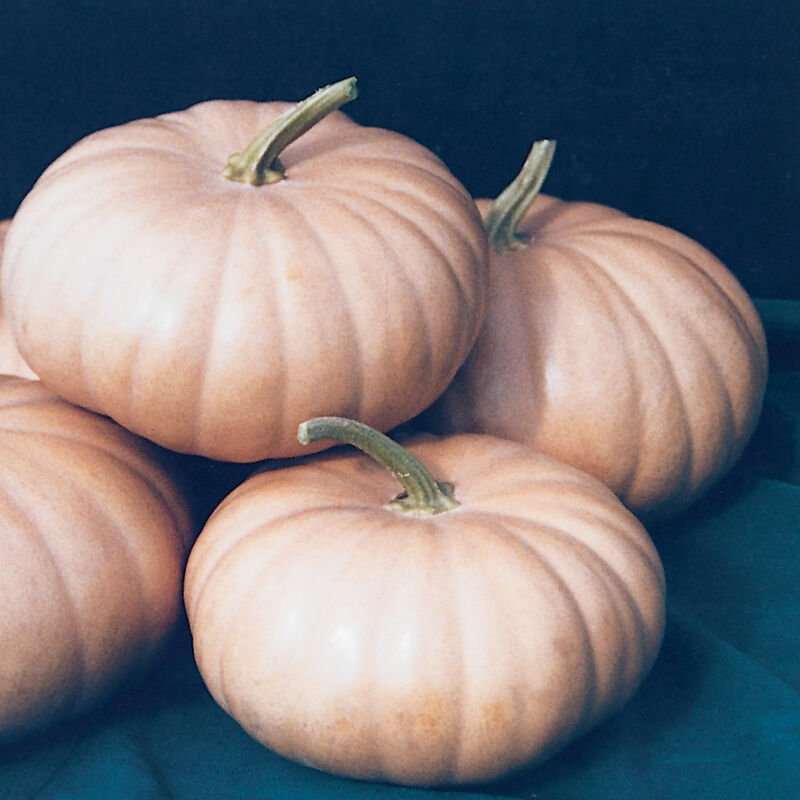
Here’s what cheese pumpkins look like. They also make great pie.


 Erica De Mane
Leave a Reply