
Recipes below, in text: Linguine con la Buccia di Limone; Limoncello; Lemon Sorbetto with Broiled Lemons and Vodka
One thing is going well this winter, at least here in New York: We are getting a decent amount of snow. Yesterday we even had a sun snow, where the tiny flakes came down with a crystalline sparkle against an almost completely blue sky. That was unusual. And we’ve got lots of lemons. I mean, there are always lemons in the supermarket, but since winter is citrus season, I like to believe the lemons are at peak right now. Winter and lemon zest are linked in my mind. From around Christmas until March my refrigerator becomes the house of the bald lemon (sounds like a Garcia Lorca play). I sometimes have up to a dozen scraped-down, hardening, microplaned lemons sitting in there at once. Lemon olive oil cake is a big winter thing for me. It requires a lot of zest. Preserved lemons are good to have around this time of year. I just made a batch. Chicken tagine with preserved lemons and almonds. I love that. Limoncello, naturally. And pasta with lemon sauce, in its various forms. I only think about cooking that in the winter.
In the late eighties and into the nineties a lemon pasta full of cream was having a big moment. If you worked in catering back then, as I did, you absolutely had to know how to make it, and in large quantities. I came to hate its cooked down richness, especially when it went cold and thickened into golden glop that needed to be scraped out of 95 pasta bowls. Truly disgusting. I’ve always preferred the olive oil and lemon zest version I learned from Natalia Ravidà, a woman who for 30 years has been working to get the word out about her Sicilian family’s beautiful estate olive oil. Her recipe for lemon pasta, along with many other classic Sicilian dishes is in her book Seasons of Sicily. A very nice book.
I’ve been playing around with this simple dish, which is essentially lemon zest, olive oil, and Parmigiano. A beautiful trio. I have, of course, customized it a bit, because I can’t leave well enough alone. I added a little nutmeg and basil, two flavors that go so well with lemon I just couldn’t resist. Nutmeg does something beautiful to lemon, it rounds it out, makes it feel both sharp and mellow all at once. I also added basil, which lifts the black pepper flavor in the dish.
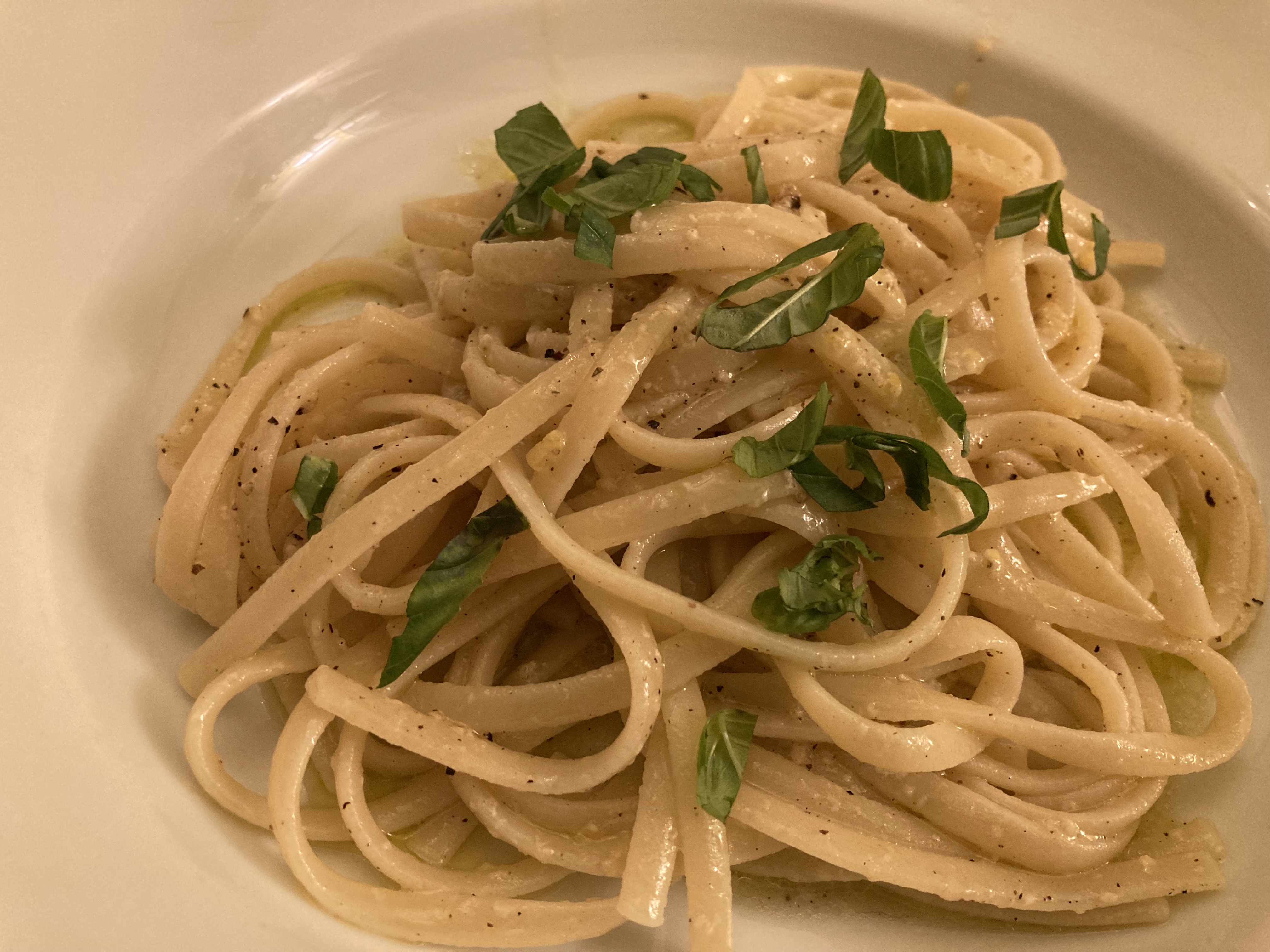
To make this lemon liguine for two, you’ll want the zest from 2 organic lemons and the juice from about ½ of 1 of them. Pour about ¼ cup of your best extra-virgin olive oil (preferably a good Sicilian oil such as Ravidà) into a warmed pasta serving bowl. Add the lemon zest, give it a good stir, and let it sit for about ½ hour, so it can release its essence into the oil.
Cook ½ pound of linguine in salted boiling water until al dente. While it’s cooking, add the lemon juice, a few big scrapings of nutmeg, a little salt, some fresh, coarsely ground black pepper (I used Zanzibar black pepper from Burlap & Barrel), some leaves of julienned basil, and about ½ cup of freshly grated Parmigiano into the bowl. Add a few tablespoons of the pasta cooking water, and give it a good stir.
Drain the linguine, and add it to the bowl, tossing it well until it’s well coated with the sauce. You can garnish it with more basil or an additional dusting of Parmigiano, if you like.
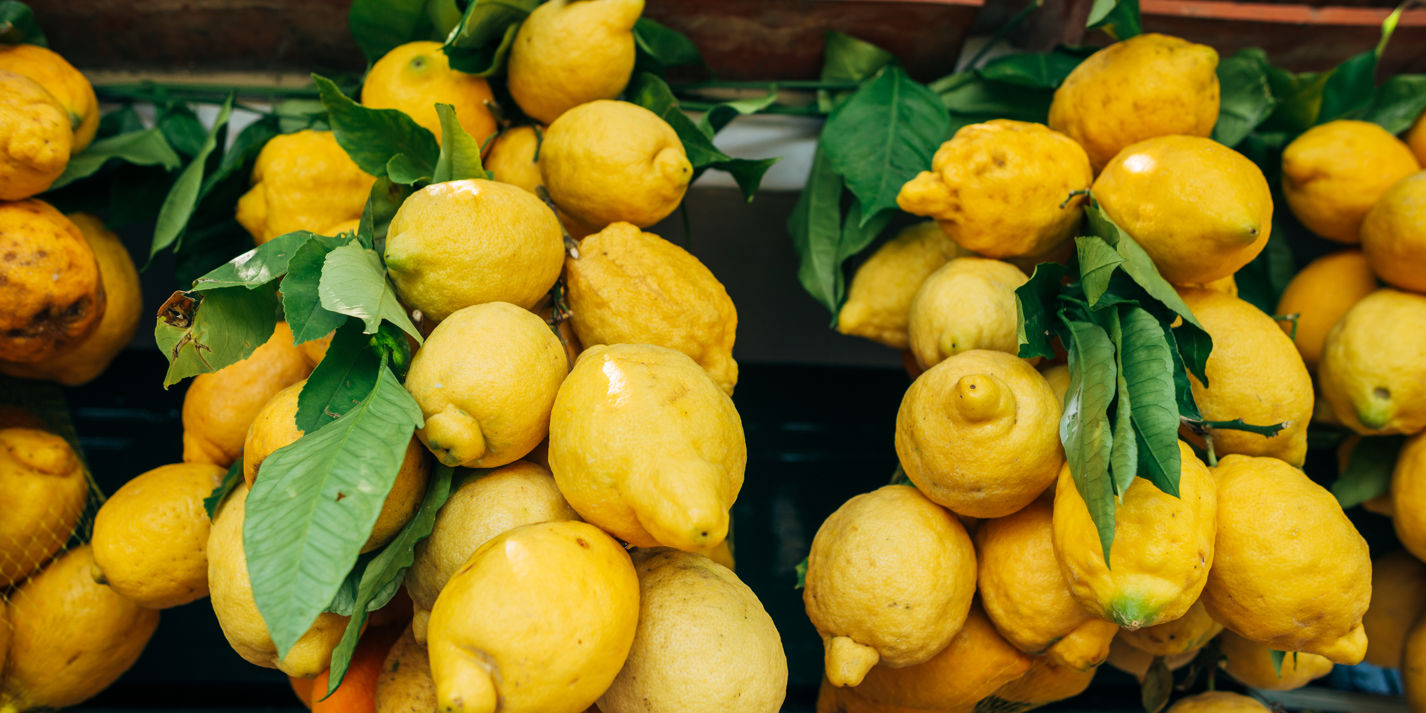
I’ve forever heard stories about Southern Italians eating raw lemons like they were oranges. Nobody in my family ever did. It seems the lemons in Naples and further south were much sweeter than the ones we have here. I asked about the custom years ago when I visited my ancestral homeland. According to my Uncle Tony, nobody where he lived did that, and if they did they’d burn the enamel off their teeth. That’s what he thought. I’ve eaten Amalfi lemons in Amalfi several times, and I have to say to my palate they’re only ever so slightly sweeter than the ones I buy here in supermarkets. They are, however, longer, lumpier, more lemony, and have maybe more oil in their skins. And like the neighboring Sorrento lemons (also called Santa Teresa lemons), they’re used to make limoncello. I especially love that Sorrento limoncello. But I make pretty good limoncello using my own supermarket lemons (although I do buy organic, since I’m using only the peel for the limoncello). My secret to a lemony limoncello is just this: Make sure you start with Everclear, not vodka. Vodka’s not strong enough. You need a super powerful liquor to pull all the lemon essence from the skin. Of course you’ll water it down later, but this first step is essential for intensity of lemon flavor. If you’d like to try it, here’s what I do:
Zest a dozen organic lemons with a microplane zester, and stick the zest in a large glass jar fitted with a tight lid. Pour in a liter bottle of Everclear, close up the jar, and let it steep in a relatively dark place for 2 weeks, shaking it from time to time. Strain it through a fine mesh, and return it to a clean jar. Put 2½ cups of sugar in a saucepan. Pour in 4 cups of water, and bring it to a boil to dissolve the sugar. Turn off the heat, and let it cool completely. Pour the sugar syrup into the jar with the lemon booze, close up the top, and let it sit for another 2 weeks. You can strain it again if you think it needs it. I don’t usually bother.
Now you can keep it chilled in the freezer, where it will keep for about a year.

Another nice thing to do with lemons is slice them into rounds and give them a quick roast or even a broil, either first sprinkled with sugar, or, for a savory treatment, with salt and maybe some chopped thyme. You can eat them straight off the pan or draped over a slice of grilled swordfish, but consider using them for this Lemon Sorbetto with Broiled Lemons and Vodka:
For the broiled lemons, you’ll want to peel as many lemons as you like and cut them into not-too-thin slices (you can, if you prefer, leave their skins on, but I like to be able to eat the whole slice without running into any bitterness). Pit them if you want. Coat a sheet pan with a little olive oil, and spread out the lemon slices. Drizzle them with a little more olive oil, and sprinkle them with a light coating of sugar. Stick them under a broiler about 4 inches from the heat source, and let them cook until the sugar has caramelized and the lemons have softened a bit, about 3 minutes.
When the broiled lemon slices have cooled, grab as many parfait glasses as you have guests, and fill them ¾ full with good quality lemon sorbetto (I used Talenti when I made this). Place three of the lemon slices over the top. Drizzle a shot glass full of vodka over each glass. Or use lemon vodka if you like. Or limoncello. Garnish with mint sprigs or basil. This is a beautiful and almost healthy dessert (or palate cleanser, whichever you prefer).
Happy citrus cooking to you all.


 Erica De Mane
This is a wonderful post.