Recipe below: Caponata with Lovage, Thai Basil, and Pear
If you ever get to upstate New York, you probably notice a lot of pizza trucks rumbling around. They show up at farm stands, breweries, wineries, fairs. They pull up and set up, churn out pizzas for a few hours, and then they’re gone. They’re not all great, but some are.
I often hang out at Slow Fox Farm Brewery, in Rhinebeck. It’s both a brewery and a farm, with its own tomatoes, herbs, cabbage, kale, beets, arugula, and rows of, at the moment, zinnias, cosmos, and celosia that you can pick while drunk. As well as more than half a dozen fine house-brewed beers and ales. You can often eat pizza there. So far they’ve had I think three or four different pizza trucks this summer (this should go on into the early winter, before they close up until the spring). All the pizza has been good, but one stands out for me.

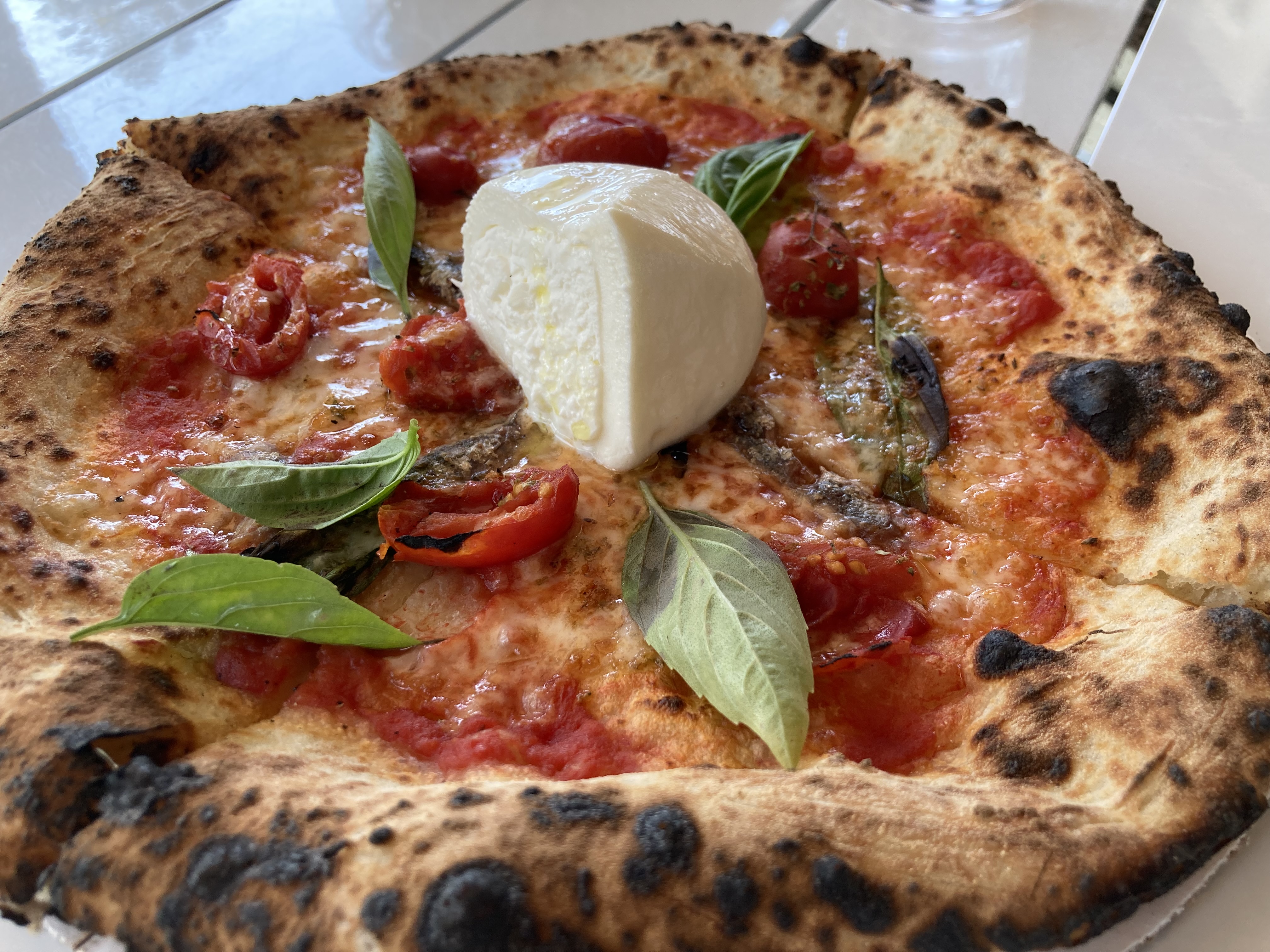
I could tell right away from the aroma wafting out from the Mommò truck that I was going to like its pizza. Mommò, I just learned, is Neapolitan for “right now,” and that’s about right. The pizza takes three minutes to cook. Luca, the owner and pizzaiolo, is from Italy, and he has the Neapolitan flavor down. The crust is yeasty and pully and just a touch salty, with charred but not too charred bubbles circling its rim. That is the taste I want but often don’t get. He’s got wood, but unlike most of the pizza people who drag around a wood burning oven with their truck, Luca had it built right into his truck. It doesn’t seem possible, but I’ve seen it. He explained to me that it’s a stainless steel pizza oven made in Naples for backyard use. It’s a little tight, but he got it to fit. If he turns around without thinking, he can burn his arm. But he’s been doing this for almost three years now, and I guess he’s got the reflex down.

Luca makes an effort to use good ingredients, as not everyone does. He’s got that bright red tomato sauce I always look for, the type that’s ladled on raw but gets flash blasted in the extra-hot oven. So far I’ve tried his margarita, his pizza with shiitake mushrooms, an anchovy and burrata one, and his sausage pizza topped with a nice mellow local sausage. In true Neapolitan style he’s light on the toppings, but you still get that traditional Neapolitan moist spot in the middle that I love. There’s a gorgonzola pizza I’m interested in, too. Next time. If you feel like following Luca around the Hudson Valley, you can track his whereabouts at www.mommopizza.com.
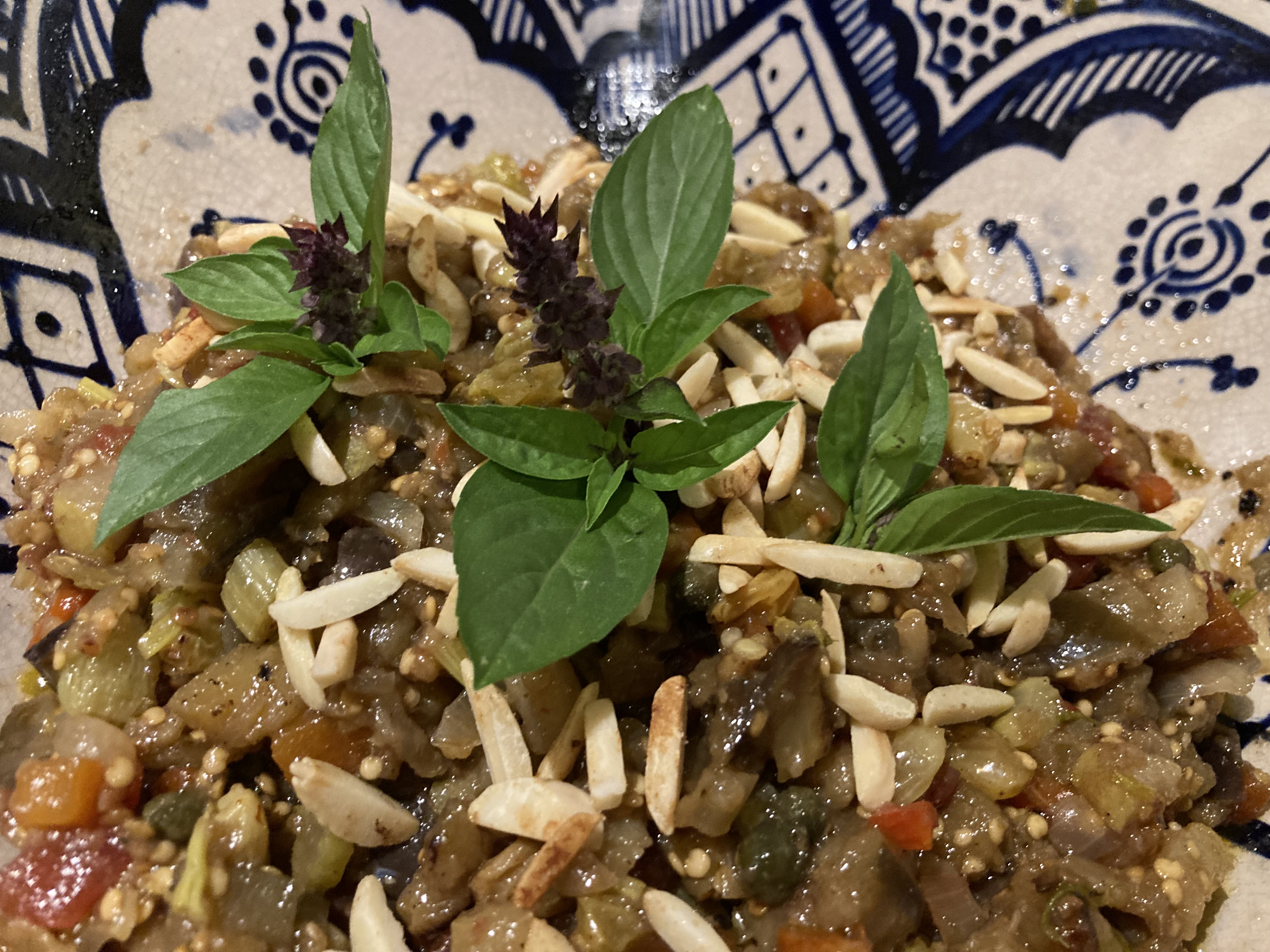
As you probably gather, I do love a good pizza, but what about caponata? Not that they’re related, except for the fact that they’re both Southern Italian. It’s still eggplant season here in New York, so I’ve got to use eggplants every way I can while they’re still young and vibrant. Caponata is of Sicilian origin, one of those full-bodied Spanish- and possibly Arab-inspired dishes with strange lists of ingredients that combine to open up lusciously on the tongue. Eggplant is caponata’s anchor, and agrodolce gives it its swing. It’s an old dish (tomato being a recent addition), which when done up for high-class Sicilians used to include (and sometimes still does) Baroque garnishes such as chocolate, cinnamon, hard-boiled eggs aged in vinegar, and even baby octopus. I kept the cinnamon.
Basil, parsley, and mint are traditional contemporary herbs for caponata. But this September, since I’ve still had tons of lovage in my garden, I’ve decided to add a little of that. And it makes sense, since celery is almost always a component of the dish and lovage has a strong celery-like flavor. If you don’t have lovage, use a palmful of celery leaves instead. I also had Thai basil hanging on, so that went in as well. And since it’s early fall, instead of the more typical dried fruit, usually raisins, I went with pear, just to freshen things up. And I decided on almonds instead of pine nuts because they seemed to go better with the pears. Not sure why. Just a feeling.
And just one more thing about caponata: I don’t care what anyone says, caponata is not ratatouille. It’s not a side dish. It shares basic ingredients, such as eggplant, but the seasoning couldn’t be more different. Its agrodolce boldness steers it toward the antipasto category. I like it served room temperature, along with bruschetta brushed with good olive oil.
Caponata with Lovage, Thai Basil, and Pear
Extra-virgin olive oil
2 firm medium-size eggplants, stripe-peeled and cut into medium dice
Salt
A big pinch of cinnamon (about ¼ teaspoon)
A drizzle of honey (about a teaspoon)
1 red bell pepper, seeded, ribbed, and cut into small dice
1 medium onion, cut into small dice
2 teaspoons Spanish sherry vinegar
3 small inner celery ribs, cut into small dice, plus a handful of celery leaves (especially if you don’t have lovage)
1 firm pear, skinned and cut into small dice
A splash of dry Marsala
1 large, round summer tomato, skinned and cut into small dice
1½ teaspoons sugar
A palmful of salt-packed capers, soaked and rinsed
Black pepper
A handful of Thai basil leaves, lightly chopped, plus whole sprigs for garnish
3 lovage leaves, lightly chopped
A big handful of blanched almonds, lightly toasted and roughly chopped
Have a large serving bowl ready near the stove. In a large skillet, heat a big drizzle of olive oil over medium heat. Add the eggplant, and sauté until it’s tender but still keeping its shape, about 8 minutes. Season it with a little salt and the cinnamon. Add the honey, giving everything a mix. Spoon the eggplant into the bowl.
Add another drizzle of olive oil to the skillet, add the red pepper and onion, and sauté over medium heat until softened, about 4 minutes or so. Add 1 teaspoon of the vinegar, and let it bubble for a few seconds. Add this mixture to the bowl with the eggplant.
Add another drizzle of olive oil to the skillet, and then add the celery and celery leaves, sautéing them until they just start to soften, about 2 minutes. Add the pear, and let it sauté about a minute longer. Pour in the Marsala, and let it bubble away. Add all this to the bowl, and give everything a gentle toss.
Add one more drizzle of olive oil to the skillet, keeping the heat on medium. Add the tomato, seasoning it with a little salt. Add the sugar, and sauté the tomato for about 2 minutes (you want it to remain red and fresh-tasting). Add the other teaspoon of vinegar, and let it boil for a few seconds. Pour the tomatoes into the bowl.
Add the capers and a few big grindings of black pepper to the bowl. Add the Thai basil, lovage, and about ¾ of the almonds. Give everything another mix. Taste for seasoning. The caponata should have a gentle, well-balanced sweet-and-sour taste. Add a little more salt if you need to to bring all the flavors into focus. Let the dish sit and come to room temperature. Then give it another taste, just to check the seasoning. (Dishes taste different at different temperatures, and this one in particular will change flavors as all its various components meld. It might need a little drizzle of vinegar or a bit more black pepper.) Garnish with the remaining almonds and the Thai basil sprigs. Serve at room temperature.


 Erica De Mane
Leave a Reply