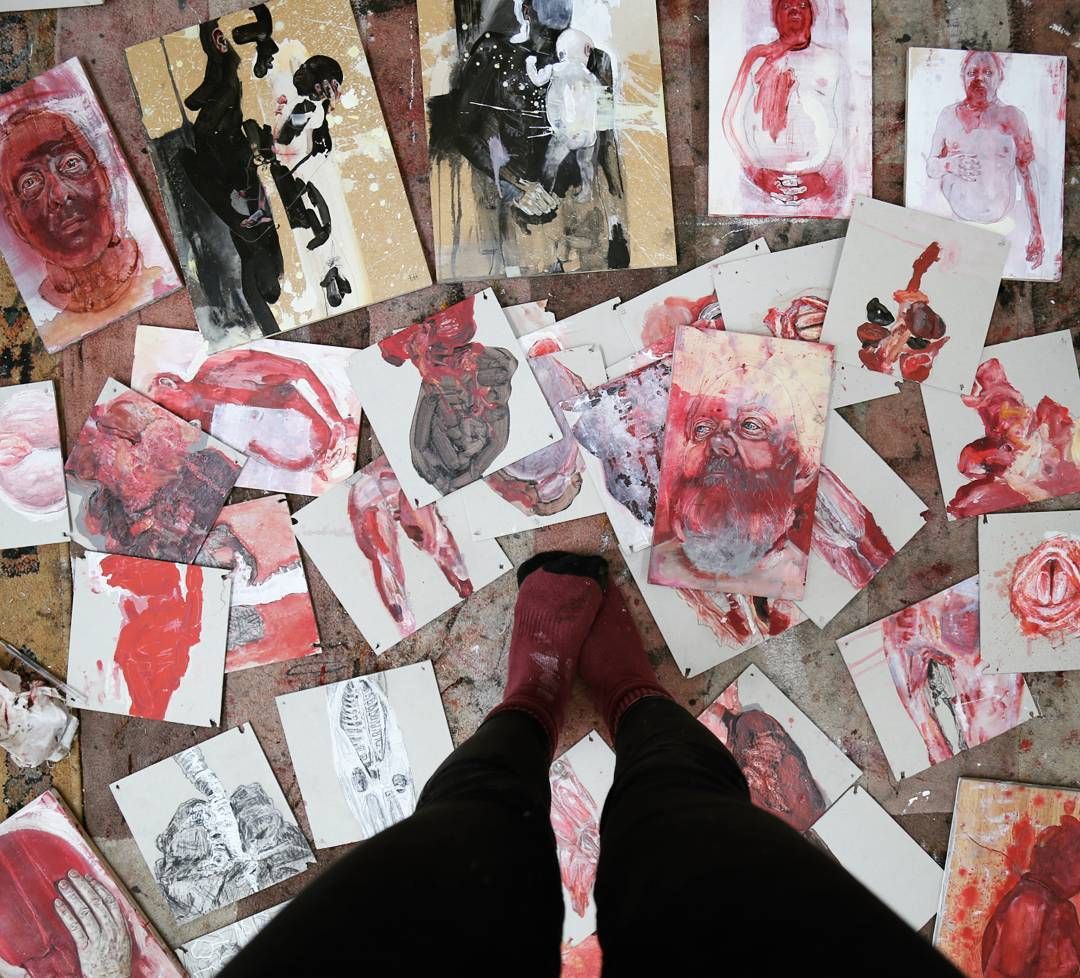
Still Life with Organs, Caos,soy
Recipe below, incorporated into the text: Chicory Salad with Chicken Livers and Grappa-Flamed Grapes
Chicken livers haven’t been a constant in my life, but when they’ve shown up they’ve been memorable. I don’t recall my family doing anything particularly Italian with them. What I do recall was Eastern European Jewish–inspired, probably passed down to my mother through some of her lady friends. That, of course, was a classic chopped liver dish, bland but enticing to my young self. My mother presented it in an old-fashioned crystal bowl. It was chunky and tan, studded with bits of onion and hard-boiled eggs, always eaten with Triscuits. It looked lumpy, but its mouth feel was creamy. Its taste had a bitter undertone that I now associate with anything made with chicken livers, and that was what kept me coming back. My mother made it for Thanksgiving but also when they were having friends over for drinks. It went well with both gin and vodka.
And then there was a years-long gap in my appreciation of chicken livers, aside from enjoying various takes on traditional chopped liver, mostly made by New York delis and served on bagels (the 2nd Ave Deli rendition was a favorite). Years of no focus. Lots of dancing but no chicken livers. Then one weekend I went to visit my old friend George, who had recently moved to Massachusetts. For a welcoming dinner he cooked a risotto with chicken livers, a recipe from his Piedmontese mom. Coming from a Southern family, I hadn’t had risotto at home (it was Northern restaurant fare), so this was new. The chicken livers were minced and sautéed with onion and, I think, butter. That’s the ground floor of the recipe. Then I’m not sure what went in, but the end result tasted like Parmigiano, with the chicken liver anchoring it in a deep, musky place. I tried recreating it when I got home. What I made wasn’t bad, except that after many tries it still had an uncooked-wine taste that made it sour. My version got progressively better as my culinary brain shifted into drive and my desire for chicken livers intensified.
Before I started thinking seriously about a career in cooking, I worked at Amnesty International, which believe it or not was fun, deadly serious but strangely fun. The office was on 57th Street, and only a few blocks away was Ralph’s, a solid old red sauce place. We stressed-out Amnesty workers often wound up going there after work for cheap spaghetti and acidic Chianti. Most old-school places like Ralph’s had predictable menus. Ralph’s did, except that they offered penne with chicken liver sauce, a dish you didn’t find in Little Italy, as far as I can remember. I zeroed right in on it. It was basically their thick dark red sauce plus sautéed chicken livers. It was a tad unbalanced, but I loved it, and I improved it with a shower of shaker-can “parmesan.”
I went on to improvise numerous versions of pasta with chicken livers, adding Marsala and capers, doing a deep take with tagliatelle, prosciutto, thyme, and juniper berries, and turning out a lighter version where I tossed penne with summer tomatoes, rosé wine, and basil. I also made several all-out ragùs, heavy-duty but mostly good.
Crostini di fegatini came into my life when I was going to cooking school and starting to plan my uncertain future. Chicken liver pâté on toast was a fad in the early eighties, and cooking schools were into it. I cooked up many variations, from the intense Tuscan kind with anchovies, capers, red wine, and sage, to Marcella Hazan’s demur Venetian style, with red onion and butter, and the French pâté of Jacques Pepin, with thyme, cognac, and bay leaf, all mounted with cold butter. These I decided weren’t better or worse than the New York Jewish chicken livers I had grown up with. They were just different.
My first cooking job was at Restaurant Florent. I started there when it first opened and stayed for four years. In the beginning, when the place was mimicking a Paris Les Halles bistro, we cooked a lot of organ meat and butcher’s cuts. Frisée and chicken liver salad was often on the menu, and I was fascinated by it. It had never occurred to me to add chicken livers to a green salad. And Renee, the lunch chef, taught me an important chicken liver cooking tip: Flame your livers in cognac or brandy, pushing their iron taste into the background. To this day I always finish sautéed livers with a splash of cognac or an eau de vie like Poire Williams. Grappa is also good.
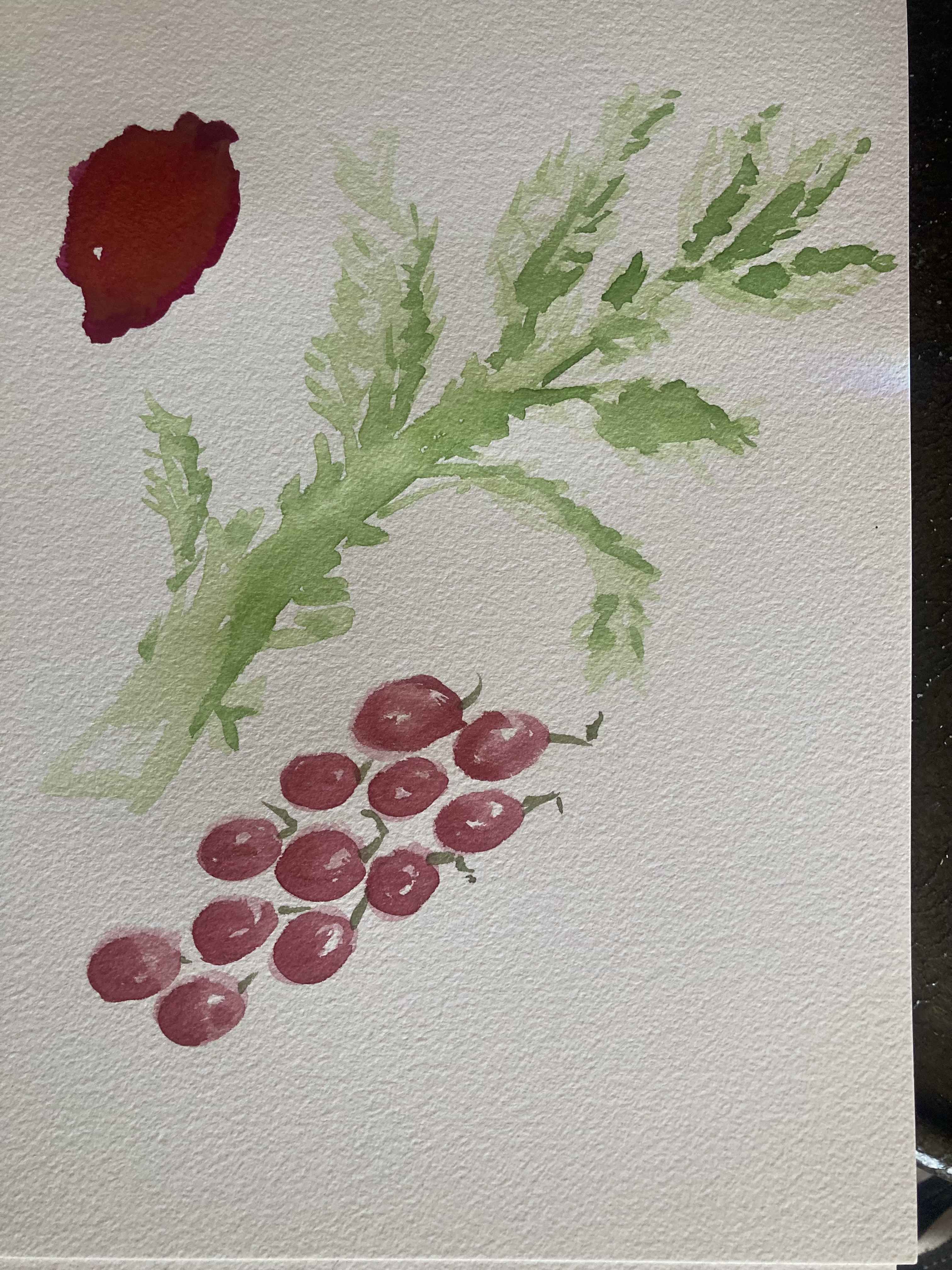
I guess you can tell I love chicken livers. I think everyone should, and they’re easy to cook once you get over the look and feel of them. Raw, they’re an almost startling and weirdly glossy deep burgundy color, and they’re slippery and often a little bloody in your hands. There is also that connecting white tissue that needs to be cut away, but that’s the extent of necessary cleaning. Once they’re tidied up and ready to go, they’re quite beautiful. Most of the time I prefer to leave them in large hunks and cook them fast on high heat. That produces some popping and splattering. Don’t let it alarm you. Just stand back. And when you add the booze you will see a gorgeous, high flame. I live for that kind of thing, but you can always squelch it out by taking the pan off the fire or smothering it.
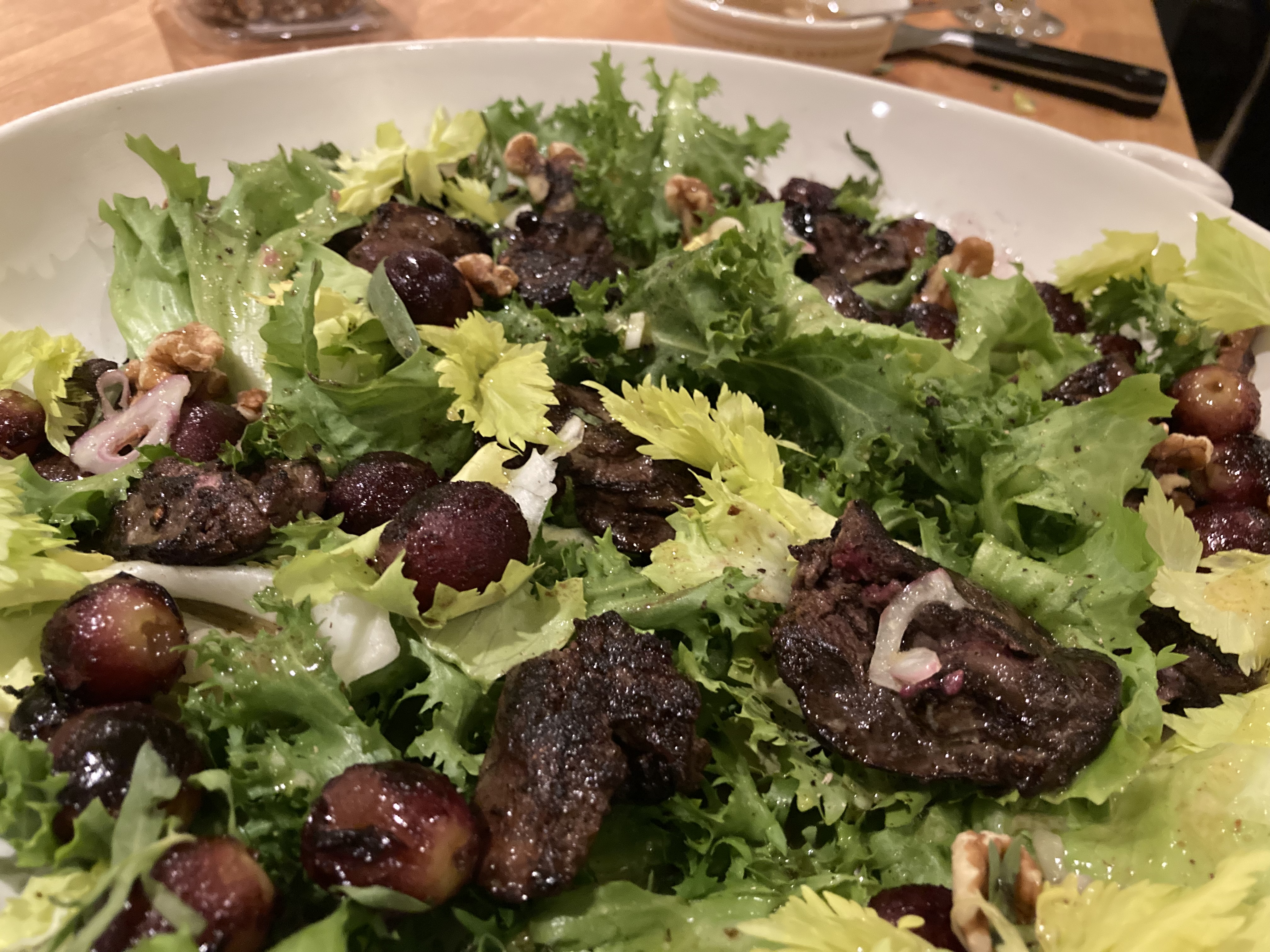
Here’s a new take on my favorite frisée and chicken liver salad. This one used chicory, a close relative to frisée but easier to find, and a fast sauté of grapes. I really liked the flavor combination, and it looked pretty on the plate.
To make it for two, take two big handfuls of chicory (I also included some escarole, because I had it), and place them in a wide salad bowl. Add one or two small inner celery stalks, sliced, plus the leaves, left whole.
Make a vinaigrette with ½ a small shallot, thinly sliced, a little mustard, salt, a pinch of sugar, tarragon vinegar or champagne vinegar, good olive oil, black pepper, and maybe some fresh tarragon, if you like.
Stem a big handful of red grapes, seeded or not, your choice, and sauté them briefly on high heat in a little olive oil and a pinch of salt, until they just start to soften but don’t yet collapse completely, about 4 minutes. Add a splash of grappa, and let it flame off.
Clean about 1/2 pound of chicken livers, and cut them into pieces about an inch across. Dry them off, and season them with salt. Take out another sauté pan, and get it hot over medium high flame. Add enough olive oil to coat the bottom of the pan. Add the livers, spreading them out as best you can so they’re mostly not touching. Sear them on one side, and then give them a flip to sear the other side. That should take only about 4 minutes total. You want them to stay pink at their centers. Grind on some black pepper, and then splash them with grappa. Stand back to watch the flame.
Pour the chicken livers over the chicory. Add the grapes. I also added a handful of toasted walnuts, which I thought a nice touch. Pour on the vinaigrette, and toss gently. Serve right away.


 Erica De Mane
Enjoyed this very much Erica. It’s so personal and that’s what draws me in. I should try this sometime… flambeing those chicken livers! The only thing I’ve ever flambed is Christmas pudding.
Hi Melanie, It’s pretty easy. You just need to watch the flames. Or, if you’re uncomfortable with them. Just take the pan off the stove and add the booze off flame. The alcohol will burn off with the residual pan heat. But the flames are a great drama. XX Erica