Recipes below, in text: Pistachio Butter, Mortadella Panino
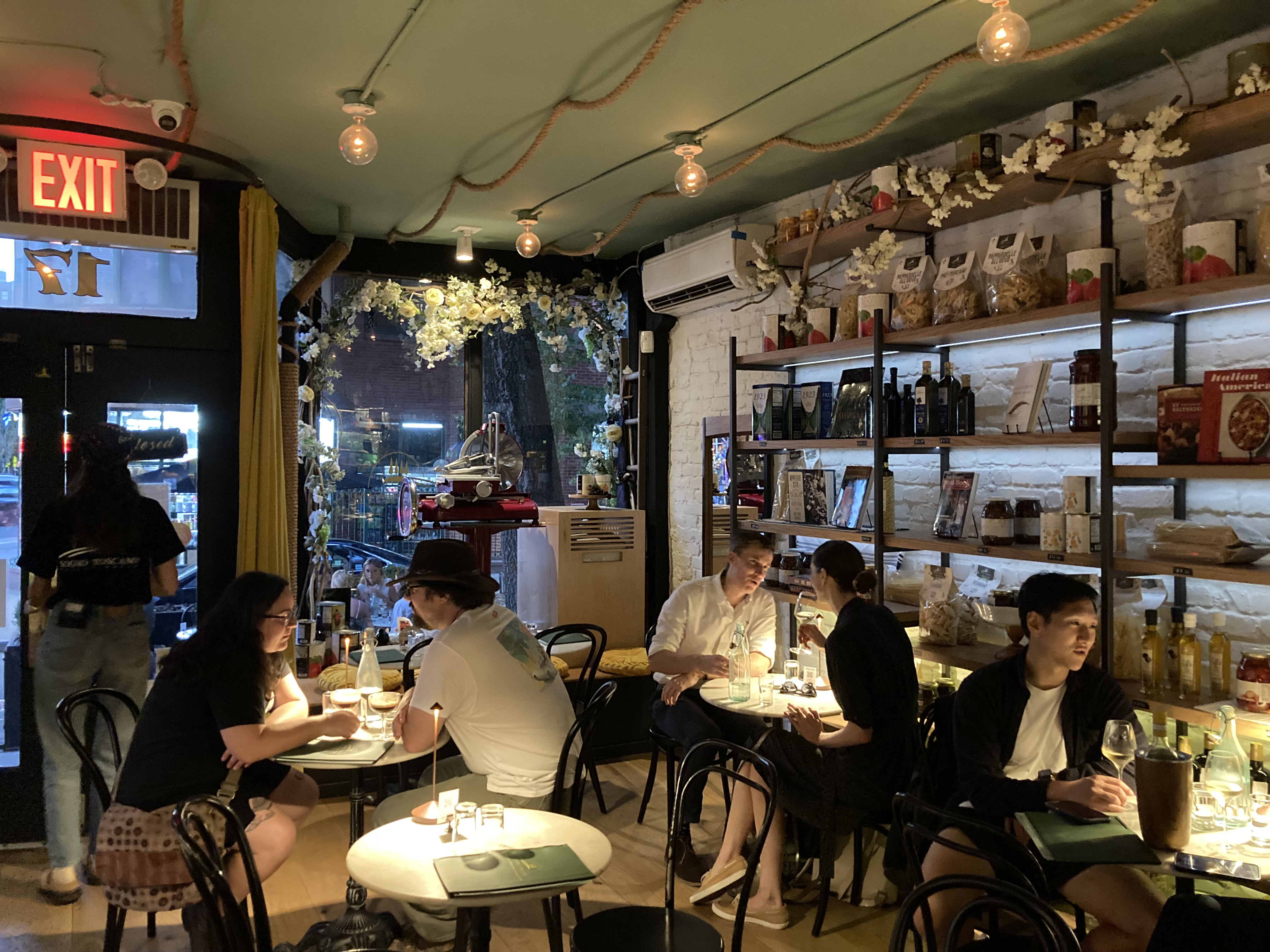
There are times when I want a thick Italian-American hero filled with tongue-numbing salami and provolone and dripping with vinegar peppers. And then there are times I’d rather have something more demur, a panino with a few thin slices of prosciutto, good olive oil, and maybe some spiky arugula, all on a thin, crumbly ciabatta. When I crave this more elegant type of sandwich, I often go to Sogno Toscano, in the West Village, a cozy but not at all cramped caffè a few blocks from my apartment. There’s a lot of light dusty green paint at Sogno, and they’ve got a classic green Vespa in the window, a prop that you’d think would give the place a Disneyland vibe but that somehow feels authentic there. The place has smooth white marble tables that are round and cool to the touch, lovely to land a glass of wine on. The caffè was built by Italians and is staffed mainly by Italians and filled with Italian clientele. It’s a good place to practice your Italian or, in my case, to display just how bad your Italian is.
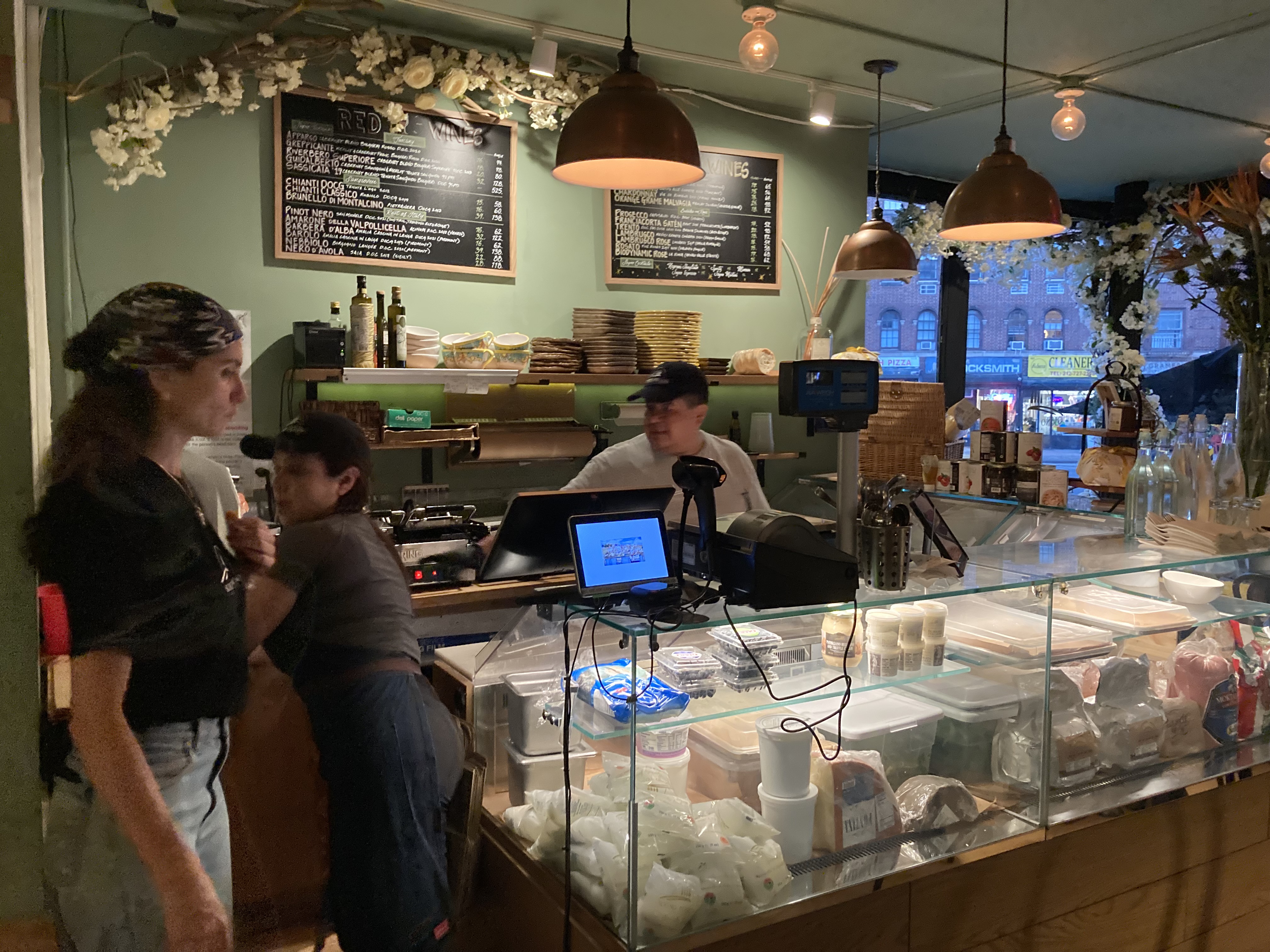
Sogno Toscano is also a market, although at times a somewhat frustrating one. The place is the offspring of the wholesaler Sogno Toscano, which supplies Italian food to restaurants. Nice looking bags of pasta and cans of tomatoes are placed just so, and there’s a glass case with salumi and cheeses of high quality, but you can see that the place wasn’t really set up to move groceries. The goods seem somewhat decorative. You can purchase freshly sliced mortadella, a chunk of guanciale, or a wedge of red wine–washed pecorino, but it’s often hard to find a waiter who has a minute for weighing, ringing up, and packing. Sometimes I give up on shopping and just sit down with a glass of Chianti and one of their excellent panini.
I often order a panino with mortadella, mozzarella, pistachio butter, and arugula. It’s really the perfect sandwich. I love the way the pistachio butter underlines the pistachio element in the mortadella itself. And Sogno’s bread is just the way I want it, crackling and oily.
I’ve bought pistachio spreads at many Italian shops. The ones called pistachio cream tend to be sweet, more like something you’d layer in a cassata, but for a panino or to fold into a pasta sauce, for instance, you’d want a savory version, something more like a pistachio version of peanut butter. Sogno Toscano doesn’t seem to sell whatever they use on their panini. I did once order a good savory one made by Campo D’Oro, a Sicilian company that used real Bronte Sicilian pistachios. But those little jars are expensive, so I decided to try making some myself, and to my surprise it came out great. Nothing to it, really, except that you’ll want to start out with good pistachios.
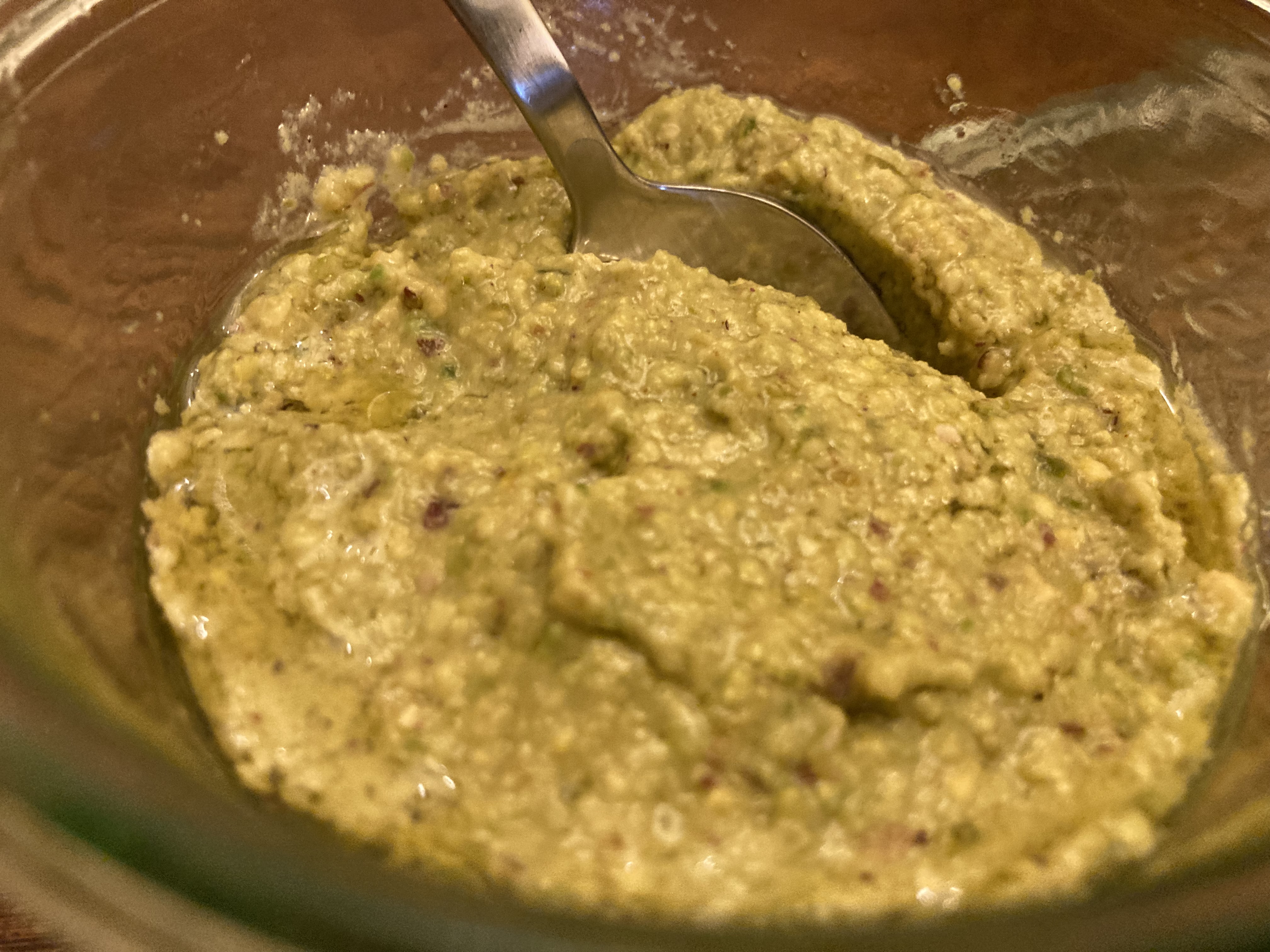
Here’s how I made my pistachio butter:
I took two cups of shelled, unsalted Bronte pistachios and poured them into my food processor. I added about two tablespoons of pistachio oil (you can use good olive oil instead), and I added a little pinch of salt. Then I pulsed and whirled until I had a creamy paste. If your pistachios are a little dry, you might want to add a tablespoon or so of water. Just see how it goes. My results were not as smooth as creamy peanut butter, there was still a little texture there, but the taste was sensational. Using fresh Bronte pistachios, my butter came out a rich green. If you use nuts with darker skins, you’ll wind up with a more olive green shade. I guess you could skin the nuts, but that would push my irritability level up to semi max.
After making my pistachio butter, I decided it was only right to use it to make a home version of the mortadella panino I had had at Sogno Toscano. I substituted ricotta for the mozzarella, because that was what I had on hand. I liked it just as much.
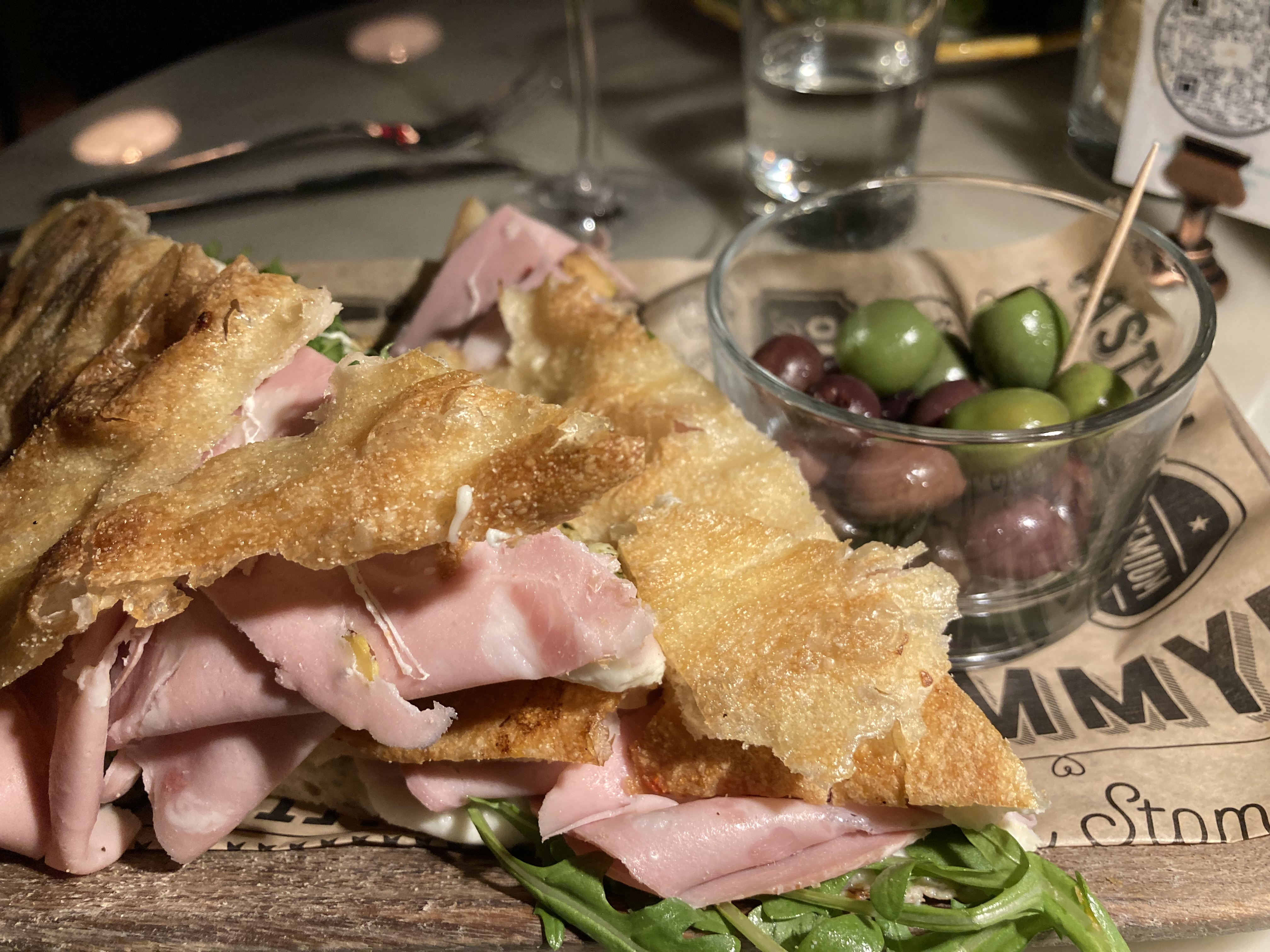
Here’s how to put together my mortadella panino:
First off you’ll want a good quality ciabatta, thin, crispy, and a little oily, sliced horizontally. For a single sandwich, Sogno Toscano uses a 7-inch square ciabatta that they cut, after filling it, into two triangles. That’s approximately what I used. If you can find only a really big ciabatta, just cut it to whatever size works for you. Toast the ciabatta lightly, and then drizzle a little good olive oil onto both insides. On one side I spread on a layer of ricotta (I used a sheep’s milk type I got at the farmer’s market, but high-quality cow’s milk is good too). On the other side I made a slightly thinner layer of my pistachio butter. Next you’ll want to drape on a few very thin slices of mortadella and top that with a handful of arugula leaves. Give it all a sprinkling of salt and some fresh black pepper. Close up the panino, slice it in half on an angle, and eat it warm. It’s especially good with a glass of Tuscan Vermentino, which is what I ordered at Sogno Toscano (I’d previously tasted only Sardinian versions). Its deep dryness played nicely against the fat in the mortadella and the olive oil–rich ciabatta.
If you’d like to visit the caffè, Sogno Toscano is at 17 Perry Street in the West Village, right off Seventh Avenue and around the corner from the Village Vanguard, the legendary jazz club. They serve mainly their beautiful panini, salads, and salume plates. They also have a few soups, breakfast pastries, desserts, and excellent wine. Their shattering-crust cannoli are filled at your table with sheep’s milk ricotta. So lovely.


 Erica De Mane
On the Vermentino subject. A couple of years ago, in the Sicilian restaurant Piccola Cucina Estiatorio, I was given a glass of Vermentino from Liguria that was exquisite !
Robert, It’s an interesting grape, for sure.