Feeds:
Posts
Comments

Archive for January, 2009

gottinoGottino’s charming storage cellar.

I finally got to Gottino.

Even though it’s one of the most talked about, best reviewed Italian wine bars in this restaurant-stuffed city, and is only a few blocks from my apartment, I hadn’t been able to bring myself to make it through the door. Gottino has been open for a little more than a year. I’ve walked by in early evening and seen a mob jammed around the bar, people pushing for space. The place was not for me. I don’t like loud, cramped eateries. I was, however, interested in trying some of chef Jody Williams’s potted terrines of salt cod, salmon, or chicken liver or pork. Those things appeal to me. I also liked the sound of her crostini selection.

The problem with a wine bar that serves serious food, as I see it, is that we’re not a tapas nation. We don’t snack at six and then eat a real dinner at ten or eleven the way they do in Spain. So when we go to a wine bar, we try to make a meal of it, and $40 worth of little nibbles later, not including wine (which at Gottino runs around $12 to $18 a glass), we may have managed to fill up, but mostly with salt and fat. These places always seem to me more like troughs than places for humans, who generally like to socialize when they eat. I thought, maybe I should just go to Gottino one evening all by myself and brave the crowd to taste stuff. That sounded lonely and depressing. Instead I decided to try lunch.

Not only is  lunch at Gottino uncrowded, but you get to see how pretty the little place actually is. When jammed with people, it looks like any other trattoria or bistro-in-a-box prefab restaurant in the city, nice but kind of soulless. But when you can actually see the walls and the floor, the space looks like it was fashioned by a real person, with mismatched seats and naturally weathered wine memorabilia. The wall across from the bar is decorated with white porcelain grandma platters, and over one of the little tables in the back are framed photos of Yogi Berra, Phil Rizzuto, and Joe Di Maggio, a touch you’d sooner expect at pizza parlor. But the place is elegant too, with a white marble-topped bar, something you’d find in Milan, and a gem-toned glass-fruit chandelier purchased from my friend Claude’s Provençal pottery shop a few blocks away.

Gottino is almost all bar, except for four little tables in the rear (each one laid out with a basket of walnuts and hazelnuts and a nutcracker, just like my grandfather used to always set out on his coffee table) and, beyond those, a small outside garden, which on the freezing day I was there was closed to humans but loaded with house sparrows and squirrels, hoping I’m sure to get an olive oil–soaked crust of toast (I threw a few out to them). There’s a downstairs wine and vegetable storage area that you go through to get to the bathroom. I found it unpretentious, filled in a naturally abundant way with stuff they really need, like  baskets of apples, walnuts, and butternut squash and cases of wine, stacked and stuck in every which way. It didn’t have the movie-set look you sometimes get in places that are trying hard to be rustico.

I arrived at about 1:30 p.m. There were a few singles at the back tables with laptops and platters of artichoke bruschetta and a few people sitting at the bar reading newspapers and drinking espresso. My sister and I took one of the little tables and cracked walnuts whose shells kept falling to the floor. Gottino at lunch, at least for the moment, is very peaceful.

The only problem with going there then is that I usually don’t like drinking wine at lunch, and since it’s a wine bar, you don’t really get the full experience unless you have a glass, at least. Actually nobody in there was drinking wine, except for a wine salesman and a few employees hovering around him for a tasting. Lots of coffee is served at lunchtime, and I have to tell you, anchovies taste really bad with cappuccino. Next time I’m having wine. I’ll pretend I’m on vacation.

The lunch menu focuses on good toppings on toast in various sizes, from crostini to bruschetta to panini, plus salads, a daily soup, a daily frittata, and, the day I was there, Gottino’s now-famous rabbit pot pie. You also can order salumi and cheese. You have to go in the evening to get the little pots of chicken livers or boar pâté and certain other small plates such as braised tripe.

I was happy to discover that the portions weren’t mini. I ordered a salad of pears, gorgonzola, and greens that was a good size, and they were very generous with their excellent gorgonzola. I also chose a crostini topped with artichokes seasoned with mint. My sister had lentil soup, vegetarian but richly flavored, and crostini with stracchino cheese, roasted grape tomatoes, and capers. She must have snatched up the last bowl of lentil soup; after her order the waiter announced to another table that the special soup was chestnut. The menu is cheese-heavy, just about everything including some type of cheese. That is fine with me, and all the cheeses I tasted were excellent, especially the stracchino, which was tangy and ripe. We also ordered a crostini with anchovies and butter (I can never resist anchovy anything on any menu). It was intense and delicious, but in the end I found I had requested a huge amount of food (I’m always afraid of not getting enough at a wine bar). I’m sure I would have been able to finish it all had I ordered a nice cool glass of Sicilian Grillo instead of the cappuccino.

I’d like to go back and try the smoked prosciutto, prune, and tallegio panini, and also the Brussels sprouts salad with pecorino and walnuts. I have to admit I like Williams’s style, as it reminds me of my own cooking, where I try to balance strong and gentle flavors in each dish, leaning on Southern Italian tastes. Even her signature walnut pesto crostini was something I had a version of in my last book. I wrote it way before her place opened, so you know I didn’t pilfer it.

Gottino
52 Greenwich Avenue (near Charles Street)
New York, N.Y.
(212) 633-2590

Read Full Post »

escarole1
A  fairly good-looking batch of  supermarket  escarole.

Recipe: Cavatelli with Shrimp, Escarole, and Parmigiano Breadcrumbs

Oh, where, oh where, has my Greenmarket gone? Oh, when will this long winter end? Yesterday I found myself pottering around in the chicory-related bins at my local supermarket, looking for something interesting to turn into dinner. Like many Italian-minded cooks, when I don’t know what to make I make pasta. The pastabilities are endless, as they say. Endless unless you’re having a cook’s block, which is what I momentarily experienced while starring down piles of wilted escarole.

Then I thought of my mother’s escarole with garlic and oil, a side dish she made often when I was a kid. I loved it. I’d get up in the middle of the night just to finish off any leftovers (it’s excellent heaped on top of a slice of cold pizza Margherita). It had the perfect balance of bitterness and greasiness, and with the slivers of garlic and the dried red pepper flakes she always added it was just about the perfect food. I asked the stock guy at the store where the escarole came from, and he actually knew. At least he gave me an answer. Florida, he said.

Okay, that’s not so far away, but how long has the escarole been sitting in this bin getting slimy? I didn’t ask him that. I didn’t need to. Must have been a long time, since escarole is pretty hardy. By now I just really wanted to taste escarole with olive oil and garlic again. I had settled on escarole as a component of the evening’s meal. It was a nostalgia issue. I tried not to look at the wilted, brown stuff that was before me. “Do you have any other escarole?” I asked. He smiled and opened up a big box sitting at his feet that happened to be filled with bright green, firm, crunchy, beautiful fresh escarole. What a weird world this is.

I guess the old stuff gets thrown out and replaced with newer stuff until the newer stuff gets wilty, and then that gets thrown out and then replaced again. What’s the matter with everyone? Don’t you know how delicious escarole is when gently sautéed with garlic and olive oil? What else are you supposed to eat in New York in the winter? Don’t ignore escarole. I tell you, it can make the cold months happier.

Damned, but what a waste all this wilty being tossed. I grabbed two huge fresh heads from the box (it really cooks down), trying not to think about all the wilted stuff,  and a package of cavatelli. Sounded good to me, but I sensed my husband and sister might find the resulting cucina povera dish too austere. So on my way out I picked up a pound and a half of shrimp. Pasta improvvisata time. Here’s my recipe. I hope it makes you happy.

The best way to cook up escarole: You can eat escarole raw in salad, and I love it that way, especially with a gorgonzola dressing, but it’s at its best cooked. I always give it a quick blanch in boiling salted water (very quick, about a minute), to rid it of some of its bitterness, and then plunge it into cold water to stop the cooking and bring up its beautiful light green color. Squeeze out as much water as possible, and then it’s ready for a quick sauté in good olive oil and whatever little extras you might like to add (pancetta, anchovies, olives, garlic, fresh chilies, pine nuts, raisins, fresh sausage, cooked cannellini beans). This way the escarole will be sweet and vibrant.

My grandmother, and just about every other old Italian lady I ever knew, would just throw escarole in a big pot with oil, way too much garlic, and a little water, and stew the life out of it until it was soft, gray, and depressing. That might have been traditional, but it’s not allowed anymore. I say so.

Cavatelli with Shrimp, Escarole, and Parmigiano Breadcrumbs

(Serves 4 as a main course or 6 as first course)

2 dozen large shrimp, peeled and deveined, but keep the shells
Extra-virgin olive oil
½ cup dry white wine, plus a little extra for sautéing the shrimp
1 cup chicken broth
Salt
2 large heads escarole, cut into small pieces
3/4 cup dry breadcrumbs, not too finely ground
½ cup grated Parmigiano Reggiano cheese
Freshly ground black pepper
Dried hot red pepper (I used Aleppo, which is only medium spicy)
A generous pinch of sugar
1 pound cavatelli pasta
1 large shallot, finely chopped
2 garlic cloves, thinly sliced
5 large sprigs thyme, the leaves lightly chopped
A big squeeze of lemon juice

In a small saucepan, heat a tablespoon of olive oil over medium heat. Add the shrimp shells, and sauté them until they turn pink, about 2 minutes. Add the white wine, and let it bubble for about 2 minutes. Add the chicken broth and water, if needed, to just cover the shells, season with a little salt, and cook at a lively bubble for about 10 minutes. Strain the shrimp broth into a small bowl, and set it aside.

Bring a large pot of pasta cooking water to a boil. Add a generous amount of salt. Drop in the escarole, and blanch for one minute. Scoop out the escarole into a strainer, using a large strainer spoon, and run cold water over it to bring up its green color. Squeeze out as much water as you can.

In a small sauté pan, heat a tablespoon of olive oil over medium heat. Add the breadcrumbs, and sauté until crisp, about a minute. Season with a little salt. Let the breadcrumbs cool to room temperature, and then mix in the Parmigiano Reggiano. Put this in a little bowl.

Put the shrimp in a bowl, and season well with salt, black pepper, some hot red pepper to taste, and the sugar. Toss well.

Bring the water back to a boil, and drop in the cavatelli.

In a large skillet, heat about 2 tablespoons of olive oil over medium heat. Add the shallot, and sauté until softened, about a minute or so. Add the garlic, and sauté a minute longer. Add the escarole, season with salt, black pepper, and the thyme, and sauté about 2 minutes. Add the shrimp broth, and let simmer briefly. In a smaller skillet, heat a tablespoon of olive oil over high heat. When hot, add the shrimp, sautéing quickly until it’s just tender, about 4 minutes. Add a splash of white wine, and shake the skillet. Pour the shrimp into the escarole.

When the cavatelli is al dente, drain it, leaving a bit of cooking water clinging to it, and pour it into a large serving bowl. Pour on the escarole and shrimp sauce. Add a drizzle of fresh olive oil, and toss gently. Adjust the seasoning, adding more salt or black or red pepper, if desired. Serve hot, with a tablespoon or so of the Parmigiano breadcrumbs sprinkled on each serving.

Read Full Post »

chicken-soup-2

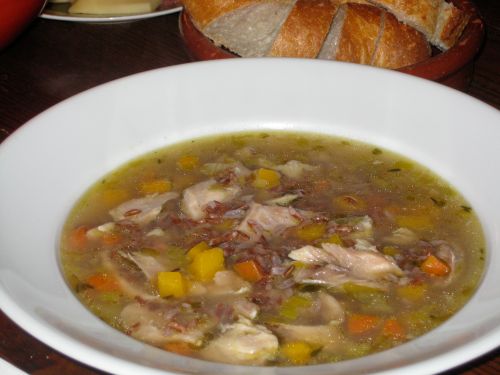
Recipe: Chicken Soup with Red Italian Rice

I love colored rice. I’ve cooked with the firm, pitch-black Forbidden rice from China and the deep red, short-grained variety from the French Carmargue. These are startlingly beautiful foods with deep flavors. Italian colored rice didn’t figure into my cooking until very recently, I think because I tend to focus on Southern Italian flavors, and rice is a northern crop. Ignoring it was a big mistake and very snobby on my part.

On a recent browse through gustiamo.com, my favorite online Italian food import shop, I fixated on several new offerings of darkly colored rices from Pacifico Crespi, an old, rice producing family in the Piemonte. Like the perfect lipstick shade I’ve just set my eyes on, I had to have them. Venere Nero (black Venus) cooked up a beautiful dark purple and smelled divine, like toasted wheat or popcorn. I used it to make Black Rice with Shrimp, Guanciale, and Rosemary, but then I forgot about the bag I’d ordered of Rosso Integrale, a red variety (really a rich mahogany color), until yesterday, when I was hunting around in my pantry for something glamorous to add to a chicken soup. There it was, waiting, in its tight, air-sealed package, looking like a bag of garnet chips. I cooked some up, and the aroma was wheaty and commanding.

Good chicken soup glistens with a shimmer of golden chicken fat. I like mine to taste rich and deep, with no eccentric edges of lemongrass or searing hot chili, so I fashioned it on the mellow side, adding some diced butternut squash, carrot, vermouth, sage, lots of fresh black pepper, and the gorgeous mahogany rice from Piemonte. The nuttiness and crunch of the rice disturbed the soup’s mellowness in a subtle way. It looked and tasted like a mild winter night, which was exactly when I served it.

A really easy chicken broth:

I know most people don’t really want to hear this, but the key to a good chicken soup is a good chicken broth, which usually means one that’s homemade. Lately I’ve been making an excellent broth using the picked-over remains from a roasted chicken—either one I’ve roasted myself or a good one purchased from a decent grocer that uses free-range birds. Ideally, for the best flavor, the carcass should have a little meat left on it. I just crack the thing into a few large pieces and stick it in a pot along with whatever soffrito and herb ingredients I’ve got hanging around—usually a carrot, some type of onion trimmings, celery leaves, parsley leaves, thyme, fennel fronds. I drizzle in a little olive oil and sauté everything for a few minutes, and then add a splash of Marsala or white wine, letting it boil away. Next I just cover the bones and whatever meat I’ve got there with water and put it on a lively simmer, uncovered, for about an hour and 15 minutes. Strain, and there it is, ready to use or freeze. Add salt and pepper now, or wait until you want to use it. This usually makes about three cups of medium-strength broth. You can boil it down to concentrate it if you like, making it more convenient for freezing.

Chicken Soup with Red Italian Rice

(Serves 4)

¾ cup Italian red Rice
Salt
2 tablespoons extra-virgin olive oil
1 ¼-inch-thick, round slice of pancetta, cut into small dice
3 whole chicken legs
1 large leek, well cleaned and cut into small dice, using only the tenderest green part
2 small carrots, cut into small dice
1 celery stalk, cut into small dice, plus a handful of celery leaves, lightly chopped
1 garlic clove, thinly sliced
About 5 thyme sprigs, the leaves chopped
5 sage leaves, lightly chopped
A few big gratings of nutmeg
Salt
Freshly ground black pepper
¼ cup dry vermouth
1 quart of homemade chicken broth
1½ cups butternut squash, cut into small cubes
A few drops of good red wine vinegar

Put the rice in a small saucepan and cover it with about 4 inches of cool water. Add some salt, and bring it to a boil. Turn the heat down to a medium simmer, and cook, uncovered, until the rice is just tender, about 30 minutes (the package says 40 minutes, but I found that with this method it was ready after 30). Drain the rice, and set it aside.

In a big soup pot, drizzle in the olive oil. Add the pancetta, and sauté over medium heat until crisp. Add the chicken, the leeks, carrot, celery and leaves, and garlic. Sauté until everything is fragrant and just starting to brown a bit. Add the thyme, sage, and the nutmeg, and season with salt and black pepper.

Add the Marsala, and let it bubble for a minute or so. Add the chicken broth and about a cup of water. Bring to a boil. Now turn the heat down and simmer, partially covered, until the chicken is tender, about ½ hour. Take the chicken from the pot. Add the butternut squash, and let it cook, uncovered, until tender, about 6 or 7 minutes.

When the chicken is cool enough to handle, remove the meat and add it to the pot, along with the rice. Heat gently for about 3 or 4 minutes, just to blend all the flavors. Skim the top of excess fat and gunk. Add a few drops of the vinegar. Taste for seasoning, adding more salt or black pepper if needed. Serve hot.

Read Full Post »

spare-ribs

Recipe: Pork Spare Ribs Braised with White Wine, Rosemary, Cinnamon, and Pine Nuts

There are many things I don’t understand about myself, but one thing I do know is that I will always find fulfillment cooking with the flavors of Southern Italy, the flavors of my heritage.

New York is not Southern Italy, despite the many Italian immigrants who have chosen to live here. New Yorkers have a completely different temperament from the people I’ve met in Sicily, with their sternness, their secrecy, or from many of the people of Naples, who seem bold and funny in contrast. These are clichés, but you know they must hold truth since you can see the reflection of them in those people’s cooking. I must have snippets of the Puglian and Sicilian temperaments, but I’m not sure what the hell they are. Growing up in New York you get hammered from every angle, so you wind up acting quite unlike your parents. Every conceivable attitude walks these streets. Knowing this about where I live, you’d think we’d always serve up insanity on a plate, and you can get that in some restaurants, but the reality is that most New York cooking is fairly orderly, with discernible roots. I know Italian-Americans who just continue to cook a handful of old family dishes over and over again, always exactly the same. Their food is wonderful to eat, but that’s not how I ever wanted to cook. That’s real Italian. What I turn out is purely Italian-American.

Here’s a hybrid creation for you to ponder: spare ribs with Sicilian flavors. In all my travels throughout Sicily, I’ve never once encountered spare ribs. I don’t know why, exactly. Possibly they consider them uncouth, since you’re so tempted to pick them up and eat them with your fingers (Sicilians use a knife and fork to eat an apple). The texture and taste of slow-cooked pork spare ribs is fabulous, so rich, so juicy, but I have never been crazy about the sticky, dark red New York–style barbecue sauce they come covered with around here. I put that clunky dish out of my mind, and instead I borrowed flavors from a Sicilian lamb dish I first tasted near Trapani, a Sicilian city  steeped in Arab culture. The Trapanese make a gentle use of sweet spices, nuts, and even couscous. The dish I tasted there was lamb shoulder braised in white wine, tomato, cinnamon, bay leaf, nutmeg I think, mild garlic, and a whiff of rosemary. It was wonderful and has stayed firmly planted in my culinary head for years. I am very happy to discover that it works really well with tough, fatty supermarket spare ribs.

I thought the perfect thing to serve with these ribs would be polenta, but I didn’t have any in the house, so I cooked up some barley and tossed it with a little olive oil and Grana Padano. Not bad. Polenta would have been better, though. I also made a side of chili-spiked broccoli rabe. It was a good meal for a snowy New York evening.

Pork Spare Ribs Braised with White Wine, Rosemary, Cinnamon, and Pine Nuts

(Serves 4)

½ teaspoon each of ground allspice, ground cinnamon, sugar, salt, black pepper, and Aleppo pepper
4 pounds pork spare ribs
Extra-virgin olive oil
1 round slice pancetta, ¼ inch thick, chopped
1 large shallot, diced
2 garlic cloves, thinly sliced
1 bay leaf
½ a cinnamon stick
4 sprigs rosemary, the leaves chopped
1 large wine glass of dry white wine
1 15-ounce can San Marzano plum tomatoes, chopped, with the juice
½ cup chicken broth
A handful of lightly toasted pine nuts

Mix all the spices together in a large bowl. Add the spare ribs, and toss them around with your hands until they’re well coated with the spices.

Preheat the oven to 325 degrees.

Set out a rectangular baking dish that will hold the ribs in one layer.

Heat 2 tablespoons of olive oil in a large skillet over medium-high heat. When the oil is hot, brown the spare ribs on both sides (do it in batches if necessary). Place the browned ribs in the baking dish.

Pour most of the oil out of the skillet (if it has become too burned, you’ll need to wipe it out). Add the pancetta, and let it get crisp. Add the shallot, and sauté until softened. Add the garlic, and let it sauté a minute, just to release its aroma. Add the bay leaf, cinnamon stick, and rosemary, and sauté a minute. Add the white wine, and let it bubble for a minute or so. Add the tomatoes and the chicken broth, and let bubble for about 3 or 4 minutes. Season with salt and black pepper. Pour the liquid over the ribs. The liquid should just about cover them (if it doesn’t, add a little more chicken broth or water).

Cover the dish tightly with aluminum foil, and place it in the oven until the ribs are very tender, about 2½ to 3 hours.

Take the ribs from the baking dish, and arrange them in a large, shallow serving bowl. Degrease the cooking liquid. Reheat the sauce briefly, and pour it over the ribs. Garnish with the pine nuts. Serve hot.

Read Full Post »

water-cure
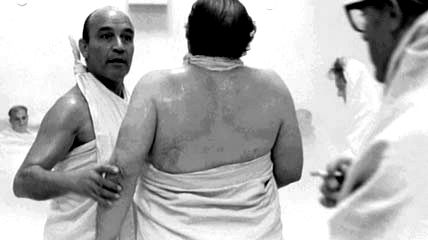
Taking the waters in Fellini’s
(notice  Marcello, right, with his cigarette—so perfect in a spa and such a nice pairing with the gallons of mineral water he has to drink).

Recipe: The Fizzerino

A friend of mine who wants to whittle down her stomach fat has just switched from vino to vodka with a calorie-free mixer. Wine is beautiful, but it can be fattening when consumed in the quantities I usually favor. An ample glass of wine contains between 120 and 150 calories, depending on the alcohol level. The more alcohol, the more calories. (Isn’t that interesting? I always thought more sugar meant more calories, but that doesn’t seem to be the case.) A vodka and seltzer made with a little less than a shot of booze has 60 to 75 calories, again depending on the proof. That doesn’t seem like a huge difference, but for me and for many of my fellow wine drinkers, calories aren’t even the main issue. The real problem is that wine is an appetite opener par excellence, allowing you to eat much more dinner or lunch than you normally would, just because every bite tastes so much better with a sip of wonderful wine (or even of so-so wine, for that matter).

I generally start drinking a little wine when I begin cooking dinner, and then I continue with it through the meal. This habit has allowed me to polish off almost an entire bottle before getting to the main course. At about 650 calories per bottle, that is definitely not a diet-friendly practice any way you look at it.

Italians don’t often drink hard booze or wine before dinner, except maybe sometimes a glass of white. A light aperitivo is the rule, and then on to the wine, in the dreaded moderation, during dinner. Americans have a problem with moderation. I suppose that’s why many Italians consider us barbarians. As if the Italians weren’t already irritatingly moderate enough, I recently read in the magazine La Cucina Italiana that trendy Italians now feel an acceptable alternative to their aperitivo of Cynar and soda is a glass of very fancy, sparkling mineral water, one just a little bit fancier than would show up on their dinner table. With no alcohol. That would require a high level of discipline for an American, especially in an uncomfortable social situation.

I’ve given this some thought and come up with I believe  a good middle ground, an American alternative. I’ve invented the elegant but practical fizzerino, diet drink supreme (well, not invented it, exactly, but I’m proposing that it’s fresh and relevant again). It’s a drink that allows you to act a little like a haughty Italian but, in true American fashion, you get to sneak some booze into it.

Try my fizzerino as a diet aperitivo. That’s a good place to start. It has far fewer calories than a Long Island Iced Tea. If you really want to keep the calories under control, stick with the fizzerino through dinner, unless you’re sure you can trust yourself with the vino. Two fizzerinos is a reasonable number, about 120 to 130 calories, but you’ll want to design dinners around this austere drink. It’s great with oysters and not bad with linguini with white clam sauce, or grilled sardines served over salad, but I have to tell you, it’s absolutely disgusting with a pork ragu, or with grilled pork sausages, turning the usually appealing mineral tastes in the water into rusted metal. It works a little better with beef. It’s not a bad match with a Southern Italian style tomato sauce, especially one spiked with olives, capers, or anchovies .

I suppose everyday San Pellegrino water is not considered fancy enough in Italian circles as an aperitivo, but in this country you take what you can get. Other somewhat chic Italian sparkling waters you might want to try are La Lolla, from the Alps, Sole, Fiuggi, Ferrarelle, and San Benedetto. They all have varying mineral makeups and bubble intensity, providing nuanced differences to your fizzerino. Personally I really like San Pellegrino, with its pronounced mineral taste and medium-fizz sparkle.

What I try to stick to now is one fizzerino as an aperitivo, dragging it out into the beginning of dinner, and then one glass of wine (it would be a sin not to have any wine). When that glass is done—this is the hard part—instead of having more wine, I’ll reach for the bottle of sparkling water (and boy does that fizzy water put a  welcome damper on my appetite, allowing me to wind down naturally). It’s hardly as much fun as polishing off an entire bottle of wine with dinner, but my waistline thanks me.

The Fizzerino

Fill a tall glass with ice (of course, Italians would never use ice, but since this is an Italian-American invention, it’s allowed). Pour in a little less than a full shot of vodka. Fill the glass with the Italian sparkling mineral water of your choice.  Drop in a lemon slice. Try to drink it slowly.

Read Full Post »

sformato-1
My sformato in its mold.

Recipe: Sformato of Ricotta with Mint, Parmigiano, and Lemon

When cold weather comes I begin cooking food in neat packages. My tart rings, gratin dishes, and casseroles get pulled out and used to create dishes with boundaries. Those dishes somehow seem more attuned to winter than loose food, nonchalantly chopped and left to scatter or pool over a plate, like wedges of fresh tomato slicked with olive oil. In colder weather I want to know where my food begins and ends. So I decided to go formal Italian and make a sformato.

The word sformato means a food, usually a savory custard, that’s been cooked in some kind of mold and then freed of its mold. The verb formare means to form. Sformare means to pull out of shape, which is pretty much the opposite of what happens with a sformato. But sformare also means to unform or  to unmold, and that’s why this  tidy little food form is called what it is. I’ve made sformati using morels, chicken livers, cauliflower, and—a particularly memorable one—eggplant (I’ll have to try duplicating that some time). I like to end up with a texture that’s somewhere between a soufflé and a custard. That’s how it’s most often done in Italy. The goal is to be able to unmold the thing, and you can’t really do that with a delicate soufflé.

You may think of molded foods (outside of Jell-O) as usually loaded with cream and fat. That’s much less true in Italian cooking than in French or American. You can use a béchamel as a base for a sformato, the way you would for a soufflé, but Italy is lucky enough to have ricotta to work with, a sweet, fluffy, relatively low-fat cheese that can be mixed with all types of flavorings. Take it and an egg or two and concoct the sformato improvvisato of your desires. I knew I wanted to use ricotta this time around (for a foolproof recipe for homemade ricotta see my post here).

To accompany my ricotta, I borrowed flavorings from a pasta dish I often make in cold weather, a fattening mix of tagliatelle, cream, Parmigiano, tons of lemon zest, and black pepper (see page 158 of my book Pasta Improvvisata for a recipe). I replaced the cream with ricotta and added a handful of mint. I’m really happy with the taste and texture of my new sformato. I’ve served it cut into wedges as an antipasto offering, along with a bowl of black olives and glasses of Verdicchio dei Castelli di Jesi from Le Marche, a white wine with strong fruit flavors. But then I noticed it moving from the coffee table to the dinner table, alongside our next course, my mother’s pasta e fagiole. My sister Liti crumbled up pieces of the sformato and sprinkled them on top of her pasta. Excellent idea, Liti.

sformato-21My sformato demolded.

________

Sformato of Ricotta with Mint, Parmigiano,  and Lemon

(Serves 6 as an antipasto)

I used a seven-inch springform pan for this.

¼ cup dried breadcrumbs, ground but not too finely
1 teaspoon extra-virgin olive oil
Salt
Freshly ground black pepper
1 tablespoon soft butter
2½ cups whole-milk ricotta
3 large eggs, separated
¾ cup grated Parmigiano Reggiano cheese
⅛ teaspoon ground nutmeg
The grated zest from 1 large lemon
1 tablespoon limoncello
6 large mint sprigs, the leaves chopped
6 large flat-leaf parsley sprigs, the leaves chopped

Preheat the oven to 350 degrees.

Mix the breadcrumbs with the olive oil, and season with salt and black pepper. Coat the springform pan with the soft butter, and then add the breadcrumbs, tapping them around to coat well the inside of the pan. Set the pan in the refrigerator while you work on the rest of the recipe.

Put the ricotta and the egg yolks in a large bowl. Add the Parmigiano, nutmeg, lemon zest, and limoncello, and season with salt and a generous amount of black pepper. Beat briefly with a handheld mixer, until fluffy.

Wash the mixer beaters very well to remove any oil. Place the egg whites in another bowl, and beat until they form stiff peaks. Add the mint and parsley to the ricotta mixture, and then gently fold in the egg whites.

Pour the mixture into the mold, and place it on a baking sheet. Bake until browned, puffy, and rather firm to the touch, about 70 minutes. Let the sformato come to room temperature. It will shrink considerably. Unmold. To serve, cut into thin wedges.

Read Full Post »

Winter Pizza

pizza

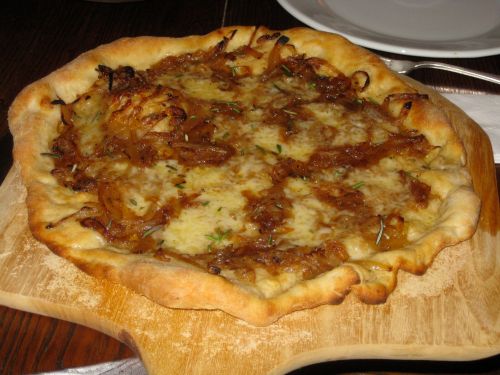
Recipe: Pizza with Rosemary Onions and Fontina Valle d’Aosta

I never used to like making pizza at home, mainly because it seemed so difficult. This, I’m happy to say, is no longer true. I’ve overcome my resistance, and I now turn out a fairly authentic, crusty, pully pizza that I’m proud of. But I’ve learned that you’ve got to start out with the right equipment. I’ve never been one for fancy kitchen utensils, but when it comes to pizza making, they’ll save you a lot of frustration.

For me the biggest technical challenge in producing an authentic and nice-looking pizza at home is having a large enough pizza stone, so that when you slip the pizza into the oven from your peel (the big spatula the pizza goes into the oven on—got to have one of those, too), it doesn’t go shooting over the undersized stone and into the back of the oven, folding up and dripping all over, making a big, smoky mess. That used to happen to me a lot, and it was very discouraging. I finally broke down and bought something big and sensible. Get a big stone. It will really help. A big rectangular one, not some measly round thing the same size as the pizza you’re making. And, second, don’t be stingy with the cornmeal. You’ve really got to coat your pizza peel with plenty of coarse cornmeal or semolina (although semolina burns faster), so that while you’re scattering on your anchovies, tomato, candy corn, what have you, the dough doesn’t start adhering to the peel, making a trouble-free slide to the stone virtually impossible. (I’ve tried using regular flour, but it soaks into the dough too quickly.) Without a dry base for your dough to slide on, you wind up using so much back-and-forth action trying to coax the stuck pizza off the peel that a disaster is inevitable. I hate when that happens, but it doesn’t have to.  Making pizza can really be fun. I promise you.

I like to come up with pizza toppings I can’t necessarily get at pizzerias, usually trying ones without tomato and without mozzarella, just for the hell of it, but there’s a fine line between improvisation and stupidity when it comes to creative cooking. I’m not a fusion girl. When I mix it up, I mix it up only with Italian flavors, maybe straying from regional tradition but not from what most Italians would recognize as  familiar tastes.

Winter is not the most exciting time for conjuring up newfangled pizza toppings, but, hey, we’ll always have cheese and onions ( I hope). With this thought in mind I’ve gone about making a tomatoless pizza with a rather Northern feel, perfect for the miserable New York weather I’m now experiencing. I’ve chosen Fontina, the nutty, sweet, easy-melting raw cow’s milk cheese from the Italian Alps. I caramelized the onions, but then I discovered that they together with the sweetish Fontina made my first version of this pizza a little too sweet. Second time around I added a drizzle of Spanish sherry vinegar to the onions. It made all the difference for the balance of flavors.  I hope you’ll enjoy it. And don’t forget to jack up your oven to the highest possible temperature, so you get those good slightly burned edges that are so delicious.

Pizza with Rosemary Onions and Fontina Valle d’Aosta

(Makes 2 approximately 10- to 11-inch pizzas)

For the dough:

1 packet active dry yeast
1 teaspoon honey
1 tablespoon extra-virgin olive oil, plus more for the bowls
3 cups all-purpose flour, plus a little more for kneading
1 teaspoon salt
About ½ cup coarse cornmeal or semolina flour

For the top:

2 tablespoons olive oil
2 Vidalia onions, very thinly sliced
Salt
Freshly ground black pepper
1 teaspoon sugar
3 whole allspice, ground to a powder
4 small sprigs fresh rosemary, the needles chopped, plus a little extra for garnish
½ cup dry Marsala
1 teaspoon Spanish sherry vinegar
½ pound Fontina Valle d’Aosta cheese, sliced

In a large bowl, dissolve the yeast in ½ cup of warm water. Add the honey and the tablespoon of olive oil, give it a stir, and then let sit until the yeast is foamy, about 8 minutes.

Add half of the flour and the salt, stirring it into the yeast. Add the remaining flour, and then gradually add about ¾ cup of tepid water, mixing until you have a soft, sticky, ragged ball of dough.

Flour a work surface, and turn the dough out onto it. Knead, adding little sprinklings of flour when necessary to prevent sticking, until the dough is smooth, about 8 minutes. Cut the dough in half. Pour a little olive oil into two large bowls, and drop a dough ball into each one, coating the dough lightly with the oil. Cover and let rise until the dough has doubled in size, about 2½ to 3 hours.

In a large skillet, heat the two tablespoons of olive oil over medium-low heat. Add the onions, salt, black pepper, the sugar, the allspice, and the rosemary. Sauté slowly until the onions start to turn golden, about 15 minutes. Now add the Marsala, and let it slowly boil away until the onions are moist but there’s no obvious liquid in the skillet. Add the vinegar and give it a good stir.

Put your pizza stone in the oven, and turn the heat up as high as it will go. Preheat for at least 15 minutes.

Flour a work surface, and turn out one of the dough balls onto it. Flatten it down with your hands to form a disk. Now roll it out into an approximately 10- or 11-inch round (it can be a little free-form, as in the photo above). Scatter an ample amount of corn meal or semolina on your pizza peel, and then transfer the dough over to the peel. Top with half of the onions, spreading them out to about an inch from the edge of the dough, and then place the Fontina on top. Scatter on a little of the fresh rosemary, and add a few grindings of fresh black pepper. The faster you do this, the less likely  your dough will start to stick. Gently slide the pizza onto the stone, ideally in one swift movement (when you get choppy and hesitant about it, you will run into trouble).

Bake until it’s lightly charred on the edges and bubbling in the center, about 12 to 15 minutes. Make another pizza in the same manner.

Read Full Post »

Family Meal

chicken-cacciatore

Recipe: Chicken alla Cacciatora with Black Olives, Crème Fraîche, and Thyme

After a string of holidays, I want nothing more than to dispense with the menu planning and just wing it, creating meals out of whatever is in the house, in true improvisational fashion. This type of cooking always reminds me of what it was like making “family meal”—i.e., the staff meal—when I worked in restaurants, where I was always told to use up what was on its way out anyway. Except that my family doesn’t consist of 20 Colombians all grumbling that my food is not cooked enough (they like their meat ‘hammered’) , or not spicy enough (they like their food incendiary). I’d watch these guys empty an entire bottle of Trappey’s hot sauce over my quickie coq au vin. It was wounding to my fledgling culinary self-esteem.  In any case, whether it’s appreciated or not, that kind of cooking is always liberating.

Last night I found I had a can of San Marzano tomatoes, a three-and-a-half-pound chicken, and various holiday leftovers in my refrigerator, such as several big containers of black olives, a mess of  dry, curling prosciutto (how did I let that happen?), some double- smoked cod, a couple of salami chunks, a  lump of pancetta, various dried-out herb branches, a couple of quarter bottles of dead wine, and a half-full tub of crème fraîche. Crème fraîche is an ingredient I almost never have on hand, but I had bought it to go with a little jar of caviar a friend was nice enough to bring to my Connie Francis theme tree-trimming party. I assessed all this food build-up and decided to cook up a chicken cacciatore, and to construct it in a newfangled way. My little group of diners declared the dish a hit (my family is, thankfully, much more accepting than most restaurant staff). Here I offer it to you, for your own family meal:

Chicken alla Cacciatora with Black Olives, Crème Fraîche, and Thyme

(Serves 4)

½ cup all-purpose flour
Salt
Freshly ground black pepper
4 allspice, ground to a powder
1 approximately 3½-pound chicken, cut into 8 pieces
Extra-virgin olive oil
1 tablespoon butter
1 ½-inch-thick slice of pancetta, cut into small dice
1 large shallot, minced
1 garlic clove, thinly sliced
1 small glass dry white wine
1 28-ounce can San Marzano plum tomatoes, well chopped and lightly drained
½ cup chicken broth
1 bay leaf
A branch of fresh thyme, the leaves chopped
A small handful of black olives, pitted and halved (I used Gaetas)
1 heaping tablespoon crème fraîche

Mix the flour, salt, black pepper, and ground allspice together on a large plate. Dredge the chicken pieces in it, shaking off any excess.

In a large sauté pan, heat a tablespoon of olive oil with the butter over medium heat. When hot, add the chicken pieces, and brown them well on both sides. Remove the chicken from the pan, and pour out the excess oil (not all of it, though; you want a little chicken grease in the dish). Add the pancetta, and sauté until crisp. Add the shallot, and sauté for a minute or so to soften it. Add the garlic, and sauté for a few seconds to release its flavor. Add the white wine, and let it boil away. Add the tomatoes and the chicken broth, and season with salt, black pepper, the bay leaf, and the thyme. Simmer, uncovered, at a lively bubble for 5 minutes. Return the chicken to the pan, and simmer, covered, at a low heat for about 12 minutes. Remove the white meat from the pan, and continue cooking, covered, until the legs and thighs are just tender, about 10 minutes longer.

Return the white meat to the pan, and add the olives and the crème fraîche, giving it a good stir. Turn off the heat, and let everything just sit there, uncovered, for about 15 minutes. This will allow all the flavors to continue mingling and let the sauce thicken a bit. It will also further cook the chicken in a very gentle way just in case there may still be a bit of pink at the bone.

To serve, gently reheat, uncovered, spooning the sauce over the chicken. Taste for seasoning, adding more salt or black pepper if needed.  Add a drizzle of fresh olive oil, and serve directly from the pan, accompanied by polenta, orzo, or rice, if you like.

Read Full Post »

deluise
Dom DeLuise, a keeper of the flame.

I’d like to propose a toast to every Italian-American home cook, chef, and gourmand who works hard each day keeping Italian cooking fresh and vibrant  in the U.S.A.  Keep creating the dishes and the amazing aromas that allow our beautiful culinary heritage to thrive here in such a relevant way. Here’s a negroni to you. Happy New Year.

Read Full Post »