Feeds:
Posts
Comments

Posts Tagged ‘vegetarian’

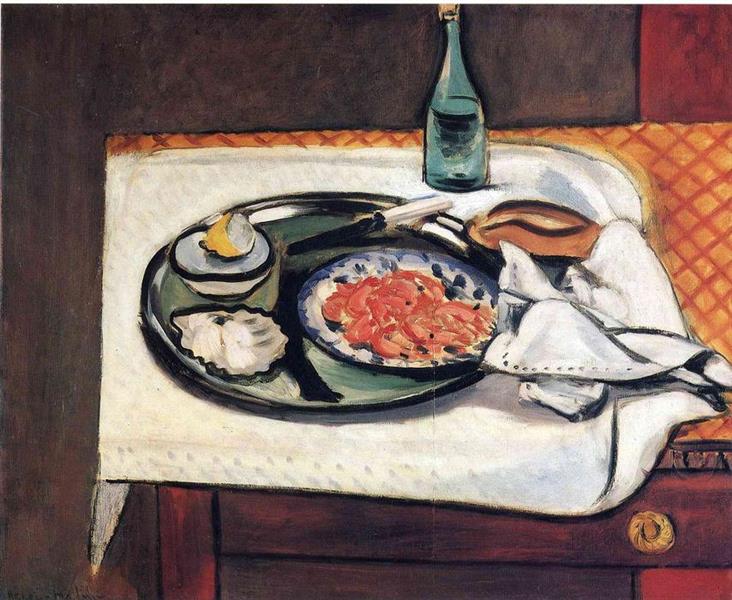
Pink Shrimp, by Henri Matisse, 1921.

Recipe below: Shrimp Tagine with Tomato, Ginger, and Fennel

Mums are out, the ugliest flower in the Northeast (and they smell bad, too).  They are the first sign that summer is closing down. (Pumpkins are next.)

Mums and Pumpkins, by Yulia Nikonova.

But the weather is still fine, 83 today and not too humid. You can see the first signs of leaves going burnt orange, and some of my herbs are getting crispy around the edges, the basil just developing that late season cat-piss smell that makes me nervous. My fennel has gone to seed, but that’s a good sign. I like to dry the seeds and use them fresh-dried. Much better than most of the dead stuff you get at a supermarket. The aroma of my newly plucked seeds brings back a memory of a shrimp-and-fennel tagine recipe I found many years ago in Flavors of Morocco, by Ghillie Basan. I’ve made her version several times, and it’s lovely, incorporating many of my own favorite flavors like saffron, fennel, and smoked paprika. This time around I’ve, of course, fiddled with it. Not too much. Just enough to own it.

This dish is a cross between a Moroccan tagine and what I’d call an Andalusian cazuela de pescado.  From Tarifa, in Southern Spain, Tangier is just a one-hour ferry ride across the water, as I learned a few years back when I took that route myself. Spanish culture infiltrated Tangier during an occupation that lasted from the nineteenth century to the mid-twentieth. Many people in Tangier speak Spanish, and I saw churros being sold on the streets. Bisteeya, the Moroccan pastry filled with pigeon, almond, and warm spice, has Andalusian origins. So a dish like this tagine is a natural.

I’ve removed the cilantro from the original recipe, because I find cilantro revolting. I love Moroccan food, but not its use of cilantro. They put it in almost everything. I’ve gotten around it by substituting mint or basil, or parsley, or a mix of oregano and parsley, depending on the recipe. Here I’ve replaced it with Thai basil, which is still growing well on my deck and hasn’t gone to cat piss like the Genoa variety.

The end of summer is a bittersweet time for most cooks. I try not to let it slip through my fingers. Here in New York we’ll have tomatoes and fresh fennel and garlic until probably early October, and many of my herbs will hold on until it gets solidly cold. They’re mostly rugged  Mediterranean creatures.
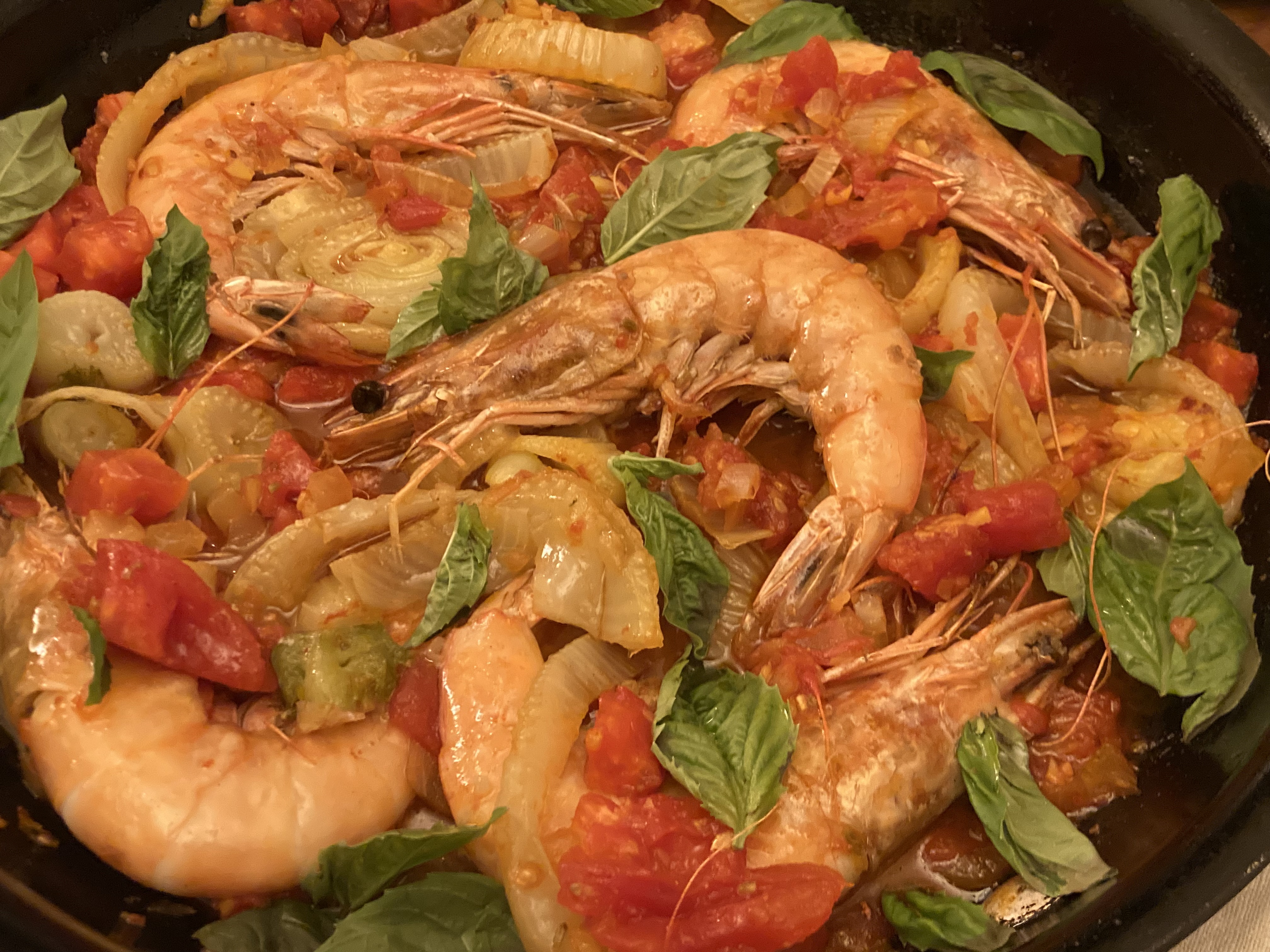
Shrimp Tagine with Tomato, Ginger, and Fennel

3 fennel bulbs, trimmed and thickly sliced lengthwise
Extra-virgin olive oil
Salt
1 medium sweet onion, diced
2 summer garlic cloves, sliced
1 1-inch chunk fresh ginger, minced
1 teaspoon ground fennel seed
½ teaspoon sweet pimentón de La Vera (sweet smoked Spanish paprika)
3 large summer tomatoes, peeled, chopped, and lightly drained (hold on to the drained water)
½  teaspoon dried saffron threads, ground to a powder and dissolved in a few tablespoons of warm water
1 tablespoon honey
12 extra-large shell-on shrimp, three per serving (if you can find head on, that’s best, and it’s what I used)
A splash of dry sherry
15 Thai basil leaves, lightly chopped

Preheat the oven to 375 degrees.

Place the fennel slices on a lightly oiled baking dish or sheet pan. Sprinkle on a little water, drizzle with olive oil, and season with salt. Cover with aluminum foil, and roast until tender, about 30 minutes. Give one slice a poke with a sharp knife to make sure they’re done. Take them from the oven and pull off the aluminum foil.

Get out a large sauté pan, and drizzle in some olive oil. Turn the heat to medium, and add the onion. Let it soften for a minute or so. Add the garlic, ginger, fennel seed, and pimentón de La Vera. Add the fennel slices, and sauté for everything a minute or so, turning the fennel slices over once to coat them with seasoning. Add the tomatoes, the saffron water, and the honey, season with salt, and simmer at a low bubble for about 5 minutes.

Get out another large sauté pan, and set it over high heat. Season the shrimp with a little salt.  Drizzle some olive oil into the pan, and add the shrimp, searing them quickly on one side, about 2 minutes. Turn them over with tongs, and sear the other side for another minute or so. Add the splash of sherry, and let it bubble away. Lift the shrimp into the fennel tomato sauce, along with any pan juices.  Give everything a gentle stir, and warm it through on low heat for about another minute. If it seems too tight, add a little of the tomato water. Add the Thai basil (or regular basil, if you prefer). Serve hot.

I must add that I find it extremely important to support food distribution in Gaza any way I can right now. World Central Kitchen is trying hard to increase its food production to reach as many people as possible. If you’d like to help them out, either as a volunteer or with financial support, here is their link.

Read Full Post »

Dates, Pomegranate, and Persimmon with Silver Cup, by Julian Merrow-Smith.

Here we are in full-blown New York summer. I love the solid heat, the exciting thunderstorms, the rainbows, and, most of all, the produce the wild weather unleashes. Which means it’s ciambotta time.

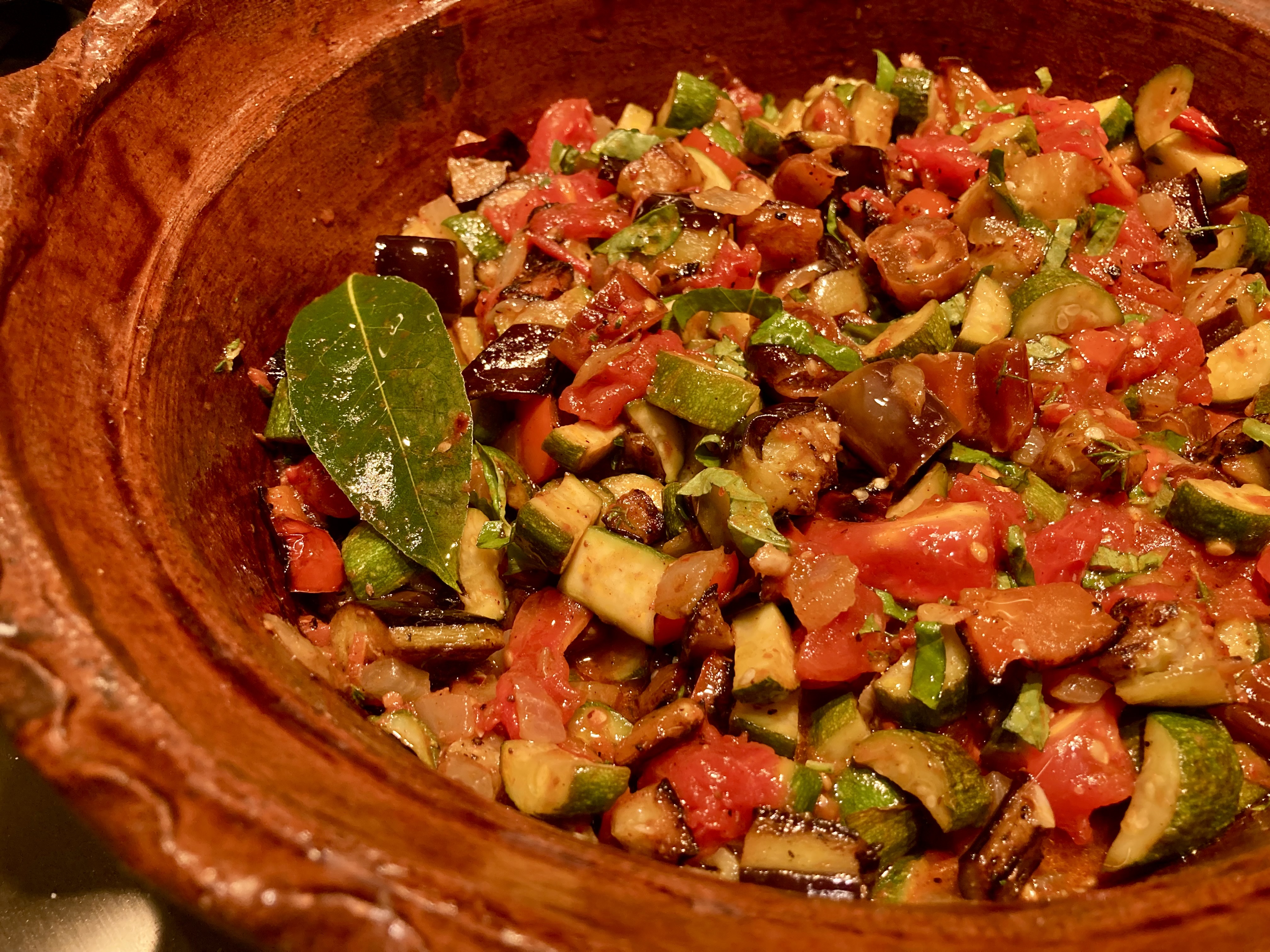
Ciambotta is Southern Italy’s version of ratatouille. It was a late summer ritual in my family, often using vegetables from my father’s backyard garden. Now it’s my responsibility to carry that on. Ciambotta translates to something like a big mixup or a mess, and the word is often used when someone has created a big emotional mess in their life, as in, “Richie made a real jambot outta his marriage.” (That’s how my family, and most Southern Italian Americans, pronounce the word.) The dish almost always contains the summer quartet of eggplant, sweet pepper, zucchini, and tomato, just like ratatouille, but the Italian version tends to be more freewheeling. Often potatoes or celery, and sometimes chunks of sausage or pancetta, are mixed in, making it a piatto unico, a one-course dish. One thing not to my knowledge ever added to it is dates. But this year they’ve made their way into my version, and I was very happy with how that turned out, the sweet dates playing again the bitterness of eggplant and the acidity of the tomatoes. A success.

I believe I got the idea of adding dates and North African spices to eggplant dishes from one of my Moroccan cookbooks, but I can’t figure out which one (I’ve got a lot of them). I’m thinking it was in a Ghillie Basan book. (If you don’t know her, maybe pick up Flavors of Morocco as a starter. Beautiful recipes, photos, and stories.) Wherever I got the idea from, I just went with it. As you’ve probably noticed, I often add North African touches to my southern Italian food. For me, that’s a natural, flowing from Naples and Sicily’s long-ago history. Much of the Arab influence in Southern Italy has diminished, but I’m here to bring some of it back.

Dates have always fascinated me. How can anything be as sweet as candy and yet be natural? When I was a kid I assumed dates were soaked in sugar, given a sort of candied-cherry treatment. I was amazed to find out they’re just dried. But what excited me more was discovering that those sticky brown dates actually start out as a fresh fruit. I first saw them at Kalustyan’s, the amazing Middle Eastern spice shop in Little India in Manhattan. They were plump, smooth, golden, hanging off of stems in clusters, like bloated grapes. The checkout lady gave me one to taste, and it exploded in my mouth in a sweet gush. Revelation. I try to make it back to Kalustyan’s each year in fresh date season, which happens to start right now and last through September. If you’re interested in tasting a fresh date, make your way over (maybe call first to make sure they’re in stock). However, you’ll want traditional dried dates for this recipe.

Also, if you’d like to read more about ciambotta and consider other approaches to putting this dish together, check out three of may earlier blog posts on the subject here, here, and here.

Ciambotta with Dates and Ras el Hanout

Extra-virgin olive oil
1 big summer onion, diced
1 red bell pepper, diced
½ a fresh peperoncino, minced
2 summer garlic cloves, thinly sliced
1 teaspoon ras el hanout spice mix (if you want to make your own, you might want to try my version)
1 large eggplant, stripe-peeled and cut into small cubes
2 fresh bay leaves
A few large sprigs summer savory or thyme
Salt
2 medium zucchini, cut into small cubes
3 medium-size summer tomatoes, peeled, seeded, and chopped, lightly salted, and left to drain in a colander for about 15 minutes (save the tomato water, as you might want it to loosen the dish at the end)
A big splash of dry Marsala
10 to 12 pitted dates, cut into quarters
A few drops of rice wine vinegar
A handful of basil leaves, lightly chopped

Get out a large sauté pan, and set it over medium heat. Add a tablespoon or so of olive oil. Add the onion, bell pepper, peperoncino, half of the garlic, and half of the ras el hanout. Let sauté until everything is fragrant and starting to soften, about 2 minutes. Add the eggplant, one of the bay leaves, and the savory or thyme. Give it a drizzle of olive oil and some salt, and sauté until the eggplant is tender, about 6 minutes. Turn off the heat.

Get out another sauté pan, turn the heat to medium, and add a big drizzle of olive oil, the rest of the garlic, the remaining ras el hanout, and the other bay leaf. Sauté a few seconds, and then add the zucchini, sautéing until it’s tender, about 3 or 4 minutes. Add the tomatoes and a little more salt, and cook for about another 3 minutes. Add the Marsala, and let it bubble away.

Add  this to the eggplant mixture. Add the dates, and mix well. Let everything sit for about 5 minutes. The waning heat from the vegetables will soften the dates but not enough to turn them into mush. Taste for seasoning, adding more salt plus possibly a few drops of rice wine vinegar, to bring up the acidity. Add a little of the tomato water if the ciambotta seems too tight. Add the basil.

Serve hot or warm, or even at room temperature. I love this served with scrambled eggs, but it’s really good with lots of things, such as lamb kebabs, or just as is, with Sicilian-style sesame seed bread, for instance.

Read Full Post »

Still Life with Aubergines, by Henri Matisse, 1911.

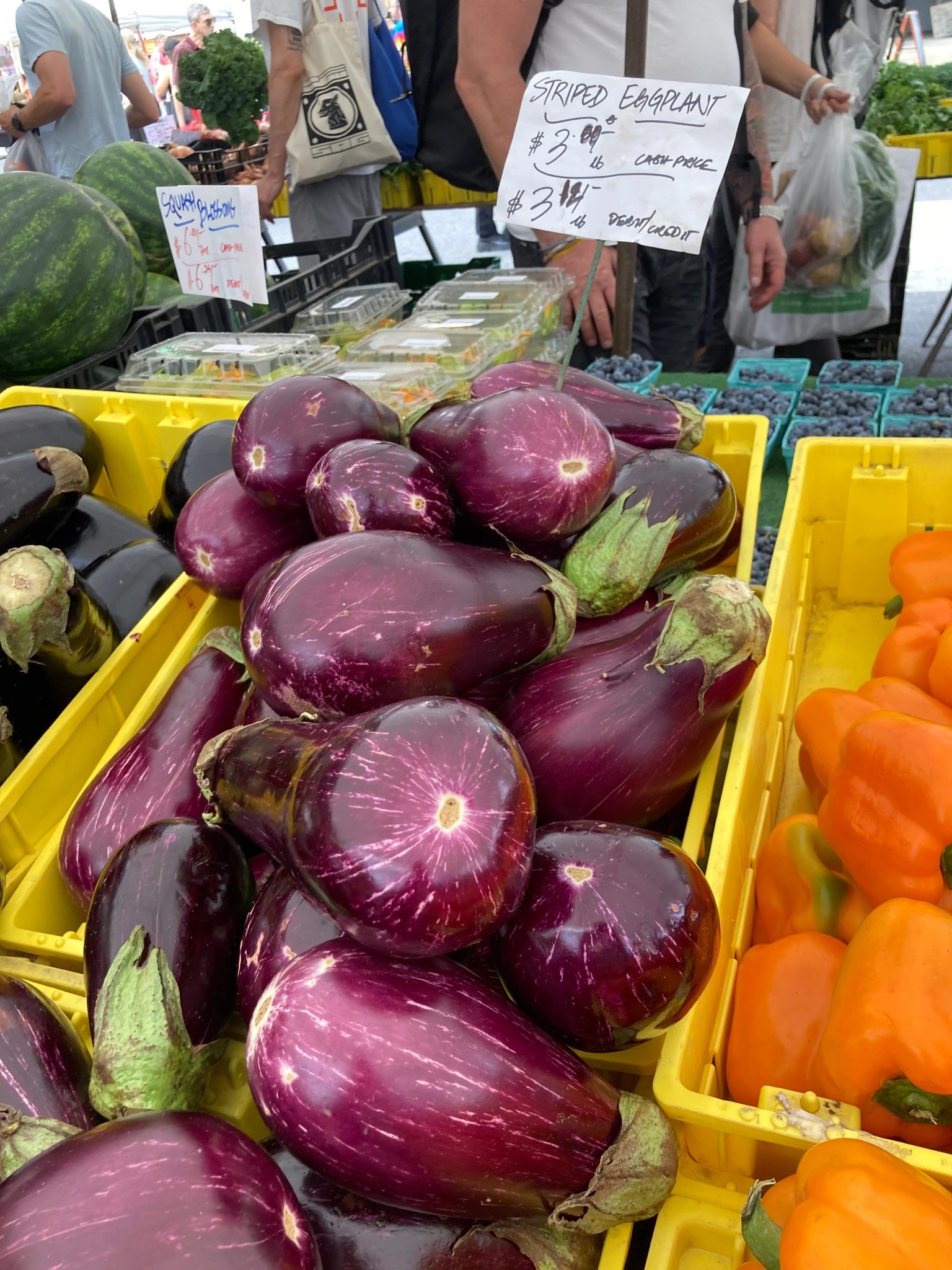
Eggplant is a vegetable of my childhood. It cemented my upbringing in Italian-American land. I grew up wanting it. All these years later I still want it, partly now for the various colors of its skin: deep purple verging on black, violet, clear purple, streaky purple, pure white, all shiny. Magnificent. I’m involved in the colors of food more than I used to be. They help me plan, not just my recipes but also my day. Color theme days. I have them, not every day but some days.

A type of graffiti eggplant, purple pink with streaks of white.

Unfortunately eggplant is not so beautiful when it’s cooked. It’s gray-beige, but its taste is rich. It soaks up herbs, garlic, olive oil, and wine better than most things. It’s a flavor trap.

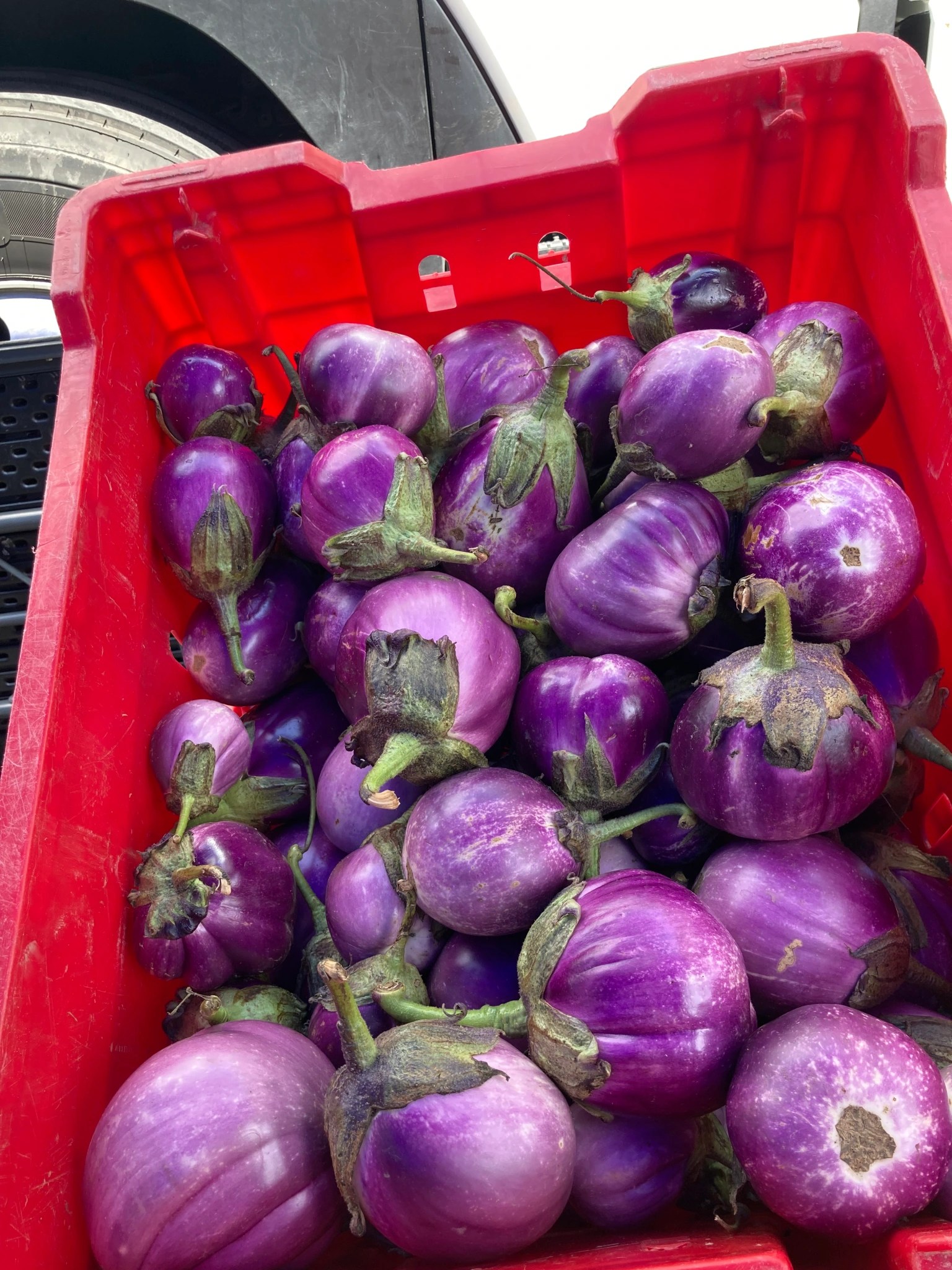
Barbarella, a type of globe eggplant, blue-purple with hits of white.

Here’s a baked eggplant without tomato, a drift away from Parmigiano. It gets its togetherness from goat cheese and crème fraîche. I think it came out really well. I hope you like it.

I served it with grilled lamb chops marinated in rosemary, fennel seed, and garlic and a radicchio salad dressed with lemon, salt, and good olive oil.

It’s almost August. Tomato recipes will be coming soon. I’m working on a few that should be unexpected. Stay tuned.

Plus: Emergency. Happening now. Starvation in Gaza. I know we can feel angry and helpless in a terrible situation like this, thinking there’s nothing we can do, but there is something. We can support World Central Kitchen, either by donating our time or our money. Please help, if you can. Here’s their link.

Gray-beige but beautiful.

Eggplant Gratin with Goat Cheese, Honey, and Thyme

Extra-virgin olive oil
2 medium eggplants, stripe-peeled and cut into ½-inch-thick rounds
Salt
Black pepper
1 fresh summer garlic clove, minced
1  large egg
1 4-ounce-or-so log soft goat cheese, at room temperature (I used Président brand)
¾ cup crème fraîche
¼ cup whole milk
6 or 7 large thyme sprigs, the leaves lightly chopped
¼ teaspoon allspice
1 tablespoon runny honey (I used an acacia honey)
¼  cup grated Parmigiano Reggiano cheese
¼ cup panko breadcrumbs

Heat the oven to 400 degrees. Lightly coat 2 sheet pans with olive oil. Lay out the eggplant slices on them in a single layer. Drizzle the slices with olive oil, and season them with salt and black pepper. Bake until the eggplant is tender and lightly browned, about 20 to 25 minutes. Take the pans from the oven, and sprinkle the minced garlic over the slices.

Put the egg, goat cheese, crème fraîche, milk, half of the chopped thyme, the allspice, and the honey into a food processor. Add a little salt and black pepper, and pulse a times to blend everything well. It should be thick but pourable.

Turn the oven down to 375.

Coat a baking dish lightly with olive oil (I used an 8-by-12-inch, 2-inch-deep oval).  Lay down a layer of eggplant slices (a little overlap is okay). Drizzle on about ¼ of the goat cheese mixture. Make another layer of eggplant, using it all up. Pour on the rest of the goat cheese mix.

In a small bowl, mix the Parmigiano with the panko and the rest of the thyme. Add a little salt and black pepper and a drizzle of olive oil. Mix it with your fingers, and then scatter it fairly evenly over the top of the gratin.

Bake at 375 until it looks firm and the top is lightly browned, about 30 minutes. Serve hot or warm.

Read Full Post »

Squid, by Foxy-Wolff.

Every engaged cook has patterns. Themes with variations. Repetitive behavior semi-disguised by fresh thoughts. One of my themes is seafood teamed with a starch. If you’ve been following my cooking journey for any length of time, you are all too familiar with my numerous takes on pasta with fish or shellfish. I could write a book on pasta with clams alone, although I would never do that, since it would be ridiculously nuanced.

Pasta is where I most frequently turn when I have the good fortune to get my hands on really fresh seafood. It stretches a luxury ingredient in a very fine way. But I also consider potatoes; rice, in red, black, and risotto varieties; grains, such as farro; and of course all varieties of beans, my favorites for marrying with seafood being ceci and any firm, largish, white bean, like cannellini or the extra huge corona I used here in this shrimp dish. Have you ever tried braised octopus with big white beans, rosemary, fennel, and a hit of Aleppo pepper? It’s pretty good, a nice alternative to the more usual octopus with potato pairing. Swordfish chunks make a good addition to a spring rice salad, especially if you include a seasonal vegetable like freshly shucked peas. I find that that makes much more sense than a pasta salad, which almost always seems stupid and gummy to me. Ceci with mussels is another theme I keep going back to, especially in high summer, when I’ve got tomatoes or sweet peppers and lots of basil. Have you ever tried bits of grilled tuna tossed with warm farro, black olives, and arugula? That’s a thought. Or a warm zucchini and couscous salad with scallops and tarragon. That’s something I’ll be making as soon as the first mini zucchini shows up in the markets, which should be only a few weeks from now.

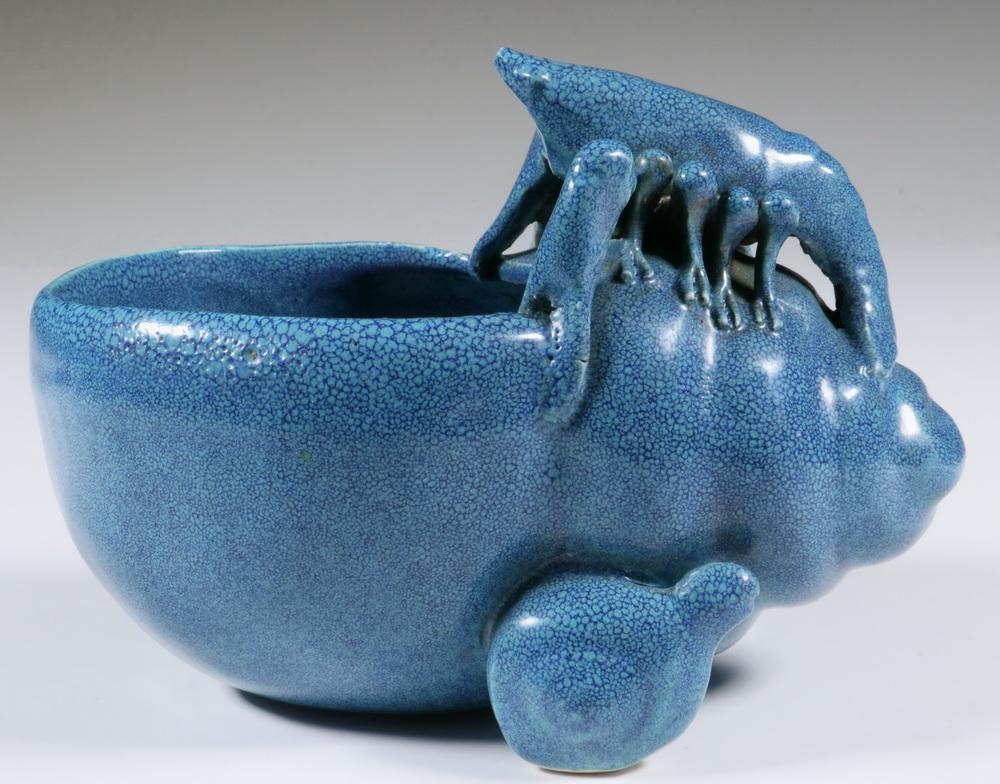
A Chinese sculpture of a shell with a shrimp, with a robin’s-egg-blue glaze.

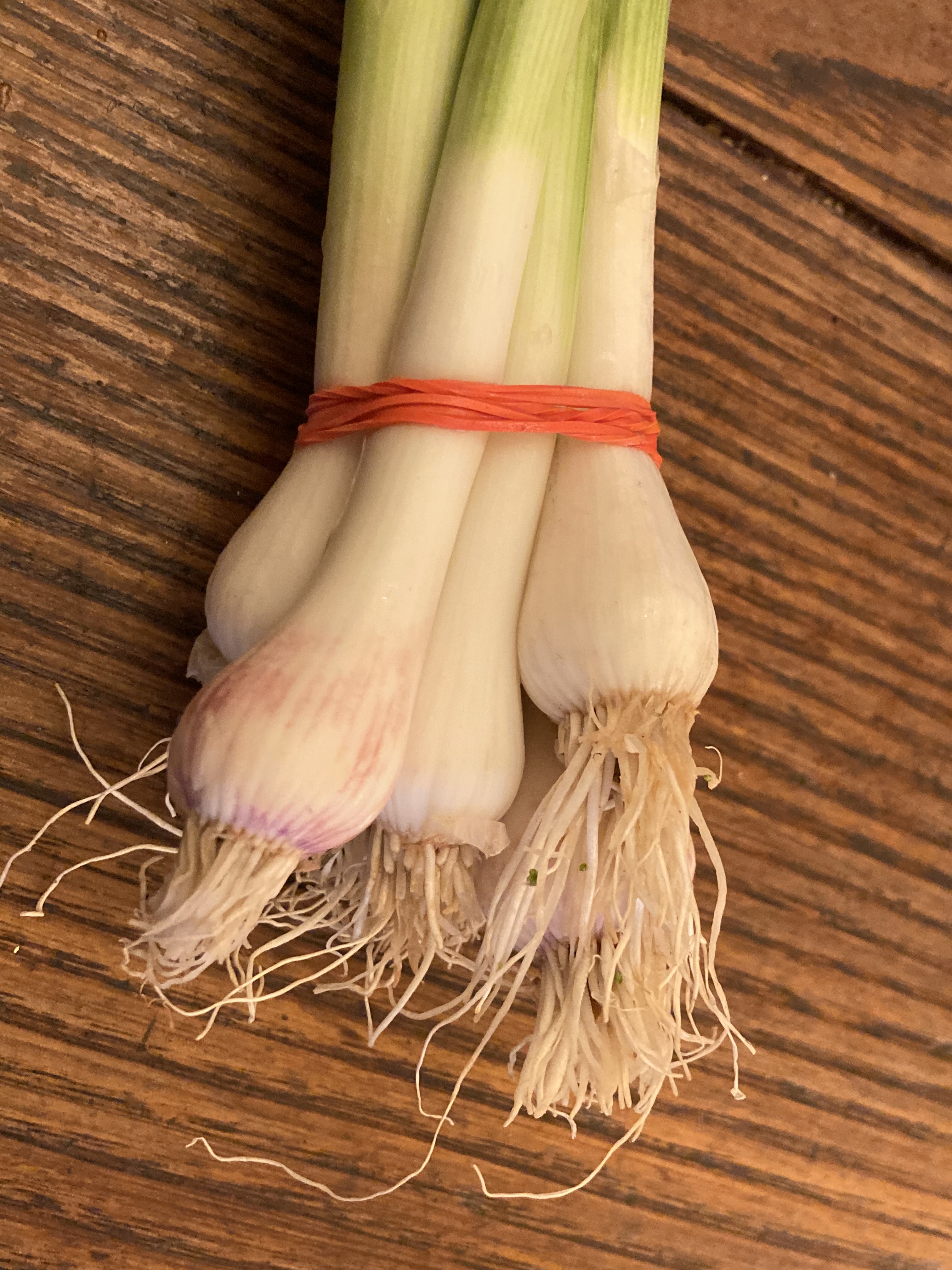
So many choices. This time around I’ve gone with calamari-potato and shrimp-bean combos. Beyond the starch-seafood pairing, what ties these two dishes together is spring garlic, something I wait for, the kickoff to my warm-weather cooking. It’s such a welcome jolt after a long haul with that papery, often acrid supermarket garlic, which at this point in my cooking career I’ve almost completely rejected, preferring to use leeks or shallots in the cold months. When spring garlic first appears in my farmer markets, usually early April, it’s indistinguishable from scallion, long, lean, and white, maybe tinged with purple at its base, working its way up to a dark green, leafy top. As the season progresses, a bulb starts to form. You can see that in my photo. But it still hasn’t broken out into individual cloves. This is when I like it the best. Juicy and sweet but emerging with clear garlic flavor.

I’m just starting to emerge from a long cold spell brought on more by our horrible political atmosphere than by winter weather. Spring cooking is beginning to lift my spirits. I hope it lifts everyone’s.

Calamari Salad with Potatoes, Spring Garlic, and Mint

About 1½ pounds small Yukon Gold potatoes, cut in half
Salt
Rice wine vinegar
A big glass of dry white wine
1½ pounds small calamari, cleaned and cut into not-too-skinny rings, the tentacles halved if large
1 tablespoon white miso
Your best extra-virgin olive oil
3 scallions, cut into thin rounds, using a lot of the tender green part
1 thin spring garlic, chopped, including some of the green part
A small palmful of green peppercorns, coarse-ground
A larger palmful of Sicilian capers, soaked in a few changes of water to remove excess salt and then drained
A handful of fresh spearmint leaves, lightly chopped
A few large sprigs of Italian parsley, the leaves chopped

Put the potatoes into a good-size pot and cover them with at least 2 inches of water. Add a decent amount of salt and a big drizzle of rice wine vinegar. Bring to a boil over high heat, then turn the heat down a bit, and cook at a medium bubble until just tender, about 8 minutes. I like the potatoes still firm enough so their skins haven’t detached. Drain them into a colander.

While the potatoes are cooking, set up another pot of water, add a large glass of white wine and a good amount of salt, and bring it to a boil. Add the calamari, and blanch it until just tender, about a minute. Drain the calamari into a colander, and then spread it out on paper towels to soak up any additional moisture.

Put the miso in a small bowl, and add about 1½ tablespoons of rice wine vinegar. Stir to dissolve the miso. Add about 2½ tablespoons of your best extra-virgin olive oil and a little salt.

Put the still somewhat warm potatoes and calamari into a large serving bowl. Add the scallions, garlic, green peppercorns, and capers. Pour on the miso vinaigrette, and toss (I like using my hands for this, so I don’t break up the potatoes). Add the mint and parsley, and toss lightly. Taste for seasoning. Serve warm or at room temperature.

Corona Beans with Shrimp, Saffron, and Cumin

3 cups dried Corona beans (I used Rancho Gordo), cooked (see note below on how I cooked them)
1½ pounds shell-on large shrimp (if you can find fresh American shrimp, all the better)
Extra-virgin olive oil
A big splash of dry vermouth
Salt
A big pinch of saffron threads, lightly dried and then crushed with a mortar and pestle
3 scallions, cut into thin rounds, using some of the tender green part
1 thin spring garlic, chopped, including some of the tender green part
1 teaspoon cumin seeds, ground
Piment d’Espelette
A drizzle of sherry wine vinegar
A handful of Italian parsley leaves, lightly chopped

Cook the beans (see note below on how I cooked them).

Shell the shrimp, and put the shells in a pot with a drizzle of olive oil. Turn the heat to medium, and sauté the shells until they turn pink, about 2 minutes. Add a splash of dry vermouth, and let it bubble away. Add about 1½ cups of water and a little salt, and simmer at a medium bubble for about 8 minutes. Strain the broth into a small bowl or cup. Add the crushed saffron, and give it a stir. The broth will turn a beautiful dark yellow.

Drain the beans, saving the broth for a soup or stew.

Set a large sauté pan over medium heat. Add a big drizzle of olive oil. When the oil is hot, add the scallion, garlic, and cumin, and warm everything through for about a minute to release its fragrances. Add the beans, and sauté for a minute or so, seasoning with salt and piment d’Espelette.

Set up another large sauté pan over high heat. Add a generous amount of olive oil. When the oil is hot, add the shrimp, spreading it out, and season it with salt. Sauté until the shrimp is just tender, turning it once, about 2 minutes in all. Add the shrimp broth, scraping up any cooked-on bits from the bottom of the pan, and pour the shrimp and broth over the beans. Add a drizzle of fresh olive oil and a few drops of sherry wine vinegar, and give everything a gentle toss. Taste for seasoning. Add the parsley, and toss lightly. Transfer to a large serving bowl. Serve warm.

A note on how I cooked the beans: I covered the beans with cool water by about 4 inches, added 3 fresh bay leaves, a chunk of spring garlic, and a big drizzle of olive oil, and brought it to a boil. I turned the heat down low, covered the pot, and let the beans simmer for about 50 minutes. Then I added a drizzle of sherry wine vinegar and a little salt and continued cooking until the beans were just tender, which took about another half hour. I find that with Rancho Gordo beans I don’t have to presoak, since they’re not overly dry to begin with.

Read Full Post »

Cauliflower and Pomegranate, by Auguste Renoir.

Recipe below: Torta di Cavolfiore with Pistachios, Capers, and Caciocavallo

It’s March, and there’s nothing new yet. I’m talking specifically about local produce. It’s too early even for dandelions. Maybe I could cook daffodils. They’re up all over the place.  I’m thinking maybe stuff them with mozzarella and anchovy, twist the tops closed, dunk them in batter, and then give them a fast fry. Doesn’t that sound good?  Pretty, too. But I just Googled “Are daffodils edible for humans?” and discovered that they’re not. They contain lycorine, which causes vomiting, diarrhea, and abdominal pain. So no. We can’t deep-fry them. I should have known, since even deer won’t eat them, and deer eat almost anything. I guess I’ll have to wait for zucchini blossom time. It’s not far away.

Cauliflower 2, by Nico Heilijers.

So now I am holding a big, beautiful white cauliflower. My first thought is to just go with a gratin, fairly classic, with béchamel, a few scrapings of nutmeg, a bay leaf, and maybe Fontina and Parmigiano. Crumbs on top. One of my favorites. But then my head swivels over to the torta side, as it often does. You all probably know that I love my pizza di scarola, the double-crusted escarole-filled torta I always make for Christmas Eve. I love it at other times of the year as well, like right now, when chicories are still the best greens in the market, at least in New York.

I’ve patterned this new torta somewhat after pizza di scarola, including some traditional ingredients (capers, anchovies) while leaving out others (raisins) and throwing in new ones (thyme, pistachios, caciocavallo), and flavoring it inside and out with Marsala.

It tastes like Napoli, which makes me very happy.

Torta di Cavolfiore with Pistachios, Capers, and Caciocavallo

  • Servings: 4 to 6 as an appetizer
  • Print

For the dough:

2½ cups all-purpose flour
1 teaspoon sugar
½ teaspoon salt
¼ cup extra-virgin olive oil
½ to ¾ cup dry Marsala

For the filling:

1 medium cauliflower, any color, cut into small florets
Extra-virgin olive oil
Salt
2 scallions, cut into thin rounds, using much of the tender green part
A big pinch of ground allspice
A handful of unsalted, shelled pistachios
3 or 4 oil-packed anchovies, well-chopped (I used Ortiz brand)
A palmful of salt-packed Sicilian capers, soaked and rinsed (mine were large, so I chopped them a bit)
6 large thyme sprigs, the leaves lightly chopped
A piece of a fresh green chili, minced (I used a green Italian long hot, about half of it, with its seeds)
A splash of dry Marsala
6 large sprigs Italian parsley, the leaves lightly chopped
1 cup grated caciocavallo or scamorza cheese
1 egg yolk, for the egg wash
Sugar

To make the dough, put the flour in a medium-size bowl. Add the sugar and salt. Drizzle in the olive oil and ½ cup of Marsala, and start by mixing everything around with a wooden spoon. If it seems dry, add a little more Marsala. When it comes together into a shaggy ball, dump it out onto the countertop, and knead it briefly, just until you have a nice smooth ball. Wrap it in plastic, and let it sit for at least an hour, unrefrigerated, before you work with it. You can also refrigerate it overnight, but let it come back to room temperature before you start to roll it out.

To start the filling, set up a pot of water, and bring it to a boil. Blanch the cauliflower for about 2 minutes. Drain it in a colander, and then run cold water over it to stop the cooking. Let it drain.

Set up a large sauté pan over medium heat. Add a big drizzle of olive oil.  Add the cauliflower and sprinkle in a little salt. Sauté about a minute longer. Add the scallions, allspice, pistachios, anchovies, capers, thyme, and green chili, giving everything a good mix and sautéing about another minute or so to blend all the flavors. Add a splash of dry Marsala, and let it bubble away. Take the pan from the heat, and let it cool. Then add the parsley and the caciocavallo, and stir them in. Taste for salt. You probably won’t need more with all the salt from the anchovies, capers, and cheese, but you never know.

Set the oven to 400 degrees.

For the egg wash, put the egg yolk in a small cup or bowl. Add a drizzle of olive oil, a drizzle of water, a little salt, and a little sugar, and give it all a good mix.

Brush a sheet pan with olive oil. Cut the dough in half.  Roll both pieces out to approximately 8- or 9-inch rounds. They don’t have to be perfect; they just have to fit on the sheet pan. This is a rustico kind of tart, so a little uneven is, in my opinion, good.

Place one of the dough rounds on the sheet pan. Top with the cauliflower mix, spreading it out more or less evenly but leaving an inch free around the rim. Cover it with the other dough round. Crimp the edges for a good seal. I usually just make little folds all around, pressing them down to make sure they can’t pop open during cooking.  Make three short knife slits in the top. Brush the top with the egg wash.

Slide the sheet pan with the torta onto the bottom rack of the oven. Bake until the top is nice and golden, about 20 minutes or so. Let it cool for about 5 minutes before slicing.

This tart makes a great antipasto for up to six people. It’s really nice with a glass of falanghina.

An Early Spring Picnic on Gansevoort Street

I like to pick up a mortadella and burrata panino at Sogno Toscano on Perry Street (or maybe instead wrap up a wedge of the cauliflower torta above) and then head west on Gansevoort Street, crossing the West Street highway, where I step right onto the Gansevoort Peninsula. There I find a weird little strip of beach, with actual sand, a few blue Adirondack chairs, and matching umbrellas. At the water’s edge are large rocks. The Hudson gently crashes again them, making a hypnotic water noise. You can’t swim at this man-made little beach, but it’s a good place to sit, eat a sandwich, hang out with the Canada geese, and listen to the rhythm of the tide.

The other side of the peninsula is a stretch of salt marsh planted with native grasses. Good for birding. Last spring I saw a young red-tailed hawk hunting for lunch, and really close up too, only a few feet away. I got a good look at its glassy yellow eyes. If you’re in the neighborhood, you might want to check it out.

Spring is just around the corner.

Read Full Post »

Red Onion Trio, by Michael Lynn Adams.

Recipe in text below: Roasted Red Onion Crostata with Anchovies, Thyme, and Sherry Wine Vinegar

I took a couple of weeks off from blogging to regain my head after the election. I’ve come out less sad but with a lingering feeling of disgust that has been working its way into my dreams. Obnoxious dreams. Among other things, I’m worrying about immigrant families being torn apart and all the heartbreak that will create. Promises made, promises kept.

And speaking of immigrants, last week I made my way down to Little Italy to check out the newly reopened Italian American Museum, on Mulberry Street. Didn’t know there was such a thing? It opened in 2008 in the elegant nineteenth-century Stabile bank building on the corner of Mulberry and Grand. I visited a bunch of times back then, always expecting it to be something more. Ellis Island ship manifestos are fine, but they’re really only interesting if your own grandmother is on one. I wanted the place to have more. More of what? More of the sounds, colors, and smells that have made up the Italian American experience. Several times I proposed to the director what I thought were fun and exciting culinary programs, but there was no follow-through.

The Stabile building was demolished in 2014 for what looks like purely financial gain for developers. The 1830s building was not protected by the city’s landmarks preservation laws, even though it was structurally intact.  There was a lot of protest at the time, but the developers won out. A higher building now stands in its place. In it the Italian American Museum has reemerged.

The main exhibit there now is a collection of puppets made by a Sicilian family named Manteo who settled in Little Italy in the 1920s and began making Sicilian-style marionettes and putting on shows for the community. The things are lovely and funny, with all hand-hammered metal and historical costumes. They are almost life-size. There were a few of the puppets on display at the previous museum, but the new place is showing a lot of them, so a step up, I guess. This new space, which includes a 60-seat theater, looks to be about three times the size of the old one. I’m not sure what they’re planning to fill it with, but  I’m optimistic that they’ve got ideas.

In addition to getting mildly excited by the return of the Italian American Museum, I’ve been purchasing a lot of round red onions, a good cool-weather item. I love their deep crimson color, their glossiness, and the pretty rings of red you see when you slice into them. I eat them raw, but they’re also good cooked, as most varieties retain their strength and their sweetness gets concentrated.

Nobody I spoke to at grocery stores or the Union Square Greenmarket knew what varieties they were selling. Maybe Red Bull, or Red Burgermeister, or Giant Red Hamburger. Those are a few names I found on Google. I bought beautiful ones from Madura Farms. The seller, who was not someone who works at the farm,  said they were a type of Spanish onion. They were powerful but cooked up sweet, and, importantly, they held their shape after being baked two times. I cut them into thick rings so they looked almost like roses after being baked into a crostata. I’ll be making the crostata again for Thanksgiving.

If you’d like to give it a try, you’ll want to start with the pastry, so it’ll have time to rest. Here’s what you’ll need for that:

2 cups unbleached white flour, plus a little extra for rolling out the dough
About a teaspoon of salt
A tablespoon of sugar
The leaves from about 6 thyme sprigs
1¼ sticks cold unsalted butter, cut into little pieces
⅓ cup dry Marsala, chilled
1 teaspoon sherry wine vinegar

Put the flour, salt, sugar, and thyme leaves into a food processor, and pulse a few times to blend. Add the butter, and pulse a few more times so you break the butter up further. Add the Marsala and the vinegar, and pulse briefly until you have a bowl of moist crumble that holds together when you pinch it.

Turn the crumble out onto a work surface, and press it together into a ball. Next flatten it out into a thick disk. Cover it with plastic wrap, and stick it in the refrigerator for at least an hour or as long as overnight before using it.

Set the oven for 350 degrees. For the filling, you’ll want to purchase two large,  round, shiny red onions. Peel off their papery outer skin and then slice them into ¼ inch thick rounds. You’ll want a dozen or so slices. Coat a large sheet pan with olive oil. Place the rounds on top in one layer. Drizzle them generously with olive oil, sprinkle on little dry Marsala, and season them with salt and black pepper. Roast them until they’re slightly browned, tender, and fragrant, about 20 minutes. Sprinkle them with drops of sherry wine vinegar, not too much but just enough to balance the sweetness of the onions. Let them cool.

While the onions are cooling, take 8 or 9 good-quality oil-packed anchovies, and mash them up in a mortar. Work in enough olive oil to form a thick paste. Add a few drops of sherry wine vinegar and mix it in.

Turn up the oven to 400. Roll out the dough to an approximately 10-inch round and place it on a buttered sheet pan. Brush the dough with the anchovy paste, leaving about an inch rim all around. Add a thin layer of grated Gruyère, which not only will taste good but will also help hold the tart together. Layer in the onion rounds. They should be a tight fit. I find a spatula works well for getting the rounds off the pan in one piece. Sprinkle the onions with freshly chopped thyme leaves.  Fold the edges up all around, so you have an approximately 1-inch border of fairly neat folds. Press the folds down so they stay put, and give everything a drizzle of olive oil and a sprinkling of sugar.

Bake until the crust and onions are nicely golden, about 25 minutes. Let it cool for about 10 minutes before slicing. You’ll now have an antipasto offering for 5 or 6 people.

Read Full Post »

Cauliflower and Pomegranates, by Pierre-Auguste Renoir.

Recipe in text below: Roasted Cauliflower with Tahini, Pine Nuts, and Lemon Thyme

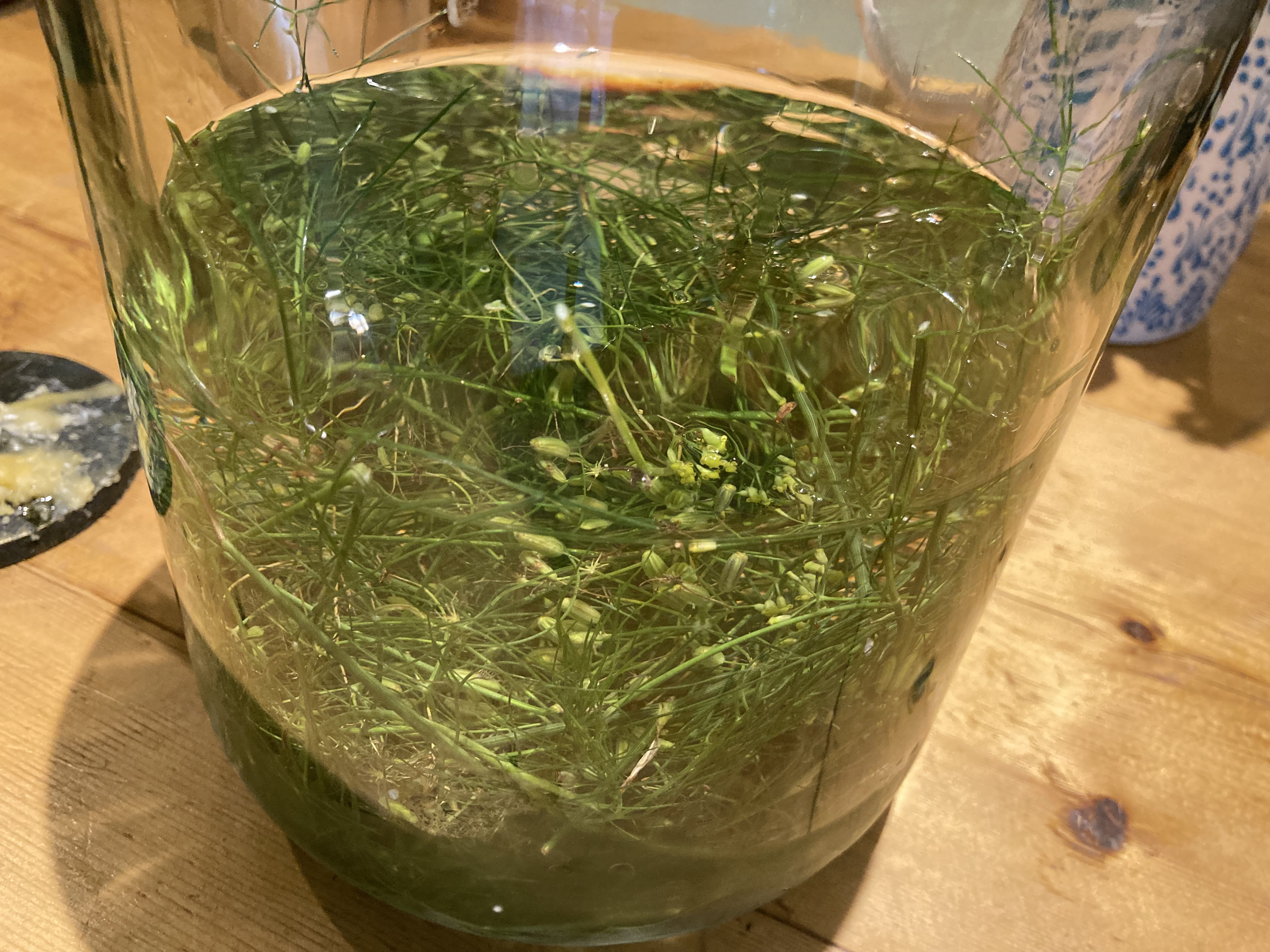
We were lucky this year in New York: Fall flew in quickly, turning a lot of the green into yellow, orange, pinky red, seemingly overnight, but the temperatures stayed soft. I haven’t even cut my herbs back, even though some of them, especially the Greek oregano, have turned to grizzle, and the summer savory is shot to hell, self-trimming by nature. I did scissor off most of the seeds and pollen-topped umbels and some of the stalks from my fennel to get a head start on my finocchietto, the Italian fennel liqueur I make every year. I just steep the fennel in Everclear, the 190-proof nightmare you can purchase at just about any liquor store.  Almost immediately the Everclear pulls all the fragrance and color from the seeds and stems, turning brilliant green, actually a deep green with a blue undertone. A strange color leaves from the normally light green fennel stalks. It’s astonishing how well the Everclear sucks the life out of a plant. I’ll let the fennel steep for about two months, then add a sugar syrup to tamp down the bitterness (not a lot of sugar, as I don’t want it sweet like Sambuca), and then enough water to get the alcohol down to a manageable level. By Christmas it should be where I want it.

The produce at the markets changes as quickly as do the leaves on the trees. Pumpkins, tiny and huge, pile up, round, squat, ones with odd squared-off angles, orange, beige, white, even gray-green ones. I’m not sure why I find this so disturbing. What do people do with all these pumpkins? What happens to them after November? Growing all these things for reasons I don’t understand must take up a lot of land space. I do make a savory pumpkin torta with parmigiano and sage once or twice in the fall, but that’s about it. Why do farmers grow so many? I mean, there are so many pumpkins all over the place. I’ve never really gotten over this.

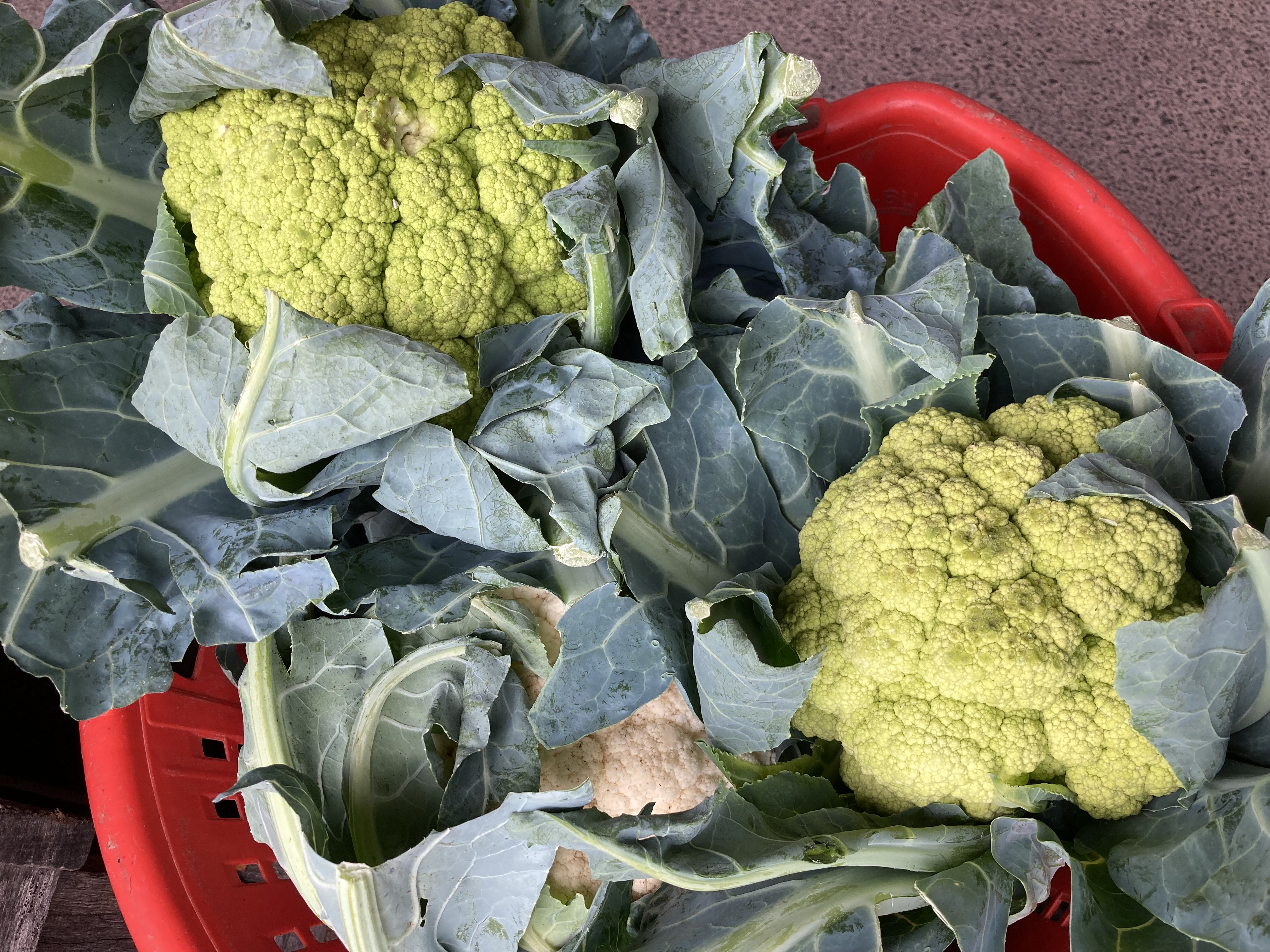
I do love when the cauliflowers appear. That I understand. They’re so lumpy and voluptuous, almost volcanic-looking. Story Farms has colored cauliflowers that drive me a little wild. Green, orange, purple, gorgeous things that started showing up at New York farm stands maybe about fifteen years ago. They are hybrids, crosses of traditional creamy-white cauliflower with other vegetables to achieve those colors. The green ones are a cross between white cauliflower and broccoli, the orange ones with vegetables high in beta carotene such as carrots. The purple ones get their color from anthocyanin found in purple vegetables, usually purple broccoli. The colors fade a little during cooking, but I find that the orange variety generally stays pretty orange. Here are a few recent photos from Story.

In addition to the orange, purple, and white cauliflower, in the upper left you can see a Romanesco variety with its spiral bud pattern. Itʼs an old Italian hybrid of cauliflower and broccoli.

Hereʼs their beautiful green variety.

For my Roasted Cauliflower with Tahini, Pine Nuts, and Lemon Thyme, I used regular white cauliflower, but you can make it with any type. Or you can use broccoli, if you prefer. To make it you’ll want to cut approximately 1-inch flowerets from a large head of  cauliflower and toss them in a little olive oil, a tiny drizzle of runny honey, lemon zest, salt, some chopped fresh lemon thyme, and a little piment d’Espelette.

Make a Tahini sauce by mixing ¾ cup of tahini with about ½ a minced garlic clove, a big pinch of allspice, salt, a bit more of the espelette, and the juice from about half a lemon. Slowly whisk in about ½ cup of water until the mixture loosens up and becomes smooth and pourable.

Roast the cauliflower on really high heat (450 is good) until it’s tender and browned. Transfer it to a large, wide serving bowl. Drizzle on the tahini sauce (you might not need all of it—judgement here), sprinkle on a good amount of toasted pine nuts, and finish with a few more lightly chopped lemon thyme leaves.

For me this dish is best right out of the oven, when the cauliflower is hot and crisp. It still tastes really good at room temperature, but also the cauliflower softens a little. I served it with a whole roasted sea bass I stuffed with lemon and a variety of herbs I still had in my garden, but it would make a good vegetarian dinner served over Israeli couscous, I think. One big cauliflower should serve four as a side dish or two or three as a main over some type of starchy thing.

Read Full Post »

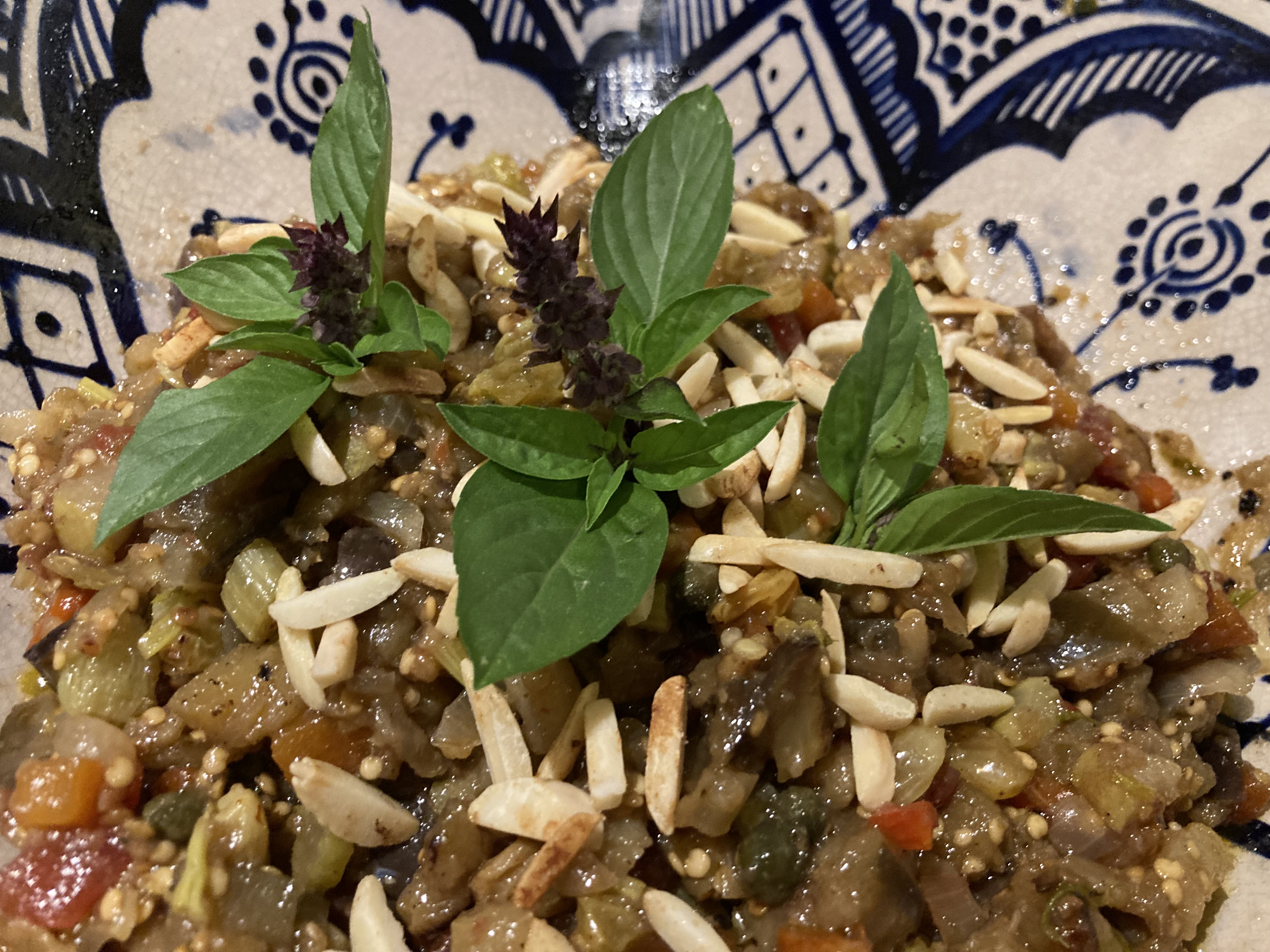
Recipe below: Caponata with Lovage, Thai Basil, and Pear

If you ever get to upstate New York, you probably notice a lot of pizza trucks rumbling around. They show up at farm stands, breweries, wineries, fairs. They pull up and set up, churn out pizzas for a few hours, and then they’re gone. They’re not all great, but some are.

I often hang out at Slow Fox Farm Brewery, in Rhinebeck. It’s both a brewery and a farm, with its own tomatoes, herbs, cabbage, kale, beets, arugula, and rows of, at the moment, zinnias, cosmos, and celosia that you can pick while drunk. As well as more than half a dozen fine house-brewed beers and ales. You can often eat pizza there. So far they’ve had I think three or four different pizza trucks this summer (this should go on into the early winter, before they close up until the spring). All the pizza has been good, but one stands out for me.

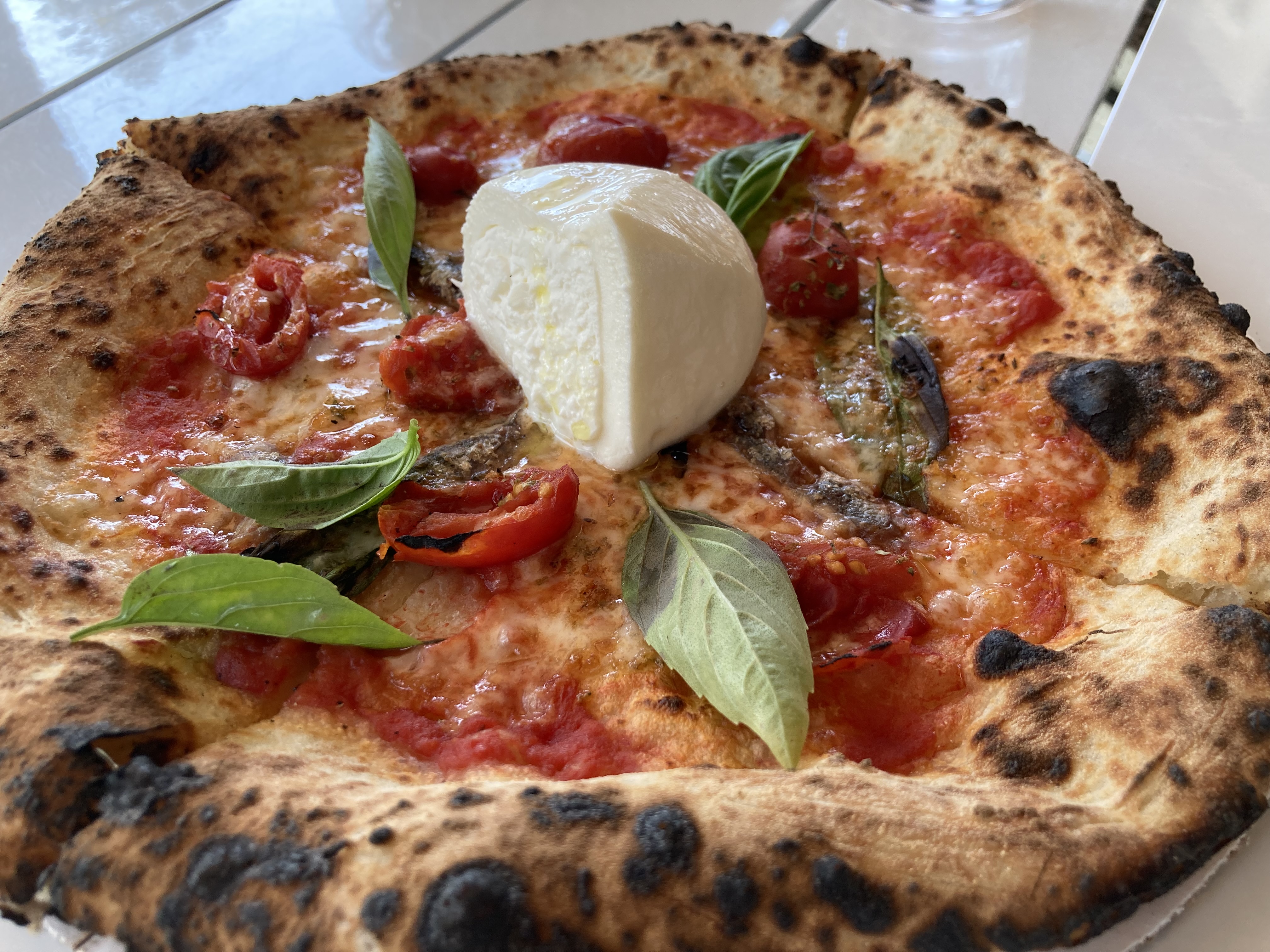
I could tell right away from the aroma wafting out from the Mommò truck that I was going to like its pizza. Mommò, I just learned, is Neapolitan for “right now,” and that’s about right. The pizza takes three minutes to cook. Luca, the owner and pizzaiolo, is from Italy, and he has the Neapolitan flavor down. The crust is yeasty and pully and just a touch salty, with charred but not too charred bubbles circling its rim. That is the taste I want but often don’t get. He’s got wood, but unlike most of the pizza people who drag around a wood burning oven with their truck, Luca had it built right into his truck. It doesn’t seem possible, but I’ve seen it. He explained to me that it’s a stainless steel pizza oven made in Naples for backyard use. It’s a little tight, but he got it to fit. If he turns around without thinking, he can burn his arm. But he’s been doing this for almost three years now, and I guess he’s got the reflex down.

Luca makes an effort to use good ingredients, as not everyone does. He’s got that bright red tomato sauce I always look for, the type that’s ladled on raw but gets flash blasted in the extra-hot oven. So far I’ve tried his margarita, his pizza with shiitake mushrooms, an anchovy and burrata one, and his sausage pizza topped with a nice mellow local sausage. In true Neapolitan style he’s light on the toppings, but you still get that traditional Neapolitan moist spot in the middle that I love. There’s a gorgonzola pizza I’m interested in, too. Next time. If you feel like following Luca around the Hudson Valley, you can track his whereabouts at www.mommopizza.com.

As you probably gather, I do love a good pizza, but what about caponata? Not that they’re related, except for the fact that they’re both Southern Italian. It’s still eggplant season here in New York, so I’ve got to use eggplants every way I can while they’re still young and vibrant. Caponata is of Sicilian origin, one of those full-bodied Spanish- and possibly Arab-inspired dishes with strange lists of ingredients that combine to open up lusciously on the tongue. Eggplant is caponata’s anchor, and agrodolce gives it its swing. It’s an old dish (tomato being a recent addition), which when done up for high-class Sicilians used to include (and sometimes still does) Baroque garnishes such as chocolate, cinnamon, hard-boiled eggs aged in vinegar, and even baby octopus. I kept the cinnamon.

Basil, parsley, and mint are traditional contemporary herbs for caponata. But this September, since I’ve still had tons of lovage in my garden, I’ve decided to add a little of that. And it makes sense, since celery is almost always a component of the dish and lovage has a strong celery-like flavor. If you don’t have lovage, use a palmful of celery leaves instead. I also had Thai basil hanging on, so that went in as well. And since it’s early fall, instead of the more typical dried fruit, usually raisins, I went with pear, just to freshen things up. And I decided on almonds instead of pine nuts because they seemed to go better with the pears. Not sure why. Just a feeling.

And just one more thing about caponata: I don’t care what anyone says, caponata is not ratatouille. It’s not a side dish. It shares basic ingredients, such as eggplant, but the seasoning couldn’t be more different. Its agrodolce boldness steers it toward the antipasto category.  I like it served room temperature, along with bruschetta brushed with good olive oil.

Caponata with Lovage, Thai Basil, and Pear

  • Servings: 6, as an antipasto dish
  • Print

Extra-virgin olive oil
2 firm medium-size eggplants, stripe-peeled and cut into medium dice
Salt
A big pinch of cinnamon (about ¼ teaspoon)
A drizzle of honey (about a teaspoon)
1 red bell pepper, seeded, ribbed, and cut into small dice
1 medium onion, cut into small dice
2 teaspoons Spanish sherry vinegar
3 small inner celery ribs, cut into small dice, plus a handful of celery leaves (especially if you don’t have lovage)
1 firm pear, skinned and cut into small dice
A splash of dry Marsala
1 large, round summer tomato, skinned and cut into small dice
1½ teaspoons sugar
A palmful of salt-packed capers, soaked and rinsed
Black pepper
A handful of Thai basil leaves, lightly chopped, plus whole sprigs for garnish
3 lovage leaves, lightly chopped
A big handful of blanched almonds, lightly toasted and roughly chopped

Have a large serving bowl ready near the stove. In a large skillet, heat a big drizzle of olive oil over medium heat. Add the eggplant, and sauté until it’s tender but still keeping its shape, about 8 minutes. Season it with a little salt and the cinnamon. Add the honey, giving everything a mix. Spoon the eggplant into the bowl.

Add another drizzle of olive oil to the skillet, add the red pepper and onion, and sauté over medium heat until softened, about 4 minutes or so. Add 1 teaspoon of the vinegar, and let it bubble for a few seconds. Add this mixture to the bowl with the eggplant.

Add another drizzle of olive oil to the skillet, and then add the celery and celery leaves, sautéing them until they just start to soften, about 2 minutes. Add the pear, and let it sauté about a minute longer. Pour in the Marsala, and let it bubble away. Add all this to the bowl, and give everything a gentle toss.

Add one more drizzle of olive oil to the skillet, keeping the heat on medium. Add the tomato, seasoning it with a little salt. Add the sugar, and sauté the tomato for about 2 minutes (you want it to remain red and fresh-tasting). Add the other teaspoon of vinegar, and let it boil for a few seconds. Pour the tomatoes into the bowl.

Add the capers and a few big grindings of black pepper to the bowl. Add the Thai basil, lovage, and about ¾ of the almonds. Give everything another mix. Taste for seasoning. The caponata should have a gentle, well-balanced sweet-and-sour taste. Add a little more salt if you need to to bring all the flavors into focus. Let the dish sit and come to room temperature. Then give it another taste, just to check the seasoning. (Dishes taste different at different temperatures, and this one in particular will change flavors as all its various components meld. It might need a little drizzle of vinegar or a bit more black pepper.) Garnish with the remaining almonds and the Thai basil sprigs. Serve at room temperature.

Read Full Post »