
Recipe in text below: Roasted Cauliflower with Tahini, Pine Nuts, and Lemon Thyme
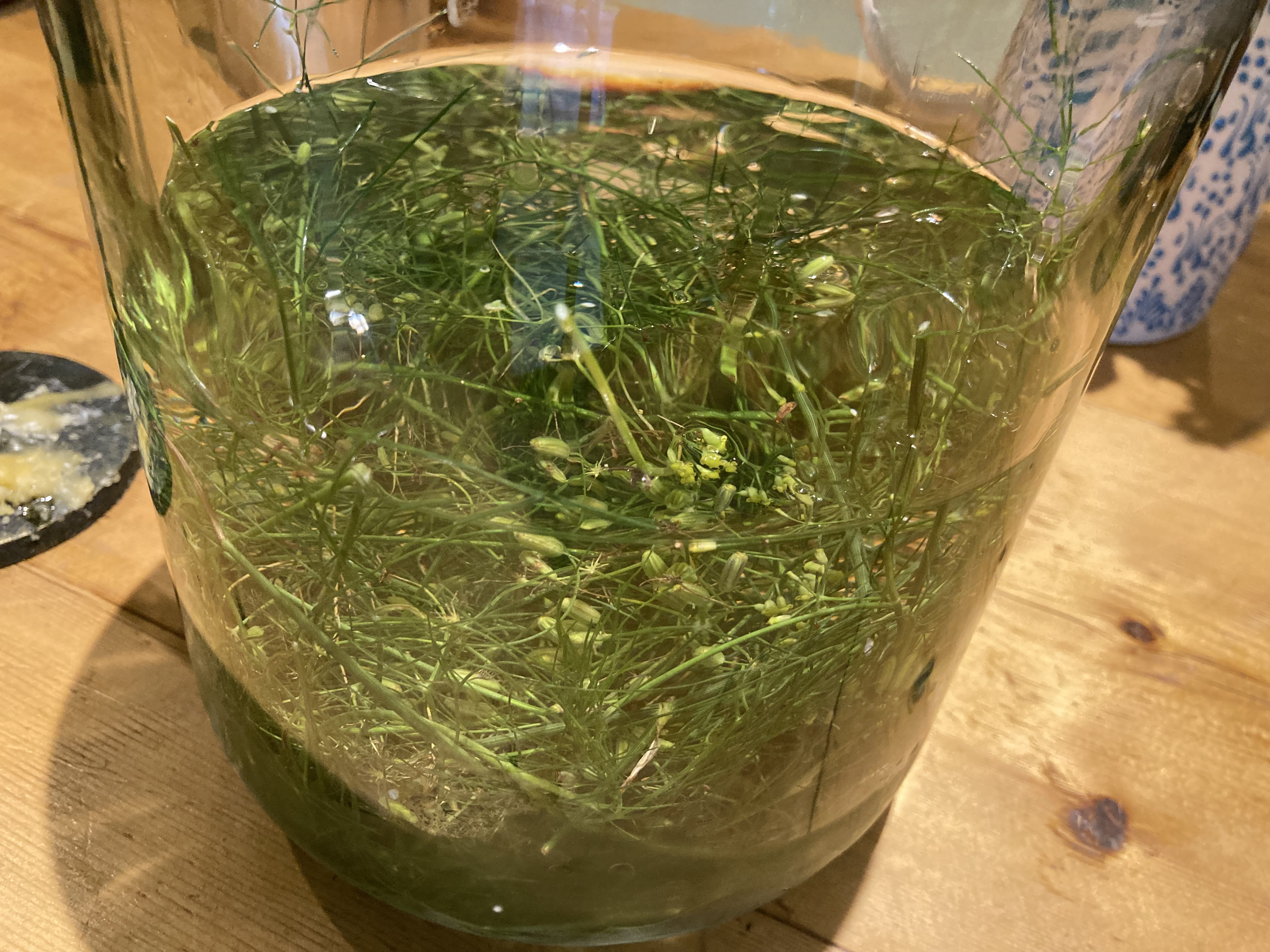
We were lucky this year in New York: Fall flew in quickly, turning a lot of the green into yellow, orange, pinky red, seemingly overnight, but the temperatures stayed soft. I haven’t even cut my herbs back, even though some of them, especially the Greek oregano, have turned to grizzle, and the summer savory is shot to hell, self-trimming by nature. I did scissor off most of the seeds and pollen-topped umbels and some of the stalks from my fennel to get a head start on my finocchietto, the Italian fennel liqueur I make every year. I just steep the fennel in Everclear, the 190-proof nightmare you can purchase at just about any liquor store. Almost immediately the Everclear pulls all the fragrance and color from the seeds and stems, turning brilliant green, actually a deep green with a blue undertone. A strange color leaves from the normally light green fennel stalks. It’s astonishing how well the Everclear sucks the life out of a plant. I’ll let the fennel steep for about two months, then add a sugar syrup to tamp down the bitterness (not a lot of sugar, as I don’t want it sweet like Sambuca), and then enough water to get the alcohol down to a manageable level. By Christmas it should be where I want it.
The produce at the markets changes as quickly as do the leaves on the trees. Pumpkins, tiny and huge, pile up, round, squat, ones with odd squared-off angles, orange, beige, white, even gray-green ones. I’m not sure why I find this so disturbing. What do people do with all these pumpkins? What happens to them after November? Growing all these things for reasons I don’t understand must take up a lot of land space. I do make a savory pumpkin torta with parmigiano and sage once or twice in the fall, but that’s about it. Why do farmers grow so many? I mean, there are so many pumpkins all over the place. I’ve never really gotten over this.
I do love when the cauliflowers appear. That I understand. They’re so lumpy and voluptuous, almost volcanic-looking. Story Farms has colored cauliflowers that drive me a little wild. Green, orange, purple, gorgeous things that started showing up at New York farm stands maybe about fifteen years ago. They are hybrids, crosses of traditional creamy-white cauliflower with other vegetables to achieve those colors. The green ones are a cross between white cauliflower and broccoli, the orange ones with vegetables high in beta carotene such as carrots. The purple ones get their color from anthocyanin found in purple vegetables, usually purple broccoli. The colors fade a little during cooking, but I find that the orange variety generally stays pretty orange. Here are a few recent photos from Story.

In addition to the orange, purple, and white cauliflower, in the upper left you can see a Romanesco variety with its spiral bud pattern. Itʼs an old Italian hybrid of cauliflower and broccoli.
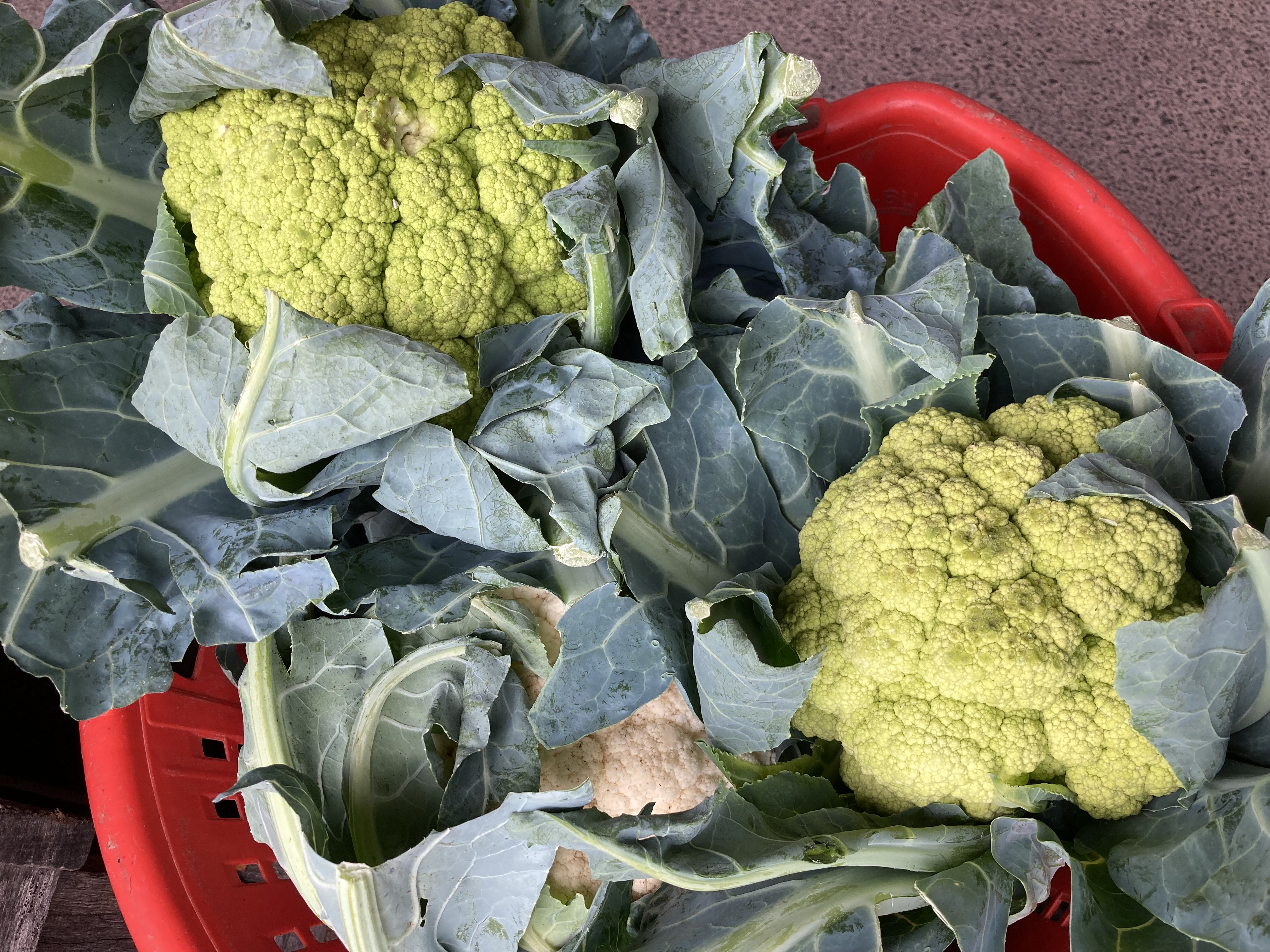
Hereʼs their beautiful green variety.

For my Roasted Cauliflower with Tahini, Pine Nuts, and Lemon Thyme, I used regular white cauliflower, but you can make it with any type. Or you can use broccoli, if you prefer. To make it you’ll want to cut approximately 1-inch flowerets from a large head of cauliflower and toss them in a little olive oil, a tiny drizzle of runny honey, lemon zest, salt, some chopped fresh lemon thyme, and a little piment d’Espelette.
Make a Tahini sauce by mixing ¾ cup of tahini with about ½ a minced garlic clove, a big pinch of allspice, salt, a bit more of the espelette, and the juice from about half a lemon. Slowly whisk in about ½ cup of water until the mixture loosens up and becomes smooth and pourable.
Roast the cauliflower on really high heat (450 is good) until it’s tender and browned. Transfer it to a large, wide serving bowl. Drizzle on the tahini sauce (you might not need all of it—judgement here), sprinkle on a good amount of toasted pine nuts, and finish with a few more lightly chopped lemon thyme leaves.
For me this dish is best right out of the oven, when the cauliflower is hot and crisp. It still tastes really good at room temperature, but also the cauliflower softens a little. I served it with a whole roasted sea bass I stuffed with lemon and a variety of herbs I still had in my garden, but it would make a good vegetarian dinner served over Israeli couscous, I think. One big cauliflower should serve four as a side dish or two or three as a main over some type of starchy thing.


 Erica De Mane