Feeds:
Posts
Comments

Posts Tagged ‘soup’

Still Life with Celery, by Ivan Kolisnyk.

Recipes below: Orecchiette with Sausage, Cauliflower, Saffron and Celery Leaf; Pumpkin Soup with Anise Seed, Saffron and Celery Leaf

I haven’t posted in the past three weeks because I’ve been busy with two other writing projects, one of which, a food-related fiction idea, has been giving me sweaty pangs of embarrassment. I hope to burn past that (if all goes well, you’ll be hearing more about it at some later date). In the meantime I want to give you an update on my fall herb garden. Bittersweet is the word to describe what is going on now in my little garden. I’ve got a plot full of bitter and crusty, but it still gives hints of what those beautiful plants once were. Seems like only yesterday.

Some robust herbs hang on until the ground is almost frozen. Lovage and fennel do, and so does a variety of celery that’s grown primarily for its leaves and is called leaf, Chinese, or cutting celery in this country. I first planted that two springs ago, and it came back this year. In upstate New York you never know what’s going to return. I’m hoping it will become a solid perennial. Its stalks are skinny and hollow, without any of the stringiness of normal celery stalks, but they can be tough, so I make sure to chop them fine if I’ll be using them in a soffrito, for instance.  The leaves, though, are the main attraction, dark green, a little shiny, and abundant. I love the taste of celery, so for me leaf celery is a must-have. I use its leaves both cooked and as a straight-on herb, scattered at the last minute. It’s deep stuff.

I still have it coming up in my garden, and I’m grateful. It’s what inspired these two recipes. If you don’t have leaf celery, both dishes will still be really good with stalk celery. You’ll just need the leaves from almost entire head for each recipe (or you can use half celery leaves and half Italian parsley, if your celery leaves are sparse). I like to include celery leaf in dishes that have a semi-sweet element, like the pumpkin and the pork here. Its savory bitterness balances things out nicely.

I’m assuming that these will be the last recipes I post this year with herbs from my garden. People ask me if I dry my herbs. I don’t. I like herbs fresh, so during cold months I resort to those plastic supermarket packages. They’re not bad, but they definitely lack romance. One thing I do do with end-of-season herbs is make liqueurs. This year I cut down all my gone-to-seed fennel for finocchietto. It has been sitting in Everclear for only about three weeks so far, but it already smells sweet and intense. I’m hoping its deep green color will last until Christmas, when the liquor will be ready.

Orecchiette with Cauliflower, Sausage, Saffron, and Celery Leaf

1 large cauliflower (any color or variety), cut into small florets about the size of orecchiette
Extra-virgin olive oil
Salt
¾ cup homemade chicken broth
¼ teaspoon saffron threads, lightly dried and then crushed in a mortar and pestle
3 or 4 sweet Italian sausages (about ¾ pound), skinned and pulled into little bits
1 large shallot, cut in small dice
3 tender inner celery stalks, cut into small dice, plus, separately, the leaves from the whole bunch (if you happen to have leaf celery, use 3 of those stalks, well chopped, and a good handful of their dark green leaves)
4 or 5 sprigs rosemary, the leaves chopped
A big splash of dry white wine
1 pound orecchiette
Aleppo pepper to taste
A chunk of aged Manchego cheese

Heat the oven to 425 degrees, and get out a large sheet pan. Spread the cauliflower out on the pan in more or less one layer. Drizzle it with a good amount of olive oil, and season it with salt. Roast until golden and tender, about 10 minutes. Take the pan from the oven, and let it sit while you get on with the recipe.

In a small saucepan, heat the chicken broth to warm it, and add the saffron, giving it a stir. The broth should turn a lovely orange.

Set up a pot of pasta cooking water, and bring it to a boil. Add a generous amount of salt.

While the water is coming to a boil, get out a large sauté pan, and set it over medium-high heat. Drizzle in a film of olive oil, and add the sausage, letting it brown lightly, about 3 to 4 minutes. Add the shallot, the celery stalk, the rosemary, and a little salt, and sauté until it’s all fragrant and softened. Add the cauliflower, and give it a stir.  Add the white wine, and let it bubble away.

Drop the orecchiette into the boiling water.

Add the saffron chicken broth to the pan, turn down the heat, and simmer for about 3 or 4 minutes. Sprinkle in some Aleppo.

When the orecchiette is al dente, drain it, and set aside about a cup of its cooking water. Put the orecchiette in a large, wide serving bowl, drizzle on a little fresh olive oil, and give it a quick toss. Add the sausage sauce, a few gratings of Manchego, and about half of the celery leaves. Toss again, adding some cooking water if you need it to loosen the sauce. Scatter the rest of the celery leaves on top. Bring the rest of the Manchego to the table.

Pumpkin Soup with Anise Seed, Saffron, and Celery Leaf

Extra-virgin olive oil
1 medium-size onion, chopped
2 tender inner celery stalks, chopped, plus, separately, about ½ cup celery leaves, lightly chopped (if you have leaf celery, use 2 small stalks, well chopped, and ½ cup leaves)
1 pound skinned, cubed fresh pumpkin (I used cheese pumpkin for this, as I think it has the best flavor, but you can substitute butternut squash, if you like; it’s easier to peel, a bit sweeter, and less deeply flavored)
Salt
2 fresh bay leaves
A big pinch of allspice
1 teaspoon ground anise seed
A big splash of dry vermouth
4 cups vegetable broth, or half chicken broth and half water
A big pinch of lightly dried saffron, crushed in a mortar and pestle and dissolved in a few tablespoons of hot water
¼ cup heavy cream, or a little less if you prefer
Green peppercorns

Get out a large soup pot, and drizzle into it 2 tablespoons of olive oil. Turn on the heat to medium, and add the onion, celery stalks, and pumpkin. Season with a little salt, and add the bay leaves, allspice, and anise seed. Sauté until everything is fragrant and just starting to soften, about 4 minutes. Add the vermouth, and let it bubble away. Add the vegetable or chicken broth, and bring everything to a boil. Lower the heat, and cook partially covered at a low bubble until the pumpkin is very tender, about 20 minutes. Add the saffron water.

Remove the bay leaves, and purée the soup in a food processor until it’s smooth. Return the soup to the pot (wipe out the pot first). Gently reheat it, and add the cream, stirring it in. If the soup is too thick, add a little water or more broth (I like it the consistency of thick cream). Add a few grindings of green peppercorns, and check the seasoning. Add about half of the celery leaves. Serve hot, garnishing each bowl with the remaining celery leaves.
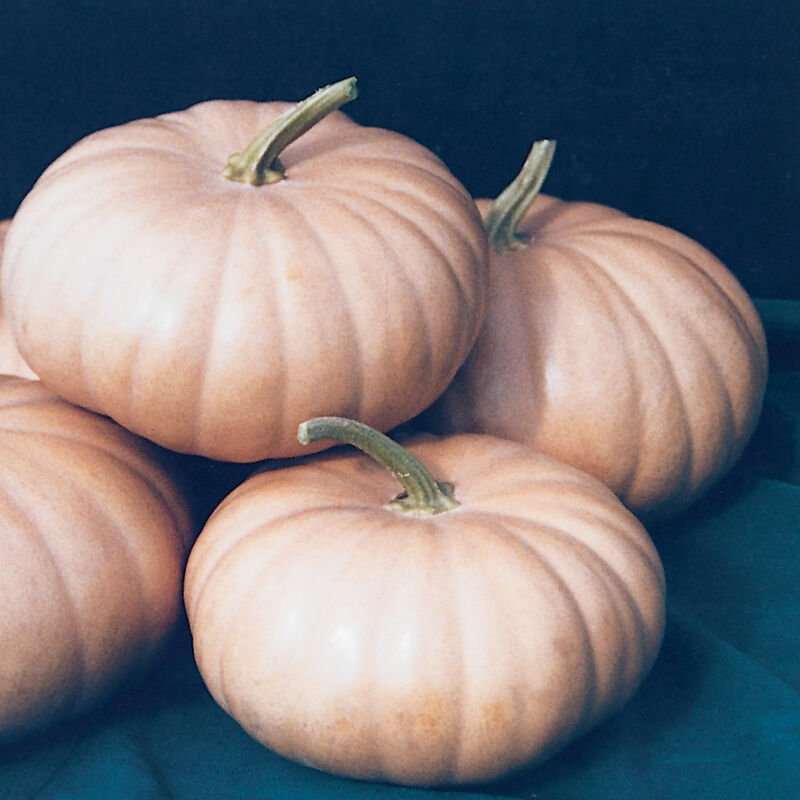
Here’s what cheese pumpkins look like. They also make great pie.

Read Full Post »

Zucchini Still Life, by L. Kabakova.

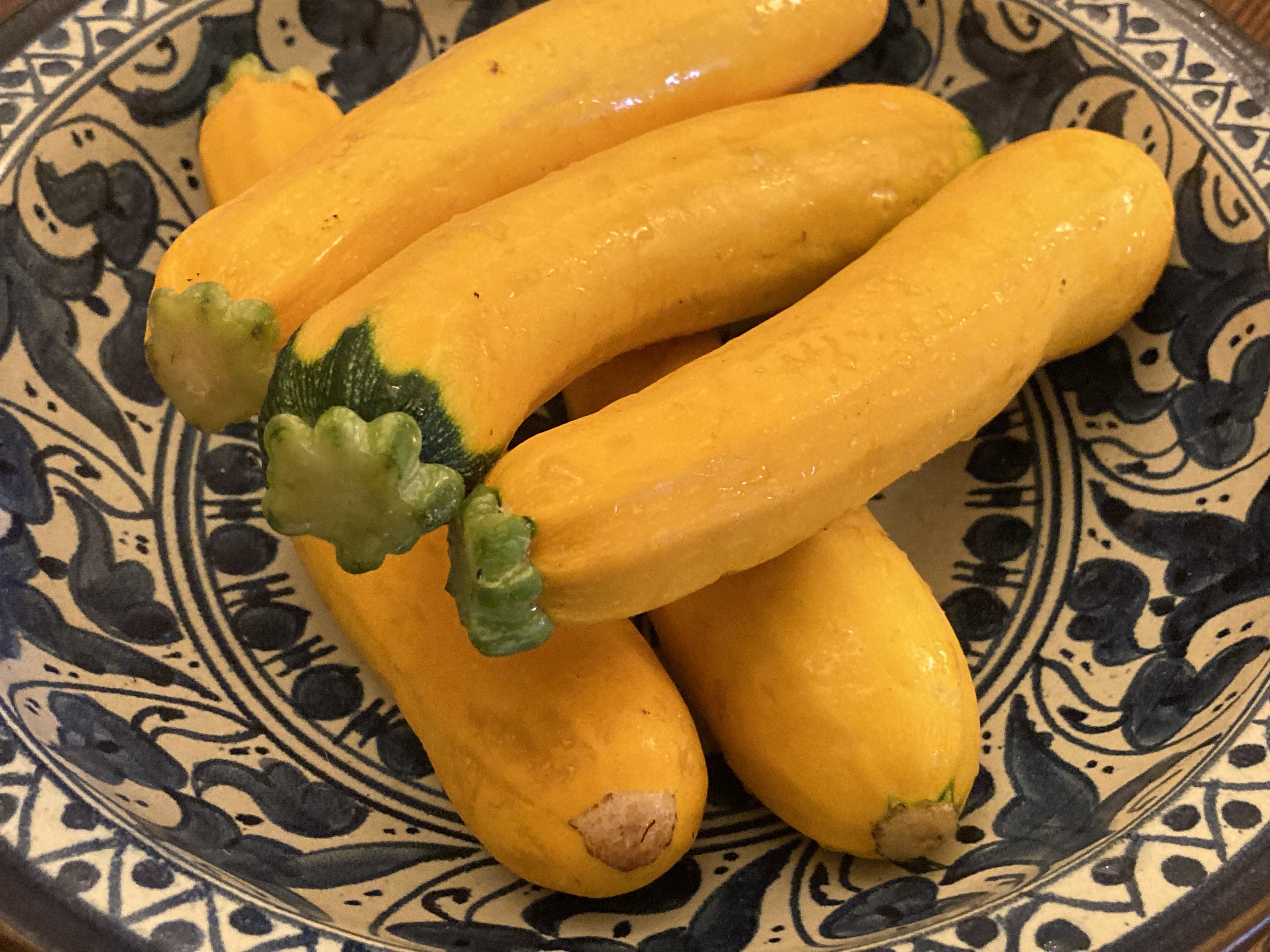
I bought deep yellow zucchini at Story Farms, in Catskill, New York, the other day. You can see in my photo that they have dark green tips near their stems. The things are gorgeous. Their yellow is thick, verging on orange. Of my Winsor & Newton watercolor tubes this would be their Cadmium Yellow.

Not only is this zucchini cultivar beautiful, it’s also a little sweeter than the green ones. Less green-leafy, more soil-earthy in taste. There are a bunch of varieties of yellow zucchini. The one I found at Story is called Golden Delight. Its color alone makes me grab some every summer. It’s a prompt. A call to action.

This time around, out came a soup. A cold soup. Topped with herbs, like everything I cook in the summer. Lately I love a simple herb oil garnish—just herbs, good olive oil, and a little salt, whizzed up to almost a purée. There’s nothing like it for herbal essence (remember that shampoo?). This time I used Genoa basil, set to bright green by quick blanching. I thought it looked wonderful against the yellow of the soup. You might instead go with spearmint if you prefer.

There’s no cream or butter in this soup, and that’s good when you serve it cold, letting the texture flow smooth and loose. The soup gets its depth of flavor from good olive oil, so use your best, both in the soup and in the herb oil. I chose Benza BuonOlio, made from 100% Ligurian Taggiasca olives. It’s rich and mellow with not much of a bite. Gustiamo.com carries it. It’s a new favorite of mine.

I hope everyone is doing some creative summer cooking. We’re deep into it now.

Golden Zucchini Soup with Saffron, Basil Oil, and Pine Nuts

Extra-virgin olive oil (4 tablespoons for the soup, plus ⅓ cup for the basil oil)
1 large summer onion, diced
1 medium carrot, peeled and diced
5 or 6 medium-size golden zucchini, chopped
1 large Yukon Gold potato, peeled and chopped
½ teaspoon fennel pollen or ground fennel seed
½ teaspoon turmeric
Salt
A splash of dry vermouth
1 quart light chicken broth (or vegetable broth)
A big pinch of saffron, crushed and dissolved in about ¼ cup hot water
A big pinch of ground green peppercorn
About 15 basil leaves
A few drops of rice wine vinegar
A palmful of pine nuts, lightly toasted

Get out a soup pot, and set it over medium heat. Add 2 tablespoons of olive oil, and let it warm. Add the onion and carrot, and sauté until both are fragrant and starting to soften, about 3 minutes. Add the zucchini and the potato, the fennel pollen or seed, and the turmeric, and season with a little salt. Sauté for another few minutes to open up all these flavors. Add the vermouth, and let it bubble away. Add the chicken or vegetable broth and enough water to cover the vegetables. Bring to a boil, and then cook at a steady bubble, uncovered, until the potato and zucchini are tender when poked, about 20 minutes. Add the saffron water, the green peppercorn, and 2 more tablespoons of olive oil.

While the soup is cooking, make the basil oil. Set up a small saucepan, and fill it halfway with water. Bring it to a boil, and add some salt. Drop in the basil leaves, and blanch for about 30 seconds. Drain them, and run cold water over them to set their color. Squeeze out as much water as you can, and put the basil in a food processor. Add ⅓ cup of olive oil and a big pinch of salt. Pulse a few times. You want a slightly chunky purée. Pour it into a small bowl.

Purée the soup in a food processor, and then chill it. When the soup is cold, check its consistency, adding a little cold water if it needs loosening. And check its seasoning, too, adding a few drops of rice wine vinegar for brightness if needed.

Top each serving with a spiral drizzle of basil oil and a scattering of pine nuts.

And here’s a little video from another of my favorite farm stands, Montgomery Place Orchards, in Red Hook, New York.

Read Full Post »

Cabbage, by Akhilkrishna Jayant.

Recipe below: Duck and Cabbage Soup with Flageolets and Marsala

Cabbage. It’s not wildly inspiring. Scrolling through my blog recipes, and I’ve done a thousand of them, I find only two cabbage recipes, both for Italianized versions of cole slaw. I’m a little surprised by that. Cabbage is a good thing. I love all the other farty, gassy vegetables. Why have I been ignoring cabbage? I’ve immediately realized this was a huge waste on my part. Cabbage has potential for beauty. So I’ve gone out and bought myself a big savoy cabbage, sat it on my kitchen counter, and stared at it for a long time. My creative head didn’t churn with excitement, but I figured, well, there’s always soup.

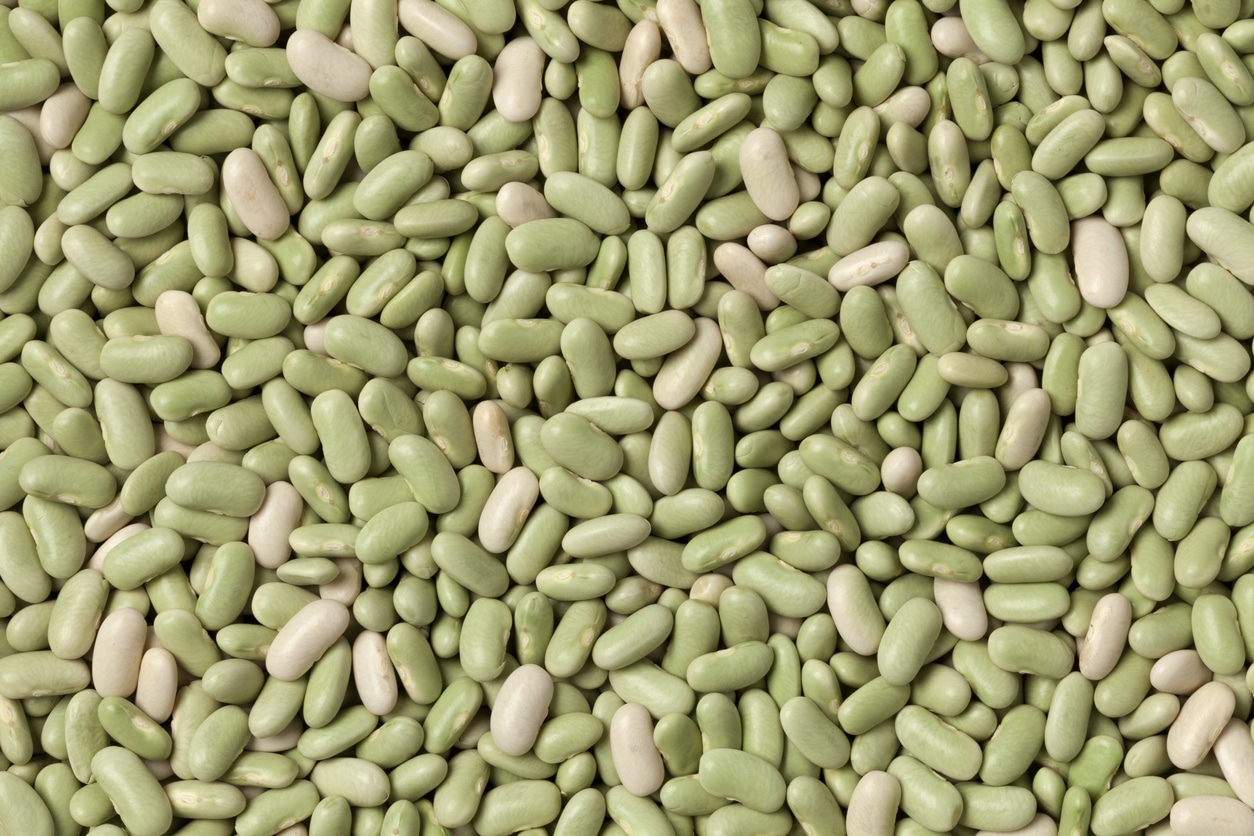
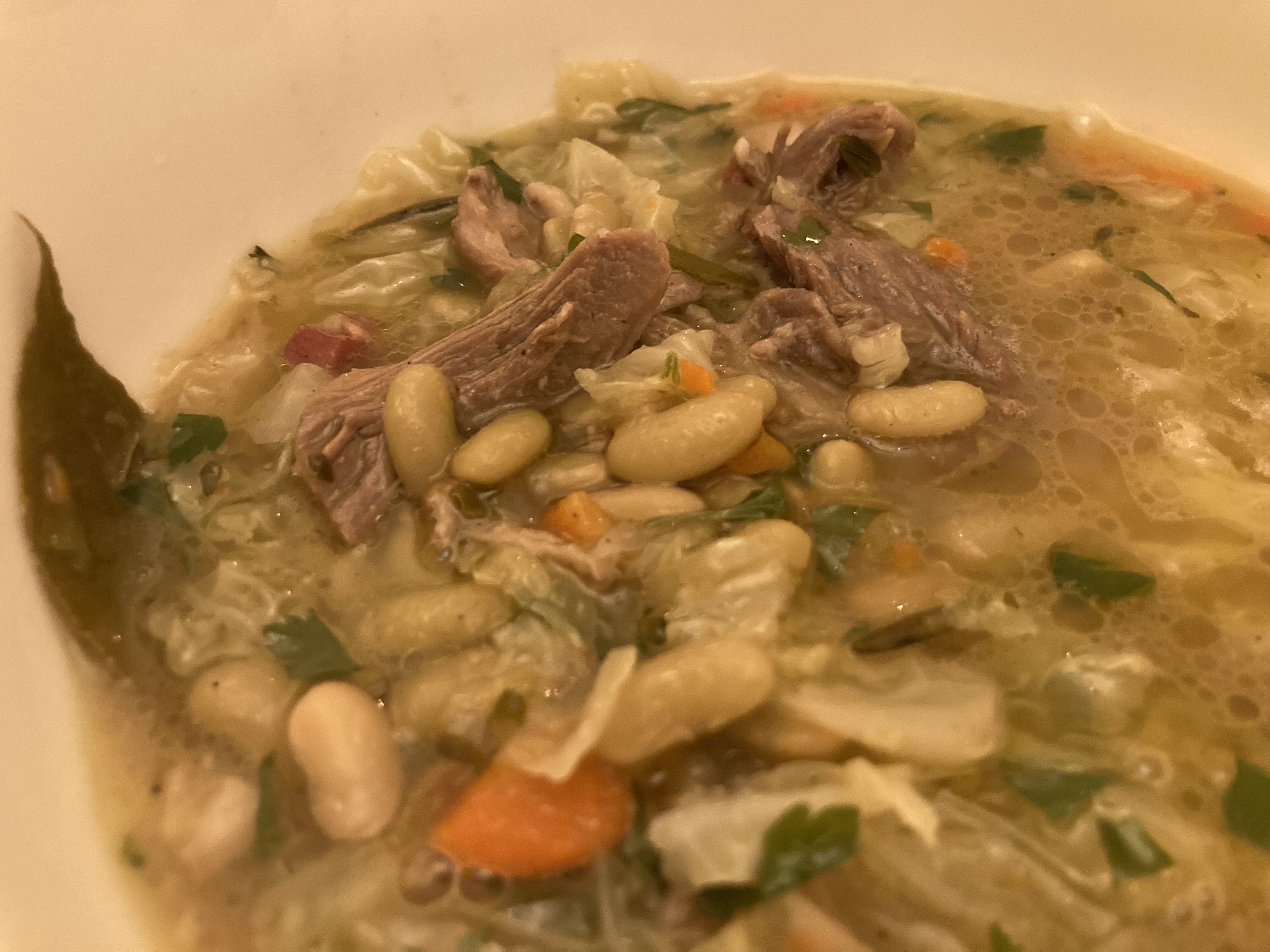
I originally planned on a cannellini bean, cabbage, and sausage–type soup, an Italian winter classic that nobody in my family ever made, but I didn’t have cannellini beans. I did have a bag of Rancho Gordo flageolets, lovely light-green beans that hold their shape nicely after cooking. I decided to go with them, but they seemed inappropriate for an Italian soup, so off I went in an different culinary direction, coming up with something more like a deconstructed cassoulet. I know cassoulet doesn’t typically include cabbage, but the duck, fatty pork, and deep winter herbs I included still made the dish taste like cassoulet. It was declared a success by my sister, my husband, and my friend Jay. That made me happy.

Duck and Cabbage Soup with Flageolets and Marsala

For the beans:

1 1-pound bag flageolet beans (I used Rancho Gordo)
2 fresh bay leaves
1 tablespoon white miso
1 long branch of thyme
1 garlic clove
1 splash dry Marsala
Extra-virgin olive oil
Salt
A drizzle of sherry wine vinegar

For the rest of the soup:

4 duck legs
1 teaspoon ground allspice
Salt
Black pepper
Extra-virgin olive oil
1 ½-inch round slice of pancetta, cut into medium dice
2 carrots, cut into medium dice
1 celery stalk, with its leaves, chopped
1 onion, cut into small dice
2 fresh bay leaves
1 large sprig rosemary, its leaves chopped
A few large sprigs thyme, their leaves chopped
A sprinkling of ground nutmeg
About ½ cup of dry Marsala
1 quart homemade chicken broth
About 3 cups roughly chopped savoy cabbage
A drizzle of sherry wine vinegar
A chunk of grana Padano cheese, to shave over the top

The first thing you’ll want to do is cook the beans. What I did was put them in a big pot and add the bay leaves, miso, thyme, garlic clove, a big splash of the marsala, and a large drizzle of olive oil. I added cool water to cover by several inches, brought it to a boil, and then turned the heat down very low and simmered the beans, partially covered, until tender. Check occasionally to see if they need more water.  Mine took a little over an hour. Rancho Gordo beans are usually recently harvested, so they’re not as dry as, say, Goya. They cook quicker. In the final 15 minutes I added salt and a drizzle of sherry wine vinegar. Then I let the beans sit in their cooking liquid. You can cook the beans the day before you make this soup, if you like.

Now for the duck. Score the duck legs in a crisscross fashion, just going through the fat. Rub the duck with allspice, salt, and black pepper.

Get out a big soup pot, and drizzle in some olive oil. Turn the heat to medium. Add the duck legs, skin side down, and cook them slowly until they’re golden brown and much of the fat has left the skin, about 8 minutes or so. Give them a turn and cook the other side for another 5 minutes. Take the duck legs from the pot. Pour off all but a few tablespoons of the duck fat. Add the pancetta, and cook until crisp. Add the carrot, celery, onion, bay leaves, rosemary, thyme, and nutmeg. Let them cook until soft and fragrant, about 5 minutes. Return the duck to the pot. Add the Marsala, and let it bubble for a few seconds. Add the chicken broth, and bring it to a boil. Then turn down the heat, cover the pot, and let it simmer for 2 hours. By this time the duck should be really tender.

Take the duck out of the pot. Spoon off excess fat from the surface and then add the beans, with their cooking liquid, and the cabbage. If the result seems too bulked up, add water, or more broth if you have it. Cook, uncovered, over medium heat, until the cabbage is tender, about 20 minutes.

Take the meat off the duck legs, and pull it into bite-size pieces, discarding the fatty skin. Add it to the pot, and give everything a good stir. If the soup looks too thick (I like a rather loose soup), add water or more broth.  Add a drizzle of sherry wine vinegar. Taste for seasoning and adjust. You might want a little more rosemary or thyme or black pepper.

Shave a little grana Padano over the top of each serving, if you like.

By now probably many of you will have have seen A Complete Unknown, the biopic about Bob Dylan, and possibly like me you were angered by the depiction of Suze Rotolo, who was portrayed as a whining doormat. In reality she was the product of a nice Italian communist family from Greenwich Village and grew up to be a civil rights activist and a painter, and she was an early influence on Dylan’s worldview. She also didn’t look anything like the pixie-nosed blonde who played her in the movie.

I highly recommend a 2008 video of her reading from her then soon-to-be-released memoir A Freewheelin’ Time. It was recorded at the Calandra Institute, an organization in Manhattan dedicated to Italian American studies. I often attend programs there. It’s a good resource to know about. Here’s the video: https://www.youtube.com/watch?v=mnG-G99Fhnc. And here’s a link to their website: https://calandrainstitute.org

Read Full Post »

Lemon and a Sprig of Lemon Thyme, by Julian Merrow-Smith.

Recipe below, in text: Cool Zucchini Soup with Lemon Thyme

I never used to love lemon thyme. I found it too air-freshener-y. But the more I’ve learned how to work with it, the more I’ve changed my mind. It’s a matter of application, of handling. Lemon thyme is a multipurpose herb. The thyme feature of its personality can make it work as an anchoring herb, one you’ll want to add during cooking so its peppery, allspice-like, woody flavor can open up with heat. (Ever wonder why Jamaican cooks use allspice and thyme together so often? It’s because they taste alike. There’s an affinity there.) But also you’ve got the clear lemon overtones that provide an uplift, especially if you include it at the end. In the case of this soup, I’ve added it at the beginning of cooking and then chosen to wait and add it again after I’ve chilled the soup, so it stays fresh and relevant. It’s deep and good this way. No air freshener, no stupid scented candle.

To make this soup you’ll want to get out a good-size soup pot and set it over medium heat. Drizzle in a few tablespoons of extra-virgin olive oil, and add a large summer onion, chopped, using some of the tender green stem. Add a medium-size baking potato, peeled and chopped. Add some salt, and let it all cook for a few minutes. Then add about 6 or 7 small zucchini, chopped, and the leaves from about 4 lemon thyme sprigs. Let it cook until everything is fragrant and just starting to soften. Add a splash of dry vermouth, and let it boil away. Add 4 cups of chicken broth or vegetable broth and enough water to just cover the vegetables. Bring it to a boil, and then turn the heat down a touch and simmer at a low bubble until everything is tender, about 15 minutes.

Next you’ll want to purée the soup in a food processor, probably in batches, pouring it into a large bowl as it’s puréed. Chill it for several hours. When it’s cold, add a little more salt, some freshly ground black pepper, and the chopped leaves from about 5 lemon thyme sprigs. I like this soup with body but still quite pourable. If you find it too thick, thin it out with a little cold water.

Give it a taste.  I found it needed a tiny drizzle of sherry wine vinegar to bring up its acidity. Your soup may not. Serve cold, garnished with a drizzle of your best olive oil and a few lemon thyme sprigs.

This will make four big portions.

Read Full Post »