
Recipe below, in text: Calzone with Scamorza and a Spring Herb Pesto
The word calzone doesn’t immediately make me think warm weather cooking. It reminds me more of being a broke, hungry 20-year-old, on a freezing day in downtown Manhattan, urgently needing to get hold of the most filling food I can find for the smallest amount of cash. Industrial prosciutto, dough, dripping ricotta, all in a hot, oily package. I worshipped the calzone back then. Still do, but maybe not as desperately.
A calzone is not a thing of elegance (the word means pants leg, which kind of sums up its clunky look and feel), but as I was thinking about new dishes to make with all the herbs now exploding in my garden, I thought, why not a calzone? Why not lighten one up with fresh greenery?
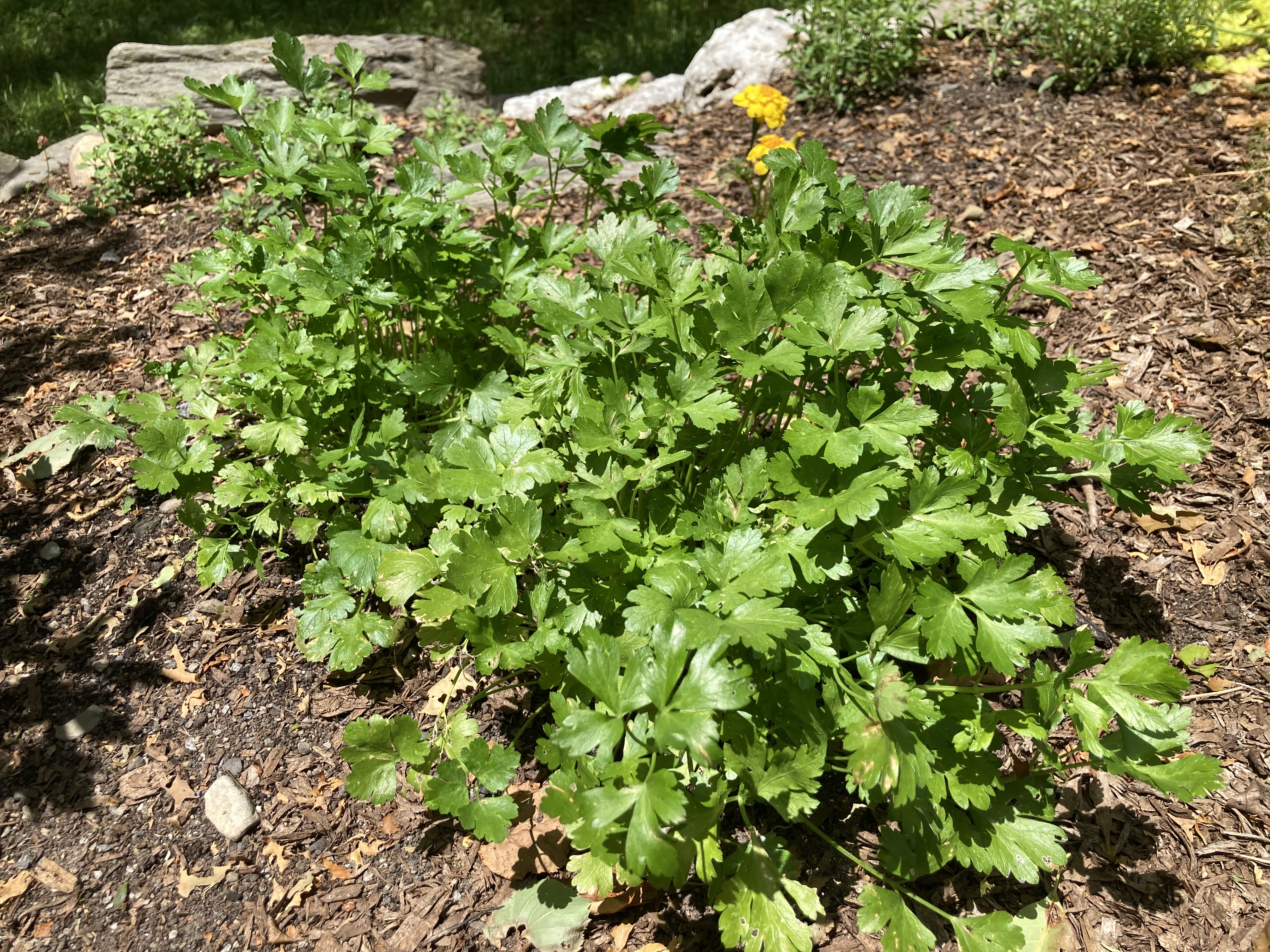
My Italian parsley was growing fluffy and deep green, and it became the anchor for the pine nut–heavy pesto that got smeared inside my calzone. The rest was just Southern Italian knowhow, meaning I chose my cheeses wisely.
And speaking of Southern Italy, I always knew the calzone had been born in Napoli, since it’s basically a folded over pizza. It completely makes sense to me as a possibly unintended creation. I’ve inadvertently created many calzoni when shooting a pizza with a little too much force off its peel and onto the back of the oven, making a folded up but deliciously messy pocket. This may have also happened in Naples sometime in the eighteenth century, when the calzone became the perfect, self-contained street food.
In New York it was always a pizza shop option, and when a slice wasn’t enough I’d chose the calzone. In my experience, the New York versions were larger than Southern Italian ones, which is typical of Italian-American food in general, where more is somehow considered better. I certainly felt more was better as a starving 20-year-old.
For this version of calzone I went with a no-knead dough that spent an overnight in the refrigerator. It was soft but not hard to work with. I just pressed it out with my fingers into a round.

To make the dough, shake a package of dry yeast into a large bowl. Add a cup of warm water (110 degrees is ideal), a tablespoon of honey, and 2 tablespoons of extra-virgin olive oil. Give everything a stir, and let it sit and bloom. That should take around 6 minutes. The surface should be a little bubbly.
Add 2½ cups of regular flour and about a teaspoon of fine sea salt. Stir everything around with a spoon until it comes together into a sticky ball, adding a little more flour if needed to make it easier to handle. The dough will be soft. Turn the dough out onto a floured surface, and form it into a ball.
Get out another bowl, and coat it well with olive oil. Drop the dough ball into it, turning it around once or twice to coat it with oil. Cover the bowl with plastic wrap, and stick it in the refrigerator overnight and into the next day, for at least 18 hours. By then it should have doubled in size.
Turn the dough out onto a floured surface, and punch it down. Divide it into four pieces, and roll each piece into a ball. Place the balls onto a floured surface, and let them sit, unrefrigerated, for about an 1½ hours. By then they will have puffed up a bit.
In the meantime, make the pesto. You can use whatever herbs you have or like, but what I did was grab a handful of parsley and basil leaves, a smaller one of tarragon, and 2 lovage leaves, about 2 cups in all. I blanched them for about a minute in boiling water and drained and then shocked them in cold water to set their bright green color. When you’ve done that, squeeze out most of the water. If you want to include stronger herbs such as rosemary, thyme, sage, savory, or oregano, use only a little and bulk them up with basil and/or parsley.
I put a palmful of pine nuts, along with 1 spring garlic clove, into a food processor and pulsed a few times. Then I added the blanched herbs, salt, and good Sicilian olive oil (about ½ cup), processing until it was all fairly smooth.
Then I put about 2 cups of whole-milk ricotta into a bowl, added a cup of grated scamorza cheese, salt, black pepper, a few scrapings of nutmeg, and a drizzle of olive oil, mixing it all together well. If you can’t find scamorza, caciocavallo is similar and will make an excellent substitute.
About an hour before you’d like to cook your calzoni, put a pizza stone in your oven, and turn the heat up as high as it goes.
Pour about ½ cup of good olive oil into a small bowl. Add a pinch of sugar and a more generous pinch of salt. Stick a pastry brush into the bowl, and keep it nearby.
When your oven is hot, flour a work surface, and press out one of your four dough balls to about a 6- to 7-inch round. Flour your pizza peel, and transfer the dough round onto it. Smear pesto all over the dough, leaving a little rim around the edges. Blob some of the ricotta mix onto one side, smoothing it out. Fold the dough over into a half moon, and crimp the edges.
Brush the top of the calzone with the olive oil mix, and slide it on to the stone. With this method you really can bake only one at a time. Bake it until it’s golden brown. This will take about 7 or 8 minutes, depending on how hot your oven is. I like eating these just out of the oven, with a glass of dry Italian white wine, such as a Greco di Tufo. They also reheat well.
Note: If you don’t have a pizza stone, just prep each calzone on an oiled sheet pan, and stick the pan in your hot oven. The stone will give you a quicker cook time and a crunchier crust, but both ways work fine. Just leave the calzone in until it’s good and brown.


 Erica De Mane