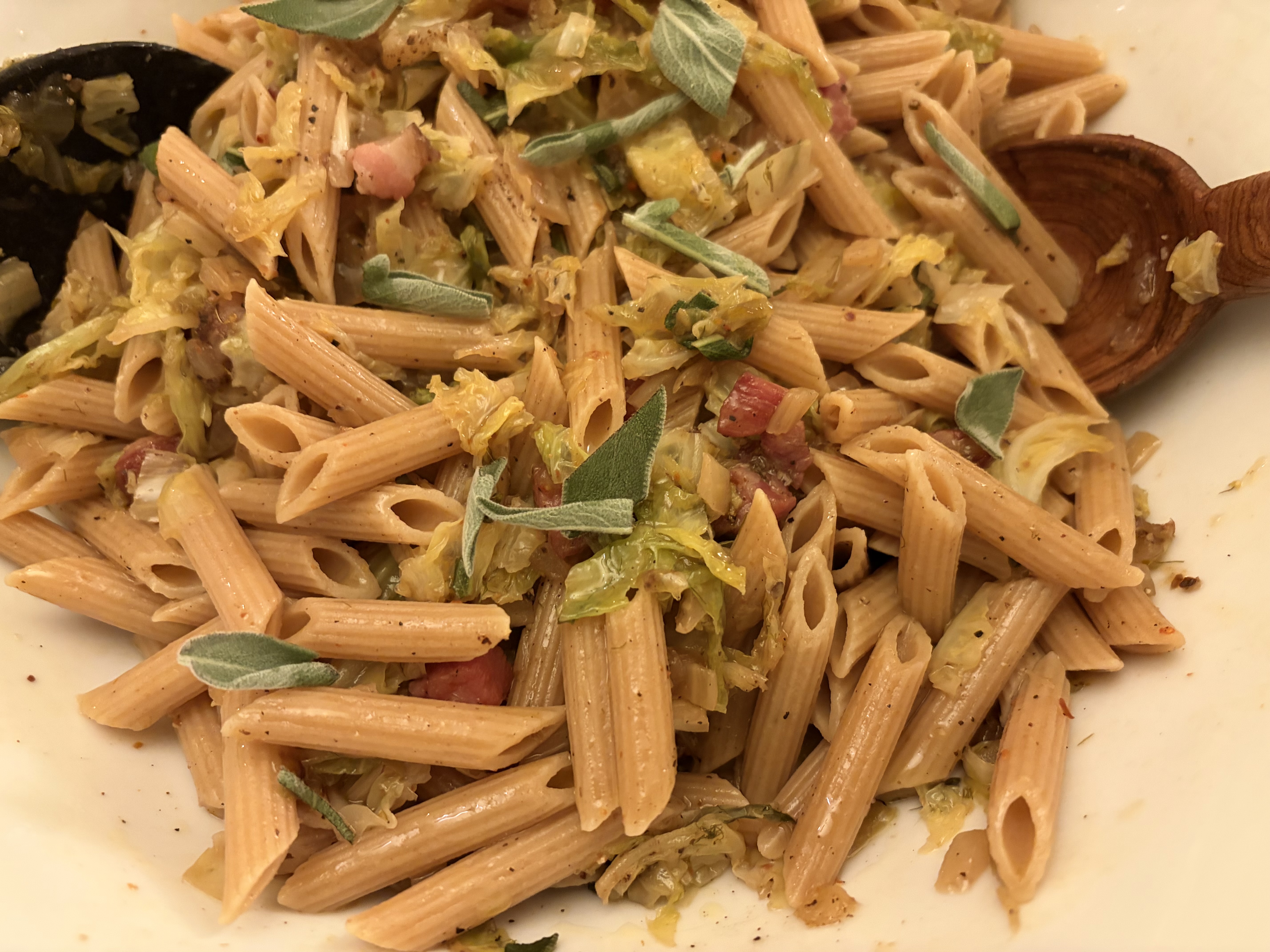
Recipe below: Penne Integrale with Savoy Cabbage, Pancetta, Fennel, and Sage
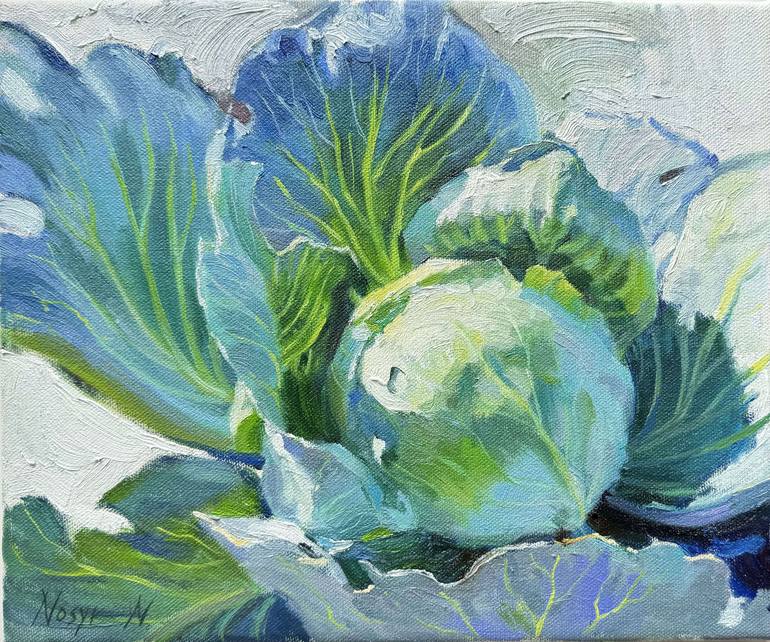
I don’t dream about cabbage the way I dream about eggplants and apricots, but sometimes I wish I did. You can’t force fascination, but every once in a while my neglect of cabbage creeps up on me, telling me I’m not a responsible enough cook. (I can’t just ignore an entire vegetable forever, can I?) I then push forward with this boring, to my Southern Italian mind, vegetable. and occasionally I come up with something really good. Here’s an example.
Penne Integrale with Savoy Cabbage, Pancetta, Fennel, and Sage
Salt Extra-virgin olive oil 1 approximately ½-inch-thick round of pancetta, chopped 1 Vidalia onion, chopped 1 fennel bulb, trimmed and chopped A small palmful of fennel seeds, ground in a mortar and pestle 1 pound whole wheat penne 1 small Savoy cabbage, thinly sliced Freshly ground black pepper A big splash of dry white wine About ¾ cup homemade chicken broth A few drops of rice wine vinegar About 8 small sage leaves, cut into chiffonade A chunk of pecorino sardo cheese
Set up a pot of pasta cooking water, and bring it to a boil. Add salt.
As the water is coming to a boil, get out a large sauté pan, set it over medium heat, and drizzle in a tablespoon or so of olive oil. Add the pancetta, and let it get crisp. It will give off a fair amount of fat, but that’s good. You want that. Add the onion and the fennel and the fennel seeds, and let them soften for a minute or so.
Drop the penne into the boiling water.
Add the cabbage to the pan, season it with salt and black pepper, and sauté it until it’s softened but not completely broken down into a mush, about 5 minutes or so. Add the splash of white wine, and let it bubble away. Add the chicken broth, and let it simmer for a few minutes. Add a few drops of rice wine vinegar to brighten the sauce, and add about half of the sage, stirring it in.
When the pasta is al dente, drain it, saving a little of the cooking water, and put it into a large serving bowl. Add a big drizzle of fresh olive oil, and give it a toss. Add the cabbage sauce, and toss again, adding a little of the cooking water if you need it to loosen the texture (I didn’t, but you never know). You’ll also want to check the seasoning, adding more black pepper or a little salt if you think the dish could use it. (I feel black pepper is an important spice for this dish, so use good peppercorns, such as Tellicherry or Malabar.) Garnish with the remaining sage. Top each serving with an ample grating of the pecorino sardo.
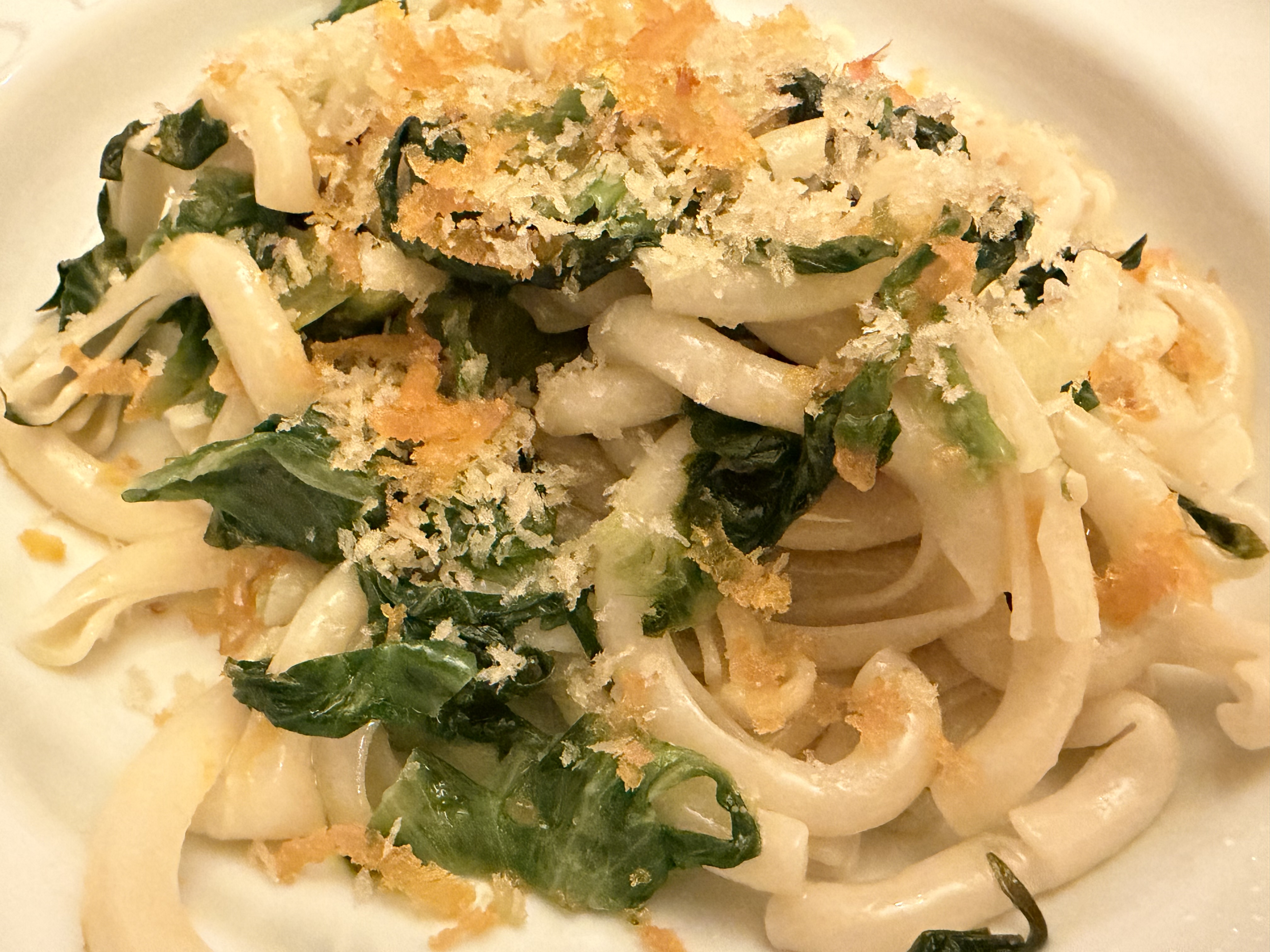
Recipe below: Spaccatelle with Escarole, Bottarga, and Sweet Breadcrumbs
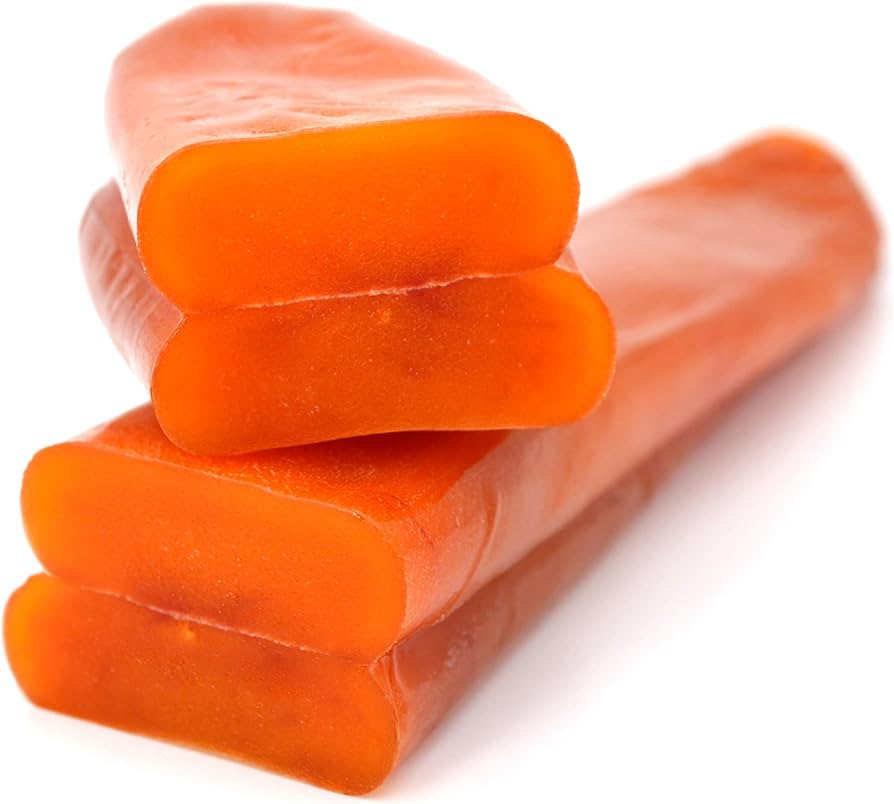
For me many foods reveal a clear link between memory and taste. For instance, the first time I had bottarga was many years ago in Mondello Beach, in Palermo, during my first trip to Sicily. The weather was hot, the beachfront restaurant was plain but to me extremely glamourous, with dried out wooden tables, no umbrellas to shield us from the sun, and an old waiter with a limp. I was presented with a bowl of spaghetti tossed with olive oil, garlic, hot chili flakes, and then gently retossed with shavings of bottarga, the dried fish roe that in Sicily is usually made from tuna. I had heard of bottarga, but I hadn’t yet tasted it. Being an anchovy fanatic, I was pretty sure it would be something I’d love. I was right.
That is a hot-weather bottarga memory that has lasted for many years, but now I think about bottarga more in winter than in summer. Why, I’m not sure. Possibly because I haven’t been back to Sicily in many years, but also maybe because here in New York I view it as a pantry ingredient, like anchovies, even though I don’t always have it hanging around unless I have a recipe working its way through my head. It’s more of a pantry-like ingredient that I stick in the fridge (once it’s opened I find that it’s good for many months).
Bottarga is nice both summer and winter; escarole is best right now. I’ve never seen a recipe for a pasta with escarole and bottarga, but I’m sure they’re out there. If not, here’s this one now.
Since my first experience with bottarga I’ve now eaten it and cooked with it many times. I’ve come to prefer the slightly sweeter and less bitter type made in Sardegna from grey mullet roe. I get it from Gustiamo. The brand they carry is l’Oro di Cabras. It’s excellent. Whatever bottarga you buy, it’s best to get the whole tongue and grate it yourself. The dry pregrated stuff is always disappointing, plus you don’t get the experience of scraping off slices and watching them lightly melt onto the hot food, which I find beautiful. I’ve written more extensively about bottarga in other posts. Here’s one, if you’d like to learn more.
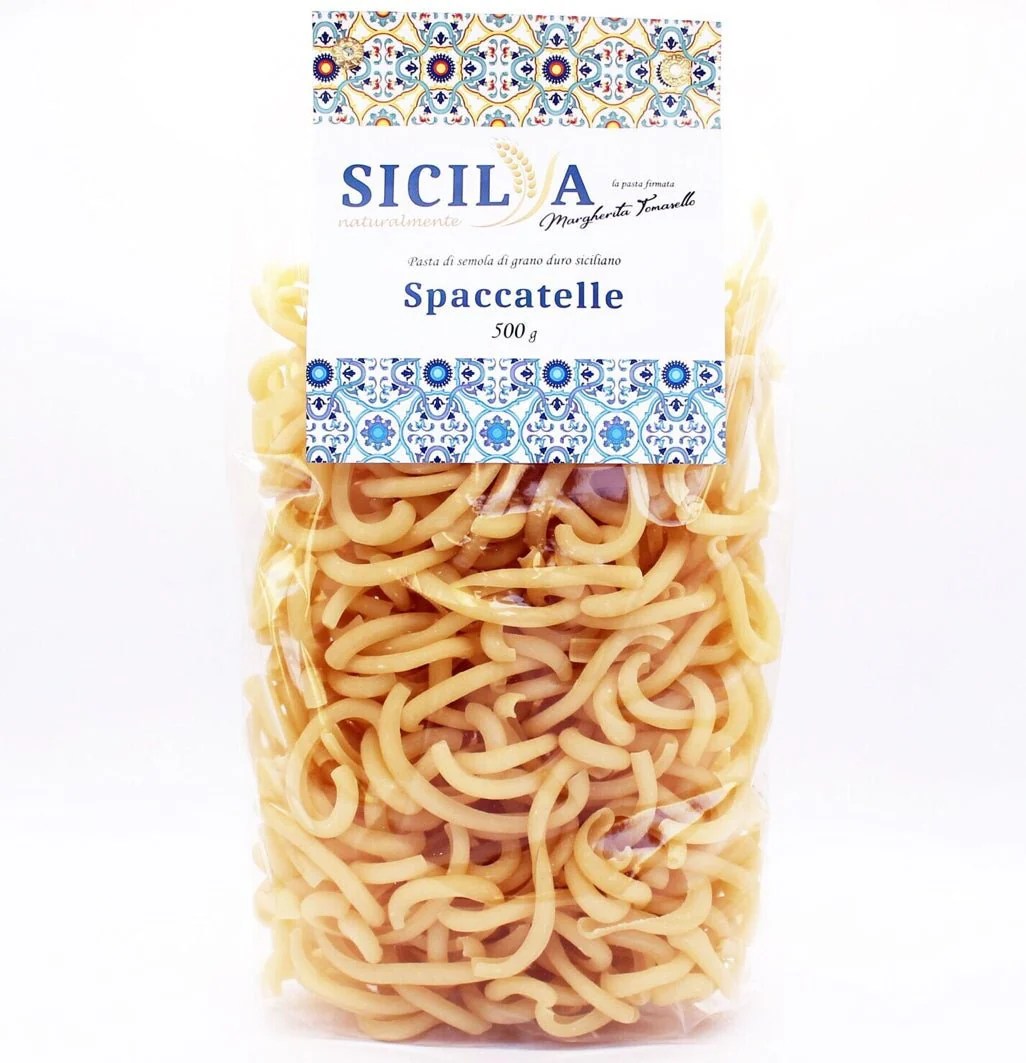
At Citarella I found a bag of a pasta called spaccatelle, a shape I had seen around but possibly never cooked with (is that even possible?). Its dainty but not too delicate shape seemed right for this recipe. Bottarga is often paired with spaghetti or another string pasta, but my addition of escarole made that match seen klutzy. Spaccatelle is a Sicilian pasta that gets its name from the split down the center (spaccatura means fissure or split). Sicilia Naturalmente, by Margherita Tomasello, is the brand I found. Trecce or gemelli would be a good substitute.
It has been extremely cold in New York for over a week, not even getting near freezing. If you’re experiencing similar, or even if you’re in Key Largo or somewhere warm like that, I hope you’ll give this pasta a try. It’s really nice with a glass or two of Sardinian Vermentino.
Spaccatelle with Escarole, Bottarga, and Sweet Breadcrumbs
Extra-virgin olive oil ¾ cup homemade breadcrumbs, made from good, hard Italian bread Salt 1 teaspoon sugar
For the rest:
Salt 1 medium head escarole, roughly chopped ½ pound spaccatelle, gemelli, or trecce Extra-virgin olive oil 2 fresh unsprouted garlic cloves, thinly sliced 1 small jalapeño, minced (and seeded, if you like less heat) The grated zest from 1 lemon, plus some of its juice A splash of dry vermouth 1 tablespoon unsalted butter About ¼ of a bottarga tongue, preferably from Grey Mullet, peeled from its outer wax wrapping
To make the sweet breadcrumbs, get out a small sauté pan, and set it over medium heat. Drizzle in a little olive oil, and add the breadcrumbs, some salt, and the sugar. Stir everything around until the crumbs become golden and fragrant, about 2 minutes. Turn off the heat, and tip them into a small bowl.
Set up a medium pot of water, and bring it to a boil. Add a little salt. Drop in the escarole, and blanch it for about a minute. Drain it into a colander, and then run cold water over it to stop the cooking and set its bright green color. Squeeze as much water out of it as you can, and give it a few good chops so you have bite-size pieces.
Set up a pot of pasta cooking water, and bring it to a boil. Add salt. Drop in the pasta.
Get out a large sauté pan, and set it over medium heat. Add a about ¼ cup of really good olive oil. Add the garlic, the jalapeño, and the lemon zest, and sauté until fragrant but not letting the garlic color, about a minute or so. Add the escarole, and season with a little salt (not too much, since the bottarga is salty). Sauté a minute to blend all the flavors. Add a splash of dry vermouth, and let it boil off.
When the pasta is al dente, drain it, saving about a cup of the cooking water, and add the pasta to the sauté pan with the escarole. Turn off the heat. Add a big squeeze of lemon juice and the butter, and grate about ¼ cup of bottarga into the pasta. (I used a large-hole grater, which grated the bottarga into thin strips. I think that looks prettier than what a microplainer gives you, and tastes better, too.) Add a little cooking water, and toss gently. You should have a creamy but not overly liquid texture.
Serve out the pasta into two shallow bowls. Sprinkle a little of the breadcrumbs over the top, and then finish with a fresh grating of bottarga.
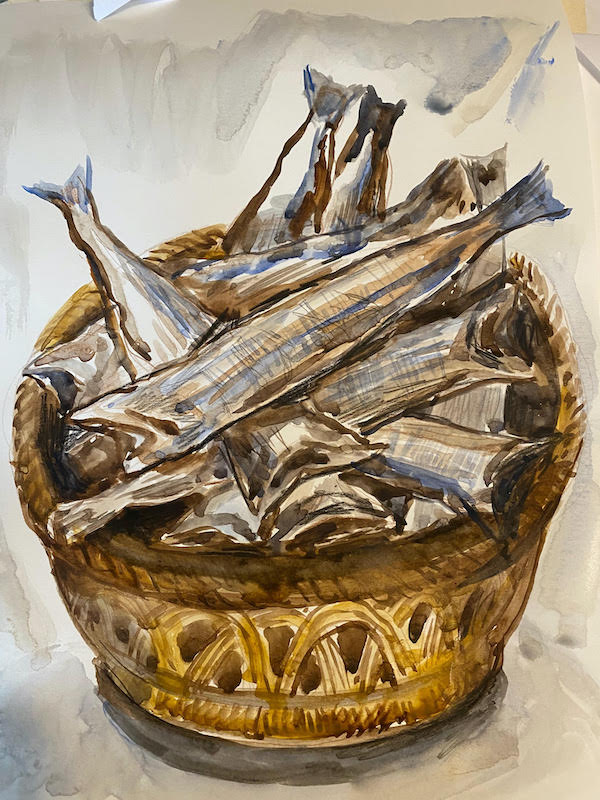
Christmas Still Life with Fish, by Salvador Diaz Ignacio Ruiz de Olano
Recipe below: Lumache with Fresh Tuna, Taggiasca Olives, Arugula, and Bottarga
Recipes linked to in text below: My Pizza di Scarola; Roasted Red Sweet Peppers Filled with Leftover Baccalà Mantecato from Christmas Eve
Christmas Eve and mental health troubles often go hand in hand, at least in my family. The holiday seems to unleash a general sense of turmoil in some people and a deep loneliness in others (or sometimes both iin the same person). I have recently had a few Christmas Eves surrounded by weird behavior, calling for a paring down of the whole evening—fewer people, smaller menu, puny tree with not enough sparkles. That has been sad for me, as Christmas Eve is my favorite food holiday. But this year looks like it’s shaping up to be different. No one will be going nutty (although people can surprise you), and the entire atmosphere feels brighter. I’m looking forward to putting together a solid and beautiful Christmas Eve dinner. Progress can be made.
I’ve been thinking about how this important fish-based dinner has changed for me over the years, especially since I’ve become the person in charge of the menu. I’ve moved on from some of the family classics, such as linguine with clams (which I love, don’t get me wrong) and added a few dishes that are classics in various parts of Italy but didn’t make their way onto my childhood table. I’m thinking specifically of pizza di scarola, a Neapolitan Christmas Eve tradition that I now can’t imagine the evening without. I’ve made the double-crusted torta in many variations, sometimes adding capers or olives, occasionally going escarole-heavy with few embellishments, sometimes adding caciocavallo; the inclusion of anchovies is non-negotiable . And I almost always use an olive oil crust. You can do a pasta frolla with butter, but I think the olive oil version goes better with the filling. If you’d like to give it a try, here is one of the ways I do it.
Also baccalà is a must for me now, although my mother would have been grossed out dealing with it in any form. I love salt cod and usually make it Venetian-style, whipped up with a lot of good olive oil and a little potato and then given a gratinée treatment with breadcrumbs and sometimes olives on top. This year I’m planning a different presentation, though. I’ll be spooning the whipped fluff on bruschetta and topping it with roasted peppers and fresh marjoram, more of a Spanish concept, I guess. Here is my recipe for that.
I also love fresh tuna with pasta. Canned Italian tuna is traditional for the dish below, but fresh produces a lighter taste. I make it with fresh tuna quite often. This new one is bold and bright, just the way I hope the my Christmas Eve will turn out to be.
If you don’t have or don’t want to use bottarga, you can instead sprinkle each serving with sautéed breadcrumbs, maybe with a little Aleppo worked in.
Lumache with Fresh Tuna, Taggiasca Olives, Arugula, and Bottarga
1-pound fresh tuna (I used wild caught U.S. yellowfin), cut into approximately ½-inch cubes Extra-virgin olive oil Salt A pinch of sugar Aleppo pepper, to taste 2 pints grape tomatoes 1 large shallot, chopped 2 fresh garlic cloves, thinly sliced 1 pound lumache pasta A splash of sweet vermouth ½ cup vegetable or light chicken broth A handful of Taggiasca olives, pitted and torn in half (Niçoise are very similar, so use those if you can’t find Taggiasca) 5 large sprigs of marjoram A big handful of baby arugula, stemmed 1 small piece of bottarga, peeled of its outer casing (I prefer Sardinian gray mullet bottarga, which I order from Gustiamo).
Toss the tuna chunks with a little olive oil, salt, a sprinkling of sugar, and some Aleppo.
Set up a pot of pasta cooking water, and bring it to a boil. Add salt.
While the water is coming to a boil, get out a large sauté pan, and set it over high heat. When it’s good and hot, add the grape tomatoes, and shake them around a few times until they start to burst. Add the shallot, a little salt, and some Aleppo, and let it cook for about a minute. Add the garlic, and cook until the tomatoes give off some juice and the garlic is fragrant, about a minute longer.
Drop the lumache into the water.
Add a big splash of sweet vermouth to the sauté pan, and let it bubble for a few seconds. Add the vegetable or chicken broth. Turn the heat down to medium.
Add the tuna to the sauce, and cook it for only about a minute so. You want it to stay quite pink in the center. Add the olives and the marjoram.
When the pasta is al dente, drain it, saving about a cup of the cooking water, and put the pasta in a large serving bowl. Add the tuna sauce and a generous drizzle of olive oil. Add the arugula, and toss gently, adding a little cooking water if needed to loosen the sauce. Check for seasoning.
Top each serving with a few big gratings of the bottarga, or, if you prefer, with a sprinkling of toasted breadcrumbs.
And speaking of Christmas Eve fish, check out the Museo dell’Acciuga, an anchovy museum just outside of Palermo. I’ve never been, but it looks like a lot of fun. Next time for sure.
Recipes below: Ziti with Cannellini Beans, Mussels, and Rosemary; Baked Mussels with ’Nduja Breadcrumbs and Marjoram; Spaghetti with Mussels, ’Nduja, and Tomatoes (in text)
Does anyone cook ziti anymore? When I was a kid that was almost all we cooked, except when we made spaghetti. We ate a lot of baked ziti, in various forms. It was a thing. Baked ziti with eggplant, tomato, and mozzarella was my favorite (we called it Sicilian-style), but just plain tomato sauce and some type of good cheese was and is also excellent if done right.
Ziti is smooth, hollow, not too large, and not cut on an angle. Solid, no ridges. In my opinion it’s more charming than rigatoni or penne for most pasta needs, unless you require spaghetti or tiny soup pasta like acini di pepe. I used to use ziti to make garlands to drape around the Christmas tree—a good tight fit—spray painting them gold until I became a teenager and began painting them black.
Package designed by Dolce & Gabbana.
Ziti is a primarily Campanian pasta shape, which is why it has always been popular with so many Italian-Americans. I like the Gragnano-based Pastificio di Martino brand, so I was curious to know if the company had anything to say about the shape’s origin. Here’s what I found on their site:
“Short, smooth, tube-shaped pasta. Originally Ziti are a long type of pasta, usually hand broken before cooking and traditionally served on Sundays or important occasions. . . . Can be combined with a classic sauce of the Neapolitan tradition or with more creative versions, perfect to bake in the oven. The name Ziti came from zita who were the unmarried girls that stayed at home on Sundays to break the pasta with their own hands instead of going to mass. Today this practice is now performed in the homes of many Neapolitans and represents a real ritual performed by family members before cooking the dish.” Wow. I would always rather have stayed home breaking pasta than gone to church. I never knew it was an option.
When I was young, maybe under 13, baked ziti was a special-occasion dish, on Sundays and birthdays, and always with ragù or chunks of sausage, but as time went by it started to show up more often as a quick anytime dinner, with leftover tomato sauce, mozzarella, provolone maybe, ricotta sometimes, meat almost never, thrown in the oven. And occasionally there was that eggplant version, which drove me wild.
I start making pasta with various types of beans when the weather goes cool. Probably you do the same. Ditalini is the standard fazool pasta shape, but when I recently picked up a bag of mussels at the Greenmarket and decided to include them in my latest fazool, that changed the pasta sauce ratio in my head. Ditalini too small with mussels. Ziti perfect.
And while I’ve got mussels in the house, why not make stuffed mussels with ’nduja? I made a version of that last year for a friend’s birthday. It was really good, but then I overdid it with ’nduja for a few months and needed to lay off. After a half year cool-down, I’m fresh on ’nduja again. This dish is truly a simple one, but the payback is big. You’ll see that it contains only three main ingredients, ’nduja, panko, and an herb of your choice (I used marjoram, but Italian oregano or thyme would also be good, or for a more mellow result try Italian parsley). I hope you’ll consider making it. It’s excellent for a big group with its prepare-ahead-and-then-heat-on-command technique.
You’re probably asking, can I make this with clams? In my opinion, that doesn’t work as well. Their brininess clashes with the spicy fattiness of ’nduja. Two strong flavors collide. But what about the classic Spanish dish of chorizo and clams, you ask? That works, I believe, because it’s a looser concoction, usually brothy, where everything has room to mellow. That combo also comes up in paella, where there’s plenty of rice to separate the two strong ingredients. With these baked mussels, the flavors are literally right on top of each other, but mussels are gentle, not briny, smoothing the way for a spicy, fatty top coat.
The best time for mussels is during the colder months, October through February. Right now they are at peak flavor, less watery, plumper, sweeter. I almost always get my mussels from PE & DD Seafood at the Union Square Market. They fish early in the morning off Long Island and get it all into the city by the time the market opens. So fresh. They also sometimes offer their housemade smoked mussels. Also excellent.
1 2-pound bag mussels (about 30 mussels), cleaned 1 glass dry white wine Extra-virgin olive oil Salt 1 pound ziti 1 ¼-inch-thick round of pancetta, cut into small dice ½ a sweet onion (such as Vidalia), cut into small dice 3 tender inner celery stalks, cut into small dice, plus their leaves, chopped A big pinch of allspice About 1½ cups cooked cannellini beans, with a little of their cooking liquid. (A tip: For this dish it is good to cook them with a few fresh bay leaves, a whole garlic clove, and a few sprigs of rosemary, and add salt toward the end.) I used Rancho Gordo’s Marcella beans, which are named for Marcella Hazan. 5 or 6 sprigs fresh rosemary, the leaves chopped Aleppo pepper to taste Grana Padano cheese, if you like
Put the mussels in a large pot. Pour on the white wine. Turn the heat to medium-high, and cover the pot. When the wine starts to boil, uncover the pot, and stir the mussels around. Cook them until they open. With a strainer spoon, lift them from the pot into a large bowl. Strain the cooking liquid into a small bowl. I had about ¾ cup. When the mussels are cool enough to handle, remove them from their shells, and put them into a small bowl. Pour on the mussel cooking broth, and give them a drizzle of olive oil.
Set up a pot of pasta cooking water, and bring it to a boil. Add salt and the ziti.
Get out a large sauté pan, and set it over medium heat. Drizzle in about a tablespoon of olive oil, and add the pancetta. Sauté until the pancetta is crisp and has given up much of its fat, about 4 minutes. Add the onion and the celery, holding the celery leaves back for garnish. Sauté until softened, about another 3 minutes. Add the allspice, the cannellini beans, a little salt, and the rosemary. Sauté for another 3 or 4 minutes to blend all the flavors.
Now add the mussels with all their liquid, and gently reheat the sauce for no longer than a minute (you don’t want the mussels to overcook).
When the ziti is al dente, pour it into a large serving bowl, saving about ½ cup of the cooking water. Drizzle with about 2 tablespoons of fresh olive oil (you can use a really good one here), and give it a toss. Add the sauce. Sprinkle on Aleppo to taste, and give it another toss, adding a little of the cooking water if needed to loosen the sauce. Taste for seasoning. Scatter on the celery leaves. Serve hot. I like this without cheese, leaning more toward a heavier dose of Aleppo, but it’s not bad with a little grana Padano sprinkled on top. That’s up to you.
Baked Mussels with ’Nduja Breadcrumbs and Marjoram
1 2-pound bag mussels, (about 30 or so), well-rinsed ½ cup dry vermouth Extra-virgin olive oil 1 approximately ¼-pound chunk ’nduja (you’ll need about 3 tablespoons for this recipe, so use the rest for my bonus pasta recipe below or for anything else that strikes you as a good idea) 1 cup panko breadcrumbs About 5 or 6 big sprigs marjoram, the leaves chopped Salt if needed.
Put the mussels in a large pot. Pour on the vermouth, and turn the heat to medium high. Cover the pot, and let the mussels heat up. When the wine is steaming, uncover the pot and stir the mussels around. Cook them until they open.
Using a strainer spoon, lift the mussels from the pot and into a bowl. Strain their cooking liquid into a small bowl. When the mussels are cool enough to touch, pull off the top shell from each one, detach the mussel from the bottom shell, and then place the mussel back in the bottom shell.
Preheat the oven to 425 degrees.
Get out a medium sauté pan, and set it over medium heat. Add about a tablespoon of olive oil and the ’nduja, and let the ’nduja melt, about 3 minutes. Add the panko, stirring it around until it blends with the ’nduja and becomes crisp, about a minute or so. Add 2 tablespoons of the mussel cooking liquid, stirring it in. Turn off the heat, and add half of the marjoram. Pack each mussel with about a teaspoon of the ’nduja mix, and place the mussels shell side down in a baking dish. Give them a drizzle of olive oil. Stick the dish in the oven, and roast until hot and crispy, about 4 minutes. Garnish with the remaining marjoram. Serve hot or warm.
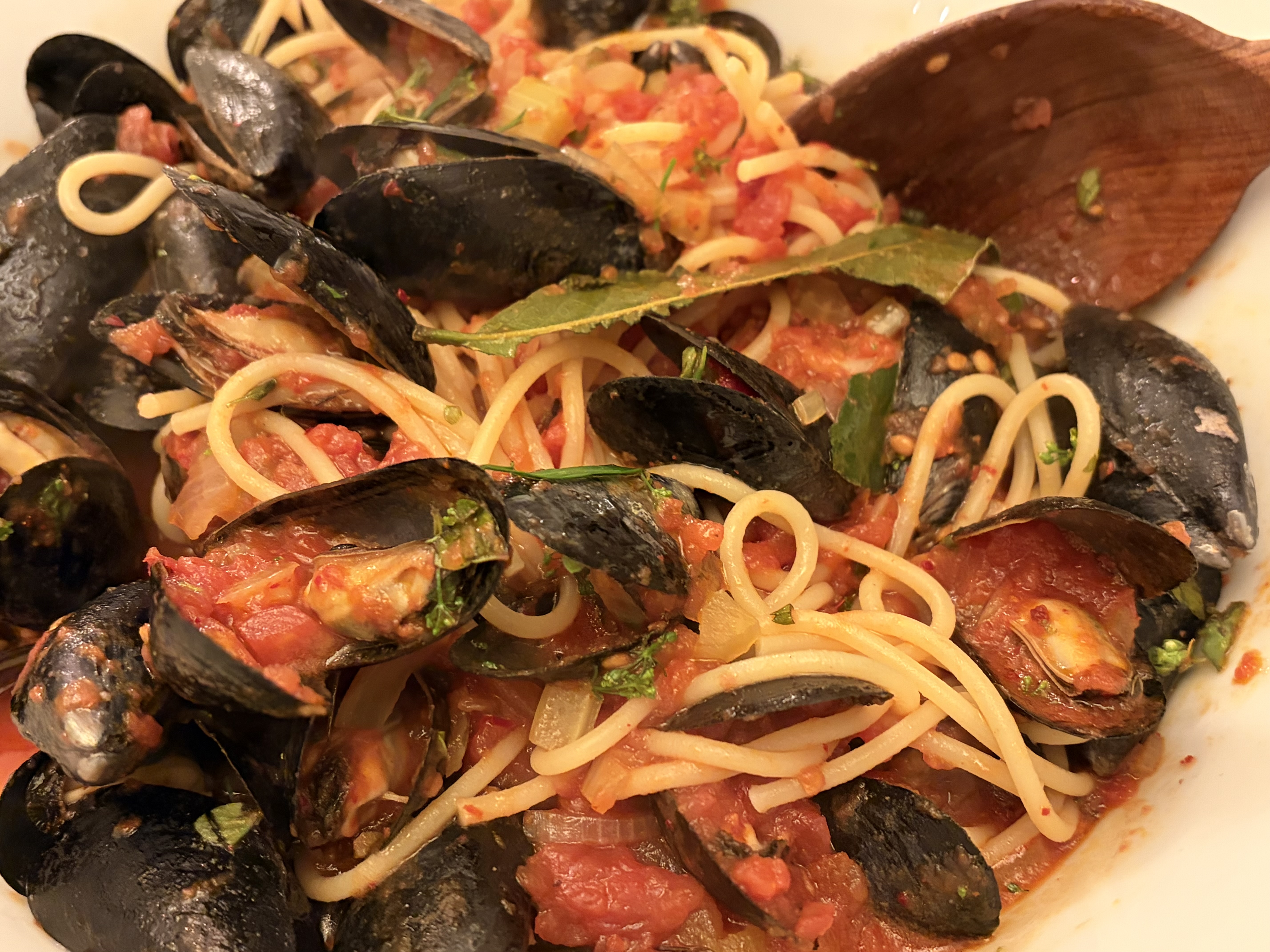
Bonus Recipe: After I retested my baked mussels with ’nduja recipe, I had mussels and ’nduja left over, so I made this Spaghetti with Mussels, ’Nduja, and Tomatoes, which serves 2.
Put 20 or so mussels into a saucepan, and pour on a big splash of white wine. Turn the heat the medium high, and cook the mussels, stirring them around occasionally, until they open. Turn off the heat.
Drizzle about 2 tablespoons of olive oil into a large sauté pan. Add about 2 big tablespoons of ’nduja, half a chopped onion, a chopped celery stick, a few fresh bay leaves, and a peeled and lightly crushed whole garlic clove. Sauté until everything is fragrant and softened, about 3 minutes. Add a splash of white wine, and let it bubble away.
Add a small can of Italian plum tomatoes, chopped, including the juice, and sauté for about 5 minutes.
Cook about ½ pound of spaghetti al dente, drain it, and pour it into a serving bowl. Drizzle on some fresh olive oil.
Lift the mussels out of the pot with a strainer spoon, and add them to the tomato sauce. Gently heat them through on low heat, no longer than about half a minute. Strain the mussel cooking liquid, and add it to the pan.
Pour the sauce over the spaghetti. Scatter on a generous amount of fresh herbs. I used marjoram, Italian parsley, and a few lovage leaves. Toss gently. Taste to see if you might need salt. Serve hot.
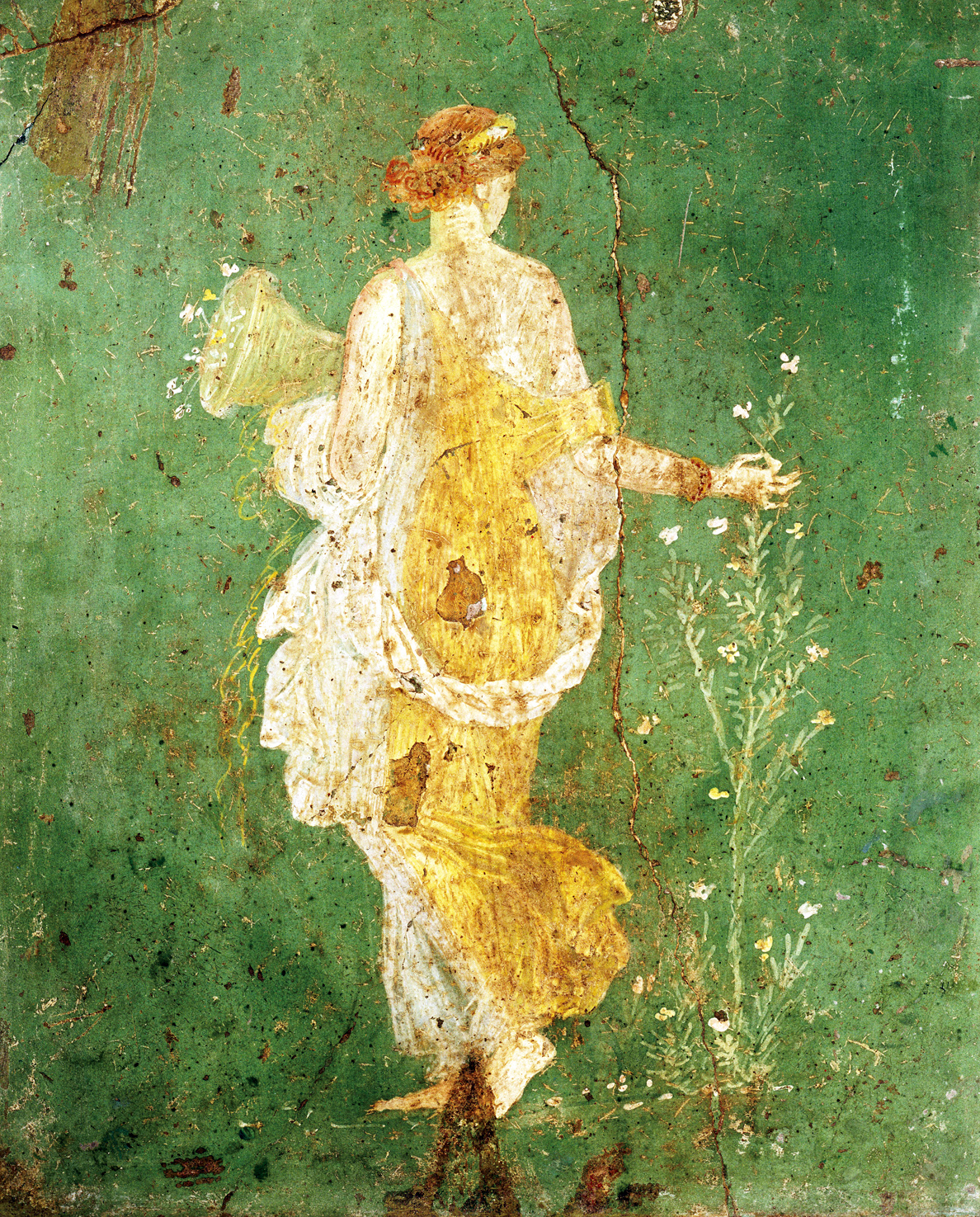
Flora, Goddess of Spring, a fresco from the Villa di Arianna, Stabia, which was destroyed during the Vesuvius eruption in the year 79 but this gorgeous work of art survived and is now in the Archeological Museum of Naples .
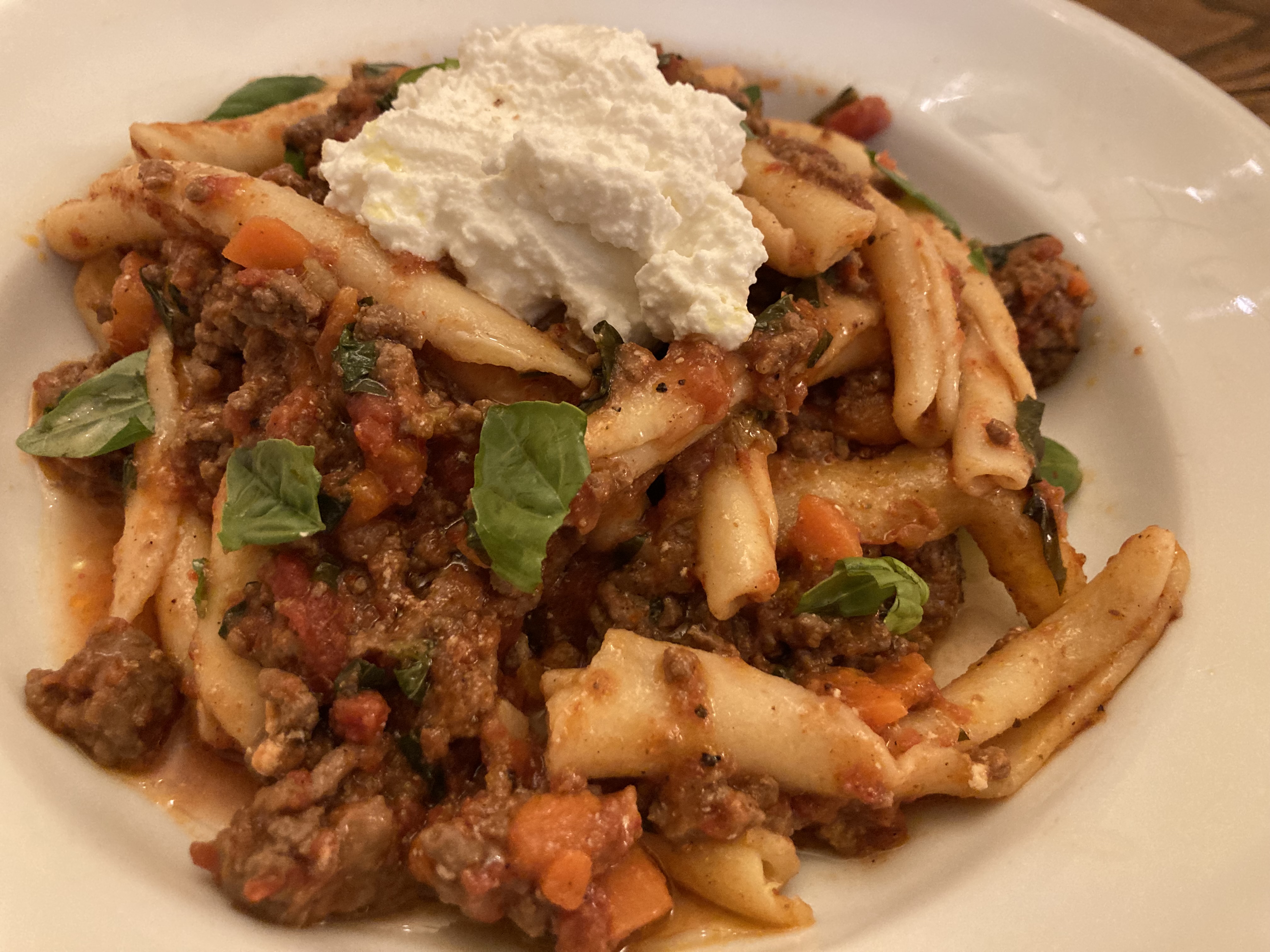
Recipe below: Strozzapreti with Lamb Ragù, Warm Spices, and Ricotta
I’m stepping into spring here with a dish that’s solid enough for a 42-degree, drizzly, windy, gray, almost April day but gentle enough to include two classic Southern Italian spring ingredients, lamb and ricotta. Our typical pre-Easter New York weather is utterly familiar and also completely frustrating on many levels. I’m chilled to the core and I don’t even feel like moving, which makes me even colder. My bundle of thick black tights is not yet shoved to the back of the drawer. But crocuses and daffodils and even dandelions are poking through the still mostly brown earth. And there’s this sweet spicy ragù simmering on my stove. Warmth can’t be far away.
Strozzapreti with Lamb Ragù, Warm Spices, and Ricotta
Extra-virgin olive oil 1 ¼-inch-thick round of pancetta, cut into small dice 1 Vidalia onion, cut into small dice 2 carrots, cut into small dice 2 inner celery stalks with their leaves, cut into small dice, the leaves lightly chopped 1 ½ pounds ground lamb ¾ teaspoon ground Ceylon cinnamon ¾ teaspoon ground allspice 1 teaspoon Aleppo pepper 2 fresh bay leaves Salt 1 cup dry white wine (I used an Orvieto, but anything that’s dry and not oaky will be fine) 1 cup chicken broth 1 28-ounce can whole Italian tomatoes, chopped 2 tablespoons unsalted butter ½ teaspoon sherry wine vinegar 1 pound strozzapreti pasta A big handful of basil leaves, lightly chopped A chunk of pecorino Toscano cheese 1 pound whole-milk ricotta, sheep’s milk if you can find it
Get out a big casserole-type pot fitted with a lid. Set it over medium heat, and drizzle in a few tablespoons of olive oil. Add the pancetta, and sauté until it’s crisp but not blackened and has given off much of its fat. Add the onion, carrot, and celery plus leaves, and let them sauté until fragrant, about 2 minutes. Add the lamb, cinnamon, allspice, Alleppo, bay leaves, and some salt. Stir everything around, and then let the meat brown lightly. That should take about 5 minutes.
Add the white wine, and let it bubble for a minute. Add the chicken broth and the tomatoes, stirring everything to blend. Bring it all to a boil, and then turn down the heat to low. Cover the pot, and simmer at a low bubble for about 1 ½ hours, stirring occasionally. When that’s done the meat should be tender and all the flavors well developed.
Skim most of the fat from the ragù. Add the butter and the sherry wine vinegar. Taste for seasoning. I found mine needed more salt and a little more Aleppo. The consistency of my ragù was just what I wanted, not too thick, not too loose. Add more broth or water if yours needs adjusting (or cook it uncovered for a bit to thicken it) .
Cook the strozzapreti al dente. Drain it, and pour it into a large, wide serving bowl. Add a big drizzle of olive oil, and give it a toss. Pour on the ragù, and add the basil, tossing well.
Top each serving with a big dollop of ricotta and a generous grating of the pecorino Toscano.
I served this with a Montepulciano d’Abruzzo red wine, which I thought was a pretty good match. After the pasta, I brought out a watercress and radish salad, just because I really wanted it to be spring. You could follow this menu with a pastiera and have a wonderful Easter dinner.
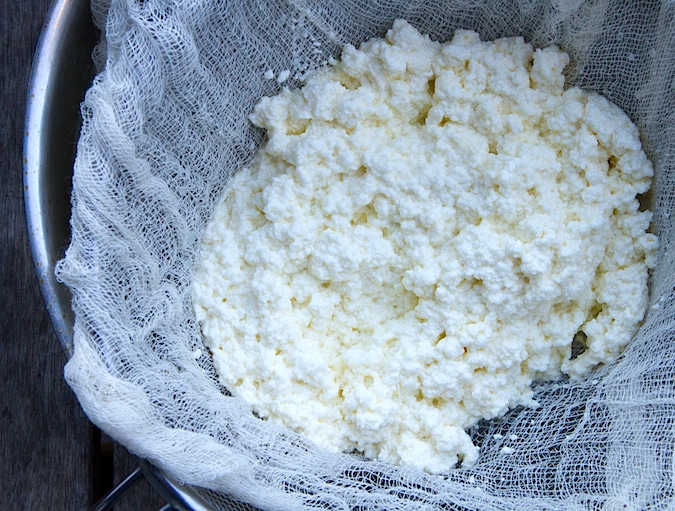
If you’d like to try making your own ricotta for this (or for numerous other good things, such as a pastiera), here’s my recipe. I use buttermilk instead of lemon for the curdling agents, as I find it turns out gentler, creamier curds.
Numero 28
People are always asking me what’s my favorite Italian restaurant in New York. It’s a difficult question for several reasons. I don’t go out to eat that much, and when I do I mostly want to taste stuff I don’t make at home, like Thai or Vietnamese food. Also, as far as Italian restaurants go, there are so many new ones all the time around here, it’s impossible for me to care about all of them. In the last five months, four Italian fish places have opened up within 10 blocks of my West Village apartment. Who needs all those Italian fish restaurants, and how long can they possibly last with such competition? Sometimes I think people who open restaurants are just gluttons for punishment. And now with those likely tariffs on European wines, what is even possible? As it is, the price of a glass of Chianti at a good place is averaging $18 to $20. Soon it might be more like $40. Who’s going to pay that?
The one Italian food I do go out for a lot, and I mean really a lot, is pizza, but I don’t have the desire to stand outside on a line for a hour, or sit up all night with my computer waiting for reservations to open up. I like good, solid, consistent, nontrendy places that make me feel comfortable and relatively happy. Numero 28 on Carmine Street is one of those places. I’ve been going there since it opened, in 2012. It’s a sweet little café with a wood burning oven, consistently high-quality ingredients, and right-on pizza every time I’ve eaten there, which has got to be, at this point, several hundred times. I would say their pizza is more Roman-style than Neapolitan. It’s not as wet in the middle as you’d get in Naples, but it’s wet enough so it’s never dry, even if you get one without tomato. I like ordering their long pizzas—18 inches is about right for two, but there’s also a 29-incher, which comes to the table on a really long board. I love those, since you can get, for instance, half anchovy, half prosciutto (they use really good prosciutto), which is often what I go for. I don’t get elaborate with toppings. I like a margarita with maybe one add-on, so I can still focus on the great, yeasty, gently salted, bubbly, slightly charred crust. However, I do love, and I understand this is not for everyone, a mix of anchovy and mushroom with extra basil.
I think almost every time I’ve been at Numero 28 I’ve begun with an artichoke and Castelvetrano olive salad, which also contains arugula and pine nuts. It’s a lovely, well-balanced starter, dressed with good olive oil that you can really taste and not too much vinegar. I really don’t like it when Italian places load on the vinegar.
The only slightly annoying thing about Numero 28 is they only take cash, so you need to stop at a bank before you arrive.
Recipe below: Lagane Spagliato with Rosemary, Guanciale, and Ceci
I’ve developed a romance with chickpeas. They’re so solid. I love how they take a while to cook, and how their deep, beany aroma grows stronger as the hour or so slips by. I can see when they’re ready, and I can smell when they’re ready. I’ll never go back to buying canned. Canned chickpeas taste sour and metallic, and their liquid is useless (unless you’re making a vegan meringue). The broth produced by cooking your own ceci is pure gold.
A dish I come back to constantly is pasta with chickpeas. For me it’s perfect. A thing of beauty. Here’s one of my versions of lagane e ceci, semolina pasta with chickpeas, a very old, pre-tomato dish made in various forms in Calabria, Basilicata, Campania, and Puglia (whose version, called ciceri e tria, has a portion of the pasta not boiled but fried crispy—really delicious).
Lagane e ceci is pure cucina povera. What sets it apart from many other pasta-and-chickpea dishes is its homemade semolina pasta, made with only semolina and water. It’s a chewy, sturdy pasta, sort of a shorter, thicker fettuccine. It’s great to eat but for me a little annoying to roll and form, so what I’ve done here is make it considerably less povera by adding eggs and some white flour to the dough. I can’t comfortably call it lagane, since I’ve screwed with it so much, so I’m going with lagane spagliato, false lagane. I’ve also added some rosemary to the dough, to mimic one of the flavors in the sauce.
When I make semolina pasta I usually use Bob’s Red Mill Semolina Four. It’s finely ground and easy to work with. Semolina has a higher gluten content than soft white flour, so you’ll be using a little push and pull to knead it into shape
This time around I tried a new to me chickpea brand called Cece di Poggio Aquilone, grown on the Alberti family’s organic farm in Umbria. I was really happy with how it cooked up. The chickpeas are slightly smaller than the usual ones we all know, and their flavor is rich. I got them from Gustiamo.
Lagane Spagliato with Rosemary, Guanciale, and Ceci
2 cups unbleached white flour ½ cup semolina flour A large sprig of rosemary, the leaves minced 1 teaspoon fine sea salt 3 large eggs 2 egg yolks 1 tablespoon extra-virgin olive oil A drizzle of water, if needed
For the sauce:
A 1-inch chunk of guanciale, diced (about a cup) Extra-virgin olive oil 2 celery stalks, cut into small dice, including the leaves, lightly chopped 1 Vidalia onion, cut into small dice 2 fresh bay leaves About ½ teaspoon allspice A few sprigs of rosemary, the leaves chopped ½ a green medium-hot chili (I used an Italian long hot), chopped Salt 2 to 2½ cups cooked chickpeas, preserving the cooking liquid (see note on cooking them below) About ½ cup dry white wine (I used a Fiano di Avellino) About ½ cup good chicken broth A few large sprigs of flat-leaf parsley, the leaves lightly chopped A chunk of Pecorino Sardo, if you’d like some cheese (I can go either way with this—with the hot chili I’ve used here, most of the time I don’t want cheese, but when I make it without the chili, maybe just with black pepper, I almost always add cheese)
To make the pasta:
Start by putting both flours into a food processor. Add the rosemary and the salt, and pulse a few times to blend. In a small bowl mix the whole eggs, the yolks, and the olive oil. Pour this over the flour, and pulse a few times to blend everything well. The dough should clump together in a shaggy ball. If it seems dry, drizzle in a little water, and pulse again.
Dump the dough out onto a work surface, and knead it until it’s smooth, adding a little white flour if it gets sticky. You’ll notice that the dough is a little stiffer than one made with all soft flour, so it will take about 5 minutes of kneading to smooth out. When that’s done, cover the dough with plastic wrap, and let it sit at room temperature for at least an hour so the gluten can relax, making it easier to roll out.
Cut it in quarters, and run each piece through a hand-cranked pasta sheeter to the fifth setting, not super thin, in keeping with the lagane tradition. If the sheets get longer than about 6 inches, cut them in half. Place the sheets on a lightly floured surface, and let them dry for about ½ hour, so you can cut them without sticking.
After that, loosely roll up each sheet and cut it into approximately ¼-inch sections. Unroll the lagane, and toss them in a little flour. Let them sit until you’re ready to cook them.
To make the sauce:
Get out a large sauté pan, and set it over medium heat. Add the guanciale and a tablespoon or so of extra-virgin olive oil, and cook until the guanciale has given up much of its fat and started to crisp. Add the celery, onion, bay leaves, allspice, rosemary, and chili. Season with a little salt, and sauté until everything is fragrant, about 5 minutes.
Set up a pot of pasta cooking water, and bring it to a boil. Add salt.
Add the cooked chickpeas to the pan, and sauté for a minute or so. Add the white wine, and let it bubble out for another minute. Add the chicken broth and about ½ cup of the chickpea cooking liquid, turn down the heat a bit, and let simmer to blend all the flavors.
While the sauce is simmering, drop the lagane spagliato in the water, and cook it for about 3 minutes. Drain it, and pour it into a wide serving bowl. Drizzle on some good extra-virgin olive oil and give it a toss. Add the chickpea sauce and the parsley, and toss gently, adding a little more chickpea cooking liquid if the dish seems dry. Check for seasoning. Serve hot, with or without pecorino.
A note on cooking chickpeas for this dish:
For this recipe I added a few bay leaves, a rosemary sprig, a smashed garlic clove, a slightly soft whole shallot, and a drizzle of olive oil to flavor the water I boiled the chickpeas in. About halfway through the cooking, I added some salt and a thread of red wine vinegar. I didn’t pre-soak these Umbrian chickpeas, and they wound up taking about 1½ hours to get tender. I always cook the whole bagful when I make beans. I used about 2 cups or so of the bag for this pasta, and the rest went into a chickpea-and-escarole soup. For this pasta, make sure to keep the chickpea cooking liquid, since you’ll want some of it for the sauce.
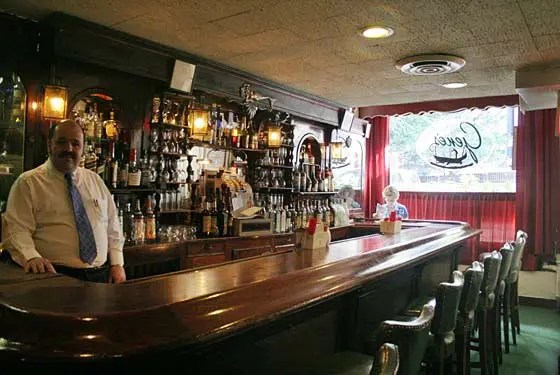
The bar at Gene’s Restaurant.
I don’t go to bars by myself as much as I used to, but sometimes they’re just the thing to settle my head, especially with all the crap going down in Washington lately. The bar at Gene’s is often my place. This West Village restaurant opened in 1919, and it doesn’t look like much has changed since then. The bar is deep and lovely, with dark wood and glowing backlit bottles. I can settle right in and immediately be part of it.
The wine list isn’t what I would call up to date, but it serves the purpose of preventing wine snobs from crowding up the place. The Chianti is good, the Côtes du Rhône, not so much, but the pour is beyond generous, almost a little shocking, considering what you usually get for $18 at a trendy place around here. Franco (see photo above), everyone’s favorite bartender, is there most nights. He’s a kind man.
For years Gene’s seemed to be frequented mainly by old neighborhood types who shuffled in for their martinis and meat ravioli. But recently, maybe with the popularity of revamped Italo-Americano places like Don Angie a few blocks away, the place has been discovered by a younger crowd, making it seem almost lively, though, believe me, it is not in any way revamped. The bar can get crowded now. I remember going in there with my father years ago, he ordering a Chivas Regal on the rocks, me with my little glass of sambuca. We’d often be the only ones there, except maybe for that old AP reporter who lived upstairs. I don’t mind crowded, as long as I can get a seat, but I’ve found that now it’s best to go at 5:30 or after 10 (10 is considered late in Gene’s world).
The food is standard old-school red sauce. I’ve found the chicken parm and veal piccata and most of the pastas to be just okay, mostly lacking in salt and pepper (easily remedied, you’d think). However, the broccoli rabe with garlic and hot chili is really good. Sitting at the bar, I often just order a plate of that, with some bread, and call it dinner. Oh, and the baked clams are more than decent.
Sitting at the bar getting vaguely high on a glass or two of Franco’s big pours is a cozy feeling. As I get older, men don’t bother me as much, so I often can just sit and let my mind wander, maybe making plans for the future or maybe just thinking about how happy I am that bars exist.
A Lemon and a Blacked-Out Eggplant, by Erica De Mane.
Recipes below, in text: Linguine con la Buccia di Limone; Limoncello; Lemon Sorbetto with Broiled Lemons and Vodka
One thing is going well this winter, at least here in New York: We are getting a decent amount of snow. Yesterday we even had a sun snow, where the tiny flakes came down with a crystalline sparkle against an almost completely blue sky. That was unusual. And we’ve got lots of lemons. I mean, there are always lemons in the supermarket, but since winter is citrus season, I like to believe the lemons are at peak right now. Winter and lemon zest are linked in my mind. From around Christmas until March my refrigerator becomes the house of the bald lemon (sounds like a Garcia Lorca play). I sometimes have up to a dozen scraped-down, hardening, microplaned lemons sitting in there at once. Lemon olive oil cake is a big winter thing for me. It requires a lot of zest. Preserved lemons are good to have around this time of year. I just made a batch. Chicken tagine with preserved lemons and almonds. I love that. Limoncello, naturally. And pasta with lemon sauce, in its various forms. I only think about cooking that in the winter.
In the late eighties and into the nineties a lemon pasta full of cream was having a big moment. If you worked in catering back then, as I did, you absolutely had to know how to make it, and in large quantities. I came to hate its cooked down richness, especially when it went cold and thickened into golden glop that needed to be scraped out of 95 pasta bowls. Truly disgusting. I’ve always preferred the olive oil and lemon zest version I learned from Natalia Ravidà, a woman who for 30 years has been working to get the word out about her Sicilian family’s beautiful estate olive oil. Her recipe for lemon pasta, along with many other classic Sicilian dishes is in her book Seasons of Sicily. A very nice book.
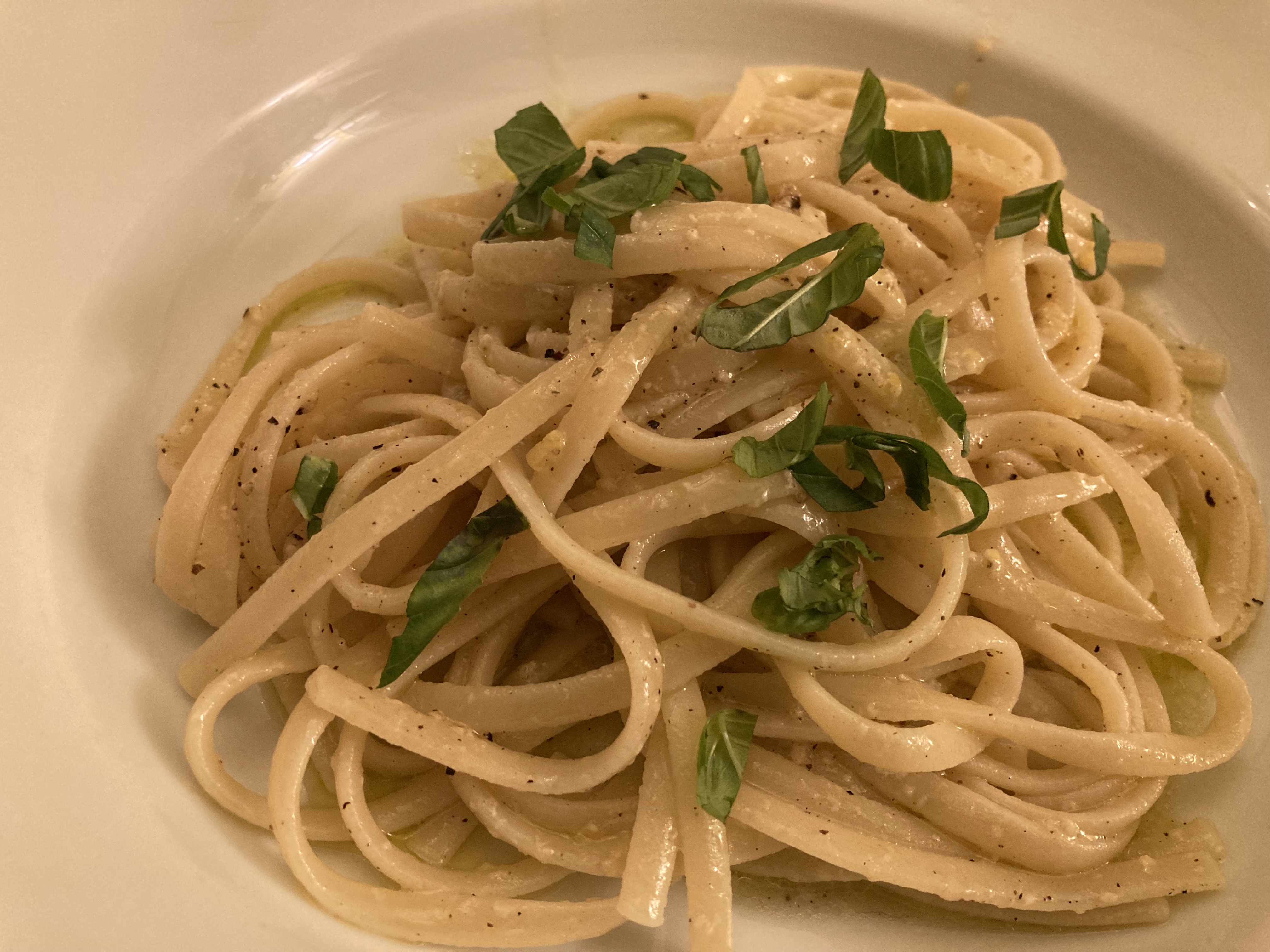
I’ve been playing around with this simple dish, which is essentially lemon zest, olive oil, and Parmigiano. A beautiful trio. I have, of course, customized it a bit, because I can’t leave well enough alone. I added a little nutmeg and basil, two flavors that go so well with lemon I just couldn’t resist. Nutmeg does something beautiful to lemon, it rounds it out, makes it feel both sharp and mellow all at once. I also added basil, which lifts the black pepper flavor in the dish.
To make this lemon liguine for two, you’ll want the zest from 2 organic lemons and the juice from about ½ of 1 of them. Pour about ¼ cup of your best extra-virgin olive oil (preferably a good Sicilian oil such as Ravidà) into a warmed pasta serving bowl. Add the lemon zest, give it a good stir, and let it sit for about ½ hour, so it can release its essence into the oil.
Cook ½ pound of linguine in salted boiling water until al dente. While it’s cooking, add the lemon juice, a few big scrapings of nutmeg, a little salt, some fresh, coarsely ground black pepper (I used Zanzibar black pepper from Burlap & Barrel), some leaves of julienned basil, and about ½ cup of freshly grated Parmigiano into the bowl. Add a few tablespoons of the pasta cooking water, and give it a good stir.
Drain the linguine, and add it to the bowl, tossing it well until it’s well coated with the sauce. You can garnish it with more basil or an additional dusting of Parmigiano, if you like.
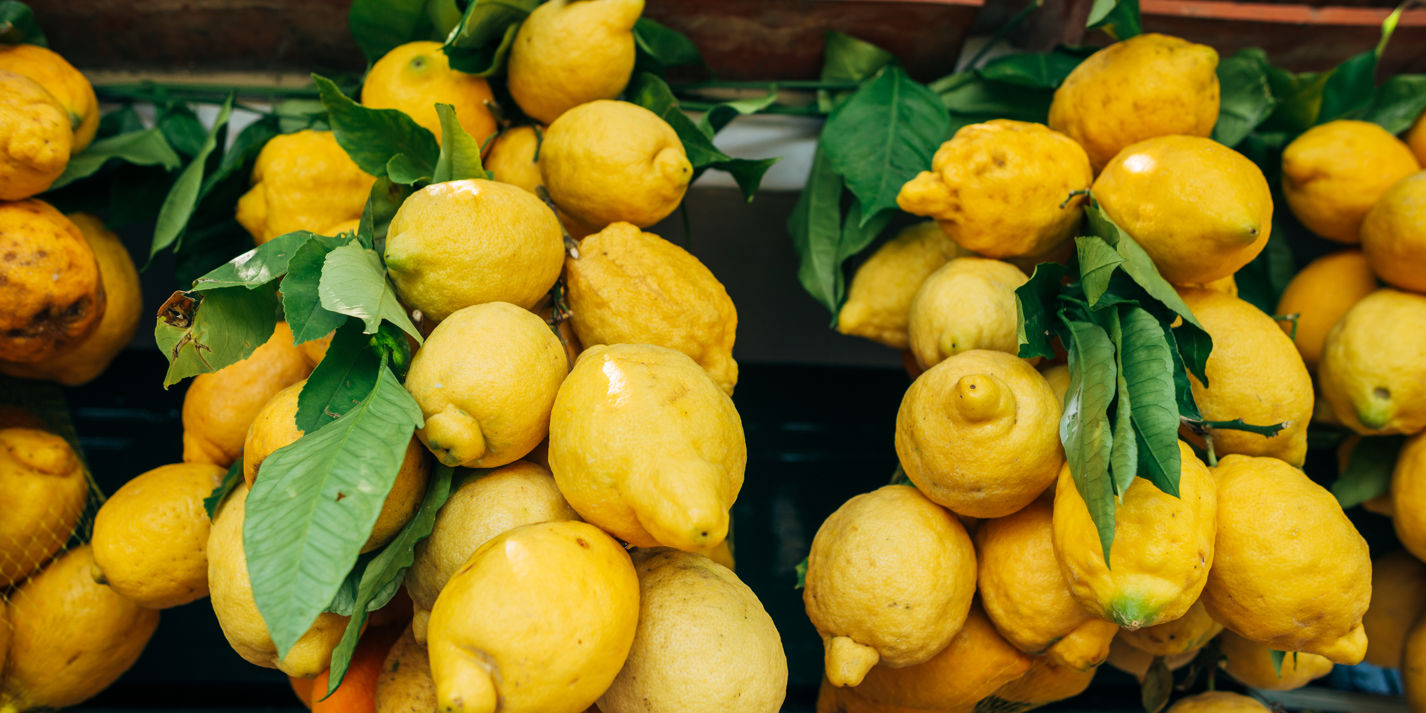
Amalfi’s long, lumpy, lovely lemons.
I’ve forever heard stories about Southern Italians eating raw lemons like they were oranges. Nobody in my family ever did. It seems the lemons in Naples and further south were much sweeter than the ones we have here. I asked about the custom years ago when I visited my ancestral homeland. According to my Uncle Tony, nobody where he lived did that, and if they did they’d burn the enamel off their teeth. That’s what he thought. I’ve eaten Amalfi lemons in Amalfi several times, and I have to say to my palate they’re only ever so slightly sweeter than the ones I buy here in supermarkets. They are, however, longer, lumpier, more lemony, and have maybe more oil in their skins. And like the neighboring Sorrento lemons (also called Santa Teresa lemons), they’re used to make limoncello. I especially love that Sorrento limoncello. But I make pretty good limoncello using my own supermarket lemons (although I do buy organic, since I’m using only the peel for the limoncello). My secret to a lemony limoncello is just this: Make sure you start with Everclear, not vodka. Vodka’s not strong enough. You need a super powerful liquor to pull all the lemon essence from the skin. Of course you’ll water it down later, but this first step is essential for intensity of lemon flavor. If you’d like to try it, here’s what I do:
Zest a dozen organic lemons with a microplane zester, and stick the zest in a large glass jar fitted with a tight lid. Pour in a liter bottle of Everclear, close up the jar, and let it steep in a relatively dark place for 2 weeks, shaking it from time to time. Strain it through a fine mesh, and return it to a clean jar. Put 2½ cups of sugar in a saucepan. Pour in 4 cups of water, and bring it to a boil to dissolve the sugar. Turn off the heat, and let it cool completely. Pour the sugar syrup into the jar with the lemon booze, close up the top, and let it sit for another 2 weeks. You can strain it again if you think it needs it. I don’t usually bother.
Now you can keep it chilled in the freezer, where it will keep for about a year.
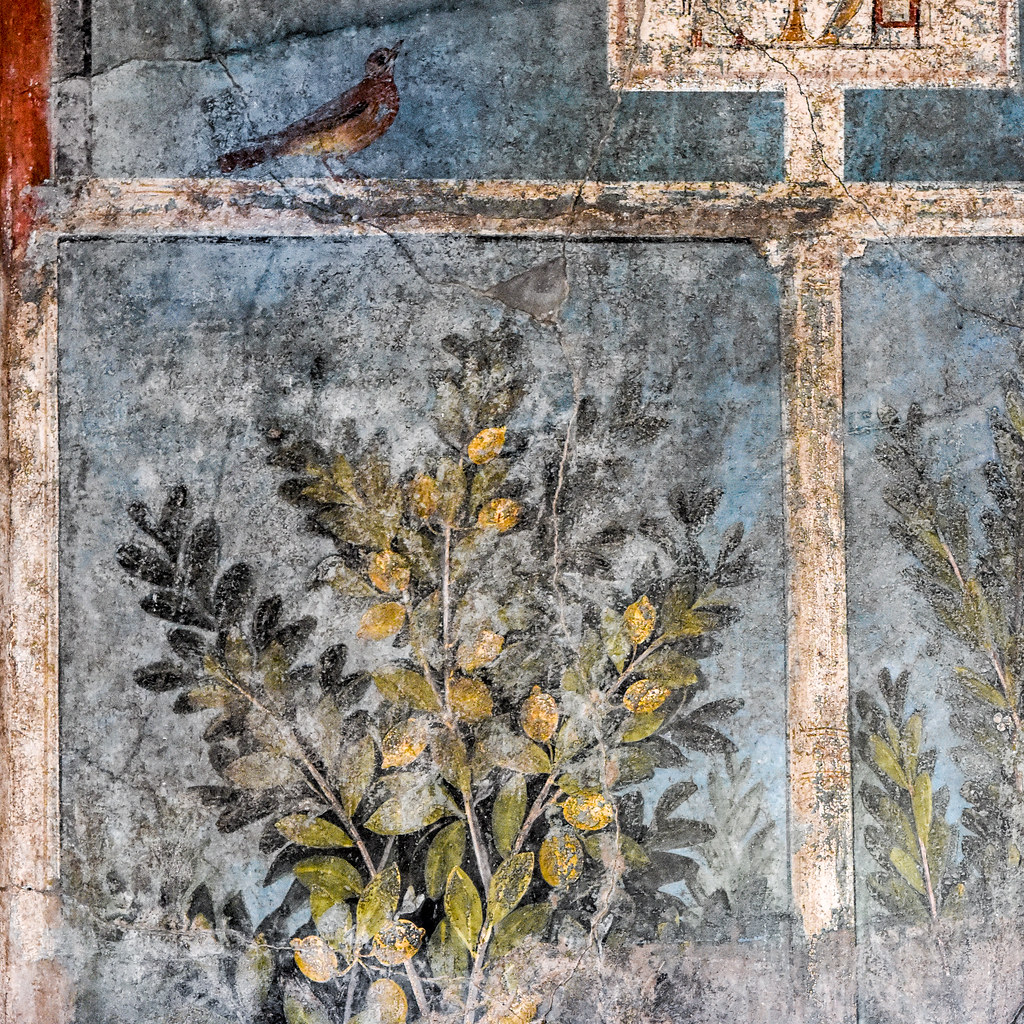
A lemon tree from a wall in Pompeii.
Another nice thing to do with lemons is slice them into rounds and give them a quick roast or even a broil, either first sprinkled with sugar, or, for a savory treatment, with salt and maybe some chopped thyme. You can eat them straight off the pan or draped over a slice of grilled swordfish, but consider using them for this Lemon Sorbetto with Broiled Lemons and Vodka:
For the broiled lemons, you’ll want to peel as many lemons as you like and cut them into not-too-thin slices (you can, if you prefer, leave their skins on, but I like to be able to eat the whole slice without running into any bitterness). Pit them if you want. Coat a sheet pan with a little olive oil, and spread out the lemon slices. Drizzle them with a little more olive oil, and sprinkle them with a light coating of sugar. Stick them under a broiler about 4 inches from the heat source, and let them cook until the sugar has caramelized and the lemons have softened a bit, about 3 minutes.
When the broiled lemon slices have cooled, grab as many parfait glasses as you have guests, and fill them ¾ full with good quality lemon sorbetto (I used Talenti when I made this). Place three of the lemon slices over the top. Drizzle a shot glass full of vodka over each glass. Or use lemon vodka if you like. Or limoncello. Garnish with mint sprigs or basil. This is a beautiful and almost healthy dessert (or palate cleanser, whichever you prefer).
Recipe below: Scialatielli with Shrimp and Miso Butter Tomato Sauce
Recipe below in text: Escarole Salad with Pear, Almonds, and Montasio
My plan was to make this pasta with calamari, but the squid I found was too large. I needed it small because my idea was to cook everything quickly, keeping the taste fresh and the texture bouncy. Bright red sauce, white calamari. Larger squid needs a slow simmer to become tender, and that would have compromised the freshness I was going for. So I went with shrimp instead.
The Lobster Place, in Chelsea Market, has a good retail fish counter. A lot of people don’t know that because they go there only to eat the fancy sushi and steamed lobsters that are mentioned in all the New York City guidebooks. The place is always mobbed with Japanese tourists, who ignore the fish counter, likely having no place to cook, so it stays freed up for the locals. The other day they had good-looking wild-caught medium-size shrimp from the Gulf of Mexico. It smelled sweet, and I could sense that its pretty gray shells would make a nice broth for the pasta. And they did.
The sauce I had in mind for the dish was a little unusual, mixing together miso, ginger, shallot, butter, vermouth, rosemary, and tomatoes. But I tell you it worked. It tasted like Christmas, and I might just go with it for my Christmas Eve fish dinner, maybe with calamari, as I originally intended, or with lobster. My grandfather Erico, who I never met, used to make pasta with lobster every Christmas Eve. I obviously never tasted his version, but that makes the nostalgic pull of the dish even stronger. My mother said he added a lot of brandy.
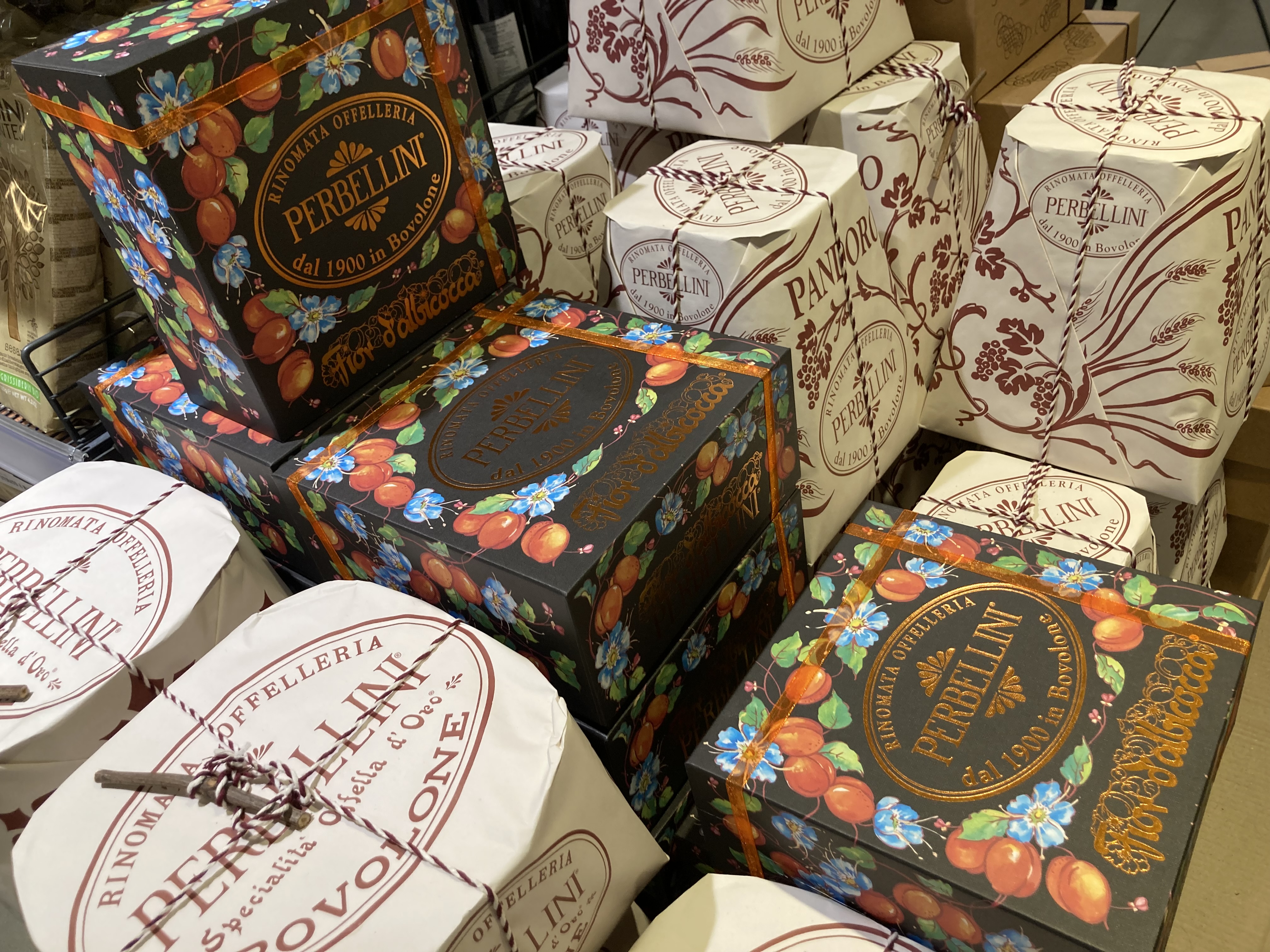
While I was at Chelsea Market I made my way downstairs to Buon’Italia. If you’ve never been, just think of it as an intimate, more manageable Eataly. I never leave it pissed off, unlike Eataly. And it’s just starting to get its Christmas decor together. I’m not usually big on Christmas decorations unless they have a dark edge, but I do love holiday food displays. Here are photos of a couple of appealing ones at Buon’Italia. I need to go back and get some of that marzipan.
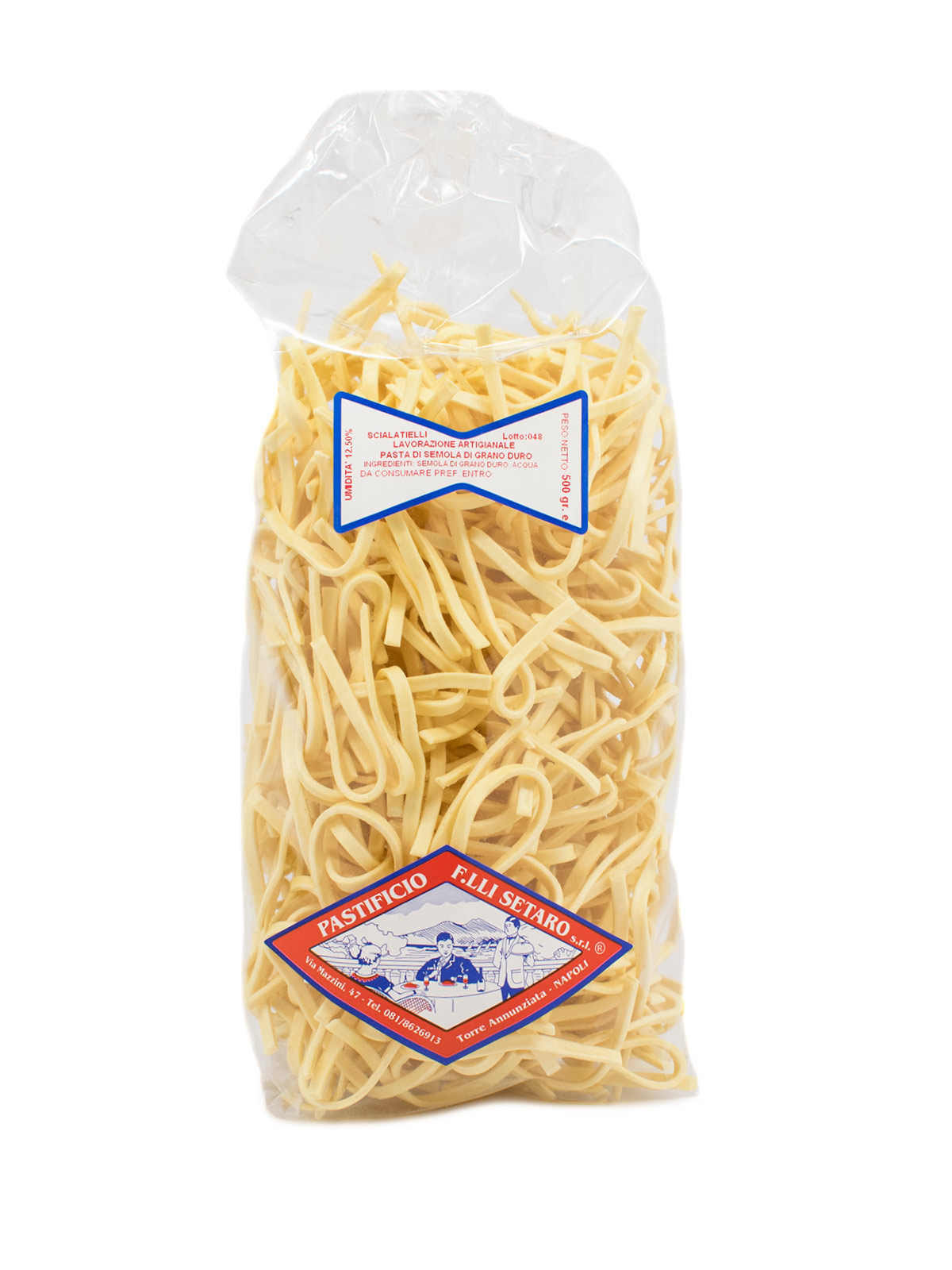
While at Buon’Italia, I picked up a bag of Setaro pasta to go with my shrimp dish. Setaro is a great old pasta company in Napoli. I chose scialatielli, a thick, stubby fettuccine-type shape from the Amalfi coast that I love for its chewiness. It’s used primarily for tomato and seafood sauces. When it’s made fresh, parmigiano and basil are sometimes worked into the dough. Made dry, it never seems to have that flavoring. I have made it fresh myself, and maybe I will for Christmas. If so, I’ll get a recipe together for you.
If you’d like to try my Scialatielli with Shrimp and Miso Butter Tomato Sauce, here’s what you’ll need to buy and do.
Scialatielli with Shrimp and Miso Butter Tomato Sauce
1 ½ pounds large shrimp, shelled and deveined, but you’ll want to keep the shells Salt Aleppo pepper A big pinch of sugar A drizzle of olive oil ¾ stick unsalted butter ½ cup dry vermouth 1 heaping tablespoon white miso 2 shallots, diced A 1/2-inch-thick chunk fresh ginger, minced A long stem of rosemary, the leaves chopped 2 fresh bay leaves 1 28-ounce can Italian plum tomatoes, roughly chopped, saving the juice
In a bowl, toss the shrimp with a little salt, Aleppo to taste, a big pinch of sugar, and a drizzle of olive oil. Stick it in the fridge until you’re ready to cook it.
Put half of the butter in a saucepan, and melt it over medium heat. Add the shrimp shells, and sauté them until they turn pink. Add the vermouth and miso and about 2 cups of water. Stir to dissolve the miso. Let the mix simmer, uncovered, until it’s sweetly shrimpy smelling and has reduced by half. Strain it.
In a large sauté pan, melt the remaining butter over medium heat, and add the shallots and the ginger. Sauté until soft and fragrant, about 3 minutes. Add half of the rosemary and the bay leaves, and sauté a minute longer, just to release their essences. Add the shrimp broth, and simmer for about another 3 minutes. Add the tomatoes, and cook for about 5 minutes.
While the sauce is cooking, set up a pot of pasta water and bring it to a boil. Add salt. Add the scialatielli.
Get out a another large sauté pan, and get it hot over high heat. Add the shrimp, and sear them quickly until they’re lightly browned but still a little undercooked. Add them to the tomato sauce, stirring them in. Add a little more Aleppo if you like, and taste for salt. You may or may not need it, depending on how salty your miso is.
When the scialatielli is al dente, tip it into a large, wide serving bowl. Pour on the shrimp sauce, and give it a gentle toss. Sprinkle the remaining rosemary over the top. Serve right away.
To follow this pasta, I served a salad of escarole, pear, almonds, and Montasio cheese (also from Buon’Italia). If you’d like to try it, buy a head of escarole, and pull off the tough outer leaves (saving them for a sauté or a soup). Tear the tender inner leaves into bite-size pieces, and put them in a salad bowl. Scatter on a sliced pear, some lightly toasted whole almonds, and some slices of Montasio. I tossed this with a dressing of sherry wine vinegar, good olive oil, salt, and black pepper. I really like that combination.
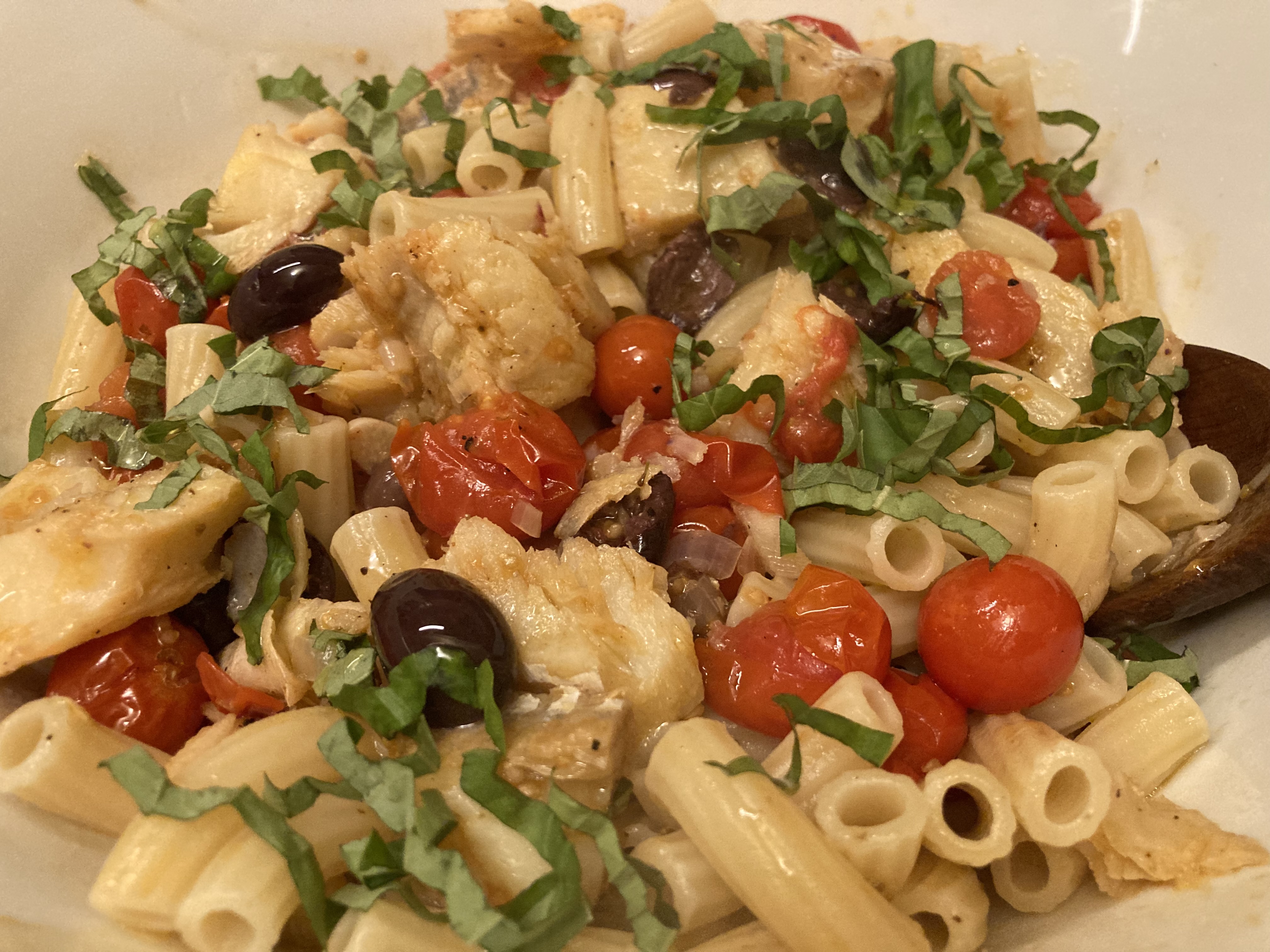
Recipe in text below: Maccheroni with Baccalà, Black Olives, Pastis, Basil, and Spicy Breadcrumbs
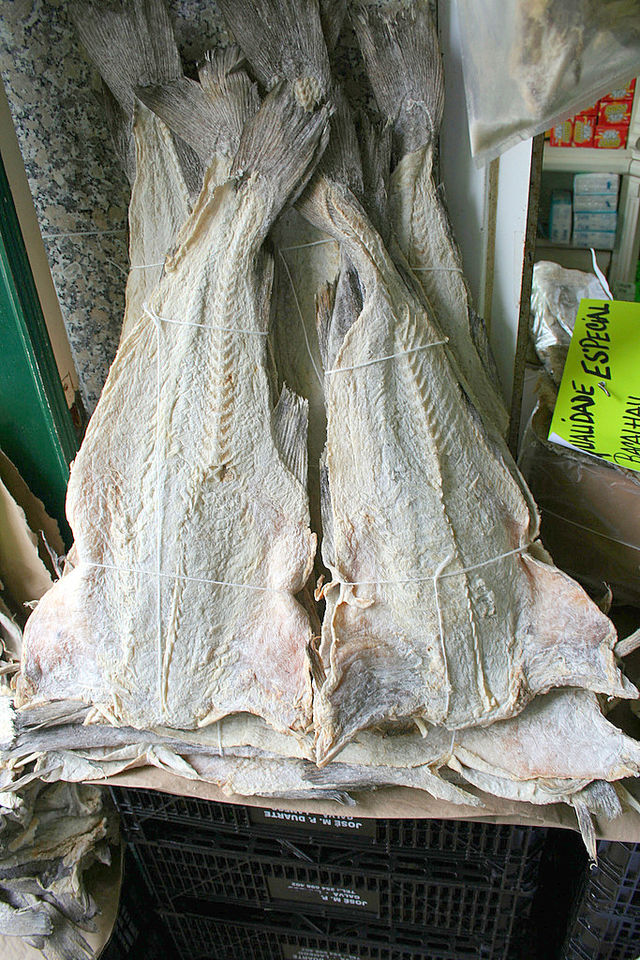
One of the aromas ingrained in my culinary soul is the slightly nauseating but still alluring smell of baccalà standing upright in wooden barrels, looking like snow-covered roadkill and smelling of fishy death. Razzano’s Italian shop in Glen Cove was where I first came up against it, that dark fish smell mingling with a strong hit of provolone. Powerful. As a child I first took it as an assault, but after a few visits to that wonderful food shop, the putrid smell went from a gag in my throat to miraculously good. At some point I stopped telling my father I’d wait in the car. I needed to smell it again and again.
Now I love the aroma of baccalà, and also the ritual needed to prepare it for eating. My recipe here is an improvisation on a Sicilian version of pasta with baccalà usually called alla ghiotta, which translates, I’m thinking, as lady glutton style. Salt cod is rich, especially when brought together with tomatoes, olives, wine, onion, garlic, sometimes capers, and lots of herbs, so I guess the dish was so good you couldn’t stop eating it, or, specifically, women couldn’t stop eating it. Often it includes potatoes, in which case it can be made with or without pasta. I wanted the pasta, so I left out the potatoes.
Southern Italians use baccalà more than they use stoccafisso, the air-dried version of preserved cod. Baccalà tends to be meatier and have a stronger, brinier flavor that I really love. Quite different from fresh cod. A unique taste. When buying baccalà I look for packages that contain thick middle cuts, not just scrawny end pieces. In my experience they take two days of soaking, changing the water repeatedly, to be rid of excess salt. I love the funky, briny smell baccalà releases into my kitchen as it gives up its salt to a big bowl of cold water. You’ll see it’ll start to swell and look whiter.
To make my maccheroni with baccalà, get yourself a one-pound package of salt cod, and start soaking it in a big bowl of water, changing the water a few times. At night, stick it, with its water, in the refrigerator. The next day take it out and let it sit out, changing the water a few more times. By evening, taste a piece from the thickest section. If it still tastes really salty, change the water again and put it back in the fridge for another night. By next morning, after rinsing it again, it should be sufficiently desalted. I’ve never known it to take longer than that.
Place the baccalà in a wide-sided pan. Add water to just about cover, a big splash of dry vermouth, a drizzle of extra-virgin olive oil, a few fresh bay leaves, and a few peppercorns. Turn the heat to medium, and get the water up to a simmer. Then turn the heat down a little, cover the pan, and simmer gently until the cod flakes easily when you poke it with a knife. That should take about 8 minutes. Don’t cook it past this point, or it’ll get tough. Take the cod from its poaching liquid, and put in on a plate. Keep the liquid. When the cod is cool enough to handle, break it into 1-inch chunks, discarding any bones or skin you might come across.
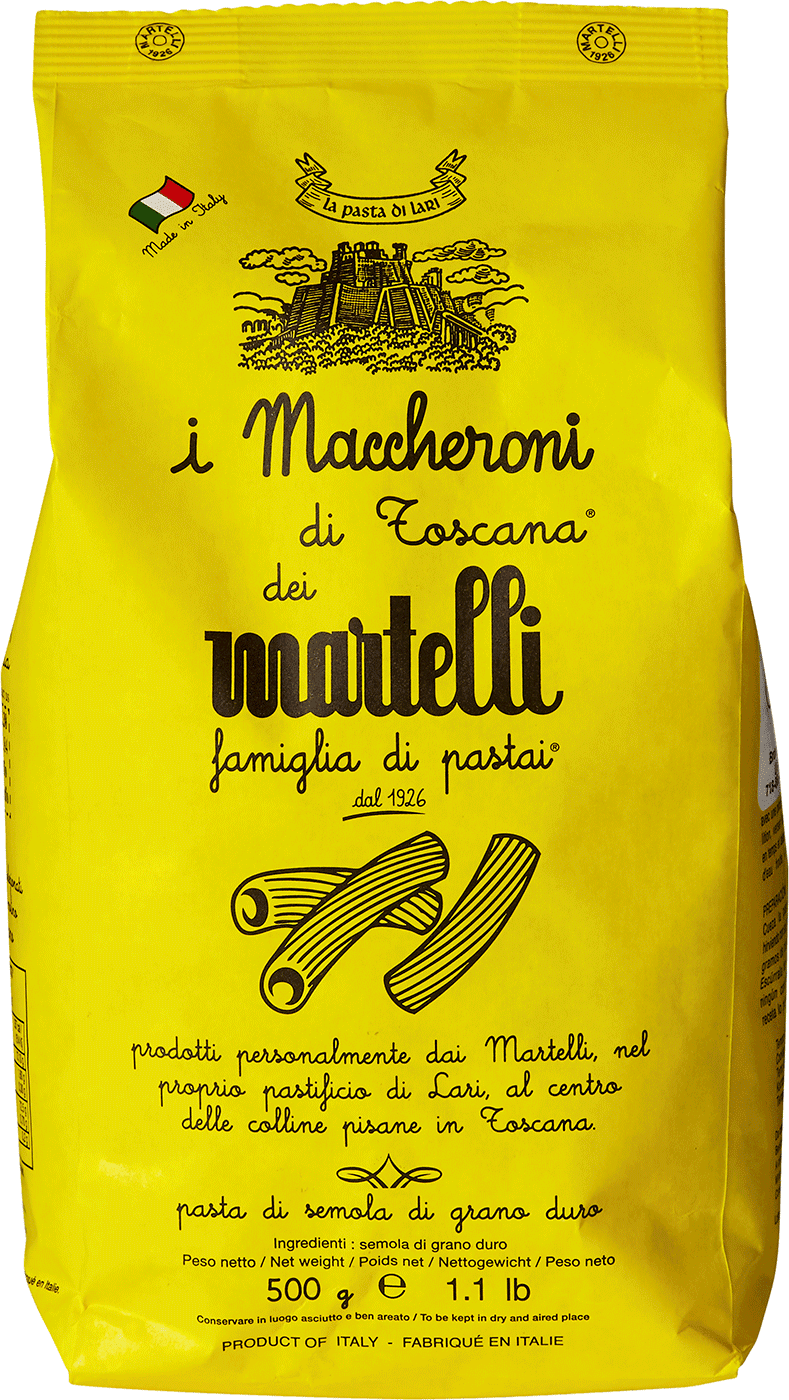
Set up a pot of pasta cooking water, and bring it to a boil. Add salt. Add a pound of maccheroni and give it a stir. I used Martelli’s I Maccheroni di Toscana, which is like a ridged, curved ziti (I ordered it from Gustiamo). I’ve also seen this shape referred to as sedani (which means celery, though it doesn’t look like celery to me). Rigatoni or regular penne would also be good here.
While the pasta is cooking, get out a large sauté pan, and set it over medium heat. Add a big drizzle of extra-virgin olive oil. Add a chopped shallot, a chopped fresh red peperoncino, a sliced garlic clove, a fresh bay leaf, and a palmful of ground fennel seed. Let it all soften for about 2 minutes. Add 2 pints of grape tomatoes. Season it with a little salt (keeping in mind how much salt you’ve got left in your baccalà), and let it cook until the tomatoes just start to burst, about 8 minutes. Add a splash of vermouth and a little of the cod cooking liquid. Add the broken up baccalà, a handful of pitted olives (I used Kalamatas), and let it all warm through for a minute or so. Turn off the heat, and add a few drops of pastis.
When the pasta is al dente, drain it and pour it into a large serving bowl. Pour on the baccalà sauce and a big drizzle of fresh extra-virgin olive oil. Add a handful of lightly chopped basil leaves, and give it a good toss. Taste to see if it needs salt.
Top each serving with a sprinkling of spicy sweet breadcrumbs. I made them by crushing a bunch of red pepper taralli with the side of my knife.
Recipe in text below: Rigatoni withRoasted Red Peppers, Crème Fraîche, Thyme, and Basil
In the late 1800s Carmine Street and the surrounding blocks of the West Village became a destination for Italian immigrants, mostly from Liguria. Our Lady of Pompeii Church, at Carmine and Bleecker, was their refuge, providing not only spiritual support but also helping new arrivals with housing, jobs, and medical care. It has continued to comfort all the Sicilian and Neapolitan people that followed. My friend Sandy Di Pasqua’s family landed on Carmine. My next-door neighbor on Long Island Lou Mastellone’s older brother was born in a walkup, cold-water apartment on Christopher Street, about five blocks away.
Pompeii is still an Italian church in spirit, having a daily Italian-language mass for the remaining elders, but it also offers one in Tagalog, as the congregation is now heavily Filipino. I took Italian classes at its adjoining school in the 1990s. And for years I would get together with a bunch of friends for its Good Friday Mass. For me, a nonreligious type, the attraction to the vigil was the darkness, the yellow light, the smell of the paraffin candles, and the repetitive, hypnotic song we all sang as we walked over and over around the pews. The refrain “Sono stati i miei peccati, Gesù mio, perdon, pieta” is, I’m pretty certain, stuck in my brain forever. In the old days they even took the song and candles out onto the street. After the vigil we’d all go to Rocco’s for fritto misto and chianti (the old Rocco’s, not the new faux–Italian American hotspot it’s become). Our group has now dispersed, so we don’t do it anymore, but the show goes on, although with fewer participants each year.
There are still a few legit Italian places in the neighborhood. Rocco’s pastry shop (not related to the now trendy restaurant on Thompson Street ), Ottomanelli’s butcher, Joe’s pizza, and Faicco’s Pork shop (which now, unfortunately, has an aggressive MAGAroni vibe to it that I don’t appreciate) are all around the corner on Bleecker.
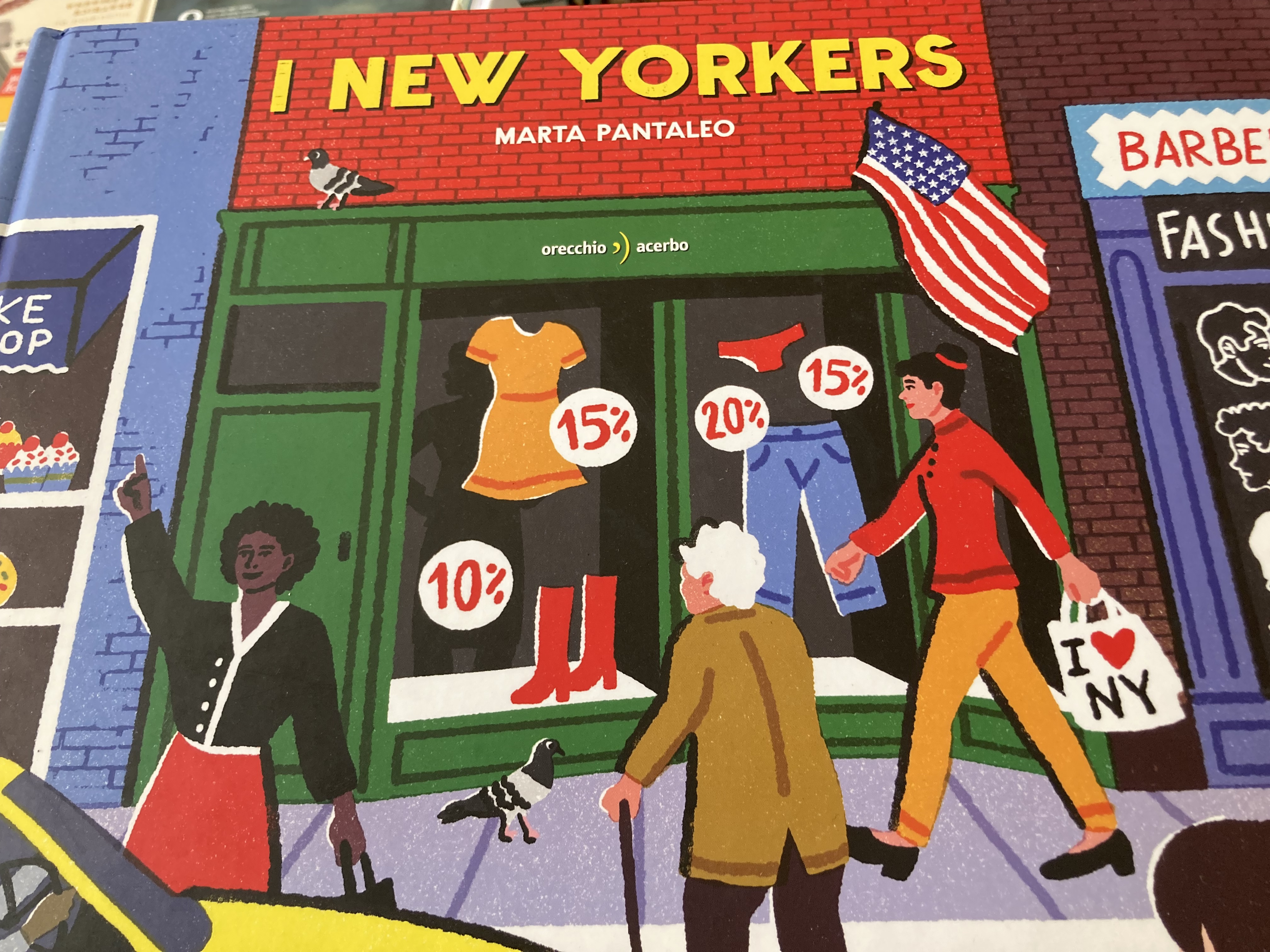
So for me, it’s a celebration when a new Italian-run shop appears in the neighborhood. Yesterday I went to check out Sullaluna, a just-opened cafe and bookshop combo on Carmine, an offshoot of a place in Venice. They specialize in beautifully illustrated children’s books, all in Italian. I felt peaceful in Sullaluna, and the books are fascinating. A whole new world of literature for me. Here’s a book I just had to purchase:
There’s also good coffee and wine, and a small menu with standard items like gnocchi, arancini, carbonara, and salads. They also do brunch. I cannot yet comment on the quality of the food, since I only had an espresso, but the guy next to me ordered a huge gelato-stuffed cornetto that looked enticing. This is a sweet little place. I will be back.
Sullaluna is at 41 Carmine Street. It’s closed on Tuesdays. As of now, It doesn’t seem to have a website, but it does have an active Instragram account that you might want to check out.
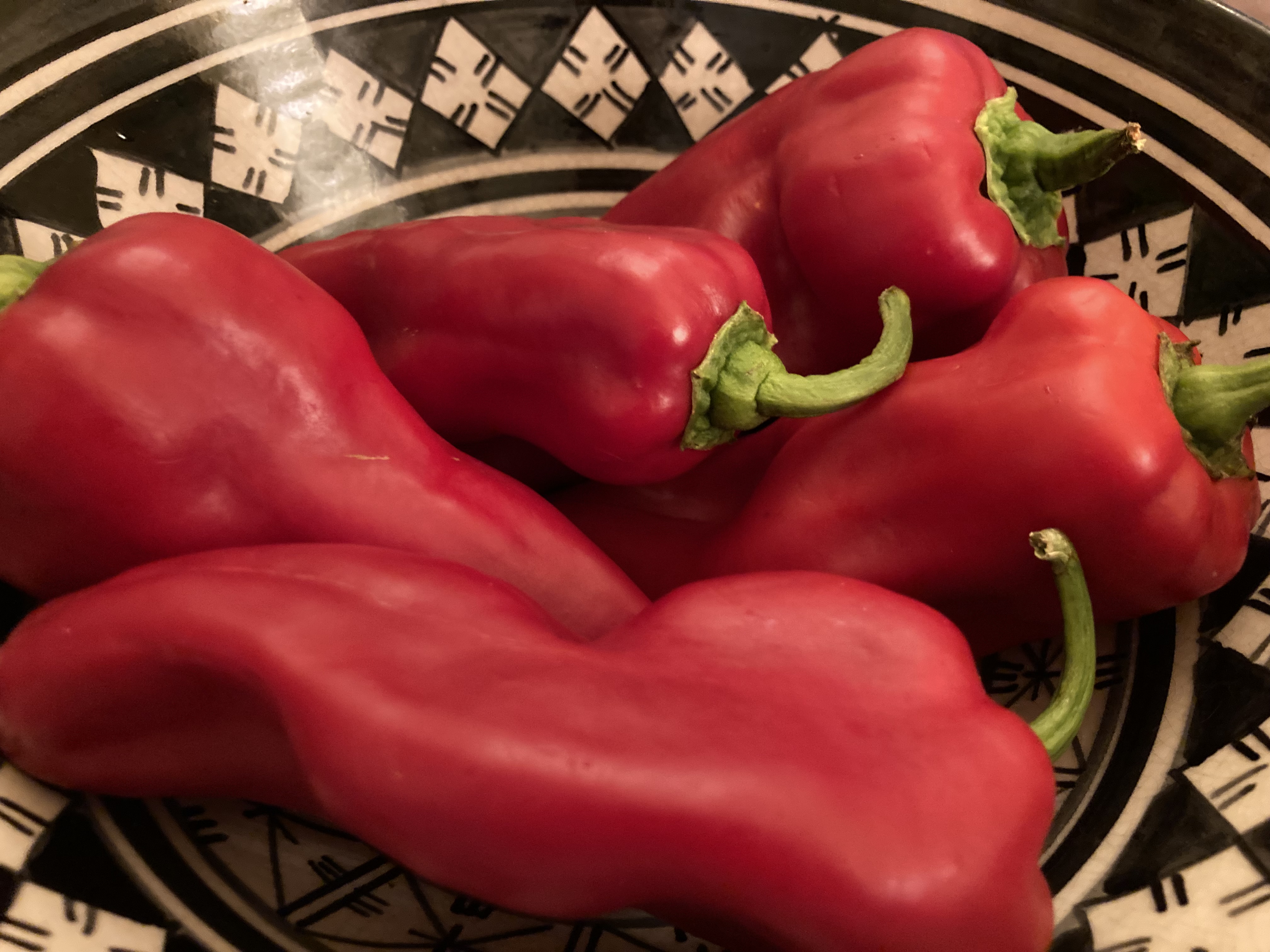
After my coffee at Sullaluna I made my way over to the Union Square market to check out all the late summer produce there. We’ve still got lots of tomatoes here in New York City, and those dark and dusty-looking pointed Italian plums, my favorites for tarts. And many of the sweet and hot chilis have now ripened to a deep crimson. I bought an armful of sweet ones labelled Giant Marconi. I think I’ve cooked with them before, but I wasn’t familiar with that name. I love a roasted sweet pepper sauce for pasta, so that was my plan.
Here’s how to make my Rigatoni with Roasted Red Peppers, Crème Fraîche, Thyme, and Basil.
You’ll want to start by roasting your peppers. I used 6 of the Giant Marconi ones, which turned out to be dense and rich tasting, but 4 or 5 regular red bell peppers would also work. I like to do them on a charcoal grill, but a broiler or gas flame does a fine job. Just blacken them all over, and then peel and seed them. Then give them a rough chop. (I really don’t recommend using jarred roasted peppers for this. Their taste is always somewhat acidic, which can really spoil this suave sauce.)
Get out a large sauté pan, and set it over medium heat. Add a big drizzle of extra-virgin olive oil and a tablespoon or so of butter. Add a chopped shallot and a sliced garlic clove, and let them soften for a moment. Add the roasted peppers, a little chopped fresh thyme, some salt, and a pinch of nutmeg, and let them cook until the peppers are fragrant and tender, about five minutes. Add a splash of dry vermouth, and let it bubble out.
Purée the peppers in a food processor, adding a little water to thin out the purée. Return the purée to the pan, and add about ½ cup of crème fraîche and a sprinkling of Aleppo pepper. Let it warm through.
Cook a pound of rigatoni or another shape you might have on hand, and drain it, saving a little of the cooking water. Pour it into a large, warmed serving bowl. Add the sauce, a drizzle of fresh olive oil, a good sprinkling of grated Parmigiano Reggiano, and a handful of lightly chopped basil, adding a little cooking water to loosen it if needed. Give it a good toss.
This sauce is also very good on mussels or clams. Just open them in a little white wine or vermouth, add the sauce, and toss. Beauty.
I am a chef, food writer, and herb lover who specializes in improvisational Italian cooking. I am the author of The Flavors of Southern Italy and Pasta Improvvisata, as well as Williams-Sonoma Pasta, which is available at Williams-Sonoma stores. A member of the Association of Culinary Professionals, The New York Women's Culinary Alliance, The New York Culinary Historians, The Herb Society of America, and the Italian-based International Slow Food Movement, I live in New York City.














 Erica De Mane