Feeds:
Posts
Comments

Posts Tagged ‘dinner’

Apples Still Life, by Lion Ferjen; I have the exact same old confit pot.

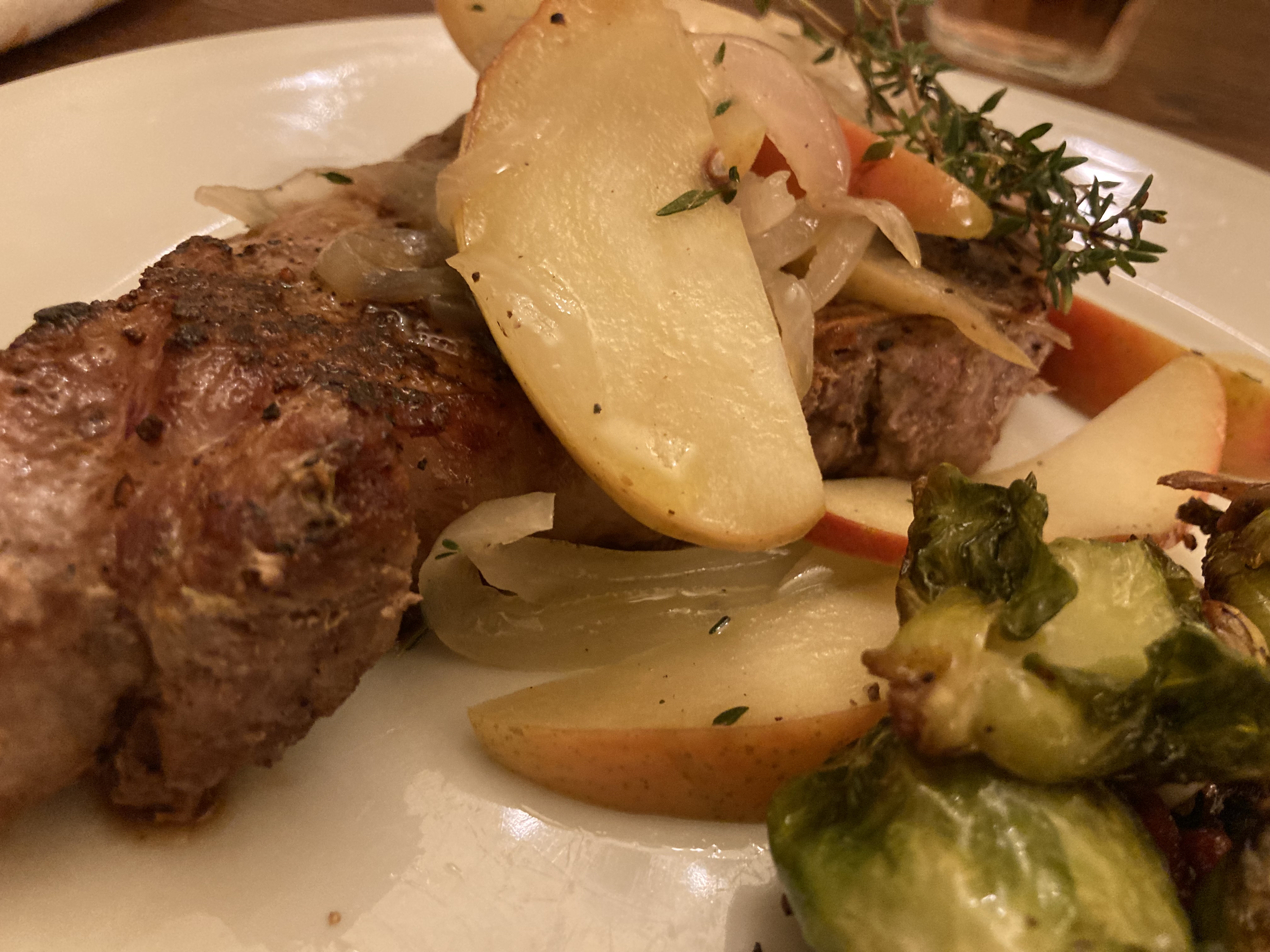
Recipe below in text: Seared Pork Chops with Apples, Onion, Thyme, and Calvados

I almost never think to eat a whole raw apple. I don’t know why this is. But I did it the other day. I picked a Jonathan out from a large variety of apples displayed at Montgomery Place Orchards’ farm stand in Red Hook. I chose it for its deep red color; its taste was spicy-sweet-sour, its inside slightly warm. I had an excellent time eating that apple, and I wondered why I didn’t eat raw apples more often.

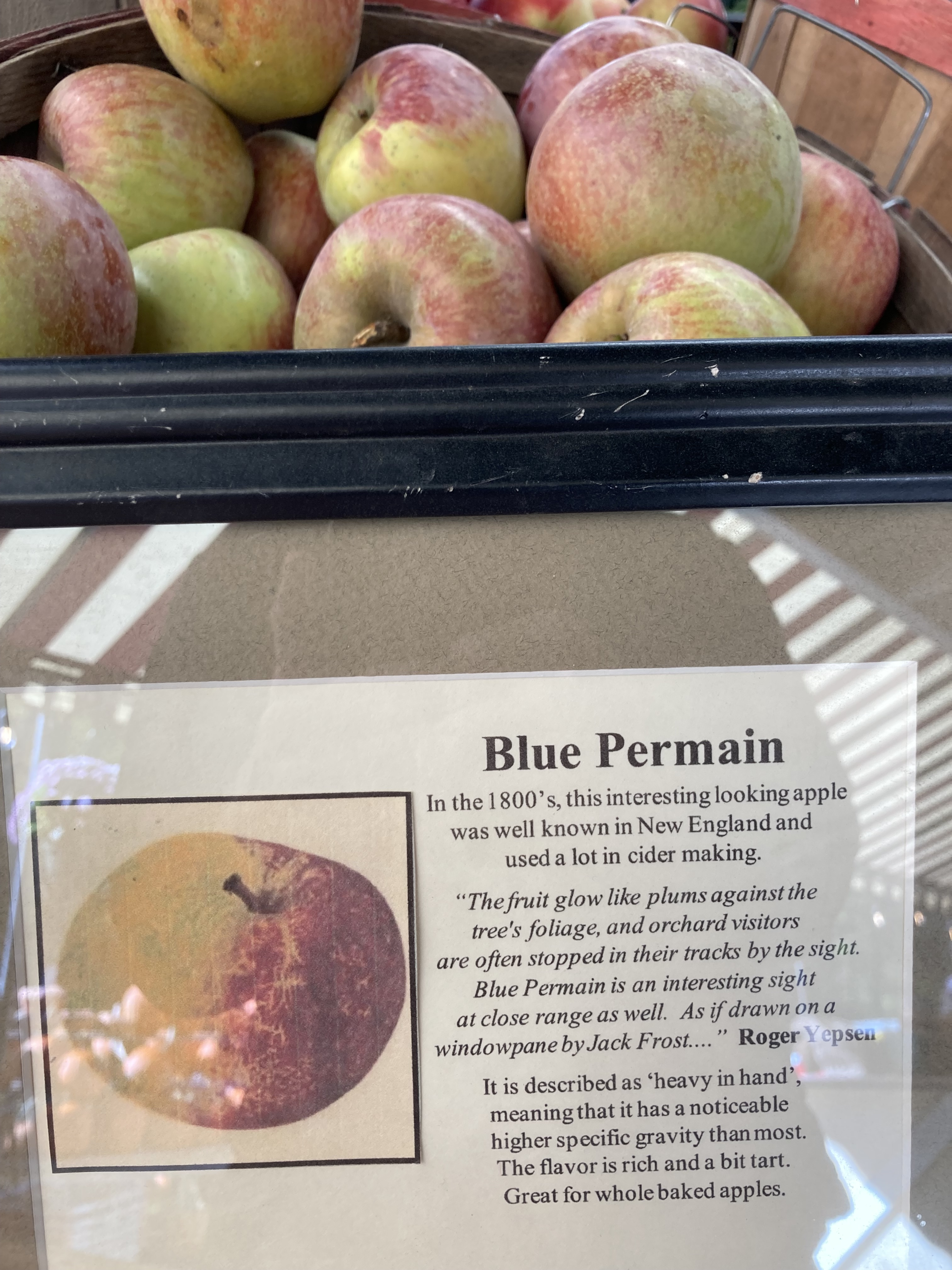
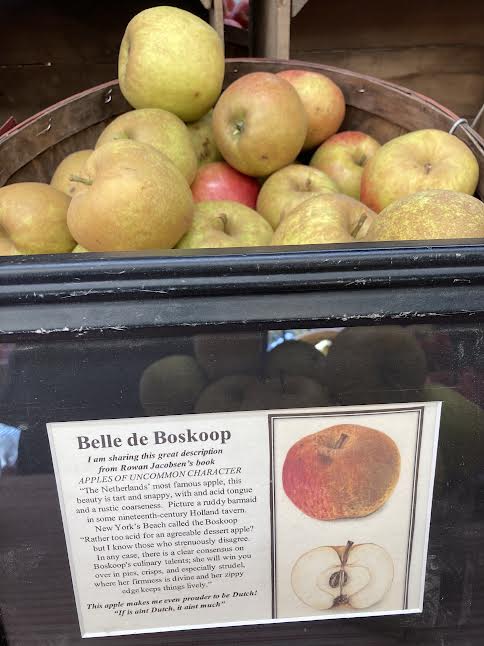
I have, on the other hand, always loved cooking with apples. New York is a good place to be in the fall if you want the aroma of apples. Montgomery Place Orchards grows 75 different kinds. When I was there I saw about 30 on display. Their skin colors and textures ranged from lumpy beige to cinnabar, including yellow, light green, orange, orange red, streaky red orange, brilliant pink red, and crimson, and some with pink insides. Here are a few of the varieties that caught my attention.

If this makes you want to explore the world of apples further, go to Montomery’s website, where they list all their apples in three categories: modern, traditional, and antique. I find the list very moving. It’s beautiful that these people are preserving all these varieties. I think one of the reasons I don’t eat a whole raw apple more often is that the supermarket types I have to choose from have no smell at all. The air at Montgomery Orchards was strong with apple.

The idea for this pork chop and apple dish started with one I used to cook at Restaurant Florent back in the day. That one was blood sausages with apples, onion, thyme, and Calvados. All I did here was switch out the blood sausages for pork chops and add an anise spice rub for the chops, a good flavor blend with thyme.

Of all the apples I stared at that afternoon, I decided Esopus Spitzenberg would be the one with these pork chops.  Not only was it Thomas Jefferson’s favorite apple, but I was told by one of the farm ladies that it had a good mix of sweet and sour and held its shape well when cooked. Two important qualities for this dish.

I really can’t stand when cooks describe a recipe as simple when it might look somewhat rustico on the plate but is actually a big pain in the ass to pull together. This dish really, truly is easy and quick, yet its flavor is deep.

To make it for two, get two medium-thick bone-in pork chops, preferably from a local organic farm (mine were about ¾ inch thick; any thicker and you’d probably need to finish off in the oven, which I didn’t want to bother with).

Grind up a palmful of fennel seeds. Mix them with about an equal amount of ground star anise, some salt and black pepper, and a pinch of sugar. Rub this all over the pork chops, and let them sit while you slice up a medium onion and thinly slice two firm, not-too-sweet apples (Granny Smith, Cortland, and Pink Lady are other tart varieties you might consider). I think it’s best not to peel the apples. I like the way their red skins look in the dish, and it helps the slices hold their shape.

Get out a heavy-bottomed pan (cast iron is good), and a large sauté pan.

Have on hand extra-virgin olive oil, a bottle of Calvados, salt, freshly ground black pepper, and the leaves from about 7 or 8 thyme sprigs (plus a few whole sprigs for garnish, if you like).

Drizzle olive oil into the sauté pan, and let it get hot over medium flame. Add the onion, and let it soften for a few minutes. Add the apple slices, season them with salt and black pepper, and add the thyme leaves. While that’s all cooking, put a high flame under the cast iron pan. Drizzle in some olive oil, and when it’s really hot add the pork chops. Brown them well on both sides, about 3 minutes per side. Next add a big splash of Calvados, turn off the heat, cover the pan, and let them continue to cook gently in the waning pan heat until they’re just done through but still pink at the bone, about another 3 or 4 minutes.

When the apples are tender but still holding their shape, add a big splash of Calvados to their pan and let it bubble for a few seconds. By this time the chops should be perfect.

Uncover the pork chop pan and plate the chops. Pour a little of the pan juice over them. Pile the apple-onion mix on top of and alongside the chops. You might want to sprinkle a little coarse salt on, too. I did. Garnish with thyme sprigs if you like. Eat hot.

Read Full Post »

Butternut Squash, by Oleksandra Shkarupeta.

Recipe in text below: Mezzi Paccheri with Butternut Squash, Pancetta, Rosemary, and Walnuts

Butternut squash can get to seem boring right now, when it’s all over the place, piled up in bins not only at the Union Square market but also at places like West Side Market, a local supermarket I have a love-hate relationship with (their fish department borders on disgusting). Butternut squash is clunky, bulbous, and colored a strange, dull peachy beige, but it has wonderful qualities, too. It tastes good, like pumpkin but gentler, sweeter, and less stringy. It’s easier to peel than pumpkin. Its seeds are contained in a little round pocket inside its bulbous bottom. Peeling that part can be a challenge, but the neck is smooth and clean and easy to cut into uniform cubes, so there’s an elegance to that alone. To make it easy for myself I often purchase a large butternut squash (or two smaller ones if they’re all I can find). I separate its long neck from its bulby bottom and then skin and dice the neck—a sharp chef’s knife slides right down the skin. I leave the bottom for another day, usually to cut in half, scoop out the seeds, and roast. A nice side show for two, along with, say, pork chops sautéed with apples.

Butternut squash is sweet, sometimes a little too sweet, but you can awaken it. In my recipe here I did so with a little dry vermouth and a few drops of rice wine vinegar that brought it into balance. I find that butternut squash is nice paired with something fatty and salty, so I included a good amount of pancetta, too.

 I’m getting to really love this vegetable. It makes fall cooking an event.

I also wanted to mention Faella pasta, my new favorite brand. It’s from the grand dried-pasta capital of the world, Gragnano, a town just south of Naples. I cook a lot of different brands of dried pasta, but lately this one has really been speaking to me. I love the way the pieces clink together in the bag, and the semolina dust they leave on your hand when you grab a bunch. Their color is a warm yellow with a rough, almost velvety look they get from the traditional bronze dies used to extrude them but also from the slow drying process used to finish them to perfection.

Faella is an old family-run company, started in 1907. In my opinion it’s still doing everything right. For my butternut squash recipe I chose Faella’s mezzi paccheri shape, one of my favorites. It’s not as giant as paccheri; it’s the same idea, hefty and bold, but easier to get into your mouth. Faella pasta is  available from www.gustiamo.com. I love looking and choosing from all the shapes they carry. Almost as exciting as shopping for shoes.

Before I show you how I put together this butternut squash pasta, I’d like to remind you that the Siena early Renaissance show has just opened at the Metropolitan Museum. I went to a  members’ preview the other day. The beautiful show covers the years 1300 to 1350, a time of phenomenal artistic creation in Siena, a first break from the Byzantine style and the dawn of the Italian Renaissance. You’ll see works from the four major artists, Duccio di Buoninsegna, the brothers Pietro and Ambrogio Lorenzetti, and Simone Martini, brought together from museums and churches all over the world. The colors are rich and bright, ultramarine, scarlet, vermillion, a powdery pink that I love. Lots of gold leaf. The medium is mostly egg tempera on wood. And you can get up close to many of the remarkably well-preserved works. A brilliant show. It’s up until January 26, 2025.

Christ and the Samaritan Woman, from Duccio’s Maestà predella.

If you’d like to try making my Mezzi Paccheri with Butternut Squash, Pancetta, Rosemary, and Walnuts, here’s what you’ll want to do:

Start with a large butternut squash. Separate the rounded bottom from the neck with a sharp chef’s knife, and save the bottom for another day. Skin the long stem section, and cut it into approximately ½-inch cubes. You’ll notice how pretty and uniform they look, and how orange. You’ll want about 2½ cups of them.

Get out a large sauté pan, and drizzle in a tablespoon or so of extra-virgin olive oil. Let it get hot over medium heat. Chop a ½-inch-thick round of pancetta into small dice, and add it to the pan. Let it cook slowly until it’s crisp and much of its fat has been released. Remove the pancetta bits with a slotted spoon, and set them aside.  I do this so they stay crisp, a good contrast to the soft squash, and I’ll add them back toward the end. Add a large shallot cut into small dice (you can use a leek instead). Add the butternut squash, and season with salt and black pepper and a little hit of allspice. I’ve still got decent-looking rosemary in my garden, so I added the well-chopped needles from a large sprig. Rosemary goes well with hard squash, and it’s a nice change from sage, which can turn a little musty with heat. Give it a stir, and let everything sauté for a few minutes.

While it is cooking, set up a pot of pasta cooking water, salt it well, and bring it to a boil.

Add a splash of dry vermouth to the sauté pan, and let it bubble out. Add a splash of chicken broth or water, cover the  pan, turn the heat down a touch, and let the squash steam cook until tender but still holding its shape, about 6 minutes.

Drop a pound of mezzi paccheri into the water (or use another similar pasta, such as rigatoni).

Uncover the sauté pan, add about ½ cup of crème fraîche, and stir it around until it’s melted and creamy. Let it simmer, uncovered, for a few minutes. By now some of the butternut squash will have broken down and blended in with the crème fraîche, creating a sweet light orange sauce. Give it a taste. You might want to add a few drops of rice wine vinegar for acidity, or maybe not. That’s a personal taste call.

When the pasta is al dente, drain it, leaving a little water clinging to it, and pour it into a large, warmed serving bowl. Add a drizzle of good olive oil, and toss briefly. Add the butternut squash sauce, the crisp pancetta bits, a few big gratings of Parmigiano or grana Padano, and a handful of toasted, lightly chopped walnuts, holding some back for garnish. Add a little more black pepper, and toss. Taste to see if it needs salt. Scatter on the rest of the walnuts. I also garnished this with a little chopped Italian parsley. It wasn’t entirely necessary, but I had it on hand.

This will serve four as a main-course pasta.

Read Full Post »

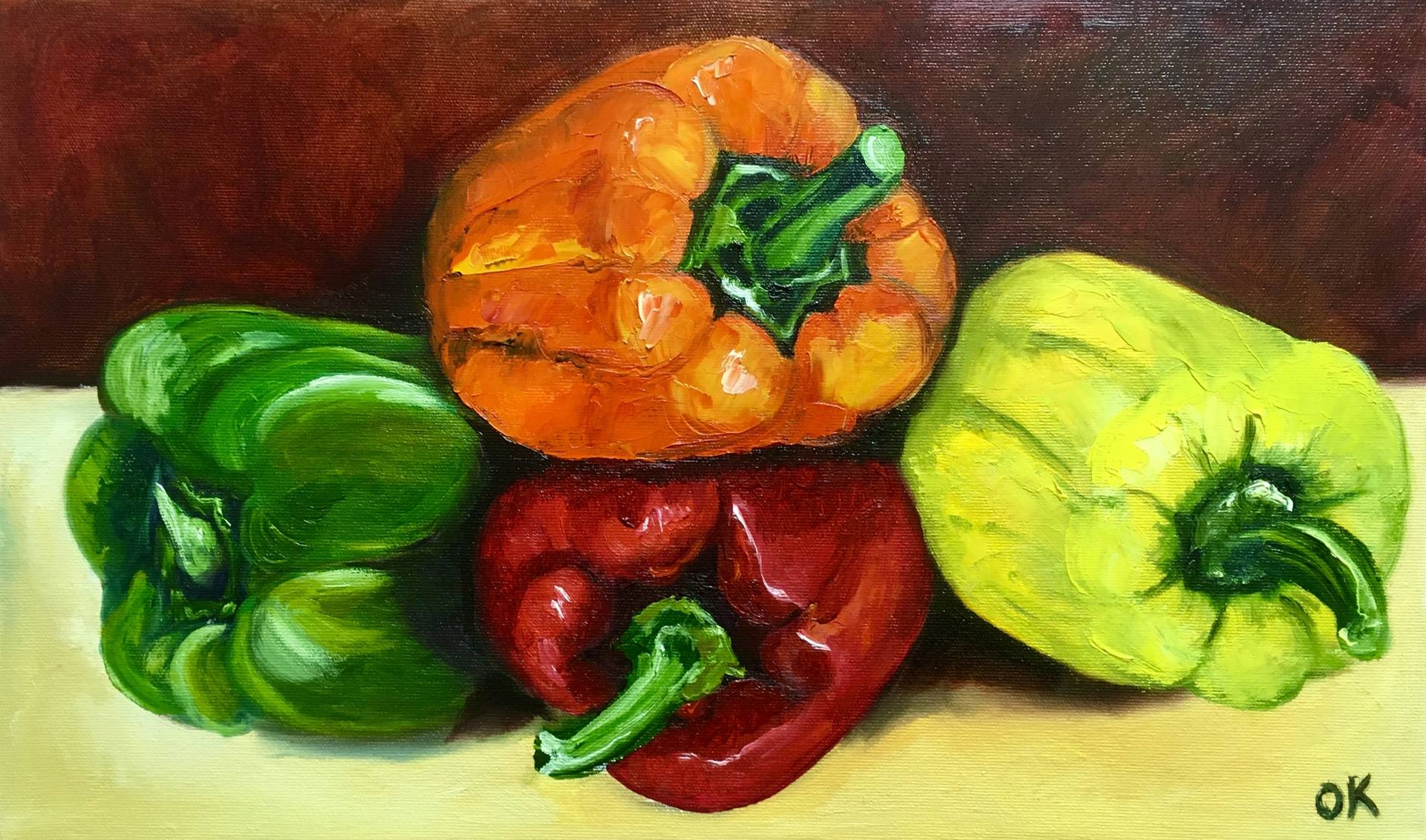
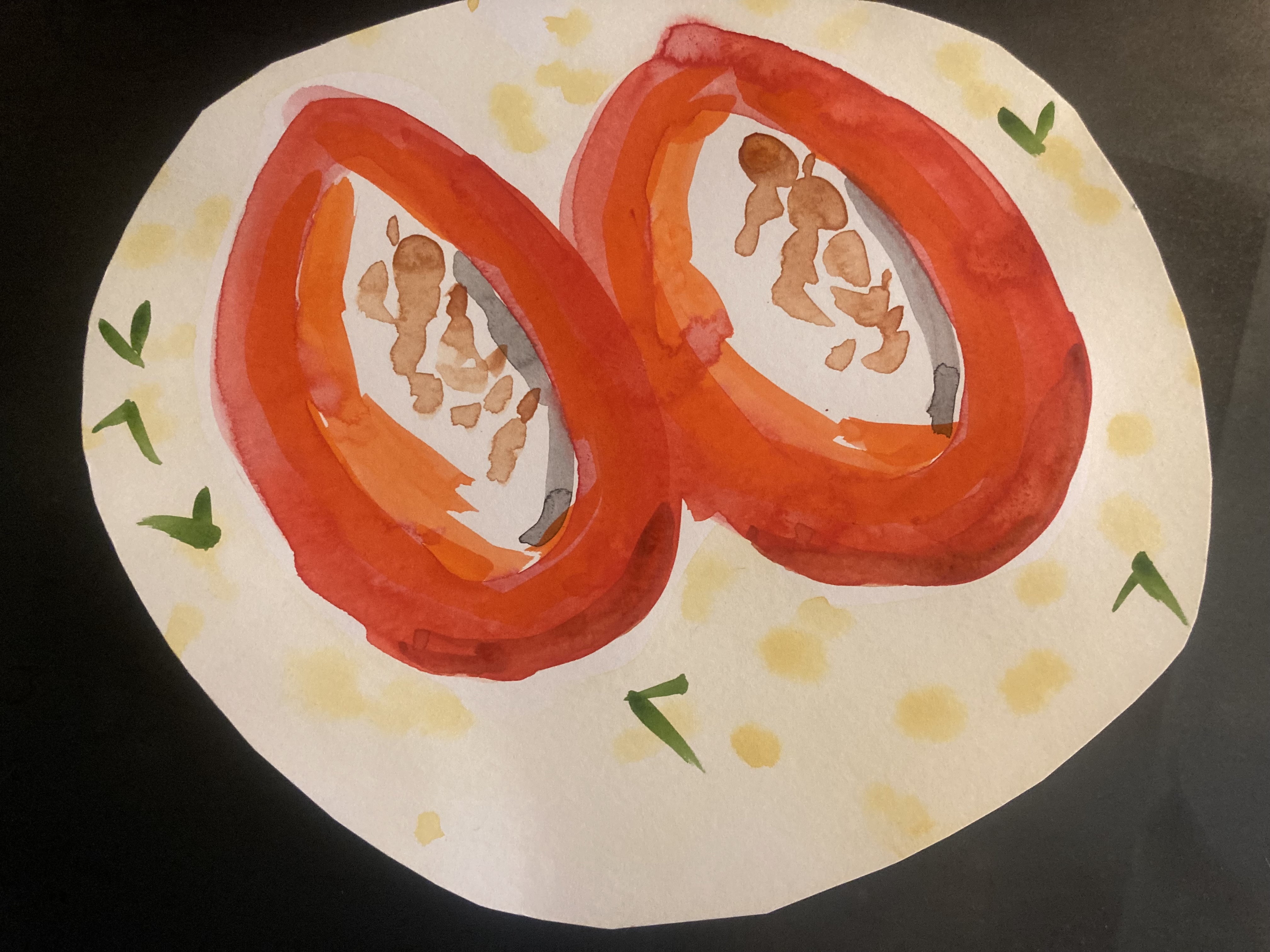
Recipe in text below: Rigatoni with Roasted Red Peppers, Crème Fraîche, Thyme, and Basil

In the late 1800s Carmine Street and the surrounding blocks of the West Village became a destination for Italian immigrants, mostly from Liguria. Our Lady of Pompeii Church, at Carmine and Bleecker, was their refuge, providing not only spiritual support but also helping new arrivals with housing, jobs, and medical care. It has continued to comfort all the Sicilian and Neapolitan people that followed. My friend Sandy Di Pasqua’s family landed on Carmine. My next-door neighbor on Long Island Lou Mastellone’s older brother was born in a walkup, cold-water apartment on Christopher Street, about five blocks away.

Pompeii is still an Italian church in spirit, having a daily Italian-language mass for the remaining elders, but it also offers one in Tagalog, as the congregation is now heavily Filipino. I took Italian classes at its adjoining school in the 1990s. And for years I would get together with a bunch of friends for its Good Friday Mass. For me, a nonreligious type, the attraction to the vigil was the darkness, the yellow light, the smell of the paraffin candles, and the repetitive, hypnotic song we all sang as we walked over and over around the pews. The refrain “Sono stati i miei peccati, Gesù mio, perdon, pieta” is, I’m pretty certain, stuck in my brain forever. In the old days they even took the song and candles out onto the street. After the vigil we’d all go to Rocco’s for fritto misto and chianti (the old Rocco’s, not the new faux–Italian American hotspot it’s become). Our group has now dispersed, so we don’t do it anymore, but the show goes on, although with fewer participants each year.

There are still a few legit Italian places in the neighborhood. Rocco’s pastry shop (not related to the now trendy restaurant on Thompson Street ), Ottomanelli’s butcher, Joe’s pizza, and Faicco’s Pork shop (which now, unfortunately, has an aggressive MAGAroni vibe to it that I don’t appreciate) are all around the corner on Bleecker.

So for me, it’s a celebration when a new Italian-run shop appears in the neighborhood. Yesterday I went to check out Sullaluna, a just-opened cafe and bookshop combo on Carmine, an offshoot of a place in Venice. They specialize in beautifully illustrated children’s books, all in Italian. I felt peaceful in Sullaluna, and the books are fascinating. A whole new world of literature for me. Here’s a book I just had to purchase:

There’s also good coffee and wine, and a small menu with standard items like gnocchi, arancini, carbonara, and salads. They also do brunch. I cannot yet comment on the quality of the food, since I only had an espresso, but the guy next to me ordered a huge gelato-stuffed cornetto that looked enticing.  This is a sweet little place. I will be back.

Sullaluna is at 41 Carmine Street. It’s closed on Tuesdays. As of now, It doesn’t seem to have a website, but it does have an active Instragram account that you might want to check out.

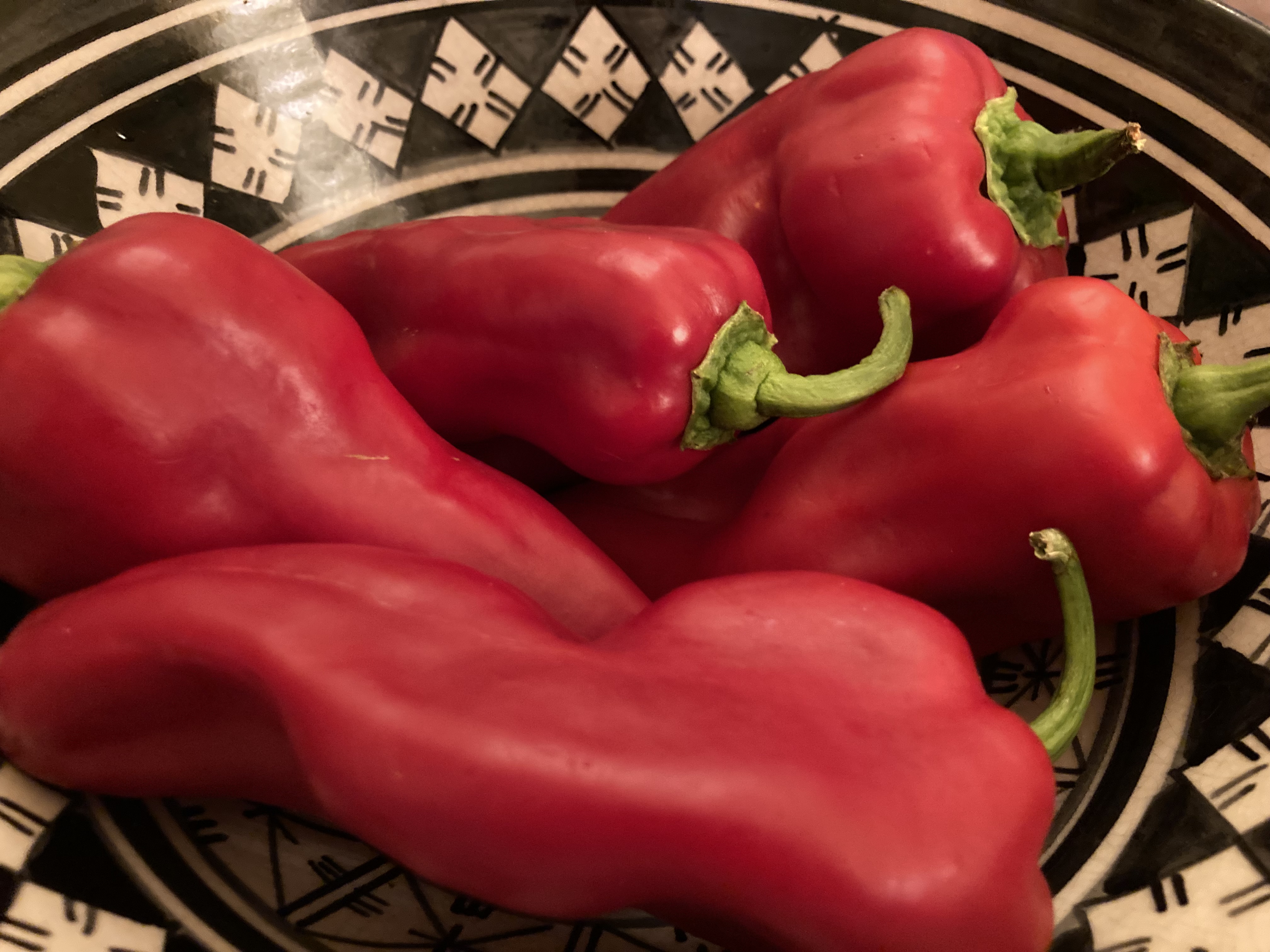
After my coffee at Sullaluna I made my way over to the Union Square market to check out all the late summer produce there. We’ve still got lots of tomatoes here in New York City, and those dark and dusty-looking pointed Italian plums, my favorites for tarts. And many of the sweet and hot chilis have now ripened to a deep crimson. I bought an armful of sweet ones labelled Giant Marconi. I think I’ve cooked with them before, but I wasn’t familiar with that name. I love a roasted sweet pepper sauce for pasta, so that was my plan.

Here’s how to make my Rigatoni with Roasted Red Peppers, Crème Fraîche, Thyme, and Basil.

You’ll want to start by roasting your peppers. I used 6 of the Giant Marconi ones, which turned out to be dense and rich tasting, but 4 or 5 regular red bell peppers would also work. I like to do them on a charcoal grill, but a broiler or gas flame does a fine job. Just blacken them all over, and then peel and seed them. Then give them a rough chop. (I really don’t recommend using jarred roasted peppers for this. Their taste is always somewhat acidic, which can really spoil this suave sauce.)

Get out a large sauté pan, and set it over medium heat. Add a big drizzle of extra-virgin olive oil and a tablespoon or so of butter. Add a chopped shallot and a sliced garlic clove, and let them soften for a moment. Add the roasted peppers, a little chopped fresh thyme, some salt, and a pinch of nutmeg, and let them cook until the peppers are fragrant and tender, about five minutes. Add a splash of dry vermouth, and let it bubble out.

Purée the peppers in a food processor, adding a little water to thin out the purée. Return the purée to the pan, and add about ½ cup of crème fraîche and a sprinkling of Aleppo pepper. Let it warm through.

Cook a pound of rigatoni or another shape you might have on hand, and drain it, saving a little of the cooking water. Pour it into a large, warmed serving bowl. Add the sauce, a drizzle of fresh olive oil, a good sprinkling of grated Parmigiano Reggiano, and a handful of lightly chopped basil, adding a little cooking water to loosen it if needed. Give it a good toss.

This sauce is also very good on mussels or clams. Just open them in a little white wine or vermouth, add the sauce, and toss. Beauty.

Happy end of summer cooking to you.

Read Full Post »

Lemon and a Sprig of Lemon Thyme, by Julian Merrow-Smith.

Recipe below, in text: Cool Zucchini Soup with Lemon Thyme

I never used to love lemon thyme. I found it too air-freshener-y. But the more I’ve learned how to work with it, the more I’ve changed my mind. It’s a matter of application, of handling. Lemon thyme is a multipurpose herb. The thyme feature of its personality can make it work as an anchoring herb, one you’ll want to add during cooking so its peppery, allspice-like, woody flavor can open up with heat. (Ever wonder why Jamaican cooks use allspice and thyme together so often? It’s because they taste alike. There’s an affinity there.) But also you’ve got the clear lemon overtones that provide an uplift, especially if you include it at the end. In the case of this soup, I’ve added it at the beginning of cooking and then chosen to wait and add it again after I’ve chilled the soup, so it stays fresh and relevant. It’s deep and good this way. No air freshener, no stupid scented candle.

To make this soup you’ll want to get out a good-size soup pot and set it over medium heat. Drizzle in a few tablespoons of extra-virgin olive oil, and add a large summer onion, chopped, using some of the tender green stem. Add a medium-size baking potato, peeled and chopped. Add some salt, and let it all cook for a few minutes. Then add about 6 or 7 small zucchini, chopped, and the leaves from about 4 lemon thyme sprigs. Let it cook until everything is fragrant and just starting to soften. Add a splash of dry vermouth, and let it boil away. Add 4 cups of chicken broth or vegetable broth and enough water to just cover the vegetables. Bring it to a boil, and then turn the heat down a touch and simmer at a low bubble until everything is tender, about 15 minutes.

Next you’ll want to purée the soup in a food processor, probably in batches, pouring it into a large bowl as it’s puréed. Chill it for several hours. When it’s cold, add a little more salt, some freshly ground black pepper, and the chopped leaves from about 5 lemon thyme sprigs. I like this soup with body but still quite pourable. If you find it too thick, thin it out with a little cold water.

Give it a taste.  I found it needed a tiny drizzle of sherry wine vinegar to bring up its acidity. Your soup may not. Serve cold, garnished with a drizzle of your best olive oil and a few lemon thyme sprigs.

This will make four big portions.

Read Full Post »

Our Unfinished Revolution: Octopus/Squid, by Alexander Calder, 1975-76.

Recipe below: Black Fettuccine with Calamari, Jalapeño, Basil, and Miso

The past few weeks have been rough. Family problems have kept my cooking and writing unfocused. That’s just the way it goes sometimes. I had what I thought were a few good ideas for blog posts but they came out garbled. I’m letting them sit in their messed-up state for a future time when I hope I can look at them fresh.  In the meantime, instead of one of my intriguing stories, I’m sharing with you a good pasta dish.

Pasta with calamari in its many incarnations has always been a favorite of mine. I circle back to it often. If you want to call it comfort food, you won’t be wrong, but for some reason I can’t stand that expression. Any food is comfort when I’m hungry. But I do especially like pasta with calamari.

This recipe drifts a bit into non-Italian flavors. I like the taste of jalapeño. It’s obviously not Italian, but its sharp medium spice goes well with seafood, and by extension, with seafood with pasta. I like jalapeño so much I even decided to grow some this past summer, which I never felt compelled to do before, since it’s piled high in every supermarket year round. I saw cute seedlings at the nursery, and I impulsively bought and planted them. They came up in July, firm, dark green, and abundant. I let some go through their natural progression to deep red. Those were an August treat. I never see them red in supermarkets. I used green ones for this pasta. They blend well with miso, again not an Italian taste, obviously, but I’ve found that it can impart a useful umami, not unlike that of anchovies, when used in an otherwise Italian-leaning dish.

I have a strong attraction to squid ink pasta. Often when I see it I buy it. I also make my own, not only with squid ink but also with cuttlefish ink, which seems easier to find. This time I didn’t make my own pasta, as I ran across a new black pasta, new to me and to Citarella, that intrigued me. It’s from an American company called Al Dente. Stupid name aside, the semidark dried fettuccine, made with eggs and semolina, turned out to be a find. It cooked up silky but stayed firm and slippery, which I loved. The color was good too, a greenish black, a bit dusty looking. If you see it anywhere, give it a try.

The colors of my pasta dish.

Altogether the colors of this pasta were beautiful, like the Italian flag but less patriotic with the jalapeño and miso. Cooking it helped my mood considerably. If you’re having trouble of some sort, and who isn’t, I would consider getting a bag of squid ink pasta and some really fresh calamari and just going for it in a free, improvisational way. Cooking is therapy.

Black Fettuccine with Calamari, Jalapeño, Basil, and Miso

Salt
Extra-virgin olive oil
4 scallions, cut into thin rings, using much of the fresh green tops
2 fresh, moist garlic cloves, thinly sliced
½ to 1 green Jalapeño pepper, depending on how much heat you like, well chopped
2 pints grape tomatoes
1 pound squid ink fettuccine or spaghetti
1 tablespoon white miso dissolved in ¾ cup dry Marsala
1 pound very fresh, small squid, cut into rings, the tentacles cut in two
A handful of basil leaves, lightly chopped

This dish comes together fast, so it’s best to have all your stuff prepped and ready where you can grab it.

Set up a pot of well-salted pasta cooking water over high heat. While it’s coming to a boil, get out a large sauté pan, and place it over a medium-high flame.

Put about 2 tablespoons of olive oil in the sauté pan, and let it get hot. Add the scallions, garlic, jalapeño, and tomatoes at the same time. Add a little salt. Let cook, shaking the pan frequently, until the tomatoes start to burst, probably about 5 minutes.

Add the fettuccine to the now boiling water, and give it a stir.

Add the mix of miso and Marsala to the pan, and let it bubble for about 30 seconds, to cook off some of the alcohol. Add the squid, stirring it into the sauce, and cook it fast, just until tender, no more than about 4 minutes. Taste a piece if you’re unsure. It should be cooked through and tender, with a slight bite but not rubbery. Take the pan off the heat.

Drain the fettuccine, and pour it into a large, wide serving bowl. Drizzle on a generous amount of fresh olive oil, and give it a toss. Add the squid sauce and the basil, and toss again.

Read Full Post »

« Newer Posts