Feeds:
Posts
Comments

Archive for the ‘Uncategorized’ Category

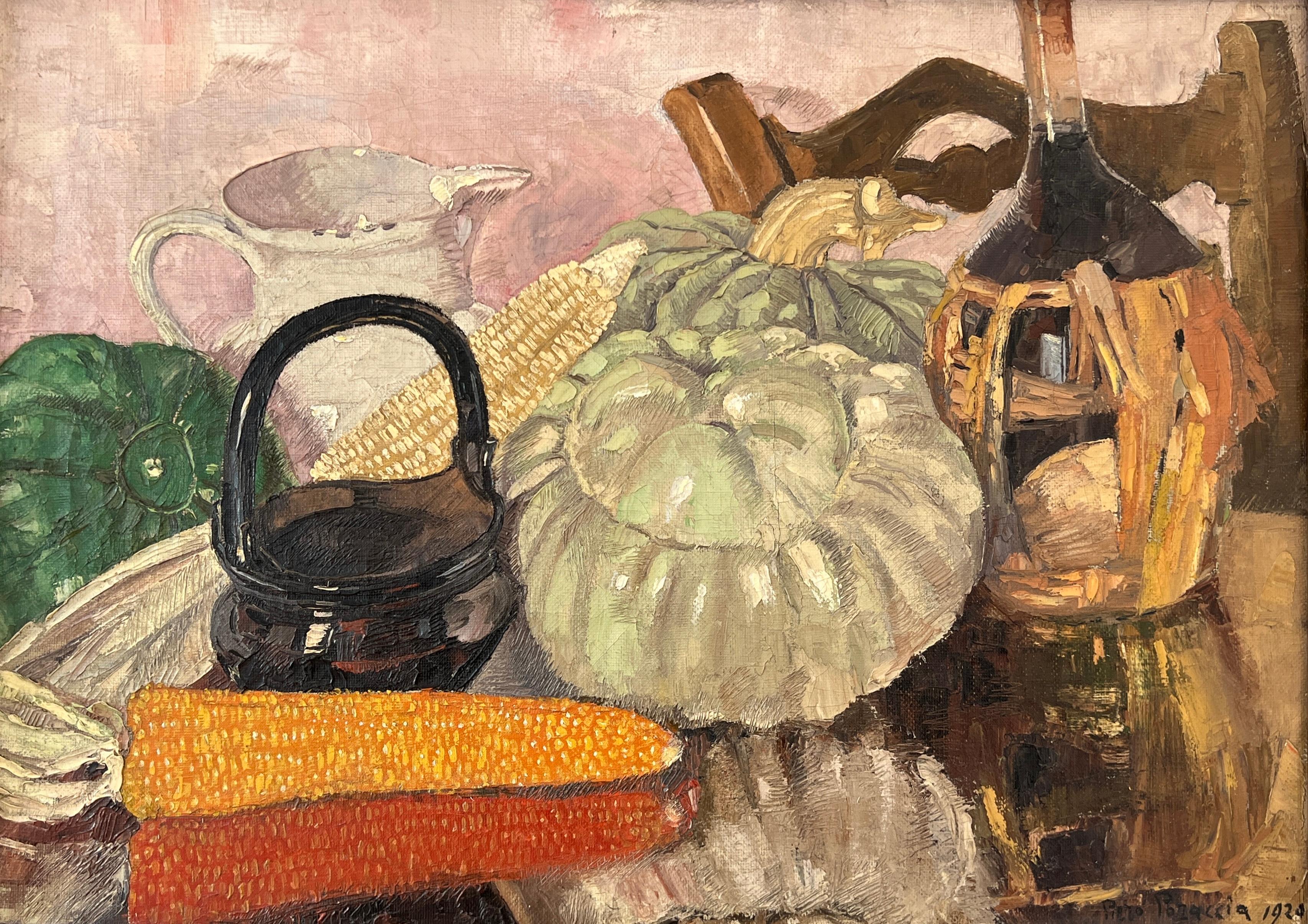
Corn on the Cob, by Piero Poraccia, 1924.

Recipe below in text: Warm Corn Salad with Tomatoes, Thai Basil, and Ricotta Salata.

I haven’t been very creative with corn this summer, just eating a lot of corn on the cob (or corn on the club, as my friend’s young son used to call it). And, in fact, I haven’t completely enjoyed every ear, finding some ridiculously sweet. Half the time I can’t even finish one club. You have to really hunt around the farmers’ markets to find the old-fashioned varieties that are not just sugar loads.

The other day I picked up some ears of what was labeled white corn. The kernels weren’t exactly white, more like a very pale yellow. I’ve seen carnations that color. I was told by the people at the farm stand that that corn was a native, nonhybrid variety. After a little research I thought maybe it was New York Iroquois corn, but the farm people didn’t call it that. I tested it by chomping into it raw. Sweet but grassy. I decided to slice off the kernels and sauté them. That made it even sweeter, but with a deeper vegetable undertaste than the yellow stuff. Still, I didn’t want to eat it straight, finally deciding that any type of corn is improved by a little acid, a little heat, and salt.

Still Life with Corn, by Charles Ethan.

I came up with this recipe, which includes a peperoncino for heat, ricotta salata for salinity, tomatoes because it’s still summer, a little miso for umami, and Thai basil for its anise spiciness, which, especially late in the season, is a good counterpoint to sweet.

To make it, first off make a vinaigrette, with 1 teaspoon of white miso, a teaspoon of sherry wine vinegar, a teaspoon of mirin, and 1½ tablespoons of good olive oil. Mix that all well until the miso is dissolved.

Shuck 5 ears of summer corn (you can try to find a white variety, but any type will work well). With a sharp knife, slice off the kernels.

Get out a large sauté pan, and set it over medium heat. Drizzle in a little olive oil. Add the corn, 2 scallions cut into thin rounds, a piece of a fresh hot red chili, minced (as much as you like; I used about half a peperoncino), and a big pinch of allspice. Add a sprinkle of salt, and sauté until the corn is firm but tender, 3 minutes or so.

Put the corn in a big serving bowl. Add 2 or 3 well chopped plum tomatoes (I seeded mine) and a handful of lightly chopped Thai basil leaves. Pour on the vinaigrette, and give it all a gentle toss. Scatter on some crumbled ricotta salata, and garnish with a few nice looking Thai basil sprigs.

You can serve this warm or at room temperature. It will feed four or five as a side dish. I served it with roasted monkfish that I topped with a green tapenade, but it would go well with any number things (barbecued chicken thighs, for instance).

Happy late summer cooking to you.

Read Full Post »

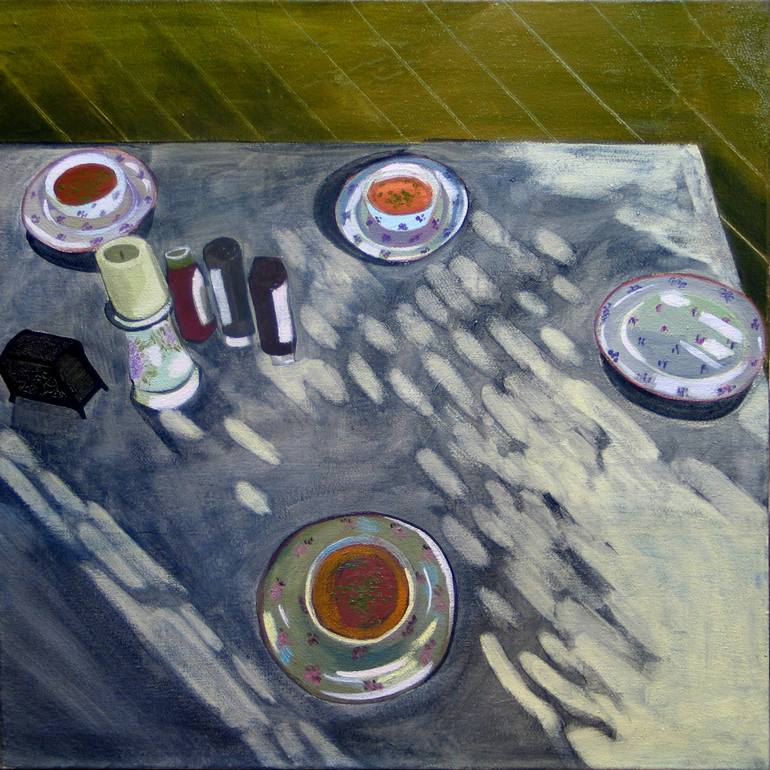
Gazpacho, by Karolina Swidecka.

Recipe in text below: Gazpacho with Cantaloupe and Basil

I don’t like bell peppers in my gazpacho, either green or red. They add a sharp gasoliny flavor so dominating, I find, that I can’t taste much else. Roasting would probably improve the pepper presence, but to my mind the point of gazpacho is to blend uncooked ingredients, releasing their essence and their trapped water while keeping it all as cold as can be so it’ll refresh your body on a hot day. No cooking here at all. But those bell peppers bummed me out every time. I wanted to love this soup so badly. You know what I did? I left the bell peppers out. Dramatic, I know. I instead emphasized the sweet by adding melon, balancing that out with sherry wine vinegar, a mildly bitter extra-virgin olive oil, basil, and sea salt.

If you’d like to try my version, you’ll need four medium summer tomatoes, chopped (I didn’t peel mine, but you certainly can if you want), a medium cucumber, skinned and chopped (I skinned it because I didn’t want the dark green skin to add a murky color), about 3 cups of cubed really fragrant summer cantaloupe, 2 chopped scallions (just the white part; save the green stems for the garnish), a piece of a fresh red chili (I used half of a red jalapeño from my garden), a small, very fresh summer garlic clove, chopped, and the leaves from  a few sprigs of lemon thyme.

Put everything in a food processor, and pulse it until blended but still maintaining a little texture (you don’t want it to resemble a smoothie). Add about a teaspoon of sherry wine vinegar (depending on its strength, you may need more; I used Viagre de Jerez Reserva, which is potent), some nice sea salt (I find that this soup can take a good amount of salt), and about ¼ cup of your best olive oil (I had on hand a Sicilian brand called Olio Verde that I really like that is bitter but not aggressively so). Pulse again a few times to blend. Depending on how much water is in your vegetables, the soup at this point may be thick or thin, but we’ll adjust that later.

Pour the soup into a pitcher or a bowl, and refrigerate it for at least 3 hours (overnight is fine). This will give it time not only to chill but also for all the flavors to blend.

When that’s done, it will have thickened a little. If it started out thin, this will be a good thing. In my case I  needed to loosen it up with about ¾ cup of cold water. My preference is for gazpacho to have body and texture but still be pourable. I don’t want a spoon to stand up in it. Next taste the soup, adjusting with more salt, vinegar, and/or hot chili if needed. Add about 5 or 6 leaves of well chopped basil, and stick the soup back in the refrigerator for about another hour to further meld the flavors and chill. Then it will be ready to serve. You’ll have four good-size servings.

I like garnishing each bowl with a fine chop  of cantaloupe, cucumber, the green ends of scallion, and a thread of fresh olive oil. And I love this soup with good bread, a plate of  Serrano ham, and a cold glass of rosato.

Read Full Post »

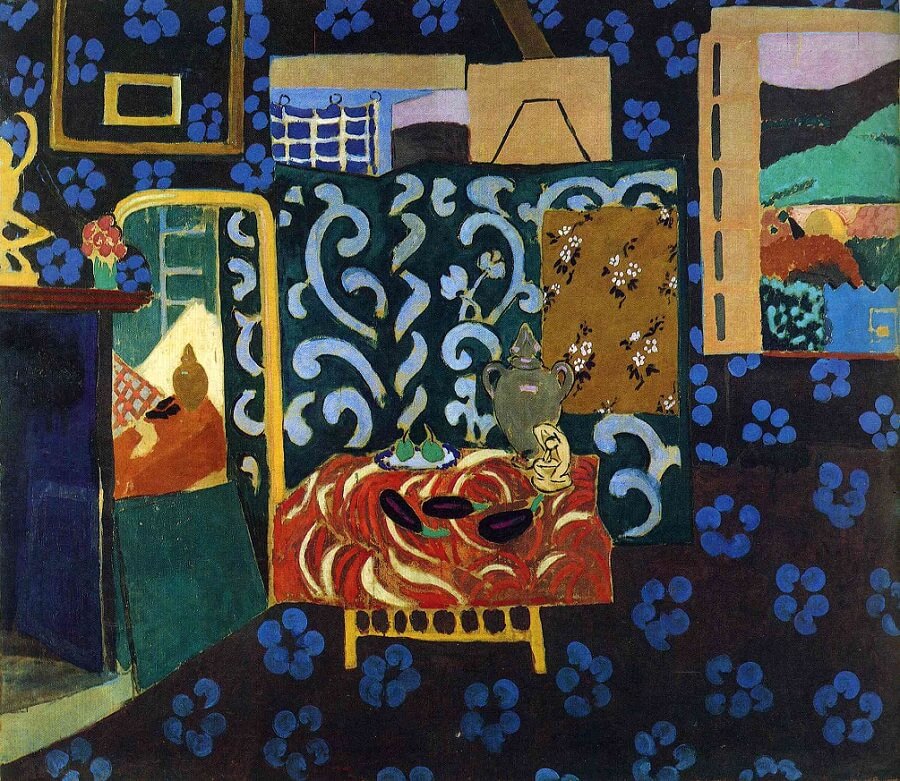
Still Life with Aubergines, by Henri Matisse, 1911.

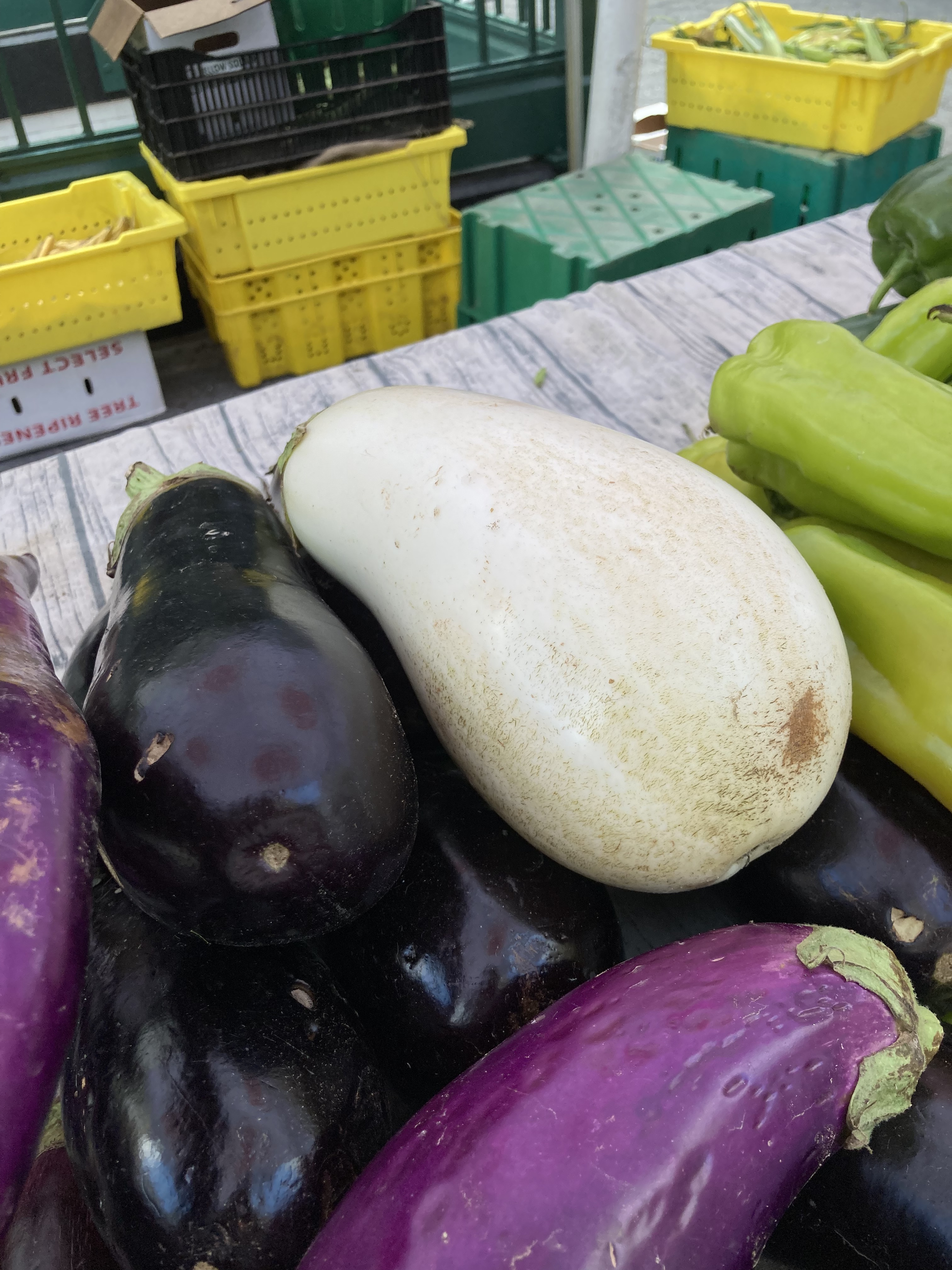
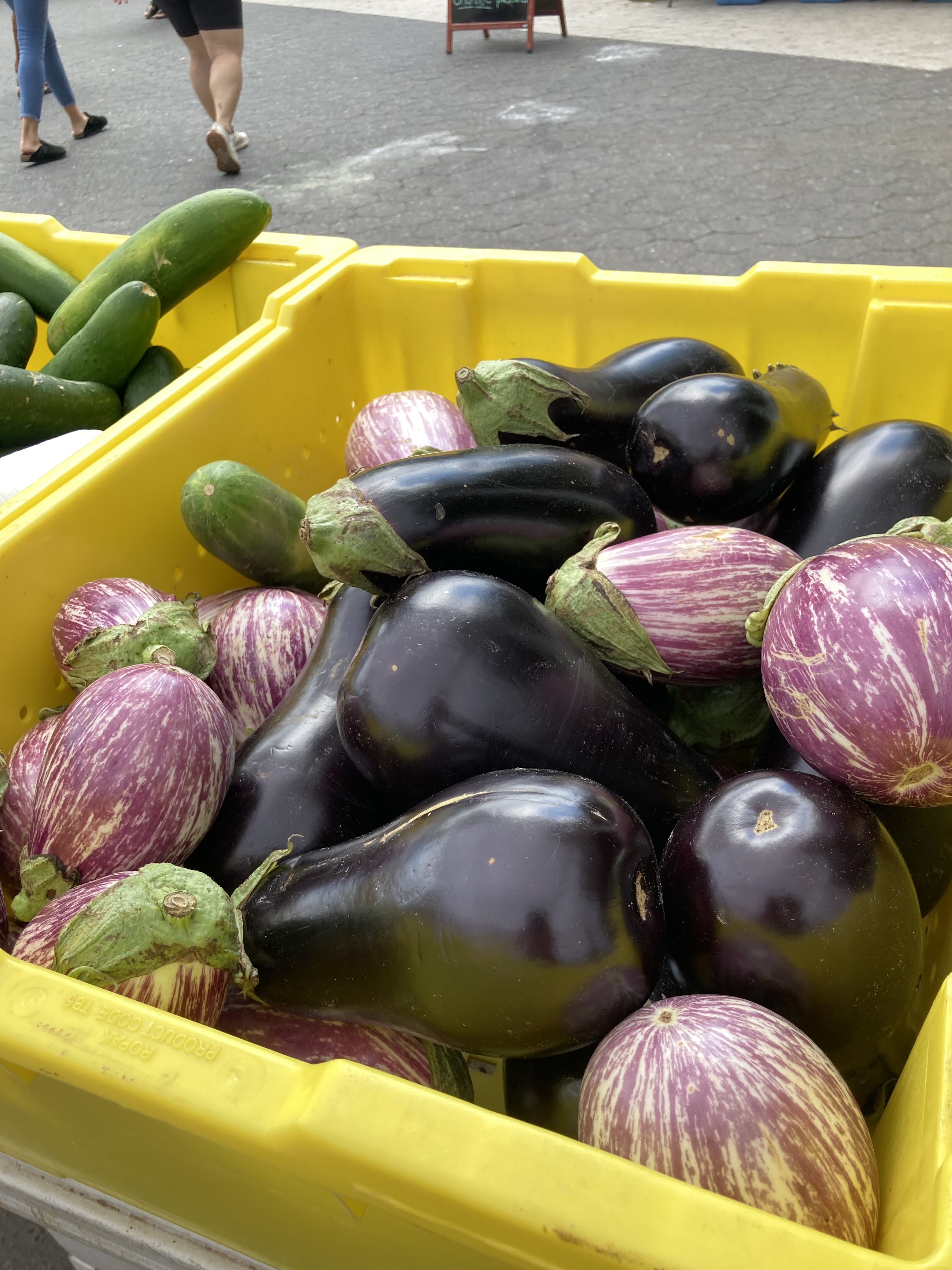
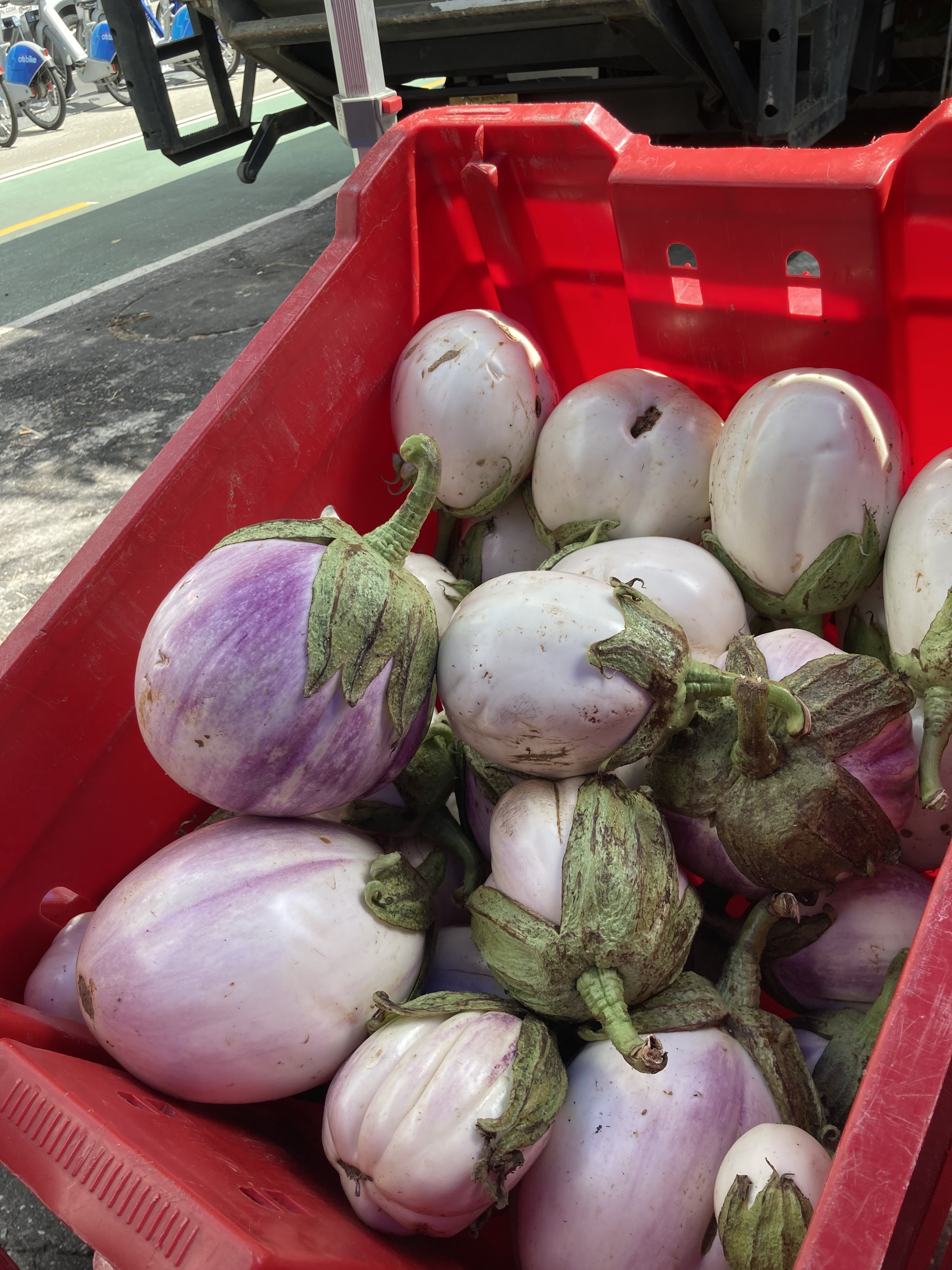
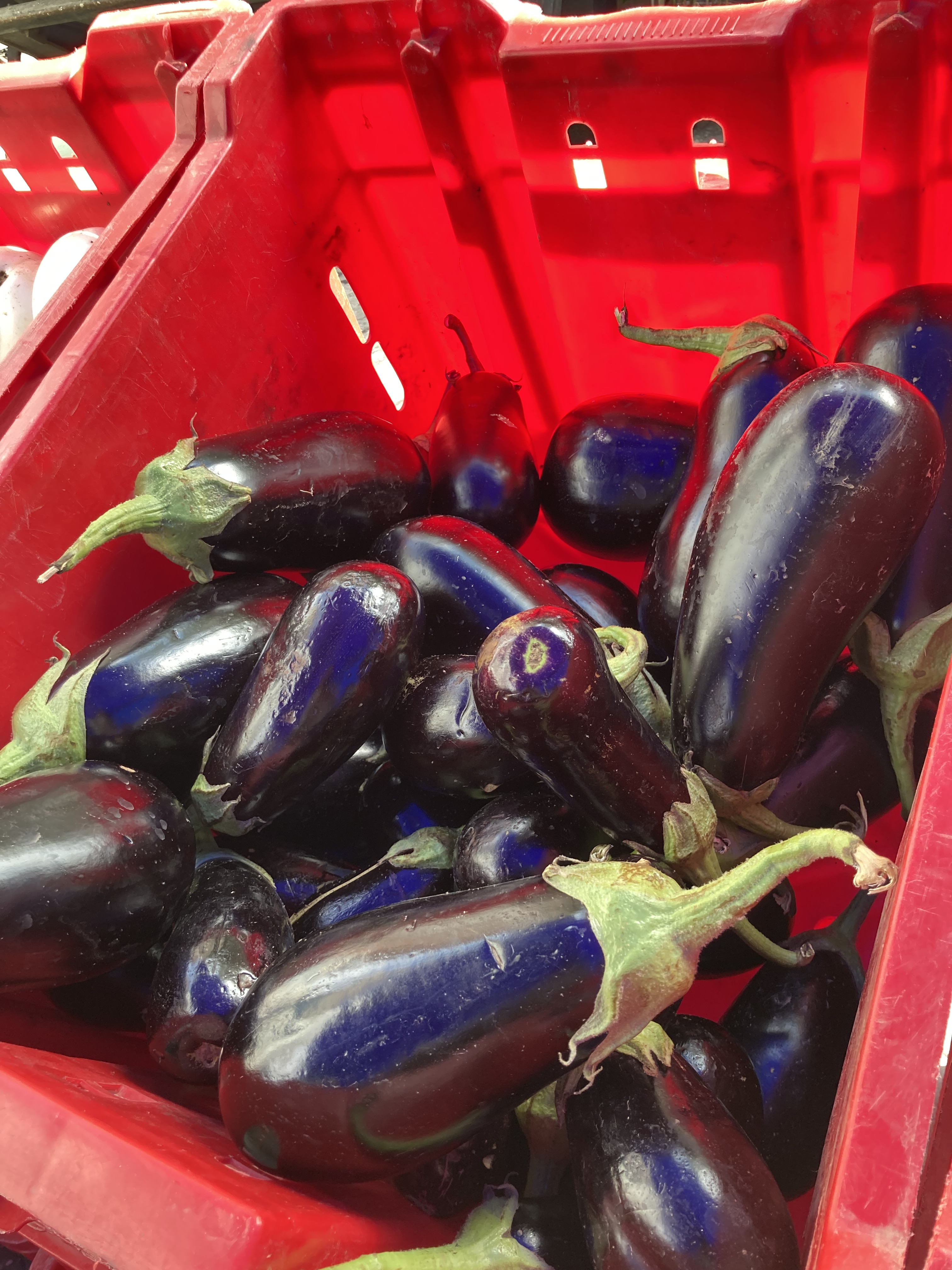
I just spent a confusing afternoon trying to sort out all the varieties of eggplant now available at the Union Square Greenmarket. August is when they come fast and furious. The problem identifying the things is that half the time the people selling them aren’t completely sure what they are. But I did my best, so here goes:

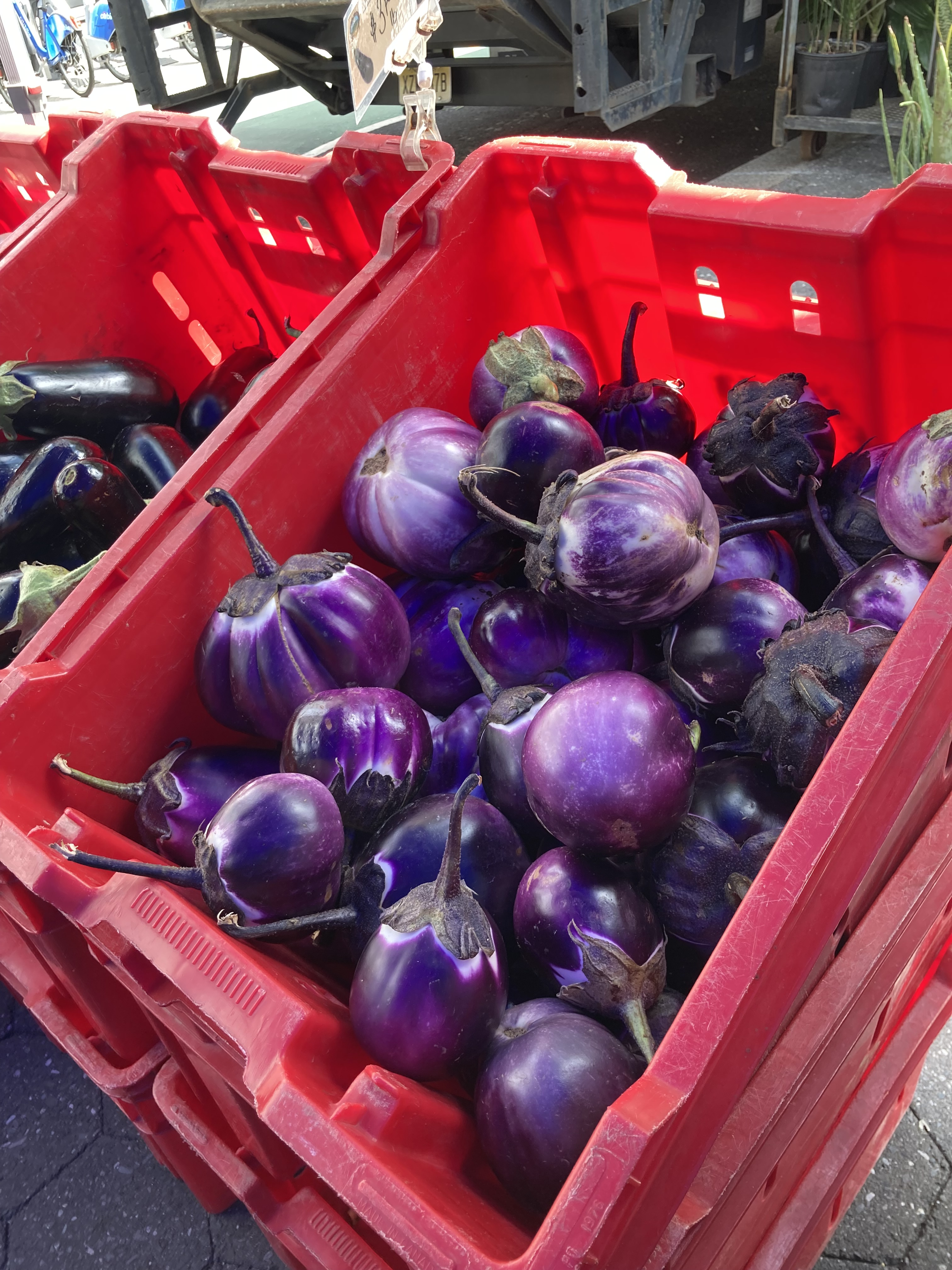
These little squat eggplants are called Patio Babies, because they’re somewhat easy to grow in a container. They’re really cute. I never saw them before, so I bought a few to play around with. I’m thinking of maybe stuffing and roasting them.

These long guys are Japanese eggplants. Chinese varieties look similar, but I didn’t see any today. I’ve also previously seen a long Japanese variety with beautiful solid light green skin. I love these eggplants in a sauté. They’re sweet and gentle.

One white one stuck in here. To me it tastes just like the dark purple Italian ones next to it. It’s just white.

Here are some Graffitti eggplants surrounding the dark purple ones. I buy them because they’re so beautiful. Great for ciambotta.

Here you’ve got your Fairytales. So tiny. I think the best way to treat them is to split them and then grill them with olive oil and herbs.

The farm people said these were called simply Striped, but I’m thinking possibly they’re another type of Graffitti eggplant? Gorgeous color.

These were labeled only as Italian Eggplants. My at-home Google search leads me to believe their actual name is Rotonda Bianca di Rosa. Of course I bought a few.

When I did a Google search for these pretty Globe variety eggplants, the name Barbarella came up, so I’m going with that. I’m staring at one now that’s sitting on my counter. Eggplants are exquisite.

These look like the regular supermarket eggplants you can buy all year long, but they’re an Italian variety that’s a bit more squat, fatter, and more tender. I’ll be making pasta alla Norma with a few of them tomorrow night.

These lovely things are called Rosa Bianca (not to be mistaken for the Bianca di Rosa of the Rotonda school. See why I was confused?). They’re creamy, almost custardy, when cooked, with no bitterness at all. I bought a few of them too. I think I overdid it with eggplants. I’ll have to give some to my sister.

Read Full Post »

Pile of Peaches, by Joseph Keiffer.

Recipe in text below: Peach Sorbetto with Basil and Crème Fraîche

Peaches and basil make a sublime pairing that I love sweet or savory. The melding of the two flavors produces a gentle black-peppery bitter sensation that has become habit-forming for me.

I’ve played around with various renditions of peach and basil over the years. A caprese-like salad, subbing peaches for the tomatoes or even in addition to them is always a hit, especially with fine olive oil, good salt, and coarse ground black pepper. Last summer I made a cold peach soup flavored with Thai basil and dry vermouth. I was really happy with that, too. This year my Thai basil turned brown and collapsed into the dirt after only a few weeks, so no such soup for me this summer.

My father always put together sliced peaches and dry red wine in a big bowl for backyard summer cookouts. He’d scatter whole basil leaves on top. There was no added sugar, and the tannic pucker of the wine carried the “dessert” to a high place in my culinary memory. I make that a few times each summer.

To go super savory, I’ve sautéed peaches with shallots, basil, and a few drops of vinegar, to serve over grilled pork chops. Pretty good, like a deconstructed chutney. Or you might throw cut peach halves on a grill and fill them hot with a cheese-free Genoese pesto. You might also want to try crostini topped with ricotta, peach, and basil, maybe lemon basil. Or you could use the same topping on a hot, oily focaccia. I’ve never tried that myself, but I can imagine it would be lovely.

I also love a Harry’s Bar–inspired peach purée and prosecco, garnished with a perfect basil sprig. I sometimes add a drizzle of Campari. And a vodka and soda is made fuller and less purely medicinal by a shot of peach juice and a few basil leaves.

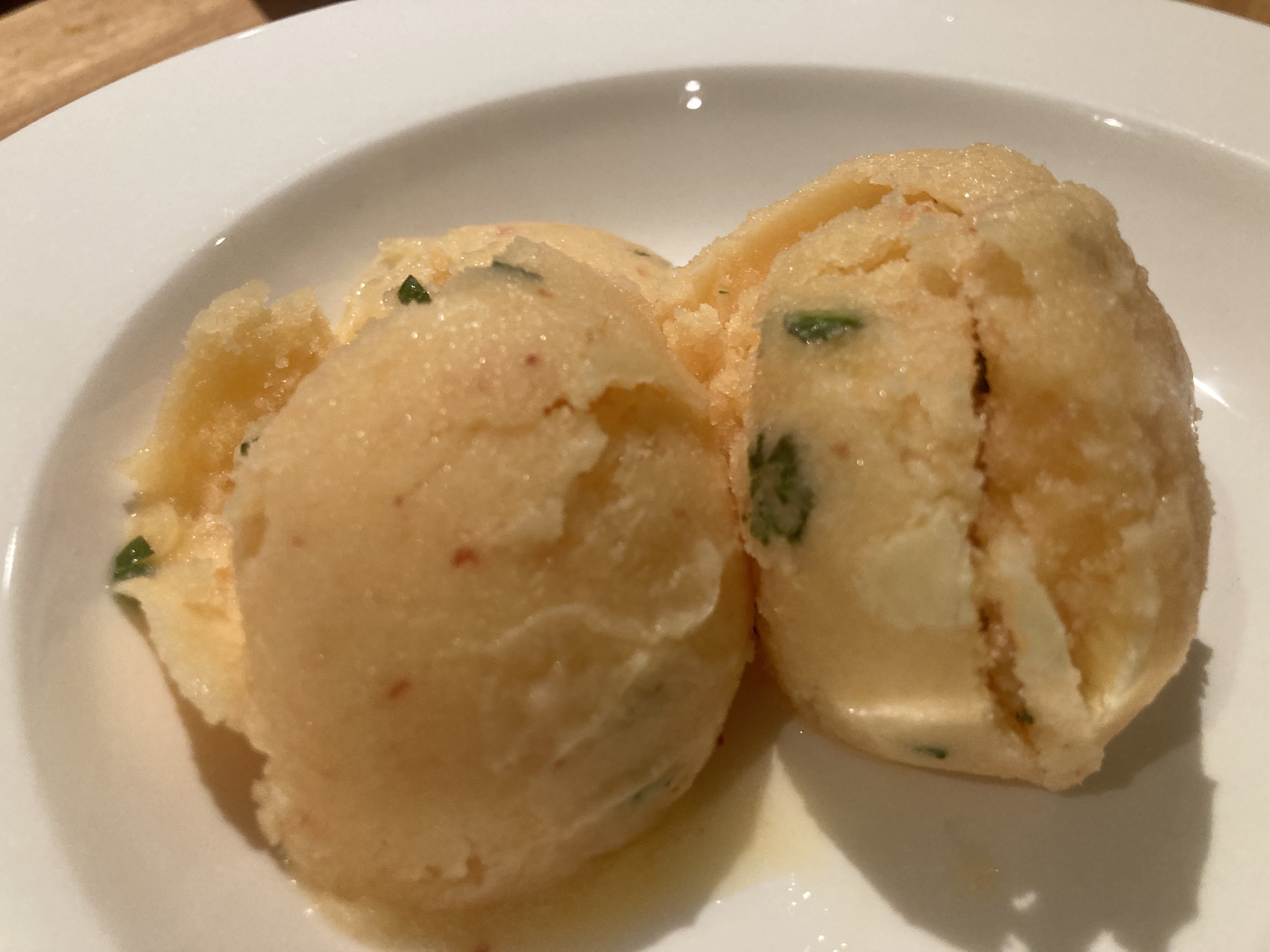
This time I made a proper sweet thing, a peach and basil sorbetto. The friend I served it to last night said she would have been willing to pay 80 dollars for it in a restaurant. That made me feel good.

My peach and basil sorbetto.

If you’d like to try making it, the first thing you’ll want to do is make a sugar syrup, half water, half sugar, boiling it for a few minutes to dissolve the sugar. I used a cup of sugar, but you never really know in advance how much sugar your fruit is going to need, so it’s good to prepare a little extra. Let it cool completely.

Then peel five really ripe, fragrant peaches, leaving a little of the red skin for color. You need soft, ripe ones for this so they purée easily with no lingering lumps. Slice the peaches into thick chunks, and put them into a food processor along with a squeeze of lemon juice and a tiny pinch of salt. Purée until smooth. Start adding the sugar syrup, pulsing it in and tasting as you go. Stop when you’ve got a nice balance. Add a heaping tablespoon of crème fraîche, and blend everything until smooth.

Pour the purée into the bowl of an ice cream machine. Scatter 5 well-chopped basil leaves on top, and process until frozen.

Read Full Post »

Potted Purslane with Sun Dapples, by Krysteen Waszak.

Recipe in text below: Purslane Salad with Nectarines, Pine Nuts, and Ricotta Salata

I will eat pretty much anything at least once, and usually many times, but fuzzy food disturbs me. As much as I love peaches, I can’t quite get past their fuzzy skin. I understand this is infantile and really stupid, but I can’t help it. I once planted a Cuban oregano that turned out to have fuzzy leaves. I found the mouth feel of the herb unbearable. I ripped the plant out.

Yesterday I went to the Union Square Greenmarket looking for purslane. I had the idea I’d pair it with peaches for a sweet summer salad. That seemed perfect. But of course I’d have to skin the peaches’ fuzzy coats, and then they’d turn into a soupy mess in the bowl, diluting the vinaigrette and not doing a good job of anything. Funny—I had forgotten about nectarines, but there they were, in all their smooth-skinned summer glory, smelling like heaven. So they became the thing to layer with the purslane, one of my favorite high summer greens, with its lemony taste and high omega-3 content. An interesting thing about purslane is that it grows all over the place, including in cracks in the sidewalk. You probably have some in your backyard, or down the block in a tree bed. This time I wanted it so badly I paid for it.

I added ricotta salata to the salad, thinking its saltiness would marry well with the sweet fruit. And then I scattered on toasted pine nuts and drizzled on good olive oil, salt, black pepper, and a thread of sherry wine vinegar. So that’s the recipe. Maybe you’d like to try it.

* * *
Here is some other appealing produce I saw at the Greenmarket:

My favorite lilac-colored round Italian eggplants. I like to cut them in half and stuff them with breadcrumbs, anchovies, garlic, and summer savory.

A Japanese eggplant that looks interesting. I haven’t tried it yet, but I will, and I’ll report back.

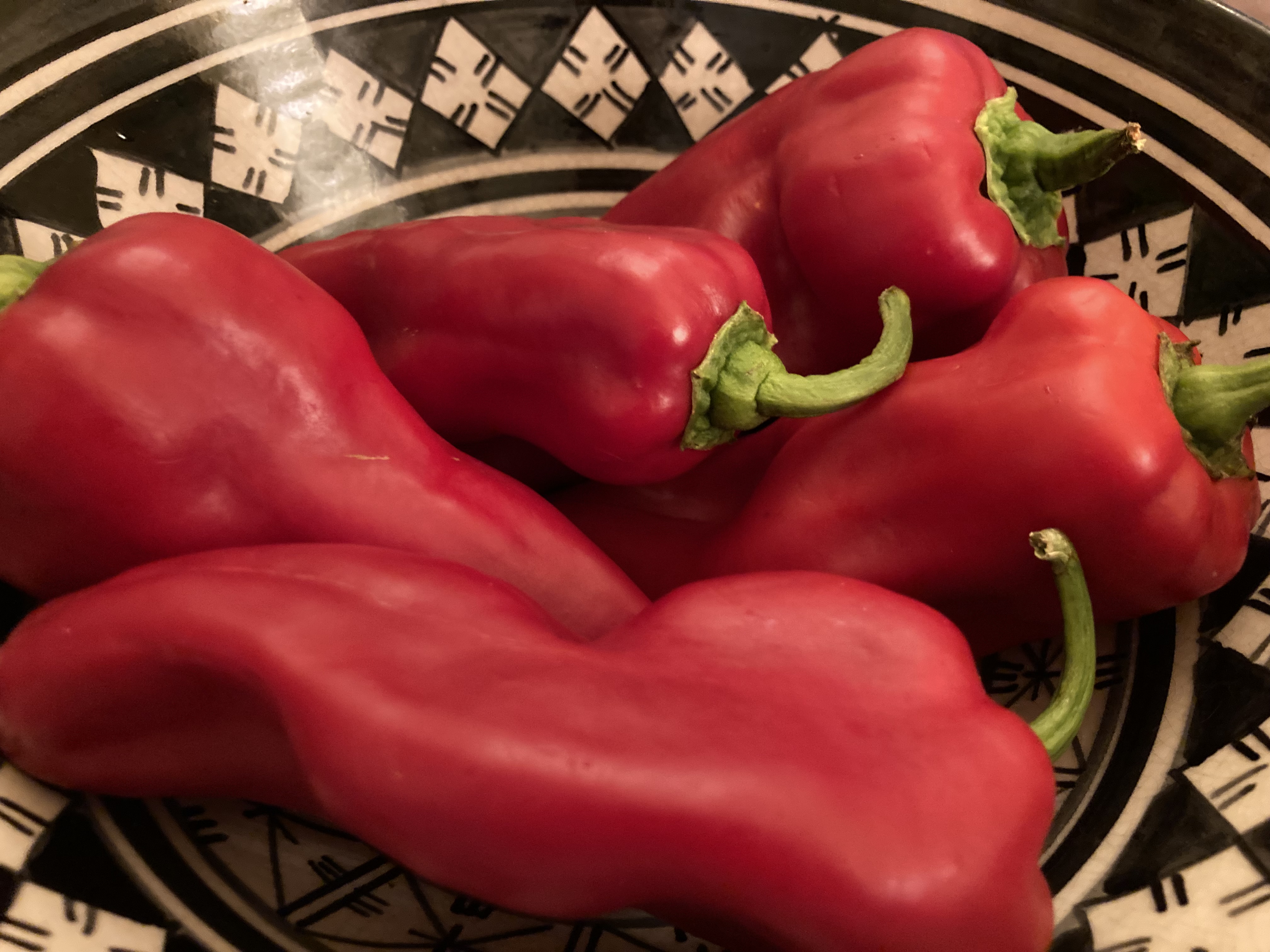
Delicious peppers, sort of like cubanelles but with a little more flavor.

I found myself attracted to the shiny skins on these semi-hot chilies, so I bought a few. I added half of one to a braised eggplant and tomato dish. Lovely flavor.

Read Full Post »

Read Full Post »

Lemon and a Sprig of Lemon Thyme, by Julian Merrow-Smith.

Recipe below, in text: Cool Zucchini Soup with Lemon Thyme

I never used to love lemon thyme. I found it too air-freshener-y. But the more I’ve learned how to work with it, the more I’ve changed my mind. It’s a matter of application, of handling. Lemon thyme is a multipurpose herb. The thyme feature of its personality can make it work as an anchoring herb, one you’ll want to add during cooking so its peppery, allspice-like, woody flavor can open up with heat. (Ever wonder why Jamaican cooks use allspice and thyme together so often? It’s because they taste alike. There’s an affinity there.) But also you’ve got the clear lemon overtones that provide an uplift, especially if you include it at the end. In the case of this soup, I’ve added it at the beginning of cooking and then chosen to wait and add it again after I’ve chilled the soup, so it stays fresh and relevant. It’s deep and good this way. No air freshener, no stupid scented candle.

To make this soup you’ll want to get out a good-size soup pot and set it over medium heat. Drizzle in a few tablespoons of extra-virgin olive oil, and add a large summer onion, chopped, using some of the tender green stem. Add a medium-size baking potato, peeled and chopped. Add some salt, and let it all cook for a few minutes. Then add about 6 or 7 small zucchini, chopped, and the leaves from about 4 lemon thyme sprigs. Let it cook until everything is fragrant and just starting to soften. Add a splash of dry vermouth, and let it boil away. Add 4 cups of chicken broth or vegetable broth and enough water to just cover the vegetables. Bring it to a boil, and then turn the heat down a touch and simmer at a low bubble until everything is tender, about 15 minutes.

Next you’ll want to purée the soup in a food processor, probably in batches, pouring it into a large bowl as it’s puréed. Chill it for several hours. When it’s cold, add a little more salt, some freshly ground black pepper, and the chopped leaves from about 5 lemon thyme sprigs. I like this soup with body but still quite pourable. If you find it too thick, thin it out with a little cold water.

Give it a taste.  I found it needed a tiny drizzle of sherry wine vinegar to bring up its acidity. Your soup may not. Serve cold, garnished with a drizzle of your best olive oil and a few lemon thyme sprigs.

This will make four big portions.

Read Full Post »

Recipe below: Fregola with Mussels, Ginger, Basil, and Saffron

In 1995 a cocktail bar opened in an old beauty parlor on East 14th Street. Two guys from the neighborhood approached the lady who had owned and operated the salon since the 1930s and asked her if she wanted to sell. She said yes, but under one condition, that they keep all the decor intact. They agreed. So even now when you walk in you see a lovely 1930s-through-1950s interior, including big helmet-head silver hair dryers and green-and-gold-striped walls. It is a place of beauty.

Since I live in the West Village, I’m not a regular there, but I used to go often enough when I was nearby. They made good cocktails, and you even could—and still can—get your nails done. I remember being quite ill there at some point, in a bad gin experience.  They luckily did have clean bathrooms. Better than getting sick at CBGB. That was a nightmare. I went back to Beauty Bar recently after a long absence. It seems unchanged, still a nice mix of East Village types.

Step outside of Beauty Bar and look up, and you can read the words Italian Labor Center toward the top of the building. On either side of this inscription you’ll see sculptures depicting Italian immigrant families, one in obvious misery, the other appearing happy. I guess the happy family is the one that trusted its livelihood to the Italian Labor Center. The sculptor was a guy named Onorio Ruotolo, a left-winger who was well known for his political art. The building was built in 1919 and served as headquarters for the International Ladies Garment Workers Union’s Local 48, which was also known as the Italian Cloakmakers Union. It was a good old-fashioned socialist organization. Lots of strikes and protests were hatched there. Italian history, all over New York.

And speaking of Italian New York, I had just come back from Buon Italia in the Chelsea Market with a bag of Sardinian fregola. I love the stuff. It’s essentially big, handmade-looking durum wheat couscous, but toasted, so the taste is deeper and the texture pleasantly chewy. It’s wonderful with shellfish, so I came up with this summery mussel recipe that includes basil and saffron, two fairly predictable additions, but also fresh ginger, which made the whole dish really come alive.

Happy summer cooking to you.

Fregola with Mussels, Ginger, Basil, and Saffron

Salt
2½ cups large fregola
Extra-virgin olive oil
1 summer onion, cut into small dice, including some of the tender green stem
1 celery stalk, cut into small dice, plus a handful of the leaves, lightly chopped
1 1-inch chunk fresh ginger, minced
1 fresh peperoncino, minced (or as much as you like)
About 6 or 7 sprigs of lemon thyme, the leaves lightly chopped
1½ pints grape tomatoes
1 cup dry Marsala
½ cup chicken or vegetable broth
A big pinch of dried and ground saffron
1½ pounds very fresh mussels, cleaned
A handful of basil leaves, lightly chopped, plus a few whole sprigs for garnish

Bring a pot of water to a boil, add salt, and throw in the fregola. Cook it until just tender, about 8 minutes, tasting it to make sure. Drain it, and pour it into a bowl. Toss with a little olive oil.

Set a large sauté pan over medium heat, and add a big drizzle of olive oil (the pan should be big enough to hold all the mussels after they’ve opened). Add the onion, the celery and its leaves, the ginger, the peperoncino, and a little salt. Sauté until everything is fragrant and softening, about 3 minutes. Add the lemon thyme, allowing its flavor open up in the heat. Add the tomatoes, and let them soften for a minute or two. Add half of the Marsala, and let it bubble a bit. Add the broth and the ground saffron, and  simmer for another minute or so. Turn off the heat.

Put the mussels in a big pot. Add the rest of the dry Marsala and a little olive oil. Cook, stirring the mussels around a few times, until they open.

Turn the heat back on under the onion-celery mix to reheat it. Add the fregola and the mussels with their cooking juices, and simmer gently for a minute or so, just to warm it all through and blend the flavors. Add a drizzle of fresh olive oil and the chopped basil, and toss well.  Pour everything into a large, wide serving bowl,and garnish with basil sprigs. If you have a bottle of Greco di Tufo, it will provide a wonderful accompaniment.

Read Full Post »

Read Full Post »

Zucchini, by Julia from Ukraine, 2020.

Dark green, gray green, and yellowy green were always good colors for me. When I was a kid I loved wearing forest green tights. Capezio made excellent ones, thick and sweaty (this was part of my own private school uniform, even though I never went to private school). I’ve got number-color synesthesia, and most greens were a number 8. Pastel greens, for some reason, were not included. They had no number.

When I take an early evening walk in the woods, I surround myself with deep green and dark green, which starts to go gray as the night moves in. Exciting. And then it all goes black, and it’s beyond time to head home. That’s when the creeping critters come out.

Broccoli, spinach, kale, and Swiss chard are dark green, and so is the dark and shiny common zucchini we find in the markets this time of year. If you poke around your farmers market now, you’ll find other things that look like zucchini, that seem like they should be zucchini.

What is commonly called Romanesco zucchini is actually a different-looking zucchini-like squash. It’s speckled light gray-green, with lighter green raised ribs. It’s also called costata Romanesco, and costata means rib in Italian. I always look for it in early June. It’s dense and not as watery as dark green zucchini. And it has actual taste. Take a bite raw and you’ll see. It’s a little nutty. It almost tastes cooked even when it’s not. I love it in a pasta sauce. It doesn’t break down into a mush, and layered in a tart, like the one I made here, it’s less likely to get the crust soggy.

Costata Romanesco at the Abingdon Square Market in the West Village.

Romanesco is a cocozelle squash, a totally different cultivar from zucchini. Cocozelle have been grown in Italy since the 1500s. Romanesco is a variety of cocozelle that became popular here around the 1990s. There are now other varieties of cocozelle grown  in the U.S. by curious farmers. You might run across one called Bravada, or Cassia, or Flaminio. But Romanesco is what you’re most likely to find, and if you see it, in June or July, I really suggest you buy it.

I love marjoram with all types of zucchini and summer squash, so I went with it for this thin torta. Its flowery sharpness lifts the vegetable’s elusive flavor, making it more substantial. Onion is also important, not only for depth but also as a good glue for a flat, eggless tart. Acidic hits from lemon are often helpful with zucchini and its cousins, but I didn’t want any here. I wanted mellow, with only the slight sharpness provided by grana and a green herb.

This is a wonderful time of year for me, produce-wise. Before all the reds and purples show up in the market, we’ve got many nice shades of green to play with.

If you’d like to make this torta with regular zucchini, I’d suggest giving it a light salting and then letting it drain on paper towels for about ½ hour.

Romanesco Zucchini Tart with Mascarpone and Marjoram

For the crust:

2 cups all-purpose flour
A big pinch of sea salt
A few big grindings of black pepper
About 1 teaspoon sugar
¼ cup extra-virgin olive oil
⅓ cup dry vermouth

For the top:

Extra-virgin olive oil
1 large summer onion, thinly sliced, using all the tender green stem, too
Sea salt
Black pepper
A few scrapings of nutmeg
½ cup of mascarpone, at room temperature
A splash of milk
½ cup grated grana Padano cheese
3 medium Romanescos, sliced into very thin rounds (it’s important they be thin, since they go into the tart raw)
About 6 or 7 marjoram sprigs, the leaves lightly chopped, plus some whole leaves for garnish
1 egg

To make the crust, put the flour into a food processor. Add the salt, black pepper, and sugar, and give it a few pulses, just to distribute everything. Drizzle in the olive oil and the vermouth, and pulse several times until you have a mass of damp clumps that stick together when you press them with your fingers. If it all seems too dry, add a little more vermouth and pulse again. Turn the dough out onto a work surface, and knead it a few times until it forms a ball. Wrap it in plastic, and let it sit, unrefrigerated, for at least an hour before you want to make the tart (you can let it sit all day if you like).

To start your filling, sauté the onion in a little olive oil over medium heat until it’s soft but hasn’t taken on much color. Season it with salt, black pepper, and a little nutmeg. Let it cool.

In a small bowl, whisk the mascarpone with a little milk, just to smooth it out. Add the grana Padano, and season with salt. The mixture should be thick but pourable. Add more milk if needed.

Preheat the oven to 425 degrees.

Rub a sheet pan with a little olive oil.  On a work surface, roll the dough out into an approximately 8½-to-9-inch circle (no need to oil the work surface; the dough won’t stick). Place it on the sheet pan. Smear on the onions, leaving about an inch free all around the edge. Layer on the Romanesco in slightly overlapping circles, and season with salt and black pepper. Drizzle with a little olive oil, and scatter on the marjoram. Drizzle on the mascarpone. It doesn’t need to cover the Romanesco completely; spotty is fine. Stick the tart in the refrigerator for about 5 minutes, so it can firm up.

Drop the egg into a small bowl. Add a drizzle of water, a squirt of olive oil, salt, and a little sugar. Mix well.

Make a small, pleated edging all around the tart, and press on it lightly to make sure it stays put. The rim should be about ½ inch wide. Brush the rim with the egg wash, and stick the tart in the oven until the crust is golden and the top is set, around 15 minutes. Garnish with fresh marjoram leaves, if you like. Serve hot, warm, or room temperature. I especially like this tart with a glass of Italian rosé. The Puglian Tormaresca Rosata made from the Negroamaro grape has more body than most Provençal wines and a much deeper pink, like cranberry juice. I think, pairs well with the herbs in this tart.

Read Full Post »

« Newer Posts - Older Posts »