Feeds:
Posts
Comments

Archive for the ‘Uncategorized’ Category

Italian Rice Field, by Angelo Morbelli, 1901.

Recipe below: Risotto with Fennel, Saffron, and Sausage

I like a risotto where you can barely see what’s in it, everything cut tiny, no big chunks. When you take a bite, you’re surprised by all the flavor in a dish that looked like nothing much. The complexity of risotto is hidden by its simple appearance. Finely chopped chicken livers, minced porcini, a fine dice of leeks, a melt of gorgonzola, ingredients like those can be hidden away in a bowl of white grains just ready to burst forth in your mouth. This risotto dichotomy reminds of the couple in the film The Big Night who get talked into ordering the seafood risotto and are completely perplexed when it comes to the table looking like nothing more than a plate of soupy white rice. I don’t remember the exact lines, but it went something like this: “I don’t see any seafood,” the woman says, scraping through the plate with her fork. “Where’s the seafood?” “It’s in there, the chef says. “It’s just cut really small.”  They don’t believe him, and to his horror they order a side of spaghetti. Risotto with a side of spaghetti. What a concept.

I love risotto. I love all the stirring. I’m not a fan of  the oven method where you put the thing together on top of the stove and then stick it in the oven with lots of broth until the rice is tender. It works, sort of, but I find you have to do more last-minute fiddling to get it creamy, meaning stirring it once it’s out of the oven, balancing the seasoning, and adding stuff. For me, that all gets accomplished over the 17 minutes or so of stovetop attention. I don’t stir constantly, but I stir a lot. It’s a beautiful process. I get to experience the aroma of the wine cooking out as the steam rises into my face, the changing smell and look of the thing with each addition, and the way the rice swells up and indicates to me that it’s almost time. I don’t want to miss all that. Maybe if I were working in a restaurant and had to make 50 risotti a night, but at home, why bother at all if you don’t want to get involved?

I prefer carnaroli rice to the other risotto rice varieties I can find here. This time around I used  Acquerello brand, from Piemonte, grown by the Rondolino family since 1935. Carnaroli is the only type of rice they’ve ever grown. I order it from Gustiamo. Its color is not chalk white, like most risotto rice, but more golden, and the aroma when cooking seems a bit deeper than other brands of carnaroli I’ve tried. There are reasons for this. The rice is actually aged, which serves to open it up, allowing for more liquid to flow though the grains. Also, they don’t strip it to stark white when they process it, so you get that pretty yellow hue. And they’ve figured out a way to reintegrate the germ back into the kernels, so you get rice that’s more whole and healthy. Nice to know.

Saffron Still Life, by Iris Richardson.

Fennel and saffron make a beautiful flavor combo that you’re familiar with if you’ve ever cooked, or even eaten, a bouillabaisse. It’s also used in the cooking of Sardinia, most beautifully in their sausage ragù served with malloreddus, a gnocchi-shaped pasta. I love that dish, and it was my inspiration for this risotto. I use a fair amount of saffron in my cooking. I’m drawn to its sweetly medicinal flavor, which to me is not at all floral in the usual sense , despite being made from the red-orange pistils of a type of crocus. It’s a unique flavor, hard to describe. Maybe like bitter honey, but that’s not quite right either.  Maybe bitter honey with a hint of barnyard?

In the past I’ve mostly bought Spanish saffron, usually from Kalustyan’s, an amazing spice shop on Lexington above 28th Street. If you’ve never been, visit! The aromas will blow your mind. This time around I bought saffron from Iran, which was beautifully flavored and moist. There’s also such a thing as American saffron. Last summer I met the people at Green Owl Farm, in Rhinebeck, N.Y., who grow saffron crocuses and harvest their own saffron from them. I didn’t know you could grow those flowers upstate, but I guess why not? Regular non-saffron crocuses are popping up all over my backyard as of this writing. Green Owl packs big pinches of saffron threads into little glass bottles. I haven’t yet bought from them, but I will. Theirs is a labor of love to be sure.

Risotto should get to the table pretty soon after it’s done just tender, but you don’t have to get crazy about it. If you need time to get people seated, you can let it sit for 5 to 8 minutes. It will thicken some, but then just add another ladle of broth and stir it in right before bringing it out. It’ll be fine.

Risotto with Fennel, Saffron, and Sausage

About 6 cups homemade chicken broth
½ teaspoon saffron threads, lightly dried and ground with a mortar and pestle (see note below)
4 tablespoons unsalted butter
A big drizzle of extra-virgin olive oil
2 cups carnaroli rice
1 Vidalia onion, cut into small dice
3 mild, fresh Italian sausages, the casings removed, the meat pulled into little bits with your fingers
1 large fennel bulb (choose a bulb with lots of fronds), cut into small dice, the fronds lightly chopped
½  teaspoon fennel pollen or freshly ground fennel seed (if you’re sausage is heavily seasoned with fennel, you’ll want to use about half as much)
A few big scrapings of nutmeg
Salt
About ½ cup dry white wine
Freshly ground black pepper
A big chunk of Parmigiano cheese

You’ll want to have ready a wide, shallow-sided pan. I’ve found that that’s best for keeping the evaporation constant and the stirring smooth and easy. I used an 11-inch-wide, 3-inch-deep All-Clad pan.

Pour the chicken broth into a saucepan, and bring it to a boil. Turn the heat to really low, and stick a ladle in the pan.

Put the ground saffron in a small cup or bowl, and add about ½ cup of the hot chicken broth, giving the saffron a stir to dissolve it. The broth will turn a beautiful bright orange. Set it aside.

Set your risotto pan on a burner right next to the chicken broth. Turn the heat to medium. Add half of the butter and a big drizzle of olive oil. Add the rice, the onion, the sausage, and the fennel, holding back the fronds, and stir everything around to sauté it well. Try to break the sausage up into little pieces. Season with the fennel pollen or seed, the nutmeg, and a little salt. When the rice and everything is well sautéed, about 3 minutes or so, add the wine, and let it bubble for about 30 seconds.

Now start adding broth, a few ladles at a time, stirring fairly often (but not obsessively) until the pan goes almost dry. Keep adding more broth and letting the pan go almost dry repeatedly until the rice is just tender. After about 10 minutes, add the saffron broth. I like to add it at this point instead of at the beginning so it stays really fresh-tasting. Saffron has an ephemeral nature and can fade out if cooked too long.

After about 12 minutes or so, you’ll  notice the rice start to swell and the entire dish start to look creamy. I usually give it a taste after about 15 minutes to see where it’s at. In my experience the entire process takes about 16 or 17 minutes for tender but still firm kernels. 

When you’ve reached this point, add the rest of the butter, a good amount of black pepper, and a few big gratings of Parmigiano, and give it a good stir. Turn off the heat, and adjust the consistency by adding more broth if needed. I like my risotto loose but not soupy. Taste for salt, and ladle the risotto into bowl. Top with the chopped fennel fronds and an extra sprinkling of Parmigiano. Serve right away.

A note on saffron: Saffron should be slightly moist and have brilliant red orange color when you buy it. If the threads are maroon and brittle, it’s old. Yet for it to open up and release its essence, it needs to be dried enough to be ground (dropping moist saffron threads in hot liquid is a bit of a waste). What I do is take a small sauté pan and set it over medium heat. When it’s warm, I turn off the flame and add my saffron threads, letting them dry for about a minute, just long enough so they lose a bit of moisture. Then I can grind them to a powder in a mortar and pestle. Now when I add a hot liquid to the saffron, the flavor will open full-force. Not a thread will be wasted.

Read Full Post »

7 Chickpeas, by Ausra Kleizaite.

Recipe below: Lagane Spagliato with Rosemary, Guanciale, and Ceci

I’ve developed a romance with chickpeas. They’re so solid. I love how they take a while to cook, and how their deep, beany aroma grows stronger as the hour or so slips by. I can see when they’re ready, and I can smell when they’re ready. I’ll never go back to buying canned. Canned chickpeas taste sour and metallic, and their liquid is useless (unless you’re making a vegan meringue). The broth produced by cooking your own ceci is pure gold.

A dish I come back to constantly is pasta with chickpeas. For me it’s perfect. A thing of beauty. Here’s one of my versions of lagane e ceci, semolina pasta with chickpeas, a very old, pre-tomato dish made in various forms in Calabria, Basilicata, Campania, and Puglia (whose version, called ciceri e tria, has a portion of the pasta not boiled but fried crispy—really delicious).

Lagane e ceci is pure cucina povera. What sets it apart from many other pasta-and-chickpea dishes is its homemade semolina pasta, made with only semolina and water. It’s a chewy, sturdy pasta, sort of a shorter, thicker fettuccine. It’s great to eat but for me a little annoying to roll and form, so what I’ve done here is make it considerably less povera by adding eggs and some white flour to the dough. I can’t comfortably call it lagane, since I’ve screwed with it so much, so I’m going with lagane spagliato, false lagane. I’ve also added some rosemary to the dough, to mimic one of the flavors in the sauce.

When I make semolina pasta I usually use Bob’s Red Mill Semolina Four. It’s finely ground and easy to work with. Semolina has a higher gluten content than soft white flour, so you’ll be using a little push and pull to knead it into shape

This time around I tried a new to me chickpea brand called Cece di Poggio Aquilone, grown on the Alberti family’s organic farm in Umbria. I was really happy with how it cooked up. The chickpeas are slightly smaller than the usual ones we all know, and their flavor is rich. I got them from Gustiamo.

Lagane Spagliato with Rosemary, Guanciale, and Ceci

  • Servings: 4 as a main course
  • Print

For the pasta:

2 cups unbleached white flour
½ cup semolina flour
A large sprig of rosemary, the leaves minced
1 teaspoon fine sea salt
3 large eggs
2 egg yolks
1 tablespoon extra-virgin olive oil
A drizzle of water, if needed

For the sauce:

A 1-inch chunk of guanciale, diced (about a cup)
Extra-virgin olive oil
2 celery stalks, cut into small dice, including the leaves, lightly chopped
1 Vidalia onion, cut into small dice
2 fresh bay leaves
About ½ teaspoon allspice
A few sprigs of rosemary, the leaves chopped
½ a green medium-hot chili (I used an Italian long hot), chopped
Salt
2 to 2½ cups cooked chickpeas, preserving the cooking liquid (see note on cooking them below)
About ½ cup dry white wine (I used a Fiano di Avellino)
About ½ cup good chicken broth
A few large sprigs of flat-leaf parsley, the leaves lightly chopped
A chunk of Pecorino Sardo, if you’d like some cheese (I can go either way with this—with the hot chili I’ve used here, most of the time I don’t want cheese, but when I make it without the chili, maybe just with black pepper, I almost always add cheese)

To make the pasta:

Start by putting both flours into a food processor. Add the rosemary and the salt, and pulse a few times to blend. In a small bowl mix the whole eggs, the yolks, and the olive oil. Pour this over the flour, and pulse a few times to blend everything well. The dough should  clump together in a shaggy ball. If it seems dry, drizzle in a little water, and pulse again.

Dump the dough out onto a work surface, and knead it until it’s smooth, adding a little white flour if it gets sticky. You’ll notice that the dough is a little stiffer than one made with all soft flour, so it will take about 5 minutes of kneading to smooth out. When that’s done, cover the dough with plastic wrap, and let it sit at room temperature for at least an hour so the gluten can relax, making it easier to roll out.

Cut it in quarters, and run each piece through a hand-cranked pasta sheeter to the fifth setting, not super thin, in keeping with the lagane tradition. If the sheets get longer than about 6 inches, cut them in half. Place the sheets on a lightly floured surface, and let them dry for about ½ hour, so you can cut them without sticking.

After that, loosely roll up each sheet and cut it into approximately ¼-inch sections. Unroll the lagane, and toss them in a little flour. Let them sit until you’re ready to cook them.

To make the sauce:

Get out a large sauté pan, and set it over medium heat. Add the guanciale and a tablespoon or so of extra-virgin olive oil, and cook until the guanciale has given up much of its fat and started to crisp. Add the celery, onion, bay leaves, allspice, rosemary, and chili. Season with a little salt, and sauté until everything is fragrant, about 5 minutes.

Set up a pot of pasta cooking water, and bring it to a boil. Add salt.

Add the cooked chickpeas to the pan, and sauté for a minute or so. Add the white wine, and let it bubble out for another minute. Add the chicken broth and about ½ cup of the chickpea cooking liquid, turn down the heat a bit, and let simmer to blend all the flavors.

While the sauce is simmering, drop the lagane spagliato in the water, and cook it for about 3 minutes. Drain it, and pour it into a wide serving bowl. Drizzle on some good extra-virgin olive oil and give it a toss. Add the chickpea sauce and the parsley, and toss gently, adding a little more chickpea cooking liquid if the dish seems dry. Check for seasoning. Serve hot, with or without pecorino.

A note on cooking chickpeas for this dish:

For this recipe I added a few bay leaves, a rosemary sprig, a smashed garlic clove, a slightly soft whole shallot, and a  drizzle of olive oil to flavor the water I boiled the chickpeas in. About halfway through the cooking, I added some salt and a thread of red wine vinegar. I didn’t pre-soak these Umbrian chickpeas, and they wound up taking about 1½ hours to get tender. I always cook the whole bagful when I make beans. I used about 2 cups or so of the bag for this pasta, and the rest went into a chickpea-and-escarole soup. For this pasta, make sure to keep the chickpea cooking liquid, since you’ll want some of it for the sauce.

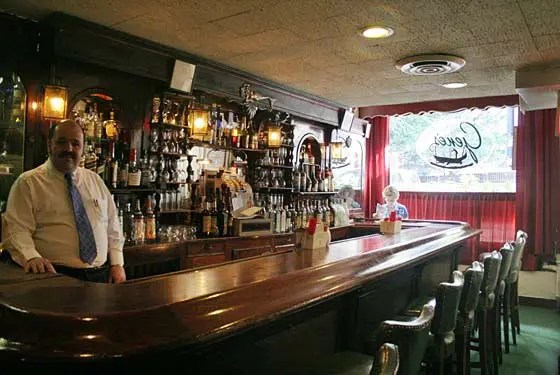
The bar at Gene’s Restaurant.

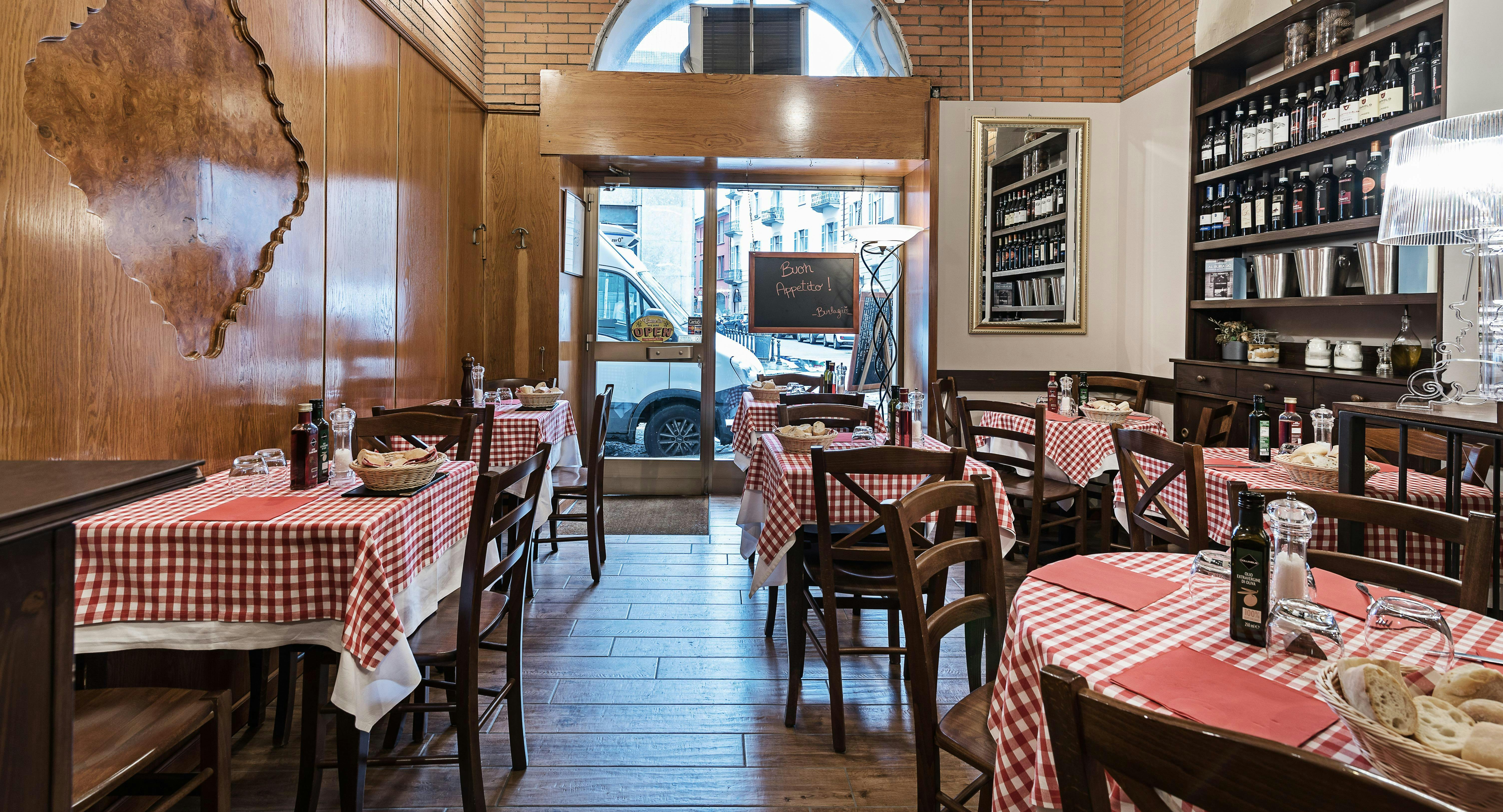
I don’t go to bars by myself as much as I used to, but sometimes they’re just the thing to settle my head, especially with all the crap going down in Washington lately. The bar at Gene’s is often my place. This West Village restaurant opened in 1919, and it doesn’t look like much has changed since then. The bar is deep and lovely, with dark wood and glowing backlit bottles. I can settle right in and immediately be part of it.

The wine list isn’t what I would call up to date, but it serves the purpose of preventing wine snobs from crowding up the place. The Chianti is good, the Côtes du Rhône, not so much, but the pour is beyond generous, almost a little shocking, considering what you usually get for $18 at a trendy place around here. Franco (see photo above), everyone’s favorite bartender, is there most nights. He’s a kind man.

For years Gene’s seemed to be frequented mainly by old neighborhood types who shuffled in for their martinis and meat ravioli. But recently, maybe with the popularity of revamped Italo-Americano places like  Don Angie a few blocks away, the place has been discovered by a younger crowd, making it seem almost lively, though, believe me, it is not in any way revamped. The bar can get crowded now. I remember going in there with my father years ago, he ordering a Chivas Regal on the rocks, me with my little glass of sambuca. We’d often be the only ones there, except maybe for that old AP reporter who lived upstairs. I don’t mind crowded, as long as I can get a seat, but I’ve found that now it’s best to go at 5:30 or after 10 (10 is considered late in Gene’s world).

The food is standard old-school red sauce. I’ve found the chicken parm and veal piccata and most of the pastas to be just okay, mostly lacking in salt and pepper (easily remedied, you’d think). However, the broccoli rabe with garlic and hot chili is really good. Sitting at the bar, I often just order a plate of that, with some bread, and call it dinner. Oh, and the baked clams are more than decent.

Sitting at the bar getting vaguely high on a glass or two of Franco’s big pours is a cozy feeling. As I get older, men don’t bother me as much, so I often can just sit and let my mind wander, maybe making plans for the future or maybe just thinking about how happy I am that bars exist.

Happy cooking to you. Soon it will be spring.

Read Full Post »

A Lemon and a Blacked-Out Eggplant, by Erica De Mane.

Recipes below, in text: Linguine con la Buccia di Limone; Limoncello; Lemon Sorbetto with Broiled Lemons and Vodka

One thing is going well this winter, at least here in New York: We are getting a decent amount of snow. Yesterday we even had a sun snow, where the tiny flakes came down with a crystalline sparkle against an almost completely blue sky. That was unusual. And we’ve got lots of lemons. I mean, there are always lemons in the supermarket, but since winter is citrus season, I like to believe the lemons are at peak right now. Winter and lemon zest are linked in my mind. From around Christmas until March my refrigerator becomes the house of the bald lemon (sounds like a Garcia Lorca play). I sometimes have up to a dozen scraped-down, hardening, microplaned lemons sitting in there at once. Lemon olive oil cake is a big winter thing for me. It requires a lot of zest. Preserved lemons are good to have around this time of year. I just made a batch. Chicken tagine with preserved lemons and almonds. I love that. Limoncello, naturally. And pasta with lemon sauce, in its various forms. I only think about cooking that in the winter.

In the late eighties and into the nineties a lemon pasta full of cream was having a big moment. If you worked in catering back then, as I did, you absolutely had to know how to make it, and in large quantities. I came to hate its cooked down richness, especially when it went cold and thickened into golden glop that needed to be scraped out of  95 pasta bowls. Truly disgusting. I’ve always preferred the olive oil and lemon zest version I learned from Natalia Ravidà, a woman who for 30 years has been working to get the word out about her Sicilian family’s beautiful estate olive oil.  Her recipe for lemon pasta, along with many other classic Sicilian dishes is in her book Seasons of Sicily. A very nice book.

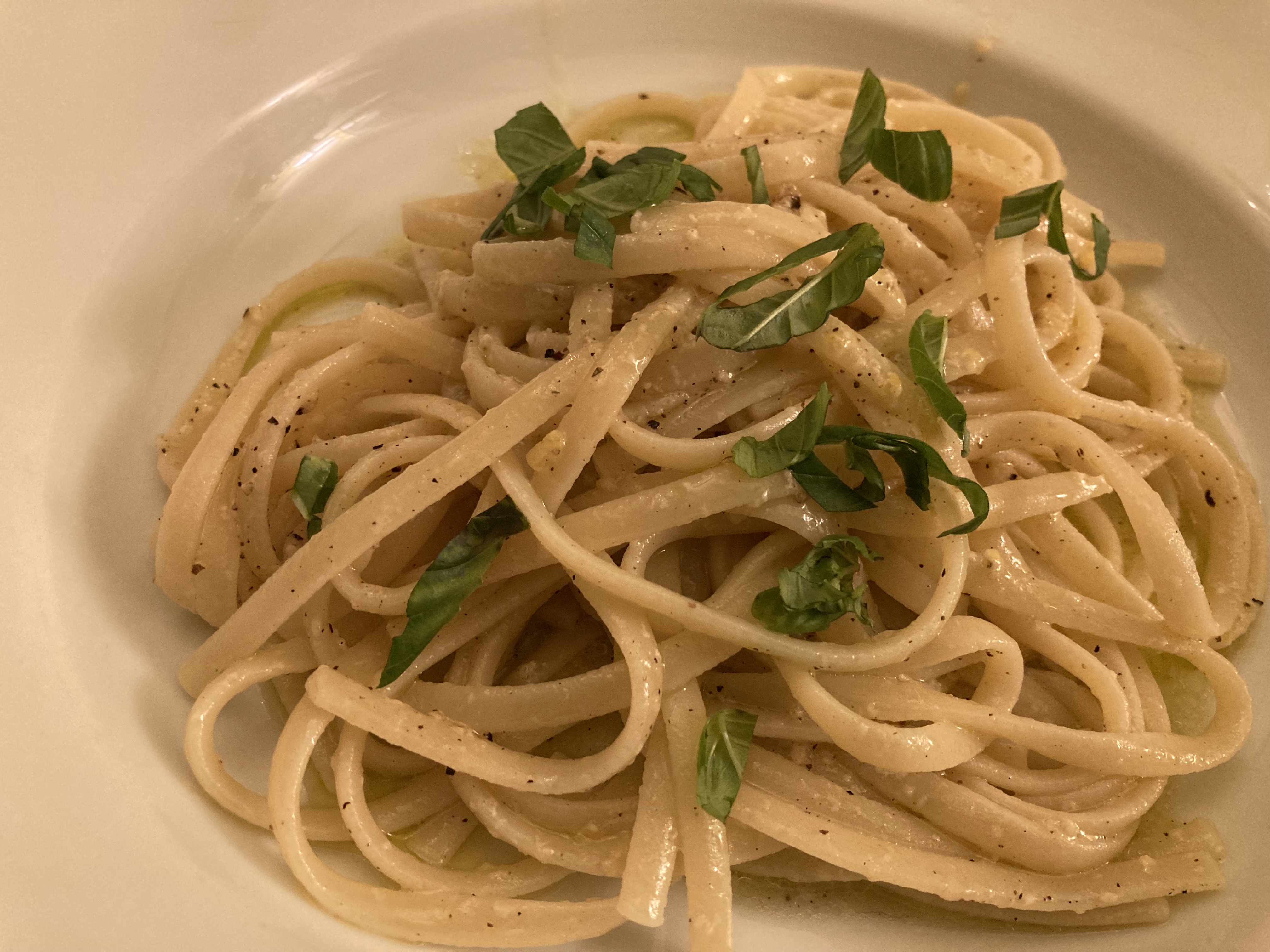
I’ve been playing around with this simple dish, which is essentially lemon zest, olive oil, and Parmigiano. A beautiful trio. I have, of course, customized it a bit, because I can’t leave well enough alone. I added a little nutmeg and basil, two flavors that go so well with lemon I just couldn’t resist. Nutmeg does something beautiful to lemon, it rounds it out, makes it feel both sharp and mellow all at once. I also added basil, which lifts the black pepper flavor in the dish.

To make this lemon liguine for two, you’ll want the zest from 2 organic lemons and the juice from about ½ of 1 of them.  Pour about ¼ cup of your best extra-virgin olive oil (preferably a good Sicilian oil such as Ravidà) into a warmed pasta serving bowl. Add the lemon zest, give it a good stir, and let it sit for about ½ hour, so it can release its essence into the oil.

Cook ½ pound of linguine in salted boiling water until al dente. While it’s cooking, add the lemon juice, a few big scrapings of nutmeg, a little salt, some fresh, coarsely ground black pepper (I used Zanzibar black pepper from Burlap & Barrel), some leaves of julienned basil, and about ½ cup of freshly grated Parmigiano into the bowl. Add a few tablespoons of the pasta cooking water, and give it a good stir.

Drain the linguine, and add it to the bowl, tossing it well until it’s well coated with the sauce. You can garnish it with more basil or an additional dusting of Parmigiano, if you like.

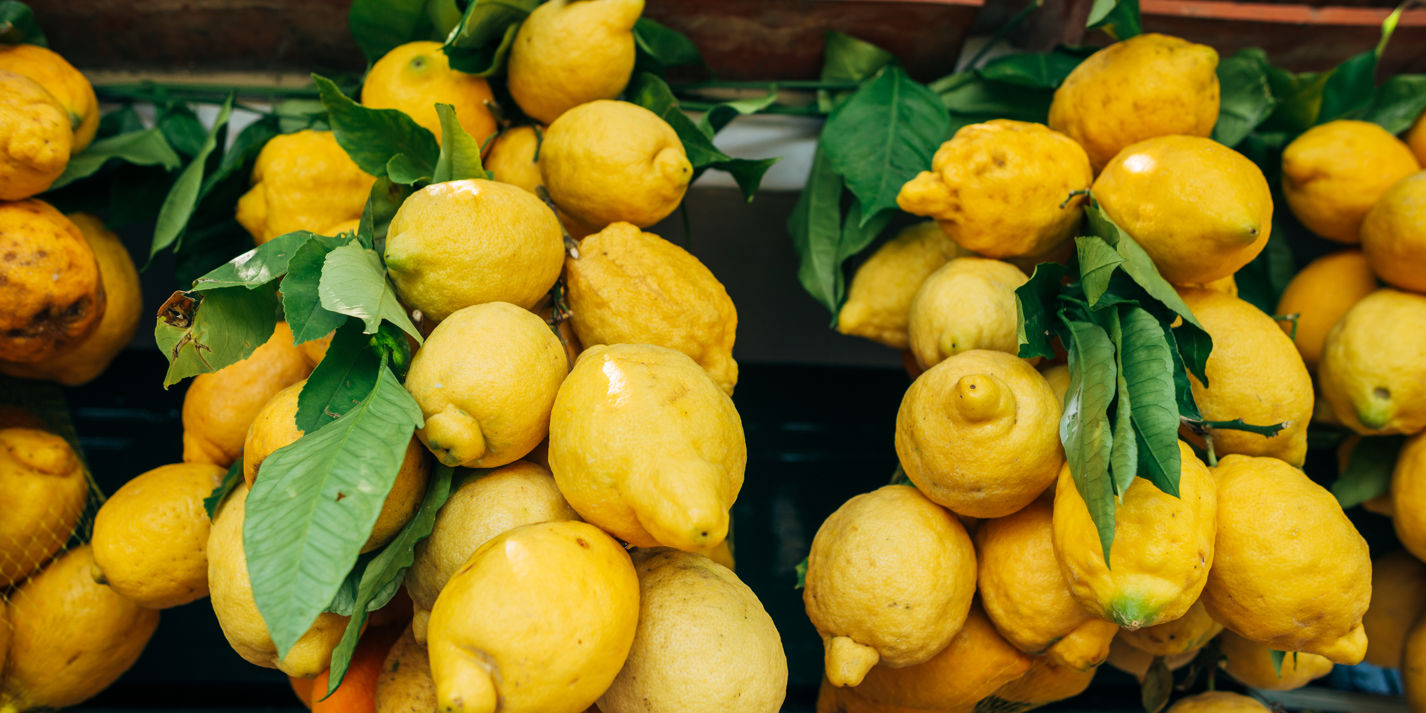
Amalfi’s long, lumpy, lovely lemons.

I’ve forever heard stories about Southern Italians eating raw lemons like they were oranges. Nobody in my family ever did. It seems the lemons in Naples and further south were much sweeter than the ones we have here. I asked about the custom years ago when I visited my ancestral homeland. According to my Uncle Tony, nobody where he lived did that, and if they did they’d burn the enamel off their teeth. That’s what he thought. I’ve eaten Amalfi lemons in Amalfi several times, and I have to say to my palate they’re only ever so slightly sweeter than the ones I buy here in supermarkets. They are, however, longer, lumpier, more lemony, and have maybe more oil in their skins. And like the neighboring Sorrento lemons (also called Santa Teresa lemons), they’re used to make  limoncello. I especially love that Sorrento limoncello. But I make pretty good limoncello using my own supermarket lemons (although I do buy organic, since I’m using only the peel for the limoncello). My secret to a lemony limoncello is just this: Make sure you start with  Everclear, not vodka. Vodka’s not strong enough. You need a super powerful liquor to pull all the lemon essence from the skin. Of course you’ll water it down later, but this first step is essential for intensity of lemon flavor. If you’d like to try it, here’s what I do:

Zest a dozen organic lemons with a microplane zester, and stick the zest in a large glass jar fitted with a tight lid. Pour in a liter bottle of Everclear, close up the jar, and let it steep in a relatively dark place for 2 weeks, shaking it from time to time. Strain it through a fine mesh, and return it to a clean jar. Put 2½ cups of sugar in a saucepan. Pour in 4 cups of water, and bring it to a boil to dissolve the sugar. Turn off the heat, and let it cool completely. Pour the sugar syrup into the jar with the lemon booze, close up the top, and let it sit for another 2 weeks. You can strain it again if you think it needs it. I don’t usually bother.

Now you can keep it chilled in the freezer, where it will keep for about a year.

A lemon tree from a wall in Pompeii.

Another nice thing to do with lemons is slice them into rounds and give them a quick roast or even a broil, either first sprinkled with sugar, or, for a savory treatment, with salt and maybe some chopped thyme. You can eat them straight off the pan or draped over a slice of grilled swordfish, but consider using them for this Lemon Sorbetto with Broiled Lemons and Vodka:

For the broiled lemons, you’ll want to peel as many lemons as you like and cut them into not-too-thin slices (you can, if you prefer, leave their skins on, but I like to be able to eat the whole slice without running into any bitterness). Pit them if you want. Coat a sheet pan with a little olive oil, and spread out the lemon slices. Drizzle them with a little more olive oil, and sprinkle them with a light coating of sugar. Stick them under a broiler about 4 inches from the heat source, and let them cook until the sugar has caramelized and the lemons have softened a bit, about 3 minutes.

When the broiled lemon slices have cooled, grab as many parfait glasses as you have guests, and fill them ¾ full with good quality lemon sorbetto (I used Talenti when I made this). Place three of the lemon slices over the top. Drizzle a shot glass full of vodka over each glass. Or use lemon vodka if you like. Or limoncello. Garnish with mint sprigs or basil. This is a beautiful and almost healthy dessert (or palate cleanser, whichever you prefer).

Happy citrus cooking to you all.

Read Full Post »

Stay healthy.

Read Full Post »

Cheese and Grapes, by Jane Palmer.

Recipe below: Gorgonzola, Green Grape, and Pine Nut Torta

Winter has always made me want strong cheese. Even when I was a kid I’d eat a lot of provolone, which was always, and I mean always, in the cheese drawer in our refrigerator. I loved the way it peeled into layers, a characteristic that, as I learned later in life, made sense, since provolone is essentially a dried-out, salted version of mozzarella (which is a pasta filata, meaning a cheese that’s stretched and pulled). I never paid much attention to provolone on warm days, even though there it was in the cheese drawer, same as ever. In summer it just seemed like pure stink. In the middle of a New York winter, that stink called to me.

Blue Cheese and Grapes, by Bondareva Nataliia.

As I got older and was in charge of buying my own cheese, gorgonzola became my stinky cheese focus. I love the good strong one that is sometimes labeled mountain gorgonzola. Its texture, a mix of creamy and crunchy, really is alluring. And then there’s gorgonzola dolce, the milder, creamier version that’s so good smeared on a hard-crusted piece of bread. When I cooked at Le Madri restaurant many lifetimes ago, I’d reward myself for surviving another late night shift with a gorgonzola and pear sandwich stuffed into the restaurant’s lovely focaccia. That and whatever wine came back undrunk by the customers was a fine top off to the night. I picked up much of my Italian wine knowledge finishing off those often extremely expensive bottles.

So on a recent close-to-zero-degree day here in gray old New York City, I bought myself a thick slab of gorgonzola dolce simply because it was so cold and I knew the cheese would taste amazing. I ate half of it as is, hanging off my finger. With what was left I decided to make this tart.

Gorgonzola, Green Grape, and Pine Nut Torta

  • Servings: 6 as an antipasto offering
  • Print

I used a 9-inch straight-sided tart pan with a removable bottom. I use these pans when I want an informal look to my tart. You can also use a tart ring for a similar effect.

For the crust:

2 cups unbleached white flour, plus a little extra for rolling out the dough
1 teaspoon salt
1 tablespoon sugar
The leaves from about 6 thyme sprigs
1¼ sticks cold unsalted butter, cut into little pieces
⅓ cup dry white wine, well chilled
1 teaspoon rice wine vinegar

For the filling:

A bunch of green seedless grapes, stemmed (you’ll need around 25)
Extra-virgin olive oil
Salt
Black pepper
1 large egg, plus 1 yolk
½ cup crème fraîche
A big pinch of nutmeg
The leaves from a few large thyme sprigs, lightly chopped
A drizzle of whole milk
About ⅓ pound gorgonzola dolce cheese
A handful of pine nuts

To make the crust, put the flour in a food processor. Add the salt, sugar, and thyme, and pulse a few times to blend. Add the butter, and pulse three or four times, to break it up a little bit. Drizzle in the wine and the vinegar, and pulse a few more times, just until you have a moist, crumbly mass. If it seems dry, add a tiny drizzle more wine or cold water. Turn it out onto your counter, and press it together into a ball. Flatten out the ball so you have a thick disk. Cover it with plastic wrap, and refrigerate for at least an hour, or overnight if that works for you.

I found that with the juiciness of the grapes, I needed to blind-bake the crust, cooking it first without its filling. A drag, I know, and something I usually try to avoid, but unfortunately it was really needed. Not such a big deal really. You just have to remember to build up the sides to allow for shrinkage.

Roll out your dough onto a floured surface, and drape it into a buttered tart pan. Press it against the inside of the pan. Trim off the excess dough, leaving enough to build it up all around so it comes up a little over the rim. Prick the inside lightly all over with a fork. Stick the pan back in the refrigerator for at least another 45 minutes to firm up (you can let it go overnight, if need be).

Set the oven at 425 degrees. Lay a piece of parchment inside the tart shell and slightly hanging over its edges. Fill it with dried beans or pie weights (I used rice, which worked well). Bake for about 12 minutes. Remove the paper and weights, and bake for another 5 minutes or so, or until the edges are lightly colored. Let it cool.

Now you’re ready to prepare the filling and then bake the torta. Set your oven to 425 degrees. Lay the grapes out on a sheet pan. Drizzle them with olive oil, and season them with salt and black pepper, tossing them around a little to coat them well. Roast them until they just start to shrivel and give off some juice, about 12 minutes. Let them cool a bit.

In a bowl, mix the egg and egg yolk with the crème fraîche, seasoning it with salt, black pepper, the nutmeg, and the thyme. Whisk well. If it seems too thick, add a drizzle of whole milk. It should be thick but pourable.

Break the gorgonzola up into little pieces, dropping them in the tart shell. Scatter on the pine nuts, and finally arrange the roasted grapes on top. Drizzle on the crème fraîche mixture.

Turn the heat down to 400 degrees, and bake for about 25 minutes, or until the center looks firm and the crust is browned.  Let cool for about 15 minutes before slicing.

Read Full Post »

Cabbage, by Akhilkrishna Jayant.

Recipe below: Duck and Cabbage Soup with Flageolets and Marsala

Cabbage. It’s not wildly inspiring. Scrolling through my blog recipes, and I’ve done a thousand of them, I find only two cabbage recipes, both for Italianized versions of cole slaw. I’m a little surprised by that. Cabbage is a good thing. I love all the other farty, gassy vegetables. Why have I been ignoring cabbage? I’ve immediately realized this was a huge waste on my part. Cabbage has potential for beauty. So I’ve gone out and bought myself a big savoy cabbage, sat it on my kitchen counter, and stared at it for a long time. My creative head didn’t churn with excitement, but I figured, well, there’s always soup.

I originally planned on a cannellini bean, cabbage, and sausage–type soup, an Italian winter classic that nobody in my family ever made, but I didn’t have cannellini beans. I did have a bag of Rancho Gordo flageolets, lovely light-green beans that hold their shape nicely after cooking. I decided to go with them, but they seemed inappropriate for an Italian soup, so off I went in an different culinary direction, coming up with something more like a deconstructed cassoulet. I know cassoulet doesn’t typically include cabbage, but the duck, fatty pork, and deep winter herbs I included still made the dish taste like cassoulet. It was declared a success by my sister, my husband, and my friend Jay. That made me happy.

Duck and Cabbage Soup with Flageolets and Marsala

For the beans:

1 1-pound bag flageolet beans (I used Rancho Gordo)
2 fresh bay leaves
1 tablespoon white miso
1 long branch of thyme
1 garlic clove
1 splash dry Marsala
Extra-virgin olive oil
Salt
A drizzle of sherry wine vinegar

For the rest of the soup:

4 duck legs
1 teaspoon ground allspice
Salt
Black pepper
Extra-virgin olive oil
1 ½-inch round slice of pancetta, cut into medium dice
2 carrots, cut into medium dice
1 celery stalk, with its leaves, chopped
1 onion, cut into small dice
2 fresh bay leaves
1 large sprig rosemary, its leaves chopped
A few large sprigs thyme, their leaves chopped
A sprinkling of ground nutmeg
About ½ cup of dry Marsala
1 quart homemade chicken broth
About 3 cups roughly chopped savoy cabbage
A drizzle of sherry wine vinegar
A chunk of grana Padano cheese, to shave over the top

The first thing you’ll want to do is cook the beans. What I did was put them in a big pot and add the bay leaves, miso, thyme, garlic clove, a big splash of the marsala, and a large drizzle of olive oil. I added cool water to cover by several inches, brought it to a boil, and then turned the heat down very low and simmered the beans, partially covered, until tender. Check occasionally to see if they need more water.  Mine took a little over an hour. Rancho Gordo beans are usually recently harvested, so they’re not as dry as, say, Goya. They cook quicker. In the final 15 minutes I added salt and a drizzle of sherry wine vinegar. Then I let the beans sit in their cooking liquid. You can cook the beans the day before you make this soup, if you like.

Now for the duck. Score the duck legs in a crisscross fashion, just going through the fat. Rub the duck with allspice, salt, and black pepper.

Get out a big soup pot, and drizzle in some olive oil. Turn the heat to medium. Add the duck legs, skin side down, and cook them slowly until they’re golden brown and much of the fat has left the skin, about 8 minutes or so. Give them a turn and cook the other side for another 5 minutes. Take the duck legs from the pot. Pour off all but a few tablespoons of the duck fat. Add the pancetta, and cook until crisp. Add the carrot, celery, onion, bay leaves, rosemary, thyme, and nutmeg. Let them cook until soft and fragrant, about 5 minutes. Return the duck to the pot. Add the Marsala, and let it bubble for a few seconds. Add the chicken broth, and bring it to a boil. Then turn down the heat, cover the pot, and let it simmer for 2 hours. By this time the duck should be really tender.

Take the duck out of the pot. Spoon off excess fat from the surface and then add the beans, with their cooking liquid, and the cabbage. If the result seems too bulked up, add water, or more broth if you have it. Cook, uncovered, over medium heat, until the cabbage is tender, about 20 minutes.

Take the meat off the duck legs, and pull it into bite-size pieces, discarding the fatty skin. Add it to the pot, and give everything a good stir. If the soup looks too thick (I like a rather loose soup), add water or more broth.  Add a drizzle of sherry wine vinegar. Taste for seasoning and adjust. You might want a little more rosemary or thyme or black pepper.

Shave a little grana Padano over the top of each serving, if you like.

By now probably many of you will have have seen A Complete Unknown, the biopic about Bob Dylan, and possibly like me you were angered by the depiction of Suze Rotolo, who was portrayed as a whining doormat. In reality she was the product of a nice Italian communist family from Greenwich Village and grew up to be a civil rights activist and a painter, and she was an early influence on Dylan’s worldview. She also didn’t look anything like the pixie-nosed blonde who played her in the movie.

I highly recommend a 2008 video of her reading from her then soon-to-be-released memoir A Freewheelin’ Time. It was recorded at the Calandra Institute, an organization in Manhattan dedicated to Italian American studies. I often attend programs there. It’s a good resource to know about. Here’s the video: https://www.youtube.com/watch?v=mnG-G99Fhnc. And here’s a link to their website: https://calandrainstitute.org

Read Full Post »

Four Peppers, by Olga Koval.

Recipe in text below: Roasted Sweet Peppers Filled with Leftover Baccalà Mantecato

This was the first time in two years I had a happy Christmas and New Year’s. I was pretty sure it would be good, because the problems that had plagued the previous two years had lifted.  It felt like such a luxury that I cooked myself silly, not only making too many dishes, but making a lot of each.  As a result I’m a little tired but damned grateful.

When it was all done, I had about three extra cups of Christmas Eve baccalà mantecato, the whipped salt cod that has become a newish family tradition for me. I stuck it in the freezer, thinking I’d deal with it somewhere down the line, but then I got a heavy craving for it the day after New Year’s, so out it came. I also had four twisted red bell peppers. They weren’t ideal for stuffing but were deep red and smelled good, so I decided to stuff them anyway, just shoving the baccalà into all their little nooks.

The colors of my after–New Year’s pepper and salt cod dish.

Taking inspiration from the traditional Basque dish of salt cod stuffed into piquillo peppers—the sweet pointed ones you can buy in jars already roasted—I just winged an Italianized take on that. I was pleased with the way it turned out. If you happen to have baccalà mantecato, or the Provençal version, which is called brandade de Morue, on hand, use it; if you just find this dish as intriguing as I do but need to whip up some creamy salt cod from scratch, here’s a link to my recipe for it.

This photo may look like one of Soutine’s dissection paintings, but believe me the dish tasted very good.

What I did to get the thing together was split the peppers lengthwise, pulling out their seeds, and drizzle them with a little olive oil and a sprinkling of salt. I then sat them cut-side-up on a pan and roasted them until they were just starting to soften but not yet collapsing, about 15 minutes at 400 degrees. I pulled aside one of the roasted pepper halves to use in the sauce, and then spooned the baccalà into the remaining pepper halves, gave their tops a drizzle of olive oil and a sprinkling of Parmigiano, and stuck them back in the oven, turning it up  a few notches, to roast until their tops were browned (they could have been a touch less browned) and the whole thing was bubbling.

While that was happening, I roughly chopped the saved pepper half and sautéed it in a pan with a little olive oil and a few slivers of garlic. Then I added about a cup of heavy cream, a little salt, and a drizzle of Spanish sherry wine vinegar, and I let that warm through and bubble gently for about a minute or so. Then I poured the sauce into the food processor and whirled it until smooth. The sauce was divine. I can see tossing it with fettuccine.

I served out the sauce onto four plates and placed two peppers on each plate. Actually one plate got only got one pepper, but that one was for me, which was okay, since I’d been eating bits of the baccalà while putting the thing together and was already full. For the final touch I garnished it with freshly chopped thyme and a sprinkling of pimenton d’espelette. A nice little dinner. It felt good to use up leftovers, and it felt good to have peace in the household.

Happy New Year.

Read Full Post »

Happy New Year’s Eve to all my readers. Let’s keep cooking beautiful food and feeding as many people as we can. A longer table, not a higher fence. XX Erica

Read Full Post »

Lobster with the Colors of Sweet Pepper, Pine Nuts, and Basil, by Erica De Mane.

Recipe in text below: Warm Lobster and Sweet Pepper Salad with Pine Nuts and Basil

Merry Christmas, everyone. I’m assuming most of you have started thinking about what you want to make for your big dinner. Christmas Eve is my big dinner. I don’t have a set menu. I make different things every year. Seafood and vegetables and citrus fruit, in various configurations. This year I’m drawn to lobster.

For about 25 years now, off and on, I’ve been strongly attracted to a photo of lobster with roasted sweet peppers in Julia Della Croce’s book Antipasti. I have imagined how it would taste, sweet and rich, but until now I never made the dish. Why? I don’t know. But that just changed. I gave it a try, and it’s worth it.  Now it’s on my menu for Christmas Eve.

Her recipe is spare. No onion, no garlic. She doesn’t even add salt. She wants you to taste the lobster and the roasted pepper unobstructed. That seems noble, but it isn’t a comfortable place for me, so I added some shallot, sweet vermouth, and a garnish of pine nuts, and some salt. I don’t think they were a mistake. If you’d like to try my version, here’s what I did:

I  boiled two 1 ½ pound lobsters for 11 minutes. That timing proved right for fully cooked but moist, tender meat. I let the lobsters cool for a bit and then pulled out all their meat, cutting it into chunks and sticking in a bowl, adding a sprinkling of salt, and drizzling it with a little good olive oil.

I roasted two red bell peppers over flames until they blackened, and then I skinned them and sliced them into thick strips. I sautéed the strips briefly with a few slices of shallot, a little olive oil, salt, and a pinch of sugar, adding a splash of sweet vermouth at the end.

When I was ready to serve the dish, I added the lobster meat to the pan with the roasted peppers and very gently and quickly reheated everything until it was just warmed through. I  arranged it all on a serving platter and drizzled on my best olive oil and some lemon juice.  A scattering of toasted pine nuts and a garnish of fresh basil finished the dish. Really nice. It will serve four as an antipasto offering, and you can easily double it to feed a bigger crowd.

Lobster does seem Christmasy to me, primarily I think because it turns bright red when you cook it. Cooked lobsters look good draped with those mini, multi-colored Christmas lights that are usually wrapped around the mini-Christmas trees you find in really small New York apartments. It’s interesting to see how many artists are attracted to lobsters. There are loads of lobster still lifes from across history. Here are three I particularly like:

Cat and Lobster, by John Henry Dolph.
Lobster and Quinces, by Christopher Beaumont.
Large Red Lobster, by Aleksey Vaynshteyn.

Read Full Post »

The Colors of My Pasta, by Erica De Mane.

Recipe below: Scialatielli with Shrimp and Miso Butter Tomato Sauce

Recipe below in text: Escarole Salad with Pear, Almonds, and Montasio

My plan was to make this pasta with calamari, but the squid I found was too large. I needed it small because my idea was to cook everything quickly, keeping the taste fresh and the texture bouncy. Bright red sauce, white calamari. Larger squid needs a slow simmer to become tender, and that would  have compromised the freshness I was going for. So I went with shrimp instead.

The Lobster Place, in Chelsea Market, has a good retail fish counter. A lot of people don’t know that because they go there only to eat the fancy sushi and steamed lobsters that are mentioned in all the New York City guidebooks. The place is always mobbed with Japanese tourists, who ignore the fish counter, likely having no place to cook, so it stays freed up for the locals. The other day they had good-looking wild-caught medium-size shrimp from the Gulf of Mexico. It smelled sweet, and I could sense that its pretty gray shells would make a nice broth for the pasta. And they did.

The sauce I had in mind for the dish was a little unusual, mixing together miso, ginger, shallot, butter,  vermouth, rosemary, and tomatoes. But I tell you it worked. It tasted like Christmas, and I might just go with it for my Christmas Eve fish dinner, maybe with calamari, as I originally intended, or with lobster. My grandfather Erico, who I never met,  used to make pasta with lobster every Christmas Eve. I obviously never tasted his version, but that makes the nostalgic pull of the dish even stronger. My mother said he added a lot of brandy.

While I was at Chelsea Market I made my way downstairs to Buon’Italia. If you’ve never been, just think of it as an intimate, more manageable Eataly. I never leave it pissed off, unlike Eataly. And it’s just starting to get its Christmas decor together. I’m not usually big on Christmas decorations unless they have a dark edge, but I do love holiday food displays. Here are photos of a couple of appealing ones at Buon’Italia. I need to go back and get some of that marzipan.

While at Buon’Italia, I picked up a bag of  Setaro pasta to go with my shrimp dish. Setaro is a great old pasta company in Napoli. I chose scialatielli, a thick, stubby fettuccine-type shape from the Amalfi coast that I love for its chewiness. It’s used primarily for tomato and seafood sauces. When it’s made fresh, parmigiano and basil are sometimes worked into the dough. Made dry, it never seems to have that flavoring. I have made it fresh myself, and maybe I will for Christmas. If so, I’ll get a recipe together for you.

If you’d like to try my Scialatielli with Shrimp and Miso Butter Tomato Sauce, here’s what you’ll need to buy and do.

Scialatielli with Shrimp and Miso Butter Tomato Sauce

  • Servings: 4 as a main course
  • Print

1 ½ pounds large shrimp, shelled and deveined, but you’ll want to keep the shells
Salt
Aleppo pepper
A big pinch of sugar
A drizzle of olive oil
¾ stick unsalted butter
½ cup dry vermouth
1 heaping tablespoon white miso
2 shallots, diced
A 1/2-inch-thick chunk fresh ginger, minced
A long stem of rosemary, the leaves chopped
2 fresh bay leaves
1 28-ounce can Italian plum tomatoes, roughly chopped, saving the juice

In a bowl, toss the shrimp with a little salt, Aleppo to taste, a big pinch of sugar, and a drizzle of olive oil. Stick it in the fridge until you’re ready to cook it.

Put half of the butter in a saucepan, and melt it over medium heat. Add the shrimp shells, and sauté them until they turn pink. Add the vermouth and miso and about 2 cups of water. Stir to dissolve the miso. Let the mix simmer, uncovered, until it’s sweetly shrimpy smelling and has reduced by half. Strain it.

In a large sauté pan, melt the remaining butter over medium heat, and add the shallots and the ginger. Sauté until soft and fragrant, about 3 minutes. Add half of the rosemary and the bay leaves, and sauté a minute longer, just to release their essences. Add the shrimp broth, and simmer for about another 3 minutes. Add the tomatoes, and cook for about 5 minutes.

While the sauce is cooking, set up a pot of pasta water and bring it to a boil. Add salt. Add the scialatielli.

Get out a another large sauté pan, and get it hot over high heat. Add the shrimp, and sear them quickly until they’re lightly browned but still a little undercooked. Add them to the tomato sauce, stirring them in. Add a little more Aleppo if you like, and taste for salt. You may or may not need it, depending on how salty your miso is.

When the scialatielli is al dente, tip it into a large, wide serving bowl. Pour on the shrimp sauce, and give it a gentle toss. Sprinkle the remaining rosemary over the top. Serve right away.

To follow this pasta, I served a salad of escarole, pear, almonds, and Montasio cheese (also from Buon’Italia). If you’d like to try it, buy a head of escarole, and pull off the tough outer leaves (saving them for a sauté or a soup). Tear the tender inner leaves into bite-size pieces, and put them in a salad bowl.  Scatter on a sliced pear, some lightly toasted whole almonds, and some slices of Montasio. I tossed this with a dressing of sherry wine vinegar, good olive oil, salt, and black pepper. I really like that combination.

Read Full Post »

« Newer Posts - Older Posts »