Feeds:
Posts
Comments

Archive for the ‘Uncategorized’ Category

135883.jpeg

Still Life with Mushrooms, by Nicholas Vasilieff.

Recipe below: Gemelli with Pork Sausage and Mushroom Ragù

This is about as Southern Italian–tasting as a pasta gets. Yet it’s not a recognizable classic. It’s a hybrid. I don’t remember my mother making it exactly, or being served it in a trattoria in Benevento. It’s just a dish that makes sense, falls into place, cleans out the refrigerator after the holidays. One thing about being Italian American and a good cook is that you can create Southern Italian dishes and usually have them come out somewhat right tasting. Although I’ve certainly had my fuckups, like when I tried something like this using green grapes in place of the mushrooms (a take on sausages simmered with grapes, a Central Italian classic). What a mess that was. I may rethink it at some point and try it again, though, maybe in a risotto.

1783388-XUNERCLV-7

Still Life with Sausage and a Sea View, by Lilliana Spik.

You can use whatever mushrooms you like or can get, a mix of them if you want. And a fine-quality Italian sweet sausage works best, I find, although I’ve made similar things with merguez or andouille. The good thing about Italian pork sausage is its fat, which melts and adds flavor and mouth feel. So first try that, fresh and raw, with or without fennel seeds, it doesn’t matter.

This is a really satisfying pasta, simple and familiar even if you’ve never made anything like it before. Open a bottle of sangiovese, and eat a lot. You’ll feel good and warm.

Happy New Year.

IMG_4107.JPG

Gemelli with Pork Sausage and Mushroom Ragù

(Serves 4)

Extra-virgin olive oil
A palmful of pancetta, cut into little cubes
1 large shallot, cut into small dice
1 celery stalk, plus the leaves from a few stalks, cut into small dice, the leaves lightly chopped
1 carrot, cut into small dice
3 Italian pork sausages, skinned and crumbled
A big pinch of sugar
½ teaspoon freshly grated nutmeg
5 large thyme sprigs, the leaves lightly chopped
1 long rosemary sprig, the leaves chopped
1 fresh bay leaf
2 big handfuls of mixed mushrooms, cut into medium dice
Salt
Black pepper
A big splash of dry Marsala (about ¼ cup)
1 28-ounce can plum tomatoes, chopped
¾ cup chicken broth
A few drops of sherry wine vinegar
1 pound gemelli
2 tablespoons unsalted butter
A palmful of flat leaf parsley leaves, lightly chopped
A big chunk of pecorino Sarde or Toscana cheese

Get out a large, wide, low-sided sauté pan fitted with a lid. Drizzle in a little olive oil over medium heat. When that’s hot, add the pancetta, and let it start to brown. Add the shallot, celery and leaves, carrot, and sausage. Sprinkle on the sugar and nutmeg, and sauté everything until the sausage is lightly browned, about 5 or 6 minutes. Now add the mushrooms and all the herbs. Season with salt and black pepper, and continue cooking until the mushrooms start to soften, about another 4 minutes. Add the Marsala, and let it bubble for a few seconds. Add the tomatoes and the chicken broth, bring to a boil, and then turn the heat to low and simmer, partially covered, for ½ hour. By then the flavors will have melded, but the taste will still be fresh and not too cooked down (this is a quick ragù, not one of those 3-hour types).

Turn off the heat, let the sauce rest, and boil your pasta water. You’ll be better able to judge the sauce’s flavor after it cools down a bit.

Cook the gemelli al dente, and then drain it, saving about ½ cup or so of the cooking water.

Pour the pasta into a big warmed serving bowl. Add the butter and the parsley, and give it a stir.

Taste the sauce, adding a few drops of the vinegar and more salt or pepper if needed. Pour it onto the pasta, and toss again, adding a bit of the pasta cooking water if needed.

Serve hot, bringing the chunk of pecorino to the table for grating.


Read Full Post »

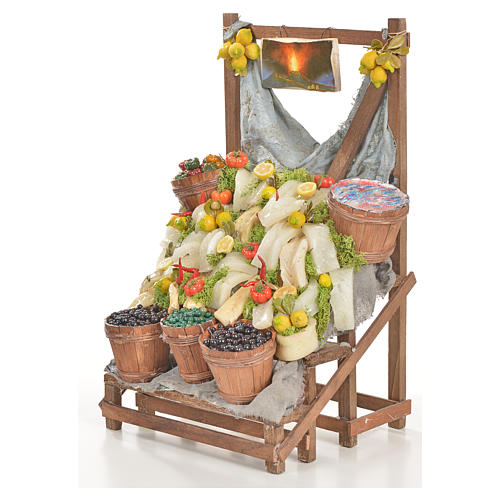
Nativity accessory, salt cod stall 20x22x44cm 2

A salt cod stall you can buy online for your nativity scene.

Recipe below: Baccalà with Potatoes, Black Olives, and Marsala

I love salt cod. It’s unique—not quite fish as we know it, but not quite not fish. Salty, solid, and extra special because I cook it only on Christmas Eve. The soaking starts a few days before, and that’s half the fun. The water gets cloudy as the cod rids itself of excess salt. Then you run through some clean water and start all over again. Sometimes after I finish soaking a big slab of it, I take a bite, raw, for that dense texture and almost indescribable flavor, like fish-scented incense, if anyone would ever invent such a thing. And after a gentle simmering, salt cod becomes slippery. The stuff is good on many levels.

For many Christmas Eves I’ve made baccalà mantecato, a whipped purée popular at Venetian wine bars and also known in southern France as brandade. It’s excellent loaded with good olive oil, garlic, and a bit of potato to fluff it out. I also add thyme and lemon zest. I love it spread on crostini, along with a bowl of black olives and a glass of Vernaccia or whatnot. But the sad fact is, almost no one I know likes it as much as I do, except for my husband’s mother, and she’s no longer alive. Kind of takes the drive out of the preparation. So I’ve scrapped it this year.

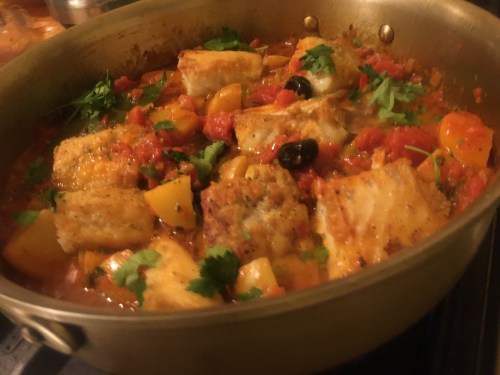
Instead I’m doing a more traditional Neapolitan baccalà dish, a stew of sorts. I’ve had it many ways, sometimes with lots of onion and no tomato, others with tomato, olives, capers, pine nuts. Sometimes with potato. I like that, so I went with the potato and the olives and lots of wintry herbs like thyme and rosemary. Also, adding Marsala gave it depth. Marsala is a good thing. But the main key to success, I think, is to flour and sauté the cod chunks separately, not just drop them nude into the sauce. That creates texture and a richer taste. It also thickens the sauce a bit.

Merry Christmas to all my salt cod–loving friends.

IMG_4113.JPG

Baccala with Potatoes, Black Olives, and Marsala

(Serves 4)

2 pounds center-cut salt cod
Extra-virgin olive oil
1 small onion, diced
1 celery stalk, diced, plus the leaves, chopped
3 medium Yukon Gold potatoes, peeled and cut into large dice
1 garlic clove, sliced
1 fresh bay leaf
½ teaspoon freshly grated nutmeg
A few large thyme sprigs, the leaves chopped
A few large rosemary sprigs, the leaves chopped
½ cup dry Marsala
1 28-ounce can plum tomatoes, chopped
½ cup chicken broth, light fish broth, or vegetable broth
Black pepper
½ cup regular flour
A big pinch of piment d’Espelette
A big palmful of good black olives, such as Niçoise or, for a stronger flavor, the wrinkled Moroccan type
Salt, if needed
A few big sprigs of flat-leaf parsley, the leaves lightly chopped

First thing, you’ll need to soak the salt cod in a bowl of cold water for at least 2 days, changing the water often to rinse off the salt. At night I put the bowl in the refrigerator. After 2 days of soaking, taste a little piece. If it still seems too salty, soak it for at least another half day.

When the cod is sufficiently desalted, take it out, and pat it dry. Check for bones and skin, removing that stuff, and cut it into large chunks.

Now start the sauce. Put a wide, low-sided pan over medium heat, and drizzle in a tablespoon or so of olive oil. Add the onion and the celery plus leaves, and sauté for a minute or so, just to soften them. Add the potatoes, garlic, bay leaf, nutmeg, thyme, and rosemary. Sauté a minute or so longer, to release all their flavors.

Add the Marsala, and let it bubble out for a few seconds. Add the tomatoes and the broth, and simmer, partially covered, until the potatoes are just tender, about 7 or 8 minutes. Turn off the heat, and add the olives and a few big grinds of black pepper.

Put the flour on a plate, and season it with the espelette and the black pepper. Dredge the salt cod pieces in the flour.

In a wide sauté pan, heat a tablespoon or so of olive oil. When hot, add the cod pieces, and brown them quickly on both sides.

Transfer the browned cod to the pan with the tomato sauce, nestling them in. Turn the heat to medium low, and simmer for about 5 minutes, just until the fish is tender. Add a little more broth if you need to to loosen the sauce. Now taste the sauce for salt. Depending on how salty your fish is, you might not need any. So address that, and then drizzle with a little fresh olive oil and add a few more grinds of black pepper. Garnish with the parsley. Serve hot.

Read Full Post »

What-to-do-with-Amaretto_720x720

Recipe below: Amaretto Cake for Christmas Morning

Christmas Eve was always a big deal when I was a kid. Shelling shrimp, steaming clams, looking for Scotch tape, hunting down oversized platters, chipping wax off candlesticks, sweeping up all the bulbs the cats destroyed, waiting for relatives and orphans to arrive. Sammy Davis, Jerry Vale, Ronnie Spector on the turntable. Ring a ding party. A glamorous evening. Christmas day was, in comparison, a bit of a drag. I can hardly even remember our meal that day. I think it wasn’t much of anything. We were cooked out, the place still smelling of baccala and cigarettes. I don’t know if I’m just getting stupid in my old age, but I really can’t recall if there was a ham or if we sent out for Chinese food. That seems unlikely for an Italian family, but my memory is weird here. In the morning there was panettone with butter, and espresso, that I know for a fact. Aside from that, I’ll have to ask my sister.

The big event for me now is still Christmas Eve. Christmas day I usually look for a place that’s open and go have an early dinner out, hamburgers or whatever. But Christmas morning is reserved for panettone. I love the panettone ritual very much. This year I decided to augment it with something of my own, something with a similar Christmasy scent. I zeroed in on Amaretto, a sticky little drink that always came out at the end at the Christmas Eve dinners of my childhood, along with Galliano and Strega, all kind of crazy tasting. An unusual culture created such peculiar beverages.

As a starting point I used the basic olive oil yogurt cake recipe I’ve been making for years. Very vanilla, lightly sweet. Delicious. I almonded it up with chopped almonds replacing some of the flour and a shot of Amaretto itself.

The aroma of this cake, when baking, and the taste of it, with the mingling of Amaretto and vanilla, reminds me of angel food, specifically the commercial angel food I adored as a kid. It’s good with espresso, absolutely, but I’m thinking it might even be better with a glass of Christmas morning prosecco. That seems about perfect.

Merry Christmas to all my Italian foodloving friends.

IMG_4083.JPG

Amaretto Cake for Christmas Morning

1¾ cups regular flour
1 tablespoon baking powder
A big pinch of salt
½ teaspoon ground nutmeg
2 large eggs
1 cup whole milk yogurt
1 cup sugar
½ cup fruity olive oil
2 tablespoons Amaretto
2 teaspoons vanilla extract
⅛ teaspoon almond extract
½ cup blanched almonds, preferably Sicilian, lightly toasted and then cut into a small chop

Preheat the oven to 350 degrees. Lightly oil a 9-inch loaf pan.

Put the flour in a bowl. Add the baking powder, salt, and nutmeg, and give everything a good mix.

In another bowl, break the eggs and add the yogurt and sugar, mixing well.

In a small bowl, combine the Amaretto, the vanilla, and the olive oil, and give it a stir.

Add the flour mix to the egg mix, and stir everything together. Pour in the olive oil mix and the almonds, and stir.

Pour the resulting batter into the loaf pan. Bake until puffed and browned and firm to the touch, about 45 to 50 minutes. Let sit for at least an hour before slicing.

Read Full Post »

69f0ca_6d3515d0faf24283a1a89a9fb915b693~mv2_d_1854_2367_s_2

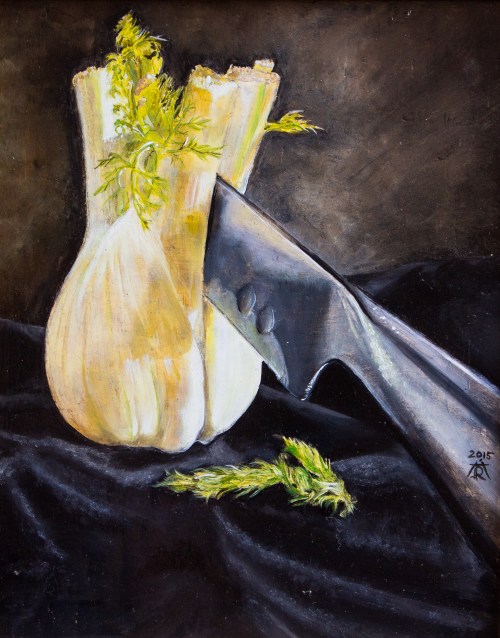
Still Life with Fennel, by Gilly Reeves-Hardcastle.

Recipe below: Portale’s Roasted Fennel Salad with Blood Orange and Black Rice

Flavors from Italian American holiday celebrations past lie embedded in my brain, starting at Thanksgiving and working through to New Year’s. Fennel stands out. That memory starts with the foreign and inappropriate-seeming (at the time) plate of raw fennel my grandmother trotted out between the Thanksgiving turkey and pecan pie (I later learned that raw fennel is a Puglian palate cleanser), as well as the orange and fennel salad that was always part of my childhood Christmas Eve. My birthday falls in between those holidays, and this year fennel played a part in that, too. For my birthday dinner I wanted to try Alfred Portale’s just-opened Italian restaurant called, of all things, Portale. I’ve long been a fan of the chef who opened Gotham. It has been a place for anniversaries and other special occasions for all of its 35 years (my parents took me there to celebrate the publishing of Pasta Improvvisata, my first cookbook). I respected him for sticking to his 12th Street location and not branching out to Tokyo or Las Vegas (although he did briefly have a steakhouse in Miami). You’d almost always see him at Gotham. A little guy, nervous, shiny bald, trim and fit, handsome.

He has now opened his first Italian place, which he has evidently wanted to do for a long time. I’m not going to review the restaurant here—the food was almost excellent (I did have a little problem with the short rib carpaccio concept)—but I did want to mention the fennel and orange salad I ordered, one of my all-time favorite things to eat around the holidays.

He used a mix of roasted and raw fennel, a new approach for me. I’ve only done raw. Also, the addition of black rice was interesting. It added color and texture and heft. For my home version I thought of replacing it with Israeli couscous or wheat berries, but then figured, just this once go against your nature and make it as the chef intended. So I did. It was delicious. Not exactly the same as Portale’s, but considering that I didn’t really know how that had been constructed, it was pretty close.

The rice Chef Portale uses for this salad is venere vero, a black variety from the Lombardy and Piedmont regions. Look for it online or at Italian specialty shops. It takes a little longer to cook than regular white rice, but you cook it the same way.

IMG_4091.JPG

Portale’s Roasted Fennel Salad with Blood Orange and Black Rice

(Serves 4)

3 large fennel bulbs, trimmed, 2 cut widthwise into ¼-inch-thick slices, 1 very thinly sliced with a sharp knife or a mandolin; also save and lightly chop a handful of the fronds
Extra-virgin olive oil
Sea salt
Coarse ground black pepper
1 cup cooked venere nero black rice
½ cup golden raisins, plumped in a little warm water if hard
1½ tablespoons sherry wine vinegar
1 tablespoon Dijon mustard
A big pinch of sugar
1 big head frisée or chicory, torn into bite-size pieces
1 small shallot, thinly sliced
4 blood oranges, peeled and sliced into rounds
A big handful of shelled unsalted pistachios, preferably Sicilian

Preheat the oven to 400 degrees. Place the thickly sliced fennel on a sheet pan, drizzle it with olive oil, and season it with salt and black pepper. Roast until tender but still firm and lightly browned, 15 minutes or so.

Mix the black rice with the raisins and the fennel fronds, and season with salt and black pepper.

Set out four salad plates. Make a circular pattern alternating slices of orange with slices of roasted fennel along the edges of each plate.

In a small bowl combine the frisée, the raw fennel, and the shallot.

Whisk together the vinegar and the mustard and sugar. Whisk in 3 tablespoons of olive oil, and season with salt and black pepper. Taste for a good balance of acid, sweet, and mellow, and adjust if necessary.

Pour half of the vinaigrette over the rice and the rest onto the frisée. Toss both.

Portion the rice into the middle of each salad plate, spreading it around in a thin layer. Top each one with some frisée mix. Scatter on the pistachios. Serve. Or you can present it family style on one big platter, as I did. See photo.

Note: At the restaurant the rice and the roasted fennel were still slightly warm. That’s how I served it at home, too.

Read Full Post »

1531483-7.jpg

Still Life, Carrots, by Plamen Petkov.

Recipe below: Roasted Carrots with Almonds, Basil, and Fig Vinaigrette

I’ve lived through many vegetable trends, with bean sprouts, micro greens, arugula, radicchio, sundried tomatoes, kale, cauliflower, Brussels sprouts. But the new carrot thing caught me off guard. It seems that now anything you can successfully roast, like most root vegetables, must have its day. Who knows, maybe parsnips will be next.  I love parsnips. Carrots, not so much, unless I really tinker with them.

I’ve always known that carrots respond well to sweet, but lately I like sweet and sour, agro dolce, even better. Balsamic vinegar, or pomegranate molasses, sweet and sour in one pour, are both wonderful with carrots. So is the time-honored combo of vinegar and honey, like I use for caponata and other agro dolce Italian dishes.

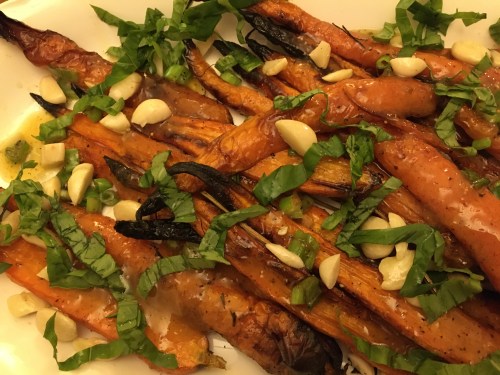
I was planning to make a sweet-sour roasted carrot dish for Thanksgiving, not sure how exactly, but certainly leaving them long, and leaving a portion of their tops on, as is now trending, but I sensed that my host needed something gloppier for the table, so I instead prepared a cauliflower gratin with tons of Gruyère. The carrot urge stayed in my head, so last night I grabbed a jar of fig jam from my fridge (fig jam is great with ricotta topped crostini, by the way), and used that as the starting point for this recipe. I wanted to keep it a bit Sicilian in flavor, so the almonds and basil fell right into place. It came out really nice, and I was happy in my culinary head. I served the carrots with roast chicken and lentils, a pretty good dinner all around. Check out this dish. See what you think.

IMG_4073.jpg

Roasted Carrots with Almonds, Basil, and Fig Vinaigrette

(Serves 6)

2 bunches of farmers’ market carrots, multicolored if you like, halved lengthwise if thick, left whole if skinny, all but a short part of the green tops trimmed
Extra-virgin olive oil
Salt
A few big gratings of nutmeg
Black pepper
1 tablespoon rice wine vinegar
1 teaspoon Dijon mustard
2 tablespoons fig jam
3 scallions, cut into short pieces, including the tender green part
A big handful of whole, blanched almonds, lightly toasted and then roughly chopped
A handful of basil leaves, cut into chiffonade

Preheat the oven to 425 degrees. Lay the carrots out on a sheet pan. Drizzle them with olive oil, season them with salt, nutmeg, and black pepper, and toss them around with your fingers to distribute all the seasoning. Stick them in the oven, and roast them until they’re lightly browned and tender, about 15 to 20 minutes, depending on how thick they are.

While the carrots are roasting, whisk the vinegar and mustard together in a little bowl. Whisk in the fig jam and then about a 2 tablespoons of olive oil. Season with salt and black pepper. It’ll be a bit thick.

When the carrots are tender, pull them from the oven, scatter on the scallions, and drizzle on about half the vinaigrette. Let the carrots sit on the sheet pan for a moment to let the flavors warm and blend. Then lay them out on a platter. Drizzle them with the remaining vinaigrette, top them with the almonds, and garnish them with basil. Serve hot or warm.


Read Full Post »

Antoine-Berjon-x7896-Still-Life-Apples-pic-1A-2048-10.10-678-f

Still Life with Apples, by Antoine Berjon, ca. 1810.

Recipe below: Thanksgiving Salad with Escarole, Tart Apple, Sweet Almonds, Fennel, and Parmigiano

I planned to tell a rather involved Italian American–inspired Thanksgiving tale here, but then I learned that my top cat was very sick. That shut me down, making it difficult to create anything holidayish. So instead I’ll just tell you about the salad I’m preparing to go with someone else’s turkey and stuffing.

Maybe I’m perverse, but for me it’s not Thanksgiving without salad. My mother always made one with chicory, something bitter to cut through all that rich Americana. Here’s what I’m doing this year.

Thanksgiving Salad with Escarole, Tart Apple, Sweet Almonds, Fennel, and Parmigiano

(Serves 6)

Extra-virgin olive oil
½ cup sliced almonds
1 teaspoon sugar
A big pinch of fennel pollen or ground fennel seed
Salt
Black pepper
1 tablespoon sherry wine vinegar
2 medium heads escarole, washed and torn into pieces
2 tart apples, such as Pink Lady or Cortland, cored and thinly sliced
1 fennel bulb, very thinly sliced (with a mandolin or a sharp knife), plus a handful of its fronds
1 small shallot, very thinly sliced
A few sprigs of dill
A chunk of Parmigiano Reggiano or grana Padano cheese

Get out a small sauté pan, and place it over medium flame. When it’s hot, add the almonds, sugar, fennel pollen, salt, and a little black pepper. Add a few drops of olive oil, and stir the almonds around until they’re just turning golden, about a minute or so. Pull the pan from the heat, and let the almonds cool.

Put the escarole in a large salad bowl. Add the apples, fennel and fronds, shallots, almonds, and dill.

Mix together about 2 tablespoons of olive oil and the vinegar, and season with a little salt.

Grind some black pepper over the salad. Pour on the vinaigrette, and toss.  Top with shavings of Parmigiano or grana Padano, and toss again gently. Serve right away.


Read Full Post »

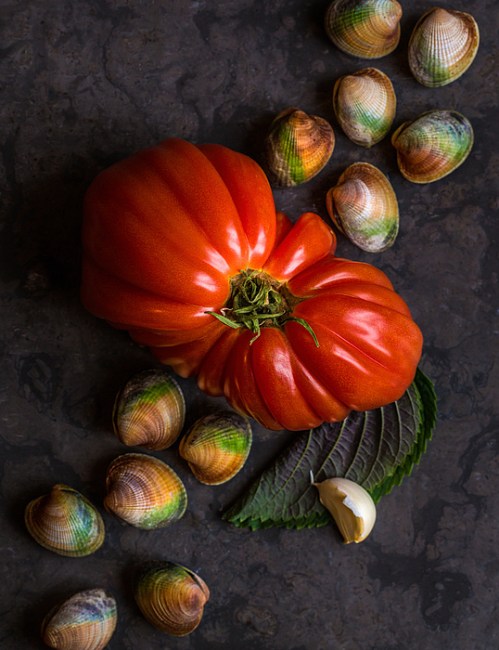
still-life-with-tomato-and-clams-alan-shapiro.jpg

Recipe below: Manhattan Clam Chowder, My Way

As a kid and young adult I spent many odd hours at diners on Long Island and in Manhattan, 3 a.m., 3 p.m., hanging with my sister and my now deceased friend Scott, maybe Barbara, too, eating clam chowder, because that’s what I used to eat at a diner, getting that specific taste of industrial clam juice, canned clam bits, and dried oregano, hitting acrid and salty on my tongue. I used to order chowder all the time, after school, or after clubbing. I don’t think I ever ate it anywhere other than at a diner. I didn’t even particularly like it. It was just a habit, like biting my cuticles. Manhattan clam chowder wasn’t a fine restaurant dish, even in Manhattan (maybe it was in the days of Delmonico’s, where the soup evidently partly originated). But at a good seafood place you could order a chowder with what was considered more dignity—New England clam chowder.

I like the rich New England version, thick and white, but it’s sort of foreign to my Italian American palate. In Manhattan we swapped out the cream or milk for tomatoes, a variation that came from Portuguese and Italian immigrant cooking. I hadn’t thought about New York chowder in a while, and I don’t see it on diner menus so often these days, but I found that I missed it, so I decided to make some myself and give it a more appealing edge.

I dropped the green pepper and dried oregano and added instead roasted red pepper and fresh marjoram. So the whole thing became sweeter and rounder. I opened the clams in dry Marsala and used that liquid as the soup base.  This really can be a fine soup when you make it with thought.

IMG_4019.JPG

Manhattan Clam Chowder, My Way

(Serves 4 or 5)

5 dozen littleneck clams, on the small side, well cleaned
1 cup dry Marsala
Extra-virgin olive oil
3 tablespoons unsalted butter
¼ pound pancetta, cut into little cubes
1 leek, chopped
1 small onion, chopped
2 celery stalks, plus the leaves, chopped
2 carrots, cut into small dice
2 garlic cloves, peeled but left whole
1 roasted red bell pepper, peeled, seeded, and chopped
1 fresh red peperoncino, chopped
½ teaspoon ground allspice
4 medium Yukon gold potatoes, peeled, or not, and cubed
A few big thyme sprigs, the leaves chopped
6 or 7 marjoram sprigs, the leaves chopped
1 fresh bay leaf
1 28-ounce can chopped tomatoes, with the juice
4 cups of light chicken broth
Salt, if needed
A handful of flat-leaf parsley leaves, lightly chopped

Put the clams in a big pot, pour on the Marsala, and cook them over high flame, partially covered, stirring them around a few times until they open. As they open, lift them from the pot into a bowl, using tongs. Let them cool until you can pull them out of their shells. When they’re out of their shells (discard the shells), leave them whole if they’re small. Bigger ones you can roughly chop. Give them a drizzle of olive oil. Strain the cooking juice, and pour it into a small bowl.

In a big soup pot, heat a drizzle of olive oil and the butter over medium flame. Add the pancetta, and let it crisp up. Add the leek, onion, celery plus leaves, and carrot, and sauté until softened and fragrant, about 5 minutes. Add the garlic, the roasted pepper, the peperoncino, and the allspice, and let it all cook another minute or so. Add the potatoes, the thyme, the marjoram, and the bay leaf, and sauté a minute more. Now add the tomatoes, the chicken broth, and the reserved clam broth. Cook at a gentle bubble, uncovered, until the potatoes are just tender, about 10 minutes. Turn off the heat, and add the chopped clams. Let sit for about 5 minutes, so all the flavors can blend. Now taste for salt. If your clams are very salty, you might not need any. Add a drizzle of fresh olive oil and the parsley, and serve. This chowder is excellent with bruschetta brushed with olive oil and fresh garlic. Dip the bruschetta in the broth.

Read Full Post »

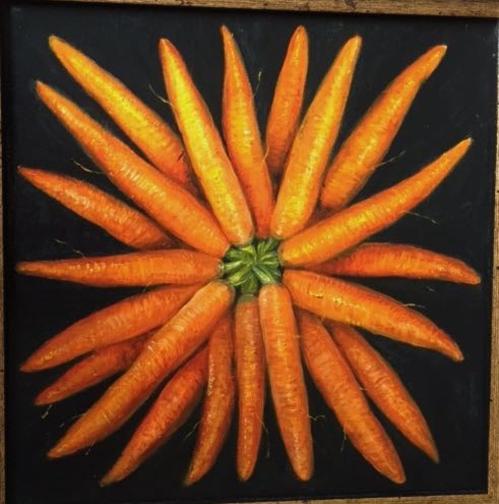
circle-of-carrots_10076_main_size3

Circle of Carrots, by Mimi Roberts.

Recipe below: Smooth Carrot Soup with Fennel and Pear

I’ve been finding blown-out late-season carrots at the farmer’s market, lumpy and woody but so cheap I can’t resist. I tried one raw. The taste wasn’t bad, not soapy, but the texture was rough. Good for soup.

I often like a big, smooth soup. It forces me to focus on its tastes, since everything gets whirled together, unlike a chunky texture where you can actually see what you’re putting into your mouth. Uniform smoothness necessitates culinary thought to pull out flavors. Can I taste the pear clearly, or is it just serving as a sweetener? Does it add subtle acidic brightness? Does the fennel add fennel taste, and maybe a hint of bitter? And with all the stuff I’ve added, can I still taste the carrot? In this case, I’ve answered yes to all, so I know I’ve succeeded.

IMG_4017.jpg

Smooth Carrot Soup with Fennel and Pear

(Serves 6)

Extra-virgin olive oil
2 bunches of orange carrots, peeled and chopped
1 large fennel bulb, chopped, saving the fronds and chopping them lightly
1 medium onion, chopped
1 small baking potato, peeled and chopped
½ teaspoon fennel seeds ground to a powder, or a big pinch of fennel pollen
A few large thyme sprigs, the leaves chopped
2 ripe pears, peeled, cored, and chopped
Salt
Black pepper
A splash of Poire Williams
1 cup chicken broth
A few drops of rice wine vinegar

Get out a big soup pot, and set it over medium heat. Drizzle in a little olive oil. Add all the ingredients except the Poire Wiliams, the chicken broth, and the vinegar. Sauté, stirring everything around a few times, until everything’s fragrant and starting to soften, about 4 minutes. Add the splash of Poire Williams, and let it bubble for a few seconds. Add the chicken broth, and then add enough water to just cover the vegetables. Bring it all to a boil, and then turn the heat down a touch, and cook at a medium bubble, partially covered, until everything is very tender, especially the carrots. This should take about ½ hour, maybe a little longer depending on how hard your carrots are. Now let it sit, uncovered, for about 15 minutes, so all the flavors can blend further.

Purée the soup in a food processor, in batches, until very smooth and glossy, adding more water, if needed, to thin it down. Pour it into a clean pot. Taste for seasoning, adding a few drops of rice wine vinegar for brightness, and more salt or black pepper, if needed.

To serve, reheat the soup gently. Pour it into bowls, and garnish it with chopped fennel fronds and a drizzle of good extra-virgin olive oil.

Read Full Post »

still-life-with-pears.jpg!Large.jpg

Still Life with Pears, Vincent Van Gogh, ca. 1888.

Recipe below: Pear and Almond Cake with Poire Williams and Fresh Ginger

I sort of like baking. I sort of like playing with flour. But I don’t love it. Not like I love making a ragu, or spaghetti with white clam sauce. Still, baking can be fun, especially the way I do it, without serious recipes. Not having them limits what I can turn out, but I’m okay with that. I don’t love sweet so much. Savory tarts and fruit things are for me. I’ve worked out a few dependable general recipes for breads, plain cakes, biscotti, and torte, and starting with them, I mix up the flavors depending on the season and my mood. This pear creation is based on my sweet olive oil cake recipe. I make variations on it all the time. They usually contain some type of fruit, apples, or blueberries, or peaches. I sometimes add nuts, walnuts, or pistachios. And then I decide on spices, maybe cinnamon, allspice, black pepper, whatnot. Sometimes I’ll add a fresh herb, thyme, or lemon verbena. Then maybe a drizzle of fragrant booze. I recently made a version with apples and anisette. It came out real nice. You can easily make that one by swapping the pears here for apples and the Poire Williams for anisette.

This is a big, not-too-sweet cake, from enough batter to fill a 10-inch springform pan.  I make these things often for my husband’s breakfast, an attempt to wean him off industrial boxed cereal, which for some unexplained reason he seems to love. It is also good for afternoon tea, or brunch, or even for dessert, if you serve it with sweetened whipped cream or vanilla, caramel, or ginger ice cream

IMG_3992.JPG

Pear and Almond Cake with Poire Williams and Fresh Ginger

3 large eggs
1¼ cups sugar
¾ cup extra-virgin olive oil, plus a little extra for the pan
1 teaspoon vanilla extract
2 tablespoons Poire Williams or another pear brandy
1 tablespoon grated fresh ginger
3 cups regular flour
2 teaspoons baking powder
1 teaspoon baking soda
1 teaspoon salt
4 ripe pears, chopped (peeled if you wish). You’ll want about 4 cups
¾ cup whole blanched almonds, lightly toasted and roughly chopped

You’ll need a 10-inch springform pan.

Preheat the oven to 375 degrees. Grease your pan with a little olive oil.

In a bowl combine the eggs, the sugar, the olive oil, the vanilla, the pear brandy, and the ginger, and mix well. In a separate bowl combine the flour, baking powder, baking soda, and salt. Stir to blend all the ingredients.

Add the flour mixture to the egg mix, and stir it in. Add the pears and the almonds, and mix to blend.

Pour the batter into the pan, and bake until lightly browned and springy in the middle, about 50 to 55 minutes. Let cool for about a half hour before slicing.

Read Full Post »

11139880_27750774-1588720424515616-5901127106019046448-n.jpg

Les dames font des crêpes, by Philippine Cramer.

Recipe below: Crespelle with Ricotta, Swiss Chard, and Pine Nuts

Manicotti made out of crespelle was one of the first things I learned to prepare during my spell of teenage cooking mania, which started as a way to control anxiety but led to a lifelong passion. My mother made manicotti from crespelle instead of the more predicable pasta sheets. I watched her swirl the thin batter into the pan, then flip the fragile things over, messing up a few but soon hitting her stride. It looked so elegant and professional. My mother didn’t make pasta by hand or do any baking, so this was an unusual undertaking. I didn’t know she had it in her. I was attracted to crespelle for this reason and because it looked annoyingly complicated, a perverse kitchen draw for me. Her crespelle manicotti were always filled with ricotta and spinach and baked with a béchamel. Pretty classic Southern Italian. She sometimes made them part of our Christmas Eve dinner, as I do now.

The truth is, making crêpes isn’t complicated. It’s really fun, once you get it down. Even before you get it down, watching them gum up into a ball or fold over like a fortune cookie can be amusing for a while. I’ve been making these things off and on for 40 years, and the first few still often turn out lumpy before I get into the swing of it. Also I usually make mine not with butter, which is classic, but with olive oil. That makes them much easier to work with. Fun even. Give them a try.

Crespelle with Ricotta, Swiss Chard, and Pine Nuts

(Serves 4 or 5, making about 12 7-inch crepes)

For the crespelle:

1 cup all-purpose flour
4 large eggs
Salt
1 tablespoon sugar
3 tablespoons extra-virgin olive oil, plus more for cooking the crespelle
1 cup whole milk
1 tablespoon cognac or grappa

For the filling:

2 bunches of Swiss chard, the thick inner ribs removed,
A drizzle of extra-virgin olive oil
1 small garlic clove, minced
32 ounces whole-milk ricotta
1 large egg
½ teaspoon freshly ground nutmeg
¾ cup grated Montasio or grana Padano cheese
6 big sprigs of marjoram, the leaves chopped
A big handful of lightly toasted pine nuts
Salt
Black pepper

For the sauce:

2 tablespoons unsalted butter
2 scallions, chopped, using some of the tender green
1 28-ounce can tomatoes, well chopped and lightly drained
A few big sprigs of marjoram, the leaves chopped
A few big sprigs of thyme, the leaves chopped
Salt
Black pepper
2 tablespoons crème fraîche
A small chunk of Montasio or grana Padano cheese

To make the crespelle batter, put all its ingredients into the bowl of a food processor, and pulse until smooth. It should reach the consistency of thick cream. If it’s too thick, add a little more milk. Pour the batter into a bowl, and let it sit for about 30 minutes. This will allow the flour to absorb the liquid and let the gluten relax, so you get a nice tender crêpe.

Now cook the crespelle. I used a 7-inch omelet pan, but if you’ve got a proper crêpe pan, a little bigger or smaller, use that. And any small sauté pan will do. With these olive oil crespelle, I never find sticking a problem, so you don’t need a nonstick pan. Put the pan over a medium flame, and let it heat up. Pour in just enough olive oil to coat its surface. Pull the pan from the heat, and ladle in a bit less than a quarter cup of batter, tilting the pan quickly in a circular movement to spread the batter. (You’ll get the hang of it. The first few usually don’t come out too well. Once the heat is regulated and you get the feel of it, you’ll find it fairly easy, trust me.) Let the crêpe cook just until you notice it coloring lightly at the edge. Then shake the pan, moving the crêpe away from you, and slip a spatula underneath. Give it a fast, confident flip. If it folds up a bit, just straighten it out with your fingers (these things are a lot sturdier than you’d think). Cook it on the other side for about 30 seconds, and then slide it onto a big plate.

Make the rest of the crespelle the same way, adding a drizzle of olive oil to the pan when needed. Stack the crespelle up on top of one another (they won’t stick, I swear). If you like, you can refrigerate them until you want to assemble the dish.

To make the filling, blanch the Swiss chard in a pot of boiling water for about 2 minutes. Drain it, and run cold water over it, to stop the cooking and bring up the green color. Squeeze as much water out of it as possible, and then give it a few good chops. Put it in a bowl, and then add all the other ingredients for the filling, mixing them in well.

To make the sauce, melt the butter in a sauté pan over medium heat. Add the scallion, and let it soften for about a minute. Add the tomatoes and the herbs, and season with salt and black pepper. Cook, uncovered, for only about 4 minutes. You want the sauce to stay fresh tasting. Turn off the heat and add the crème fraîche.

Heat the oven to 400 degrees.

Get out a big baking dish that will hold the soon to be rolled crespelle snuggly.  Or use two dishes. I usually do that. Oil the dish(es) lightly with olive oil.

Fill each crêpe with an ample layer of the ricotta filling, and roll it up. Place them in the baking dish or dishes. Pour on the tomato sauce, and top with a grating of Montasio or grana Padano. Now give everything a drizzle of fresh olive oil, and bake, uncovered, until hot, bubbling, and lightly browned at the edges, about 20 minutes.

Let sit for a few minutes before serving.

Read Full Post »

« Newer Posts - Older Posts »