Archive for the ‘Uncategorized’ Category
A New Video: I Cook a Whole Fish with Rosemary Pesto. Easy, I Swear.
Posted in Uncategorized on November 29, 2021| Leave a Comment »
Pan-Fried Lamb Chops with a Thyme and Parmigiano Crust
Posted in Uncategorized on November 21, 2021| Leave a Comment »

Recipe below: Pan-Fried Lamb Chops with a Thyme and Parmigiano Crust
Crust is often a good idea. Day-old pasta can be turned into a bubbly baked extravaganza just by the addition of a crispy cheese-and-breadcrumb topping. Crusts are transformative. Think of crème brûlée with its slick-patinaed sugar crust. Or the chicken cutlet, the backbone of the Italian-American kitchen. It needs a sturdy breadcrumb, garlic, and herb crust to be compelling, but that crust will turn boring white meat into something tender on the inside, crispy on the outside. Ideal food. Every culture has some sort of crust. Southern Italy, home to my people, goes for just about anything fried to a crisp. Fried dough, both sweet and savory. Little fish coated in flour and quick fried. Artichoke, zucchini blossoms, gizzards, bechamel balls, or salt cod coated with some sort of crumbly and then shocked in searing hot oil. I love eggplant cloaked in flour, egg, and then crumbs, pan-seared in olive oil until a crust coat forms around a gushy interior. I tell you: When in doubt, think crust.
And when you think you’ve got nothing to fashion into a crust, try grinding up a handful of fennel taralli, or black-pepper water crackers. Those work well. Lately I really like panko breadcrumbs for fashioning crisp things. I use them here on these lamb chops, but to cut down on bulkiness, I give them a quick few pulses in my food processor for a finer texture. Very nice when mixed with lots of thyme (you really want to taste the thyme) and Parmigiano.
I think these chops are best eaten alongside a bitter salad, maybe escarole and endive, dressed with a mustardy vinaigrette.

Pan-Fried Lamb Chops with a Thyme and Parmigiano Crust
(Serves 2)
6 loin lamb chops
Salt
Black pepper
2 egg yolks
Extra-virgin olive oil
1½ cups panko breadcrumbs, whirled in a food processor for a few seconds for a finer crumb
1 garlic clove, minced
1 cup freshly grated Parmigiano or grana Padano cheese
The grated zest from 1 large lemon
8 big, fresh thyme sprigs, the leaves lightly chopped, plus a handful of whole sprigs for garnish
A big pinch of piment d’Espelette
2 tablespoons unsalted butter
1 lemon, cut into quarters lengthwise, for garnish
Season the lamb chops with salt and pepper.
Put the egg yolks on a plate, and drizzle them with a thread of olive oil and about a tablespoon of water. Whisk lightly.
Pour the breadcrumbs out onto another plate. Add the garlic, cheese, lemon zest, and chopped thyme. Season with salt, black pepper, and the espelette, and give it a good stir.
Pull out a big sauté pan, and pour in enough olive oil to cover the pan about ⅛ inch deep. Turn the heat to medium-high, and let the oil get hot. Add the butter, and let it melt into the oil.
One by one, dip the lamb chops in the egg and then in the breadcrumbs, pressing the crumbs into the meat.
Put the chops in the pan, and cook them, without moving them around at all, until nicely browned, about 4 minutes. Turn them over and cook them on the other side, about another 4 minutes for medium. They should now be crispy and golden all over.
Pull the chops from the pan onto a serving platter. Garnish them with lemon wedges and the thyme sprigs. Serve right away.
Ricotta Baked with Fresh Bay Leaves
Posted in Uncategorized on November 10, 2021| 2 Comments »

Recipe below: Ricotta Baked with Fresh Bay Leaves
I’ve been drawn to Sicilian flavors for a very long time. When I first discovered Sicilian cookbooks, just buying them got me motivated. I cooked my way through several, immediately seeing the differences in ingredients and culinary mindset from my Puglian-Campanian family’s food. I noticed less tomato, more sweet and savory touches, more Spanish and Arab aromas.
Pomp and Sustenance, by Mary Taylor Simeti, came out in the late 1980s. I read it more than I cooked from it. It’s dense like a historical novel with a backdrop of ornate pastries. I read it over and over. A few years later Giuliano Bugialli’s Foods of Sicily and Sardinia appeared. It had on-location photos of sausages, eggplants, sardines, and bucatini, positioned in front of volcanos or the sea, sometimes on pottery that was too bright, as if a little kid had glazed it. Mint decorated savory dishes. The dish that drew me in most was a big round of ricotta lined with bay leaves and then baked. The aroma of bay was already etched into my pleasure brain, engraved there by the bechamel my mother made for her lasagna. Bugialli wrote that the bay flavor in his ricotta was so powerful that it would have to be an acquired taste for some. I wanted to acquire it. I cooked it and fell in love.
I hadn’t thought about that beautiful baked ricotta in many years, but I recently was planning a video on cooking with bay laurel for my YouTube series, and I realized it would be a great thing to include. The aroma of the cheese cooking is deep, the bay giving off hints of allspice, vanilla, and black pepper as the oven heat causes the leaves to permeate the cheese. It brought me back to my years of discovery, when I first learned how alluring Sicilian cooking could be.
Here’s my version of Bugialli’s recipe. I no longer have the book, so I reconstructed the dish from my taste memory and was pleased it came out so well. I hope you’ll give it a try. And please use fresh bay leaves. They are the only way to go.

Ricotta Baked with Fresh Bay Leaves
32 ounces good-quality whole-milk ricotta
3 tablespoons melted butter
About 15 fresh bay leaves
3 large eggs
A handful of Taggiasca olives, pitted and roughly chopped
Salt
Black pepper
A few big scrapings of nutmeg
Preheat the oven to 375. If your ricotta seems watery, drain it for about 20 minutes.
Brush a 7-inch springform mold with melted butter, saving any remaining butter for later. Cover the bottom of the pan with bay leaves. They needn’t overlap, so you’ll probably need to use about 6 or 7 of them.
In a large bowl, mix together the ricotta, the eggs, and the olives. Season with salt, black pepper, and the nutmeg. Pour the mixture into the pan. Slip the remaining bay leaves in all around the sides of the pan. Drizzle the top with the remaining butter. Bake, uncovered, for about an hour, until the top is nicely browned and the whole thing is fairly set, aside from a slight jiggle in the center.
Take it from the oven, and let it sit for at least 45 minutes. This will allow the cheese to continue to firm up and pull away from the sides of the pan so it’s easier to unmold. Run a knife along the sides of the pan, and unmold the cheese. I like to serve it on crostini as an antipasto. It’s also great alongside a tomato salad or a bowl of caponata.
New Video: I Love Bay Leaves
Posted in Uncategorized on November 7, 2021| 7 Comments »
Clay Pot Calamari with Sweet Spices
Posted in Uncategorized on October 23, 2021| Leave a Comment »

Recipe below: Clay Pot Calamari with Sweet Spices
In my travels I like to collect clay pots meant for cooking. So far I’ve done little actual cooking with them. Why? Well, some years back I purchased a gorgeous and expensive French daubière, a half-green-glazed stew pot, and I guess I didn’t follow any precooking instructions, so my lovely pot and the beef Provençal that was in it blew apart all over the oven. What a miserable mess. After that I decided to just let my collection sit and be pretty. That is now changing. I’ve started cooking with them again, and not one of my pots has yet exploded. I’ve been coaxed on by my Cooking with Clay Facebook group, where they really understand how to work these things.
Several years ago I bought a cazuela in a Mexico City market, a covered clay pot decorated with a ring of white flowers. I was told I could cook in it, but privately I assumed it was just a touristy item that had no function other than getting greasy and fuzzy on my shelf. So that’s where it sat, until a few days ago when I just went for it. It cooked up a pot of calamari to perfection. The thing is partially glazed, so I checked with Paula Wolfert’s book Cooking in Clay to see how to handle it. Easy enough. Just soak it in water, rub a bit of oil on it, and then make sure not to startle it by going from hot to cold or cold to hot too fast.
Theoretically you’re supposed to be able to put the pot on a flame. I didn’t yet trust myself to pull that off, so I started my sauce in a conventional sauté pan and then put the squid and chickpeas in the clay pot, poured the sauce on top, covered it, and stuck it in the oven, raising the temperature gradually until it reached sweet simmer. It smelled amazing, like a mix of fresh calamari, spice, and clay. The more I use the pot, the better everything I cook in it will taste. I’m thinking I’ll reserve it for squid, octopus, and shellfish, so it retains a “memory”of good sea things.
I try not to be a snob about ingredients. I’m a little sick of hearing cooks cry out about “buy the best,” but in this case I was fascinated by the result of using differently sourced stuff. I made the dish twice, first with calamari I purchased at the Union Square Greenmarket and with dry chickpeas from Rancho Gordo. That was exceptional. So sweet and deep. Then I tried it again with squid from Citarella, which was fresh enough but gigantic and thick, and a can of precooked Spanish chickpeas. The outcome was good, but it lacked that richness, and the sauce was not as compelling. The interesting thing is that I didn’t spend more on the mediocre ingredients than on the good stuff. So it’s not always a matter or throwing money at a dish. I guess you just have to know where to shop.

Clay Pot Calamari with Sweet Spices
(Serves 4)
Extra-virgin olive oil
1 large shallot, diced
1 big fresh garlic clove, thinly sliced
1 teaspoon sugar
1 fresh bay leaf
1 teaspoon ground ginger
1 teaspoon turmeric
1 teaspoon ground cinnamon
1 teaspoon pimenton d’espelette
Salt
A big splash of dry vermouth or dry Marsala
1 28-ounce can Italian plum tomatoes, chopped and lightly drained
6 large thyme sprigs, the leaves lightly chopped
A big pinch of dried saffron, crumbled and then soaked in a few tablespoons of warm water
1½ to 2 pounds small squid, cut into thin rings and then patted dry, with a few trimmed tentacles thrown in
About 2 cups cooked chickpeas
A handful of basil leaves, lightly chopped
Preheat the oven to 350 degrees. If you’ll be using a clay pot, make sure you prep it according to its instructions.
In a medium sauté pan, heat a few tablespoons of olive oil over medium heat. Add the shallot, garlic, sugar, bay leaf, and all the spices, plus a little salt. Sauté until the aroma is beautiful and the shallot is soft, about 4 minutes. Add the vermouth or Marsala, and let it bubble for a few seconds. Add the tomatoes, the thyme, and the saffron water, and simmer at a low bubble for 5 minutes.
Place the squid and the chickpeas in the clay pot. Pour the sauce over the top, and give it a quick stir. Cover the pot, and put it in the oven. Take a look in about 15 minutes to see if the sauce is simmering (it should be at a nice low bubble). If not, turn the heat up to 400 degrees and check it again in about 10 minutes. When you see it’s gotten up to temperature, let it go for about 45 minutes (it should start smelling really good after about ½ hour).
When it’s done, the squid should be tender. Pull the pot from the oven, uncover it, and let it sit for about 10 minutes so it can settle. Add the basil, and serve. I like to pour it into shallow soup bowls over a few slices of day-old country bread.
Note: If you’re not using a clay pot, simply add the squid and chickpeas to the sauté pan with the sauce, and simmer, covered, over low heat for about 45 minutes.
Cooking with Herbs: Me and My Rosemary, a New Video.
Posted in Uncategorized on October 18, 2021| Leave a Comment »
Cooking with Herbs, Part 1: A New Video
Posted in Uncategorized on October 3, 2021| 2 Comments »
Breaded Swordfish with Caper Celery Sauce and a Tomato Herb Salad
Posted in Uncategorized on September 25, 2021| Leave a Comment »
Recipe below: Breaded Swordfish with Caper Celery Sauce and a Tomato Herb Salad
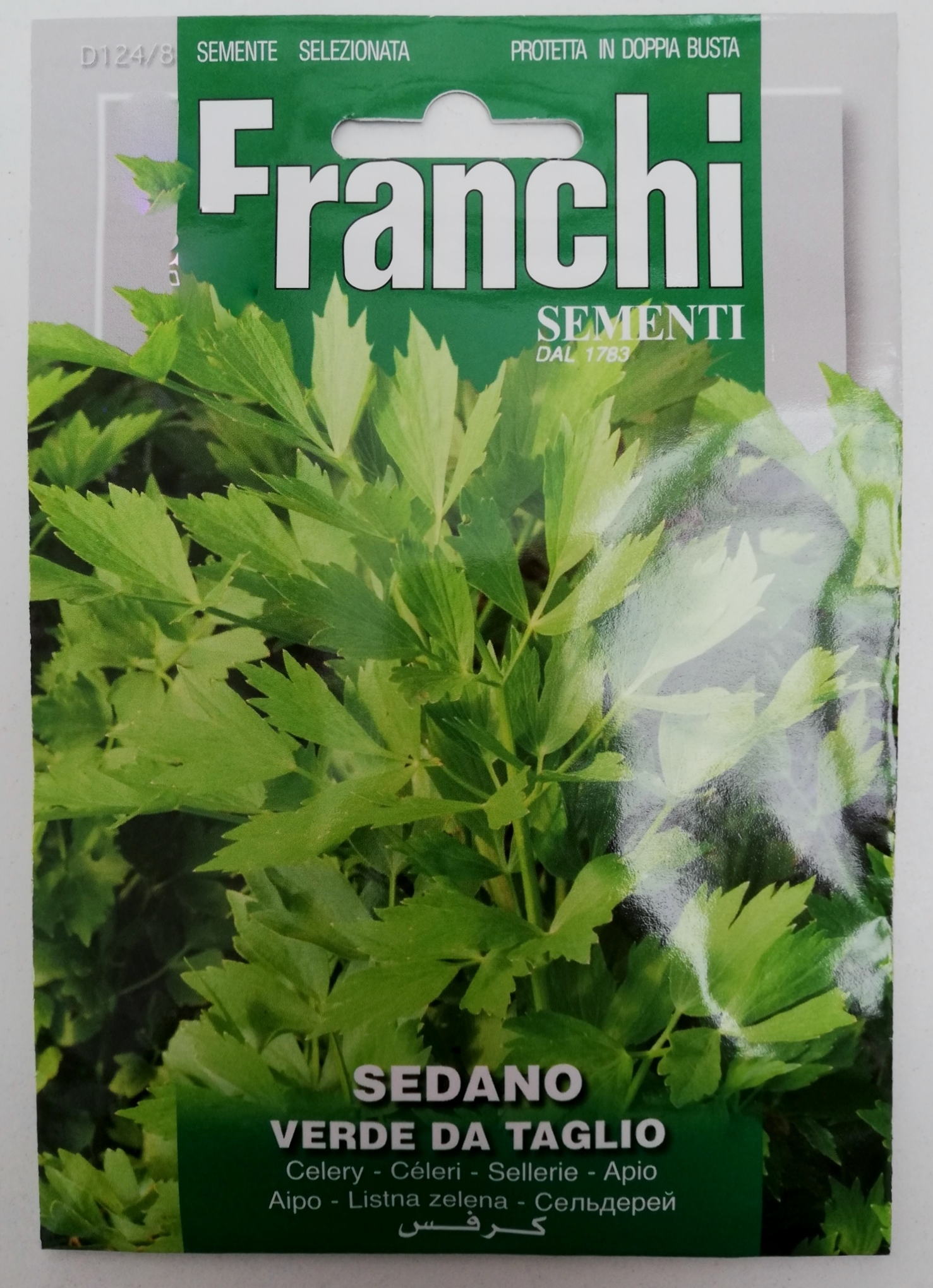
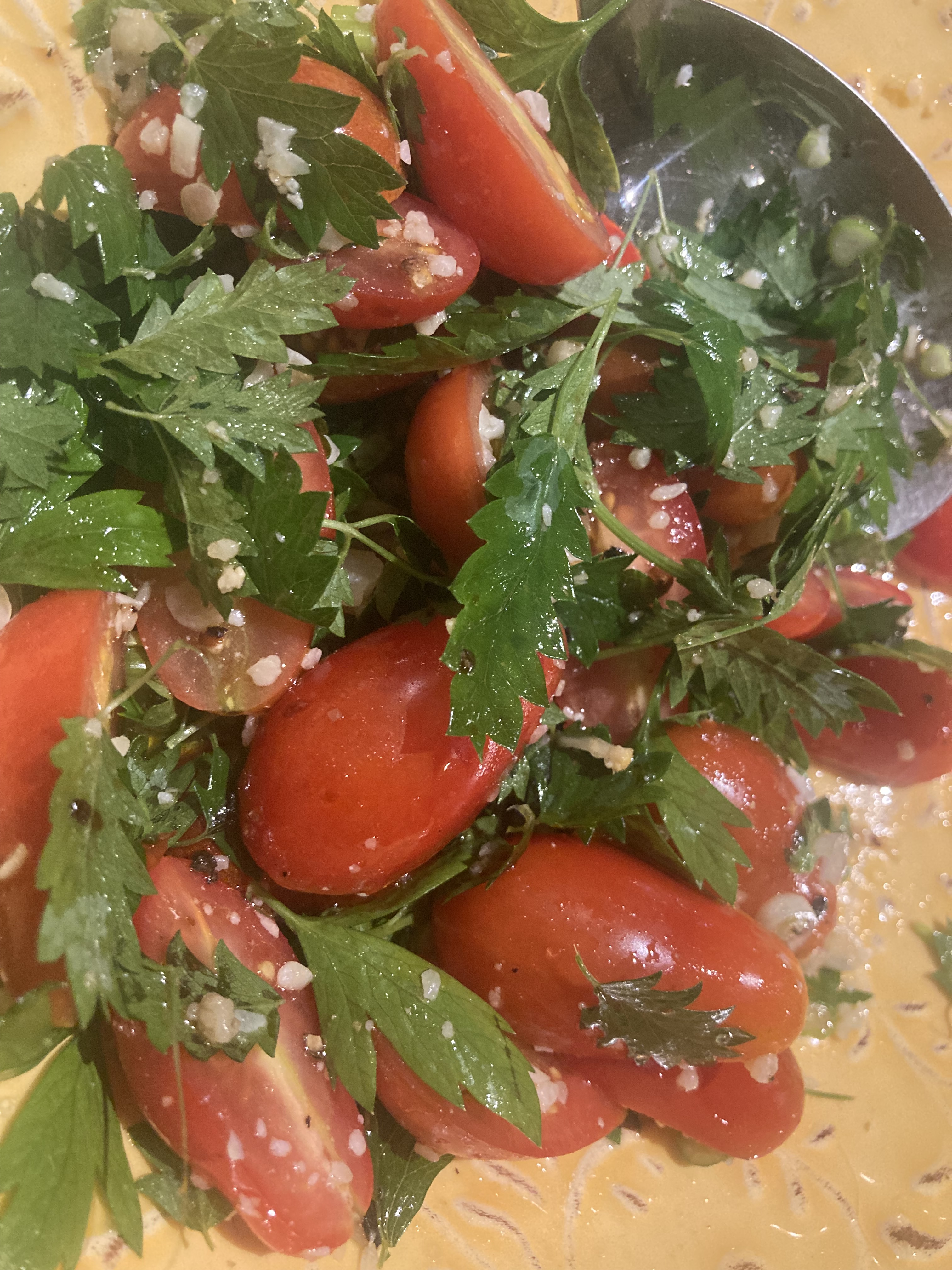
September is here, and my herbs are getting leggy, shooting up, searching for the warmth of the sun and finding it fading. Another growing season circles the drain. Sad. But I’ve still got lots of lovage and leaf celery. Those two are unstoppable. I don’t generally use a lot of either during the summer, just a hint in a dish, afraid that their strengths will overpower. But now I’m under the gun. Don’t want them to go to waste, and neither one dries well, so I’ve tried highlighting them here in two ways, first in a sort of chunky salsa verde, and then mixed into a little side salad, where I could also use up the handful of cherry tomatoes I still had hanging on the vines. I’m glad I did. The flavors were beautiful. Fall-like, deep but still fresh enough to evoke warm weather feelings.
Leaf celery is celery grown for its leaves, not for its stalks. Its stalks are spindly, its leaves abundant. They’re highly perfumed, but I’ve discovered that you can use a bit more without overkill. Not so with lovage, another celery-flavor herb but more like celery on overdrive. That stuff is rough trade. Two or three leaves in a pot of beans is all that pot can take. Raw in a sauce, the way I’ve used it here, you want to team it up with another strong taste, capers for instance, to balance out its power. In small doses it’s a lovely, truly savory herb. Too much and you’d rather be mopping your floor with it.
You’ll notice that I used ground-up taralli here. I didn’t have any other means of creating breadcrumbs unless I left the apartment, and I didn’t feel like doing that. They work well if you coat them in a bit of olive oil so they don’t get too dry.
Note: If you don’t have leaf celery, use the leaves from regular celery. They’ll taste good, too. If you don’t have lovage, well, maybe you’re lucky.
Breaded Swordfish with Caper Celery Sauce and a Tomato Herb Salad
(Serves 2)
For the caper celery sauce:
½ cup Sicilian salt-packed capers, soaked for about ½ hour and then rinsed and drained
¾ cup leaf celery leaves or regular celery leaves, lightly chopped
2 or 3 lovage leaves, lightly chopped
1 scallion, sliced into thin rounds, using all the tender green part
The juice and grated zest from 1 small lemon
About 4 tablespoons best-quality extra-virgin olive oil
Sea salt
For the salad:
12 cherry tomatoes, cut in half
A handful of leaf celery leaves, lightly ripped
2 lovage leaves, ripped in half
1 garlic clove, smashed with the side of a knife
A drizzle of lemon juice
Salt
Black pepper
Extra-virgin olive oil
For the fish:
12 fennel-flavored taralli
¼ cup grated Grana Padano cheese
Salt
Extra-virgin olive oil
2 swordfish steaks (locally fished in the North Atlantic, if possible), about 1½ inches thick and about 6 to 7 ounces each, the skin removed
Black pepper
Put all the ingredients for the caper celery sauce in a small bowl, and give them a good mix. Let the sauce sit to develop flavor while you get on with the rest of the dish. For the salad, put the tomatoes and herbs in a bowl. Make a quick vinaigrette with the garlic, lemon juice, salt, black pepper, and some more of your good olive oil. Pour the vinaigrette over the tomatoes, and give them a quick toss. Remove the garlic.
Put the taralli in a food processor, and grind finely. Add the Grana Padano, a little salt, and a drizzle of olive oil, and pulse a few times until the mix looks a bit moist. Pour it out onto a plate.
Season the swordfish lightly with salt and black pepper, and then press it into the taralli crumbs, coating it well both top and bottom.
Set up a shallow-sided sauté pan, and pour in about ½ inch of olive oil. Let it get hot over medium-high heat. Add the swordfish steaks, and cook them without moving them around at all until they’re golden on one side, about 4 minutes or so. Give them a flip, and brown their other side, turning down the heat a little so they can cook through without too much darkening, about another 4 minutes, just until the fish is tender when poked with a knife. Swordfish dries out easily, so keep an eye on it to make sure it doesn’t overcook.
Plate the swordfish, spooning a good amount of the caper sauce on top. Arrange the tomato salad a little to the side. Serve right away.
Orecchiette with Swiss Chard, Fennel Sausage, and Lemon
Posted in Uncategorized on August 27, 2021| 1 Comment »

Recipe below: Orecchiette with Swiss Chard, Fennel Sausage, and Lemon
It has been the summer of rain. Many of my herbs have got waterlogged and root rot. My basil, one of my most loved plants, turned yellow and drooped and then just wilted altogether. And I planted a lot of basil—Genoa basil, sweet basil, Thai basil, whose taste drives me crazy, opal basil, cinnamon basil. All those plants just tanked. This caused me much anxiety. I kept replanting, and finally I just gave up and bought basil from farmers’ markets (although I certainly couldn’t find all the beautiful varieties that I wanted growing in my little garden). How are they keeping their basil healthy? When I asked at Migliorelli farms, she just said, yeah, it’s been a strange year. Professional farmers have their ways, and I guess we’re not allowed to know about them. Dying and dead basil remains a summer torment.
I’ve become so alarmed at not having basil that whenever I see it at a farm stand I buy it, not knowing exactly what I’ll use it for and worried I might waste some of the huge bunch I’m forced to purchase. I’ve been throwing it into dishes where in the past I wouldn’t have thought would work, for instance, in this pasta where the main ingredient is Swiss chard. Swiss chard and basil seem an odd couple, the chard being strong, slightly bitter, and even a little metallic. I often don’t use any herb with chard, and almost never with broccoli rabe, another green that I find is complete in itself. But this time, with my chard, I threw in a big handful of basil at the end, because I had bought so much, and, you know. . . . And something good came of it. The two tastes melded into one, the basil tamping down the bitter chard and introducing a sweetness that seemed to be born of the mix, not a characteristic of either of these ingredients itself. Live and learn about herbs.

Orecchiette with Swiss Chard, Fennel Sausage, and Lemon
(Serves 2)
1 large bunch Swiss chard, stemmed and lightly chopped
Salt
½ pound orecchiette
Extra-virgin olive oil
2 sweet Italian sausages with fennel seeds, the casings removed, the meat chopped
2 summer garlic cloves, thinly sliced
1 red peperoncino, sliced into thin rounds
A big splash of dry white wine
A big splash of chicken broth
The grated zest from 1 large lemon
A handful of basil leaves, lightly chopped
A chunk of pecorino Toscano cheese
Set up a large pot of pasta cooking water. Add salt, and bring it to a boil. Add the Swiss chard, and blanch it for about a minute. Using a large strainer spoon, scoop the chard out of the water and into a colander. Run cold water over it to bring up its green color. Squeeze as much water out of it as you can, and give it another quick chop.
Bring the water back to a boil, and drop in the orecchiette.
In a large sauté pan, heat 2 tablespoons of olive oil over medium heat. When it’s hot, add the sausage, and sauté until it’s lightly browned, about 3 minutes. Add the garlic and peperoncino, and sauté another minute to release their flavors. Season with a little salt.
Add the chard, and sauté for a minute. Add the splash of wine, and let it bubble for a minute. Add the chicken broth and the lemon zest, and simmer for a minute, just to blend all the flavors. Turn off the heat.
When the orecchiette is al dente, drain it, saving a little of the cooking water, and add the orecchiette to the sauté pan, tossing everything around to blend well.
Pour the pasta into a serving bowl. Add the basil and a heaping tablespoon of pecorino, and toss gently, adding a little pasta cooking water if you need it to loosen the sauce. Serve right away, with extra pecorino brought to the table.
String Bean and Potato Salad with Gently Pickled Shallots and Marjoram
Posted in Uncategorized on July 10, 2021| 2 Comments »

Recipe below: String Bean and Potato Salad with Gently Pickled Shallots and Marjoram
This is my slightly evolved version of an Italian-American summer classic, the string bean and potato salad with red onion that my family, and everyone else’s Italo Americano family, made for summer cookouts (we didn’t even call them barbecues back then). It’s especially good served alongside grilled pork sausages flavored with fennel. Follow that with grilled corn and then peaches in red wine, and you’ve got a perfect summer meal.
The beauty of this salad lies in its simplicity, but of course I had to go complicate things, although, in this case, I don’t think wrongly. The raw red onions this usually includes are fine, but I felt a little brightness wouldn’t hurt—just a little—so I worked out a gentle pickling method for shallots. You could use the same method for red onions, but I’m always drawn to shallots’ complexity, and I went with them. What keeps the pickle from being too aggressive is rice wine vinegar. Don’t be tempted to substitute regular white wine vinegar. That would throw the balance off. And, going ahead with my update of this classic, I included fresh marjoram in place of the dried oregano that most of my paesani reach for. Live and learn, or live and unlearn, depending on your point of view. Anyway, I’m really happy with how it came out.
Happy summer cooking to everyone.
String Bean and Potato Salad with Gently Pickled Shallots and Marjoram
(Serves 4)
For the gently pickled shallots:
4 medium shallots
½ cup rice wine vinegar
2 tablespoons sugar
A dozen or so fennel seeds
1 tablespoon coarsely ground sea salt
Also:
5 medium Yukon gold potatoes, peeled and cut into medium cubes
¾ pound string beans, trimmed and cut in half on an angle
1 teaspoon Dijon mustard
1 teaspoon rice wine vinegar
Extra-virgin olive oil, the best you have
Salt
Black pepper
A few large thyme sprigs, the leaves chopped
About 6 marjoram sprigs, the leaves chopped
To make the gently pickled shallots: Peel the shallots, and trim off their ends. Cut them in quarters lengthwise, and pull them apart so they fall into pieces. In a medium-size saucepan, combine the vinegar, sugar, fennel seeds, and salt. Add about ½ cup of water, and bring it to a boil, letting it bubble about a half a minute, just until the salt and sugar dissolve. Put the shallots in a shallow bowl, and pour the vinegar mix over them. To keep them submerged I usually cover them with a small plate. Let them sit until cooled. Now you can either leave them in the bowl with plastic wrap pressed against them, or transfer them to a jar with a lid. In any case, leave them in the refrigerator overnight, so they can develop flavor. I find they stay fresh and good for only about 4 days, so I make small batches and make sure to use them fairly soon.
To make the salad: Put the cubed potatoes in a medium-size saucepan, and cover them with cool water. Bring to a boil and cook until just tender, about 5 minutes. Drain them. Set up another pot of water, and bring it to a boil. Add the string beans, and blanch them until tender but still firm, about 4 minutes. Drain them, and run cold water over them to set their green color.
Put the warm potatoes in a shallow serving bowl. In a small bowl mix the mustard together with the rice wine vinegar. Add about a tablespoon of olive oil, and pour the liquid over the potatoes, gently mixing it in.
Add the string beans and a palmful of the pickled shallots. Season everything with salt and black pepper, and add the thyme and marjoram. Drizzle with another tablespoon or so of good olive oil, and toss everything gently, trying not to break up the potatoes. Serve right away, or at least soon.
-
Welcome to Ericademane.com

I am a chef, food writer, and herb lover who specializes in improvisational Italian cooking. I am the author of The Flavors of Southern Italy and Pasta Improvvisata, as well as Williams-Sonoma Pasta, which is available at Williams-Sonoma stores. A member of the Association of Culinary Professionals, The New York Women's Culinary Alliance, The New York Culinary Historians, The Herb Society of America, and the Italian-based International Slow Food Movement, I live in New York City.
For more about me, see About Erica De Mane.

Buy a copy of The Flavors of Southern Italy.

Buy a copy of Pasta Improvvisata.

Buy a copy of Williams-Sonoma Pasta.Buy a copy of my ebook, Pasta Improv

 Erica De Mane