Feeds:
Posts
Comments

Archive for the ‘2011’ Category


The Wonder of Gluttony


Here’s another excerpt from my book in progress The Making of an Italian Cook.


Several years of disco dancing beat the cooking bug right out of me. I moved to the city, enrolled at N.Y.U., ostensibly to study journalism, thinking it would be useful to write about cheap wine or human rights abuse, now my two main interests, but I still had no life plan. And now that my cooking was temporarily pushed to a dormant area of my brain, I couldn’t get out of my own way. My teenage cooking gave me purpose, and now it was gone. Confusion set in, but oddly it didn’t even matter to me at that point (maybe not a good sign. I should have picked up on that one sooner). Bars took the place of discos and Mickey Ruskin’s 1 U, as it was called (its address was 1 University Place) was the most alluring place around, and conveniently located about four blocks from my dark, stiflingly overheated, roach infested studio apartment. Scott, attending Parsons School of Design, moved in caddy corner to me, finding a similar studio, but his had sunlight and no roaches. I took a job at Barnes & Noble, wrote journalism as if it were fiction, and got into a rolling rut of drinking tooth staining wine and trying to figure what I was suppose to do with straight men.

1 U didn’t have much design appeal. It was just a big, low ceiling box of a place, spare, not even dark, no coziness, and no boho trappings, like Max’s, Ruskin’s earlier club, except for the clientele. What it looked like was a suburban living room, but it served as a classroom for Larry Rivers and his fluid table of young and not so young groupies. Mickey Ruskin, with his phenomenally huge nose and famously greasy black hair made sure they weren’t bothered by riff raff like me. I preferred the bar anyway, a good place to bum cigarettes and seek out the gayest or most outlandish looking men in the place, and there were plenty of exotics to choose from (did I say I was trying to focus on straight men? Oh sorry, my mistake).

Even though I had stopped cooking cold turkey (actually up to this point I had never even cooked a turkey), I was still very attuned to flavors and aromas. The differences between the smoke from a Dunhill Red, an unfiltered Gauloise, or a Marlboro Light, the thick, oakey taste of a California Chardonnay, something I hated from sip one, deli salami cured with too much nitrites that choked the back of my throat, or the beautiful taste of cherries in season as opposed to the winter supermarket offerings, all these things I’m sure would have gone undetected before my frantic cooking stint of several years back. I had awakened my palate and, as I’d soon find out, it would never go back to sleep.

Sitting at Mickey’s bar one night with my cruddy glass of Cabernet (one night? For a while it seemed like it was every night), I made the acquaintance of the fattest man I have ever seen. He tapped me on the back, offering me an invitation to join him. “Thank you but I’m happy here,” is what I said, and I suppose that was true enough.  Oysters and Manhattans, he insisted, were a marriage made in heaven and he wanted me to share this experience with him. I think I was fascinated by his girth, maybe over 400 pounds, and, for such a huge man, his elegant gray linen suit and well ironed powder pink dress shirt. I let him take my arm and relocate me to a table right next to the River’s group. The Manhattans and Blue Point oysters came quickly. I had never had a Manhattan before, a mix of Rye, sweet vermouth, and a touch of bitters. I thought it tasted thick, a little smoky, and too sweet, but it was going down well enough even though I seldom drank straight liquor, maybe the occasional martini. I love oysters and ate them frequently with my father when we’d go to steak houses together, but with this particular drink I thought they tasted metallic. He finished his drink in about two gulps, slipping the oysters down quickly too, and they kept on coming, the Manhattans, the oysters.

 From what I remember, he seemed like a very nice man, although I can’t remember his name, possibly John. I told him I volunteered for Amnesty International, something I’d actually be doing since high school, and this began a kind of dry talk about Nigeria and the ban on political activity that had just been lifted, something that tragically didn’t last long enough. And as I recall he was a for real journalist, not a ‘to hell with the facts’ type like I obviously was studying to become. Possibly he wrote for The Wall Street Journal, I think I remember that, and I gathered he was somewhat of a political conservative, except in the field of eating. One thing for certain, he was obviously one of those insatiable people who never got enough, couldn’t put on the breaks, a type I’d heard about but not yet, in my young life, met, except for the few heroin addicts I’d know in high school. Addiction to drugs I came somewhat to understand, having watched several of my young friends deeply immersed, tragically to the point of no return, but to just eat and eat and eat with no fullness ever, this I couldn’t wrap my culinary head around. How is it, I though, that the food just doesn’t eventually fill the belly and start coming back up the throat? I suppose it’s a process that comes about by sheer will. His stomach must have been stretched to breaking. I have, I think, an fairly early cut off point when it comes to food, except for many types of pasta dishes such as spaghetti with clams and possibly penne with lamb ragu, but generally speaking I stop eating when I’m full (and there are still times when I can’t pull the plug quick enough on my red wine consumption, although at least now I drink better wine). This man, it seemed, could never ever get enough. As elegant as he was, he frightened me.

‘John’ must have put an order in for a non-stop flow of this very strange combination of flavors. I would have preferred a vodka martini with the oysters. Why did he like this so much? All in all I had maybe three drinks, possibly four. But he was ordering four for each of mine. A marriage made in heaven, he repeated. Each new marriage was seemingly a drop in the bucket for him. After a few rounds it started to not seem like such a good marriage to me. I stopped eating the oysters, but continued to drink. The Manhattans tasted better without the oysters so I concentrated on those. But then, wouldn’t you know it, I began to see him double, which was quite a shock, since his huge form now seemed to be taking up the entire room. My brow broke out in a sweat. A wave of nausea flooded up from under my rib cage. My heartbeat quickened. And then, of course, I was off, racing to the bathroom, puking so violently, I truly thought I was going to pass out (thankfully this didn’t happen. The thought of being 86ed from 1 U would have been a tragic uprooting).

It seemed I was in that bathroom for quite a long time, but Big ‘John’ never came looking for me. When I finally wrenched my head up from the toilet, a little blood running from my lip (had I slammed my face into the bowl?), I collected myself as best as I could, rinsing out my mouth, running my fingers through my damp hair, putting on a little blush (always makes a girl feel fresh after a bout of vomiting) and started walking toward the door, the nausea still churning, my throat on fire, but there he was, another 2 dozen oysters set out in front of him, two more Manhattans. “Come sit,” he said to me, cradling his arm around my waist, seemingly oblivious to the passing of time and what I might have been up to. But now I viewed him as the devil. What makes a person so insatiable? How is what he does relate to eating as most people understand it? What goes on in his brain that makes him need more and more and more and more, never ending, and why the hell did he think this food and beverage were a marriage made in heaven?

Read Full Post »

Recipe: Zucchini Soup with Mint and Ricotta Cream

Okay, so zucchini is now here, and it’s just the beginning of a long season with this potentially boring vegetable. But get it now while it’s young and sleek and truly delicious, for soon it’ll be big and starchy and not much good for anything except stuffing and baking with rice, herbs, and sausage (actually a great Southern Italian standard, a real nonna dish).

If you have these things growing in your garden, I know you’re dreading the future, when your zucchini will start to multiply like crazy and grow huge as torpedoes. Don’t worry, I’ll be posting appropriate recipes for dealing with that problem later in the summer (including one for that sausage-stuffed zucchini), but for now, here’s a light and delicate soup to make with the firm little ones I’m now finding at my Greenmarkets.

Oh, and don’t forget the ultimate gift from zucchini, its lovely yellow blossoms. I’ll work on some new recipes for those, too, and send them along to you ASAP.

Happy zucchini season.

And for your listening pleasure, here’s Tim Curry singing “The Zucchini Song.”

Zucchini Soup with Mint and Ricotta Cream

(Serves 4)

Extra-virgin olive oil
1 fairly large spring onion, diced, using some of the tender green stalk
1 large starchy baking potato, peeled and cut into small dice
2 fresh spring garlic cloves, sliced
6 small young zucchini, unskinned and cut into medium dice
Salt
Freshly ground black pepper
About 5 big scrapings of nutmeg
1 cup chicken broth
The grated zest from 1 small lemon
1 cup whole milk ricotta
About 2 dozen fresh spearmint leaves

In a large soup pot, heat about 3 tablespoons of olive oil over medium flame. Add the onion and the potato, and let them soften for a minute or so. Now add the garlic and the zucchini, season with salt, black pepper, and the nutmeg, and sauté to release all the flavors, about 2 minutes. Add the chicken broth, and then add enough water to just cover the vegetables. Bring to a boil. Turn the heat down a touch, and cook at a lively simmer, uncovered, until all the vegetables are tender when poked with a knife, about 15 minutes.

Purée the soup in a food processor until smooth, and pour it back into a clean pot. Add the lemon zest, and taste for seasoning, adding more salt and black pepper if you think you need it. The soup should have a medium-thick consistency, so add a little warm water if you have to.

Put the ricotta into a food processor. Add about 3 tablespoons of olive oil, a pinch of salt, and a few gratings of black pepper. Add a drizzle of hot water, and pulse until the mixture is smooth and creamy (it should have the consistency of crème fraîche). Put the ricotta mix in a small bowl. Chop up half of the mint leaves, and mix them into the ricotta.

When ready to serve, reheat the soup gently if necessary. Ladle it into soup bowls, and top each serving with a dollop of the ricotta cream. Cut the remaining mint into julienne, and scatter it on the soup.

Read Full Post »

Disco Pasta


Warming up for an evening at Le Jardin.

Here’s another excerpt from my work in progress The Making of an Italian Cook.

Disco Pasta

Recipe: Cavatelli with Italian Tuna, Capers, and Celery Leaves

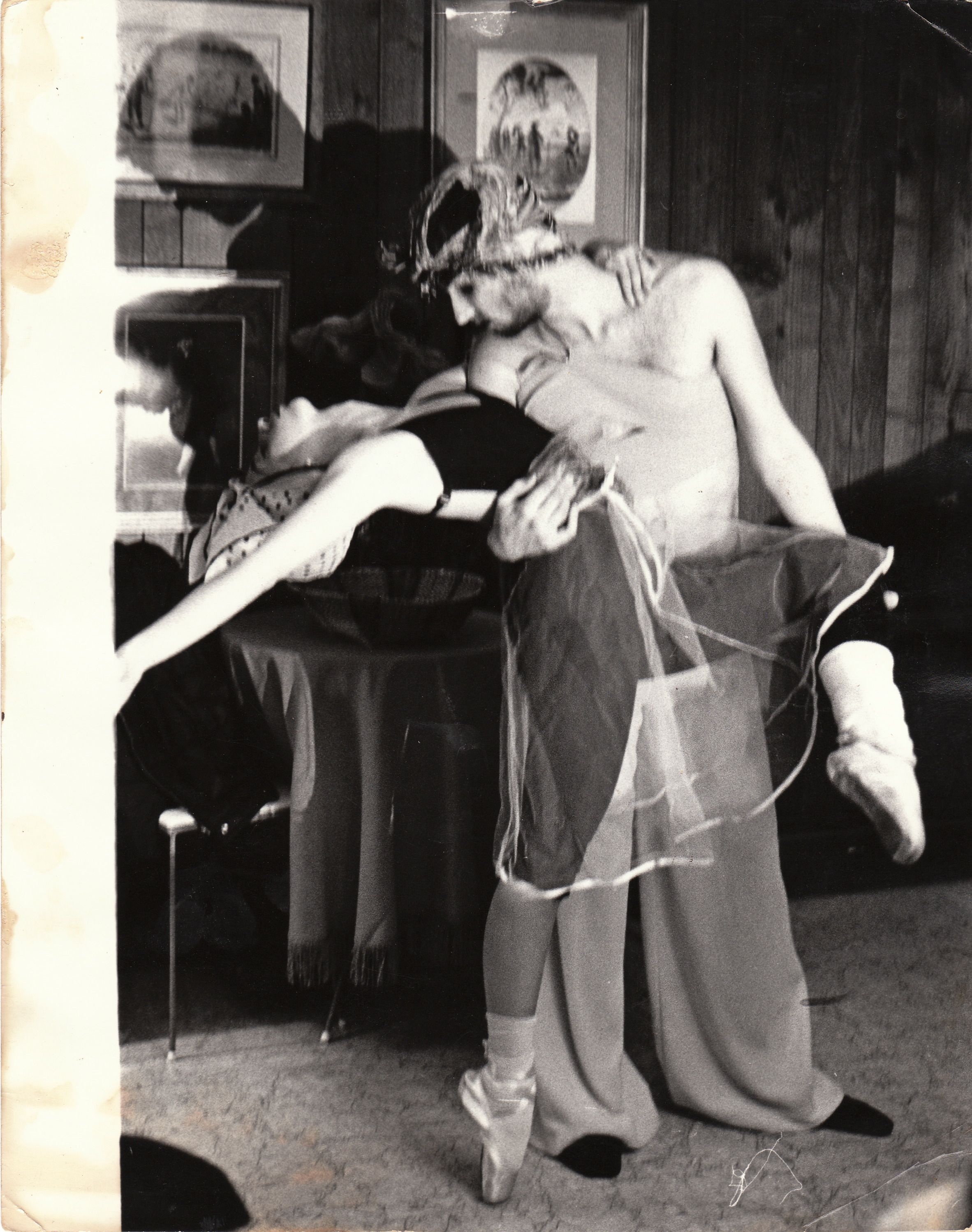
I get the feeling some little hormonal glitch turned me into a fag hag at a relatively young age (although honestly I’m not sure at what age that typically hits). In any case I began collecting boyfriends in school, and in the early seventies they steered me to many of the new gay discos that were opening up in the city. Especially beloved was Le Jardin, at the old Diplomat Hotel on 43rd Street. It became my home away from home.

I never thought post high school would feel so confused, but I suppose that’s what happens when you don’t have a plan. I was still messing around in my mother’s kitchen, which certainly had its rewards, but my heavy cooking in this period was possibly more occupational therapy than anything forward moving, and since nobody at home seemed too concerned about my future, I figured I’d cook and dance my life away, until my true purpose for being stepped up and slapped me in the face.

The starting point for a night at Le Jardin, or the Leisure Den, as we came to call it, was always Mo’s closet. My mother was oddly unperturbed when Liti and the boys and I ripped through her wardrobe several times a week to assemble the most perfect get-ups we could manage. Beauty or even attractiveness were never the point. Our priority was to be whirling works of art. The mix, at least on my end, presented itself as part ballerina, part Mamma Roma, and part Locust Valley socialite, the look tilting more toward one or the other on any given night depending on my mood and what was left after the boys finished their digging.

After achieving the desired effect, costume wise, we’d all down a few gin and Frescas, hop in my rickety Renault 10, with its passenger door roped shut (more or less), and sped away into the city, WBLS cranked to the hilt, the station that played the most fabulous up-to-the-second disco. We usually pulled up to the Leisure Den after about 30 minutes of raucous driving, paid our six bucks cover, which included two drinks—not a bad deal—and no I.D. check required, which was a good thing since my sister Liti was about fifteen. We were immediately pulled in, I’d say almost consumed, by the pounding, screaming, whistle-blowing, slippery bodies, mostly men of course, the vibrating floor, the strobe ball, the mix of everyone’s sweat and perfume. We’d order a vodka and grapefruit juice from Joey or Jackson, the two ultra-cute bar guys, and within minutes I was spinning my equilibrium away with Egon Von Furstenberg, a popper intermittently held under my nose by an anonymous dance floormate (god, what a horrid smell that was, but I suppose the dirty sock aroma appealed to a portion of the clientele).

“Honey Bee,” “Rock the Boat,” “Soul Makossa” (loved that one), “I’ll Always Love my Mama” (oh the boys went ballistic for that tune), “The Theme from Shaft” (an unlikely hit, in my opinion), “Doctor’s Orders,” “Dirty Old Man,” “Love Train,” “Armed and Extremely Dangerous,” “The Love I Lost,” “Corazon” (a personal fave), “Pillow Talk” (not really disco, but it served its purpose), “Never, Never Gonna Give You Up,” by Barry White (he vas a genius), “Love Is the Message,” “Smarty Pants” (cute song), “When Will I See You Again,” by the Three Degrees (usually a winder-downer tune for the after 5 a.m. group). All these songs and a zillion more would throb through my body hour after hour, night after night. My abandon was real. I was extremely grateful to lose my sense of self, much like what happened while I cooked. I’d leave Le Jardin with my head still pulsating, preventing any anxiety from seeping in, and it would continue to do so hours after I left the place, sometimes even after I woke up, which was generally around 1 p.m. and almost always in my own bed, I might add, for in my case, dancing was not about enticing, it was about being isolated and lost, but in a decidedly positive way. This was obviously not the case with everyone there, considering the antics that went on in the bathrooms, but Le Jardin made a place for everyone, Truman Capote, Jackie Kennedy, and even me. As much of a cliché as this is, and it is in certain circles, I felt like a gay man trapped in a woman’s body. Not a bad place to be if I didn’t examine it too closely.

All that gyrating really got me hungry. While dancing I never noticed hunger, that’s how transfixing disco was for me, but coming home to Greenvale at 5 a.m., starving, makeup smeared, and freezing with dried sweat (“my chiffon is wet, darling, my chiffon is wet”), was a catalyst for a new branch of my self-imposed cooking class, an opportunity to learn how to cook pasta, improvisationally and very quickly. The opening of a 24-hour Pathmark right near our house made post-disco shopping a dream (sure felt like a dream). That and Mo’s well-stocked Italian pantry, and in summer Dick’s vegetable garden, had me covered. I can trace some of the best food aromas of my life back to those giddy, urgent olive-oil-laced 5 a.m. cooking forays.

At that time, culinarily speaking, I made many grave mistakes. For instance I learned that spaghetti, semi-raw green bell pepper, gorgonzola, and anchovies were not, at least in my young hands, a successful combination. There were other creations as dreadful and now thankfully forgotten, at least by me. I don’t know if any of my long lost boy pals are still harboring resentment, but if they are, all I can say is, hey, it was a beginning. I came a long way. I did learn how to use flourishes with some skill and  made great strides in incorporating lemon zest, capers, prosciutto, wine (adding it early on, not at the end), leftover bits of salami, capicola, olives, and hot chilies into my pastas with good results. I finally understood how to control my garlic, an ingredient that at the time was sorely abused by both Italian-Americans and hippies running health food restaurants.

Constructing a well balanced pasta sauce, as I soon discovered, was not as easy as it looked. Throwing a handful of raw vegetables into a pan of bubbling tomatoes resulted in something that tasted like a really bad diner version of minestrone. This was when I learned to sauté to coax out flavor from broccoli, cauliflower, zucchini, all the vegetables that can be so insipid unless lovingly tended to.  And in my haste to get the food on the table I came upon a truism: Canned tomatoes were at their best when cooked boldly and quickly over a high flame. This was something not practiced by most Italian-Americans at the time. The slow simmer was the usual approach, which is fine for a ragu but not when you want to turn out a fresh little tomato sauce. I also found little use for tomato paste, a household staple. Years later I would abandon it altogether. I realized that underpinnings for pasta sauces—onions, celery, carrot, even frantically thrown together ones—needed to cook in olive oil or butter before anything else got added, so they could release their beautiful sugars and aromas. Cooking was a complicated business, and being my own teacher made me at times feel both stubborn and retarded, taking ten times longer to understand basics than if I were at a real school, but that’s were I was at that time and place. I was starving, and I wanted to cook nice things for all my hungry friends.

Cavatelli with Italian Tuna, Capers, and Celery Leaves


(Serves 4 or 5 as a 6 a.m. pick-me-up)

Extra-virgin olive oil
A small piece of fatty prosciutto end, chopped (about ½ cup)
2 small, tender inner celery stalks, cut into small dice, plus a handful of celery leaves, stemmed but left whole (you’ll want about ½ cup)
1 small onion, preferably a fresh summer type
A small palmful of fennel seeds
2 garlic cloves, peeled and thinly sliced
A tiny splash of Sambuca
4 large, round summer tomatoes, peeled and diced, or 1 35-ounce can of plum tomatoes, well chopped, with the juice
Salt
A small palmful of dried chili flakes
1 pound cavatelli pasta
1 can Italian tuna packed in olive oil, drained
A big palmful of salt-packed Sicilian capers, soaked for about 10 minutes, rinsed and dried

Set up a large pot of pasta cooking water over high heat, and bring it to a boil.

In a large skillet heat 3 tablespoons of olive oil over medium heat. Add the prosciutto, the celery, the onion, and the fennel seeds, and sauté until everything is soft and fragrant, about 3 or 4 minutes. Add the garlic, and let it cook for about a minute without coloring. Add the Sambuca, and let it boil away. Add the tomatoes, season with salt and the dried chili flakes, and cook, uncovered, at a lively bubble for about 10 minutes. Turn off the heat.

Add a generous amount of salt to the boiling water, and then drop in the cavatelli, giving it a stir to make sure it’s not sticking.

When the cavatelli is al dente, drain it, and pour it into a large serving bowl. Drizzle on a generous amount of fresh olive oil, and add the celery leaves. Give it a quick toss. Add the tuna and capers, leaving the tuna in biggish chunks. Add the tomato sauce, and toss again gently. Serve right away.

Read Full Post »


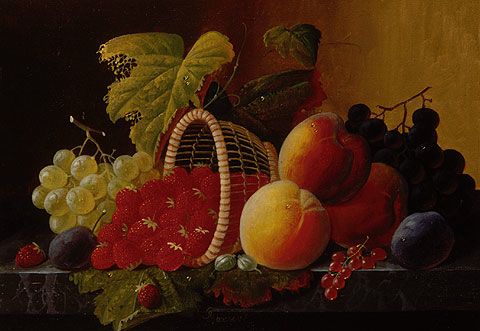
Still Life with Strawberries, Severin Roesen, 1806-1872.

Recipe: Strawberry Sorbetto with Vanilla and Balsamico

As a food writer and cooking teacher who occasionally appears in public at demos and signings where people have a chance to ask me questions, I have to admit that something always baffles me. Now, I don’t want to sound like an ingrate. I really enjoy these events. But I’m constantly perplexed when people ask me, “What’s your favorite Italian recipe?,” or “What’s your favorite pasta dish?,” or, most disturbing of all, ‘What recipe do you like the best?” The fact that these are unanswerable questions for me, and, I would have to imagine, for anyone who cooks for a living, doesn’t seem to matter. People have a need to know what pros think is the best of the best, as if a whole world of passion and knowledge could be narrowed down to one focal point. Strange and, I have to admit, maybe kind of dopey.

I was thinking about this while working on this recipe for strawberry sorbetto. I found myself asking, what is my favorite fruit? I love all fruit, I really do. Some I find more fascinating than others, but it occurred to me that I do actually love strawberries more than most other fruit. I can’t say they’re my favorite, but they are very nearly. And right now, at this moment, I’d have to say they are foremost on my mind. So maybe the dopey questions asked by people who really want to know what a food professional’s favorite whatever is aren’t so dopey after all. I guess the question should be, “What is your favorite pasta right now?” That is an answerable question, as opposed to “ever,” which will always remain unanswerable. Right now my favorite pasta is penne with asparagus, spring onions, and prosciutto.  And right now my favorite fruit is strawberry. Ask me in January, and I won’t say strawberry unless my head is in some place of deep nostalgia (as it very well might be).

To celebrate my favorite fruit (of right now), I decided to make a sorbetto. I didn’t want to do anything too radical, anything that would mask the beautiful flavor of spring strawberries, but I did want to create something new. Most fruit sorbetti are brightened by the addition of a squirt of lemon, which makes a fruit’s intrinsic flavor more pointed, more vibrant. That’s pretty much a given. And we all know the time-honored pairing of strawberries with balsamic vinegar. So I figured vinegar could stand in for lemon, elevating the strawberry-ness of strawberries but also adding its own richness, which it did. But there was something a little to strident about the taste, so I  tried it again, this time tempering the mix with vanilla and a dollop of crème fraiche. Now I’m happy with this more rounded result. Strawberries on parade, just delicately elevated. Nothing dopey about it.

Strawberry Sorbetto with Vanilla and Balsamico

(Makes about 1½ pints)

1 cup sugar
½ a vanilla bean, split
2 pints local spring strawberries, hulled
1 heaping tablespoon crème fraiche
1 teaspoon good quality balsamic vinegar

You’ll want to start by making a vanilla-flavored simple syrup: Put the sugar and the vanilla bean in a small saucepan. Add ½ cup water, and give it a stir. Cook over medium heat until the sugar dissolves, about 4 or 5 minutes. You don’t want it to caramelize. Remove the vanilla bean, and, with a sharp little knife, scrape out any of the insides that haven’t come out during boiling. Add them to the syrup, and stir them in. Cool completely.

Place the strawberries in a food processor, and work until very smooth (I don’t bother to strain this, as I like the texture with the little black bits, but you can if you want to). Add the crème fraiche, and pulse a few times to blend it in.

Start adding the syrup a little at a time and pulsing it into the strawberry mixture. Depending on the sweetness of your fruit you may or may not want to use it all. Just do it by taste. Then add the balsamic vinegar, and pulse once or twice more to blend it.

Let this mixture chill for about an hour, and then run it through your ice cream machine. You’ll probably need to freeze it for a few hours after that to firm up  the texture.

Read Full Post »


Still Life with Fennel and Pork, Carlo Magini (1729-1806).

Recipe: Pork Chops with Fennel, Rosemary, and Melted Onions

Trying to make weekday dinners less boring to cook and even a bit more dignified is a mission of mine. I’ve been achieving it, but not by coming up with bold new techniques as much as by mixing up my roster of Italian flavors—trying not always to reach for lemon with fish, rosemary with lamb. I know that sounds like such an obvious way to proceed, but during the week when I’m just trying to pull a dinner together, even I, grand dame of Southern Italian cooking, can fall into a rut.

The shrink-wrapped package of supermarket pork chops on my counter the other night wasn’t speaking to me. But I owned those damned pork chops, so I had to make the best of them, show them some respect. Pork chops and vinegar peppers? That was a favorite of my father’s, but how many times have I made the dish? Lots. Pork chops with sage, white wine, and garlic? I love that too, but I was searching for something different, yet still solidly Italian in spirit.

Fennel makes a beautiful perfume for pork, and of course rosemary and pork are a classic combo, too, but blend together fennel and rosemary and, I knew from experience, the palate can be pleasantly confused. Both ingredients have a gentle bitterness that I love, the rosemary with that evergreen bite and the fennel seed a certain musty, bitter aftertaste that lingers on your palate and grows sweet at the back of your throat. You’ll recognize fennel and rosemary together if you’ve ever eaten or cooked porchetta, the tender, fatty, Italian boned and rolled pork roast. That is its usual treatment. Sometimes it’s  flavored only with rosemary and garlic, but the addition of fennel (usually ground seeds) makes it much more enticing.

What is this flavor melding exactly? The combination creates a totally new taste that takes time to sort out on the tongue. It’s warm, deep, and complex, almost as if more than two elements were at play. To my palate this complexity gets more interesting, even exotic, with every bite. My preferred way to create this flavor is to match fresh rosemary with fennel seeds, two powerful components. I’ve tried fresh bulb fennel with rosemary, but it lacks the impact. A touch of hot chili or garlic can become minor players, but I like to keep their presence down, so as not to overwhelm the point of the fennel-rosemary union.

In my skillet, I let the flavors loose in two ways, first as an easy rub on the chops themselves, and then by mingling them with sautéed spring onions from the Greenmarket, the half grown ones with little bulbs that still have plenty of delicious, green stem. I let this cook down to develop sweetness, adding a splash of pastis just to underline the liquorishness of the fennel seed. This concentrated bed of flavor I used to gently finish simmering the pork chops after giving them a quick sear.

Is this rosemary-fennel duo good with grilled lamb? I can attest to its being a success. With braised bulb fennel? Yes, I’ve done it. Lovely. Duck? Sounds promising, and I’ll try it soon. I’ve made whole sea bass flavored this way, and also oven-roasted potatoes.  Chicken?  Eh, maybe a bit jarring, but I’ll keep playing around and see if I can come up with a better balance.


A flowering rosemary bush.

Pork chops with Fennel, Rosemary, and Melted Onions

(Serves 2)

2 approximately 1½-inch-thick bone-in, center cut pork chops
A palmful of fennel seeds, half left whole, half ground to a powder
4 sprigs rosemary, the leaves chopped
¼ teaspoon sugar
Salt
Freshly ground black pepper
Aleppo pepper (a slightly sweet, medium hot chili from Syria, available at www.kalustyan.com)
Extra-virgin olive oil
3 spring onions, sliced, using much of the tender green stem (not scallions, but immature white bulb onions)
3 cloves fresh spring garlic, thinly sliced
A splash of Pernod or another pastis
¼ cup dry white wine
½ cup chicken broth

In a small bowl, mix the ground fennel seeds, half of the chopped rosemary, the sugar, salt, black pepper, and the Aleppo. Press this little dry rub onto both sides of the pork chops. Let them sit at room temperature while you continue with the recipe.

In a large skillet, heat 2 tablespoons of olive oil over medium flame. Add the onion, and sauté until it’s just starting to turn golden, about 3 minutes. Add the garlic, and season it with a little salt and black pepper. Sauté a minute longer, just to release the garlic’s flavor. Add the Pernod, and let it bubble away. Add the white wine, and let that almost completely evaporate. Add the chicken broth, turn the heat down a touch, and let it simmer until the onions are meltingly soft, about 6 minutes. Cover the skillet if it starts to get too dry. Turn off the heat.

In another skillet, heat 2 tablespoons of olive oil over a high flame. When hot, add the pork chops, and brown them well on one side. Give them a flip, and brown the other side. This should take only about 2 minutes.

Place the browned chops in the skillet with the onions, spooning some of the onion mix over the chops. Turn the flame to very low, cover the skillet, and simmer until the chops are just tender with a touch of pink left at the bone, about 3 minutes (really, that should do it). Turn off the heat, and remove the skillet from the burner, letting the chops and onions sit in the skillet for about a minute, to gently finish the cooking and allow the flavors to mingle further.

Serve right away, spooning the onions on top of the chops. These are really good with polenta.

Read Full Post »


A pretty medical drawing of watercress.

Recipe: Oven-Seared Herb Chicken on a Watercress and Budding Chive Salad

If you want to wreck the hell out of your arms, neck, and possibly face with little blistering grease burns, get a job sautéing chicken in a restaurant. Centuries ago, when I was cooking at Restaurant Florent in the Meatpacking District of Manhattan, when they still packed  meat there, I recall two chicken preparations that I dreaded doing. One was sautéing huge rondeau pans of grease-splattering chicken for couscous, the other was making an herb-marinated, hacked-up half chicken that began life in a sizzling sauté pan and then got “finished” in the oven. This method produced the most deliciously moist, crusty chicken and was perfect for a restaurant, since the high oven heat blasted the pieces to tender perfection in about 15 minutes, so we could cook them to order. The problem arose when I’d have to prepare four or five orders at the same time, all in different skillets. That was when the grease would really fly.

I loved this chicken, and now I make it at home, where it’s a lot less treacherous, thanks to slightly lower heat and less volume (it’s best made for two). The chicken gets a brief bath in oil, herbs, and lemon zest, before the sear (still be mindful of grease splatter) and roast. The result is lovely, almost like grilling, the way the texture comes out bouncy and juicy under a crisp skin. At Florent we used a whole half chicken; for my home version I prefer to use only dark meat, since it stays moister.

This week I collected a few big handfuls of young, beautiful watercress from a semi-secret little patch I know about up in Big Indian, New York, where I often go for weekends. Watercress starts shooting up from shallow little streams around March, and by May it’s dark green and delicately flavored and hasn’t yet sprouted its white mini flowers, after which some people think it has passed its prime. (I eat it into the fall, but it does tend to get more bitter as the months go by.) I’ve found a few prolific watercress patches over the past few years, and I’m really grateful for them. There’s nothing like the tender, spring stuff I pick myself, which usually takes a little slopping through mud, ticks, and poison ivy to get to but is worth it. I brought my stash back to the rainy city, along with a handful of purple-topped budding chives, which are delicious, and I used the two special spring ingredients as a cool bed for my hot and crusty chicken.


Budding chives.

Oven-Seared Herb Chicken on a Watercress and Budding Chive Salad

(Serves 2)

3 chicken legs, separated into thighs and drumsticks
1 branch rosemary, stemmed, the leaves chopped
A few large thyme branches, stemmed, the leaves chopped
The grated zest from 1 lemon, plus a large squeeze of lemon juice
Extra-virgin olive oil
Salt
A generous pinch of sugar (about ½ teaspoon)
Freshly ground black pepper
5 allspice, ground to a powder (about ½ teaspoon)
3 fresh spring garlic cloves, thinly sliced and tossed in a drizzle of olive oil (to prevent them from burning)

For the salad:

2 handfuls spring watercress, stemmed
A handful of budding or blossoming chives, chopped, the buds or blossoms left whole

For the vinaigrette:

3 tablespoons extra-virgin olive oil
1 teaspoon Dijon mustard
2 teaspoons fresh lemon juice
Salt
Freshly ground black pepper

Put the chicken parts in a big bowl. Add the herbs, lemon zest, about 4 tablespoons of olive oil, salt, sugar, black pepper, and ground allspice, and toss everything around until the chicken is all well coated. Let sit at room temperature for about 30 minutes before you’re going to cook it.

Preheat the oven to 425 degrees.

Choose a large skillet (cast iron is good), one that can go into the oven, and get it hot over high heat. Add the chicken pieces, skin side down, and brown them well, about 4 minutes or so. Turn them, and brown and other side, about another 3 minutes. Now stick the skillet in the oven, and cook until the chicken is just tender, about 20 minutes. In the last 5 minutes of cooking, scatter on the garlic. Take the chicken from the oven, and squeeze on the lemon juice.

Whisk all the ingredients for the vinaigrette together in a small bowl.

Spread the watercress out on a serving platter. Scatter on the chives. Drizzle on all but about a tablespoon of the vinaigrette. Top with the chicken pieces, drizzling them with the remaining vinaigrette. Serve right away.

Read Full Post »

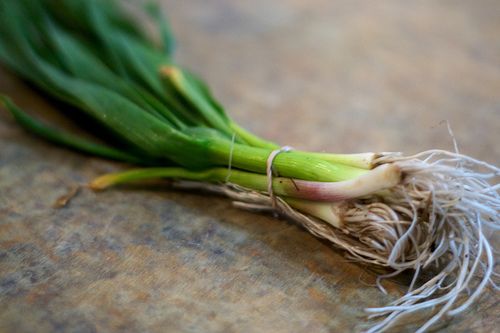
Spring Garlic


Spring garlic at its scallion-like stage.

Recipe: Leek and Arugula Soup with Spring Garlic Olive Oil

Since opening in the late ’70s, the Union Square Greenmarket in Manhattan has had a profound influence on my cooking, stirring my creativity by the force of its beautiful produce. Not since I was a kid on Long Island picking stuff from my father’s backyard garden have I been face to face with such fresh local vegetables and fruits (doesn’t get more local than Pop’s garden). I watched Union Square change from a scary, crack-infested hell hole, when the market was still a dinky cluster of vegetable farmers, to a stroller friendly park with a large, colorful  market filled with upstate goat cheeses and butter, organic buffalo steaks, New York State wine (it’s coming along), wild fennel and arugula like I found on my trips to Italy, and tomatoes, eggplants, and apples in dozens of varieties.

One of my most exciting discoveries at Union Square, oh, I’d say about 15 or so years ago, was fresh spring garlic. I had never seen it before. My father never grew garlic. Up until then I thought all garlic was the papery, preserved stuff that was trucked over from California. All supermarket garlic is a soft-neck variety, which has the advantage of drying well so it can be transported long distances and used, for better or for worse, year round (it does eventually sprout and become acrid tasting). But the hard-neck type that I find at Union Square has a sturdy center stalk running up through the bulbs. It doesn’t dry well.  This more fragile garlic has to be used while still moist and fresh. When its time is up, it just rots, so do yourself a favor and buy it now. Some is sold very young, when it looks like skinny scallions; some shows up later in  spring and is left to  mature into juicy bulbs with well developed cloves that are so sweet and fresh I can use an ample amount raw, in a salad for instance, without experiencing that gagging garlic overload you’d know from eating linguine with clam sauce in Little Italy (will these cooks down there ever get with the program?).

This year I procured some garlic early, at the scallion stage. I ate one raw, the entire thing, and it actually tasted more like a scallion, or even more like a baby leek, than like garlic, at first, until I experienced the gentle garlic heat at the back of my throat. I smashed a few of them up with the side of a knife and let them steep in good olive oil for a few hours. What an aroma. They were great brushed over grilled bread, but they’re also an excellent way to add a fancy hit of flavor to a spring soup (so much better than that mess of chemicals that passes as “truffle oil.” Don’t buy that stuff. It’s evil).

This recipe is basically a leek and potato soup, but with the added bite of arugula. I served it hot because I wanted the heat to release the garlic essence into the air for added olfactory appeal, but you can chill it if you like.

Fresh garlic oil doesn’t keep very long, so make small amounts to use within a day or two.

And for something a little different, here’s how they welcome in spring in Assisi, Italy.

Leek and Arugula Soup with Spring Garlic Olive Oil

(Serves 4)

Extra-virgin olive oil
2 skinny stalks spring garlic
2  lightly packed cups skinny, spiky-leafed wild-type arugula, stemmed
5 baby leeks, chopped, including some of the tender green part
2 large boiling potatoes, peeled and cut into chunks
5 scrapings of fresh nutmeg
Salt
Freshly ground black pepper
4 cups homemade or high-quality prepared chicken broth (or use a homemade vegetable stock if you prefer)

Pour about ¾ cup of good olive oil into a small bowl. Chop up the garlic, the entire thing (you’ll probably have garlic with very small underdeveloped bulbs and a tender stalk). Then flatten the garlic pieces with a smack from the side of your knife. Place the garlic in the olive oil, and let it sit to develop flavor for about an hour or so. Strain the oil into a clean bowl, and set aside.

Set up a medium-size pot of water, and bring it to a boil. Add the arugula, and blanch it for a minute. Pull it from the water into an ice bath (or into a strainer and run cold water over it). This will set its bright green color. Drain well.

Now, in a large soup pot, heat about 3 tablespoons of olive oil over medium heat. Add the leeks, and sauté until softened, without letting them brown. Add the potatoes, and season with nutmeg, salt, and black pepper. Sauté a few more minutes just to coat the potatoes with flavor. Add the broth. Bring this to a boil, turn the heat down a notch, and then continue cooking at a lively bubble, uncovered, until the potatoes are very tender, about 20 minutes. Add the arugula, and let it wilt into the liquid for about 2 or 3 minutes.

Purée the soup in a food processor, and return it to the pot. Taste for a good balance of flavor. You should have a mellowness from the leeks and potato with a slight bitterness from the arugula.  The soup shouldn’t be super thick, so add a little more broth or water to thin it if needed. Adjust the seasoning.

When you’re ready to serve, reheat the soup gently, and ladle it into bowls. Give each bowl a generous drizzle of the spring garlic oil.

Read Full Post »


Augusta, Sicily, hometown of Olivia’s grandmother.

Italian Recipe Exchange

Olivia’s Grandma’s Ricotta Cake

My friend Olivia recently sent me five recipes, four for cookies and one for cake, from her Sicilian grandmother’s recipe book. Her grandmother, now gone, was evidently always stingy with her recipes, not even sharing them with her own daughter, yet sometimes distributing them to neighbors instead. I’ve certainly seen that before. I remember meeting up with a group of people from my grandmother’s hometown in Puglia. When I inquired about a recipe book they had put together, and I knew for a fact it existed, they acted like they had no idea what I was talking about. They didn’t want me to get my greedy little hands on it. Southern Italians can be very strange and suspicious, attaching odd motives to innocent people, especially relatives.

At any rate, I’m glad to have Olivia’s family recipes now. I find them very interesting, for they illustrate the metamorphosis much Italian food went through when it made its way to this country. Many of the ingredients Italians relied on just didn’t exist here, so they made do in ingenious ways. You wonder why grape jelly shows up in so many Italian-American dishes, even meatballs? Well, maybe you’ve never wondered, but I’ll tell you. It was usually a stand-in for vino cotto, cooked down grape must, a common sweetener in Italy.

Olivia’s grandmother came from Augusta, Sicily, a small harbor town on the southeastern part of the island, about a half hour from Catania. Olivia visited the town last summer and commented in an e-mail to me that it was amazing “in a surreal kind of way.” She didn’t elaborate on this, but I think I know what she meant. A surreal feeling can set in when you feel a part of something but yet don’t truly feel a part of it. There’s more desire than reality in many of these Old World discovery trips for a lot of us. A similar mood came over me when I visited my grandmother’s hometown of Castelfranco in Miscano.  I can truly say I never felt particularly inbred until I visited that town (with its six or seven family surnames listed in the local phone book).

Olivia’s recipes are for anise cookies, hazelnut biscotti, Sicilian date balls, something called Sicilian Chocolate Salty Balls (love that name, but oddly there’s no salt in the recipe), and a ricotta cake. Getting back to my mention of grape jelly, some of the ingredients in these recipes are very obviously stand-ins. I knew I had to make the ricotta cake first, since its inclusion of a box of yellow cake mix really intrigued me, a sort of Sicilian answer to the show Semi-Homemade. I imagined cake mix must have been one of grandma’s exciting discoveries when perusing the shelves of Boston supermarkets, marveling at all the packages and cans of unfamiliar but fascinating looking stuff—something like my Nanny’s obsession with frozen spinach. She must have decided at some point to augment her family ricotta cake recipe by including it. It’s hard to say what her thinking was, and Olivia doesn’t know, but I can tell you the cake is absolutely delicious and nothing like any ricotta cake I’ve ever had in Sicily.

The technique is interesting. You first put together the boxed cake mix batter. I chose Duncan Hines French vanilla, which seemed to have the least amount of artificial flavoring. You pour that into a cake pan. Then you whip ricotta up with eggs, sugar, and a little anise flavoring, and pour that on top. As the cake bakes, the ricotta falls to the bottom and the cake bakes up on top, producing a two layer affair with a lovely, moist texture. It had the taste of a traditional ricotta cake, but with the look of an American custard pie. An amazing feat of chemistry.

Three of the cookie recipes she gave me list Crisco or margarine as an ingredient, and I believe those are stand-ins for lard, which was and still is to a certain extent a staple of Sicilian baking,  used in traditional cannoli shells, for instance. The Sicilian date balls contain two cups of Rice Krispies. They may just be a substitute for rice, but it’s hard to say.

I will tackle the Salty Balls at some point, but since they were a little more complicated, with many ingredients including Hershey’s dark cocoa, cloves, cinnamon, chocolate chips, walnuts, and Crisco, I thought I’d hold off on them for a while.

Olivia, I thank you so much for sharing these recipes with me and my readers. They’re a delicious history lesson to be sure.

Here’s the cake recipe from Granny’s collection. And I might add that this entire cake takes about 15 minutes to assemble. Great for a spur of the moment espresso or vin santo party.

Ricotta Cake

1 box yellow cake mix
2 pounds whole milk ricotta
¾ cup sugar
4 large eggs
¼ teaspoon anise oil (I used ¼ teaspoon anise extract mixed with ¼ teaspoon vanilla extract)

Preheat the oven to 350 degrees.

Grease and flour a 13-by-9-inch cake pan. Prepare the cake mix according to the directions on the box, and pour it into the pan.

Now, in a large bowl, blend together the ricotta, sugar, eggs, and anise oil (or use the anise and vanilla extract substitution I chose) until well mixed. Pour this over the cake mix, but don’t mix it into the batter.

Bake for 1 hour. Let sit about 30 minutes before slicing so it can firm up a bit.

Read Full Post »

Recipe:  Homemade Ricotta for Easter

What does Easter actually mean to me, a person beyond the classification of lapsed Catholic and into the bright white area of atheism? Not much. I do experience frequent attacks of pagan soil worship, which I suppose bring me closer to the world of spring rebirth and all its wonderment. Growing up half an hour from Manhattan didn’t really give me the chance to play nature girl. I never milked a cow or watched a goat being born, but the aroma of ricotta with its creamy beauty brings a lovely Easter feeling into my heart.

So many traditional Southern Italian Easter dishes use ricotta as a foundation, and they are some of the glories of the Italian kitchen. Pastiera, the sweet ricotta pie studded with wheat berries and perfumed with orange flower water, is in my opinion a work of genius. My mother’s family made something similar using rice instead of wheat, creating a kind of crustless firm pudding that they cut into squares.  Pizza rustica, the savory version of ricotta cake, stuffed with little chunks of provolone and salami, and ravioloni filled with ricotta and finished with butter and fresh sage are two other dishes that showed up on our Easter table when I was a kid and Easter was still the way in my Italian-American world. Now that all the genuflecting, the patent leather Mary Janes, the floral hats with matching purses, the Rodda Peeps and chocolate eggs are no longer part of my Easter day, what remains is ricotta. But don’t pity me. Ricotta is a powerful presence.

Now, to get to the point, if you’ve never made your own homemade ricotta, it’s time you started. There are few things, culinarily speaking, that are so easy and produce such huge rewards for the cook.  Nothing you can buy is comparable to your own homemade still-warm ricotta, drizzled with olive oil and sea salt, or with honey and a sprinkling of nutmeg, or folded into a bowl of al dente spaghetti, or used to make elegant Easter dishes, like the pastiera that I mentioned earlier.

Even though traditional ricotta is made by recooking whey leftover from cheese making, you can make a wonderful version at home using whole milk. It involves adding an acid, like lemon, to whole milk, and gently heating it until it curdles. You don’t need any fancy equipment; just a big pot and a piece of cheesecloth or a fine mesh strainer, and possibly a kitchen thermometer as a security blanket, if it’s your first time.

In my book The Flavors of Southern Italy I give a sort of standard recipe for homemade ricotta, using lemon juice.  Almost everyone I know makes it that way. The result is good, but occasionally it can be a little drier than I like. In the several years since I wrote that recipe, I’ve continued to experiment with making ricotta, and I’ve decided that adding buttermilk instead of lemon as the curdling agent gives a moister result. I’ve even gone ahead and added a little heavy cream, so the ricotta is extra rich and soft.


Bruschetta topped with homemade ricotta, roasted peppers, olives and capers—something to think about.

Homemade Ricotta for Easter

(Makes about 4 cups)

1 gallon whole milk
1 pint heavy cream (optional but recommended)
1 quart buttermilk
1 teaspoon salt

Put all the ingredients in a large, nonreactive pot (stainless steel or enamel both work well), and place it on a medium flame. Let it heat, uncovered, stirring once or twice, until little bubbles form on the surface. This will take about 10 minutes or so. Then let it bubble, without stirring, for about 5 minutes. You will see curds start to form and will notice the liquidy whey just start to separate from the solids. The temperature should get up to 170 degrees (a kitchen thermometer is helpful the first few times you make it, until you get the feel of it). Turn off the heat, and let the pot sit there, undisturbed, for 10 minutes (don’t be tempted to stir; it’ll break up the curds while they’re forming). You’ll now notice the faintly greenish whey separating more cleanly from the white curds. Gently pour the mix into a strainer lined with cheesecloth (or into a fine mesh strainer), scraping the bottom of the pan to loosen any stuck-on ricotta. Let drain until all the whey runs off but the cheese is still moist.

I love eating it still warm, but the ricotta will keep in the refrigerator for several days.

Read Full Post »

Monkeys in the Kitchen, by David Teniers the younger (1610-1690)

Here’s another little piece of the memoir-type book I’ve been working on. It describes a period of anxiety cooking I went through when I was a senior in high school.

Cooking as Teenage Therapy

All of a sudden I just wanted to cook, and that’s all I wanted to do. When I first started my “cooking frenzy” as Mo, my mother, called it, I wasn’t at all interested in the bold and delicious Southern Italian food I’d grown up with, but with an emerging 1970s style of health food. I cooked recipes from The New York Times Natural Foods Cookbook, just published, something I picked up because many of the fragile hippie girls from my school, the ones with straight dirty blond hair, were reading it. What could be in this book that was making these girls so serene? Me serene seemed as likely as me the astronaut, but I bought the book hoping it would fill me with sophistication. I should have known right off this wasn’t going to be a good fit for me.

The food I cooked from this New York Times health book was immediately repugnant to me, but I kept at it. It didn’t occur to me right away to go in any other direction. All those foreign smells, produced by me, wafting from our family kitchen, made me almost gag at times—dusty grains, molasses, carob, dried fruit, oils that smelled like fish, leaden bread studded with rancid seeds and walnuts. But I couldn’t stop turning out huge quantities of those brownish gray breads, cement-textured cookies, and grain dishes held together with a slimy glue.

My production hours were erratic; sometimes I’d be up until four or five in the morning pulling solid loaves from the oven. Food without life. It was a profoundly surreal experience, but yet, at the same time, it was my first encounter with the thrill of losing myself completely to a pursuit. Miraculously, much of my anxiety melted away.

But something was not quite right (or something went “terribly wrong,” as journalists always say when reporting on a freak accident) . Culinarily I was on the wrong path. I loved the chopping and the mixing, and putting food through grinders. And I was very taken with fire; the gas range, the broiler, the long bar matches, Tiki torches, bug candles. I loved the reddish orange and deep blue purple hues that fire gave off.

Gradually, I’d say it took around three months, my disgust with the foreign food I was turning out from the New York Times book became profound and unsustainable, but my desire to cook only grew stronger. The Southern Italian cooking that had surrounded me my entire life began to have a positive pull. I finally woke up. Our family food wasn’t current like the dusty ten-ton oatmeal and pumpkin seed loaves I had been baking (I actually baked about eight of them one day, all dry as a bone and smelling vaguely like mildew); it was just what we ate, every day. I began paying attention to the aromas of our kitchen, the frying pork cutlets or raw red peppers, Mo marinating chicken legs in sliced garlic and lemon wedges, or opening clams over the stove in a winey tomato sauce, or tossing a salad with pungent red wine vinegar and bitter olive oil. I loved the aroma of sautéed zucchini when the edges got a bit burnt and when my mother would then tip it all out of the skillet into a big dish and scatter on fresh basil that she’d tear nonchalantly with her fingers. Dick, my father, cutting up cantaloupes and draping them with prosciutto, or just salting slices of melon and popping them into his mouth. Salty melon. What a concept!

Read Full Post »

« Newer Posts - Older Posts »