Feeds:
Posts
Comments

Archive for the ‘Skinny Guinea’ Category


Ravanello il candela di fuoco, from Southern Italy.

Recipe: Radish and Anchovy Antipasto

I’ve always liked radishes well enough, but when I discovered how great they taste smeared with soft butter, I started to love them. That isn’t an Italian flavor combination but a French one. It’s at its best in late spring, when I find long, red French breakfast radishes at the Greenmarket, or white ones, which are usually called icicle radishes. If I’ve got either of those and a block of lightly salted French butter, I’m in heaven. Both of those radish varieties are less bitter than the round red ones you see all over the place (even under my bed sometimes, since my cats love to play with them).

Enough French talk. Let’s get back to the entire point of my devotion to cooking, which obviously is cooking with an Italian spirit. With that in mind, I’d like to introduce you to an excellent flavor combination, radishes and anchovies. Maybe you already know about that, but it’s worth thinking about again if you haven’t for a while.

I believe my first encounter with this perfect match was at Aurora, a fine little Italian restaurant in Williamsburg, Brooklyn, when it first opened about seven years ago. I’m not sure how I had missed out on the little treat during all my trips to Italy. I mean, almost every time anything with anchovies appeared on a menu, I was on it.  But most of my traveling has been in the South, and I didn’t often come across ravanello, the radish’s Italian name. Even though Southern Italians love bitter anything, and even though cauliflower and broccoli, both related to the radish, are huge favorites all through the Mezzogiorno, radishes just don’t seem to have much of a presence. I have seen very long, skinny, red ones at a Palermo market, going by the name il candela di fuoco, which is exactly what they look like, but I don’t believe I ever ate one. I’ll have to ask my Greenmarket farmers if they’ve ever tried growing them. They look beautifully obscene.

In any case, mixing radishes with anchovies to produce something really delicious couldn’t be simpler. All you need to do is halve (or quarter if they’re huge) some decent looking radishes (the round reds ones are fine for this, but if you see long sweet radishes for sale, grab them and quarter them lengthwise); then mash a few oil-packed anchovies, very good quality of course (Flott are great, but so are Agostino Recca, both from Sicily) with a generous amount of fine extra-virgin olive oil, until you have a loose paste. I’ve made this with salt-packed and with oil-packed anchovies, and even though for uncooked dishes I usually prefer salt-packed, the oily ones seem to work better with the radishes, maybe since they’re richer, more like a condimento. Salt-cured anchovies, after soaking, can revert back to tasting like fresh fish. Now you’ve got a nice oily, fishy sauce. All you do is pour it over the radishes and give it a gentle toss. Simple. And that is exactly how they were served at Aurora. It’s kind of like bagna cauda, except it’s not hot. It’s just as messy, so have a pile of napkins nearby. It’s a nice change from a bowl of olives.

The recipe I’ve provided for you is my little spin on the theme, but I didn’t want to stray far from the pure treatment, so I’ve added only a couple of flourishes.

Radish and Anchovy Antipasto

(Serves 6 as an antipasto)

2 bunches of very crisp, round red radishes, washed, stemmed, and halved
5 oil-packed anchovies
½ a small garlic clove
About 4 tablespoons very fruity extra-virgin olive oil (preferably a Sicilian variety such as Ravida; Tuscan oil, I find, adds too much bitterness)
A handful of lightly toasted pine nuts
Freshly ground black pepper
A palmful of tender celery leaves, left whole

Place the radishes in a serving bowl.

With a mortar and pestle, grind the anchovies with the garlic, adding the olive oil a little at a time. You’ll want a fairly smooth consistency, but it’s okay if it still has some texture. Pour this over the radishes, add a few grindings of black pepper, add the pine nuts, and give it a toss. The sauce should be a little loose, so add a bit more oil if you think you need it. Right before serving, scatter on the celery leaves. Serve at room temperature.

Read Full Post »

161100125-romantic-picnic-with-lambrusco-cheese-baguette-and-ham-on-snow-traditional-italian-food-and-drink-ou

Recipe: My Pizza Rustica

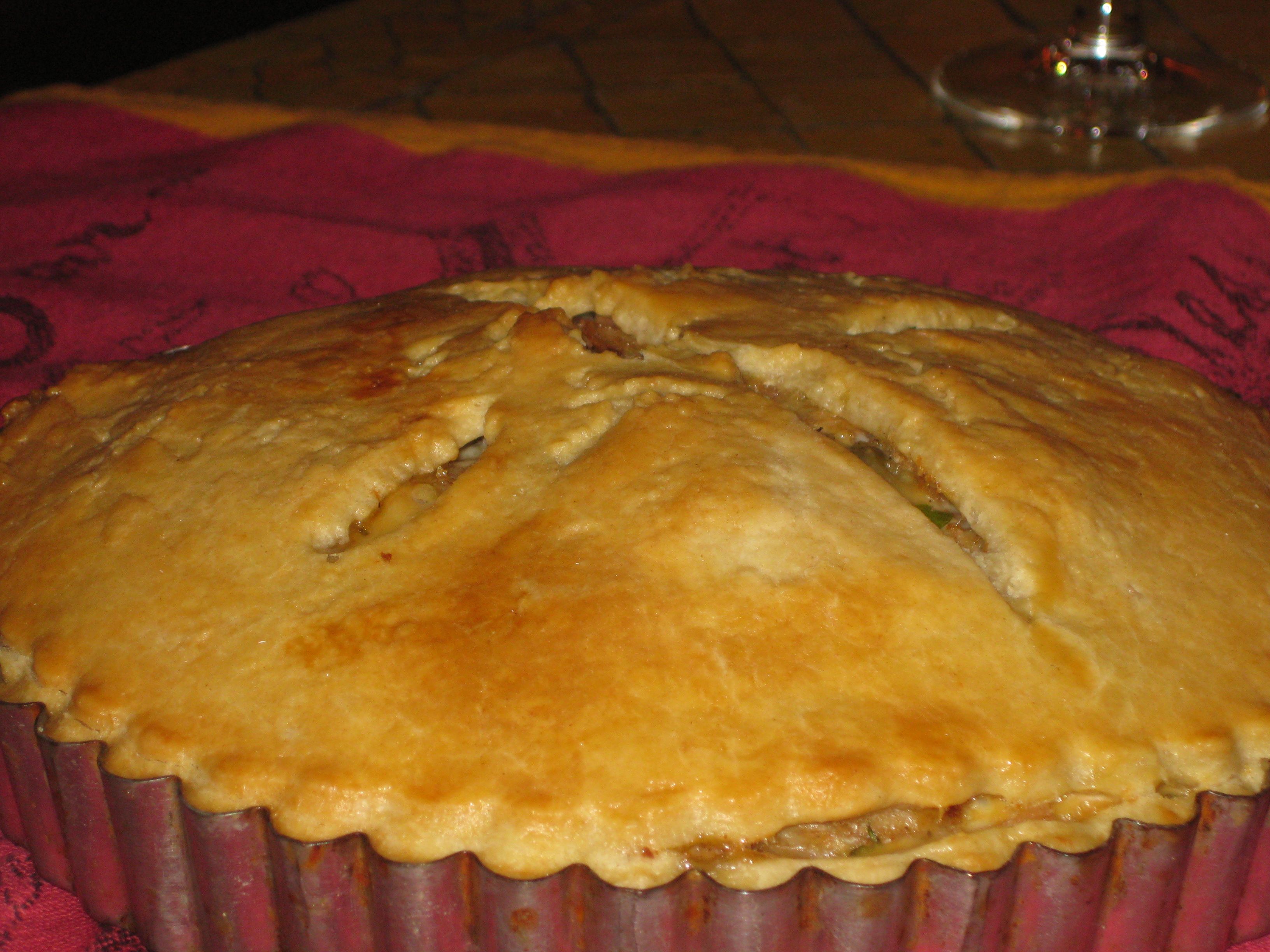
My girlfriend Barbara told me that my last posting, the one about how Easter has become so unnecessary for me, was too depressing.  She was right. And I realized it’s not even true. It’s not unnecessary.  I might not be religious but I  rejoice in the rebirth of the earth and I honor it -a celebration for an almost green day.  And I bake pizza rustica, a traditional Southern Italian Easter torta.  This thing is a sweet-crusted pie filled with all sorts of savory Italian salumi and cheeses, an easily transportable creation many Italians take with them on picnics on La Pasquetta, the day after Easter. I was thinking of doing something like that myself. Not much picnic perfect sights in Manhattan, especially when it’s still Easter chilly.  Maybe I could take  one of those folding chairs into the middle of Times Square, along with a blanket, a slice of pizza rustica, and a double espresso, and watch all the Absolut vodka ads flash before my eyes. Better than nothing.  Fun even. Everything is coming back to life.

My Pizza Rustica

For the pastry:

1 cup all-purpose flour and 1 cup semolina
A generous pinch of salt
2 tablespoons  powdered sugar
A big pinch of ground nutmeg
1 large egg
1/3 cup dry white wine
1/4 cup extra-virgin olive oil

For the filling:

15 ounces whole milk ricotta
2 large eggs, lightly beaten
A 1/2 inch thick slice of capocollo, cut into small cubes
A 1/2 inch thick slice of prosciutto di Parma, cut into small cubes
1/2 cup chopped caciocavallo cheese
1/2 cup chopped gruyere
A handful of flat-leaf parsley leaves, chopped
A few marjoram sprigs, leaves chopped
¼ teaspoon freshly grated nutmeg
1/4 teaspoon ground allspice
Salt
Freshly ground black pepper
1 egg, beaten with a tablespoon of water, to brush over the top

To make the pastry, put the two flours in a large bowl, and stir in the salt, sugar, and cinnamon. In a small bowl, beat together the egg, white wine, and olive oil. Pour this over the flour, mixing it in with a fork until uniformly moist. Dump the dough out onto a lightly floured surface, and knead very briefly, pressing the dough together to form a ball. Cut it into two pieces, one slightly larger than the other. Wrap the pieces in plastic and let sit, unrefrigerated, for about an hour.

Preheat the oven to 375 degrees. In a large bowl, mix together all the ingredients for the filling.

Choose a standard  9-inch American-type pie plate (or a smooth sided tart pan with a removable bottom), and grease it lightly with olive oil. Roll out each dough ball, one into an approximately 11-inch round, the other about 9 inches. Fit the larger round into the pie plate and trim the edges so you have a more of less even 1/2 inch overhang all around. Pile in the filling, and smooth it out. Place the other dough round over the filling. Fold the overhang up over the top of the pie, making little pleats all around to seal it. Cut 3 short slashes into the top in a star pattern, and brush the top with the egg wash. Place the pie plate on a sheet pan, and bake for about 50 minutes or so, or until it’s golden and puffy (it’ll flatten down as it cools). Serve at room temperature with a cool glass of Falanghina.

Read Full Post »


Jesus Appearing to the  Magdalene, Fra Angelico, 1400-1455.

Recipe: Roasted Asparagus with Arugula Pesto and Parmigiano

Easter for those, like me, who have emptied themselves of Catholicism, can be a nonevent of the highest order. And here in Manhattan the weather is predictably cold, often overcast, which never adds much to the  pagan springtime renewal. My bonnet is usually a pilly black beret.  And my progressively more irritated family (I’m talking mainly about my mother) no longer gives a damn about Easter or any of the traditional preparations for it that seemed so carefully planned when we were kids. Big deal. I don’t really care either. I do love some of the classic Southern Italian Easter dishes, especially the ricotta-based ones—pizza rustica on the savory side, pastiera on the sweet. Those are gorgeous dishes. You can find a recipe of mine for pizza rustica on page 285 of The Flavors of Southern Italy, and one for pastiera here.

From some reason this Easter I’m thinking bitter—not thoughts (well maybe a little) but flavors. I’ve wanted to create a new asparagus dish, something warm but biting, so I’ve married the elegant spring vegetable with a loose arugula pesto. I didn’t mix cheese into the pesto but instead just shaved it over the top. Cleaner. And I used lots of lemon. Astringent. Really nice with a traditional Easter leg of lamb, if you happen to be going in that direction.

I’m usually quite sad when I see my Italian traditions drift away, but in this case it seems there’s not much I can do about it, so I’m moving on, possibly skipping Easter dinner altogether—I might even go out (horrors)—and having this lovely asparagus dish on Palm Sunday instead.

To all my loyal readers who still go the entire nine yards, light a few candles for me this Easter Sunday.

Roasted Asparagus with Arugula Pesto and Parmigiano

(Serves 6)

2 bunches of arugula, stemmed
1 small garlic clove, roughly chopped
Extra-virgin olive oil
Salt
2 bunches of asparagus, on the thin side, the ends well trimmed
Freshly ground black pepper
The juice from 1 small lemon
A small chunk of Parmigiano Reggiano cheese
A palmful of lightly toasted pine nuts

Blanch the arugula in a small pot of boiling water for 30 seconds. Scoop it from the pot with a large strainer, and run cold water over it. Drain very well.

In a food processor, add the arugula, garlic, about 1/4 cup  of olive oil, and a little salt. Pulse until you have a fairly smooth but loose paste.

Preheat the oven to 425 degrees.

Place the asparagus on a sheet pan. Toss it with olive oil, a little salt, and some black pepper, and then arrange it in one layer. Roast until it’s fragrant and browned at the edges, about 10 minutes (possibly longer, depending on the pieces’ thickness, so just keep an eye on it).

Transfer the asparagus to a warmed serving platter, and squeeze on a little lemon juice. Spoon the arugula sauce down the middle, and then shave some thin sheets of Parmigiano on top. Garnish with the pine nuts. Serve hot.

Read Full Post »

Recipe: Strawberries with Blood Orange Syrup and Mint

Okay, hold that pose. Right now I’m finding decent blood oranges and strawberries in my markets at the same time, a coming together of winter and spring. Neither is local in New York, of course, but I’m so happy to have them. And at a fleeting moment like this, you’ve just got to combine them, right? When will your next chance be? Maybe never?

The strawberries come from Florida, the blood oranges from California. So what? The oranges are especially bloody, too, deep red, some almost burgundy, extremely beautiful, my favorite colors. Caravaggio reds.

Strawberries with Blood Orange Syrup and Mint

(Serves 2 or 3)

The juice from 4 or 5 fresh blood oranges
About 2 tablespoons sugar
A few drops of high quality balsamic vinegar
1 tablespoon Cointreau liqueur
1 pint strawberries, the sweetest ones you can find (smell them—if they smell like strawberries, they’ll probably be good)
A few large sprigs of fresh mint

Pour the blood orange juice into a small pot, and add the sugar, the vinegar (no more than a few drops), and the Cointreau, and bring it all to a boil. Let bubble for about a minute, and then turn off the heat. Have a taste; you should get a good balance between sweet and tart. If not, balance it out. Strain the sauce into a small bowl, and let it cool completely. It should then be the consistency of a very light syrup.

Hull the strawberries, but keep them whole, unless they’re humongous, in which case you might want to cut them in half lengthwise.  Place them in a pretty serving bowl, and pour on the blood orange syrup. Garnish with mint sprigs. Serve right away.

Read Full Post »


A study for The Sirens by Edward Burne-Jones, 1833-1898.

Recipe: Chicken with Arugula, Grape Tomatoes, and Raschera

I occasionally get blog comments that start off with something like, “Oh, you’re always putting up recipes for elaborate things enclosed in pastry, or for octopus. What I’d really like are a few easy, midweek dinners I can pull together for my family, quickly and inexpensively.” As someone who finds both joy and therapy in cooking, I do lose sight of what can be done with plain ingredients that people might actually have on hand, like chicken cutlets, for instance. Sorry about that, but often the siren song of bottarga calls and I’m pulled right into the sea.

I was thinking about this last night when I came in late from a day of hunting for kitchen space for my spring cooking classes. (Not an easy task in financially complicated Manhattan; if it’s a recession, why are prices still so high? You see empty storefronts all over town, but landlords must be getting tax breaks or something. How else could they go more than a year without budging on their asking price, I ask you. And even to rent a little kitchen space for a few hours, boy what a chore. If anyone has any ideas on this subject, I’d be grateful if you’d let me know.) I don’t know about you, but in addition to the colatura, bottarga, guanciale, lardo, and all the other stinky and glorious Italian pantry items I seem to live on all winter, I eat tons of grape tomatoes. I crave tomatoes all year long, and what else can you get right now in the tomato department that’s decent? And they are decent, maybe not always for eating raw, but great for roasting or quick sautéing for, say, a pasta sauce, and if they turn out to be a little sour, you can always adjust with a pinch of sugar.

On my way home I had bought a couple of those pre-flattened chicken cutlets at the supermarket. They’re not my favorite thing, a little flavorless, but they’re okay for a quick dinner, and they do cook quickly, very quickly, so you need to get your oil hot, and you want to lightly brown each side with your best flash-cook technique, so you won’t wind up with a piece of  shoe leather.

I seared the grape tomatoes in olive oil to make a little warm salad to plop on top of the chicken. Pretty healthy and easy, I figured. I did happen to have a lovely chunk of Raschera cheese on hand (no quick-and-easy goes unembellished by this dame). Raschera is a cow’s milk cheese from the province of Cuneo in Piemonte. You can buy it young, when its  texture is soft and its flavor gentle, or choose a stronger aged version, good for shaving or grating, as I did. The aged Raschera  has a complex and subtle saltiness with a sweet undertone. It tastes a little like Asiago, only a lot more sophisticated. You can buy it at Di Palo’s cheese shop on Grand Street in Manhattan, or order it through their website at www.dipaloselects.com. You can substitute Asiago if you like. I think this easy but slightly pungent piatto unico would go very nicely with a glass or two of Dolcetto wine. In terms of cooking time, the entire recipe goes down in about ten minutes.

Chicken with Arugula, Grape Tomatoes, and Raschera

(Serves 2)

Extra-virgin olive oil
1 pint sweet grape tomatoes
1 garlic clove, very thinly sliced
Salt
A pinch of sugar, if needed
Freshly ground black pepper
A big handful of baby arugula leaves, stemmed
The juice from 1 lemon
1 teaspoon coarse-grain Dijon mustard
½ cup all-purpose flour
¼ teaspoon ground allspice
A pinch of hot paprika (I like Aleppo, a Syrian variety)
2 large chicken cutlets, about ¼ inch thick
About 8 thyme sprigs, the leaves lightly chopped
A small chunk of aged Raschera or Asiago cheese

In a medium skillet, heat a tablespoon of olive oil over medium-high heat. When hot, add the tomatoes, and sear them quickly, just until they’re lightly browned and starting to burst. Add the garlic, salt, and black pepper, and sear a few seconds longer, just to release the garlic’s flavor. Add a splash of water to the skillet, and turn off the heat.

In a small bowl mix together about half the lemon juice, the mustard, salt, black pepper, and 2 tablespoons of olive oil.

Place the flour on a plate, and mix it with the allspice and hot paprika and a generous amount of salt and black pepper.

In a large skillet, heat 3 tablespoons of olive oil over medium-high flame. Dredge the chicken in the flour. When the oil is hot, add the chicken, cooking it quickly, just until golden. Give the cutlets a flip, and cook the other side just until golden. The entire cooking should take only a little more than a minute.

Place the cutlets on two dinner plates. Add the tomatoes and the thyme to the arugula. Pour on the dressing and toss.

Squeeze the remaining lemon juice over the cutlets, and then pile some salad on top of each one. Shave a few thin slices of Raschera over the top, and serve right away.

Read Full Post »

Orso’s Pizza Bread


This is not a painting on the wall at Orso’s New York restaurant, but an eleventh-century fresco from the church of Sant’Orso in Aosta, Italy (artist unknown).

For some strange reason I’ve gotten five requests in the past few weeks for a recipe for the “pizza bread” served at Orso, a restaurant in the theater district of Manhattan. Even weirder, last year around this time I also got a bunch of requests for the same bread. Nobody has said it was a particularly Eastery type of bread, so both flurries of requests baffle me. I’ve never tasted Orso’s pizza bread, and I can only imagine it must be something extremely special. Last year, when the first round of requests came in, I emailed Orso’s kitchen and management several times to see if they might help me out. No response. I even got bold and gave the restaurant a call, but I got a major runaround (very secretive, those people who work there).  On the menu “pizza bread” is described as being served either of two ways, with olive oil and rosemary or with olive oil and garlic. How complicated could that be? So I took a stab at it and worked out what I thought was a very good recipe for a type of crisp, somewhat flat focaccia. A reader told me it wasn’t exactly right.

Just to address all my readers who have recently written to me about this bread, if I could sneak in and grab a few slices of this obviously amazing pizza bread and flee, I would do so and come up with a recipe that would definitely be closer, but that does seem quite sleazy. Still, I want  you to know that I will try harder this time to wrestle the recipe from Orso, and if I do obtain the grand document, I will post it (with their permission, of course). Could it be that they just buy the stuff and don’t want anyone to know?

Read Full Post »

Catfish Agro Dolce

Recipe: Catfish Agro Dolce

I used to think catfish tasted strange. “Muddy” is an adjective often associated with its flavor. I don’t really understand what muddy-tasting fish would be, but have occasionally detected a chemical note that was odd and that I figured was why all those blackened catfish recipes were created. If you plaster enough scalding spices on anything, who can tell what’s under it all? But then I thought just maybe I wasn’t getting fresh, untampered-with catfish in my New York markets, and thinking back, it’s just possible I’ve never experienced really local just-caught catfish. But I will tell you one thing: The American farmed catfish I’ve been buying lately tastes pure, clean, and good. And ecologically it’s a righteous fish to buy, since it is very responsibly farmed, unlike salmon and shrimp, for instance, which you still want to buy wild, if at all possible.

Now that I like catfish again, I’ve been looking for ways to make this native of the Southeastern United States taste Italian. What I’d been thinking is agro dolce, that sweet-sharp flavoring so popular in Southern Italy (think of caponata). Traditionally fish agro dolce is a marinated preparation, and it’s a very old one, devised to extend the seafood’s freshness. The agro dolce sauce is usually a simmered-down mix of onion, raisins, pine nuts, and vinegar, and sometimes wine or citrus juices or capers. This hot sweet-and-sour mix is poured over fried fish and left to soak in for several days. Depending on whether you’re going highbrow or lowbrow, you can use sardines or a fancy white fish such as sole. Either way, you end up with a very rich, soft fish to serve at room temperature. It’s delicious as an antipasto with a glass of Falanghina white wine.

However, I was thinking of doing something a little different. I wanted to serve my agro dolce sauce over the top of a hot just-out-of-the-skillet catfish that would remain crisp outside and firm and juicy within, the sauce more of, well, a sauce. The result is a contemporary take on these flavors. I’ve had something like it in Western Sicily, made with a delicate white fish whose name I scribbled down in my notebook, about eight years ago, as something like “spattulo.” I’ve looked that up but can’t find any Southern Mediterranean fish with a name like it, so I guess I go that wrong (or my old olive oil–stained notebook is  getting a little hard to read). Whatever it was, it was great, and my catfish version came out tasting very similar. You can also make this with pan-fried red mullet or any oily blue fish such as sardines or mackerel. I went middlebrow, with catfish. I loved it.

Catfish Agro Dolce

(Serves two as a main course)

Extra-virgin olive oil
1 Vidalia onion, thinly sliced
1 tablespoon sugar
1 tablespoon Spanish sherry vinegar
1/3 cup dry white wine
The juice and zest from 1 orange
Salt
Freshly ground black pepper
A palmful of golden raisins
A palmful of slivered almonds, lightly toasted
2 catfish fillets
½ cup all-purpose flour
A sprinkling of hot paprika
About a dozen basil leaves, cut into thin strips

In a medium skillet, heat 2 tablespoons of olive oil over medium heat. Add the onion, and sauté until it starts to soften, about 6 minutes. Add the sugar and the vinegar, and let bubble for a few seconds. Add the wine and the orange juice and zest. Season with a little salt and black pepper, and let simmer until the onion is quite soft and the sauce has a pleasant agro dolce flavor. It shouldn’t be too sweet, so adjust it with a few drops of vinegar, if needed, and you should end up with some liquid left in the skillet, just a few tablespoons. If it gets too cooked down, just add a little warm water. Turn off the heat, and let the sauce sit in the skillet.

Dry off the catfish with paper towels. Pour the flour onto a plate, and season it with salt, black pepper, and the hot paprika.

In a large skillet, heat about 3 tablespoons of olive oil over high heat.

Dredge the catfish in the flour. When the oil is hot, add the pieces to the skillet, and brown well on one side. Flip them over, lower the heat a bit, and brown them on their other side. The cooking should take about 5 minutes, depending on the fish’s thickness. The fillets should be just cooked through and tender.

Reheat the agro dolce sauce, adding a little water if it has gotten too thick.

Lift the fish from the skillet with a slotted spatula, and place it on a serving dish. Pour the hot sauce on top. Garnish with the basil, and serve right away.

Read Full Post »


Sophia with a ricotta-filled beehive.

Recipe: Chicken Torta with Pistachios and Capers

I’m attracted to containers—suitcases stuffed with old photos, beehive hairdos filled with balled-up netting to make them high and mighty (or, in the case of some of my more high-strung high school classmates,  concealing Kotex studded with razor blades, and that was on Long Island in the 1970s, if you can believe it). In the culinary world this translates into food rolled and stuffed or made into tight packages—ravioli, involtini, cannoli, torta, calzone, anything with a wrapping and a surprise inside. That is one of the reasons that I love Southern Italian food. They’re into packets.

The savory pies of Southern Italy are one of my culinary passions. Torta and pasticcio are a few of the names they go by, and there are many, for different styles and places of origin. They can be over-the-top elaborate, swollen with every showoff ingredient Southern Italy has to offer, such as the timballo, made famous in Guiseppe di Lampedusa’s brilliant but for long stretches almost unreadable novel Il Gattopardo. The timballo is a dish born of Sicilian nobility, a pastry-covered dome filled with macaroni, truffles, hard-boiled eggs, ham, chicken livers, sausage, and cheese, seasoned with cinnamon and sugar and moistened with a French demi-glace. Tancredi, the novel’s main character, describes the pastry, as it’s sliced open, as revealing “glistening macaroni” the “exquisite hue of suede.” I’ve always found that description incredibly enticing, but the dish is not one I’ve ever wanted to throw together, being more of a cucina povera girl. However ,within that humbler category there luckily lies a treasure trove of riches.

A torta can be as simple as two rounds of pizza dough stretched thin and filled with a stringy pasta fillata kind of cheese such as Ragusano, or it can be the fattening and glorious pizza rustica, an Easter specialty in many parts of the Mezzogiorno, made with a sweet pasta frolla pastry that encases a firm filling of ricotta with pecorino or caciocavallo and prosciutto or little chunks of soppressata, all baked until golden and eaten at room temperature so that every flavor bursts in your mouth.

The chicken pasticcio I decided I needed to cook is my version of a recipe that originally appeared in Jo Bettoja’s Southern Italian Cooking:  Recipes from the Kingdom of the Two Sicilies, one of my all-time favorite cookbooks (shop for it at Amazon here). It’s a double crusted pie made with a sweet, buttery crust, filled with braised chicken and flavored with almonds, pistachios, and capers, three of Sicily’s most honored foodstuffs. It reminds me a little of a Moroccan bisteya, and being Sicilian, it could very well share some common ancestry.

I decided to skip the rich pasta frolla crust and go with a simple olive oil dough, one that I always use for pizza di scarola and other vegetable tortas. I’ve monkeyed around with the filling as well, not understanding the huge amount of moist breadcrumbs Jo Bettoja’s recipe called for (a few years back, when I made it exactly as proscribed, the taste was fabulous but the texture was a bit gummy). I eliminated all but about a tablespoon of breadcrumbs and added a little grana Padano to stabilize the filling in what I find to be a more contemporary way. Since I’ve taken some of the formality out of this recipe, I call it not a pasticcio but a torta, a name that for me connotes a simpler preparation—one that I hope you’ll find delicious.

Chicken Torta with Pistachios and Capers

(Serves 6)

For the pastry:

2½ cups all-purpose flour
1/2 teaspoon salt
½ teaspoon sugar
The grated zest from 1 lemon
⅔ cup white wine
⅔ cup extra-virgin olive oil

For the filling:

Extra-virgin olive oil
1 teaspoon sugar
Salt
Black pepper
A few big scrapings of nutmeg
4 allspice, ground to a powder
5  chicken thighs, skinned
1 large shallot, minced
½ cup white wine
½ cup chicken broth
½ cup lightly toasted whole shelled pistachios, roughly chopped
¼ cup tiny capers, rinsed
The juice from 1 lemon
1 tablespoon dry breadcrumbs
½ cup grated grana Padano cheese
2 large eggs, lightly beaten
A handful of flat leaf parsley leaves, lightly chopped

Plus, 1 egg, lightly beaten with a little water, to brush over the pastry

In a large bowl, mix the flour with the salt and sugar. Add the lemon zest to the wine, and pour it over the flour. Add the olive oil. Mix briefly, until you have a sticky ball. Turn it out onto a work surface, and knead it very briefly, about a minute or so. Wrap it in plastic wrap and let it rest, unrefrigerated, for about an hour.

In the meantime, set up large skillet over medium heat. Add 2 tablespoons of olive oil. Sprinkle the chicken thighs with sugar, salt, black pepper, nutmeg, and the allspice, and add them to the skillet, browning them on broth sides. Add the shallot, and sauté until soft. Add the white wine, and let it bubble for a few seconds. Add the chicken broth, lower the heat, cover the skillet, and simmer until just tender, about 20 minutes. Take the  chicken from the skillet, and let it cool, keeping the skillet juices in the pan.

Preheat the oven to 400 degrees.

Pull the meat off the chicken, and shred it into small pieces. Discard the bones, and put the chicken back into the skillet with the juices. Add all the other ingredients for the filling, seasoning it well with more salt and black pepper if needed.

Lightly oil a 9-inch tart pan with a removable bottom. Cut the dough in two pieces, leaving one piece a bit smaller.

Roll out the bigger piece of dough, and drape it into the pan, leaving some overhang. Fill the pan with the chicken mixture. Roll out the other half, and place it on top, leaving some overhang. Pinch the edges of the dough together, and then trim them all around, more or less neatly. Poke a few air holes in the top, and brush it with the egg wash.

Bake about 40 minutes. The top should be golden and the edges lightly browned. Let cool at least 10 minutes before slicing (you can be serve it warm or at room temperature). Serve wedges of it with a green salad and a glass of Sicily’s grillo wine.

Read Full Post »

Recipe: Orecchiette with Fresh Tuna, Orange, Anchovy, and Arugula

So here I am on my bed eating oranges and reading through a stack of love/hate letters sent from various males decades ago. Why I torture myself with this business is anyone’s guess. One in particular is filled with unfairness, especially his annoyance with  my “wicked” dislike of jazz-fusion, and in particular  my refusal to attend any Pat Metheny concert anywhere or anytime.  He called me ignorant. Good riddance to bad rubbish. I’ve now got a great husband who has excellent taste in music (he even likes my tango albums), and I’ve got my continuing interest in pairing oranges with anchovies to keep my culinary head busy for at least a few more weeks.

Carrying on with my recent theme, here’s a pasta improvvisato Siciliano with a mix of fresh tuna, orange zest, anchovies, and a handful of arugula thrown in at the last minute so it stays salady. I really like this one. It has a lot of pizzazz, more than I can say for any jazz-fusion music I’ve ever heard. Make sure to flash-sear the tuna, keeping it tender and slightly pink at the center. The recipe cooks fast but kind of slinky, like a good tango.

Orecchiette with Fresh Tuna, Orange, Anchovy, and Arugula

(Serves 2)

½ pound fresh tuna steak, cut into ½-inch cubes
A palmful of fennel seeds, ground to a powder
Salt
1 teaspoon  sugar
A generous pinch of Aleppo pepper (or a semi-hot paprika)
½ pound orecchiette pasta
Extra-virgin olive oil
1 pint cherry tomatoes, cut in half
1 large garlic clove, very thinly sliced
3 oil-packed anchovies, roughly chopped (I used Agostino Recca, a brand I really like)
The grated zest from 1 large orange
A generous splash of dry white wine
A handful of baby arugula, well stemmed

Put the tuna cubes in a bowl, and toss them with the fennel seed, a little salt, the Aleppo or hot paprika, and the sugar.

Set up a pot of pasta cooking water, and bring it to a boil. Add salt, and drop in the orecchiette.

In a medium skillet, heat about 2 tablespoons of olive oil over high heat. When the skillet is very hot, add the cherry tomatoes and the garlic, and sear quickly, just until they give off some juice, about 4 minutes. Add the anchovies and a pinch of salt. Turn off the heat.

In another medium skillet, heat a tablespoon or so of olive oil over high heat, and when it’s really hot, add the tuna chunks, searing them quickly, until they’re lightly browned (the sugar will aid in this) but with a touch of pink at the center. Add the tuna to the tomatoes.

Add the orange zest and the white wine to the skillet you cooked the tuna in, and deglaze the bottom quickly, for about 30 seconds. Pour the liquid into the skillet with the tomatoes and tuna.

When the orecchiette is al dente, drain it, leaving a bit of water clinging to it, and pour it into a serving bowl. Add the tomato and tuna sauce and a generous drizzle of fresh olive oil. Toss gently. Add the arugula, and toss very quickly. Serve right away.

Read Full Post »


Me and my sister Liti in Hollywood, Florida: great oranges, great spirit, great cars.

Recipe: Orange and Endive Salad with Anchovies

I just came back from Royal Palm Beach, Florida, where I went to see my mother. I’m not sure I’d say it was a vacation, exactly. More of a visit with some good and some rough moments. The weather, except for two days, was cold. It has been that way for a good part of the winter, destroying much of the orange and strawberry crops. I did find oranges, but not the abundant, fragrant loads of them you usually see piled up at every fruit stand and sold from the backs of trucks along the highways.

When I was a kid we had a house in Hollywood, Florida, which my parents and sister and brother and I shared during winter months with my grandparents, two sets of aunts and uncles, and about nine cousins. It’s hard to imagine how we all lived together in that tiny place, especially as it had only four bedrooms. Things could be hectic, but oddly enough we mostly had a ball, at least the kids did. Now that I’m an adult myself, I couldn’t stand being jammed into that tiny place with three generations of Italian-Americans and only one blender for making whiskey sours. We once went to pick up a hamburger order from Royal Castle (Florida’s version of White Castle), and the checkout guy asked my father if he was picking up for the local military academy. He was serious.

We made a lot of fresh fruit drinks from the output of the astonishing array of trees in our little backyard. We had excellent grapefruits, mini bananas, aloes (not a fruit, certainly, and probably not truly edible, but great for sunburns; edible fruit or not, my grandfather mixed some of its slimy insides into grapefruit juice as a hangover cure), limes (not the key variety, unfortunately), coconuts, papayas, and two different types of oranges, one tree producing typical, round, orange ones like you’d buy in a grocery store, the other heavy with medium-size, yellowish fruit with thin but almost leathery skin, usually streaked with brown. When you cut into the yellowish ones, their flesh was brilliant orange, almost electric in contrast to the skin. My uncle called them Hamlins, but they weren’t Hamlins. Hamlins are bright orange. They were Florida street oranges. Nobody knew what they were.

I hadn’t seen those oranges since the 1970s, but last week there they were, all over the sidewalks in Royal Palm, blown off the trees by the high winds. I think they were the only oranges that were hardy enough to make it through the bad winter in any quantity. They were good, too. You could buy eight for a dollar at a nearby Cuban fruit stand, but why bother when you also could just gather them along the street?

Since I’ve been on my mission to rethink Sicilian cooking, all these oranges lying around got me thinking about the many Sicilian dishes that include orange, some in very strange arrangements, like Insalata di Arance e Aringhe, a salad made with oranges, smoked herring, and sometimes fennel. Here’s a recipe for that from an older post of mine. I originally thought I’d get back to New York and make a version of that with grilled sardines instead of canned herrings, but I couldn’t find really fresh sardines (it’s hit-or-miss around here with those little fish). So I settled on good-quality salt-packed anchovies (I used Flott, a Sicilian brand).

I mentioned on Facebook that I wanted to make something that mixed oranges and anchovies, and I got a note back from my old friend Arnaud in Paris. He suggested a delicious sounding salad that’s a toss of endive, orange, a bit of soy sauce, and cilantro. He had chosen to ignore the anchovy part of the equation, but I liked the sound of the rest of it, although I’m not big on cilantro, which anyway wouldn’t fit in with my Sicilian theme. (Parisians all seem to love cilantro. I wonder why that is? Maybe the Vietnamese connection?)

So here’s another nuovo Siciliano concoction that to my palate comes out just fine. The soy sauce would not be recognizable to many Sicilians, unless they lived in Palermo and frequented Japanese restaurants (there are a few), but other than that it’s just a rearrangement of familiar Sicilian flavors (endive is not Sicilian, but it is a fancier equivalent to all the bitter chicories that Southern Italians love so much). This salad went very well with the pan-seared pork chop with capers I served alongside it. I can imagine it going very nicely with a roast chicken too.

Orange and Endive Salad with Anchovies

(Serves 2)

For the orange vinaigrette:

The grated zest from 1 orange
1 teaspoon lemon juice
½ teaspoon light soy sauce
1 garlic clove, peeled and lightly crushed
2 tablespoons extra-virgin olive oil

For the salad:

2 medium endives, pulled apart into individual leaves
1 large orange, peeled and cut into half rounds
2 very thin slices red onion
4 salt-packed anchovies, soaked in cool water to remove excess salt, rinsed, filleted, and roughly chopped
Freshly ground black pepper
A handful of small basil leaves
A handful of slivered almonds, lightly toasted

In a small bowl, mix together all the ingredients for the vinaigrette. Add more soy or lemon juice if needed.

In a salad bowl built for two, combine the endive, orange sections, red onion, and anchovies. Add a few grindings of black pepper.

Pour the dressing over the salad, and toss gently. Scatter on the basil leaves and the almonds. Serve right away.

Read Full Post »

« Newer Posts - Older Posts »