Feeds:
Posts
Comments

Archive for the ‘Skinny Guinea’ Category


Cauliflower and radish still life by Bartolomeo Bimbi (1648-1730).

Recipe: Minestra di Cavolfiore with Saffron and Fennel

Whenever I see, taste, or even hear about cauliflower soup, it’s always a creamy purée. There’s nothing wrong with that, and smooth, creamy soups can be quite voluptuous, but the style is essentially French, isn’t it? In any case, it’s not what I grew up with. My family made a Southern Italian soup, a minestra, with pieces of cauliflower or broccoli, sometimes string beans or cubes of potato, tomatoes, often hot chilies, and always some type of small soup pasta. I miss that kind of simple summer soup. Seems like the only place you can find it is at home-cooked dinners where it’s always awful and always has the same boiled, crappy smell and identical taste no matter what kinds of vegetables they’ve thrown into it. I think “thrown” is the key word here.  It’s easy to duplicate that odd dinner taste if you just add vegetables to boiling liquid without sautéing them a little first. Then add a couple of vegetable cubes, and you’ve got it made. I beg you, don’t do it. Cauliflower in particular needs loving care to bring out its beautiful, delicate flavor.

This cauliflower soup I’m offering here is a minestra, not an all-out, slow cooked minestrone. I’ve chosen cauliflower and summer tomatoes, given them a sauté, and then quickly cooked them on high heat in a mix of light broth and water, finishing with fresh herbs and a sprinkling of grating cheese. I’ve added saffron, which I love with cauliflower, possibly because I’ve eaten this combination so many times in Indian dishes, but I’ve taken it in an Italian direction by including fennel, creating a purely Mediterranean flavor.
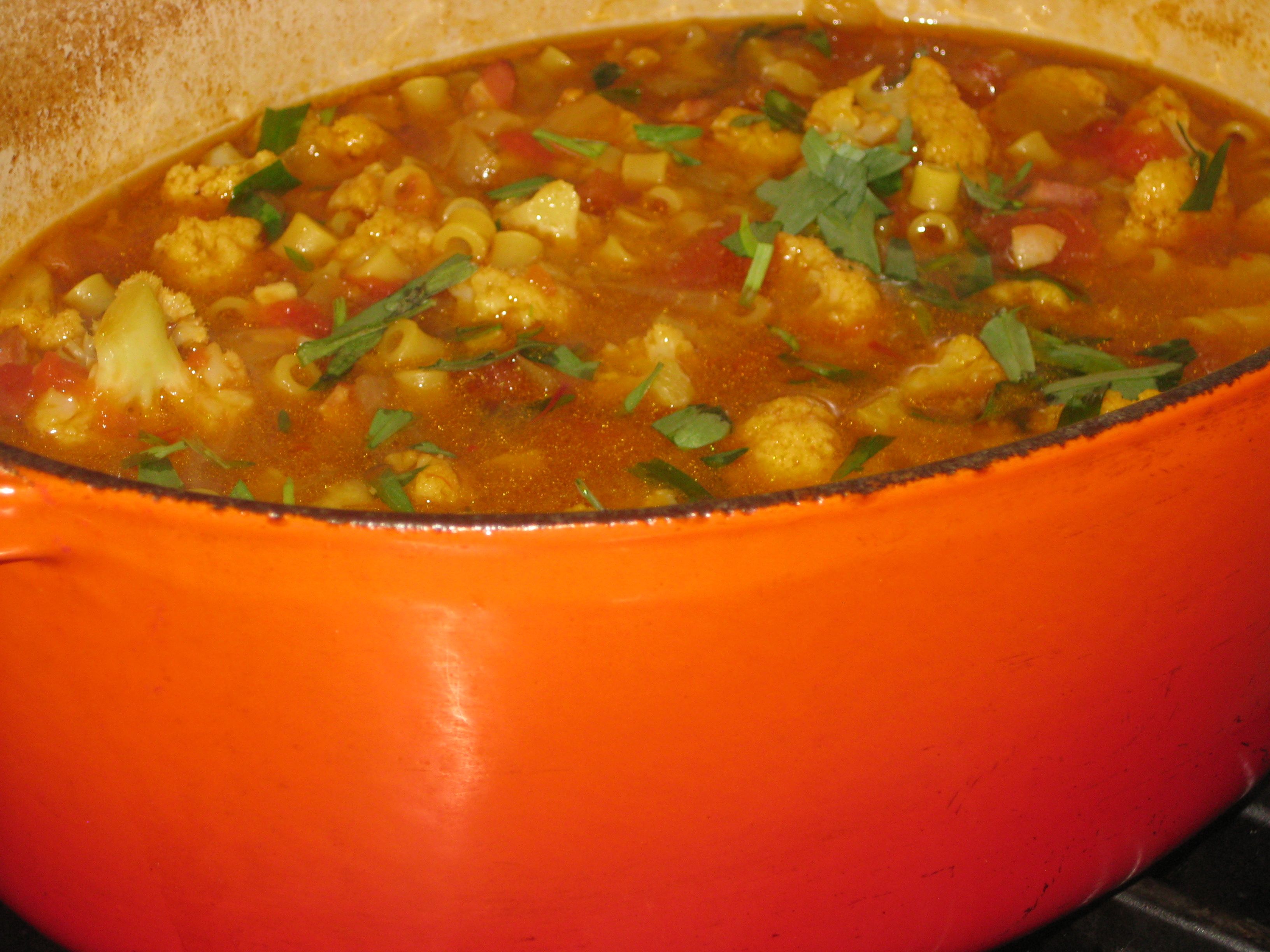
Minestra di Cavolfiore with Saffron and Fennel

(Serves 4 as a lunch or light supper)

Extra-virgin olive oil
½ cup diced pancetta
1 medium cauliflower, cut into small florets
A generous pinch of sugar
1 summer onion, diced
2 fresh summer garlic cloves, thinly sliced
1 fresh bay leaf
1 fresh red chili, seeded and minced
A small palmful of fennel seeds, ground to a powder
2 medium-size round summer tomatoes, skinned and cut into small dice
Salt
1 quart light chicken broth, preferably homemade
About 20 threads of saffron, dried, if moist, and then ground
¼ pound ditalini pasta, cooked al dente
A dozen tarragon sprigs, leaves very lightly chopped
A chunk of grana Padano cheese

In a big soup pot, heat 3 tablespoons of olive oil over medium flame. Add the pancetta, and let it get crisp. Add the cauliflower, the sugar, and the onion, and sauté until the cauliflower is well coated with oil and the onion is fragrant, about 4 minutes. This is an important step for bringing out flavor in the cauliflower, so you don’t get that dreadful boiled vegetable flavor I spoke about. Add the garlic, the bay leaf, the chili, and the fennel seed, and sauté a minute longer to release those flavors. Add the tomato and some salt, and cook until the tomatoes give off juice, about 4 minutes. Add the chicken broth and a cup of water, and bring the soup to a boil. Add a little hot water to the saffron so it can open up, and then add this to the soup pot. Cook, uncovered, at a lively bubble until the cauliflower is tender, about 12 minutes or so. Add the ditalini, stirring it in, adding a little hot water if it gets too thick. Check for seasoning. Add the tarragon. Serve hot, topped with grated grana Padano.
Read Full Post »


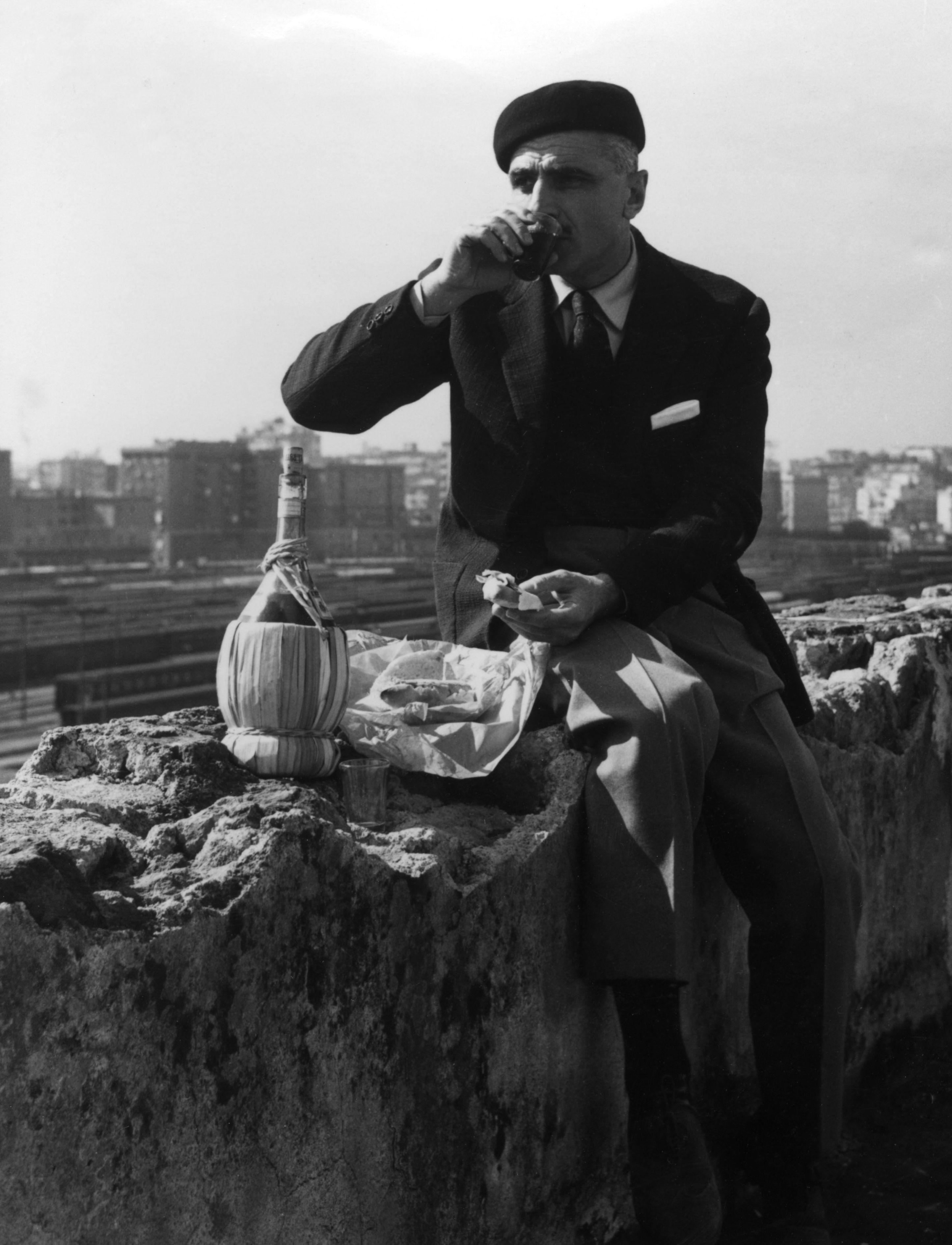
A panino and a gallon of wine. The perfect lunch.

Recipe: Eggplant Pesto Panini with Caprino and Basil

Perfect, compact, portable, there’s a certain kind of panini you can pack up and go with, a solid meal, with minimum mess. This type of eat-and-run panini can be  built with low on the fat but flavorful meat (tenderly treated pork loin, for instance) or a frittata, roasted vegetables, some non-gloppy cheese, a little lettuce. Nothing wrong with that. But when a panino is dripping with good olive oil, overstuffed and oozing  it makes great table food eaten with a knife and fork, or just shoved into your mouth while hovering over your plate; the Provençal pan bagnat comes to mind (love this sandwich loaded with wet tomatoes, anchovies, oily tuna, and then mashed down and left to get all soaked), but so does my childhood favorite from Razzano’s shop in Glen Cove, a crusty Italian roll stuffed with hot capicola, old-fashioned Genoa salami, provolone, and mortadella and topped with a big spoonful of dripping, vinegary sweet and hot red peppers that miraculously balance out all the pork fat to create a taste that says Southern Italian perfection. This panino is always a mess to eat, but it’s such a taste memory I get a little choked up just thinking about it. It reminds me of my dad—he loved those vinegary peppers. But this sandwich, with all its salumi variations, also recalls the mid-seventies Donna Summer dance era. Love to love you baby. It’s a great restorative after eight or nine hours of out-of-control disco dancing (and it can soak up White Russians like nobody’s business.)

I do like the pressed panini you find in many wine bars in Manhattan these days. They can’t fit much in them, but they are good and oily and flat. I sometimes like flat, but if I have really good bread, which I think you’ll want when constructing a panino, I say show it off. Sometimes it’s better just to grill or toast the bread and then pile the stuff inside, or on top for an open-face version.

I’ve been making vegetable pestos lately. You might remember my posting of a recipe for a Zucchini Pesto with Anchovies and Summer Savory a few weeks ago. I spooned it onto crostini. Very delicate. This eggplant version is also a great match for bread, but I feel its more robust taste is more suited for an all out big sandwich. I’ve topped it with melted Caprino—fresh Italian goat cheese—but a few slices of tomato would be ideal instead, for a lighter result. Try and include the fresh basil on the panino. It  bring out the cumin and chili flavors in the pesto.

Eggplant Pesto Panini with Caprino and Basil

(For 1 long baguette panino to feed 2, or, spread on crostini, enough pesto for 6 as an antipasto)

3 cups cubed eggplant, partially skinned
Extra-virgin olive oil
1 small fresh green chili, seeded and minced
2 summer garlic cloves, thinly sliced
¼ teaspoon freshly ground cumin
½ teaspoon sugar
Salt
¼ cup lightly toasted pine nuts
A squeeze of lemon juice
A handful of basil leaves, chopped, plus a few whole leaves reserved if you’re making the panino
1 baguette
1 small log of caprino (fresh Italian goat cheese), or a French or American brand, if you prefer

Preheat the oven to 425 degrees. Lay the eggplant out on a sheet pan. Drizzle it with enough olive oil to lightly coat it. Scatter on the minced chili, and give everything a toss. Spread the eggplant out in one layer, and stick it in the oven. Roast until it’s fragrant, lightly browned, and tender, about 15 minutes, or a little longer. In the last few minutes of roasting add the garlic, cumin, sugar, and salt.

Add the pine nuts to a food processor, and pulse until you have a rough chop. Add the eggplant and a squeeze of lemon juice, and pulse once or twice, just until you have a slightly chunky texture. Spoon it out into a bowl and add the basil. Taste for seasoning. Eggplant can take a fair amount of salt. I like serving this pesto the day I make it. It will keep refrigerated for several days, but the color gets a bit drab.

To make the panino, split the baguette lengthwise, and toast it. Give each side a drizzle of olive oil, and then spread the flatter side with the eggplant pesto. Top with crumbled caprino, and run it under a broiler for a few seconds, just until the cheese is soft and lightly golden. Season with a little salt and fresh black pepper, and scatter on the basil leaves. Put the top on the panino, and cut the sandwich in half. If you’re making crostino just cut the baguette into thin rounds and toast or grill them. Top with some eggplant pesto and a little caprino, which you can melt or not. It’s up to you.

Read Full Post »


Could this product actually taste good?

Recipe: Ziti with Calamari, Star Anise, Tomato, and Basil

As you’ve heard a million times, you either cook calamari fast or you do a slow simmer. Anything in between produces rubber. But it also depends on what you’re working with. Huge calamari will never respond well to flash-cooking. It’s best simmered or stuffed. This pasta recipe is in the summer mode, fast and fresh. Make it only when you can get your hands on small, tender, really fresh calamari, the kind I purchased from Phil Karlin, my Greenmarket fish guy who sets sail out of Riverhead, Long Island.

Now that I know you’re dealing with ultra fresh calamaretti, I’ll move on to the seasoning. Sometimes when I make quick summer dishes, my mind goes on automatic pilot, but I try not to let that happen. Even with effortless summer produce I try to keep myself swift by thinking creatively (now there’s a concept). I can easily get lazy  with all those gorgeous tomatoes and fresh herbs  around. Just chop them up and leave it at that. That’s not good for my well-being, or for any serious cook’s. I  always try to work it.

To add complexity to this simple tomato and calamari pasta, I included star anise, a beautiful exotic spice used often in Chinese cooking. I love its aroma. When ground it’s quite strong, but used whole, in its amazing star shape, it adds a sweet, subtle anise flavor that comes through even in a fast-cooked dish like this. And when you pair it with basil, another anisey flavor, the mix is gorgeous. They blend and work off each other to create a new taste.

I love a quick dish that produces deep flavor. It’s not always easy to pull off, but when I hit on one it makes me very happy.

Ziti with Calamari, Star Anise, Tomato, and Basil

(Serves 4 as a main course)

Salt
1 pound ziti
Extra-virgin olive oil
3 fresh summer garlic cloves, very thinly sliced
1 whole fresh red chili, medium hot, minced
2 whole star anise
4 large round summer tomatoes, skinned and cut into small dice (drain lightly if very watery)
2 tablespoons unsalted butter
1½ pounds small, tender calamari, cut into rings
½ teaspoon sugar
A splash of vermouth
A handful of basil leaves, cut in half if big, left whole if small

Bring a pot of pasta cooking water to a boil, and add a generous amount of salt. Drop in the ziti.

In a large skillet, heat 2 tablespoons of olive oil over medium heat. Add the garlic, half of the minced chili, and one star anise. Sauté for about 30 seconds, to release their flavors. Add the tomatoes, turn the heat to high, and sear quickly, just until they give off a little juice, about 4 minutes. Season with salt. Transfer the tomatoes and all their skillet juices to a large warmed pasta cooking bowl.

Wipe out the skillet, and place it over high heat. Add the butter, a tablespoon of olive oil, the other star anise, and the remaining minced chili, and let sauté a few seconds. Add the calamari, seasoning it with the sugar (this will help it brown), and sauté very quickly, just until tender, about 1 or 2 minutes. Season with a little salt, and add to the tomatoes. Deglaze the skillet with a splash of vermouth, and pour that into the bowl as well.

When the ziti is al dente, drain it, and add it to the bowl. Add a generous drizzle of fresh olive oil and the basil, and give everything a good toss. Serve hot.

Read Full Post »


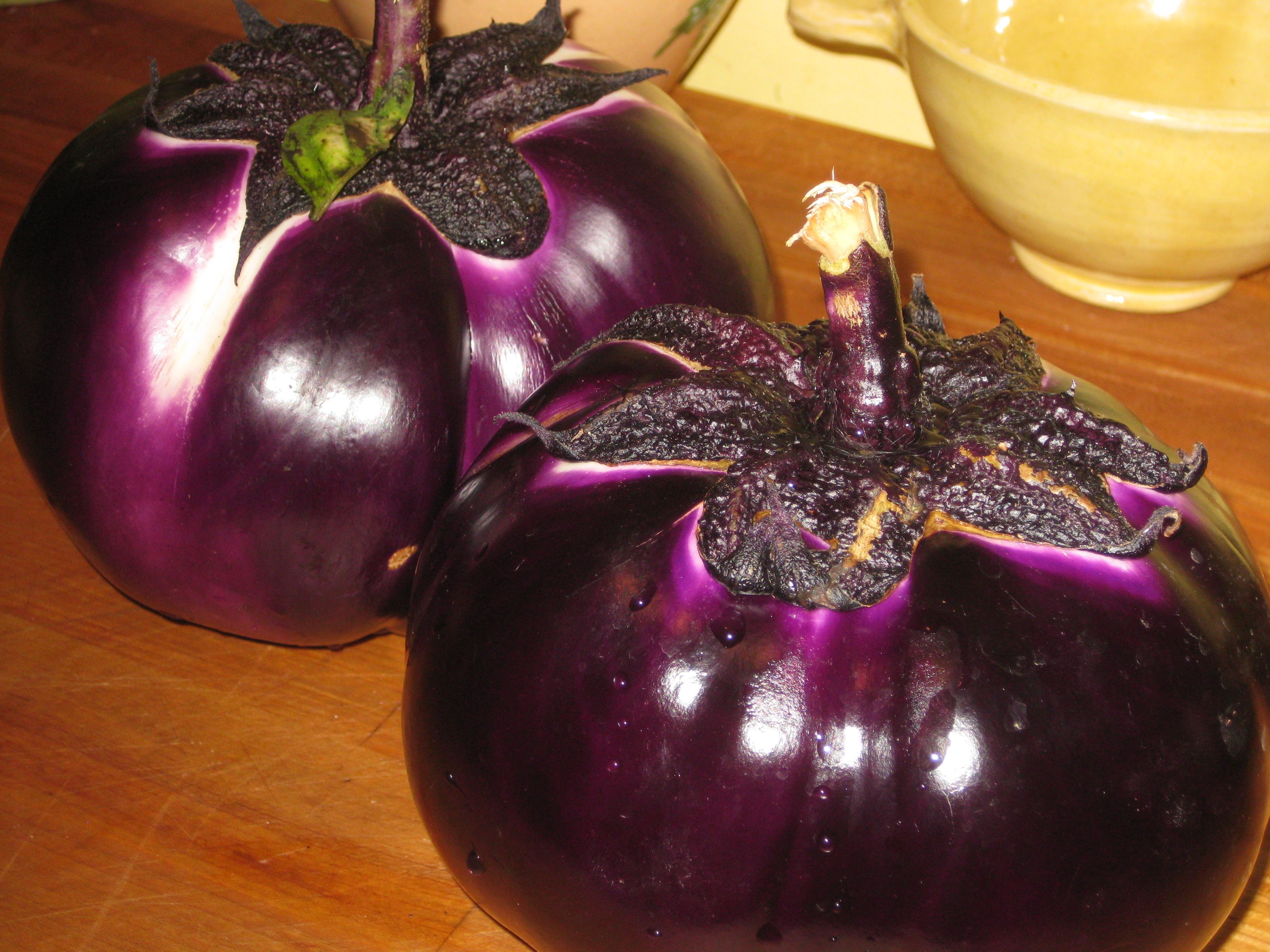
Sicilian eggplant from Migliorelli Farm in the Hudson Valley.

Recipe: Rigatoni with Eggplant, Marjoram, and Cinnamon Ricotta

You’ve got to get over to your local Greenmarket right now and see if you can find these gorgeous Sicilian eggplants. Migliorelli Farm in the Hudson Valley grows them and trucks them down to the Union Square market in Manhattan. Not only are they beautiful, but their flavor is amazing. They’ve got almost no seeds. Their flesh is white and creamy, with no bitterness. Another great thing about them is their low water content, which allows for a nice, even browning, perfect for use in a pasta sauce. I knew I’d have to go all-out Sicilian when I eyed these huge things.

This is actually a very simple recipe, but it’s one with unusual flavor. Marjoram is one of my favorite herbs. It’s a gentle cousin to oregano, but the differences in taste are profound. Marjoram has a deep floral perfume with none of the acrid taste that fresh (or dried) oregano can have. I just love it. And when it’s mingled with a touch of cinnamon and the sweet eggplant, well, you might as well be dining at a trattoria in Palermo.

As much as I’ve gone on about these Sicilian eggplants, you can really use any summer eggplant for this pasta. Eggplants are having a very good year, with all the heat, so whatever you buy that’s local is bound to be excellent.

Rigatoni with Eggplant, Marjoram, and Cinnamon Ricotta

(Serves 4 as a main course)

For the ricotta:

1½ cups very fresh ricotta
¼ teaspoon ground cinnamon
½ teaspoon sugar
A pinch of salt

For the pasta:

Extra-virgin olive oil
2 large summer garlic cloves, thinly sliced
2 cups diced eggplant, the skin left on
A generous pinch of ground cinnamon
¼ cup sweet Marsala
4 or 5 medium-size round summer tomatoes, skinned, seeded, diced (about 2½ cups or so), and lightly drained if very watery
Salt
Freshly ground black pepper
1 pound rigatoni
About 6 or 7 large marjoram sprigs, the leaves only, plus a few small sprigs for garnish
A small chunk of mild pecorino cheese

In a small bowl mix all the ricotta ingredients together, and let sit at room temperature.

Set up a large pot of pasta cooking water, and bring it to a boil.

In a large skillet, heat about 3 tablespoons of olive oil over medium flame. Add the garlic, the eggplant, and the cinnamon at the same time, and sauté until the eggplant is fragrant and golden, about 7 minutes or so. Add the Marsala, and let it boil away. Add the tomatoes, seasoning with salt and black pepper. Let simmer at a low bubble for about 8 minutes, just until the eggplant is cooked through and some of the tomato liquid has evaporated. Turn off the heat.

Add a generous amount of salt to the pasta water and drop in the rigatoni.

When the rigatoni is al dente, drain it, and pour it into a large serving bowl. Reheat the eggplant sauce if necessary, and pour it over the pasta. Toss, adding about a tablespoon of grated pecorino and the marjoram leaves.

Serve in pasta bowls with a dollop of the cinnamon ricotta on top. Garnish with marjoram sprigs, and pass around the chunk of pecorino for grating.

Read Full Post »


The Element of Earth, by Jacopo Bassano (1510–1592).

Recipe: Zucchini Pesto with Anchovies and Summer Savory

You know all those expensive jars of colorful Italian vegetable spreads you see at gourmet shops, things like caponata, artichoke dip, herb and nut pestos, roasted pepper spread? People pick them up for an instant antipasto when guests are expected, usually piling up a little on crostini and passing them around with a glass of vino. Sometimes they’re really good, sometimes awful, but they’re always expensive. I remember buying a jar of a Calabrian eggplant-and-tomato spread last year at the Chelsea Market, just because it was Calabrian and I was curious.  It was sweet and delicious, and I’m glad I bought it, even though it cost $14.95. Now I know how it tastes and I can figure out how to make it myself (it had a touch of fennel seed and a little hot chili, so that will be easy enough to replicate). The fancy jars look regal, but don’t be intimidated. Those spreads are not hard to make at home. It’s all in the chop. You want a small dice so the vegetables get a melting texture. You also want to buy the best produce you can find, which is easy enough this time of year.

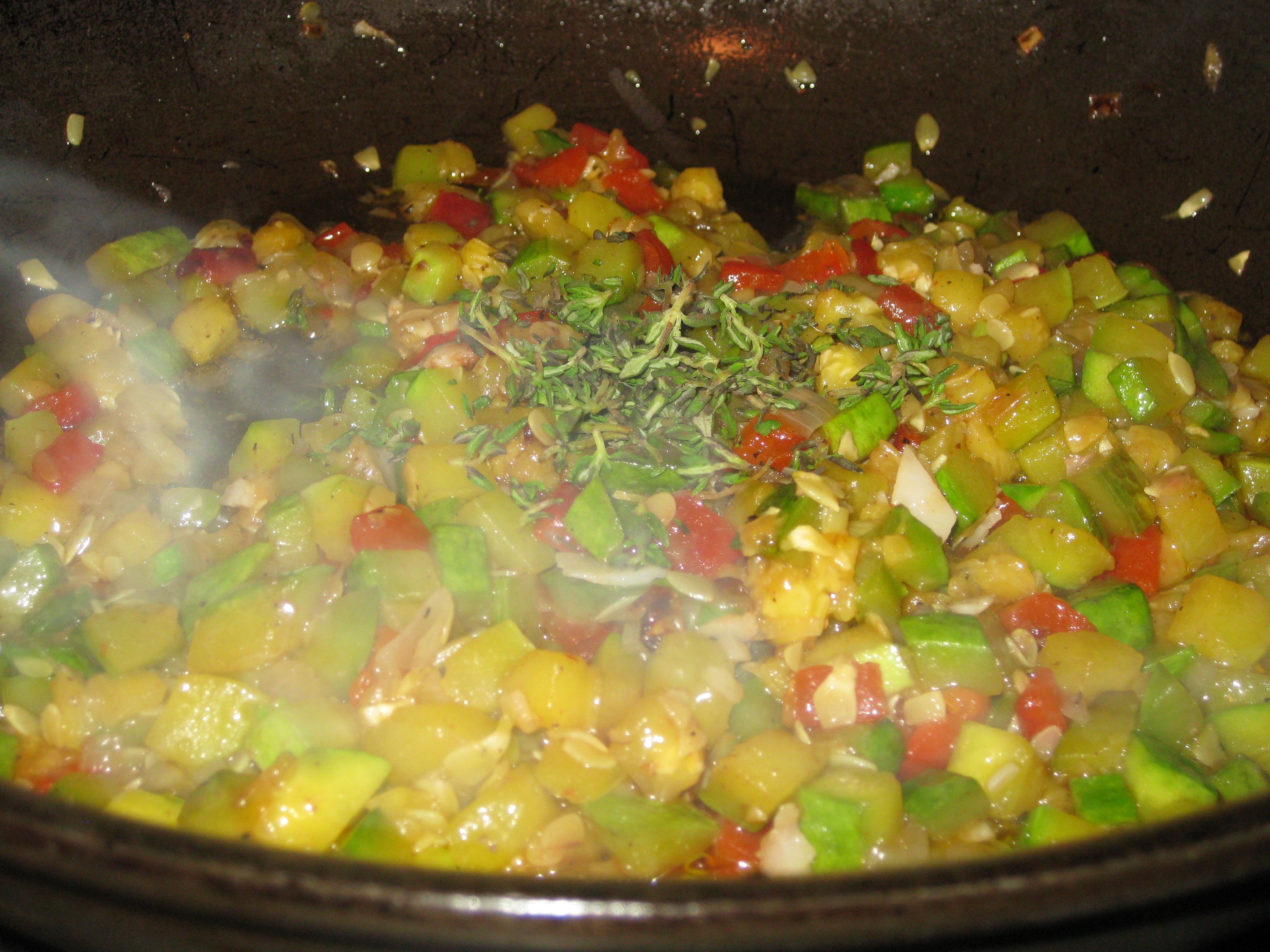
The best thing about making these yourself is that you can add anything you like. I happen to love zucchini with a hint of anchovy, so that was my starting point for this particular pesto (I call these pestos for lack of a better name; sometimes in Italy they’re labeled condimenti, or condiments, which might be more to the point). All these spreads are constructed basically the same way. You start with an underpinning, a soffrito. It can be just sautéed garlic, or you can include something from the onion family, plus celery, a little carrot, and fresh minced chili if you like. Get all that nice and soft, and then add your fine dice of vegetable. Here I used a mix of roasted sweet pepper and zucchini and then threw in a little diced tomato. Flourishes such as capers, olives, pine nuts, herbs, and spices are all up to you. I went with summer savory because I found it at my market and realized I hadn’t cooked with it yet this year. Summer savory is an annual with soft leaves. I added it at the last minute, the way you would parsley. Winter savory is stronger and prickly and really needs to be cooked into a dish. Make sure you find the summer variety for this. Marjoram will be a wonderful substitute if you can’t find it.

I used this zucchini pesto on bruschetta, but I can see it as a topping for a gently sautéed fish such as flounder or sea bass, or as a filling for ravioli.

Zucchini Pesto with Anchovies and Summer Savory

(Serves 6 as an antipasto offering)

Extra-virgin olive oil
1 large shallot, finely chopped
1 large summer garlic clove, minced
1 roasted sweet red pepper, cut into small dice
5 very small zucchini, cut into small dice
A few big scrapings of nutmeg
4 anchovy fillets, well chopped
Salt
Freshly ground black pepper
1 skinned and finely diced round summer tomato
A splash of sweet vermouth
Fresh summer savory, the leaves from about 3 large sprigs

In a large skillet, heat about 2 tablespoons of olive oil over medium heat. Add the shallot, and let it soften. Add the garlic and the roasted pepper, and sauté a minute to let their flavors mingle. Add the zucchini and the anchovy, and season everything with a little salt, the nutmeg, and black pepper. Sauté until the zucchini is very tender, about 5 minutes. Add the tomato, and sauté a few minutes longer. Add a splash of sweet vermouth, and let it bubble away. Turn off the heat, and let the pesto cool off a bit (this will help all the flavors blend). Transfer the pesto to a bowl, and add the savory and a drizzle of fresh olive oil. Give it all a mix and taste for seasoning. Serve warm or at room temperature. This will last about five days refrigerated, but serve it at room temperature for best flavor.

Read Full Post »

Recipe: Bucatini with Swordfish and Basil Almond Pesto

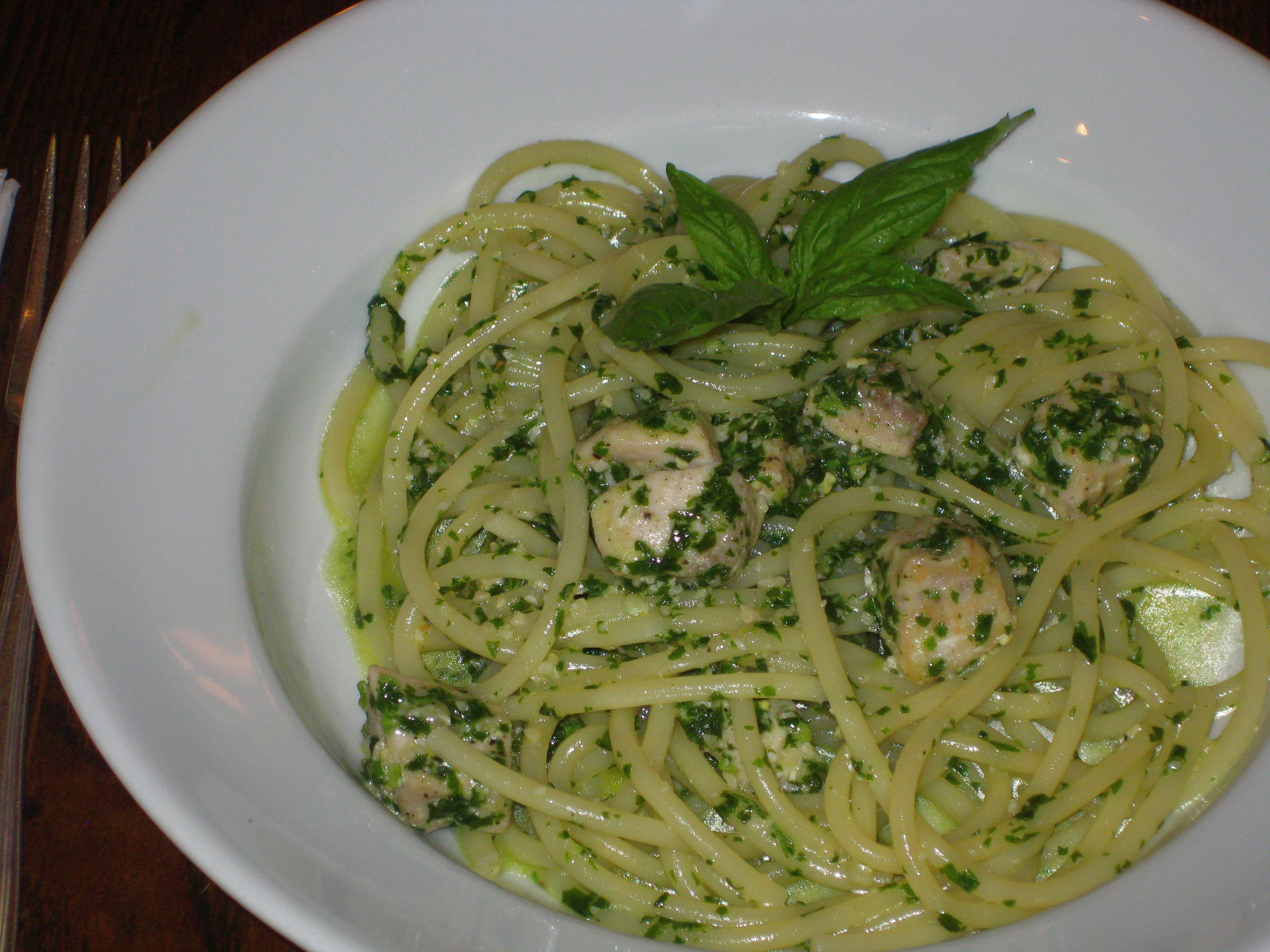
I always feel a little guilty when I get creative with pesto. In Liguria, where traditional basil pesto was born, it’s served only with pasta, usually trofie, a twisty shape from the region, and with the addition of string beans and cubed potatoes. To use it as a sauce on anything else is considered an abomination, usually a sin committed by an American. I don’t want to be accused of messing with a classic, but I love  basil pesto as a sauce for fish, especially fish straight off a grill. They make a beautiful combination.  And pasta tossed with a bit of seafood and pesto, you have to admit, can be a great thing too. You just need to think it through, keep it clean, and not serve it to any Genoese.

I’ve developed a pesto that I use almost exclusively with fish. It has more olive oil, more basil, no or almost no cheese, and very fresh summer garlic—not a ton of it but usually only one clove. Oh, and I blanch the basil, so it doesn’t go all gray and ugly on me. I used swordfish here because my Greenmarket fish man had it, and it looked beautiful. Fresh sardine fillets are also wonderful in this dish, and I’ve made a version that I love with mussels, too, opening the mussels in a little dry Marsala, straining their cooking liquid, and adding them and the liquid to the pasta along with the pesto.

Since this pasta contains fish, I think of it as a piatto unico, a one-dish meal, so I serve it that way. It’s really nice followed by a tomato salad.

Bucatini with Swordfish and Basil Almond Pesto

(Serves 2 as a main course)

For the pesto:

2 cups early summer basil leaves, loosely packed
1 large, very fresh summer garlic clove, roughly chopped
⅓ cup blanched fresh almonds
½ cup extra-virgin olive oil (a very fruity one such as Ravida, from Sicily)
2 tablespoons grated grana Padano cheese
Salt

Plus:

½ pound bucatini
¾ pound swordfish, skinned and cut into small cubes
Salt
½ teaspoon sugar
½ teaspoon semi-hot paprika, such as the Basque piment d’Espelette
Extra-virgin olive oil
A splash of dry Marsala

Bring a large pot of pasta cooking water to a boil. Add the basil leaves, and blanch them for about 30 seconds. Use a large strainer to scoop them from the water into a colander , and run cold water over them to set their green color (or plunge them into a waiting ice bath). Squeeze out as much water as you can.

Drop the garlic and the almonds into a food processor, and pulse until you have a rough chop. Add the basil, the olive oil, the grana Padano, and a little salt, and pulse a few more times until you have a not-too-smooth texture.

Bring the water back to a boil, and add a generous amount of salt. Drop in the bucatini.

Sprinkle the swordfish cubes with salt, the sugar, and the hot paprika.

Set out a pasta serving bowl.

Set up a large skillet over high heat. Add a generous drizzle of olive oil. When it’s just about smoking, add the swordfish, and sear it quickly, for about a minute or so, shaking the skillet a bit to cook the fish evenly. Add the Marsala, and let it bubble for a few seconds. Transfer the swordfish and any cooking juices to the pasta bowl.

When the bucatini is al dente, drain it, saving a little of the cooking water, and add the pasta to the bowl. Add the pesto, and toss until everything is well coated, adding a tablespoon or so of cooking water, if necessary, to give it a creamy texture. Serve right away.

Read Full Post »

Recipe: Chicken Cutlets with Chanterelle and Chicory  Salad

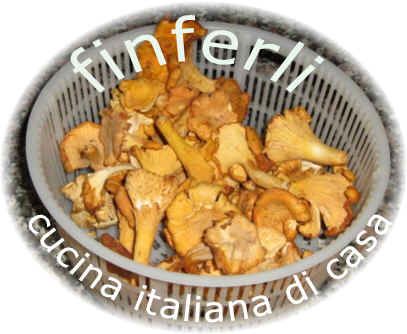
Finferli. I first heard this word in Sicily, in the Madonie mountain area where my husband, Fred, and I were staying on our first trip to that fantastic island, around 1990. Women were foraging in the woods for finferli. I took a look in their baskets and recognized the peachy colored mushrooms as chanterelles. I believe they were the exact same chanterelles that farmers in Phoenicia, New York, were searching for last weekend under trailers and abandoned trucks along Route 42, and finding tons of them. I bought a big bag from the guy who runs a 24-hour farm stand near there, ones he had foraged himself the evening before. First I made them with penne. Second go-round I highlighted them in a main course of chicken cutlets. Okay, I know, chicken cutlets can be boring, but not when you finish them off with a handful of local, almost-just-picked finferli.

Breaded and fried chicken cutlets were an oft-repeated midweek meal when I was a kid, made various ways. The Parmigiano treatment was big with my father, but not my favorite (I don’t like mozzarella and chicken together–seems like two bland elements blending together a bit too well). Chicken cutlets with a little pan sauce of capers and white wine drizzled over the top was excellent. But my favorite approach, until I made this recipe here, was eating them greasy and hot out of the pan with a squirt of lemon and one of my mother’s bitter-edged salads, usually arugula or chicory. Nothing could be finer. Hey, no tomatoes. That seemed very elegant at the time.

My mother usually did an easy breadcrumb coating with a little grated pecorino mixed in, forgoing the full-on flour-and-egg-and-crumbs treatment, so they were crisp but not encased in armor.

I find that a crisp, tender chicken cutlet always needs some acid. Lemon is good. Wine is good. Mustard and lemon are even better, just to dress the salad, but I didn’t use so much that they overpowered the chanterelles. That is important, of course, for a good flavor balance, but the most important thing of all when preparing chicken cutlets, all-important, is not to overcook them. Get them brown over high heat, flip them, let them brown lightly on the second side, and then get them the hell out of the pan.

Chicken Cutlets with Chanterelle and Chicory Salad

(Serves 2)

Extra-virgin olive oil
1 small summer onion, thinly sliced, using some of the tender green stalk if available
About 15 chanterelles, cut in half if large
Salt
Freshly ground black pepper
The leaves from 6 thyme sprigs
A splash of cognac
2 summer garlic cloves, smashed
The juice from ½ lemon
½ teaspoon Dijon mustard
4 chicken cutlets, pounded thin
½ cup homemade dry breadcrumbs
2 tablespoons grated grana Padano cheese
2 handfuls of chicory or frisée lettuce, torn into smallish pieces
2 lemon wedges

In a medium skillet, heat a tablespoon of olive oil over medium heat. When hot, add the onion and the chanterelles, and sauté until the mushrooms just start to soften and give off a sweet aroma, about 4 minutes. Season with salt, black pepper, and the thyme. Add a splash of cognac and stand back so you don’t singe your eyebrows. When the flame subsides, turn off the heat.

In a small bowl, whisk together the garlic clove, lemon juice, mustard, and 3 tablespoons of olive oil. Taste for seasoning, adding more lemon or mustard if needed.

Mix the breadcrumbs and grana Padano together on a plate, seasoning with salt and black pepper. Dredge the cutlets in the crumbs.

Set out two dinner plates.

Place the chicory or frisée in a small salad bowl, and pour on about ¾ of the dressing, giving it a quick toss.

In a large skillet, heat about 2 tablespoons of olive oil over high heat. When hot, add the chicken cutlets, and brown them quickly on one side, about 1½ to 2 minutes. Give them a flip, and get some color on the other side, about 30 seconds. Pull the cutlets from the skillet, and place two on each dinner plate.

Top with the chicory salad. Quickly reheat the chanterelles if necessary, and scatter them over the salads. Drizzle the remaining dressing on top of the mushrooms. Garnish with lemon wedges, and serve right away.

Read Full Post »


A very deep yellow.

Recipe: Yellow Squash Soup with Saffron and Farro

Color can hold great power for the cook. It’s important to me. I find it can sway me in a culinary direction I didn’t intend to go in, especially in the summer, when so many brightly colored vegetables are there at my Greenmarket, seemingly just to shock me. Here’s a soup that’s bright yellow. If you love the color yellow as I do, it should be a pleasing soup to cook and bring to your table. It also tastes good. It gets its color from those amazing yellow zucchini I’m finding at my Greenmarket right now. (Get them now before they grow too big.) I can’t believe how incredibly yellow yellow zucchini actually are. They’re yellow just verging on orange, sort of like the color of Meyer lemons—in fact almost exactly that color. I’ve added saffron to this soup to underscore the yellow, and it also adds lovely flavor. I paired the saffron with thyme, since over the years I’ve found that to be an enticing combination. The saffron also turns the potatoes a bit yellow. The only thing that isn’t yellow is the farro, which of course is deep brown. If you would rather have uninterrupted yellow, you could substitute orzo pasta for the farro. That would give you a much lighter tasting soup, but it would be extremely yellow.

Yellow zucchini is a bit bland, a little starchier than the green variety, I find. To balance it I added some lemon zest. You could also “correct” this soup, as they say in restaurant kitchens, with a few drops of lemon juice or a gentle vinegar such as one of the Spanish sherry type, adding it after cooking, when you evaluate the soup’s flavor.

Yellow Squash Soup with Saffron and Farro

(Serves 6)

¾ cup farro
Extra-virgin olive oil
Salt
2 ¼-inch rounds pancetta, cut into small dice
1 medium summer onion, cut into small dice
2 fresh garlic cloves, very thinly sliced
3 baby Yukon gold potatoes, skinned and cut into small cubes
About 8 thyme sprigs, the leaves chopped
3 cups light chicken broth
5 small yellow zucchini, cut into small cubes
Freshly ground black pepper
About 20 saffron threads, dried if moist and ground to a powder
The grated zest from about ½ lemon
A chunk of Montasio cheese (a delicate cow’s milk cheese from Fruili; grana Padano is a fine substitute—you want something sweet that won’t overpower the delicate flavors of the soup)

Place the farro in a saucepan, and cover it with at least 4 inches of cool water. Bring to a boil. Turn the heat down a bit, and let bubble until just tender, usually about 15 minutes but taste it from time to time (I’ve found that some farro cooks faster). Drain the farro, and pour it into a small bowl. Give it a drizzle of olive oil and a little salt, and mix. Set it aside.

In a medium soup pot, heat about 2 tablespoons of olive oil over medium flame. Add the pancetta, and sauté it until most of its fat has melted out. Add the onion, the garlic, and the potatoes, and sauté for about 2 minutes, just to release their flavors. Add the zucchini, the thyme, and a little salt, and sauté for a minute to coat the zucchini with a little flavor. Add the chicken broth and about a cup of water, and bring everything to a boil. Turn the heat down a touch, and cook, uncovered, at a lively bubble until the potatoes and zucchini are just tender but still holding their shape, about 12 minutes or so. Add the farro, the saffron, a good amount of black pepper, and the lemon zest, and let the soup simmer for a few minutes to release the saffron into the broth.  Add more water or broth if it get’s too thick after adding the farro. Taste for seasoning.

Garnish each bowl with a drizzle of fresh olive oil and a grating of Montasio cheese.

Read Full Post »

Recipe: Summer Cherries with Red Wine, Vanilla, and Cassis

As a teenager in the 1970s I didn’t have many hip Italian-American gal role models to turn to. I mean, I did love Connie Francis, her voice moved me, but she was not an inspiration for what I wanted to be, for the Catholic-free, Guido-free life I wanted to lead. When I discovered Laura Nyro it was love at first hearing and sight, even though she was in truth only half Italian. Everything about her was what I was looking for (except when she screeched her way up to some of those high notes; I have to admit I found that a little irritating).

I think my first taste of Laura Nyro’s music coincided, fittingly, with the blossoming of my adoration of red wine. Not my discovery of red wine—I’d been drinking it since I was a child—but my new very deep interest in it. That seemed right. She was an Italian art girl, so there was the non–Connie Francis order right there, and she sang about red wine (well, she sang about wine; she didn’t say it was red, but you knew it had to be). I could be an Italian art girl and drink a lot, and since it was red wine I fell in love with, nobody was too alarmed. That was what I was supposed to be drinking. Red wine wasn’t booze, it was nourishment.

I loved red wine and drank plenty of it, the good, the bad, and the ugly. Chianti in straw bottles, heavy Spanish wine with weekday meals, red wine that had screw tops and handles, but also serious wine, the bottles of Barolo and Amarone that Lou Mastellone, the liquor salesman who lived across the street, would bring to our house.

It was a turning point for me. Lots of possibilities, I knew, would grow out of the union of good music and good wine.

“Let’s go down by the grapevine, drink my Daddy’s wine, get happy.
Down by the grapevine, drink my Daddy’s wine, get happy, happy.
Oh, sweet blindness, a little magic, a little kindness.
Oh, sweet blindness, all over me.”

Laura, this recipe’s for you.

Summer Cherries with Red Wine, Vanilla, and Cassis

(Serves 6)

1 bottle fruity red wine, such as a non-oaky Sangiovese
¾ cup Cassis
¾ cup sugar
1 vanilla bean, split
2 strips lemon peel
2 pints sweet summer cherries, the stems left on
A handful of small basil sprigs for garnish

Place the red wine, Cassis, sugar, vanilla bean, and lemon peel in a saucepan. Bring to a boil over high heat. Turn the heat down a touch, and let the mixture bubble until reduced by about ¾ (that should leave about a cup or a cup and a half of liquid). Let cool completely. When cooled it should have a the consistency of a loose syrup.

Put the cherries in a large bowl, and pour the red wine syrup over them. Give them a stir, and let sit for about ½ hour. When ready to serve, spoon the cherries with some of the wine syrup out into small bowls or wineglasses. Garnish with the basil sprigs.

Read Full Post »

Recipe: Orecchiette with Baby Zucchini, Saucisson a l’Ail, and Mint

The only great zucchini is really young zucchini, the kind I’m finding right now at the Greenmarket. They’re small, skinny, and firm, like we’d all love to be forever and ever. As you all know, zucchini can rage out of control, becoming huge and inedible toward summer’s end, so grab them now, before you’re forced into making one (or maybe even fifty) of those horrible old hippie zucchini breads.

Saucisson a l’ail, French garlic sausage, is wonderful with pasta, because it’s soft, not firm like most Italian dried salumi, such as soppressata, which can be a little rugged to bite down on in a bowl of pasta. D’Artagnan makes a good garlic sausage that I often find at many slightly more upscale supermarkets.

I like cutting the sausage and the zucchini into little cubes, about the size of the indentation in the orecchiette, so that they nestle in nicely and give the dish a pretty look.

Happy start of the summer to you.

Orecchiette with Baby Zucchini, Saucisson a l’Ail, and Mint

(Serves 2 as a main course)

Salt
½ pound orecchiette
Extra-virgin olive oil
5 or 6 very small summer zucchini, cut into small cubes
About 3 thick slices French garlic sausage, cut the same size as the zucchini
1 large shallot, very thinly sliced
1 jalapeño pepper, seeded and minced
A splash of dry vermouth
¼ cup chicken broth
About 8 large thyme sprigs, stemmed
A small handful of fresh mint leaves, lightly chopped
A chunk of pecorino Toscana cheese for grating

Set up a pot of pasta cooking water, and bring it to a boil. Add a generous amount of salt, and drop in the orecchiette.

In a large sauté pan, heat 2 tablespoons of olive oil over medium flame. When the oil is hot, add the zucchini, garlic sausage, shallot, and jalapeño, all at once. Add a little salt, and sauté until the zucchini is tender and just starting to turn golden, about 4 minutes or so. Add the vermouth, and let it boil away. Add the chicken broth, and turn off the heat.

When the orecchiette is al dente, drain it, saving a little of the cooking water, and add it to the pan. Toss well over low heat until everything is well mixed, about a minute. Add a little of the cooking water (or more broth, if you have it) if it seems dry. Transfer to a warmed serving bowl, and add the thyme and the mint and a drizzle of fresh olive oil. Toss gently. Taste for seasoning. Serve with grated pecorino Toscana.

Read Full Post »

« Newer Posts - Older Posts »