Feeds:
Posts
Comments

Archive for the ‘Skinny Guinea’ Category

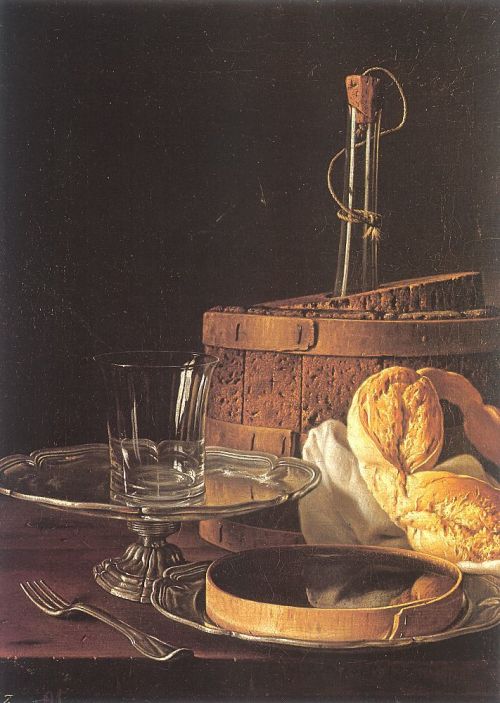
melendez bread
Still Life with Bread, by Luis Melendez,  1715-1780.

To all of you enthusiastic cooks who attended my stale bread class this week (and to any of my readers who just love the idea of finding great ways to use leftover bread), here’s the recipe for the orange cake I made for that class.

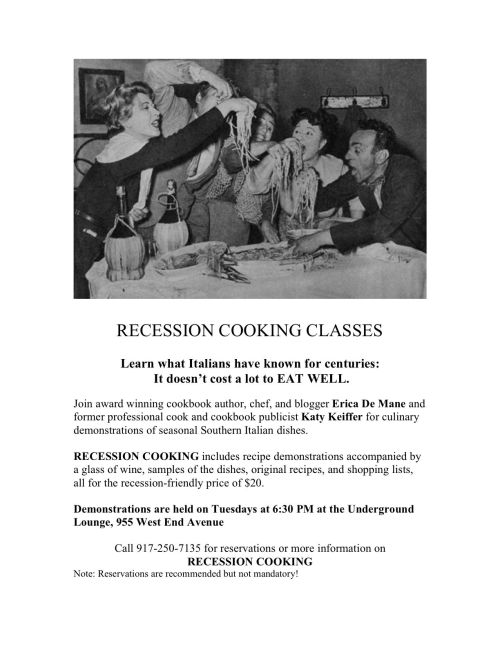
And for a schedule of upcoming Recession Cooking Classes, take a look at the notice on the right on the homepage.

Sicilian Orange Cake with Breadcrumbs and Almonds

2 tablespoons softened butter
1 cup home-made dry breadcrumbs, not too finely ground
1 cup sugar
1 cup lightly toasted almonds, finely ground
2 teaspoons baking powder
4 large eggs
¾ cup vegetable oil (one with a mild or almost nonexistent flavor)
The grated zest from 2 oranges
The grated zest from 1 lemon
½ teaspoon orange flower water

For the orange syrup:

The juice of the 2 oranges and of the lemon you zested for the cake
½ cup sugar
½ cinnamon stick
2 tablespoons Grand Marnier or another orange liqueur
½ teaspoon orange flower water

Butter a 10-inch round cake pan (a low-sided springform pan with removable sides is ideal).

In a large bowl, mix together the sugar, the breadcrumbs, the almonds, and the baking powder until well blended.

In a smaller bowl, whisk the eggs together with the oil, and pour the mix in with the dry ingredients. Add the orange and lemon zest and the orange flower water, and mix well.

Pour the batter into the cake pan, and place it in a cold oven. Turn the heat to 350 degrees, and bake until the top is golden and the cake feels firm, about 40 to 45 minutes. Let cool for about 15 minutes.

In the meantime, put all the ingredients for the orange syrup into a small saucepan, and give them a stir. Turn the heat to medium-high, and let the sauce bubble and reduce for about 6 or 7 minutes. Let the syrup cool for about 15 minutes.

Run a knife around the sides of the cake, and unhinge the pan. Slide the cake onto a flat serving platter. Poke a bunch of tiny holes in the top of the cake with something skinny and sharp, like a barbecue skewer or a toothpick. Slowly pour the syrup over the cake, letting it soak in. If too much syrup pools up around the cake, just spoon it over the top again. Let the cake sit for about ½ hour to further soak up the syrup before slicing.

Read Full Post »

shrimp

Recipe: Shrimp Cocktail with Jalapeño Fennel Vinaigrette

My love of the American shrimp cocktail remains strong. It’s a clunky but vibrant dish, of boiled shrimp, hopefully not too boiled, dipped in an indescribable red sauce, made primarily from ketchup, horseradish, and Worcestershire sauce. Thinking of it brings back a flood of memories, mostly good ones, of raucous parties (speaking of boiled) that my parents used to throw in the 1960s (at one of the more entertaining ones, at least from my point of view, a golf pro friend of my father’s wound up crawling on the floor, growling like a lion, peed in his pants, and then passed out—possibly from one too many dips into the shrimp cocktail).

At our house, the shrimp was piled high. The extravagance of it drove me wild and unleashed the glutton in me like few other foods of the time. I’d sneak out of my room, making my way through all the go-go-baubled ladies and  grease ball dressed men to grab a handful of shrimp, while also scooping up a good portion of the red sauce in a paper cup before disappearing back to where I belonged.

Shrimp cocktail has had various retro rebirths since that era, and I’m always excited to see it on a buffet or at a friend’s party. I had a craving for it the other night, so I went out and bought some shrimp, figuring I had the stuff to make the sauce in my refrigerator. In fact I had neither ketchup, horseradish, nor Worcestershire (what kind of unruly household do I run?), but being the culinary snot that I’ve now become, I did happen to have on hand a fennel bulb, a green jalapeño pepper, and a bunch of fresh tarragon, so that’s what I cooked up instead. It doesn’t have much tradition behind it, but it’s really good.

A note about jalapeño peppers: I’ve found that the heat from these peppers varies a lot. Sometimes they’re burning hot, sometimes so mild they have almost no kick whatever. The one I used was sort of halfway between, so I used the whole thing, with seeds, to produce an only moderately spicy result. I think the best thing to do is to taste a piece, with a few seeds, and determine what you’re dealing with before adding it to your dish.

Shrimp Cocktail with Jalapeño Fennel Vinaigrette

(Serves 4 as a first course)

2 or 3 small cloves fresh spring garlic, thinly sliced
1 green jalapeño pepper, minced, with its seeds (see note above)
½ teaspoon Sambuca
¼ teaspoon fennel seeds, toasted and finely ground
The juice and zest from 1 small lemon
Extra-virgin olive oil
Salt
1 fresh bay leaf
1½ pounds large shrimp, shelled and deveined, leaving the tails on
1 pint grape tomatoes, cut in half
1 small fennel bulb, very thinly sliced
About 10 large tarragon sprigs, the leaves lightly torn

In a small bowl, mix together the garlic, jalapeño, Sambuca, fennel seeds, lemon juice and zest, and about 3 tablespoons of olive oil, adding a good amount of salt. Let it sit to develop flavor while you get on with the recipe.

Set up a large pot of water. Add the bay leaf and a generous amount of salt, and bring it to a boil. Drop in the shrimp, and boil them until just tender, probably about 2 minutes, depending on their size. Scoop the shrimp from the water with a large strainer, and lay them out on paper towels, separating them a bit, to soak up excess liquid.

Place the shrimp in a serving bowl. Add the tomatoes and the fennel. Pour on the dressing, and give everything a good toss. Refrigerate for about ½ hour, and then add the tarragon and toss again, tasting for seasoning. The jalapeño should have become more pronounced, and all the flavors will have mingled nicely. Serve cold.

Read Full Post »

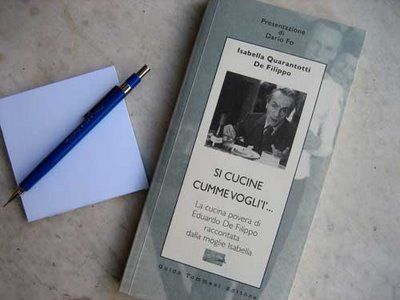
libro-eduardo
Musings on la cucina povera by the late, great Neapolitan actor Eduardo De Filippo, recalled and written by his wife, Isabella Quarantotti, in 2001.

For the past month I’ve been teaching a class in recession cooking, Italian-style of course, focusing on the philosophy of cucina povera cooking from Southern Italy (see my notice over on the right for class times and subjects). This has steered me toward a lot of play with stale bread, anchovies, squid, pork liver, pork fat, cheese rinds, tripe, and others of the ingredients my ancestors used for centuries to create some of the most elegant and delicious food on the planet.

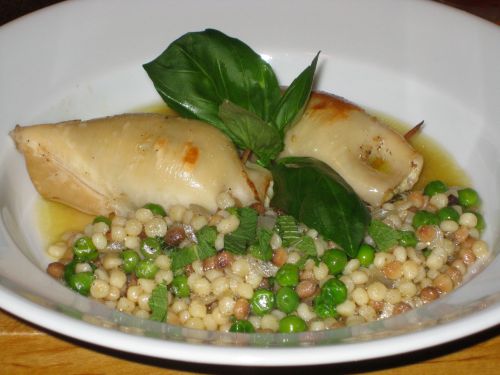
I’ve been finding really nice local spinach at my Greenmarket, so I stuffed some inside the cheap, humongous squid I found at Citarella, squid that was really too big for anything other than a leisurely braise. It’s a good dish, Sicilian in flavor, fun to cook, and inexpensive for sure (and if you buy the squid uncleaned it’s even cheaper and, it goes without saying, much more fun).

stuffed squid

Calamari Stuffed with Spinach and Currants and Braised in Marsala

(Serves 4 as a main course)

4 cups fresh greenmarket spinach (or 1 big supermarket bag), well-stemmed
2 pounds medium to large squid, cleaned and left whole, the tentacles well chopped (you’ll need only about ½ cup of chopped tentacles)
⅓ cup whole, blanched almonds, lightly toasted and roughly chopped, plus a handful for garnish
¼ cup currants, plumped up in a tablespoon of Marsala
1 garlic clove, minced, plus 1 clove peeled and lightly crushed
2 tablespoons homemade dry breadcrumbs, not too finely ground
1/4 cup grated grana Padano cheese
A few large thyme sprigs, the leaves chopped
The grated zest of 1 small lemon
1 large egg
5 scrapings of fresh nutmeg
Salt
Black pepper
Extra-virgin olive oil
A handful of toothpicks
1 tablespoon unsalted butter
¾ cup dry Marsala
½ cup chicken broth or light fish broth, or possibly a little more
A squeeze of lemon juice
A handful of flat-leaf parsley, lightly chopped

Set up a large pot of water, and bring it to a boil. Add a generous amount of salt, and drop in the spinach. Blanch for about 2 minutes. Drain the spinach into a colander, and run cold water over it to stop the cooking and to bring up its green color. Squeeze as much water out of it as possible, and then chop it well.

Place the spinach in a medium bowl. Add the squid tentacles, the almonds, the currants, the minced garlic, breadcrumbs, thyme,  grana Padano, lemon zest, and the egg. Season with salt, black pepper, and the nutmeg. Add a drizzle of olive oil, and mix everything well.

Using a teaspoon, fill the squid about three-quarters full with the spinach mixture, and close the ends with a toothpick (if you overstuff the squid it may break open when cooking, since it shrinks quite a bit).

In a large skillet (one that will hold the squid in one layer), heat the butter and a tablespoon of olive oil over medium heat. When hot, add the squid and the garlic clove, season with salt and black pepper, and sauté, turning the pieces once with tongs, until they’re lightly golden, about 4 minutes. Add the Marsala, and let it bubble for a minute. Add the broth, cover the skillet, and turn the heat down to very low. Let the squid cook at a very gentle simmer for about 30 to 35 minutes, turning it once or twice. Check the skillet a few times during cooking to make sure there is at least an inch of liquid in the skillet. If necessary add a splash of broth or hot water.

Give the squid a poke with a thin, sharp knife to see if it’s tender (the knife should pierce it easily). Let it cook a bit longer if it’s not. When it’s tender, take the squid from the skillet, and slice the pieces on an angle into thick rings. Place the squid on a warmed serving platter, and scatter the parsley on top. Add the lemon juice to the skillet sauce, stirring to blend it in. Reheat the sauce briefly if necessary. Adjust the seasoning with a pinch of salt if needed, and pour the sauce over the squid (if bits of stuffing have drifted into the sauce, you may strain it first, if you like). Give everything a few grindings of fresh black pepper, and scatter on the remaining toasted almonds. Serve hot. I served this with fregola mixed with a handful of spring peas that I sautéed in onion, but a small pasta such as orzo tossed with Italian parsley and good olive oil would be marvelous as well.

Read Full Post »

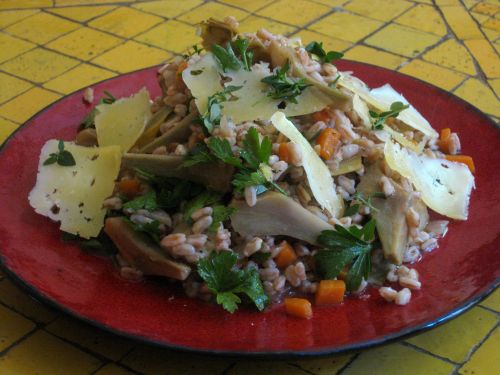
farro artichokes

Recipe: Warm Farro Salad with Artichokes, Caciotta, and Spring Garlic

I’m always on the lookout for Italian products made in this country by people who have the heart and dedication to follow artisanal Italian tradition. Dancing Ewe Farms, started in 2003, is a dairy and cheese maker in upstate New York that produces Tuscan-style cheeses the way they’re done in Tuscany, from the farm’s raw milks, with no pasteurization and no preservatives. The cheeses are handcrafted every step of the way. You can taste it, for sure, but you can even see it. The rinds are beautifully hued and rustic.

dancing ewe
Dancing Ewe Farm’s cheeses, at the Union Square Greenmarket in Manhattan.

For months I was eyeing Jody and Luisa Somers, the couple who own Dancing Ewe, and their rounds of cheeses whenever I went to the Union Square Greenmarket on Fridays. I’d sort of just stand around their stall, acting like I didn’t know what I was doing. A few months ago I finally made a purchase (I’m not sure at all what took me so long). I bought a container of their sheep’s milk ricotta and a small chunk of mildly aged pecorino (they also make a younger pecorino). The ricotta was beautifully rich, and the pecorino was aged just enough to develop deep flavor but not so much that it turned throat-grabbing sharp. I went back a few weeks later to pick up their caciotta, a cow’s milk cheese, and misto, a mix of cow’s and sheep’s milk. I was really impressed. The texture is just as it should be, firm but with a solid tenderness, the color is golden, and the cheeses all have a tempting, tangy aroma, with a whiff of the animals that made them possible. I wasn’t surprised to learn that Jody Somers had studied cheese making in Tuscany, and I’m also not surprised to learn that they sell to Babbo and to Daniel.  You can also find their cheeses at Murray’s and Whole Foods.

I wanted to develop a recipe to show off one of these cheeses, so I turned to Tuscany for inspiration. I chose as my base ingredient farro, the nutty whole grain so loved in Central Italy, and then added artichokes and a few other spring flavors such as fresh spring garlic and lots of herbs, throwing them in at the last minute so they stayed really fresh. Then I topped it all off with shavings of their caciotta cheese. This recipe is dedicated to the efforts of Dancing Ewe Farm. Keep up the great work.

You can check out their website at www.dancingewe.com.

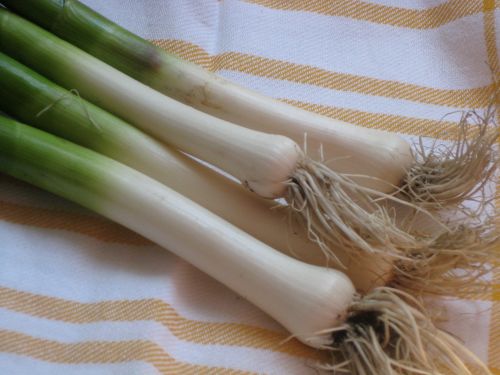
spring garlic
Fresh garlic from the Union Square Greenmarket.

Warm Farro Salad with Artichokes, Caciotta, and Spring Garlic

(Serves 4 0r 5)

1½ cups farro
Salt
Extra-virgin olive oil
1 lemon, zested and then cut in half
4 globe artichokes
1 small spring onion, diced, using some of the tender green stalk
2 small carrots, peeled and cut into small dice
A small section from a stalk of spring garlic, thinly sliced, using some of the tender green part
Freshly ground black pepper
¼ cup dry white wine
¾ cup chicken broth
8 large sprigs of fresh thyme, the leaves lightly chopped
A handful of flat-leaf parsley leaves, very lightly chopped
¼ pound caciotta cheese by Dancing Ewe Farms, or grana Padano cheese

Set up a medium-size pot of water, and bring it to a boil. Add a generous amount of salt, and drop in the farro. Cook, uncovered, until it’s tender, about 12 to 14 minutes (it should start to swell, but taste-test a piece to make sure it’s tender but with a bit of a bite). Drain the farro, and place it in a serving bowl. Drizzle on a little olive oil, and give it a toss.

Set up a bowl of cold water, and squeeze the lemon juice into it. Drop the lemon halves into the water. Pull off all the tough outer leaves from the artichokes, and trim the tough ends of the stems, leaving most of the stem on. Peel the stems. Cut off about a half inch from the tops of the artichokes, and then cut them into quarters, lengthwise. Cut out the chokes from each artichoke piece with a small knife. Drop the pieces into the lemon water as you go.

Set up a large sauté pan over medium heat. Add 2 tablespoons of olive oil. When the oil is hot, add the onion and carrot, and sauté for a minute or so, just to soften it. Drain the artichoke pieces, and add them to the skillet along with the garlic. Season with salt and black pepper, and sauté until everything is fragrant and beginning to soften, about 4 minutes. Add the white wine, and let it bubble for about a minute or so. Add the chicken broth, and get it bubbling. Partially cover the pan, turn the heat down a touch, and let it simmer until the artichokes are just tender when pierced with a knife, about 10 to 12 minutes.

Pour the artichokes with all their pan juices over the farro. Add the lemon zest, the thyme, and the parsley, and toss gently. Taste for seasoning, adding more salt, black pepper, or a squeeze of lemon juice if needed.

To serve, divide the farro up onto serving plates and shave a few big slices of Caciotta over each one. Serve warm.

Read Full Post »

RECESSION COOKING Promo

Read Full Post »

squid pasta

Recipe: Gemelli with Calamari and Pea Shoots

Something happens to my cats when I bring squid into the house. They revert into wild creatures. They howl like babies, clawing up my leg, sticking their warm black-and-white heads right under my ten-inch chef’s knife to steal away as much raw squid as they can. It’s a ferocious battle, and they always win, exasperating me and finally wearing me out. They love it raw. They love it cooked. No other seafood produces such a response from them. They can smell the squid the minute I walk in the front door. And they’re relentless in their pursuit of it.

buddy squid
Buddy chomps on a raw squid tentacle. Fumio looks on.

I myself love squid, too, especially when on a Saturday I can make it to my neighborhood Greenmarket at Abingdon Square and buy it from Phil Karlin, my number-one fish guy,  who fishes off the North Shore of Long Island. His is the squid my cats prefer, too. It’s ultra fresh, as it should be but somehow never quite is when I buy it from a fish shop (frozen and thawed can be okay, but not dependably). When I get small, pristine, fresh-from-the-sea squid from Mr. Karlin, I like to flash cook it so it stays white and juicy.

I made it to Abingdon Square market this week in time for Mr. Karlin’s squid (he often runs out of most fish by about noon, so if I don’t get moving I miss out, and then everyone is pissed).  While at the market, I  also picked up a handful of pea shoots, the first time I had seen them this spring, and fresh, still bulbless garlic and spring onions, both with long, tender green stems attached.

After a little back and forth in my culinary head, here’s what I made.  You can’t really go wrong with ingredients like these.

Gemelli with Calamari and Pea Shoots

(Serves 6 as a first course or 4 as a main course)

3 tablespoons butter
Extra-virgin olive oil
A little chunk of fatty prosciutto end, cut into small dice (about ¼ cup)
1 spring onion, cut into small dice, using the tender green stem
1 stalk fresh spring garlic, thinly sliced, using the tender green stem
1½ cups freshly shucked peas
A generous pinch of ground allspice
Salt
Freshly ground black pepper
1 cup chicken broth, and possibly a little extra
1 pound gemelli pasta
1½ pounds small calamari, cleaned and cut into rings, the tentacles left whole
A splash of dry white wine
A handful of pea shoots, trimmed of their thick stems
A big squeeze of lemon juice
2 tablespoons grated grana Padano cheese

Set up a large pot of pasta cooking water, and bring it to a boil.

In a large skillet, melt 2 tablespoons of the butter and a tablespoon of olive oil over medium heat. Add the prosciutto and the onion, and sauté until the onion is soft and the prosciutto has given off some of its fat, about 4 minutes. Add the garlic, and sauté just until it releases its aroma, about a minute. Add the peas, seasoning with the allspice, salt, and black pepper. Add the chicken broth, and turn the heat to high. Boil the peas, uncovered, until tender, about 4 or 5 minutes. There should be about ½ inch of liquid left in the skillet. If not, add a little more chicken broth.

Add a generous amount of salt to the pasta water, and drop in the gemelli.

In another skillet, heat a tablespoon of olive oil and the remaining tablespoon of butter over high heat. When hot, add the calamari, seasoning with salt and black pepper, and sauté quickly, just until it’s tender and opaque, about 2 to 3 minutes, depending on its size. Add the splash of wine, and let it bubble for a few seconds. Add the calamari and all the skillet juices to the peas.

When the gemelli is al dente, drain it, and pour it into a large, warmed serving bowl. Drizzle on a generous amount of fresh olive oil, and add the grana Padano. Toss gently. Add the calamari and pea sauce, the pea shoots, and the squeeze of lemon juice. Toss again. Taste for seasoning, adding more salt or black pepper if needed. Serve hot.

Read Full Post »

VLS60479
Wind and rain Italian style, by Luca Signorelli.

Recipe: Watercress Salad with Strawberries, Chives, and Warm Goat Cheese

Rain and more rain, and not so warm either. That’s been May in Manhattan so far (April, too). I actually really love rain, especially dark rainy afternoons with lots of thunder, but I’m sick of cold. I want warm rain, yet so far all we’ve had is cold rain, and a lot of wind too. I do love wind, but, as you might guess, I like warm wind, Miami Beach wind. Too bad none of my weather desires are playing out right now. Not a problem. To cheer myself up I’ve devised this salad, using all the delicate spring foods I could work in—watercress, strawberries, young goat cheese, and chives. I used big strawberries, but if you can get the little wild type, just leave them whole (it’s too early for them in New York, but Tri Star and other wild hybrids will be available in June at my greenmarket. I can’t wait).

Happy spring to you.

strawberry salad

Watercress Salad with Strawberries, Chives, and Warm Goat Cheese

(Serves 2)

1 bunch watercress, stemmed
1 small head frisée lettuce, torn into pieces
¼ cup pine nuts, lightly toasted
8 medium strawberries, cut in half
8 chives, cut into long pieces
½ teaspoon balsamic vinegar
½ teaspoon lemon juice
2 tablespoons extra-virgin olive oil, plus a little extra to drizzle
Salt
Freshly ground black pepper
A pinch of allspice
4 ½-inch-thick rounds fresh goat cheese
4 ½-inch-thick slices from a baguette, cut on an angle so they’re longer

Place the watercress and frisée in a salad bowl. Add the pine nuts, strawberries, and about half of the chives.

Set out two salad plates.

In a small bowl, whisk together the balsamic vinegar, lemon juice, and olive oil, seasoning it well with salt, black pepper, and the pinch of allspice.

Place the baguette slices on a small cookie sheet, and set it under a broiler. When the slices are golden, flip them over, then place a slice of goat cheese on each one, seasoning them with salt and a few grindings of black pepper. Broil until the cheese is just starting to melt and the edges of the bread are toasted.

Pour the dressing over the salad, and toss gently. Divide the salad onto the plates, and place two goat cheese toasts around each one. Drizzle a thread of olive oil over each toast, and scatter the remaining chives on top of the salad. Serve right away.

Read Full Post »

Stuffed Artichokes

rome-artichoke-festRome’s annual artichoke festival, April 2008.

Recipe: Artichokes Filled with Almonds, Anchovy, and Thyme

Big, scary, painful globe artichokes. How do you deal with something so seemingly impenetrable? Frankly, they are a bit of an ordeal even for me, and I’ve been handling them for decades. They pierce your fingers, they turn your hands black, and they turn themselves black. I almost never see home cooks buying them. They seem to pile up on grocery shelves. Lately they’ve even been cheap, and still nobody’s buying them. Three for five dollars I’ve been seeing around Manhattan. So I’ve been buying them again.

I got out of the habit of dealing with those big globes when I began finding little “baby” artichokes in the markets about ten years ago or so (they are actually little secondary shoots that grow from the middle of a globe artichoke stalk). They have no chokes and need just a quick trimming to cook up tender. I don’t know what ever happened to them, but they seem to have disappeared. I asked the vegetable buyer for Citarella, and he told me he keeps ordering them, but they never arrive. I’ll get to the bottom of this and let you know. In the meantime, I’m going to show you something really excellent to make with the big ones.

Why go through all the work of prepping these things? Because they’re among the most delicious vegetables in the world. The heart of a globe artichoke is an amazing creation. It’s rich, it’s delicate, it’s creamy, it’s just intrinsically Italian. Artichokes are a little rugged, they work you hard, but they give back generously. To me an artichoke sums up the spirit of Southern Italy very nicely.

To be honest, for me the drawback in preparing big artichokes was never really the prep (I can get into all kinds of kitchen manual labor and enjoy it immensely). It was the waste. All the tough outer leaves are really crap. I know you can scrape them with your teeth, but that’s just so American, so boiled-artichokey. When I want to prepare them in true Italian style, I now just come to terms with the fact that a big part of them will wind up in the garbage, and I get on with it.

Stuffed artichokes can be fabulous, but they have to be done with a light touch. It took me a while to put the memory of ten-pound, full-of-sausage-and-soggy-bread, garlic-laden, outrageously greasy stuffed artichoke of my childhood, the standard Little Italy gross-out treatment, out of my mind for good, and create a new standard for myself.

Try these.
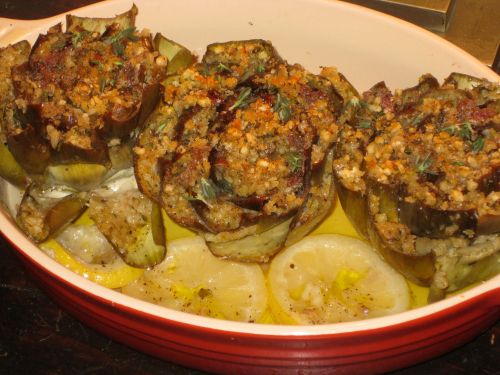
stuffed-artichoke

Artichokes Filled with Almonds, Anchovy, and Thyme

(Serves 4 as a first course or a light dinner)

3 lemons, 2 cut in half, the other one sliced into thin rounds
4 globe artichokes
2 garlic cloves, peeled and roughly chopped
½ cup sliced or slivered almonds, lightly toasted
¾ cup homemade, roughly textured dry breadcrumbs–not the powdery stuff you buy in a can
4 anchovy fillets, roughly chopped
½ cup grated grana Padano or piave cheese
Salt
Freshly ground black pepper
Extra-virgin olive oil
8 big sprigs of thyme, stemmed
About a dozen basil leaves
1 cup dry white wine
1 cup light chicken broth

Set up a big bowl of cold water, and squeeze the cut lemon into it. Drop the lemon halves into the water.

Cut the stems from the artichokes, and drop them (the stems) into the lemon water. Cut off all the spiky tips from the artichokes (you’ll want to just give the tops a nice clean cut, taking off about an inch or so). Now pull off all the tough, dark green leaves until you get to the lighter green, tenderer ones (when eating, you’ll probably still have to scrape the first layer or two with your teeth, but after that they should be tender enough to eat in toto). Spread the leaves open so you can see inside to the fuzzy choke. Remove the chokes on all the artichokes by scooping them out with a melon baller or a grapefruit spoon (in my experience, the melon baller works best). Place the cleaned artichokes in the lemon water.

Take the artichoke stems from the water, and peel off all the tough outer skin. Chop the stems roughly.

Place the garlic, the almonds, and the artichoke stems in the bowl of a food processor, and pulse until you have a uniform, rough chop. Add the anchovies, breadcrumbs, and the grana Padano or piave cheese. Season with salt and black pepper, and add about 3 tablespoons of olive oil and the juice from the remaining halved lemon. Pulse a few more times to blend everything, keeping the mixture slightly chunky (you don’t want a paste). Add the thyme and the basil, and pulse one or two more times, just to break up the herbs into pieces.

Stuff the insides of the artichokes with the breadcrumb mixture, and work some in between all the leaves as well. Place the artichokes, stuffing side up, in a wide shallow saucepan. Pour in the white wine and the chicken broth. Add the sliced lemons. If the liquid doesn’t come about ¾ way up the artichokes, add a little more wine or broth or water. Drizzle the tops of the artichokes with a little fresh olive oil, and bring the liquid to a boil. Turn down the heat, cover the pan, and simmer until the artichokes are tender, about 30 to 35 minutes. You can test by pulling off an outer leaf. If it pulls off easily, they’re ready.

Lift the artichokes from the liquid. I like to run the tops under a broiler for a minute, just to crisp up the crumbs, but it’s not essential. Serve either warm or at room temperature.

Read Full Post »
piacentinu-salad

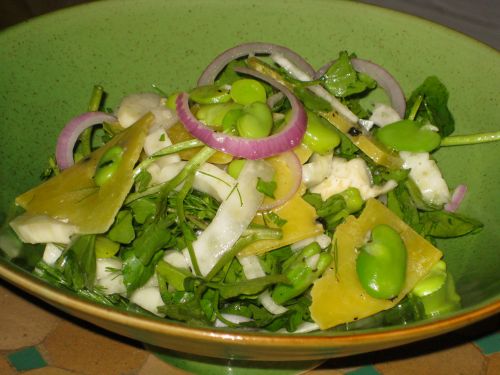
Recipe: Fennel and Fava Salad with Piacentinu Cheese

You know how you can discover a new food and it fascinates you even before you taste it? Bresaola was one of those foods for me. Cardoons were another. Piacentinu is a third.

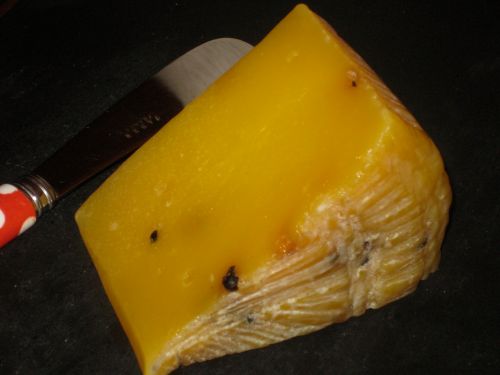
Piacentinu is a cheese I discovered during my first trip to Sicily, about 12 years ago. It’s a very old and unusual-tasting cheese, dating probably back to medieval times. It’s a Sicilian pecorino from the inland area around Enna. Much like the island’s pepato, Piacentinu is studded with black peppercorns, but unlike pepato it’s infused with saffron, which gives it a beautiful golden color and a taste that might be what you’d call acquired. I’ve now acquired it. At first I wasn’t so sure. I was fascinated with its color, so I tasted it.  This may have been in the fabulous city of Trapani. I was overwhelmed by its beauty—both the cheese and the city’s—and when I got home I tracked down Piancentinu in Manhattan, bought a hunk, and tasted it again. I found it strange, almost medicinal, but I couldn’t let it go. I wanted to taste it again, to keep tasting it. I’m not sure why, exactly. Something was telling me I loved this cheese but just didn’t know it yet.

Saffron is a spice I really had to learn to cook with. It has an alluring bitter edge, which can become less alluring when heated too long, or if you use too much, but in good hands (the hands I now have) it produces an exotic, bittersweet perfume. I believe Piacentinu cheese came into being at a time when saffron, like black pepper, was a sign of wealth and so was an extravagance. The fact that the cheese held on as most heavily spiced foods fell from favor in Sicily is a testament to what I now find to be its lovely flavor. That flavor, like other slightly bitter tastes that punctuate some Southern Italian foods, such as that of Amaro, is something I’ve worked to love. Now I even crave it.

It took me a while to come up with good flavor pairings for Piacentinu, but I finally found them. When I started thinking Arab, it all came together. Piacentinu, I discovered, tastes incredibly good with dates. It’s also wonderful with a glass of good dry Marsala. It marries well with sweet or slightly bitter fruits such as figs or pears, but maybe not so well with acidic ones like green grapes. To my palate it’s a little too rich to match with salumi products like soppressata. When I was looking for ways to incorporate it into a fully composed dish, I thought about some of the classic Sicilian cooking that includes saffron, and I finally hit on what I think is a right-on match for this unusual cheese: fennel. Saffron and fennel are often paired in Western Sicilian dishes, as they are in neighboring North Africa. Think of pasta con le sarde, with its mix of fennel, saffron, raisins, and pine nuts, and Sicily’s version of couscous, usually a fish concoction scented with fennel, bay leaf, and saffron.

I decided to include Piacentinu in a raw fennel salad, and I was extremely happy with the opulent results. I added pine nuts because Sicilians love pine nuts. And since it’s springtime, I threw in a handful of fresh fava beans and a little watercress. I hope you’ll like the salad, too. It is, I think, I  nice way to coax your palate into spring, and a good way to make your acquaintance with Piacentinu.

You can order Piacentinu from Dipalo’s or Buonitalia.

piacentinu
Sicilian Piacentinu, flavored with saffron and black pepper.

Fennel and Fava  Salad with Piacentinu

(Serves 2)

1 pound fava beans, in their pods
1 small fennel bulb, very thinly sliced, plus a few fronds reserved for garnish
About ¼ a red onion, very thinly sliced
A small bunch of watercress, the thick stems trimmed
A palmful of pine nuts, lightly toasted
About 10 big shavings of Piacentinu cheese
The juice from ½ a small lemon
2 tablespoons extra-virgin olive oil
Salt
Freshly ground black pepper

Shell the fava beans. Set up a small pot of water, and bring it to a boil. Drop in the fava beans, and blanch them for two minutes. Drain them, and then run cold water over them to stop the cooking. Now pierce the skin of each bean with your nail, and pop the bean out. The skins should slip off easily. Now you’ll have a nice pile of tender, smooth bright green fava beans.

In a small salad bowl combine the fava beans, fennel, red onion, watercress, pine nuts, and Piacentinu. Mix the lemon juice with the olive oil, and season it with salt and black pepper. Pour this over the salad, and toss gently. Garnish with the fennel fronds. Serve right away.

Read Full Post »

cook1
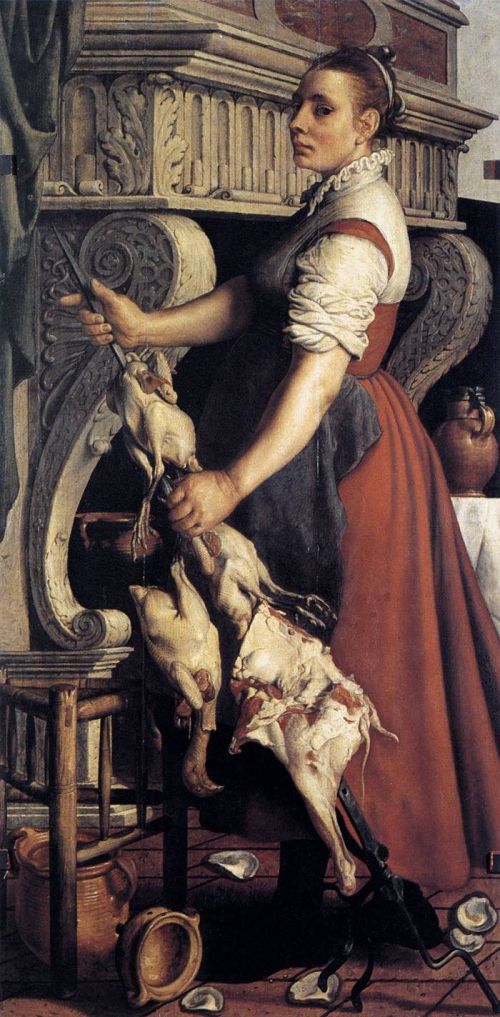
The Cook, by Pieter  Aertsen (1508-1575).

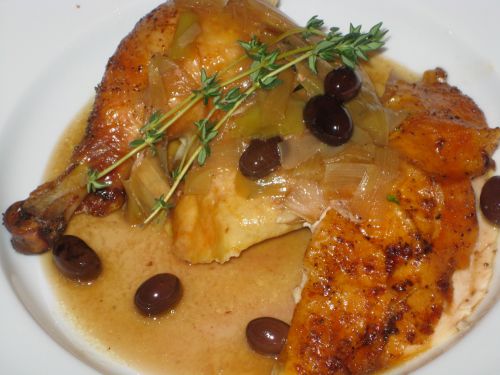
Recipe: Roast Chicken with Leeks, Thyme, and Black Olives

I never had roast chicken when I was a kid. We had chicken alla cacciatora, chicken with lemon and garlic, or we barbecued chicken, lots of it, all summer. The idea of the perfect still-life whole roast chicken came later for me, when I started reading French cookbooks. Jacques Pépin’s cookbooks introduced me to roast chicken, and I love him for it. I love him for a lot of things. His big technique books were the guidance I turned to first when I decided to get serious about cooking. I also love the fact that he slaughters and sautés frogs he catches in a pond on his Connecticut property. I somehow find that incredibly alluring.

From Mr. Pépin I learned to roast chicken on high heat, but he also always recommended turning the thing around a bunch of times during the cooking. I used to do that, and the results were very good. I don’t know what happened, but somewhere along the way I completely lost patience with the technique and just stopped doing it. But then a curious thing occurred. I started producing really good roast chicken by just sticking the thing in the oven and letting it sit there. Sorry Jacques. I still love you.

What I do now is put the chicken in legs first, so the dark meat, which cooks slowest, is in the hottest part of the oven. That gives me tender dark meat and moist breast meat without having to keep moving the bird. And I’ve found that an even 400 degrees is a good roasting temperature for the entire stint. A 3½-pound chicken takes about 1 hour and 20 to 25 minutes at this temperature (with a read of about 165 degrees at the upper thigh joint, next to the bone, when perfectly cooked). I start the chicken on convection, which helps boost browning, but then I turn it off after about a half hour so the skin doesn’t get too dark too early.

A roast chicken is something you can really play around with. I’ve done the million-cloves-of garlic thing, I’ve gone Sicilian with anchovies and orange, I’ve tried the tarragon-and-vinegar approach. Oh, I’ve been all around Europe with my roast chickens. I love the flavor combo of fresh thyme with black olives, and I reach for it when I want something easy but lush. So this time I started with those flavors and then added leeks and Marsala to the roasting pan. They become central components of a rich pan sauce that basically made itself. I hope you like it.

roast-chicken

Roast Chicken with Leeks, Thyme, and Black Olives

Extra-virgin olive oil
2 tablespoons melted butter, slightly cooled
Salt
Freshly ground black pepper
¼ teaspoon ground nutmeg
½ teaspoon sugar
An approximately 3½-pound free-range chicken
A small bunch of fresh thyme branches
3 garlic cloves, peeled and lightly smashed
2 large leeks, trimmed, split lengthwise, and cleaned
4 carrots, peeled and cut lengthwise in two
A big wine glass of dry Marsala
2 cups chicken broth
A tiny splash of Spanish sherry vinegar
A handful of black olives, such as Niçoise
A tiny splash of Spanish sherry vinegar

Preheat the oven to 400 degrees.

In a small bowl, mix the butter with 2 tablespoons of olive oil. Season well with salt, black pepper, the nutmeg, and the sugar. Rub the chicken all over with this seasoned oil. Shove the garlic cloves and the thyme in the chicken’s cavity. I don’t bother to truss the thing, but I do fold the wings under so they’re neatly tucked in.

Choose a roasting pan that will hold the chicken with a little room to breathe. Place the leeks and carrots in the pan, making a flat bed. Place the chicken on the vegetable bed, breast side up. Pour the Marsala and about ½ cup of the chicken broth into the pan. Give the chicken an extra little sprinkle of salt, and put it in the oven, legs toward the back.

Roast for about 1 hour and 20 to 25 minutes, adding more chicken broth from time to time when the liquid gets low. I use convection for the first half hour, which cuts the cooking time by about 5 minutes or so. You can test the upper thigh joint with a thermometer. It should be perfectly done when it reads between 160 and 170.

When the chicken is done, take it from the oven. Pour any juices that run from the cavity into the roasting pan. Place the chicken on a serving platter. Take the garlic and the thyme out, and add them to the pan juices. Take out the leeks and carrots. Place the carrots around the chicken, and cover everything lightly with aluminum foil.

Skim off as much fat from the pan juices as you can. Chop the leeks into small dice, and return them to the roasting pan. Heat the pan juices over a medium flame until bubbling. Add the olives. Add enough chicken broth or water to create a thin sauce. Boil for about a minute or so. Remove the thyme. Add a tiny splash of Spanish sherry vinegar, just to bring up the flavor. Taste for seasoning, adding more salt or black pepper if needed. Pour the sauce into a gravy bowl.

Cut the chicken into pieces ,and pour a generous amount of the sauce onto each serving.

Read Full Post »

« Newer Posts - Older Posts »