
Recipe below: Gemelli with Nettle Lemon Pesto and Mussels
The thing about stinging nettles is that they really do sting. I was surprised to learn this. I thought it was just romantic folklore. They don’t sting bad, just a little, but if you keep grabbing them without gloves, your hands will likely blow up and get red and itchy. You just need gloves, and then there’s no problem. And once the nettles are blanched their little sting is completely gone, never to come back.
The first time I ever ate stinging nettles was in Rome many years ago. They were in a beautiful jade green risotto, a little on the loose side. The taste was an earthy mix of spinach and potting soil. I loved it. I came back from that trip wondering if I could ever find nettles in New York. And I did find them, at the Union Square market in Manhattan. I tried to duplicate my Roman risotto. It came out pretty well and I was very proud of myself. And then years later, when I got my little house in upstate New York, to my astonishment I discovered a big patch of stinging nettles growing in the backyard. That was some huge excitement. Now I cook with them every spring.
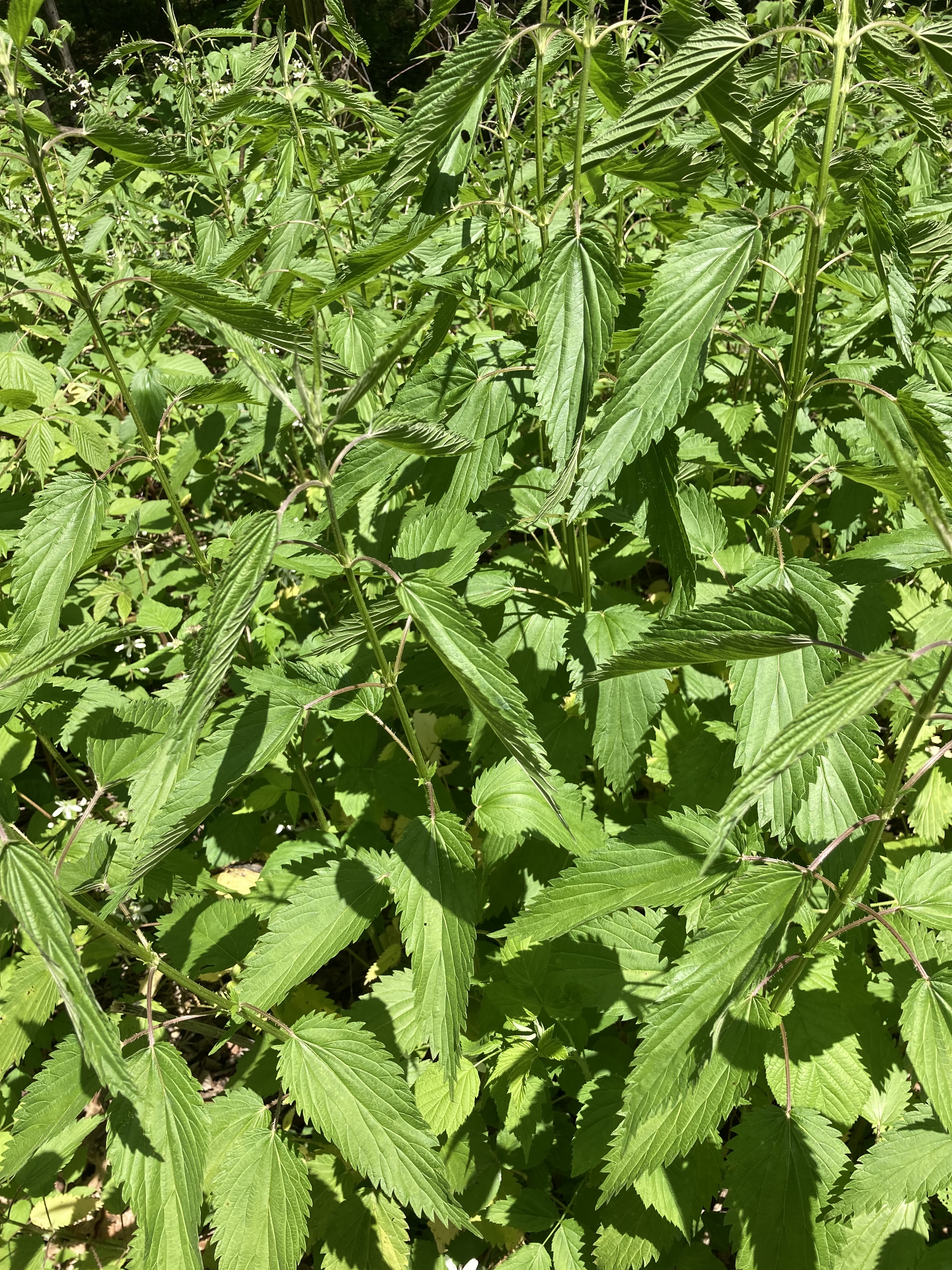
Stinging nettles are called ortiche in Italy. They’re most common in the middle and north of the country, where the soil is moister. Since my Roman experience, I’ve eaten ortiche several times in Liguria, usually as an ingredient in preboggion, the wild herb mix that’s used to fill pansoti, a bloated little ravioli, and other nice things, like savory torte, soup, and frittate. I’ve recently discovered that it makes an excellent pesto.
I originally made my ortica pesto using the classic Ligurian basil pesto formula, simply replacing the basil with blanched nettles. Last night I cut back on the cheese, replaced the pine nuts with pistachios, and added a good amount of lemon zest. I tossed the resulting deep green pesto with steamed mussels and gemelli. I think another mild seafood such as scallops or trout would work just as well. You could certainly serve the nettles simply tossed with pasta, no fish, but the mussel combo was, in my opinion, a success.
I really love the color of blanched nettles. They’re a deep, almost bluish-tinged green. You’ll really notice that when you’re squeezing them dry, when lots of lovely emerald water will cascade into your sink.

Gemelli with Nettle Lemon Pesto and Mussels
For the pesto:
1 medium bouquet of stinging nettles, gathered wearing gloves (I cut them about 6 inches from the tops, stems and all)
1 spring garlic clove, chopped
¾ cup unsalted shelled pistachios
¾ cup freshly grated Parmigiano Reggiano cheese
The grated zest from one lemon
Extra-virgin olive oil
Salt
Freshly ground black pepper
For the mussels:
1½ pounds mussels, cleaned
A drizzle of extra-virgin olive oil
About ½ cup dry vermouth
Plus:
¾ pound gemelli
Still wearing your gloves, pull all the leaves off of the nettle stems. Discard the stems. Set up a pot of water, and bring it to a boil. Drop in the leaves, and blanch them for about a minute. Drain them into a colander, and run cold water over them to stop the cooking and to bring up their brilliant green color. Squeeze out as much water as you can. Aside from all the lovely green water that they’ll produce, you’ll also probably notice that the leaves feel dry, which I found to be an odd sensation.
Put the garlic and the pistachios in a food processor, and pulse until you have a rough chop. Add the nettles, Parmigiano, lemon zest, and about ⅓ cup of good olive oil. Season with salt and black pepper, and pulse until you have a smooth paste, adding more olive oil if needed to get a creamy consistency.
Put the mussels in a large pot. Drizzle them with some olive oil, and pour on the vermouth. Cover the pot, and let the heat come up a bit. Uncover the pot, and cook the mussels, stirring them around occasionally until they open. When they’re cool enough to handle, take them from their shells, and place them in a bowl. Strain the mussel cooking broth, and pour about ½ cup of it over the mussels. Cover the mussels to keep them warm.
Cook the gemelli in a large pot of salted water until it’s al dente. Drain it, saving about a cup of the cooking water. Pour the pasta into a large serving bowl. Add the mussels with their liquid. Add about half the pesto and a little of the cooking water. Give everything a good toss, adding a bit more of the pesto if needed, and subsequently a little more of the cooking water to make it creamy. Serve right away. Leftover nettle pesto is great in a frittata.


 Erica De Mane