Feeds:
Posts
Comments

Archive for November, 2006

My Winter Fruit of Choice

Olives at the market in Nice.

Olives at the market in Nice.

Recipe:

Papardelle with Black Olives, Lemon, and Cream

I sometimes take naps on Saturday afternoons, and when I wake up from one I always seem to have a food craving. In the warm weather months I want something sweet, like a caramel or a swig of maple syrup; in winter months, I crave black olives. There is a black olive cold weather association in my mind. I haven’t been able to get to the bottom of it (it may have something to do with my mother always putting out a Thanksgiving day bowl of black olives with raw fennel, but I’m really not sure), but I’m grateful for it nonetheless. I’ll have my olives after a winter nap, but I’ll also cook with them much more than I do in the summer, scattering them over antipasto platters and stirring them into stews and pastas, making olivata (olive paste) in the food processor and smearing it on bread and folding some into omelettes (the best, especially if I include a slice of mozzarella). Black olives are a beautiful thing, something delicious for me to want and love in the cold months, my winter fruit of choice, warm and ripe.

Strangely, I know several very little kids, five and six years old, who love black olives. That says a lot about the fruits’ deliciousness. They won’t eat broccoli, but they love olives, and kids understand about the pits. They enjoy spitting them out.

From the short list of black olives available in this country, I’d have to say the little Niçoise ones are my favorites, although a pain if you need to pit a whole lot of them. The giant, bland bella di Cerignolas from Puglia, which are almost impossible to pit, have a taste that’s just a notch above that of California canned olives, but they have their place. I often put a bowl of them out, along with mozzarella, roasted peppers, and salami, for a classic Italian-American-style antipasto. People can never quite believe how huge they are. They’re not much of a challenge to the palate, but maybe that’s why I sometimes want them.

While visiting Puglia for my book on Southern Italian cooking, I sampled at least ten different varieties of black table olives; Corotina and Cima di Melfi are names I recall (those big Cerignola things seem to be more popular here than there). I wish I could find some of those rich tasting Puglian olives that always showed up along with platters of salumi in restaurants. I buy oil-cured, wrinkled Moroccan olives that occasionally have a curious undertone of single-malt scotch (why would that be?). I really love them, but they’re harder to cook with, since their lush intensity floats all over a dish. When I do include them in cooking, it’s usually only to scatter them over the top of a finished dish. Halkadiki is a Moroccan-style oil cured in oil that’s less wrinkly and a little fruitier than most. Sometimes these are just the thing. Most of the wrinkly types I buy from Kalustyan’s, an excellent Middle Eastern shop in Manhattan (and you can mail order from www.kalustyans.com). My favorite winter antipasto incorporates rich, wrinkled black olives, raw fennel, and slices of a spicy coppa, excellent with a deep pink Italian rosato wine, Believe me, this little grouping of flavors will make you very happy.

Gaetas are another excellent black olive choice. The ones I find here seem less nuanced then the Gaetas I’ve eaten in Southern and Central Italy, but they’re fine, or better than fine, a great olive to enhance stewed rabbit or to stir into a lamb ragù. When I get myself down to Despana, an excellent Spanish food shop in SoHo (at 408 Broome Street, if you’re in the neighborhood), I always check out their olives first (although their cured Spanish sausages and hams are the best I’ve found in the city). I very much like the brownish Arbequina olives and the fully ripe, black, mellow Empeltre variety, since they both blend seamlessly with most of my Southern Italian cooking. I recently made a chicken cacciatore with tomatoes, marjoram, and Arbequinas, which was pretty good on a cool, windy night, with a bottle of dolcetto. Black olives need to be washed down with wine, although I’ve seen kids take them with milk or orange juice, which is fine, as long as they take them.

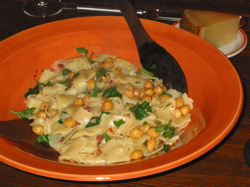
Papardelle with Black Olives, Lemon, and Cream

This is definitely a first-course pasta, like any pasta with cream in it, but its lemon and olive flavors set up your palate to follow it with something lean but vibrant, maybe with more lemon, something like a whole roasted fish stuffed with lemon and rosemary, or chicken with lemon and garlic.

(Serves 5 as a first course)

2 tablespoons unsalted butter
1 garlic clove, minced
The grated zest from 2 large lemons
A few gratings of nutmeg
1 cup black olives (Gaetas are a good choice), pitted and hand-minced (you can mince them in a food processor, but stop pulsing before they turn into a paste)
1/4 cup cognac or brandy
1 cup heavy cream
Freshly ground black pepper
2 tablespoons freshly grated Parmigiano Reggiano cheese
8 large sprigs flat-leaf parsley, the leaves lightly chopped
Salt, if needed
1 pound homemade or fresh store-bought pappardelle pasta

Set up a large pot of pasta cooking water and bring it to a boil.

In a large skillet, melt the butter over medium heat. Add the garlic, lemon zest, and nutmeg, and sauté to release their flavors, about a minute. Add the olives, and sauté about a minute longer. Add the cognac or brandy, and let it bubble away. Add the cream. Turn off the heat, give the sauce a stir, and let it sit while you cook the pasta.

Add a generous amount of salt to the pasta water and drop in the pappardelle. When tender, drain and add the pappardelle to the skillet, saving about 1/2 cup of the cooking water. Toss briefly, just to coat the pasta well, and pour into a large serving bowl. Add the Parmigiano and the parsley. Toss gently. Taste for seasoning, adding salt if needed (if your olives are salty, you probably won’t need it). If the pasta has become too dry, add a drizzle of pasta cooking water and toss again. Serve right away.
Read Full Post »

Joseph’s mother’s lagane e ceci.

Joseph’s mother’s lagane e ceci.

Recipe:

Lagane e ceci

Dear Erica,

I’m very happy to read about your new website feature, “Lost Recipes Found.” One recipe in particular, something my mother made often, I really, really miss. It’s a pasta with chickpeas in a white sauce of some sort, and no tomatoes. I’ve tried making it myself, but I can’t get it right. My sister can’t either. The pasta looked like fettuccine, only cut shorter. I can’t remember if my mother made the pasta fresh herself or not. There was parsley and hot pepper in the sauce, but other than that mainly chickpeas and I guess olive oil (I never paid much attention to her cooking; I was only interested in eating). I grew up in the Bronx. My mother’s family came from Salerno, near Naples. If you could help me recreate this pasta, I’d be really grateful. (more…)

Read Full Post »

For the Love of Chicken Livers

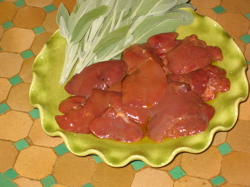
Uncooked chicken livers and sage.

Uncooked chicken livers and sage.

Recipes:

Lasgnette with Chicken Livers, Rosemary, and Leeks
Chicken Liver Crostini with Fig and Fennel Salad

Every fall I start thinking about how I’d love a nice plate of hot chicken livers. Creepy craving, you might think, but it’s one of my weather-and-food associations that surface every year with the first chill. I believe it has something to do with my first restaurant job and a dish the lunch chef taught me to make, something she said was a good transitional dish to ease our bodies and souls into cold weather, a French country salad. It was a frisée salad made with a mustardy dressing and topped with seared, pink-inside chicken livers that had been flamed in cognac (I remember the chef telling me that cognac or brandy was very important for flavor, and she was right; it seems to take away the livery bitterness and replace it with sweetness). I found this salad absolutely delicious, still light and summery with all its greens and coolness, but rich with hot liver nuggets. I’d never had chicken livers cooked like that before; pink and custardy inside, bordering on raw, but seared crispy. Eating this salad made me feel like an elegant, wild beast. I’d always been fascinated by my cats and the way they’d lose their minds when I brought chicken livers home, screaming, tearing at the package, clawing them and dragging them under the couch. Listening to their growling and tearing and seeing their glowing eyes, I knew they were on to something good. I thought about the other foods my cats have always loved, squid both raw and cooked, pork fat raw and cooked, sardines raw, cooked, and canned. I realized I should just look to them for culinary guidance.

Since my first cooking job, I’ve associated well-cooked chicken livers with Italian cooking, and luscious pink livers with French cooking; not exactly correct across the board, but this conception does linger. A very good dish of penne with chicken livers that I’ve ordered for years in a red-sauce place called Ralph’s on the West Side is an example of an old-fashioned but fine way of cooking these livers. Of course it includes tomatoes. I’ve played around with this marriage of ingredients at home, refining it just a little with fresh herbs, vino, better olive oil, and, most important, by cooking the livers lightly, not in the traditional, gray, ragu mince Ralph’s presented (which I loved better until I tasted the creamy, shockingly raw morsels placed on my bistro salad). I cook the livers for my pasta to a pinkness, a bit more cooked than the seared and raw salad version, but still creamy inside. I’m very happy with the results.

I understand that many people are grossed out by chicken livers, but I really encourage you to try the quick-sear method with the cognac finish; it produces a luxurious result. I also include here a recipe for the classic Tuscan chicken-liver pâté usually served on crostini. I don’t sear them raw for this, but they’re not hammered either, so the pâté is smooth and moist. This is a great mush of flavors: capers, cognac, sage, and a touch of anchovy. It’s complex and really lovely.

Lasagnette with Chicken Livers, Rosemary, and Leeks

(Serves 4 as a main course)

Extra-virgin olive oil
1/2 pound chicken livers, trimmed and cut into medium chunks
Salt
Black pepper
A pinch of sugar
A splash of cognac or brandy
2 small leeks, well rinsed and cut into small dice, using only the white and the tender green parts
1 garlic clove, thinly sliced
1 large sprig rosemary, the leaves chopped
1 allspice, ground to a powder
A splash of dry white wine
5 medium tomatoes, skinned and cut into medium dice
1 pound lasagnette pasta
A handful of flat-leaf parsley, the leaves lightly chopped
A large chunk of Pecorino Toscano cheese for grating

In a large sauté pan, heat 2 tablespoons of olive oil over medium high heat. Dry the chicken liver chunks well. When the oil is hot, add the livers, and sear until well browned on one side, about a minute. Turn and brown the other side, seasoning them with salt, black pepper, and the pinch of sugar. Add the splash of cognac or brandy, but be careful of flare-ups. If you wind up with a high flame, turn off the heat and just let the alcohol burn off slowly. Remove the livers from the pan (they should still be pink in the centers). Add 2 tablespoons of fresh olive oil and the leeks, and sauté until softened. Add the garlic, the rosemary, and allspice, and sauté a minute longer. Add the splash of white wine, and let it bubble a few seconds. Add the tomatoes, and simmer for about 6 minutes.

Cook the lasagnette al dente, drain, and pour into a large, warmed serving bowl. Drizzle with olive oil, scatter on the parsley, and give it a toss.

Add the livers back to the sauce just to warm them through. Taste for seasoning, adding more salt or black pepper if needed. Pour the sauce over the pasta and toss gently. Grate on a little Pecorino and serve hot, bringing the rest of the cheese to the table.

Chicken Liver Crostini with Fig and Fennel Salad

Serves 4 as a first course or a light lunch)

For the crostini:

1 tablespoon extra-virgin olive oil
1 tablespoon unsalted butter
1/2 pound chicken livers, trimmed
1 medium shallot, thinly sliced
1 garlic clove, thinly sliced
Salt
Black pepper
A splash of cognac
A splash of sweet Marsala
A palmful of capers
3 anchovy fillets, chopped
4 sage leaves, chopped
1 baguette, cut into thin rounds (you’ll need 12 slices)

For the salad:

1 medium head chicory or frisée, torn into small pieces
1 shallot, thinly sliced
1/2 a bulb fennel, thinly sliced
8 fresh figs, either green- or black-skinned, cut in half
1 teaspoon Spanish sherry vinegar
1/2 teaspoon Dijon mustard
3 tablespoons extra-virgin olive oil
Salt
Black pepper
A palmful of capers for garnish

To make the crostini:

In a medium skillet, heat the olive oil and over medium-high heat. Dry the livers well, and place them in the hot skillet. Sear them on one side, and then give them a flip. Add the shallot and garlic, and season with salt and black pepper. When the livers are browned on the second side, add the cognac and let it burn off, being careful of the flame. Add the Marsala, and let that bubble away. Add the capers and anchovies, and give everything a good stir. By now the livers should be cooked to a perfect pinkness. Turn off the heat and let them sit in the skillet for about a minute. Transfer the livers with all the skillet juices to a food processor. Add the sage, and pulse until you have a fairly smooth paste. Transfer to a bowl, and taste for seasoning, adding more salt or black pepper, if needed. Press a piece of plastic wrap over the paste to prevent it from darkening. You can make this a day ahead and refrigerate it, but make sure to return it to room temperature before serving.

To make the salad:

Place the chicory or frisée, figs, shallot, and fennel in a salad bowl. Whisk the vinegar, mustard, and olive oil together, and season with salt and black pepper. Pour this over the salad and toss. Divide the salad up onto four plates.

To serve:

Toast the baguette slices on both sides and spoon a generous amount of the chicken-liver paste on each one. Place three crostini around each salad and garnish with the capers. Serve right away.


Read Full Post »